











Job Training: Becoming Farmers Through Play
Preschool
June 13, 2017
June’s Job Training theme was Farmers.
At the start of a Japanese lesson, we wrote nouka in hiragana on the interactive whiteboard and said we would talk about farmers. The children immediately asked with interest, “Nouka? What does that mean?”
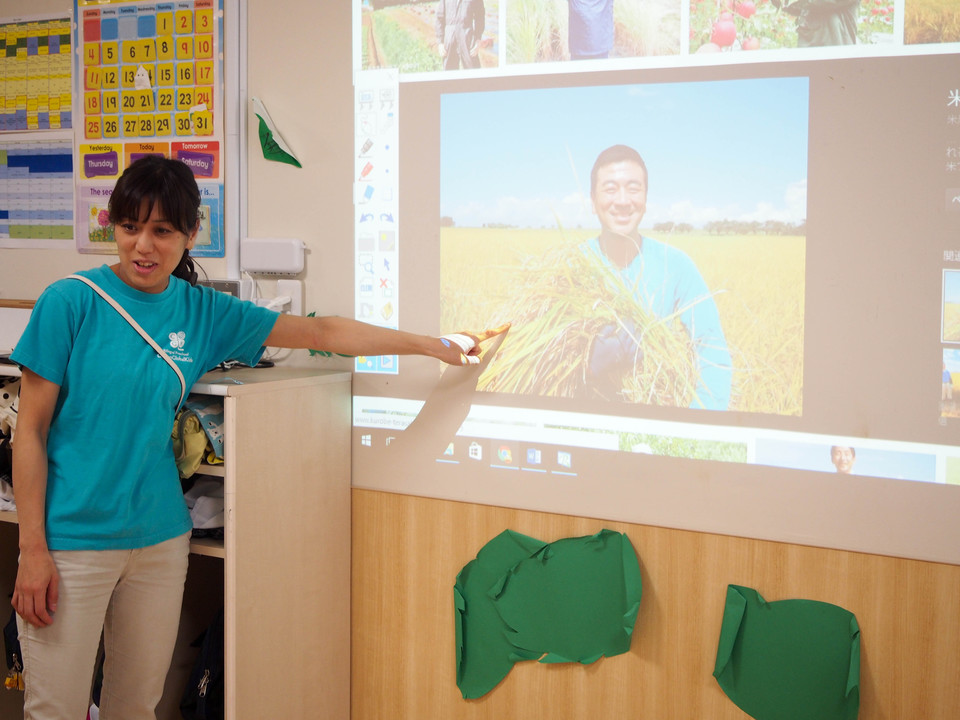
We began by projecting photographs of different farmers and discussing what they raised or grew.
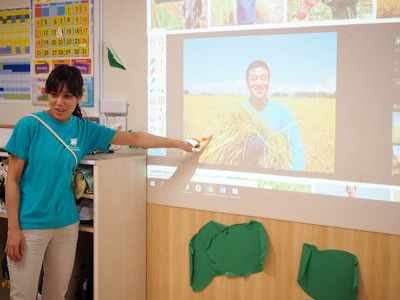
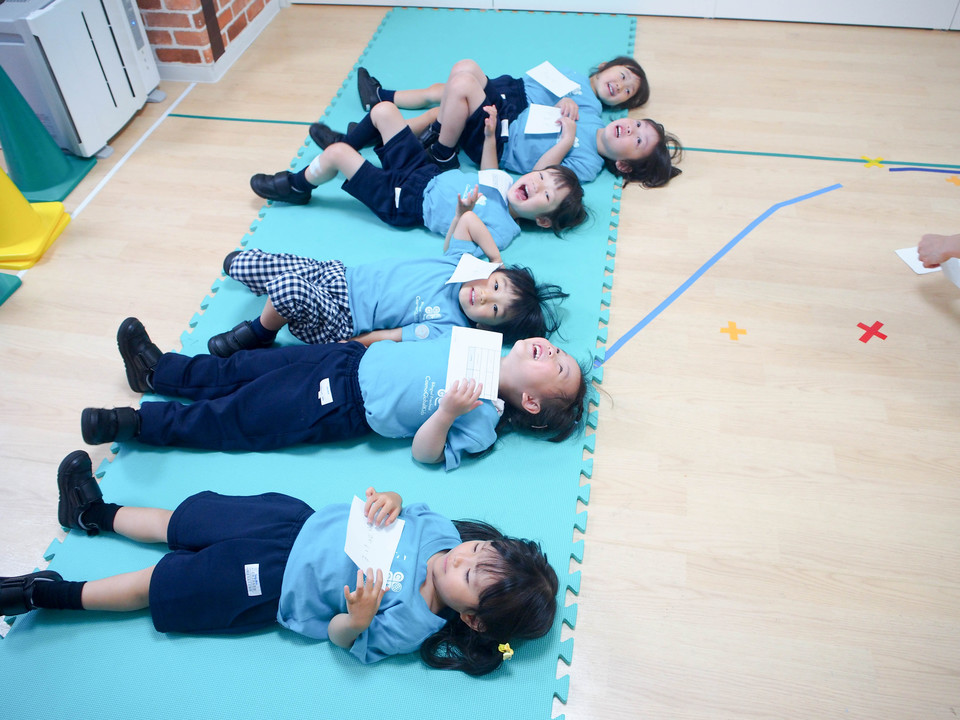
Then a large green mat became our field for pretend farming. Using the photographs as clues, the children named vegetables that farmers grow. We wrote each name on paper and attached it to a child’s chest before arranging our “vegetables” in the field. The children were already laughing with delight.
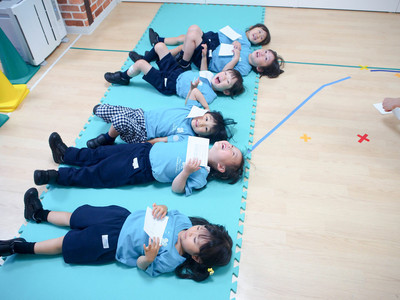
After watering the vegetables together with the child playing the farmer, it was time to harvest.
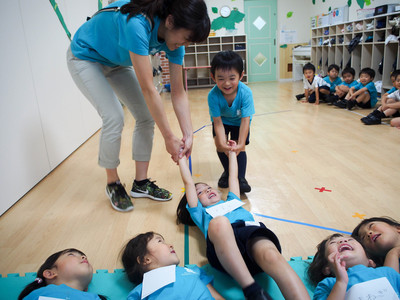
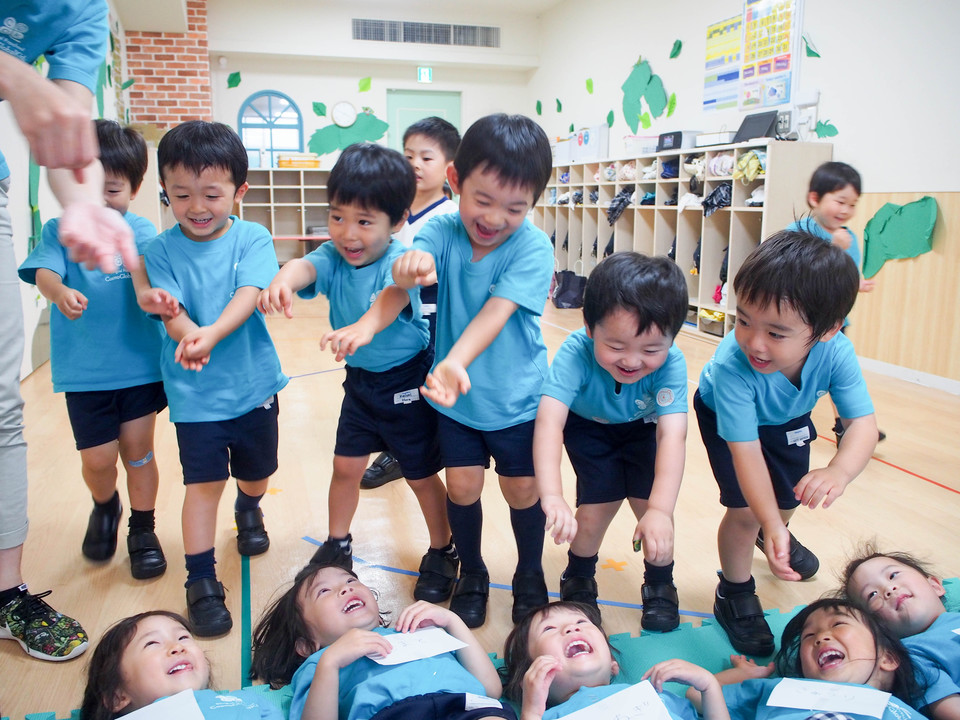
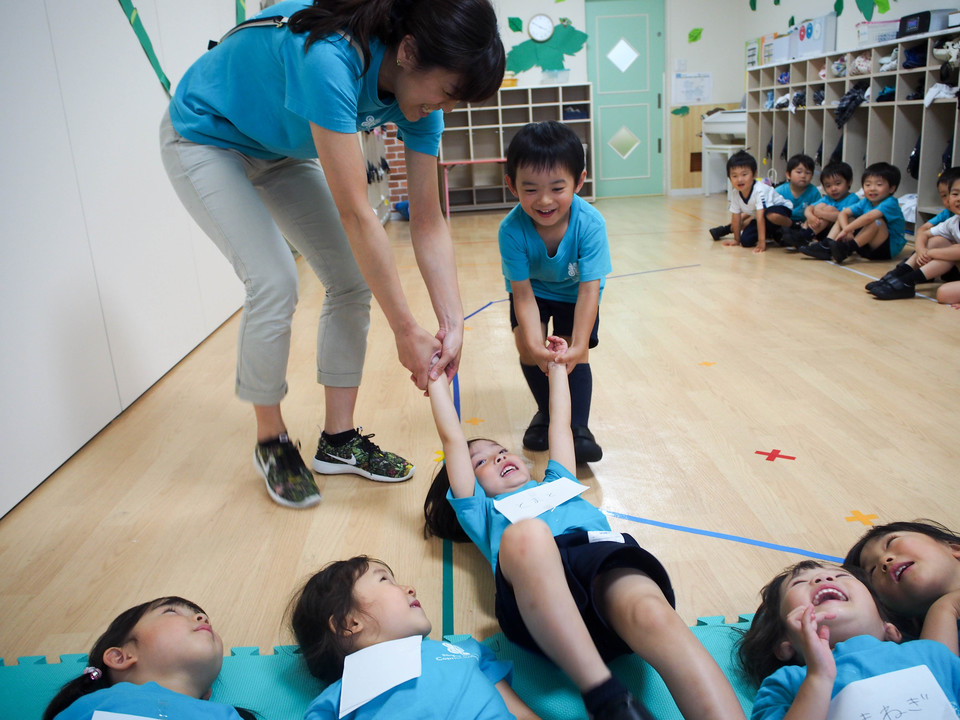
We chose one farmer at a time, who selected a vegetable and called, “Harvest!” as they collected it. Once the field was empty, the children swapped roles and tried again.
They thoroughly enjoyed watching their friends being “harvested.”
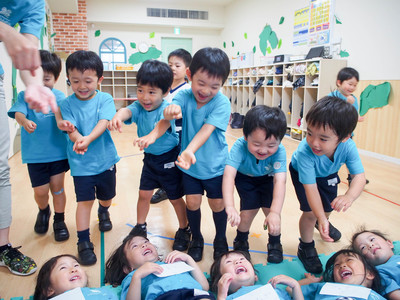
During playtime afterward, they continued taking turns as farmers and vegetables and calling, “Harvest!”
Job Training is, in simple terms, pretend play. Learning more about a job, however, can transform how children play. They encounter new words, make discoveries and develop their ideas.
In English Job Training lessons, we also focus on expressions used in each situation and on communicating through role-play. Each lesson has a clear purpose.
Planned teaching has its place, but lessons that pick up children’s comments and expand on them can connect especially well with what they want to know and enjoy learning.
We will continue developing interactive lessons in which children actively participate in their own learning.
At the start of a Japanese lesson, we wrote nouka in hiragana on the interactive whiteboard and said we would talk about farmers. The children immediately asked with interest, “Nouka? What does that mean?”
We began by projecting photographs of different farmers and discussing what they raised or grew.
Then a large green mat became our field for pretend farming. Using the photographs as clues, the children named vegetables that farmers grow. We wrote each name on paper and attached it to a child’s chest before arranging our “vegetables” in the field. The children were already laughing with delight.
After watering the vegetables together with the child playing the farmer, it was time to harvest.
We chose one farmer at a time, who selected a vegetable and called, “Harvest!” as they collected it. Once the field was empty, the children swapped roles and tried again.
They thoroughly enjoyed watching their friends being “harvested.”
During playtime afterward, they continued taking turns as farmers and vegetables and calling, “Harvest!”
Job Training is, in simple terms, pretend play. Learning more about a job, however, can transform how children play. They encounter new words, make discoveries and develop their ideas.
In English Job Training lessons, we also focus on expressions used in each situation and on communicating through role-play. Each lesson has a clear purpose.
Planned teaching has its place, but lessons that pick up children’s comments and expand on them can connect especially well with what they want to know and enjoy learning.
We will continue developing interactive lessons in which children actively participate in their own learning.