











Earthquake Preparedness After the 2016 Kumamoto Earthquakes
Preschool
April 28, 2016
The Kumamoto earthquakes affecting Kyushu from April 14, 2016 were a serious reminder for a preschool responsible for children’s safety.
CGK already held monthly drills, with an earthquake drill planned for April. The events in Kumamoto gave staff an even stronger sense of responsibility as we prepared.
Before those earthquakes, we had checked and visited the designated emergency evacuation sites in Yokohama’s Naka Ward and reviewed concrete actions to take.
Our discussions focused on a real earthquake, not simply staging a drill. At that time, we deliberately did not assign every drill role in advance, while setting a clear order of decision-making authority to avoid confusion. The aim was for staff to respond flexibly and appropriately even if not everyone was present.
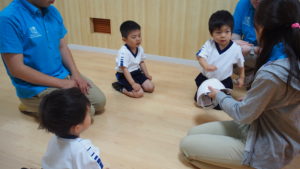
The April 27 drill began with a discussion of what to do in an earthquake.
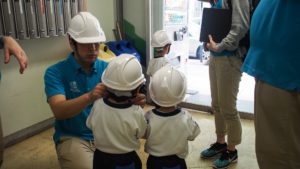
We shook the play kitchen to show objects falling and let the children experience the firmness of a protective helmet, explaining in visible, concrete ways why protecting the head matters.
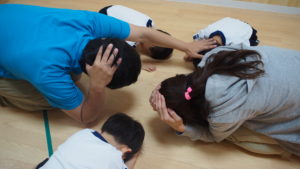
After recently finding tadpoles in the park, we had practiced curling up like frog eggs through play. The children could quickly take that position; covering the back of the head with their hands was the next step to improve.
We then simulated an earthquake: gather by the teacher and protect the head, put on helmets, line up and evacuate outside. The children lined up and moved out successfully.
Practicing lining up in daily routines helped them respond quickly during the drill.
Listening to teachers was another everyday habit we had emphasized.
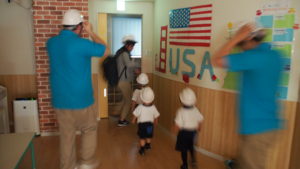
It was encouraging to see these routines firmly taking root.
We will continue monthly drills, including preparation for fire and tsunami, to help protect the children.
CGK already held monthly drills, with an earthquake drill planned for April. The events in Kumamoto gave staff an even stronger sense of responsibility as we prepared.
Before those earthquakes, we had checked and visited the designated emergency evacuation sites in Yokohama’s Naka Ward and reviewed concrete actions to take.
Our discussions focused on a real earthquake, not simply staging a drill. At that time, we deliberately did not assign every drill role in advance, while setting a clear order of decision-making authority to avoid confusion. The aim was for staff to respond flexibly and appropriately even if not everyone was present.
The April 27 drill began with a discussion of what to do in an earthquake.
We shook the play kitchen to show objects falling and let the children experience the firmness of a protective helmet, explaining in visible, concrete ways why protecting the head matters.
After recently finding tadpoles in the park, we had practiced curling up like frog eggs through play. The children could quickly take that position; covering the back of the head with their hands was the next step to improve.
We then simulated an earthquake: gather by the teacher and protect the head, put on helmets, line up and evacuate outside. The children lined up and moved out successfully.
Practicing lining up in daily routines helped them respond quickly during the drill.
Listening to teachers was another everyday habit we had emphasized.
It was encouraging to see these routines firmly taking root.
We will continue monthly drills, including preparation for fire and tsunami, to help protect the children.