











What Are Priority Seats? Learning Consideration in Japanese Class
When we projected a large image of the priority-seat symbol, a child who traveled to school by train said, “I’ve seen that! It’s on the train!”
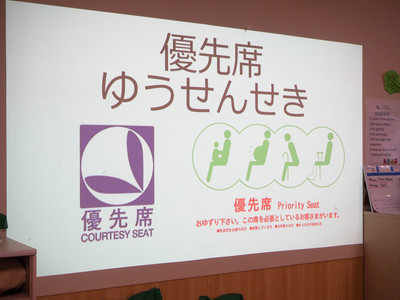
We discussed what each part of the symbol meant together.
We began with the symbol for a person accompanying an infant or young child.
When asked what the picture showed, the children answered, “A baby!” We then asked what ages they meant by baby. The three-year-olds suggested zero, one and two, but nobody said three. They clearly did not think of themselves as babies!
Next came the symbol for a pregnant person.
The children understood this too: “Someone with a baby in their tummy.”
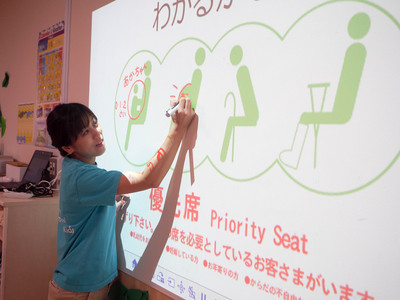
The third symbol was trickier. Asked what the person was holding, many answered, “An umbrella!” We explained that it was a cane and that some older people use one for support when walking.
The final symbol showed a person with an injury. The children recognized this easily.
After exploring all the symbols, we arranged chairs in front of the sign. The children sat down while teachers played people with young children, pregnant people and older people using canes. Through role-play, we considered what to do.
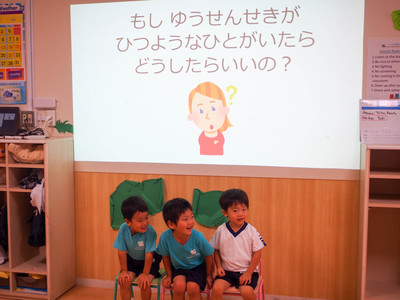
As each teacher approached, the children kindly offered their seats, saying, “Please, sit here.”
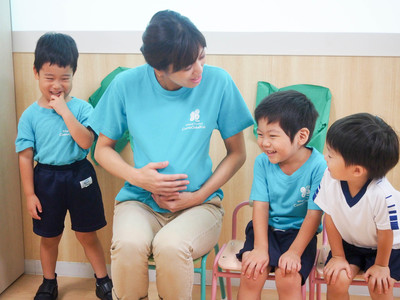
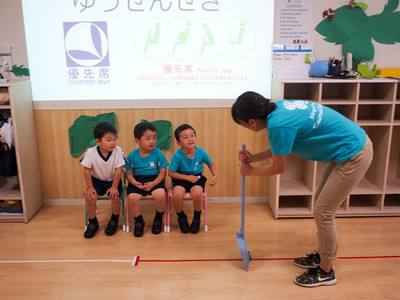
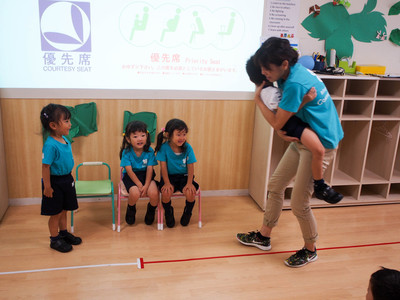
(We also told the three-year-olds that they could sit when seats were available, and asked them to offer a seat if a child younger than them needed one.)
Parents can explain these ideas at home too. Discussing them together at school also lets children hear their friends’ thoughts. This is one of the benefits of learning in a group.
Familiar everyday things often spark children’s interest and make meaningful learning opportunities. We want to continue incorporating parents’ suggestions and children’s own questions into lessons.
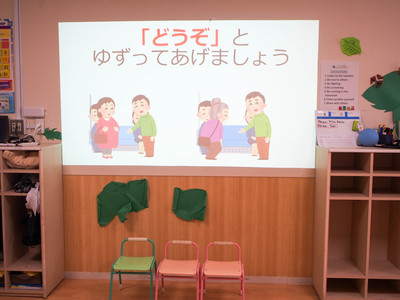
For related ideas, read about the IB Learner Profile for parents and social and emotional learning (SEL).
Author Profile
-

-
Reiko - Services and Community Coordinator Japan

Reiko joined CGK’s founding team in 2016, bringing seven years of experience in licensed nursery schools in Japan and six years across two international preschools. She has also volunteered at a daycare in Canada and has held preschool leadership roles at CGK, including Principal and Vice Principal.
A qualified nursery teacher and holder of a Class 2 kindergarten teaching license in Japan, Reiko values each child’s interests and strengths. Drawing on her experience in multicultural early childhood settings, she supports an environment where children can explore new interests through hands-on experiences and express themselves in their own way.