











Setsubun: Exploring Japanese Traditions
Preschool
February 7, 2018
Because February 3 fell on a Saturday that year, we celebrated Setsubun on February 2.
The two-year-olds made oni masks while learning to use glue, stickers and crayons. When the finished masks were displayed at the entrance, they proudly pointed out their work: “I made that!” and “Mine!”
On the day, they placed the same number of soybeans as their age into origami boxes made by the teachers. Seasonal events can also create opportunities to practice picking up small objects and counting.
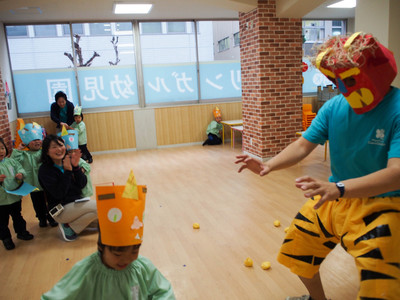
Wearing their handmade masks, the children threw pretend beans made of paper. Then a large oni appeared! Some hid behind teachers, but others bravely threw their paper beans, and together they drove the oni away.
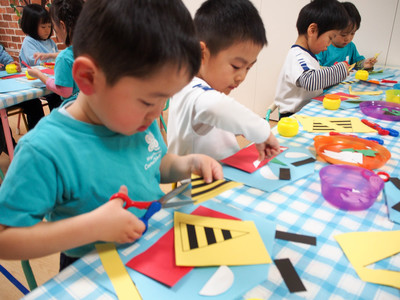
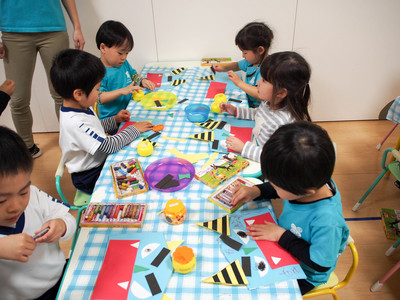
The three-year-olds’ oni craft included scissor practice. Regular practice had helped them make continuous cuts and follow lines more confidently.
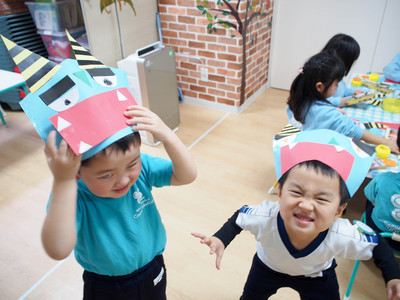
Perhaps inspired by rehearsing for their performance, they enjoyed becoming their characters. Wearing oni hats, they roared and acted fierce. We also saw them independently taking turns as the oni and the bean throwers—a lovely sign of their growth.
Alongside the origins of Setsubun, we discussed ehomaki sushi rolls and directions. The idea of a direction that cannot be seen was still a little difficult to grasp.
That year, we also introduced foods made from soybeans and made tofu.
It was a simple cooking activity using soy milk and nigari. The children were intrigued to see a liquid become solid after about four minutes in the microwave.
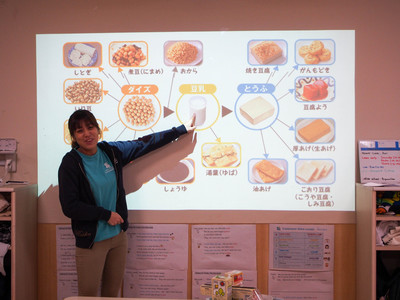
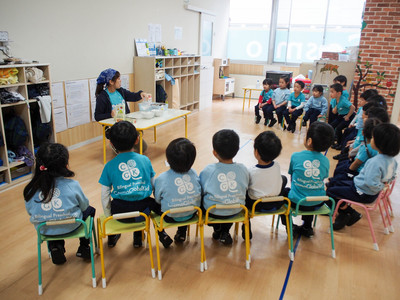
After cooking, an oni appeared while we were reading a Setsubun picture-card story, and bean throwing began. Once it had been driven away, we placed a yaikagashi, also called hiiragi-iwashi, at the entrance. This traditional decoration combines a grilled sardine head and holly; according to the custom, the smell and prickly leaves keep oni away.
We hope the children who worked so hard to drive out the oni enjoy a healthy, happy year!
The two-year-olds made oni masks while learning to use glue, stickers and crayons. When the finished masks were displayed at the entrance, they proudly pointed out their work: “I made that!” and “Mine!”
On the day, they placed the same number of soybeans as their age into origami boxes made by the teachers. Seasonal events can also create opportunities to practice picking up small objects and counting.
Wearing their handmade masks, the children threw pretend beans made of paper. Then a large oni appeared! Some hid behind teachers, but others bravely threw their paper beans, and together they drove the oni away.
The three-year-olds’ oni craft included scissor practice. Regular practice had helped them make continuous cuts and follow lines more confidently.
Perhaps inspired by rehearsing for their performance, they enjoyed becoming their characters. Wearing oni hats, they roared and acted fierce. We also saw them independently taking turns as the oni and the bean throwers—a lovely sign of their growth.
Alongside the origins of Setsubun, we discussed ehomaki sushi rolls and directions. The idea of a direction that cannot be seen was still a little difficult to grasp.
That year, we also introduced foods made from soybeans and made tofu.
It was a simple cooking activity using soy milk and nigari. The children were intrigued to see a liquid become solid after about four minutes in the microwave.
After cooking, an oni appeared while we were reading a Setsubun picture-card story, and bean throwing began. Once it had been driven away, we placed a yaikagashi, also called hiiragi-iwashi, at the entrance. This traditional decoration combines a grilled sardine head and holly; according to the custom, the smell and prickly leaves keep oni away.
We hope the children who worked so hard to drive out the oni enjoy a healthy, happy year!
Author Profile
-

-
Reiko - Services and Community Coordinator Japan
Reiko joined CGK’s founding team in 2016, bringing seven years of experience in licensed nursery schools in Japan and six years across two international preschools. She has also volunteered at a daycare in Canada and has held preschool leadership roles at CGK, including Principal and Vice Principal.
A qualified nursery teacher and holder of a Class 2 kindergarten teaching license in Japan, Reiko values each child’s interests and strengths. Drawing on her experience in multicultural early childhood settings, she supports an environment where children can explore new interests through hands-on experiences and express themselves in their own way.