











A Spanish Soccer Lesson and a Story of Language Learning
Our long-awaited soccer lesson took place the day before yesterday.
Soccer is the most popular sport in Spain, the country featured in CGK’s July multicultural learning.
Although the children knew the word soccer, they had not tried it themselves, so we planned a special lesson.
Our guest was Norihiro Hijikata.
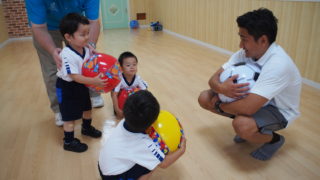
At the time of this article, his experience included three years of soccer study in Spain and playing in Italy and Argentina. He had founded SS Izu as its general manager and was working toward promotion to the J.League.
SS Izu also engaged locally through sport and English, with strong support from the community.
He first went to Spain to study soccer at fifteen.
What was initially planned as a three-month stay became three years.
He arrived without Spanish and learned the language during that time.
While starting without a language foundation may seem a disadvantage, he felt it had helped his learning.
Without prior knowledge to rely on, he concentrated on listening to native speakers and imitating how they spoke. He described learning in a way similar to young children, and later receiving compliments that his Spanish sounded different from the Japanese-accented Spanish people expected.
His experience was encouraging for our approach to early language learning.
He always carried a dictionary, looked up things around town and sometimes asked shop staff to point to words. His determination not to leave questions unanswered reinforced our view that curiosity is central to children’s learning too.
We want to nurture that curiosity further through multicultural studies and active learning.
The soccer lesson began with introductions and a warm-up, then ball activities with some simple Spanish.
Different movements within each activity kept the children engaged. Our usual physical activity session was about thirty minutes, but even after nearly an hour they were still smiling.
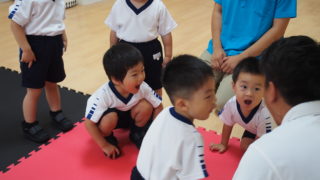
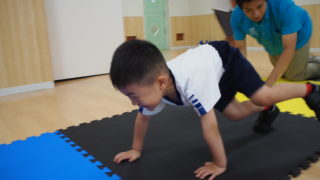
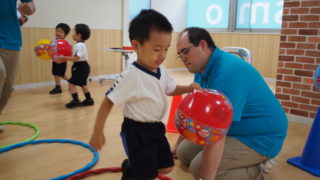
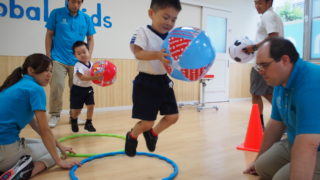
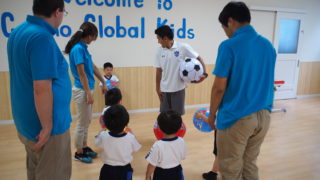
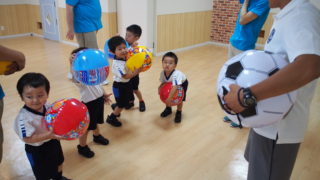
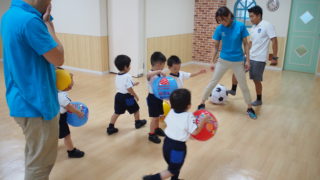
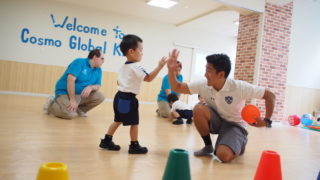
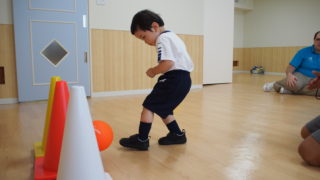
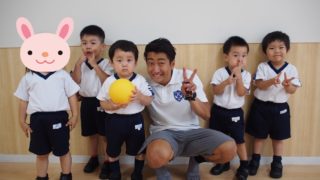
Our guest praised the two-year-olds for following instructions and concentrating on a goal, such as kicking a ball at a target.
Teachers were impressed by how many activities a single ball could offer this age group and looked forward to using ideas in regular lessons.
Mr. Hijikata was busy throughout weekdays and weekends.
At the time, his work included running the soccer club, early-childhood physical activities, international exchange and Spain-related projects. The following links introduce his activities.