










CGK Times
A global learning community for discovering
and pursuing your happiness
August 2025
Preschool
The Joys of exploring our world
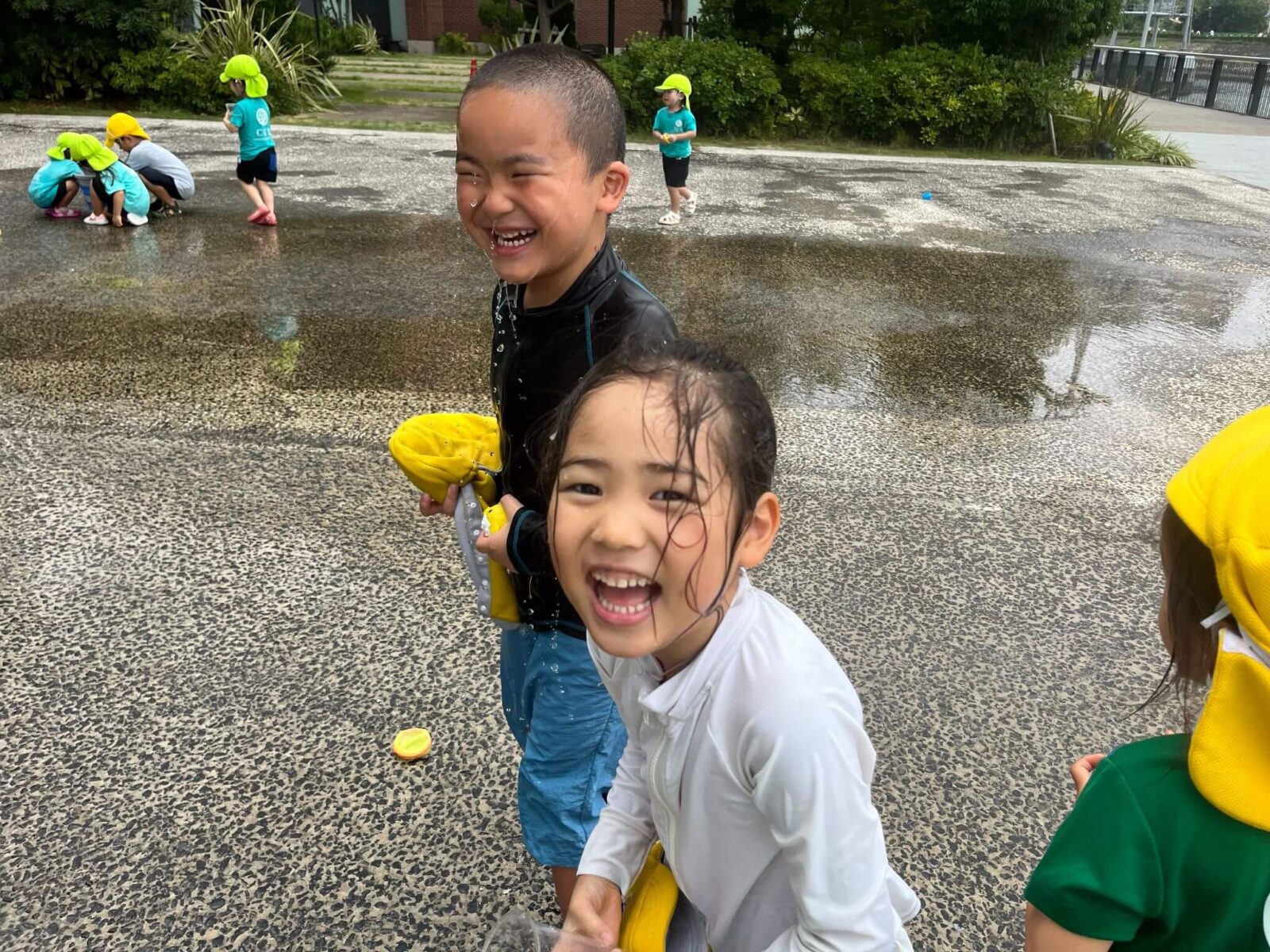
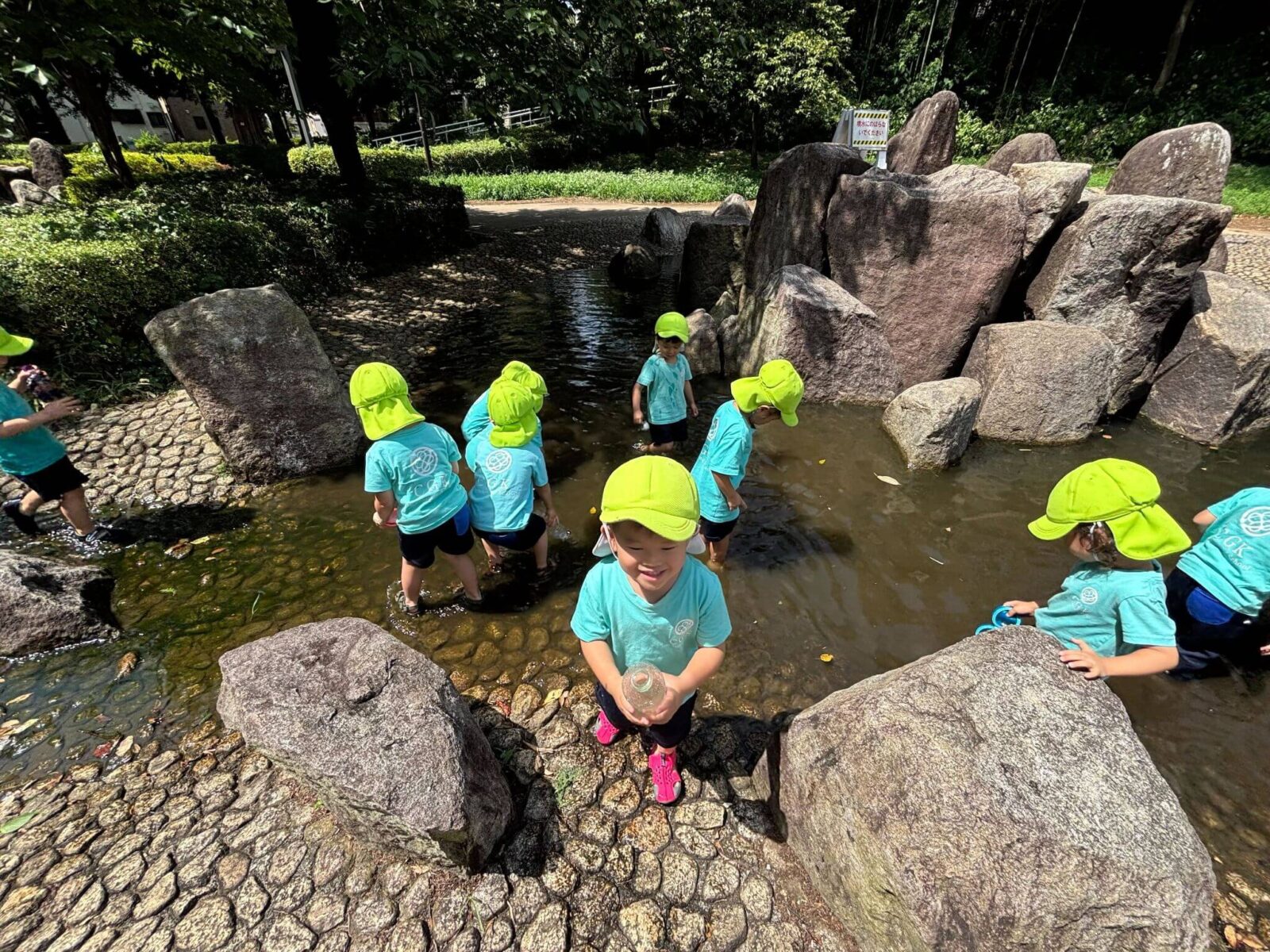
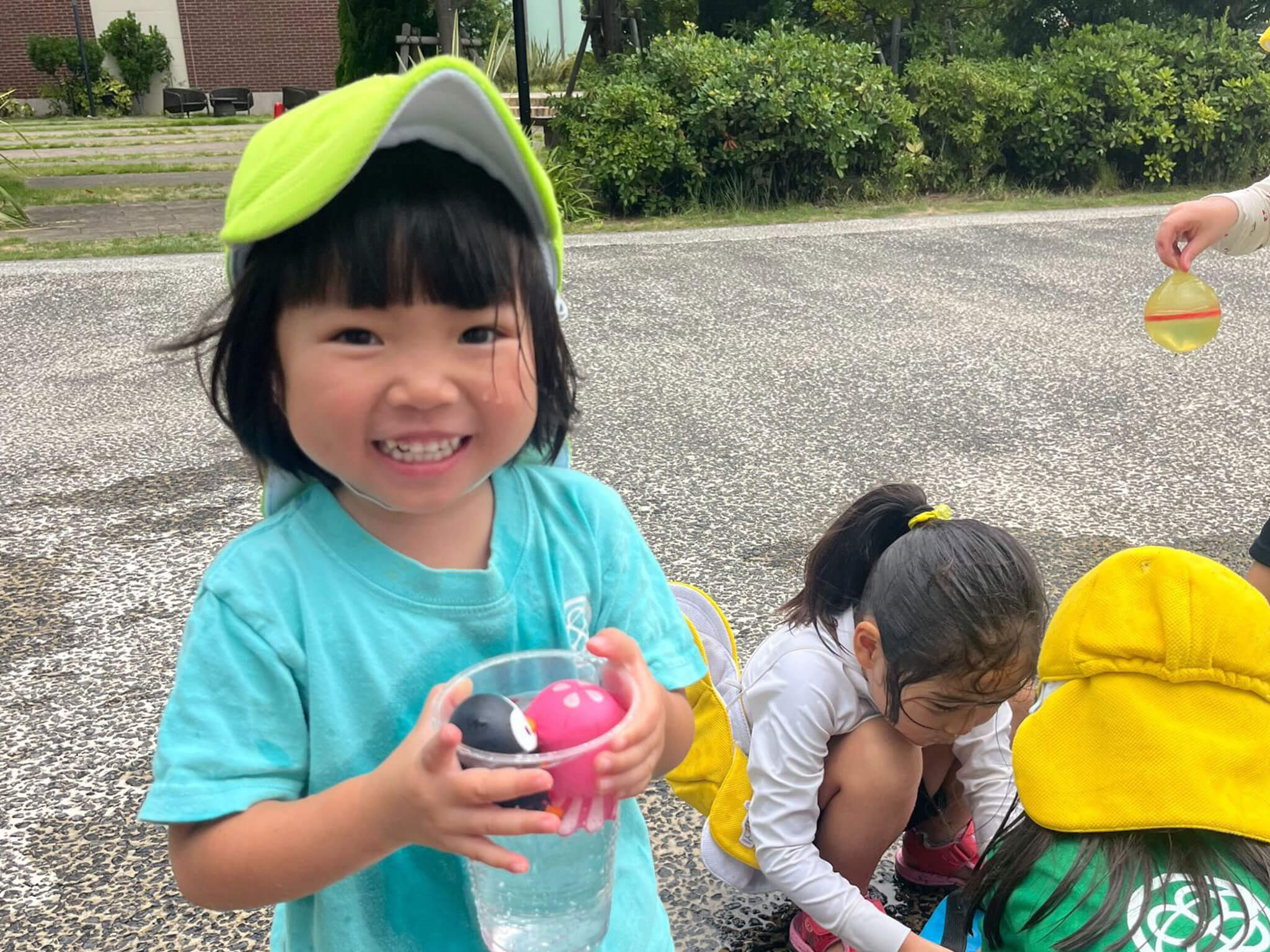
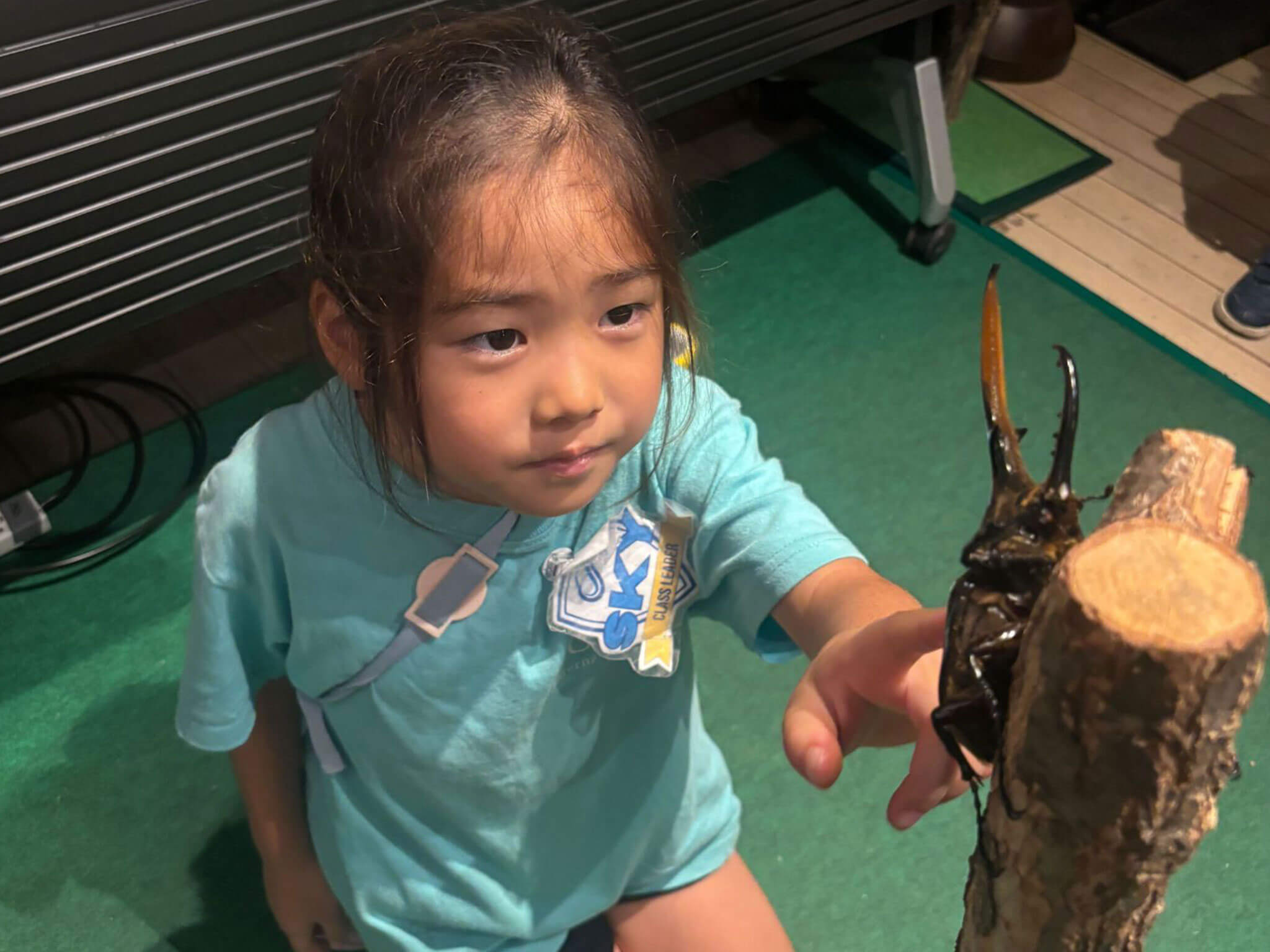
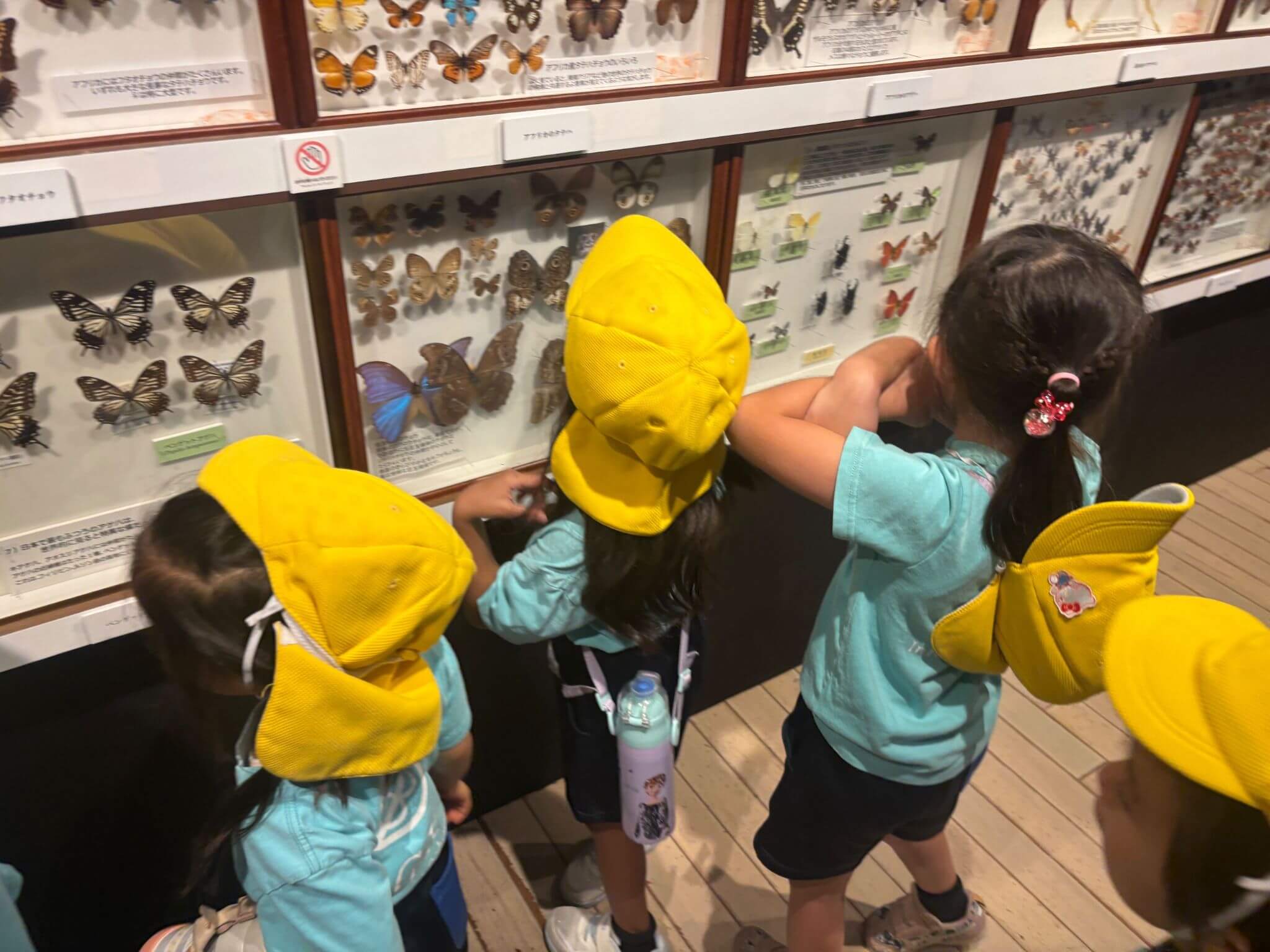
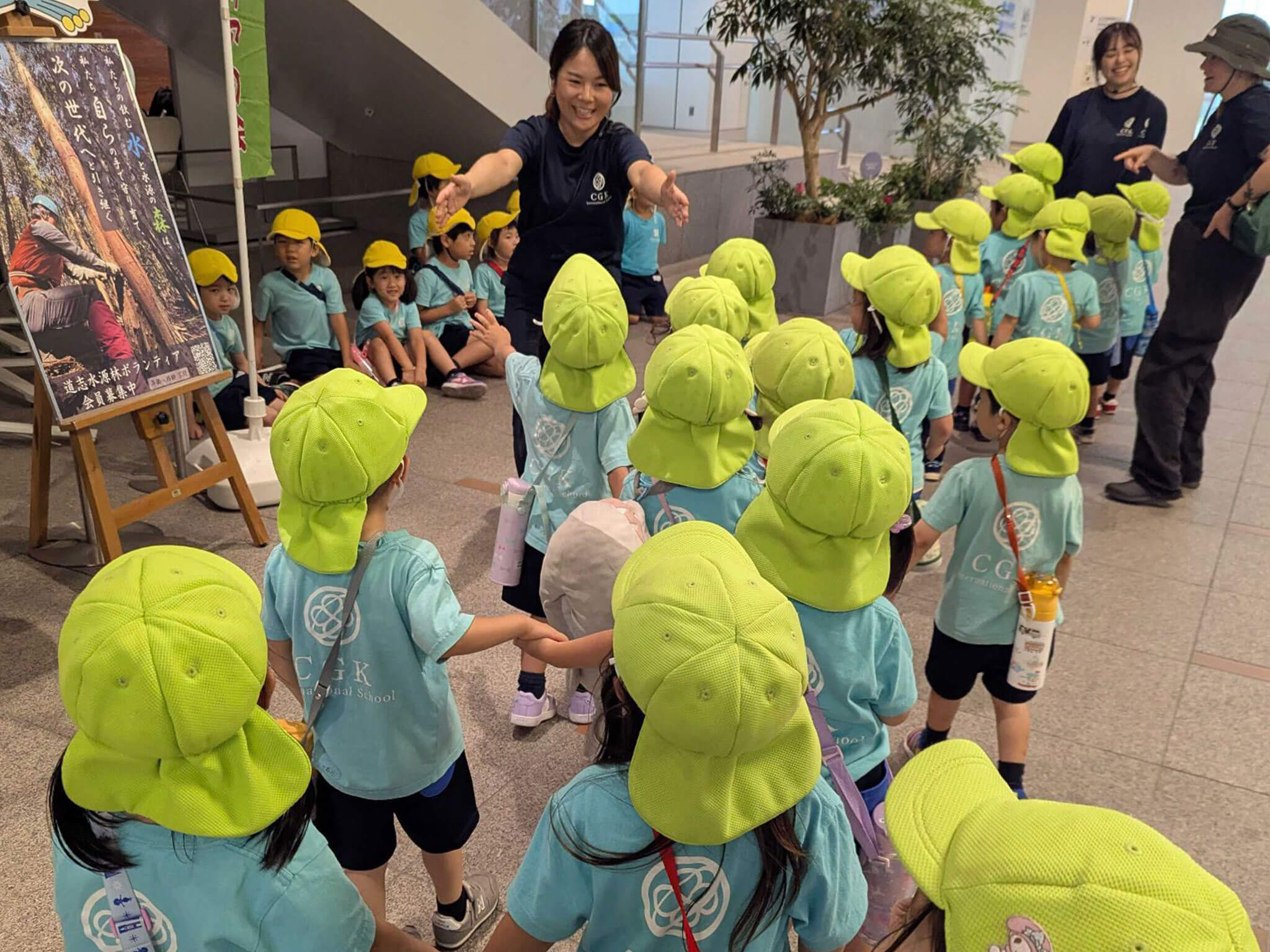
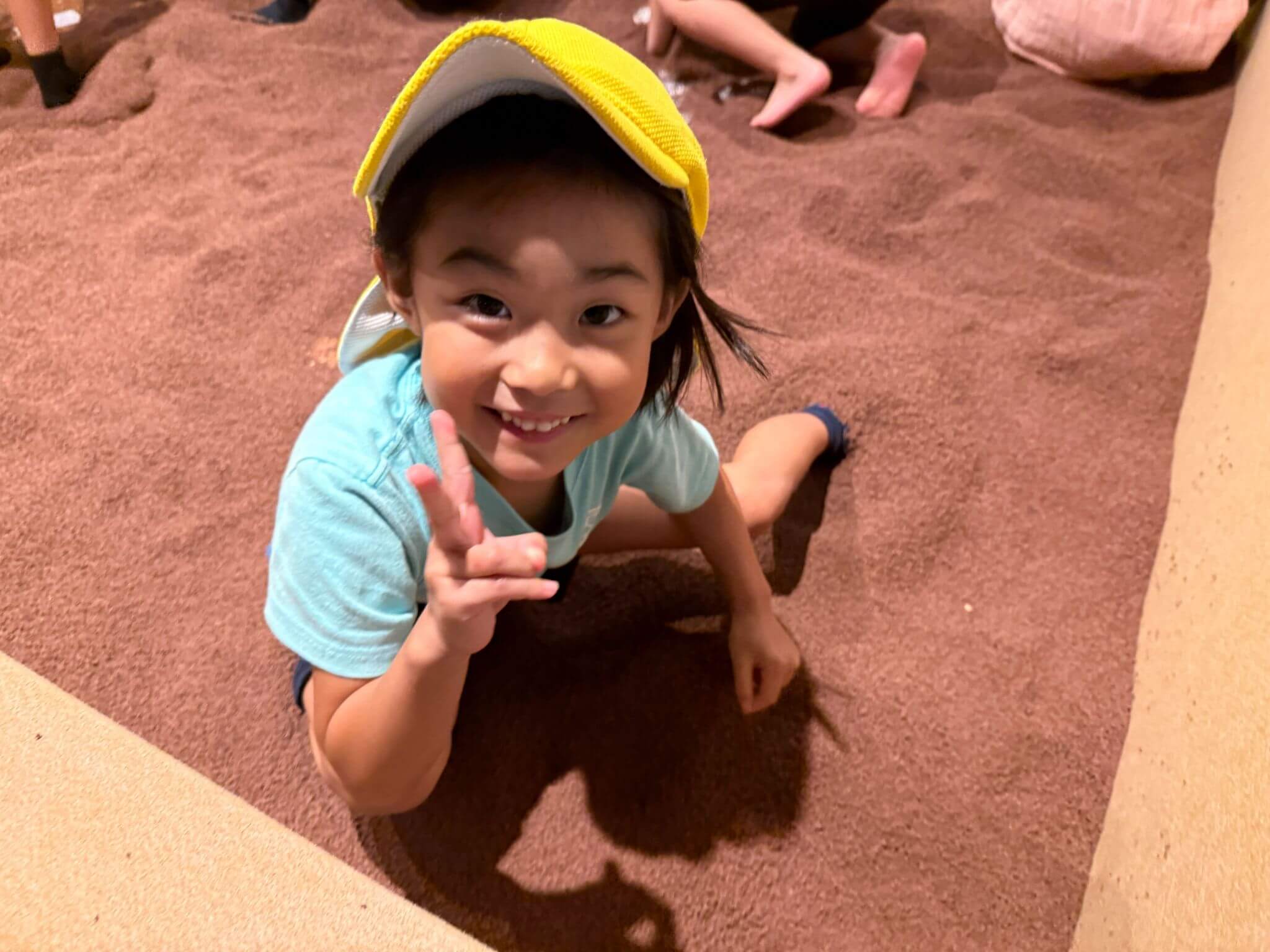
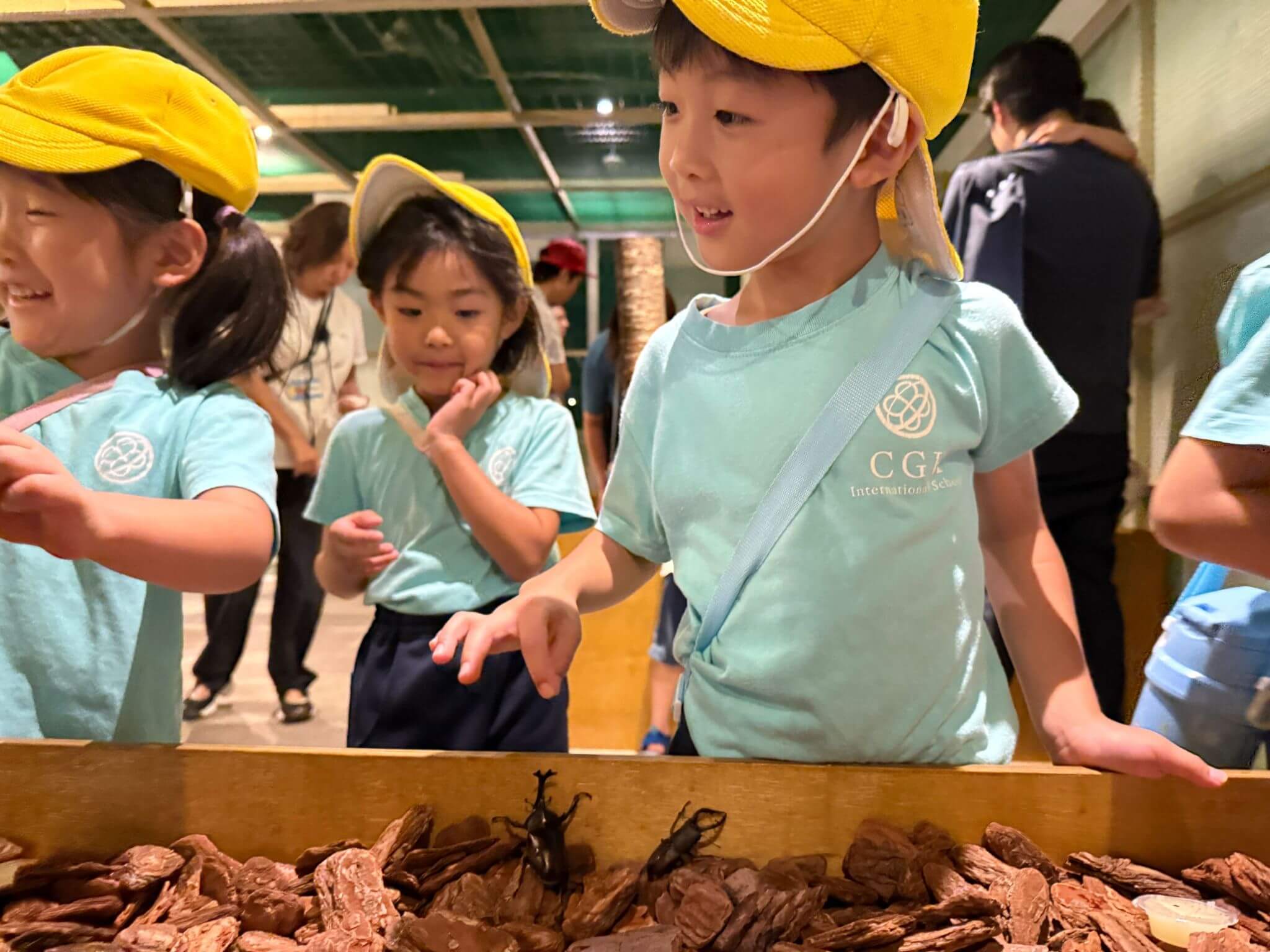
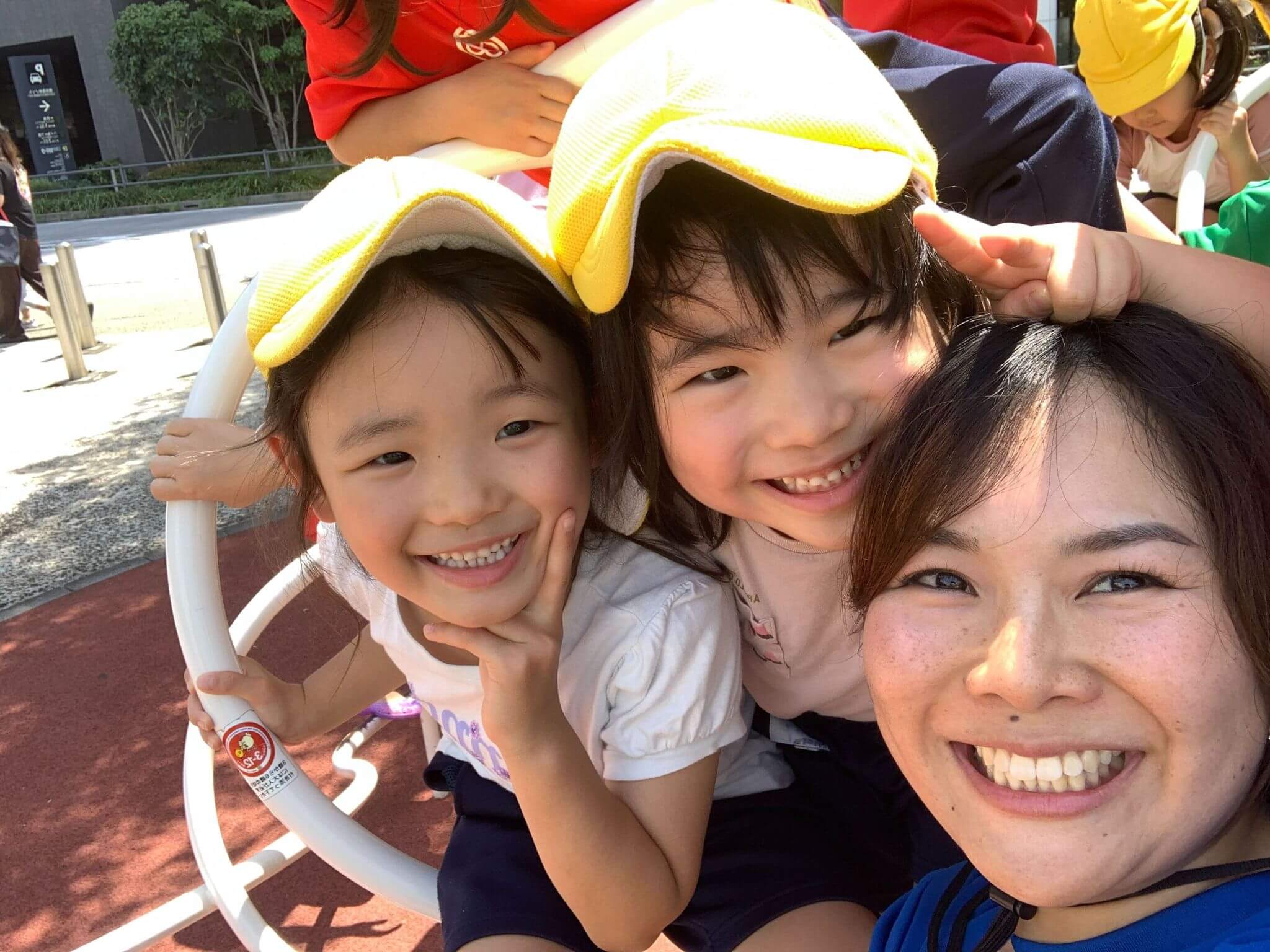
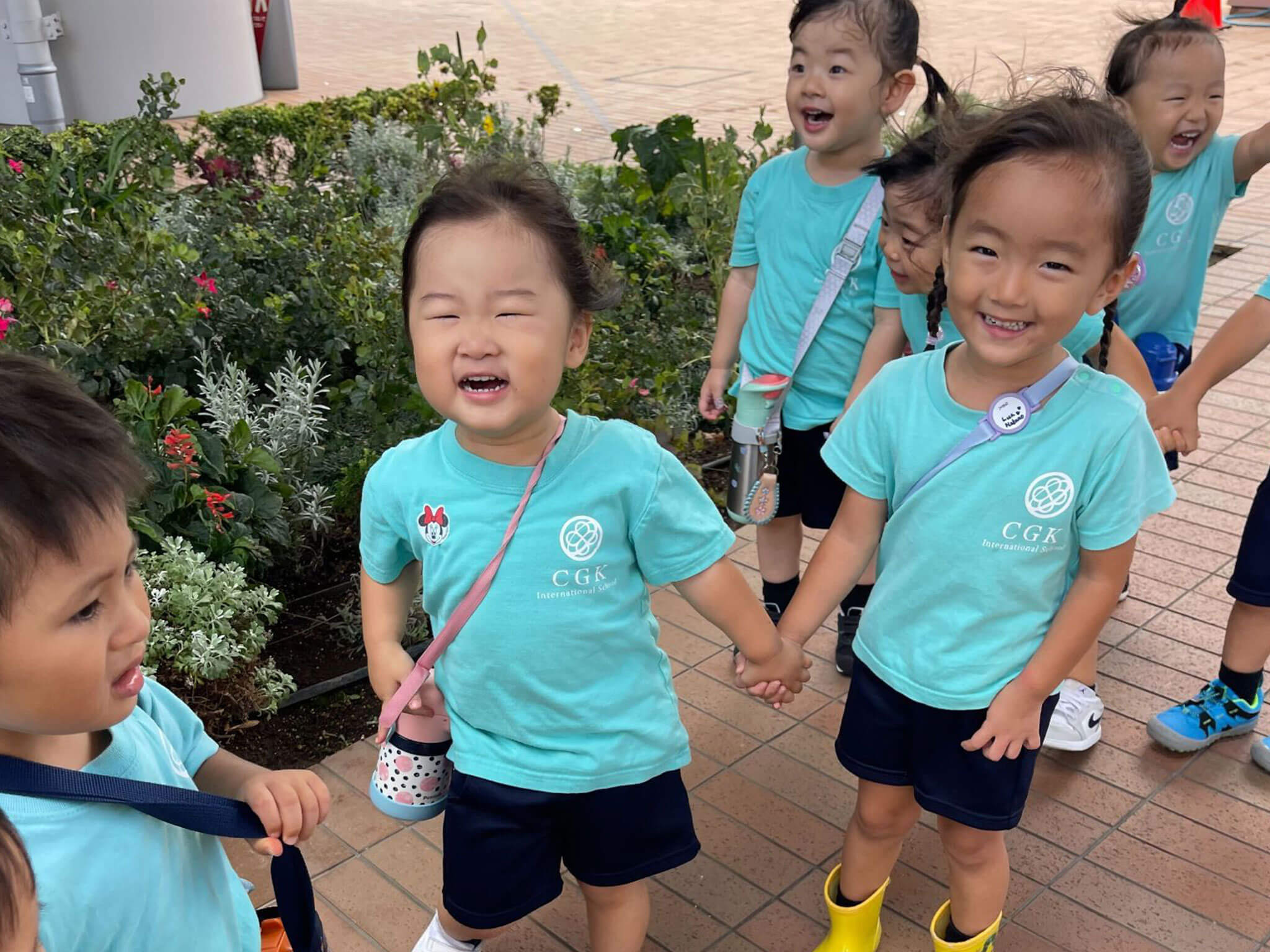
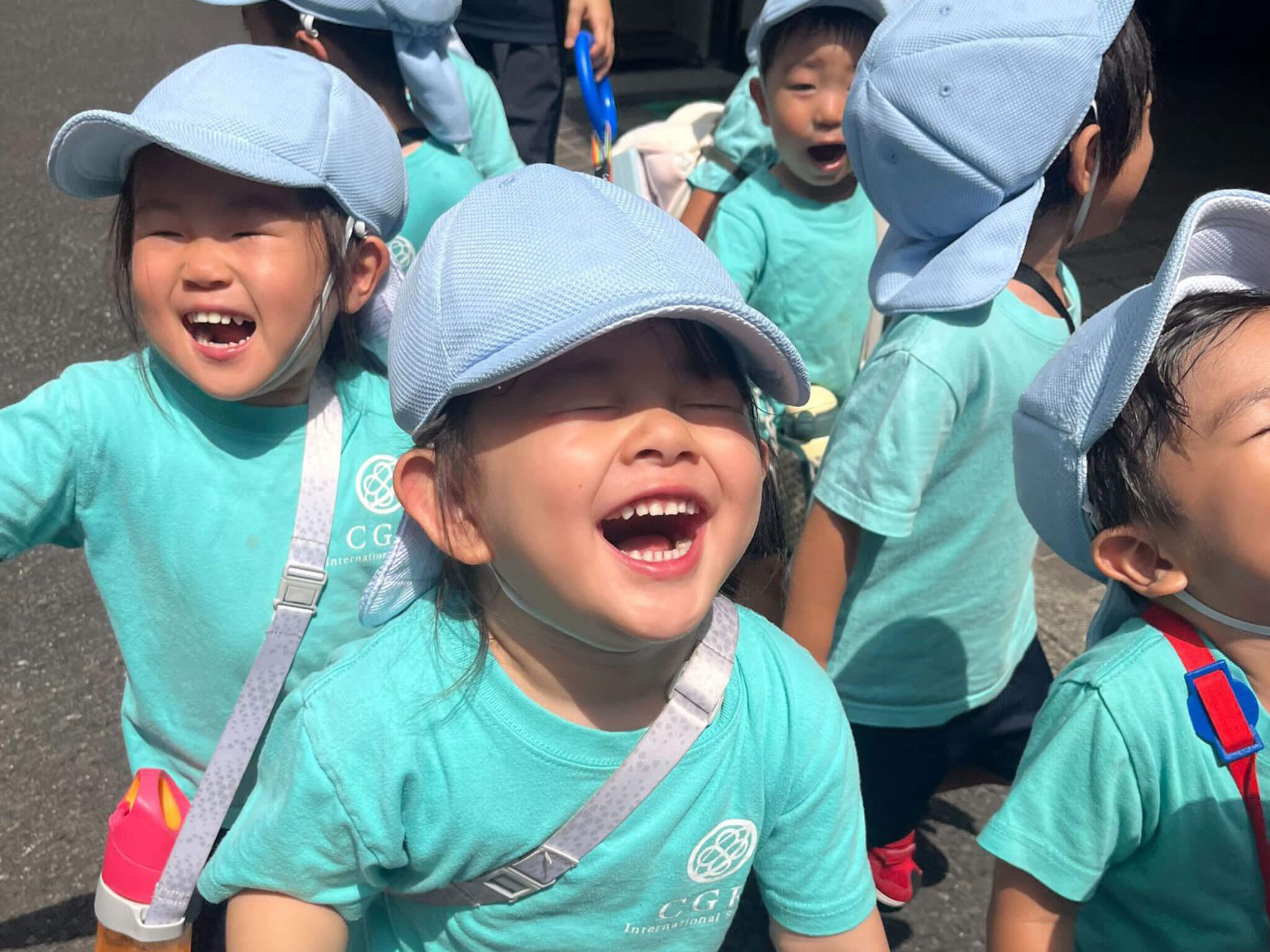
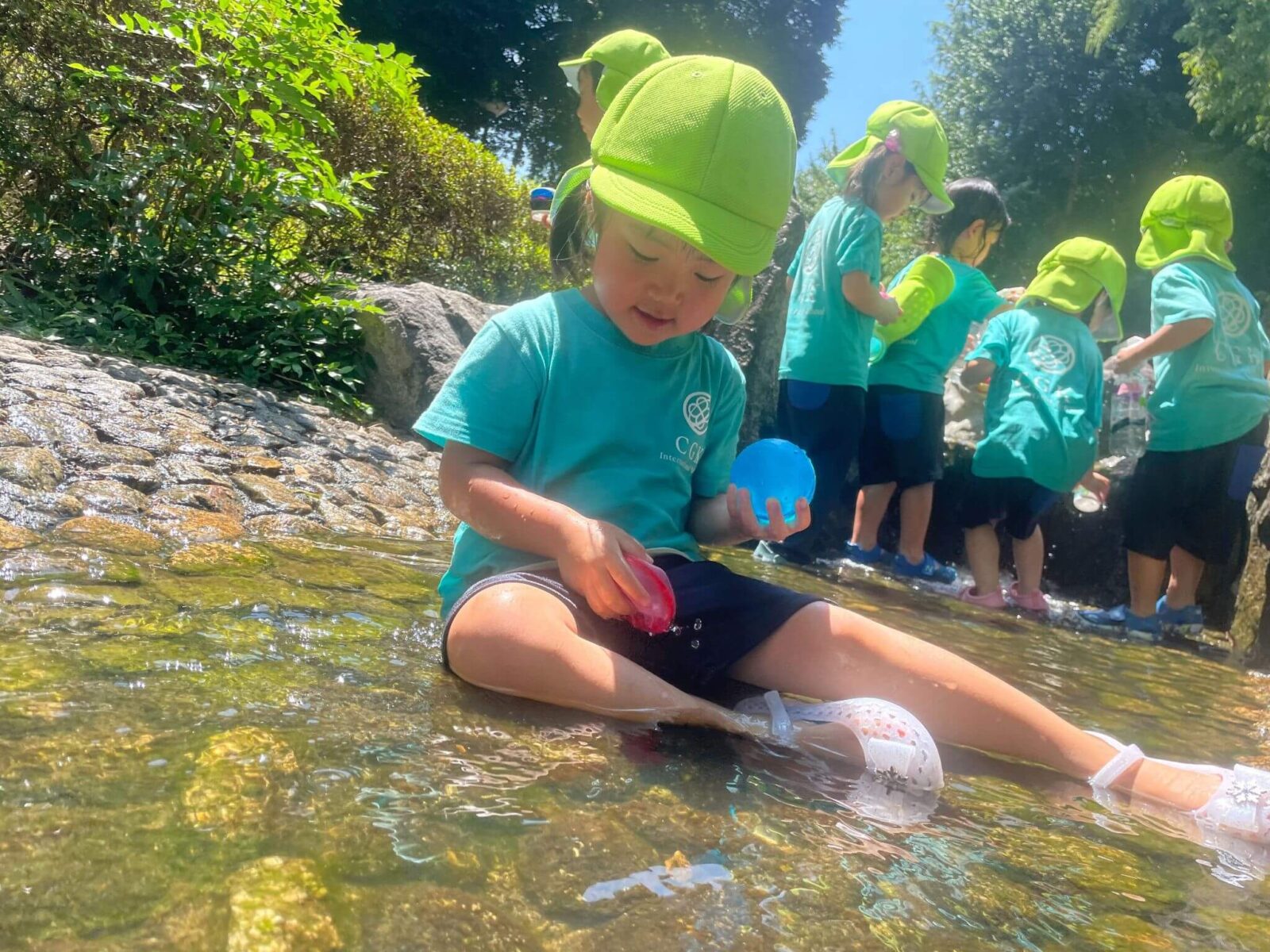
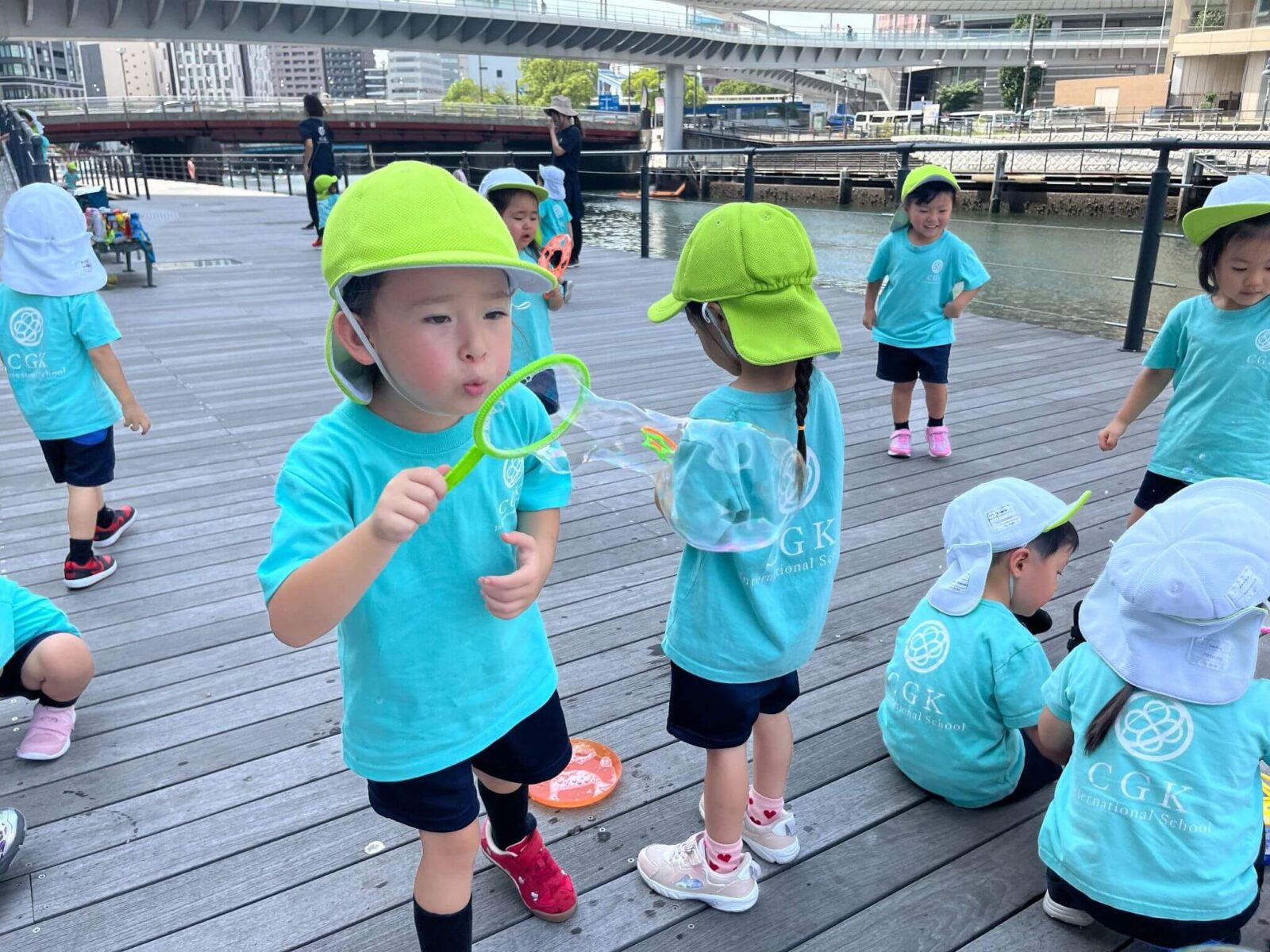
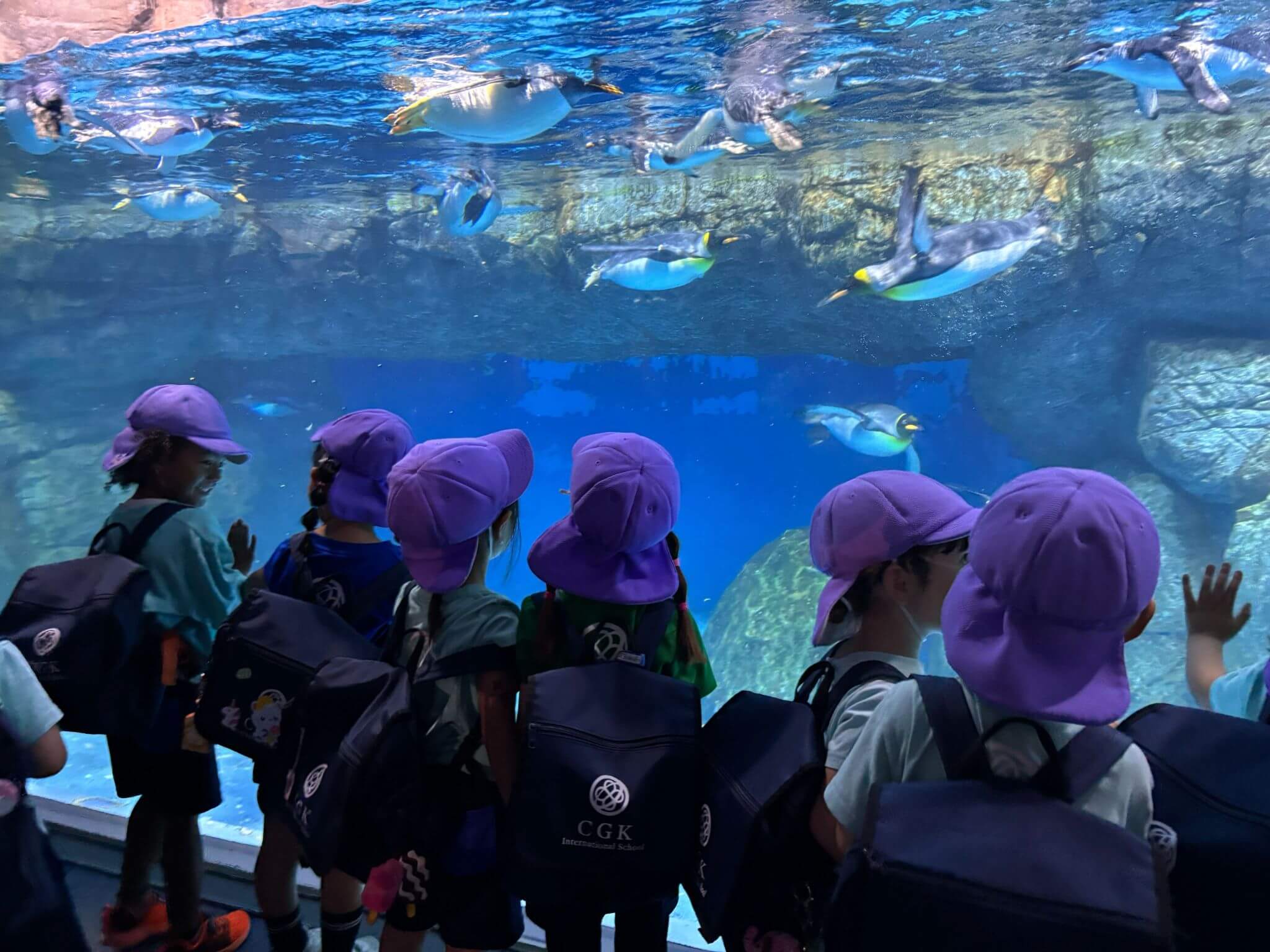
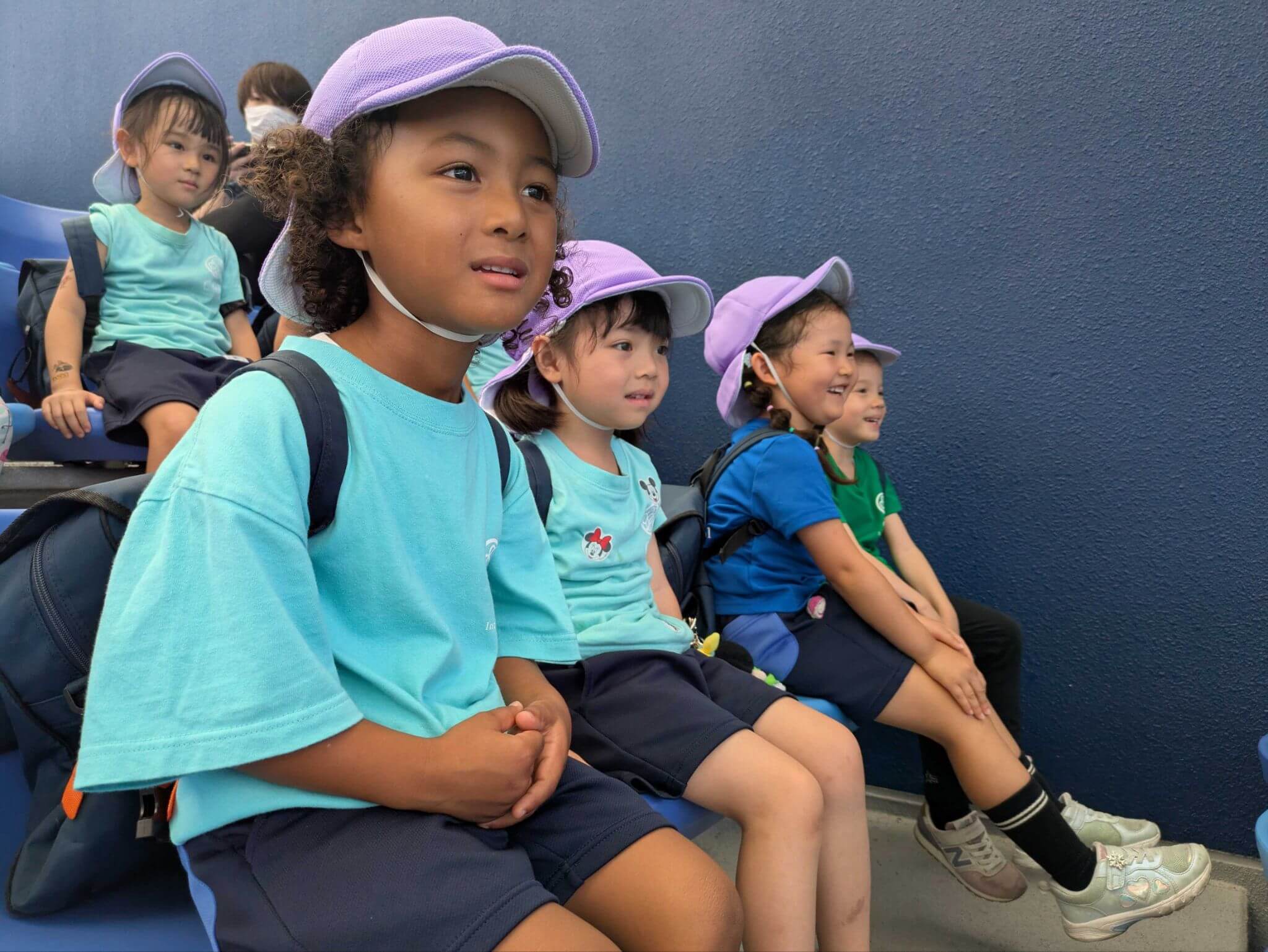
At CGK, learning extends far beyond the classroom walls. Play lies at the heart of inquiry, and excursions offer children meaningful opportunities to explore, ask questions, and make sense of the world around them. Whether it’s discovering a new park, investigating at a science museum, or marveling at sea life in an aquarium, time spent in the local community enriches their learning and sparks curiosity. And of course, the joy of sharing a home-made bento together makes these adventures even more special, bringing smiles and laughter to every child’s face.
When students engage in play as inquiry, they are active, joyful learners. They move freely between spaces—whether indoors, outdoors, or in the wider community—bringing curiosity and imagination with them. Excursions spark investigations, encourage children to test ideas in hands-on ways, and inspire stories that connect their experiences to real or imagined worlds. Along the way, they also encounter art, nature, and culture, deepening their appreciation for beauty and creativity.
These experiences nurture far more than academic skills. Exploring new environments builds confidence and independence, while shared adventures strengthen social connections and foster collaboration. Each outing becomes a chance for children to see themselves as part of both their local and global community, developing empathy, open-mindedness, and a sense of belonging.
At its core, the IB approach values curiosity, critical thinking, and international-mindedness. Excursions bring these ideals to life, creating lasting memories while laying the foundation for a lifelong love of learning.
Together, we are raising children who see the world as their classroom.
CGK Awards
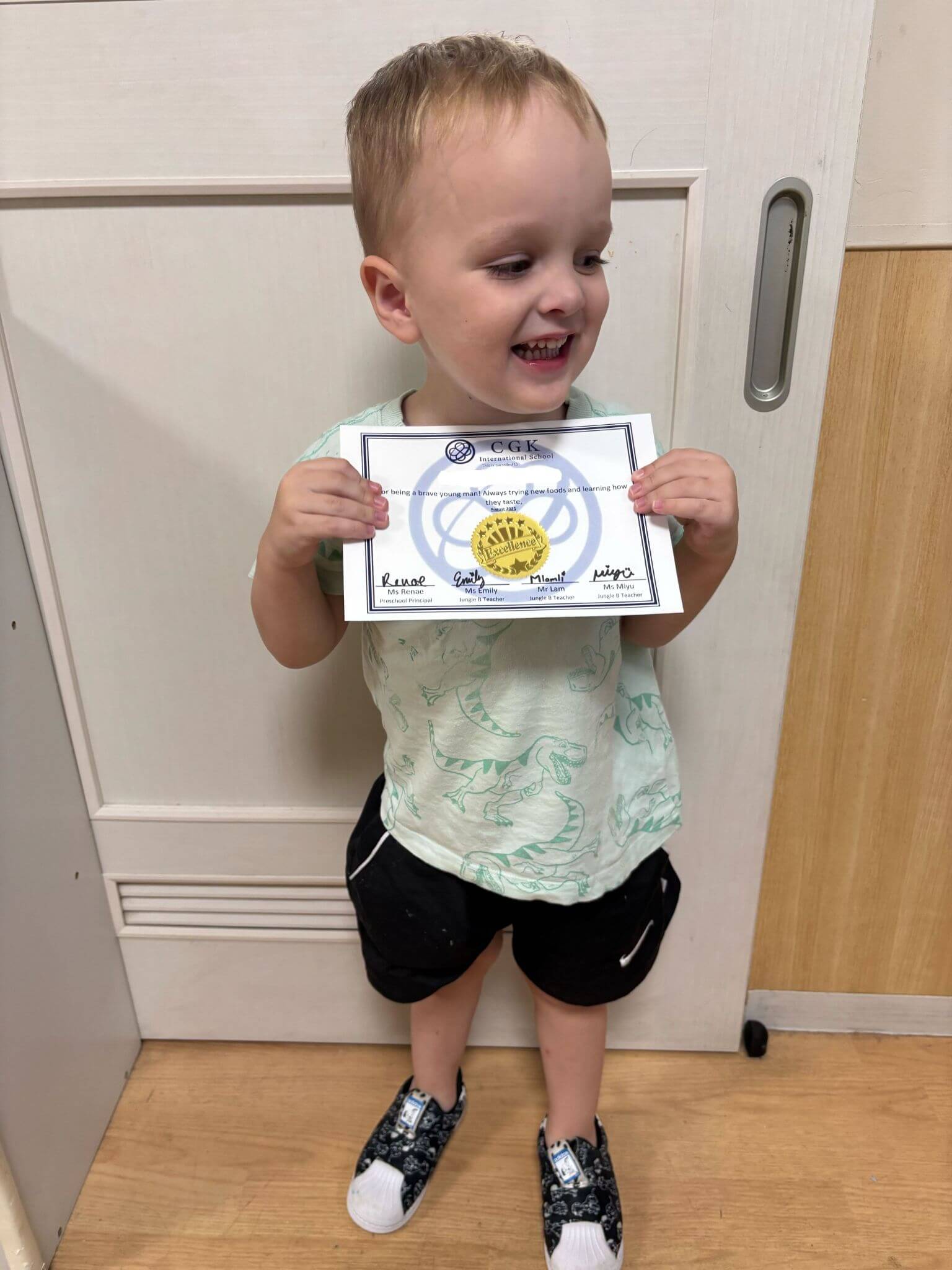
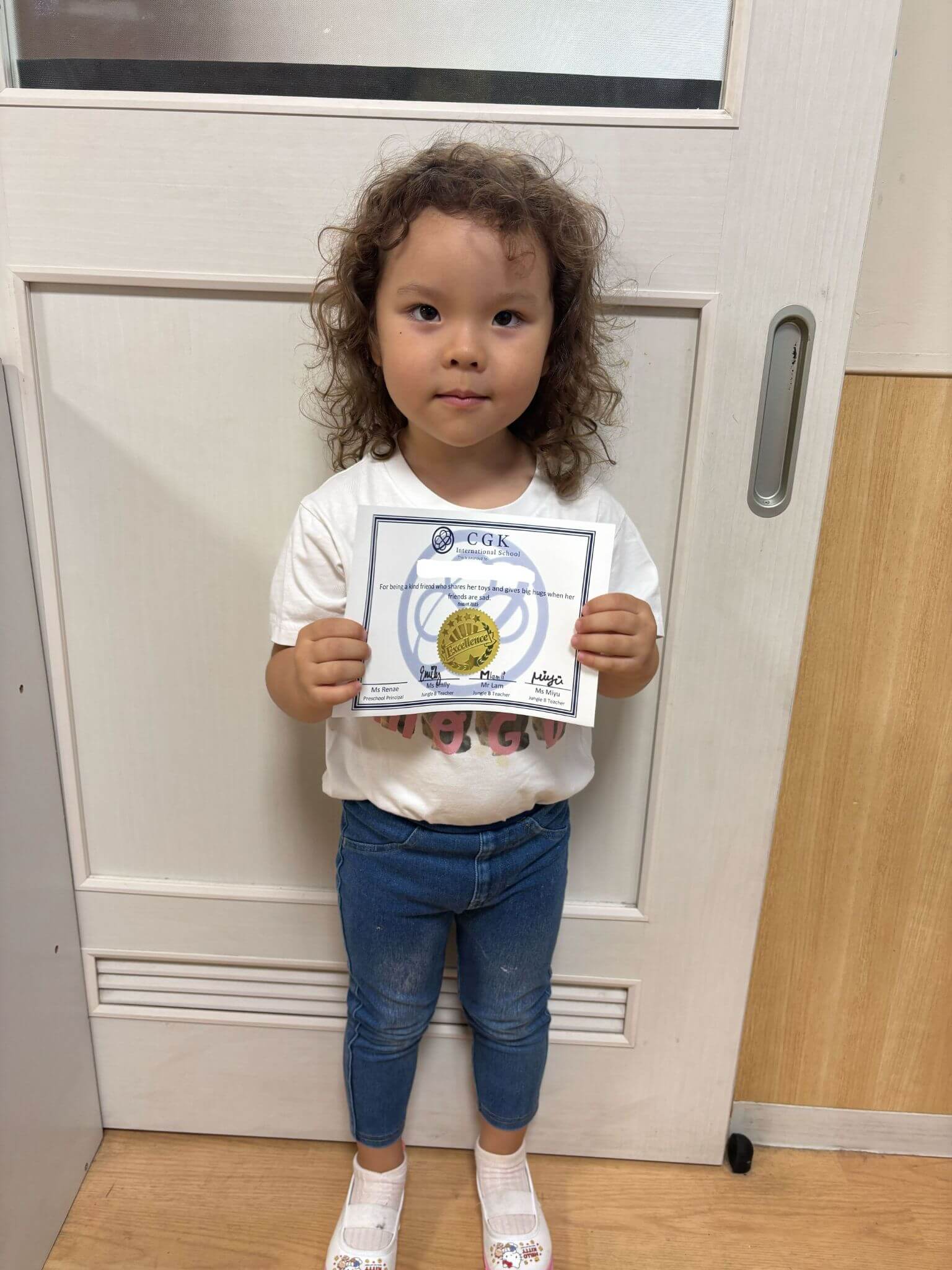
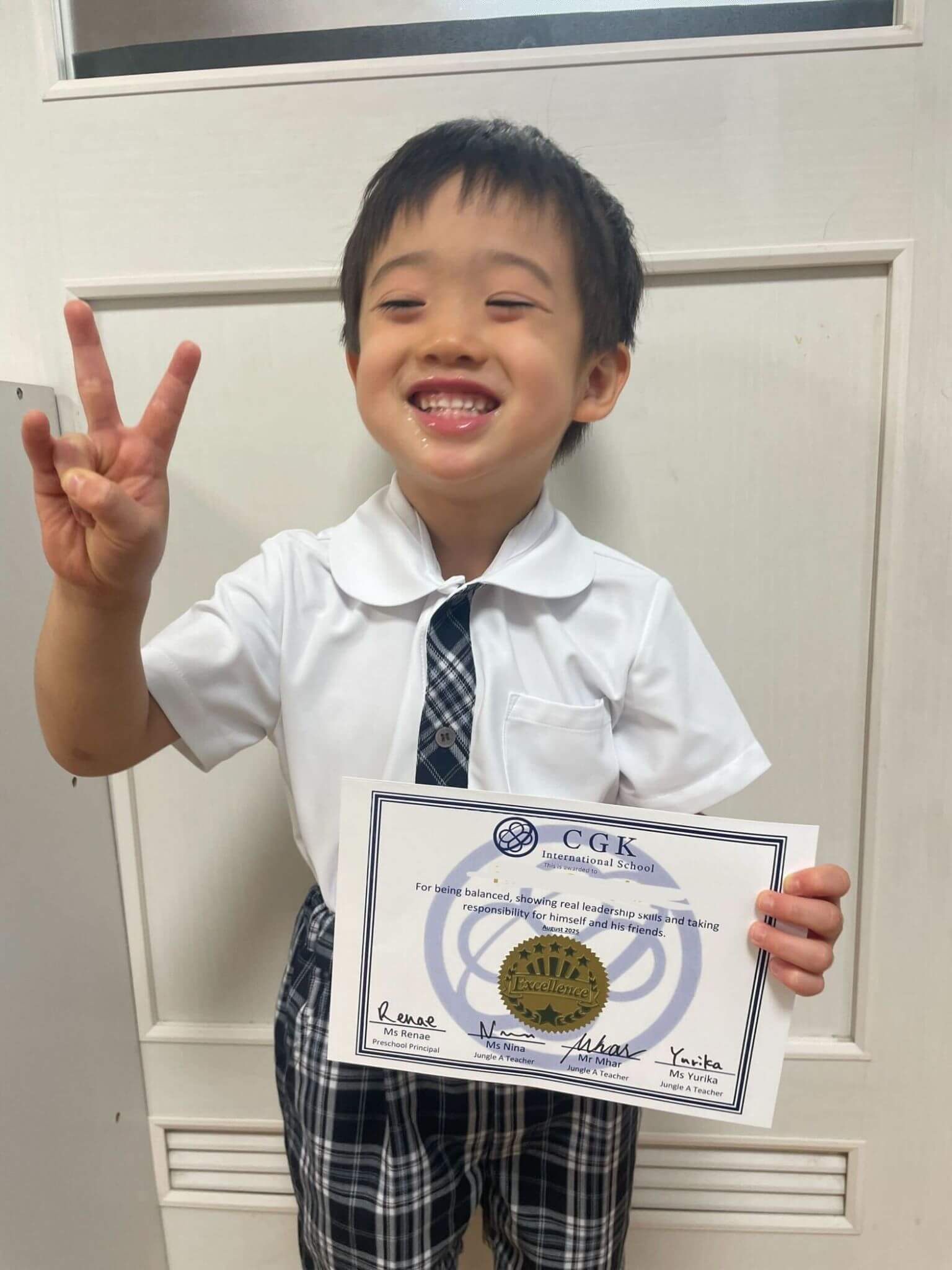
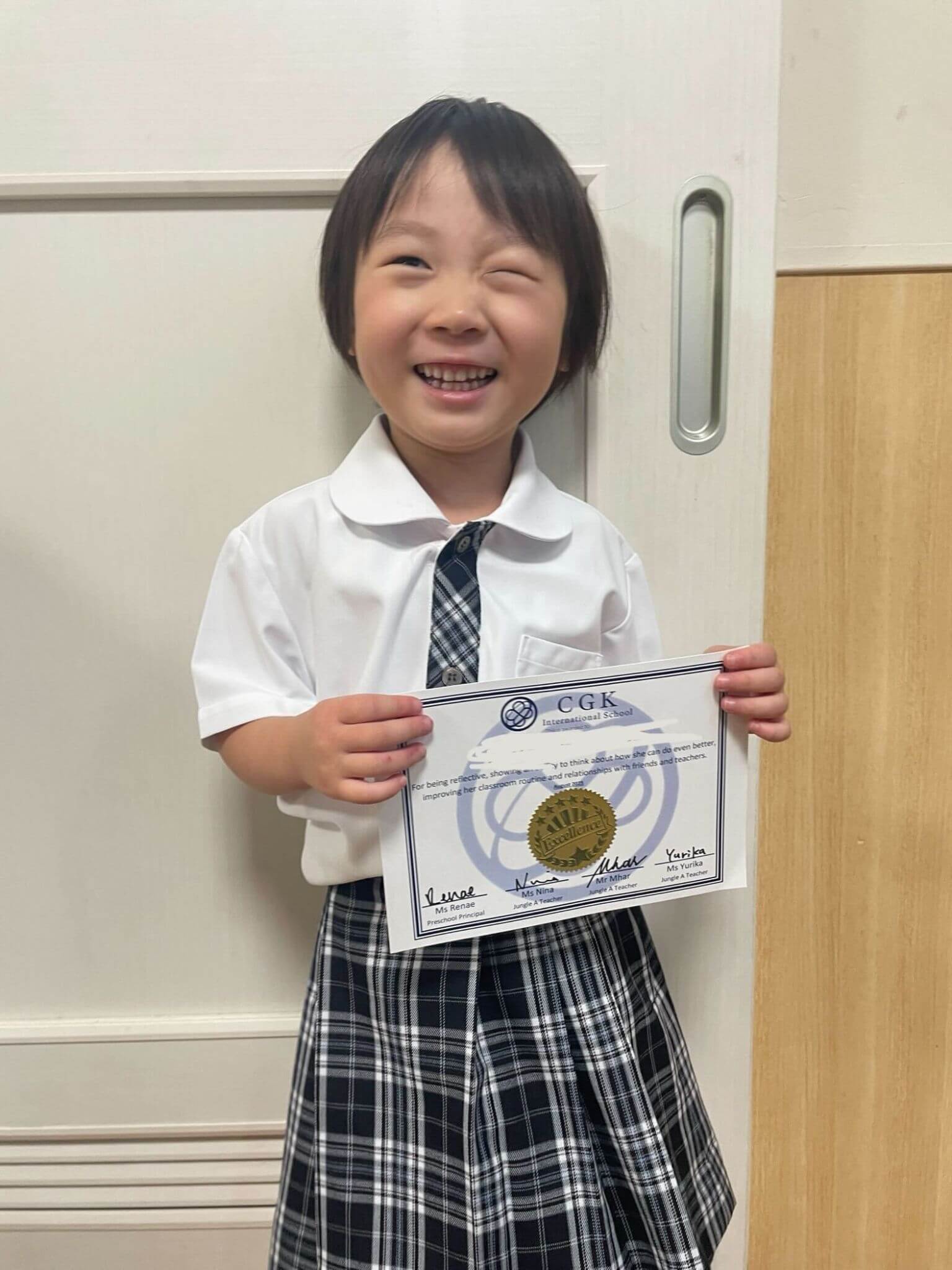
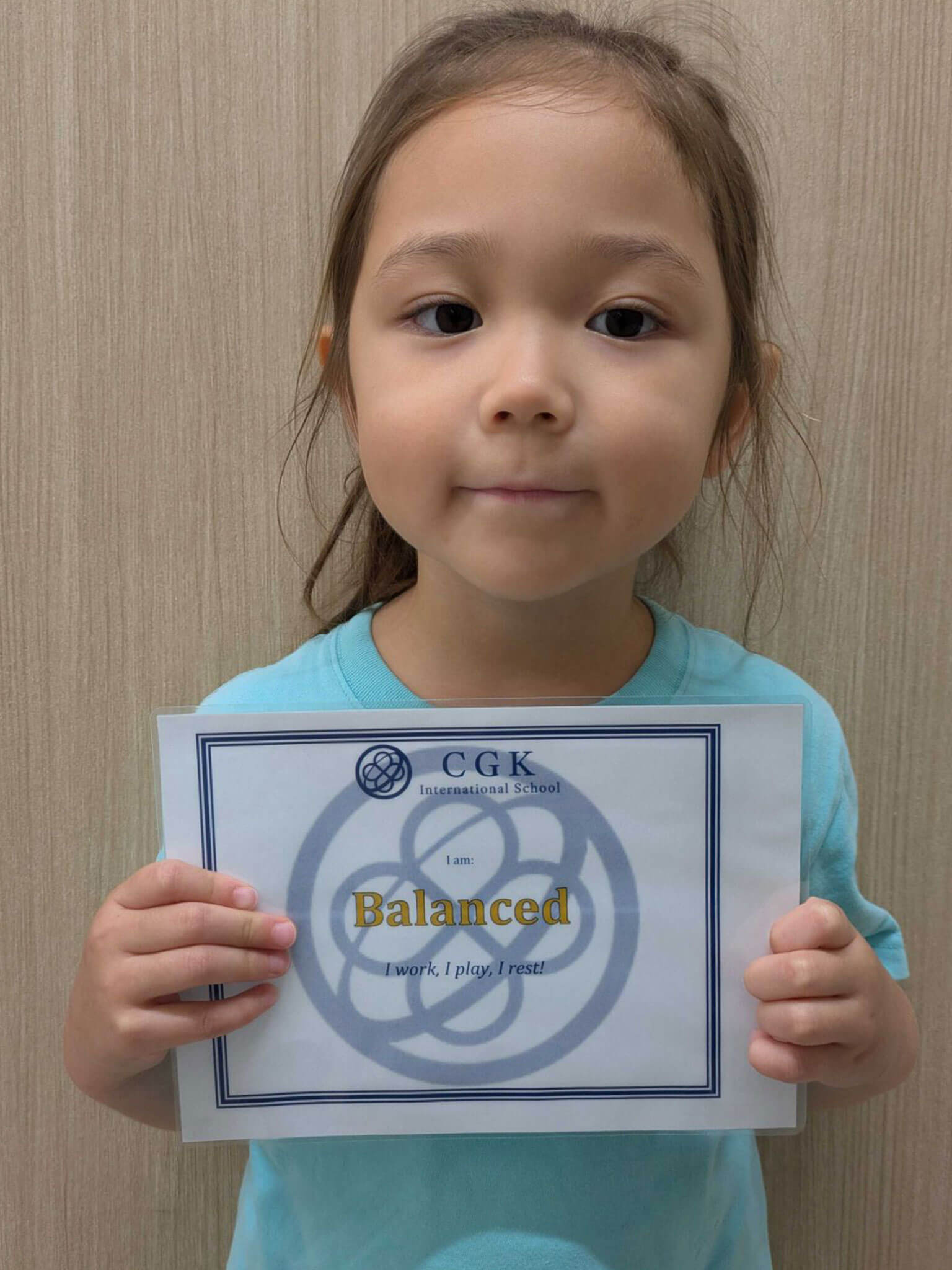
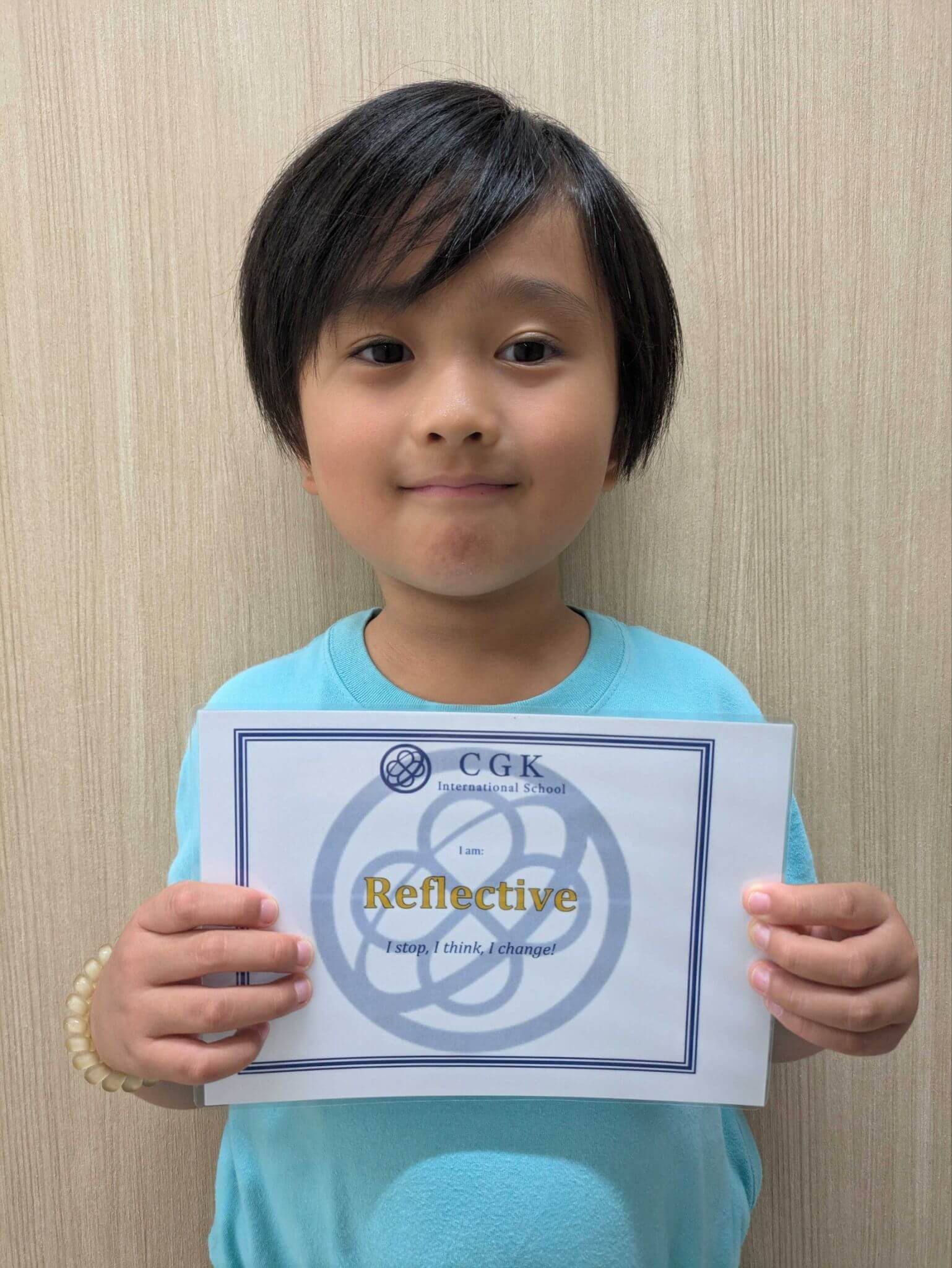
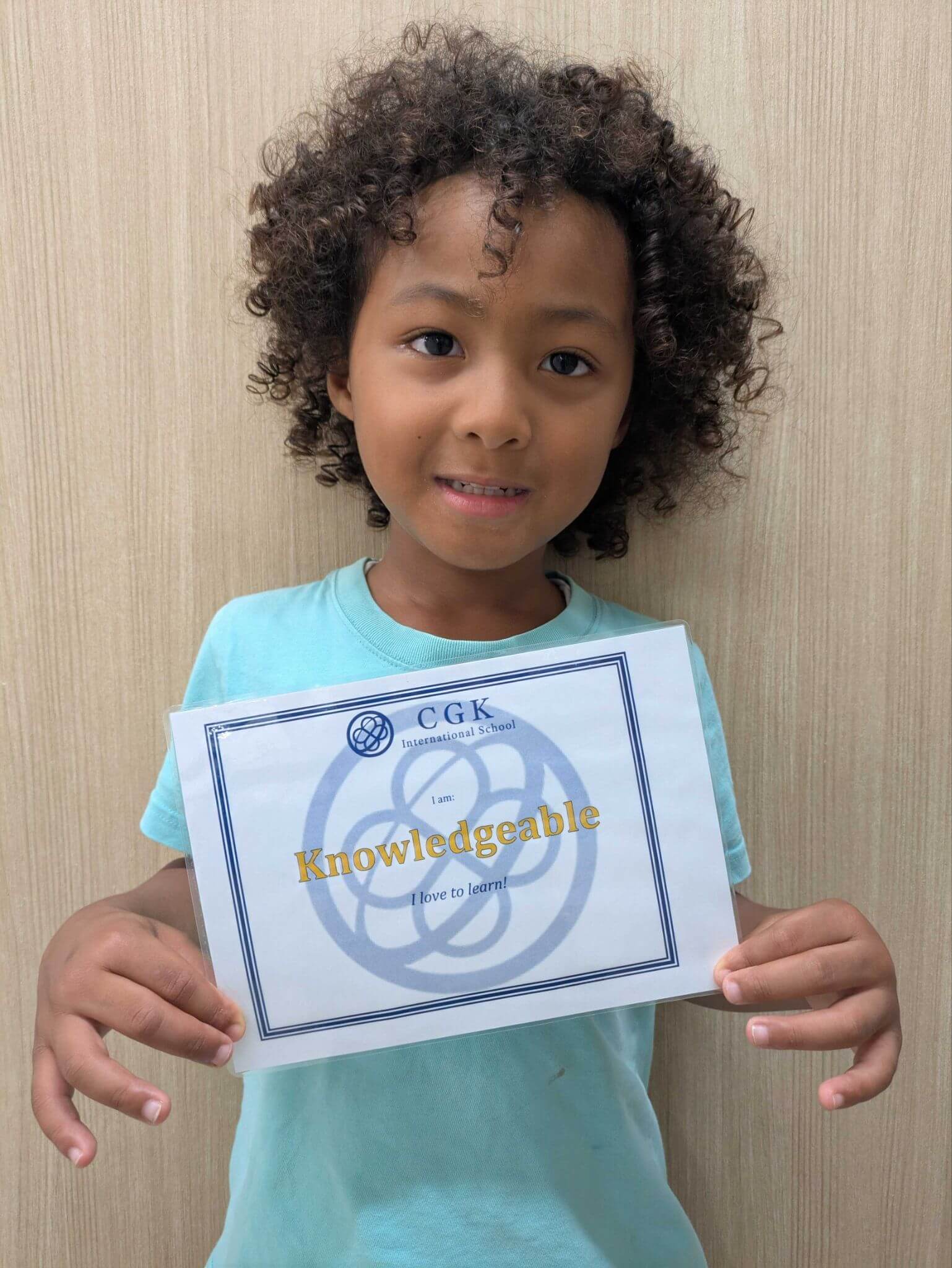
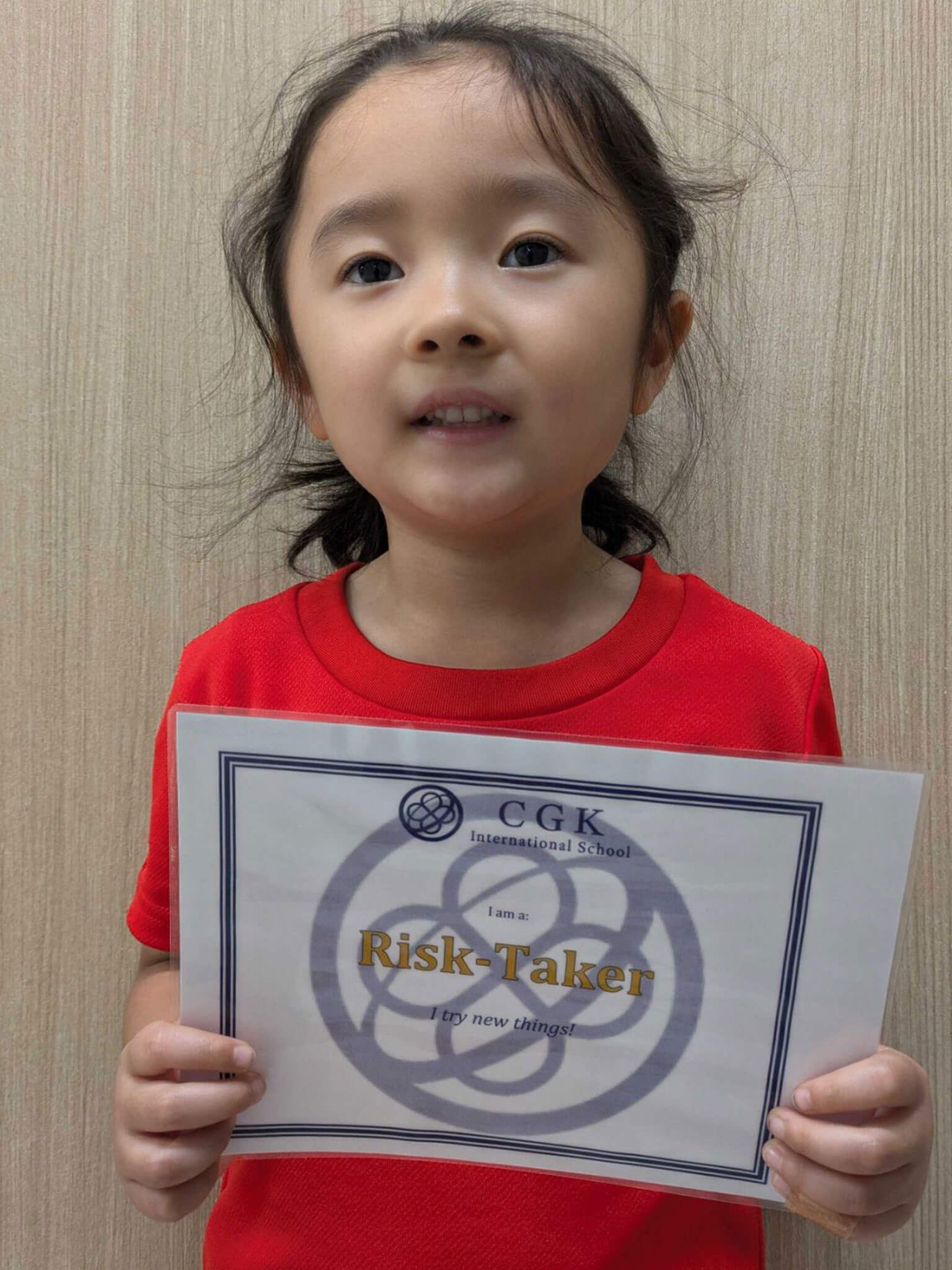
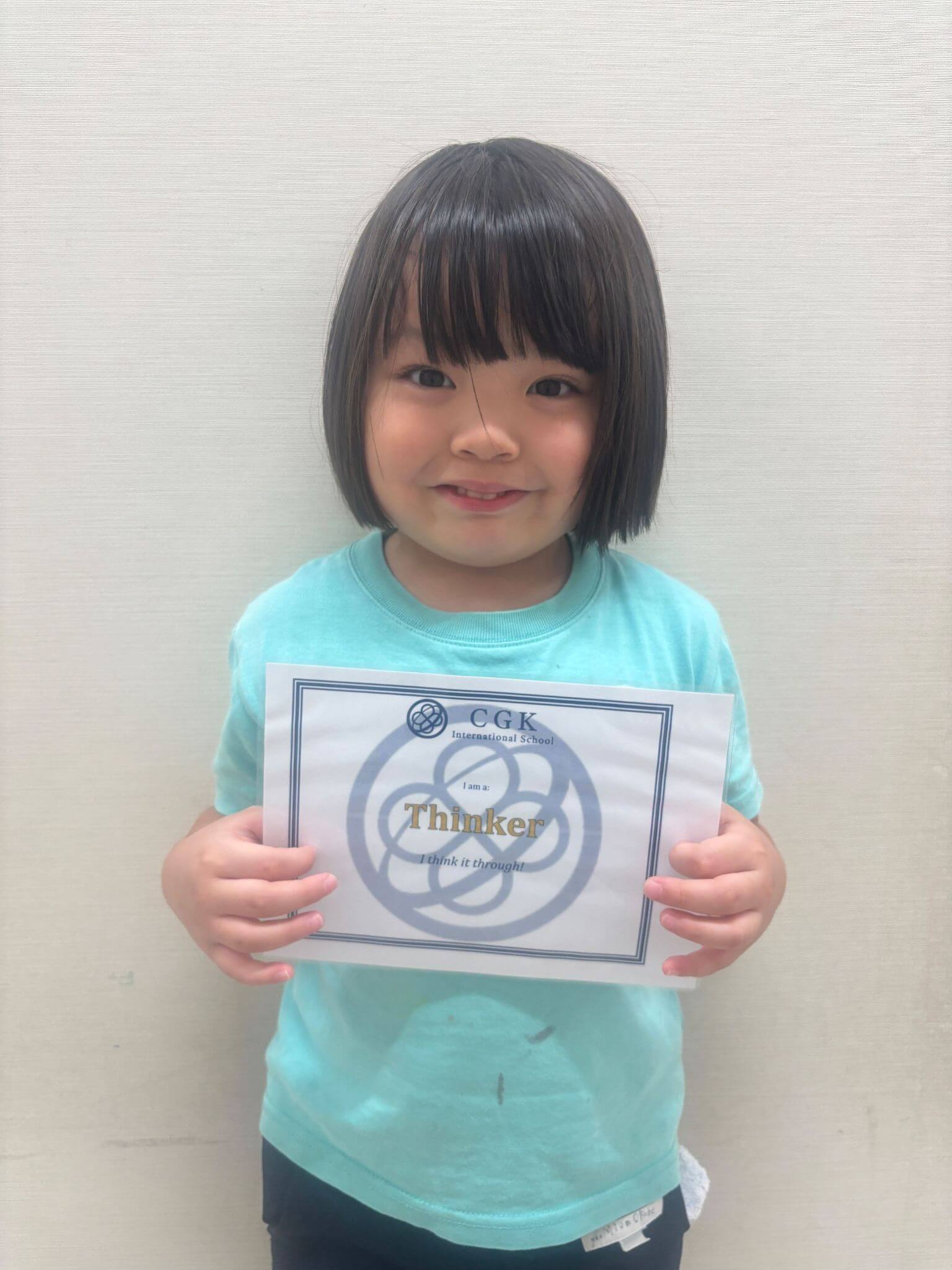
Welcome to the world renowned, highly respected, and much revered CGK Awards! Each month we would like to highlight the children from each class who have displayed qualities that are part of the IB Learner Profile. These are qualities that we want our children to have and to share with the world. With that, the recipients of this month's CGK Achievement Awards are:
Jungle A (3 year-olds)
H. - For being balanced, showing real leadership skills and taking responsibility for himself and his friends.
K. - For being reflective, showing an ability to think about how she can do even better, improving her classroom routine and relationships with friends and teachers.
Jungle B (3 year-olds)
T. - For being a kind friend who shares her toys and gives big hugs when her friends are sad.
S. - For being a brave young student! Always trying new foods and learning how they taste.
Mountain (4 year-olds)
E. - For displaying a true eagerness to learn and expand his understanding both within the UOI and beyond.
A. - For always being willing to try new things and enjoy exploration.
Sky A (5 year-olds)
K. - For always knowing the time to study, the time to play, the time to talk and the time to listen without any help from the teacher.
M. - For trying her best to think and make connections between the activities of our UOI to our central idea and lines of inquiry.
Sky B (5 year-olds)
E. - For thinking about her friends and being curious about others
M. - For thinking deeply about lessons and asking questions.
Sky A&B (5-year-olds)
Through Exploration We Can Understand the World Around Us
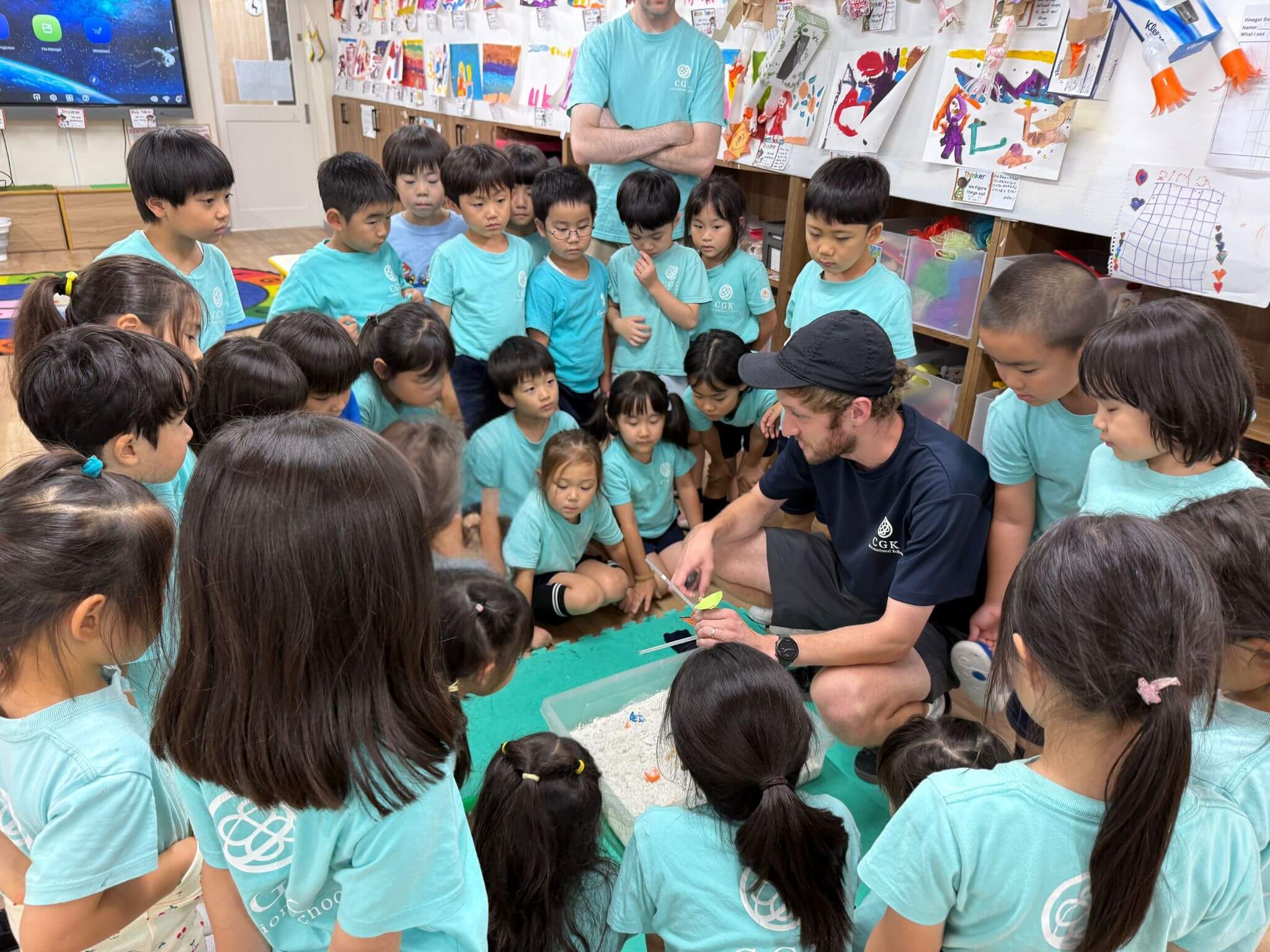
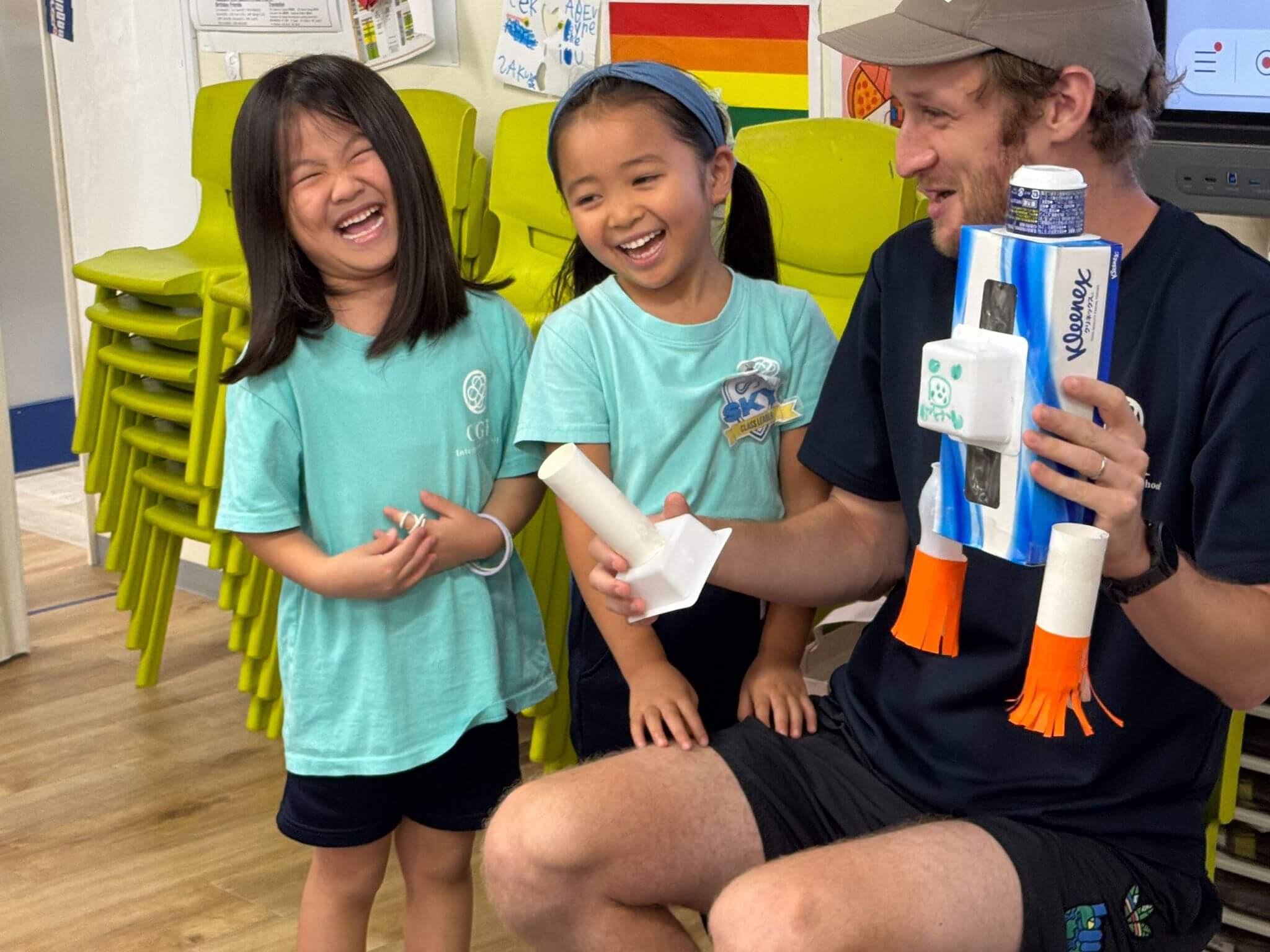
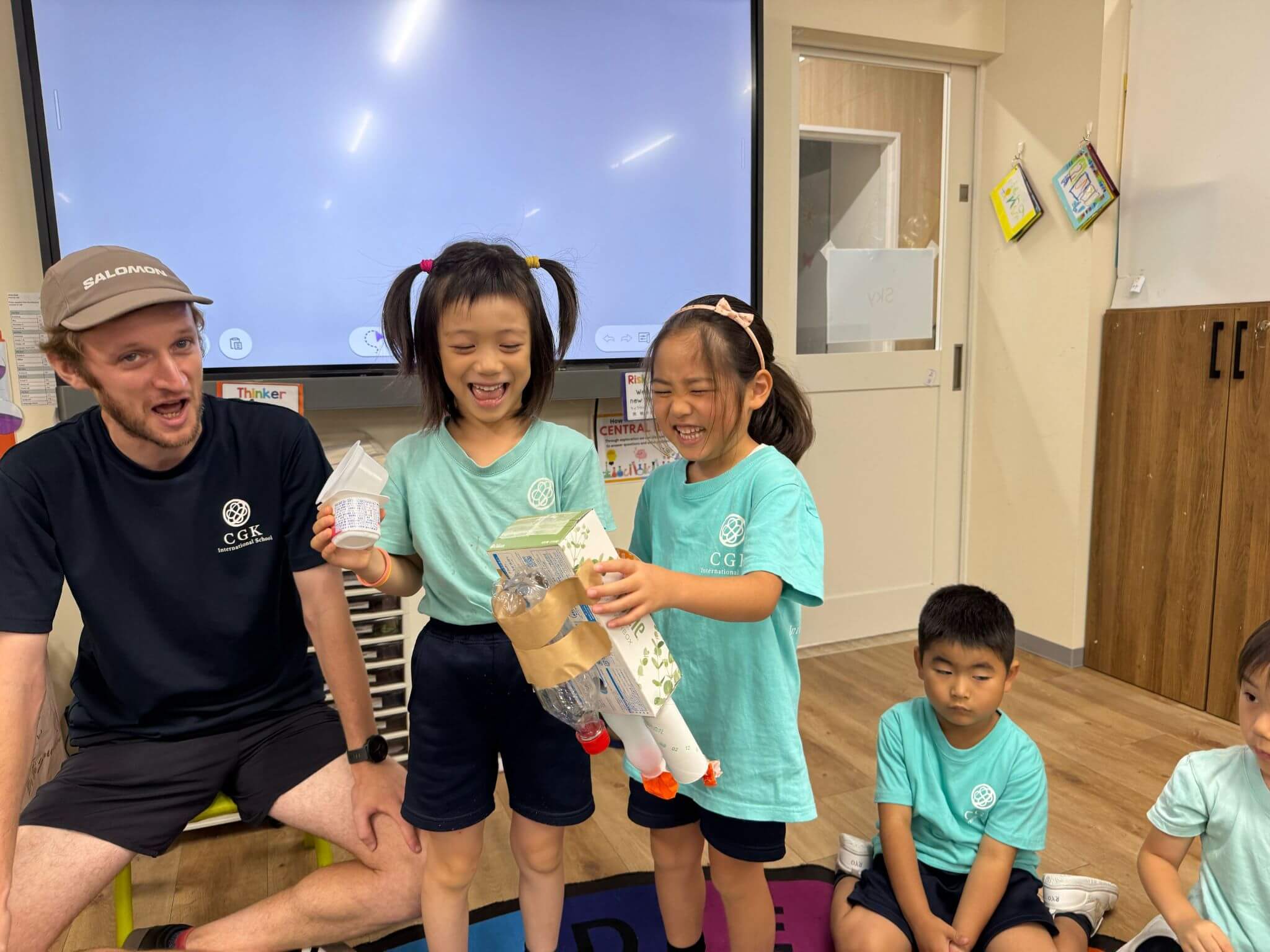
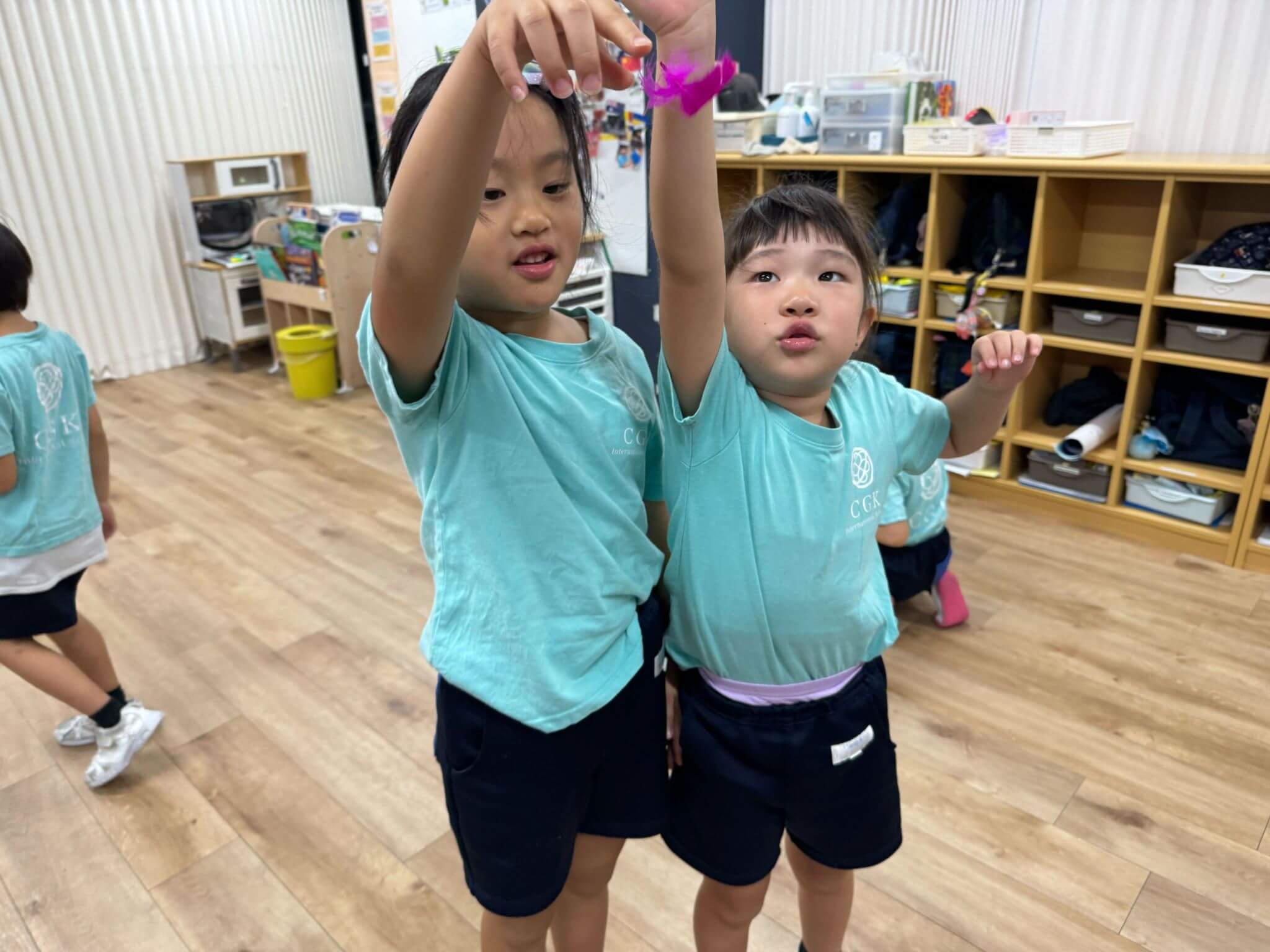
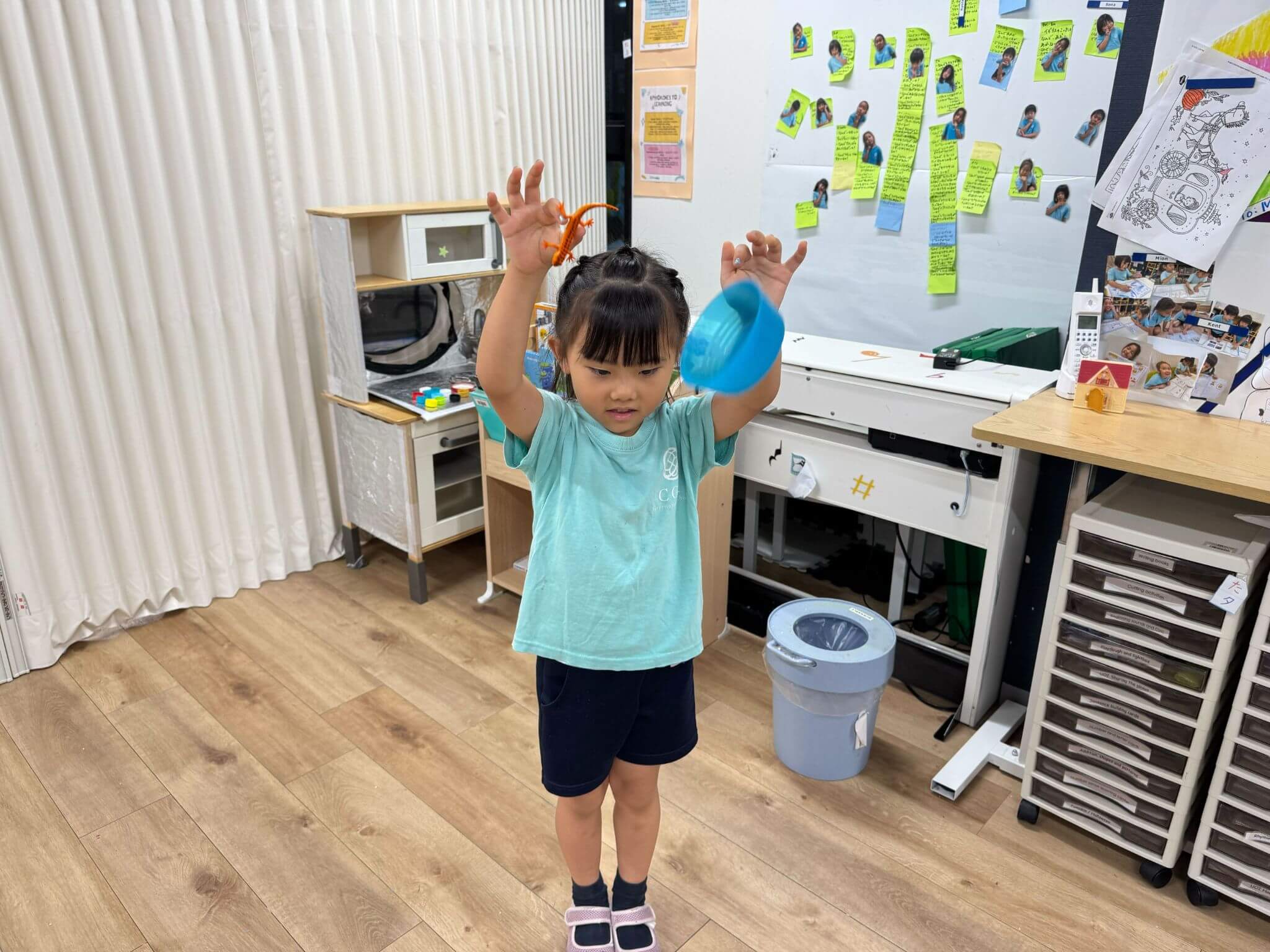
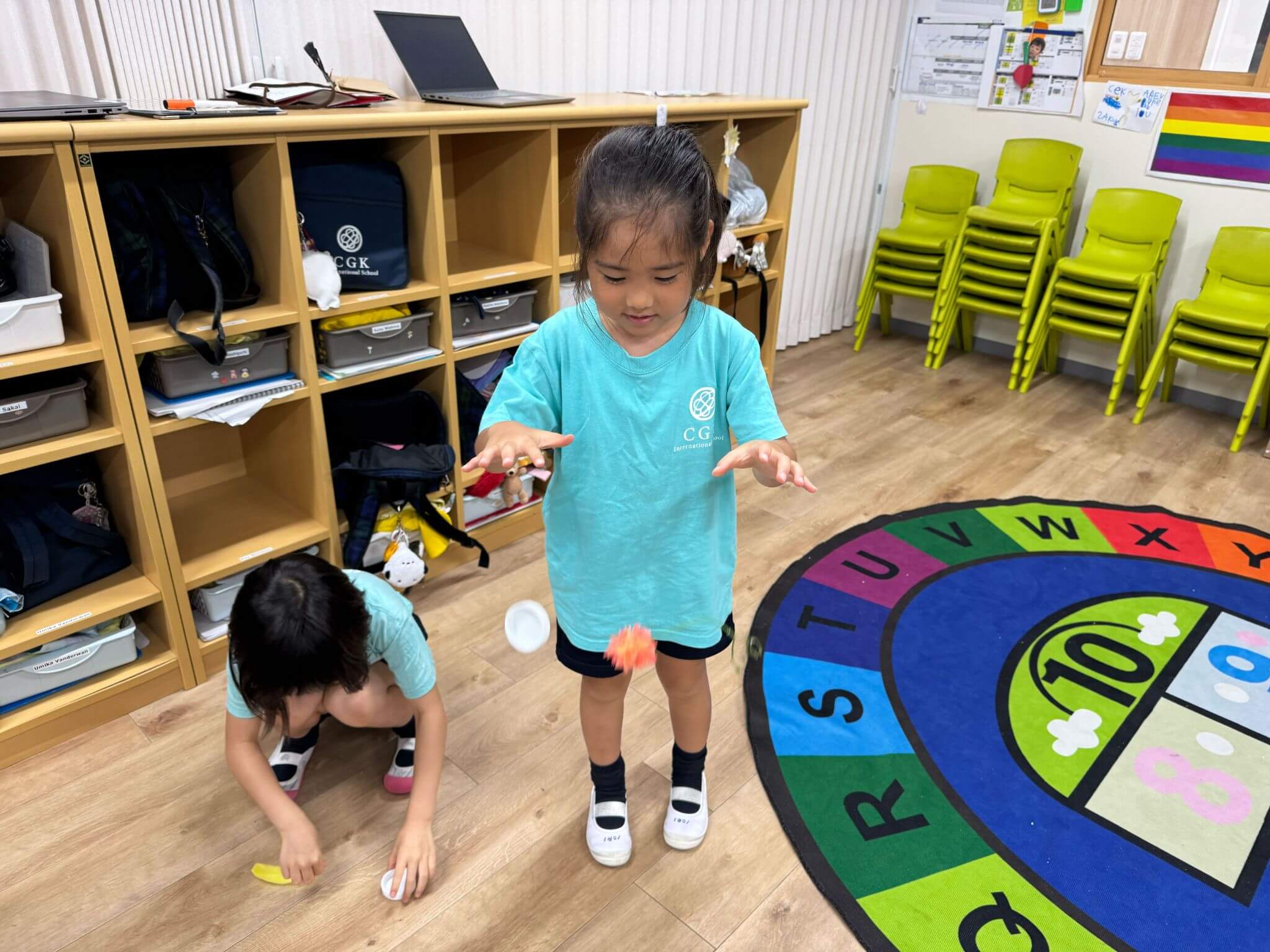
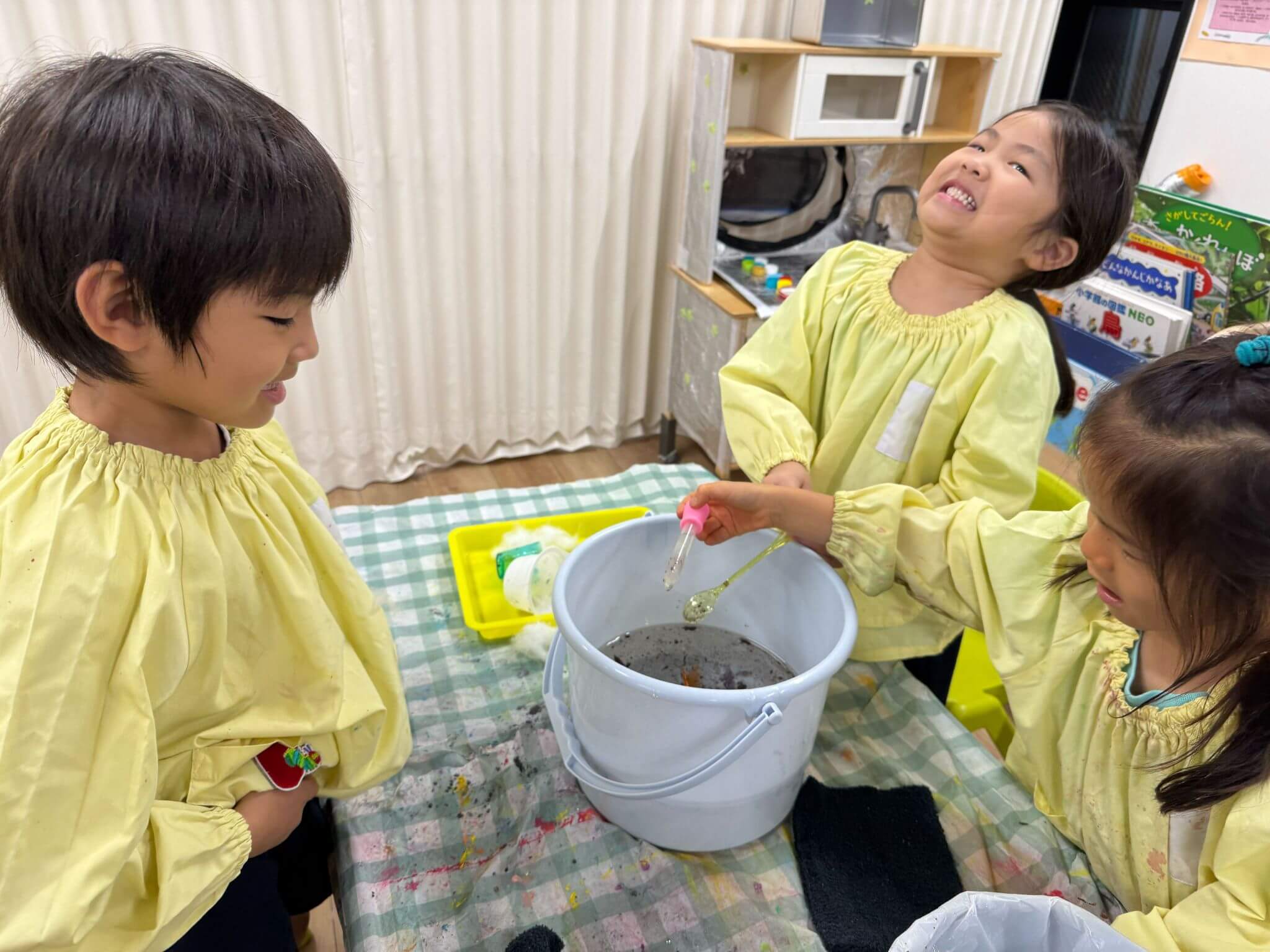
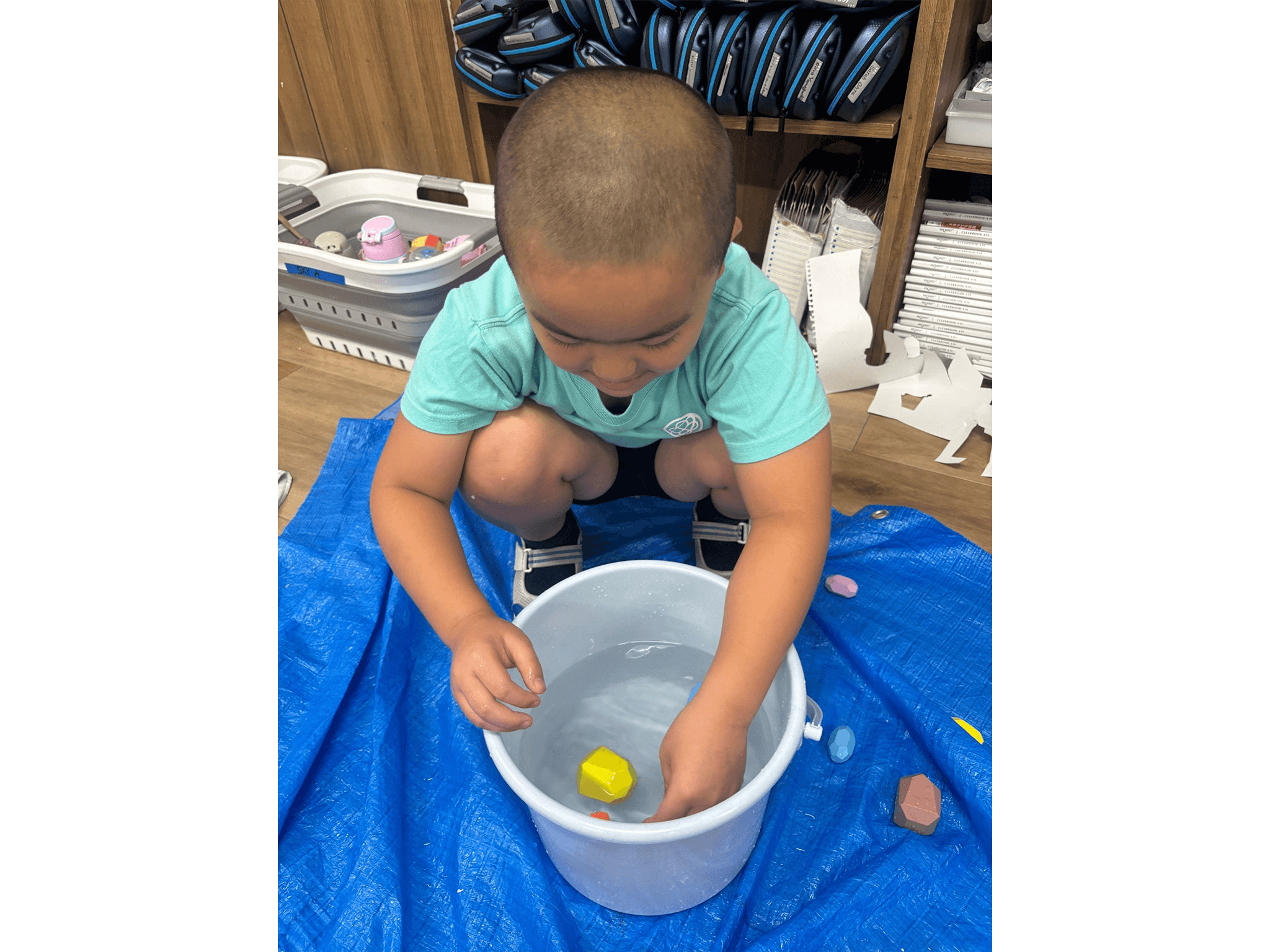
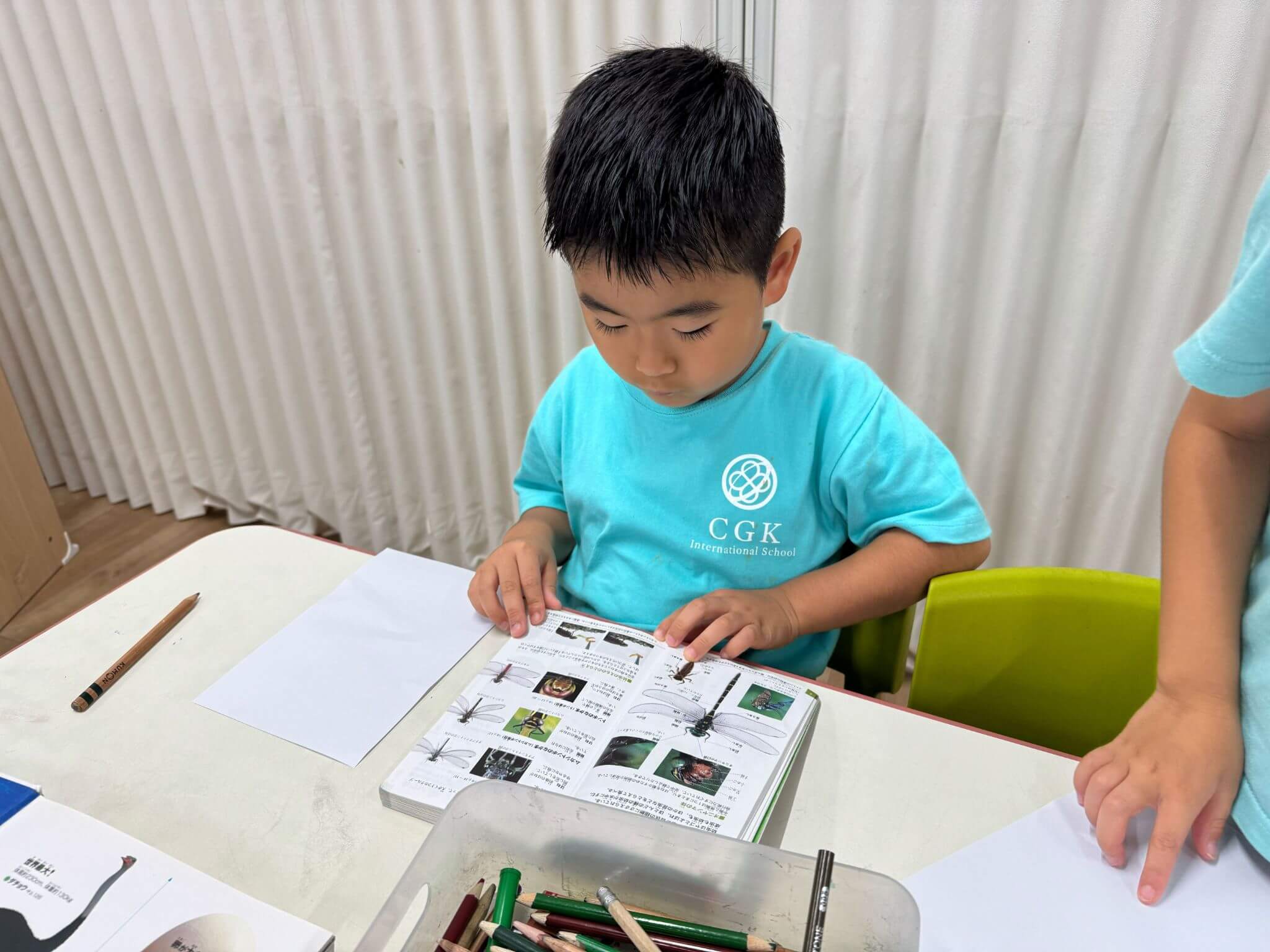
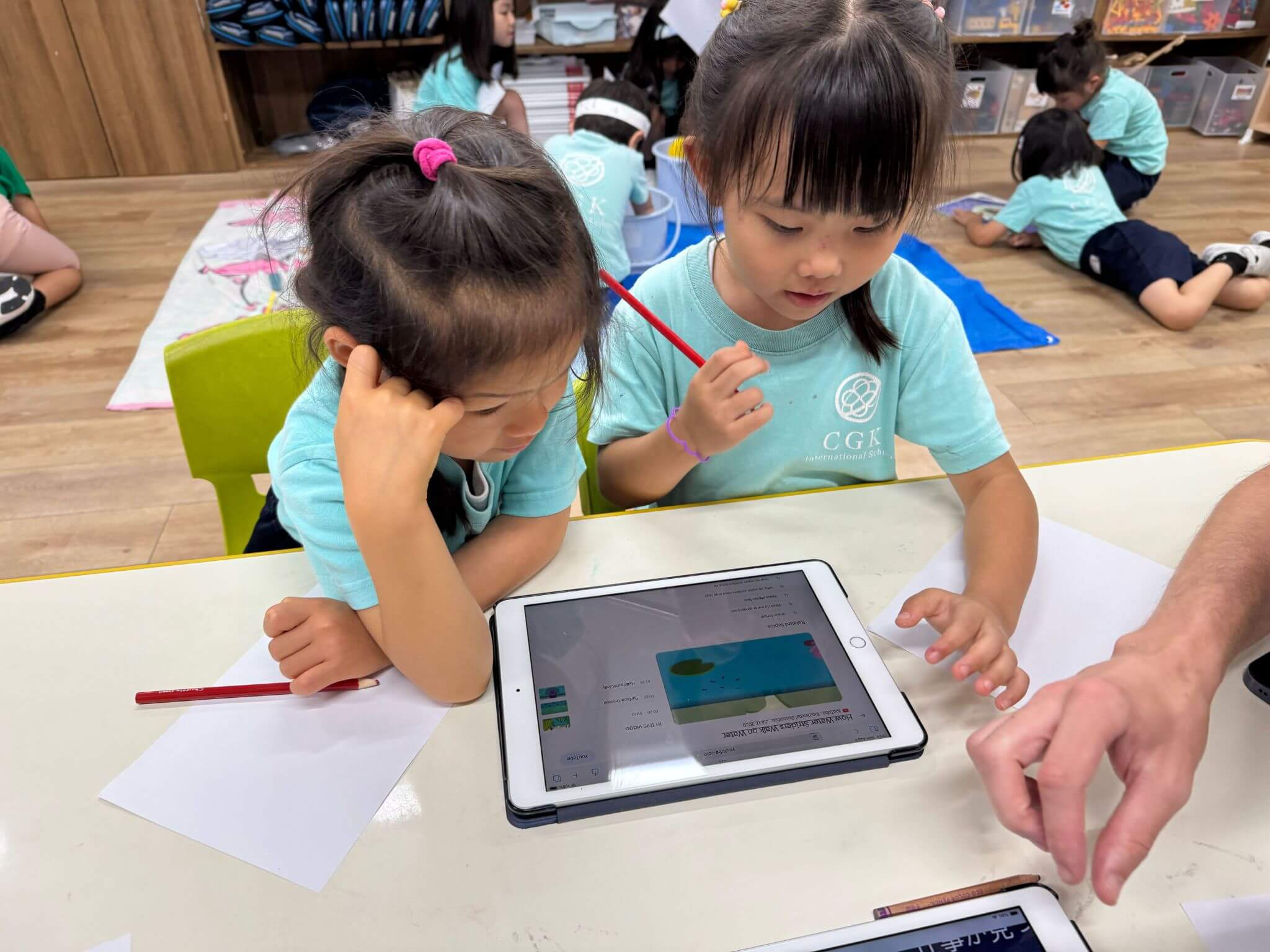
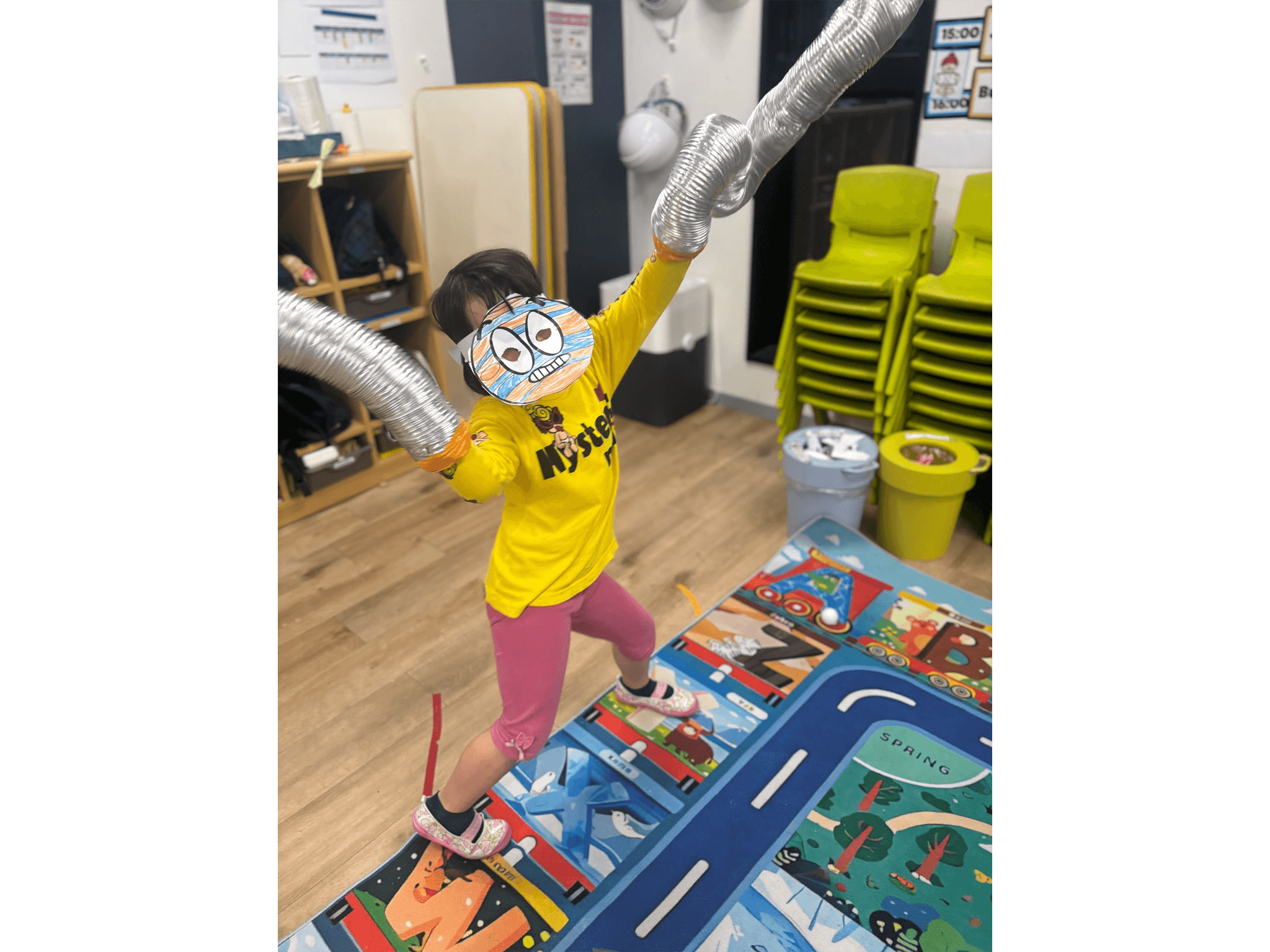
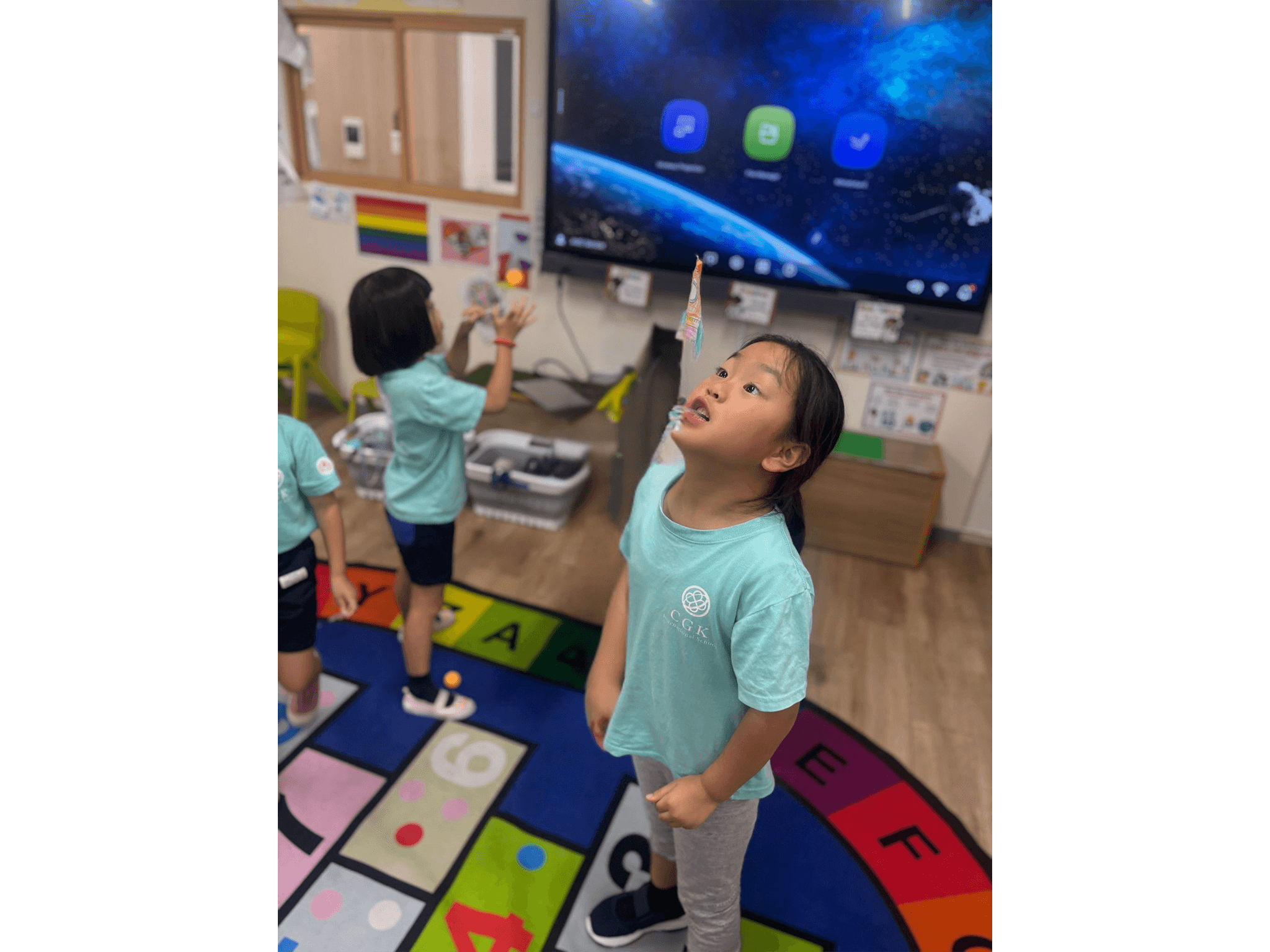
Throughout our Unit of Inquiry, How the World Works, our Sky students have been applying scientific thinking, research skills, and innovative processes to deconstruct and better understand the world around them and even beyond it. Instead of simply providing answers, we have intentionally framed our lessons around thought-provoking questions and key concepts about the universe and the systems within it.
These questions have spanned a wide range of topics, such as: What are galaxies made of? What makes an insect? What floats and what sinks? What makes a good umbrella? Why do things fall at different speeds? How do rockets blast off into space?—and many more.
Once the questions were framed and discussed as a class, students were encouraged to explore them through a variety of modalities, including play, hands-on experiments, innovation challenges, research, and creative arts and crafts. This open-ended approach has given them opportunities not only to deepen their understanding but also to express their learning in ways that reflect their curiosity and individual strengths. Additionally, through hands-on exploration our students formed deeper connections to the concepts and naturally came up with their own questions during reflection time that gave direction to our future inquiry.
A few highlight activities included, but were not limited to: Straw Rocket Blast-off Craft, Gravity and Aerodynamics Experiment, Insect Innovation Challenge, and the Ocean Oil Spill Clean-Up Challenge, among many others.
At CGK, we are committed to placing our students at the very center of the learning process, ensuring that each experience is not only engaging but also meaningful and memorable. By designing activities that are hands-on, inquiry-based, and closely connected to real-world concepts, we aim to make learning as visceral, impactful, and enduring as possible.
Discovering Space Through Inquiry and Exploration
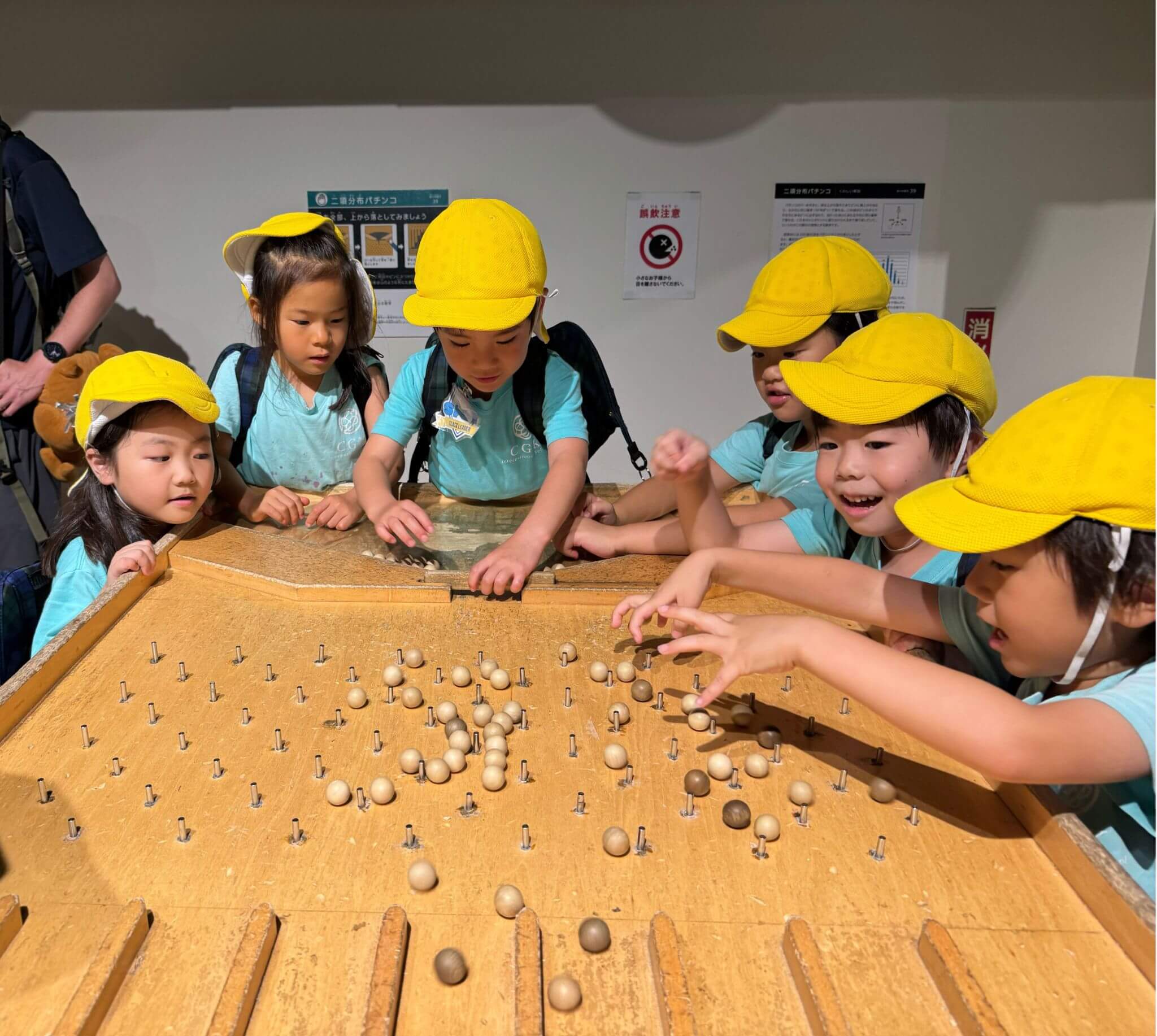
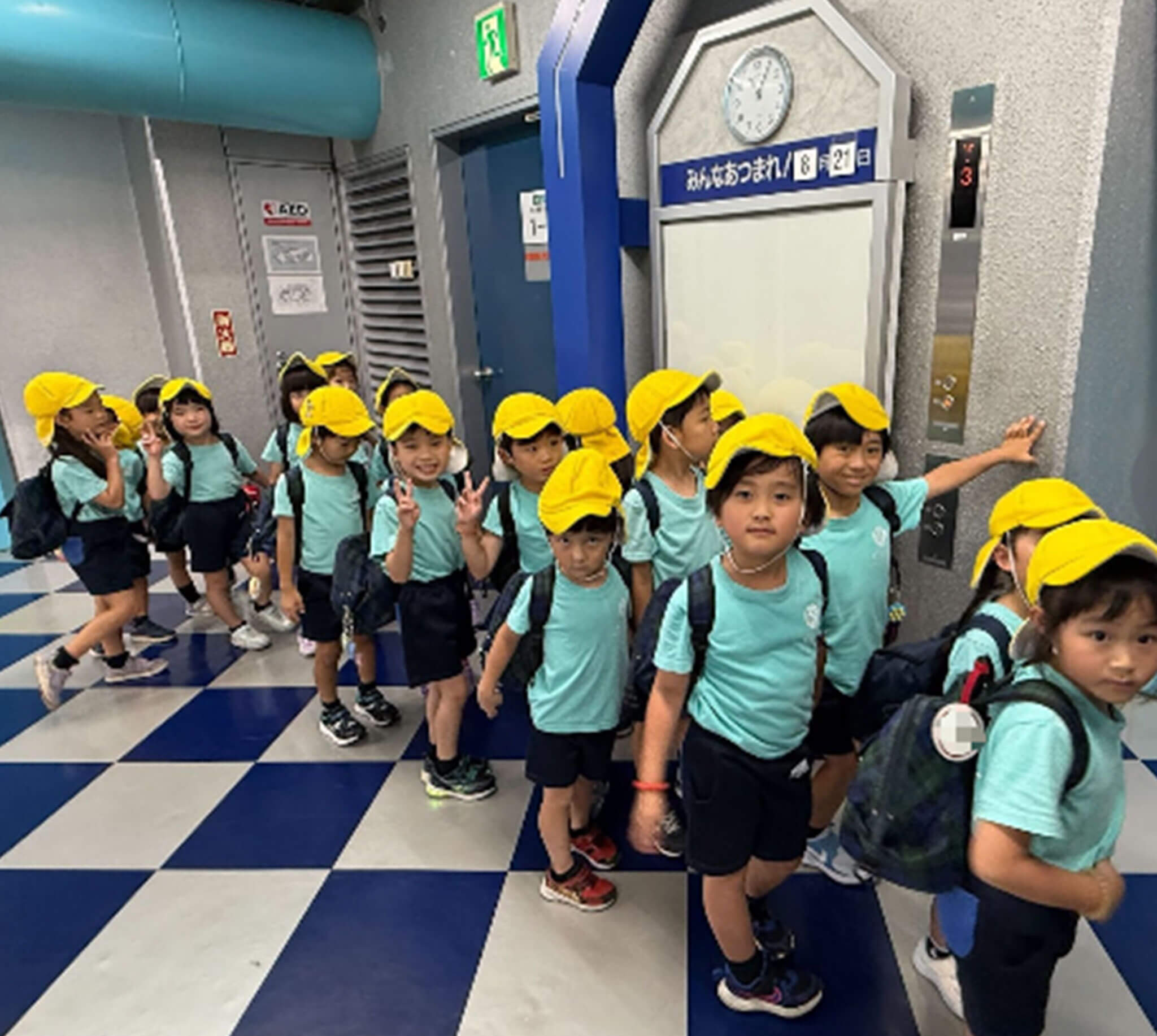
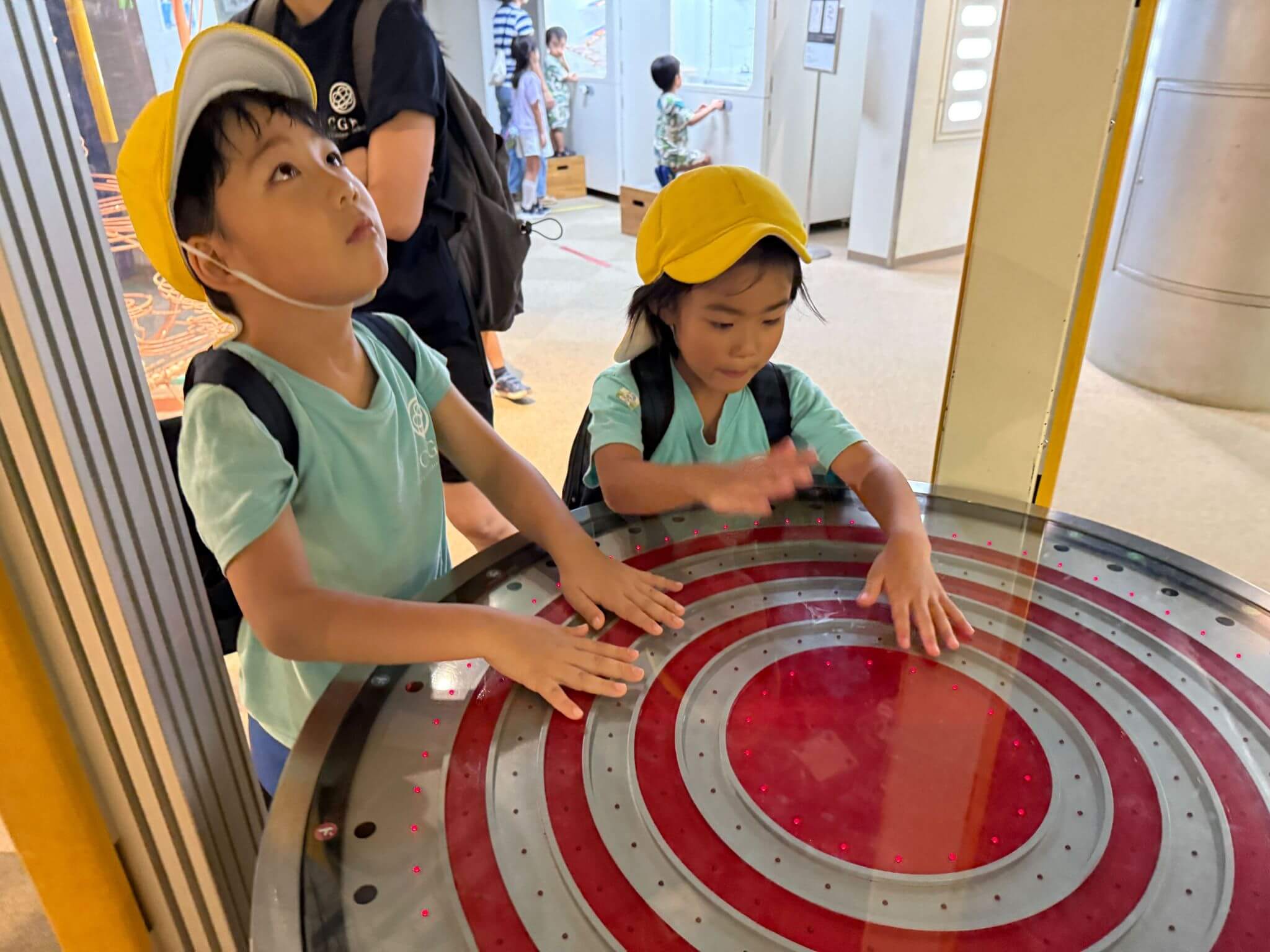
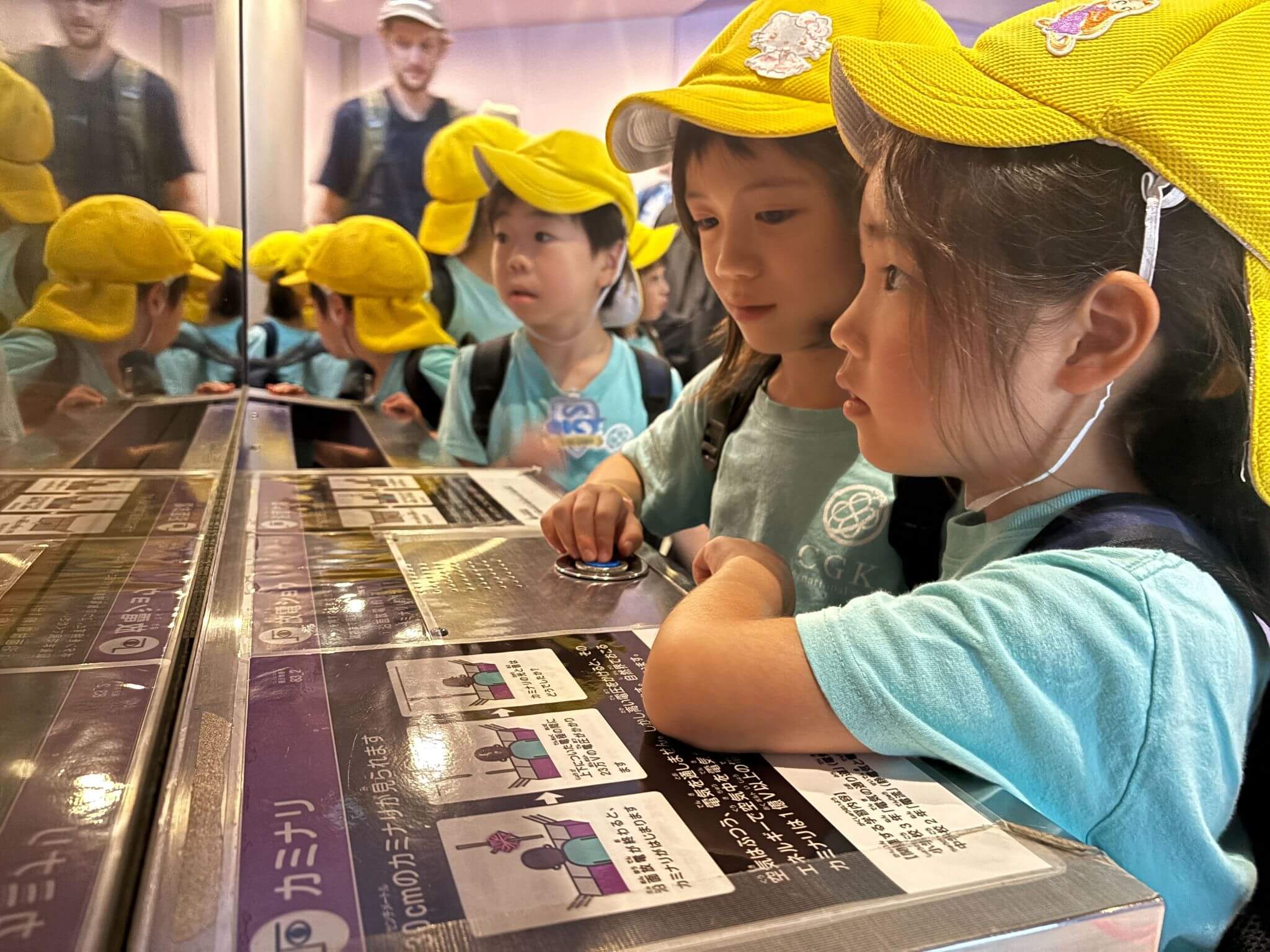
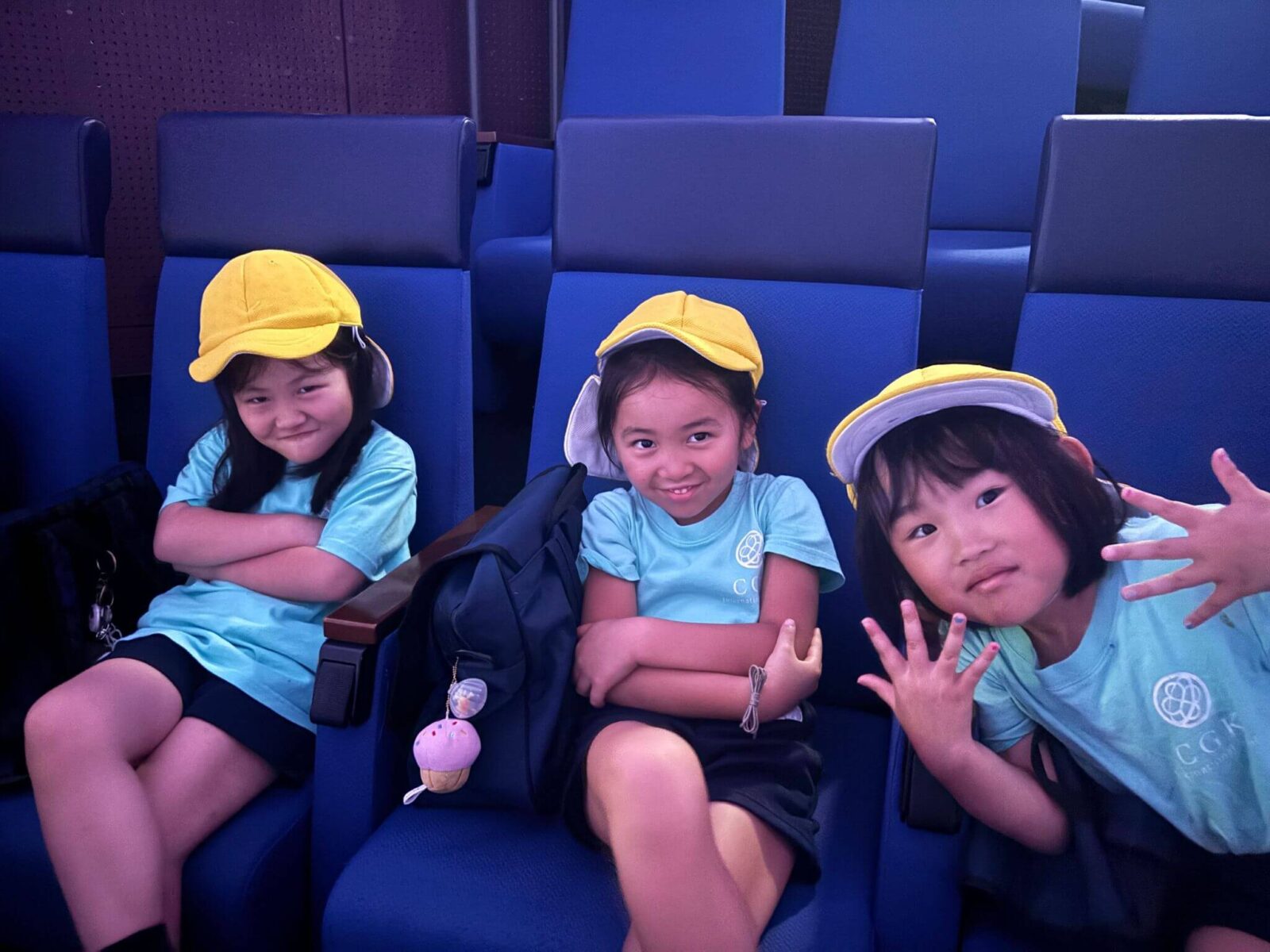
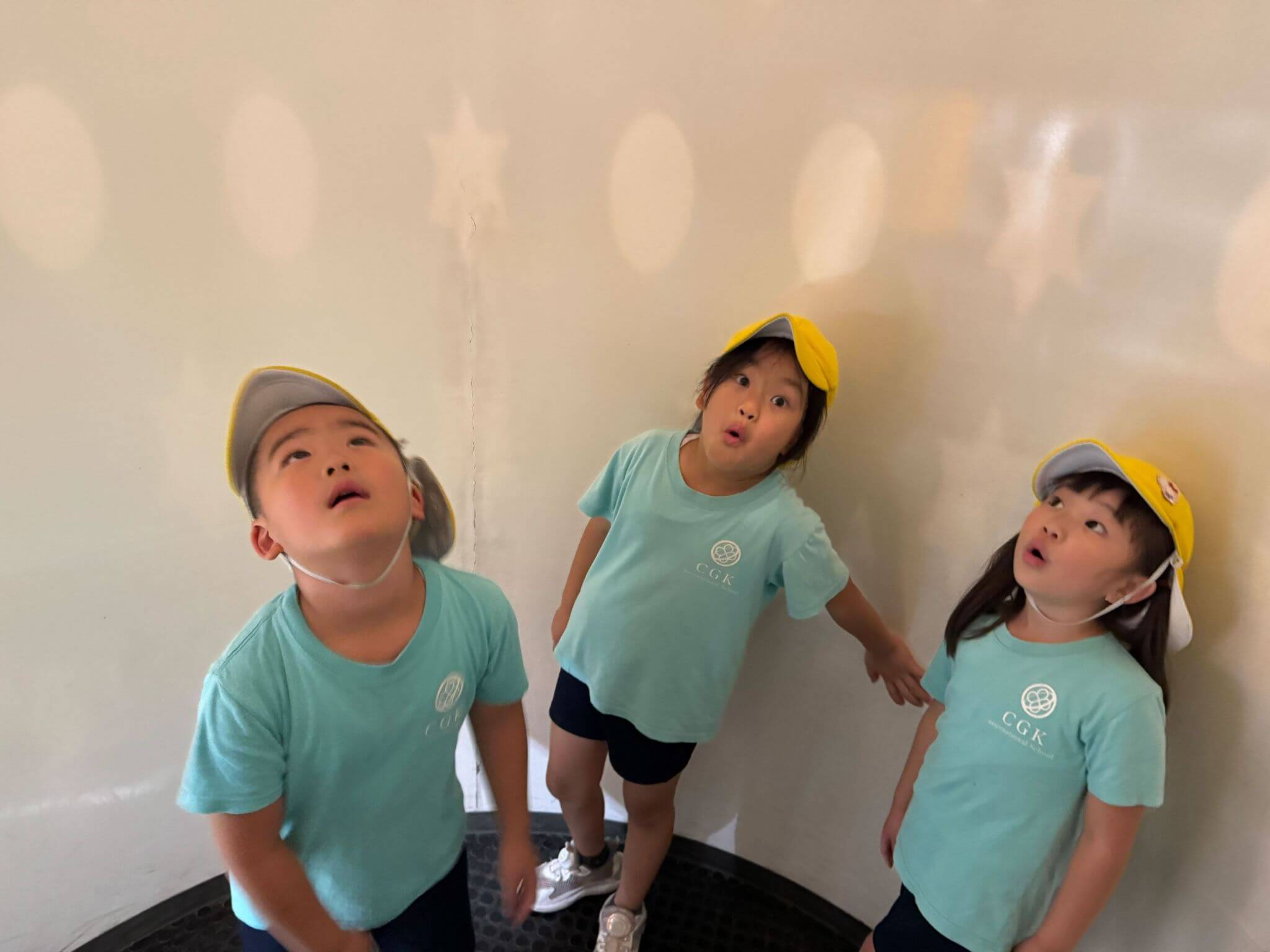
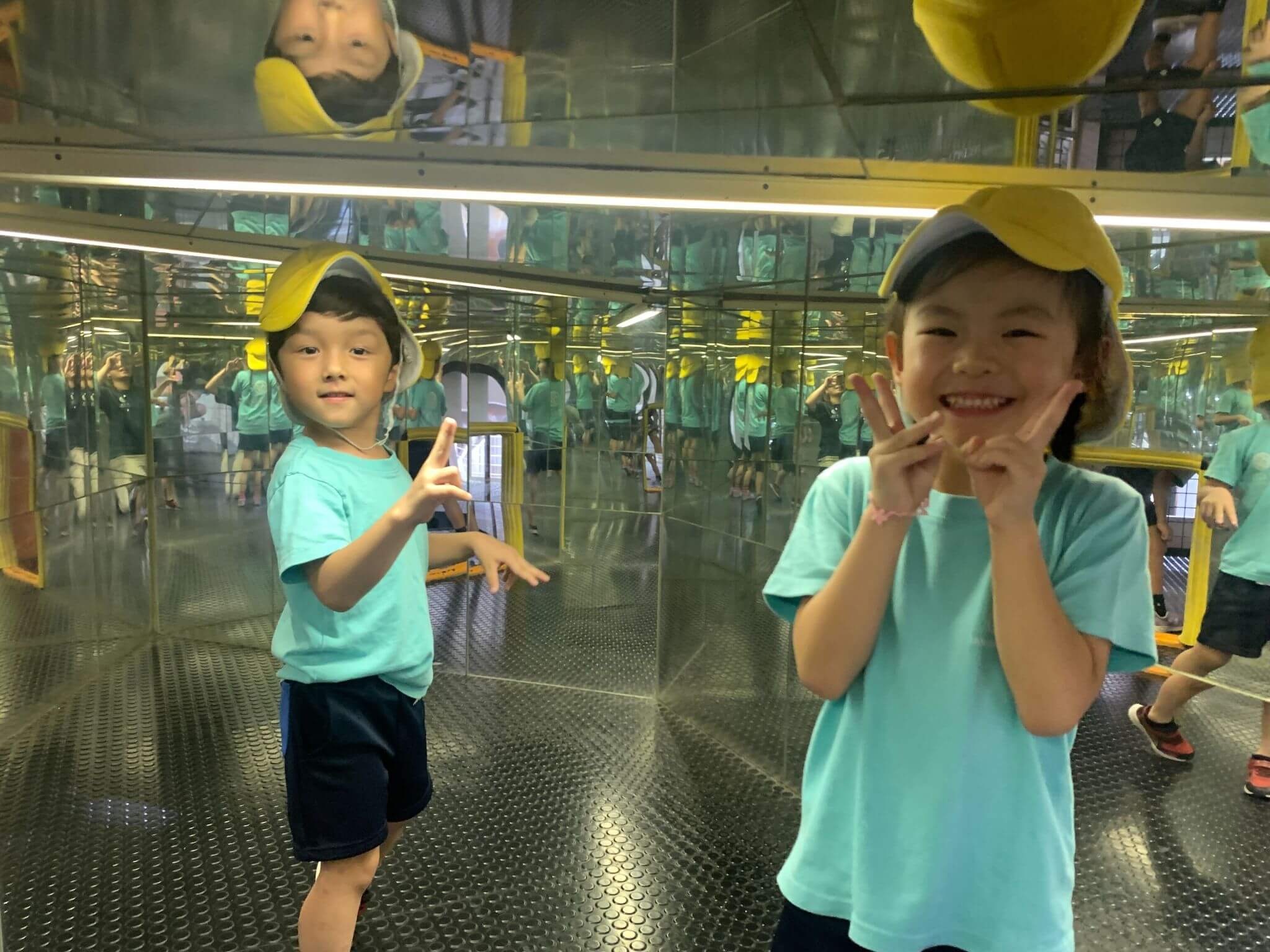
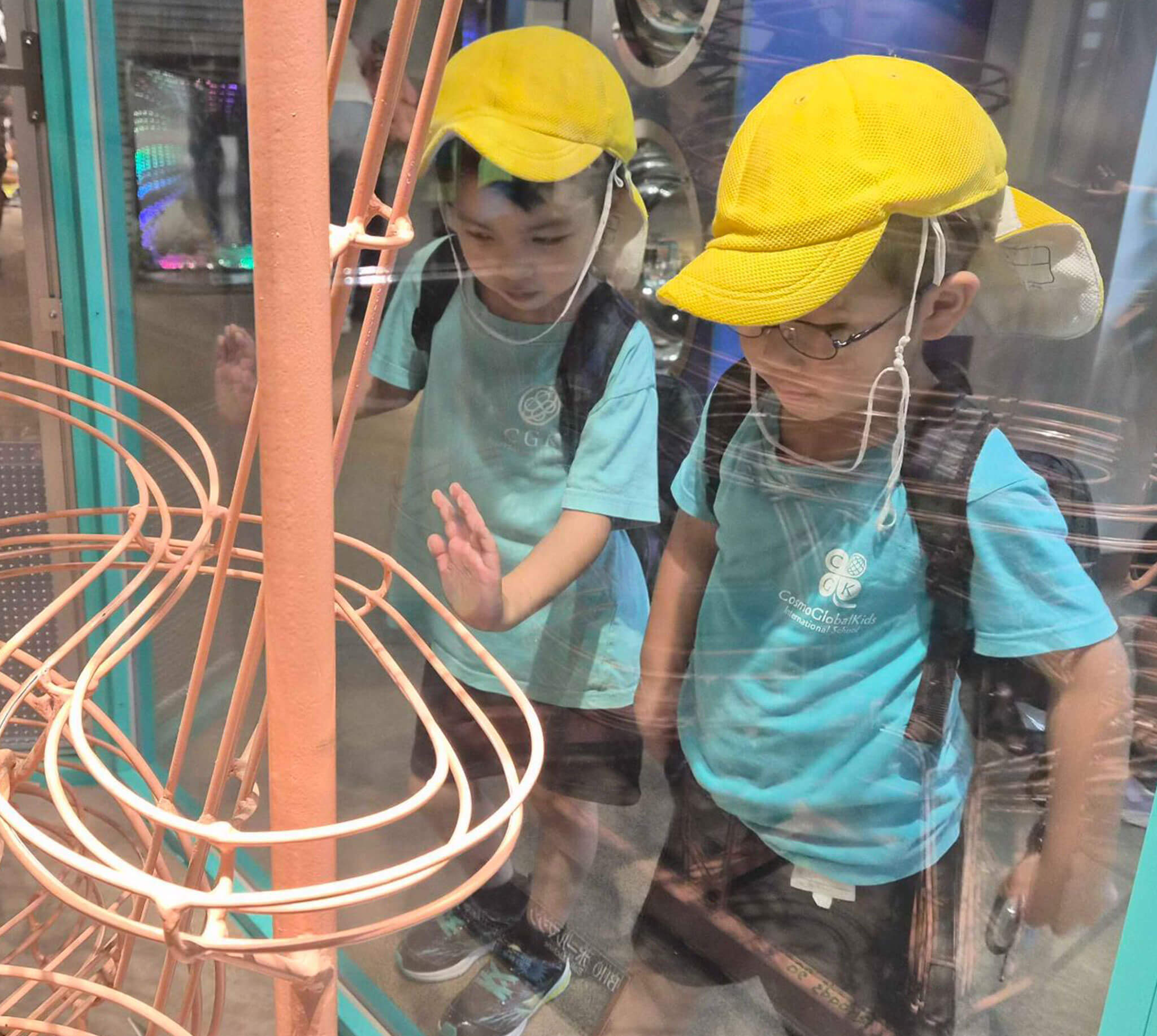
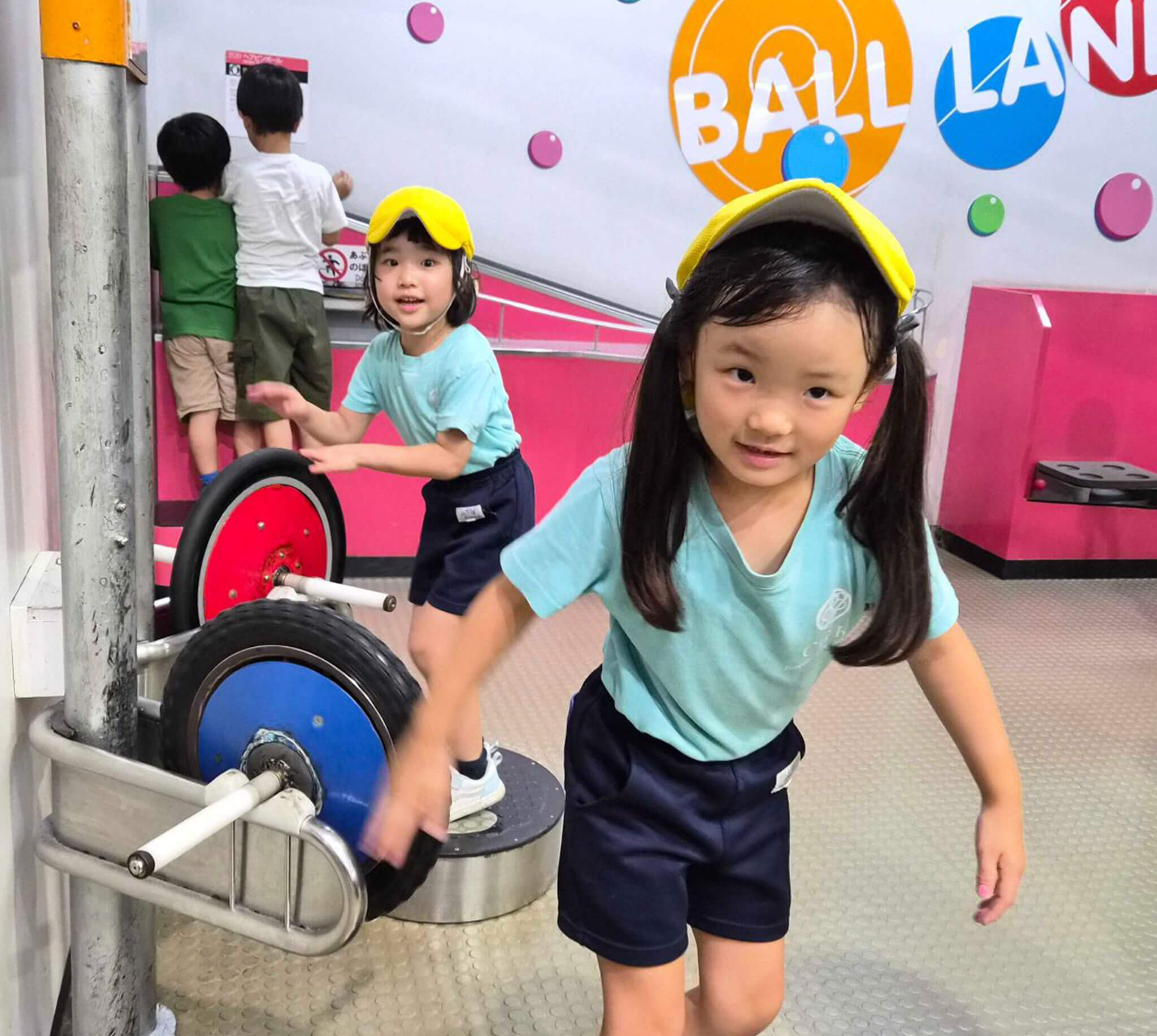
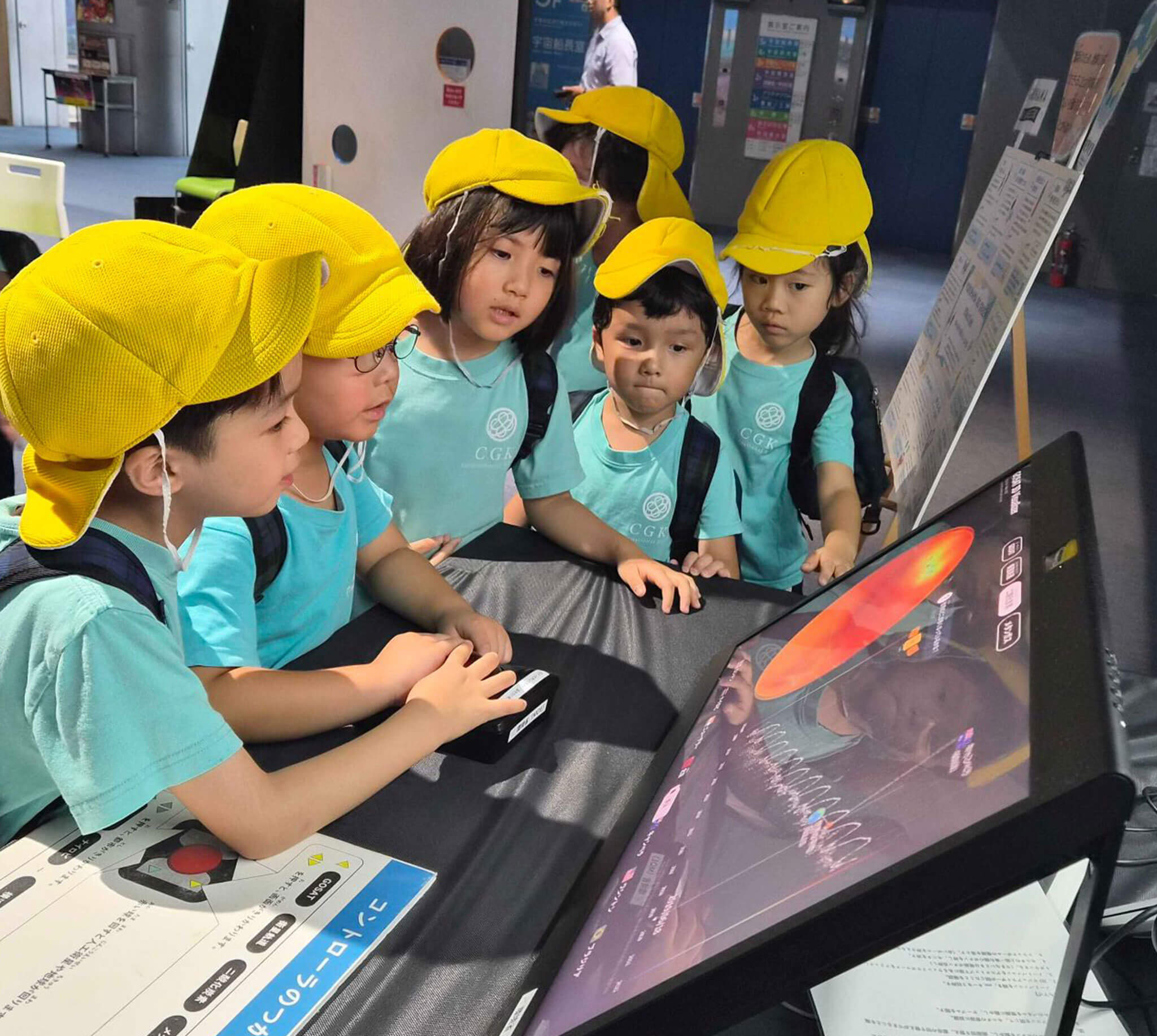
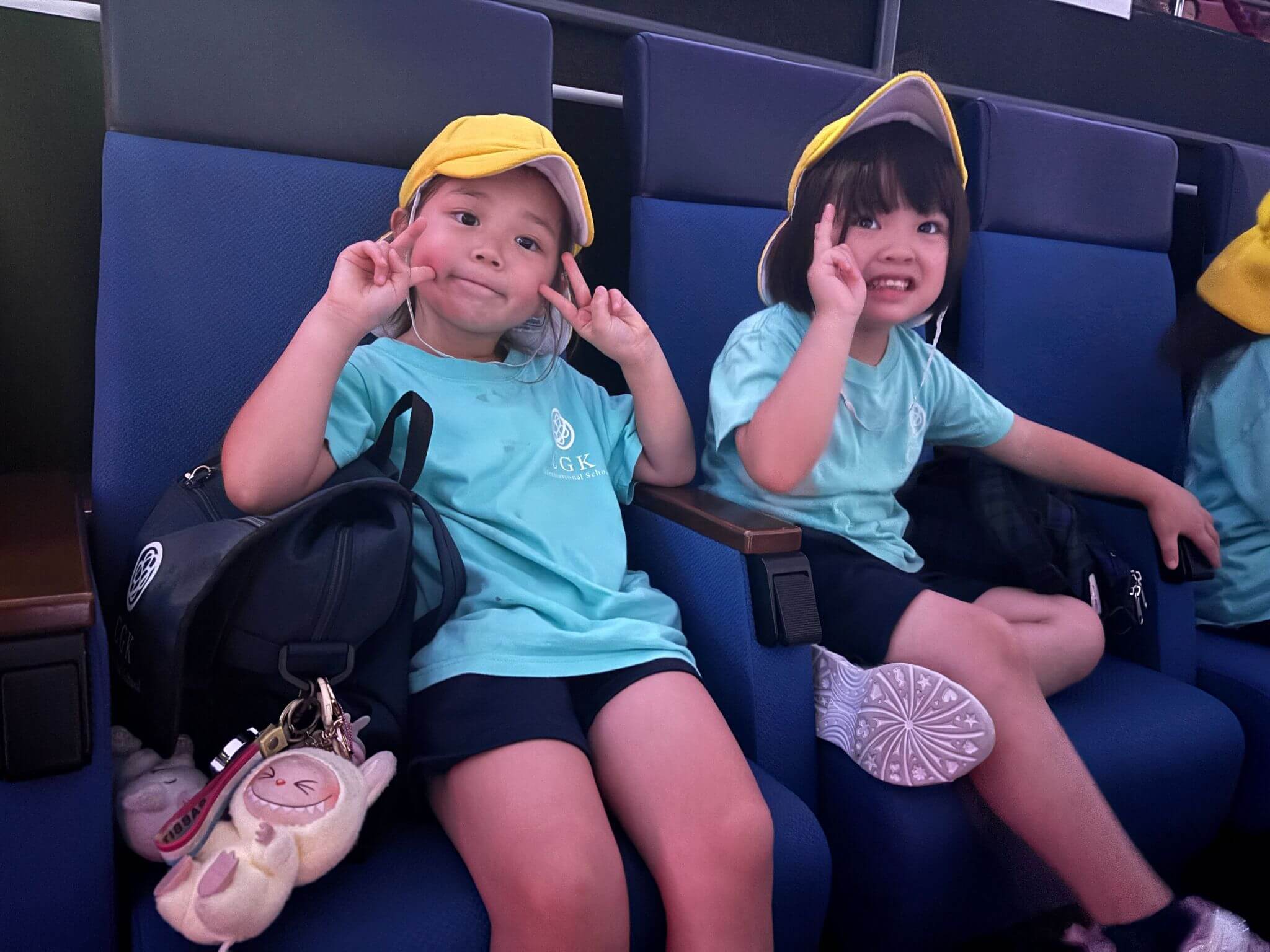
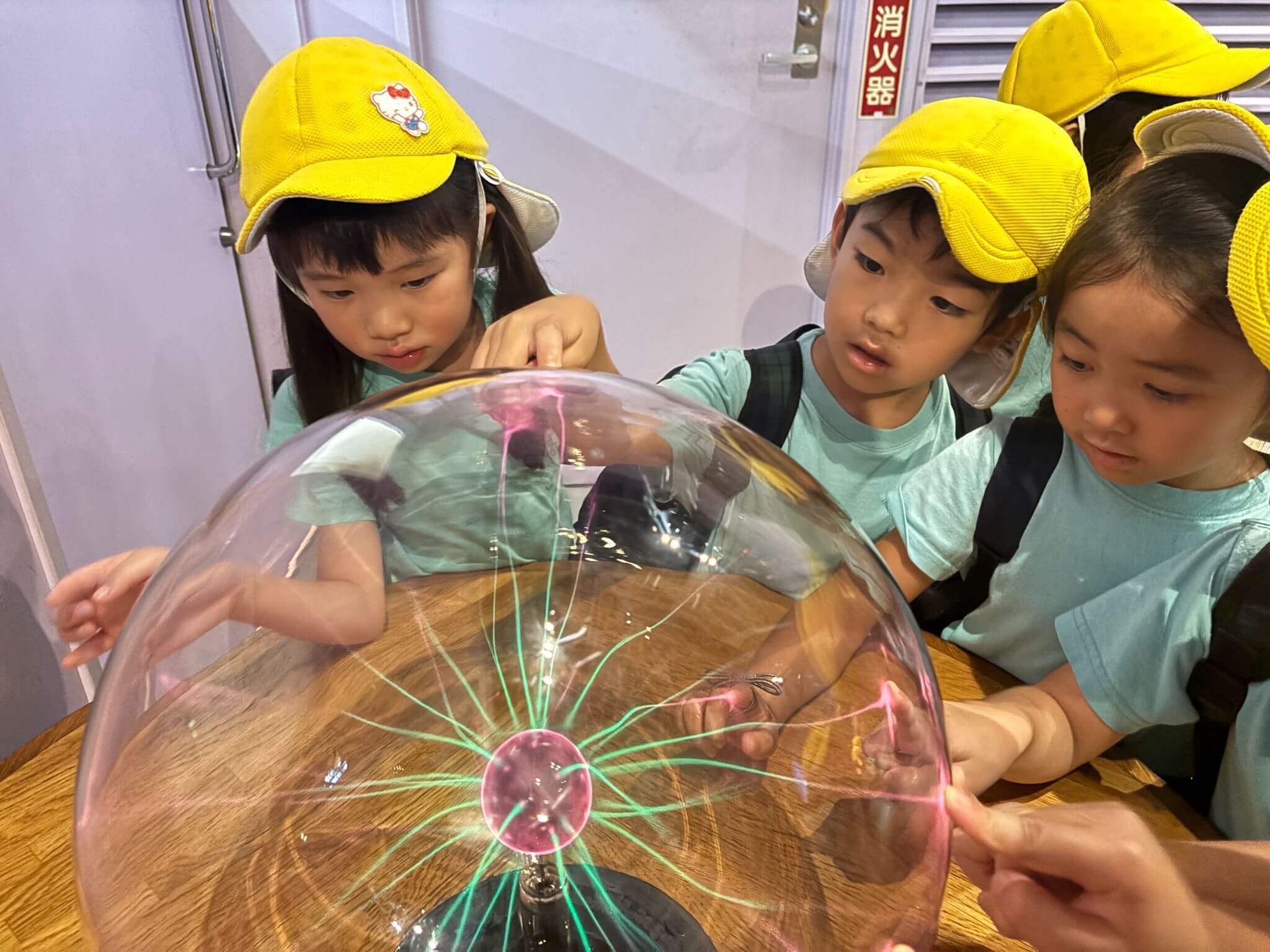
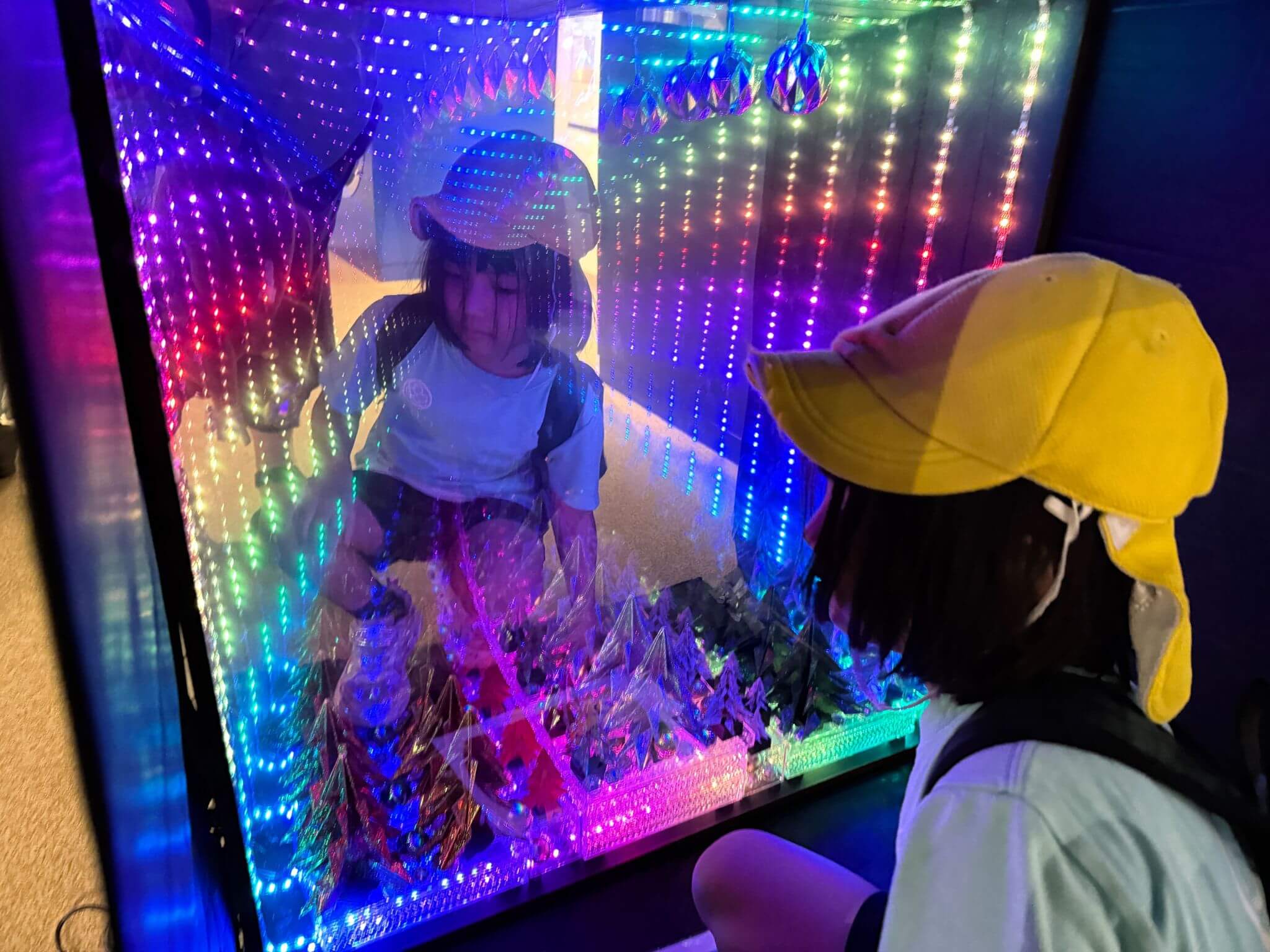
As part of our ongoing Unit of Inquiry How the World Works, Sky students have been developing their curiosity, problem-solving abilities, and investigative skills as they explore the world around them. This month, one of our focuses has been on space and the fascinating world of planets. Students have been asking questions, sharing ideas, and building their understanding of how the universe works. Together, we have explored the movements of the Earth, the role of the Sun and Moon, and what makes each planet unique. Through stories, discussions, and hands-on activities, the Sky students have been inspired to think like young scientists and connect their natural curiosity to real-world scientific concepts.
To extend our learning, Sky students had the wonderful opportunity to visit the Hamagin Science Center. The highlight of the trip was the planetarium, where students were able to experience the night sky in an immersive way and learn more about stars, planets, and galaxies. It was an exciting chance for the children to connect what we have been learning in class with a real-life experience.
In addition to the planetarium, students also enjoyed exploring the center’s hands-on exhibits. These interactive displays encouraged curiosity, experimentation, and wonder—allowing students to discover scientific ideas through play and exploration. The children were particularly engaged by the opportunities to experiment with light, motion, and technology, which connected beautifully to our classroom inquiries.
The field trip provided an exciting opportunity for students to deepen their understanding of space while sparking curiosity and new ideas. Sky students returned inspired by their discoveries, eager to continue exploring space through hands-on experiments, imaginative projects, and sharing their ideas with classmates. The day encouraged them to think critically, observe closely, and collaborate—practices at the heart of scientific inquiry. It was a wonderful chance for the children to see how curiosity, creativity, and hands-on learning come together to make science both meaningful and fun. We are proud of how Sky students are developing as inquirers and thinkers, eager to make connections between their learning and the world beyond, and we look forward to continuing this journey of discovery together.
New Discoveries from the World of Insects
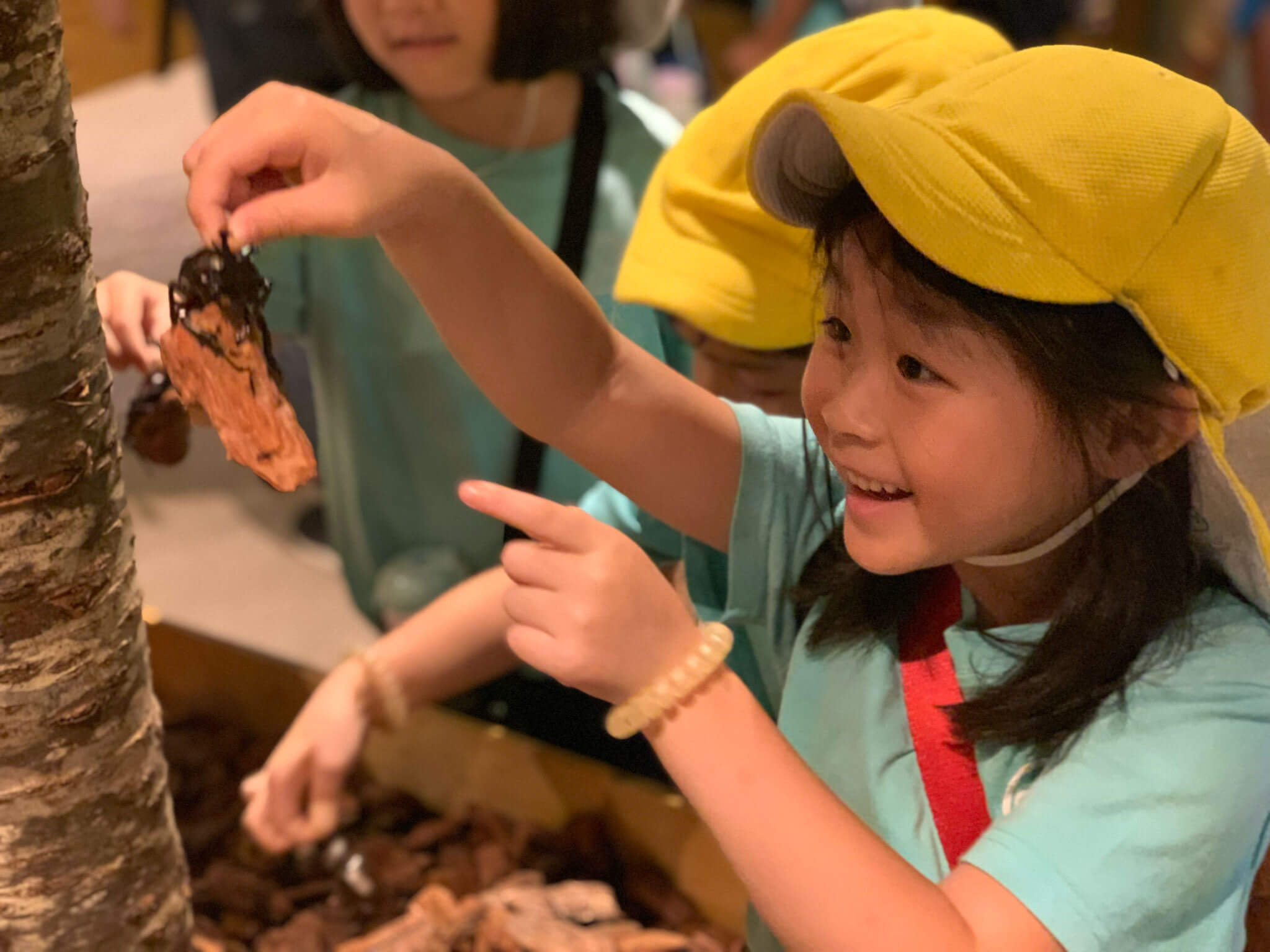
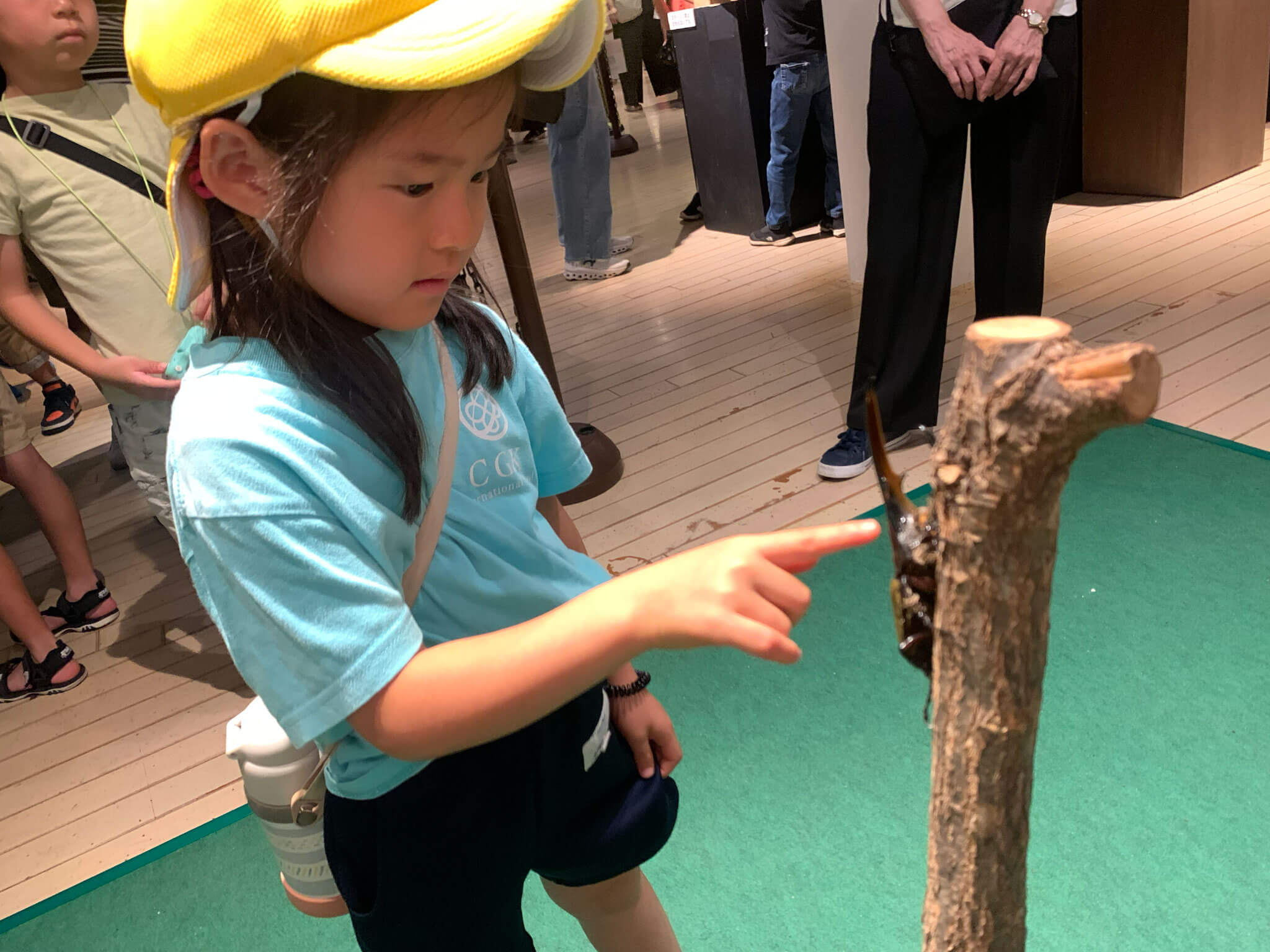
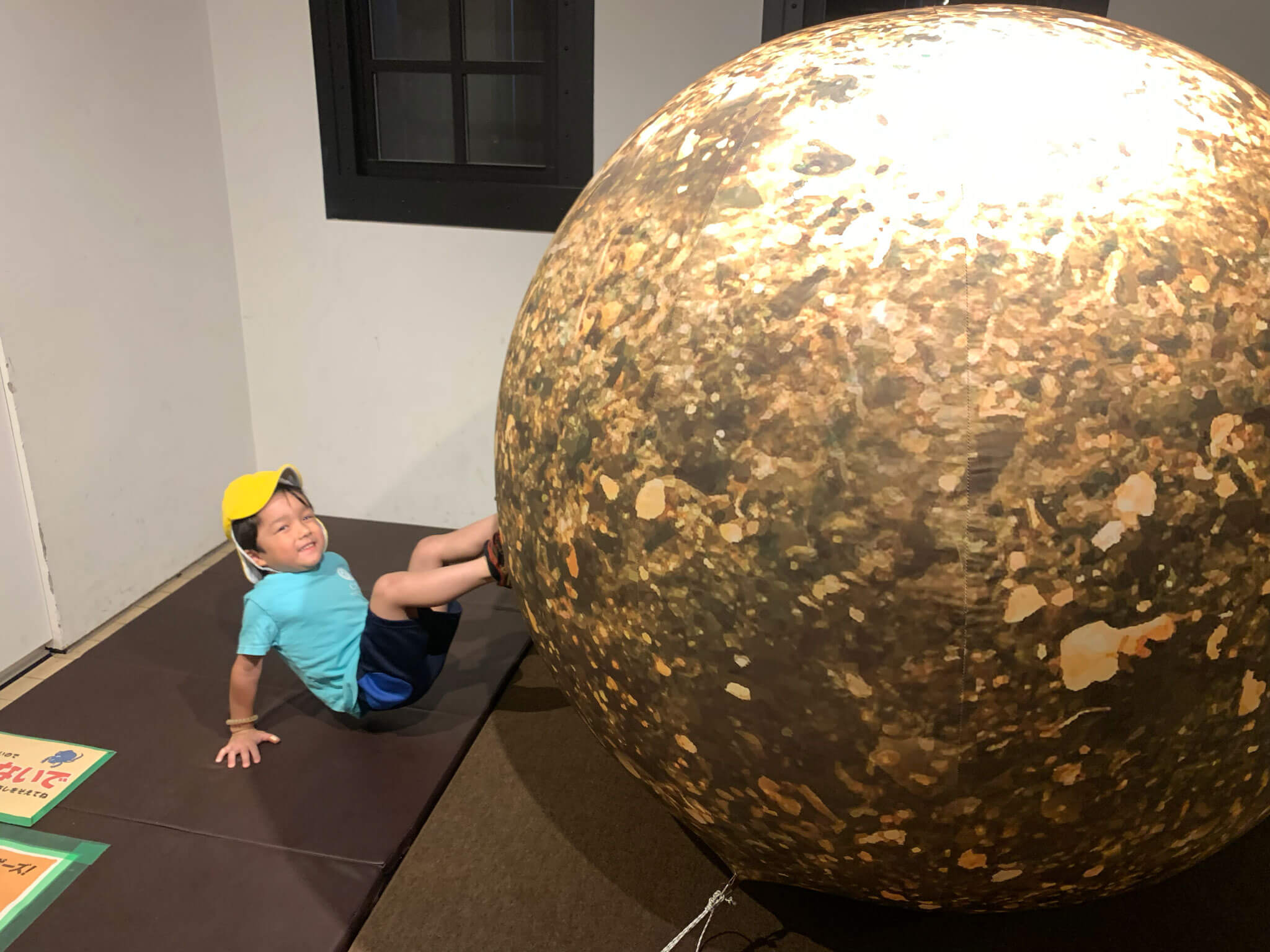
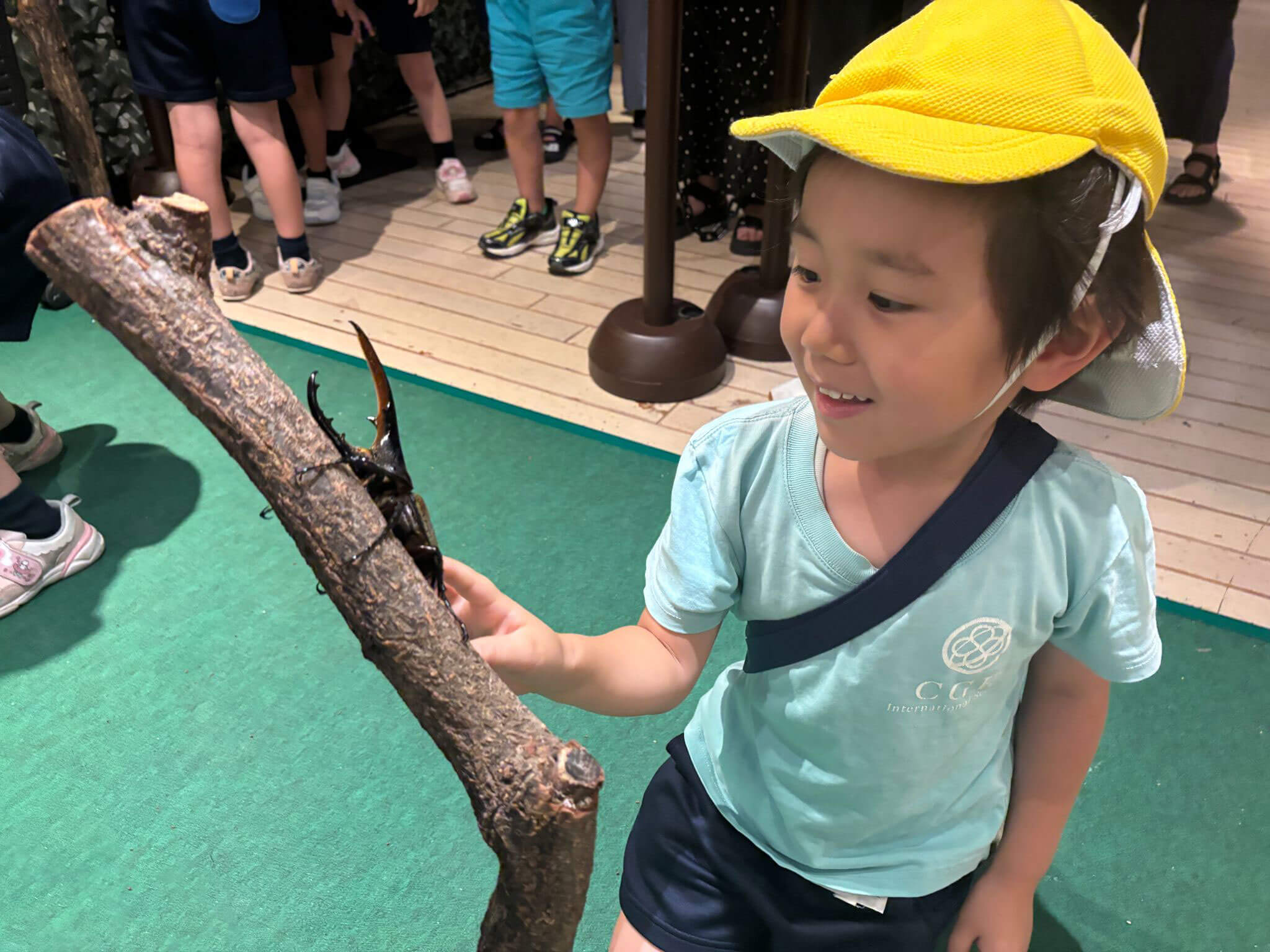
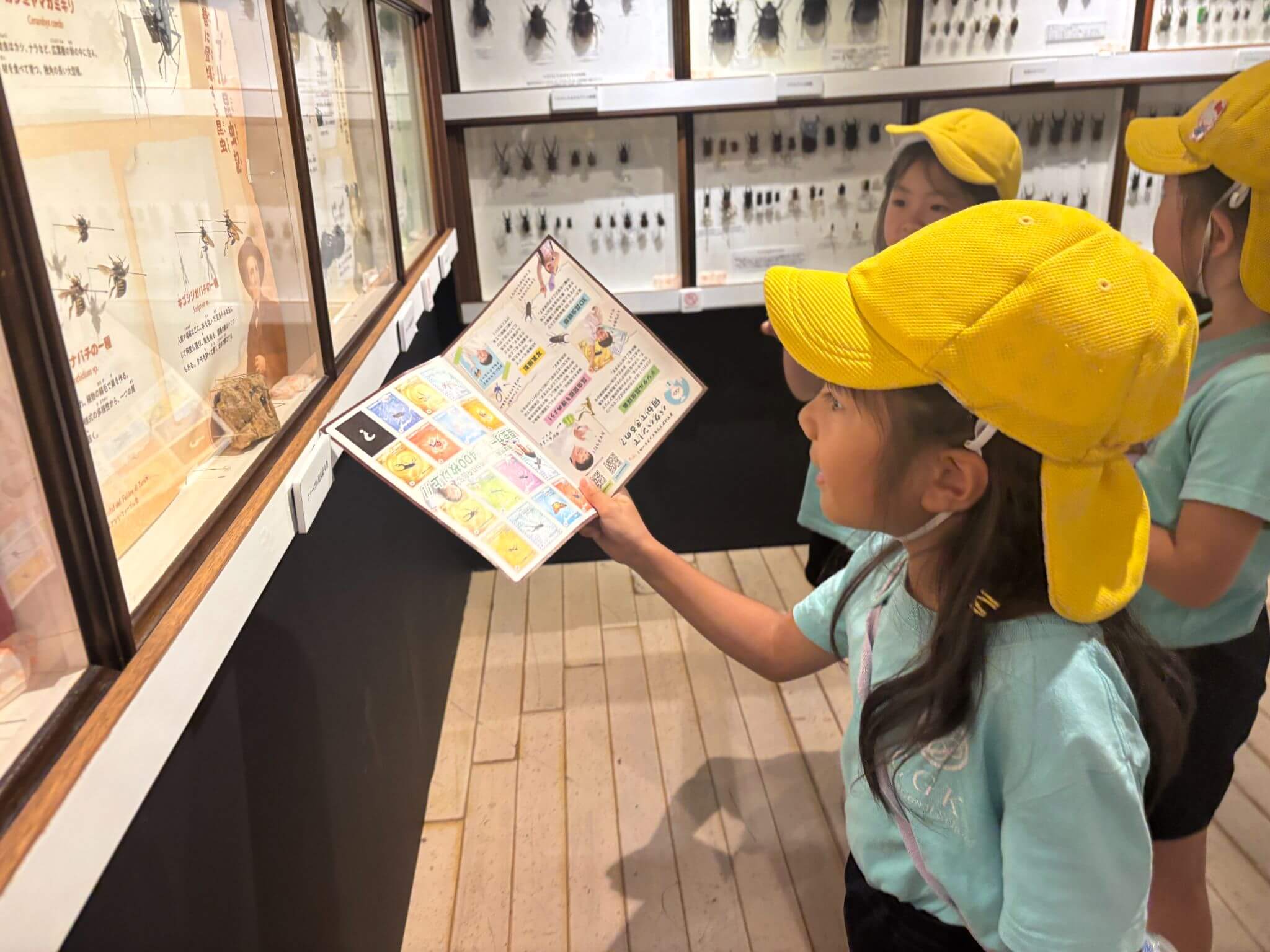
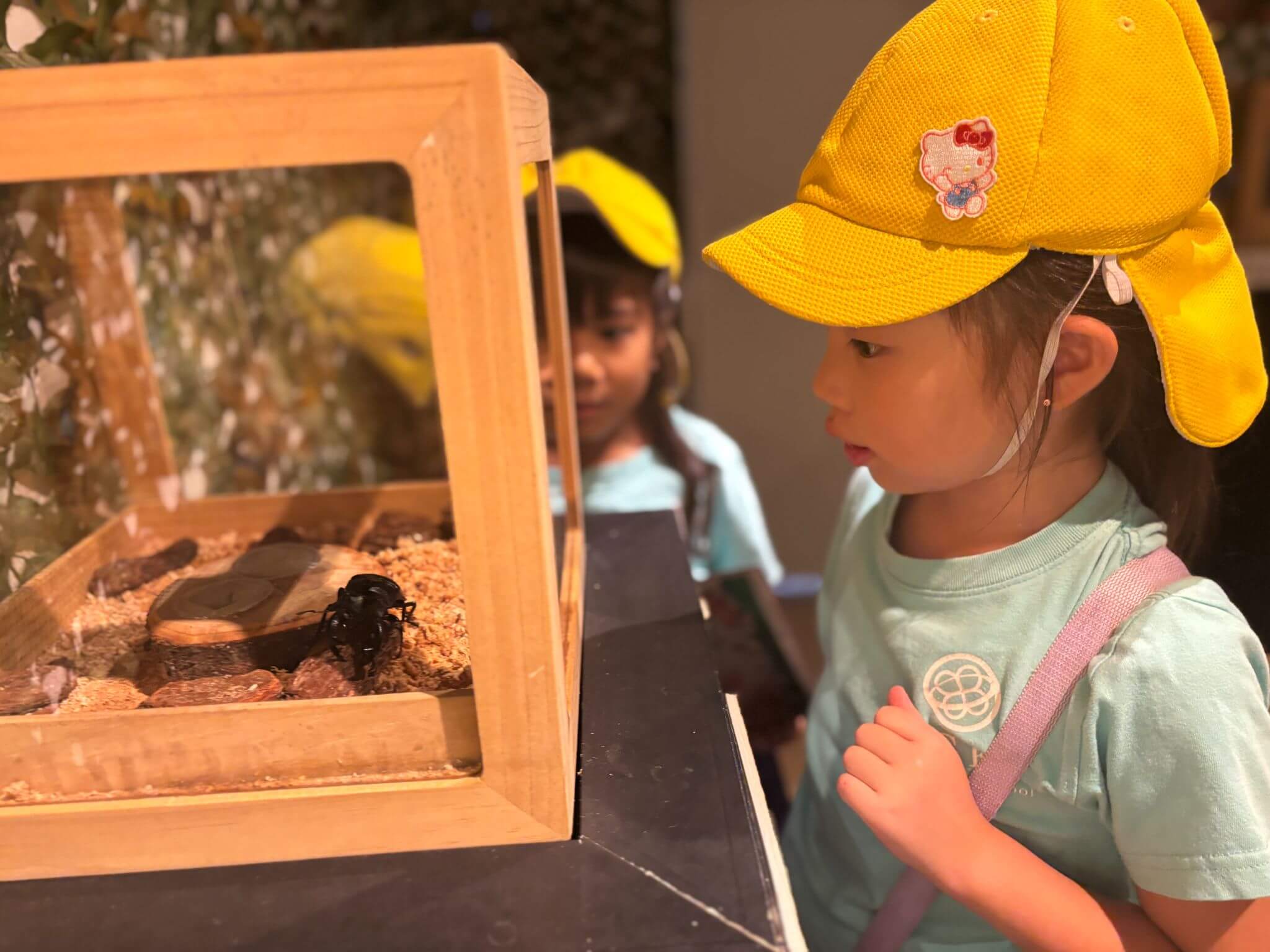
As part of our current IB Unit of Inquiry, How the World Works, the Sky class students visited The Interactive Fabre Insect Exhibition 2025. This was a valuable opportunity to focus on the mechanisms of “nature” and “life” around us, sparking curiosity and wonder.
The moment we stepped into the exhibition hall, the children were captivated by the wide array of colorful insect specimens, life-sized models, and even live insects. Confronted with exotic insects they had never seen before and species they had only encountered in picture books, they exclaimed with shining eyes, “I didn’t know insects like this existed!” and “Its wings look like jewels!” As they explored the displays, natural questions began to flow: “Why is this insect this color?” “Where does it live?” “Why is it called that?” Through sharing ideas and confidently exchanging what they already knew with friends, we could clearly see their spirit of inquiry growing.
At the hands-on corner, where children had the chance to touch live insects, many were nervous at first. But when their turn came, they gathered their courage and tried. This was a wonderful example of the IB Learner Profile attribute Risk-Taker. Afterward, they eagerly shared their discoveries: “I thought its back would be smooth, but it was actually soft and fluffy!” and “It’s safe if you touch here!”
Back at CGK, the students reflected on their favorite insects and new discoveries by looking at photos, then expressed their ideas through drawings and words. Remembering the unusual shapes, colors, and textures, they drew creative pictures of their favorite insects, or even imagined “What if I were a bug?”, deepening their learning through playful creativity.
For the children, this was far more than just a field trip. It was a moment of meaningful learning that nurtured their curiosity and inquiry as they engaged with the wonders of nature and life itself. Moving forward, we will continue to cherish those small everyday questions—“Why is this?”—and support each child’s natural desire to learn and discover.
Ms. Maya
Mountain
(4-year-olds)
Building A Classroom Forest
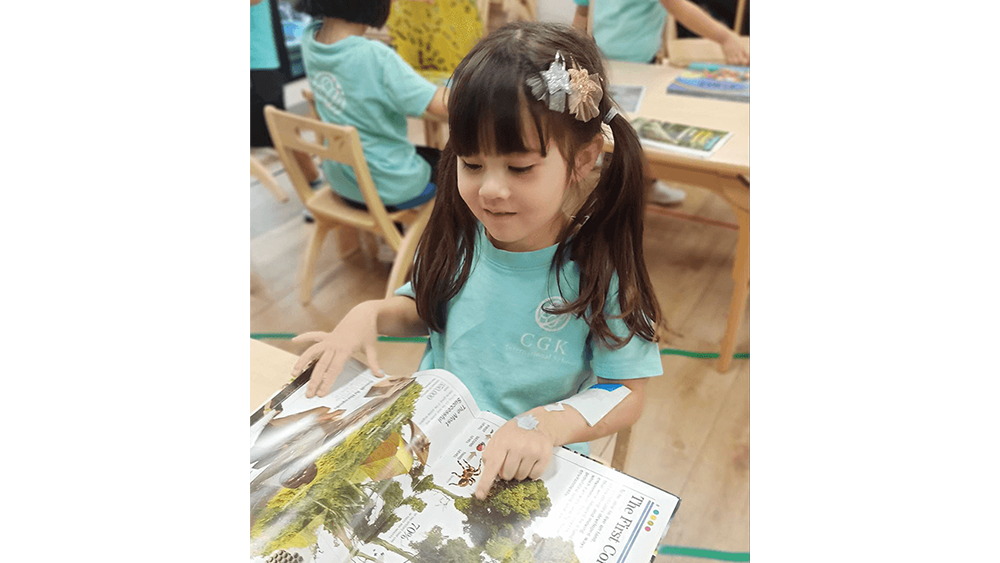
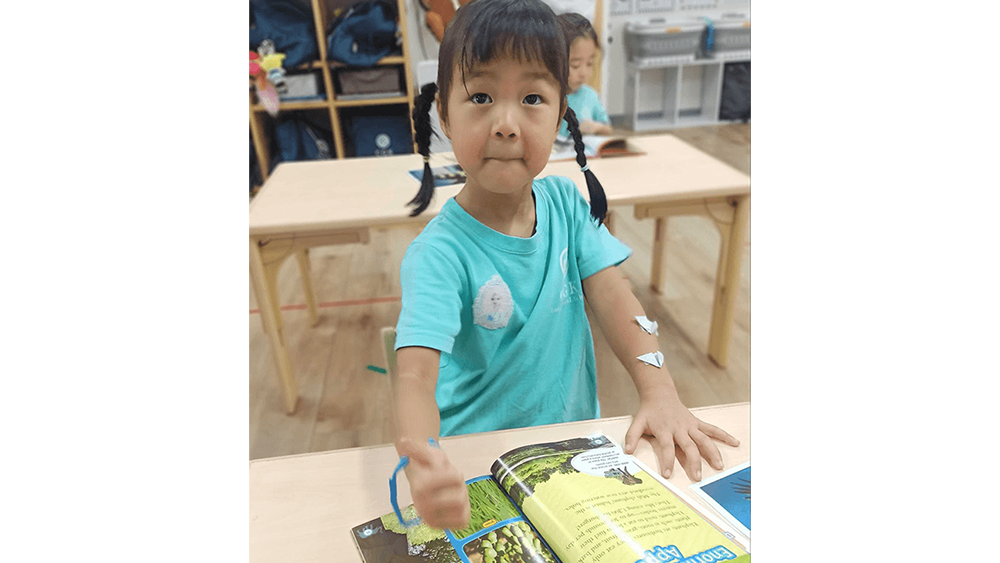
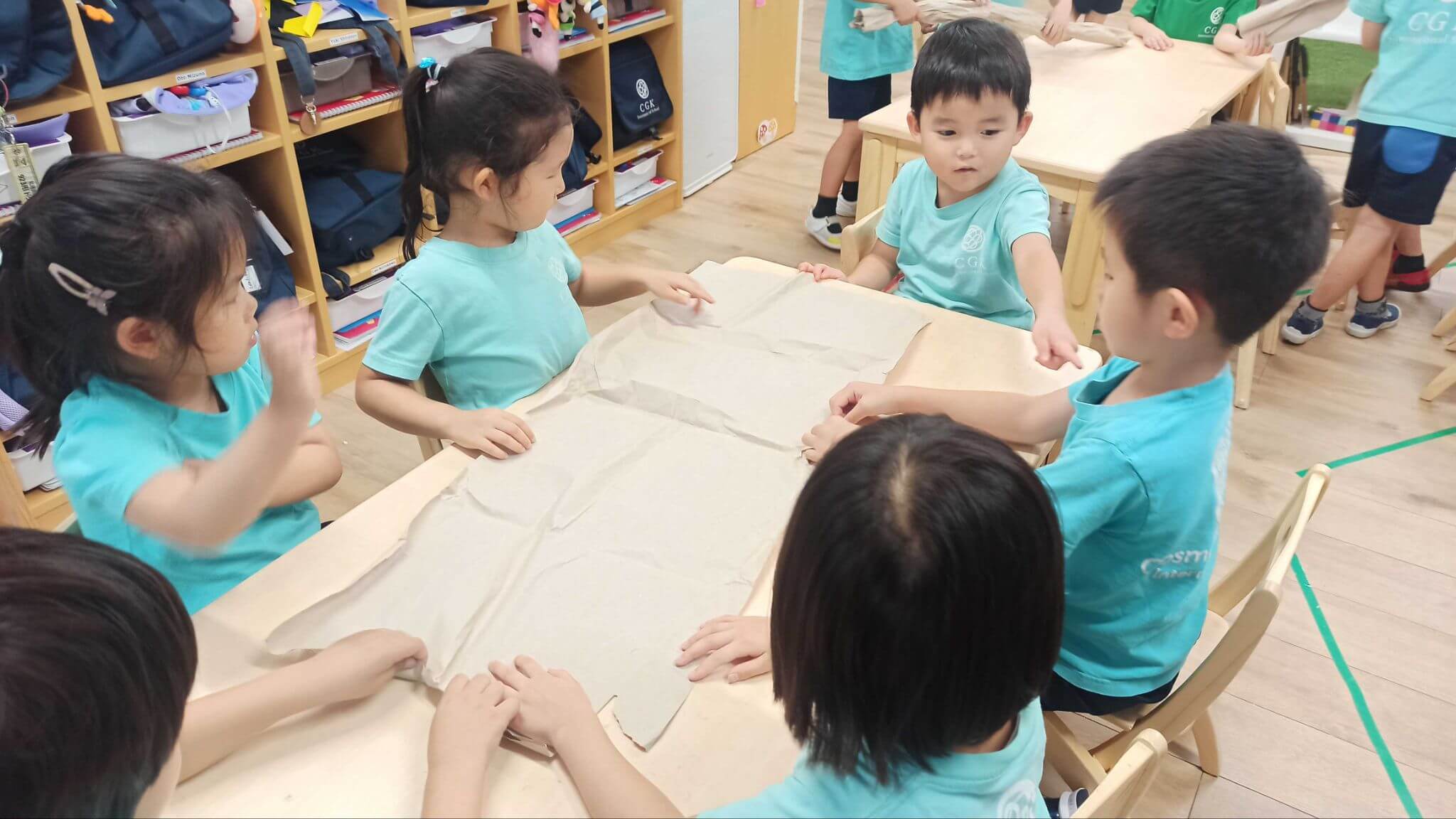
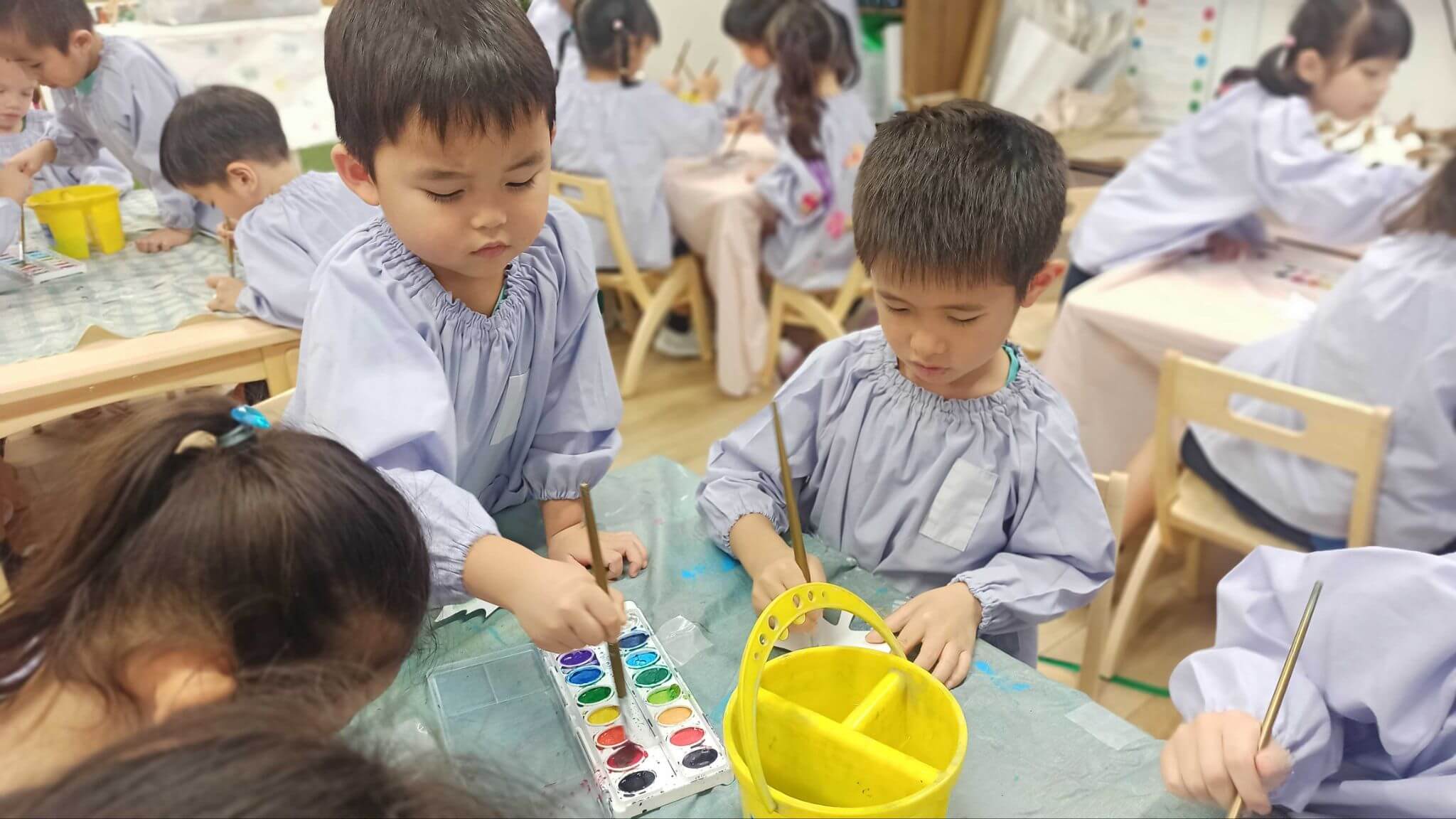
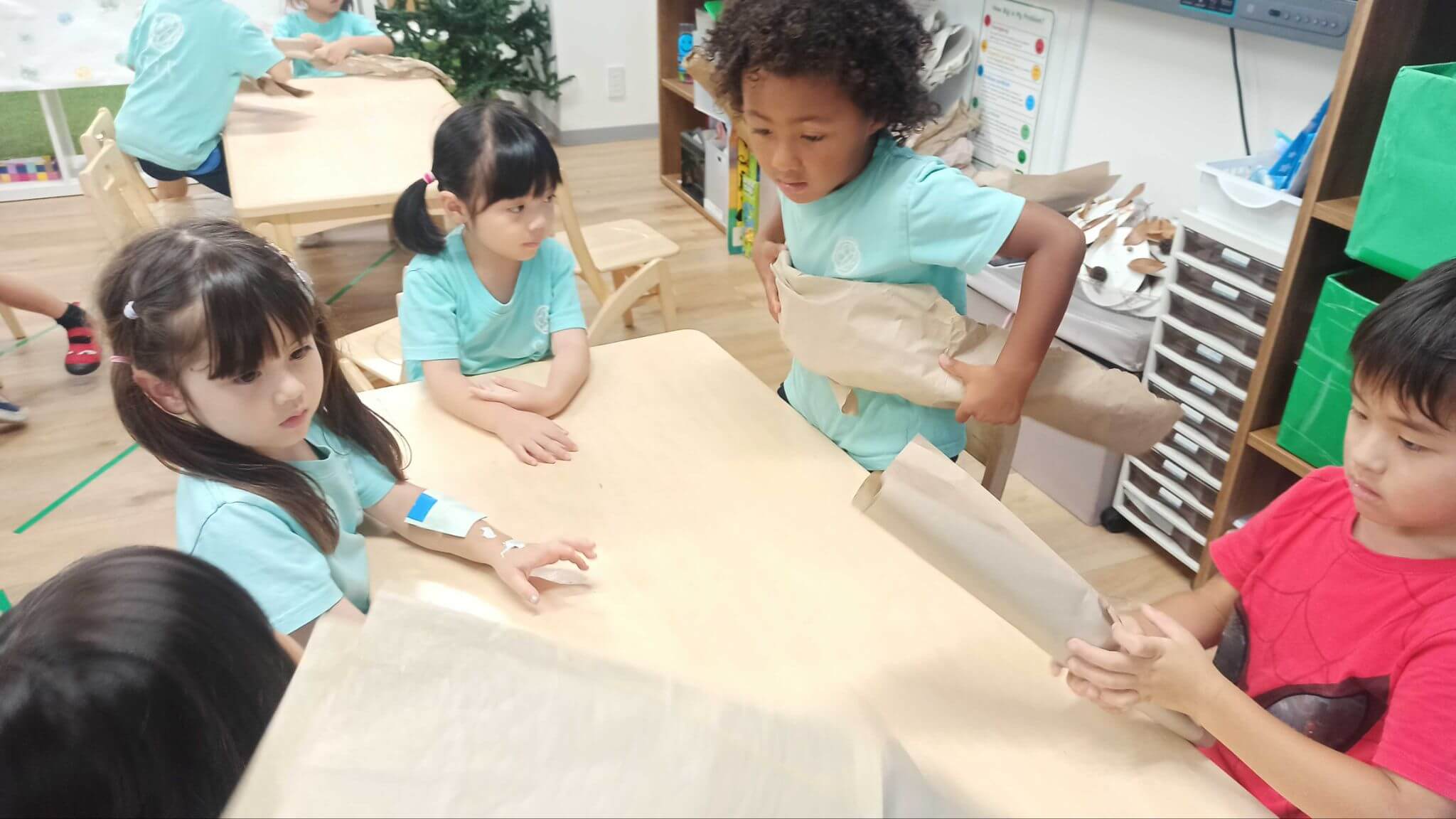
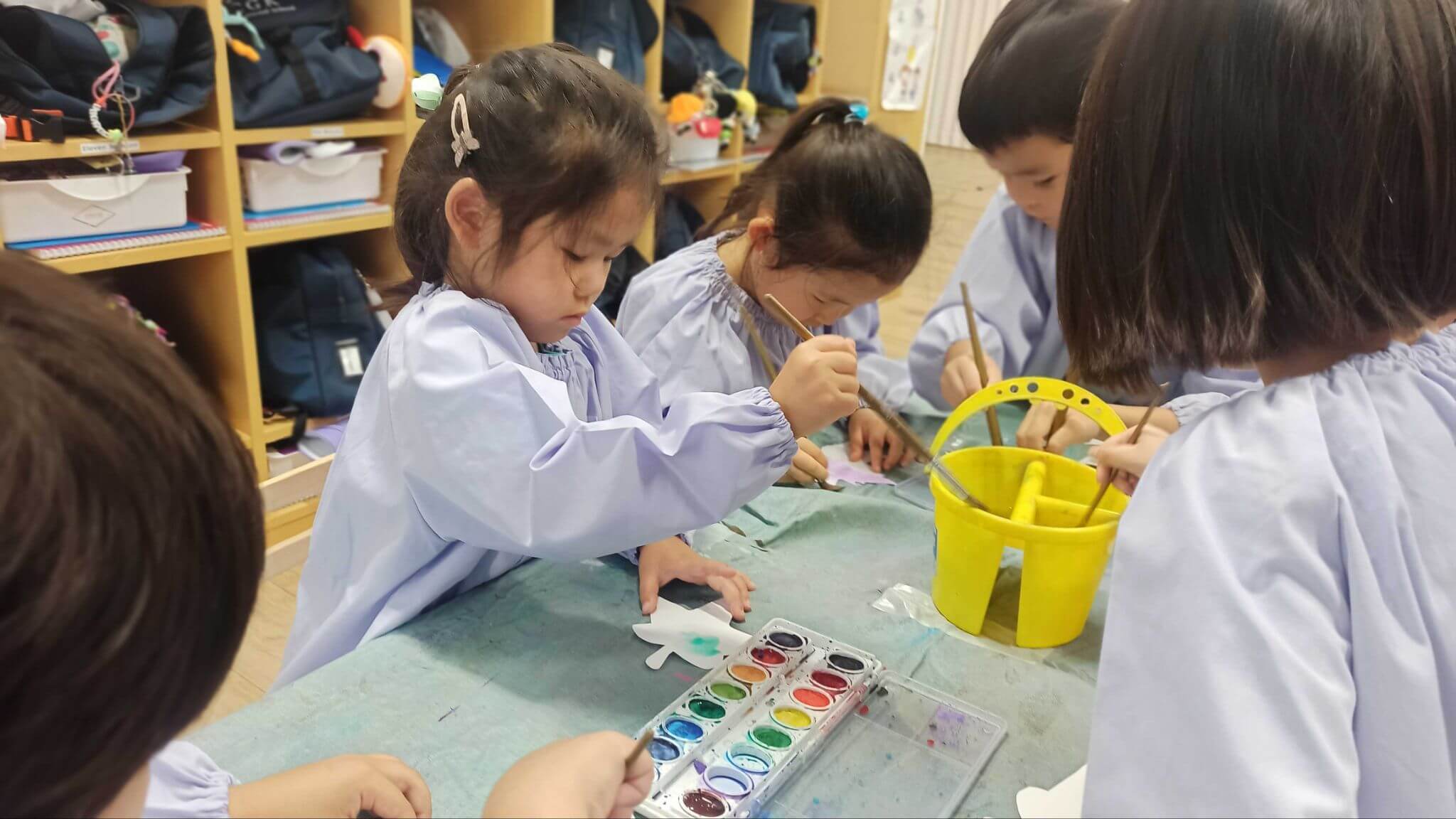
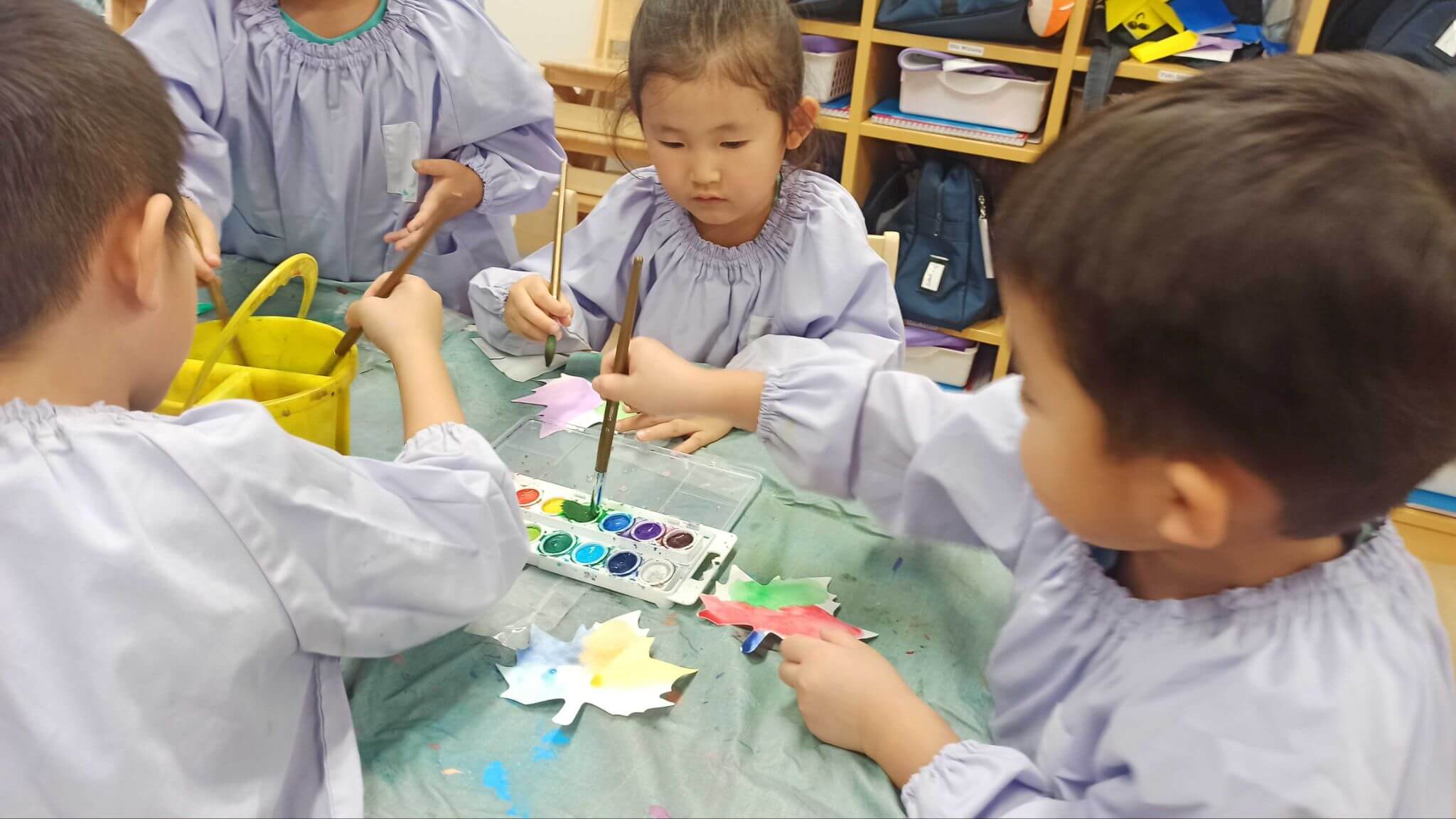
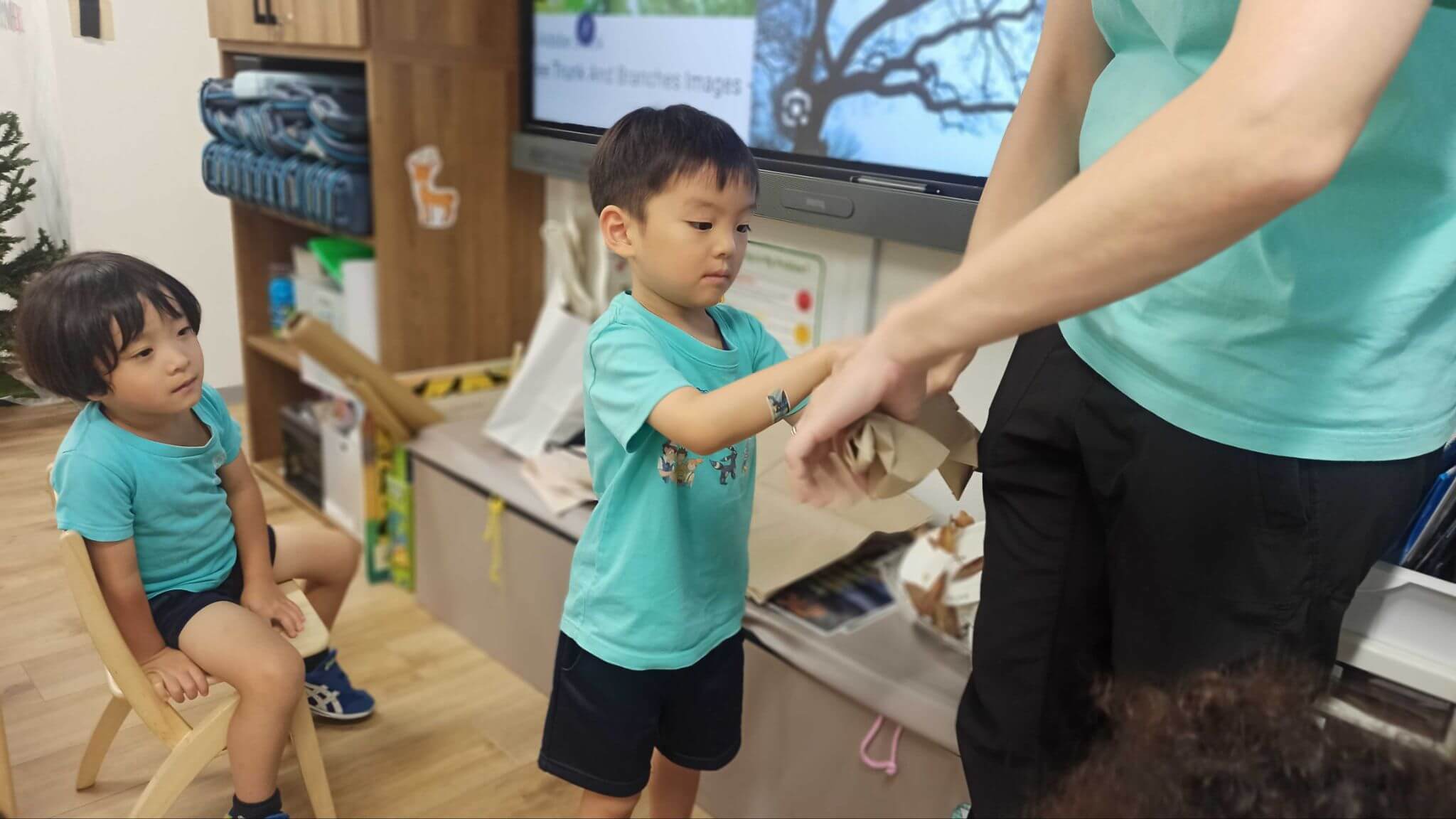
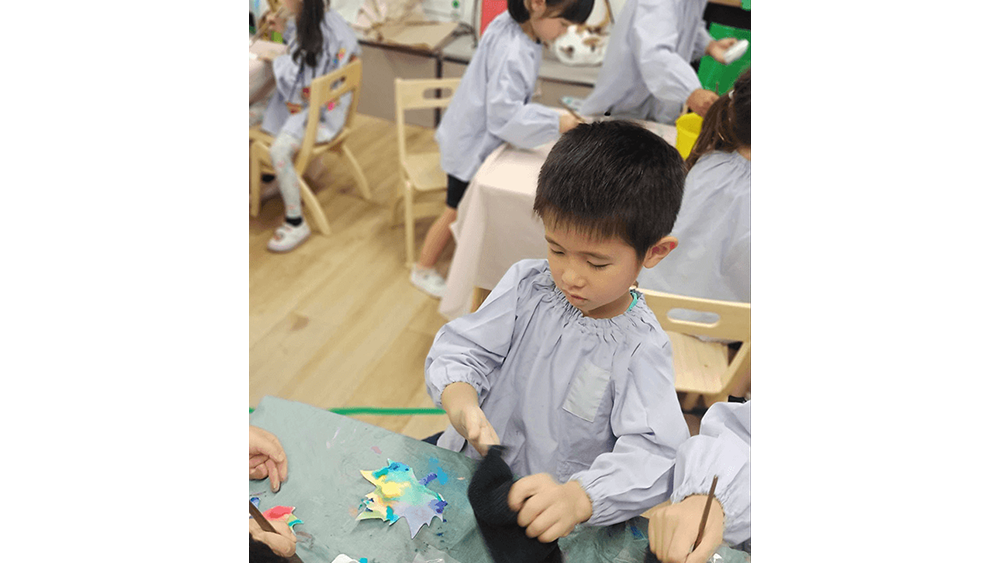
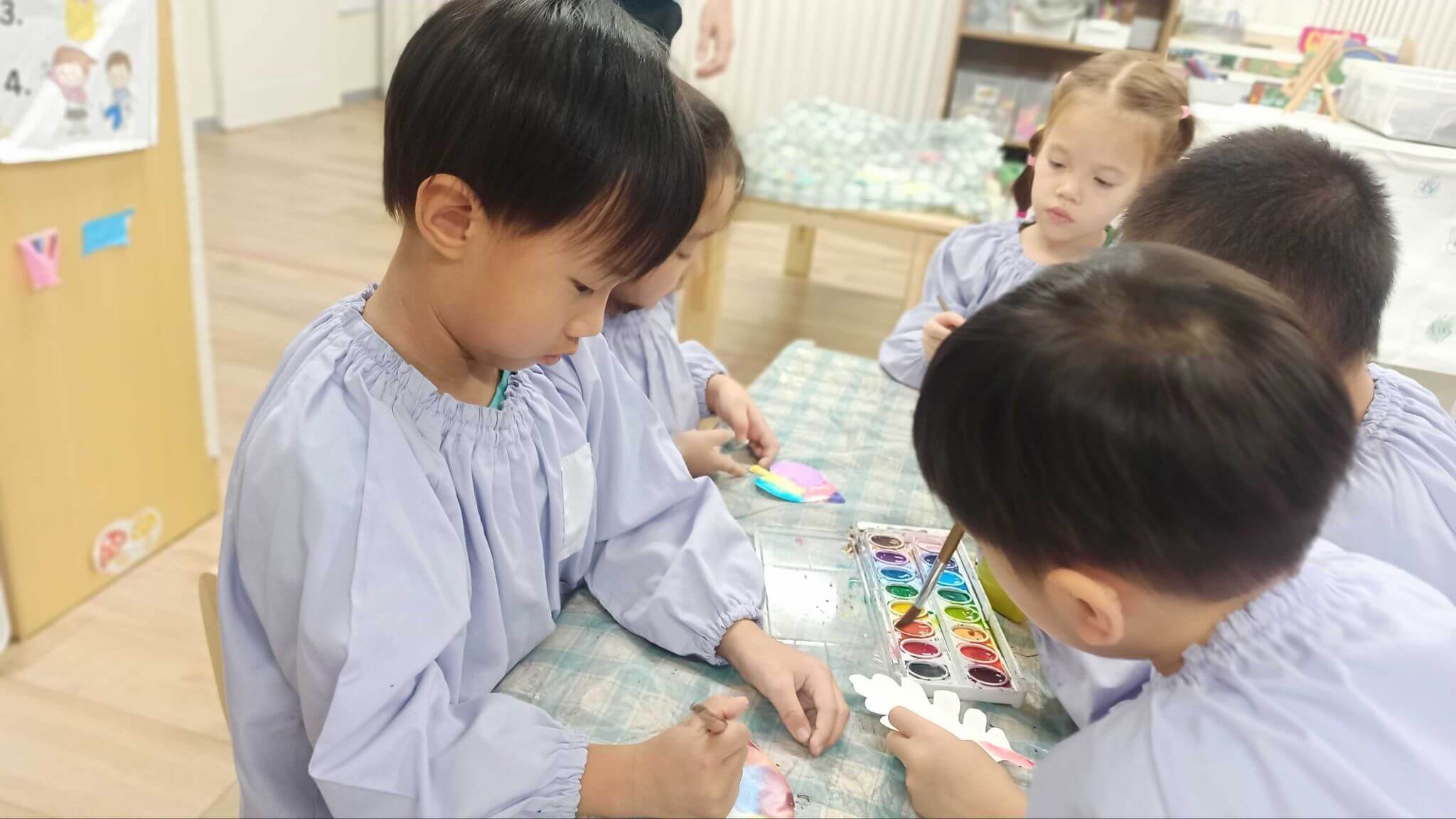
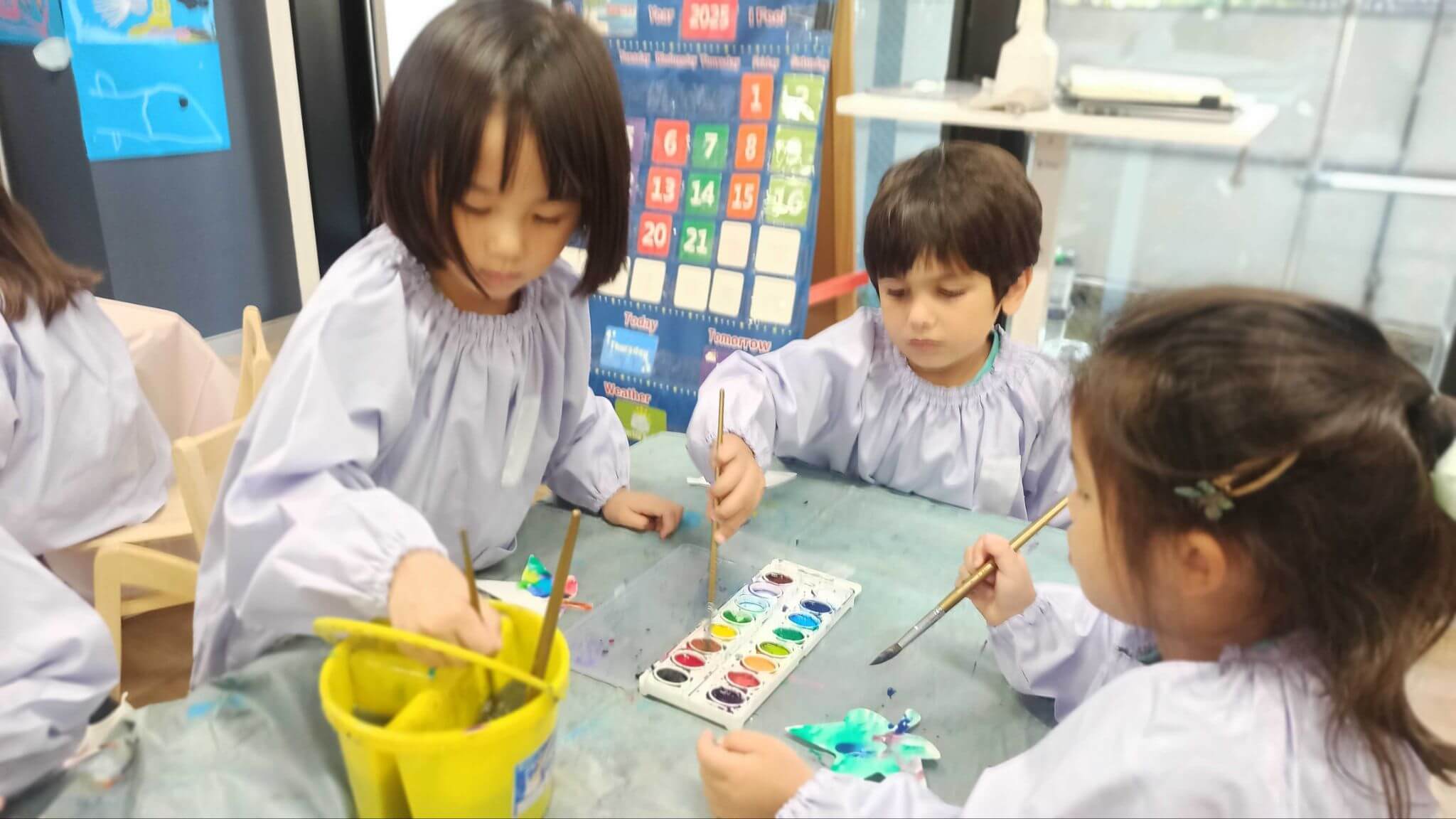
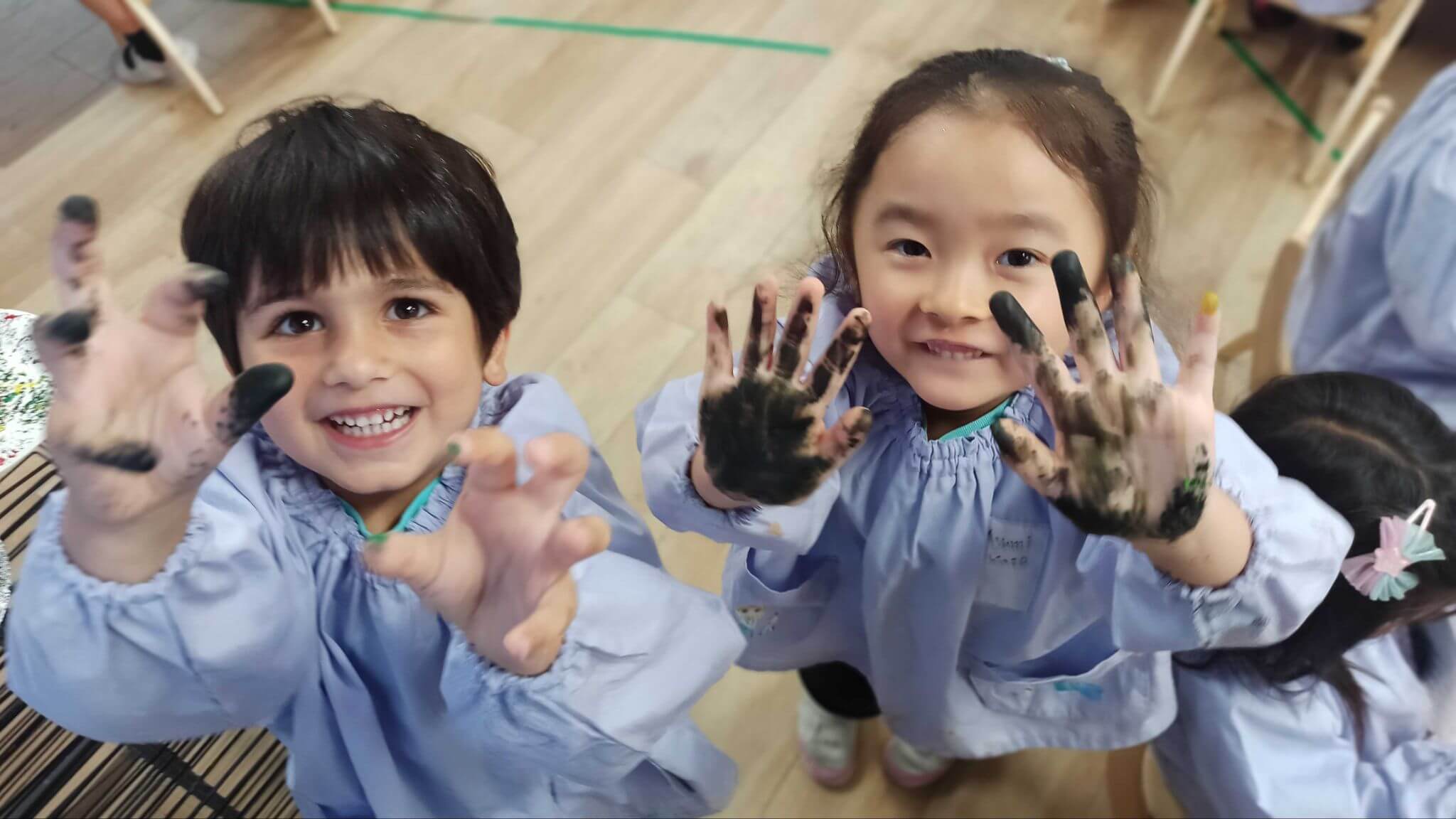
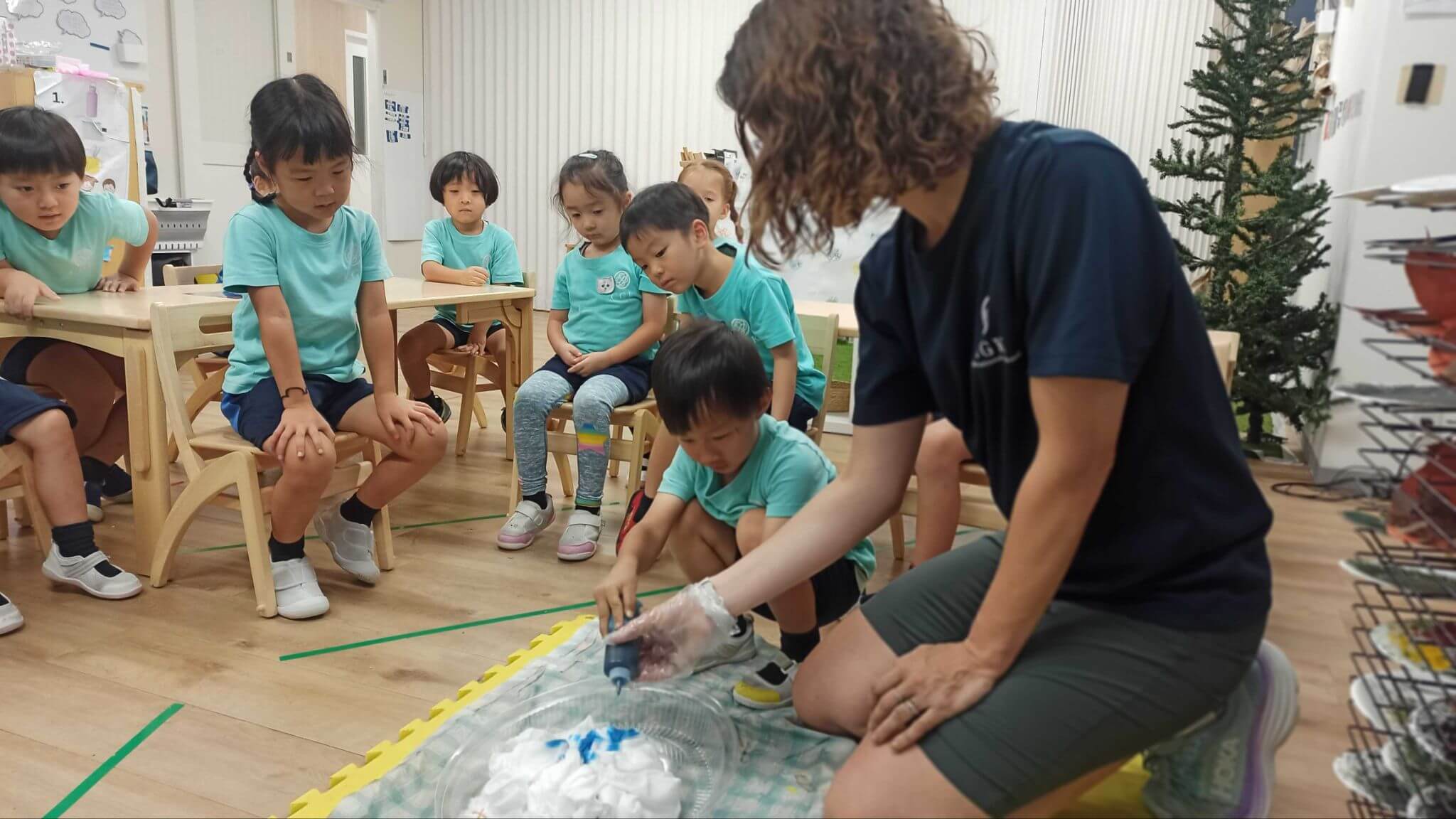
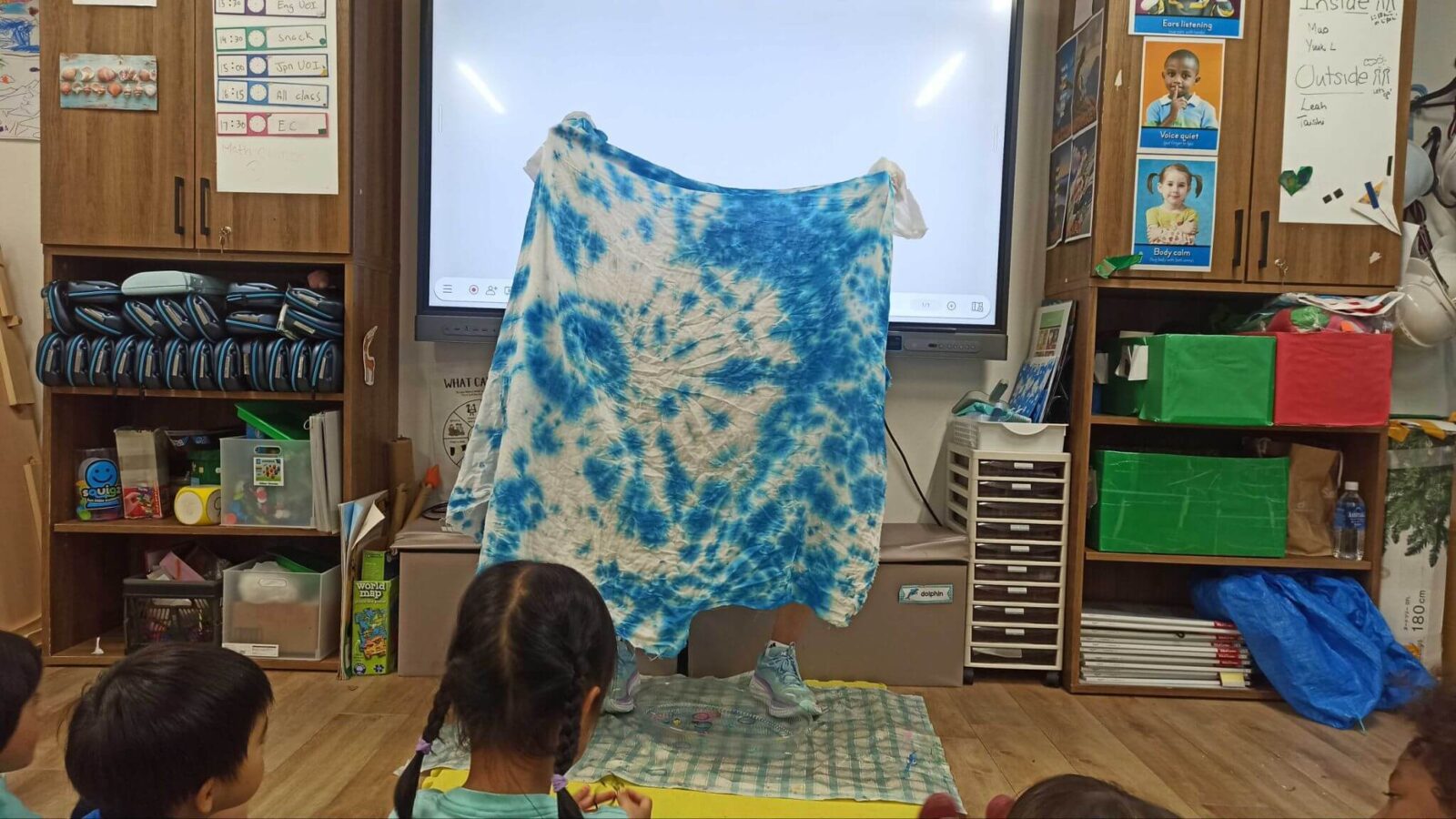
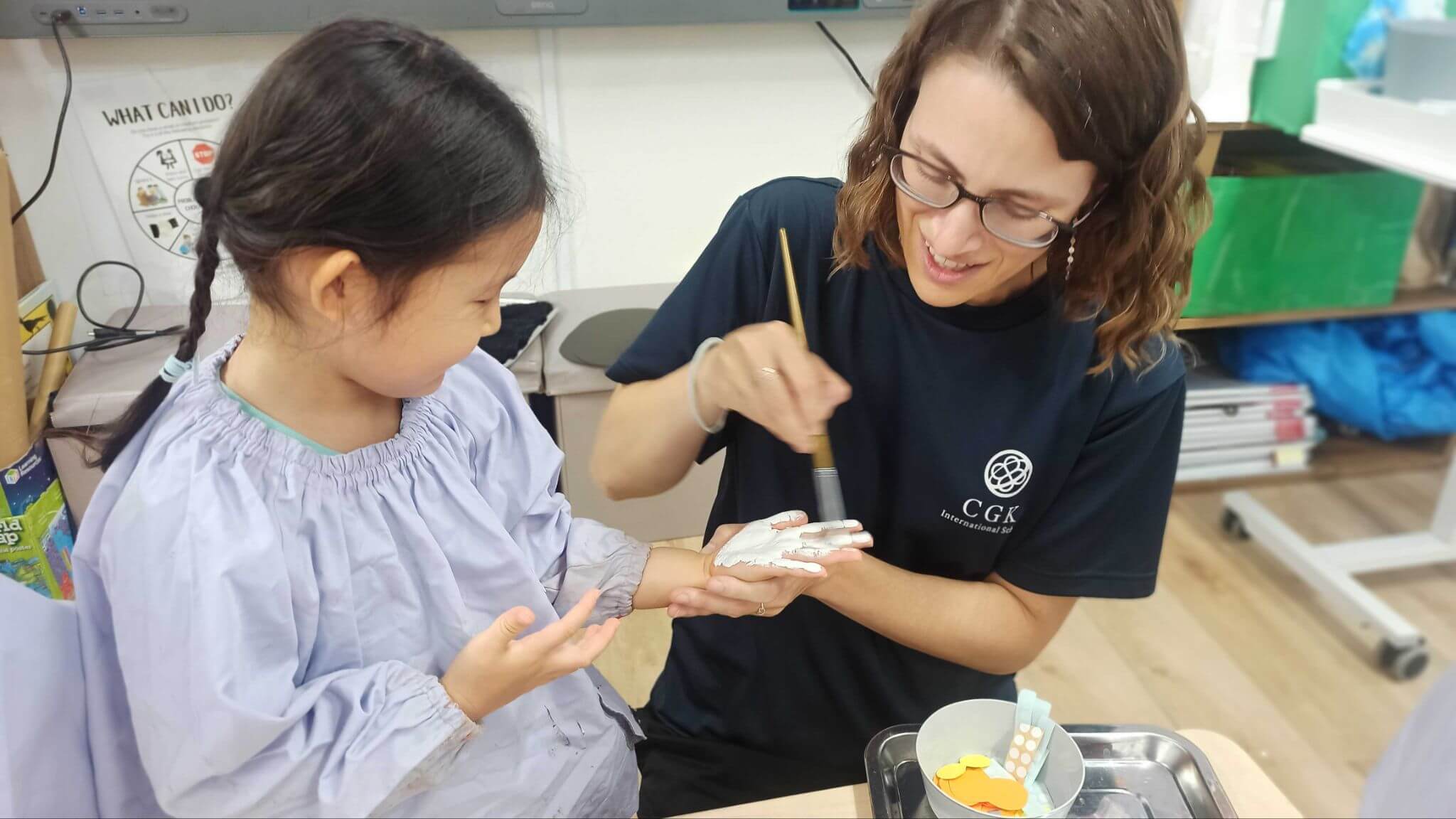
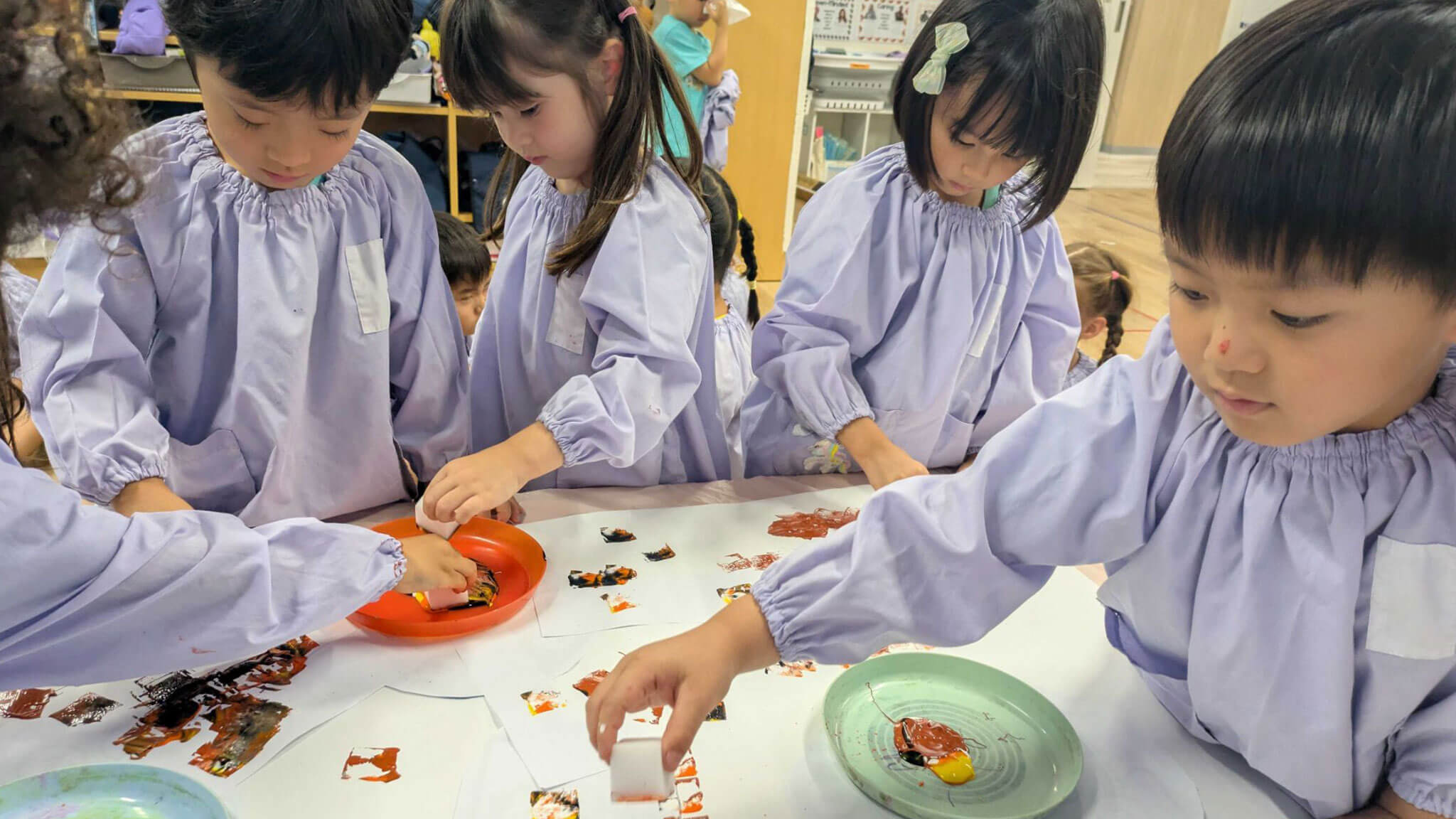
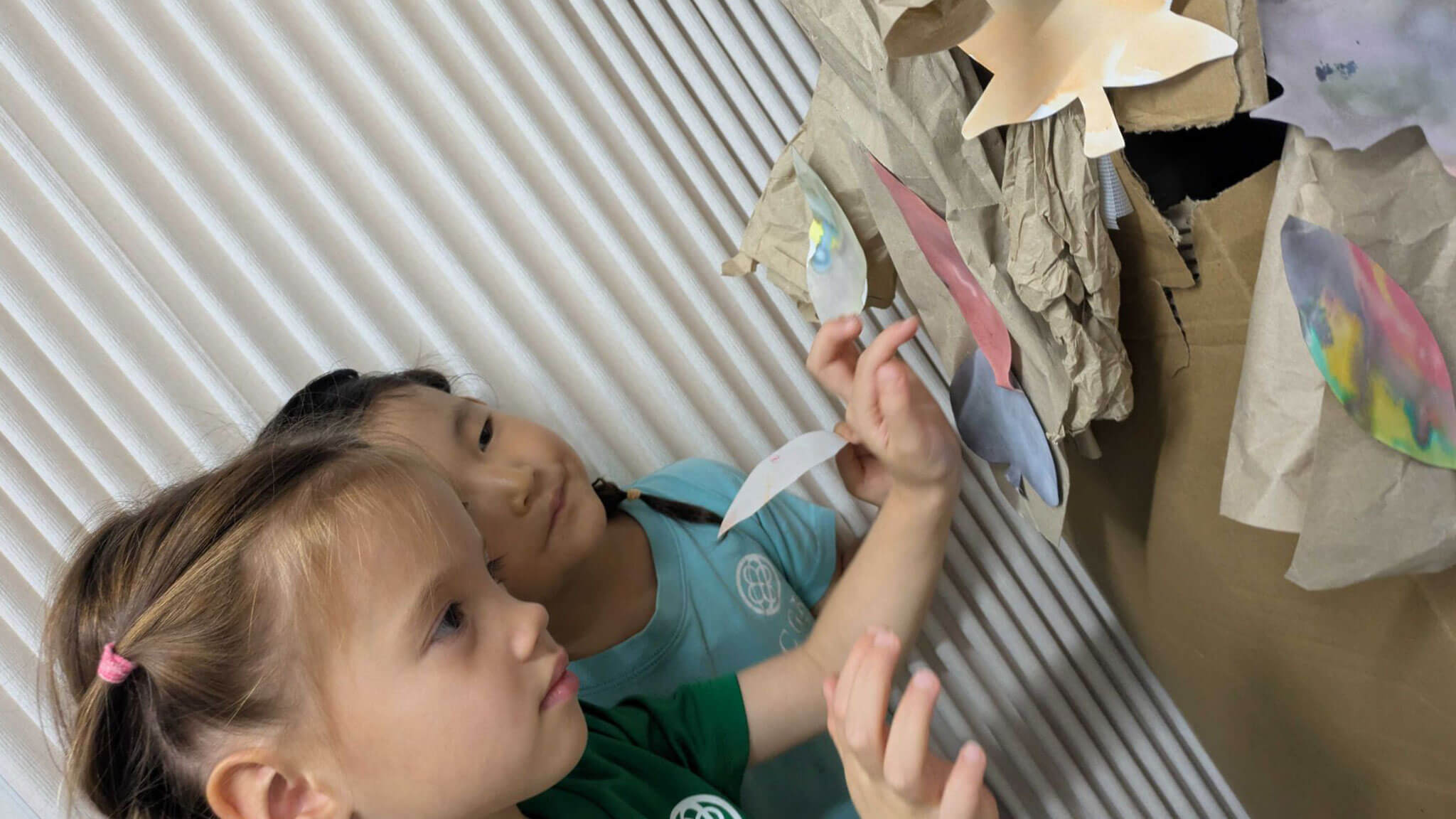
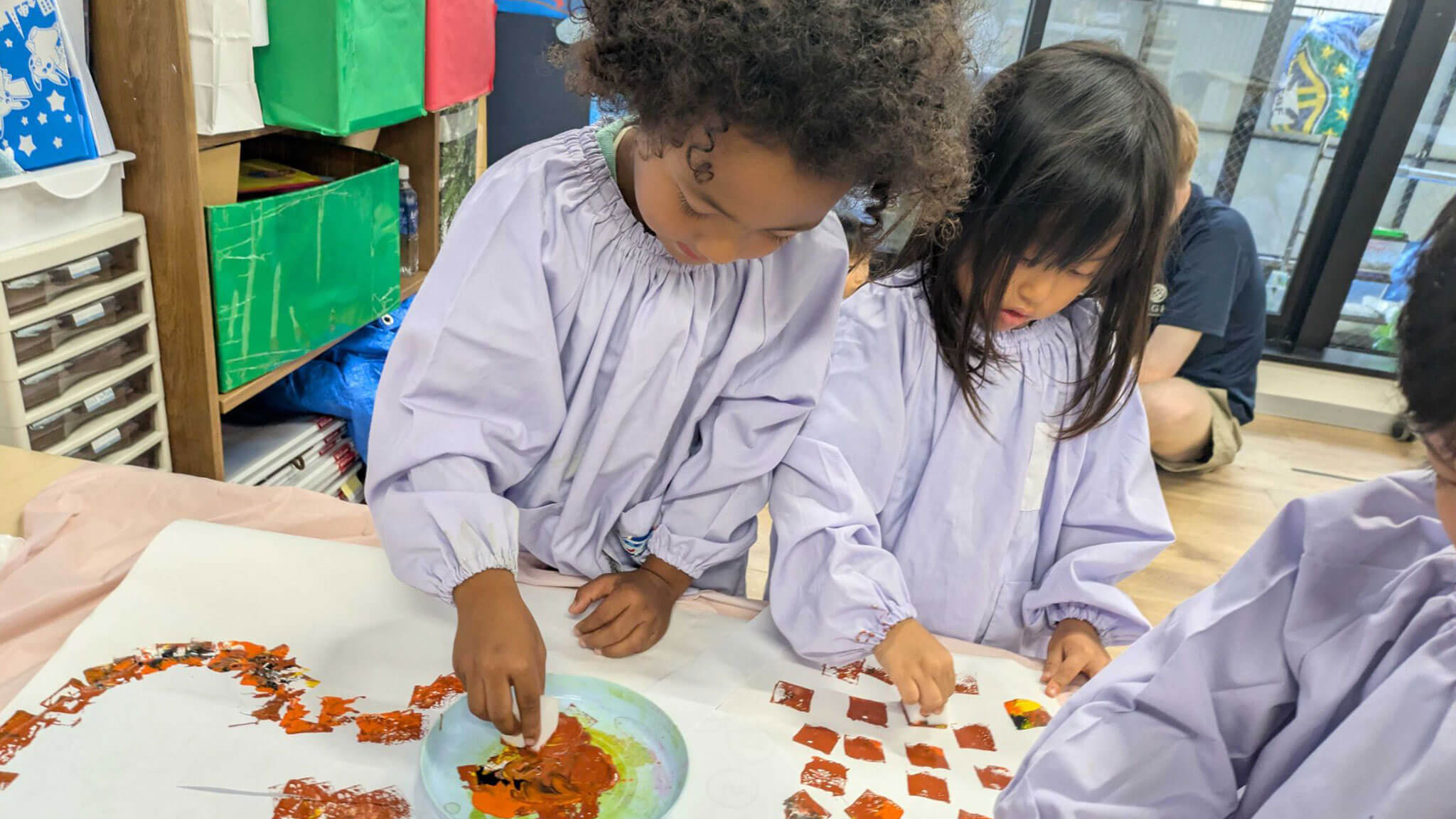
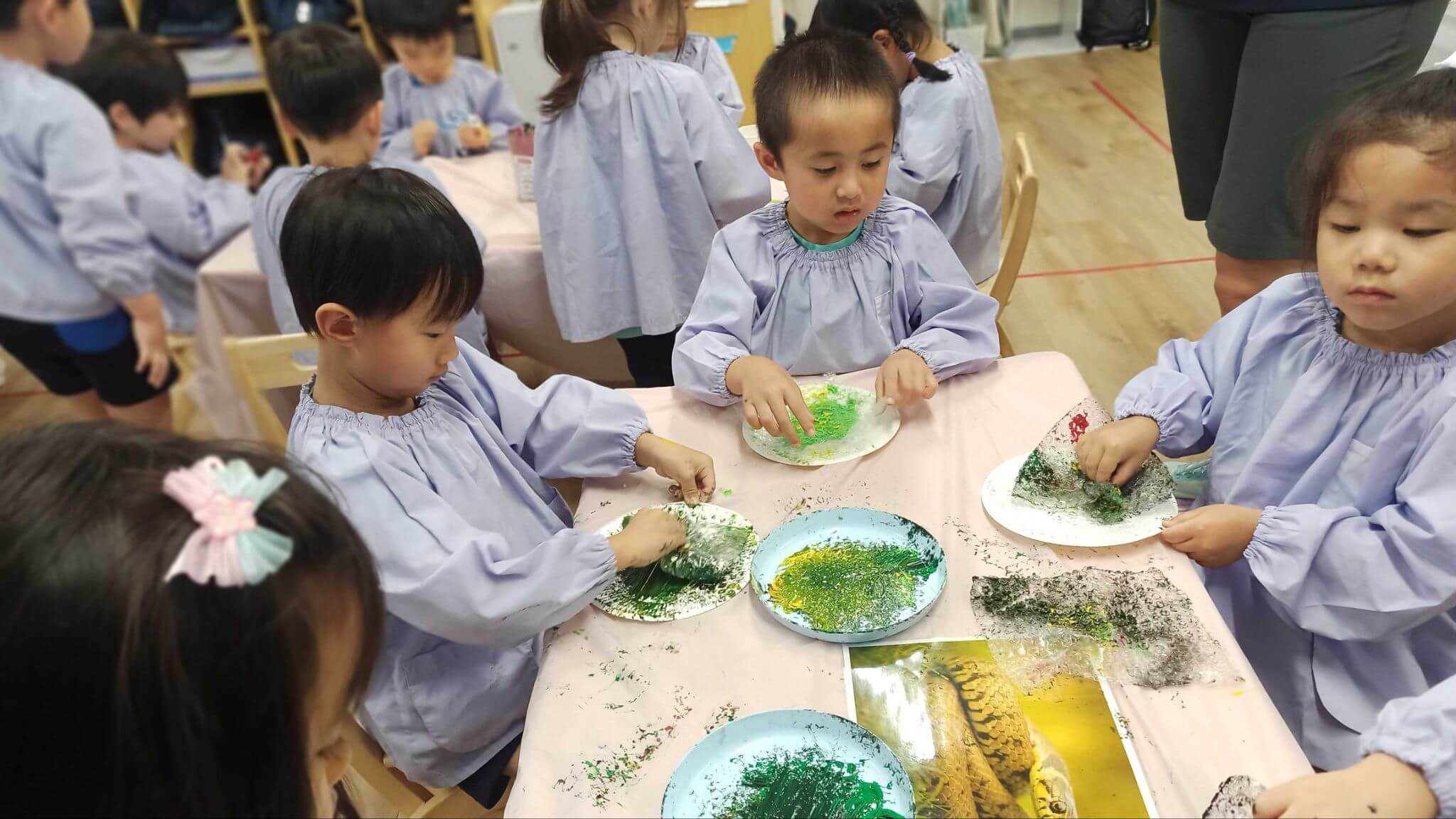
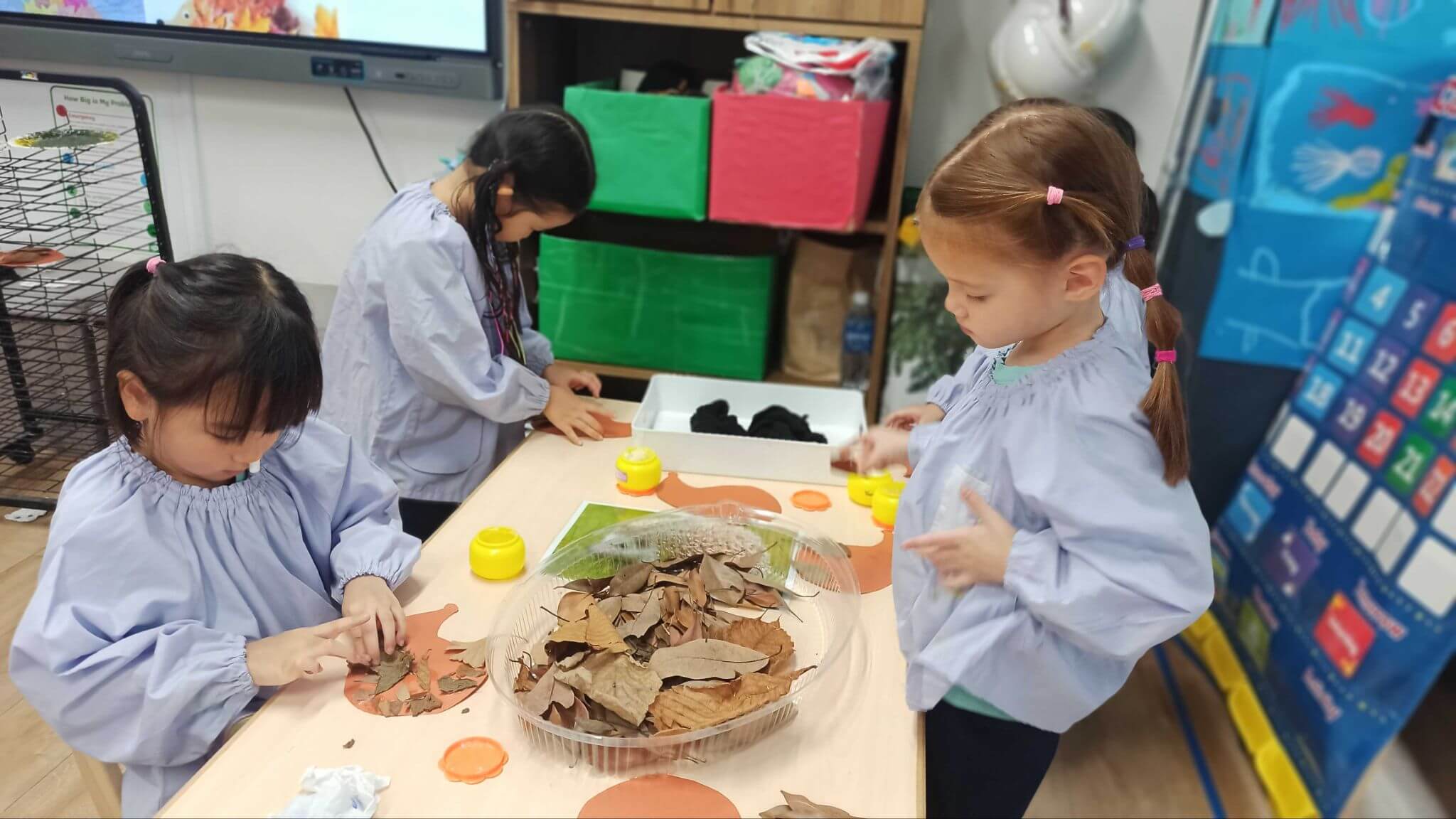
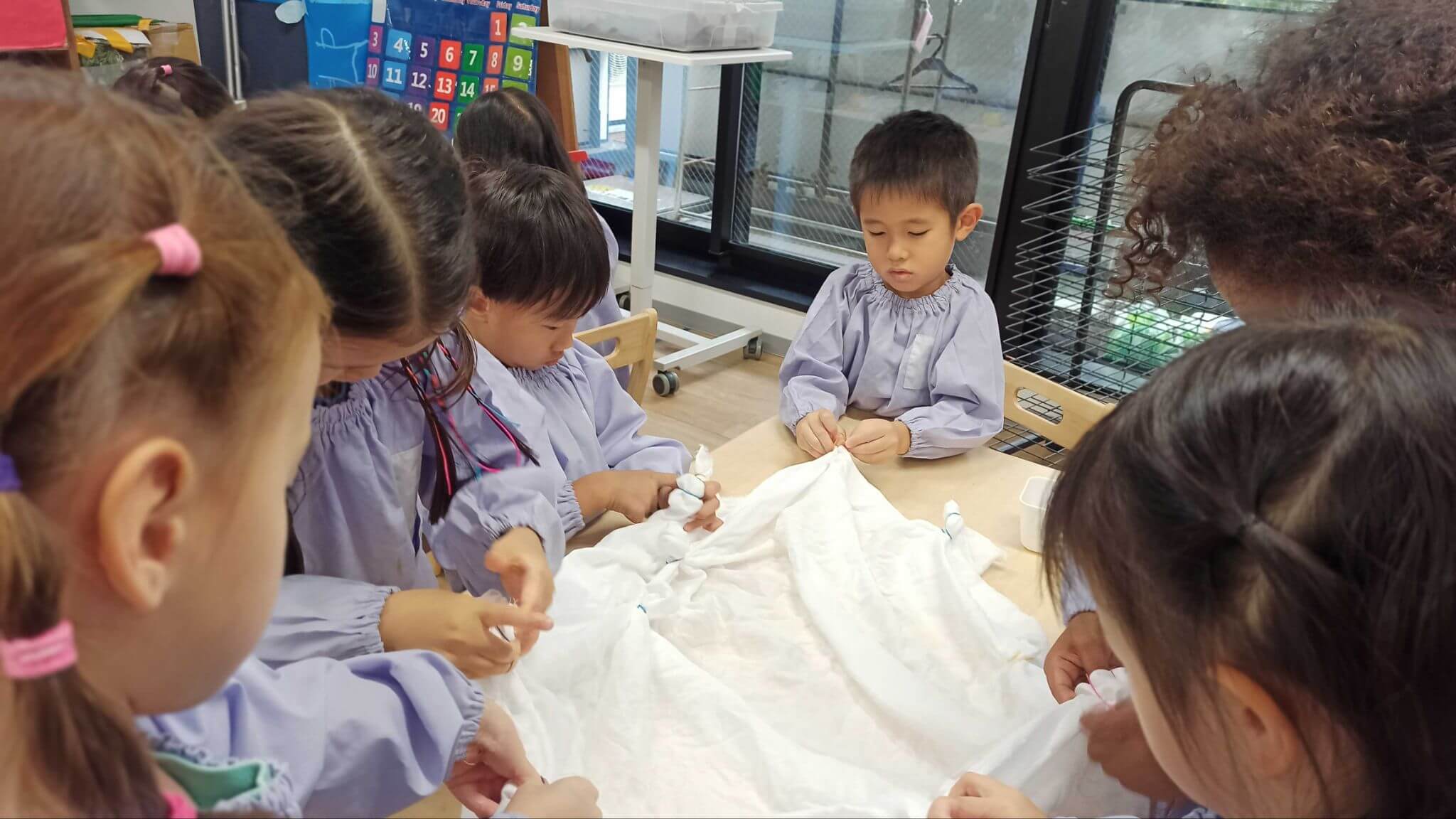
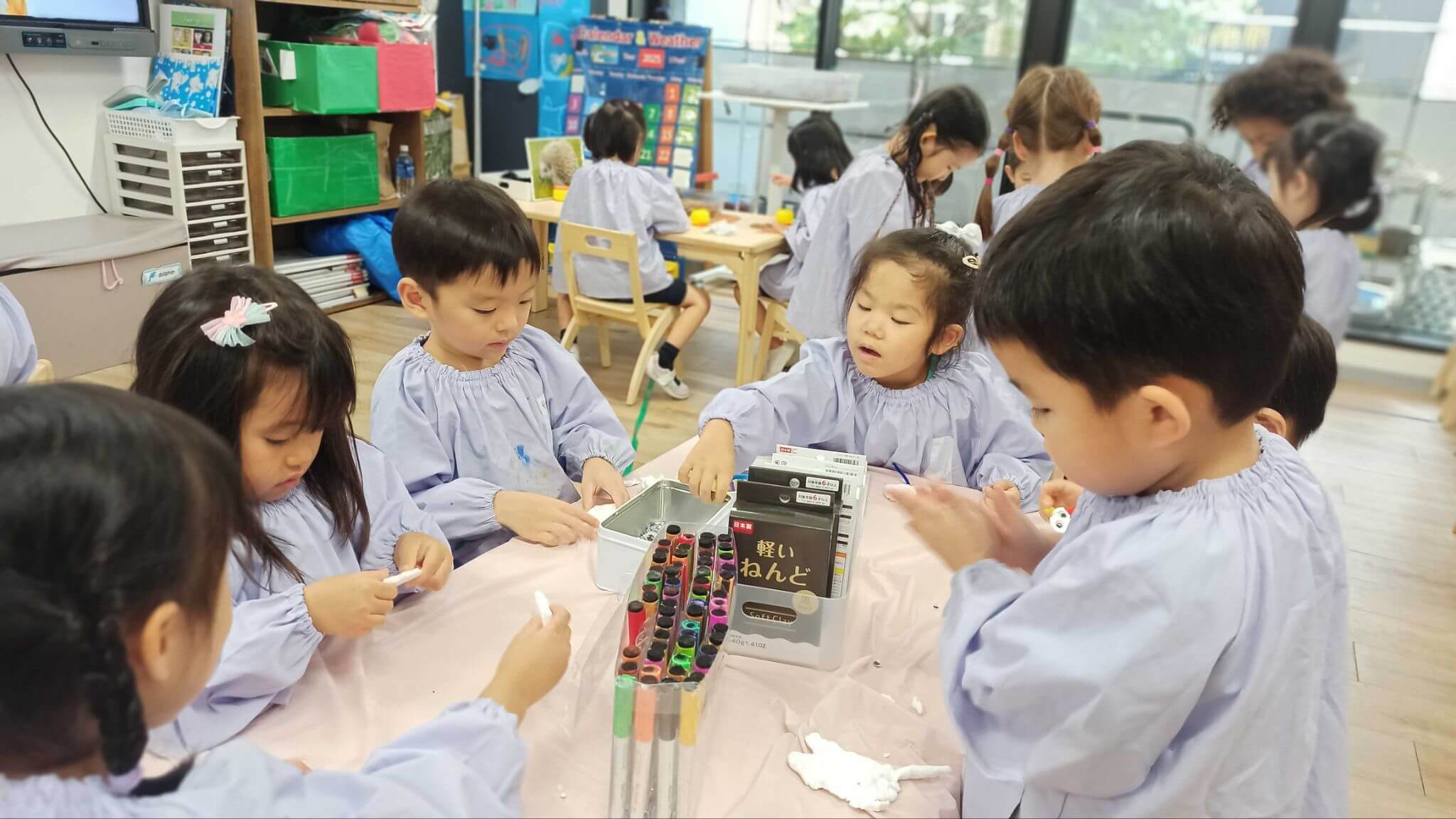
Our classroom came alive with creativity as we transformed it into a forest using our knowledge and imagination. The students worked together to design and build a tree, leaves, and animals, filling the corner of the room with a sense of wonder. This project allowed students to use their artistic expression to create a shared environment that reflected their ideas about nature, giving them a deeper sense of ownership and pride in their work.
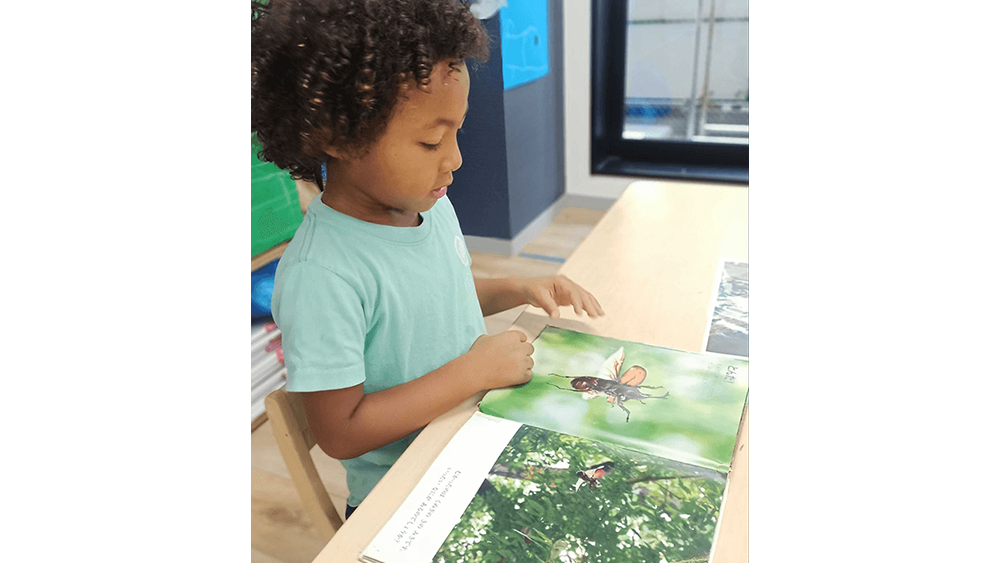
The project was grounded in social constructivism, as the Mountain class students learned not only from their own memories and experiences, but also from one another. They shared what they already knew about forests, animals, and plants, and built on this collective knowledge through group discussions. They also visited nearby Negishi Shinrin Park to collect leaves and sticks and look for animals and insects. In addition, they practiced research skills by exploring books from the library and making connections between what they read and how they chose to represent the forest.
Active inquiry was at the heart of this experience. Students were given the freedom to decide what should be included in the forest and how it should look. Some focused on animals, while others created insects or worked together to make a river using tie-dye. By guiding the project with their own curiosity and choices, the children demonstrated agency in their learning and developed a stronger connection to both the content and the classroom community.
Mountain students will now use this space for small world play and exploration. They will bring in natural items such as acorns, pinecones, sticks, and leaves collected from nearby parks, integrating real-world elements into their imaginative play. This hands-on connection between outdoor experiences and the classroom enriches their learning and allows them to investigate textures, shapes, and patterns found in nature while sparking curiosity, storytelling, and deeper inquiry.
Learning from the Ocean: What We Can Do
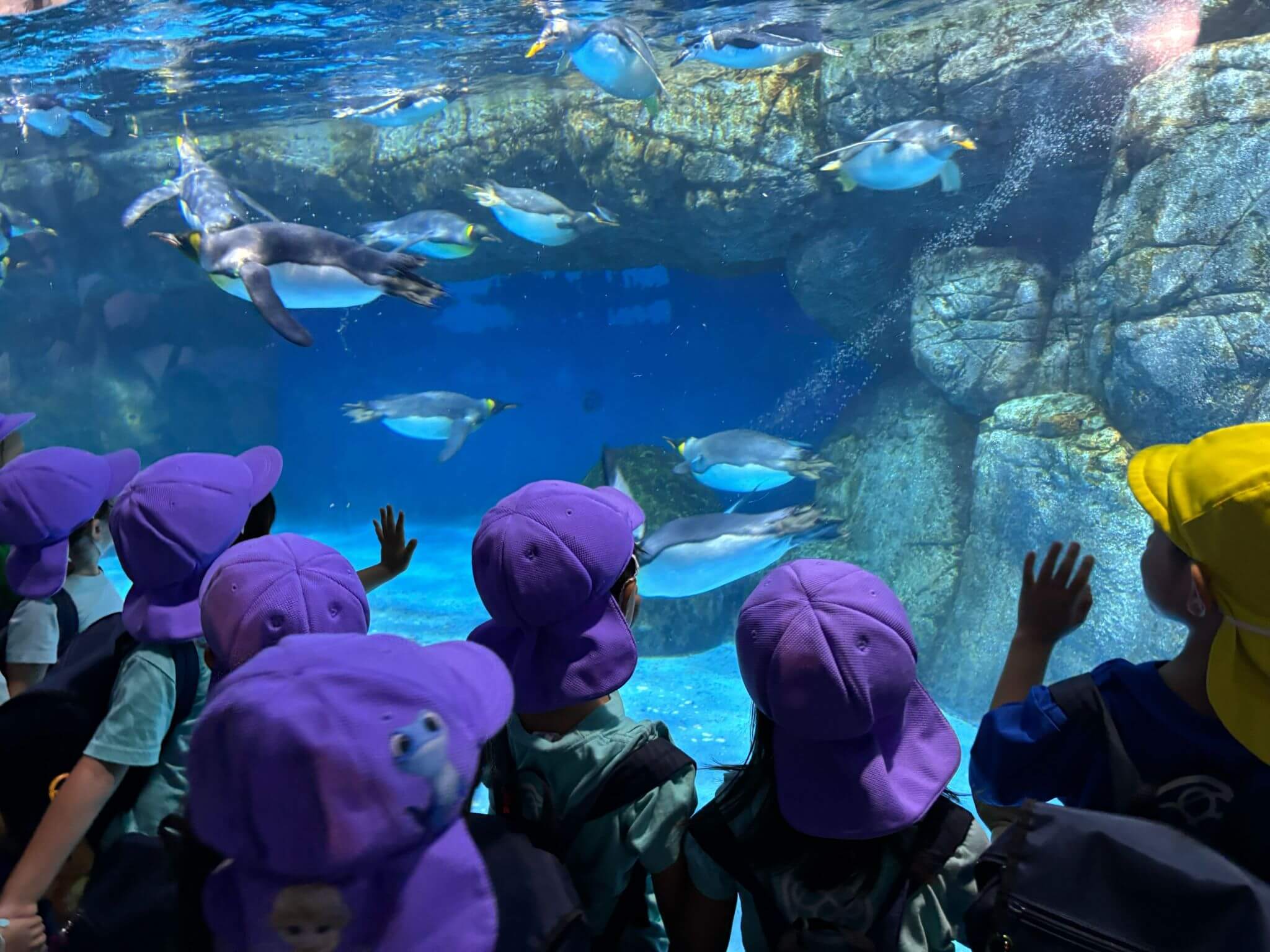
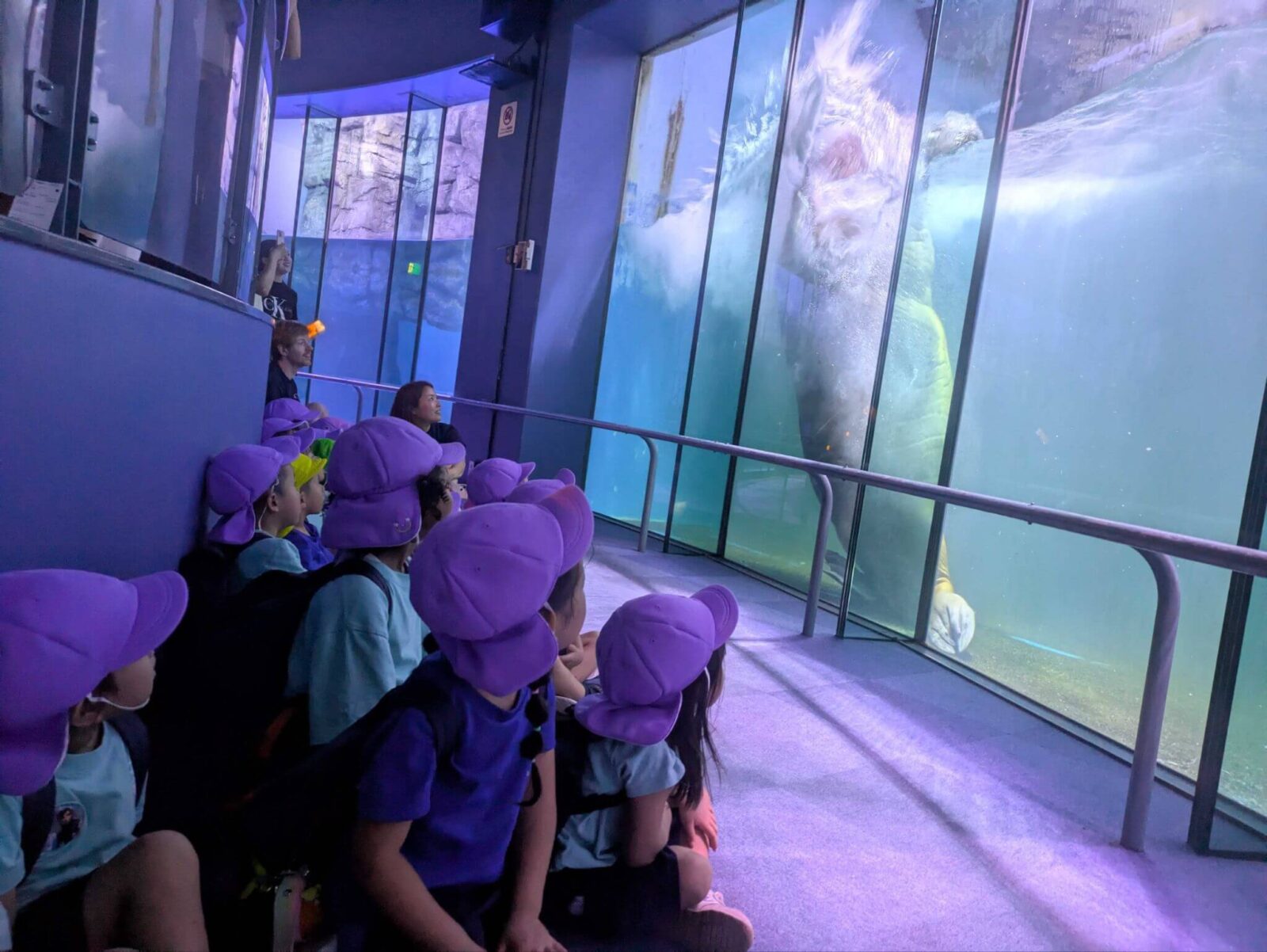
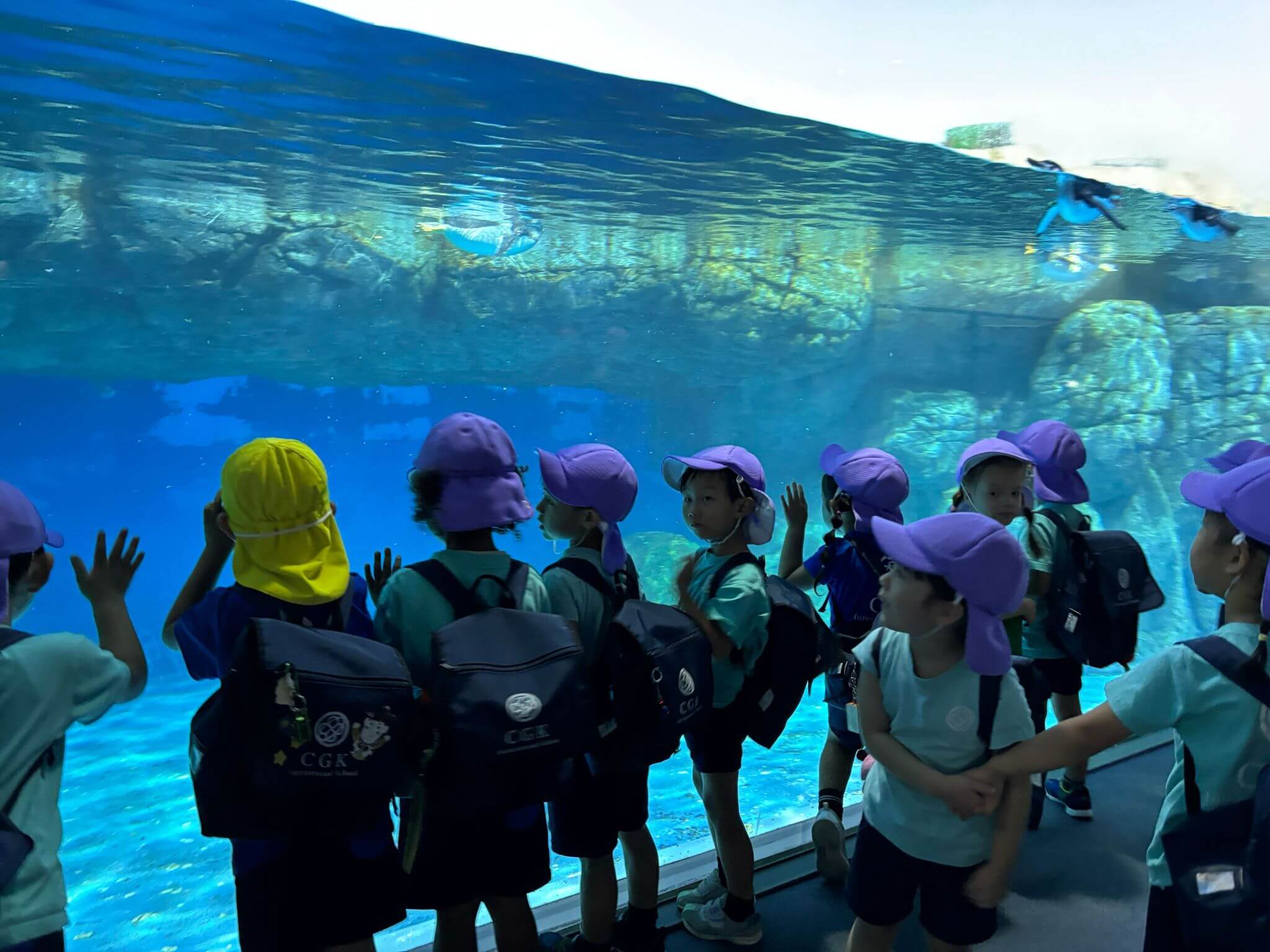
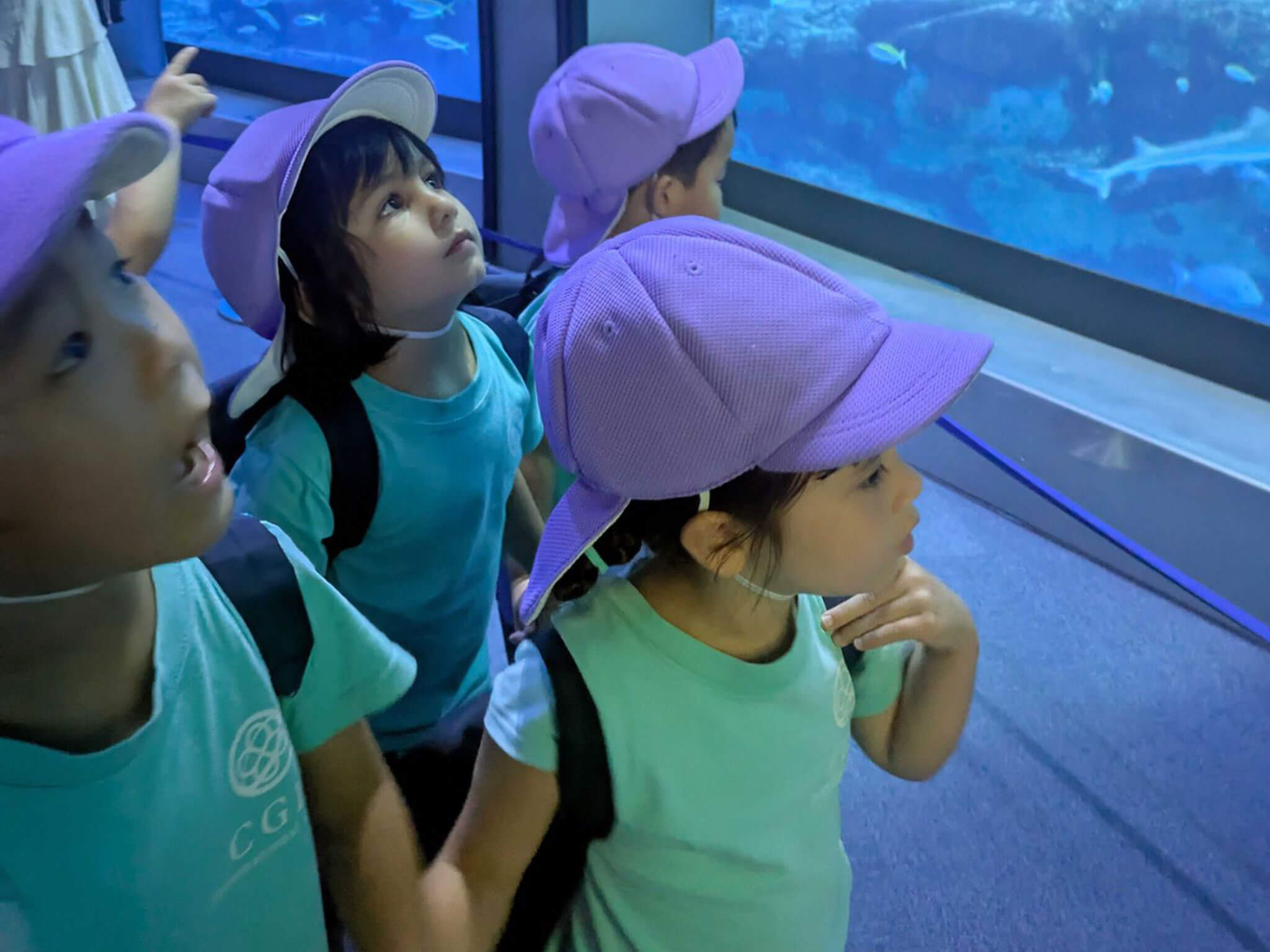
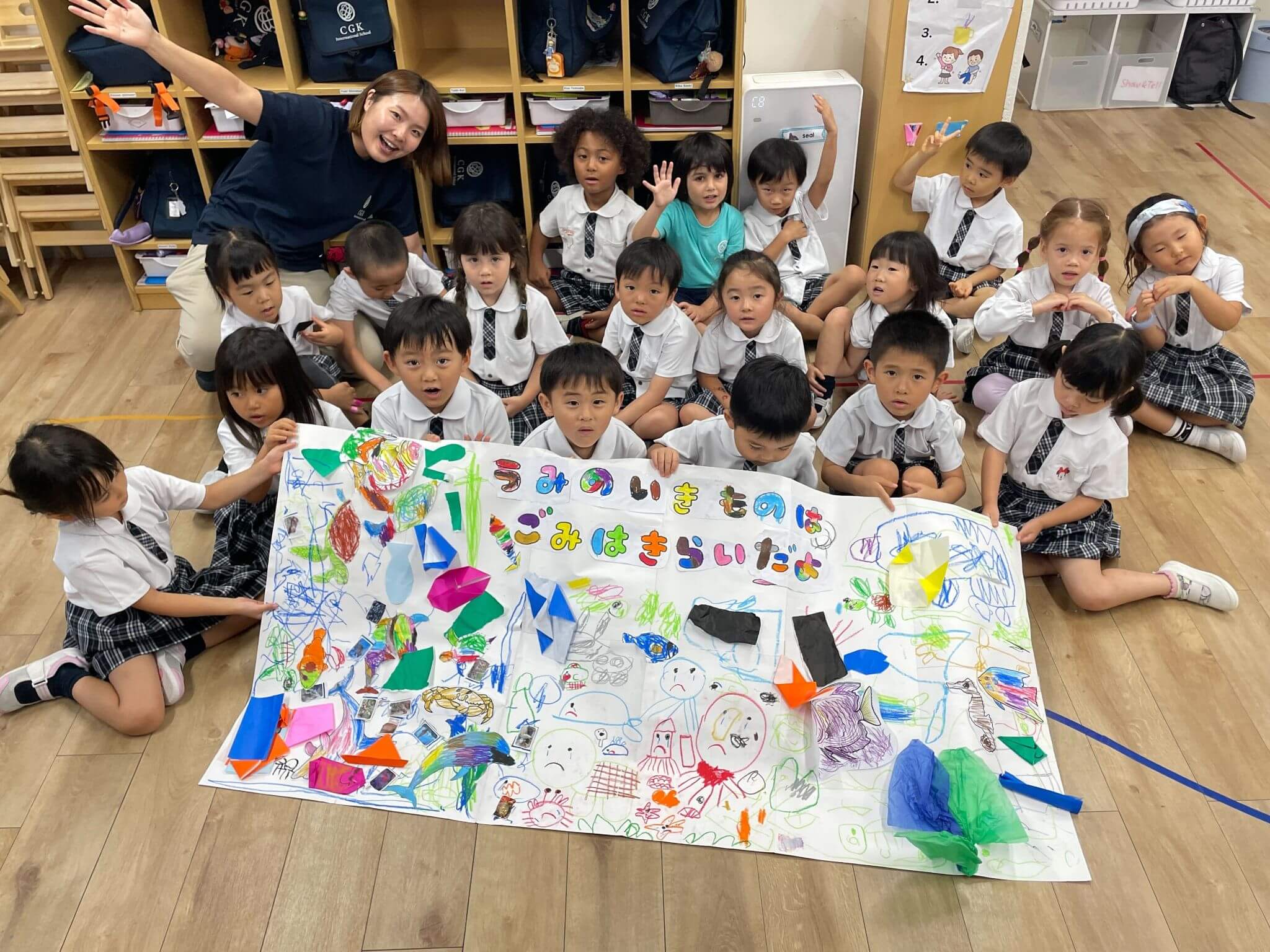
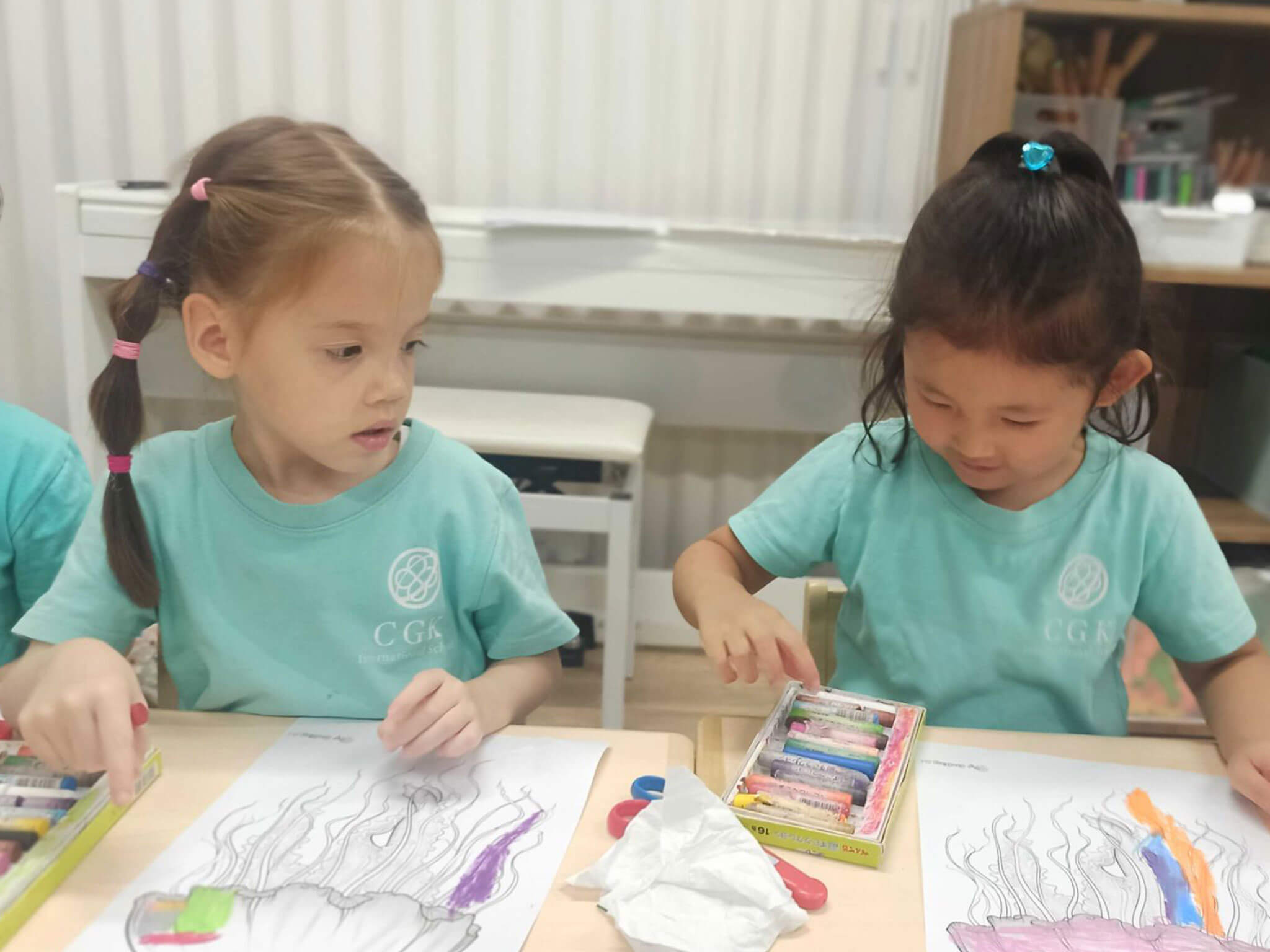
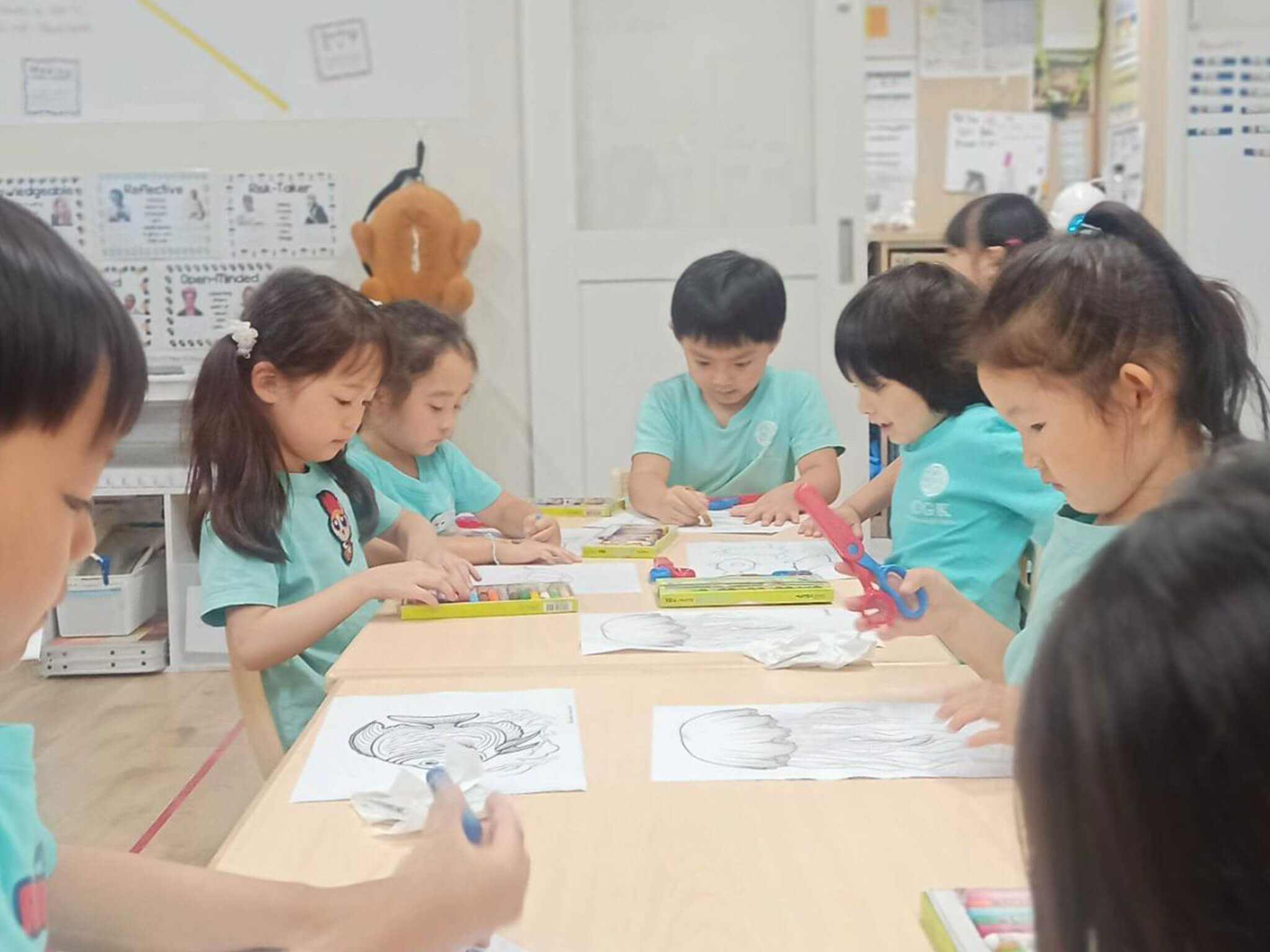
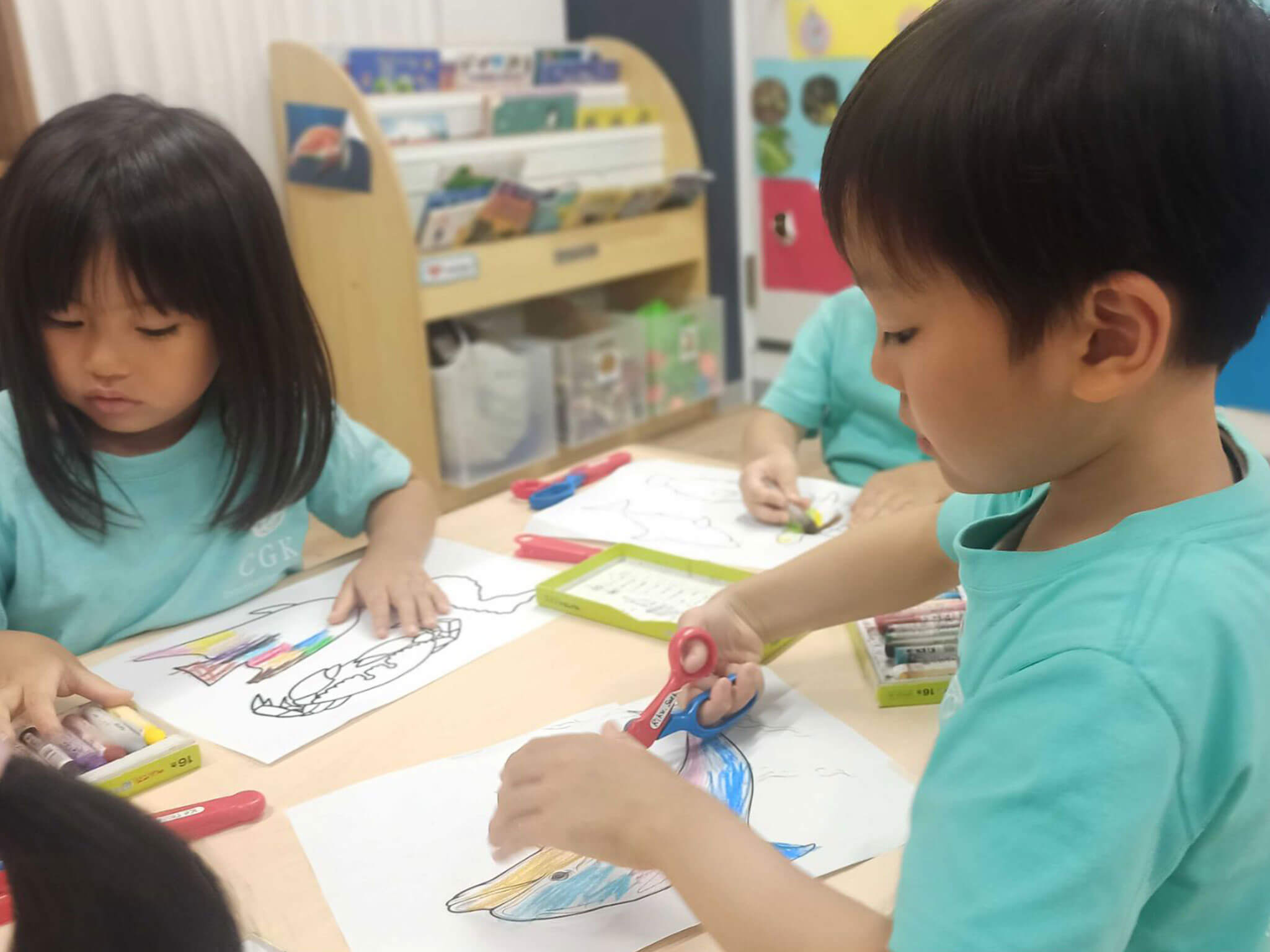
In August, our learning centered around the theme of the ocean. Our field trip to Hakkeijima Sea Paradise was a wonderful opportunity for the children to see the animals they had been learning about in class up close and to connect their knowledge to real-life experiences. For example, during lessons we had talked about how penguins swallow fish whole, head first, so the bones don’t get stuck. When the children saw this happening right before their eyes, they exclaimed with shining eyes, “They really eat head first!” and “That’s amazing!” Having what they learned in the classroom come alive in front of them deepened their curiosity about how animals are built and how they live.
We also learned about the problem of plastic waste flowing into the ocean. The children thought seriously about solutions, sharing ideas such as, “What if we put more trash cans around?” and “Or maybe we shouldn’t make trash in the first place!” To express their learning, the children created posters depicting sea animals looking sad because of pollution. Their artwork carried a strong message: “Let’s keep the ocean clean together.”
Through these hands-on experiences of seeing, feeling, and thinking, the children are learning about environmental issues not just as abstract knowledge, but as challenges they themselves can act on. They are beginning to feel, “There are things I can do too.” Moving forward, we will continue to turn our attention to different habitats around the world, exploring the challenges each environment faces and what we can do to help protect our planet—always in a spirit of joyful inquiry.
Jungle A
(3-year-olds)
A Beautiful Beginning
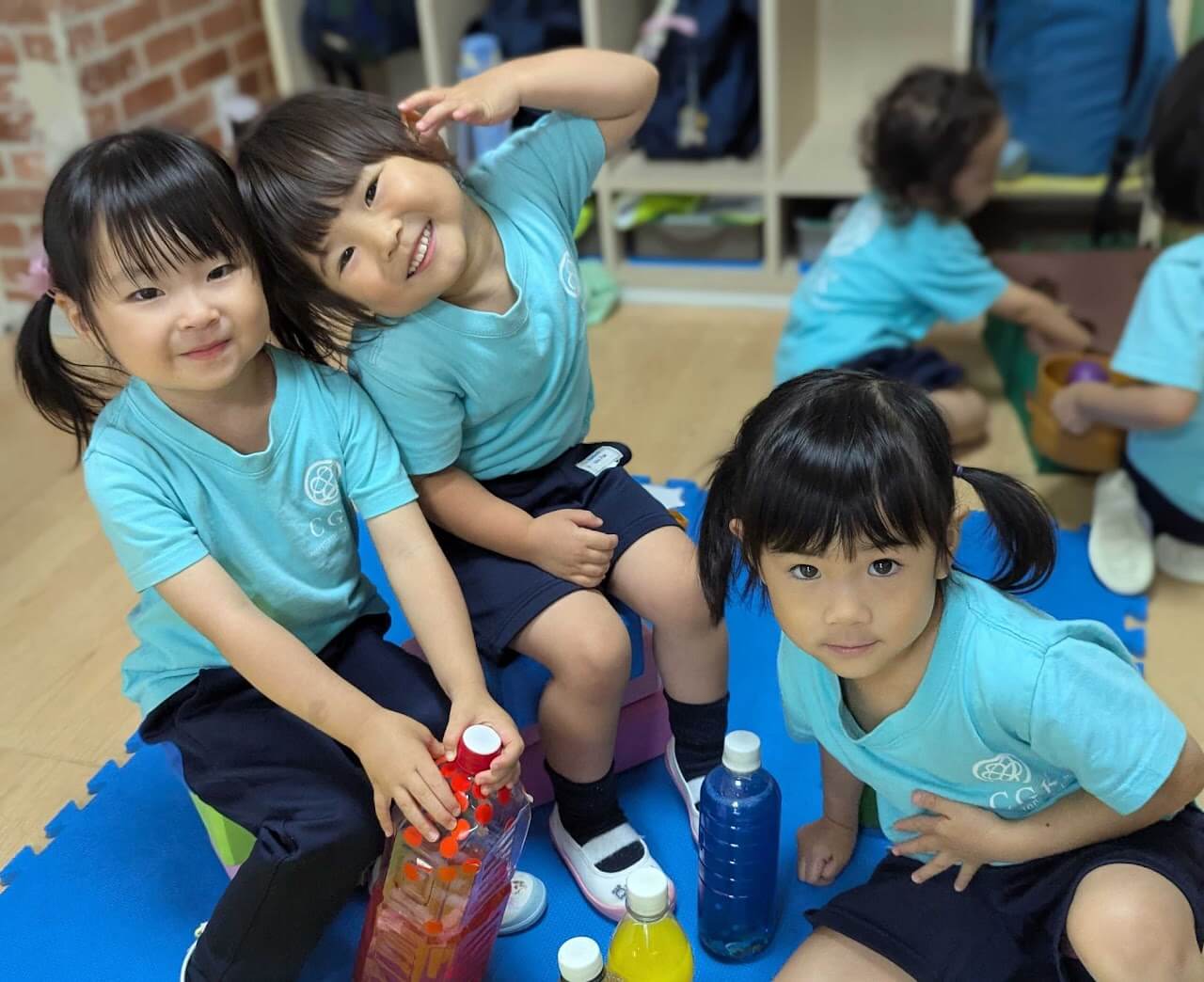
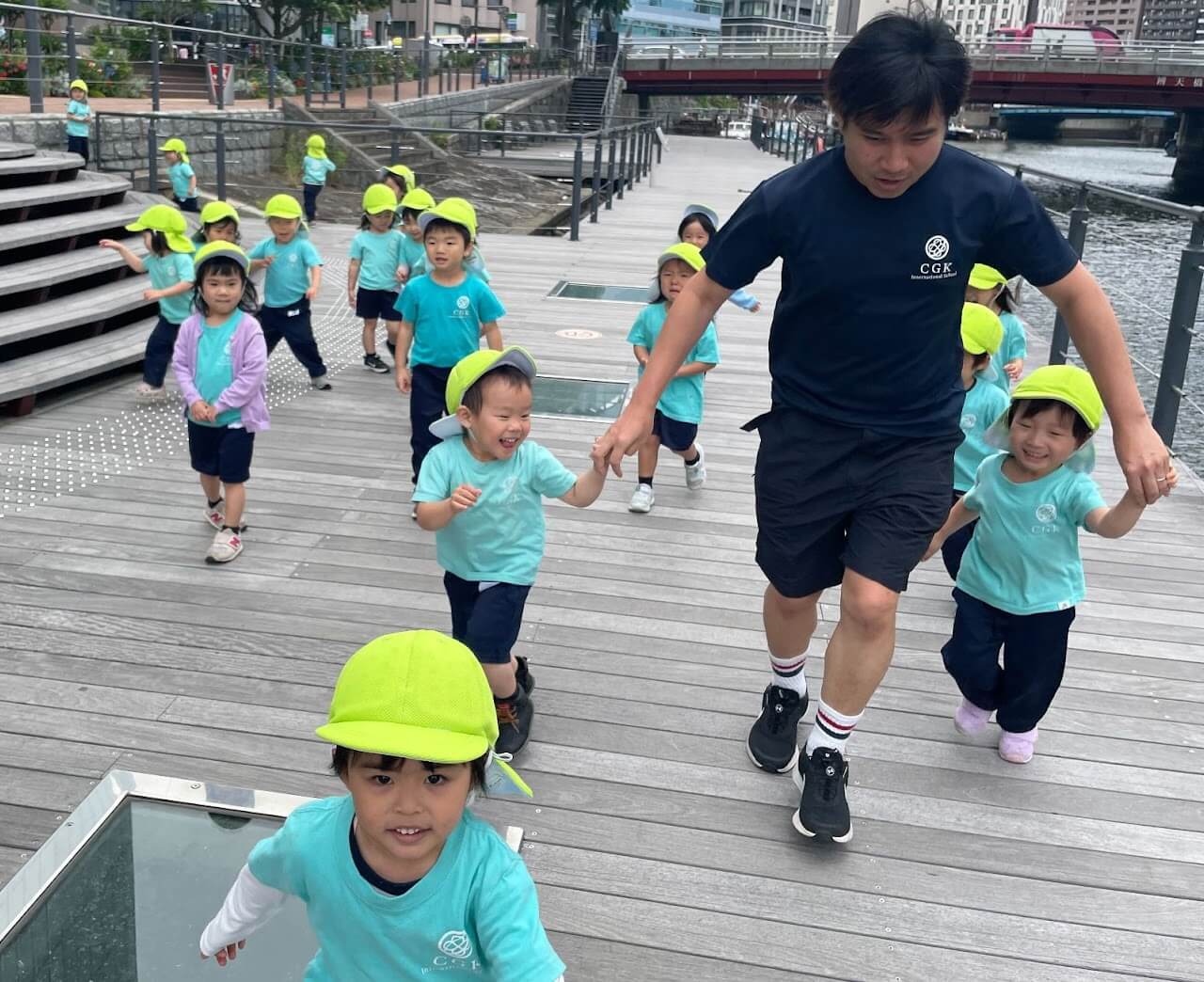
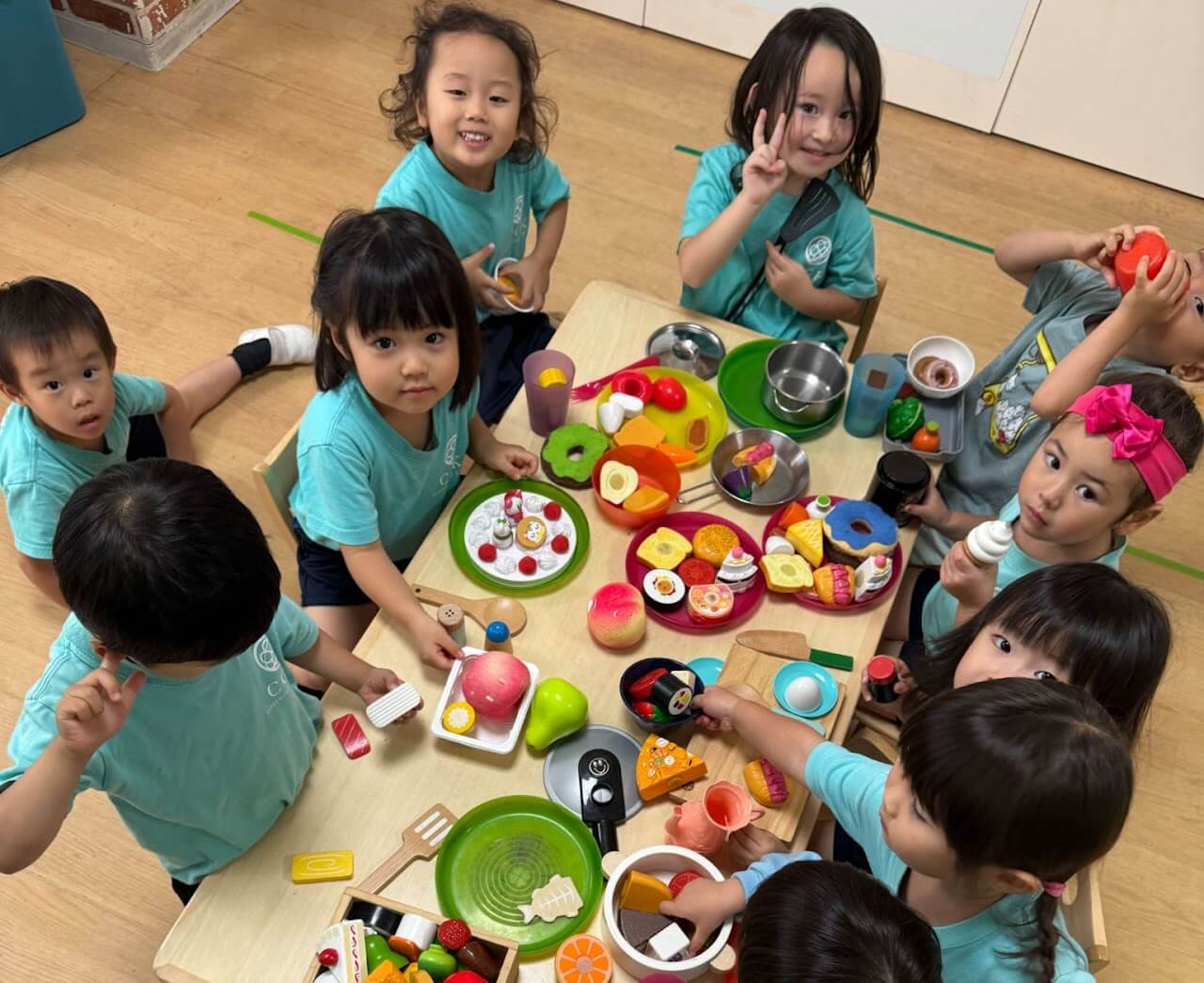
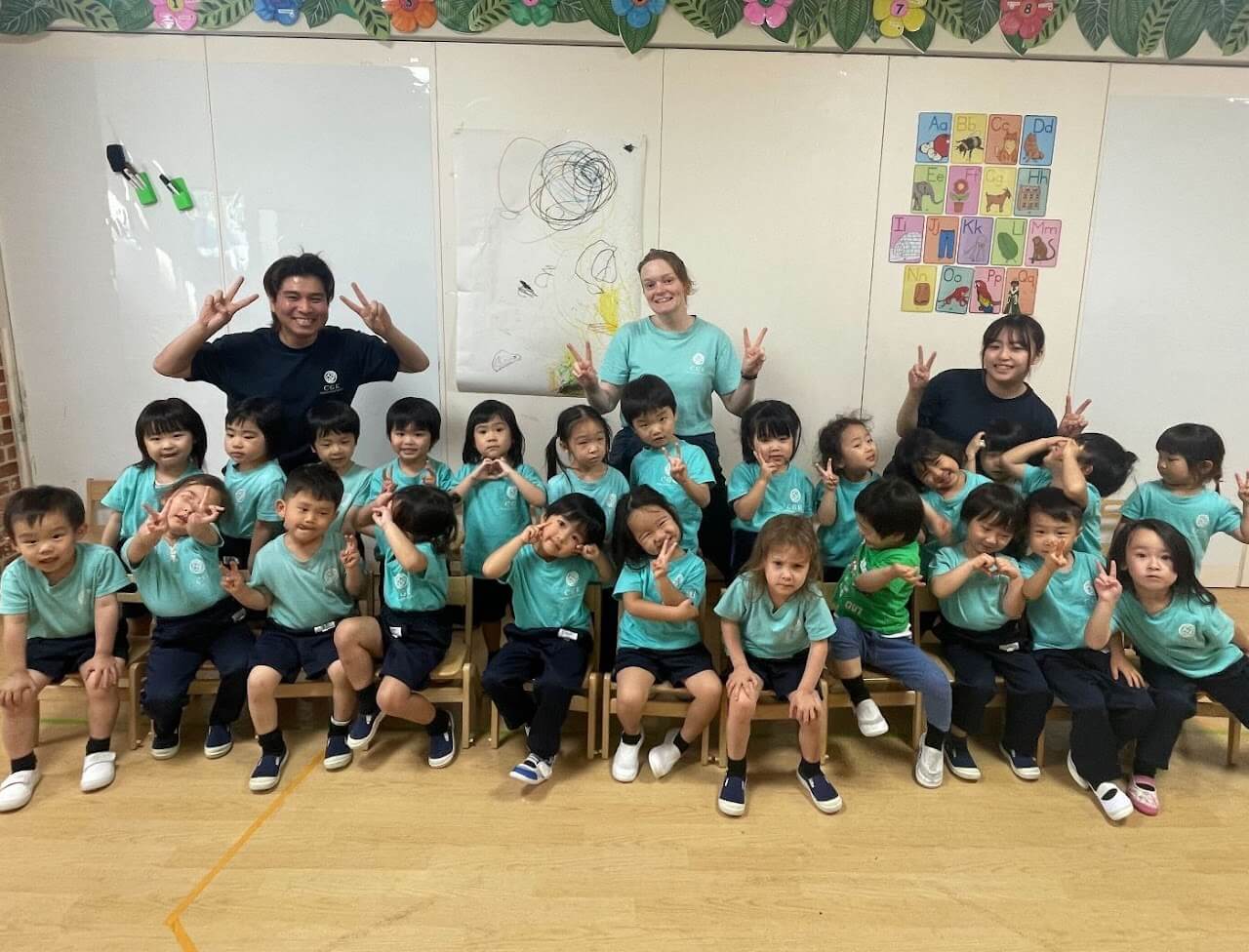
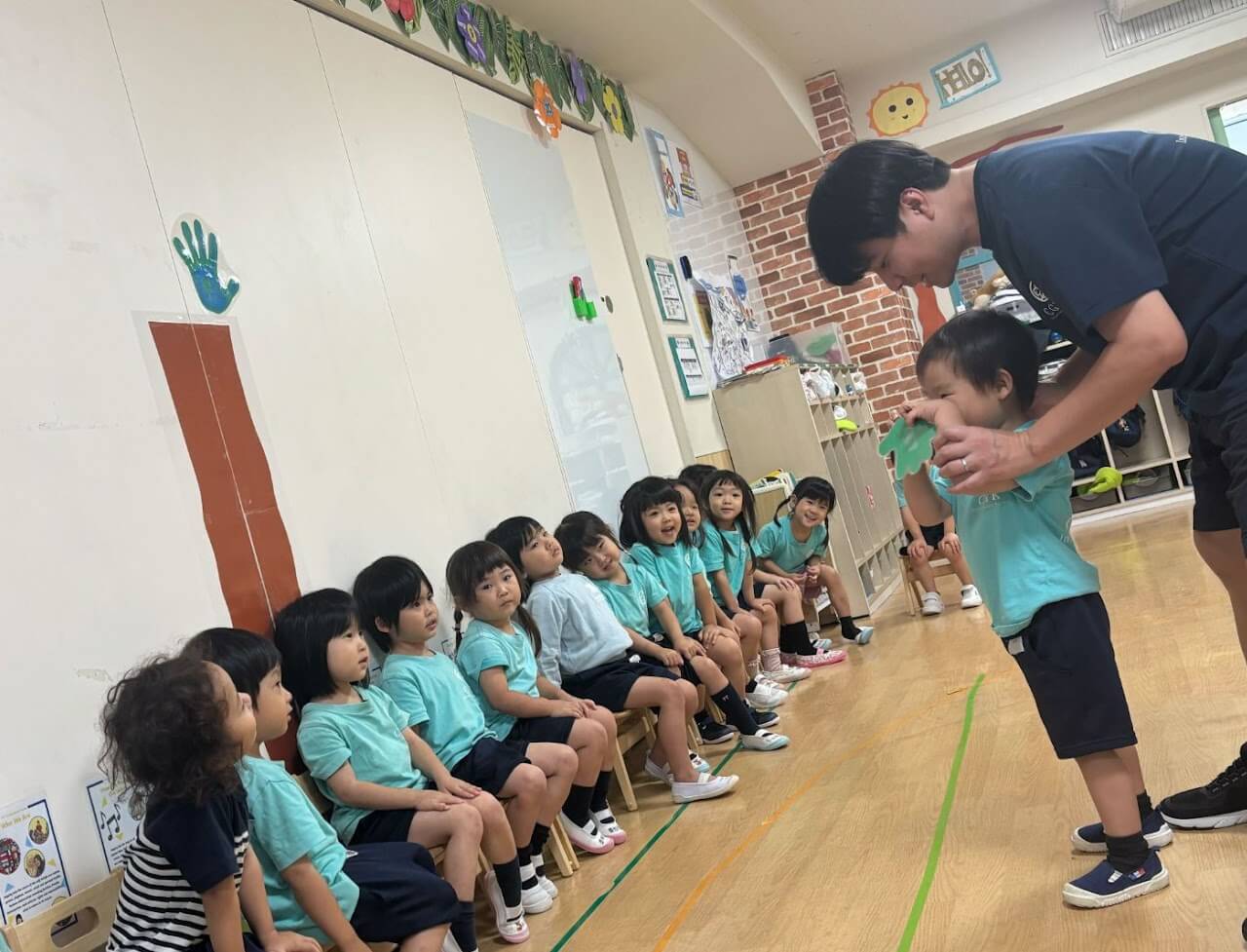
The first half of the school year in Jungle A has been filled with curiosity, courage, and connection. From the very first day, students stepped into a space filled with new faces, new routines, and endless opportunities to explore and grow. Together, we built something truly special - not just a classroom, but a community.
Each morning brought fresh excitement: greeting friends at the door, joining together for morning circle time, sharing stories, diving into discovery time, and navigating challenges big and small. These daily rhythms became the heart of our learning where play sparked new ideas, questions led to exploration, and every small moment held the potential for big growth.
In Jungle A, students weren’t just learning - they were teaching, too. They showed what it means to be part of a team: helping a friend find their shoe, inviting someone new into a game, or offering a kind word during a tough moment. They reminded us all that empathy, respect, and collaboration are just as important as letters and numbers.
There were times of challenge - days filled with big emotions or unexpected changes - but those moments only deepened our sense of togetherness. As we worked through them side by side, children discovered their own resilience and the comfort of a caring community around them.
Inspired by the Reggio Emilia philosophy, we embraced the belief that children are not empty vessels to be filled, but active constructors of knowledge. That spirit could be seen in every block tower built, every question asked, and every story shared. Jungle A has truly become a place where voices are heard, ideas matter, and every child feels seen.
As the year continues and familiar faces return to the classroom, one thing is certain: the energy, curiosity, and kindness that define Jungle A will keep growing. Though my role is shifting, I’ll still be cheering from nearby - celebrating every discovery, every friendship, and every step forward. Thank you to our amazing children and families for making this beginning so beautiful. Here’s to many more moments of joy and learning ahead.
What Comes to Mind When You Think of Summer?
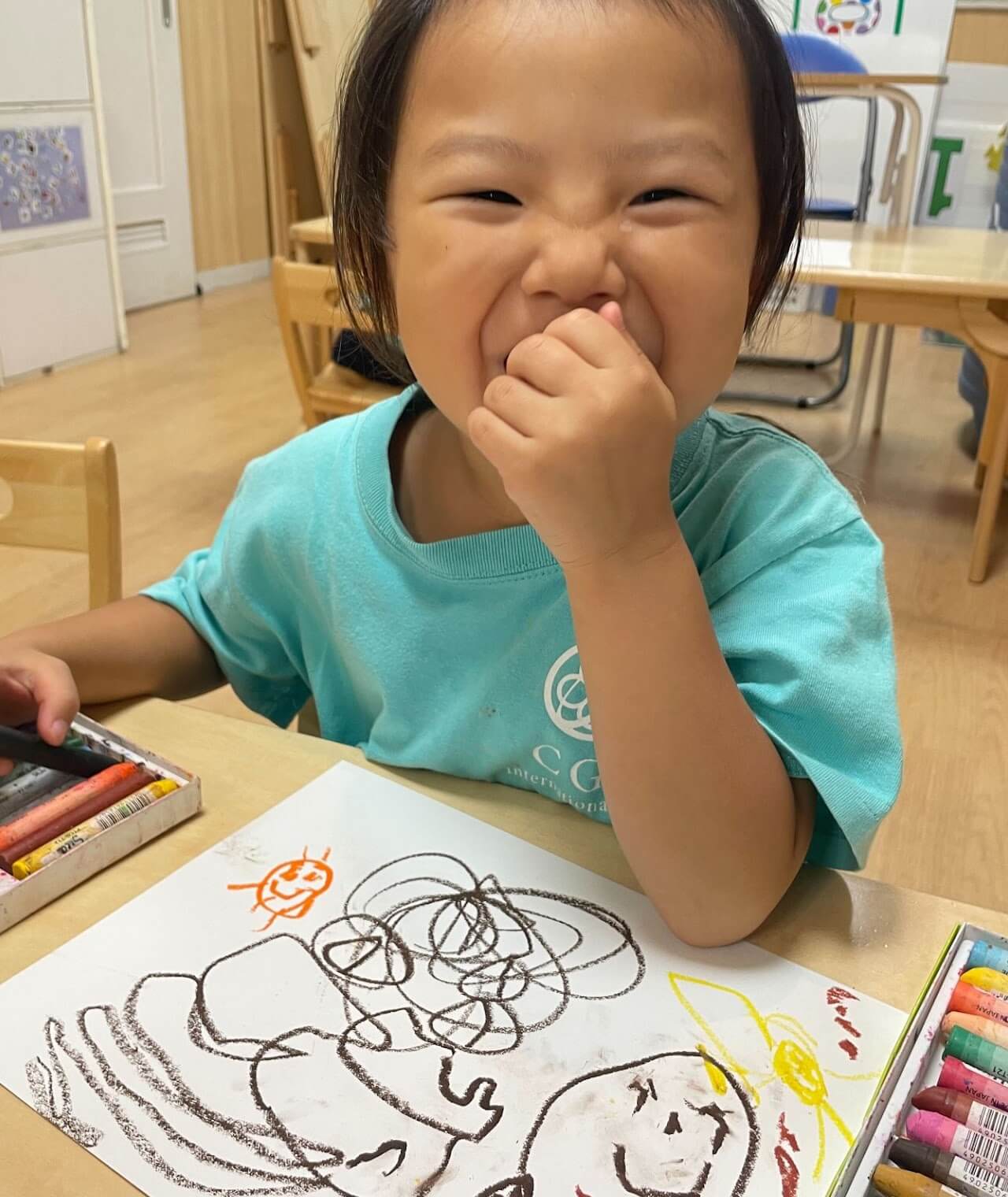
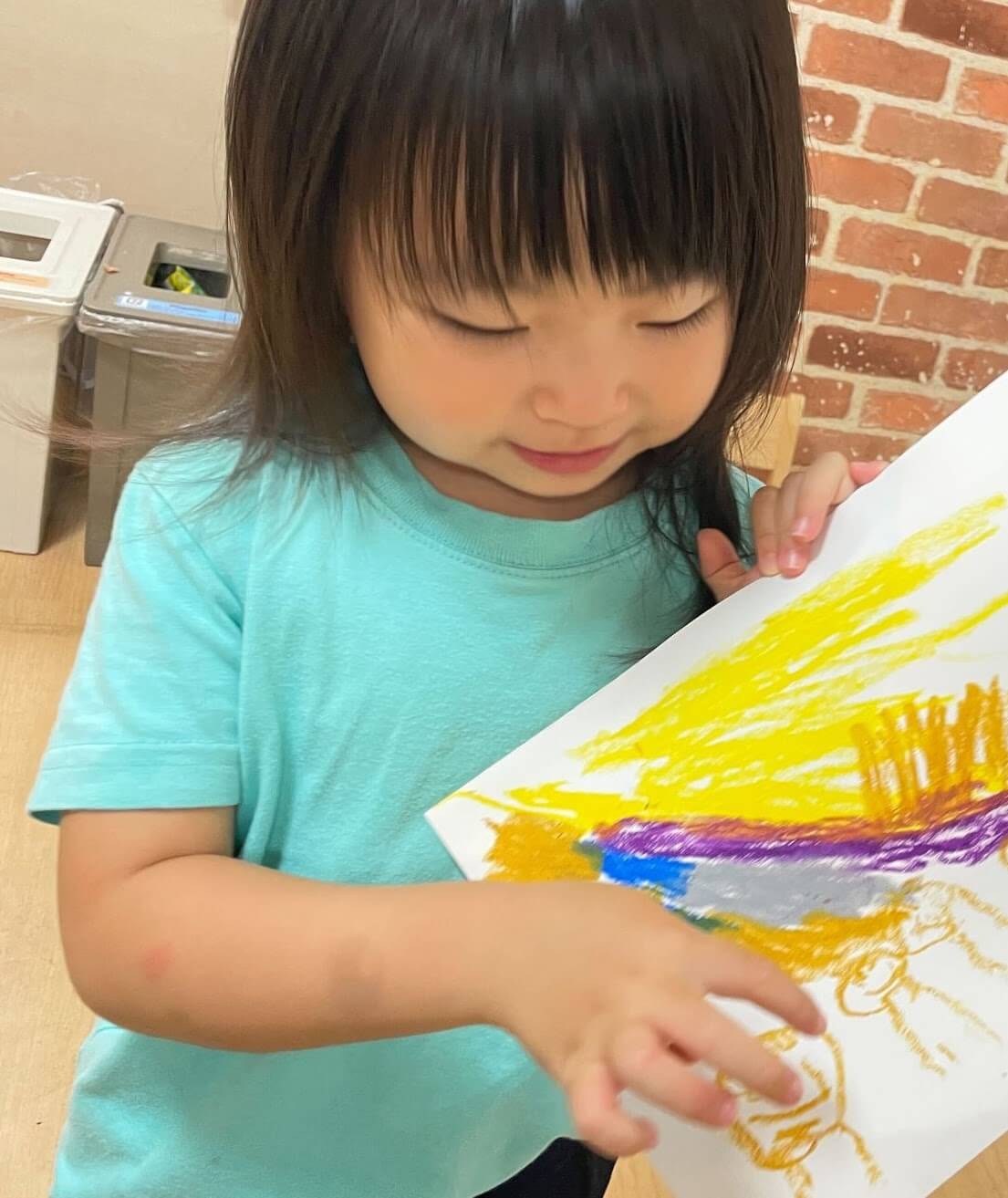
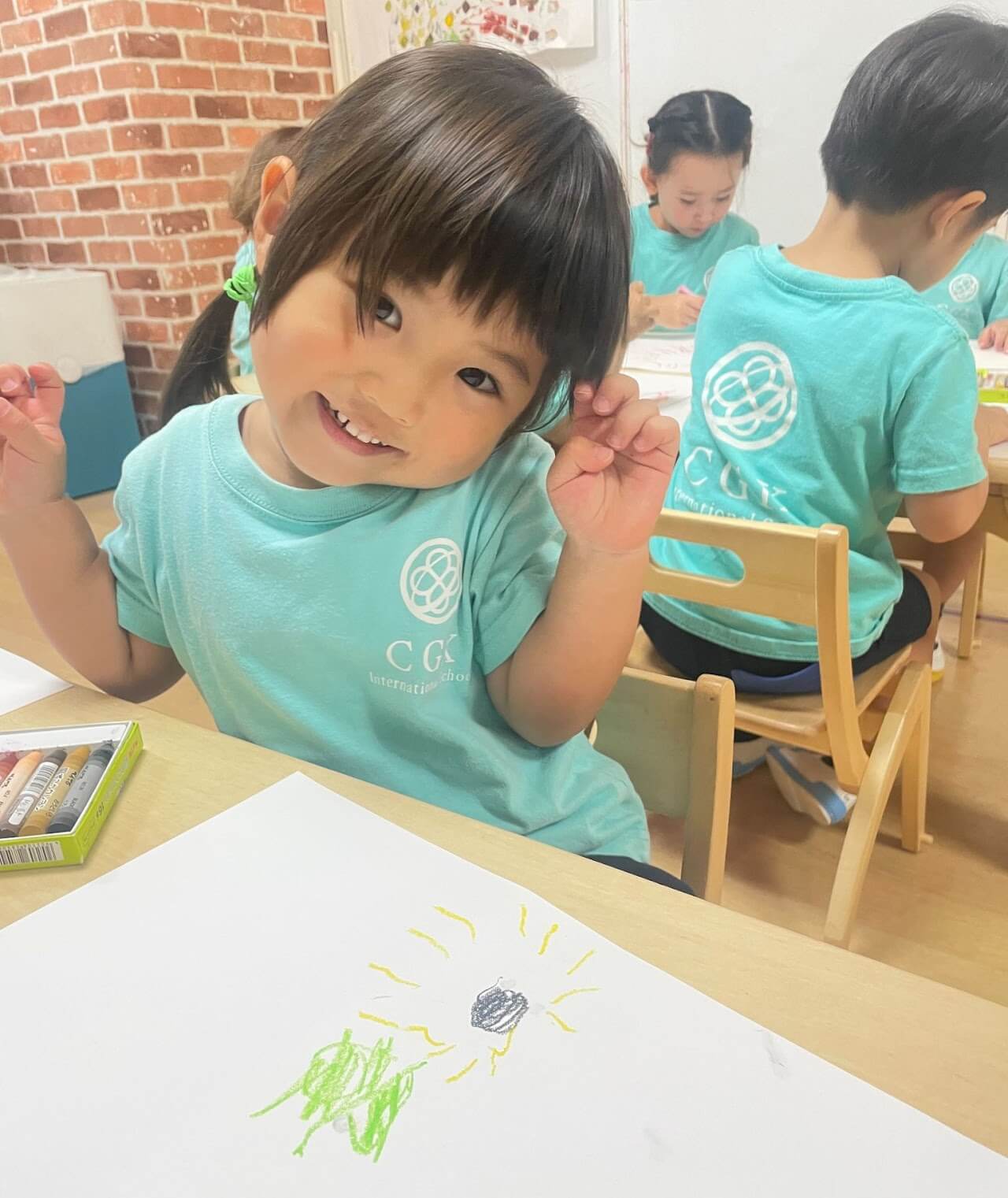
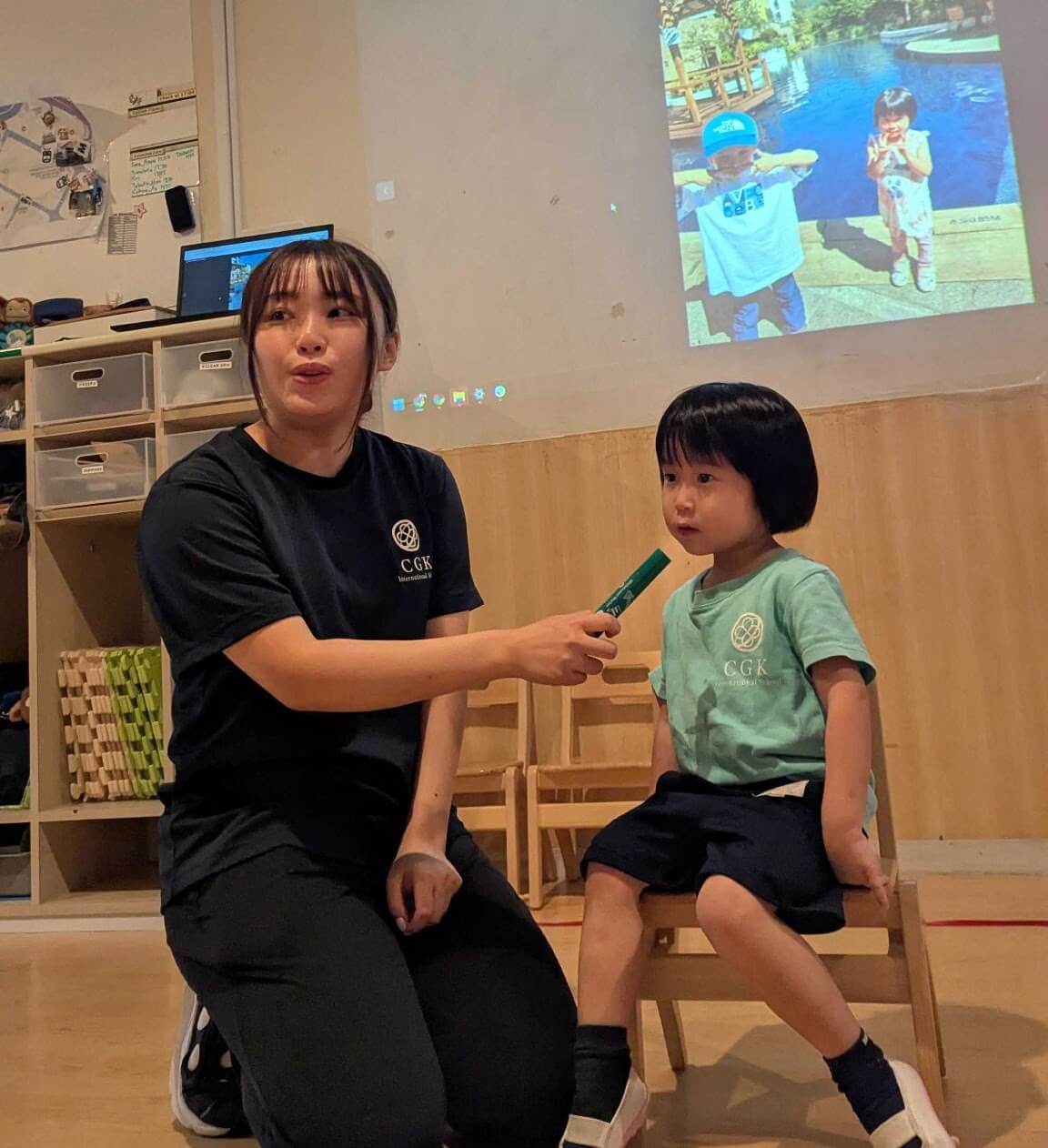
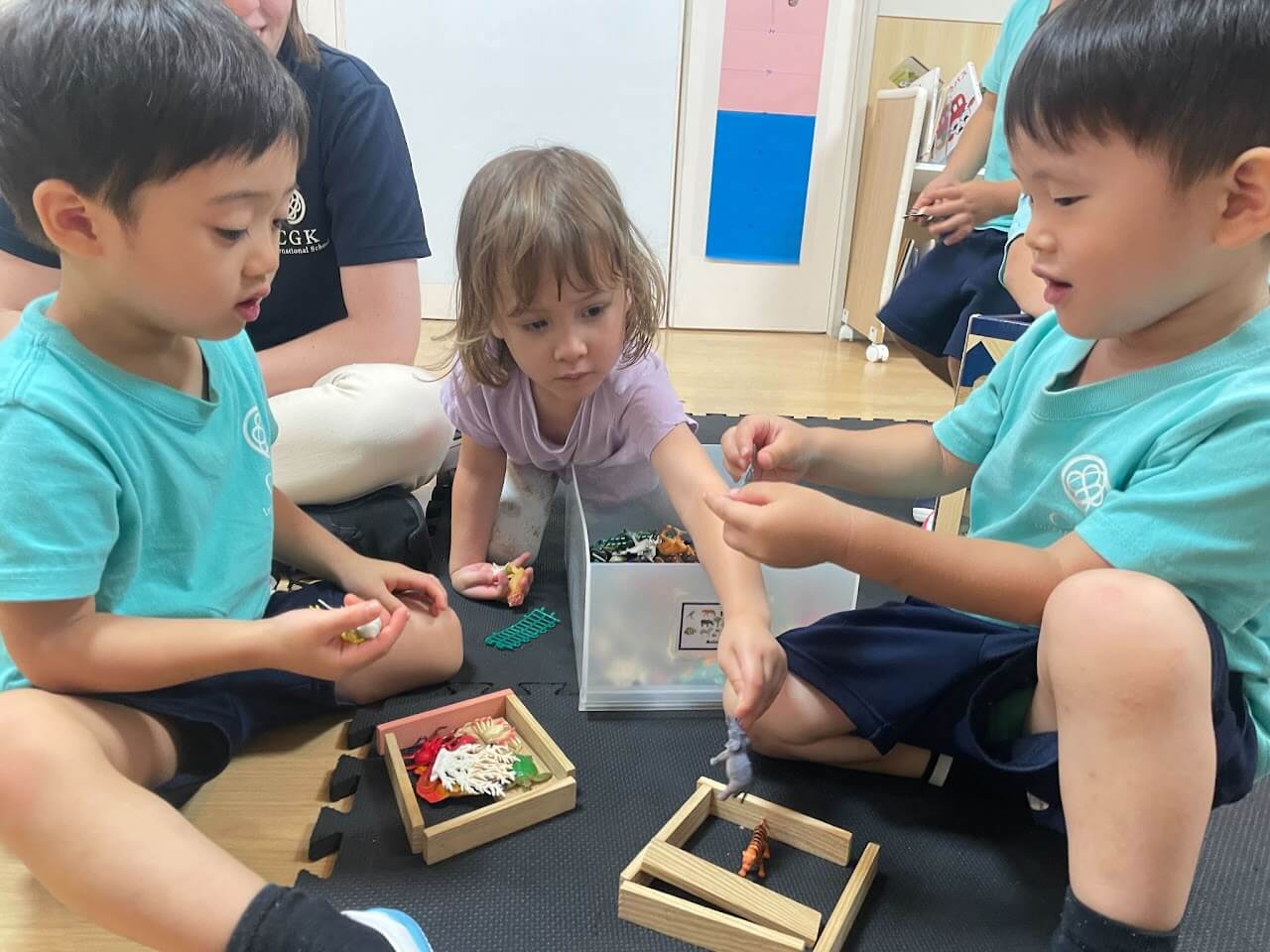
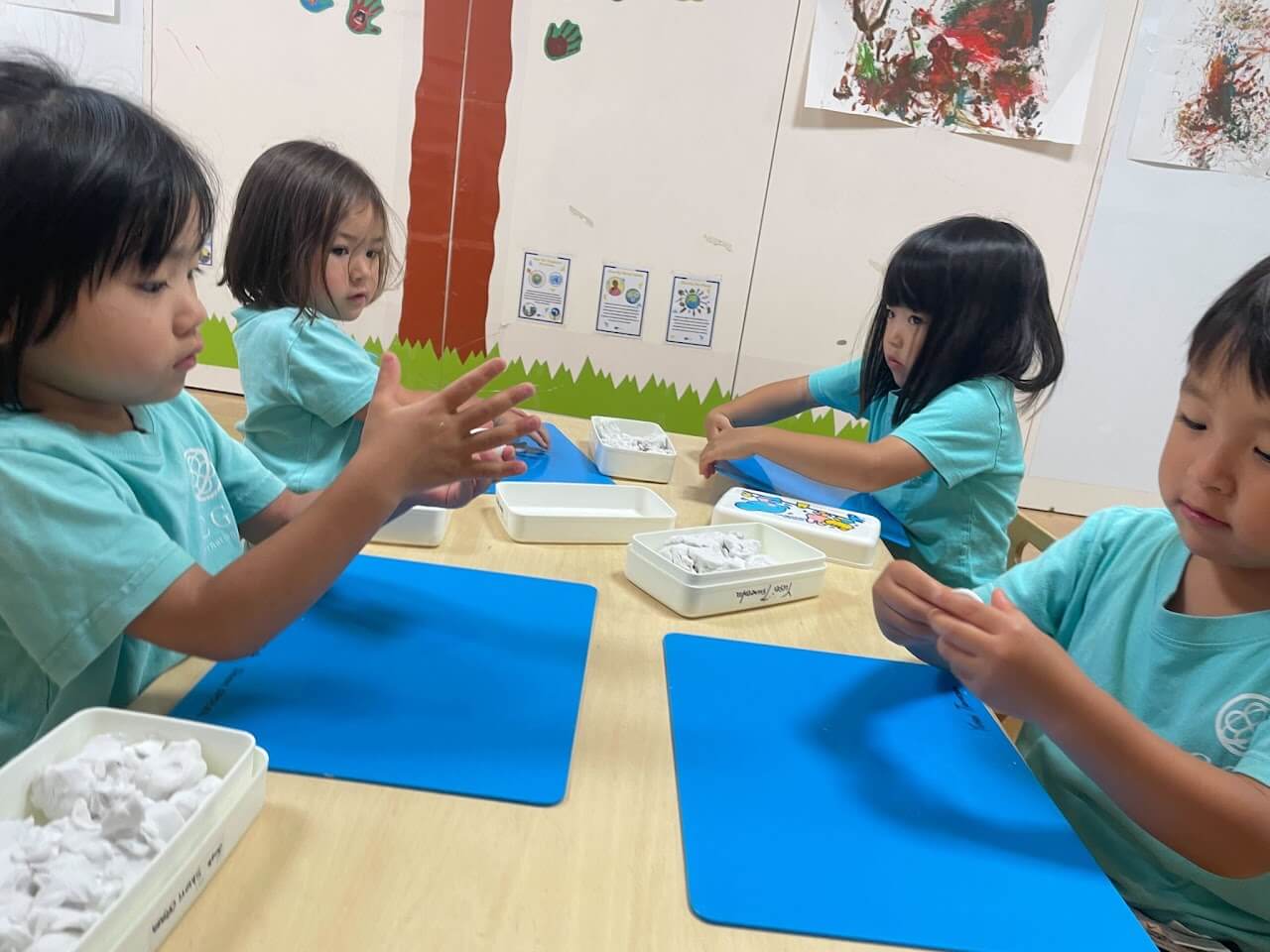
At the beginning of this month, we had the Minato Mirai Fireworks Festival, followed by summer vacation in the middle of the month, so it was only natural that many of our class discussions turned to the theme of summer. The children shared their summer break experiences through Show and Tell, and we expanded on questions such as, “What comes to mind when you think of summer?” and “What kind of season is summer?”
The children eagerly shared their knowledge and stories:
“It’s hot in summer, so you have to drink a lot of water!”
“I went to a summer festival and ate yakisoba.”
“I saw sunflowers blooming at city hall!”
We were impressed by how much better they are becoming at clearly explaining what they have experienced or learned, compared to before. Their conversations with friends flowed naturally, with ideas bouncing back and forth, showing us their growth in communication.
Beyond words, we also thought together about other ways to express experiences and ideas. The children enjoyed creating and expressing summer through drawing, clay, and toys. Some re-created catching crabs with Kapla blocks and sea animal toys, while others made ice cream from clay—sometimes working together with friends to share and expand ideas. At the drawing table, many children depicted places they had visited and the family or friends who went with them, confidently answering teachers’ questions with clear explanations.
We also sang the Japanese song “Suika no Meisanchi” (The Watermelon’s Famous Region), and with each practice, the children grew more skilled at singing it with gestures. Seeing them happily singing out loud together was heartwarming.
Through these Japanese lessons, we hope the children continue to build curiosity about the seasons, the traditions that come with them, and the joy of experiencing Japan’s four seasons year after year.
Jungle B
(3-year-olds)
How We Express Ourselves: Honoring our Feelings
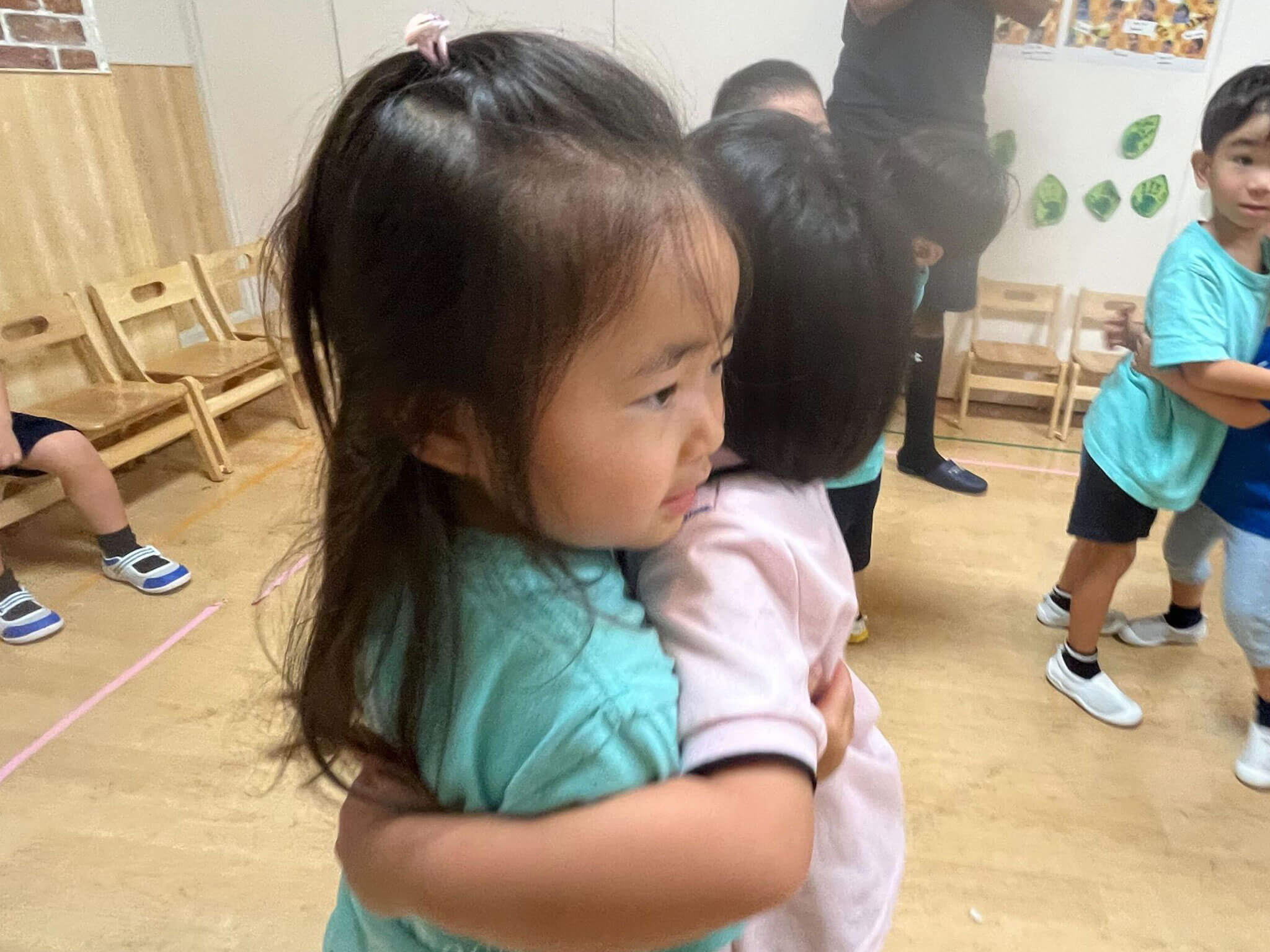
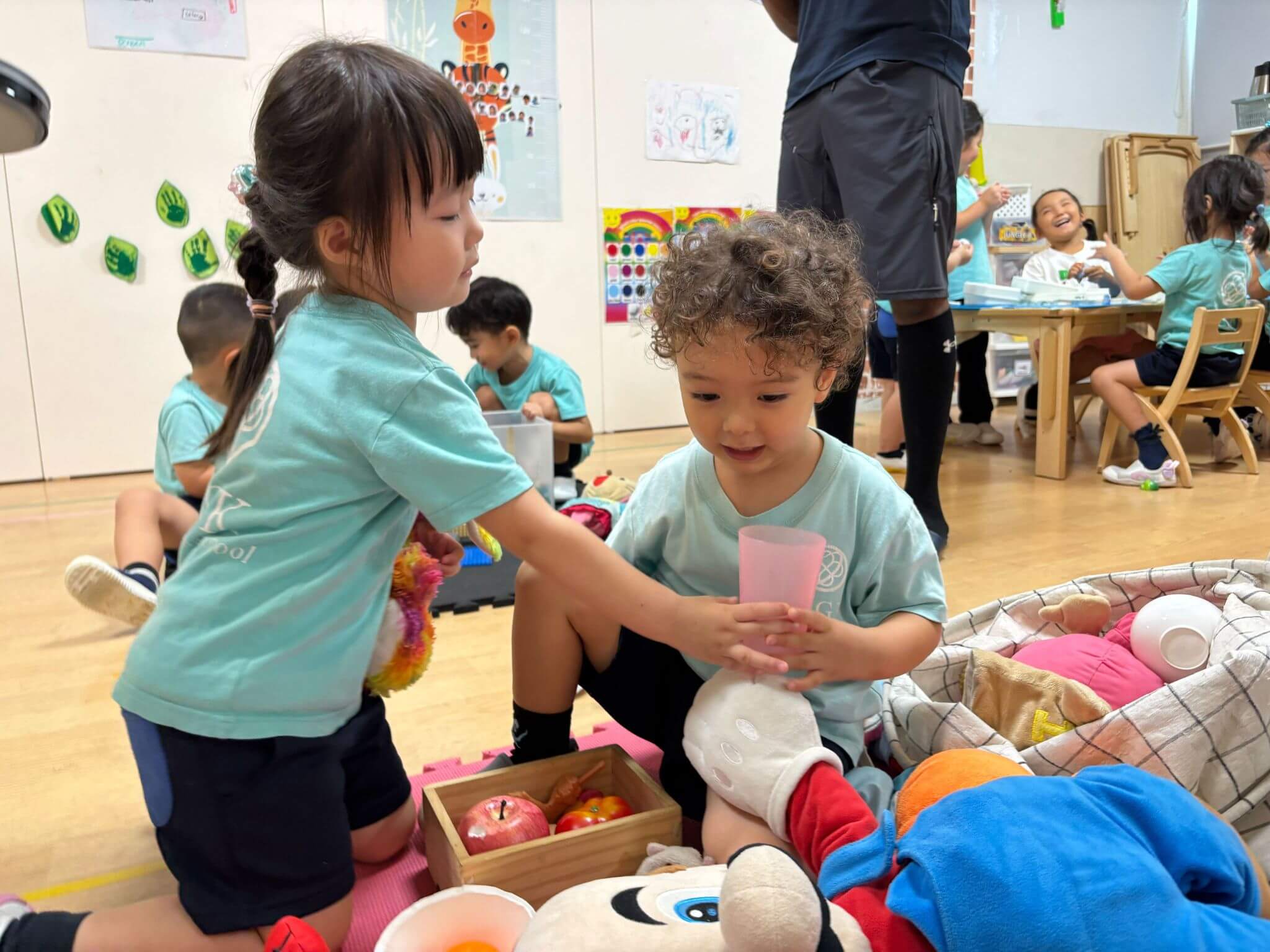
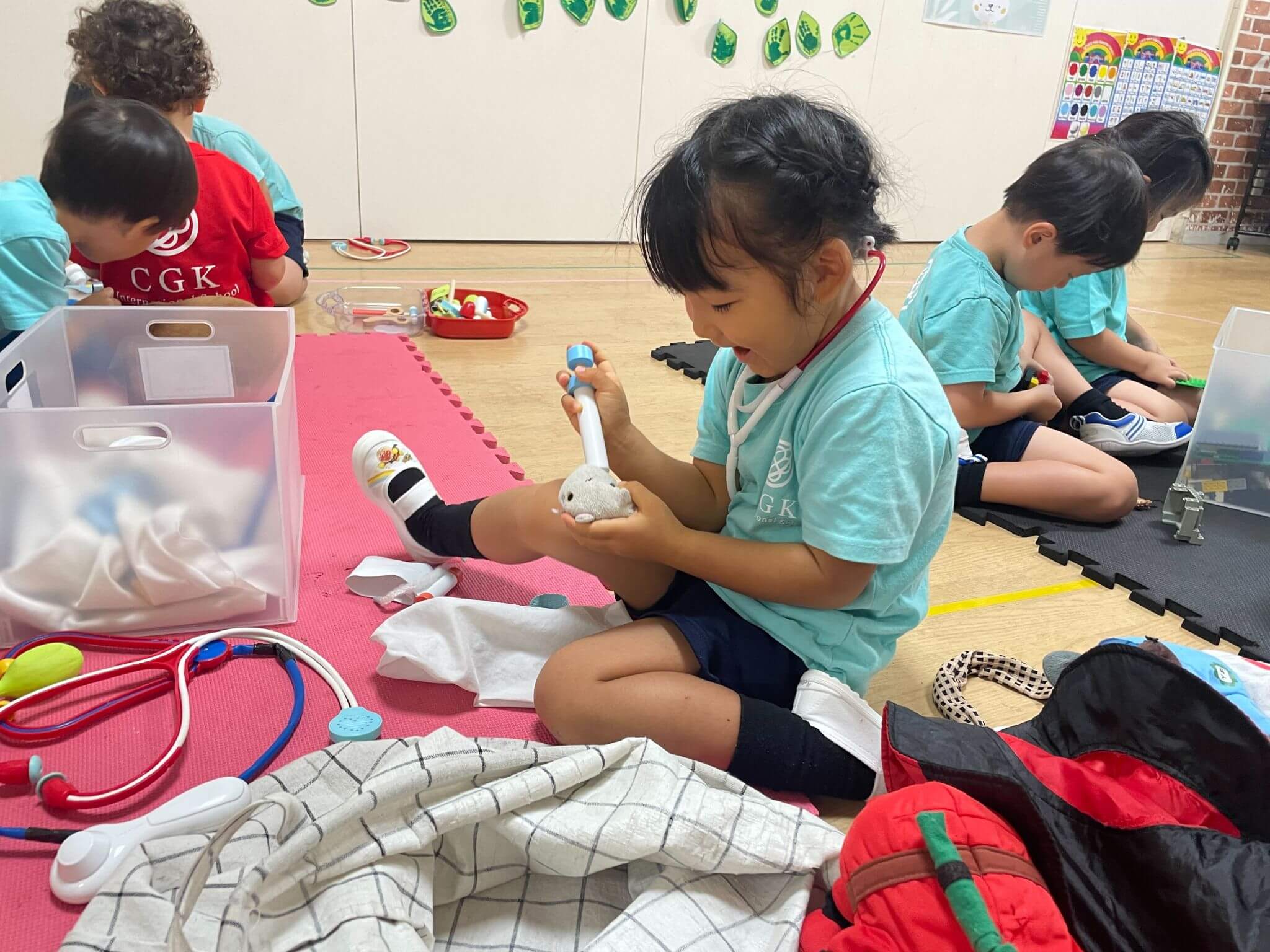
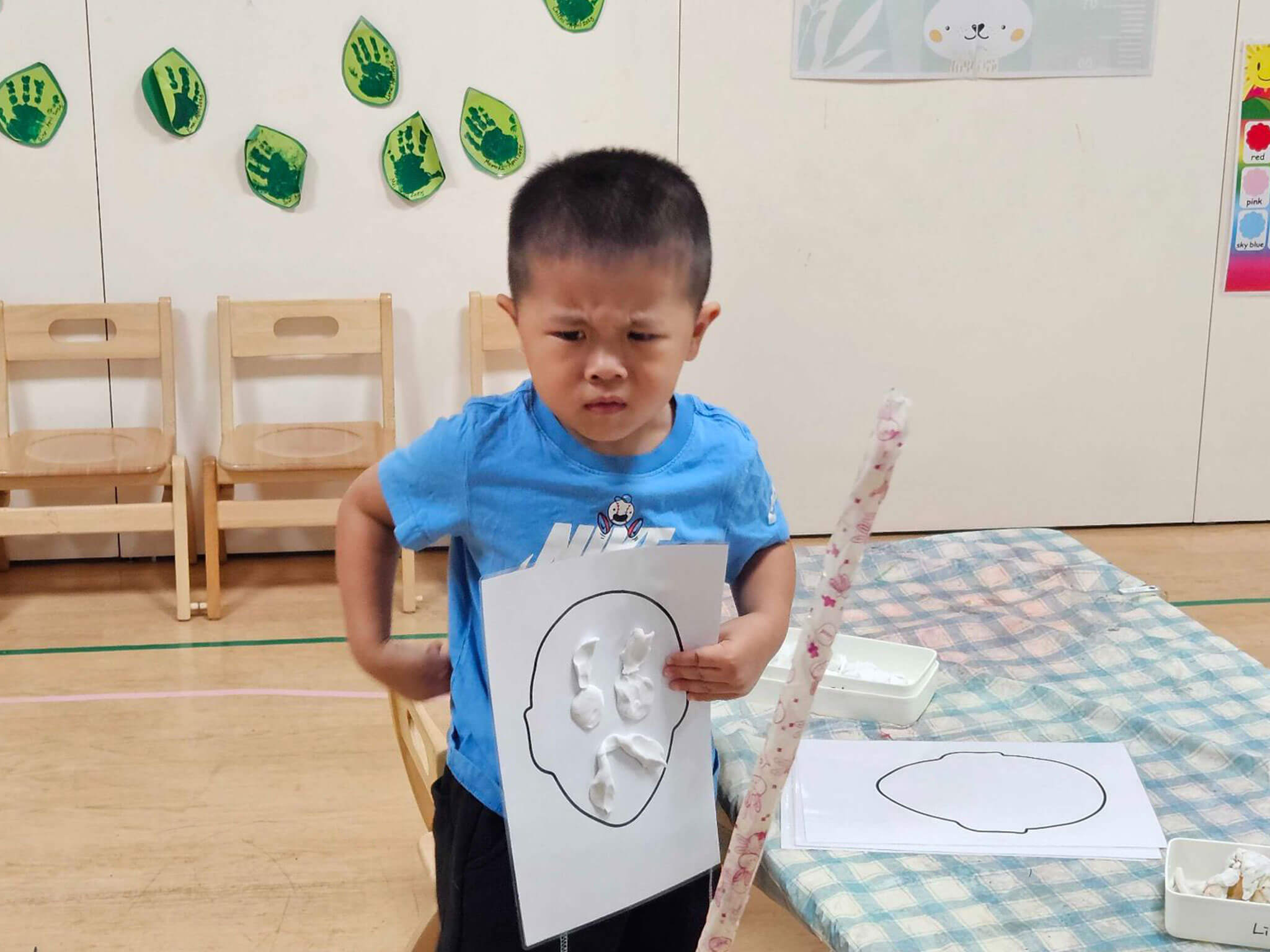
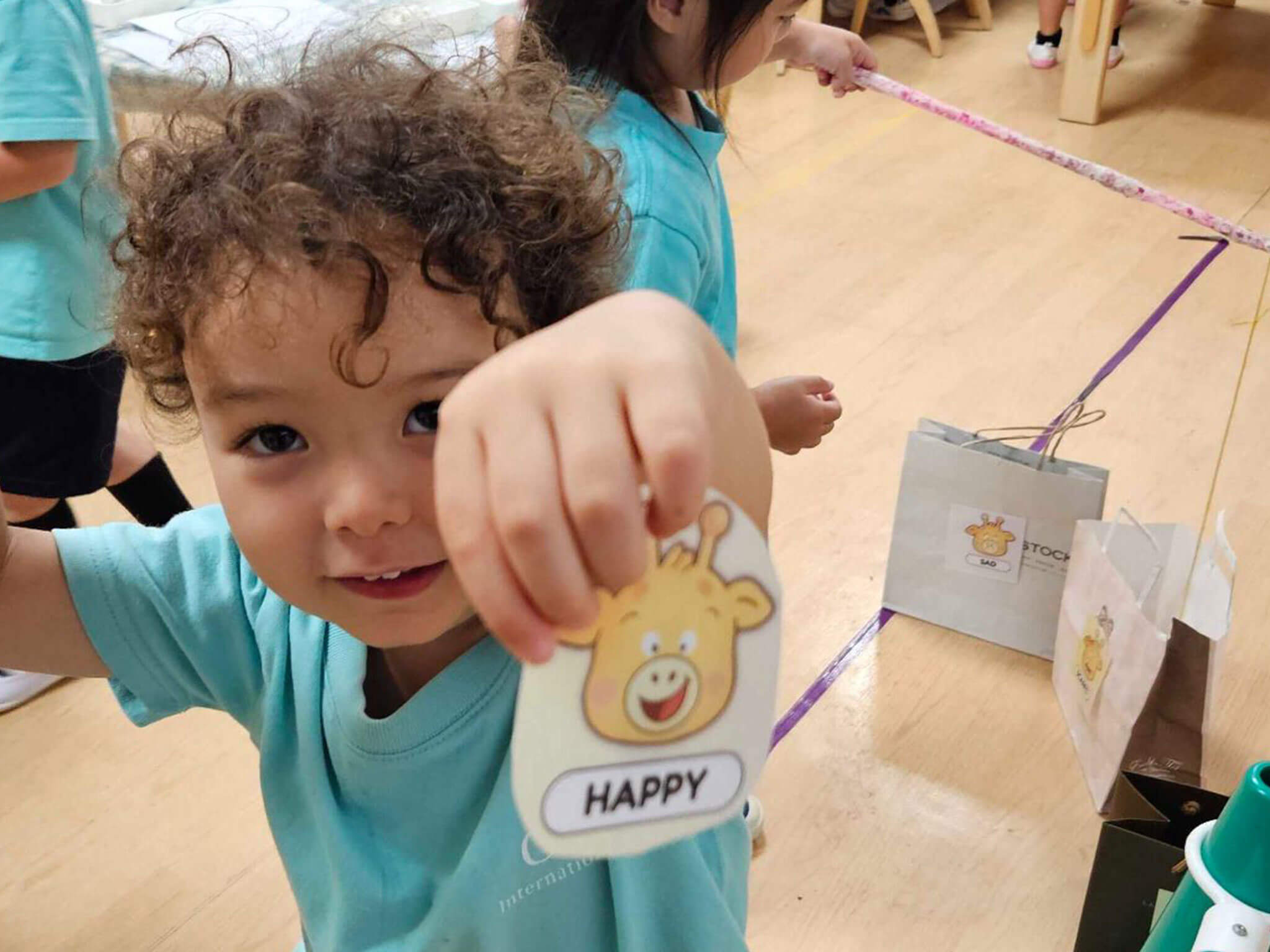
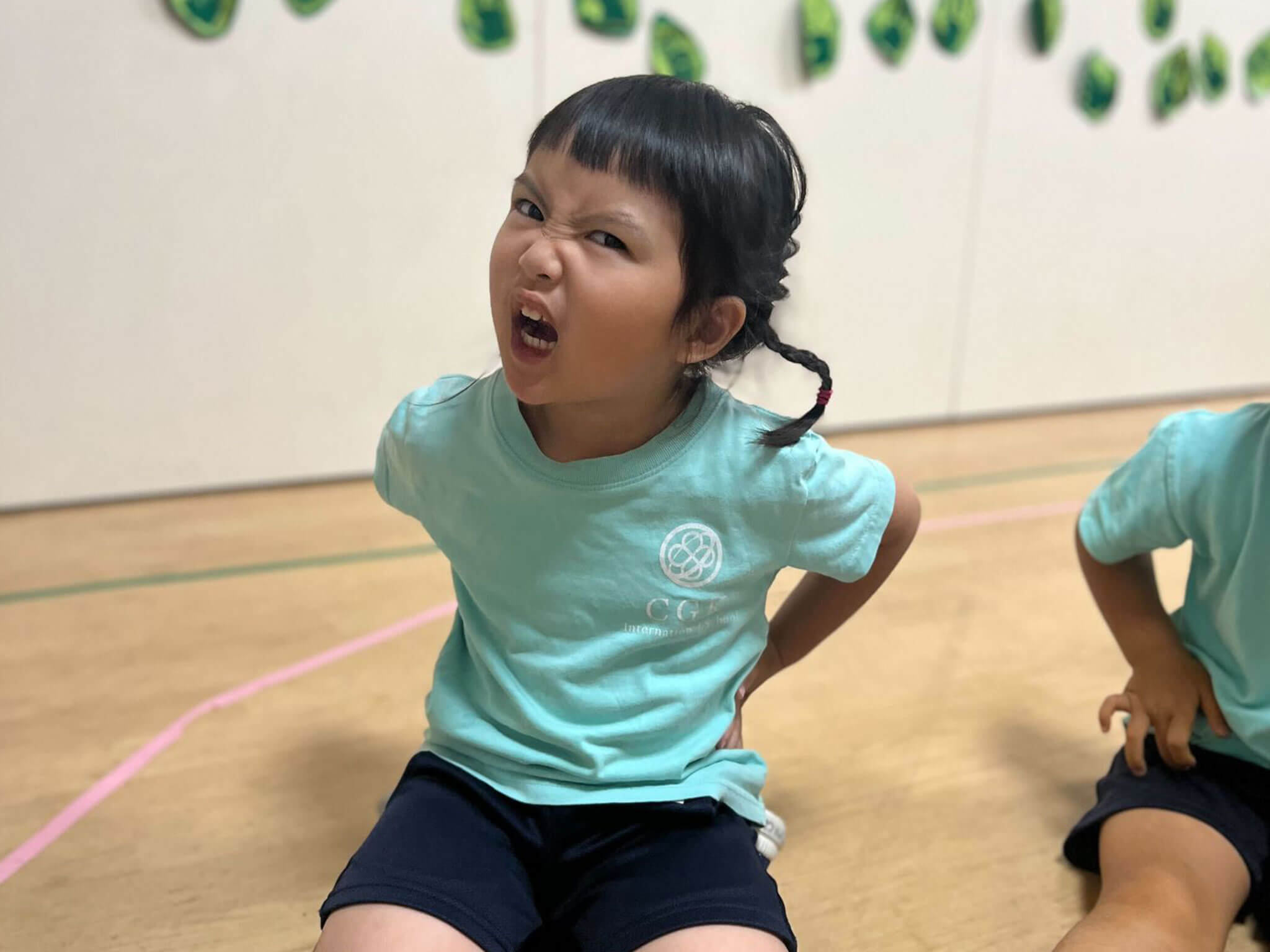
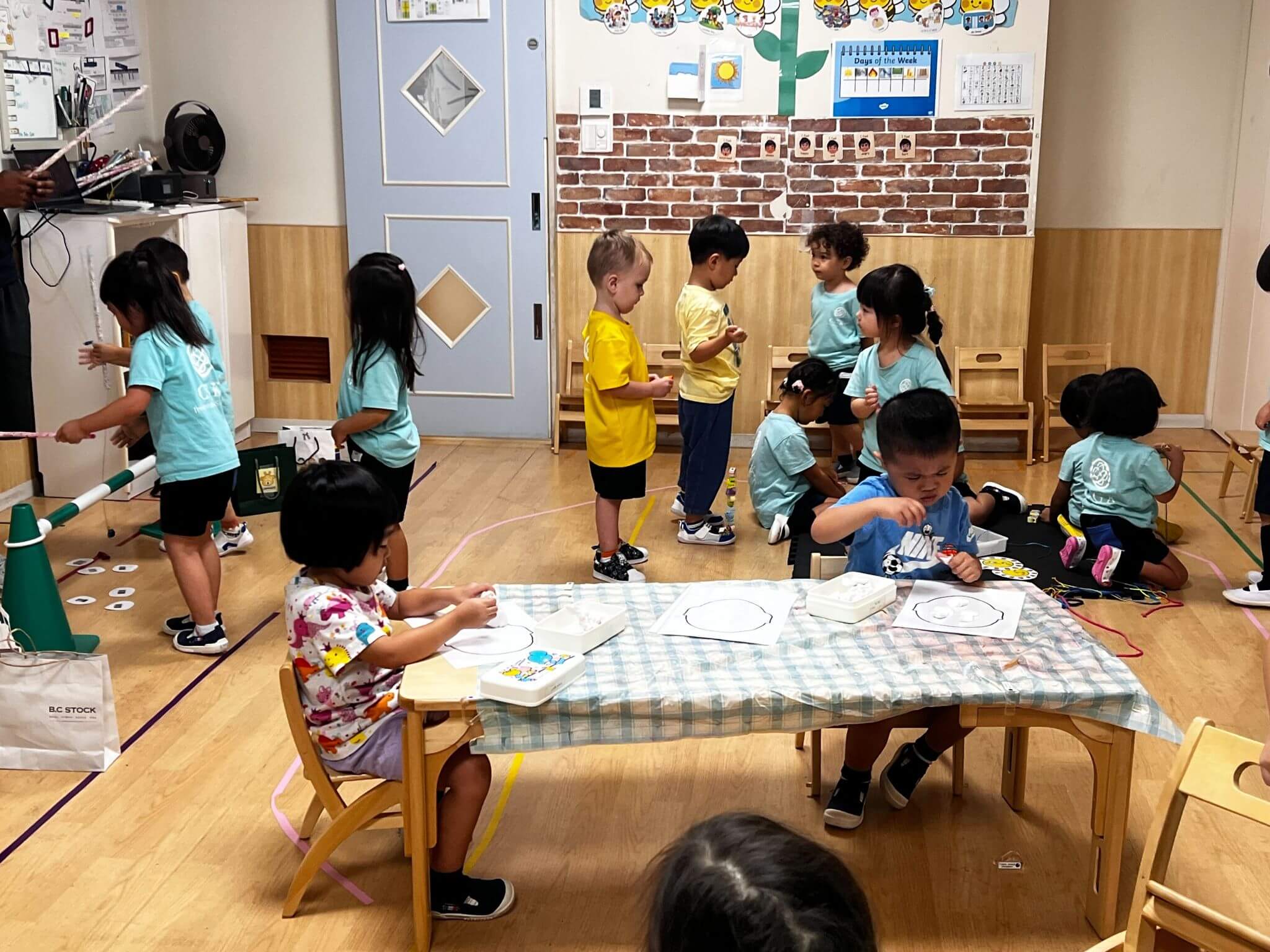
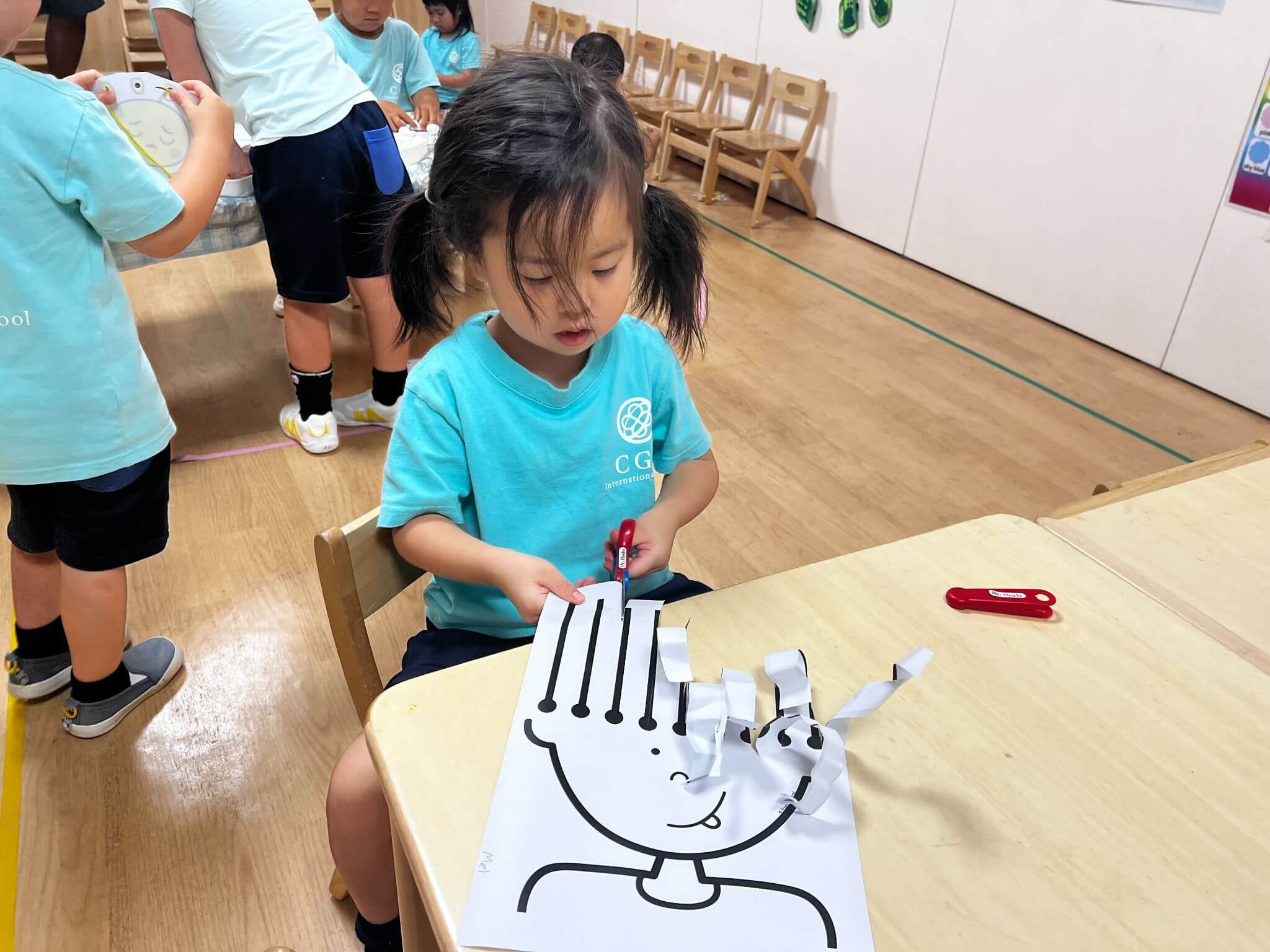
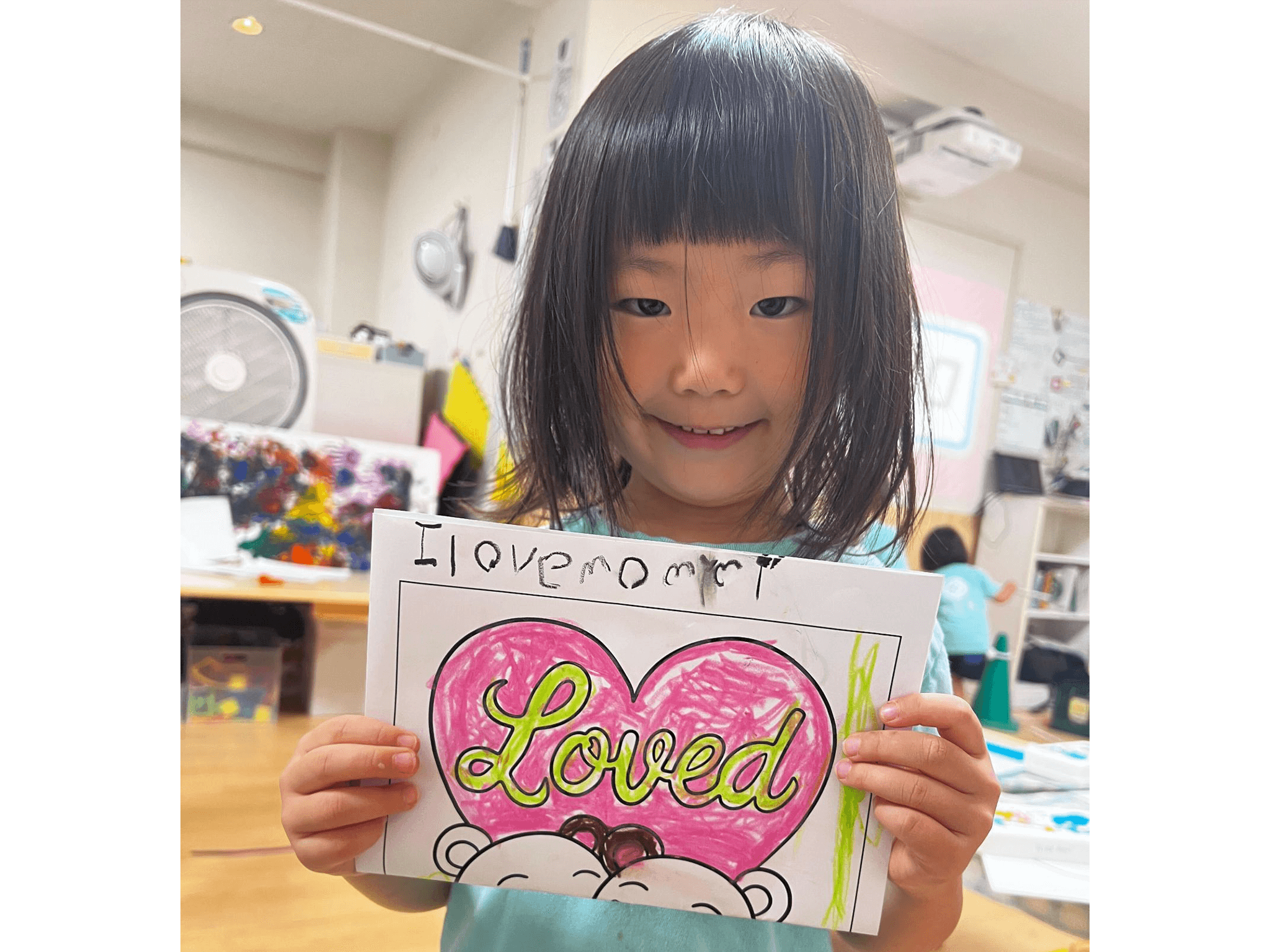
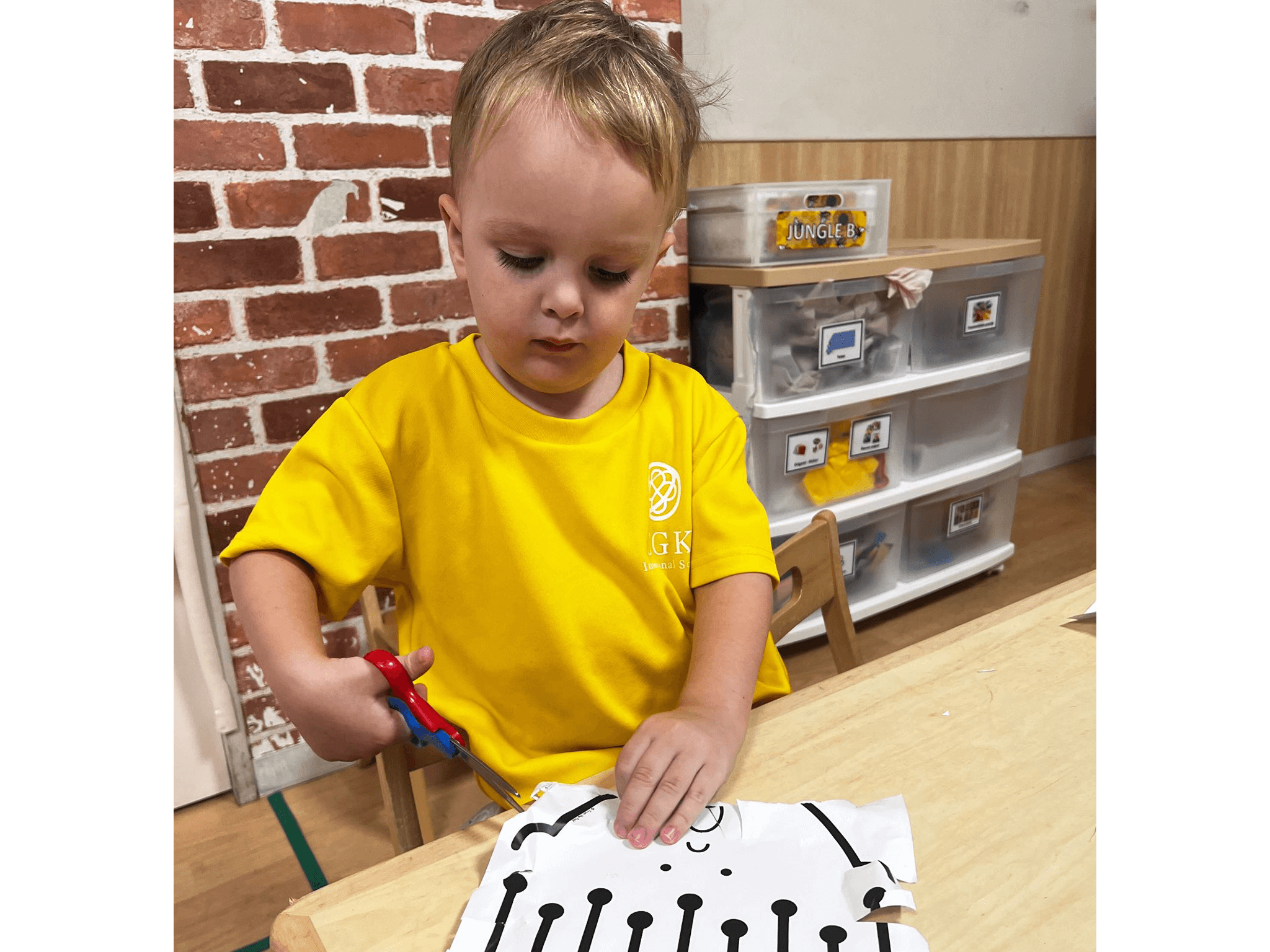
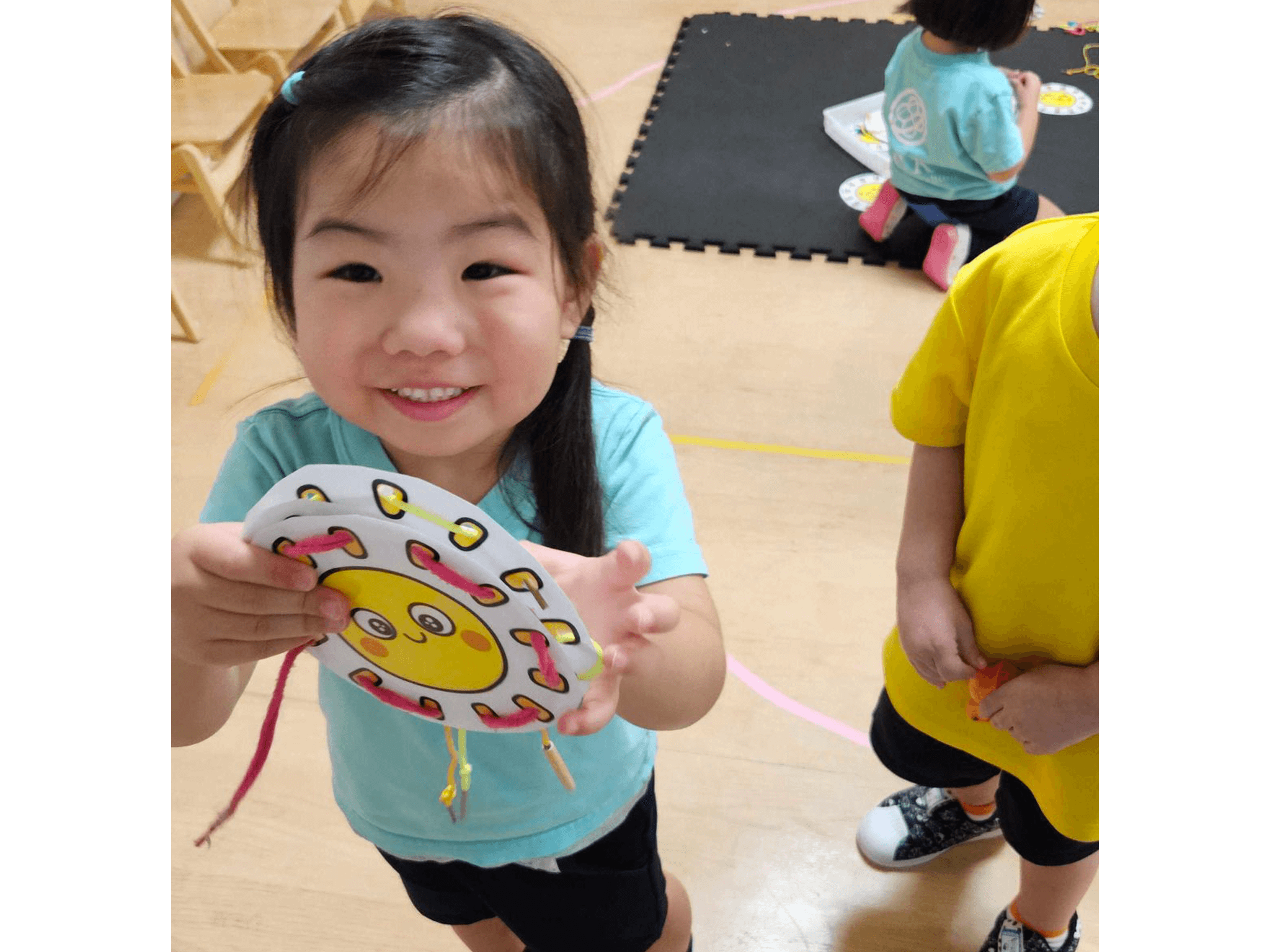
In Jungle B, our curious and caring friends are diving into a new Unit of Inquiry: How We Express Ourselves. To kick off our exploration, we’ve been focusing on recognizing and responding to strong feelings—both our own and of those around us. Through stories, discussions, and role play, the children are learning how to notice when someone might be feeling sad, angry, or excited, and how to respond kindly. We asked questions like, “What can we do if a friend is feeling upset?” and the children came up with thoughtful responses such as giving them space, offering a hug, sharing toys, or simply sitting nearby to show they care. We also discussed how others care for us, such as doctors helping us when hurt.
To support this social-emotional learning (SEL), we’ve been building up our feelings vocabulary and connecting it to hands-on activities that strengthen fine motor skills. Using clay to model facial expressions, weaving with strings, fishing for emotions, and practicing with scissors gave children a chance to express their feelings in creative and physical ways. These activities not only help them develop dexterity but also give them the tools to represent emotions visually and tangibly. It’s been a joy to watch the children begin to understand the many ways we can express ourselves—and how we can support one another along the way.
Summer Memories
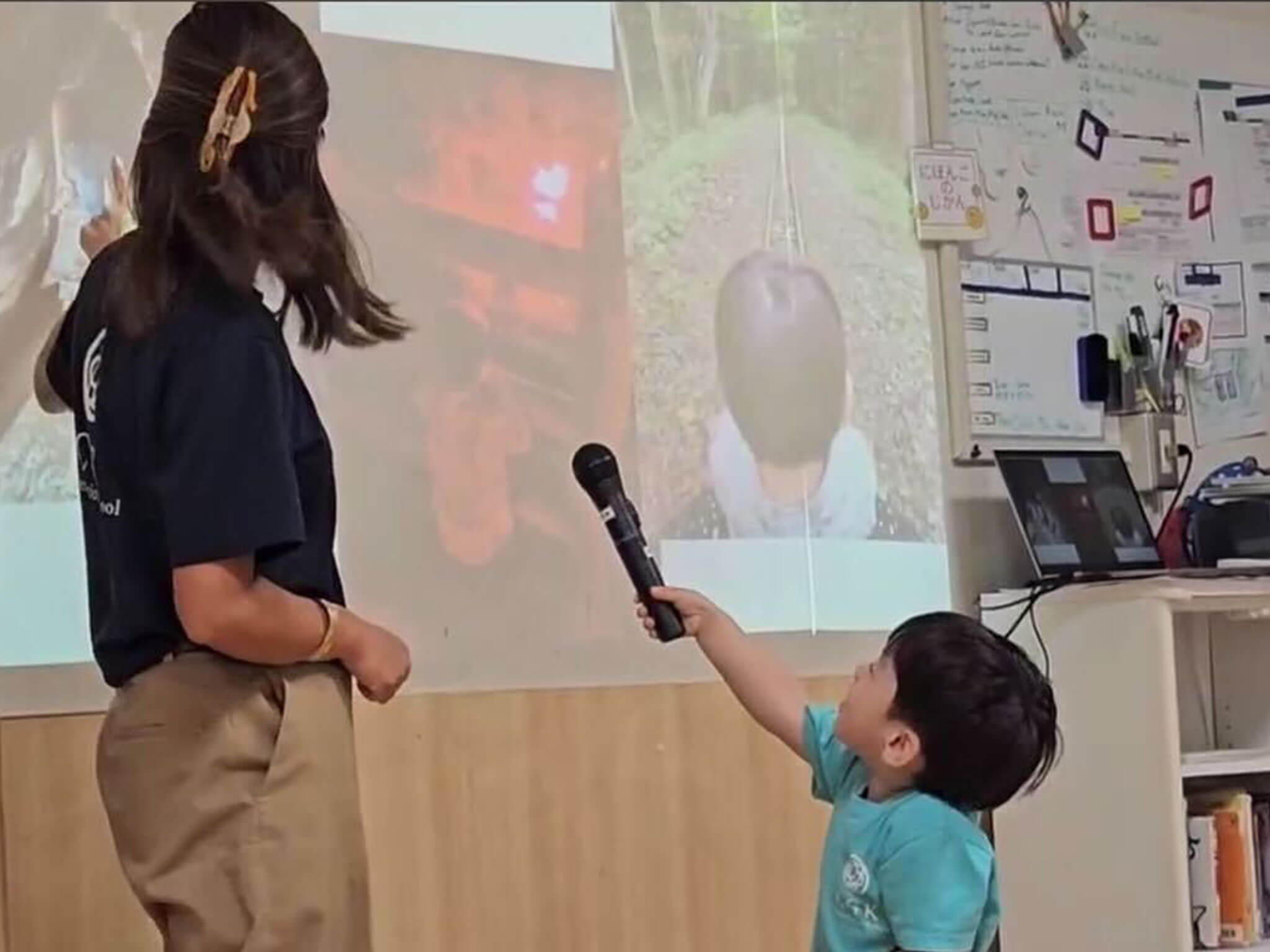
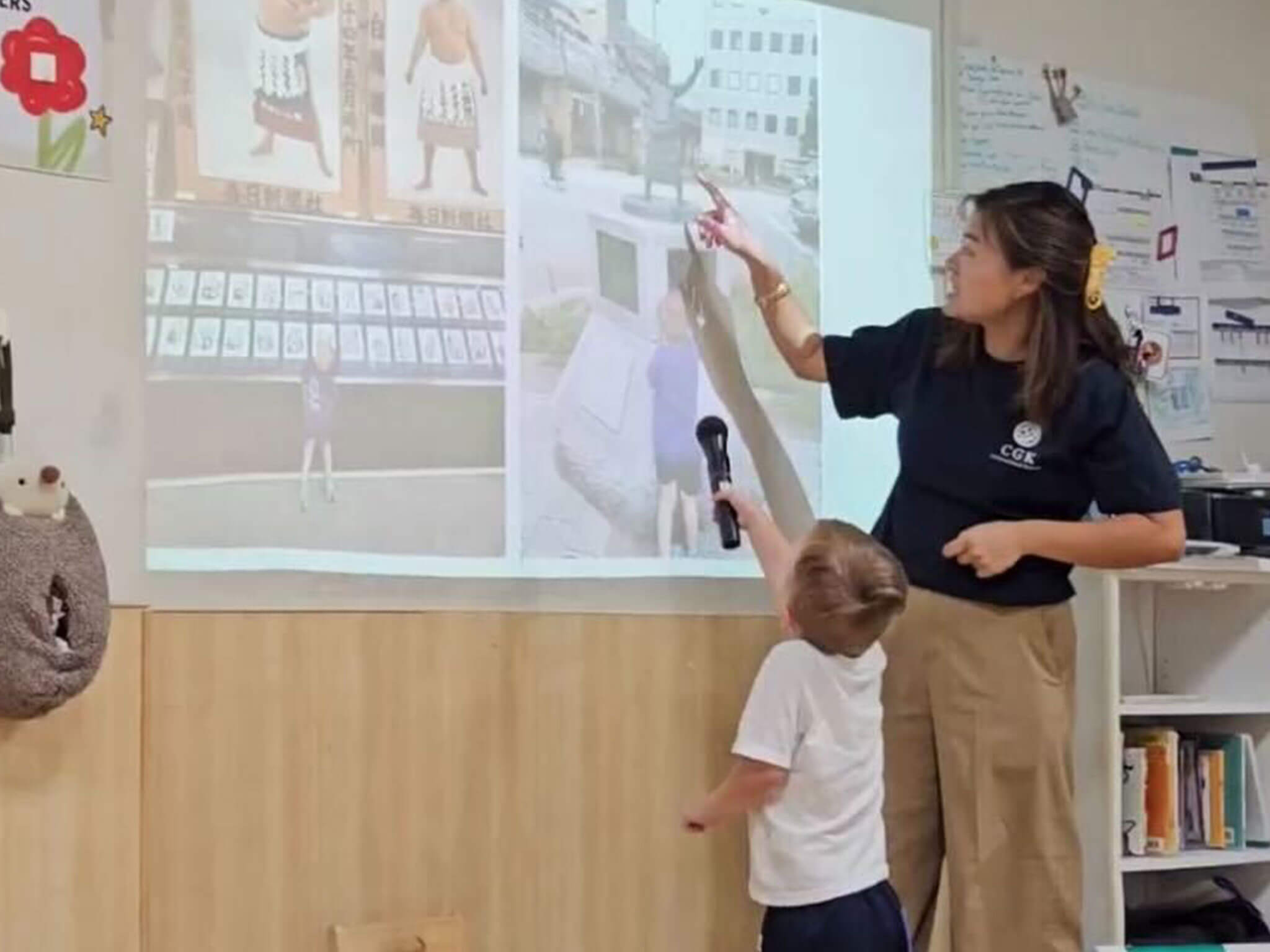
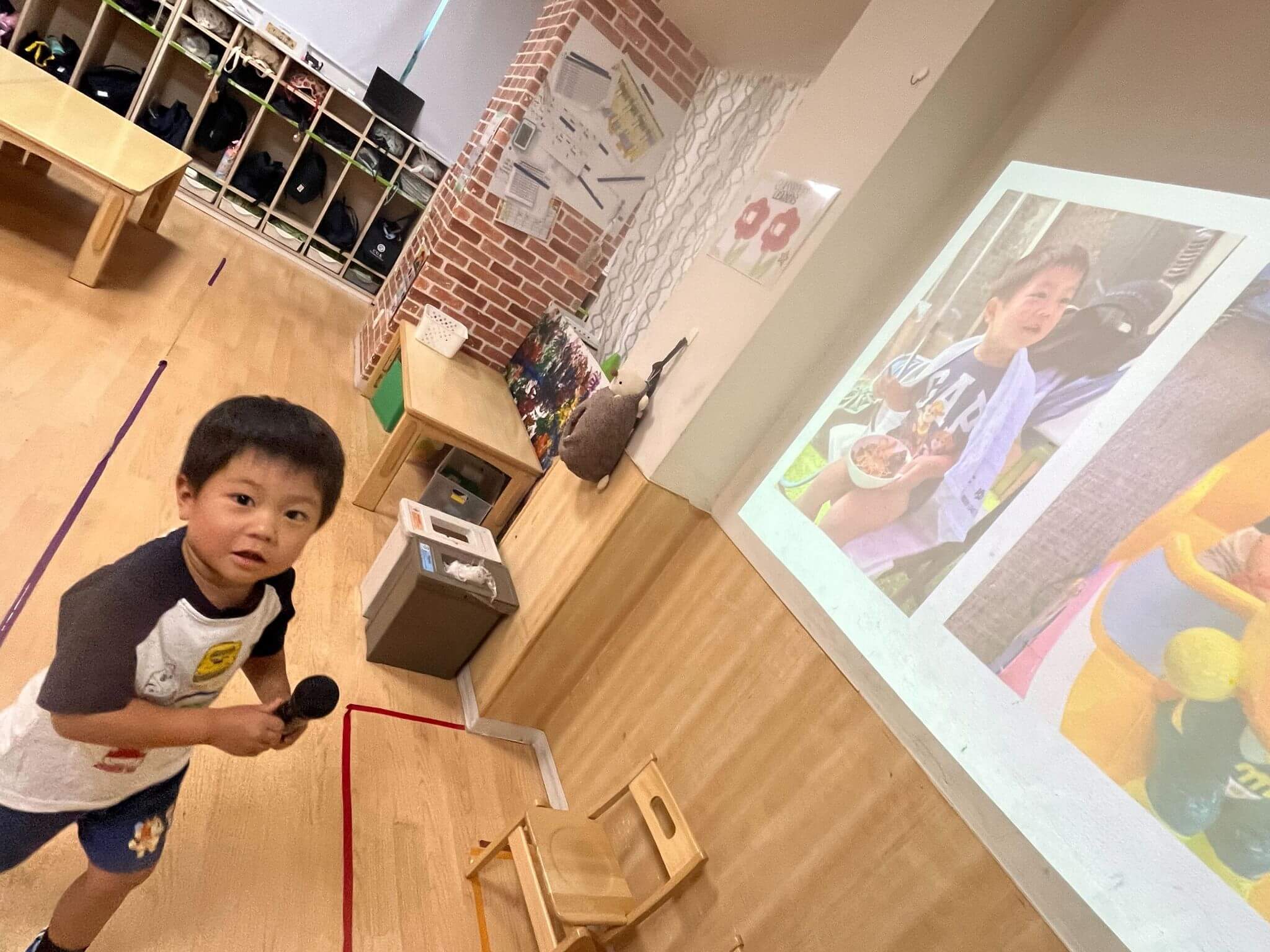
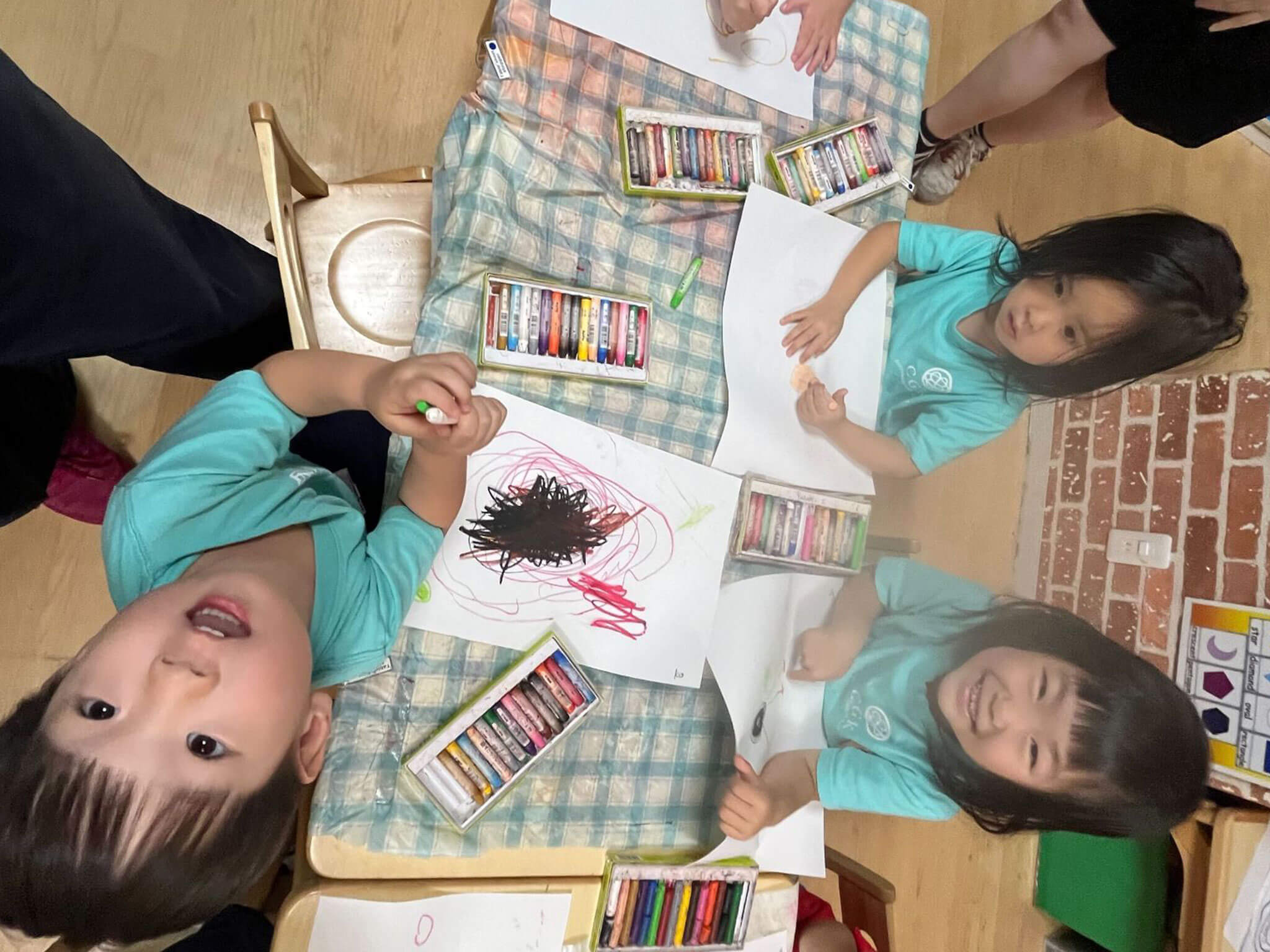
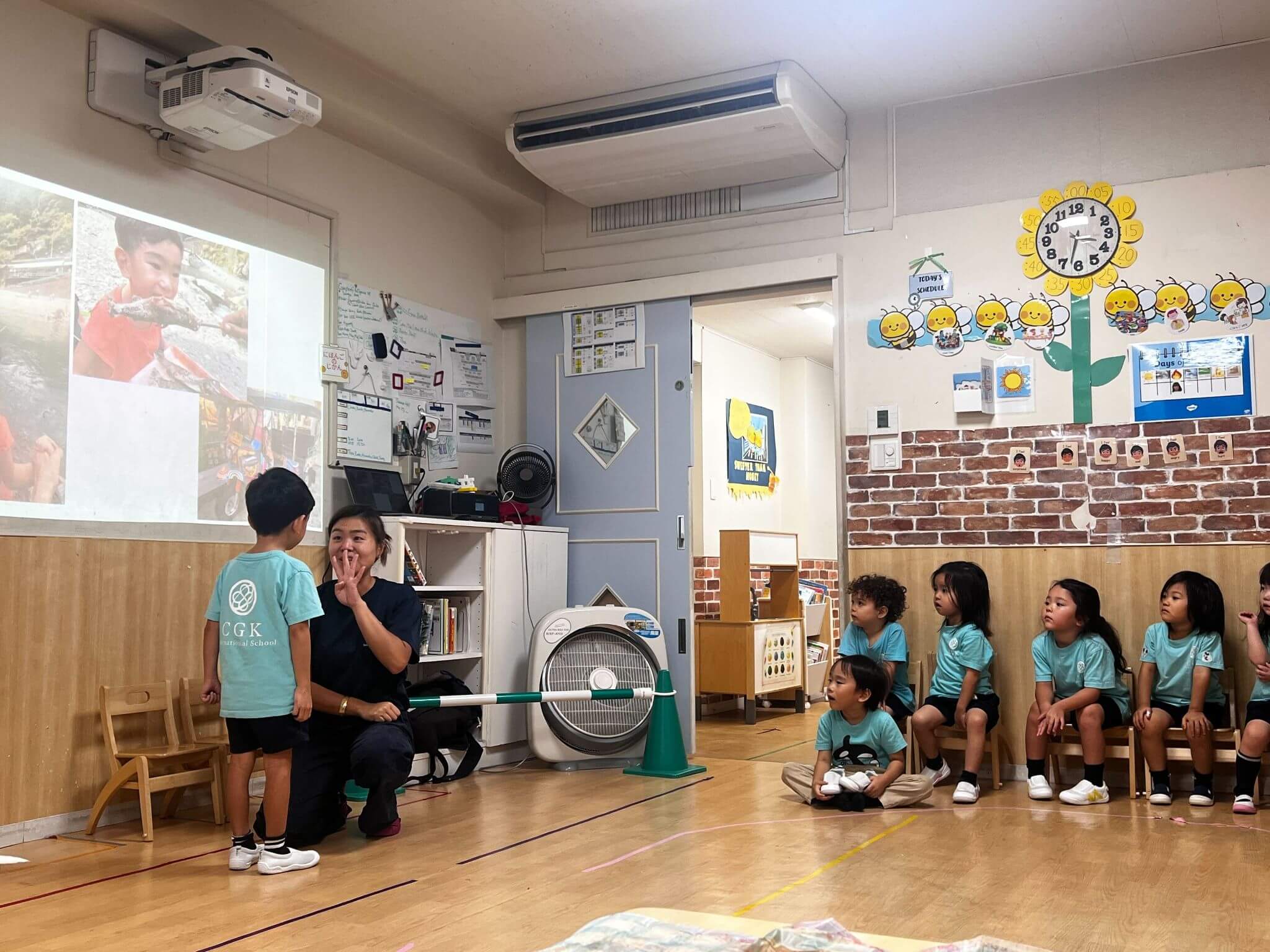
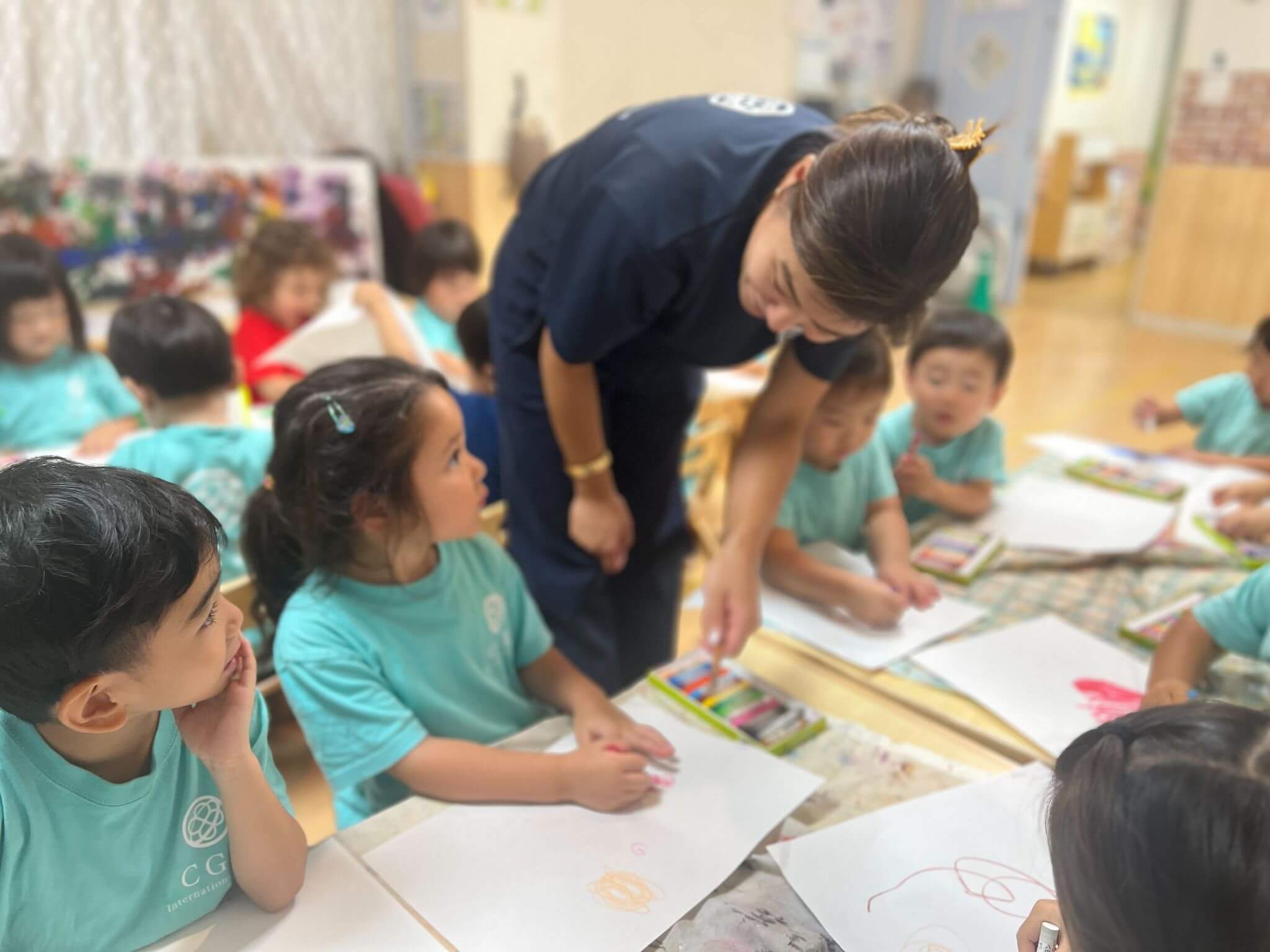
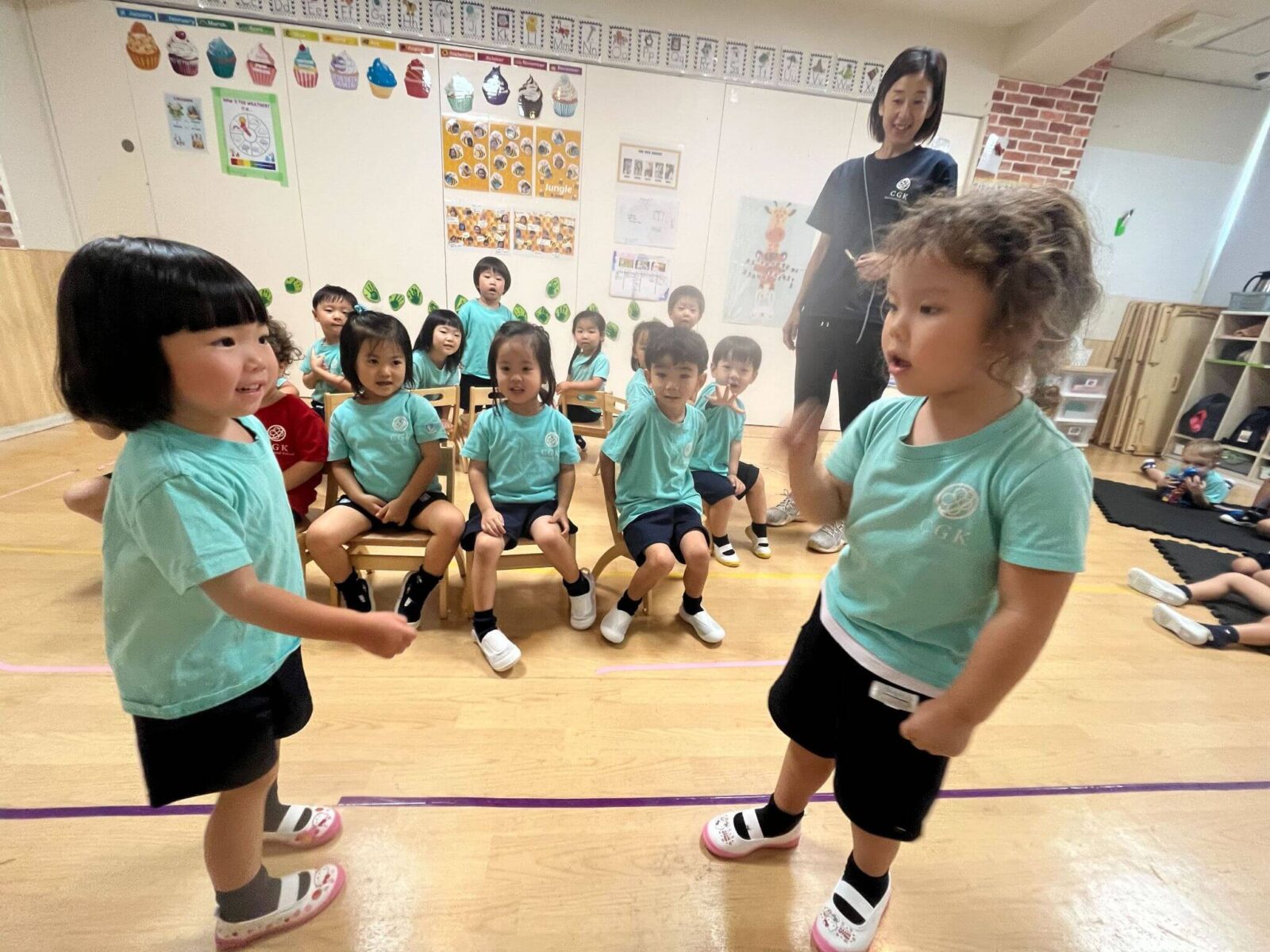
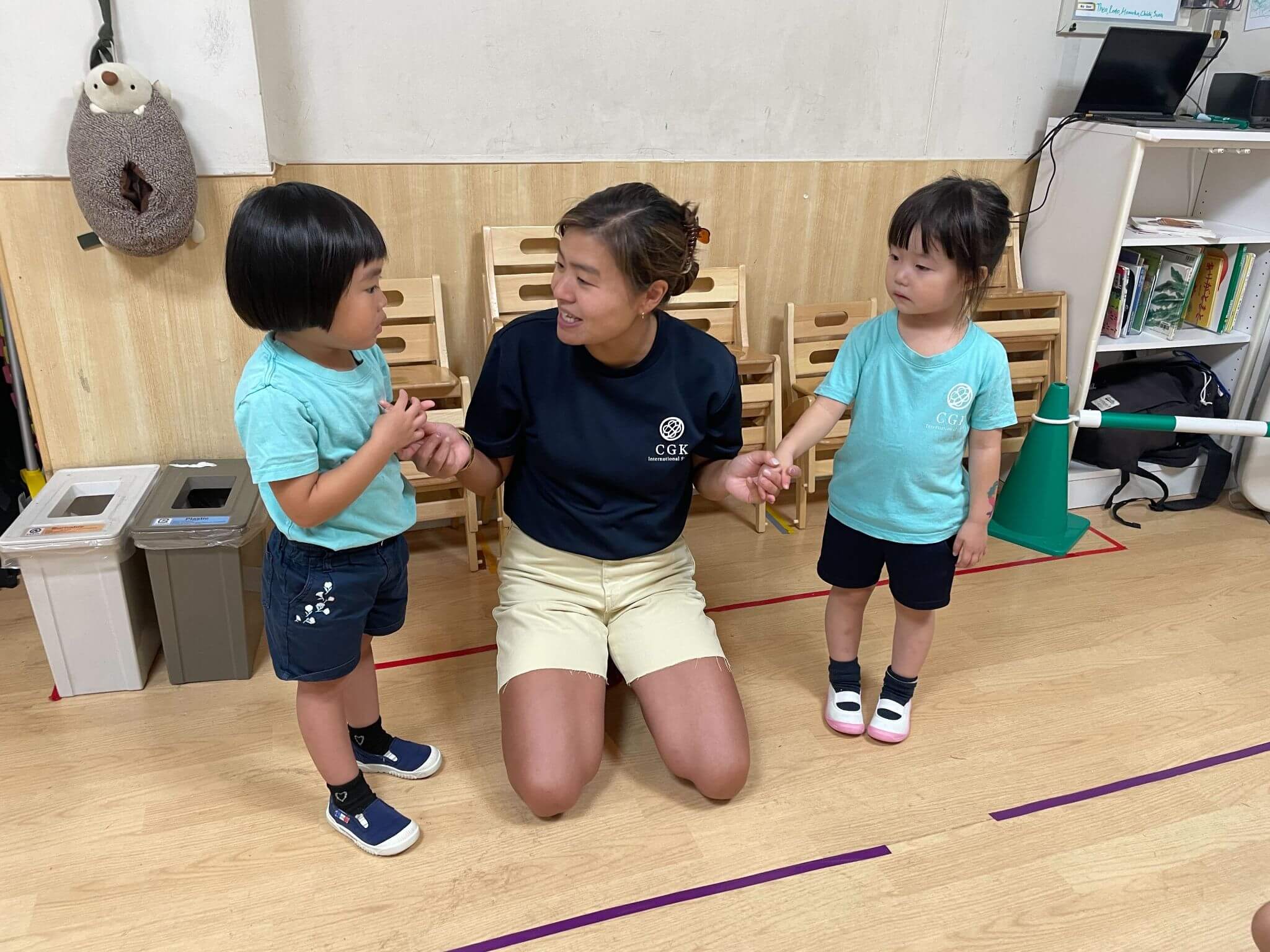
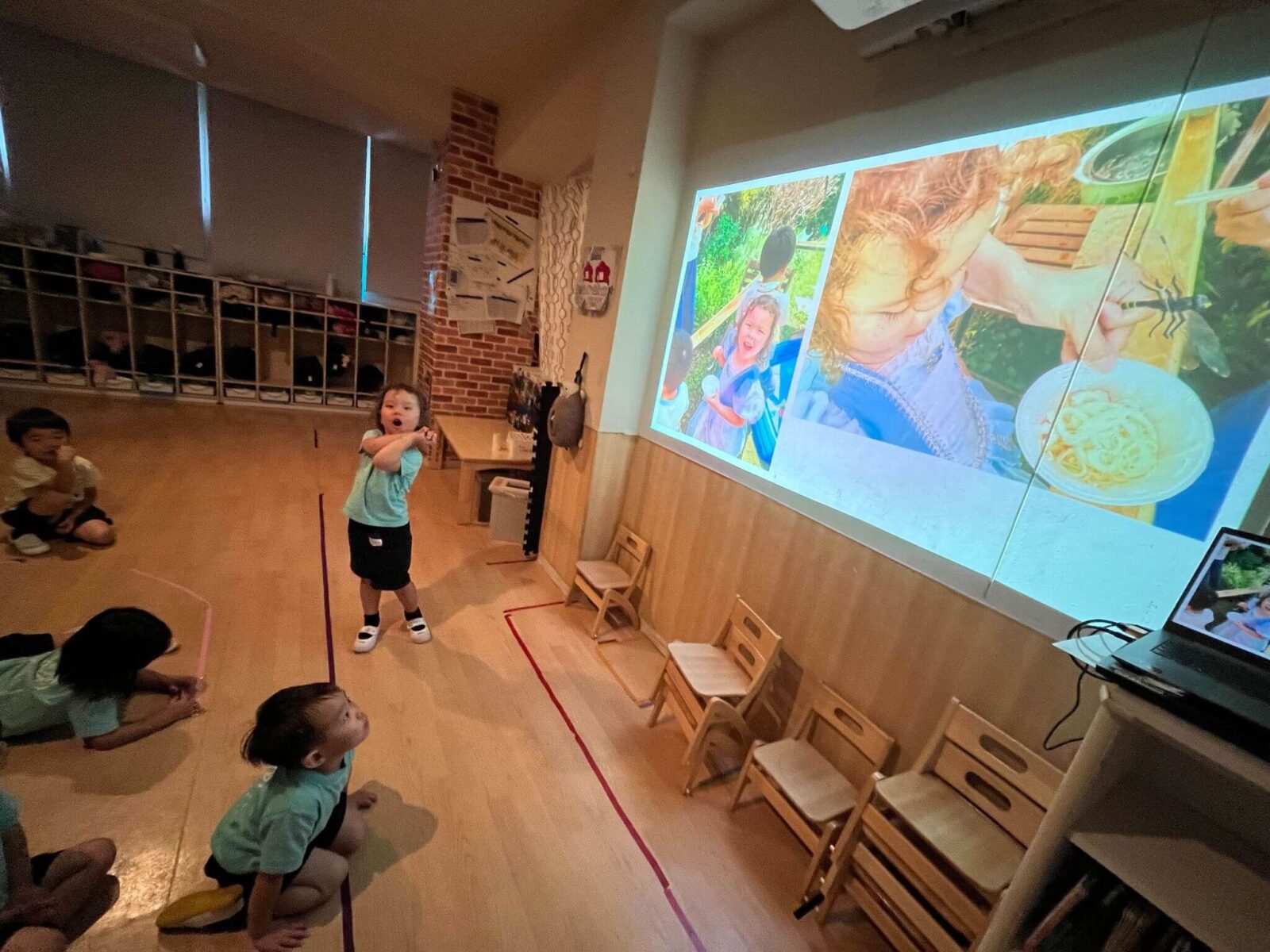
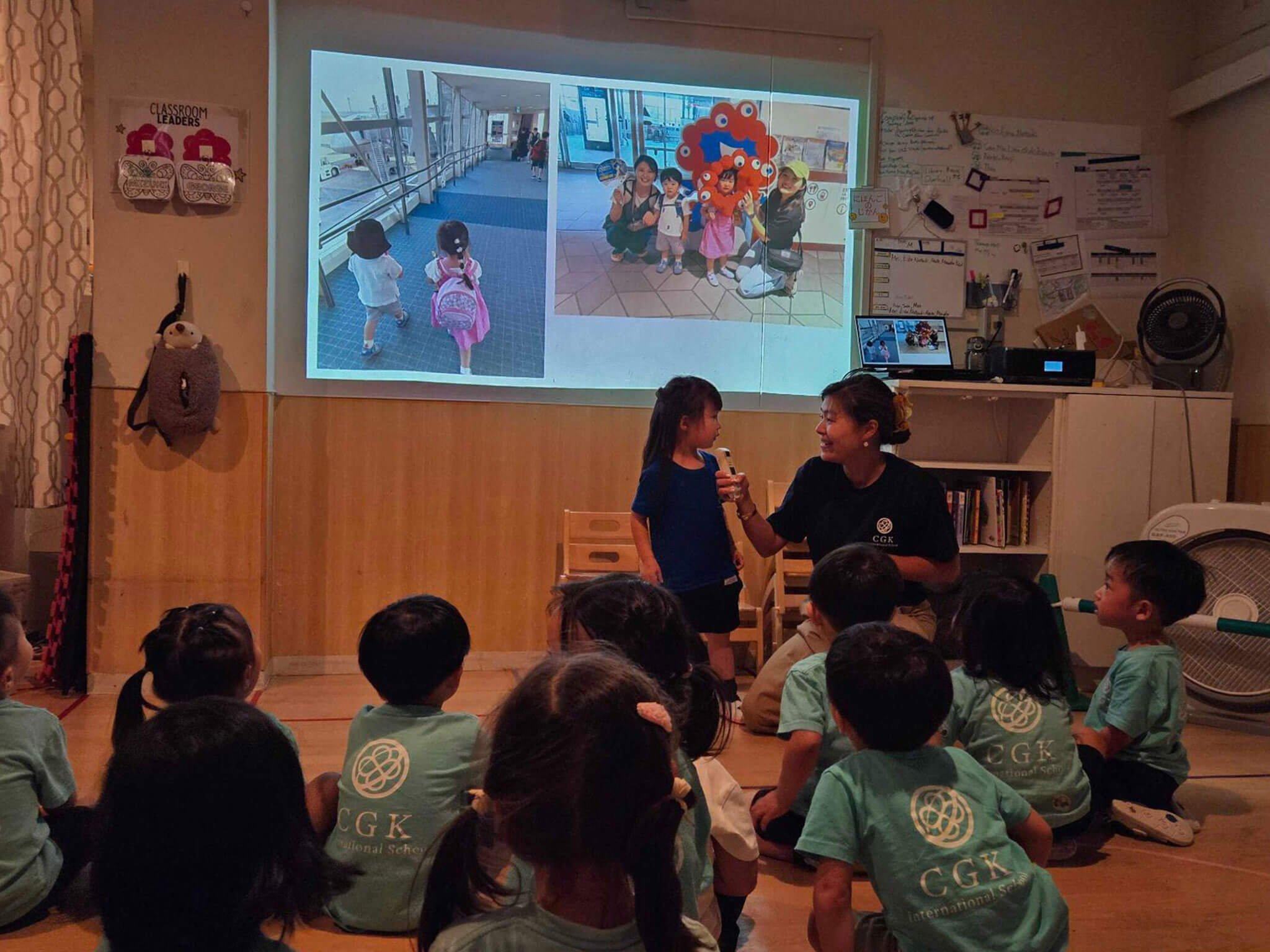
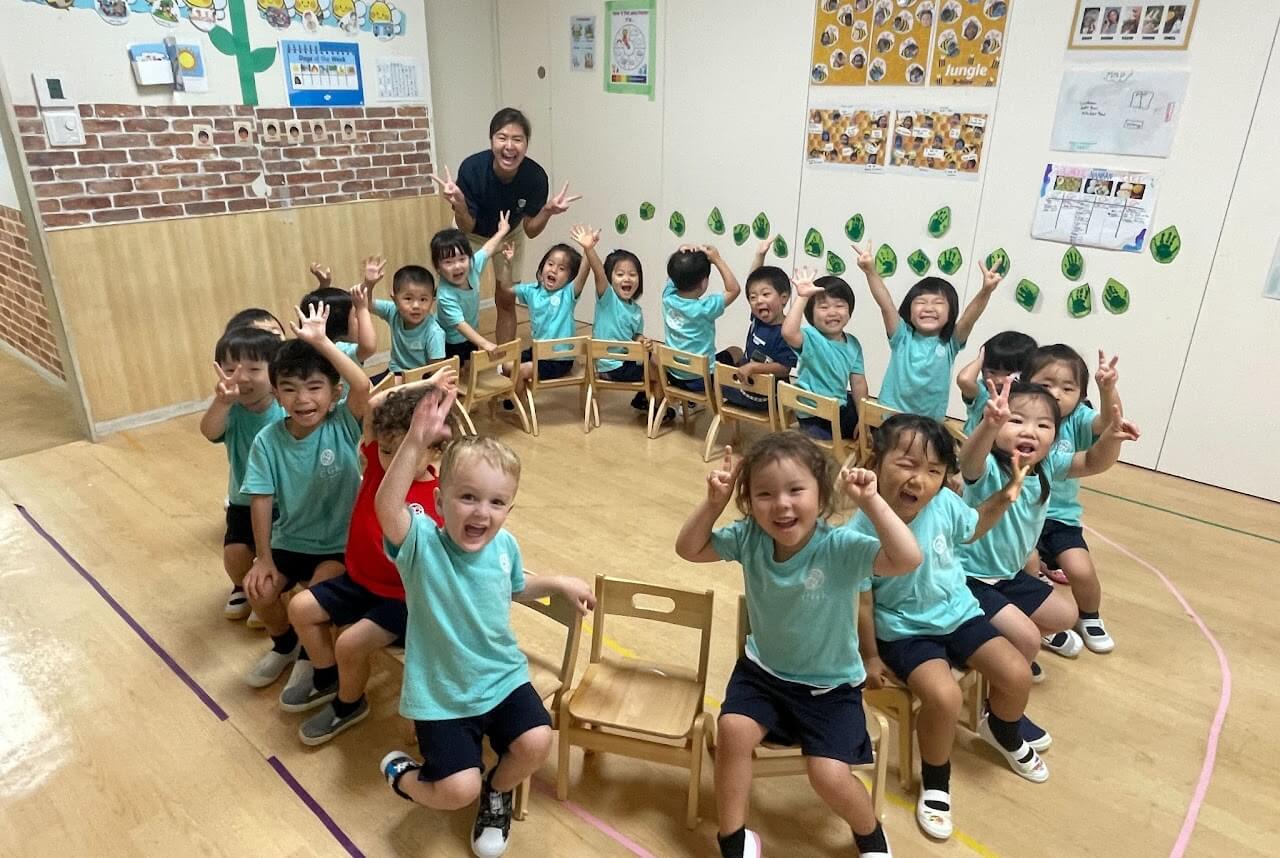
In our current Unit of Inquiry, How We Express Ourselves, the children have been learning that people can share their feelings, experiences, and ideas not only through words, but also through art, play, and the choices they make each day.
This month, we held a Show and Tell on the theme of summer vacation memories. The children enjoyed both expressing their own experiences and listening to their friends’ stories. At the beginning of the year, the focus was mainly on “talking about myself,” but now the children are showing more interest in their friends’ experiences and favorite things. We often hear them saying things like, “You like that? Me too! We’re the same!” and see them incorporating their own and their friends’ experiences into free play and role-play. Through these presentations, they experienced the joy of sharing their feelings, the fun of connecting with friends, and the excitement of learning something new. Standing in front of others also helped them realize “how I want to be listened to,” which naturally led them to think about listening skills and manners. The confident and happy way they shared about their cherished time with family was truly impressive, and we could see them growing both in empathy and in their desire to know and share more.
Of course, even with a strong desire to express themselves, it is still sometimes difficult for them to put all their thoughts and experiences into words. To support this, we have been using the 5W1H (Who, What, When, Where, Why, How) framework, helping the children gradually expand their range of expression. Each child is discovering their own way of expressing themselves at their own pace, while also deepening their interest in others.
Through this unit, the children are learning to balance self-expression with empathy for others. Moving forward, we will continue to support them in valuing both sharing and listening, so they can keep broadening their learning through daily life and play.
Ocean B
(2-year-olds)
Dinosaur Adventure- Exploring More Emotions
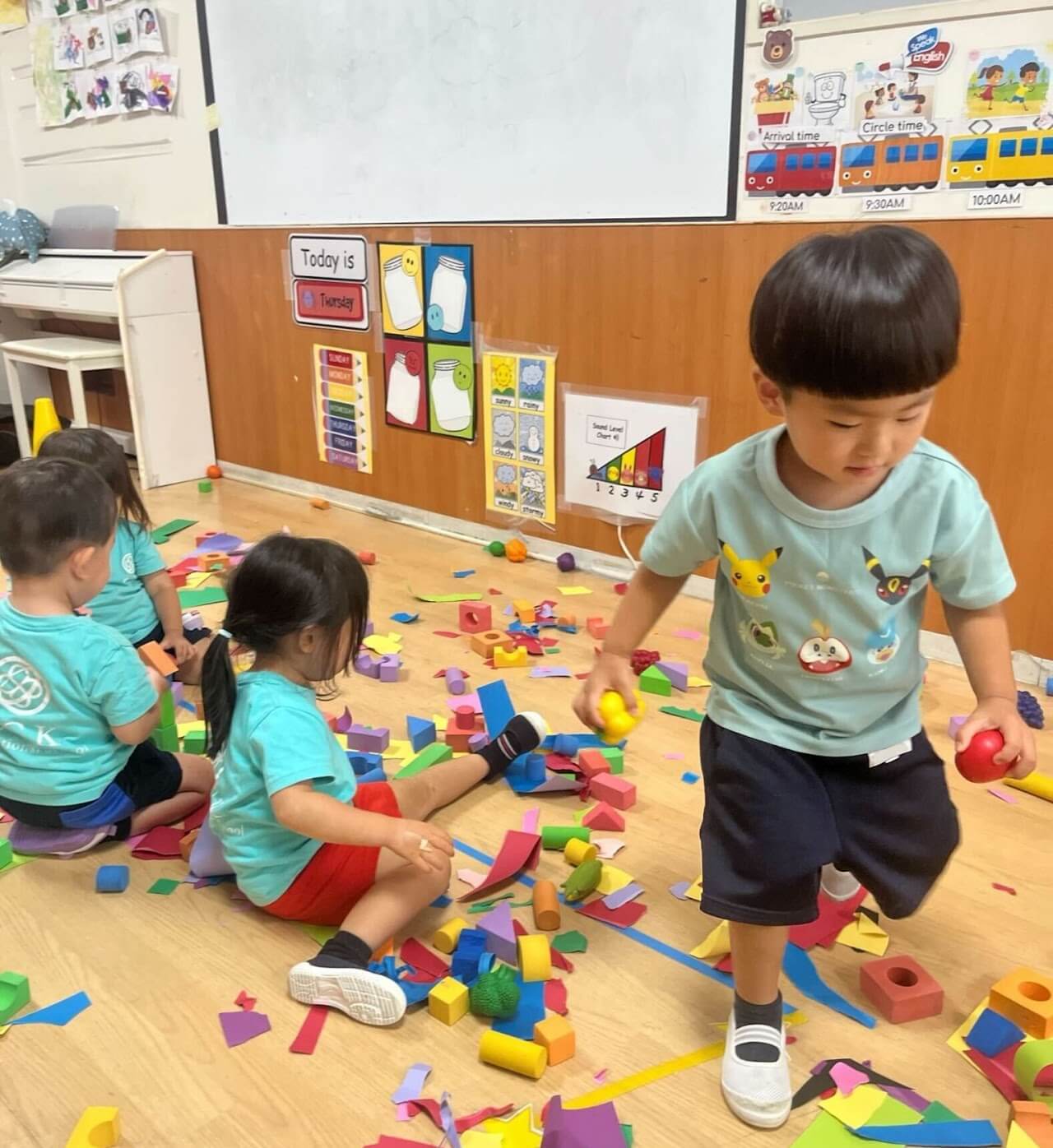
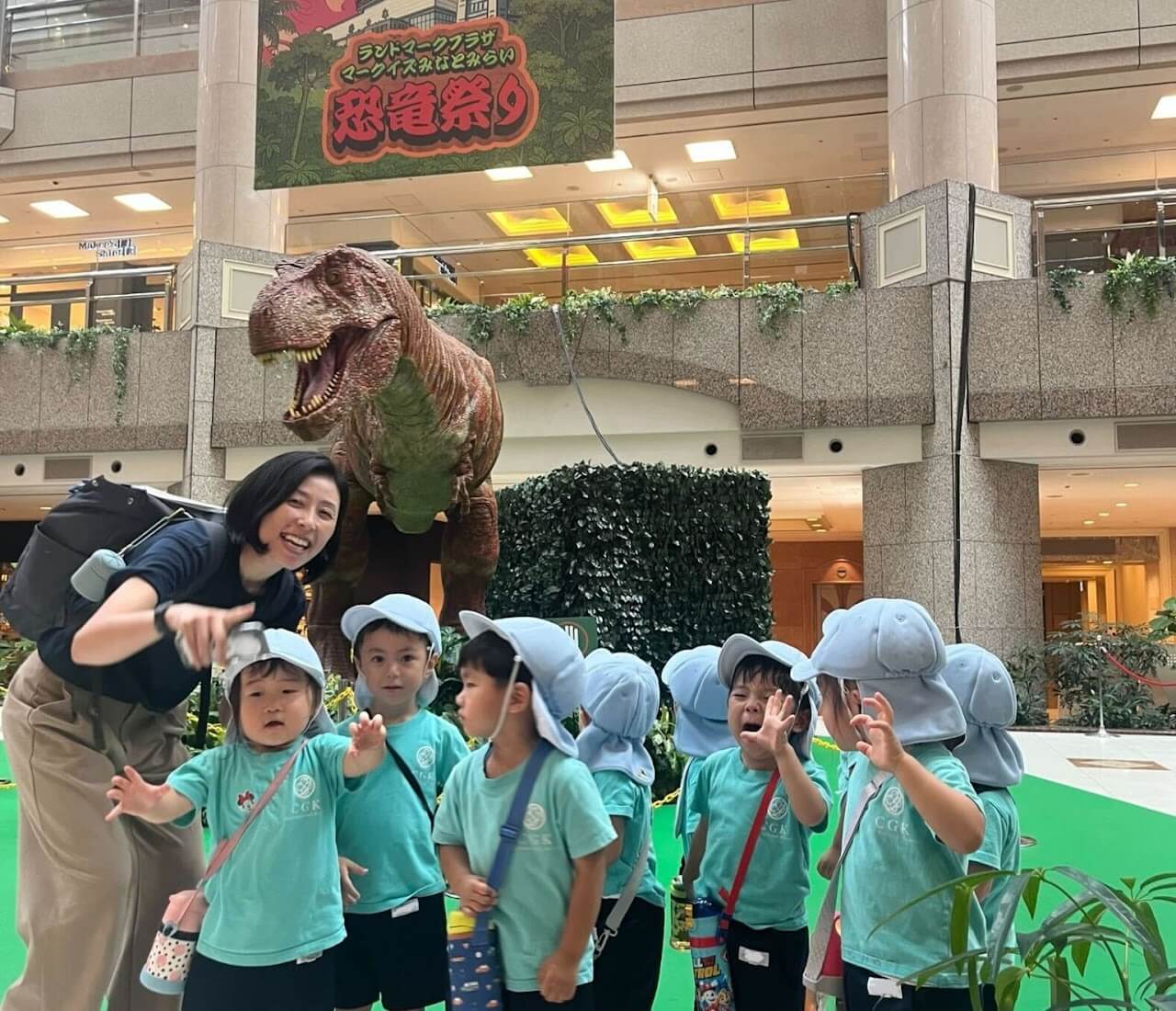
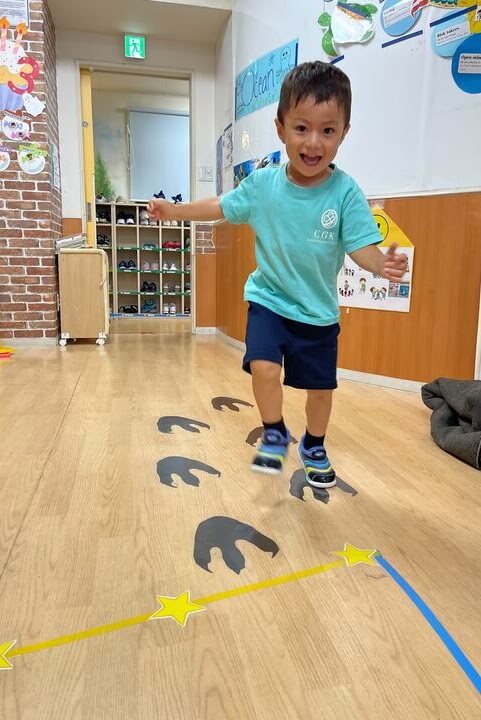
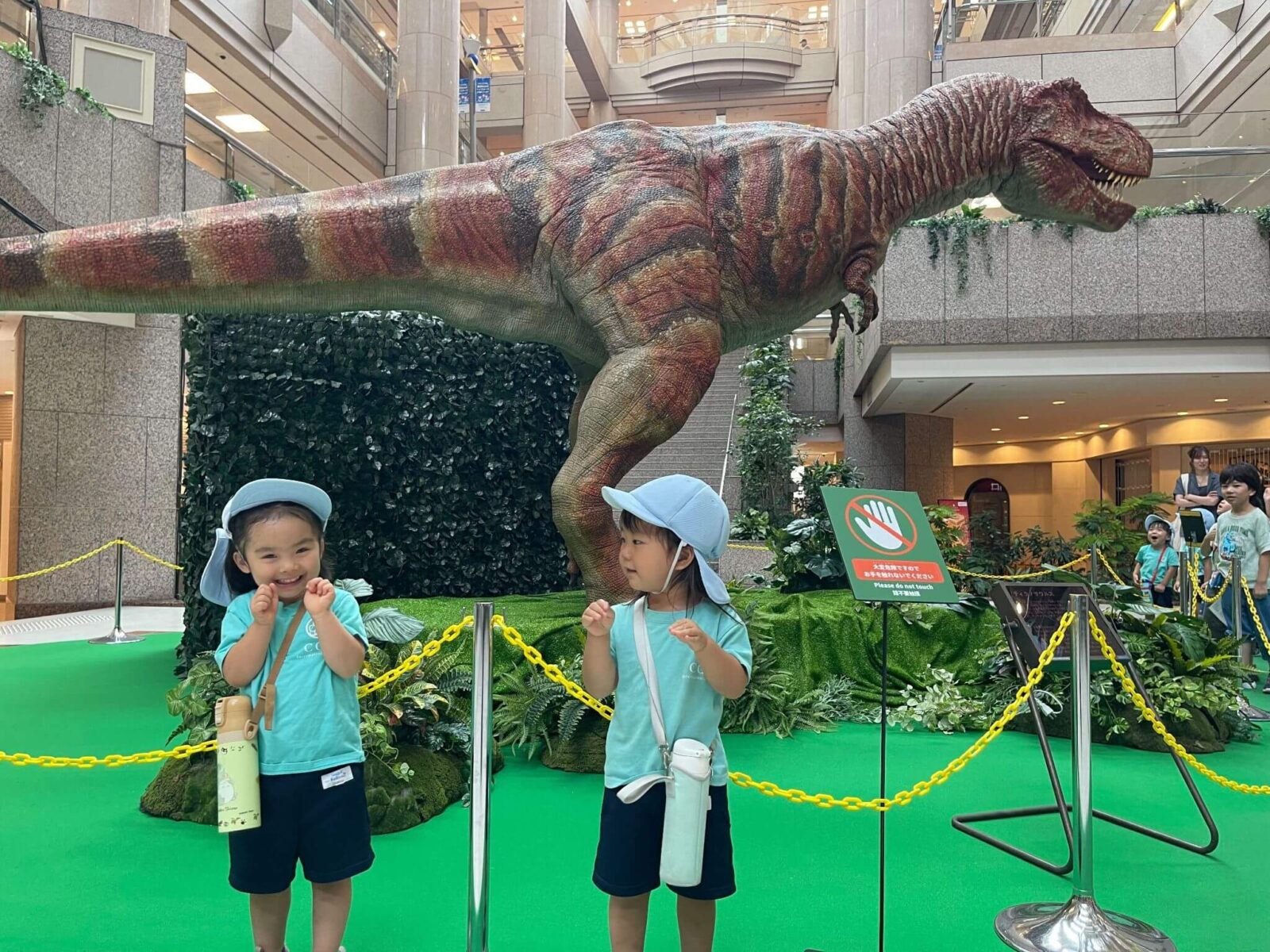
Over the past few weeks, Ocean Class has been on a thrilling emotional journey as we explored the feelings of brave and scared, all through the exciting theme of dinosaurs!
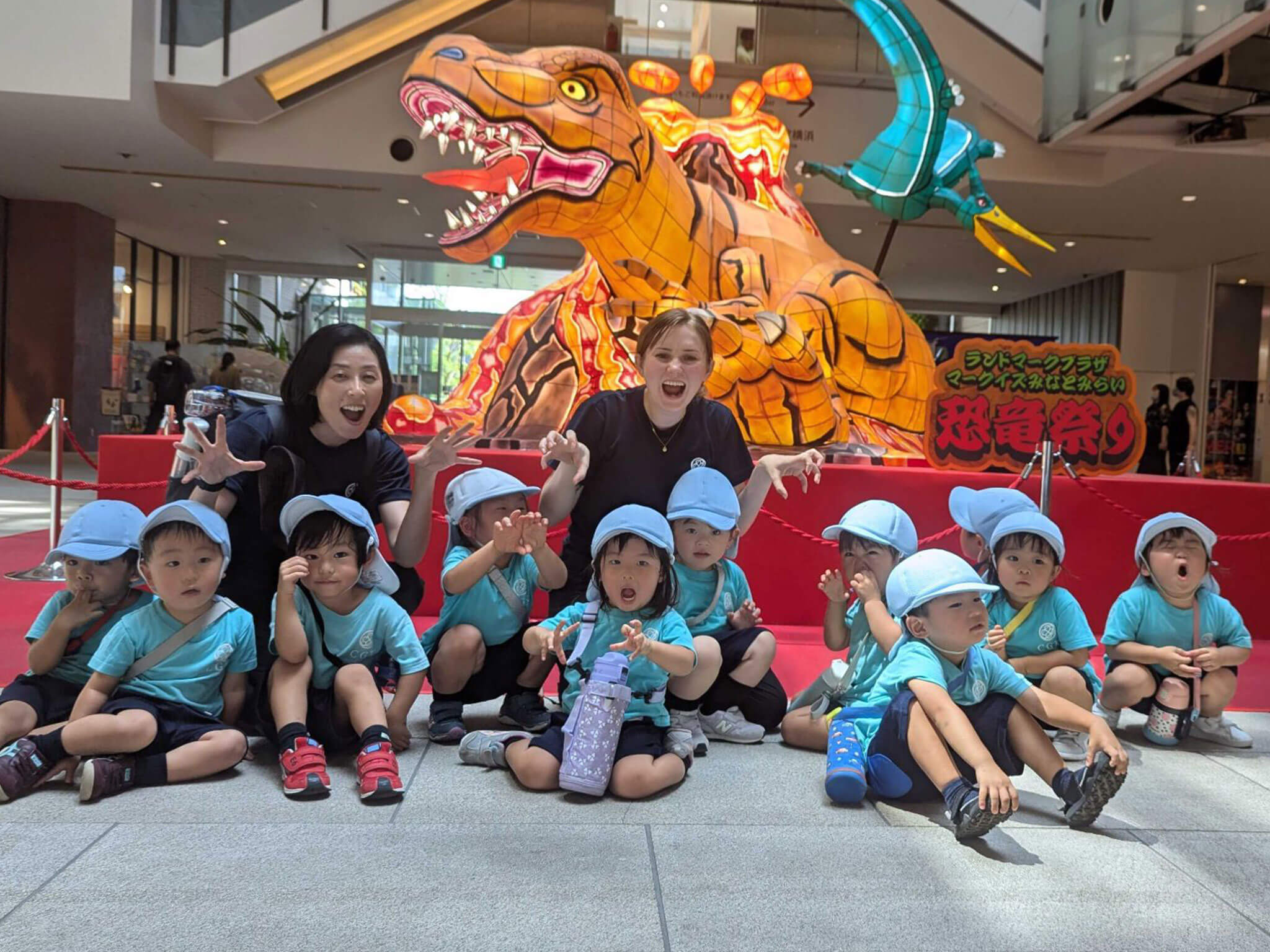
Our adventure began with the discovery that a giant dinosaur had appeared in the Landmark Tower shopping center. This inspired us to ask the question: Do dinosaurs make us feel scared, or brave? Students shared their thoughts and feelings openly, and we learned that it’s okay to feel both scared and brave at the same time. We then hopped on the CGK bus and headed to Landmark Tower to see the dinosaur in person. As we entered the mall quietly, the excitement and suspense grew. There it was- a giant dinosaur right in front of us! Some students felt confident and brave, while others were a bit unsure and needed some space. Regardless of how they felt, each child politely greeted the dinosaur with a cheerful “Good morning, Mr. Dinosaur!”. It was a great achievement to see the students articulate their feelings.
Later in the week, students woke up from naptime to discover dinosaur footprints around the classroom and a surprise waiting in the entrance: baby dinosaurs! Each student was asked to choose one to care for, but soon we realized that three friends didn’t have one. When asked what we should do, the class responded in unison: “Share, please!” It was a heartwarming moment of empathy and teamwork. We returned to the classroom to find that our mischievous dinosaur visitor had come back and left a big mess! Toys and paper were scattered everywhere, and it was too messy to play. After some thoughtful discussion, the students agreed: “Clean up!” Working together, they tidied up the space so everyone could enjoy the toys again.
Through all these exciting adventures, Ocean Class faced challenges big and small. But what stood out most was their ability to respond with calmness, kindness, and problem-solving skills. As their teacher, I couldn't be prouder of their growth, not just in language and learning, but in emotional intelligence and cooperation.
Thank you, as always, for your continued support at home. We look forward to many more adventures together!
In the Heat of Summer! Beating the Heat with Water Play!
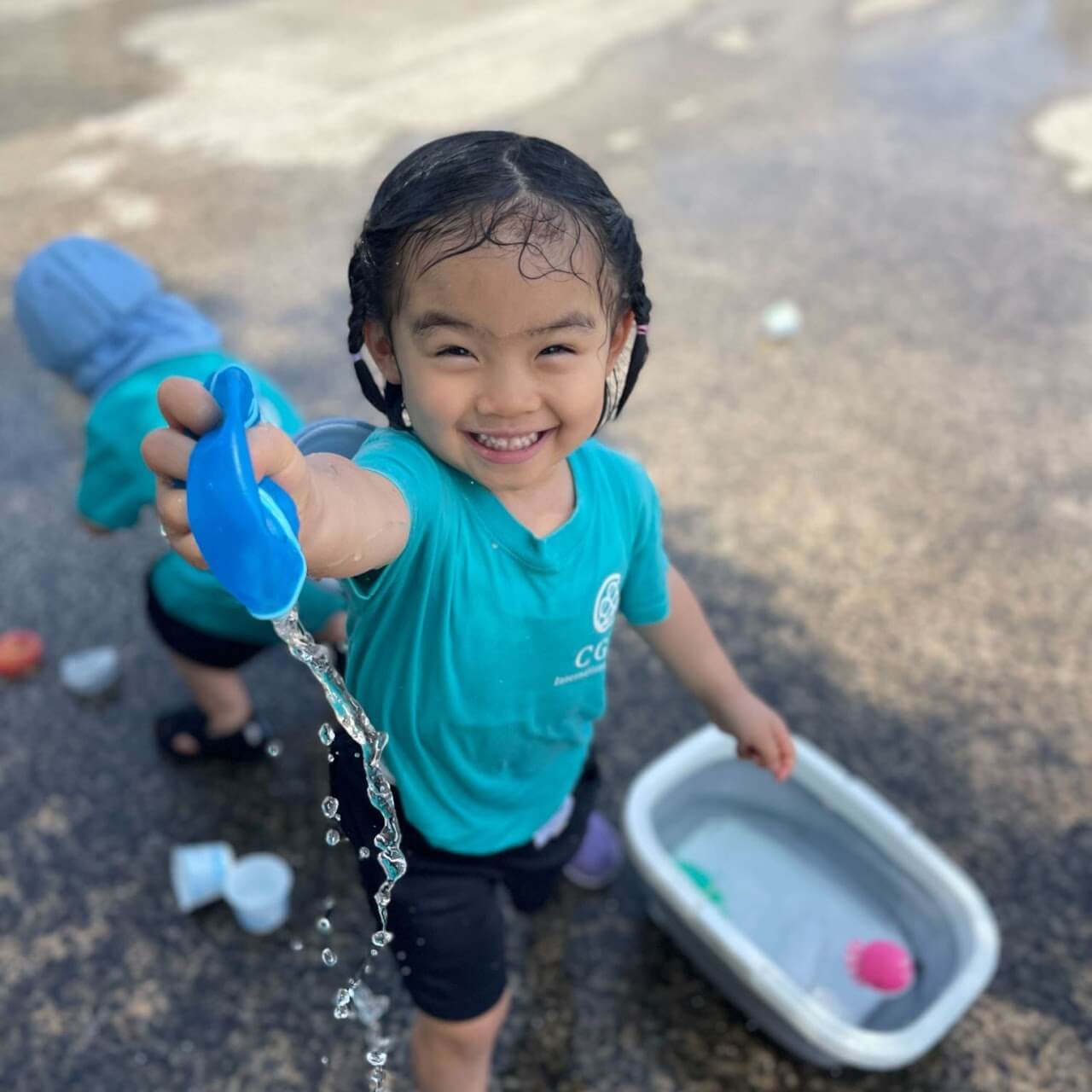
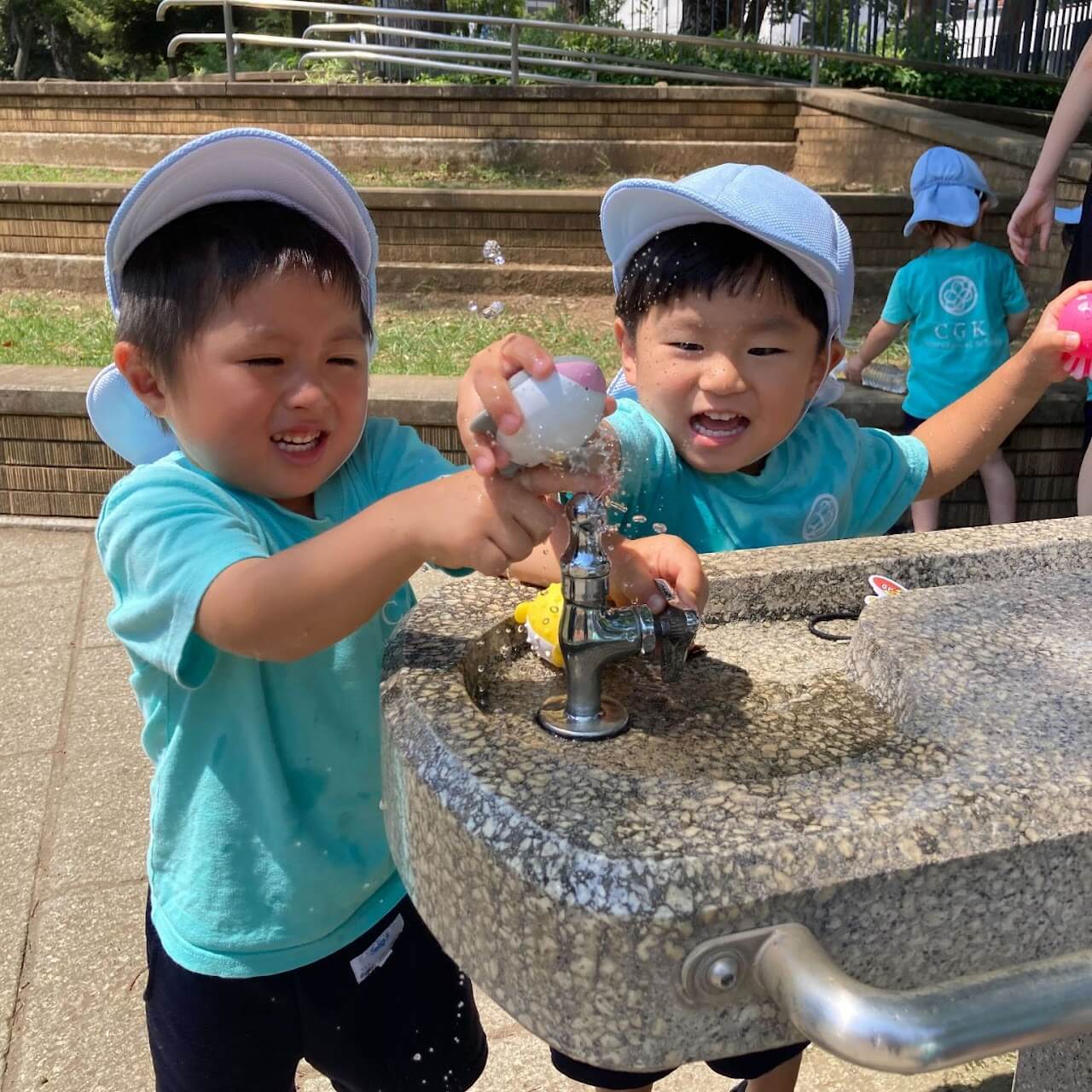
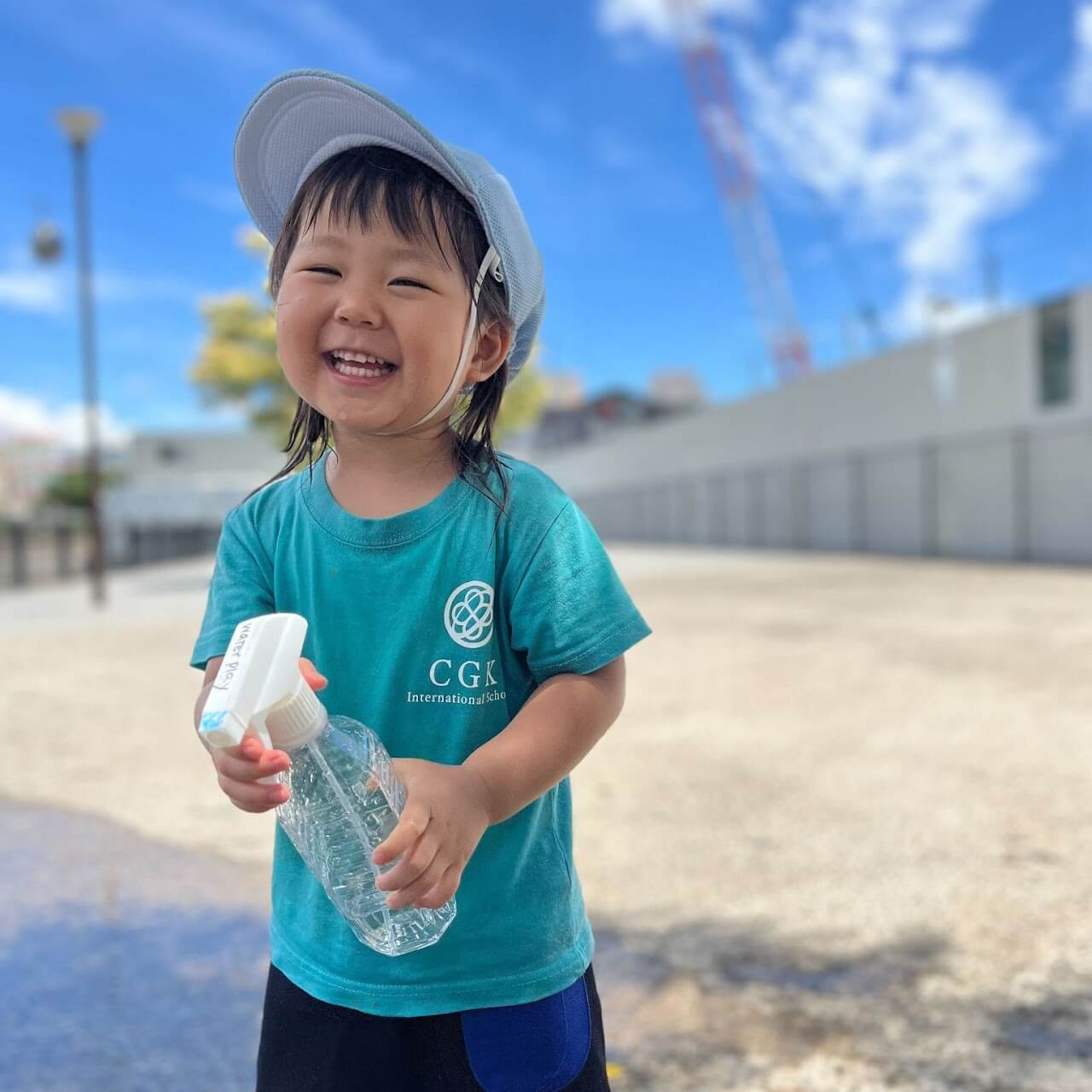
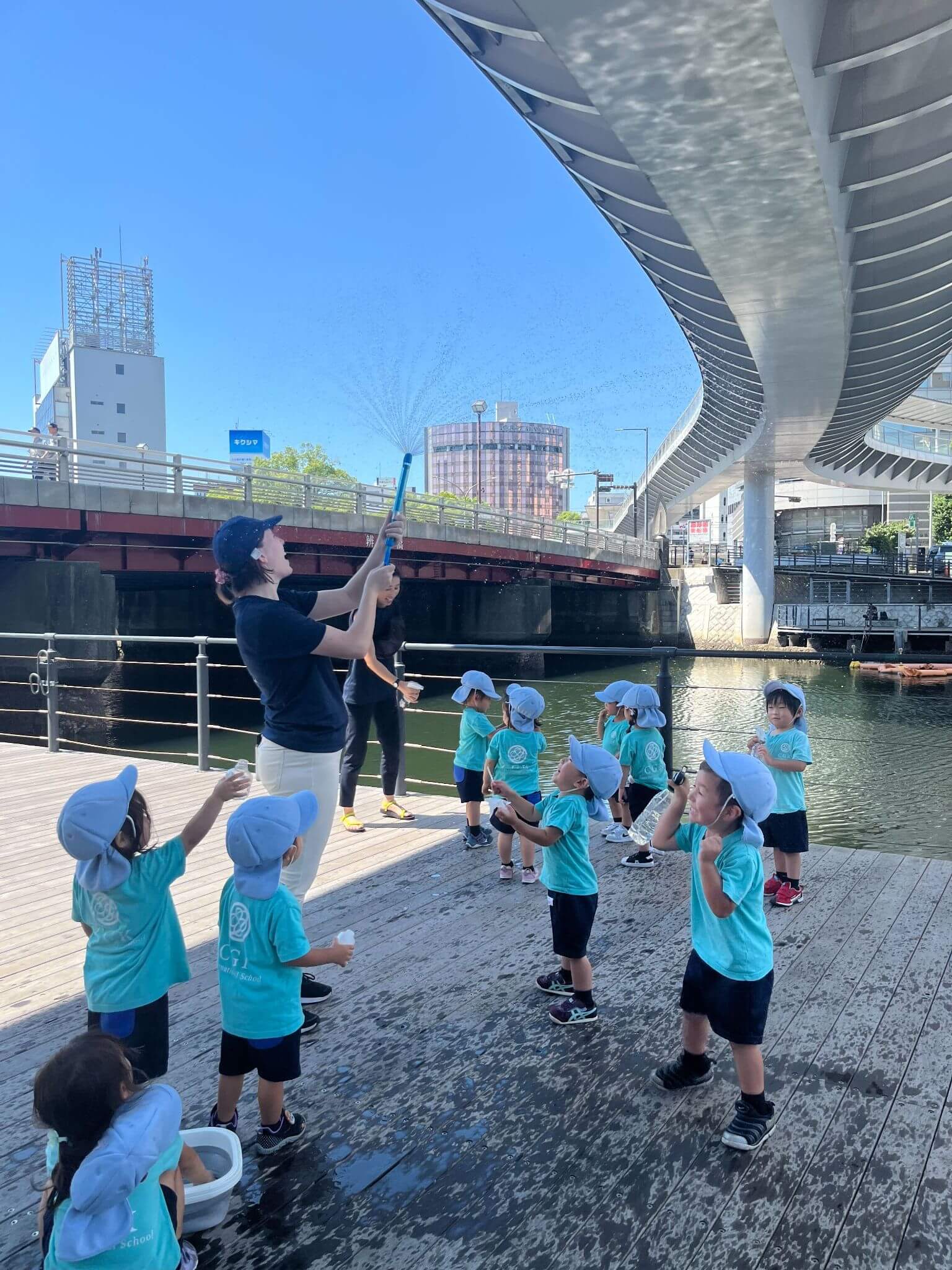
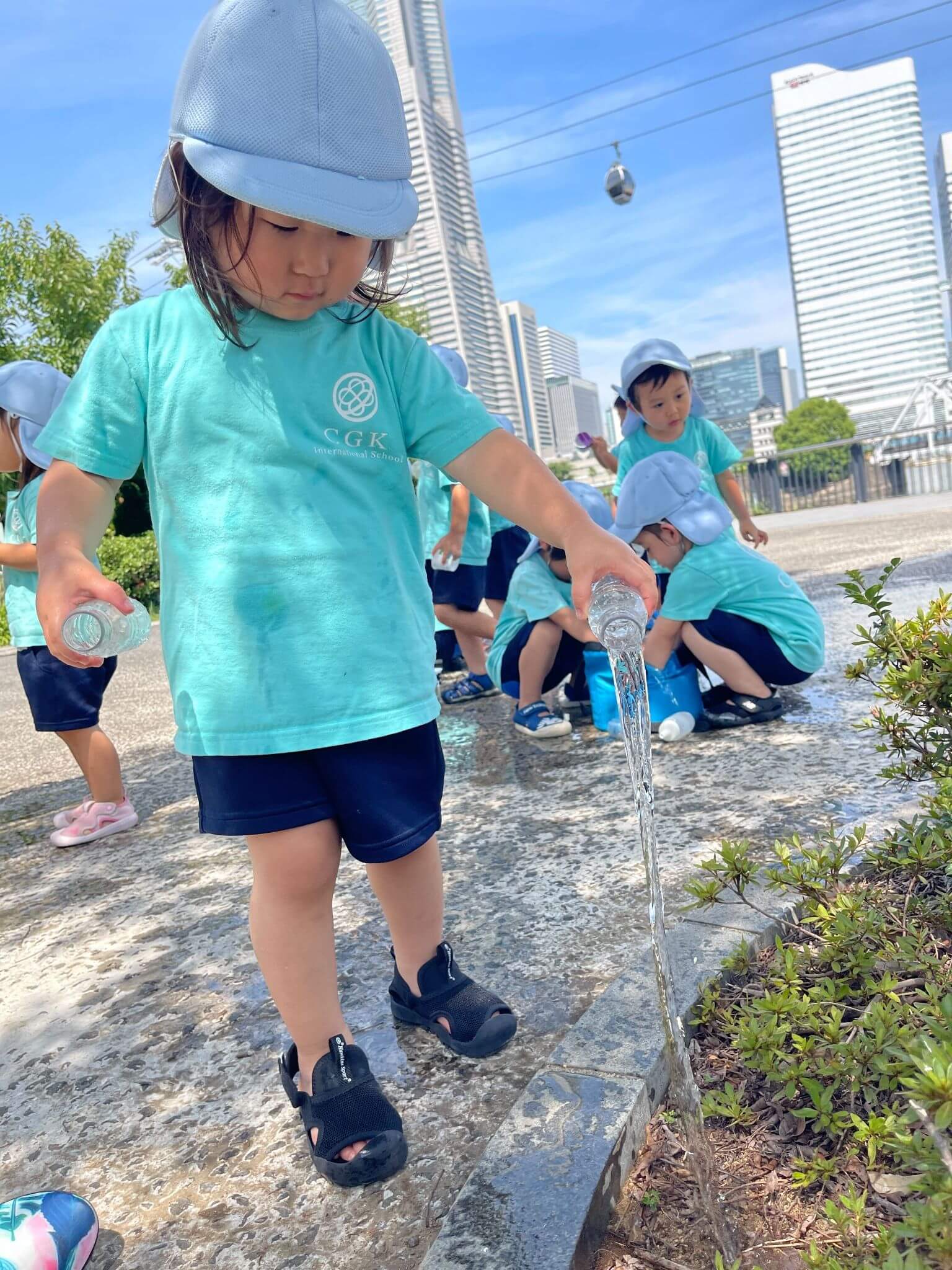
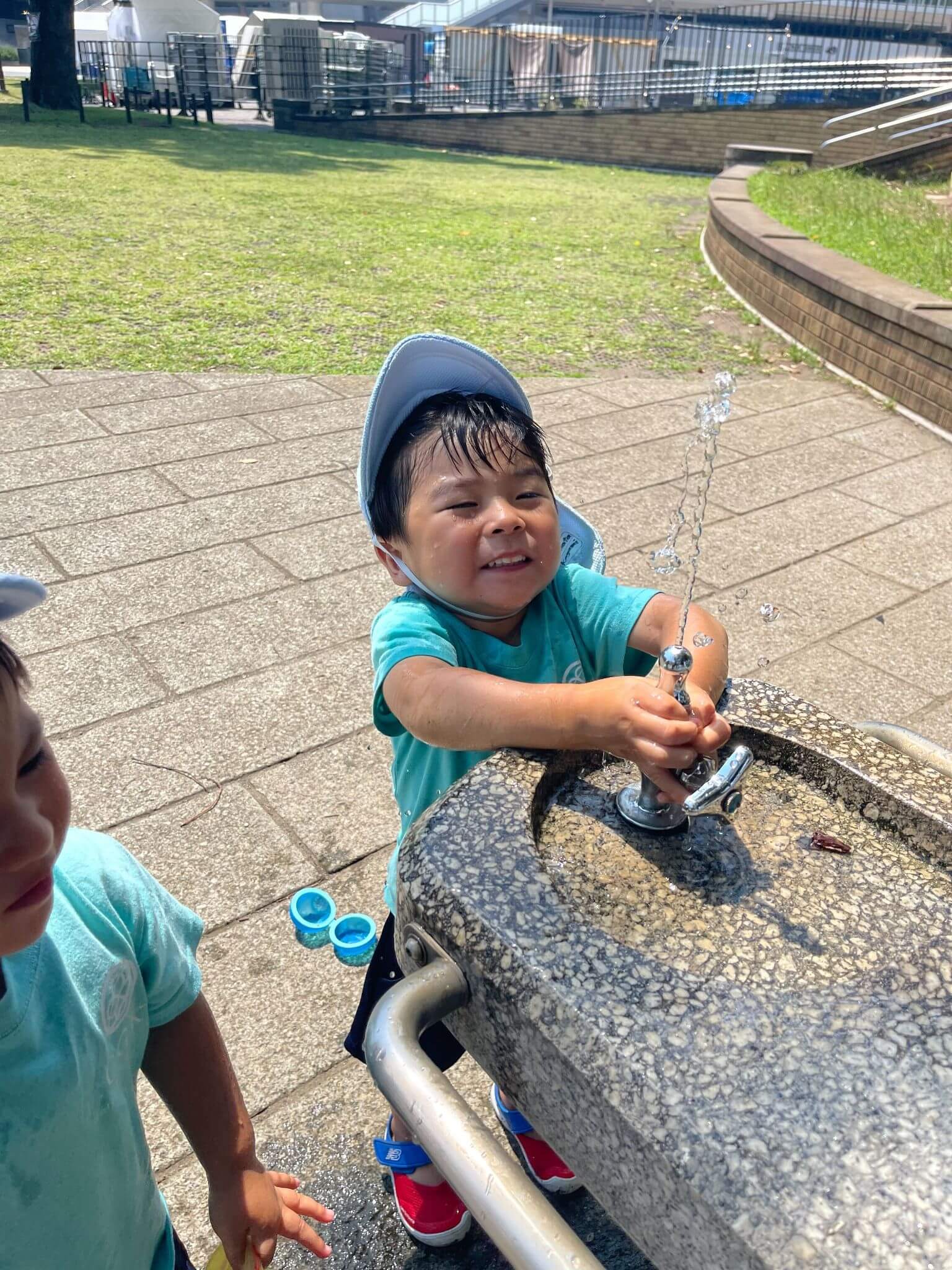
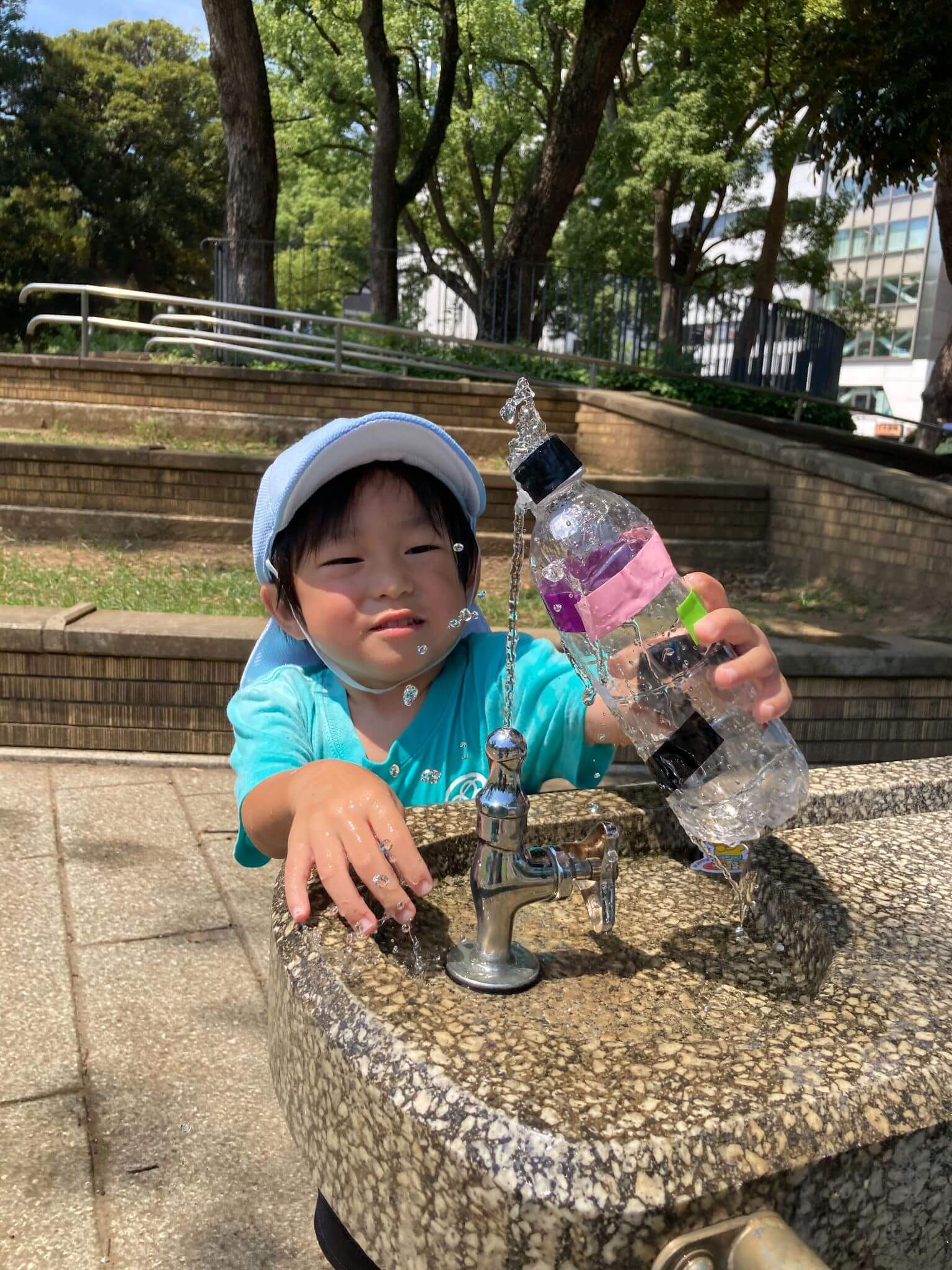
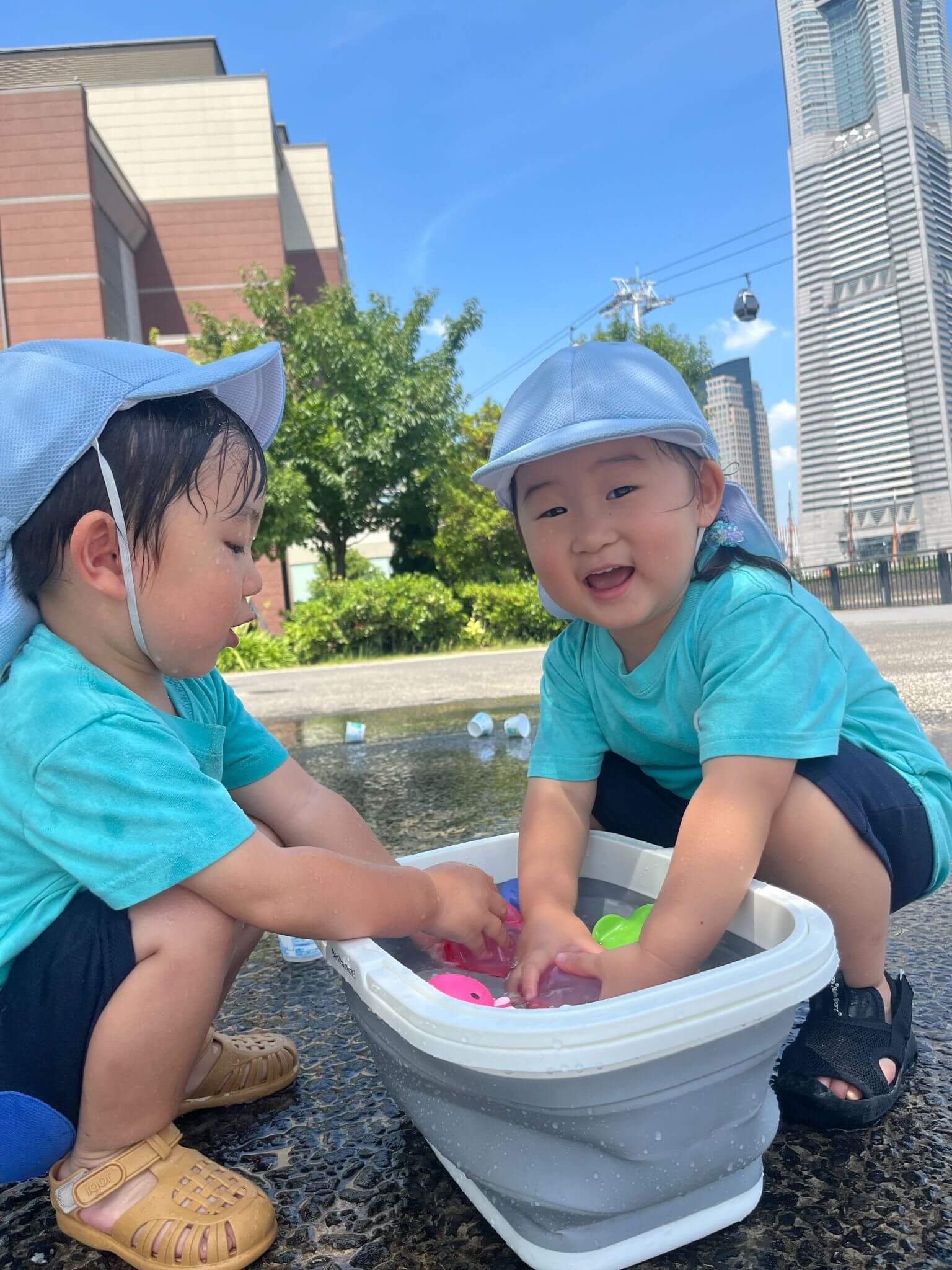
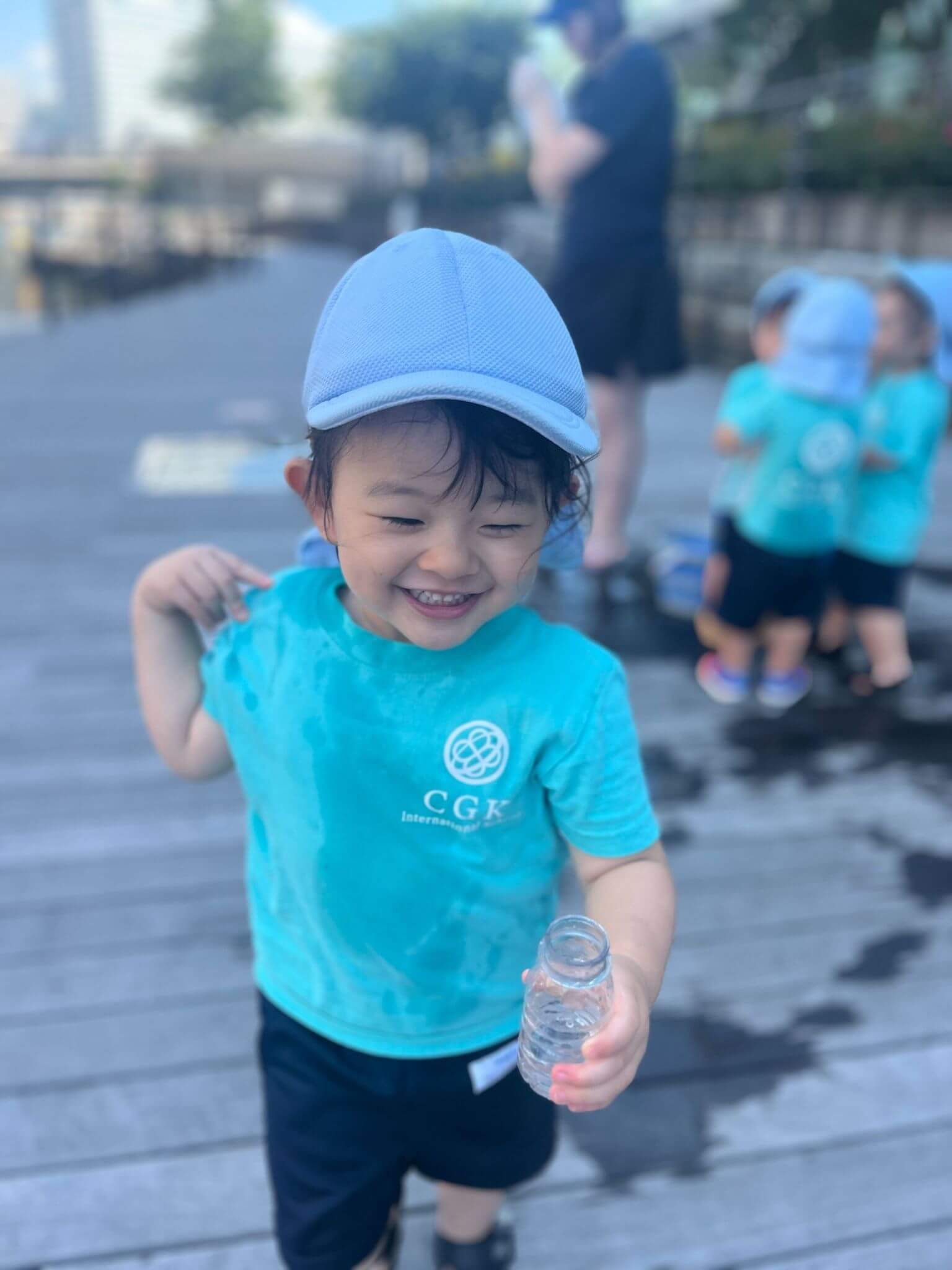
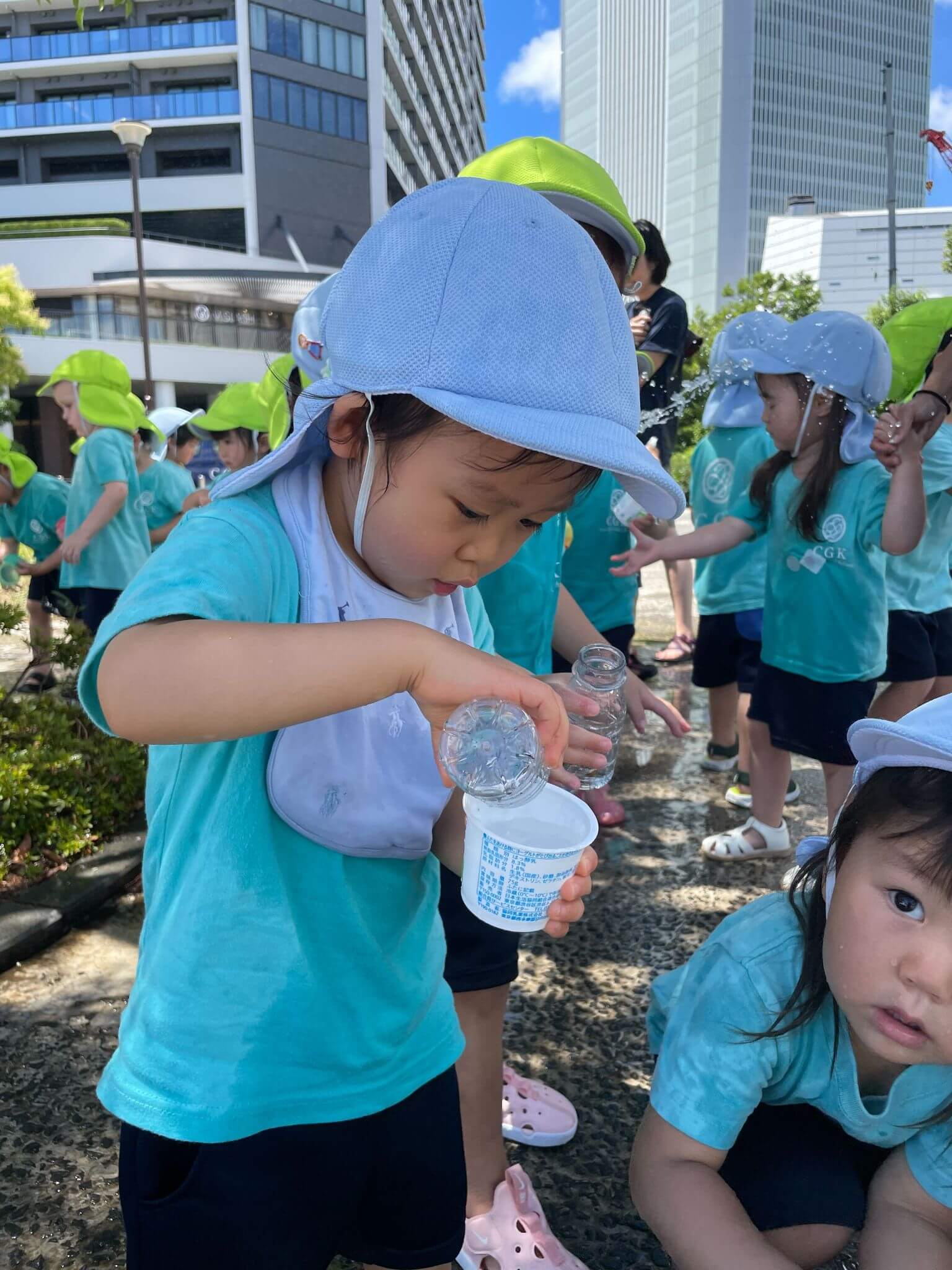
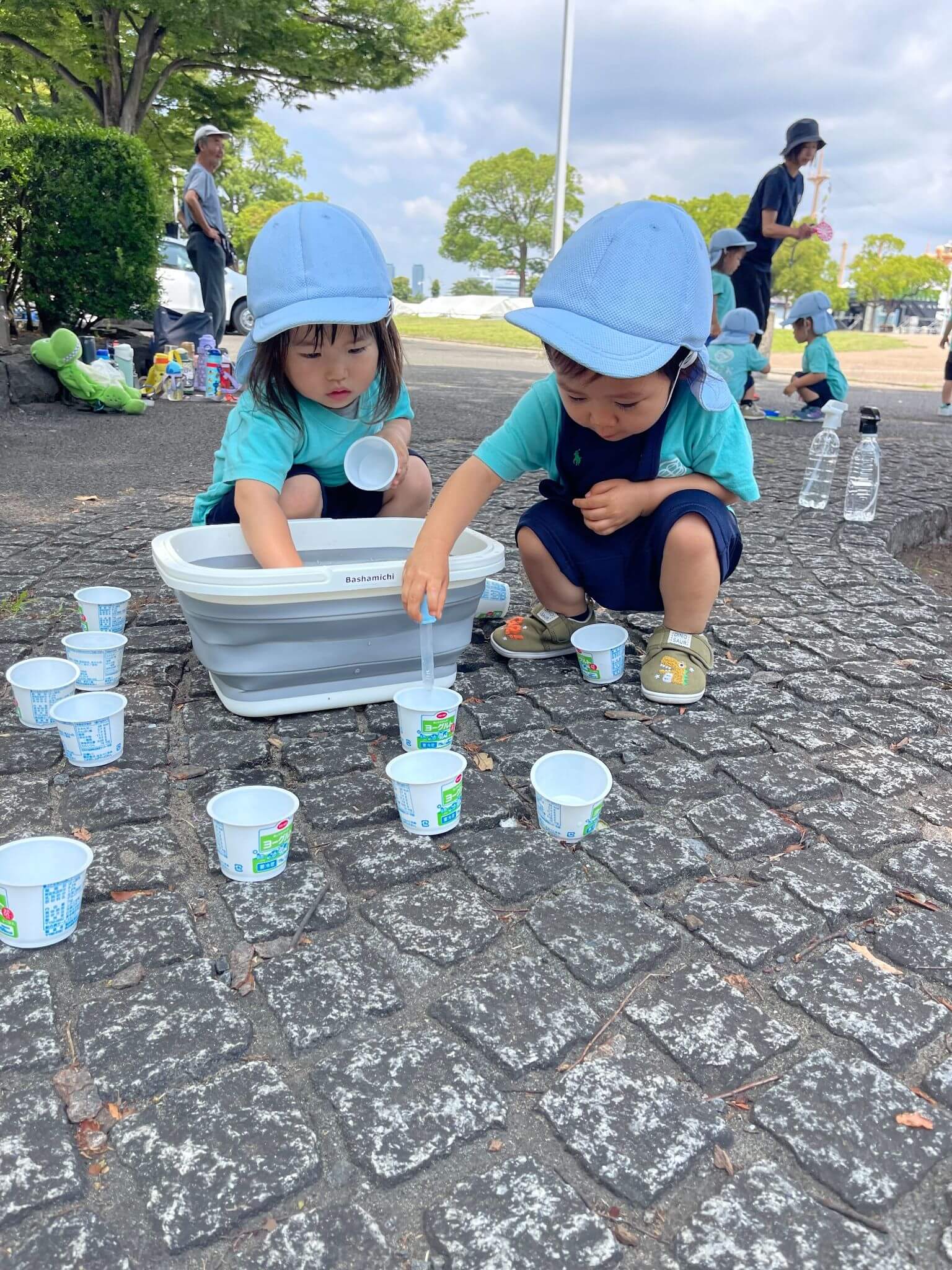
The hot days continue, but the Ocean Class children are full of energy, enjoying summer to the fullest through their favorite activity—water play!
As soon as they touch the water, we hear their delighted voices: “Cold!” “It feels good!” Their eyes sparkle with excitement as they immerse themselves in play.
They pour water into cups and bottles, watch it flow, and say “Here you go!” as they share with friends. Each day, they discover new ways to expand their play. Sometimes they splash water on their faces or bodies, bursting into laughter as they enjoy this summer-only experience with their whole selves.
Recently, they’ve become so comfortable with water play that they’ve even started sneaking up to surprise teachers and friends with splashes. This playful mischief shows their growth—moving beyond independent play to thinking, “How can I make this even more fun?” or “How can I connect with my friends and teachers through play?” At Ocean Class, we support each child individually so they can explore and deepen their interests in ways that are meaningful to them.
Every small action—scooping, pouring, splashing—is more than just play; it helps build fine motor skills and strengthens their sense of balance and coordination. The skills they develop through water play also carry over into other activities.
We will continue to ensure frequent breaks and hydration, making safety our top priority, while encouraging joyful water play that stimulates the children’s five senses. With this, we hope the children will keep enjoying the rest of summer full of energy and laughter!
Elementary School / Middle School
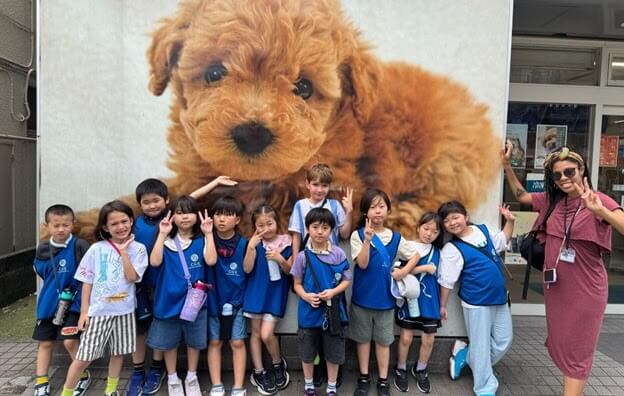
Grade 2 Outdoor Learning Activities
During the Term 1 Grade 2 explored outdoor learning in the unit How the World Works. We visited ponds and observed the animals, plants, and insects that lived in the Yokohama Park Pond. Students took pictures of the animals they were interested in, and used them for a journal entry. They categorized the animals and reflected on how they fit in their ecosystem. Later in the unit we explored aquatic animals and visited the pet shop to purchase a fish tank and two types of rice fish. We learned about their needs, habitat, and life cycles. Many of the fish were female and pregnant. They showed distinct features, such as a large belly and black spot under their tummies, signifying their pregnancy. We monitored their behavior and were lucky to see their eggs form and be perched on the floating vegetation. Unfortunately, we loss two fish, who were found on the bookshelf. We investigated their deaths and reflected carefully on how they reached their untimely death. The students concluded that it was likely because of water conditions, lack of space, and no place to hide. We worked together to research a list of materials to change the conditions of the aquariums. Later we took another trip to the pet shop and purchased aquarium hiding figurines, water purification solutions, and fish egg capturing nets.
Our frequent visits to the pet shop taught us about caring for animals and budgeting materials. We will continue to make trips to the pet store as we add additional animals to the aquarium,
As the weather improves we hope to include more outdoor learning activities that incorporate movement, cooperation, and team building, especially as Sports Day draws near. The G2A class enjoys extending its classroom, by taking our learning outside.
Afterschool
Exploring Creativity: A Look at Our Recent Projects - Class A
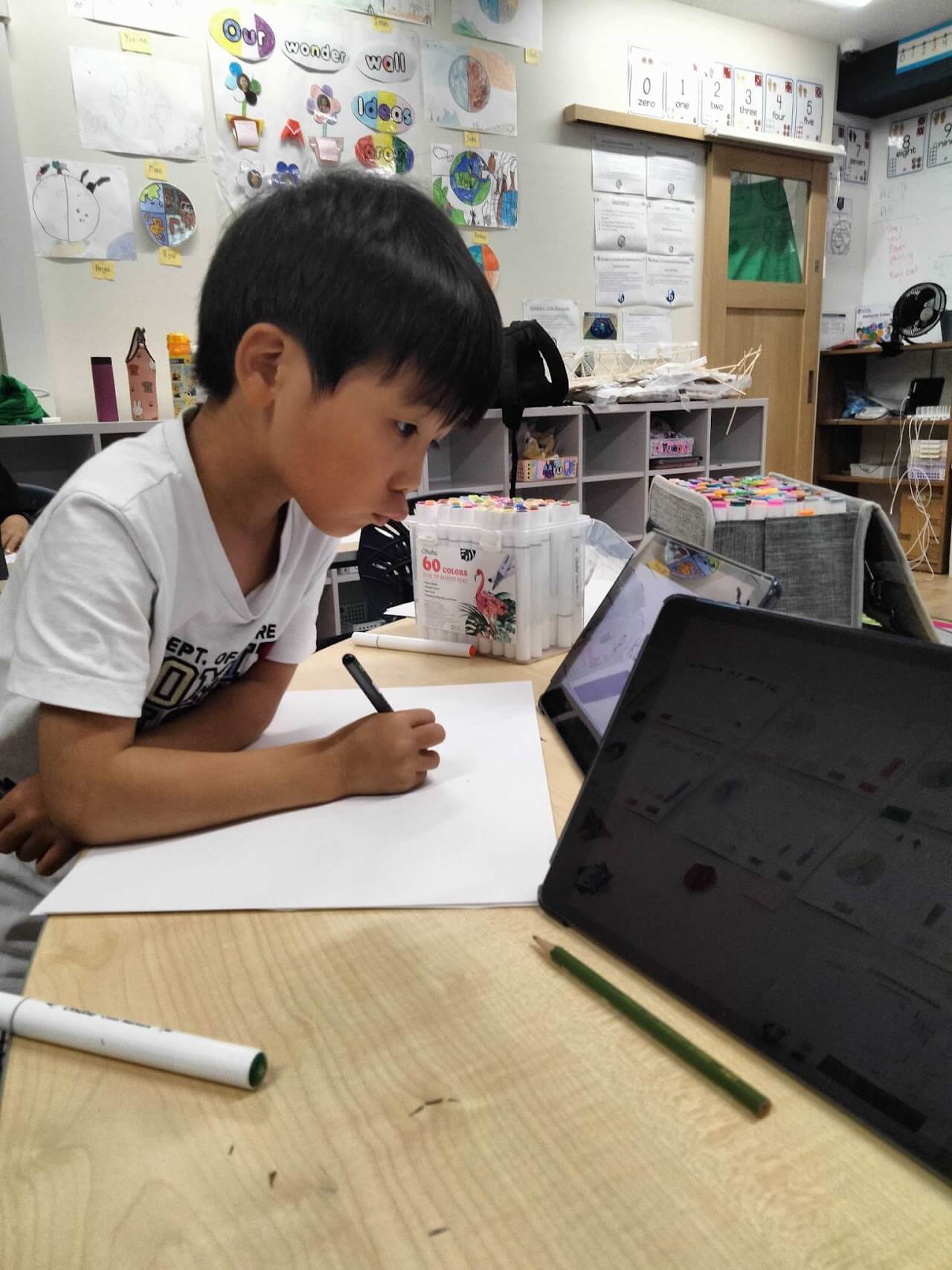
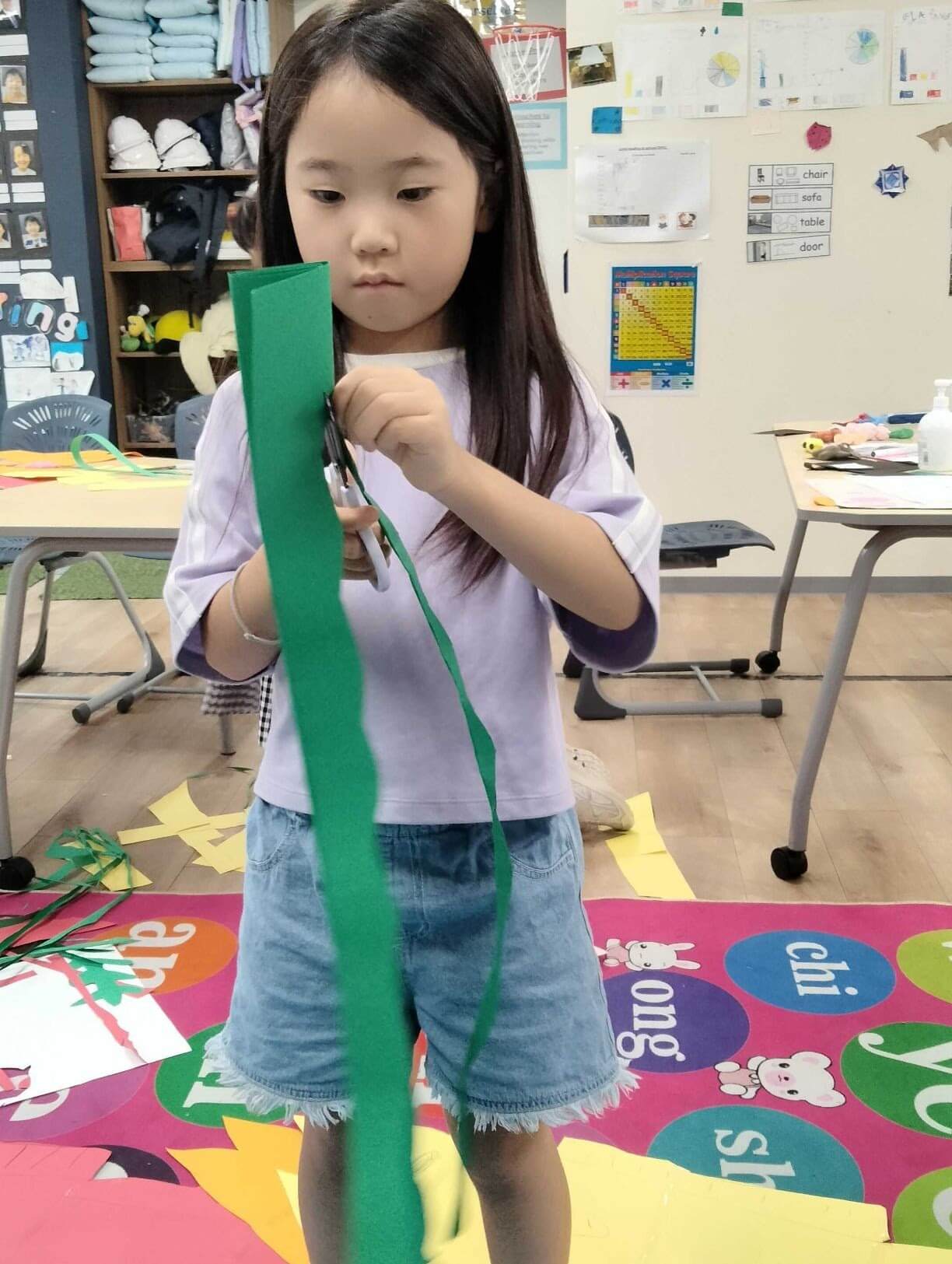
Over the past month, our After School program has been buzzing with creativity as students worked on a variety of mini projects. This summer, we’ve been focusing on activities that encourage imagination, problem-solving, and self-expression. Some of the themes we’ve explored include:
- Designing our own superheroes
- Creating original games
- Developing unique content
- Expressing ourselves through art
- Exploring our personal interests
It’s always inspiring to see how differently each student approaches their ideas—there’s never just one way to be creative, and that’s exactly what we aim to celebrate.
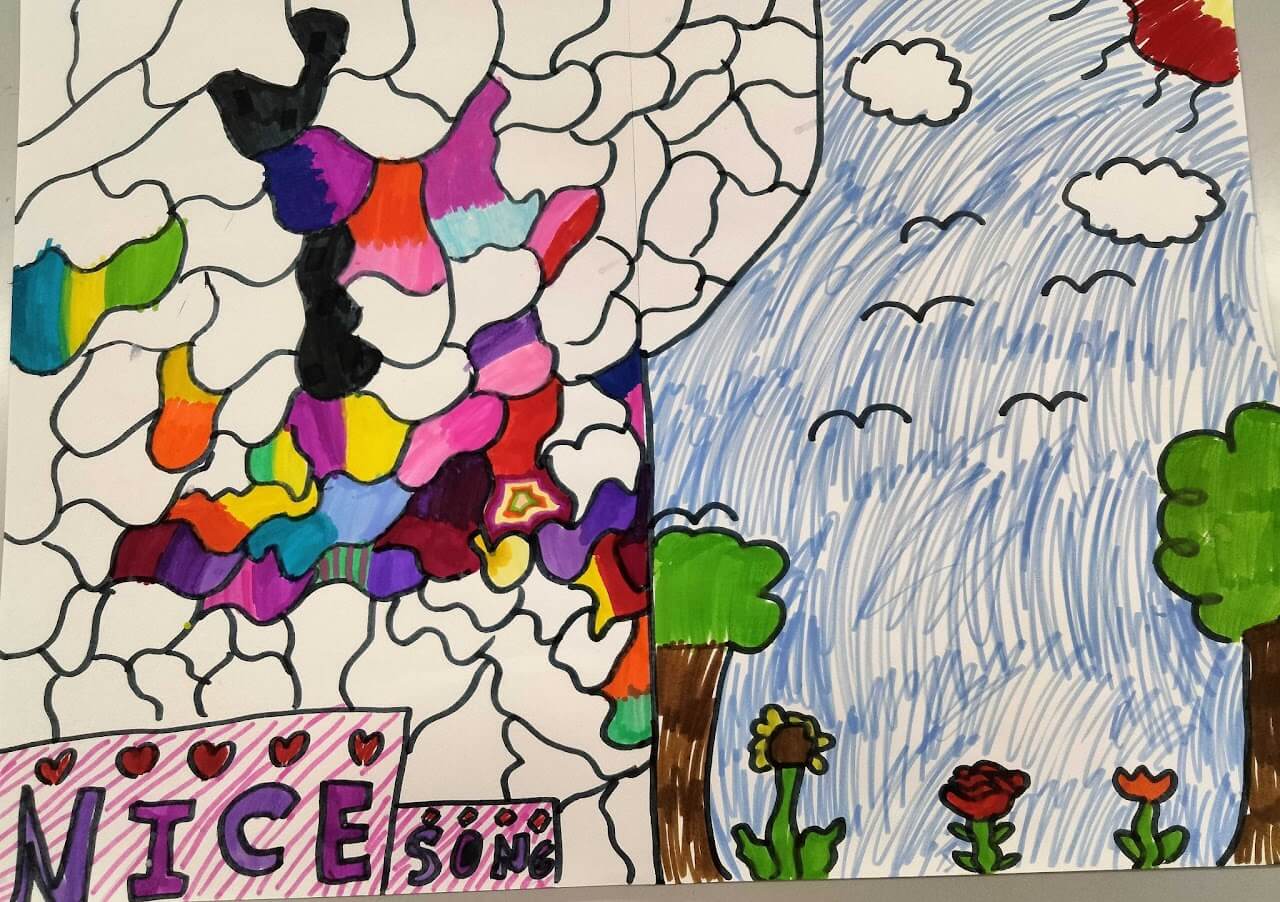
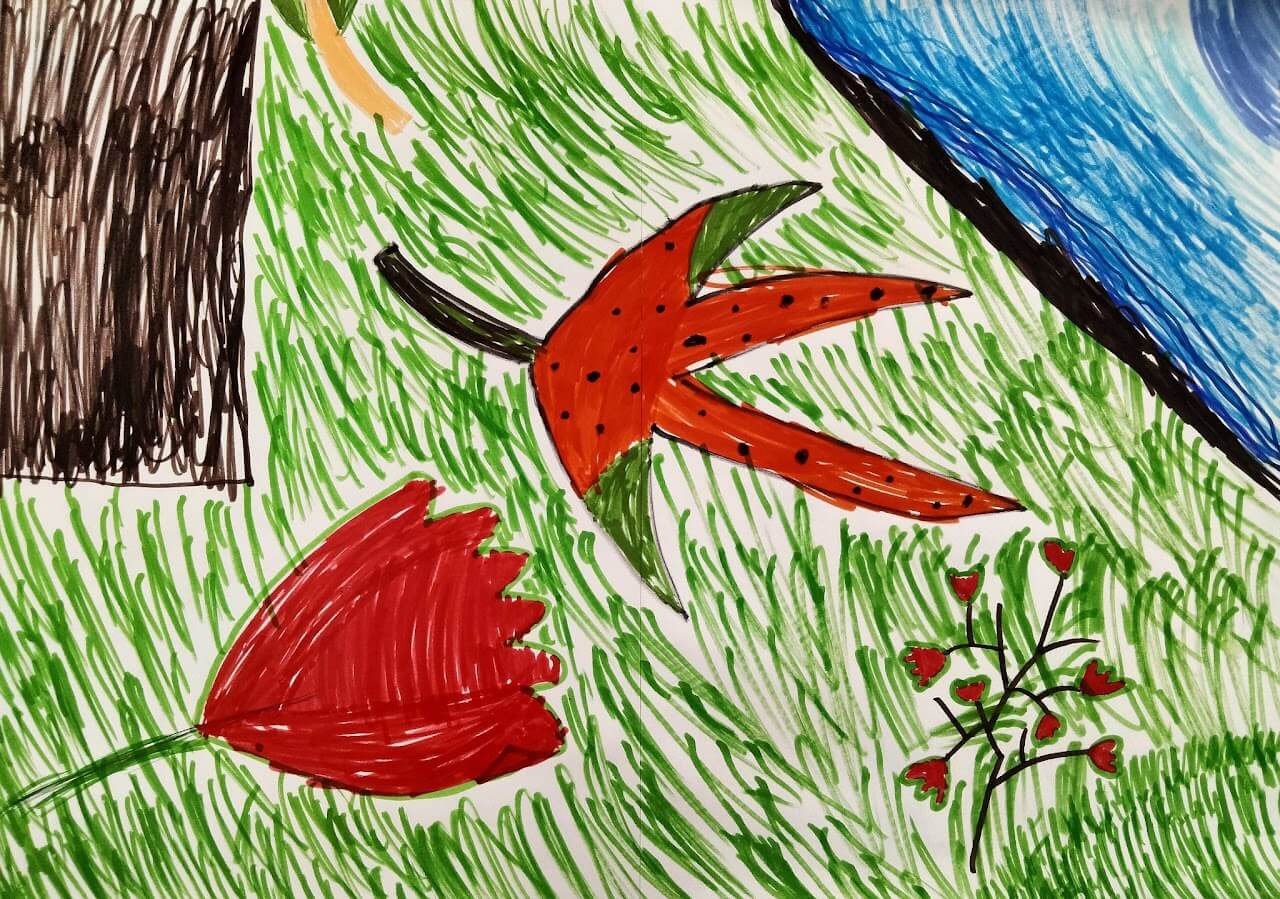
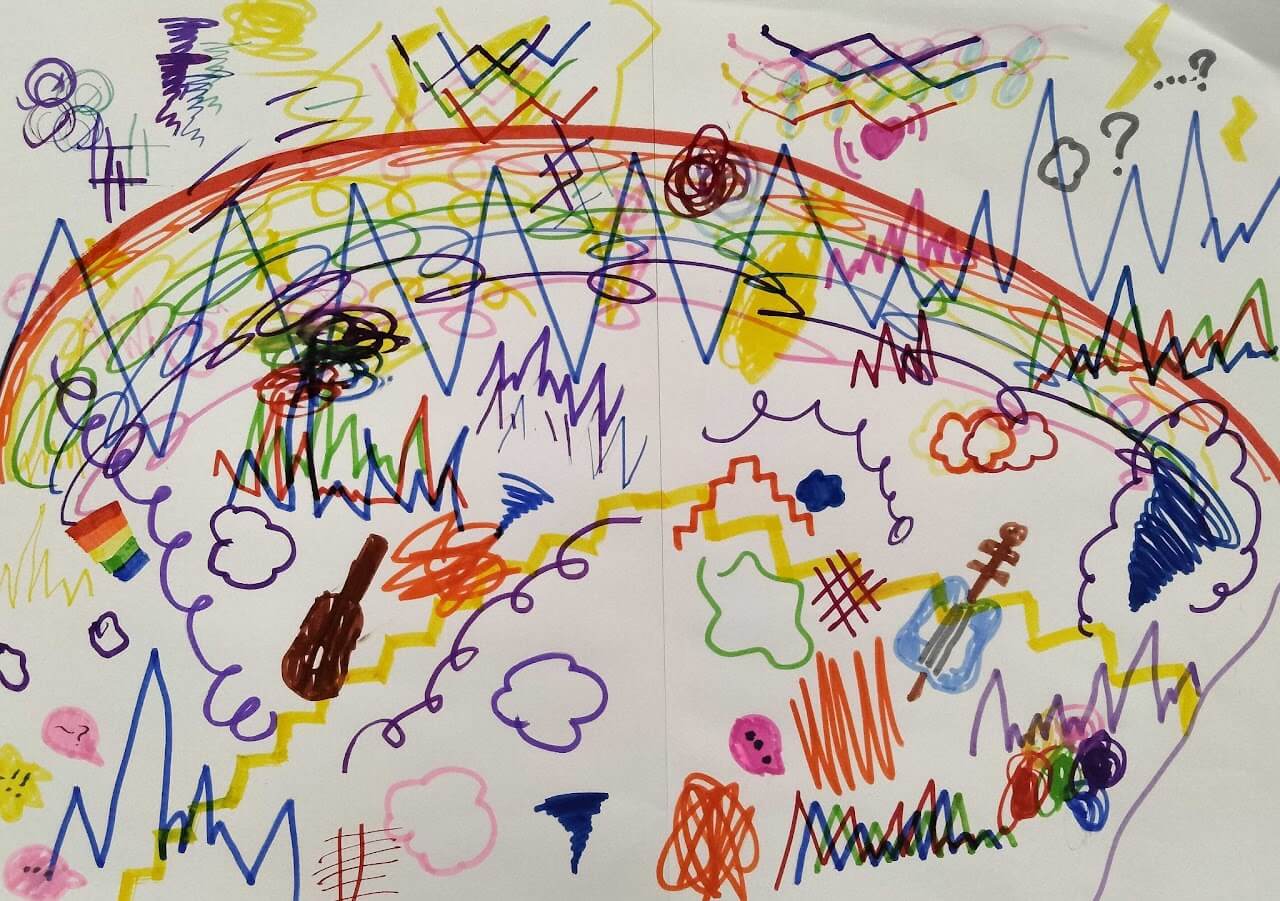
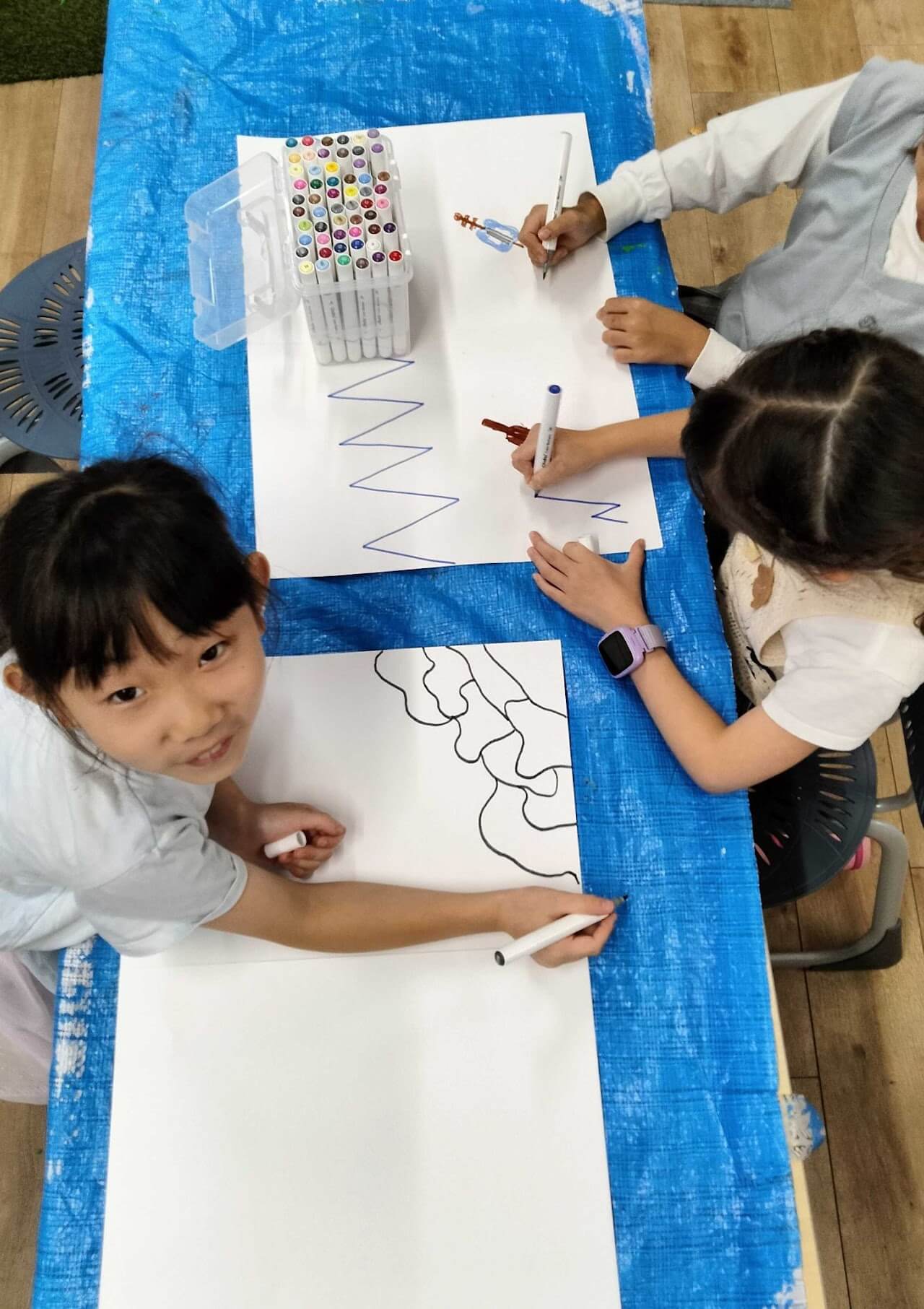
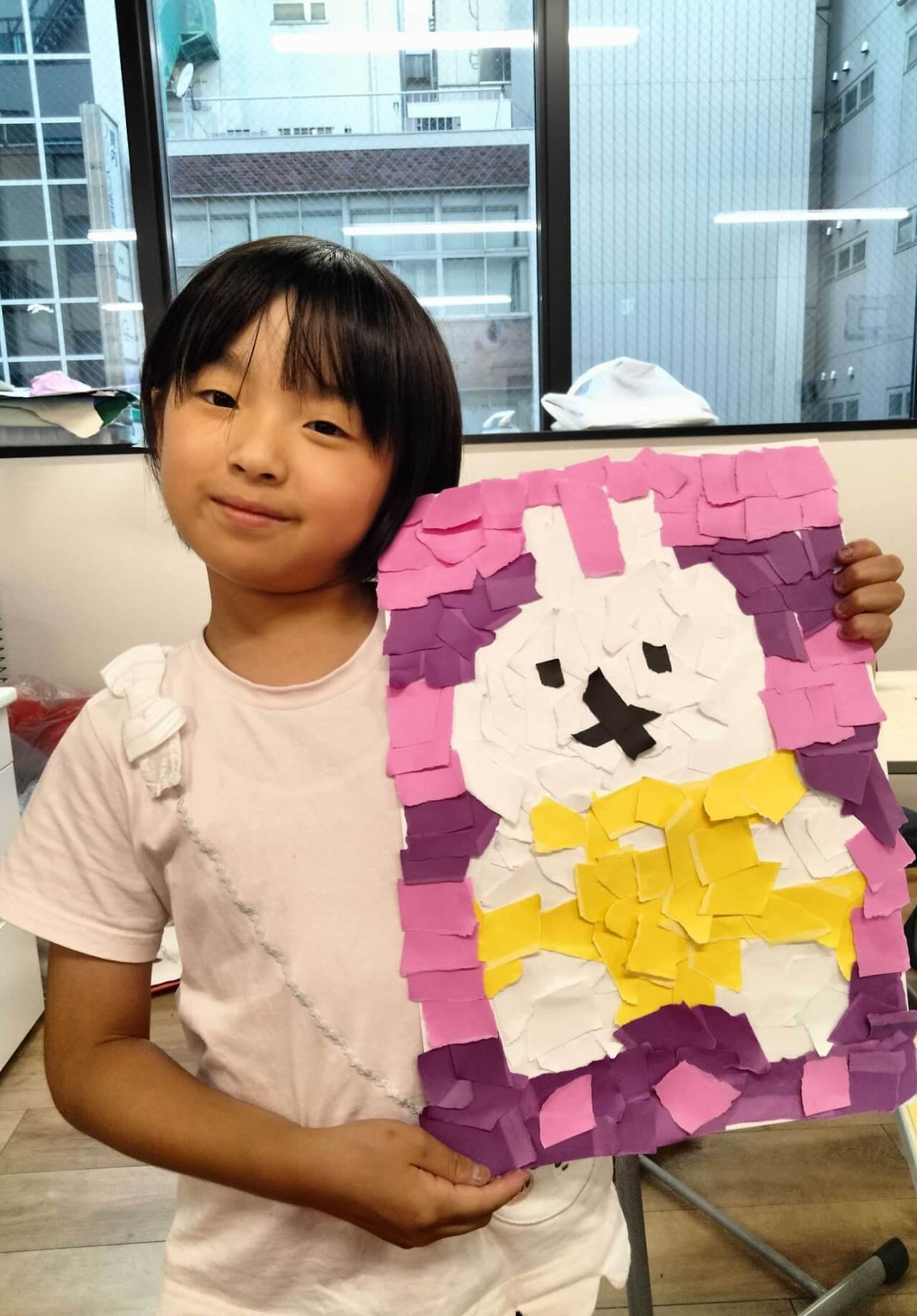
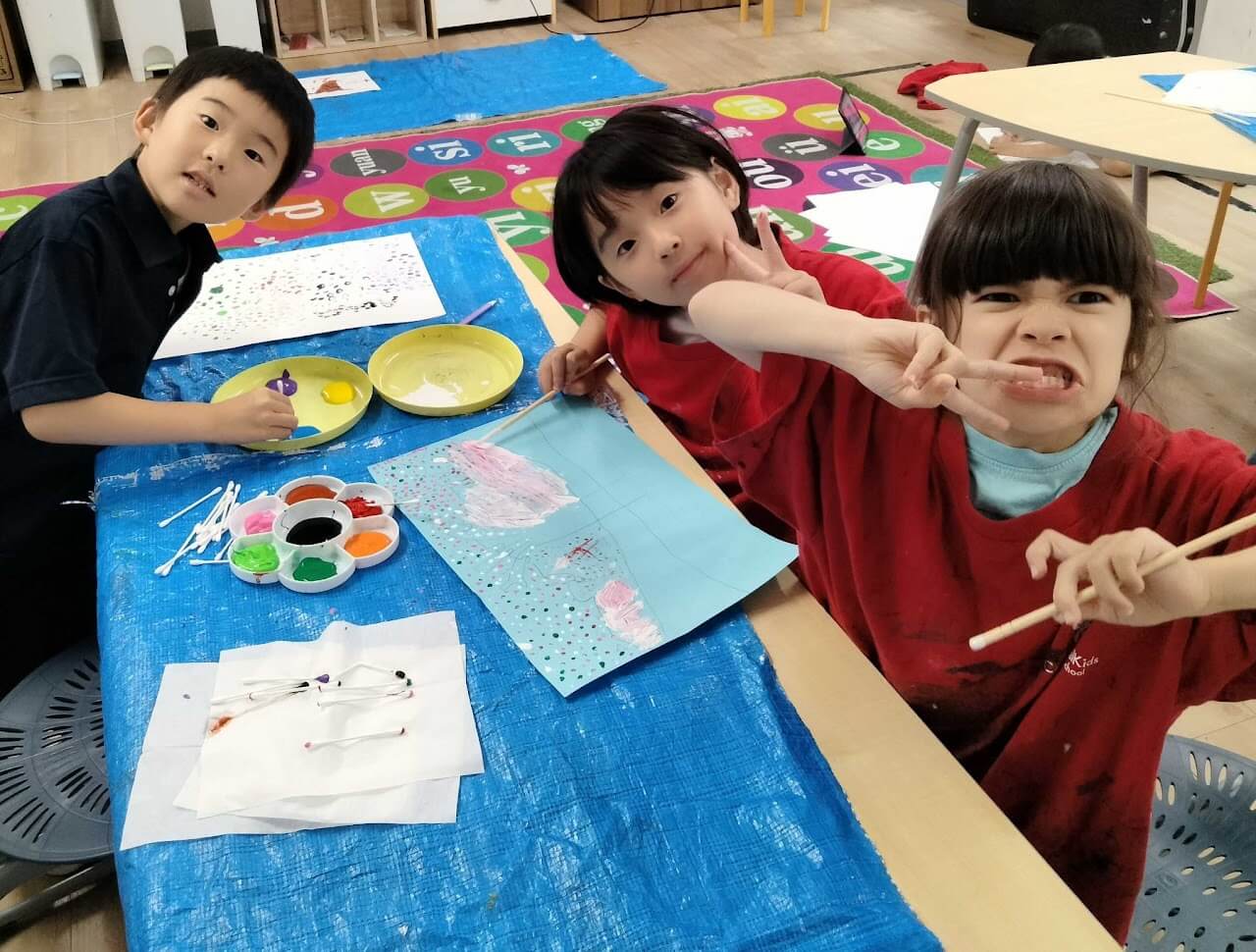
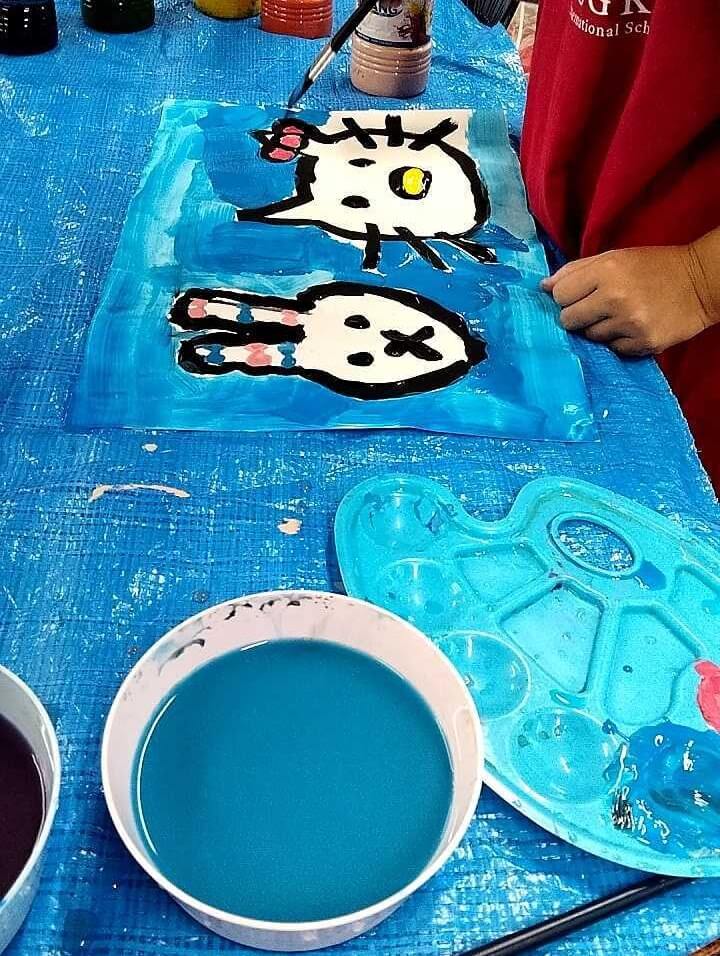
One standout session this term was our "Abstract Week," where students explored the concept of expressing emotion through art. For this activity, students were invited to create artwork using any medium they liked, inspired solely by the music playing in the background.
What makes this kind of creative exercise so special is that there’s no "right" or "wrong" way to do it. With no references or guidelines, students had the chance to freely express themselves—responding to what they heard, felt, and imagined. It was a true multisensory experience that allowed them to listen deeply, feel openly, and create instinctively.
When it came time to reflect on their work, some students were proud of what they produced, while others were genuinely surprised by what they had created. Regardless of the outcome, the process encouraged them to tap into their emotions and creativity in a meaningful way.
The final pieces were not only beautiful, but also a testament to each student’s individuality and willingness to explore new ways of thinking.
As we prepare for a new school term, we’re excited to begin fresh projects and continue nurturing creativity in Class A. There’s so much more to discover, and we can’t wait to see where our ideas take us next!
Sincerely,
Ms. Amy R.
Class A Teacher
CGK Extra
Website Updates
[MS] CGK Becomes an IB MYP Candidate School
Currently recruiting participants for study abroad programs
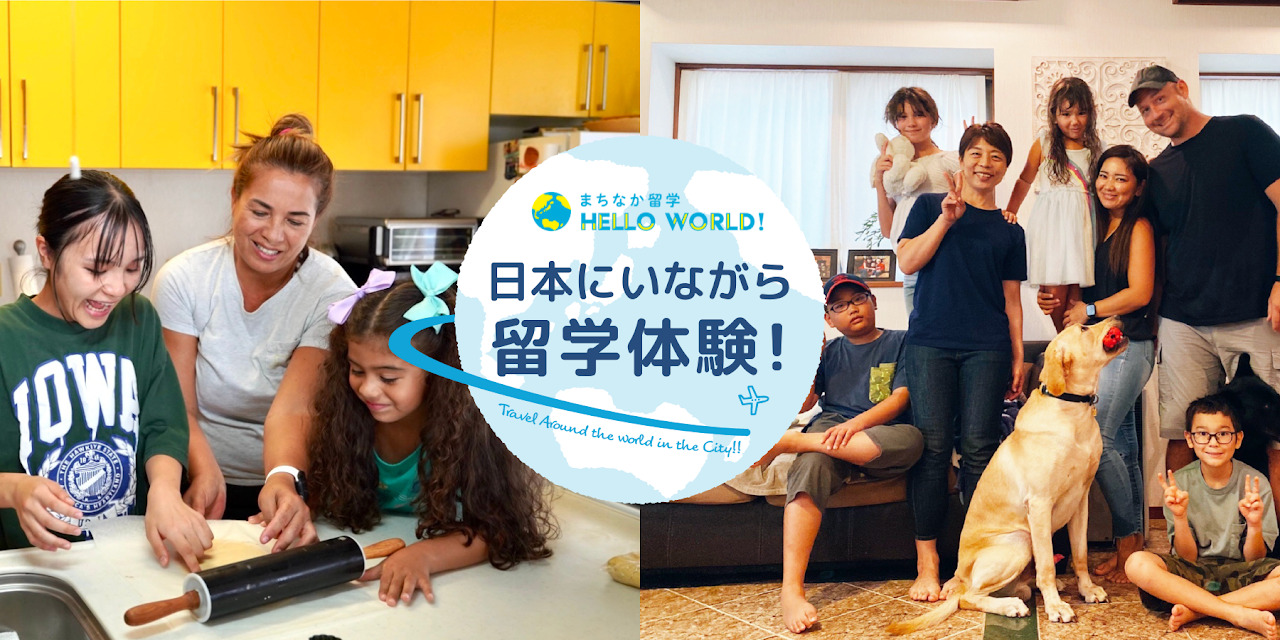


- Throughout the year (on weekends or during long breaks, either for day trips or overnight stays)
- You can experience a homestay with a foreign family residing in Japan.
- Deadline: Approximately one month prior to your desired dates
- For details/application, please contact Mayu at the Office.
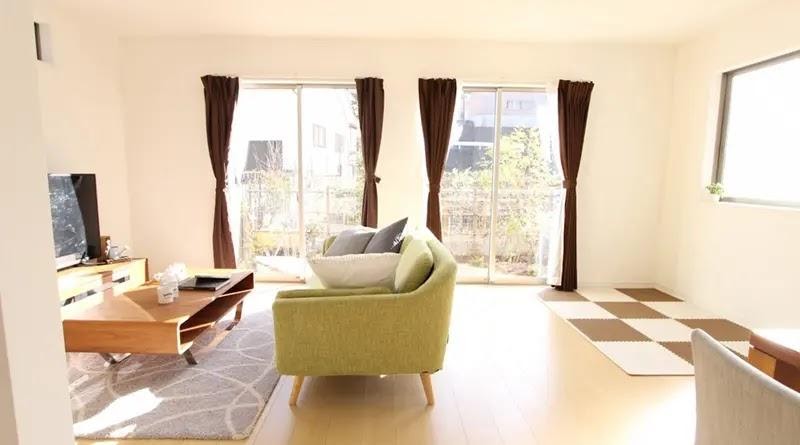
Accepting short-term international students from overseas - Wanted host families
-

-
CGK has a positive stance on accepting international students from abroad with a view to encouraging multicultural cooperation. Students from different cultures and backgrounds can interact with and help each other at CGK, bringing rich diversity to the classroom. This environment of diversity provides each student with a valuable opportunity to learn different viewpoints and increase mutual understanding.
At CGK, we believe that diversity improves educational development. By learning and working together, students from different backgrounds will grow into leaders with global perspective. In addition, experiencing diverse opinions and values will help them develop tolerance and empathy.
In order to create an environment conducive to hosting short-term students, we are looking for host families; if you are a CGK family interested in registering as a host family, please contact Mayu at the Office (Toddle is OK).
-