










CGK Times
A global learning community for discovering
and pursuing your happiness
November 2025
Contents
Preschool
Sports Day
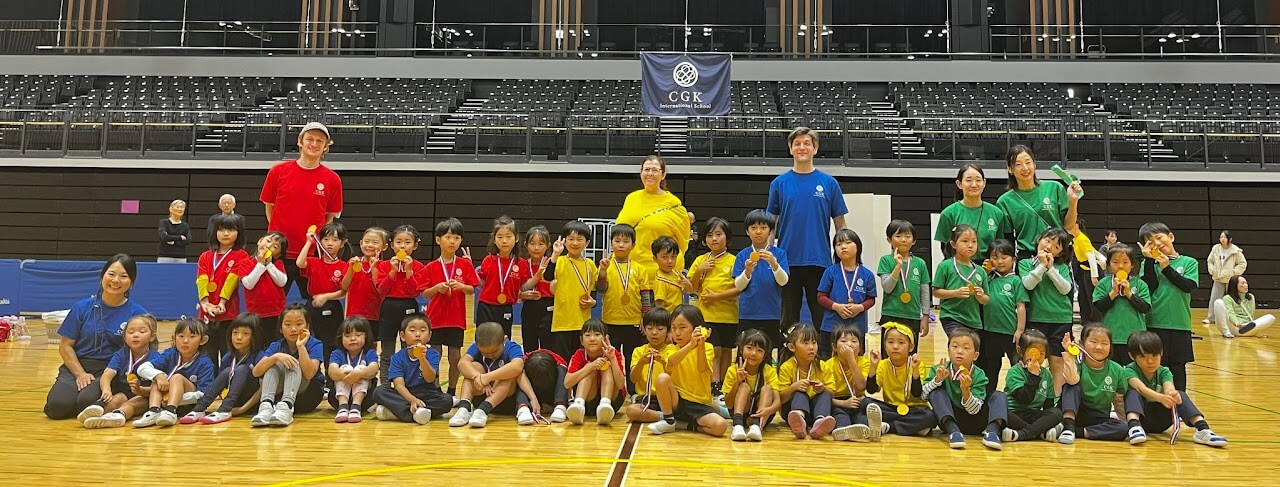
Like all great sporting events, this year's Sports Day was definitely one which demonstrated the participants' athleticism, sportsmanship, and great endeavour. All of our preschool classes were magnificent in their involvement bringing to life the promises and declaration that the children made in their Athlete's Oath.
There was a lot of healthy competition on display with everyone giving their all on the courts of Yokohama Budokan. More importantly, it was great to see the children enjoy the competition and working together as a team with their classmates or older and younger peers. Congratulations to the Blue team who were the day's overall champions. But without the competition from the Green, Red, and Yellow team, our Sports Day would not have been such a great one.
Thank you once again to everyone who came to this year's Sports Day. From your hearty cheering to breaking a sweat in the tug of war and the family games, you played a big part in making this year's Sports Day a very successful one.
CGK Awards
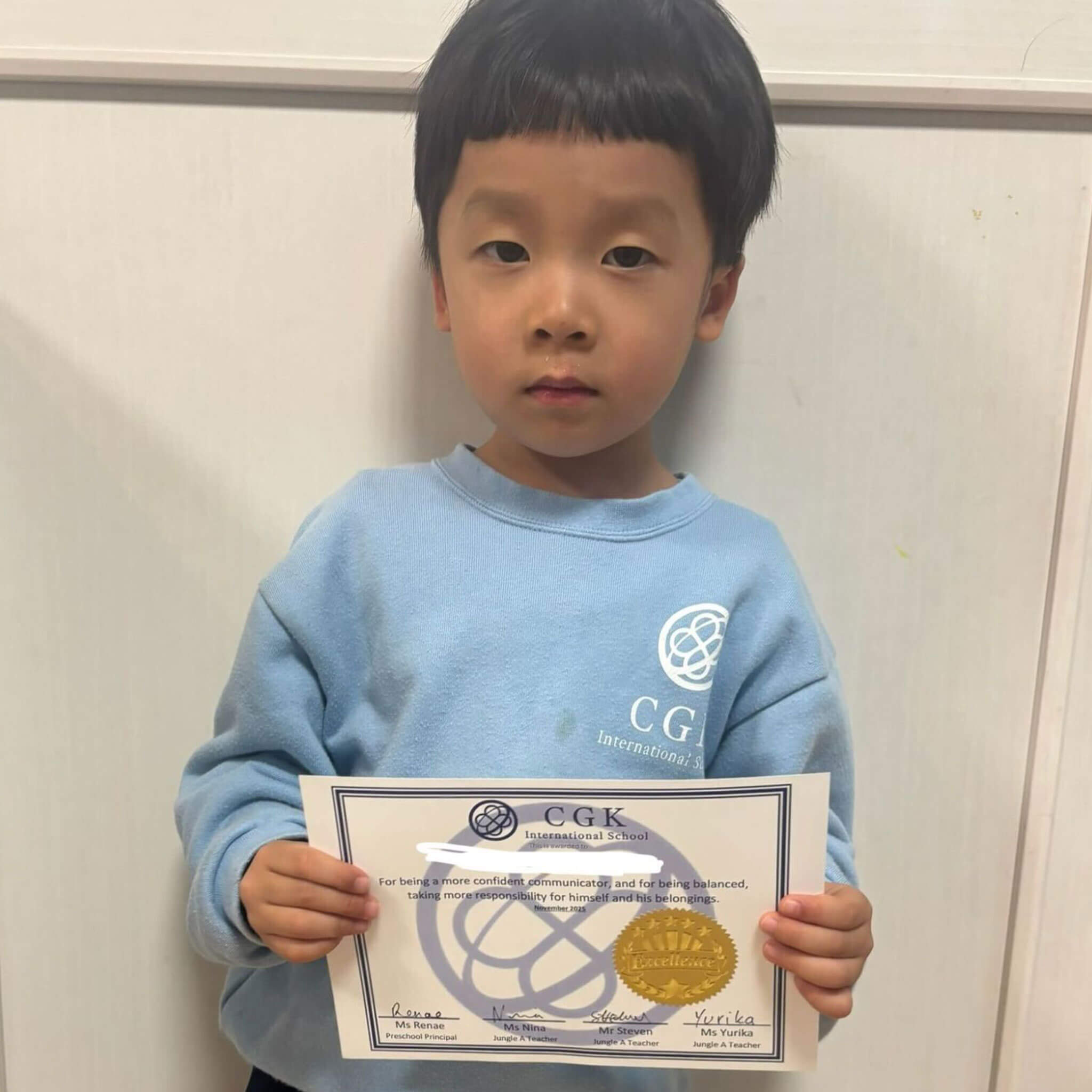
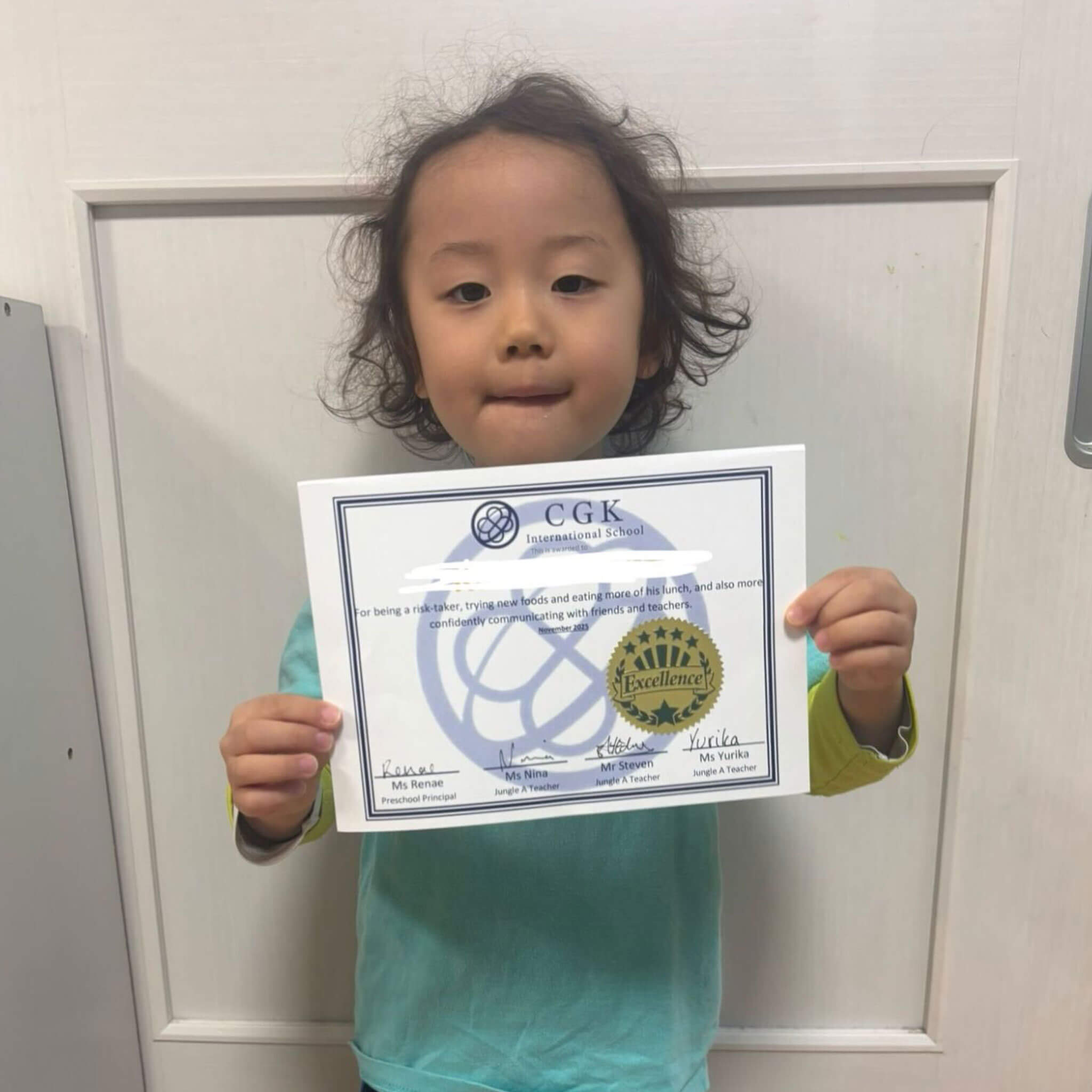
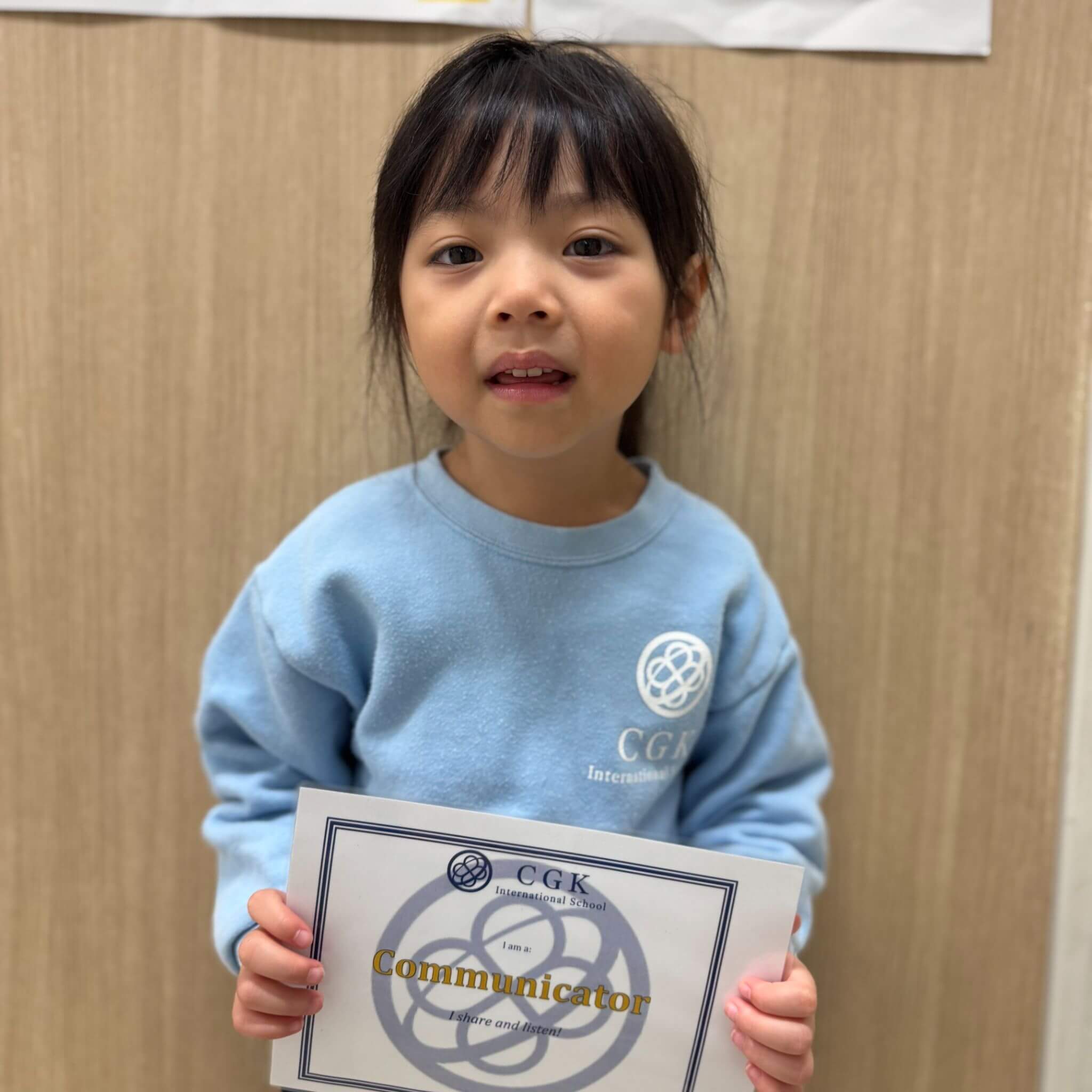
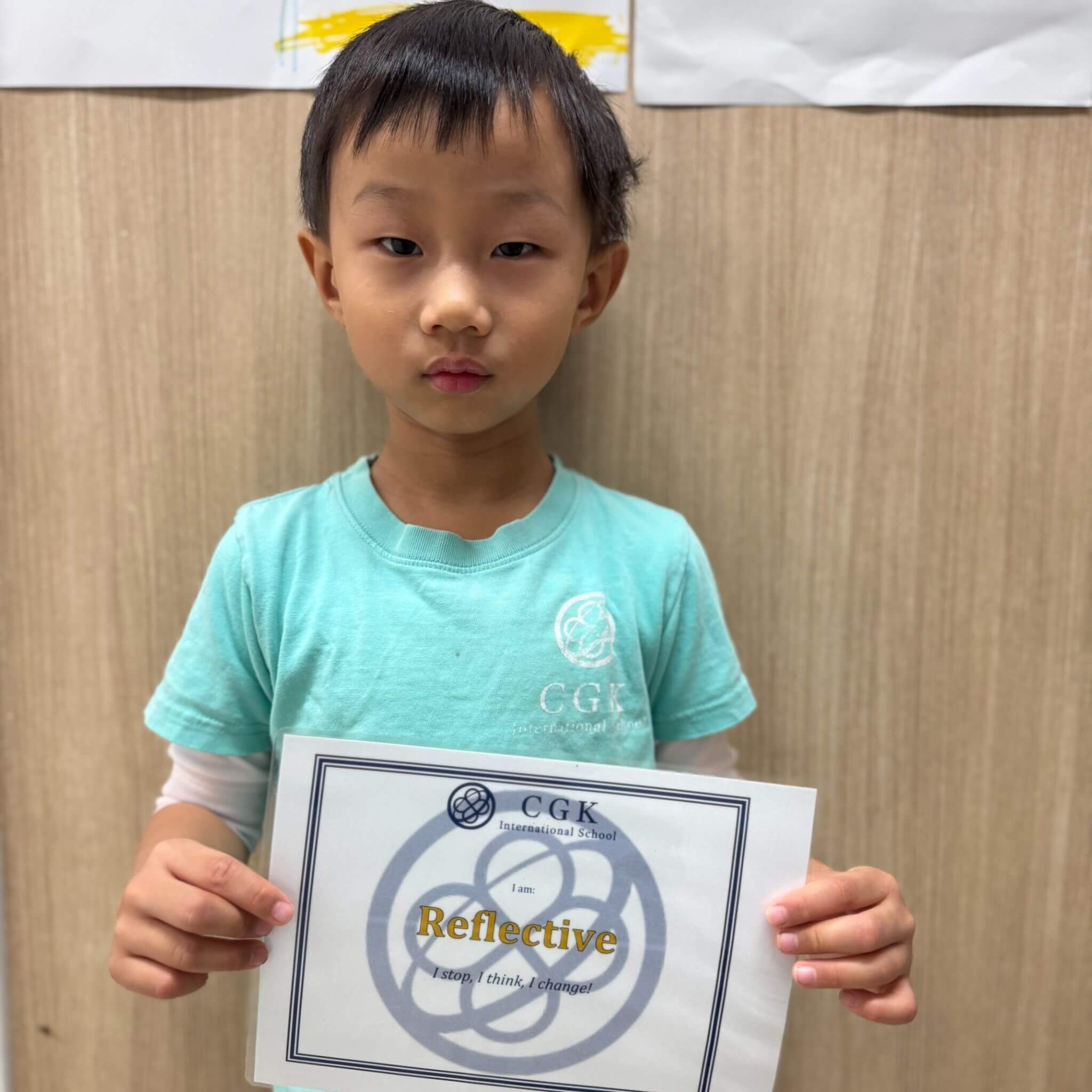
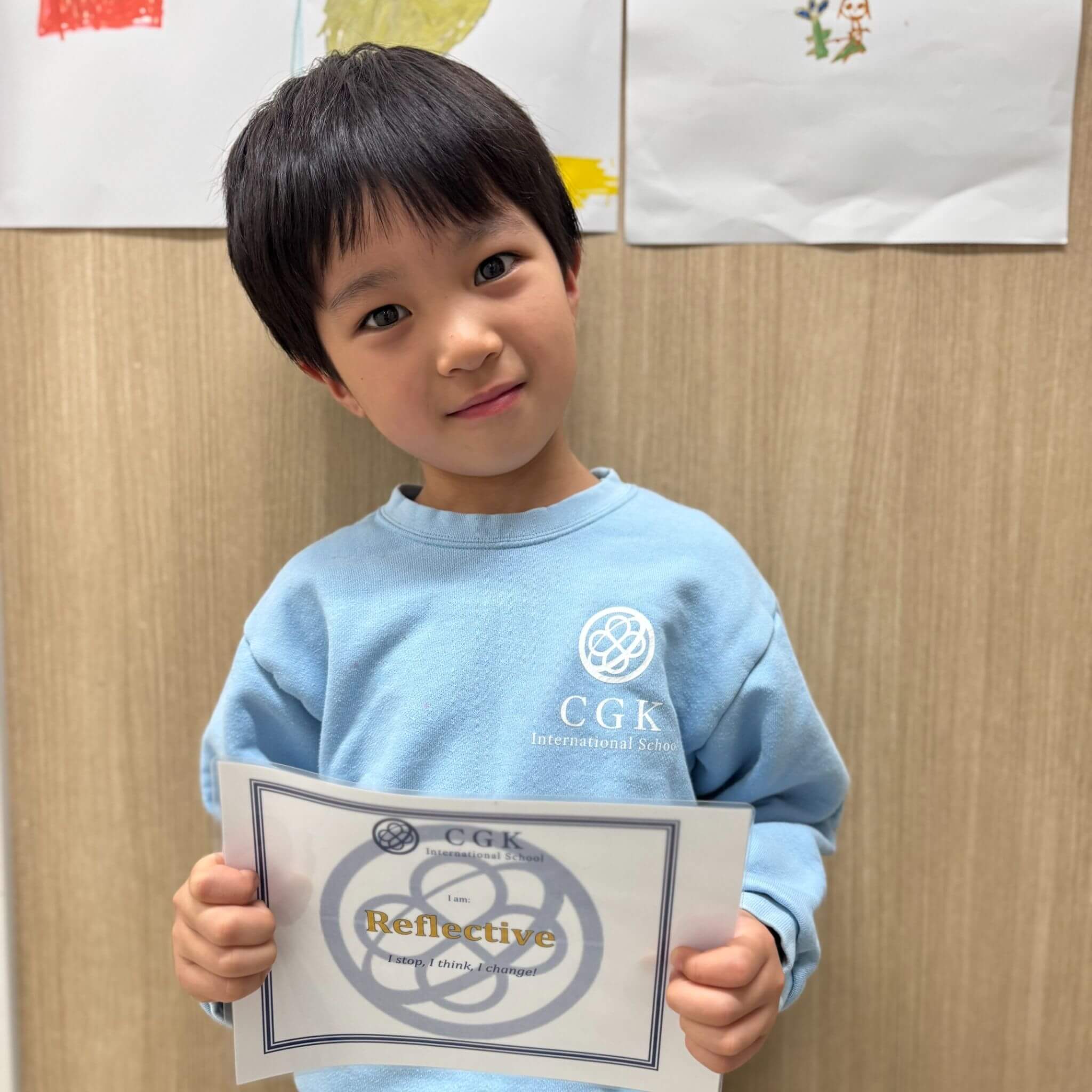
Welcome to the world renowned, highly respected, and much revered CGK Awards! Each month we would like to highlight the children from each class who have displayed qualities that are part of the IB Learner Profile. These are qualities that we want our children to have and to share with the world. With that, the recipients of this month's CGK Achievement Awards are:
Jungle A (3 year-olds)
K. - for being balanced, helping both friends and teachers and showing an ability to learn from his actions.
G. - For being a risk-taker, trying new foods and eating more of his lunch, and also more confidently communicating with friends and teachers.
Jungle B (3 year-olds)
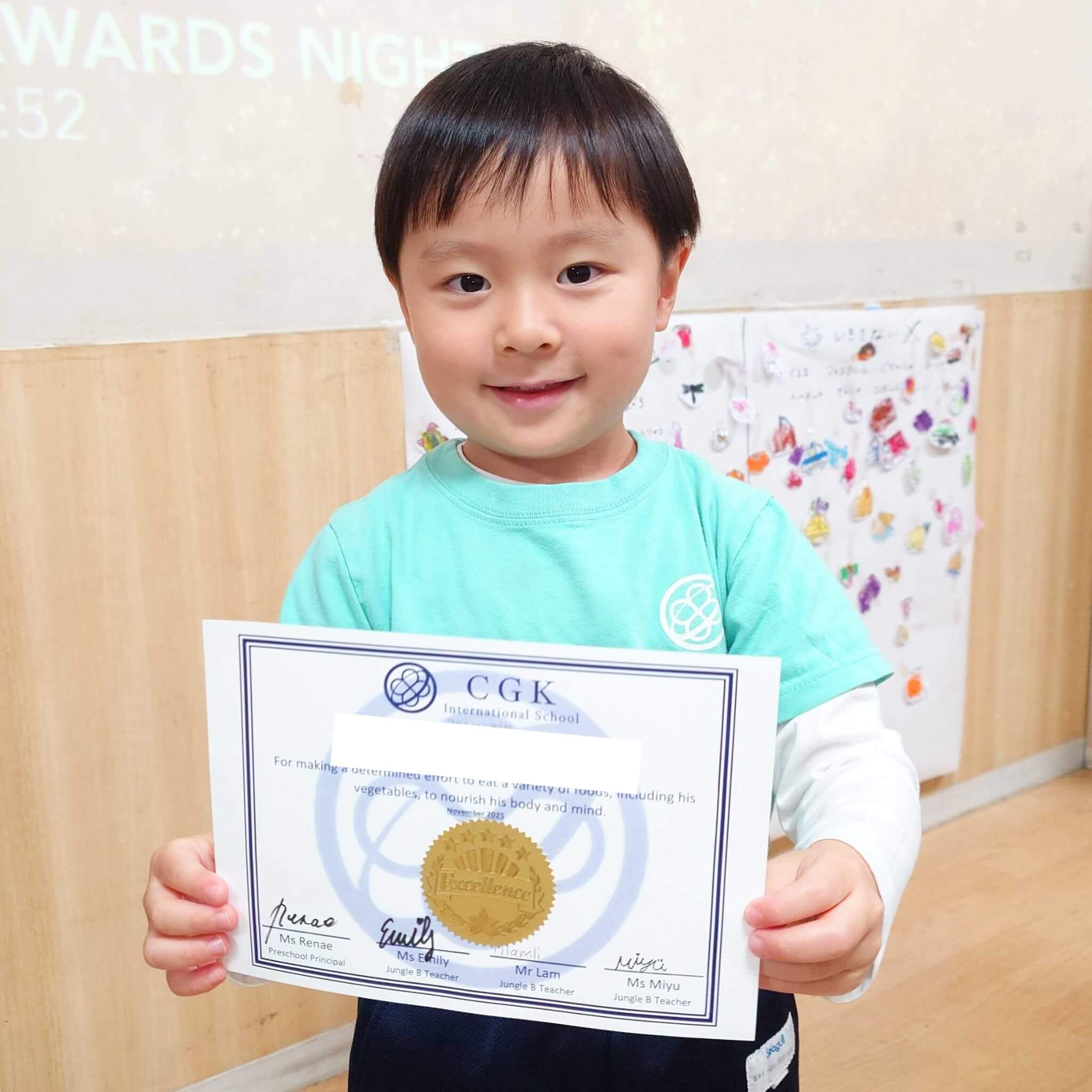
H. - For making a determined effort to eat a variety of foods, including his vegetables, to nourish his body and mind.
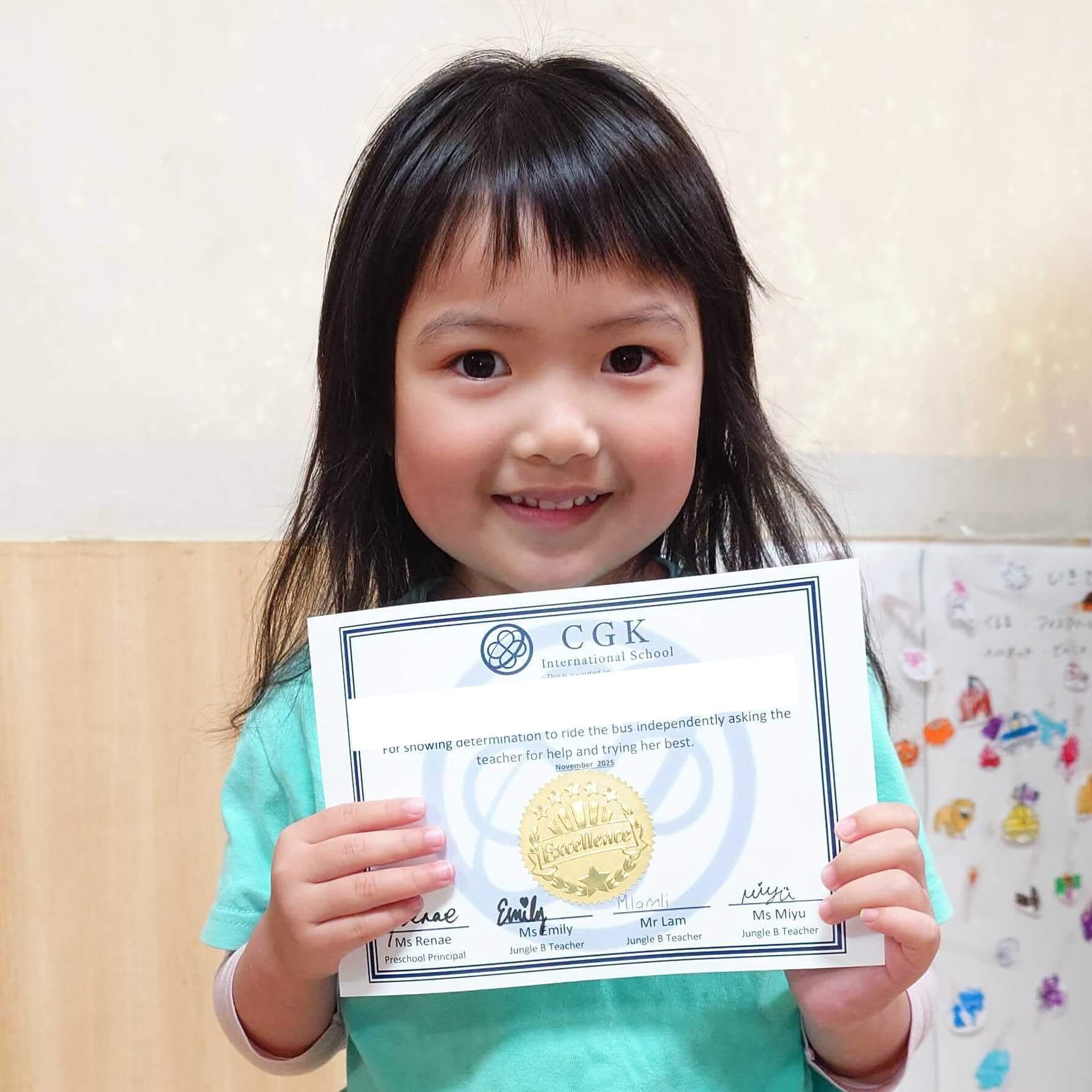
C. - For showing determination to ride the bus independently asking the teacher for help and trying her best.
Mountain (4 year-olds)
L. - For trying hard to open up to her friends and teachers, and always letting us know when she is happy, needs help, or feels uncomfortable.
S. - For his efforts to stop, think, and change his approach when things don't go as expected.
Sky A (5 year-olds)
K. - For exploring new ideas and being willing to share his knowledge with others.
S. - For being curious about culture and history and for trying to research answers to his questions.
Sky B (5 year-olds)
M. - For being a wonderful communicator who helps bring classmates together and encourages everyone to play and have fun.
S. - For being principled and thoughtful. She makes kind and fair choices and shows respect and consideration for others.
S. - For showing wonderful growth by becoming more reflective, noticing his actions, and trying his best to make positive choices every day.
Sky A&B (5-year-olds)
Experiencing the World at Earth Plaza
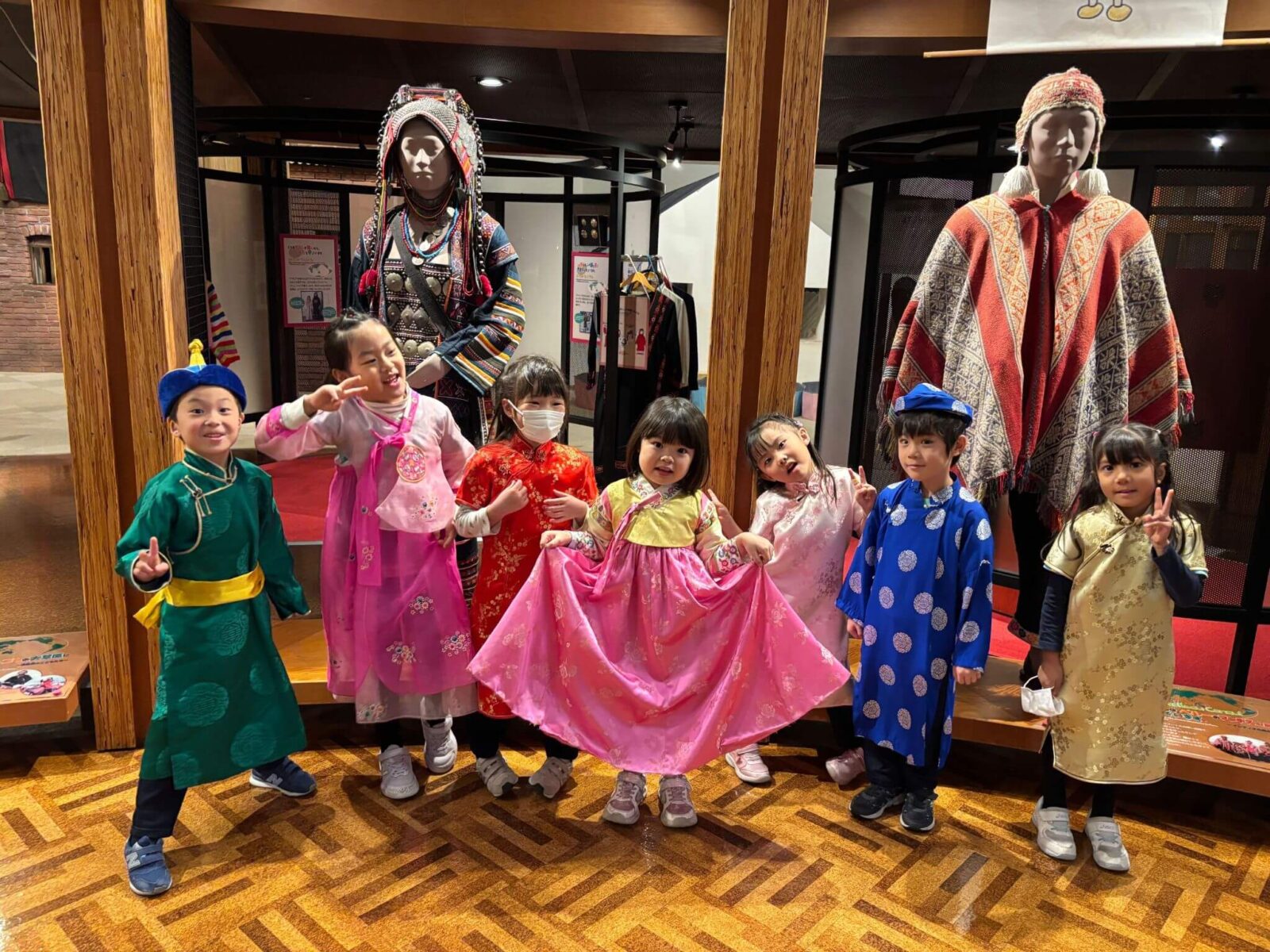
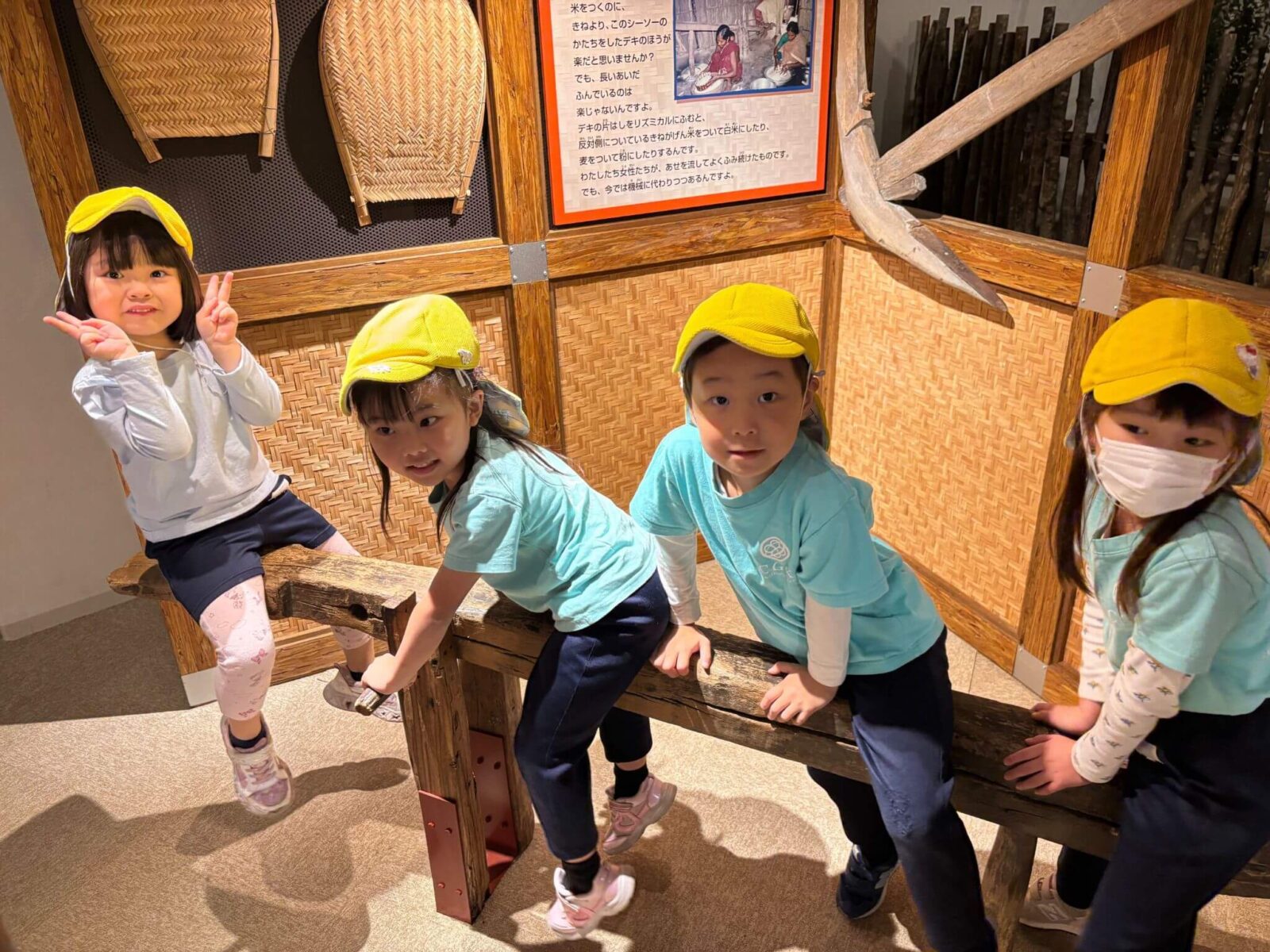
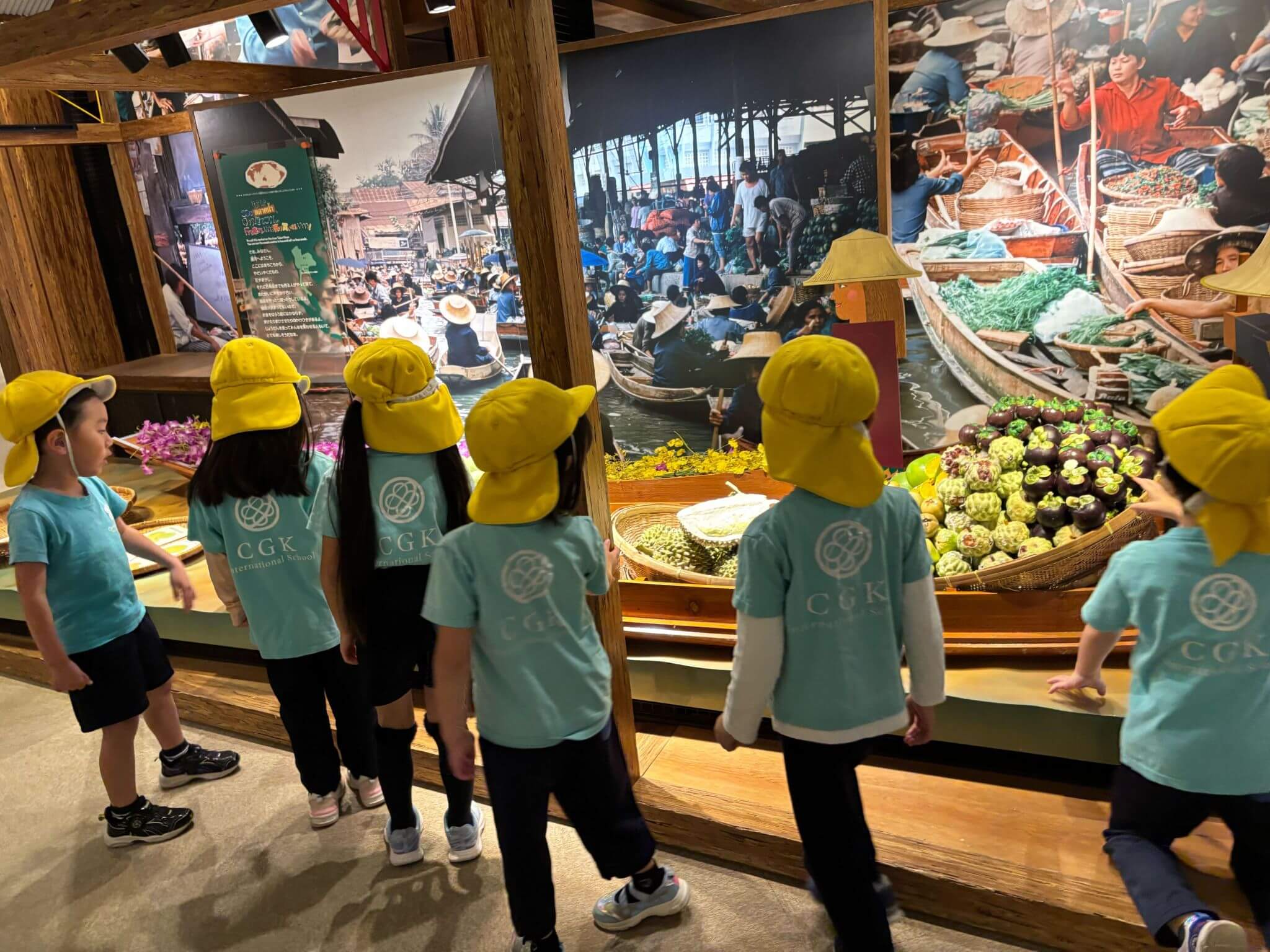
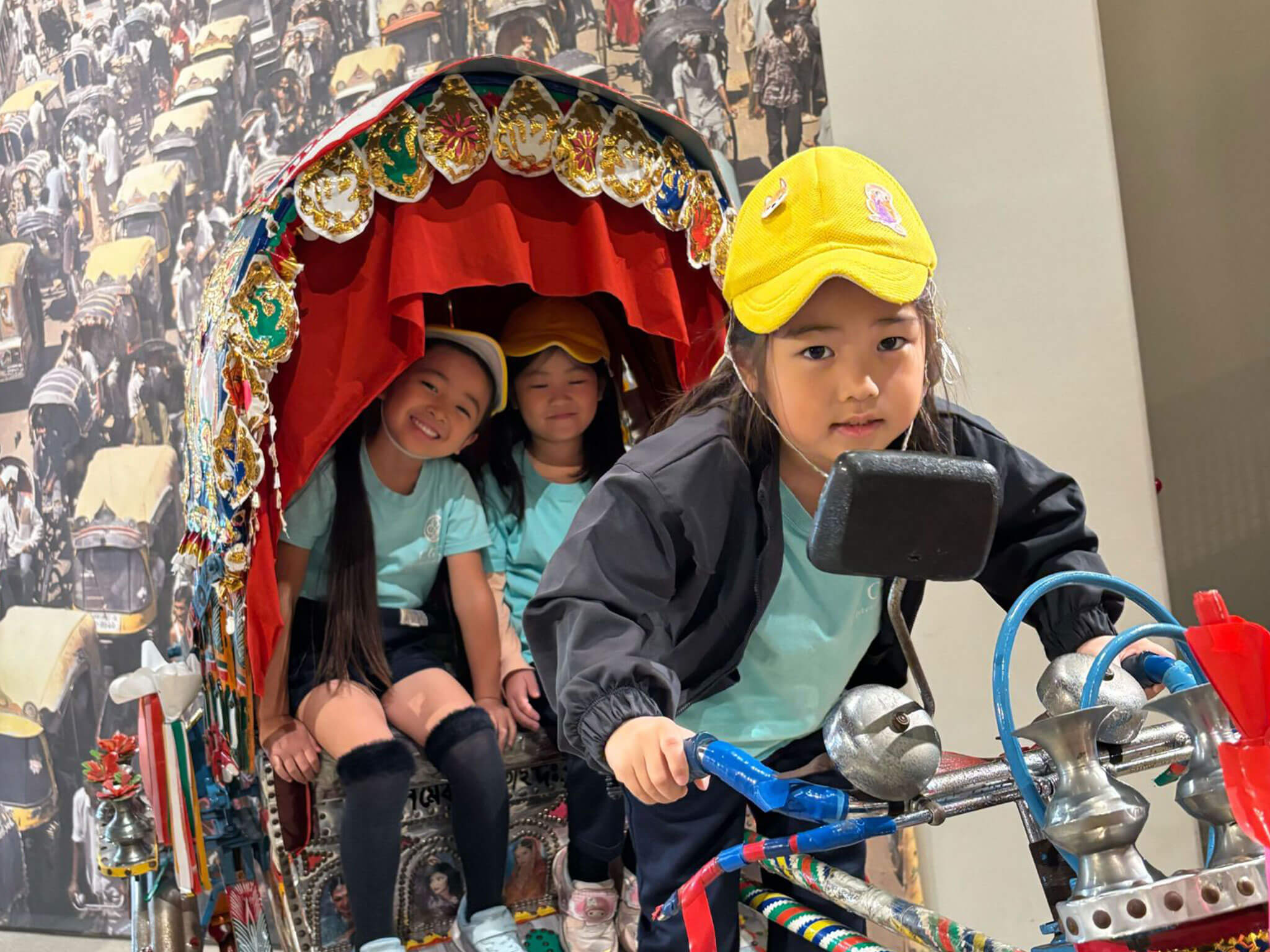
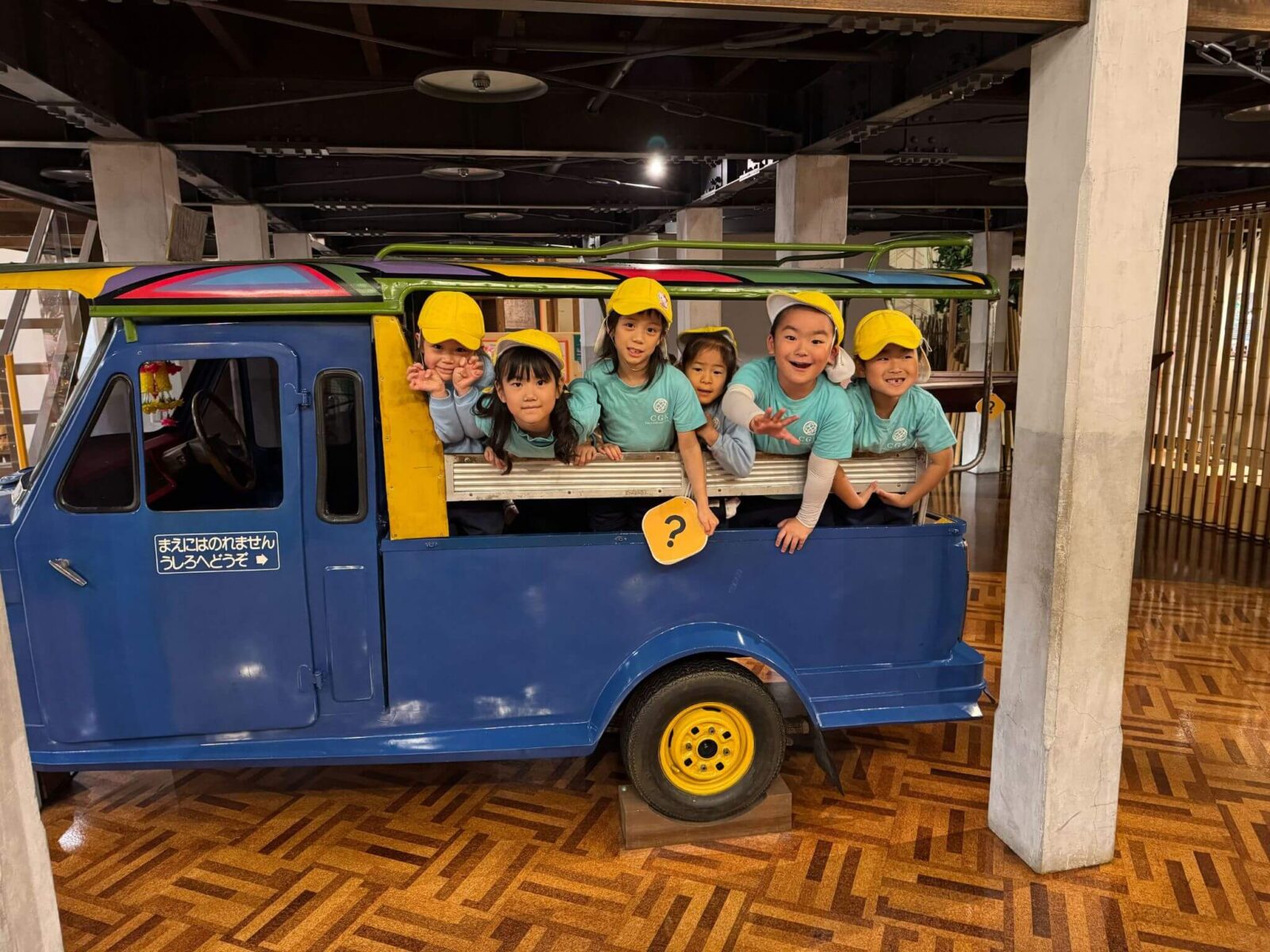
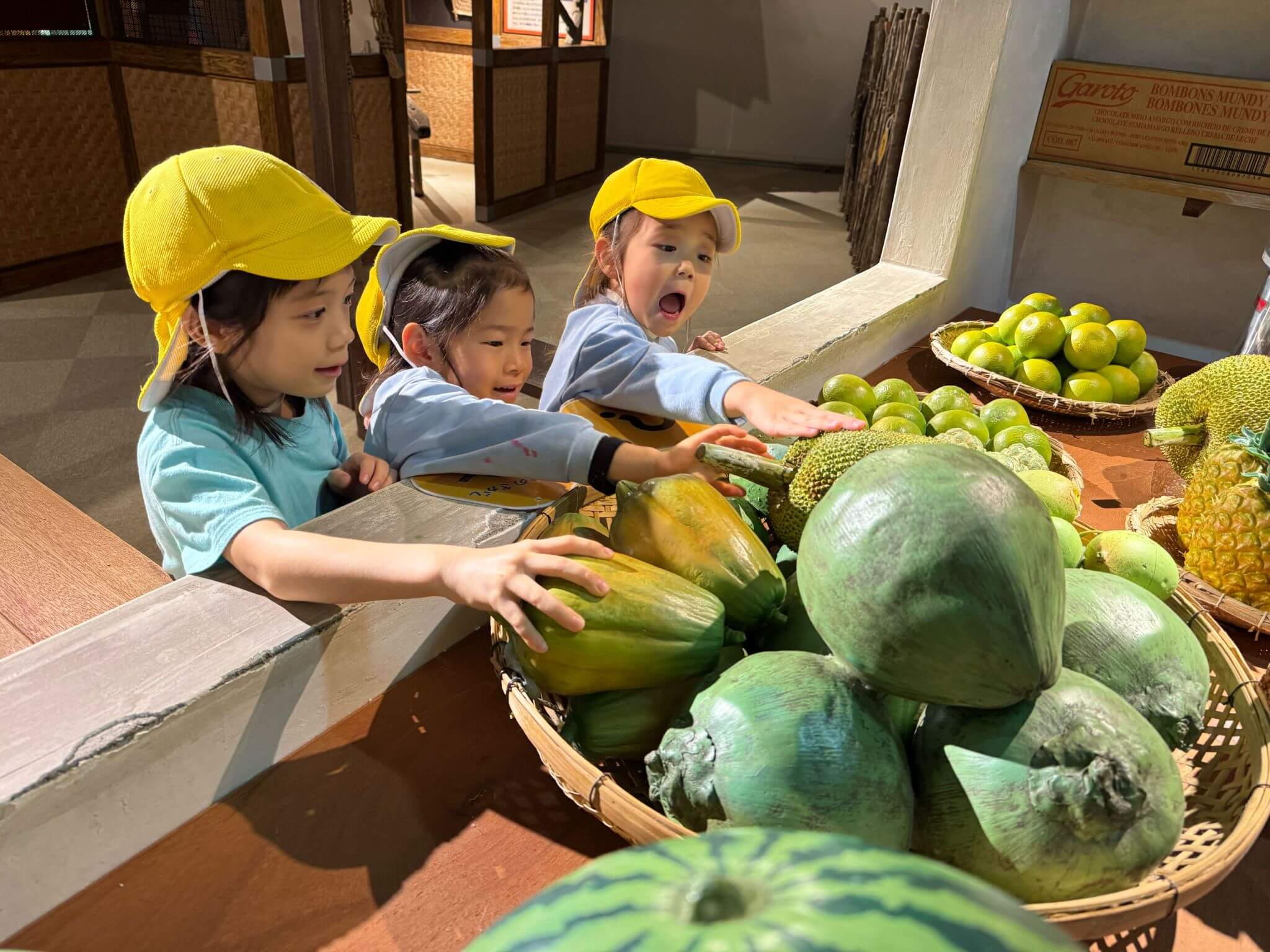
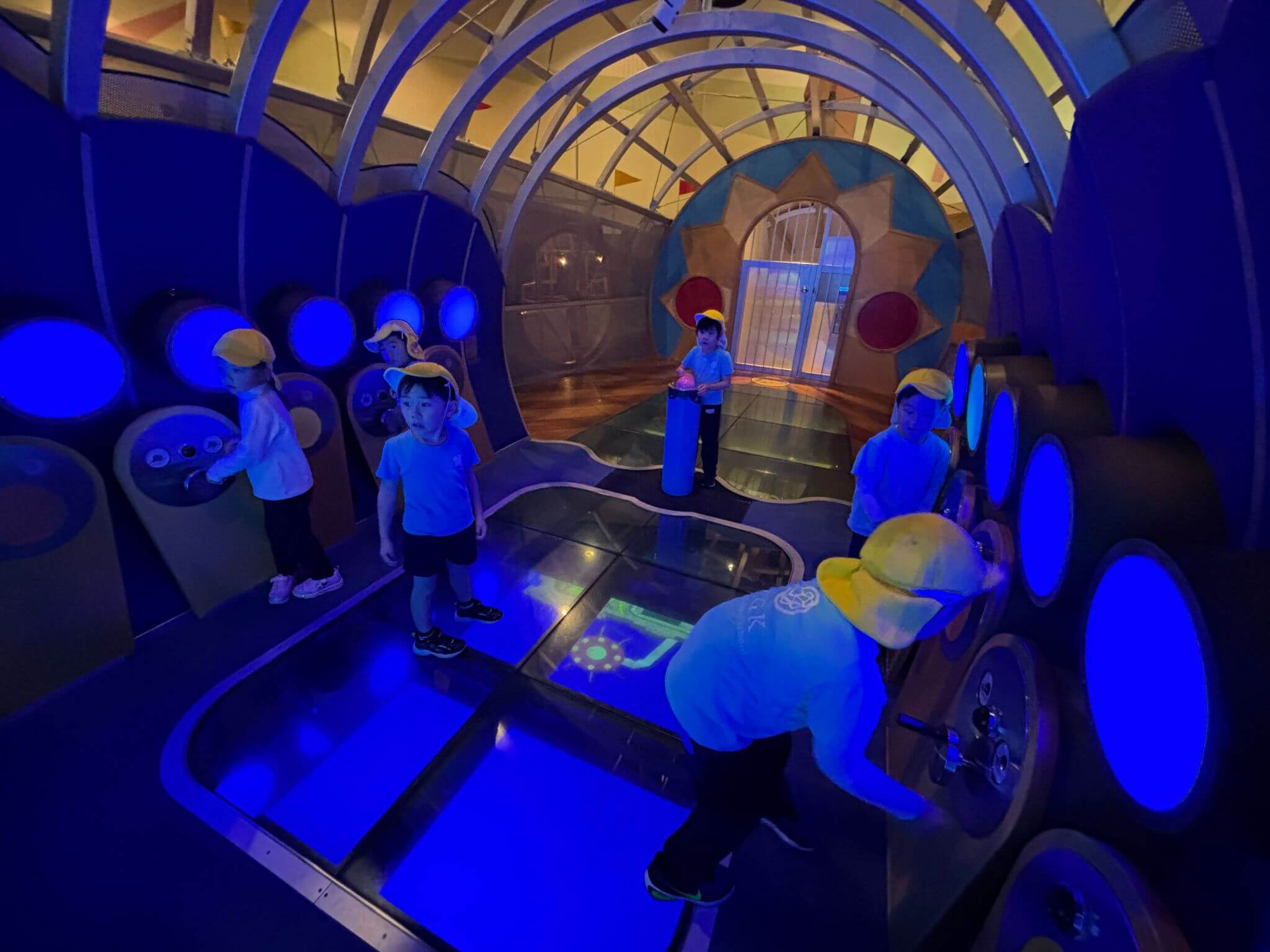
The Sky A students have been busy recently as they explore culture and history during our current UOI, Where We Are in Place and Time. They have been using their natural curiosity to examine Yokohama as a city and try to figure out how the city has changed and grown through the influence of the many people who have come to be here.
This learning journey has led the Sky A students to inquire into the life of people in other countries around the world. In order to help the students deepen their understanding, and of course to have some fun, this month the class took a trip to Earth Plaza!
At Earth Plaza the students could all get hands-on experiences with many different cultural displays. From trying on clothes from Mongolia, riding a tuk-tuk from Thailand, or walking through houses from around the world, everyone was able to try something for the very first time! It was an enriching day and the students had so much fun as they excitedly experienced all of the children’s exhibitions!
The trip to Earth Plaza has really inspired the Sky A class and since then they have been asking so many questions about the various cultural things they see everyday. By being able to have an excursion like this, they have grown to be more open-minded about other cultures and more caring about the people around them. The Sky A class will continue to build on this as they continue to explore Where They Are.
Racing, Smiling, Teamwork: Sky Class in Action
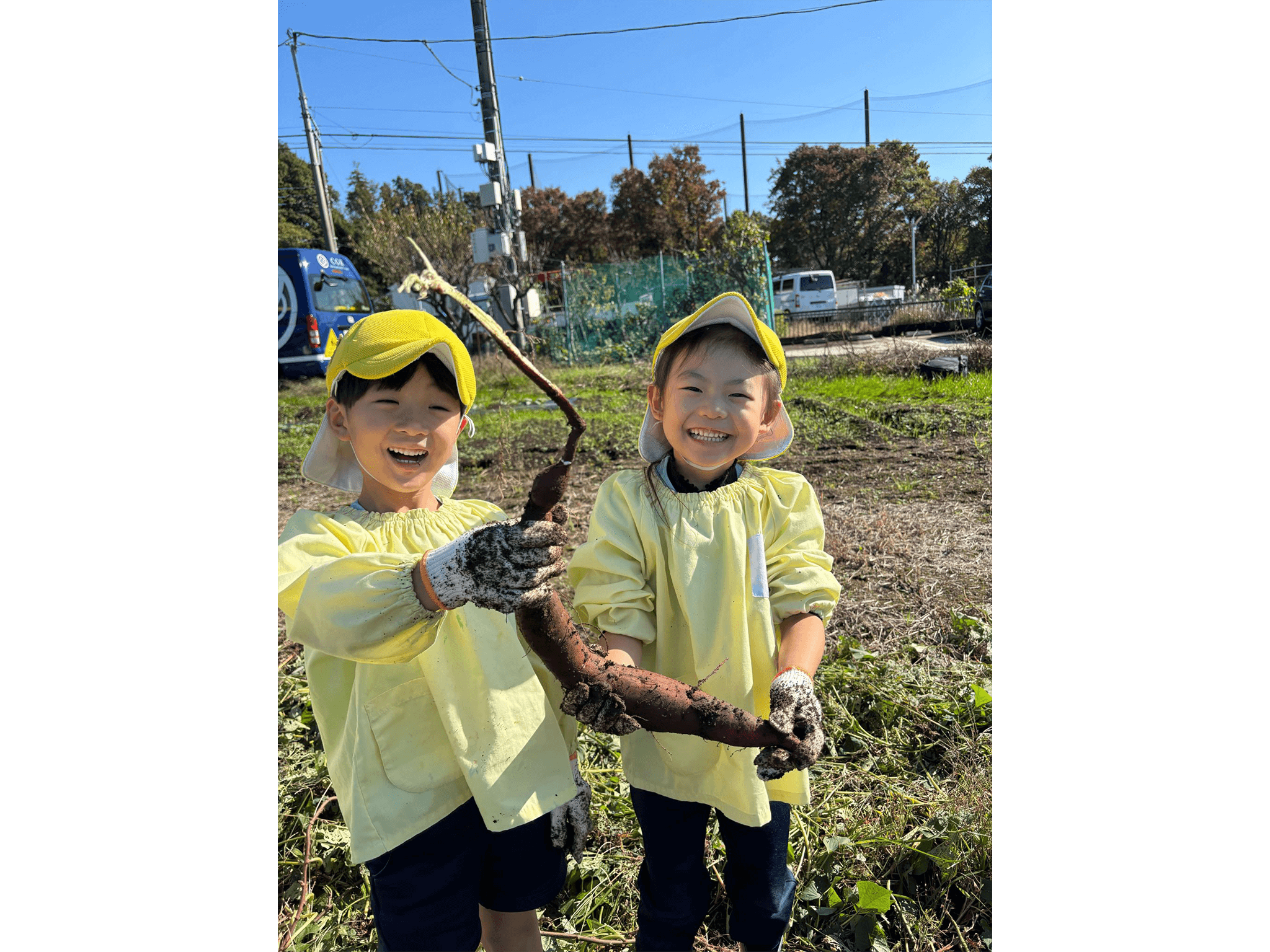
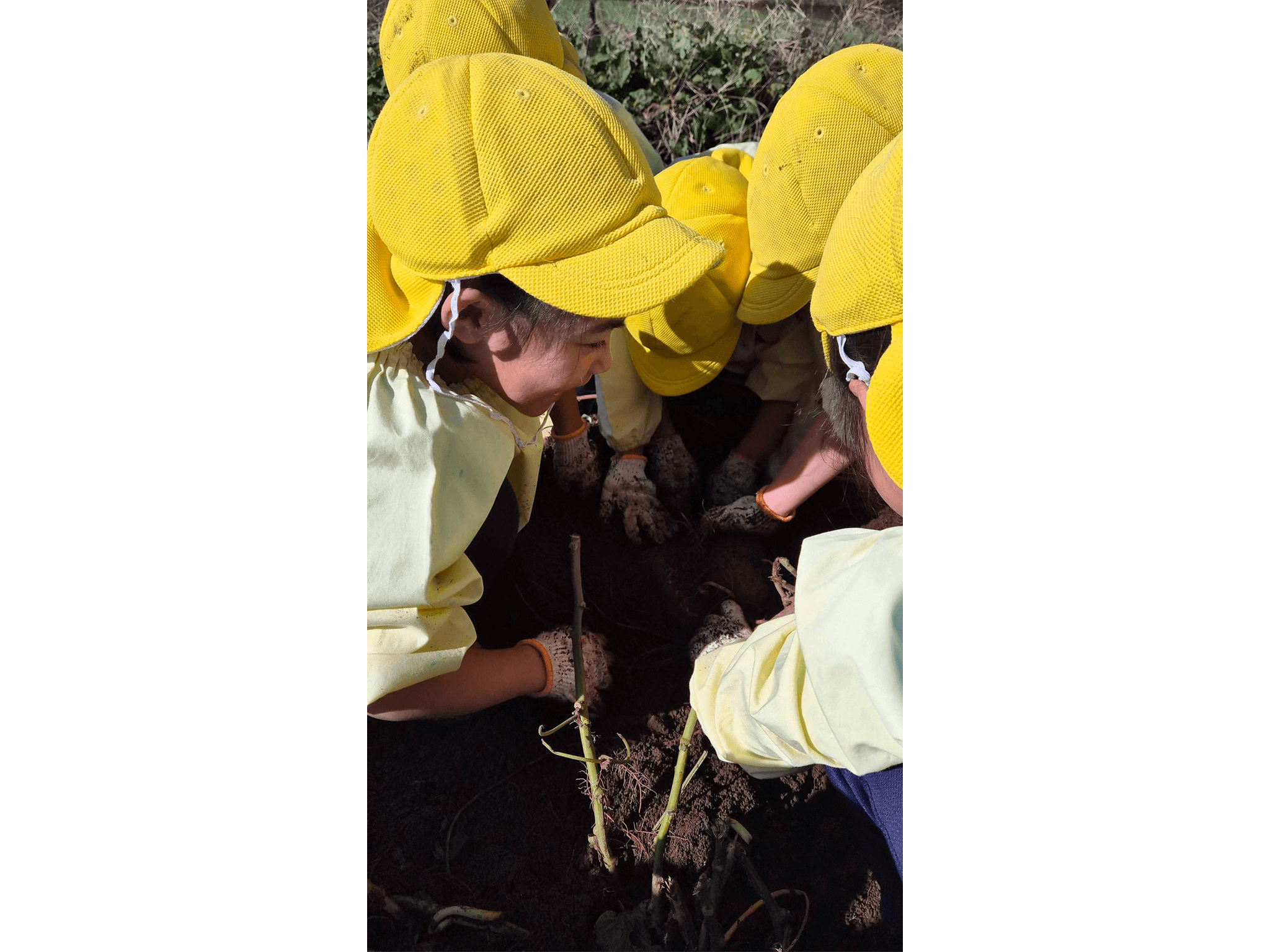
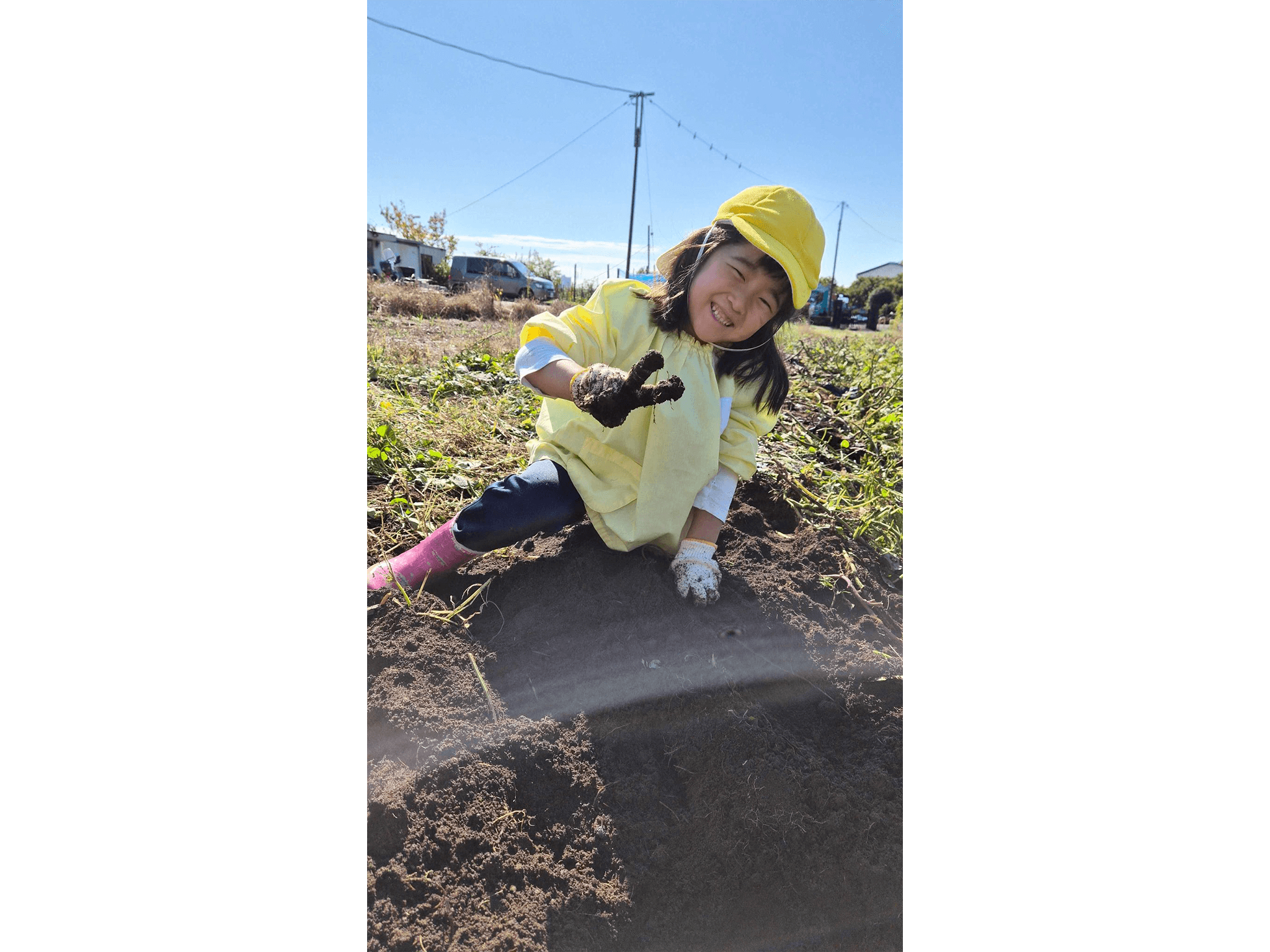
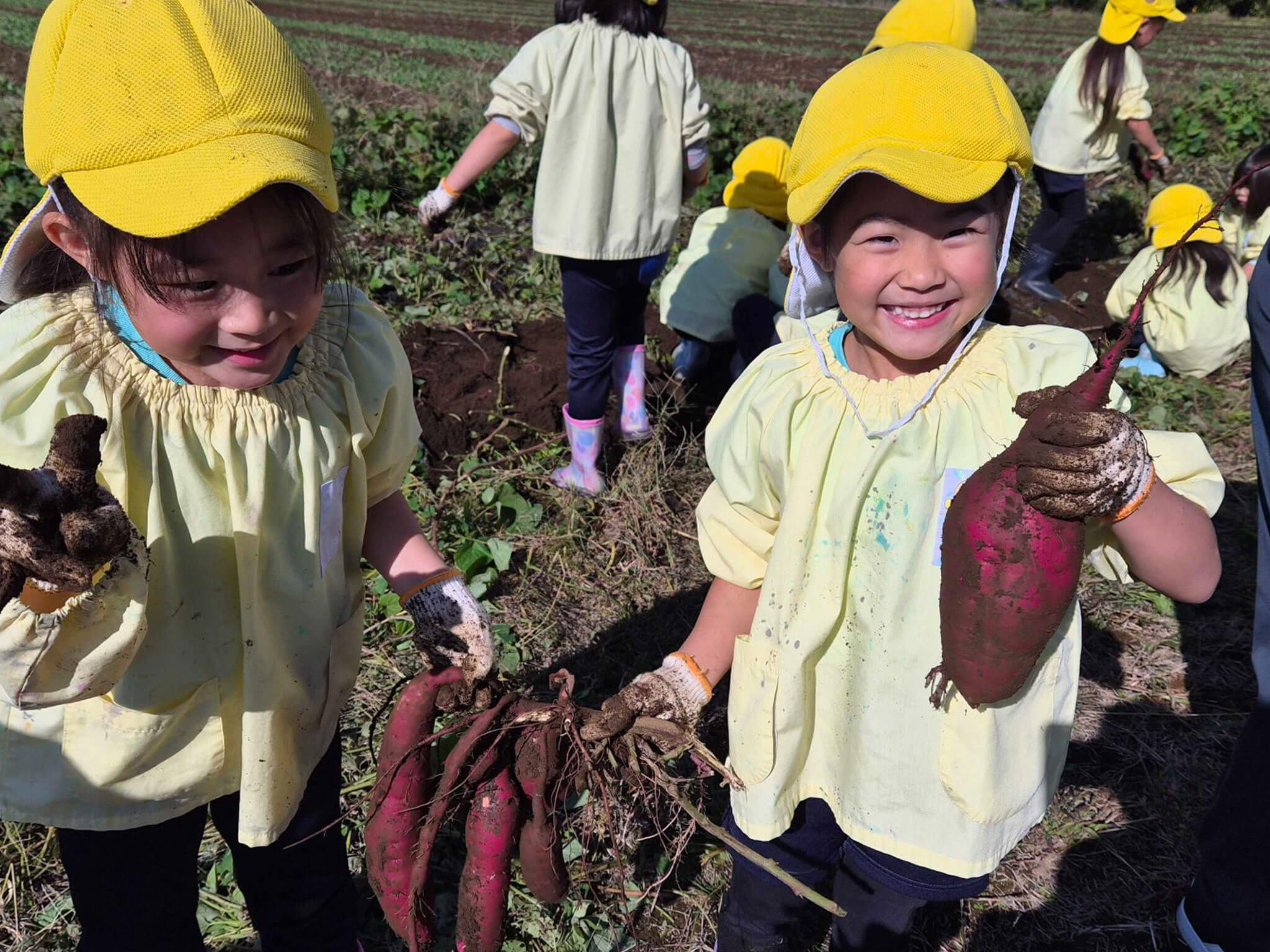
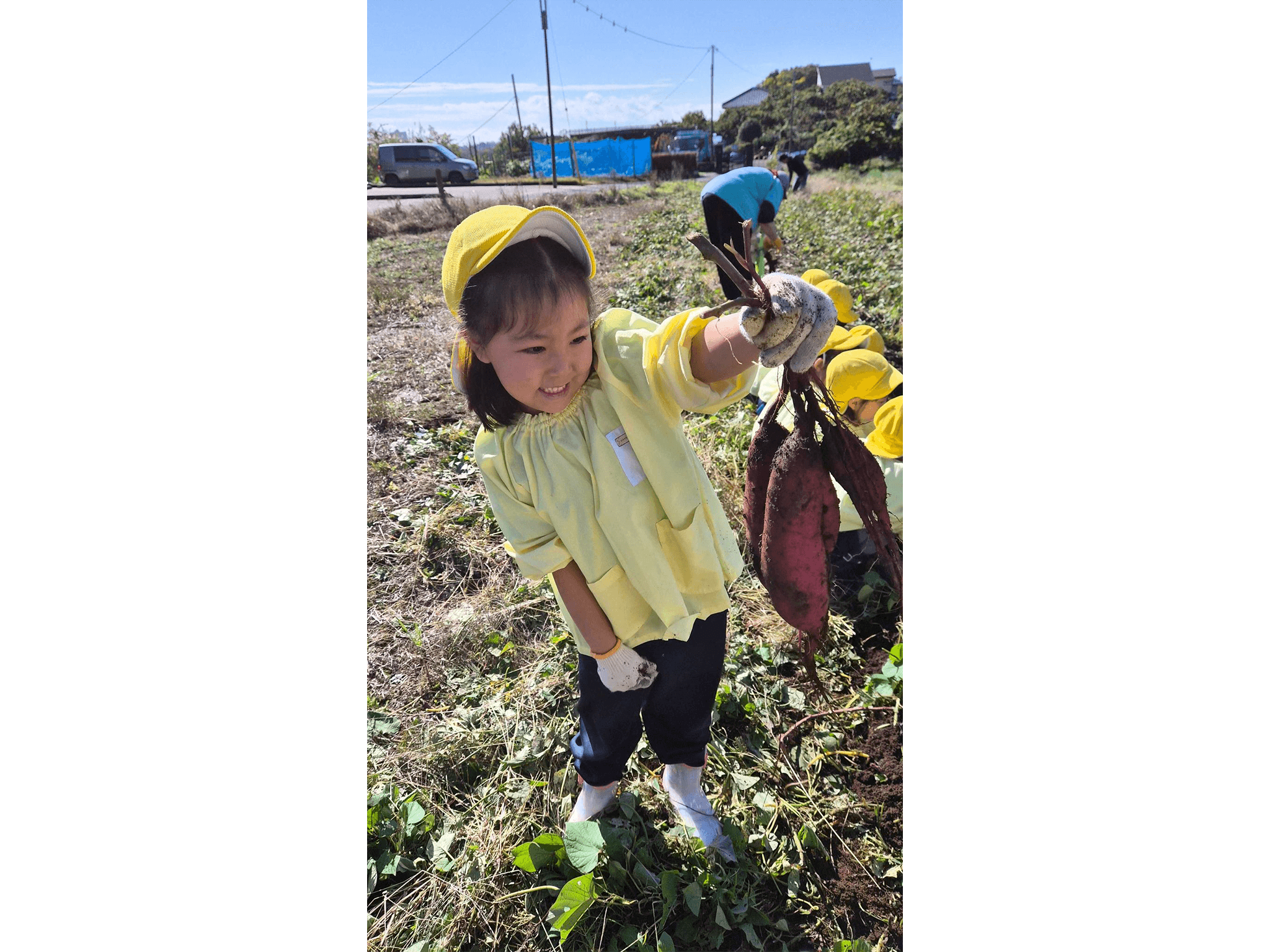
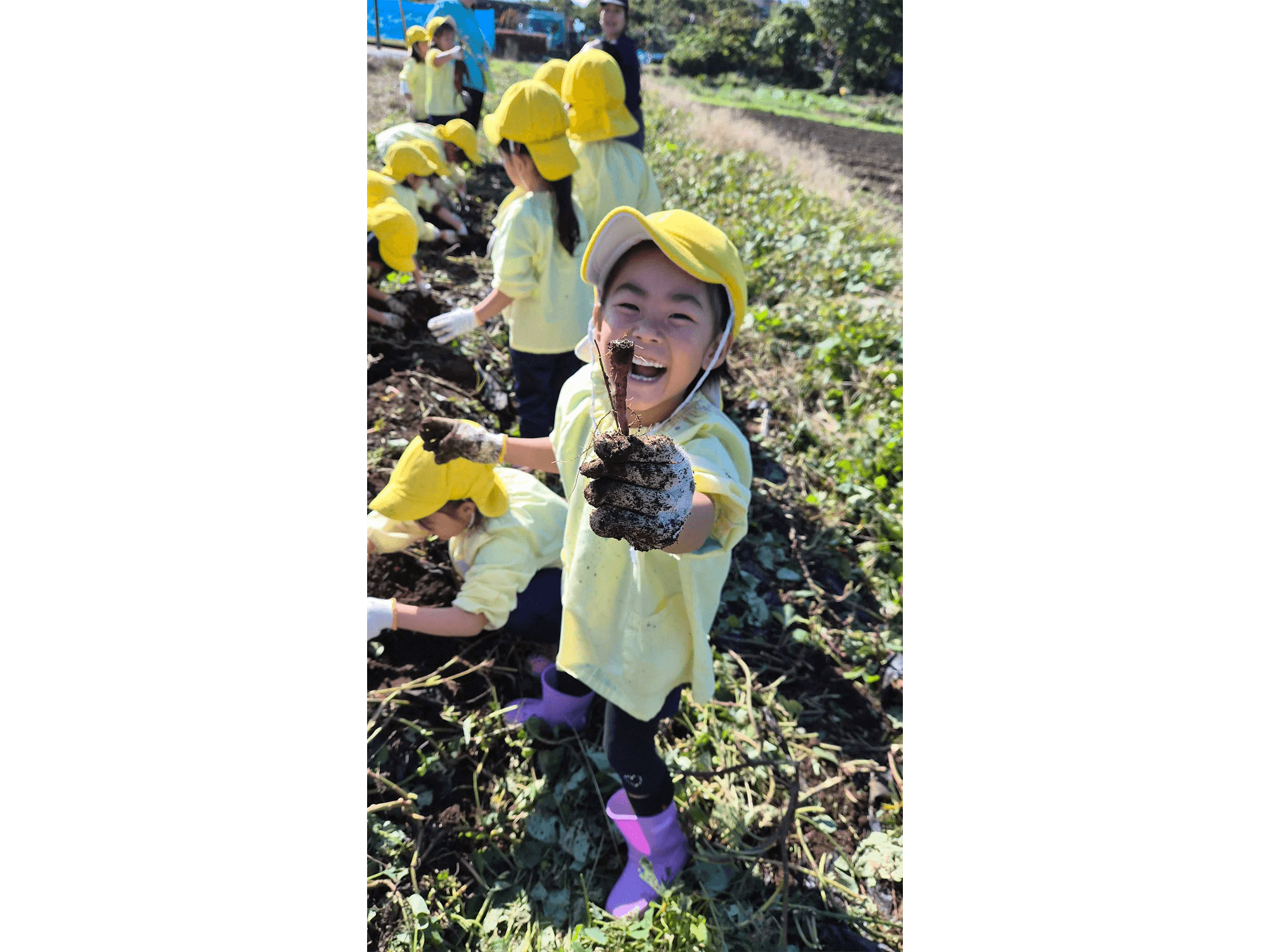
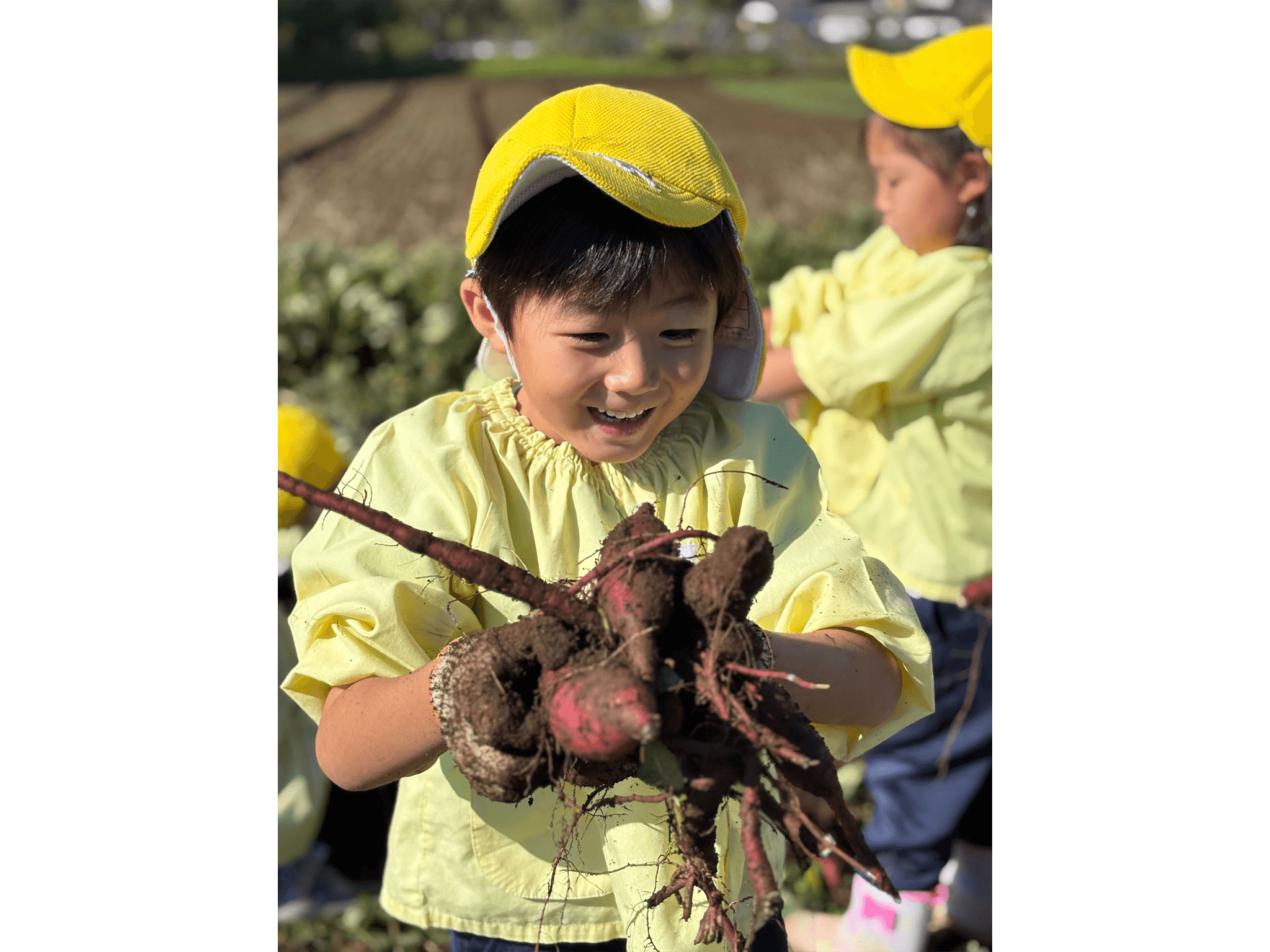
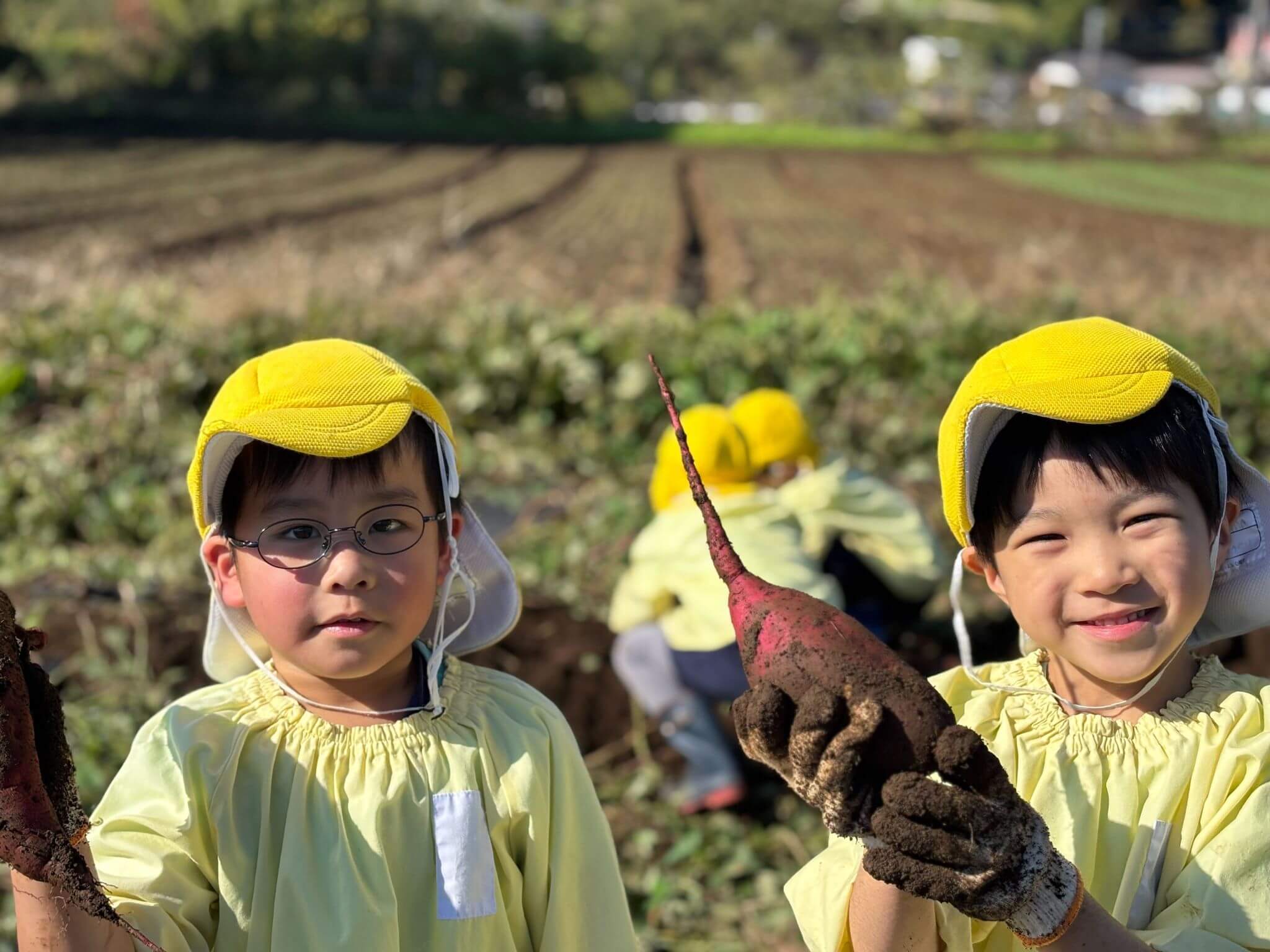
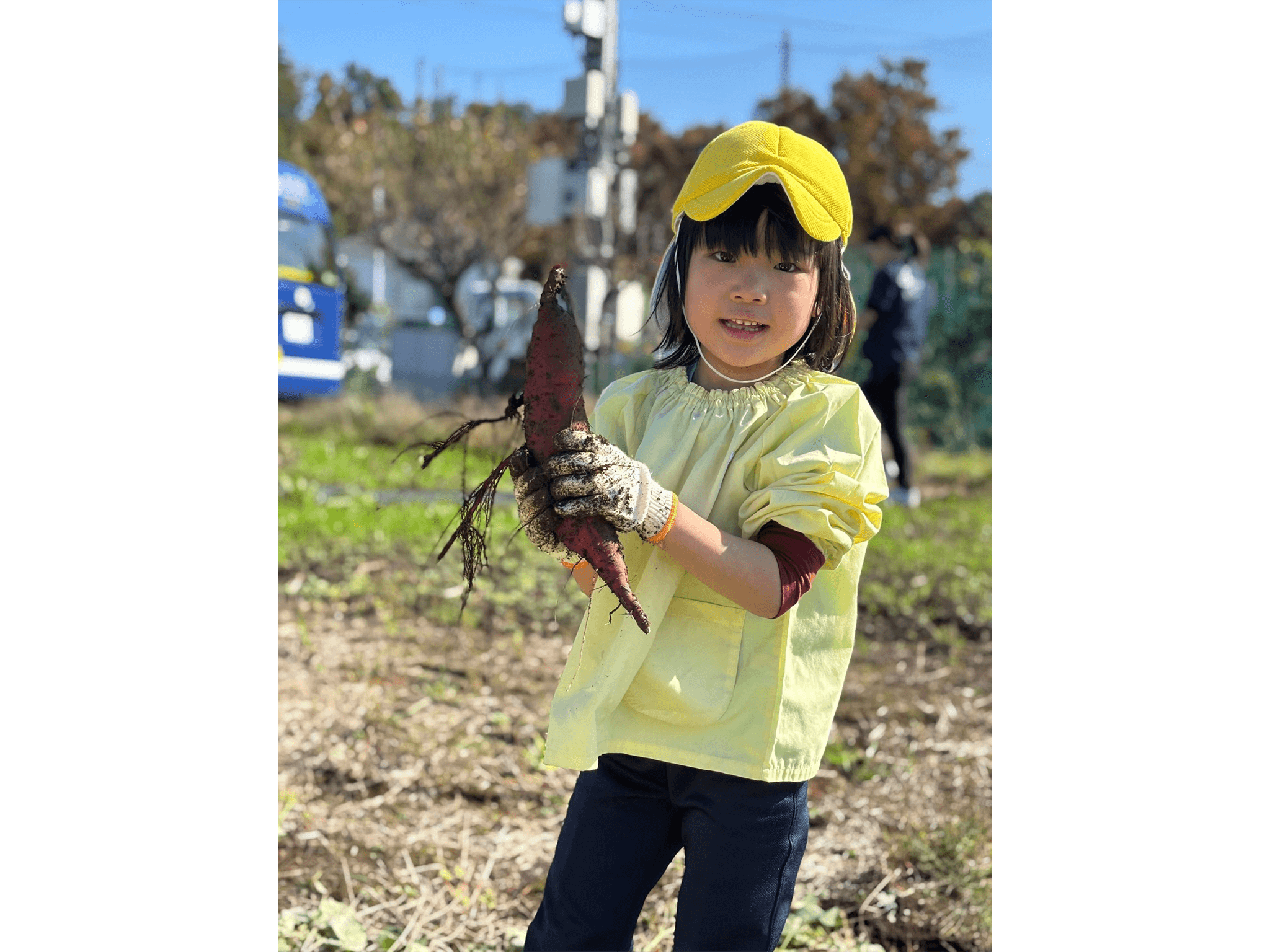
Earlier this month, our class joined Sky A Class for a visit to the farm, where the children had the opportunity to go sweet potato digging. It was wonderful to see the students working side by side as they searched through the soil. Many of the potatoes were surprisingly big, and the children quickly learned that teamwork made the job easier. They encouraged one another, shared ideas, and celebrated each successful discovery.
This experience connected meaningfully to our Unit of Inquiry as we reflected on how people in the past had to grow and gather their own food. By digging the potatoes themselves, the children were able to feel the effort and cooperation that goes into feeding a community. Bringing the potatoes home helped complete the learning cycle, giving families a chance to cook or enjoy the harvest together.
The trip offered hands-on learning, collaboration, and an appreciation for the work behind the food we eat, making it a memorable experience for everyone.
From Yokohama to the World: Expanding Our Circle of Inquiry
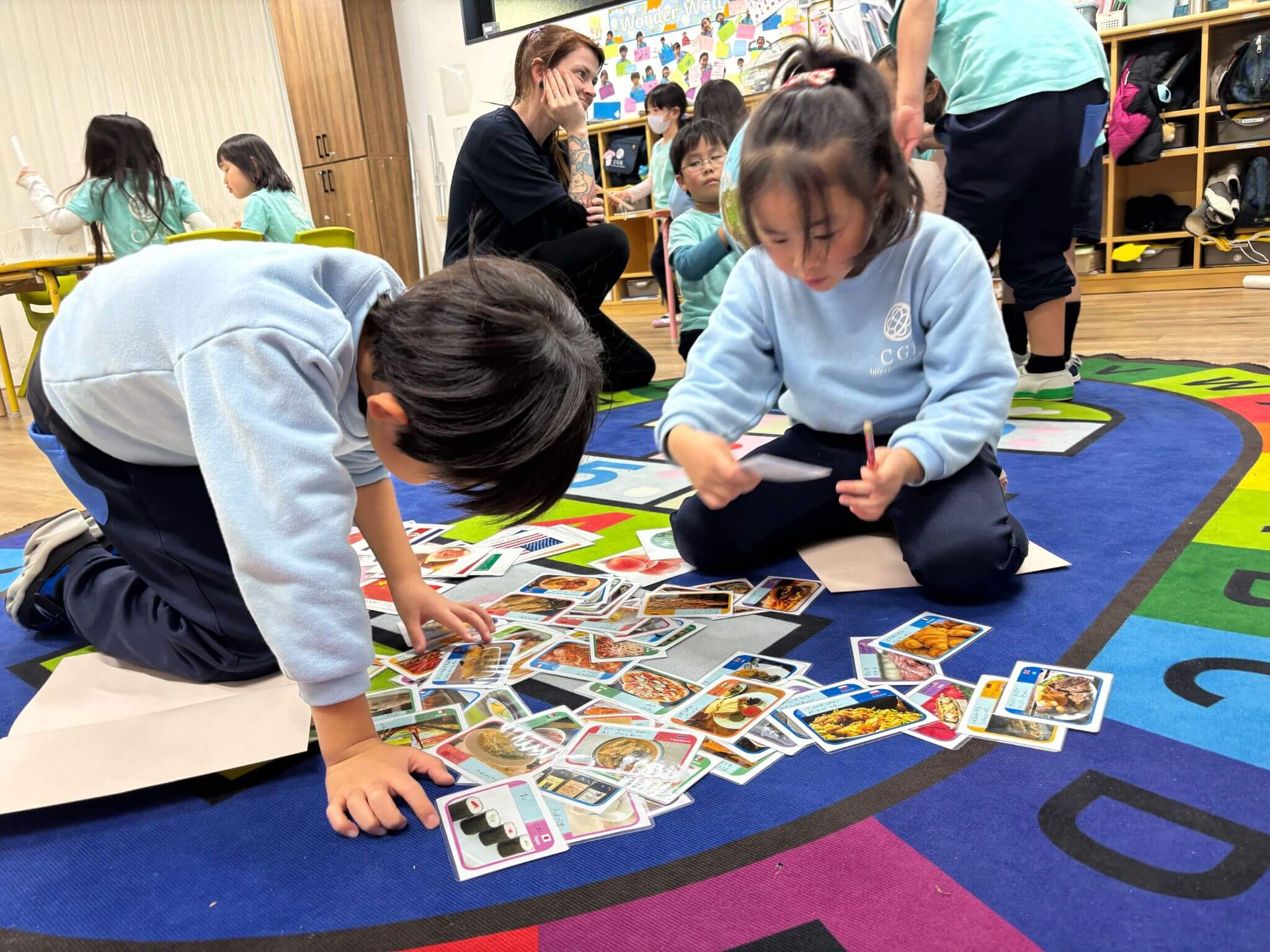
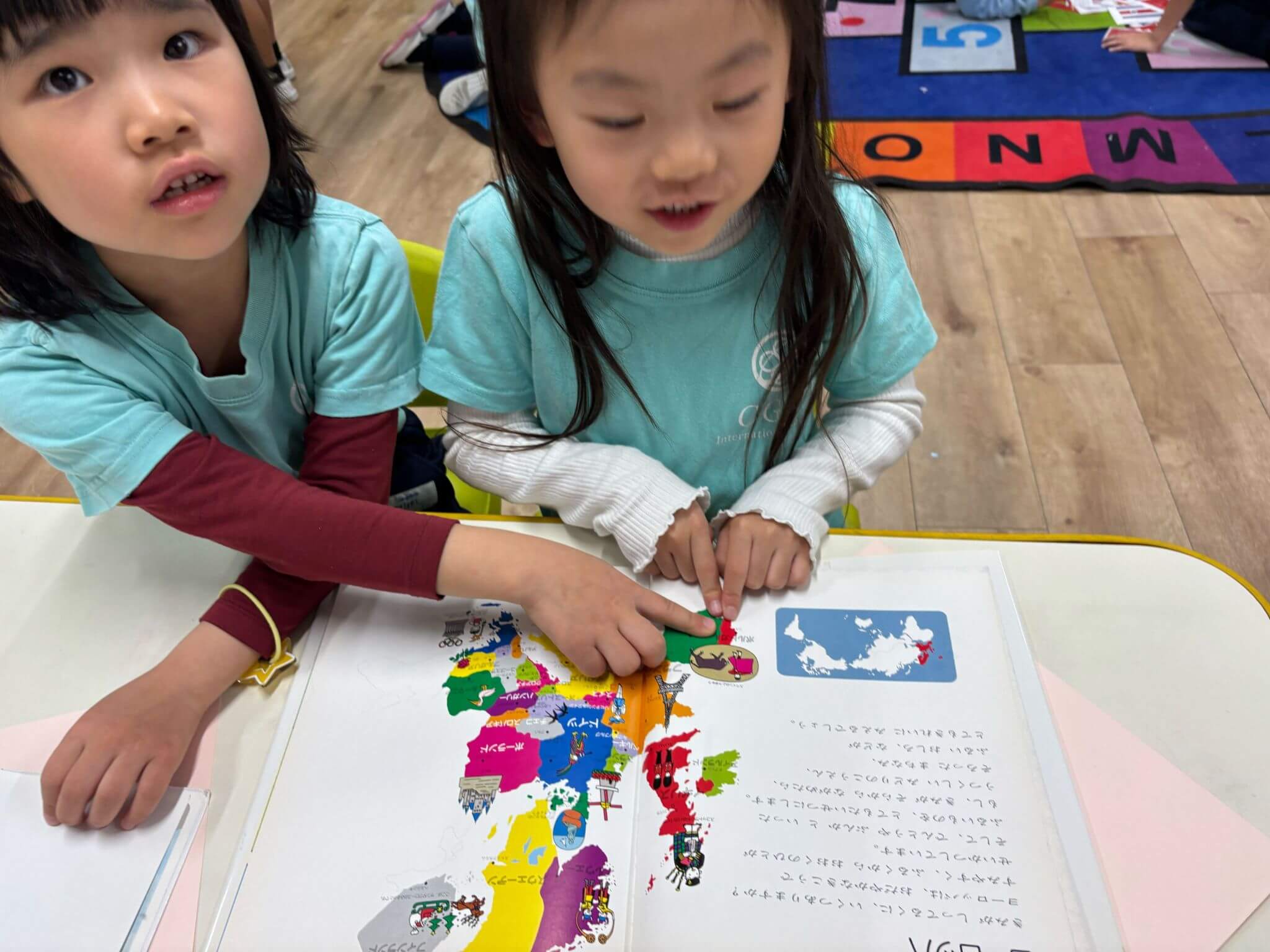
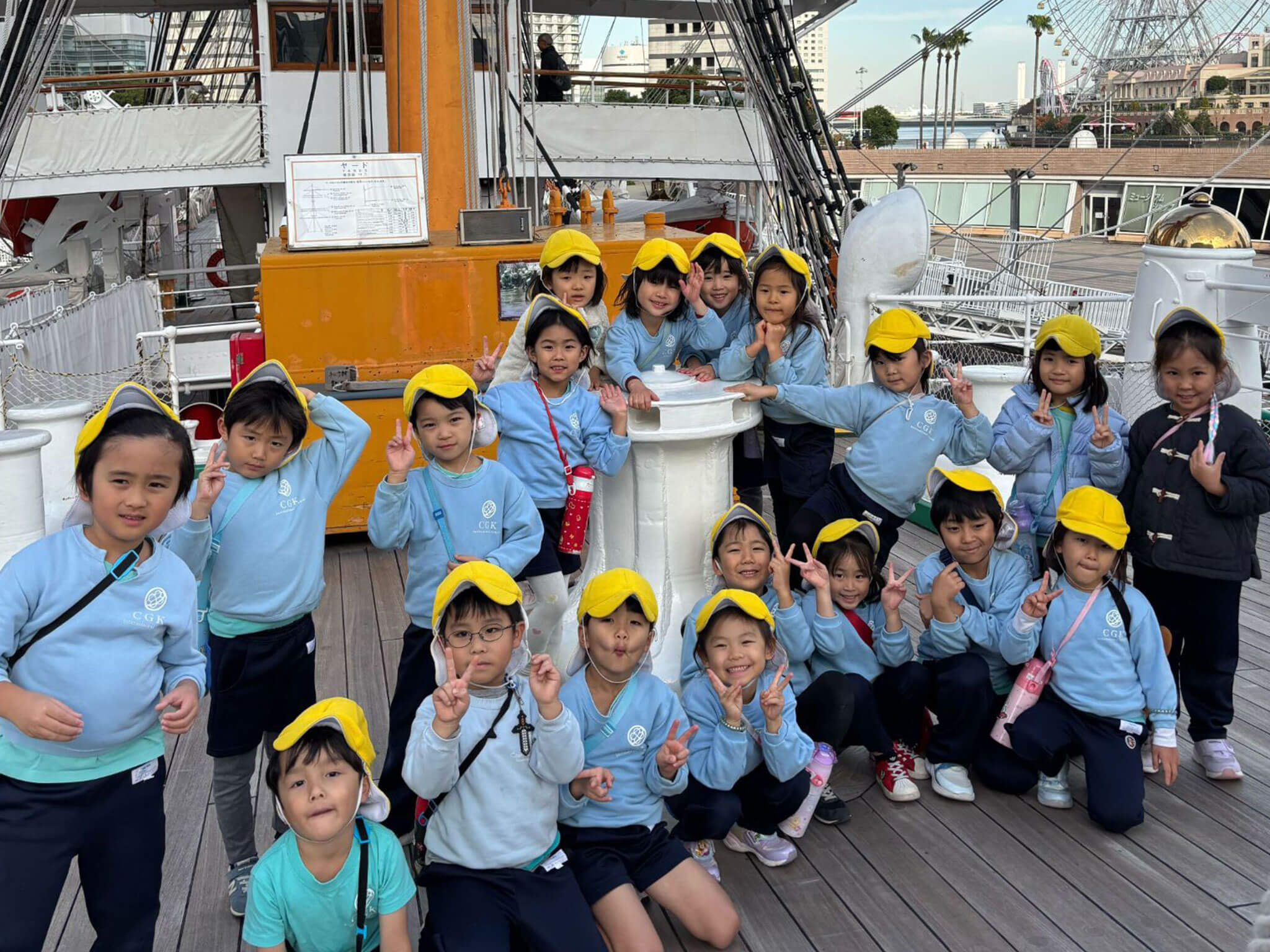
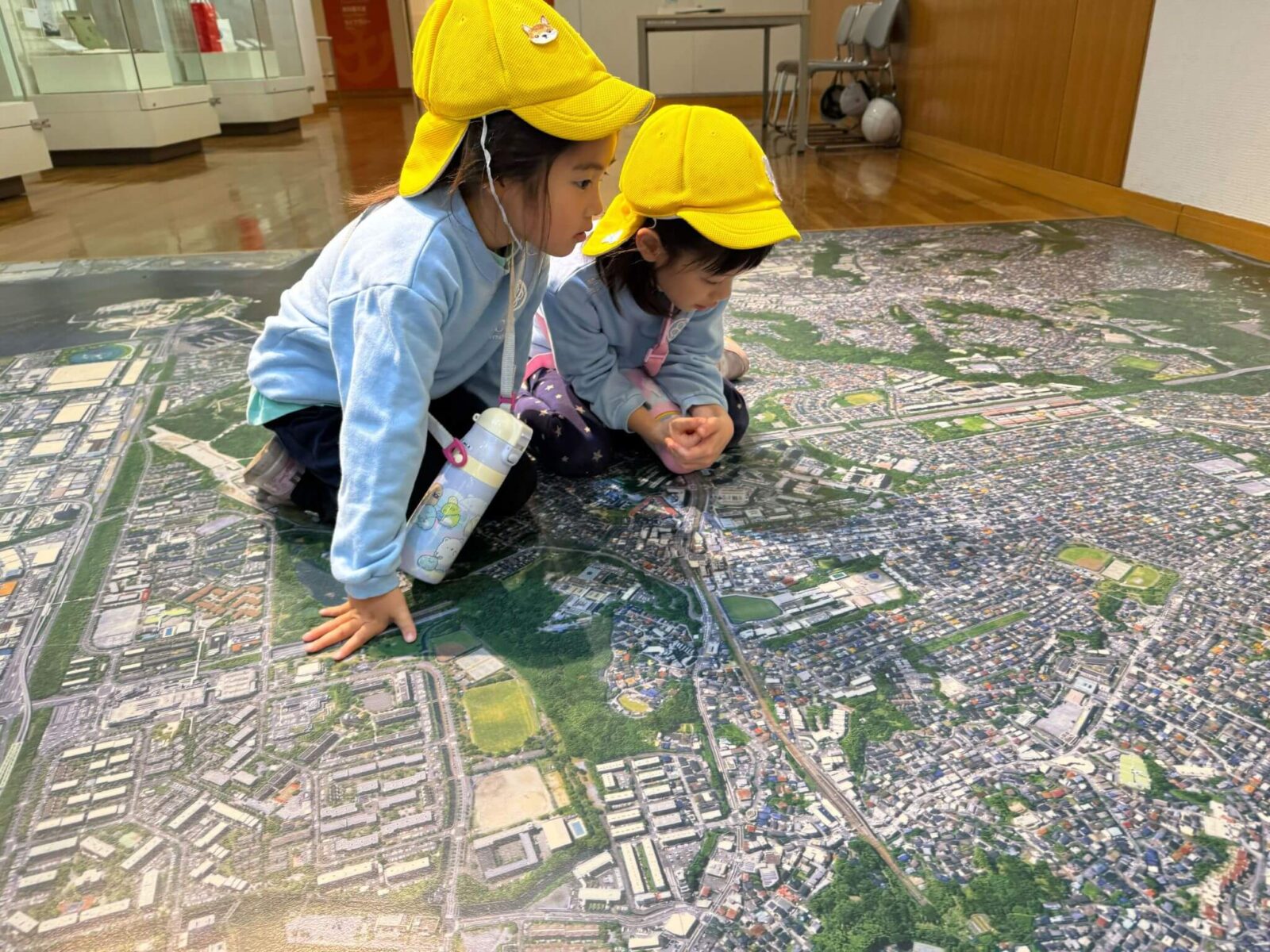
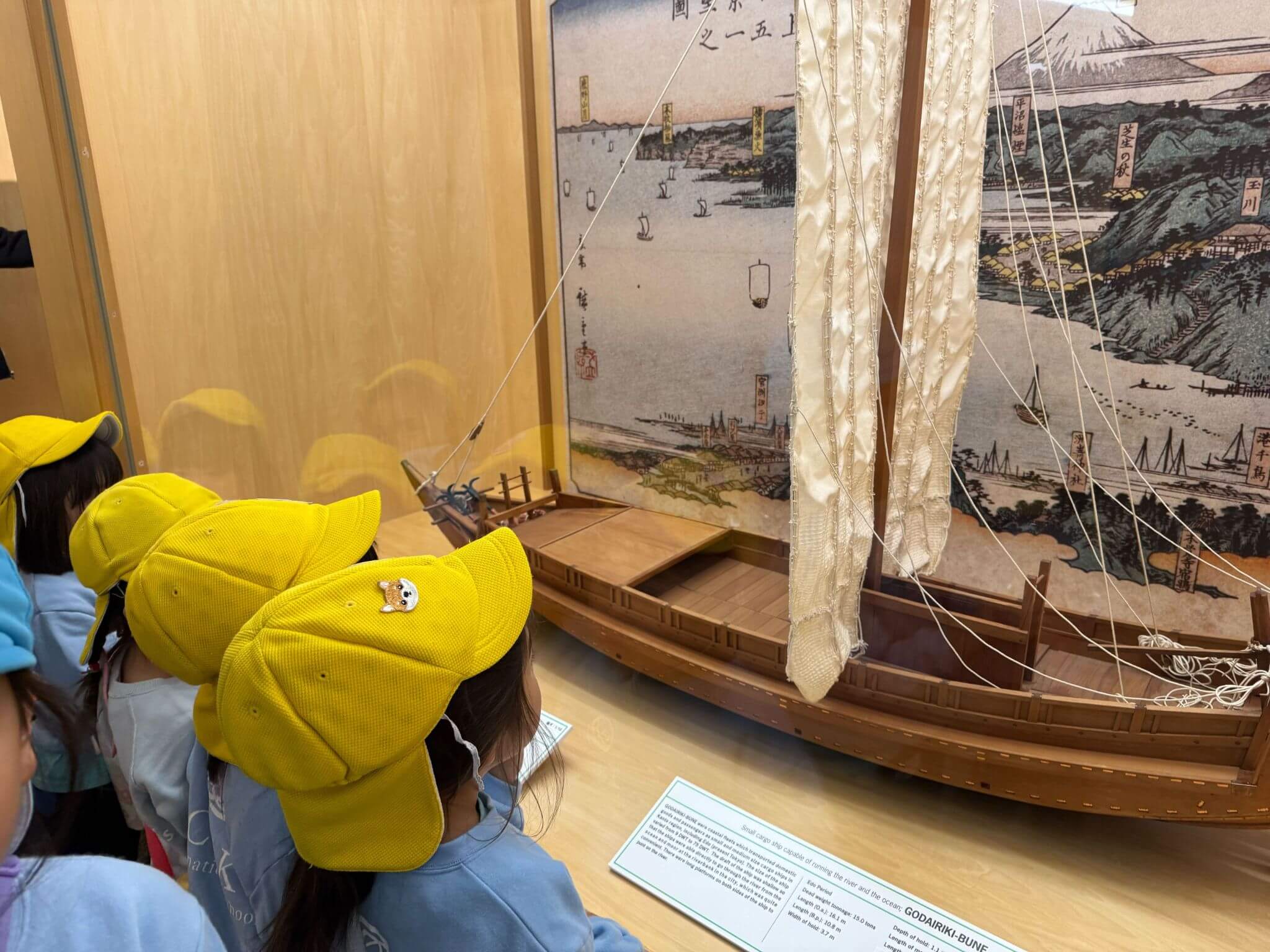
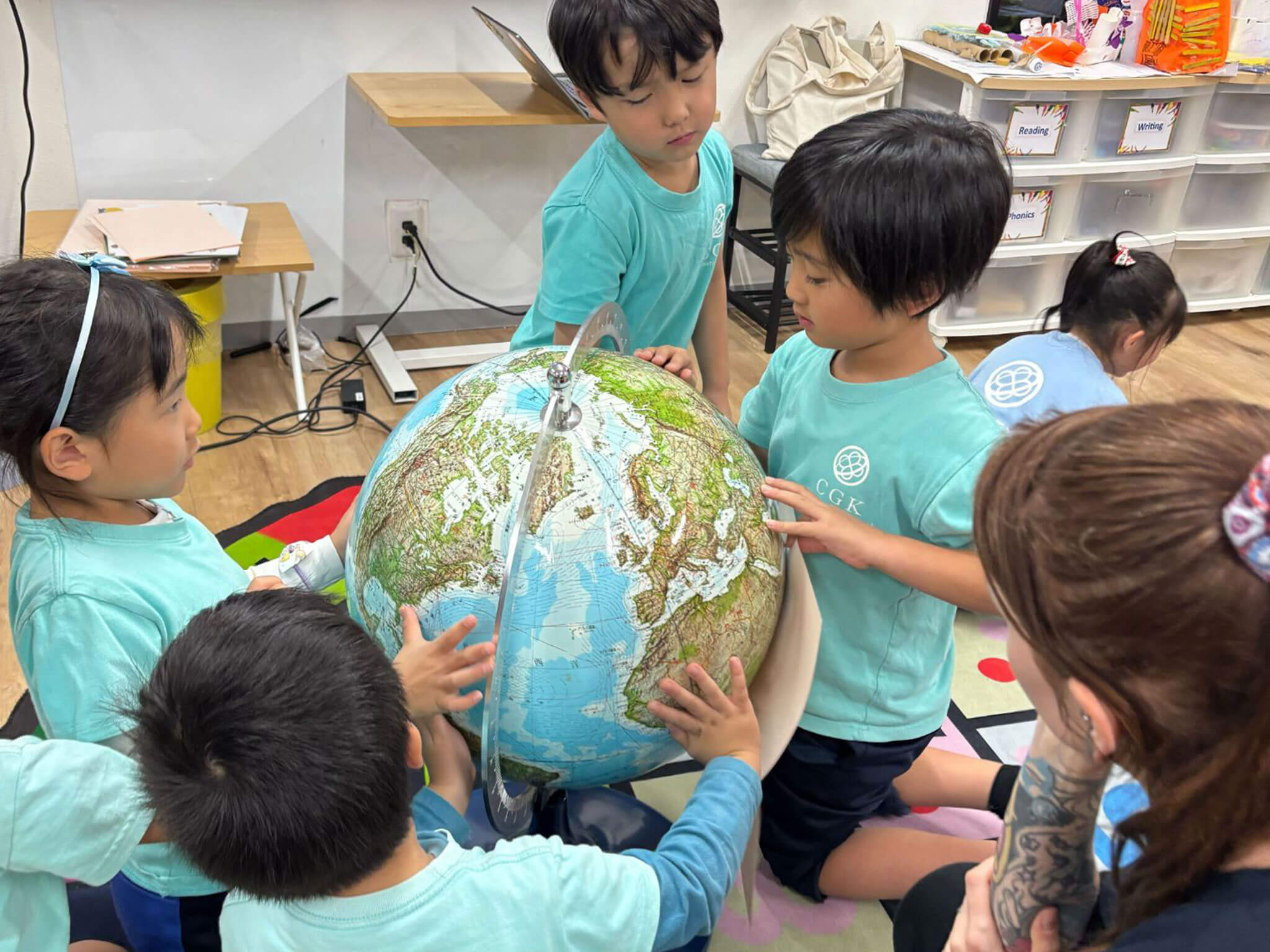
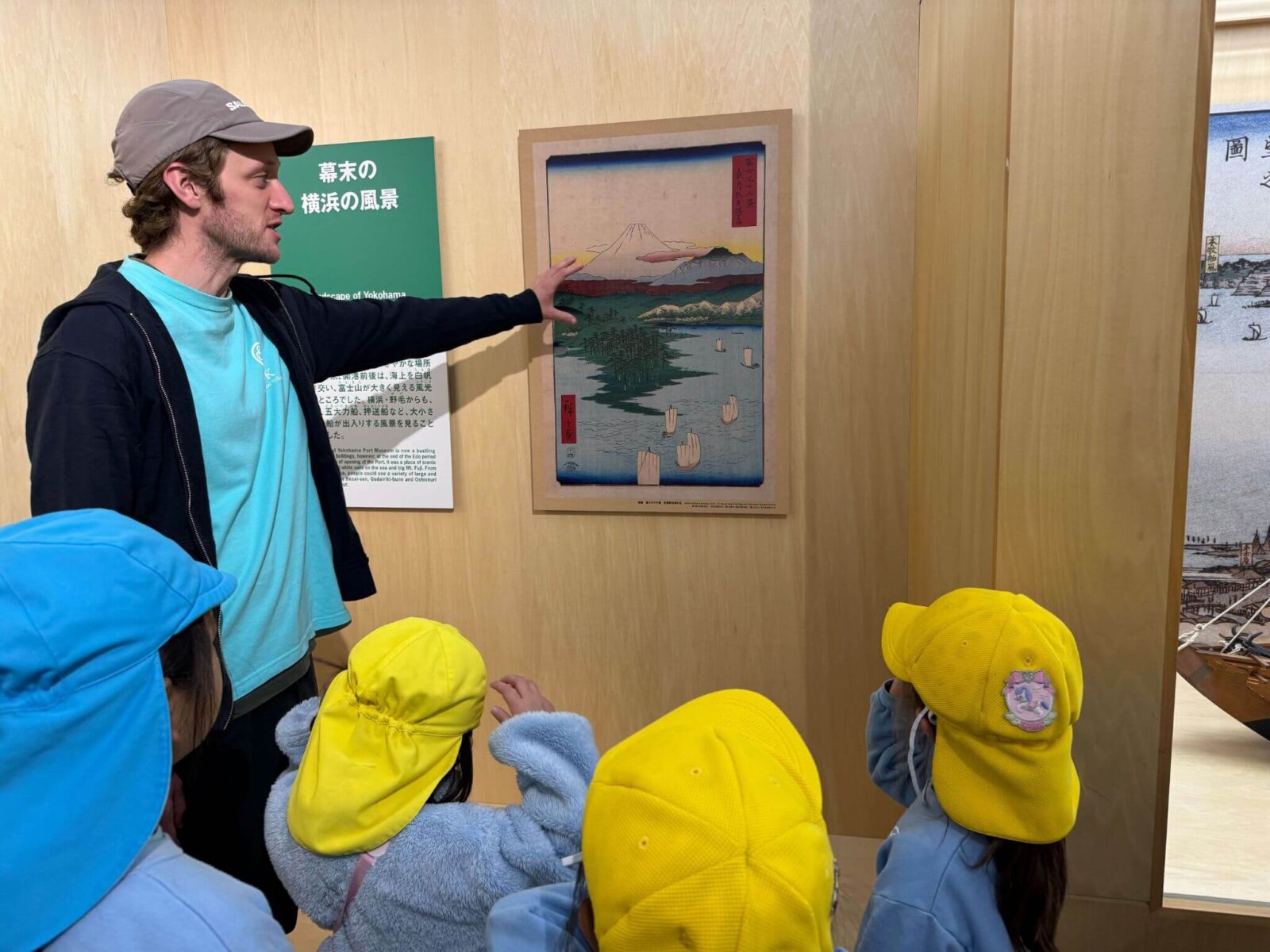
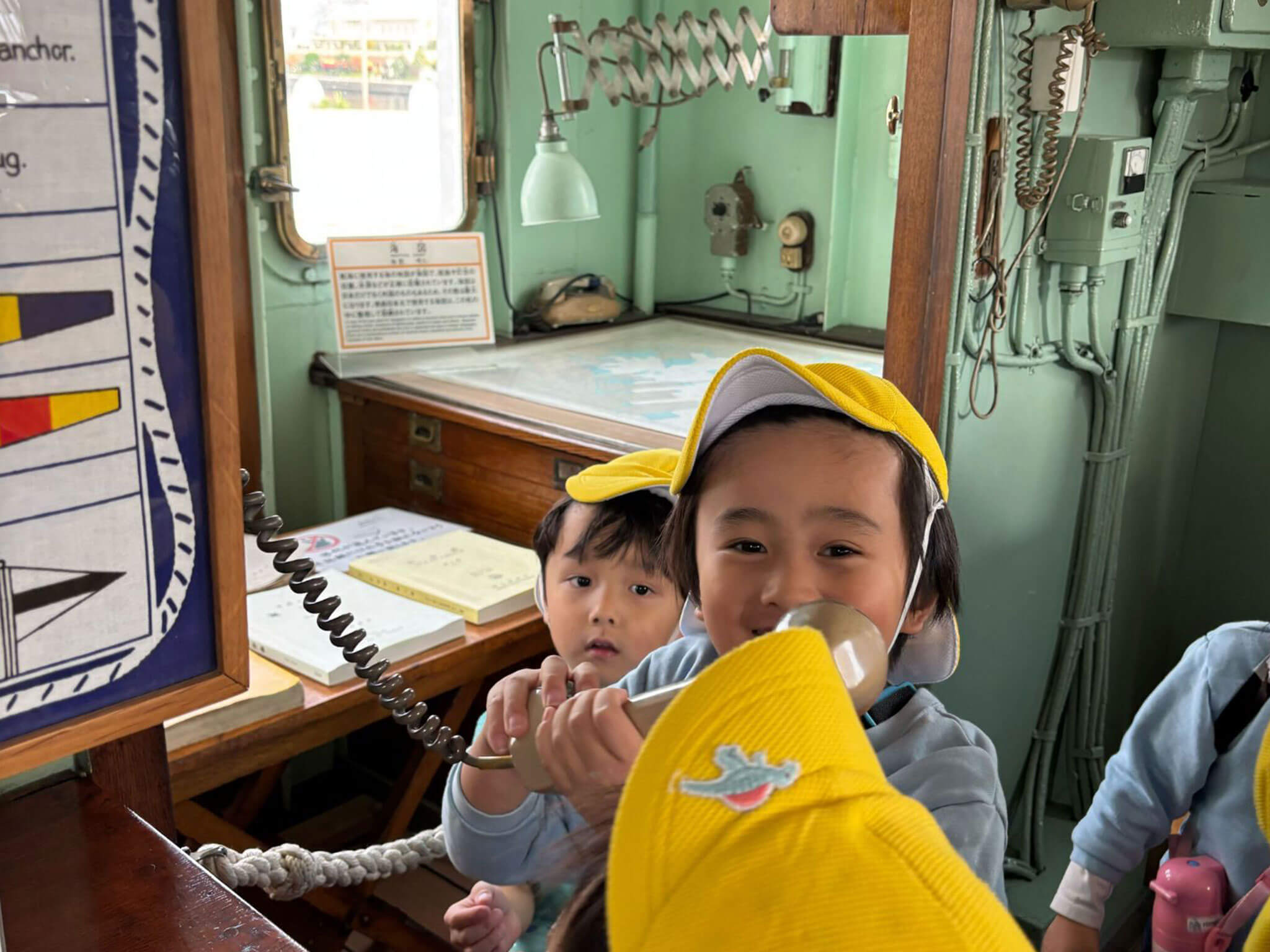
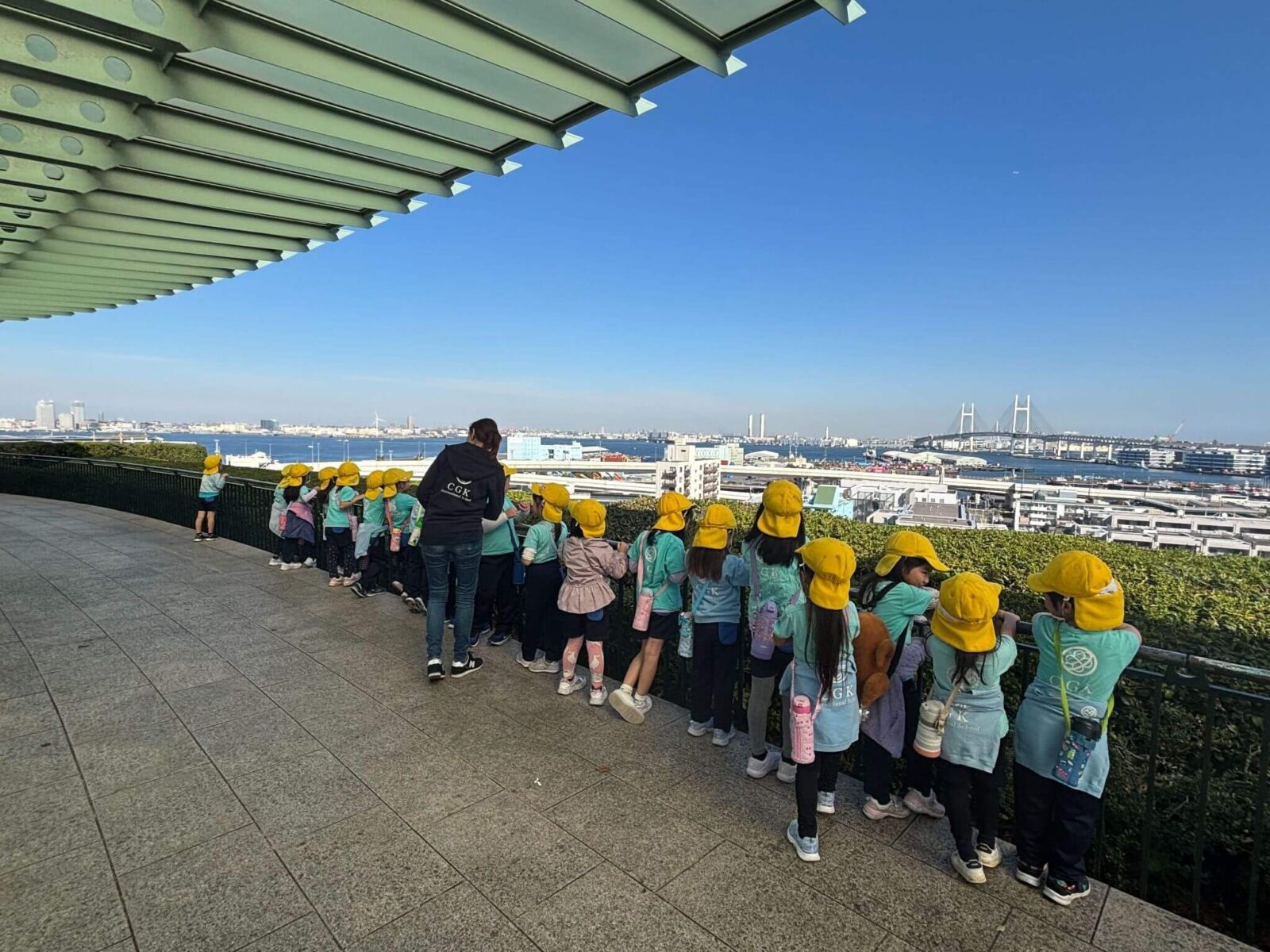
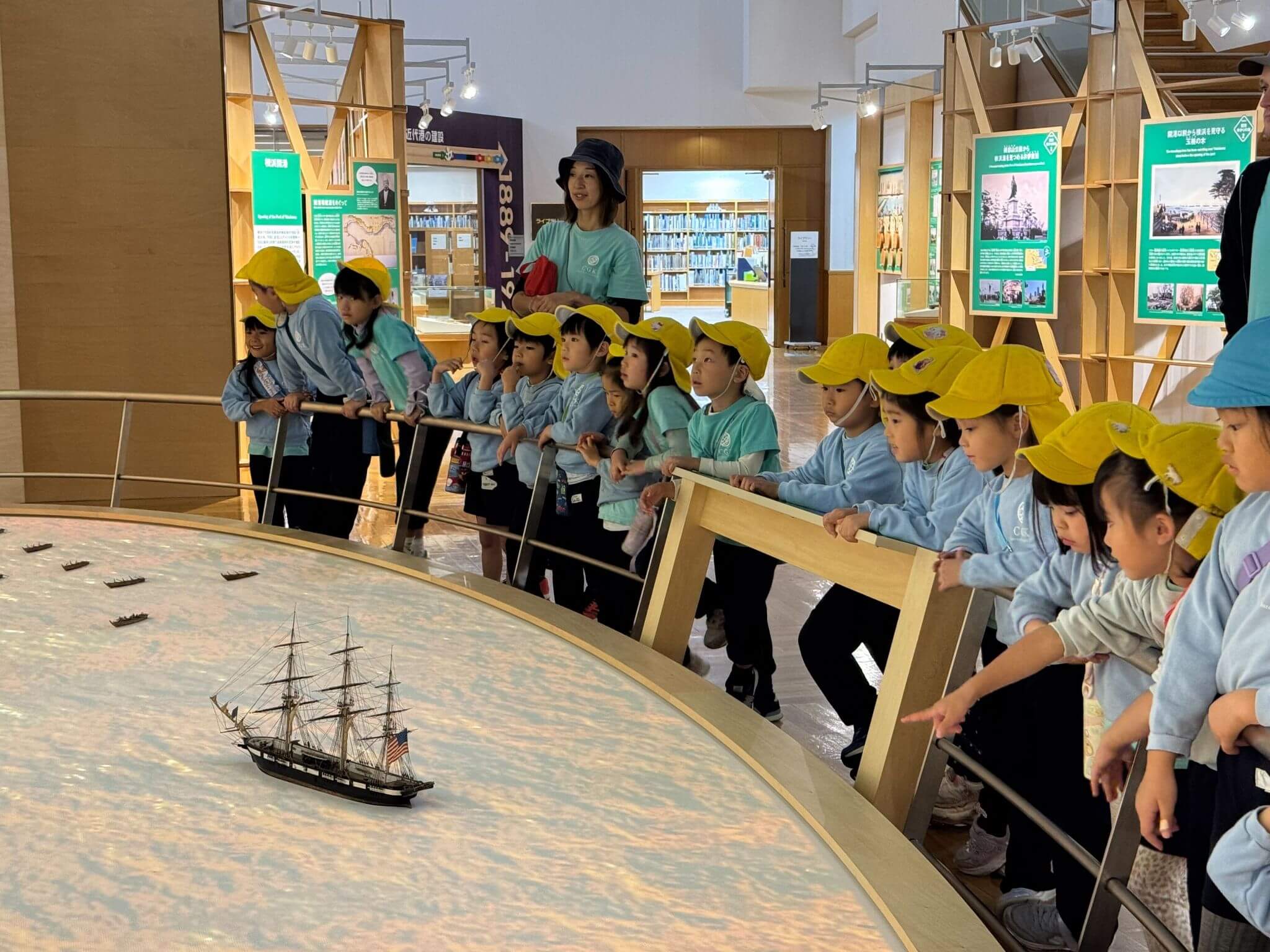
This month, the children explored “Yokohama: past and present,” and from there, expanded their curiosity to the wider world. Focusing on one of our Lines of Inquiry—
“How history, culture, and innovations affect one another”—the students considered how cultures, tools, and architecture from overseas were introduced to Japan and the historical contexts behind them.
Our inquiry took place at several meaningful sites, including the Western-style houses in Yamate, the Nippon Maru, and the Yokohama Port Museum. Many children excitedly shared, “I’ve been here before!” or “I’ve seen this!” Yet even familiar places offered new discoveries when revisited with an inquiry mindset.
At the British House in Harbor View Park, the children noticed differences in architectural design, saying things like, “This looks different from Japanese houses!” As they learned about the opening of Yokohama Port and Commodore Perry’s arrival, their curiosity deepened with questions such as, “Why?” “What happened next?” and “What was the purpose?”—showing a growing interest in the historical background behind these events.
What began as a simple “why?” has become an expanding circle of inquiry—spreading from Yokohama to the world beyond. We look forward to continuing to nurture and value this expanding curiosity together with the children in the coming month.
Mountain
(4-year-olds)
Inspiration! Imagination! Creativity!
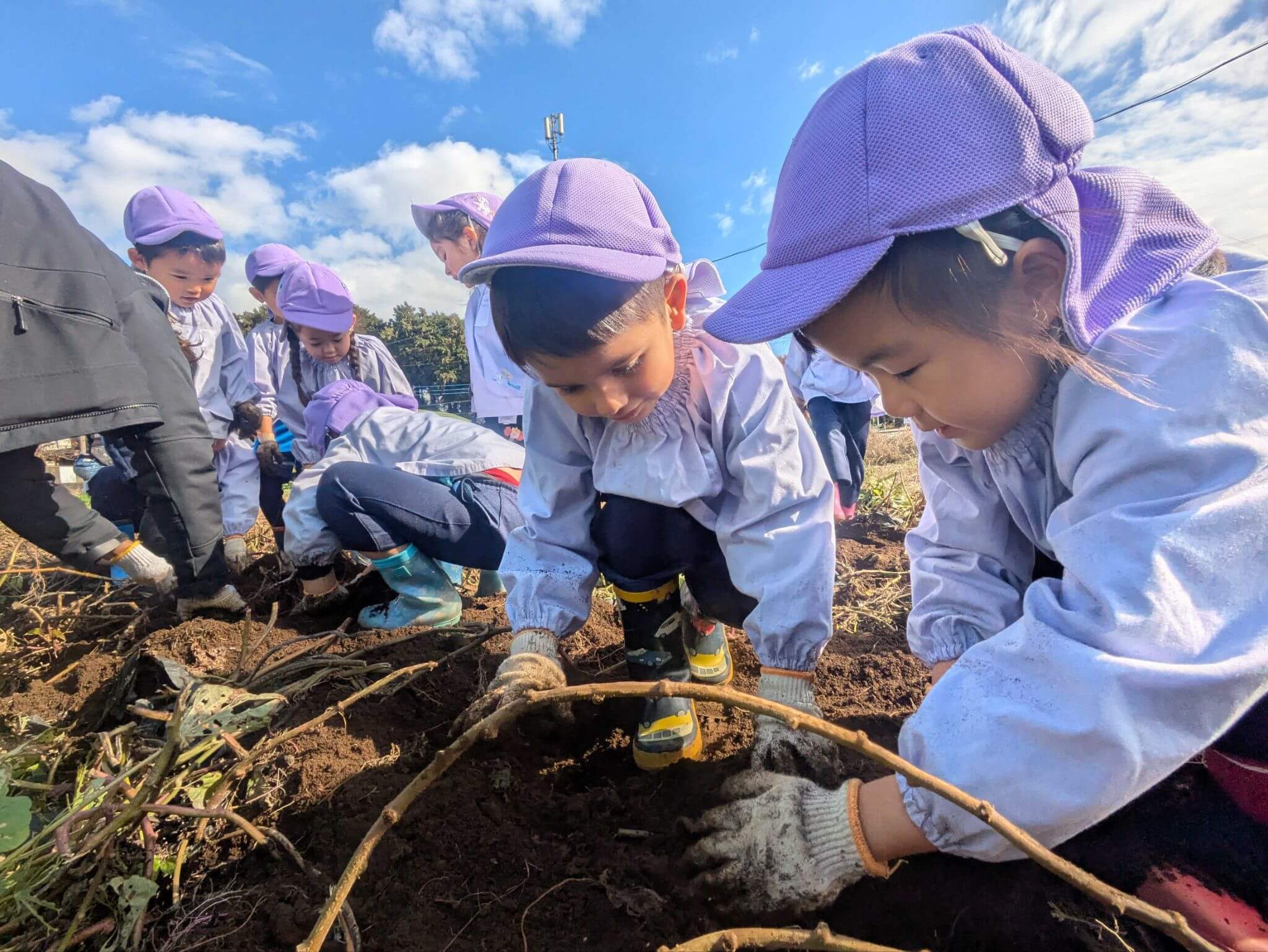
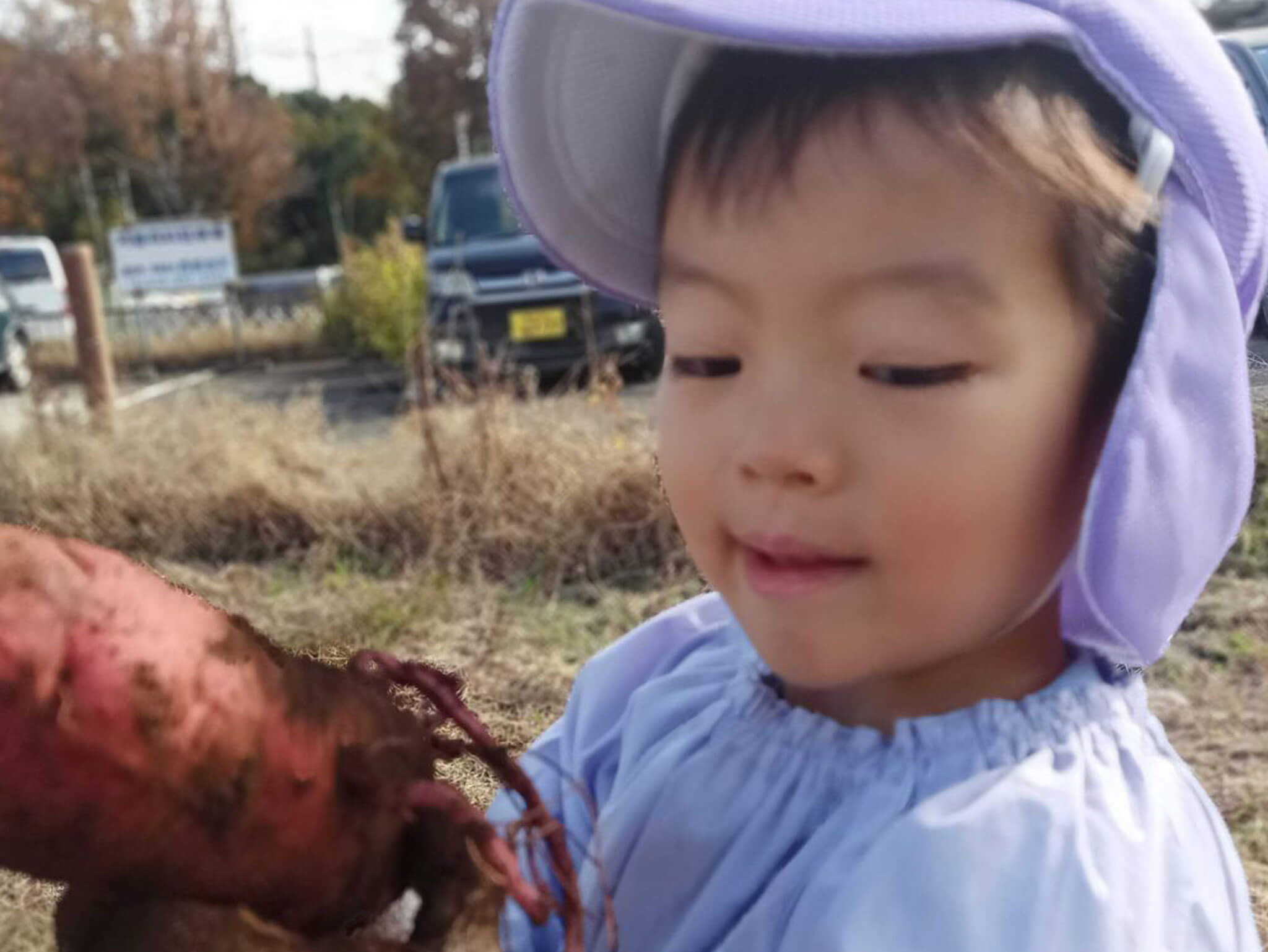
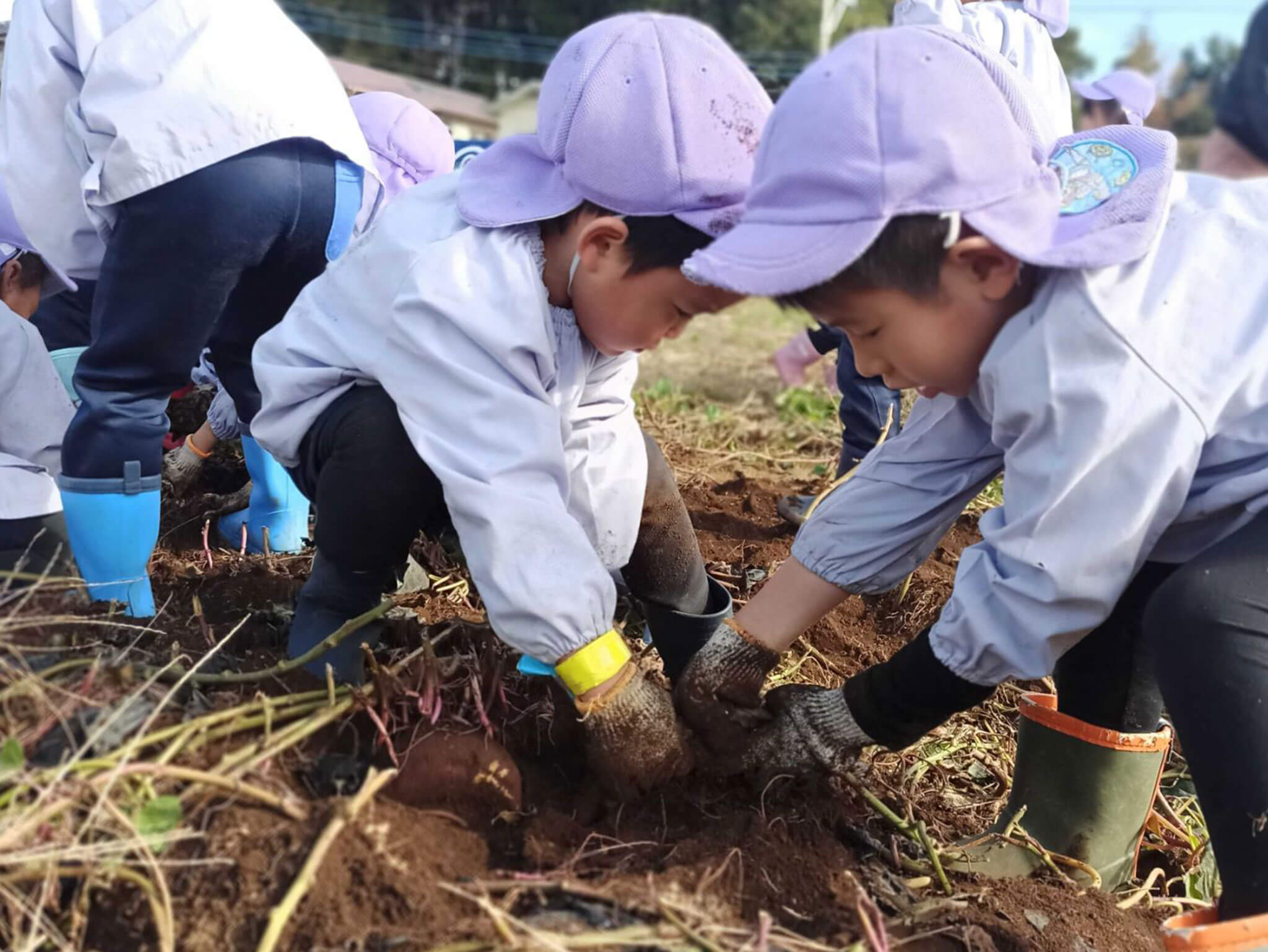
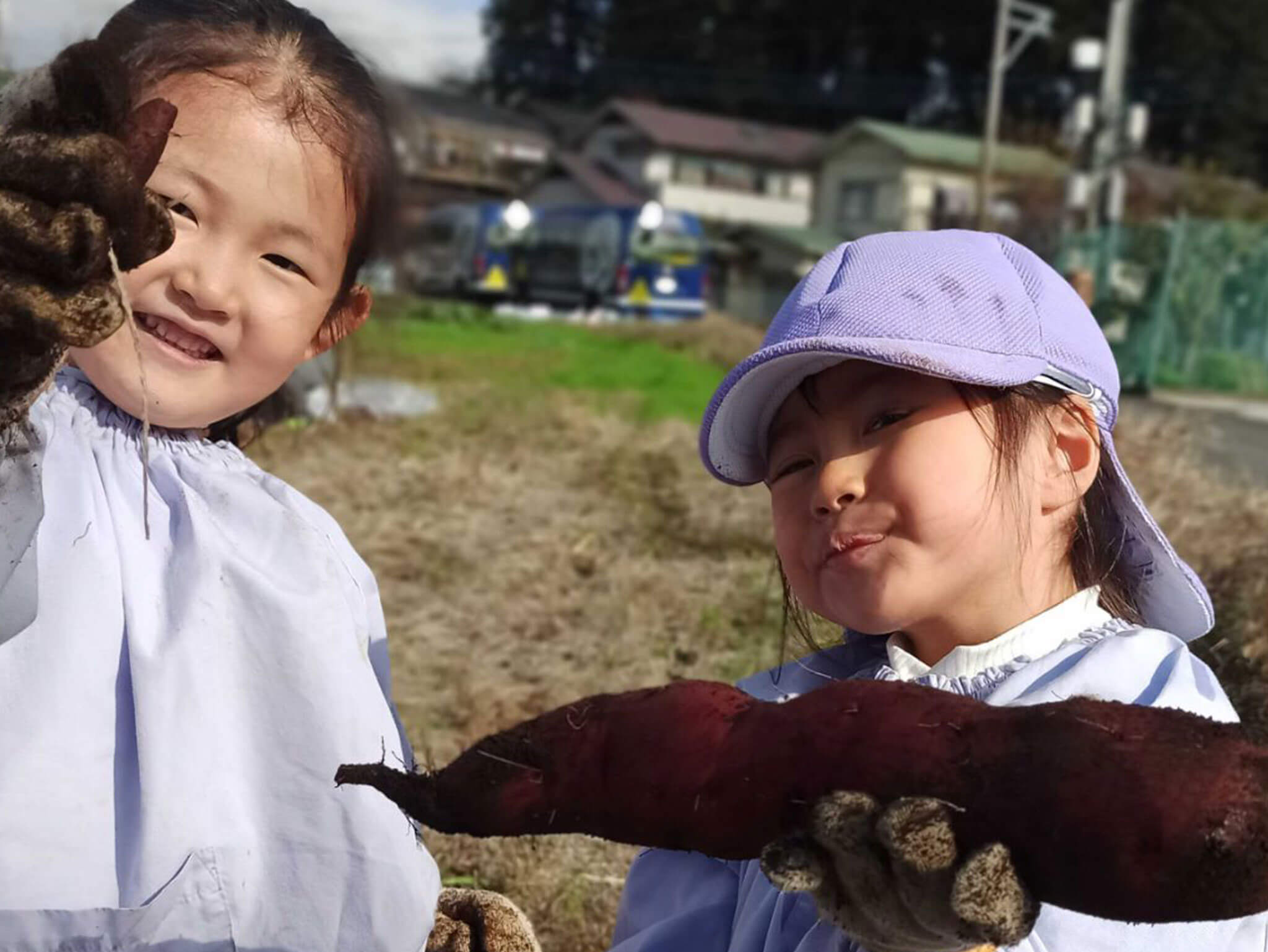
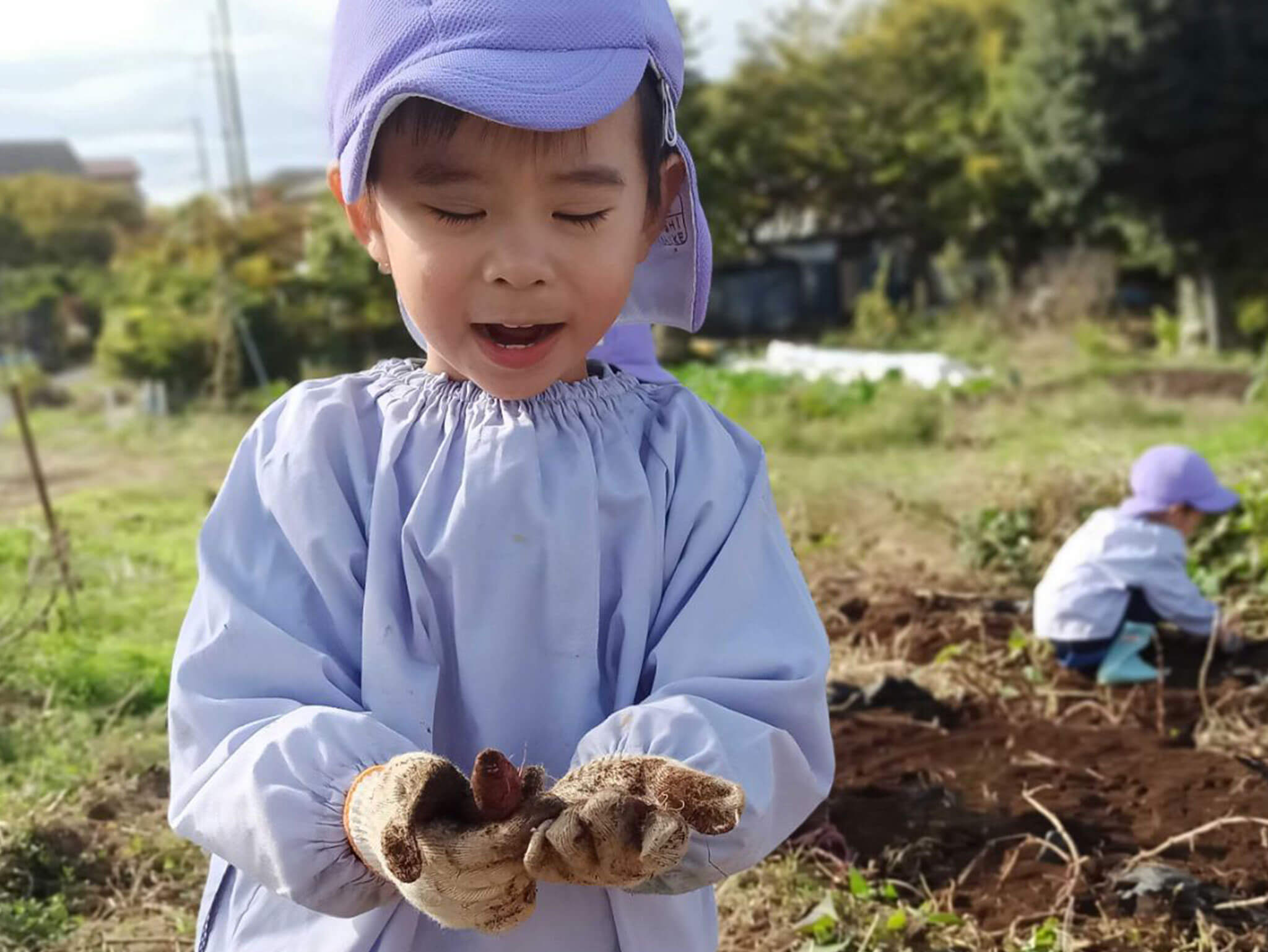
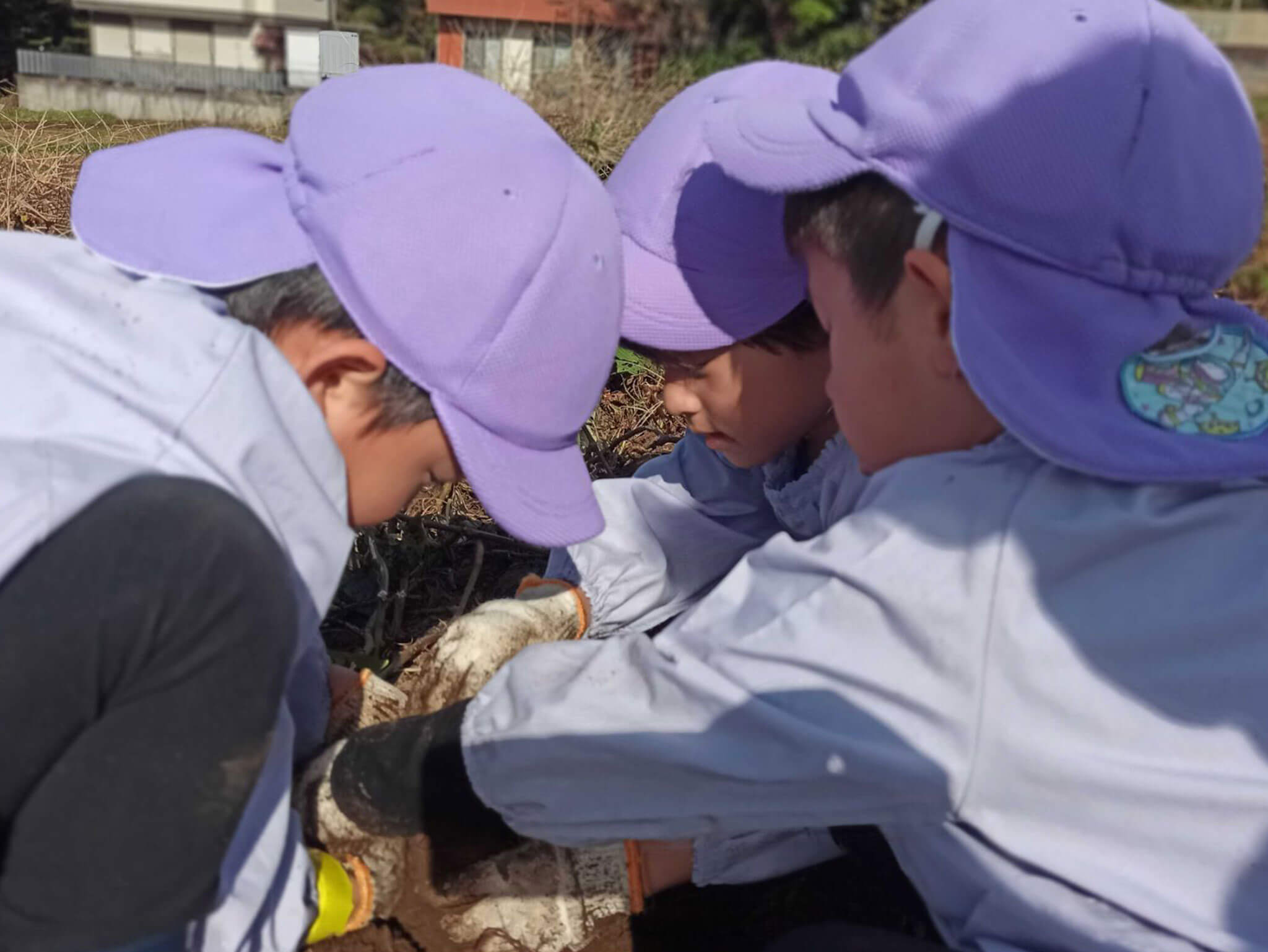
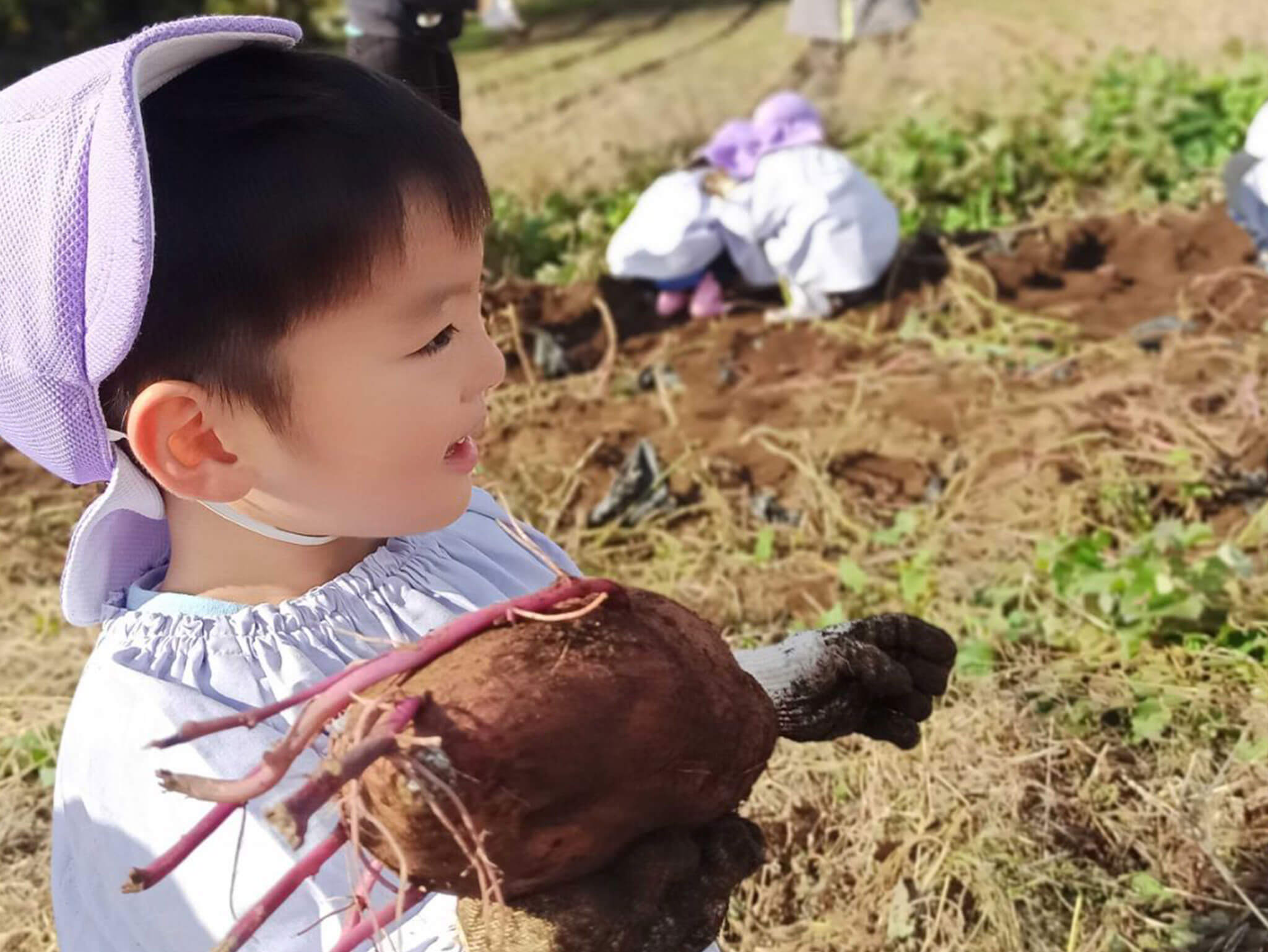
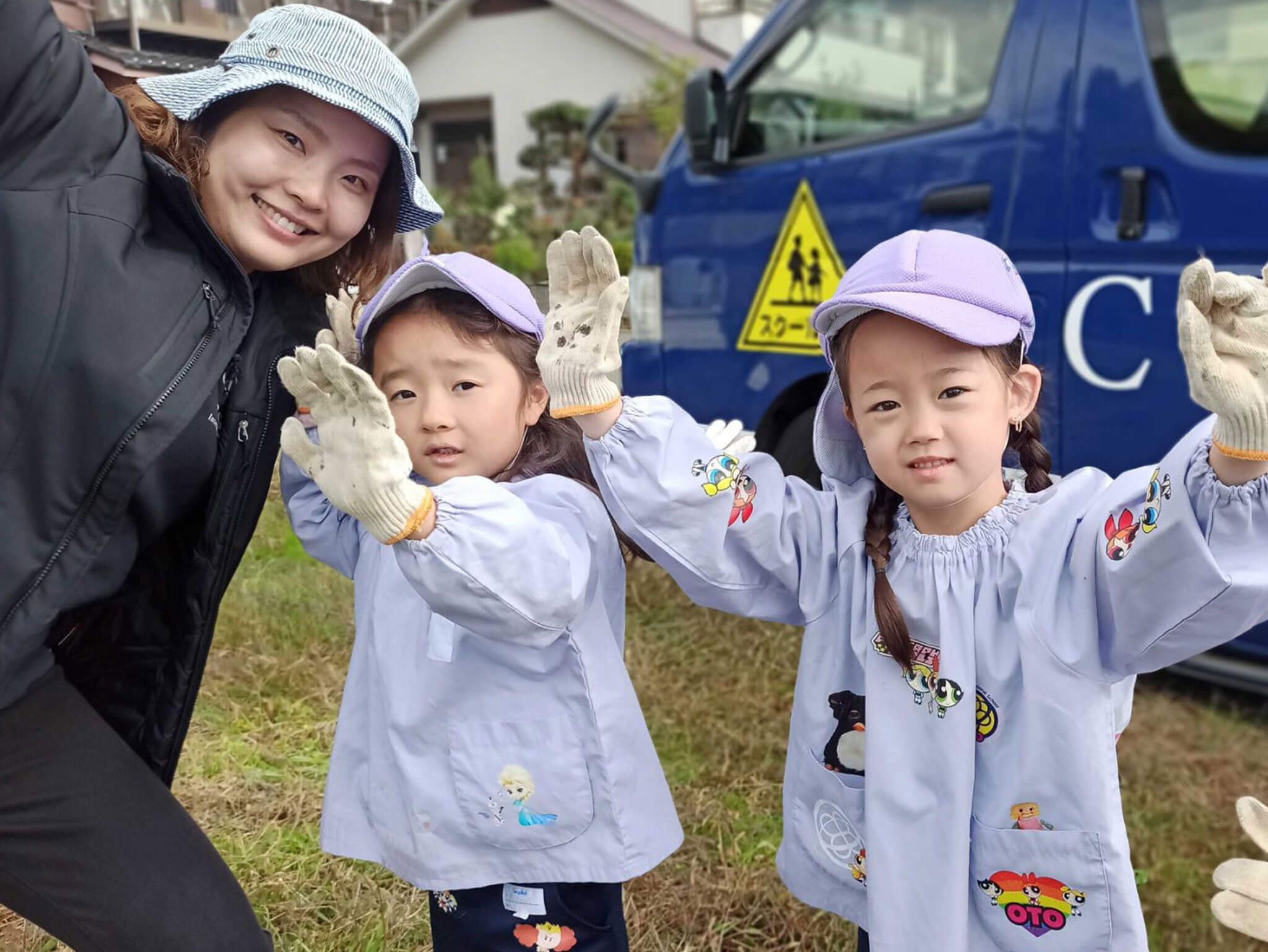
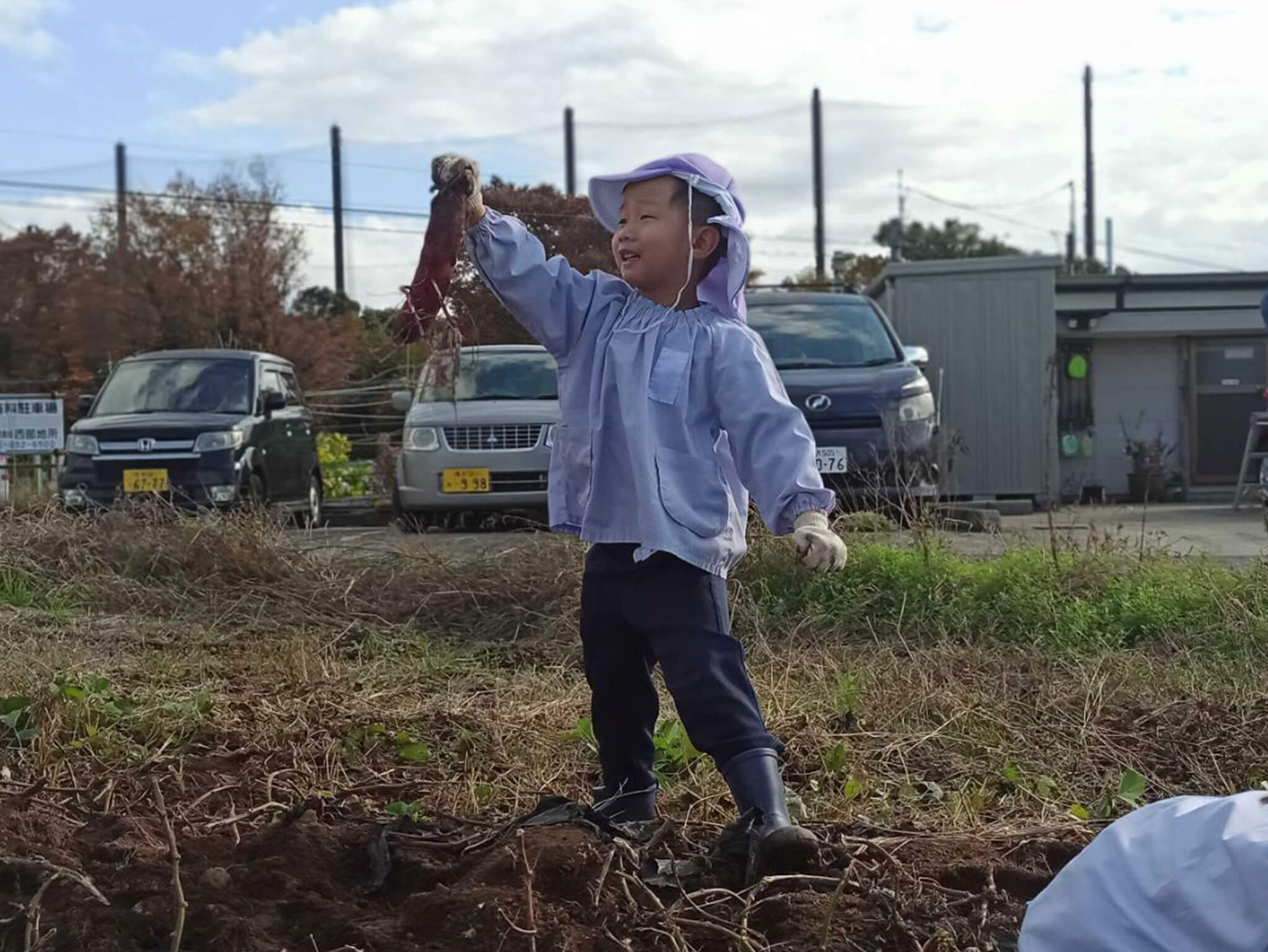
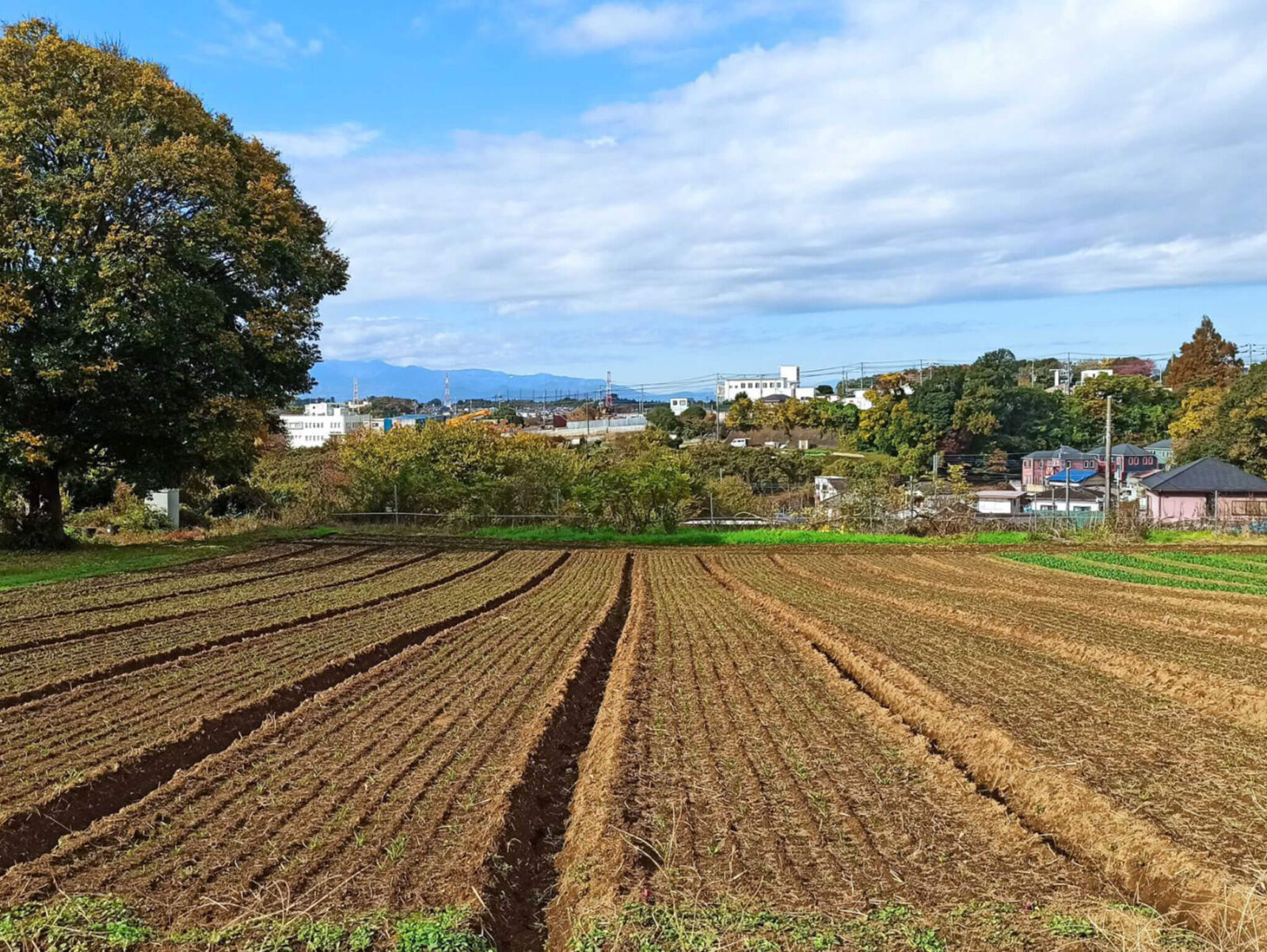
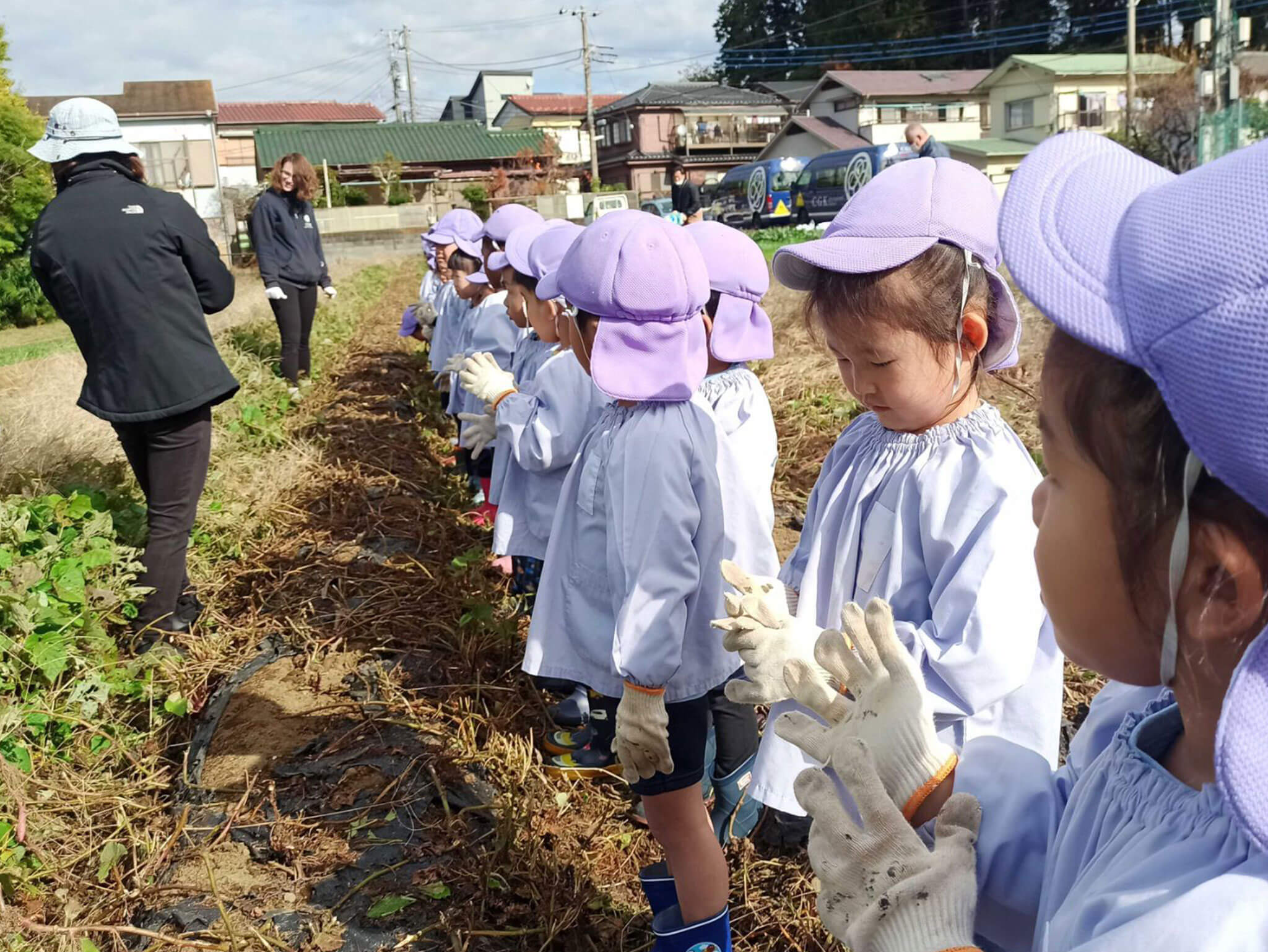
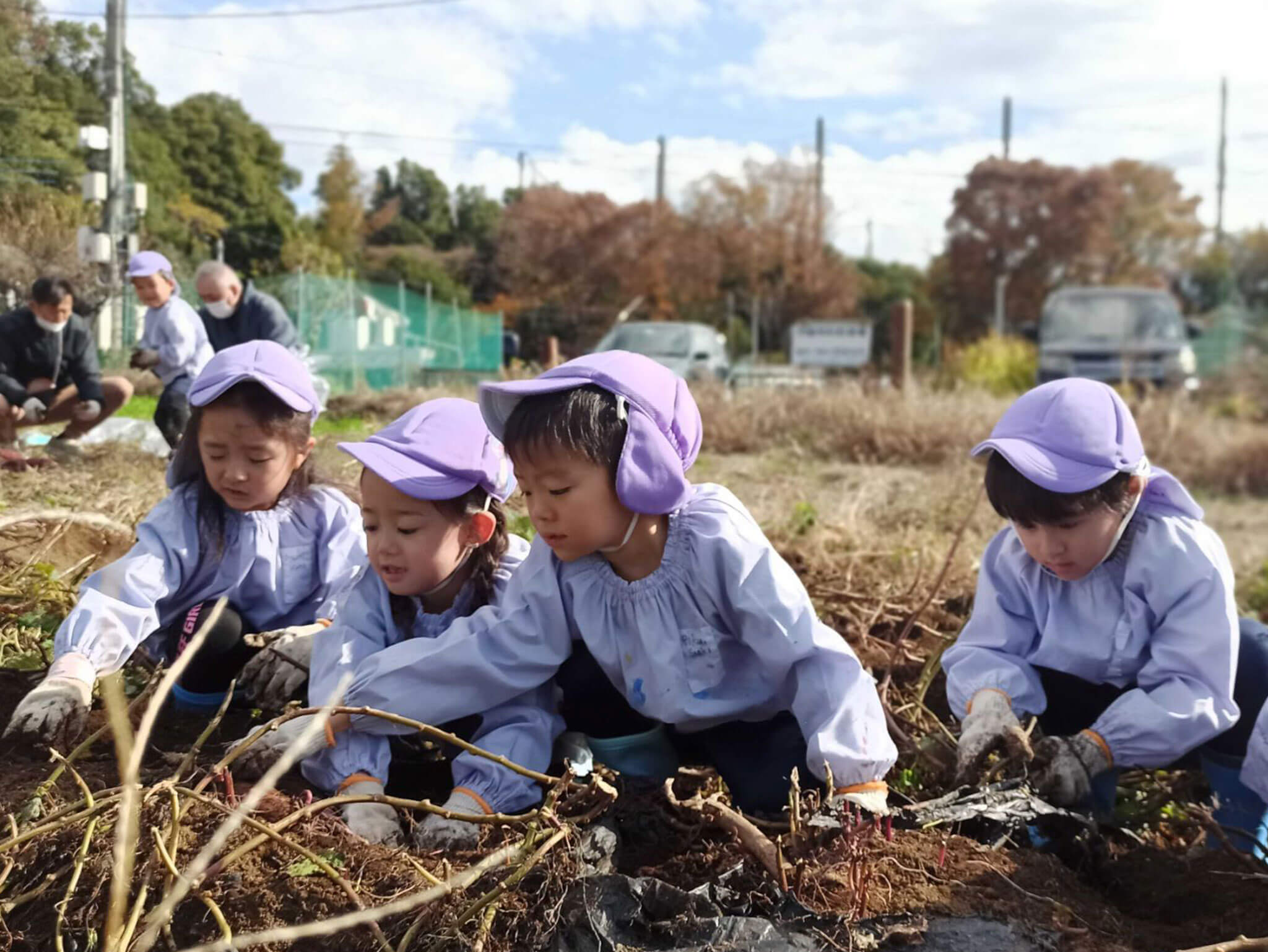
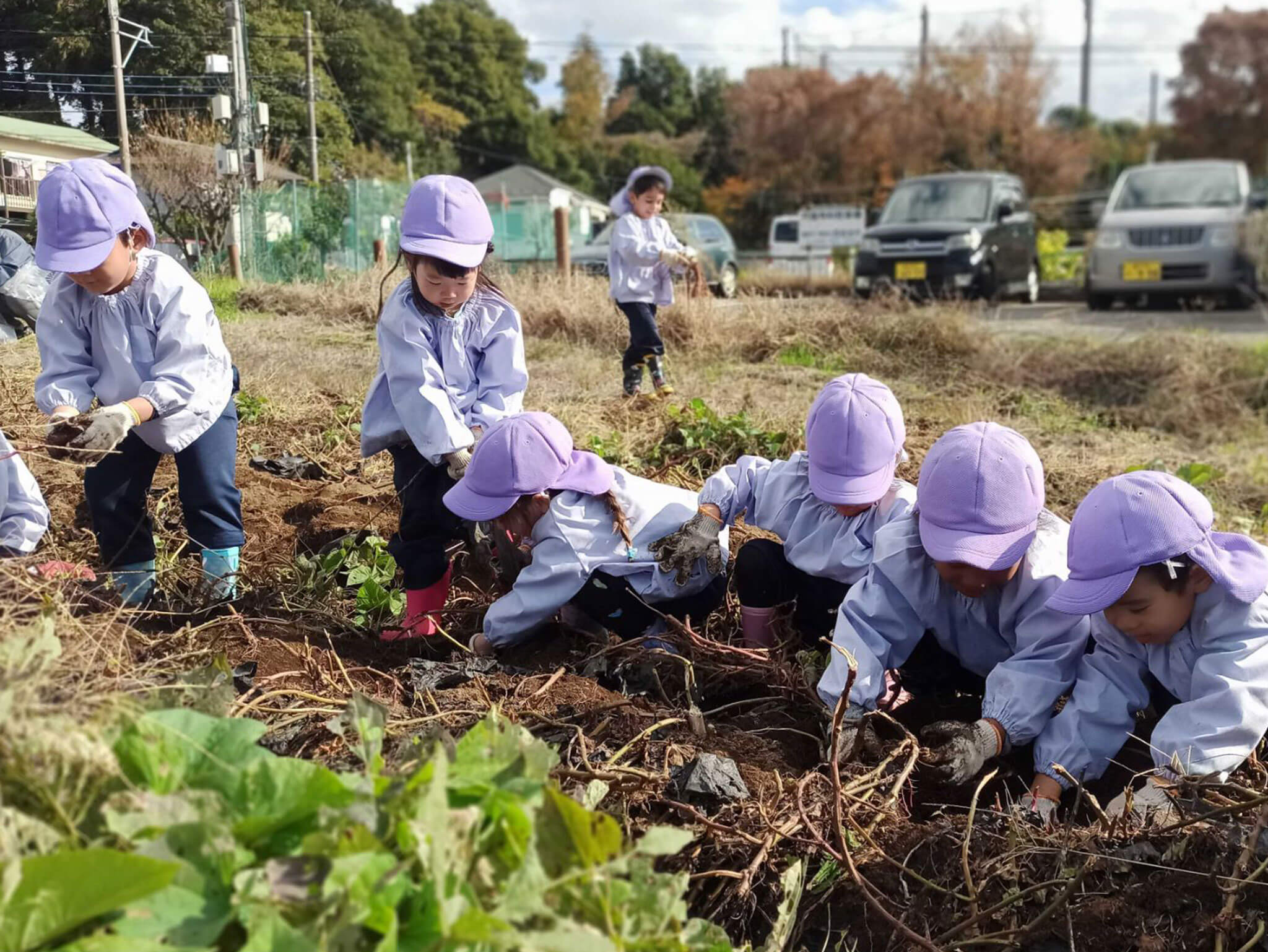
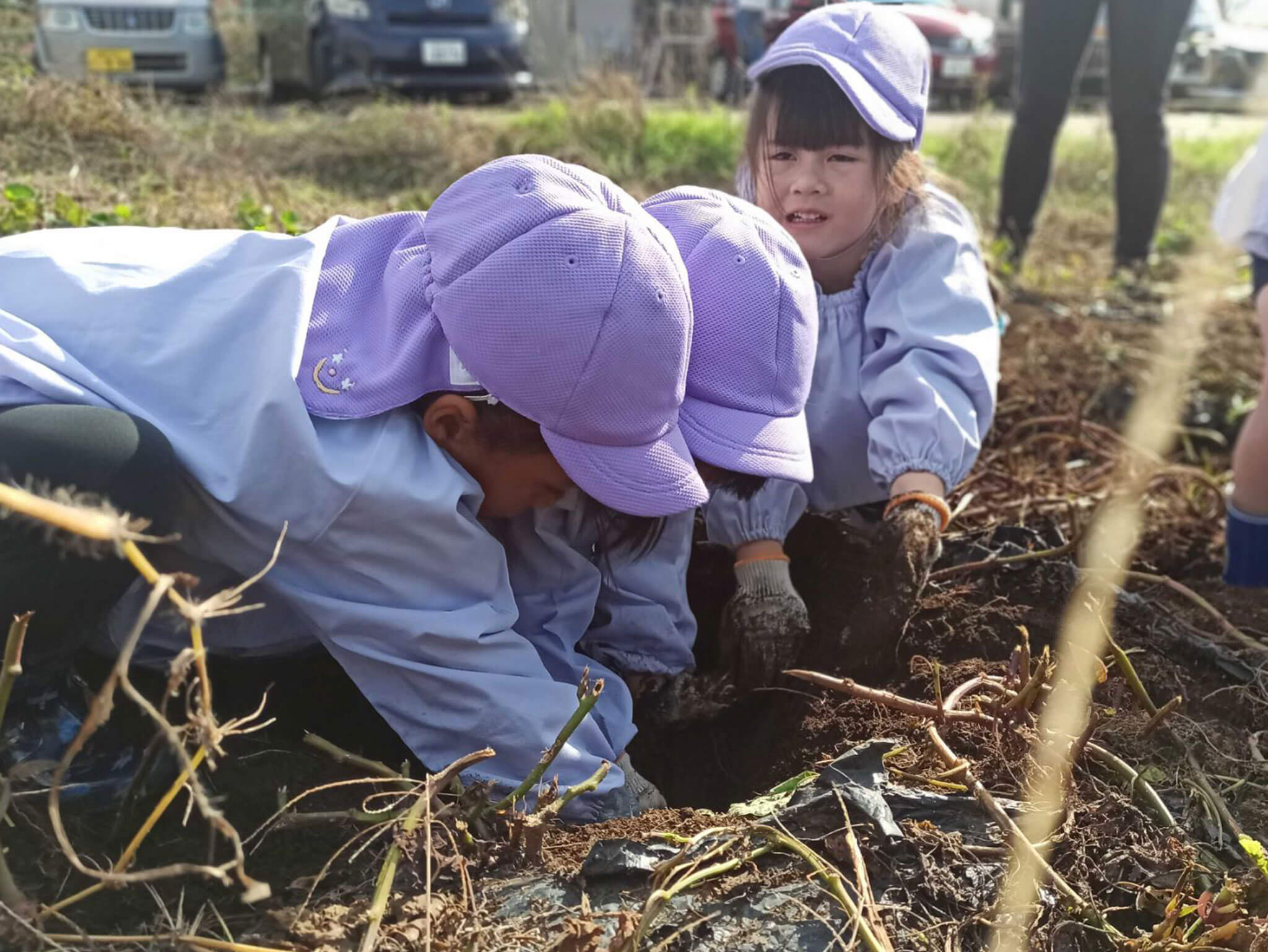
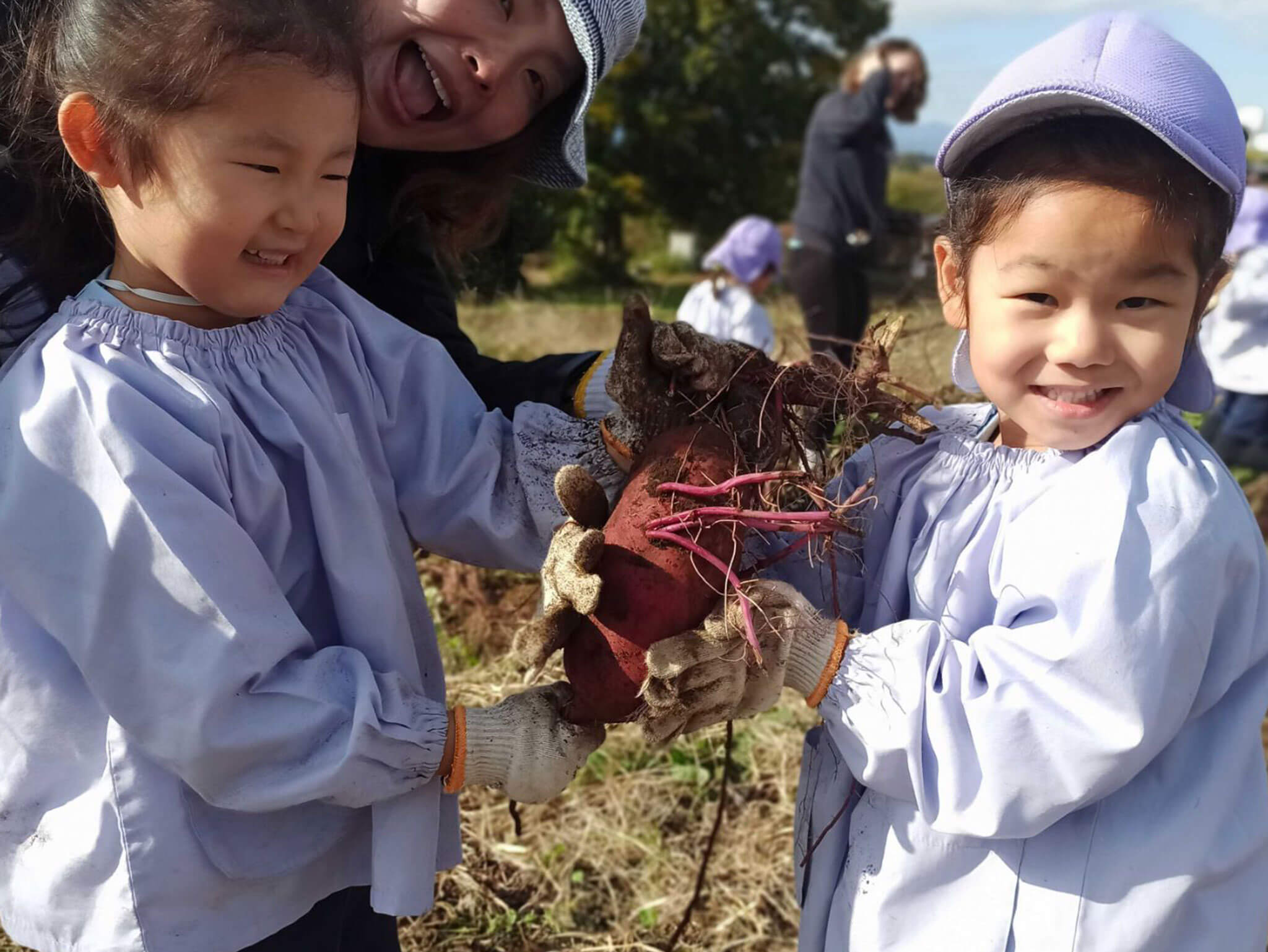
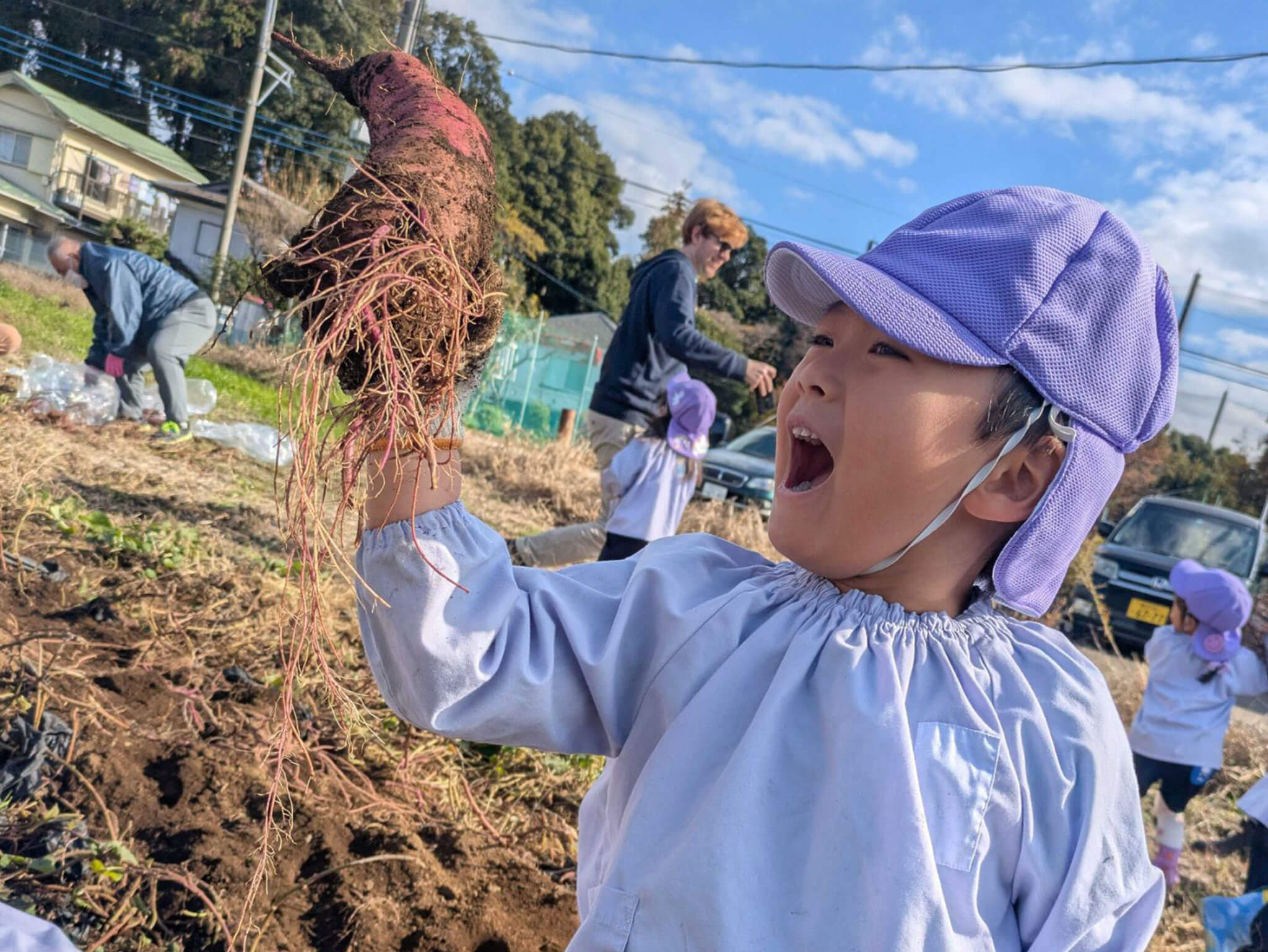
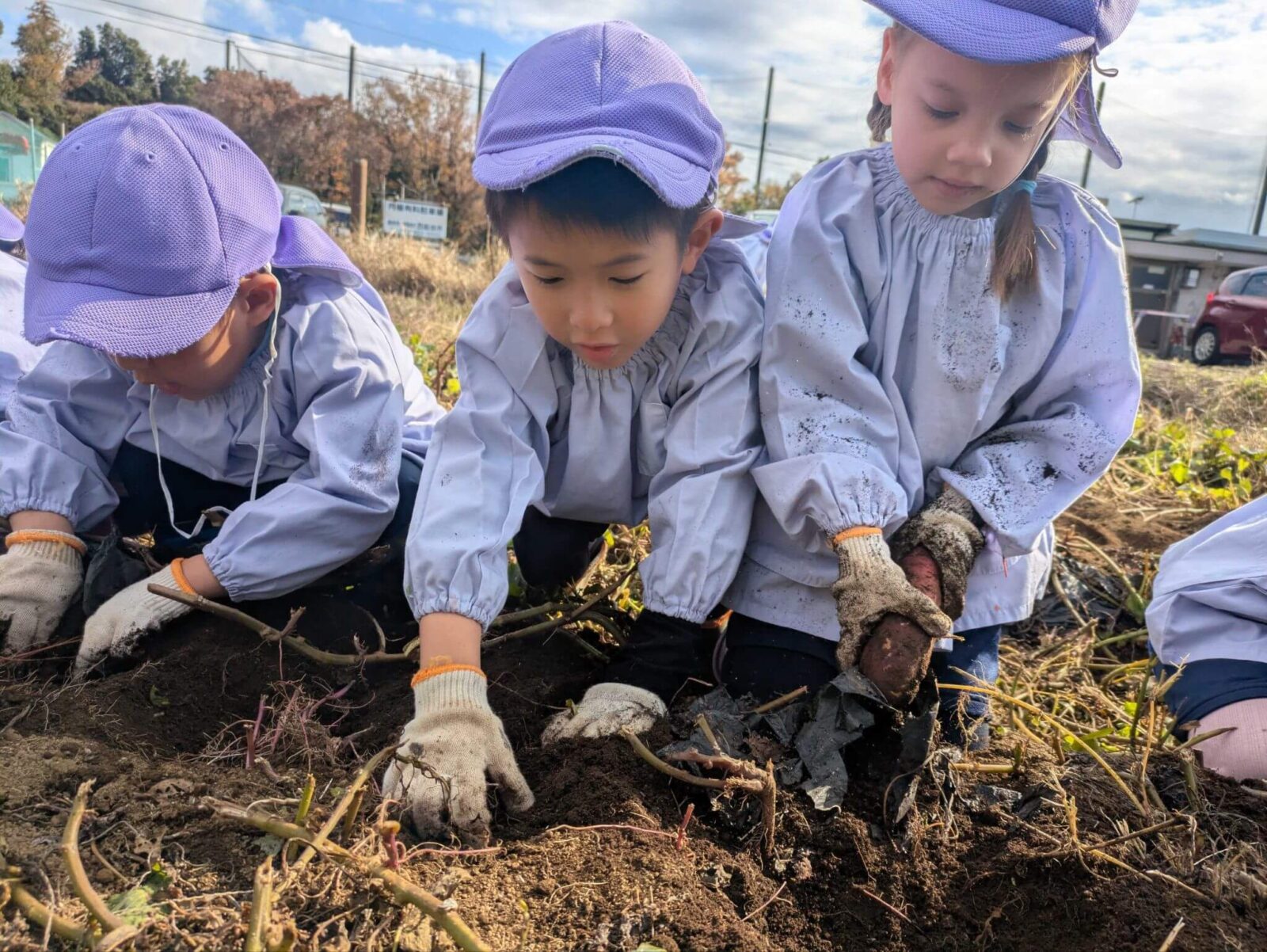
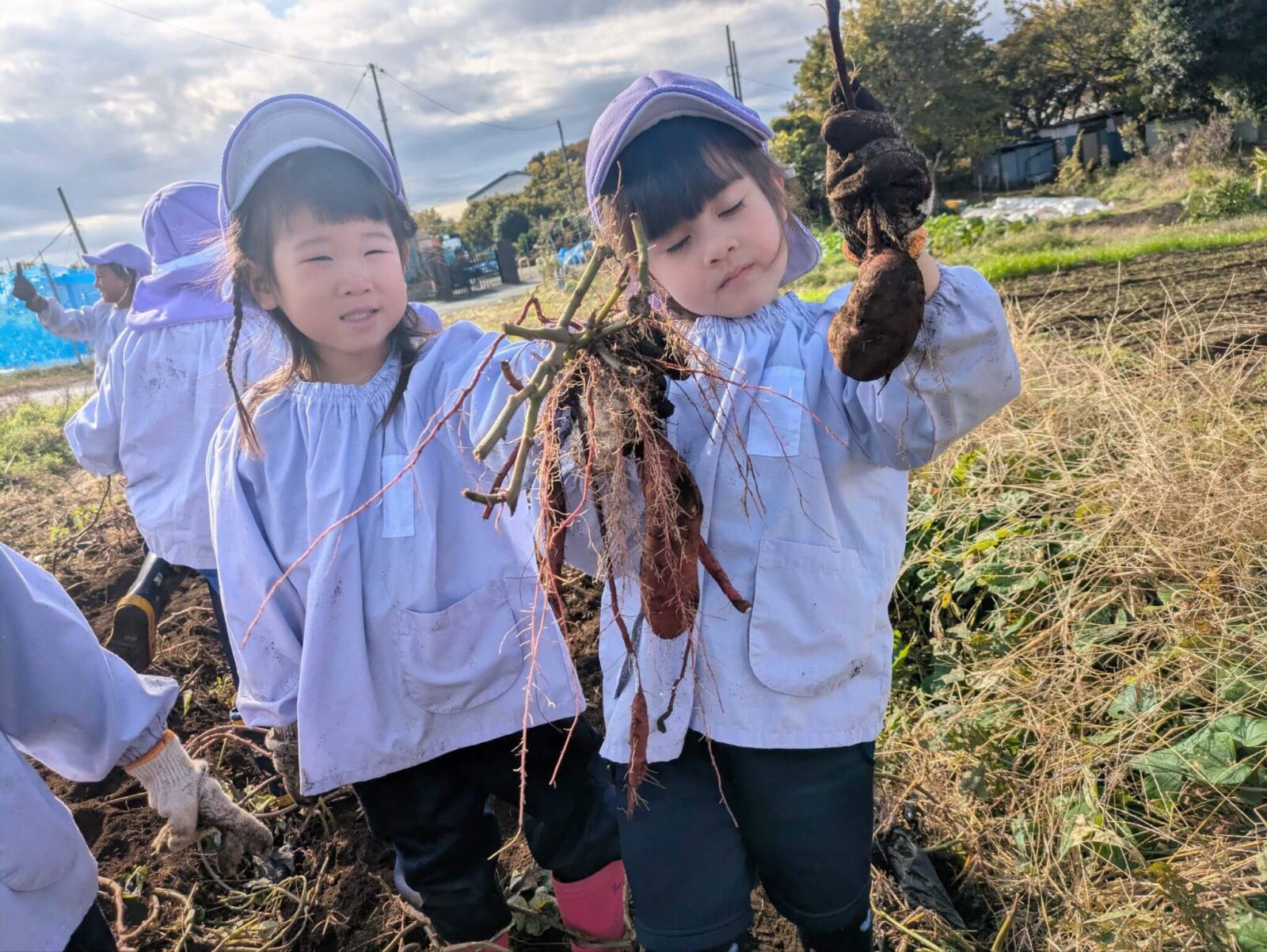
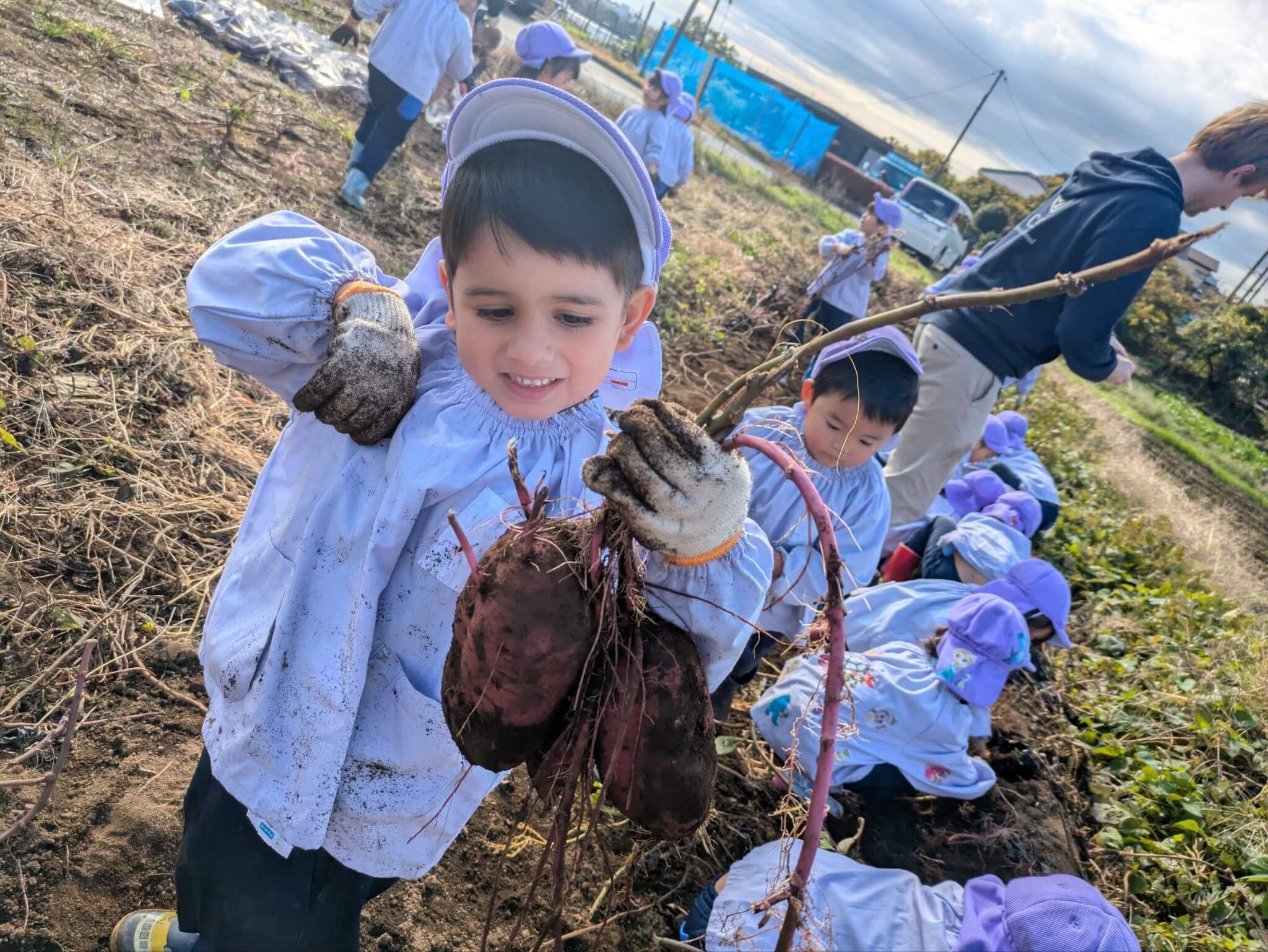
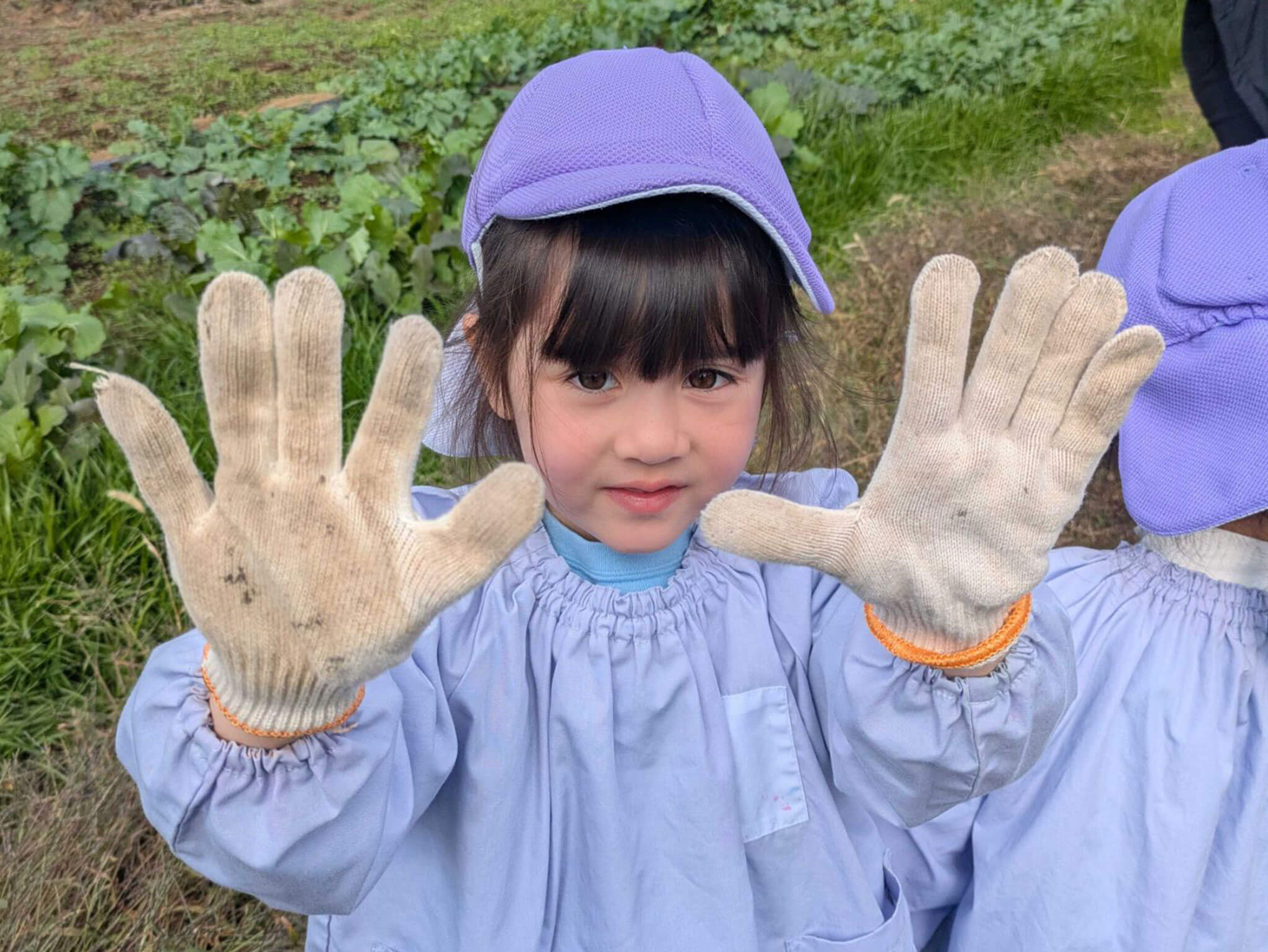
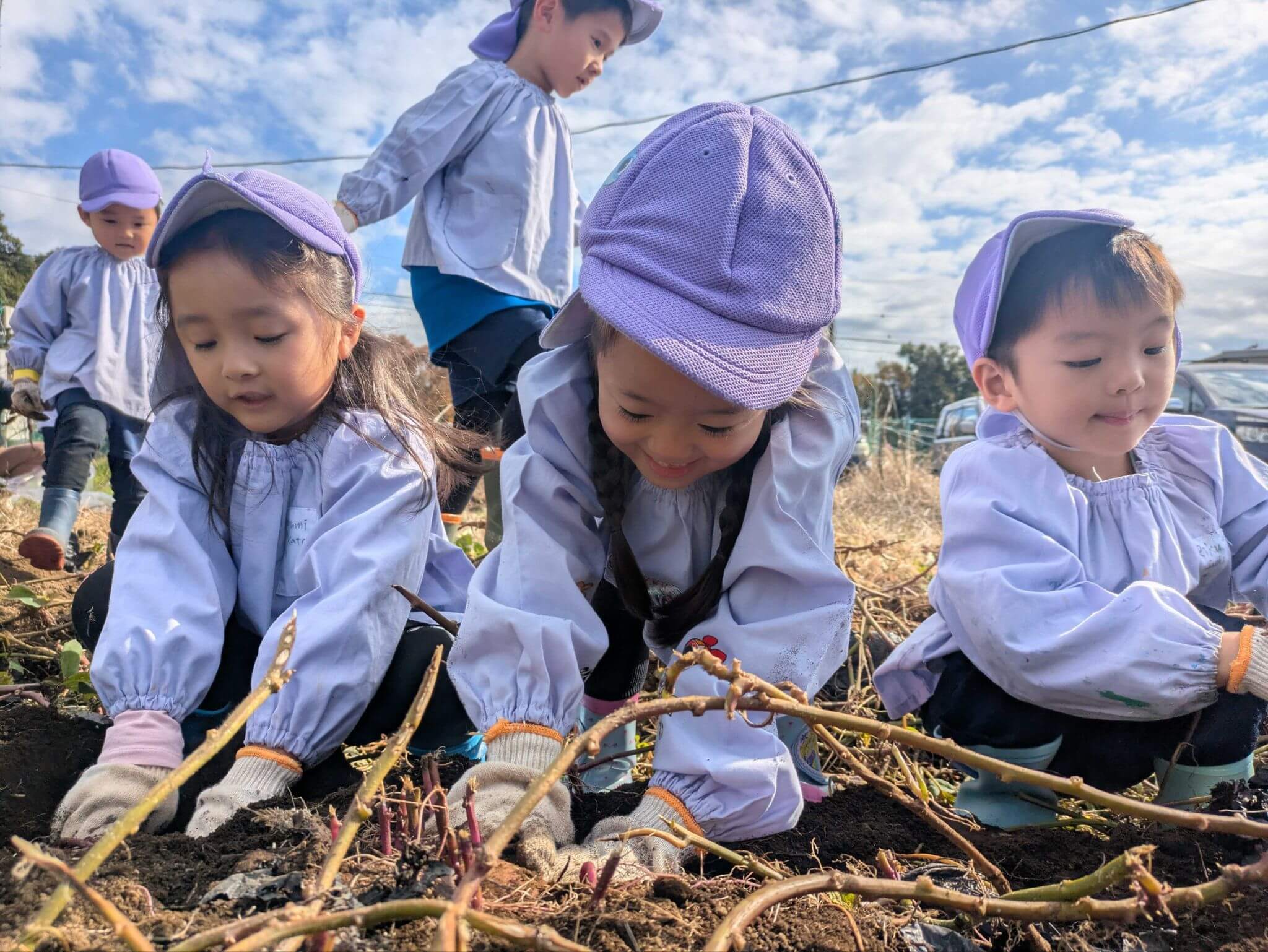
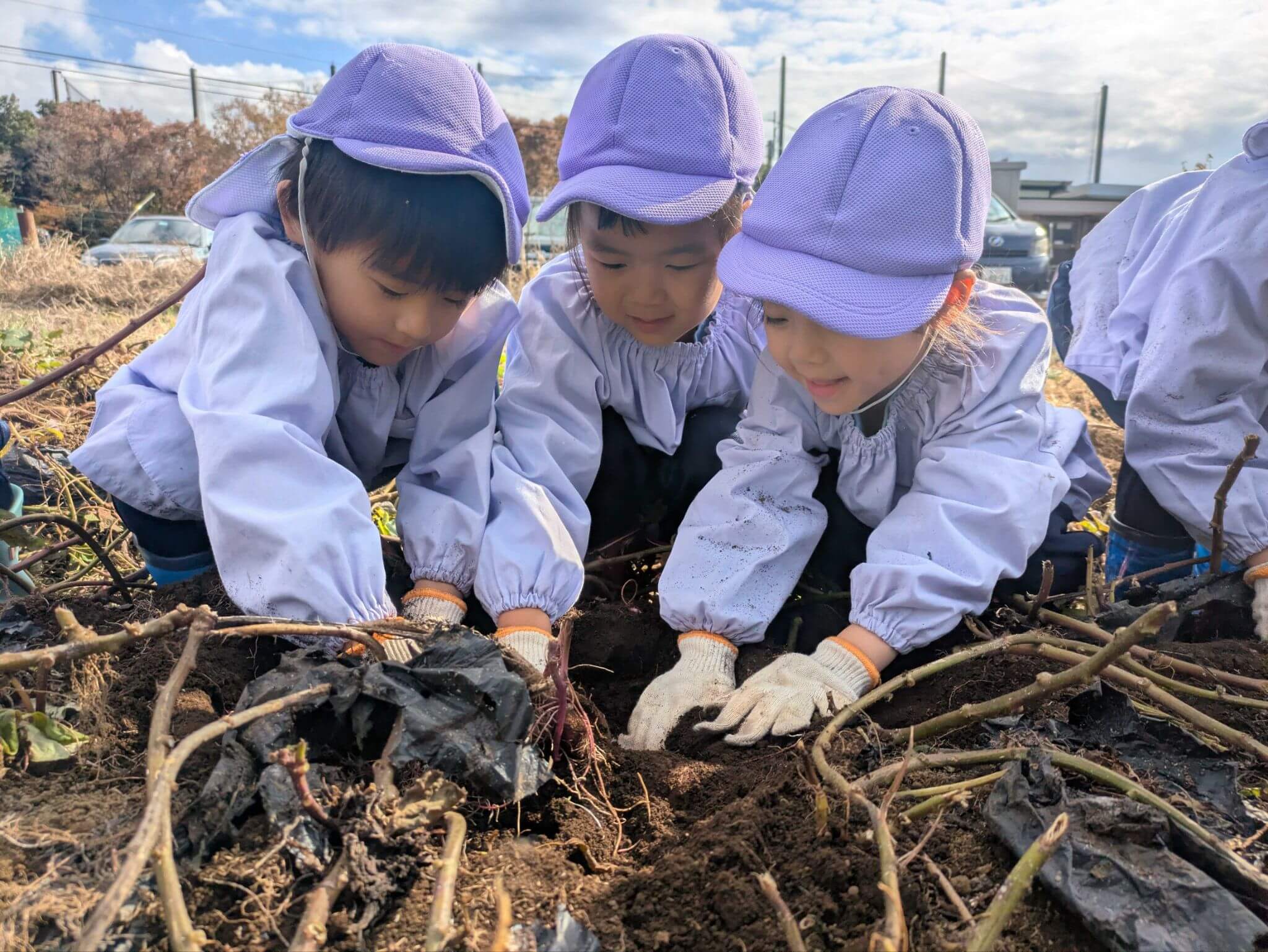
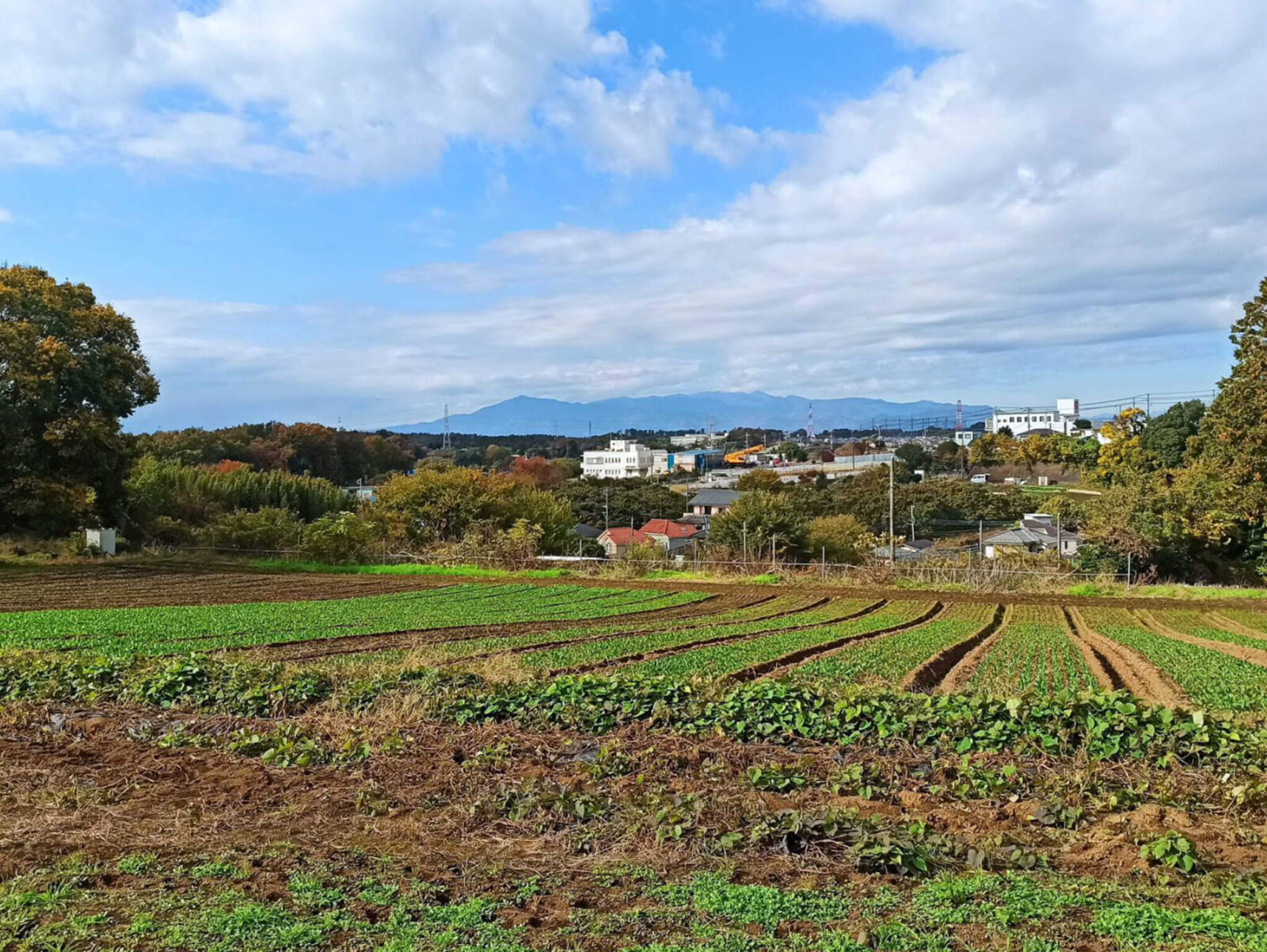
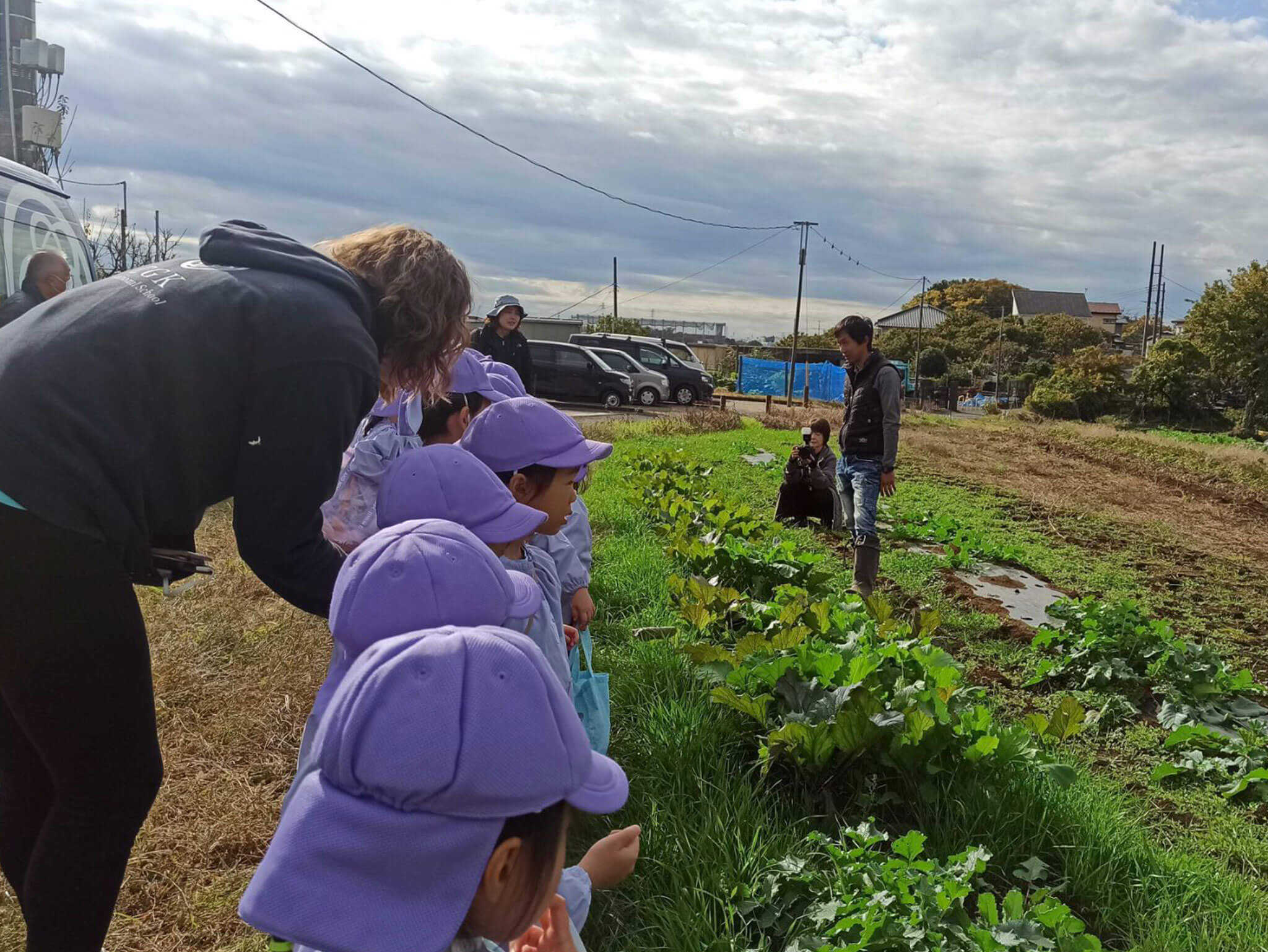
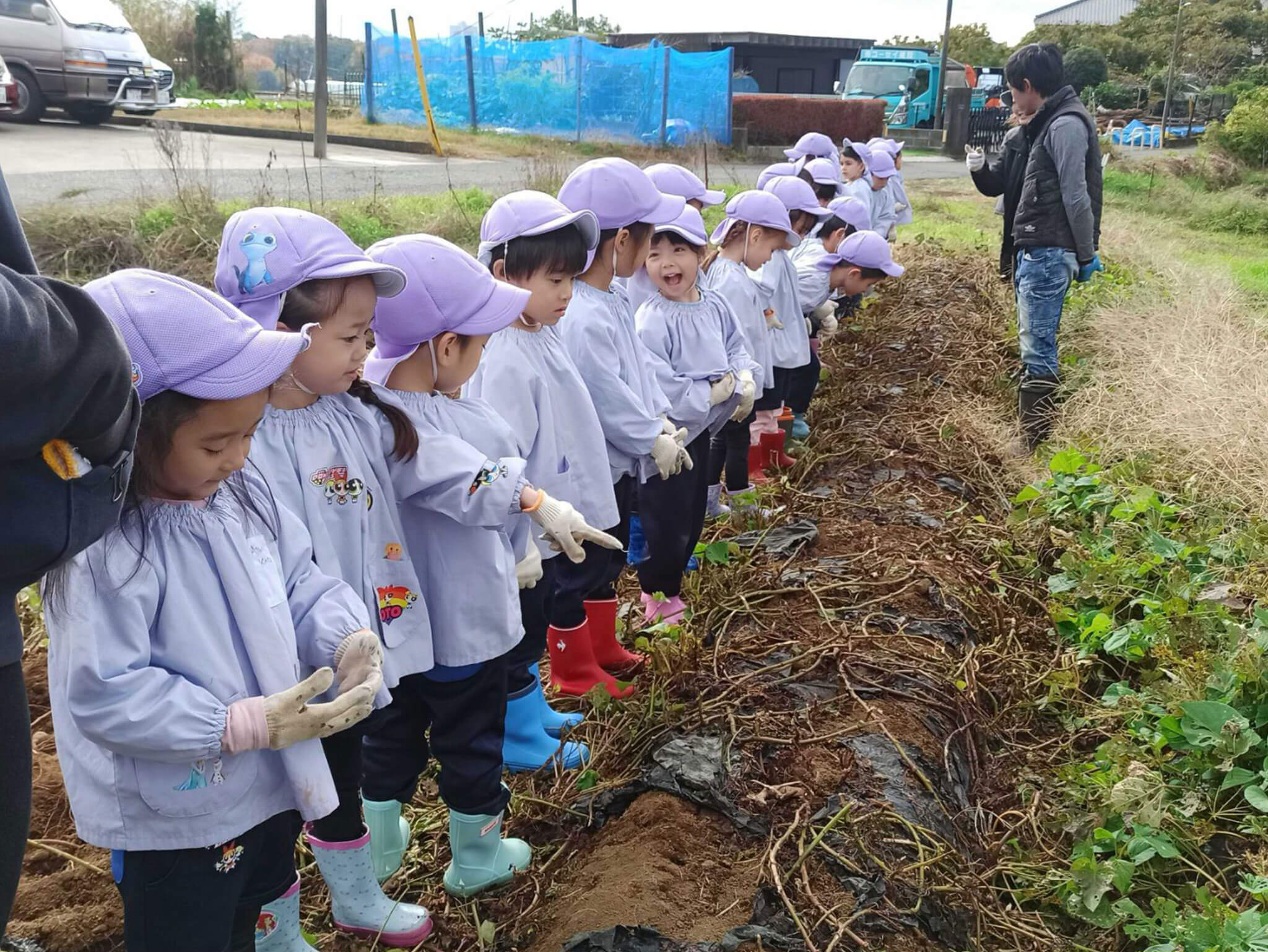
As a meaningful extension of our in-school inquiries, Mountain friends continued their exploration of food, nature, and community through a hands-on farming experience. Earlier in the year, the children planted sweet potatoes during the summer season. This month, with great excitement and curiosity, we returned to the farm to harvest the results of their hard work.
On a crisp autumn morning, the fields were full of energy as Mountain friends worked together to dig, pull, search, and discover more potatoes than we ever imagined! Some children found tiny potatoes hiding under the soil, while others unearthed giant ones that required teamwork to lift. The joy, surprise, and sense of achievement on their faces were wonderful to see.
This experience acted as a reminder of our previous Unit of Inquiry, “Sharing the Planet,” through themes of seasonal changes, life cycles, and understanding where our food comes from. Through this learning engagement, students strengthened their understanding of:
- the relationship between people, plants, and the environment;
- observing how the plants transformed from the summer planting to the autumn harvest;
- helping classmates dig and celebrating each other’s discoveries;
- engaging in outdoor physical activity while managing teamwork and emotions through excitement
Experiences like this help young learners build a deeper appreciation for nature and the food we eat, fostering early foundations for sustainability and healthy living. It also reinforces that learning doesn’t only happen inside the classroom—the world around us becomes a powerful teaching tool.
It was a day full of wonder, cooperation, and authentic, hands-on learning.
Empathy and Expression Through Sign Language
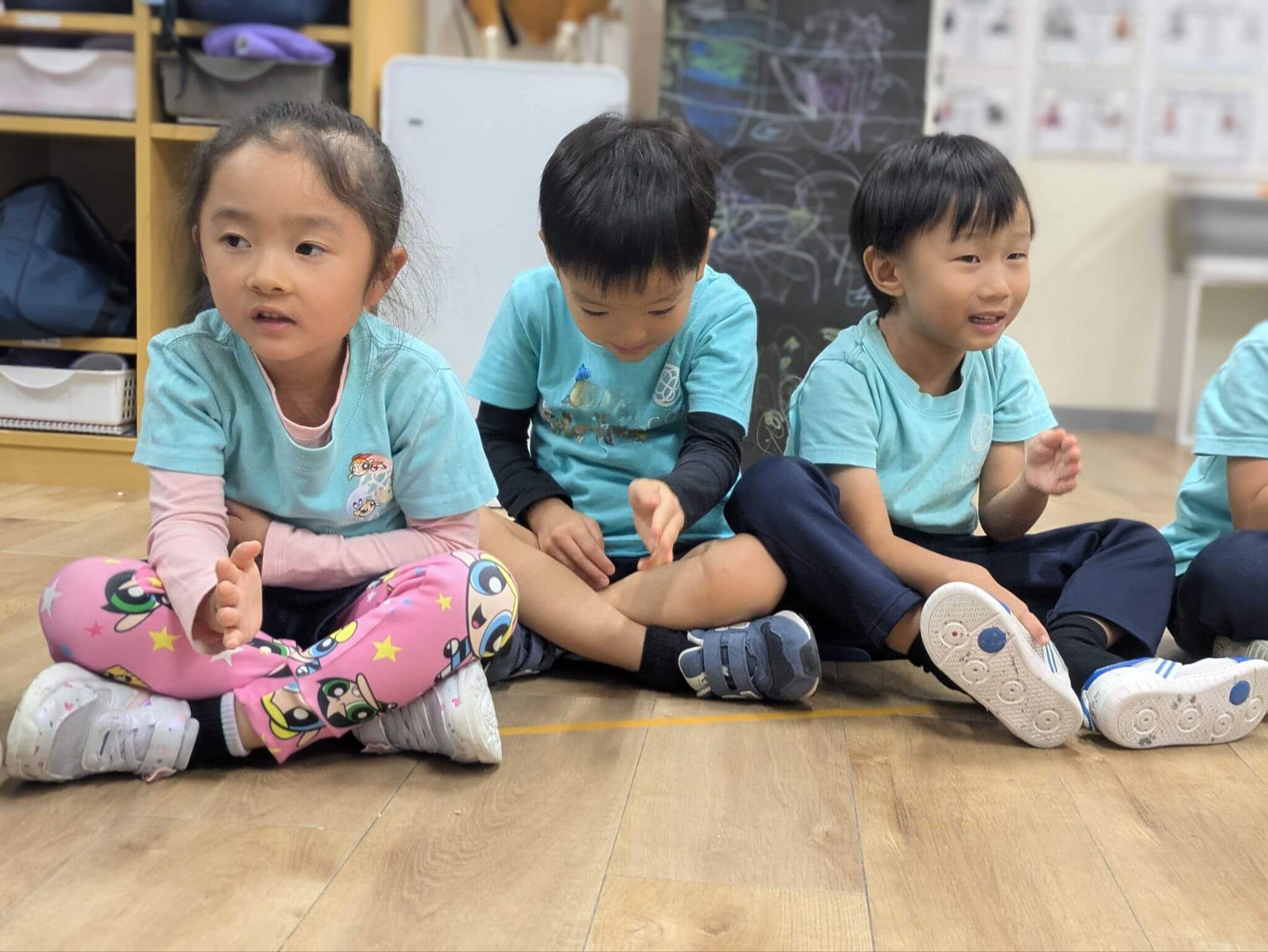
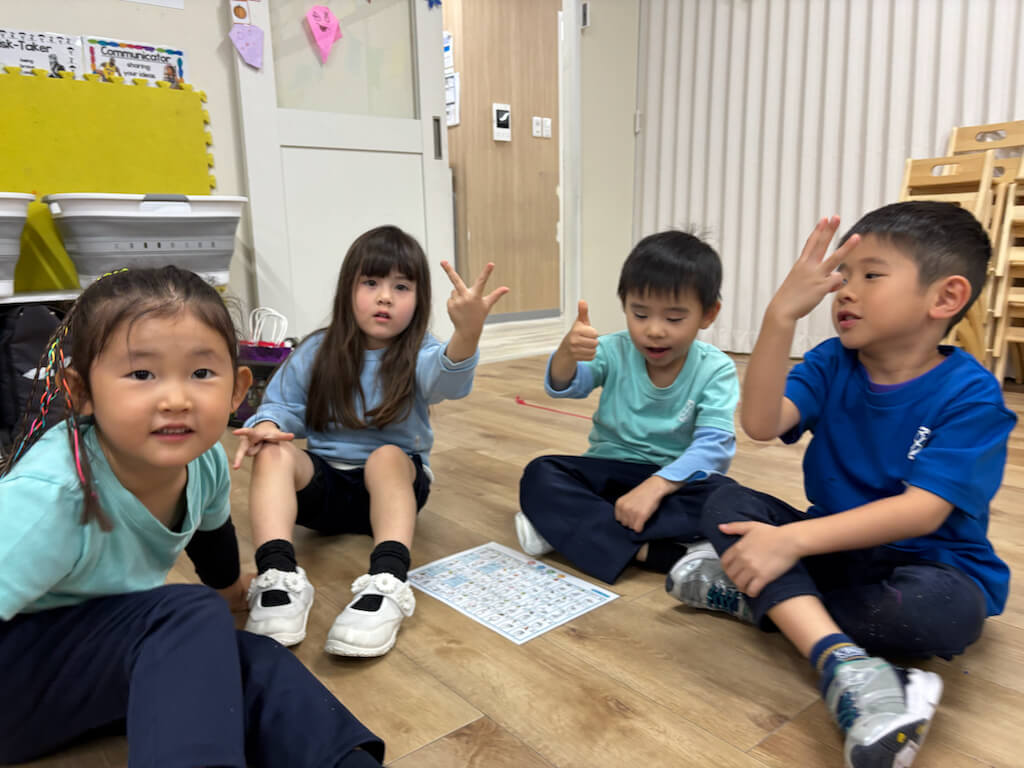
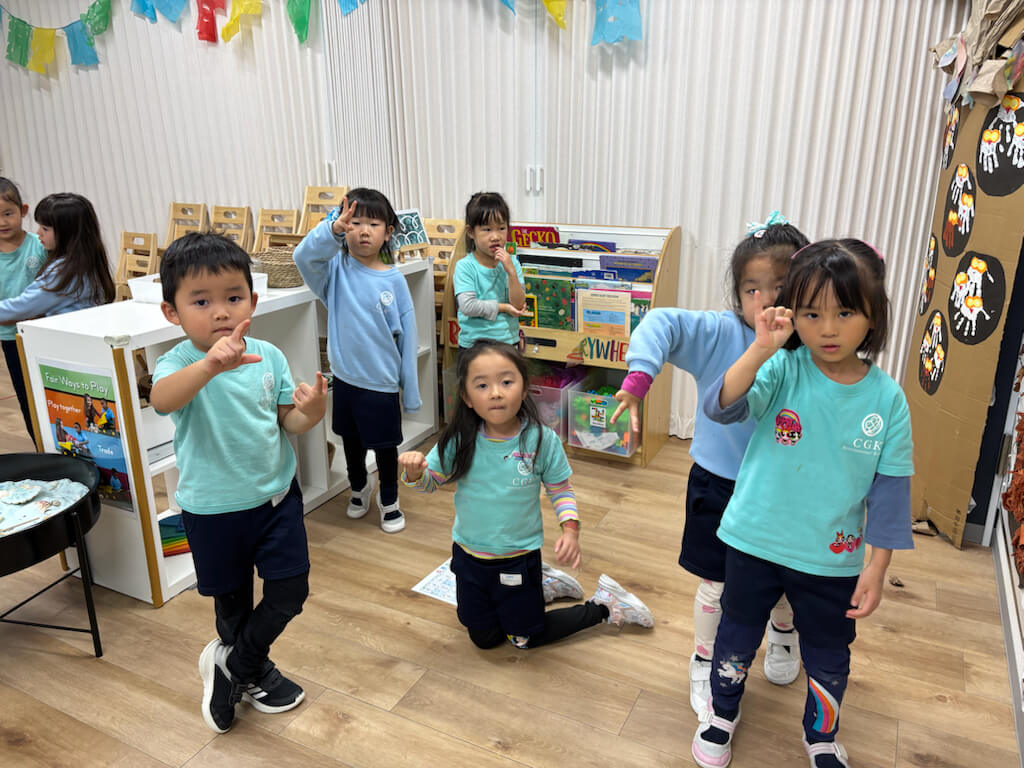
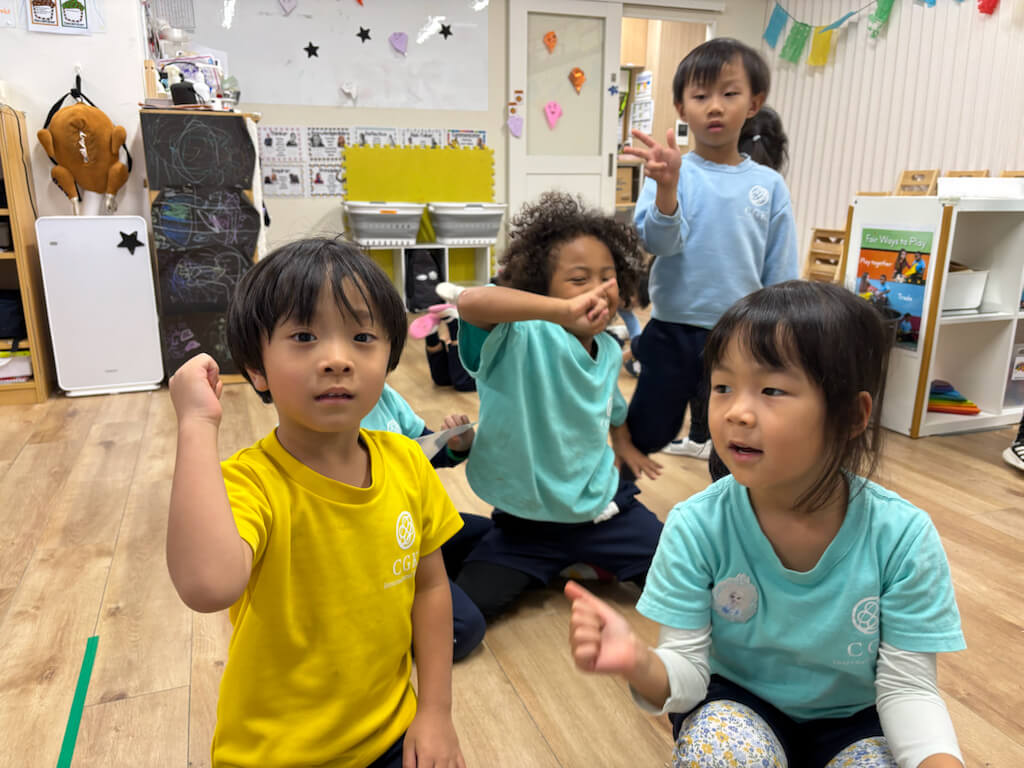
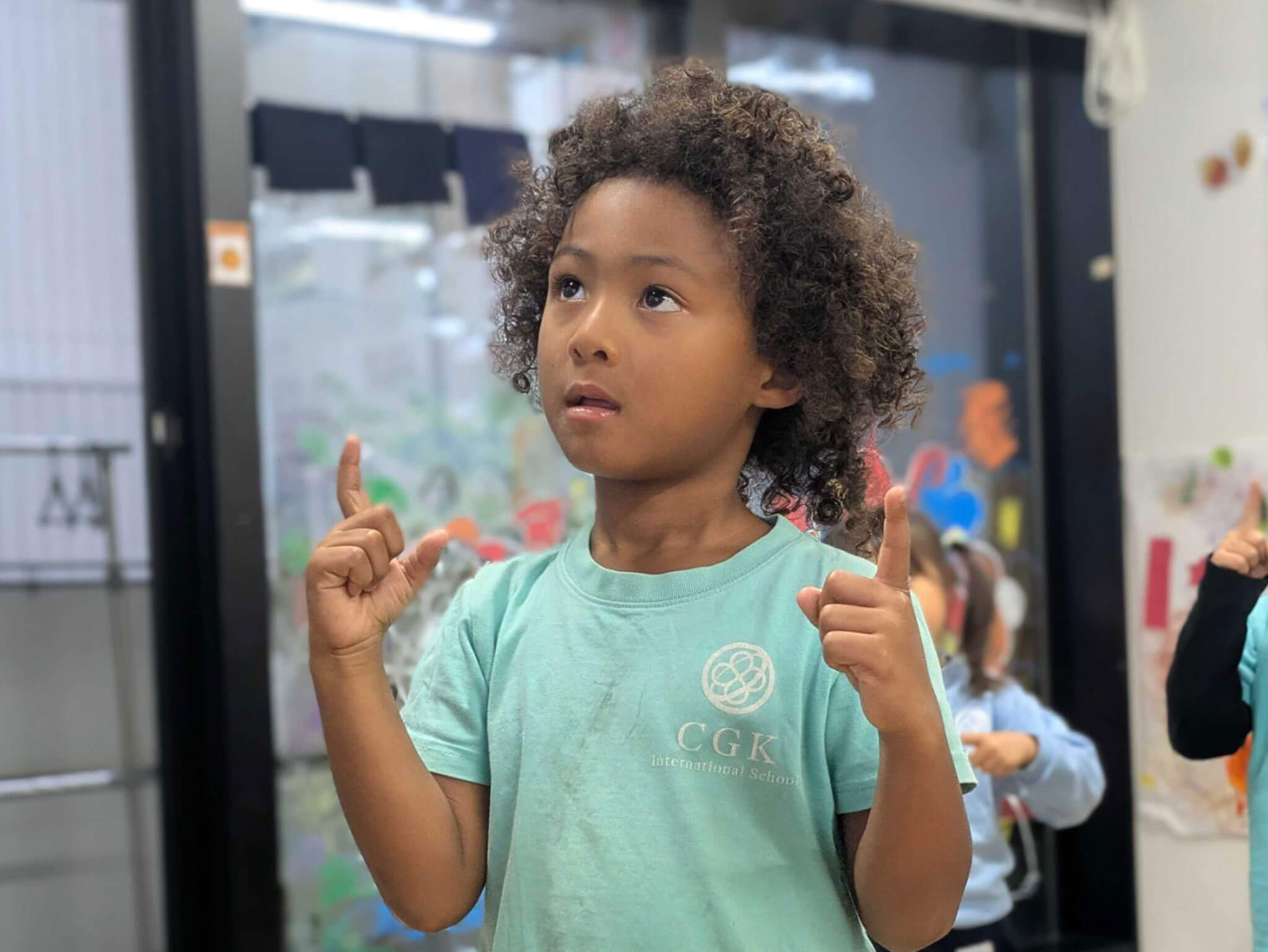
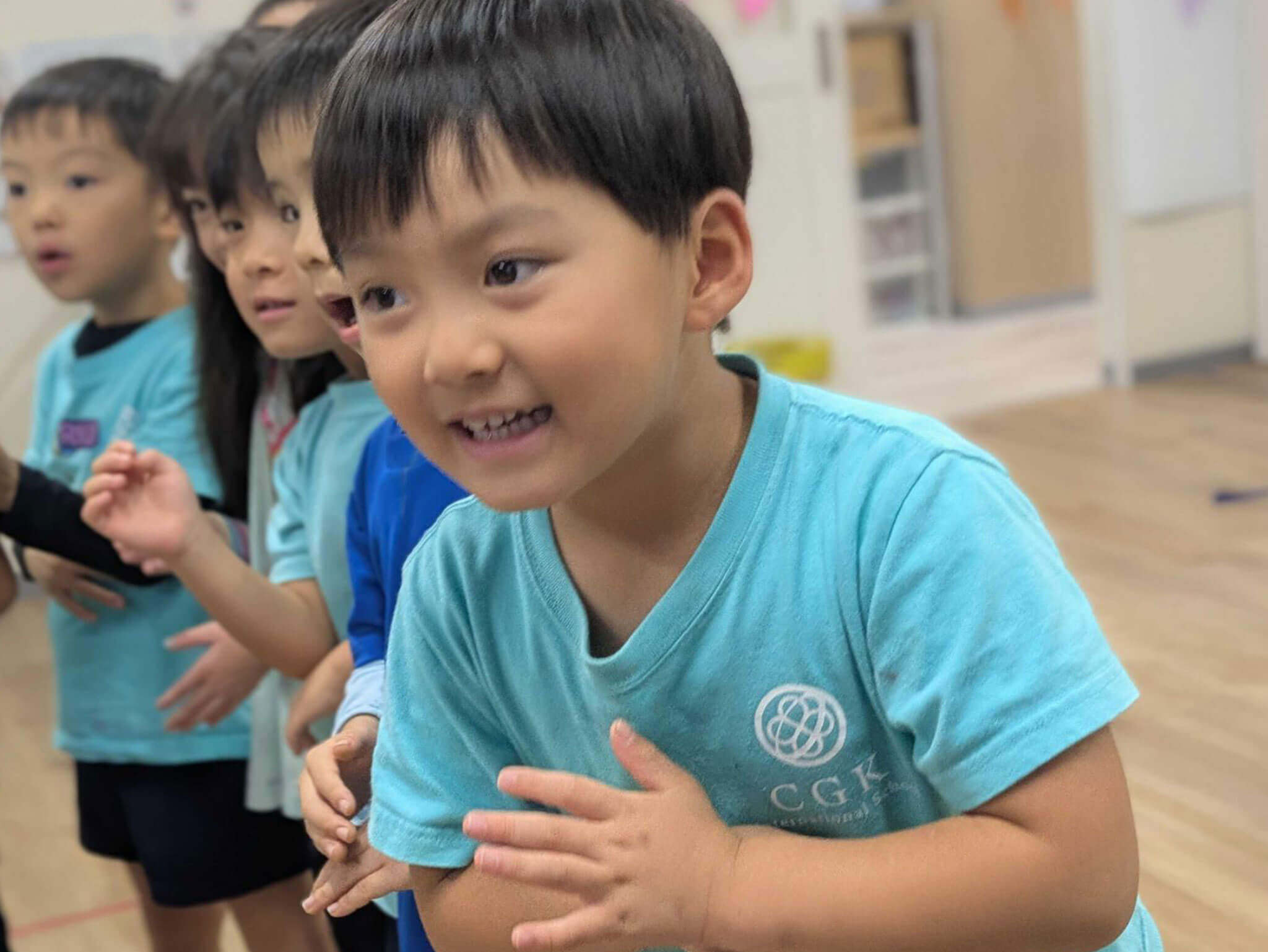
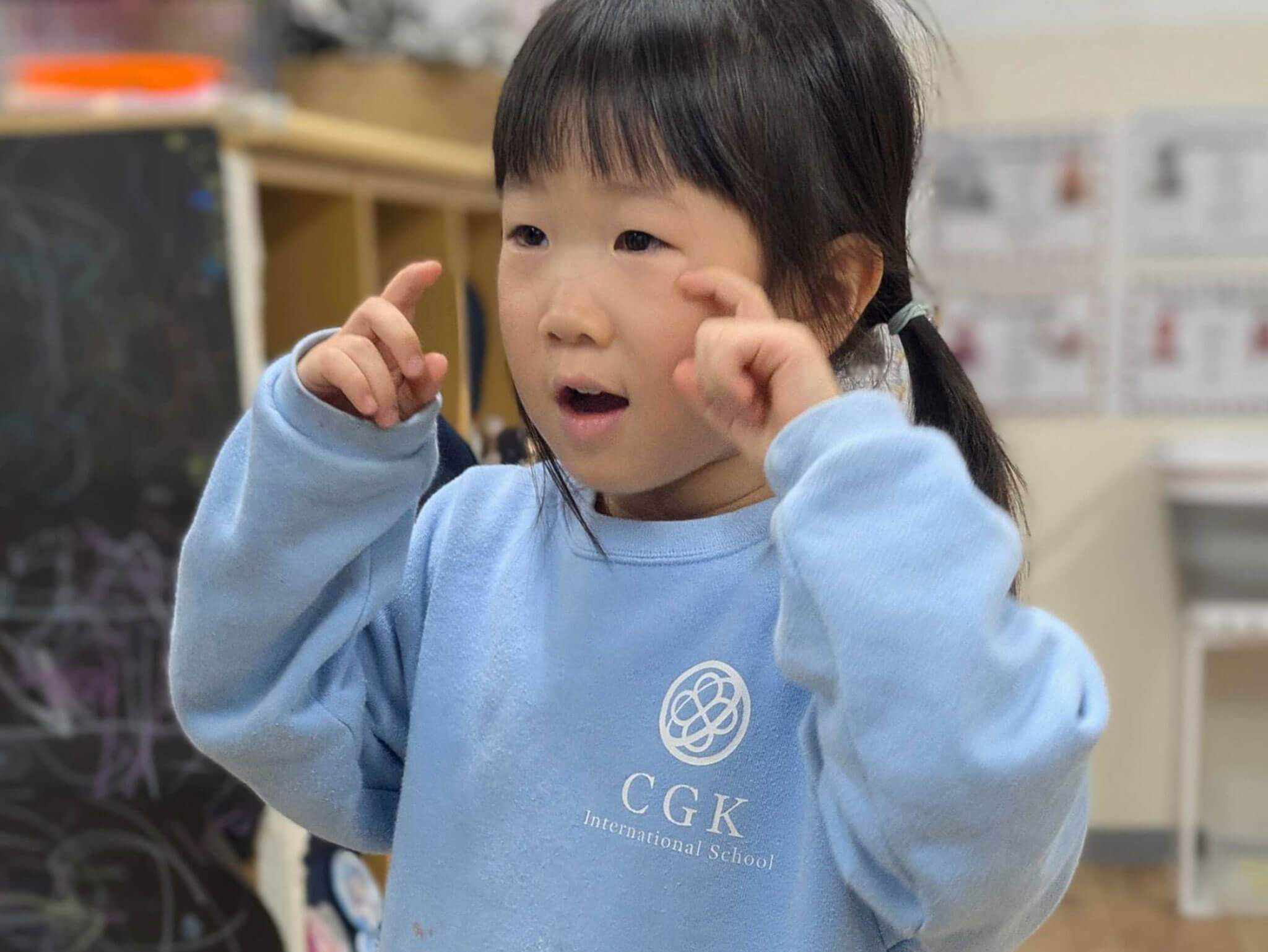
The children are currently working on the Unit of Inquiry (UOI) theme, “How We Express Ourselves.” During Japanese class, they explored different ways of communicating thoughts and feelings through sign language.
First, we talked together about how people who are deaf or who find it difficult to speak communicate their ideas and emotions. The children were fascinated to learn that even without using their voices, people can share many messages through hand movements and facial expressions alone.
When the children tried using sign language themselves, the experience of “communicating without speaking” felt fresh and exciting. Many naturally began to say, “I want to be able to express more in sign language!” As they learned greetings and simple words, their confidence grew, and it was wonderful to see them happily using sign language with their friends.
The children also challenged themselves to present in front of the class using sign language, practicing phrases such as “What is your name?” and “My name is ___.” Through these presentations, they further developed confidence in expressing themselves in front of others.
In addition, children whose first language is not Japanese were especially engaged during the sign language lessons. Because sign language does not rely on spoken language, everyone was able to start on equal footing, allowing the whole class to share and enjoy the learning experience together.
Through learning sign language, the children gained an important realization: there is more than one way to communicate. Moving forward, we hope to continue exploring a variety of forms of expression, helping children connect with others, build empathy, and confidently express their own individuality.
Jungle A
(3-year-olds)
Student Led Conferences
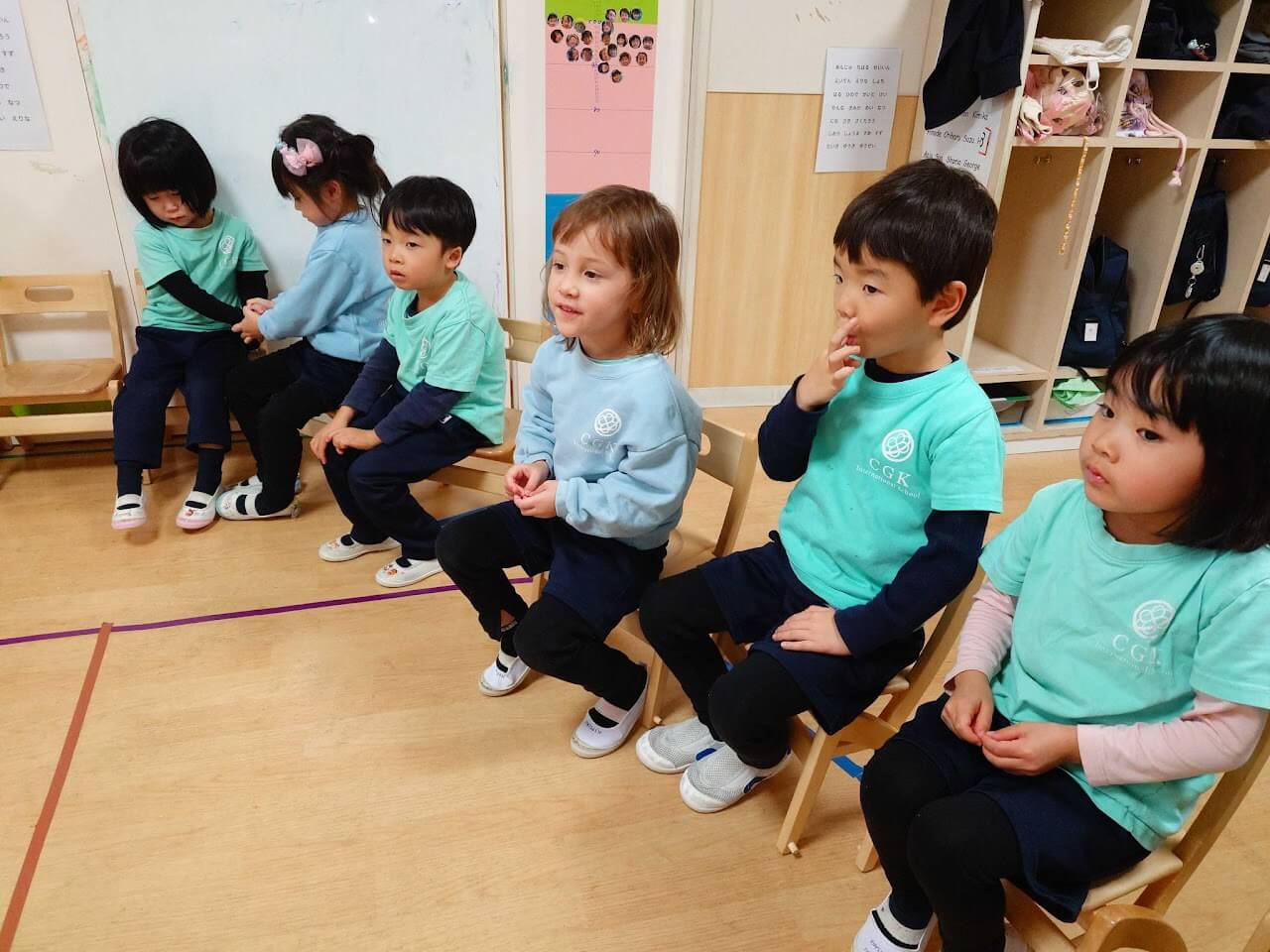
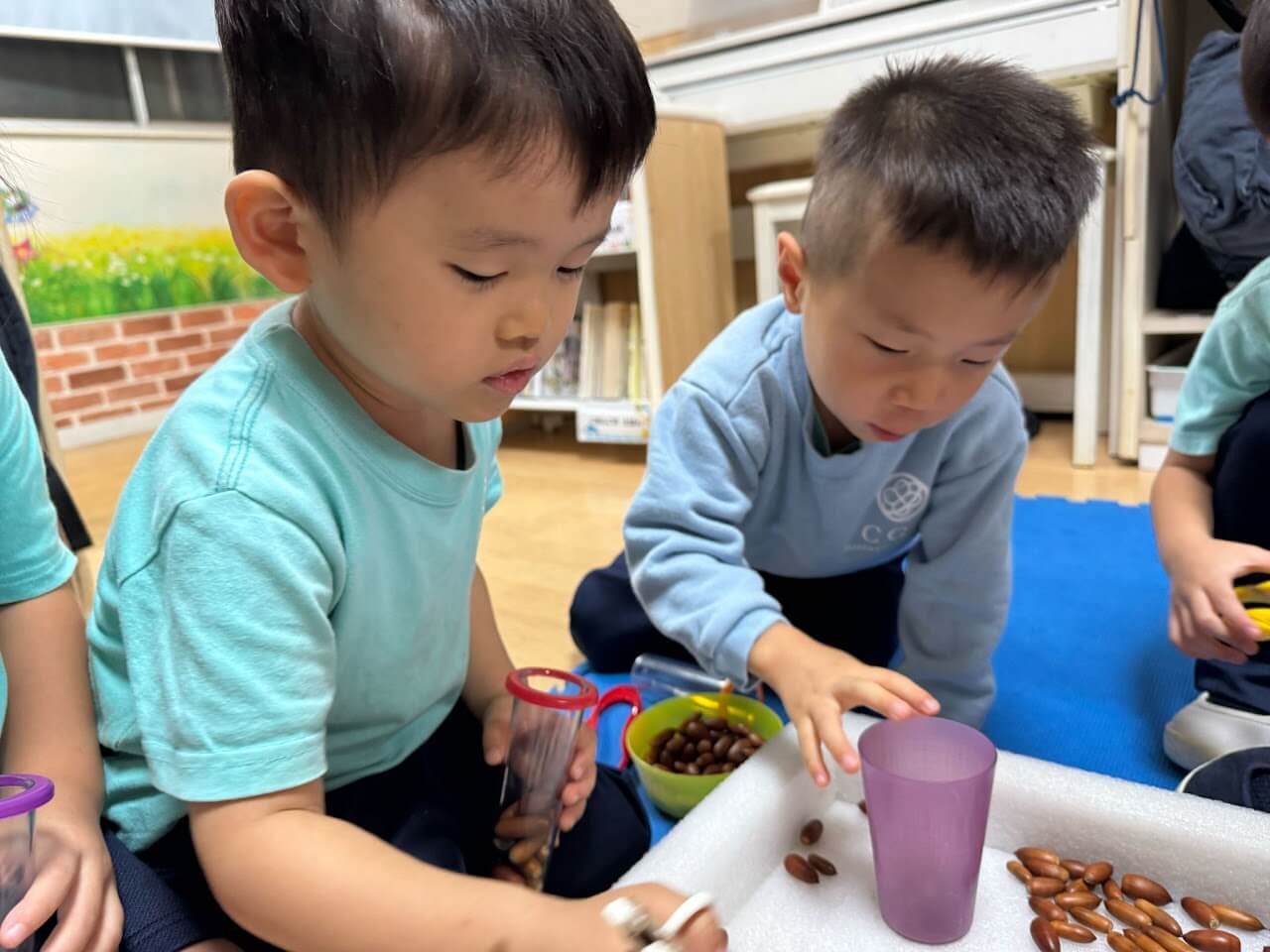
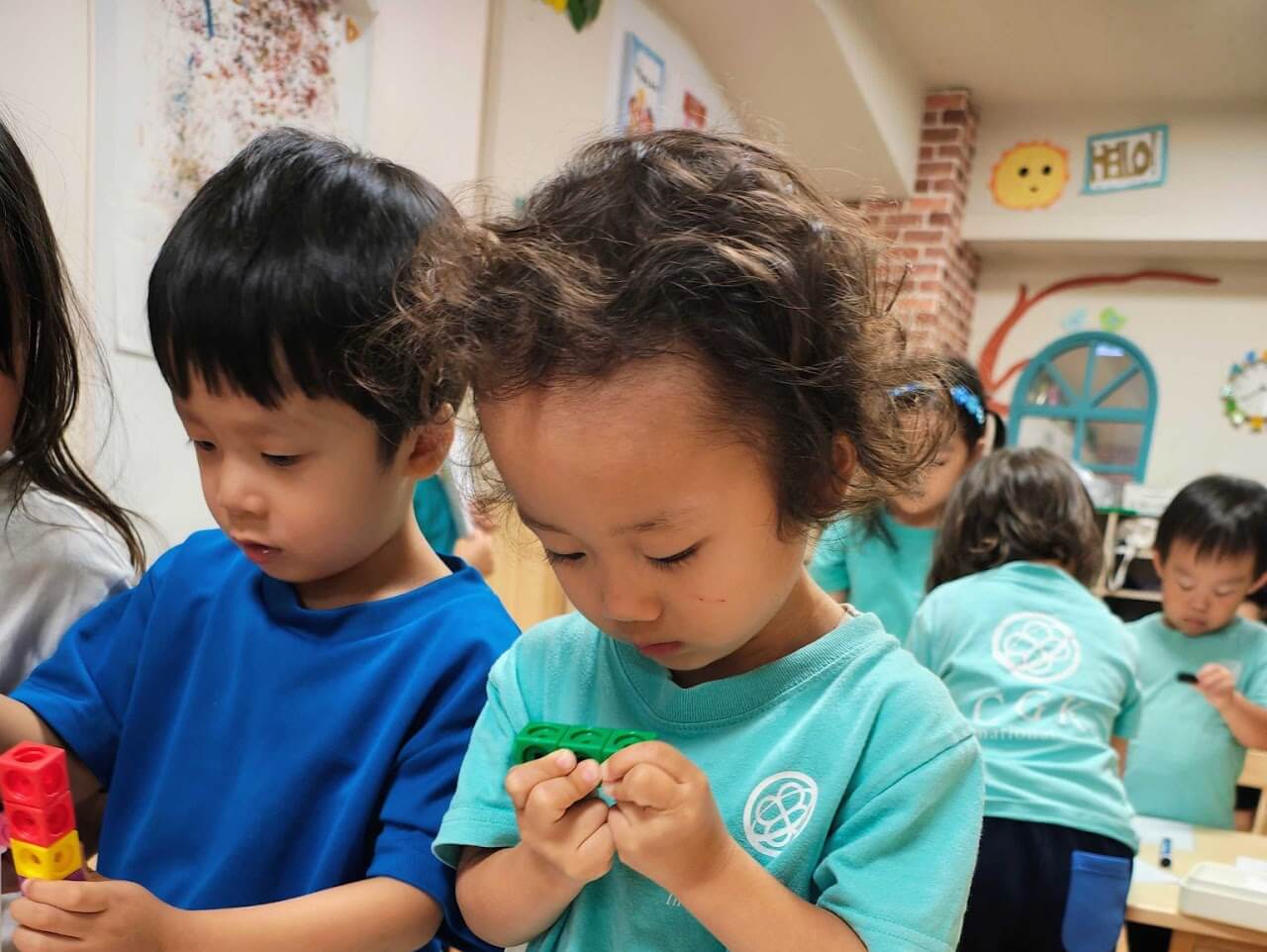
This year is flying by and it is already time for our Student Led Conferences! For those of you who are unfamiliar with the concept, this will be an opportunity for the students to take on a more leadership type role, showing you what they have been doing in the classroom, with minimal help from the teachers! The students have already begun to think about what kind of things they would like to share and how they would like to present it, and we are really excited to see them take on such a unique challenge. More information will be provided before the day about what to expect, however for reference it will be very different to a usual 'parent teacher conference' - the main aim of the day being for your children to share their school lives with you in their own way! This kind of set up is definitely something that many of us will have little to no experience of so please feel free to reach out and ask questions, but remember that you can also ask your children! Jungle A have already made such a wonderful amount of progress, and we have no doubt that they are so excited to share with you in December.
A Season Full of Events!
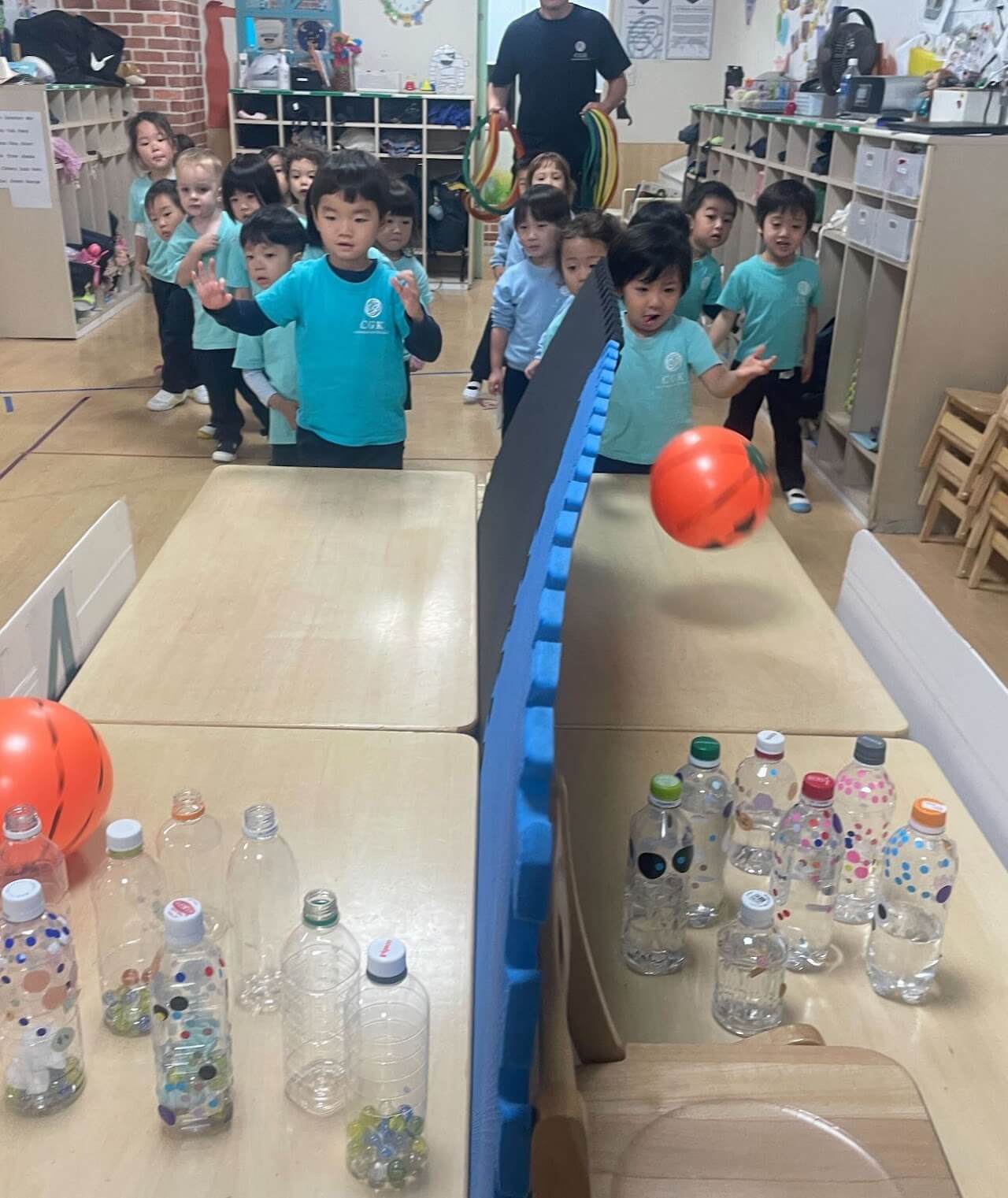
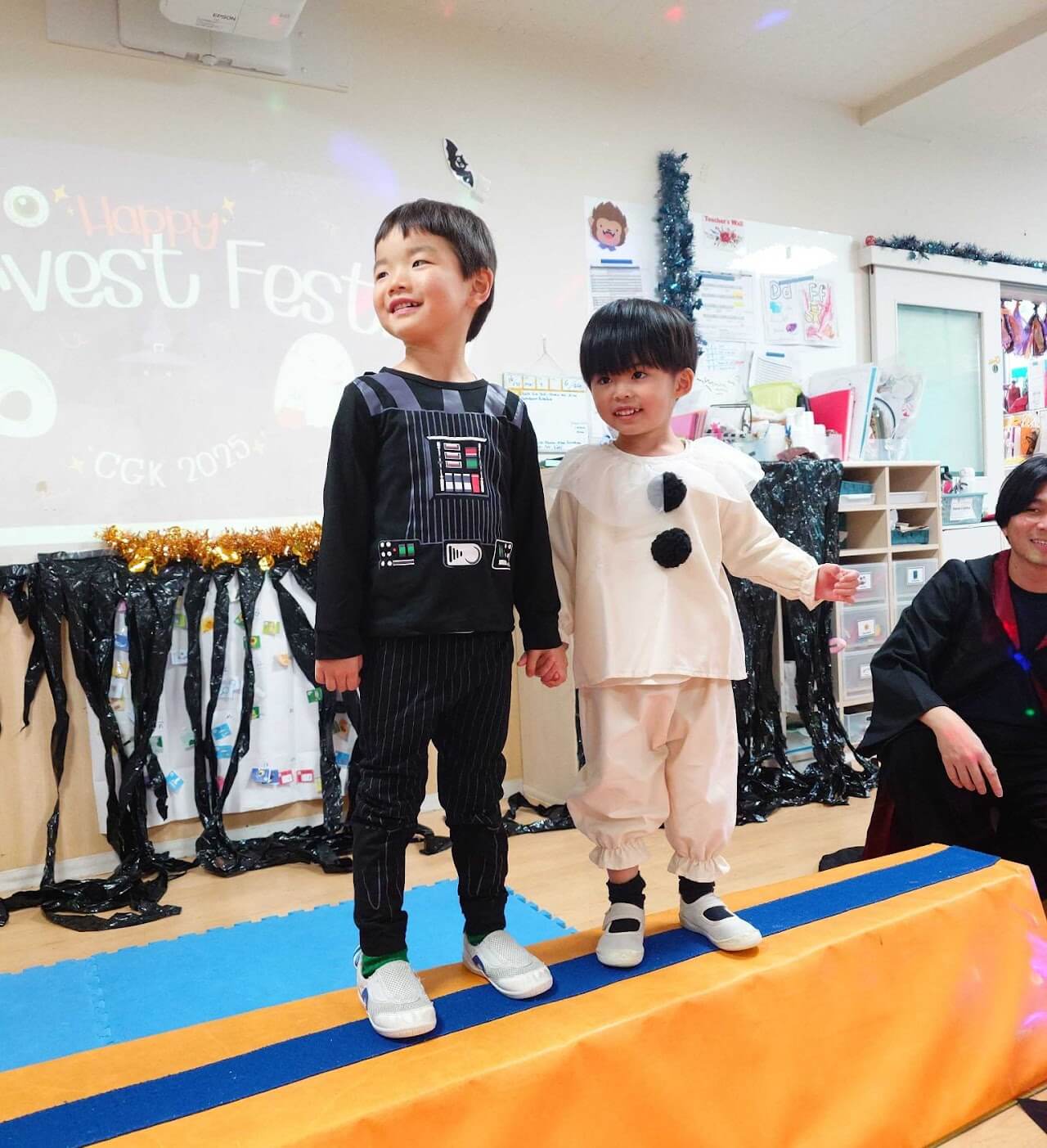
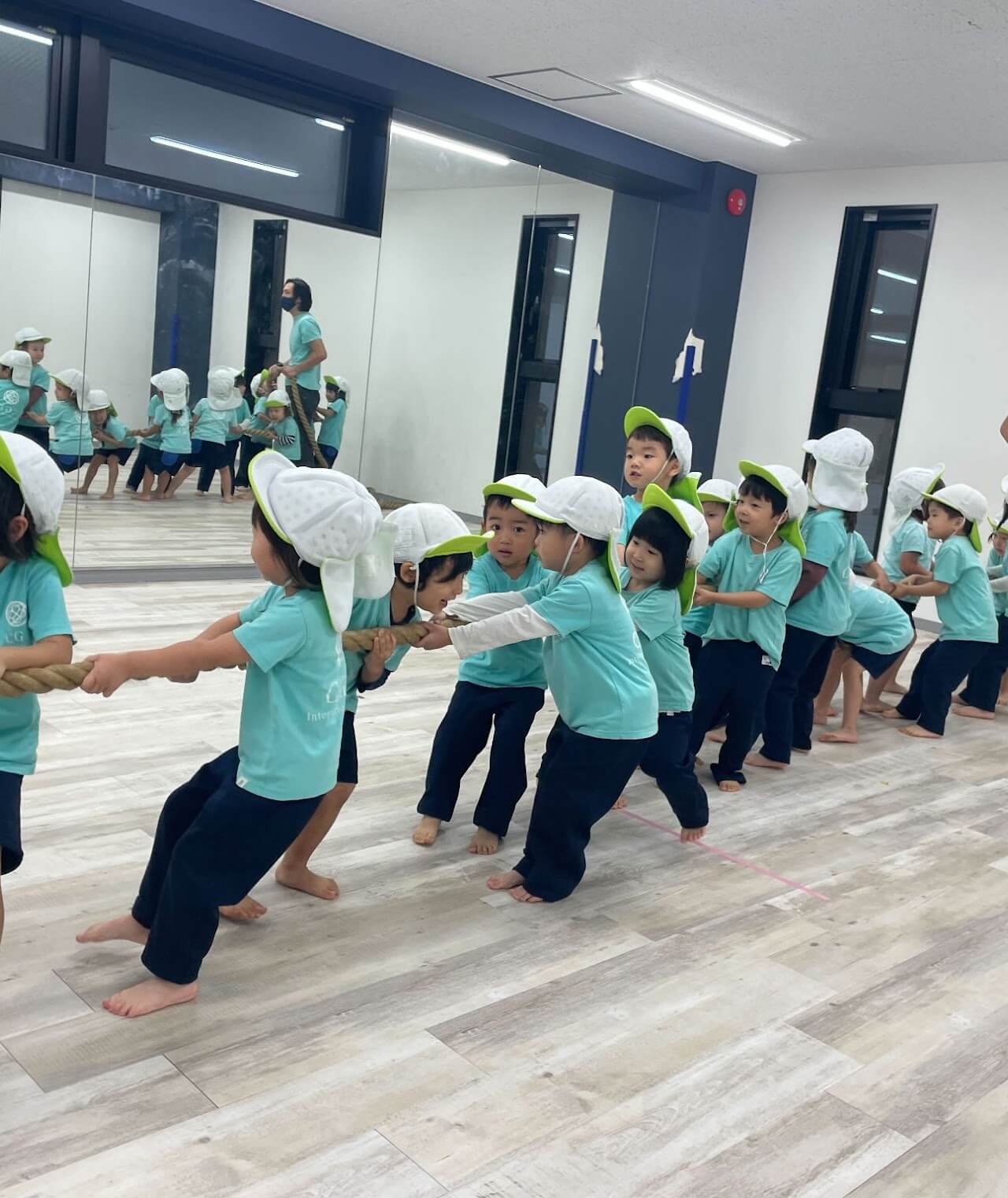
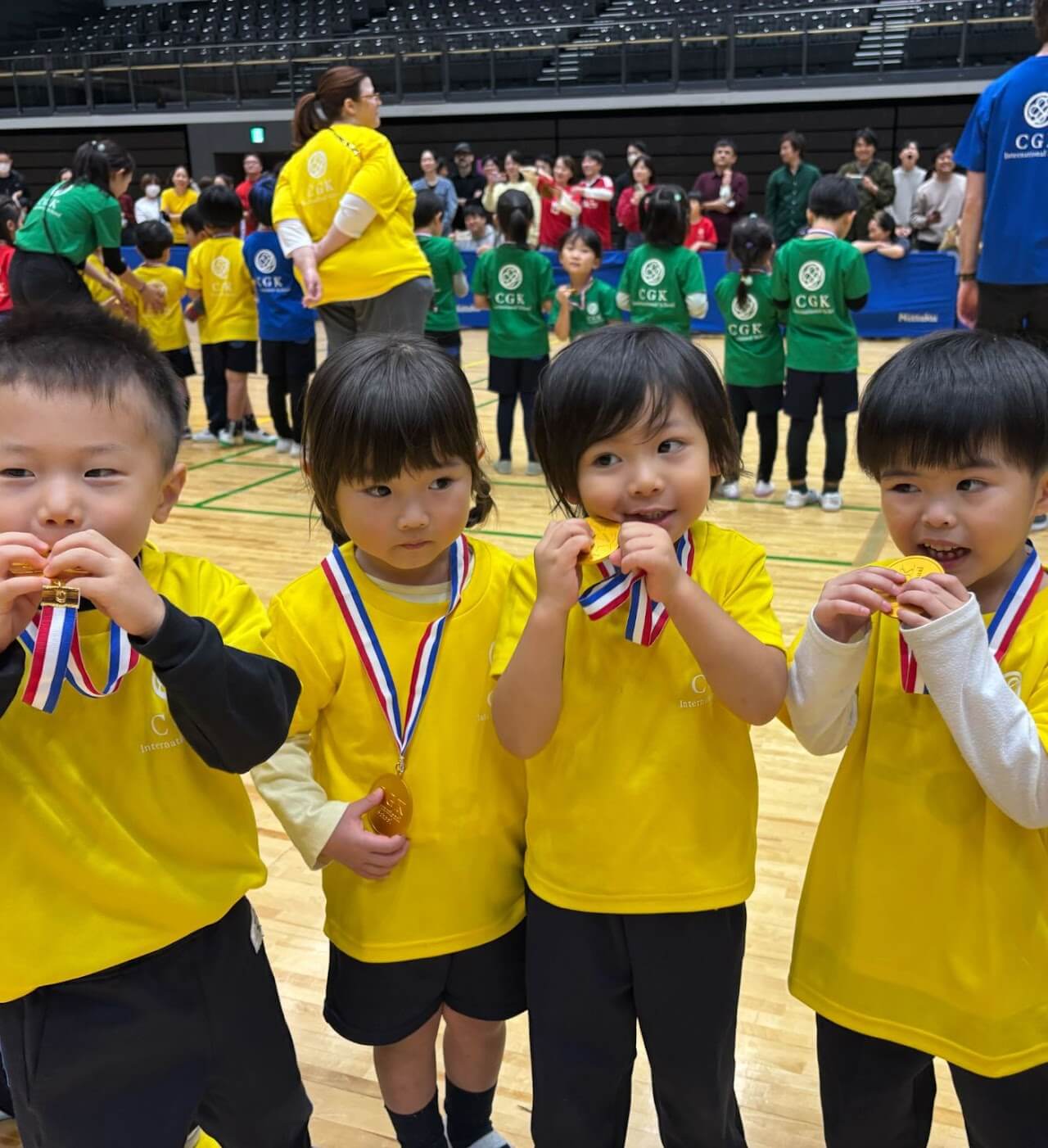
From the end of October to the beginning of November, CGK was filled with exciting events! The children worked hard on preparations and practice for each event, valuing their own ideas and showing a strong sense of agency throughout.
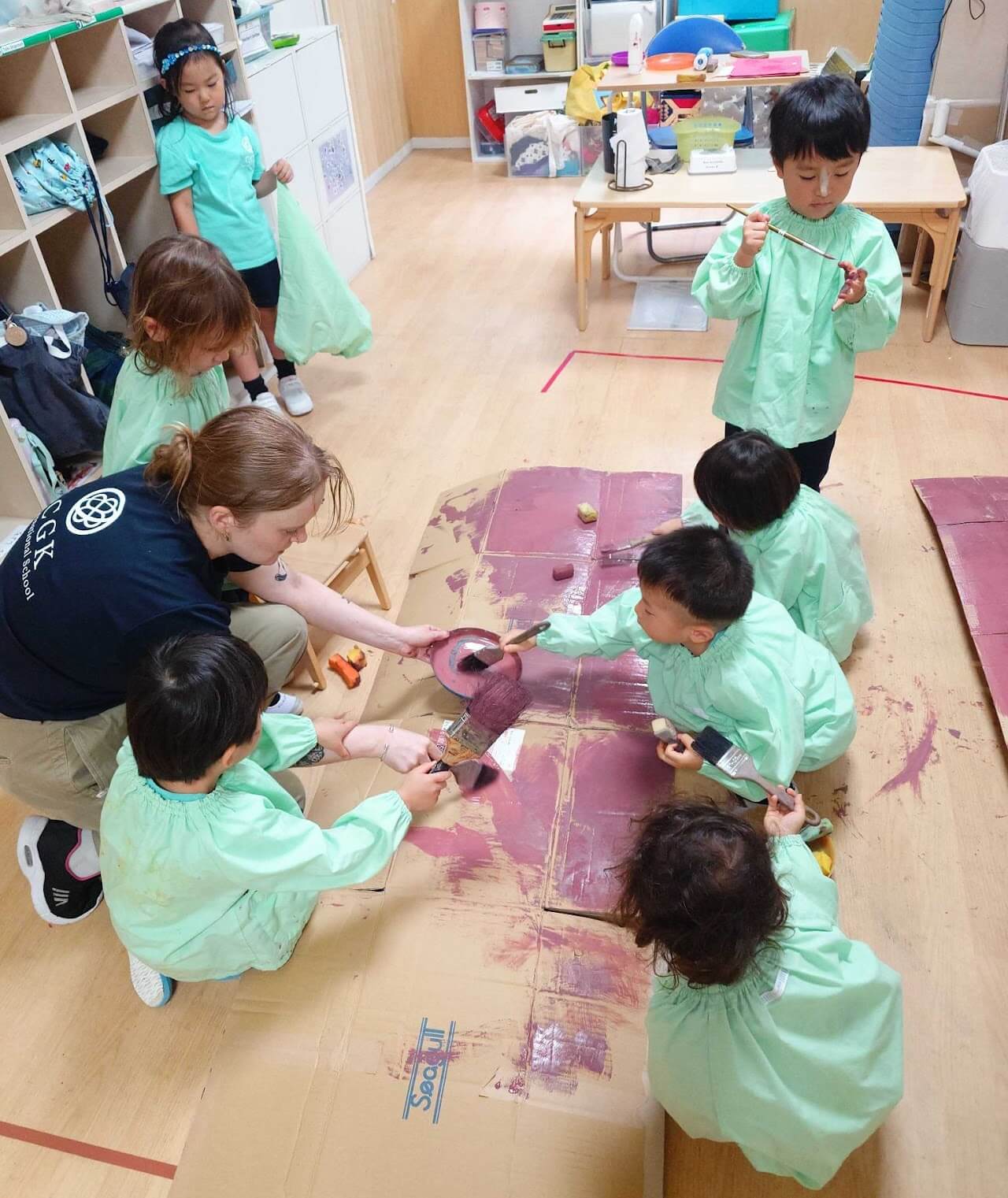
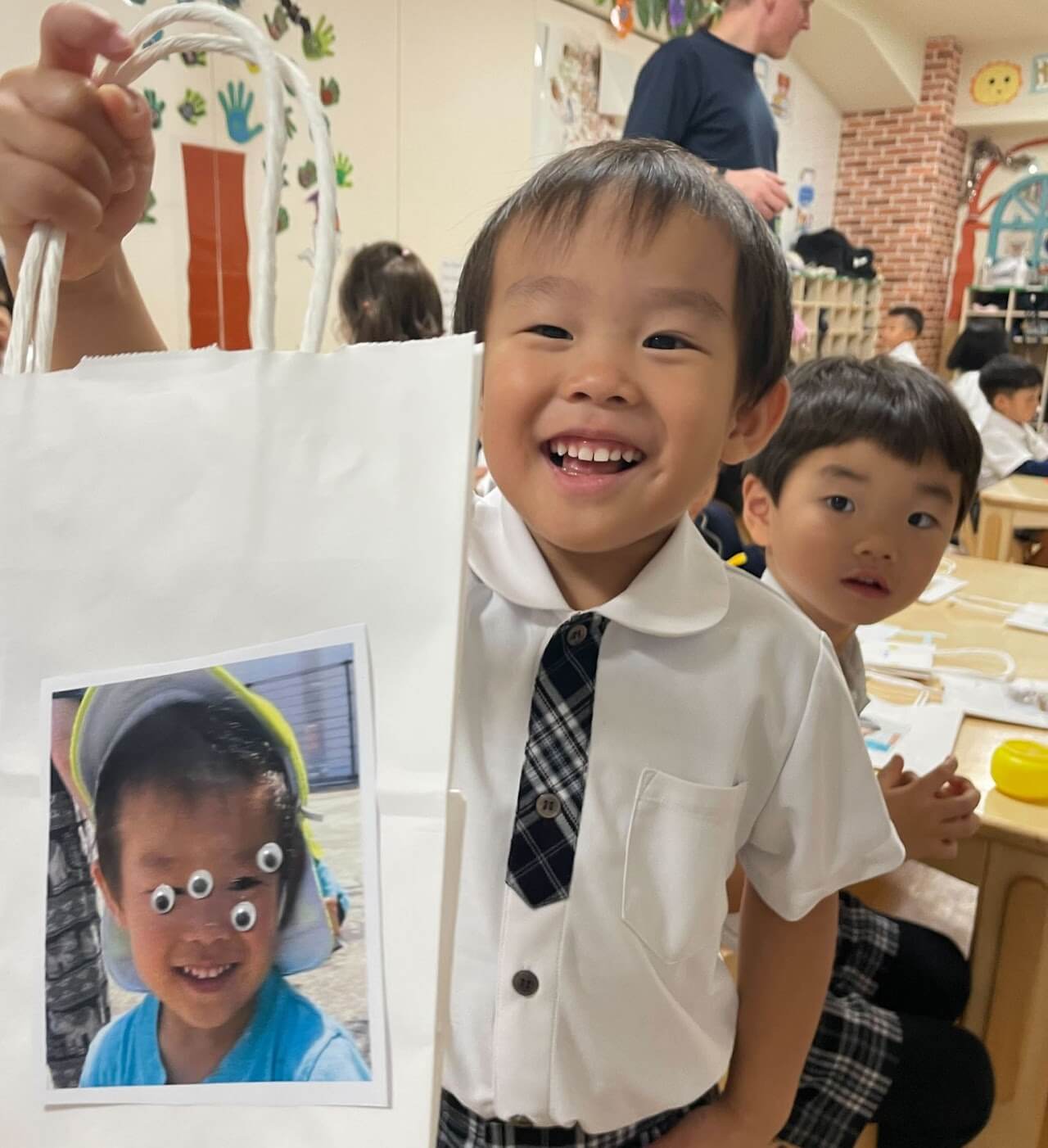
For the School Festival and the Harvest Event, the children enjoyed seasonal activities as part of their preparations—painting with Halloween-inspired themes such as jack-o’-lanterns, ghosts, and monsters, and making Trick-or-Treat bags. ♪
On the day of the Harvest Event in particular, the children were eagerly looking forward to coming to school in their favorite costumes. They proudly showed off their wonderful outfits, including princesses, police officers, and more.
Soon after, it was time for Sports Day! Starting with learning their team colors, the children practiced enthusiastically while learning the importance of teamwork and experiencing both winning and losing together. During the Jungle class games, they demonstrated great teamwork, and in the team events, they enjoyed taking on various challenges with help from older students.
In addition, the parent events were a special highlight, as the children were able to run together with their moms and dads, their faces beaming with happiness. Thank you so much to all the parents who participated!
The sense of unity within Jungle class continues to grow stronger and stronger. Moving forward, we look forward to taking on many more challenges together!
Jungle B
(3-year-olds)
Plants, Animals, and Humans - Oh My!
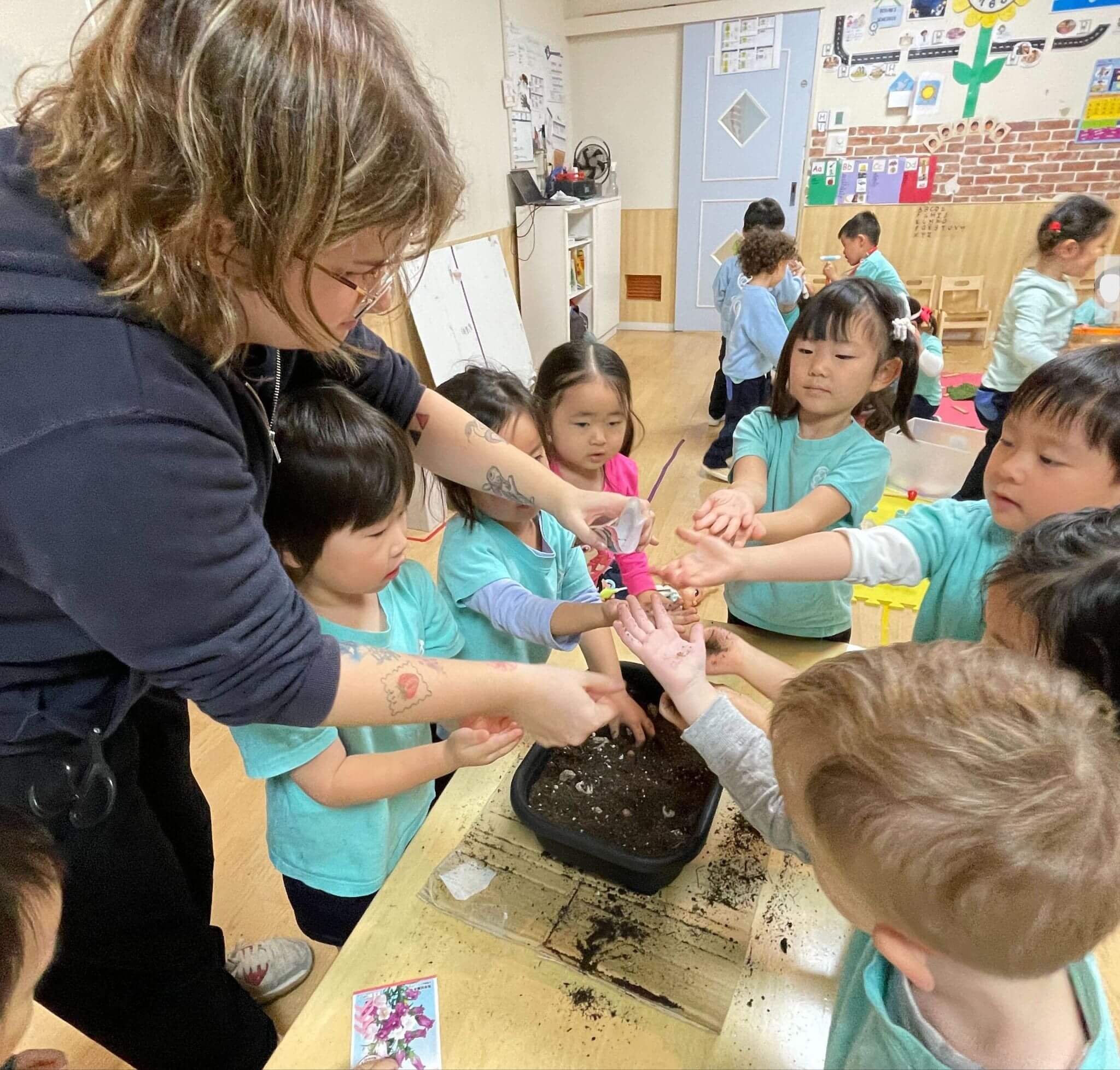
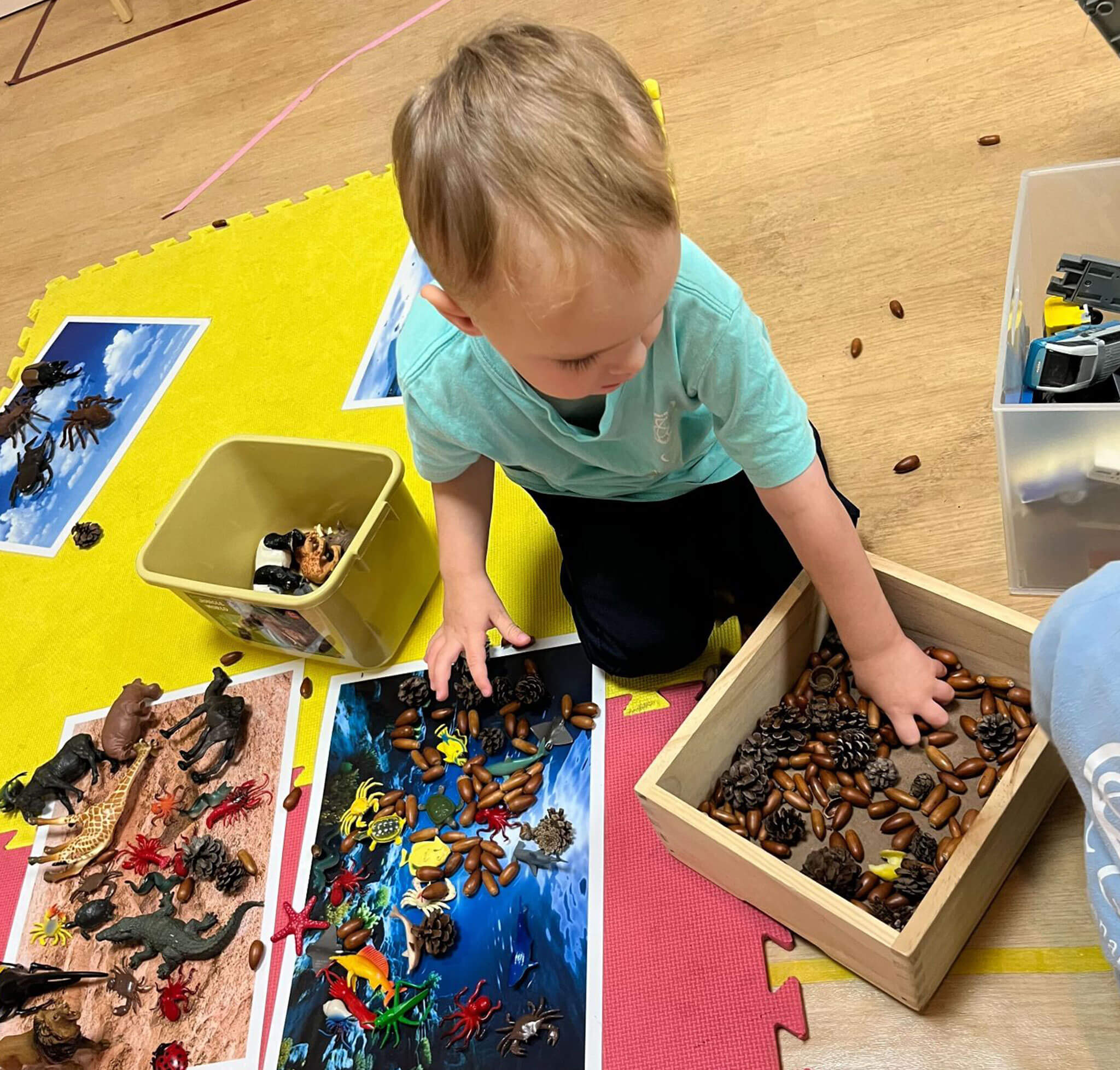
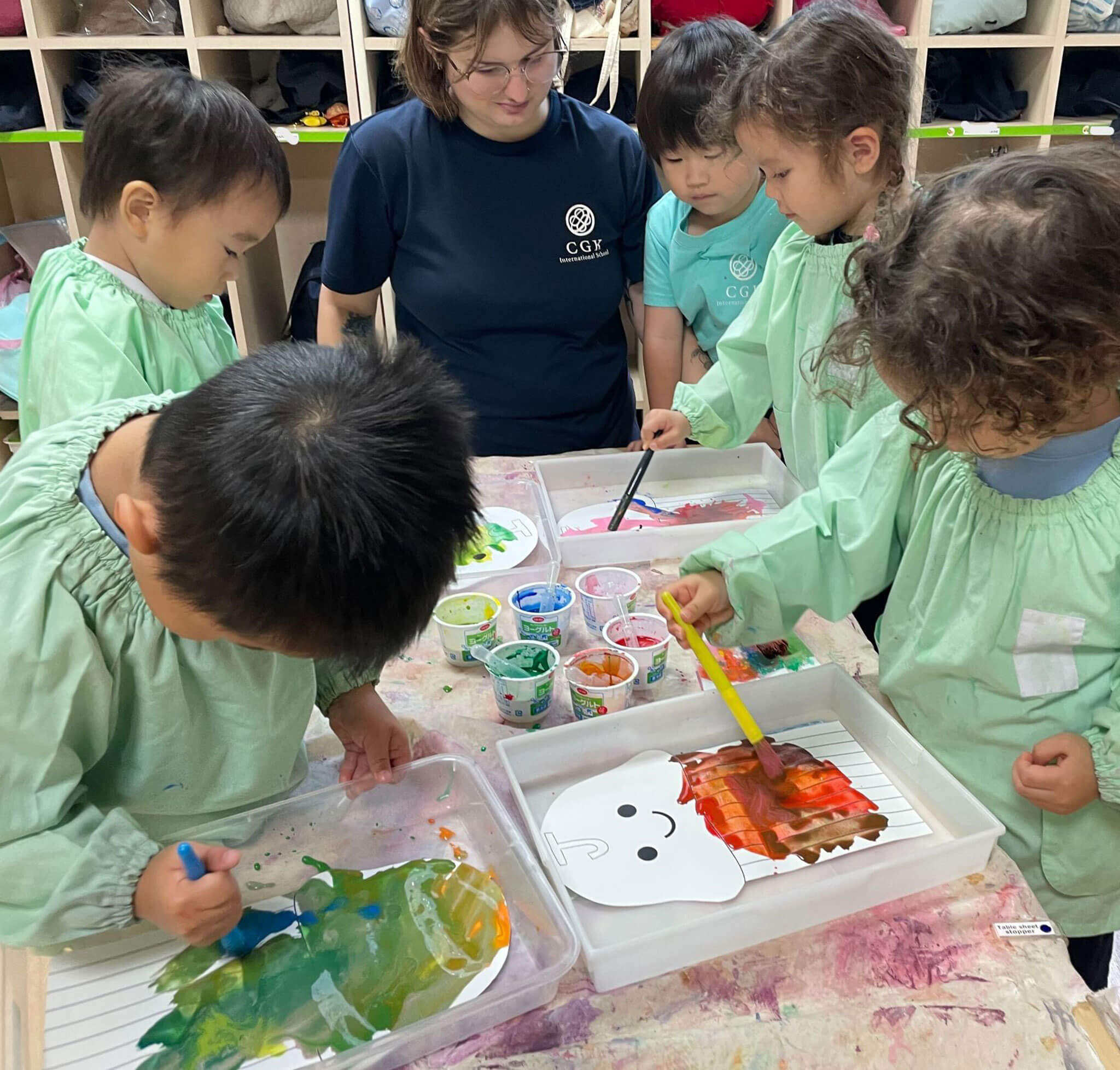
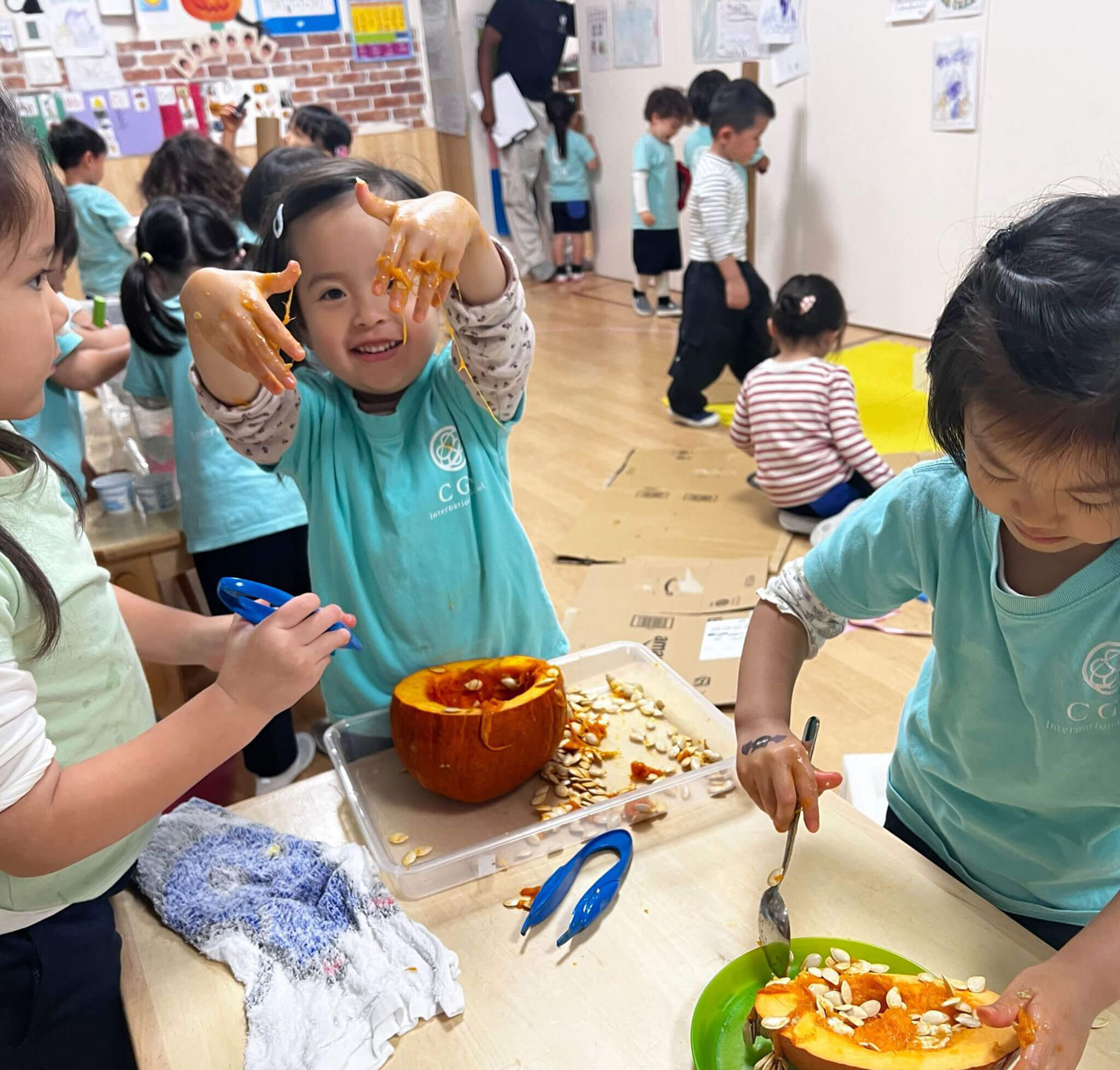
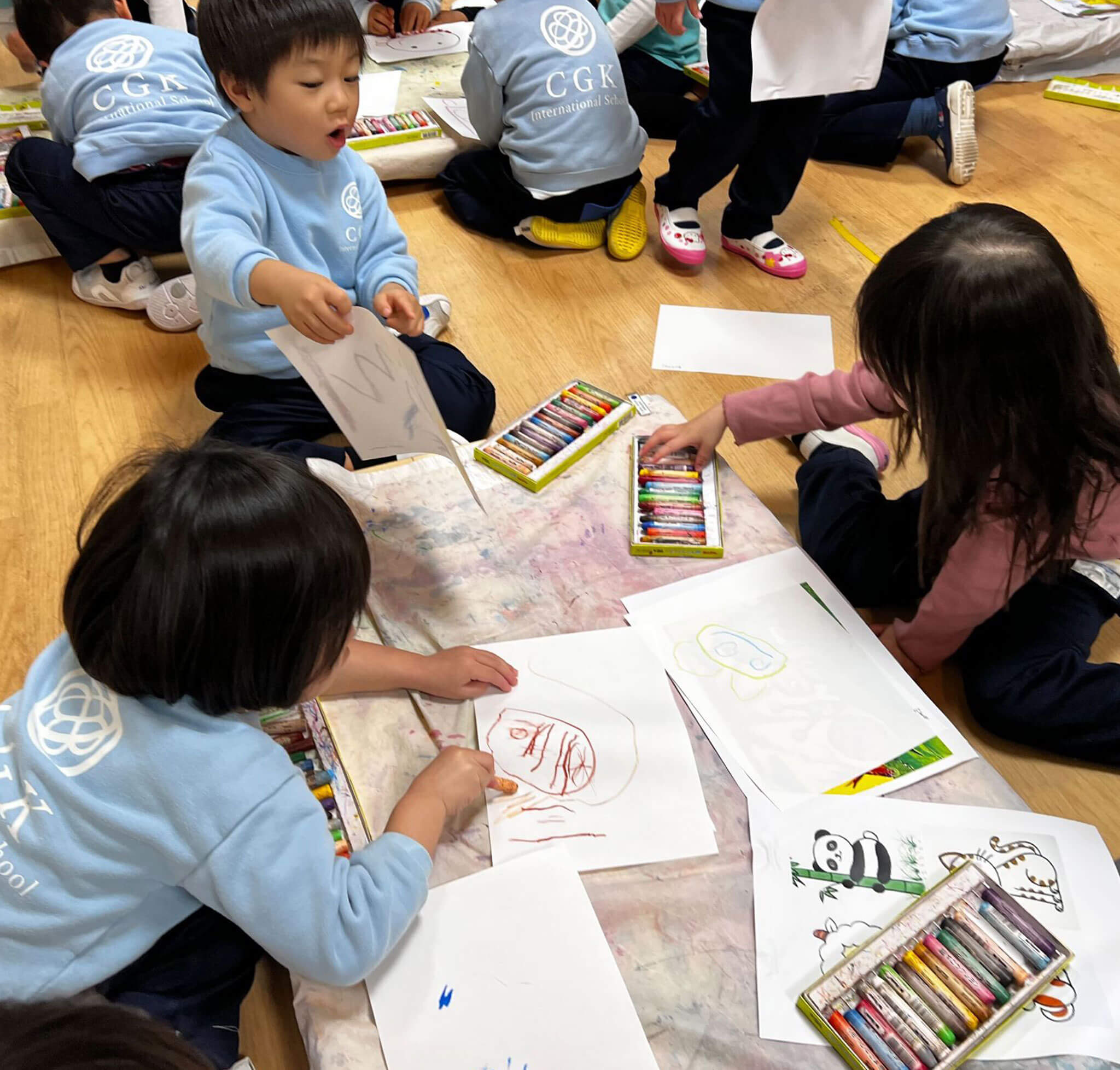
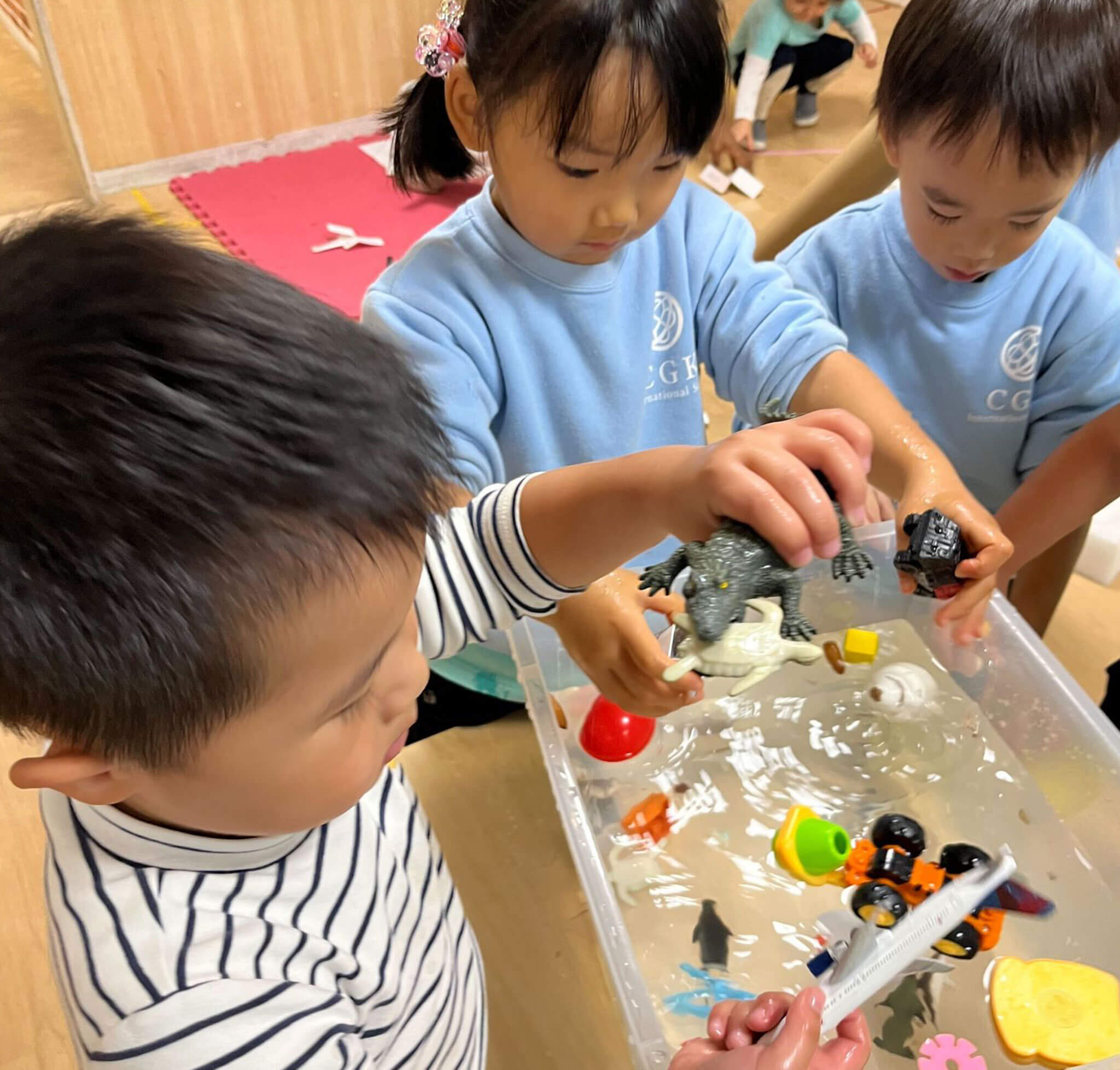
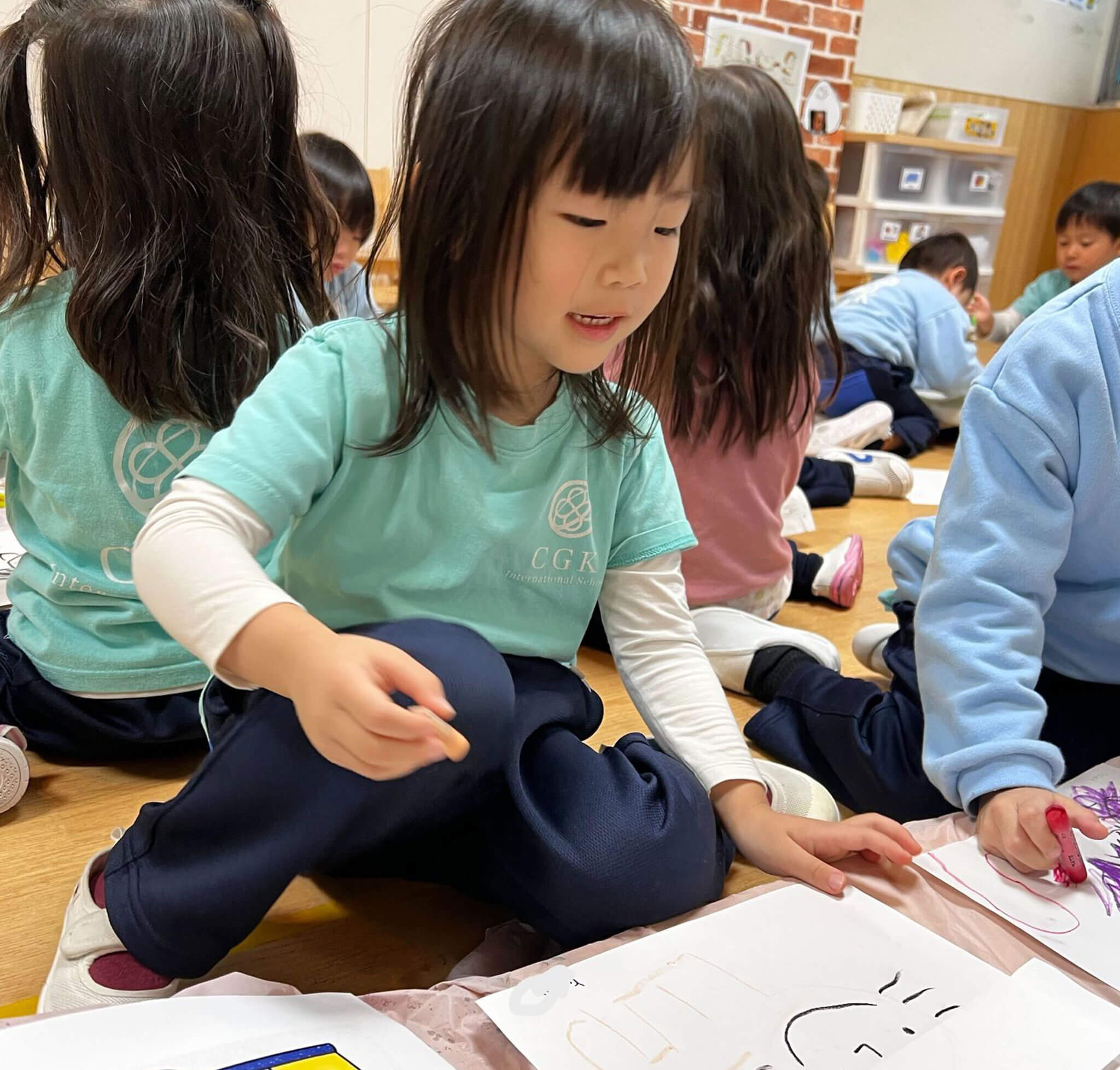
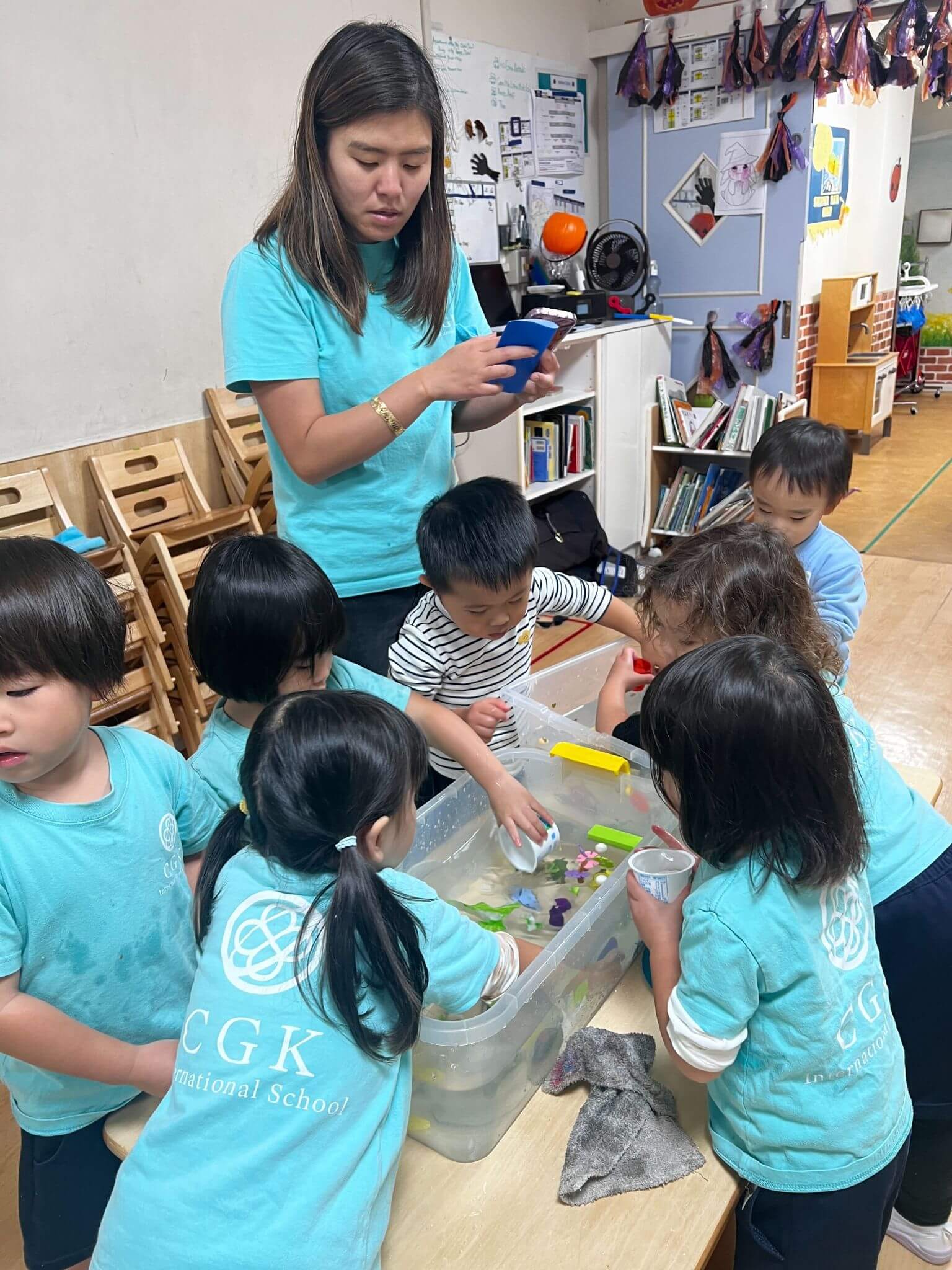
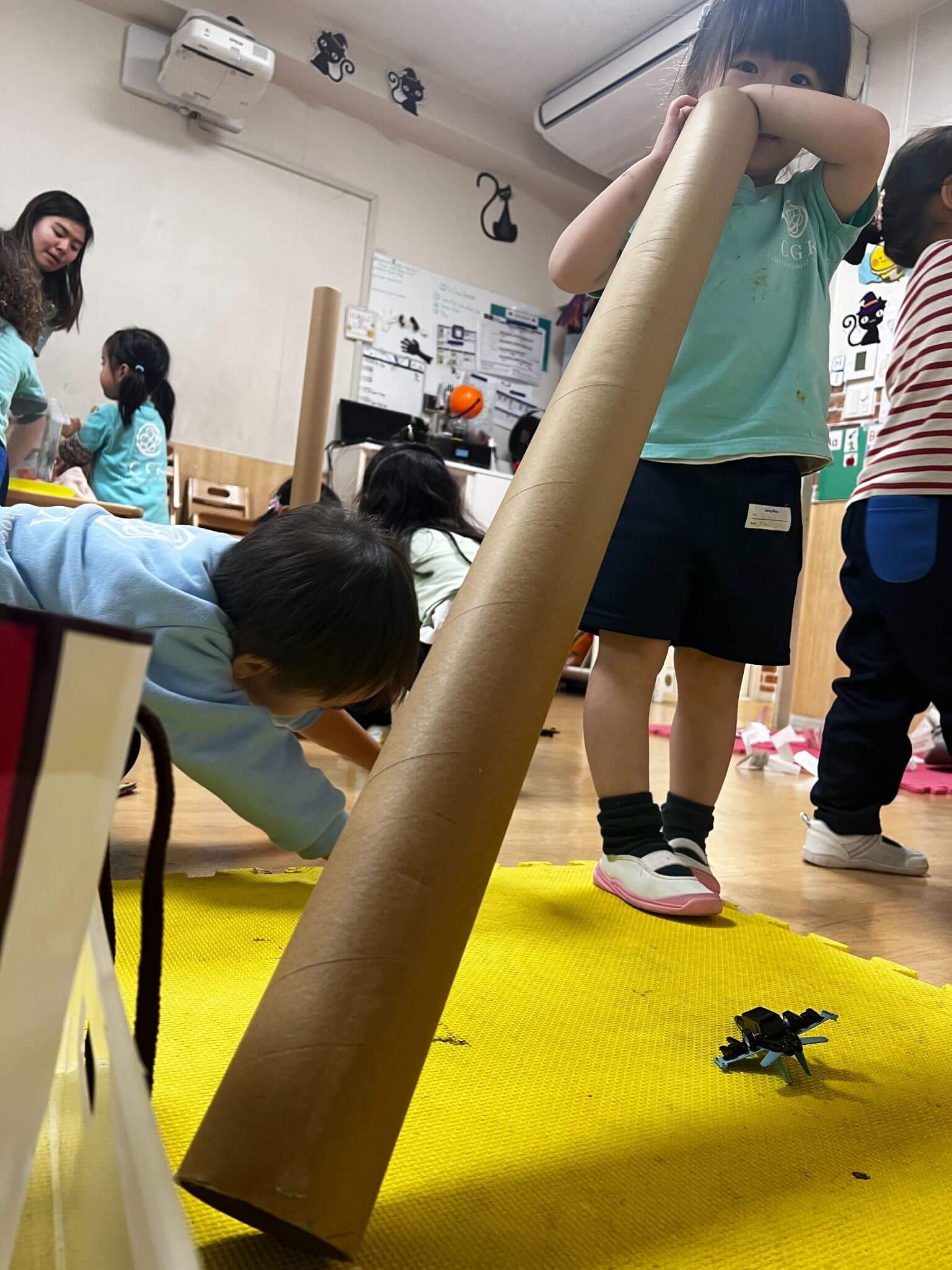
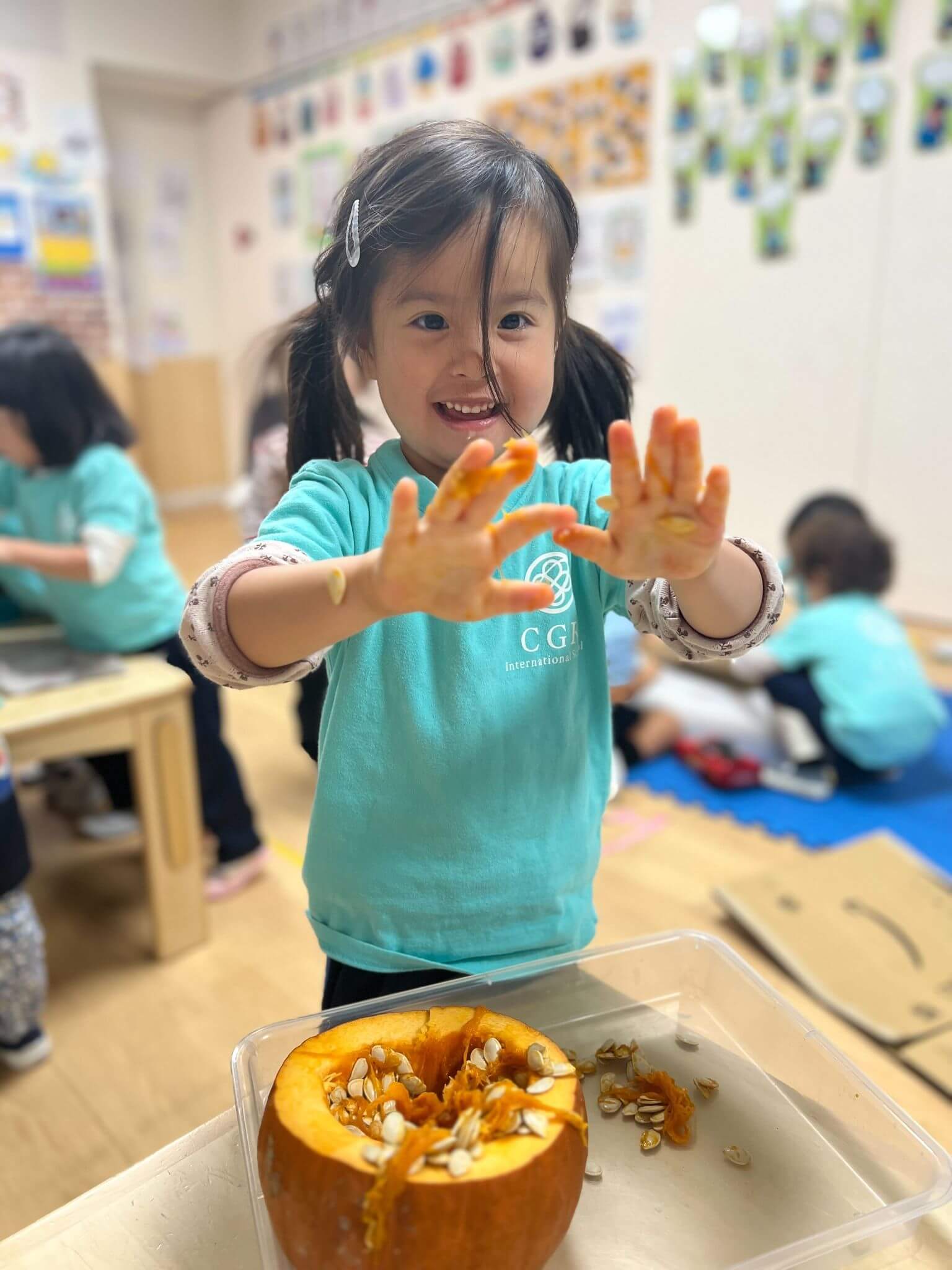
In Jungle B, we’ve launched our new Unit of Inquiry, How the World Works, with a focus on movement, living vs. non-living things, and habitats. We began with a fun provocation into movement: exploring how and why things move faster or slower, and how different animals travel in their environments. Students experimented with toy cars on ramps, paper helicopters, parachutes, and more. Their growing curiosity about animals naturally led us to tune in to a deeper question: What exactly makes something living or non-living?
This curiosity guided us into rich conversations about life. When first asked, students shared charming and imaginative ideas, like “Trees aren’t living because they can’t fit in a house” and “Cars are living because their tires move.” From there, we explored the characteristics of living things, discussing life cycles and what all living things need to survive, such as nutrients, water, and the right conditions. To extend this learning, we planted seeds in class and will observe them closely over time, noticing what grows, what doesn’t, and what we might do to help our plants thrive. Alongside this, our interest in animals has continued to grow; the children have been drawing zoo animals they’d love to see, sparking thoughtful discussions about different habitats and the diversity of living creatures in our world.
Living and Non-Living Things — What’s the Difference?
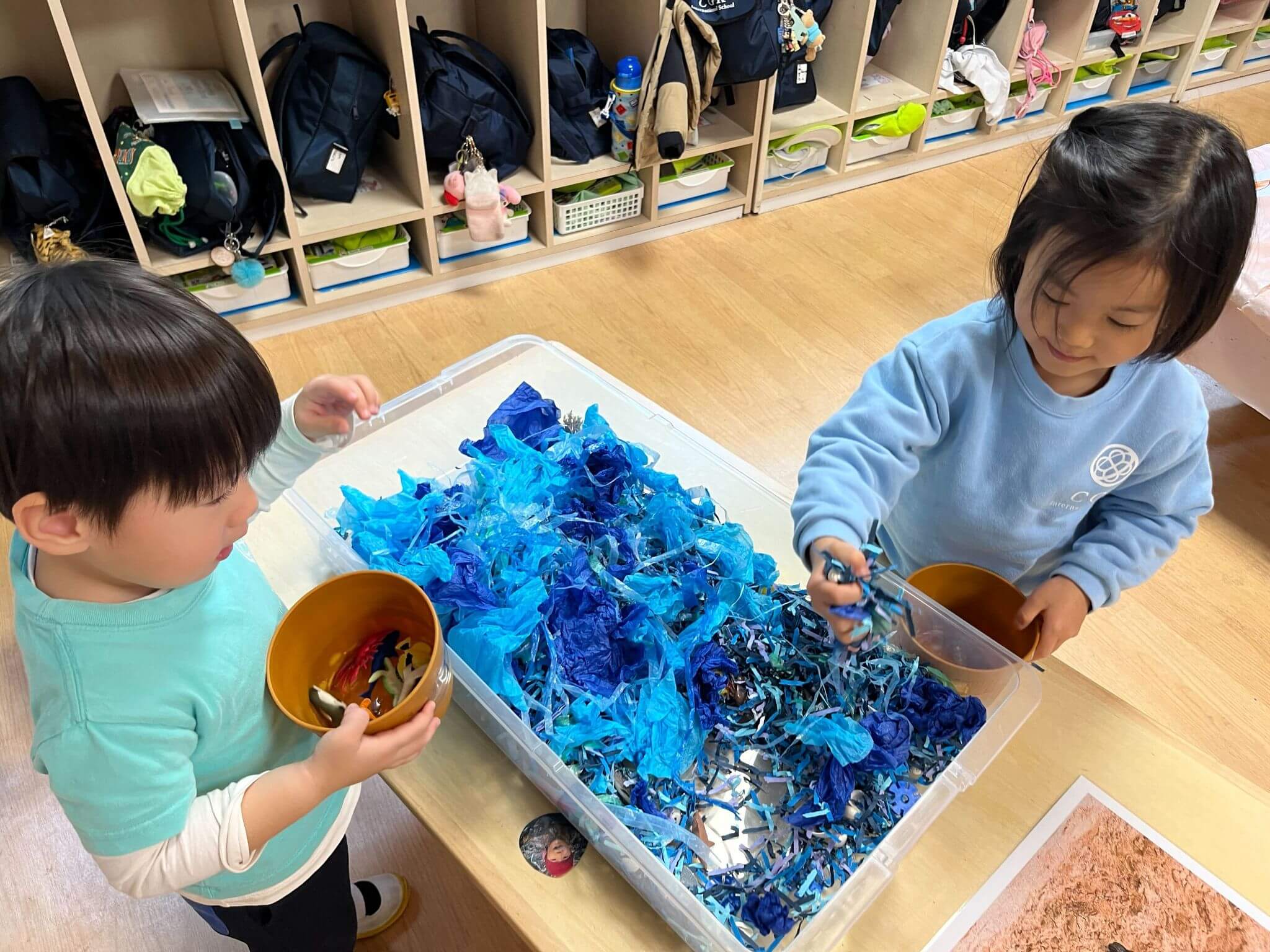
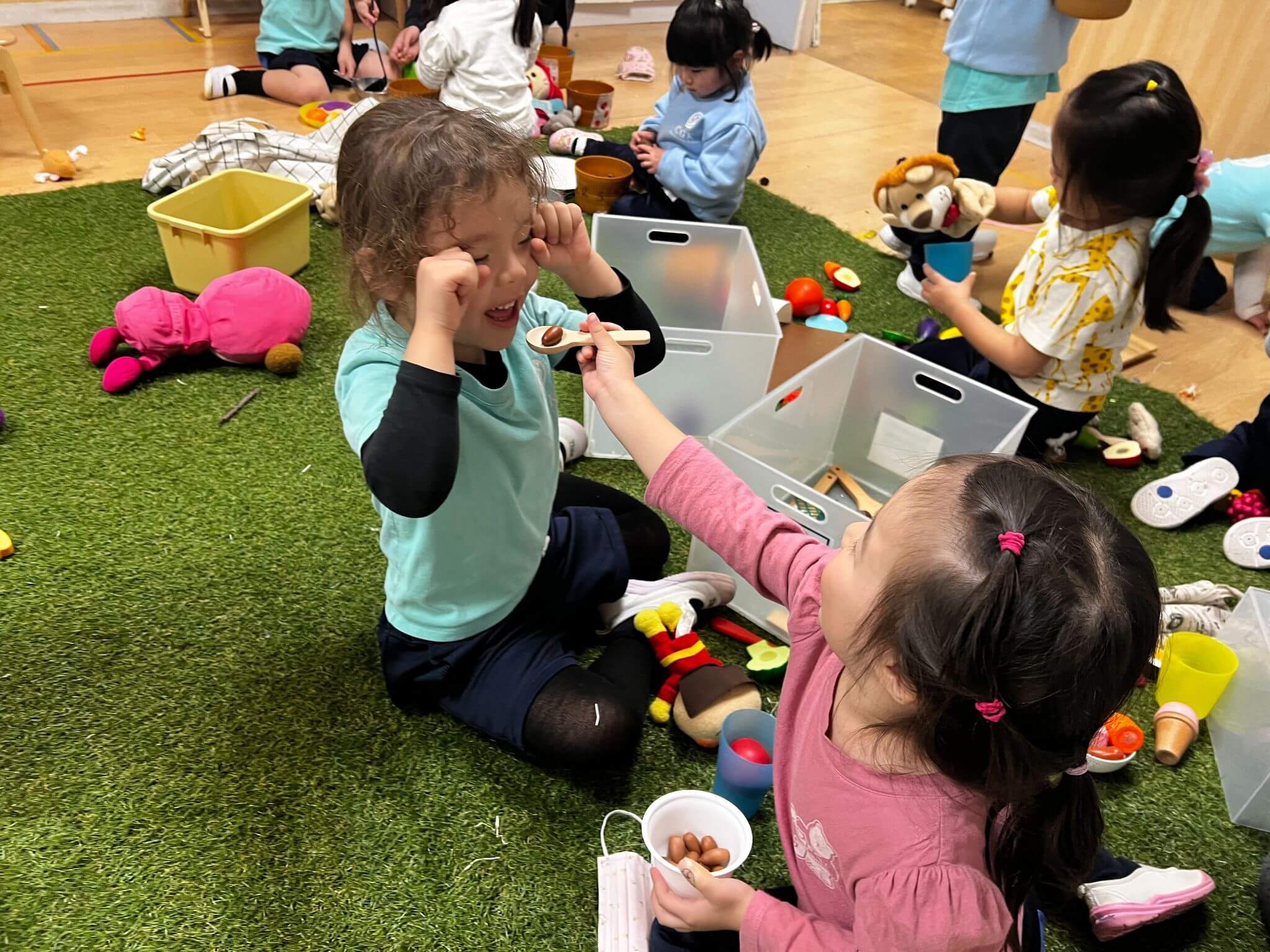
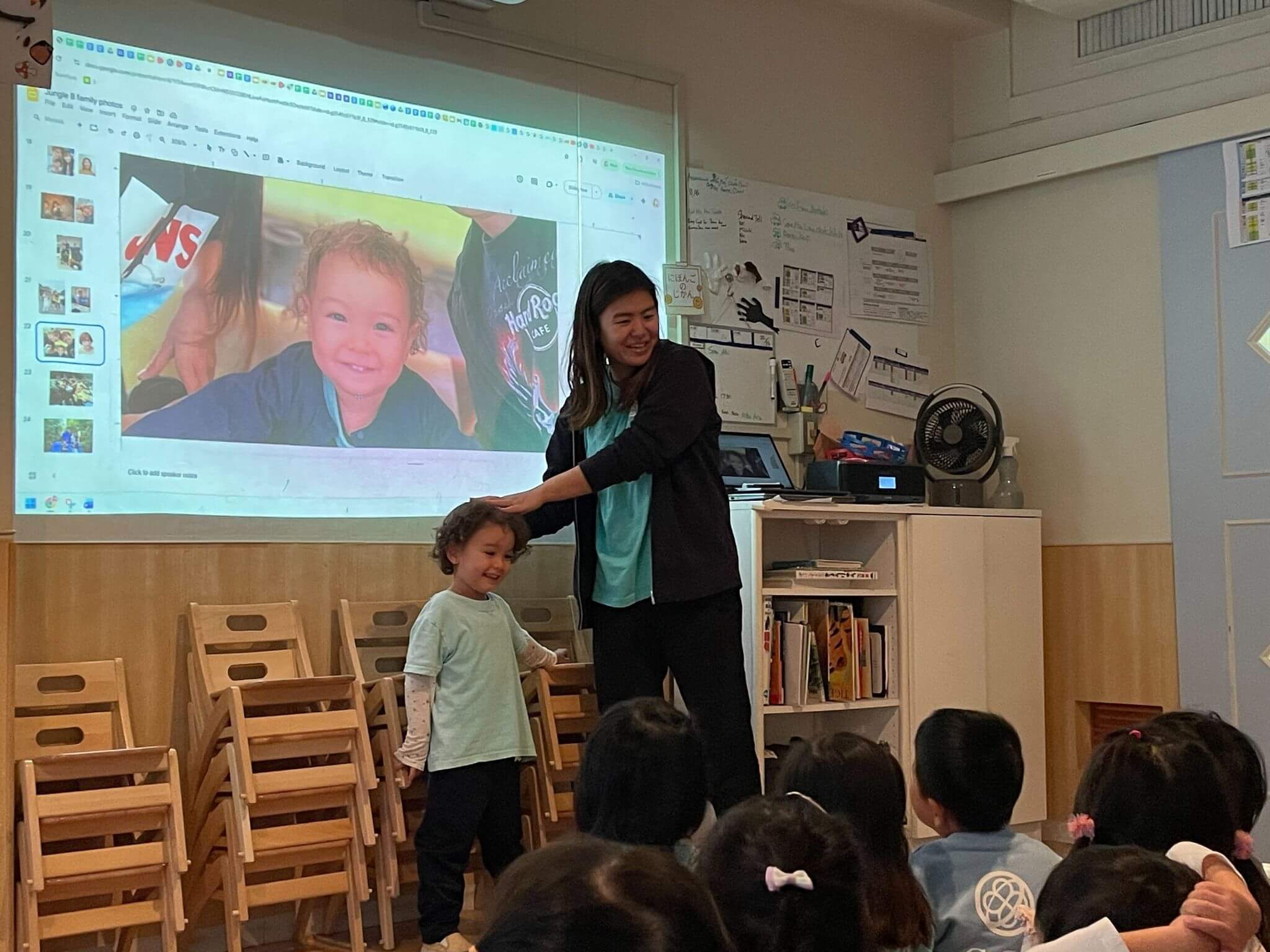
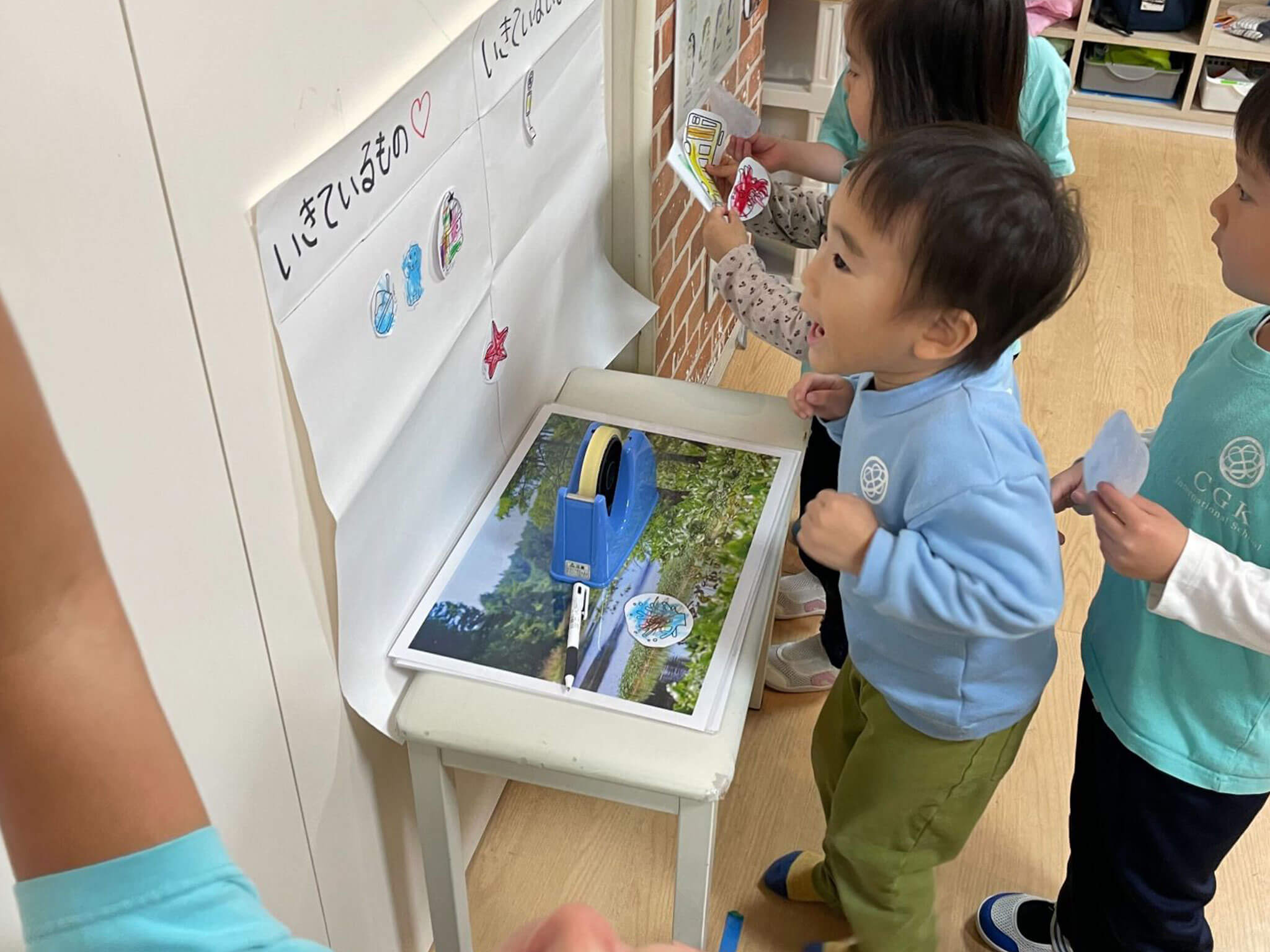
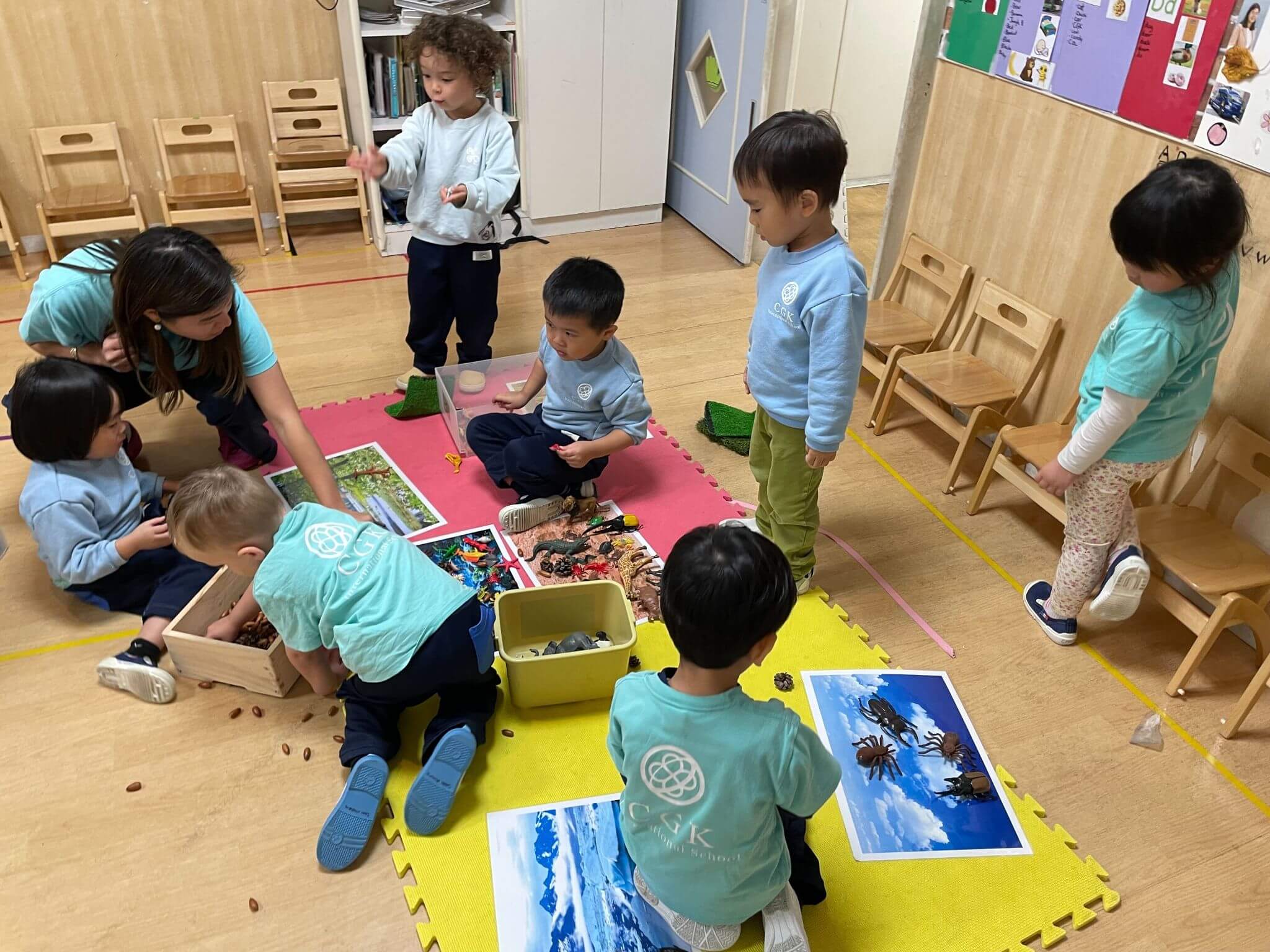
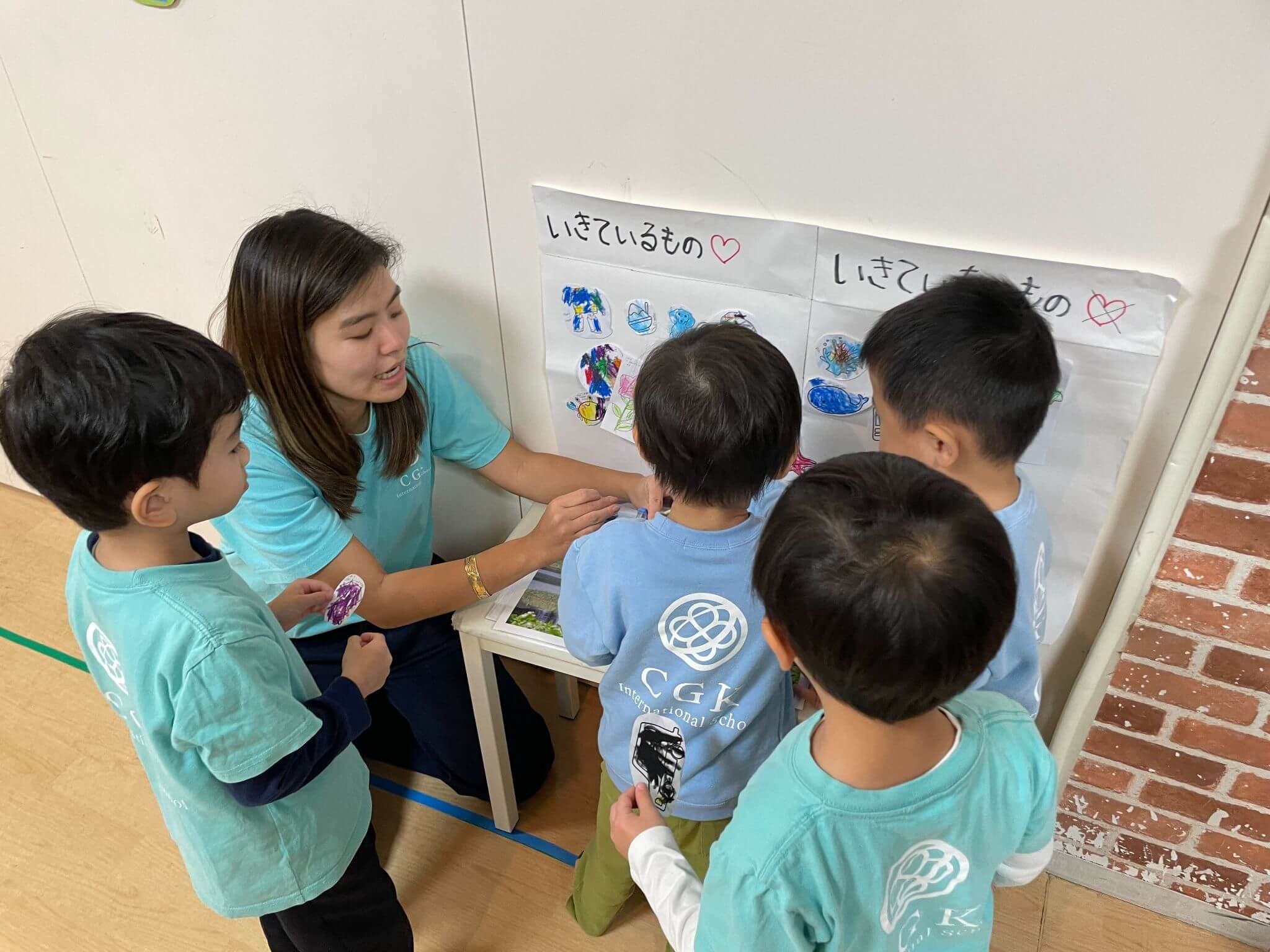
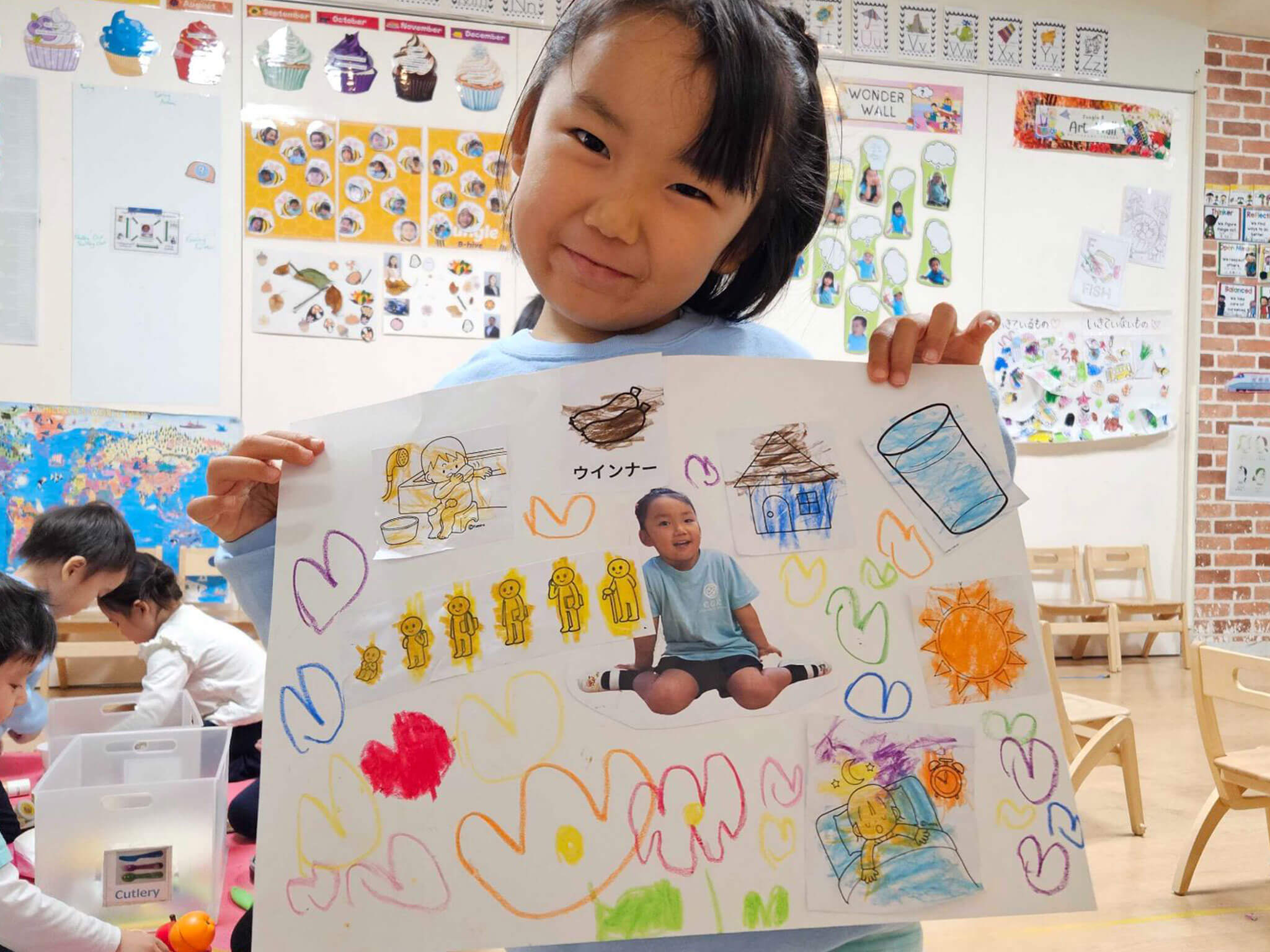
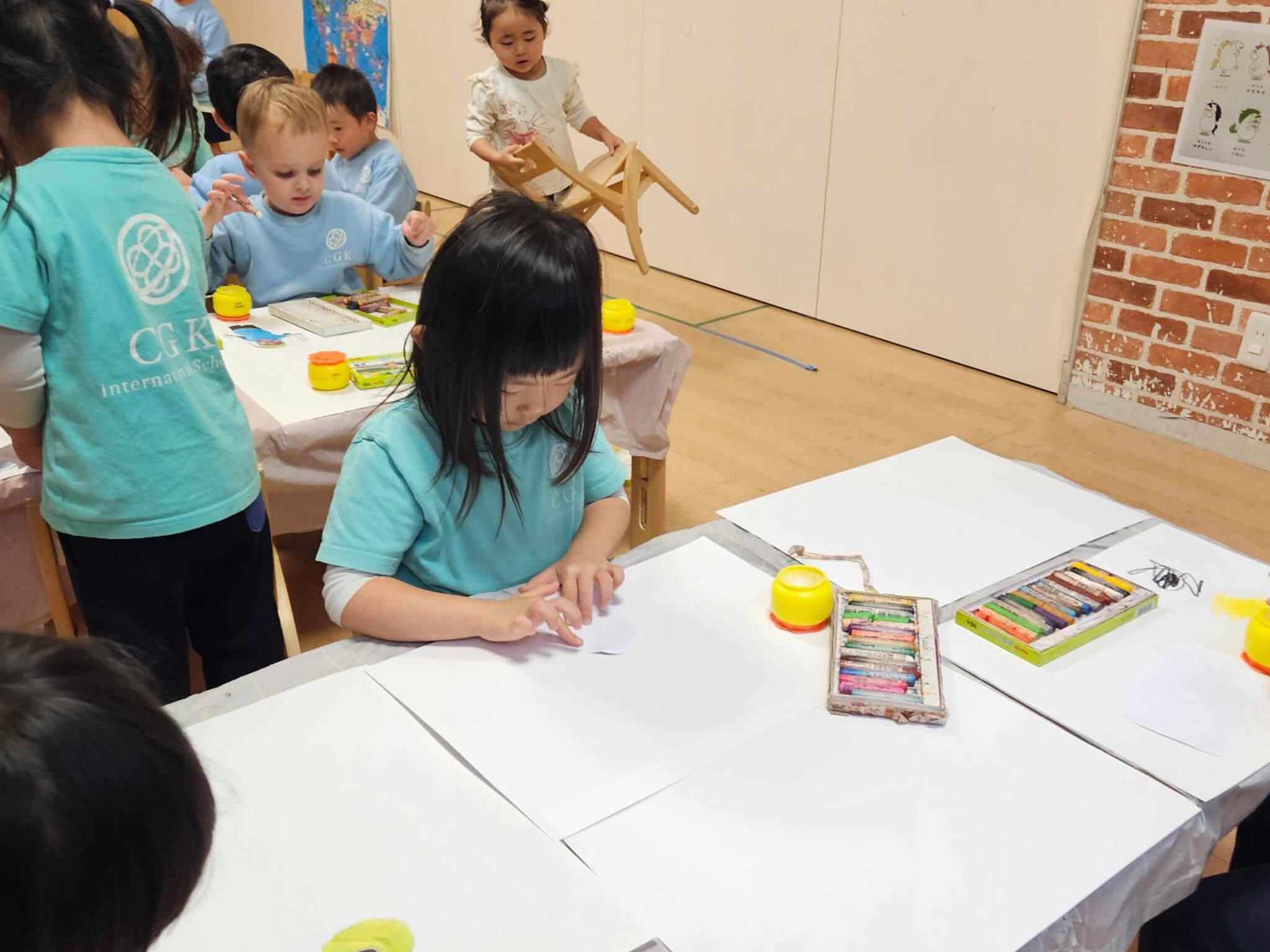
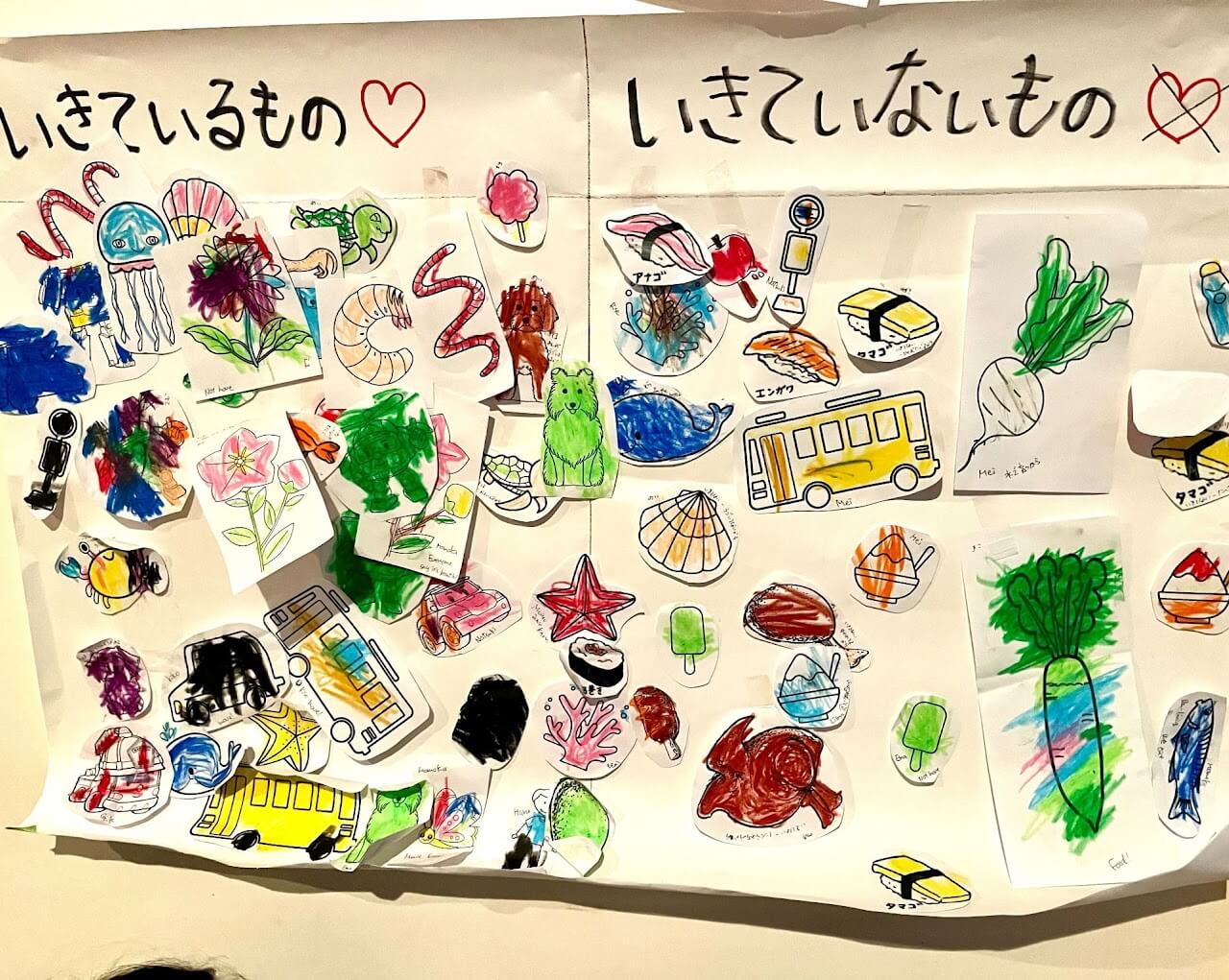
In November, we officially began our third Unit of Inquiry, How the World Works.
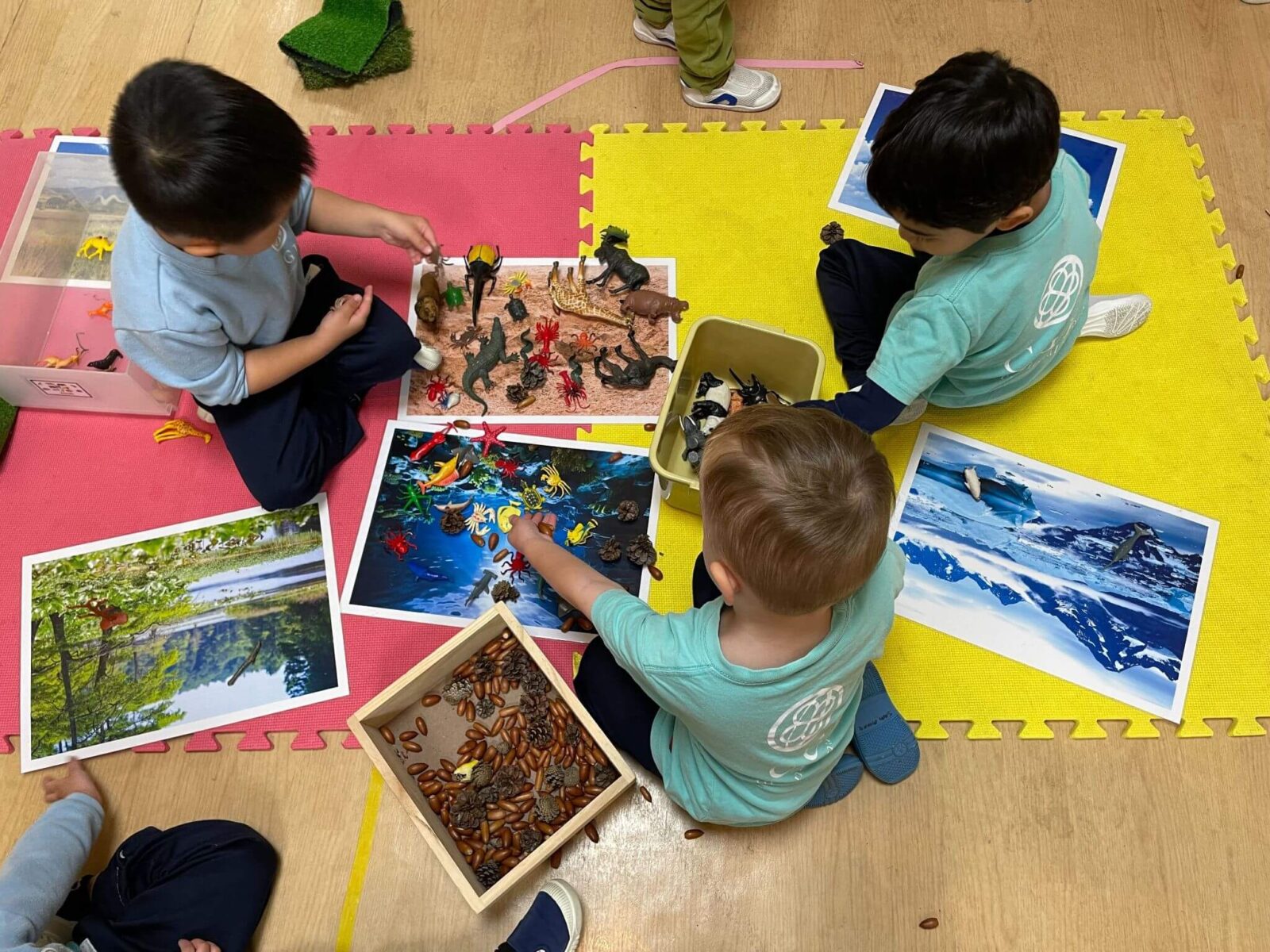
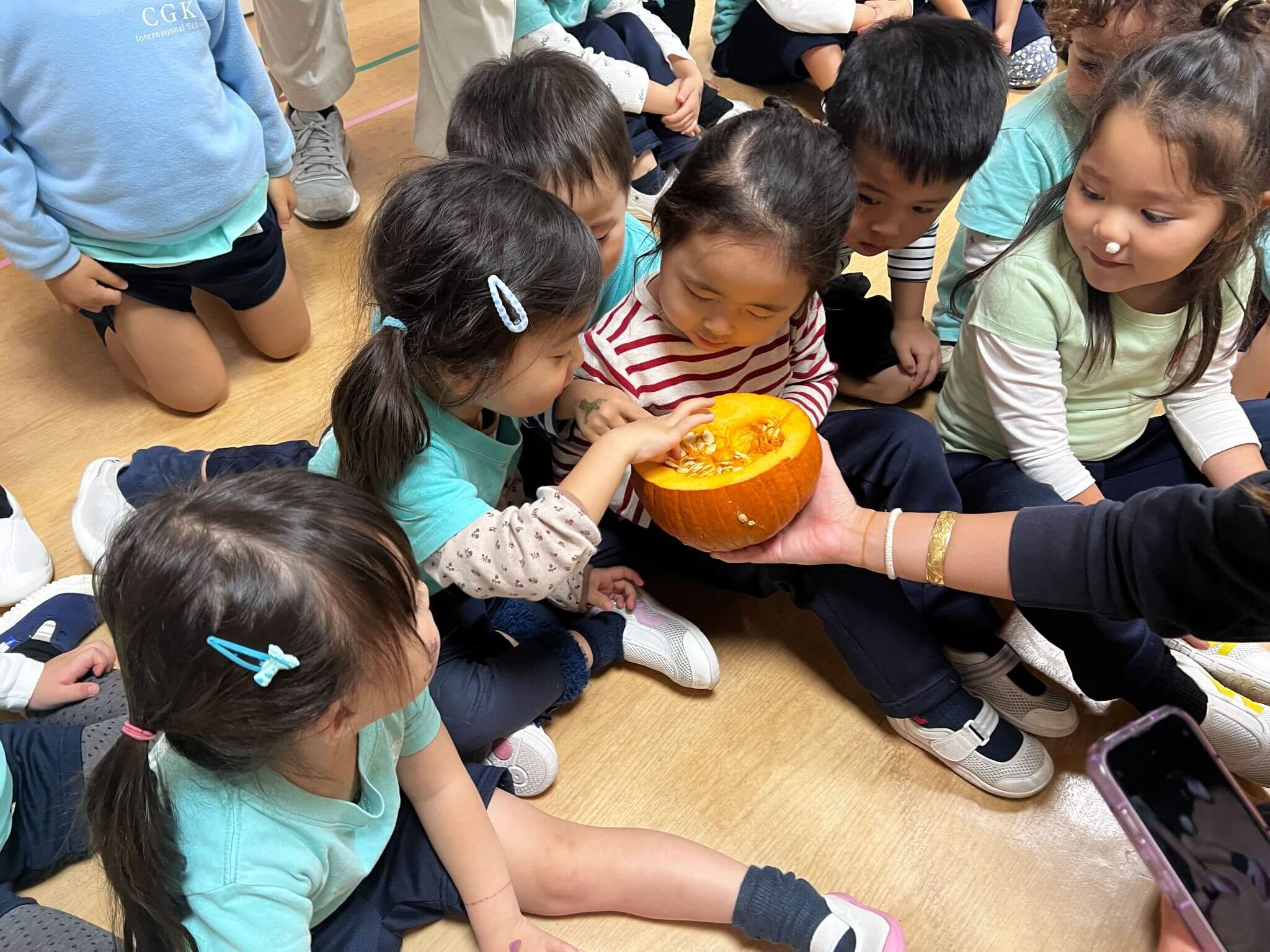
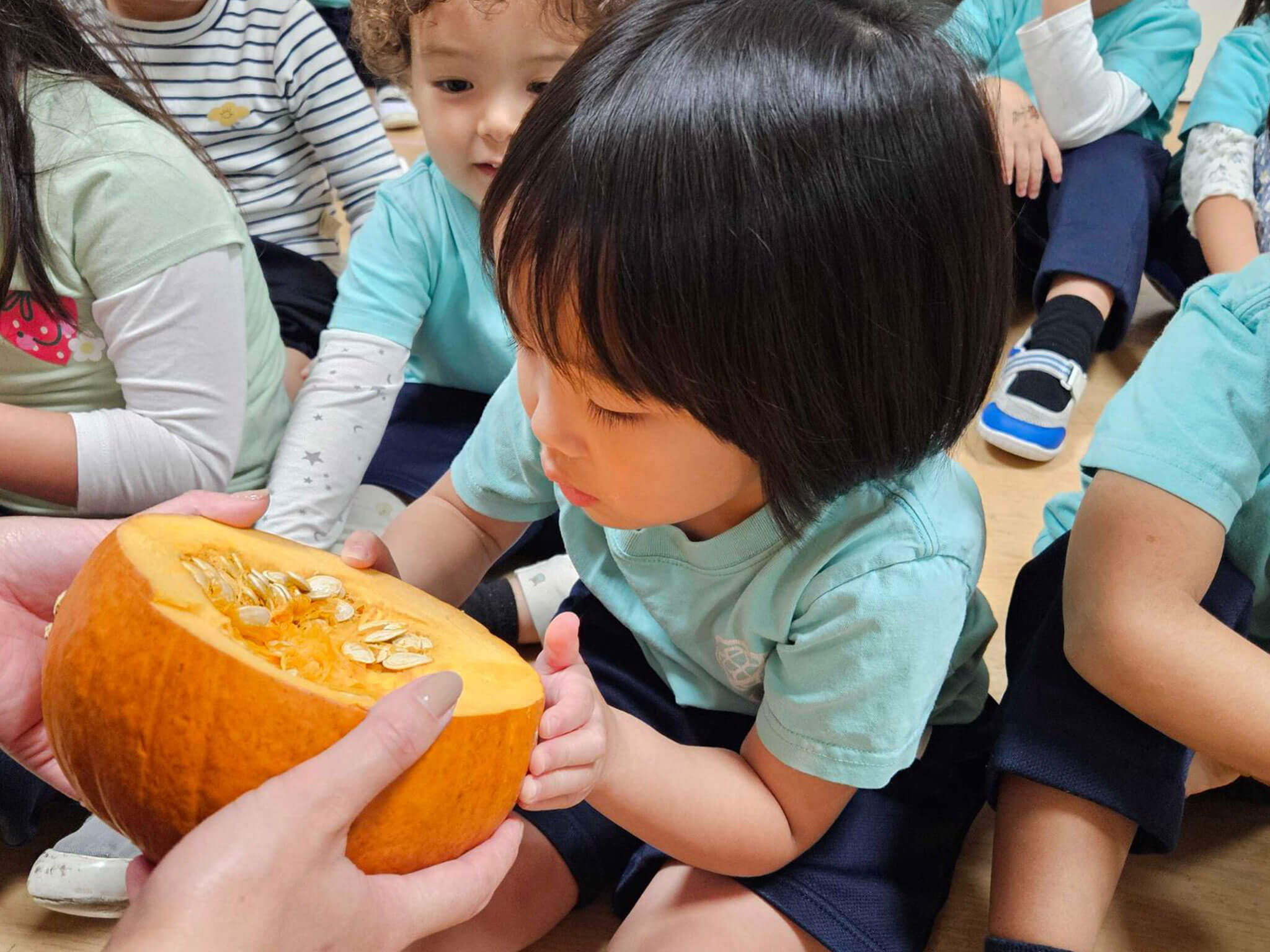
We started by asking the children some big questions: “What does it mean to be alive?” and “What is the difference between living and non-living things?” Using familiar objects as examples, the children shared their ideas through a classification game.
While distinguishing between humans and animals came easily, the children found plants, food, and vehicles the most challenging. Comments such as “Buses move, so they’re alive!”, “Fish are alive, but we also eat them, right?”, and even “Am I alive?” filled the room. These pure, childlike perspectives—made possible by their fresh and unbiased thinking—made the lesson especially engaging and thought-provoking.
Next, to deepen their understanding of living things, we explored what we need in order to live. Children considered food, drinks, family, friends, teachers, daily routines—and some even chose to include the things they love most. Watching them make these choices gave us insight into their emotions and values, and we could see their understanding of “what is necessary for life” gradually developing.
They also began to notice that things powered by electricity, gasoline, or charging are non-living—though some still wondered, “But the bus moves… so isn’t it alive?” This lingering curiosity beautifully reflects the genuine inquiry of three- and four-year-olds.
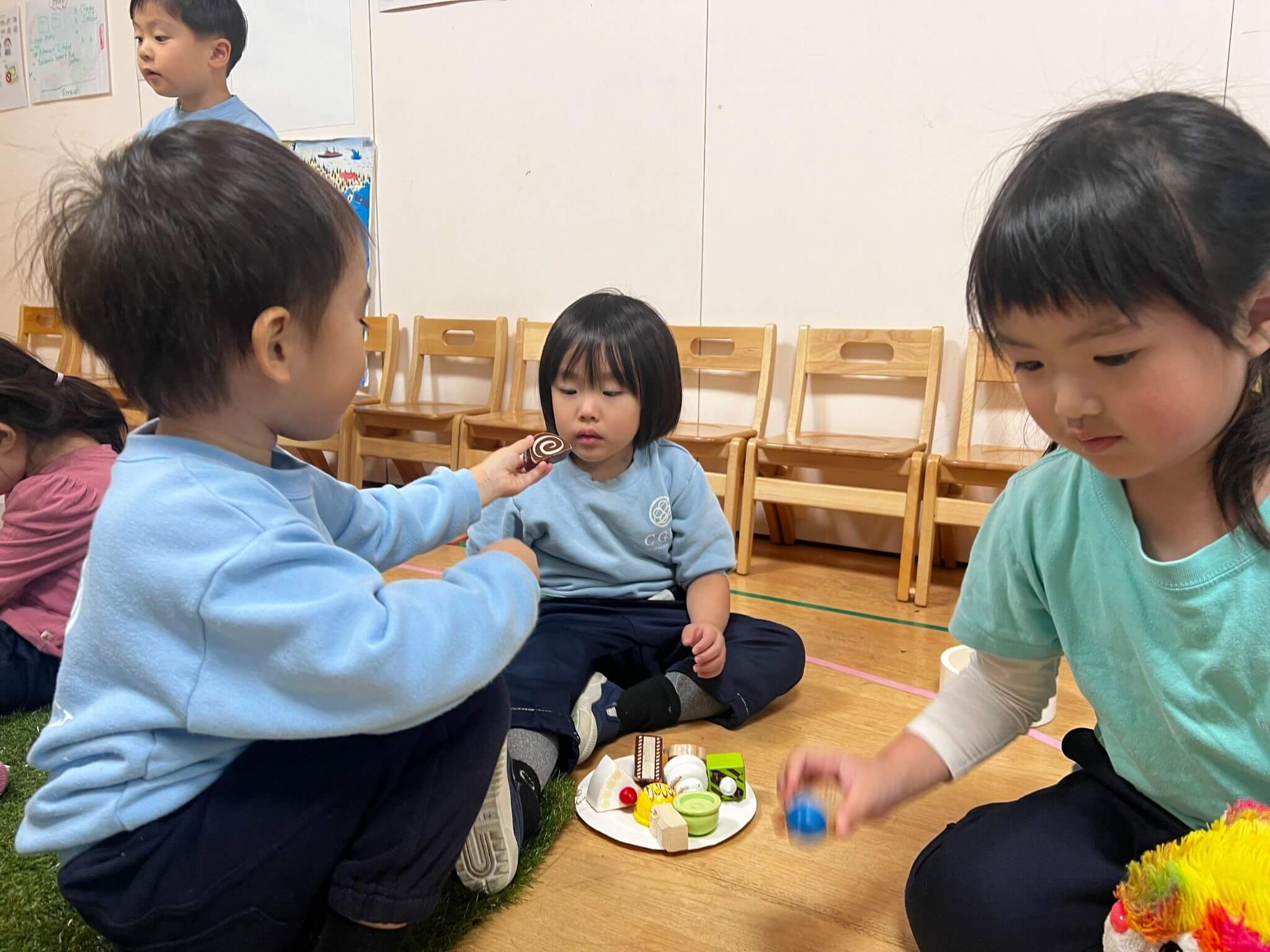
Through play-based activities focused on habitats and food—using ocean-themed sensory boxes, animal figures, and pretend-play materials—we interviewed each child individually. This allowed us to hear their deepening understanding, questions, and wonderfully unique ideas. Some children even began to realize that the food we eat was once alive, marking an important first step in food education.
Rather than simply teaching the “right” answers, we value helping children think through the why by engaging in play, experiences, and research. By respecting their ideas while gently guiding them toward factual understanding, we hope to continue nurturing thoughtful and meaningful inquiry in the classroom.
Ocean
(2-year-olds)
Expressing Ourselves Without Words
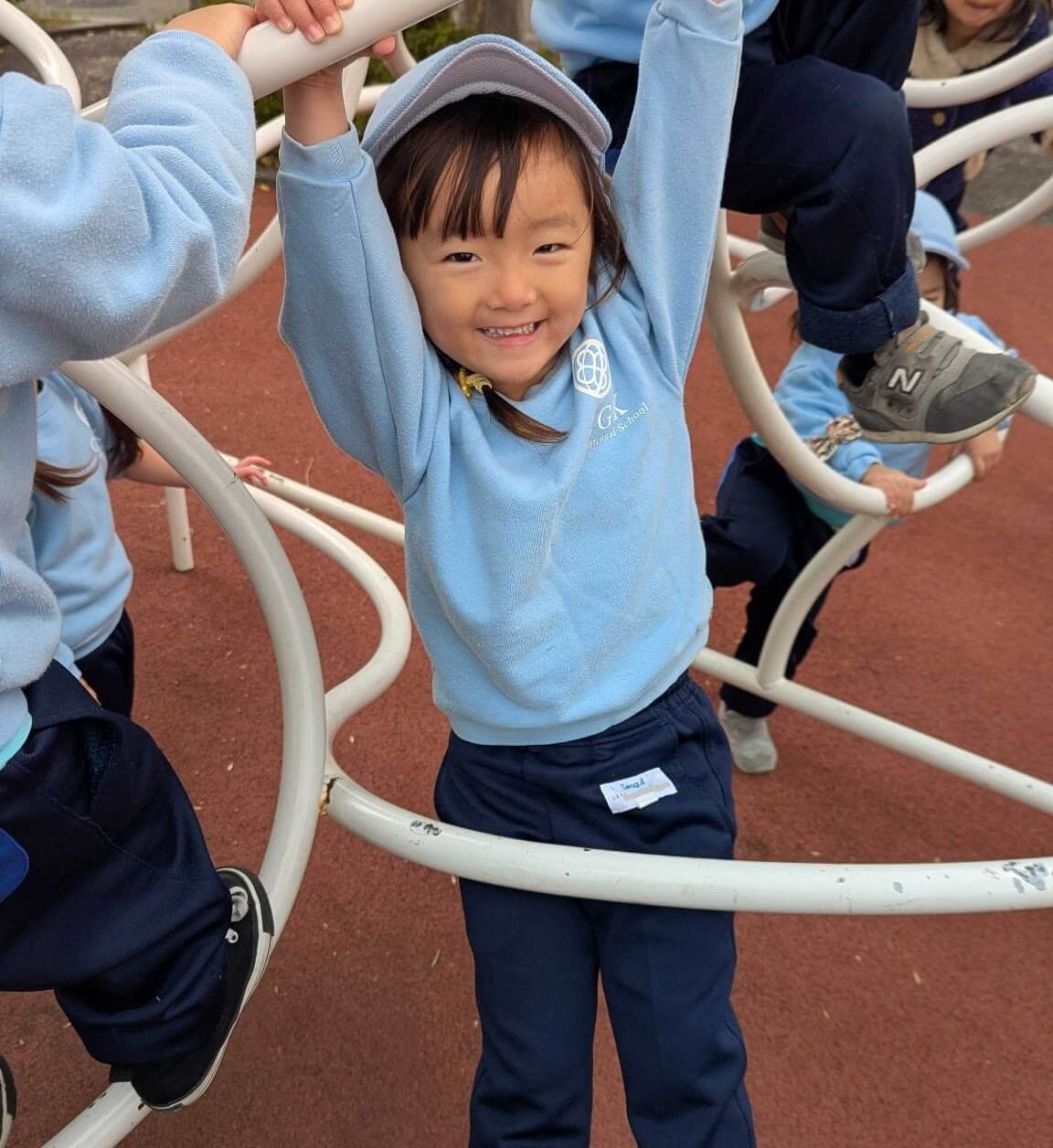
In the first CGK Times letter of the year, I shared how we hope to nurture the IB learner profile within our students; especially the attribute of being risk-takers. For many adults, this word brings to mind images of skydiving or deep-sea adventures. But in our 2–3 year old class, “risk” looks very different. It is smaller, gentler, and rooted in the everyday challenges that help children grow.
So what does being a risk-taker mean for our youngest learners?
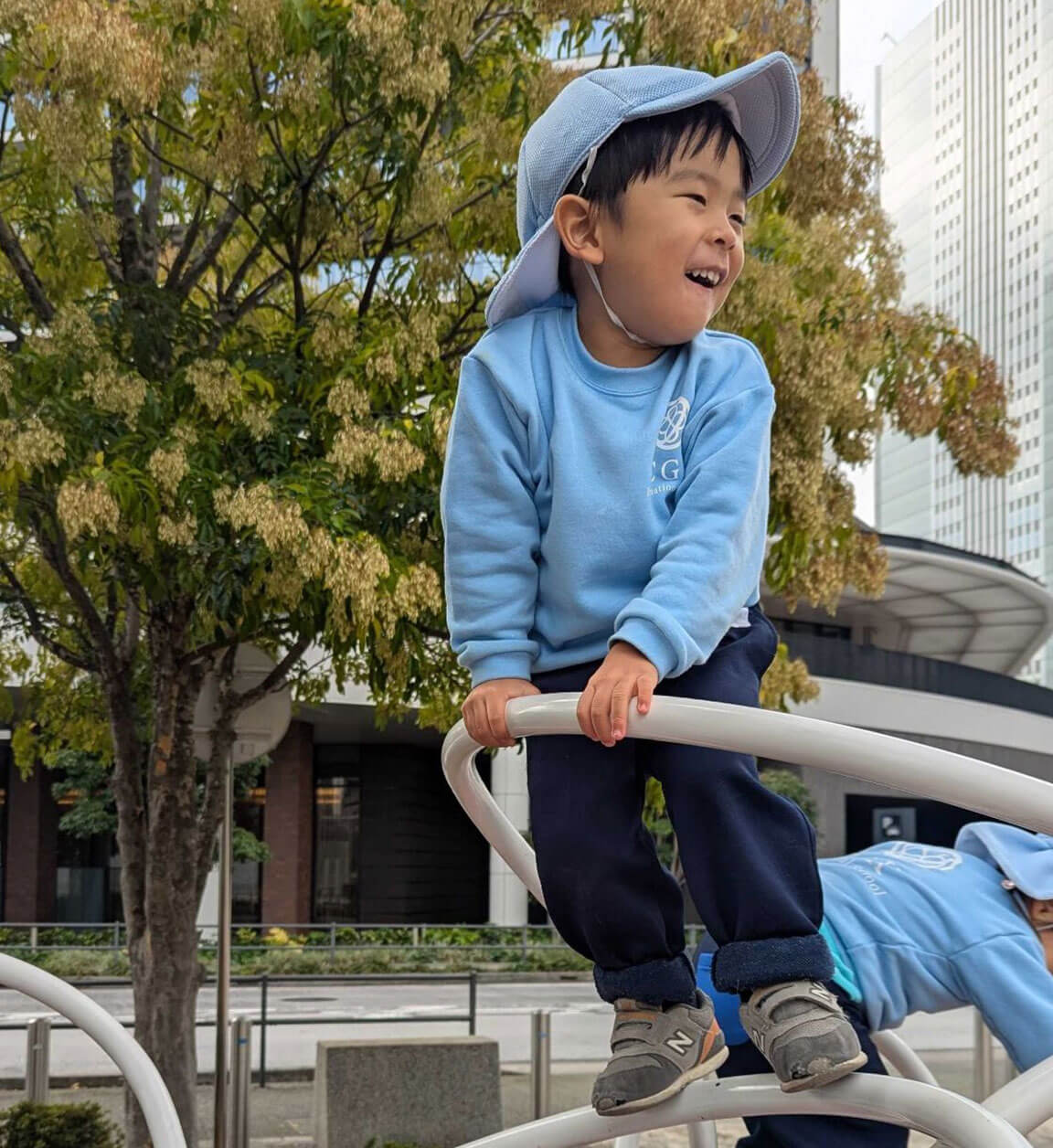
For some children, it is as simple and as brave as trying a new food. Almost daily, our students encounter a vegetable they’ve never seen before or a familiar ingredient prepared in a new way. In Ocean Class, we encourage everyone to take at least one bite of each item on their plate. These tiny acts of courage often lead to big discoveries: “The carrots are delicious!” or “I didn’t know I liked chickpeas!” Each new flavor is a moment of learning and a gentle push beyond their comfort zone.
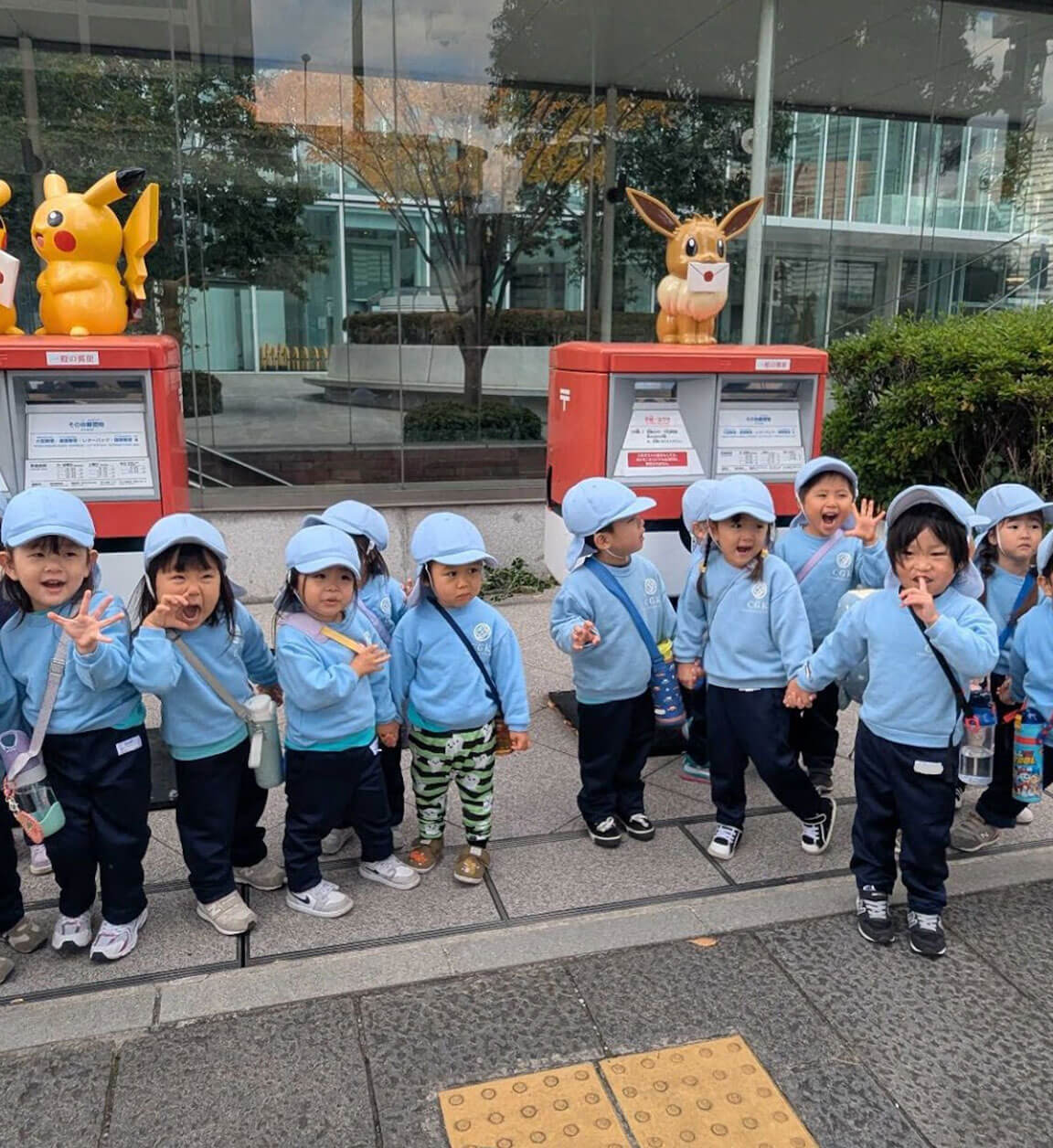
Another wonderful example of risk-taking happened during our class walk to a park farther away than we had ever gone before. This was the longest journey our Ocean friends had taken on foot, and it required stamina, trust, and a sense of adventure. The children embraced the challenge with enthusiasm. They held hands, cheering each other one, and we even stopped to take a photo next to Pikachu! Their accomplishment was more than just a long walk; it was a lesson in perseverance and confidence.
These experiences, trying a new taste, taking a longer step, exploring something unfamiliar, are the foundations of what it means to be a risk-taker at this age. By encouraging children to approach new situations with curiosity and courage, we help them build the confidence they’ll carry into future learning.
In Ocean Class, we celebrate these small but meaningful moments. Every new bite, every new step, and every brave attempt is a reminder that even our littlest learners are capable of big, bold growth.
So Many First-Time Events!
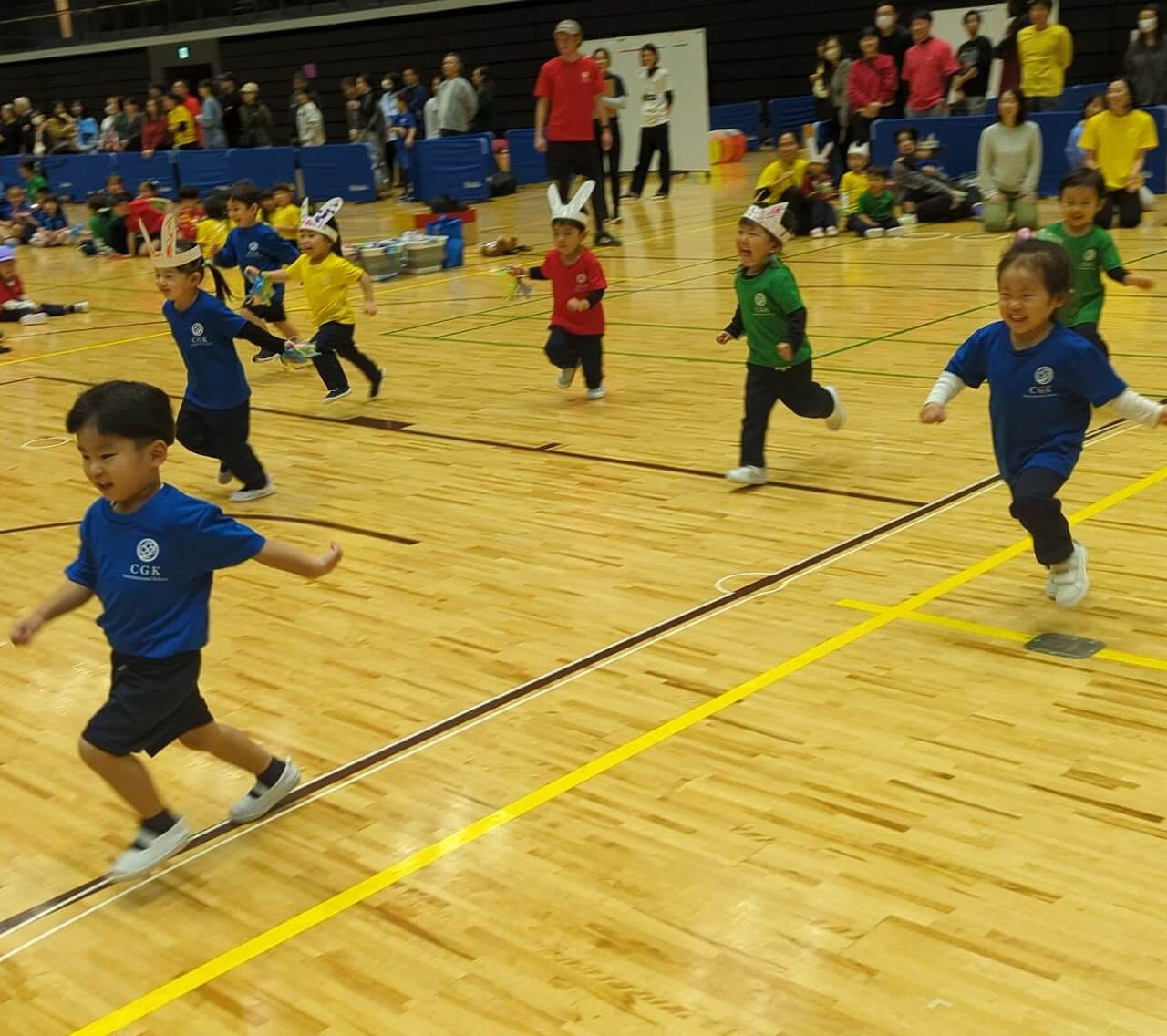
During the autumn season, the children experienced a variety of events, including the School Festival, Harvest Festival, and Sports Day. Spending time in unfamiliar environments and among large crowds brought not only excitement, but also a mix of emotions such as nervousness and uncertainty.
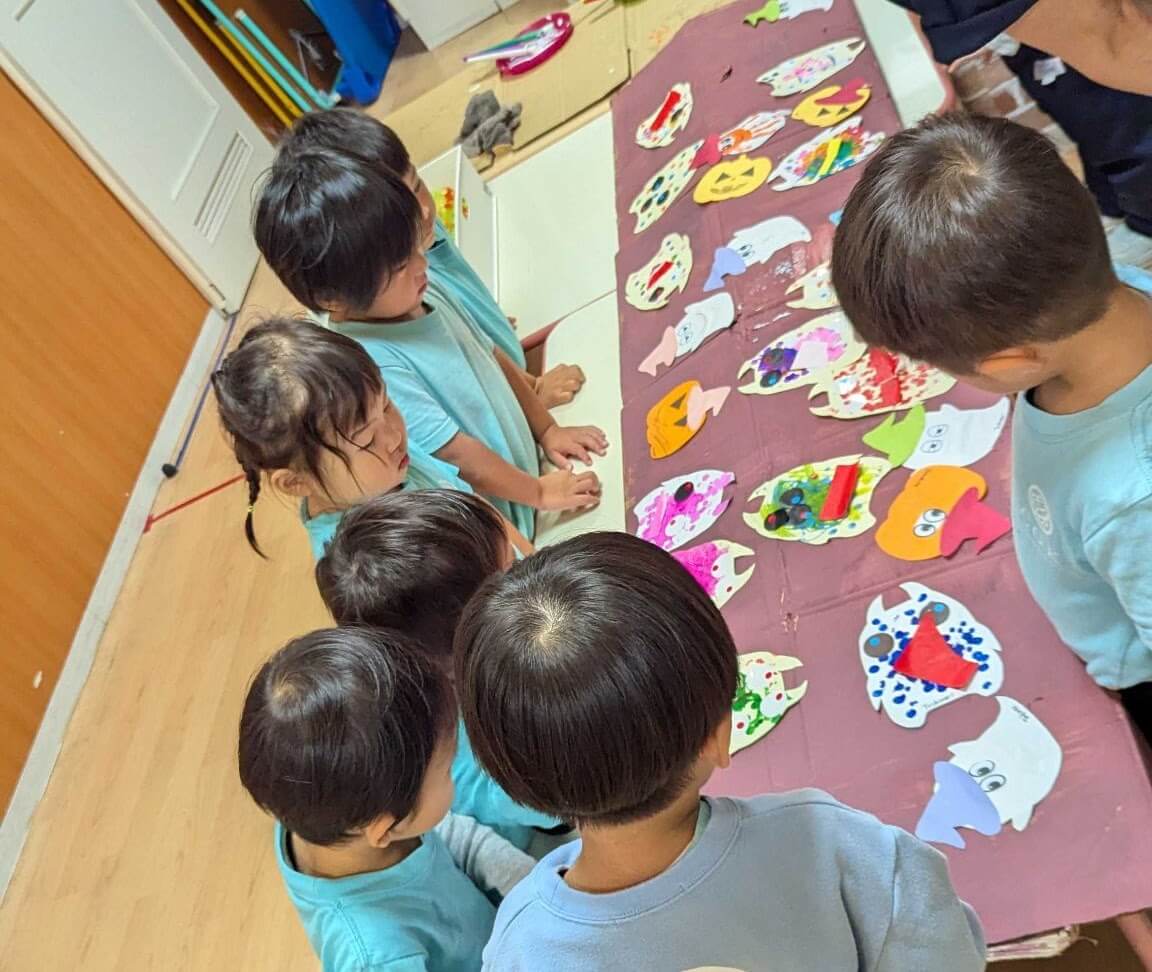
For many of the children, the School Festival and Harvest Festival were their very first experiences of such events. In preparation, they took part in making decorations and preparing games. Being involved from the preparation stage helped build anticipation for the events, and seeing the things they had created on the day itself allowed them to enjoy the experience even more. During the School Festival, some children needed time to adjust to the lively atmosphere, but little by little, smiles began to appear as they enjoyed the day with their friends and families. They also had opportunities to communicate with teachers from the Kannai campus, whom they do not usually interact with. During reflection time, several children were able to express their feelings in words, saying things like, “I was nervous, but it was fun!”
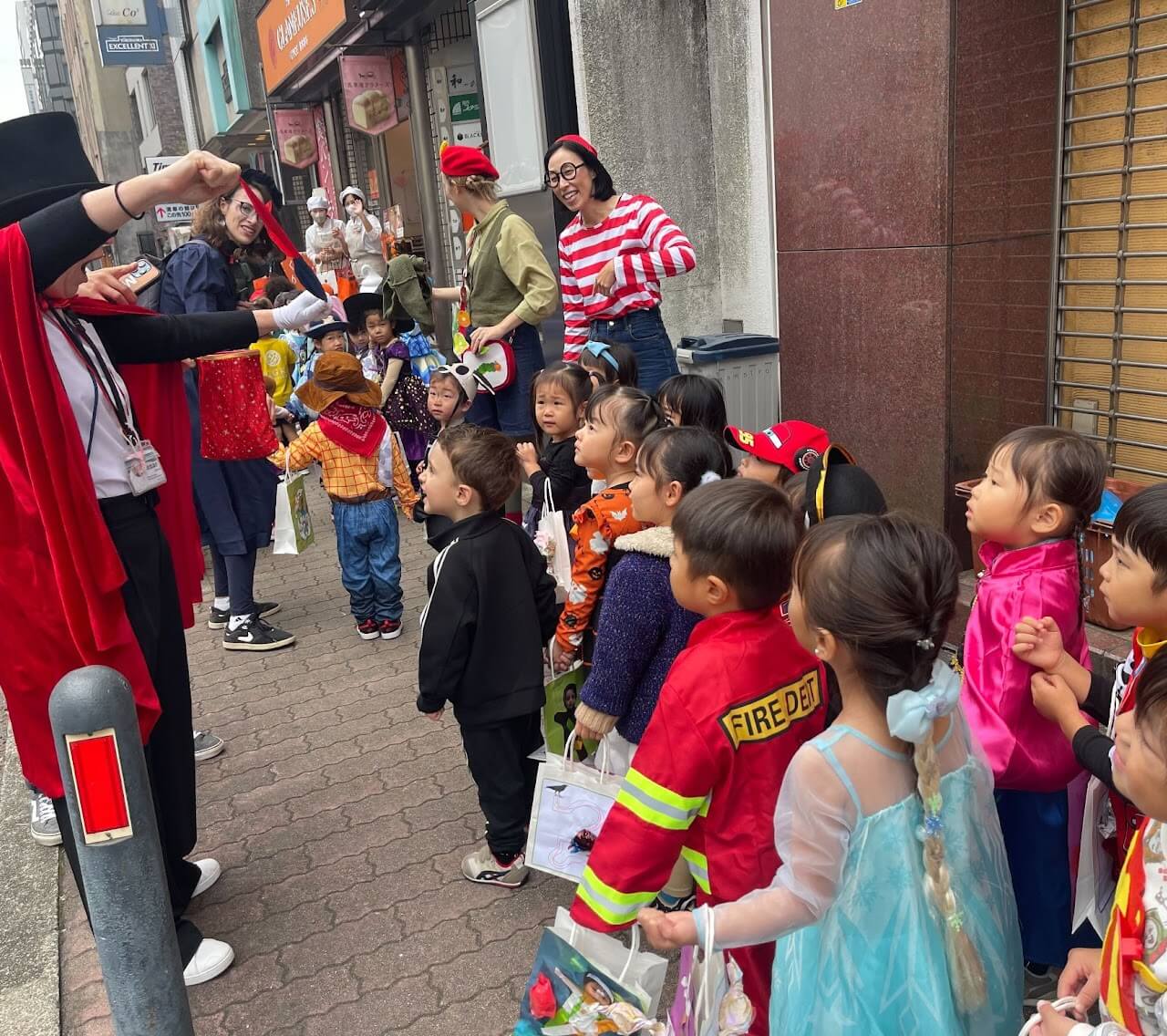
At the Harvest Festival, the Ocean class children arrived wearing their favorite costumes and went out for trick-or-treating. Although they felt a little nervous in different locations, they cheerfully said “Trick or treat!” and were delighted when they received treats.
In preparation for Sports Day, the children also challenged themselves to move their bodies energetically and to cheer for their friends. While they are not yet strongly focused on winning or losing, during the races they proudly said things like, “○○ was fast!” and “○○ came first!”, showing that they could recognize both their own efforts and those of their friends. They also learned their team colors—red, yellow, green, and blue—and their growing awareness of not only their own team but their friends’ teams reminded us how important friendships are becoming to them.
Through these events, in addition to their daily school life, the children experienced a wide range of emotions and grew greatly by cooperating with their friends. We are very much looking forward to seeing how the Ocean class children continue to grow through future events and the preparation process that comes with them.
Elementary School / Middle School
CGK Festival Student/Faculty Performances
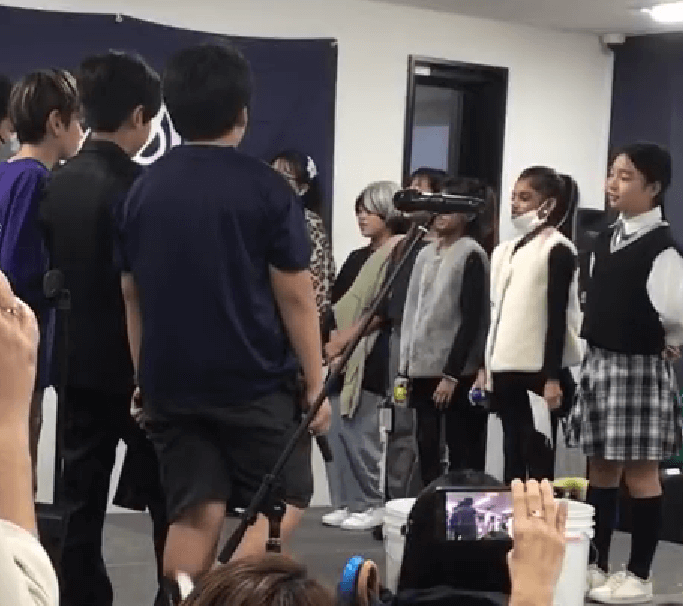
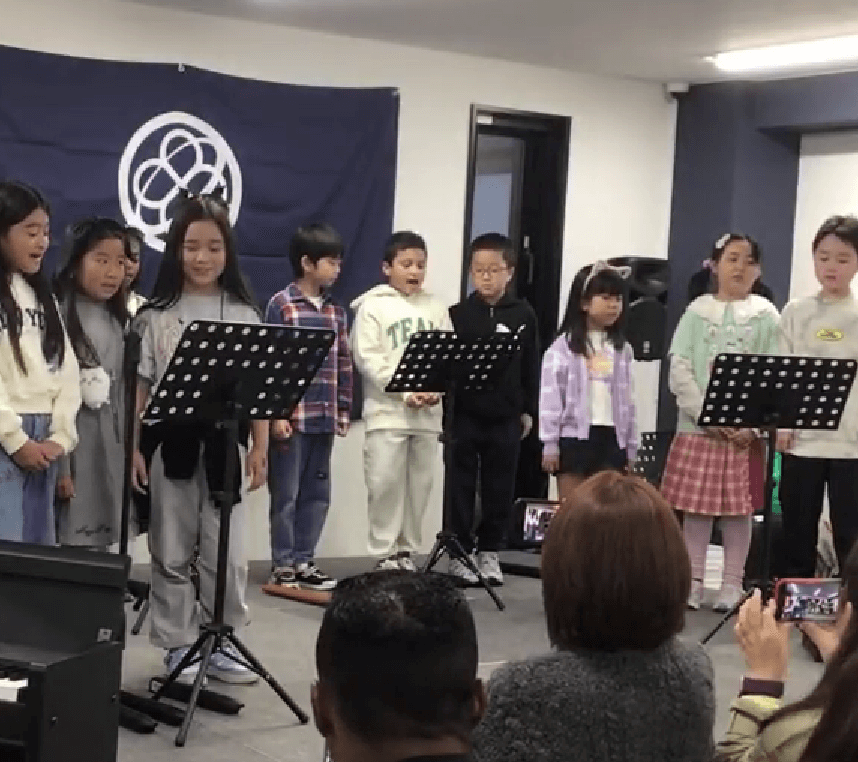
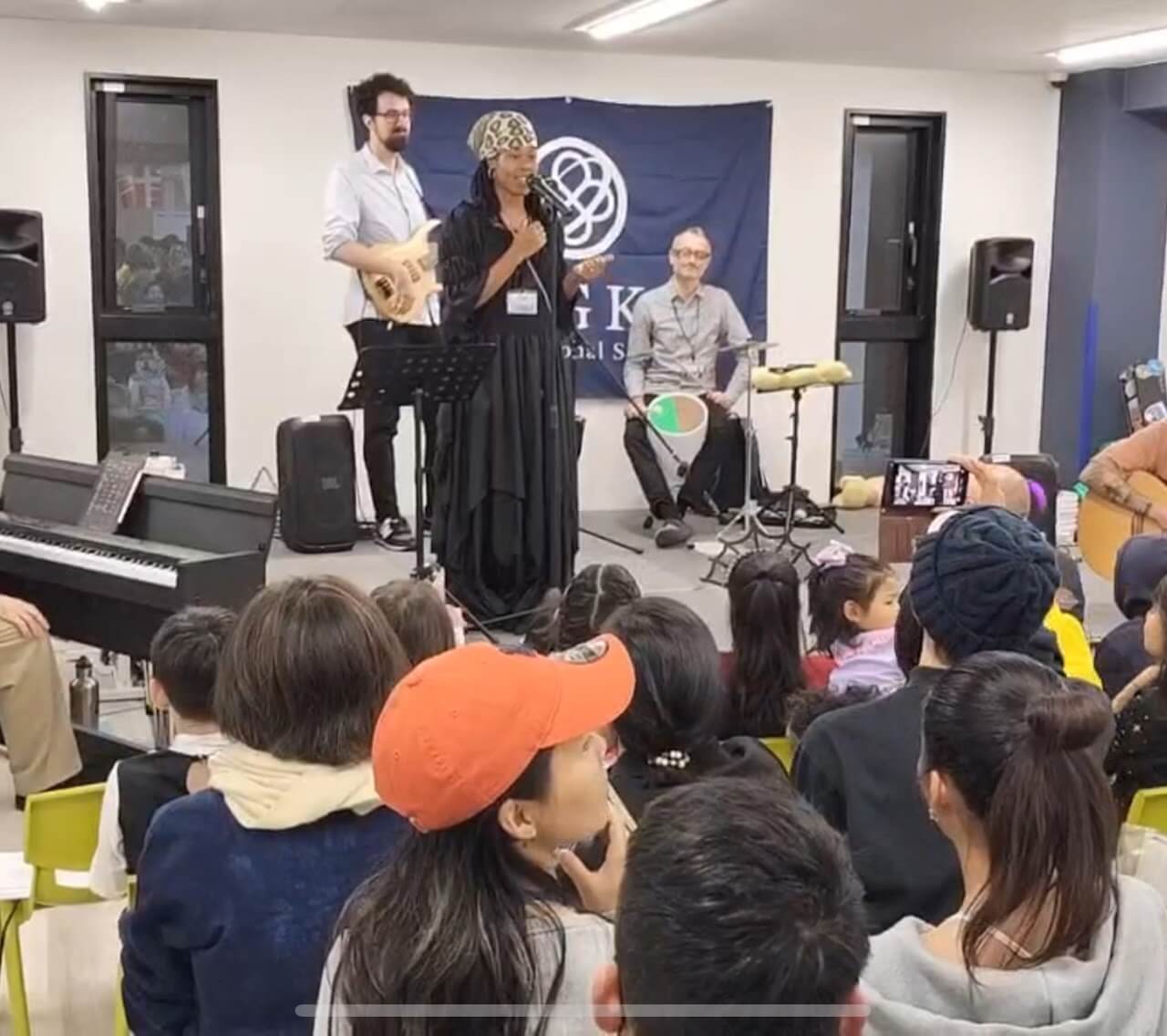
Performance is an interesting idea. Get up in front of a bunch of people you don’t know, or more stressing people who hold opinions you care about. Why do people do this? Why do my teachers think this is a good idea?
As a person who has personally struggled with stage fright, I understand student apprehension when it comes to performing. Presentation becomes the subject of importance. While process, planning, and practicing is important for inquiry, becoming a thinker, and becoming more knowledgeable, presentation gives us the opportunity to become risk-takers, communicators, open-minded, and gives us the opportunity to be reflective. It expands our courage, makes us better communicators, and gives us new perspectives and brings us closer to our friends, co-workers, and classmates.
Presenting is a life skill that crosses many different disciplines. Job interviews, public speaking, and other various presentation skills. It also allows for an interesting outlet for creativity of students. This year, I would like to talk about a couple classes whose performances showed a lot of learning.
Grade 5 showed great interest in their song, Turn the World Around. The main feature of the song is singing two different melodies at the same time (partner song) which they did very well, showcasing how their musical abilities have improved within the short time they have been at CGK. What was most impressive was their teamwork in deciding how they wanted to present. First, they put themselves into two groups. Next, they decided the would sing facing each other; a choice I thought was strange at first, but worked well in practice. During their group’s part, they would step forward and sing and when their part ended, they would step back. Finally, they added percussion instruments to the transitional sections to add a little variation to the performance.
Grade 3’s biggest challenge was deciding which song they wanted to perform. They decided on Tomorrow from “Annie” while saving another song they worked on for another future performance… While grade 3 was learning recorder, some students felt disappointed that they had not thought about performing on recorder for the festival. Working with their teacher, they were able to put together a quick arrangement. Students were then able to perform two songs back to back showing strength in their diversified abilities. In preparation, they showed great communication, principles, and caring. In performance, they showed skills as risk-takers and open-mindedness.
On a final note, this is the second year that teachers from CGK have put together a band for the festival. In addition to it being a fun part of the festival that students and parents can enjoy, it also sets a very important example for students to not be afraid of performing. Mistakes are part of the game. While we were able to put together a few practices we did have a few mistakes, especially on the intro to one of our songs where I did not communicate clearly when another band member should enter. Showing teachers who normalize lifelong learning and being okay with making mistakes sets a precedent for other students who may be afraid of making mistakes but want to try becoming a risk-taker. Making mistakes in a safe space where you can trust others makes a difference.
Afterschool
After School Class A: Winter Festival!
For Thursday's project, Class A has been working on organising and hosting a winter-themed festival for their families as part of their presentation week.
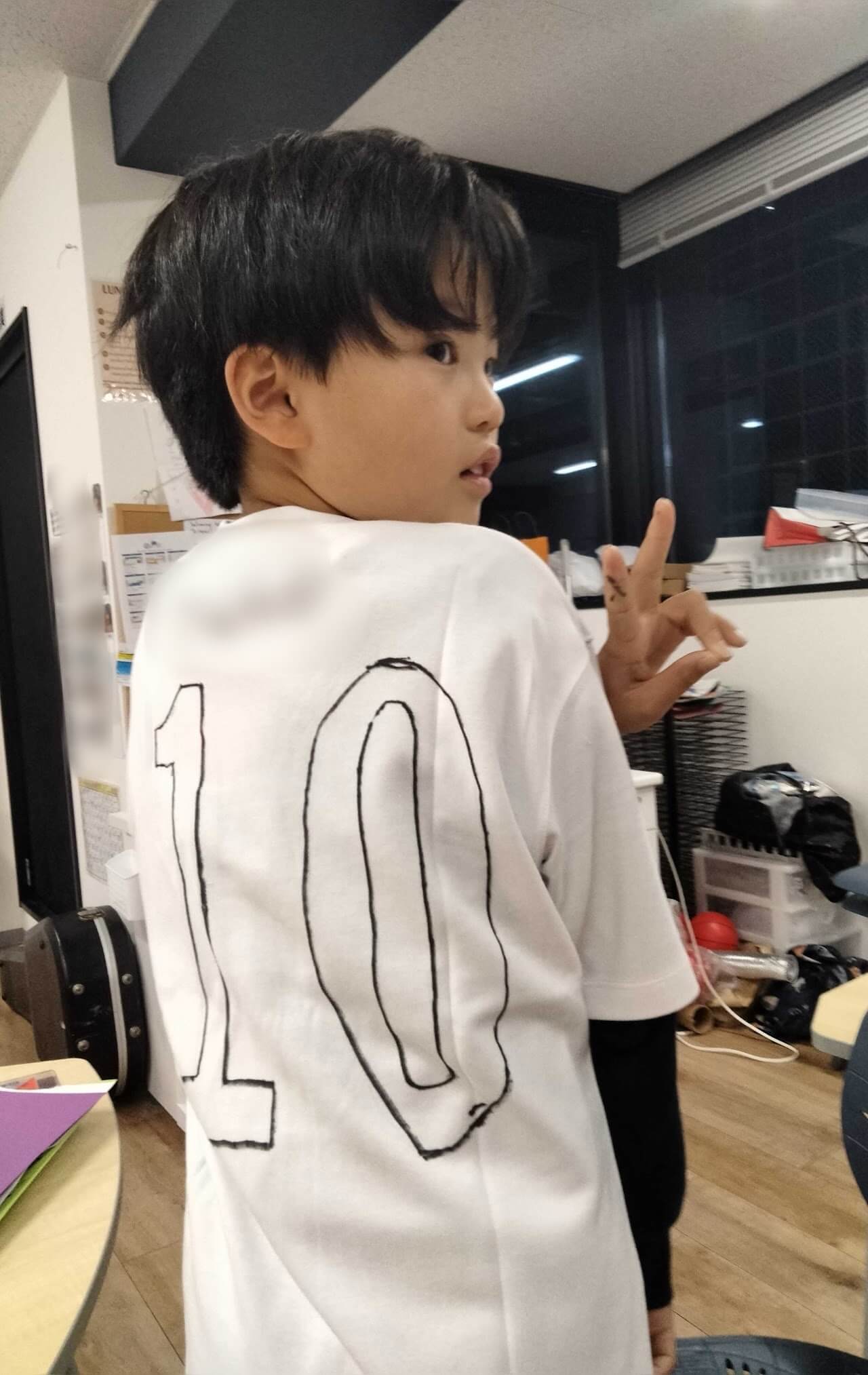
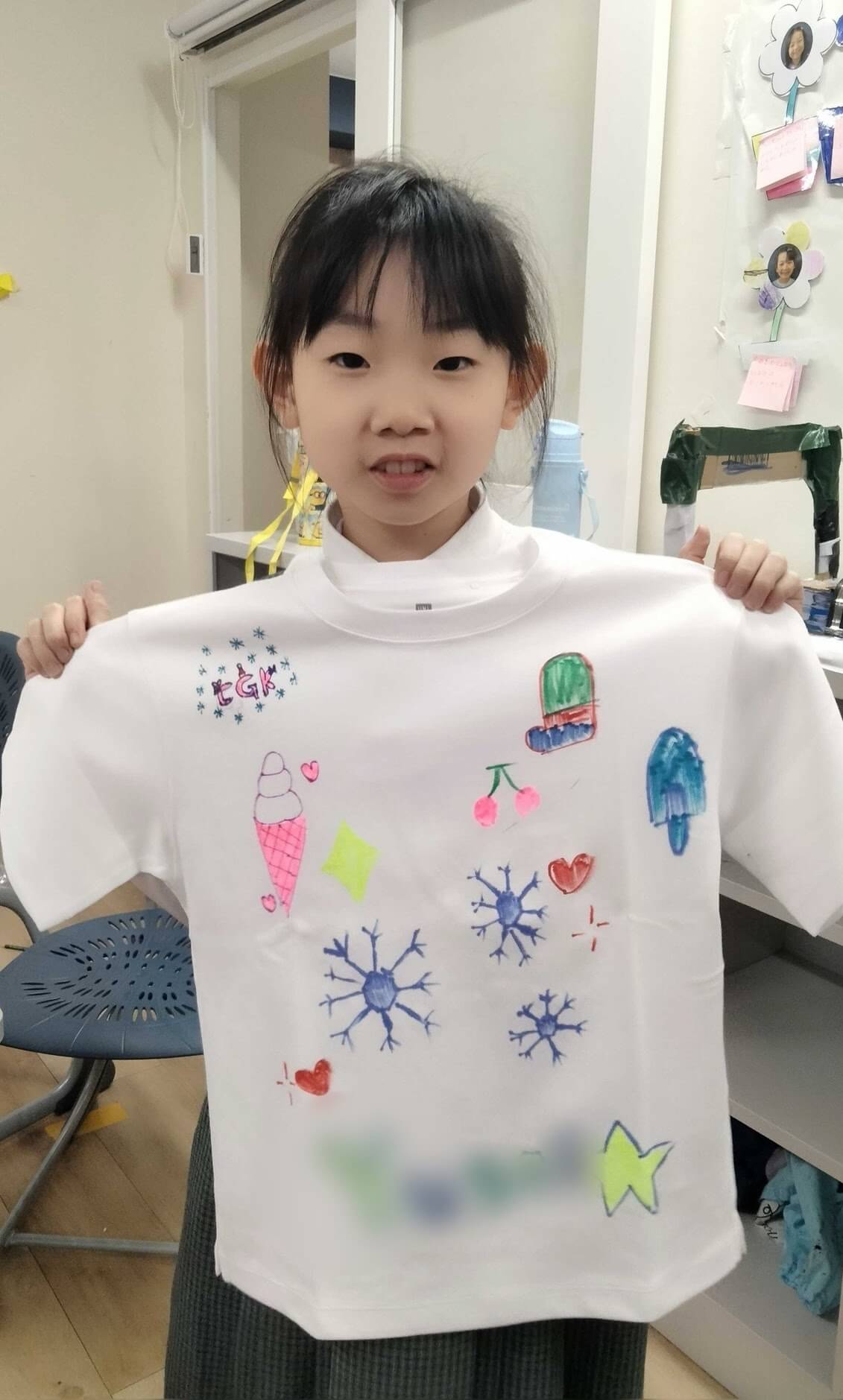
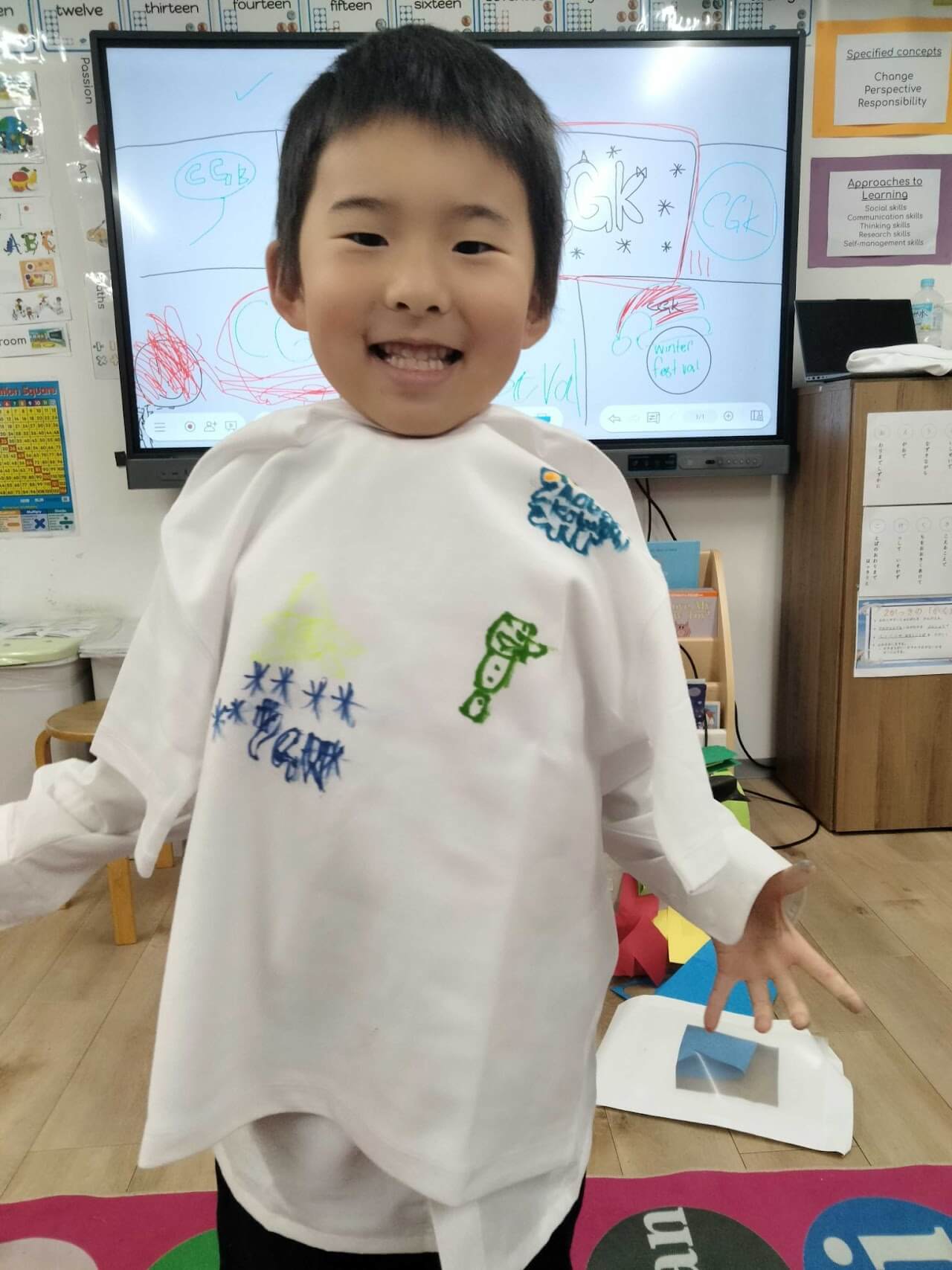
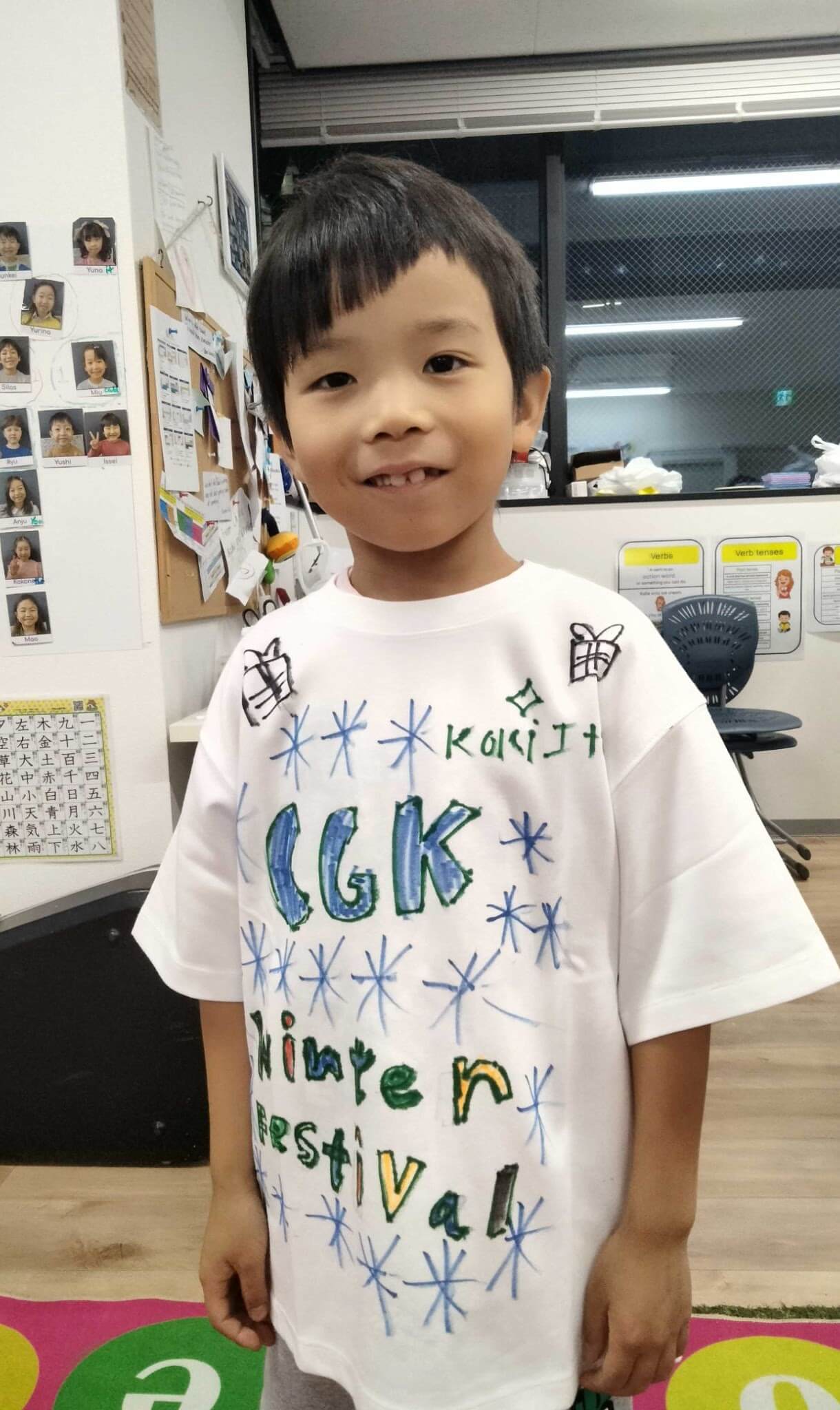
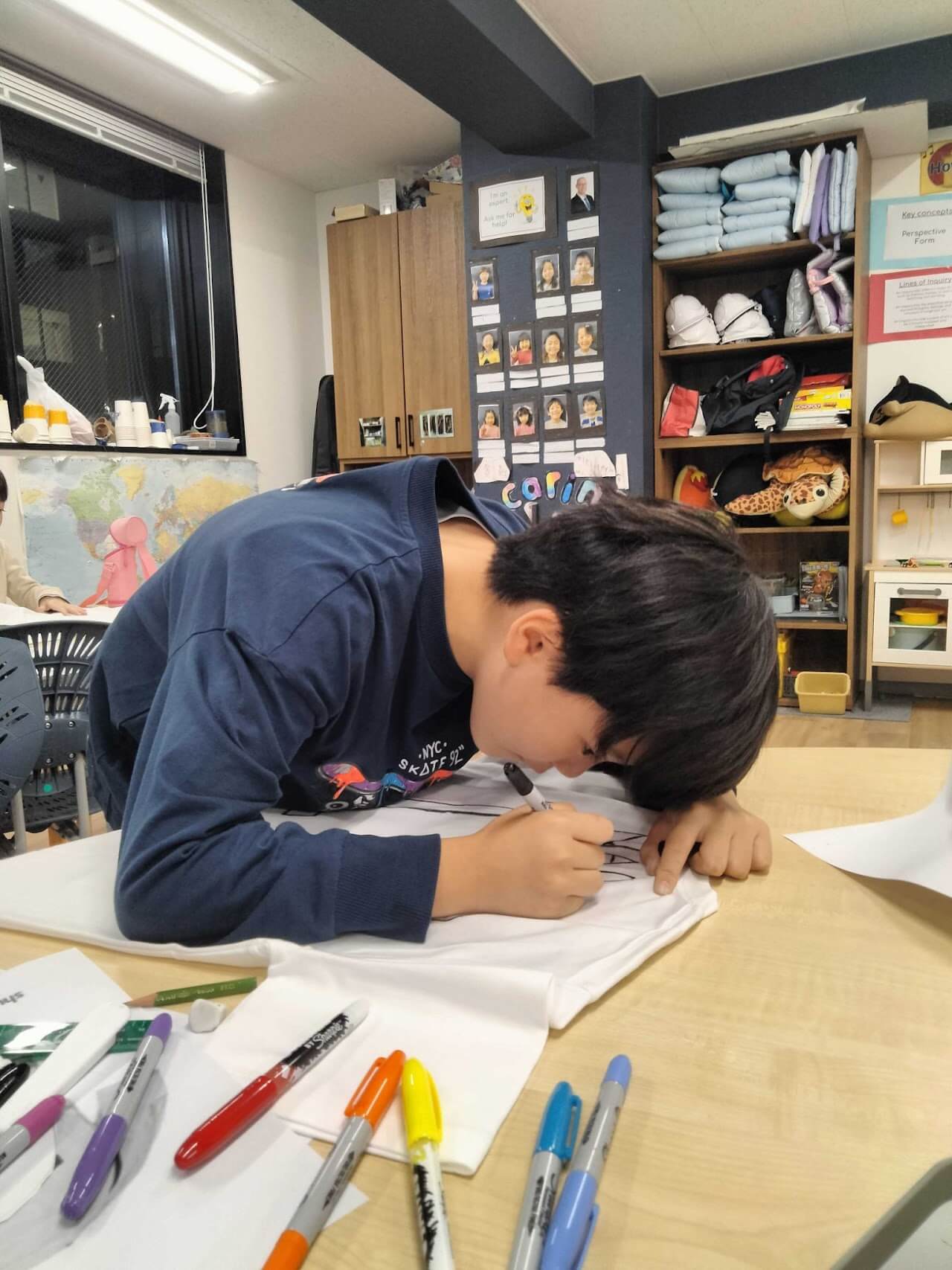
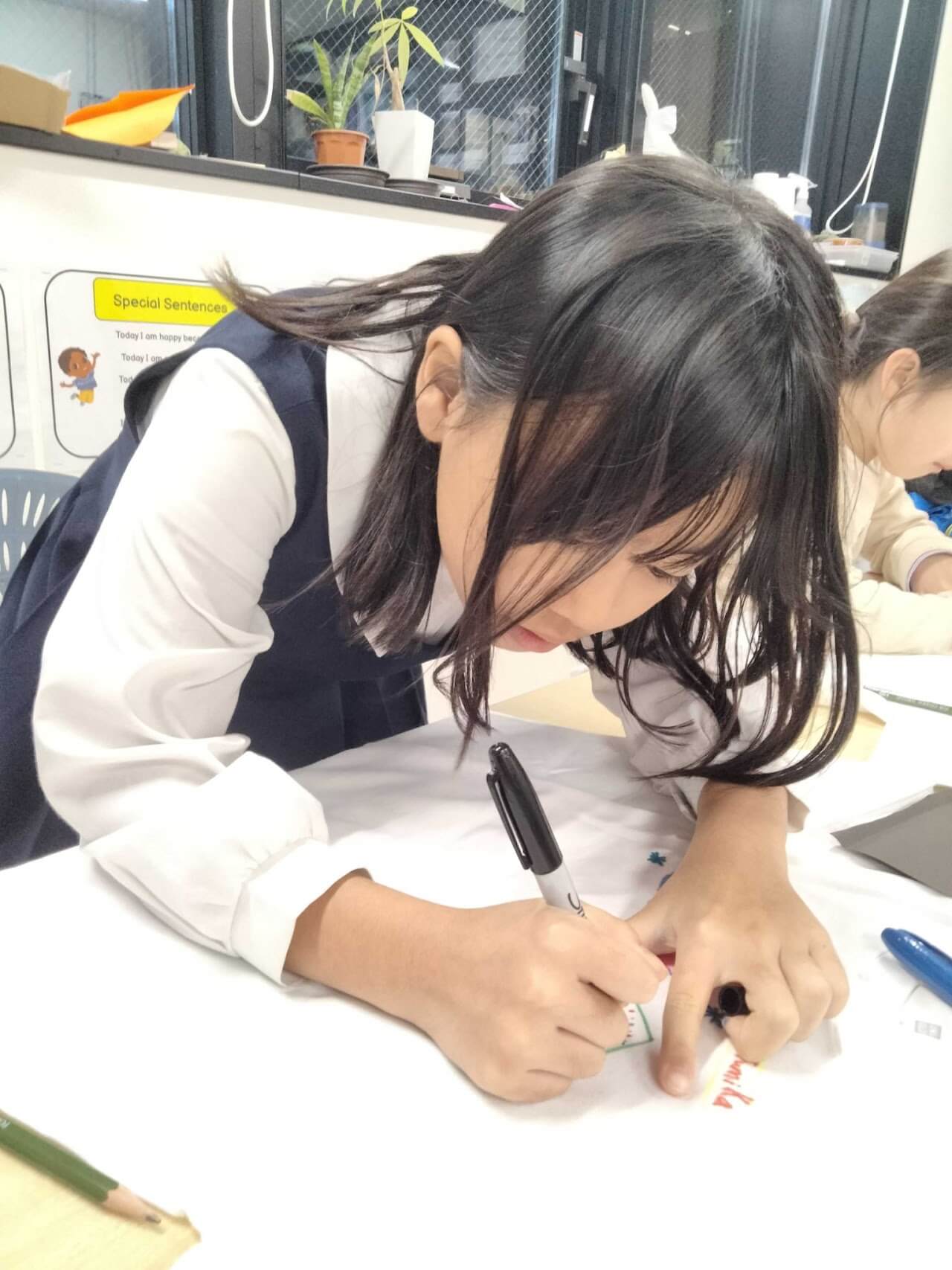
This project has provided students with a valuable opportunity to develop key skills such as time management, planning, teamwork, creative problem-solving, and envisioning outcomes. In various groups, students have created games, designed stamp cards, produced their own T-shirts, crafted artwork for a gallery display, prepared decorations, and even made prizes for festival participants.
It has been a pleasure to observe the students communicating, collaborating, and generating ideas with minimal teacher guidance. This has been our most student-led project of the week, with the class taking full ownership of the process and showing great enthusiasm as they prepare to share their work with their families.
Additionally, this format has helped ease some of the students’ presentation nerves, as they appear more comfortable engaging in an interactive event rather than relying solely on public speaking.
When designing their T-shirts, students were given complete creative freedom with one guiding rule: each design had to incorporate a class logo. After presenting their ideas to one another, the class voted for their favourite design. The winning logo now appears on every shirt, giving Class A a unified look for our festival day.
We look forward to celebrating the students’ hard work and creativity at our festival!
Regards,
Ms. Amy R.
Class A Teacher
Study Abroad and Global Initiatives
2025 Summer CGK Study Abroad
Australia
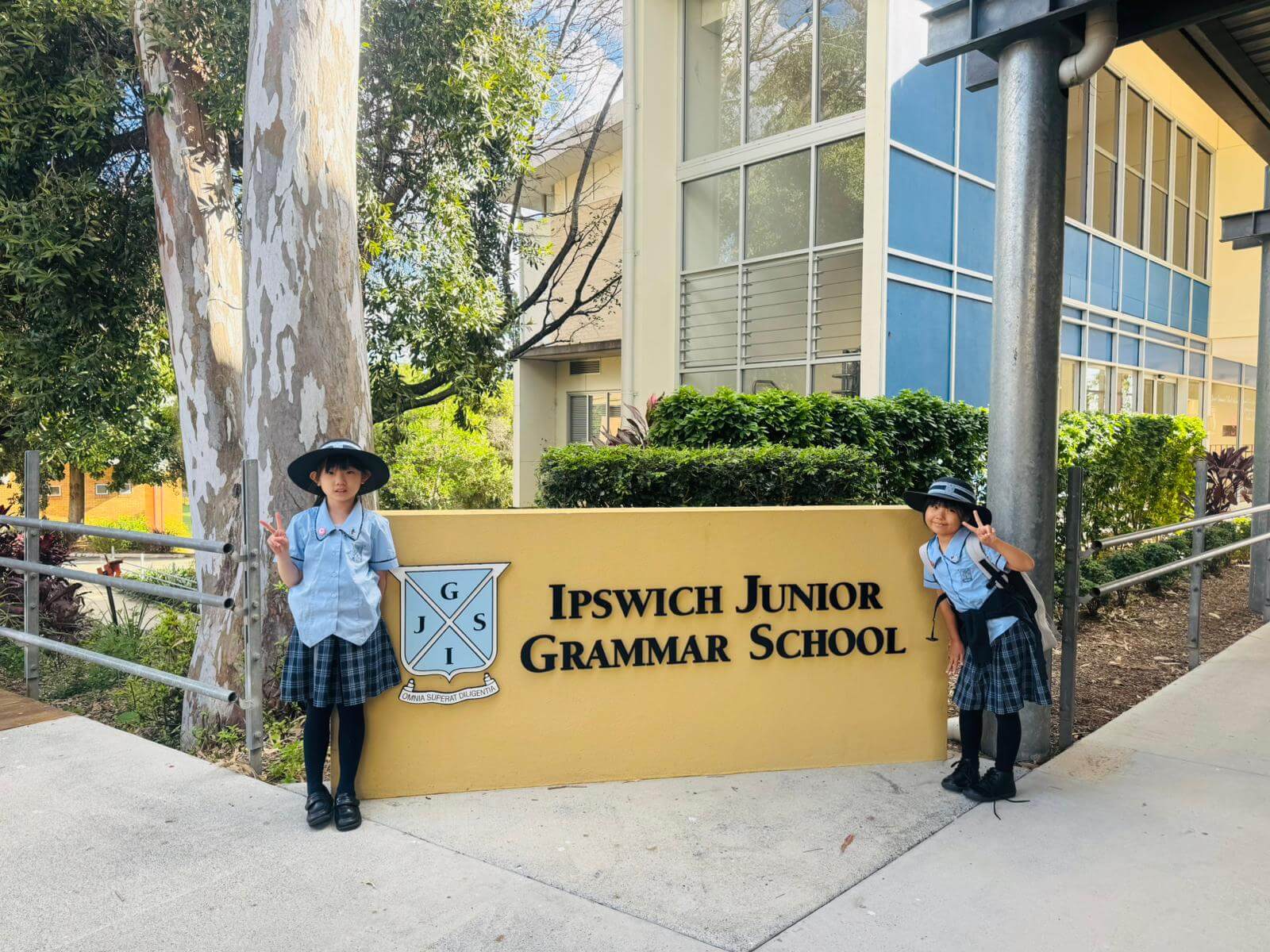
Ipswich Girls Grammar School (私立女子一貫校) CGK G3 Ako, AS G2 Yusei
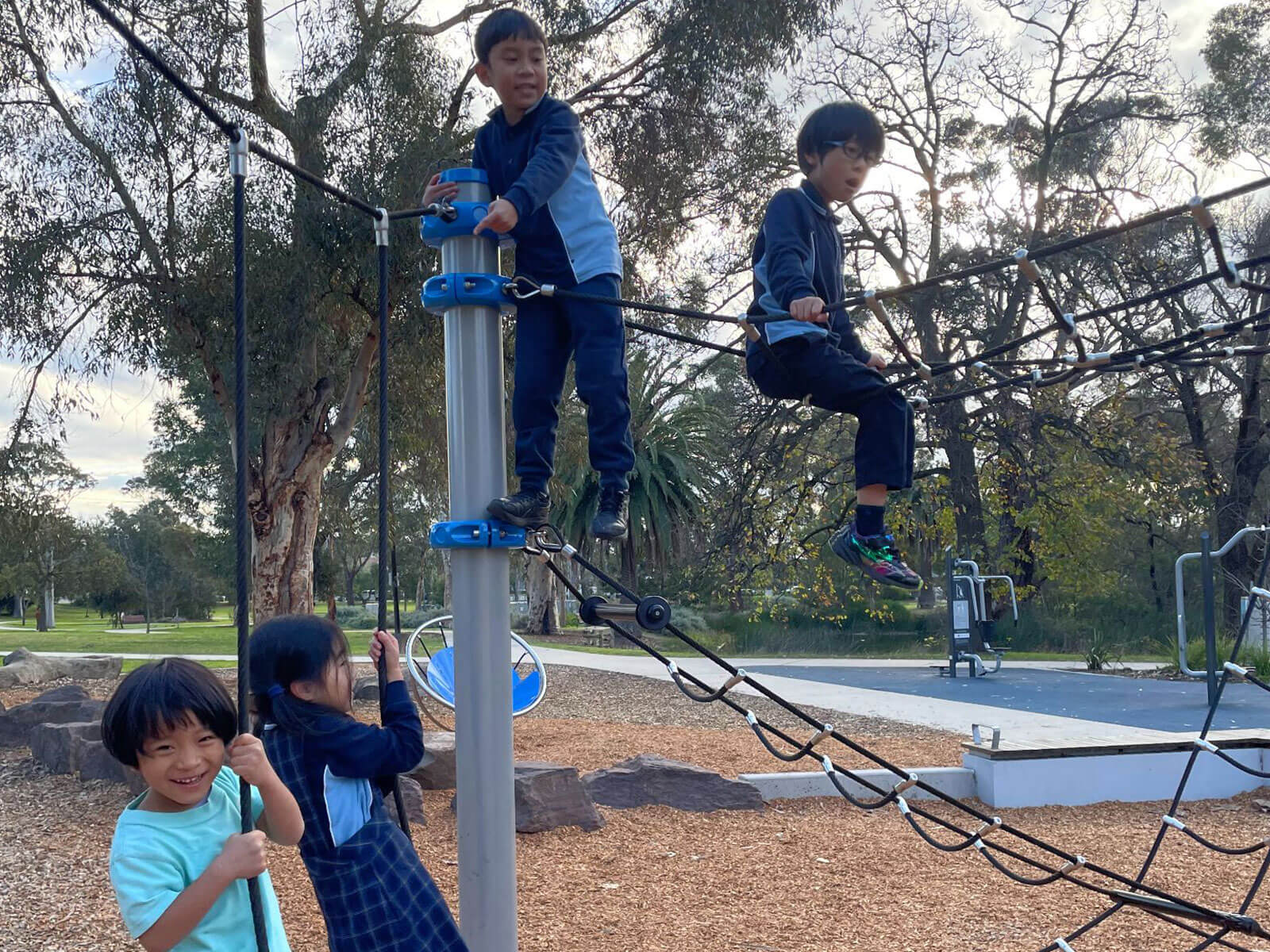
Essendon North Primary School(公立小学校・IB PYP校) CGK G1 Kokone, Mitsuki
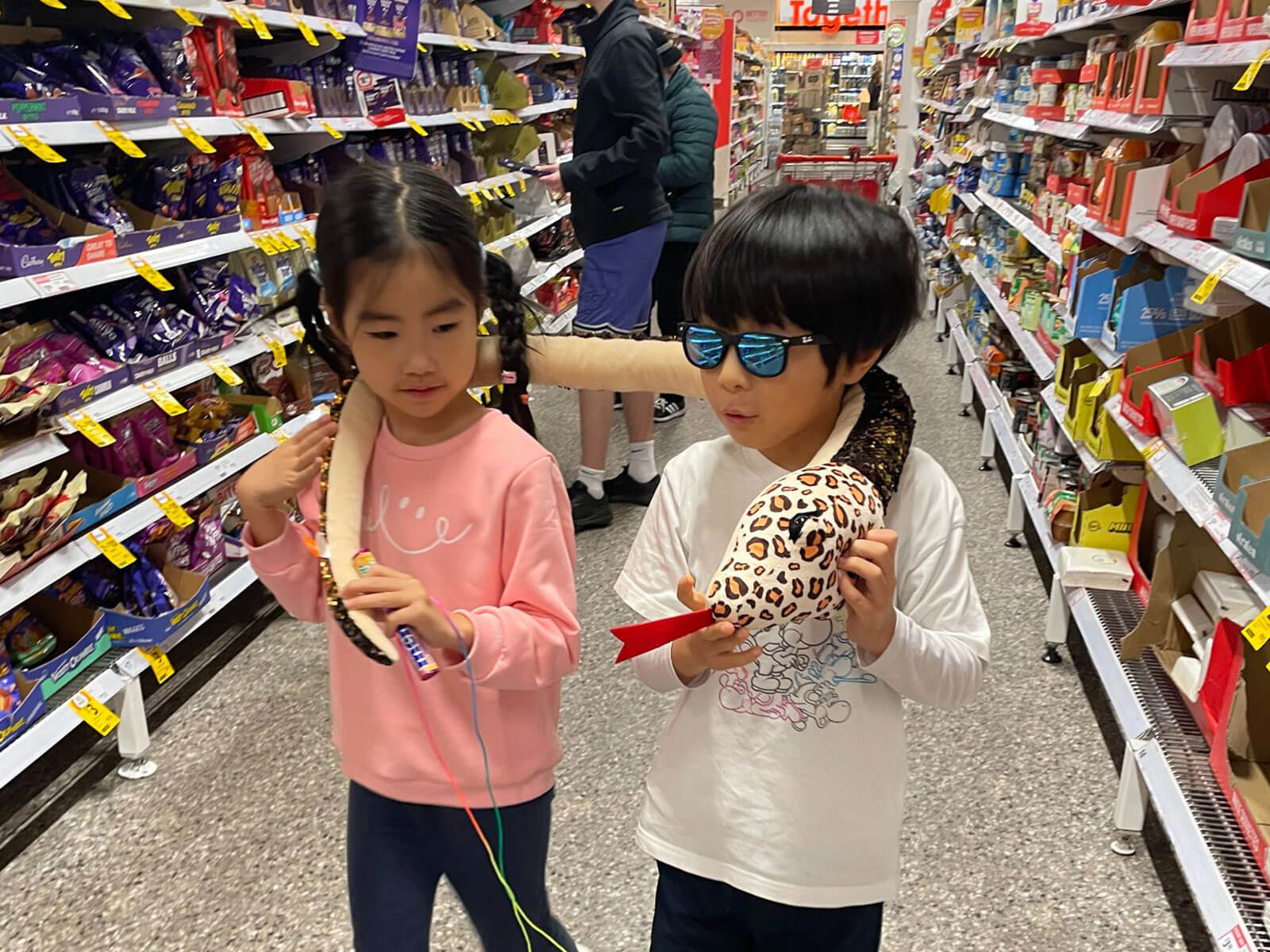
Essendon North Primary School(公立小学校・IB PYP校) CGK G1 Kokone, Mitsuki
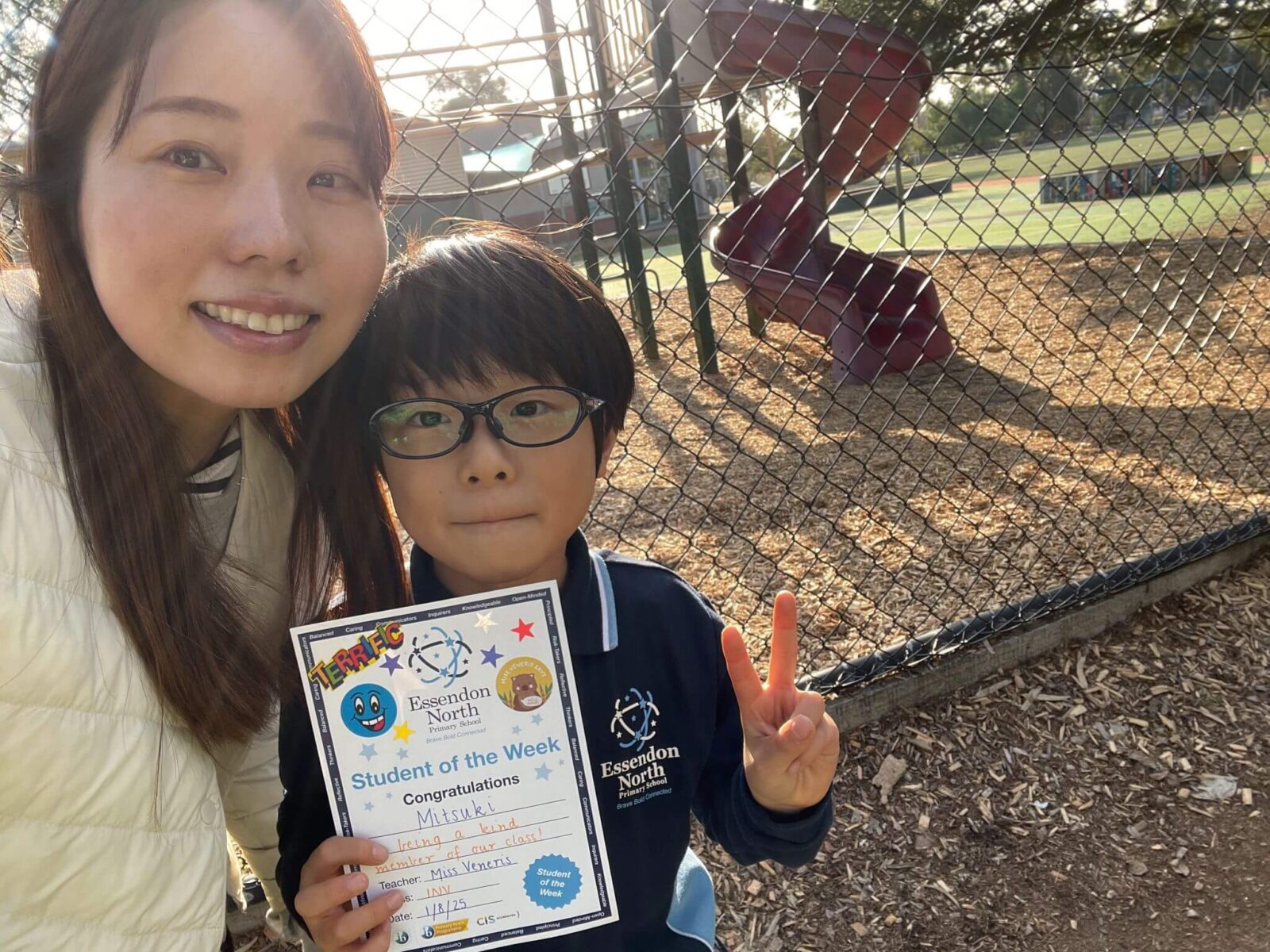 Essendon North Primary School(公立小学校・IB PYP校)CGK G1 Mitsuki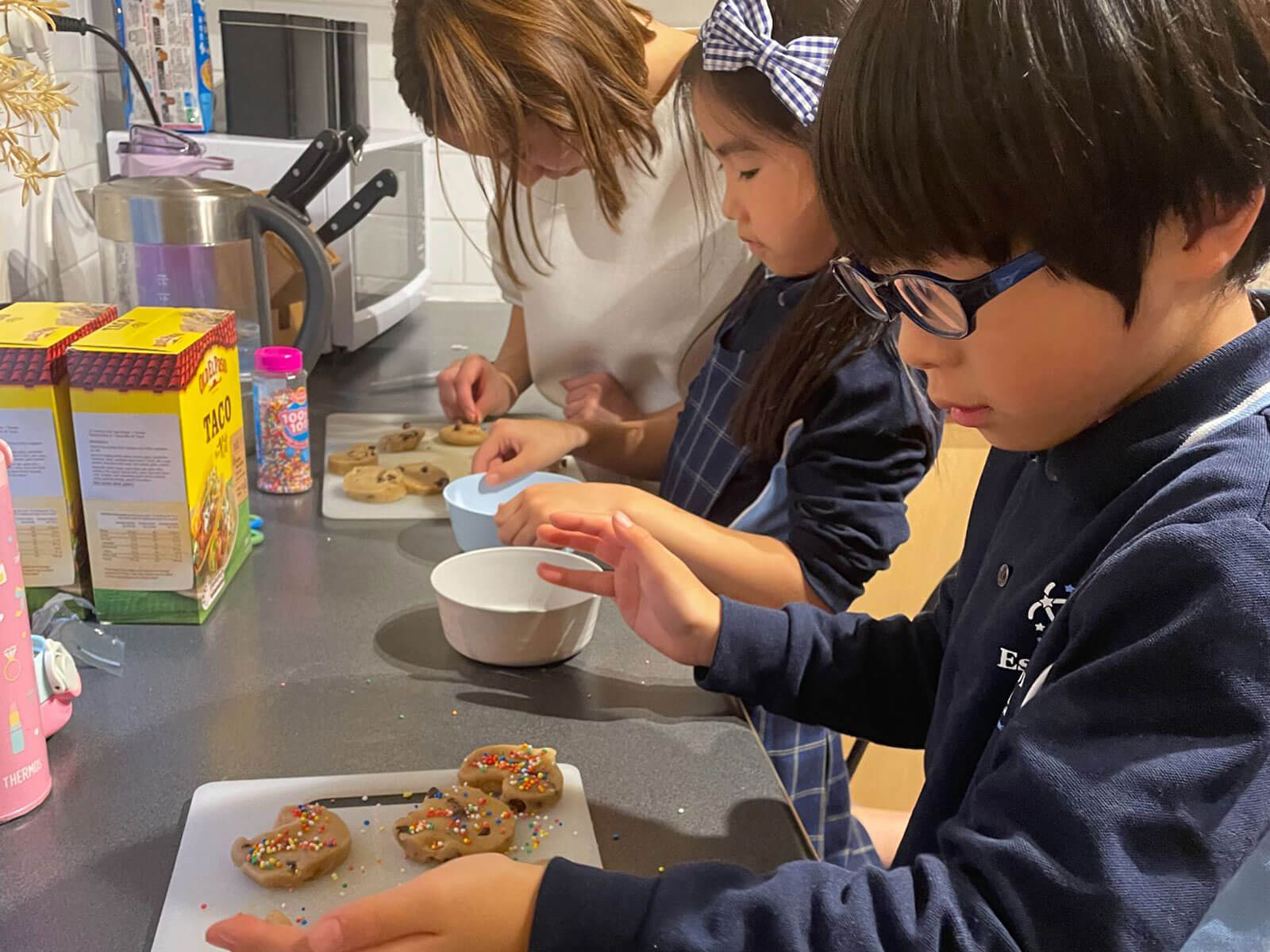
Essendon North Primary School(公立小学校・IB PYP校) CGK G1 Kokone, Mitsuki
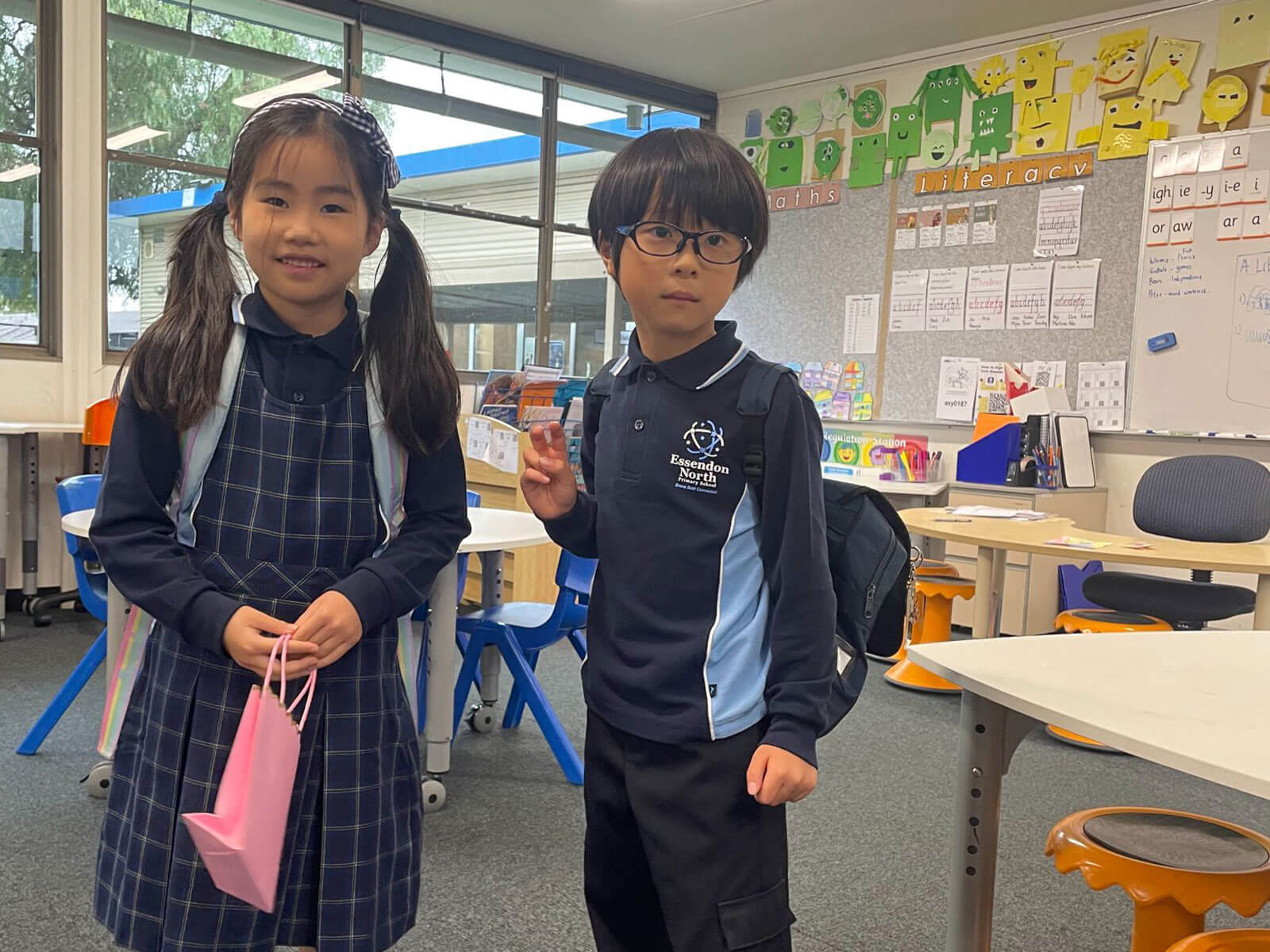
Essendon North Primary School(公立小学校・IB PYP校) CGK G1 Kokone, Mitsuki
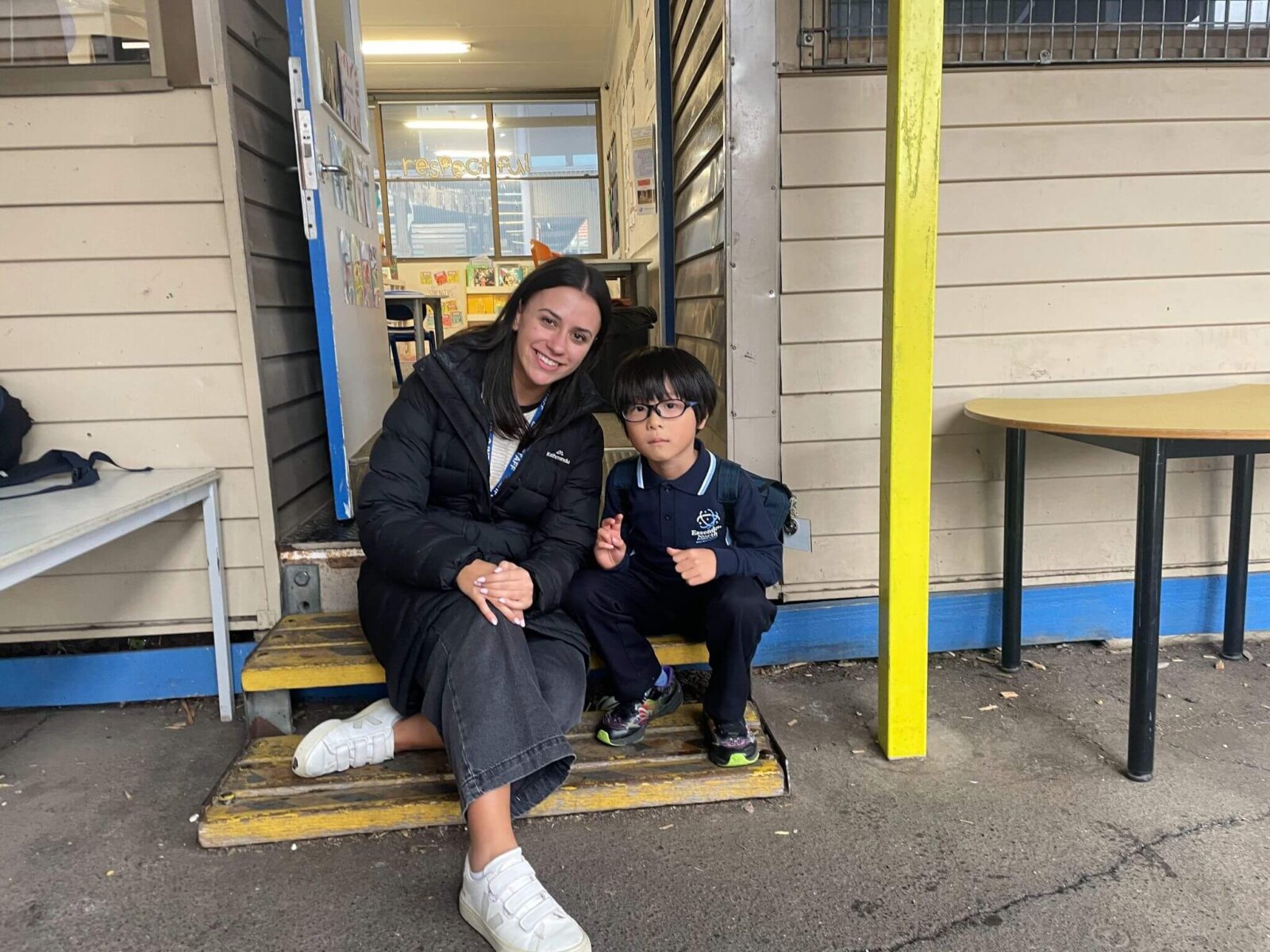
Essendon North Primary School(公立小学校・IB PYP校) CGK G1 Mitsuki
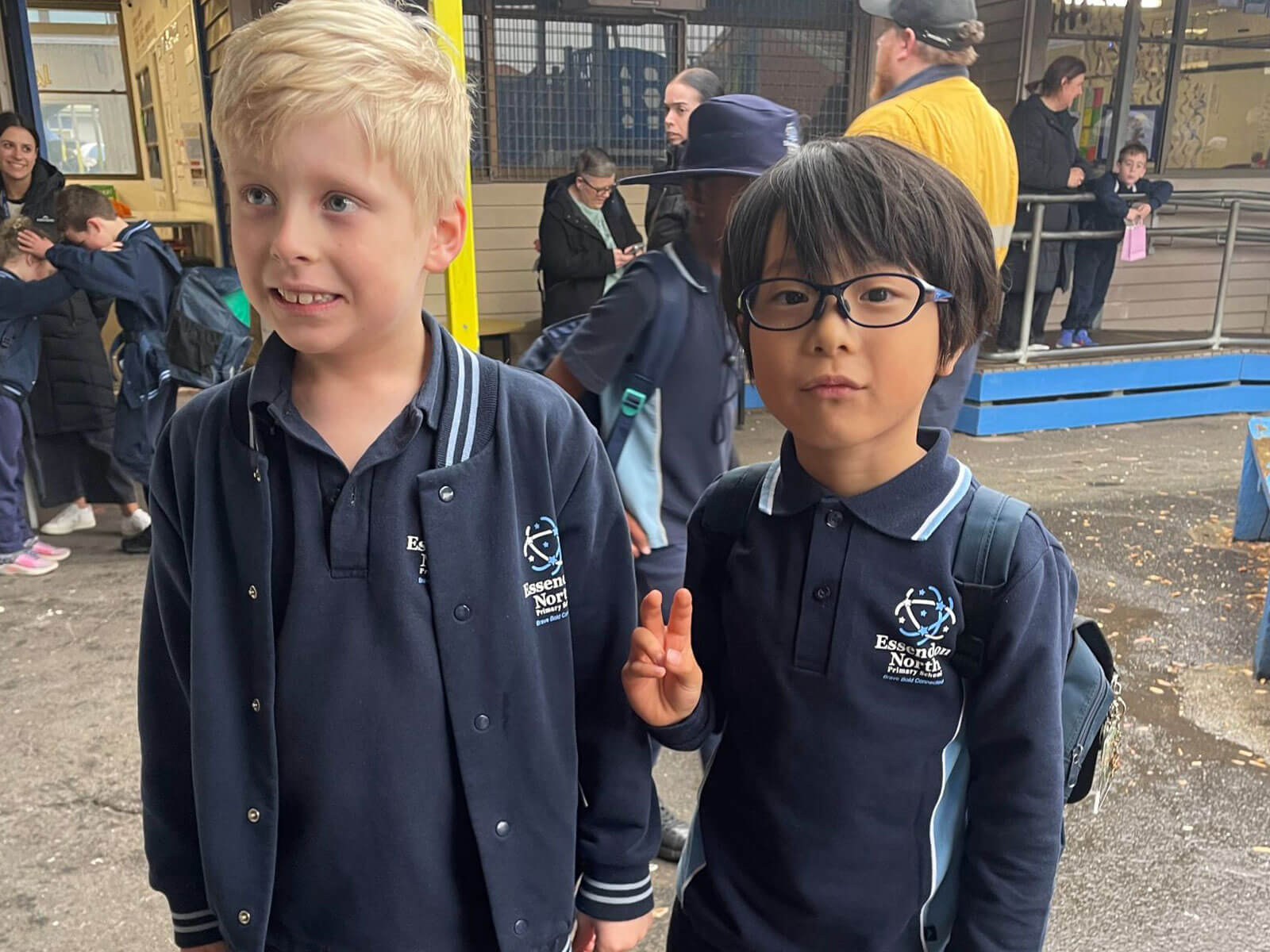
Essendon North Primary School(公立小学校・IB PYP校) CGK G1 Mitsuki
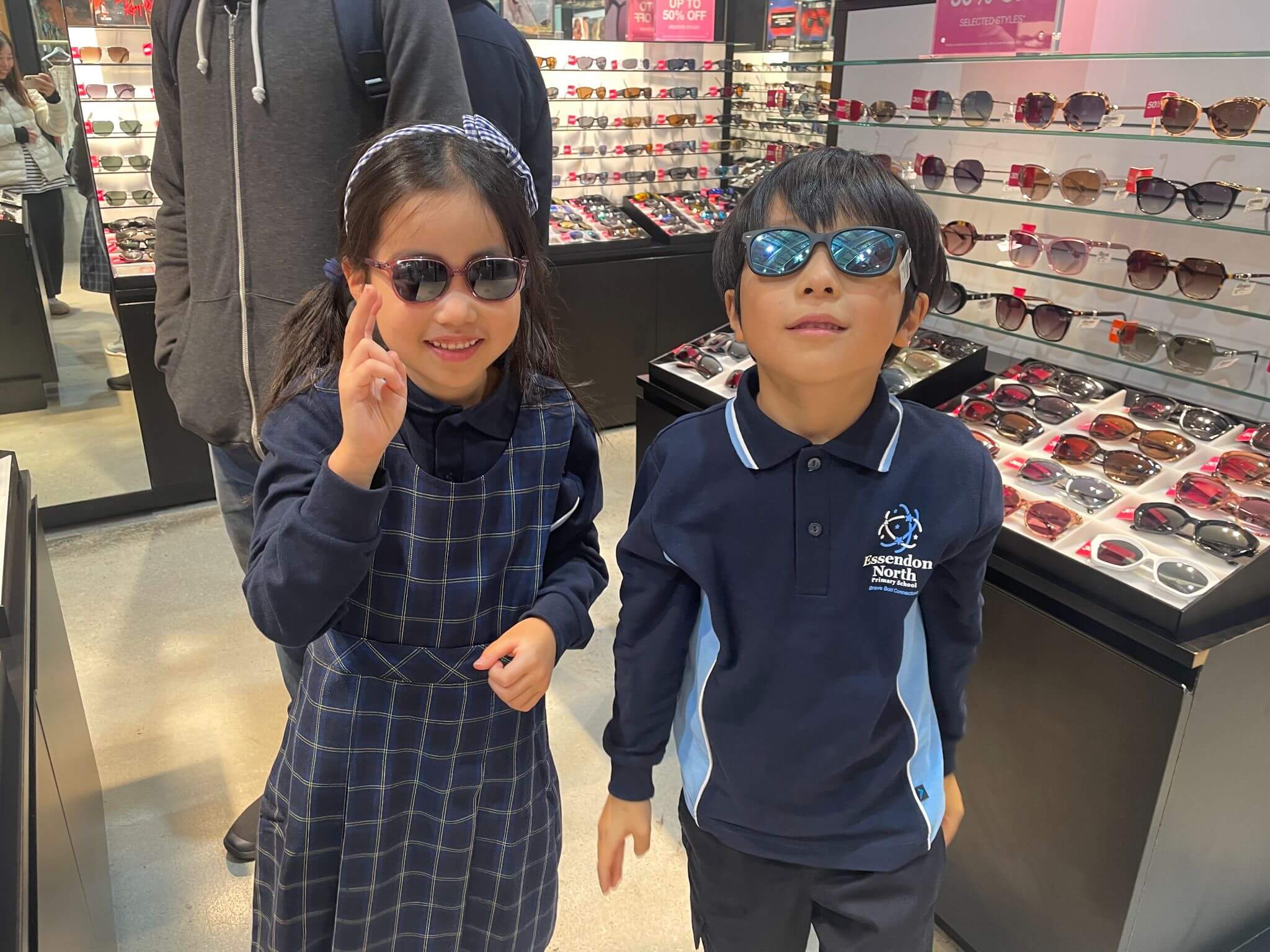
Essendon North Primary School(公立小学校・IB PYP校) CGK G1 Kokone, Mitsuki
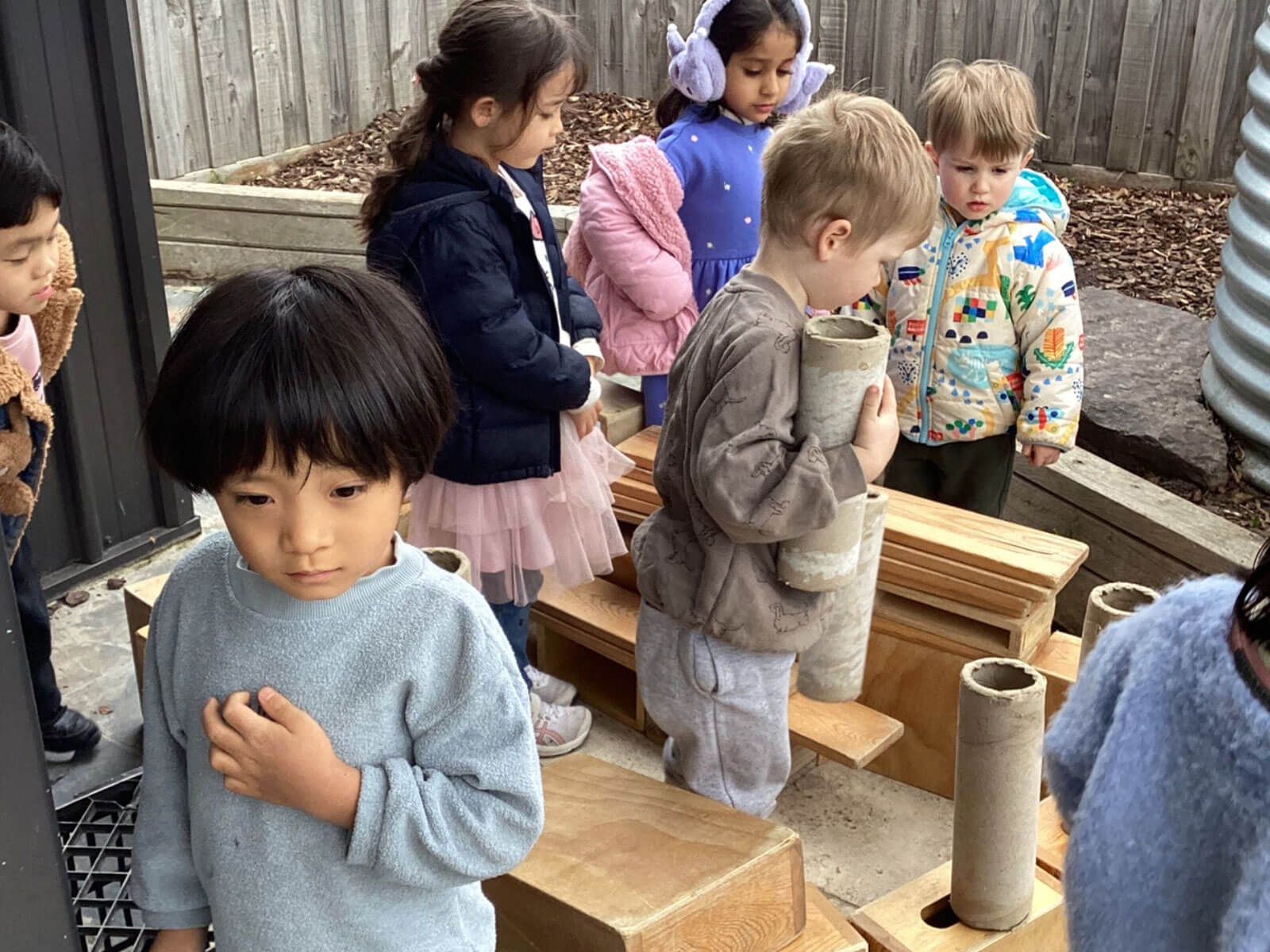
Guardian Childcare & Education South Melbourne (保育園) CGK Mountain Taiki
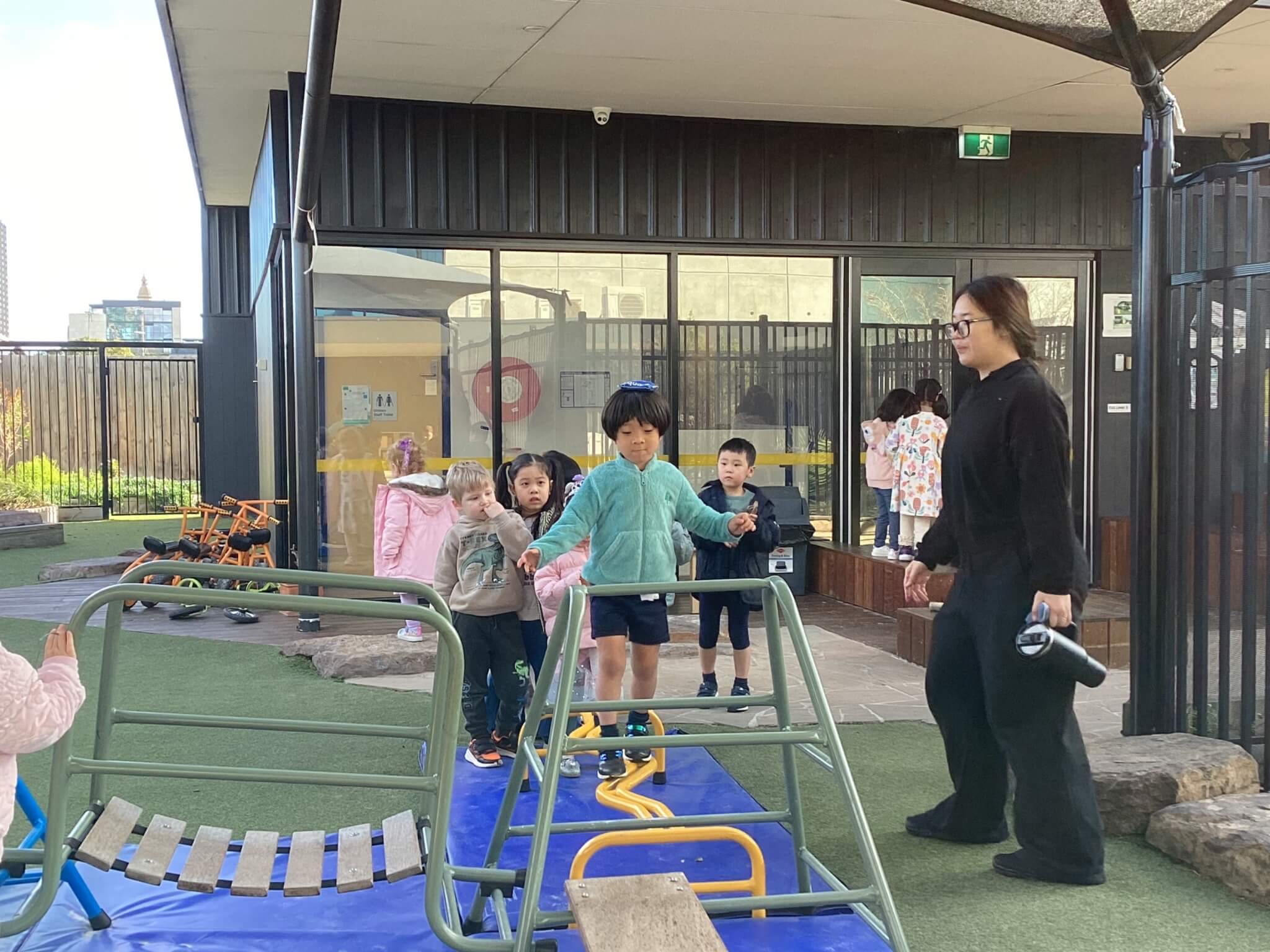
Guardian Childcare & Education South Melbourne (保育園) CGK Mountain Taiki
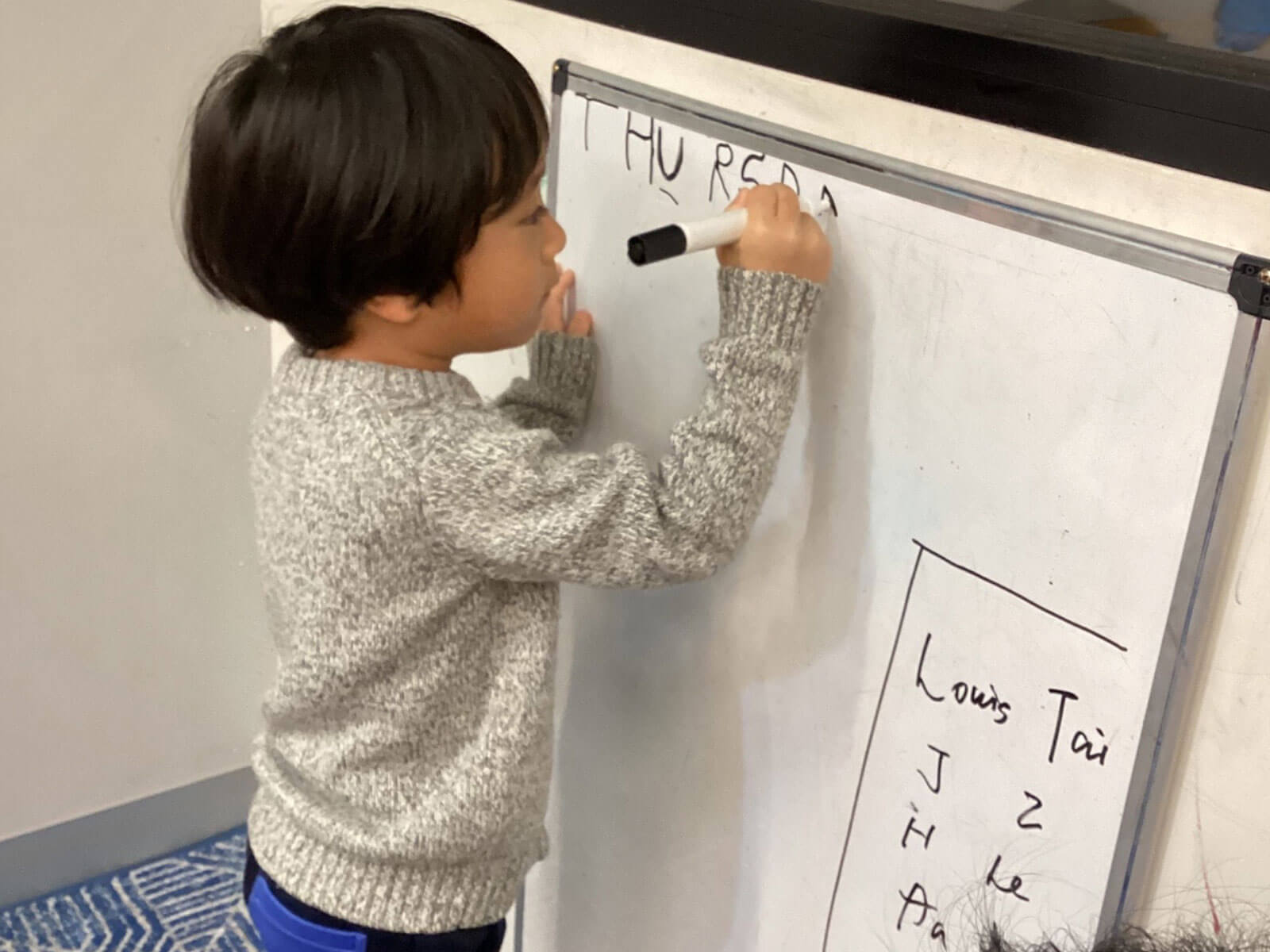
Guardian Childcare & Education South Melbourne (保育園) CGK Mountain Taiki
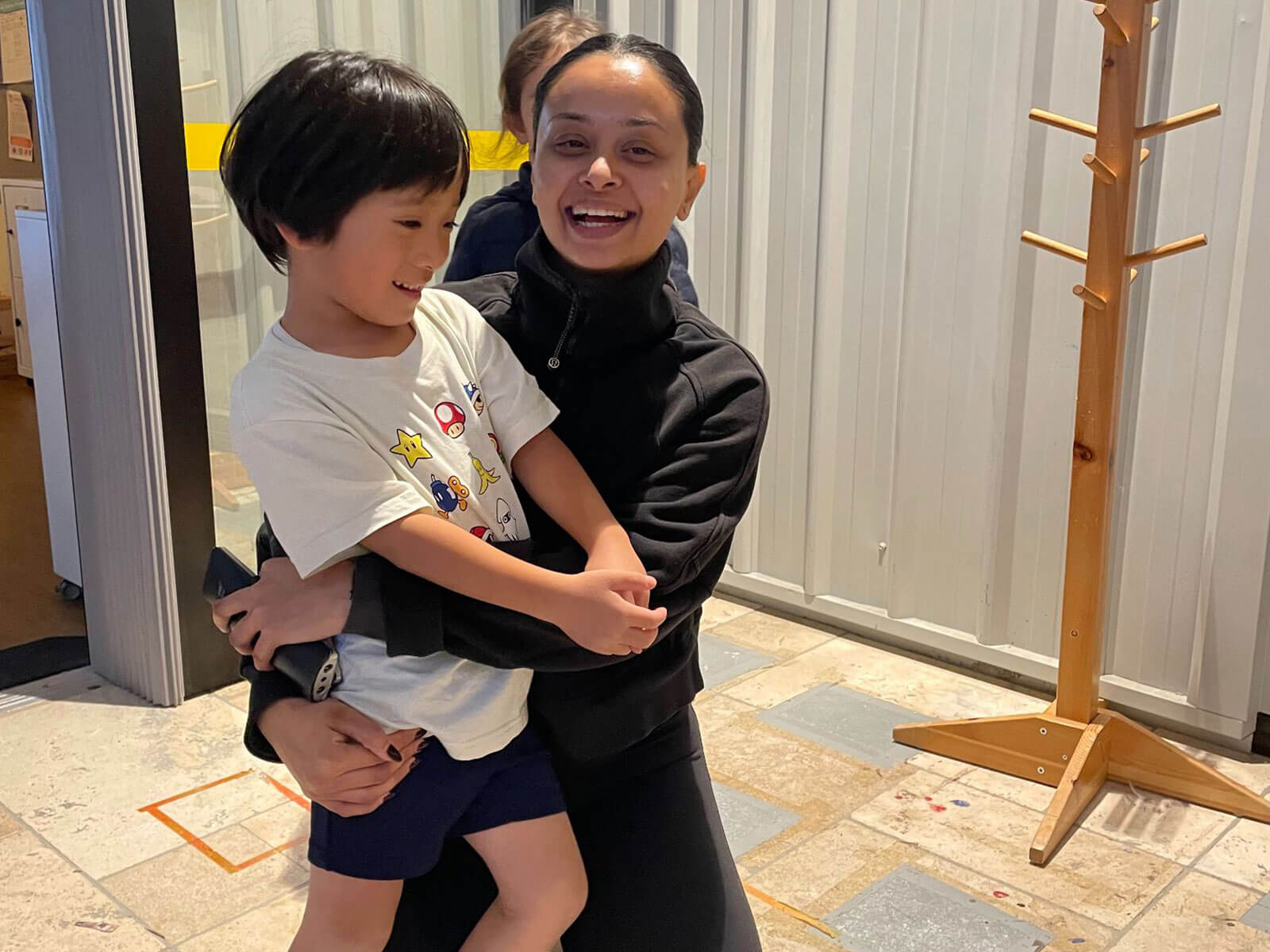
Guardian Childcare & Education South Melbourne (保育園) CGK Mountain Taiki
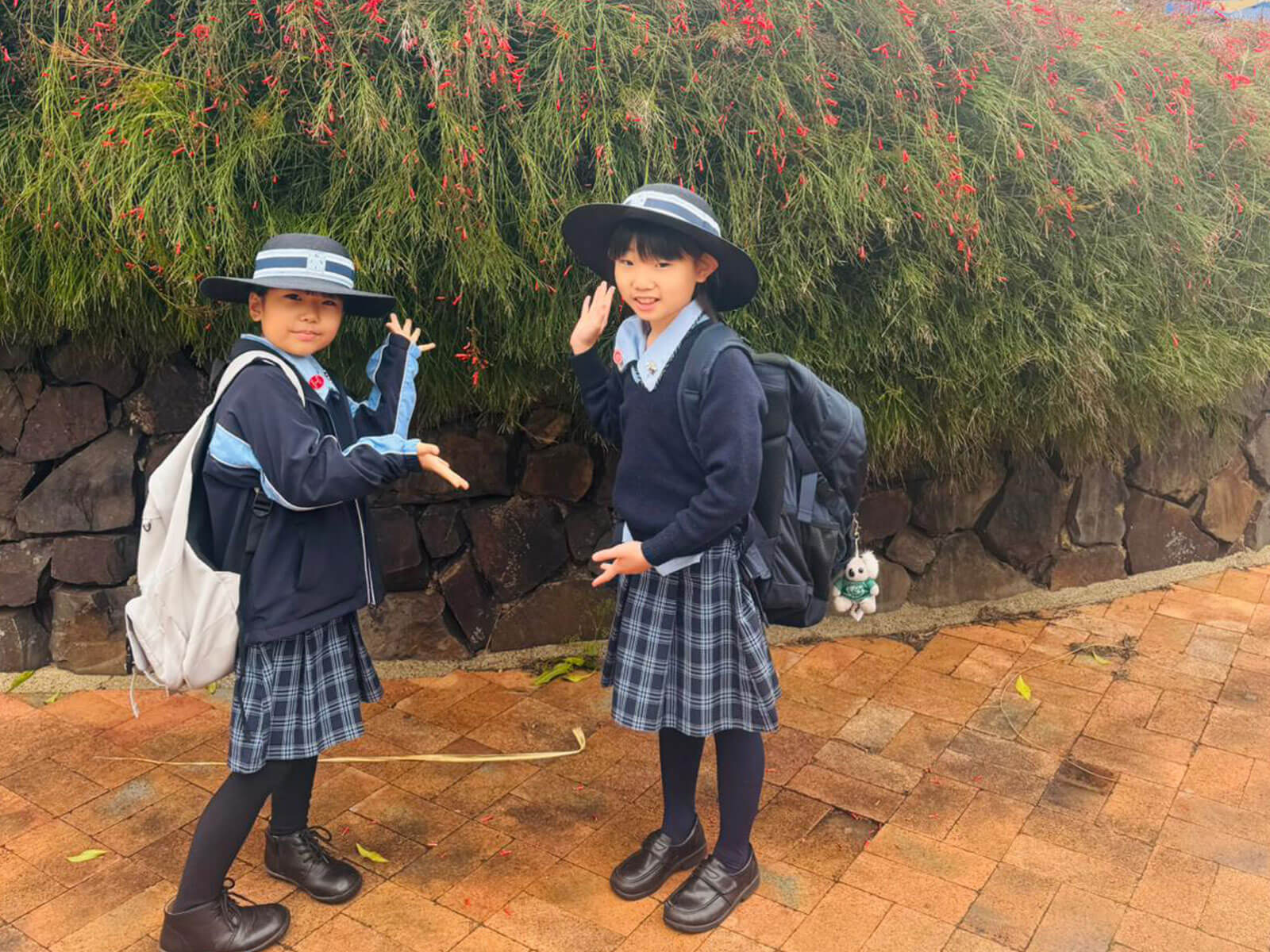
Ipswich Girls Grammar School (私立女子一貫校) CGK G3 Ako, AS G2 Yusei
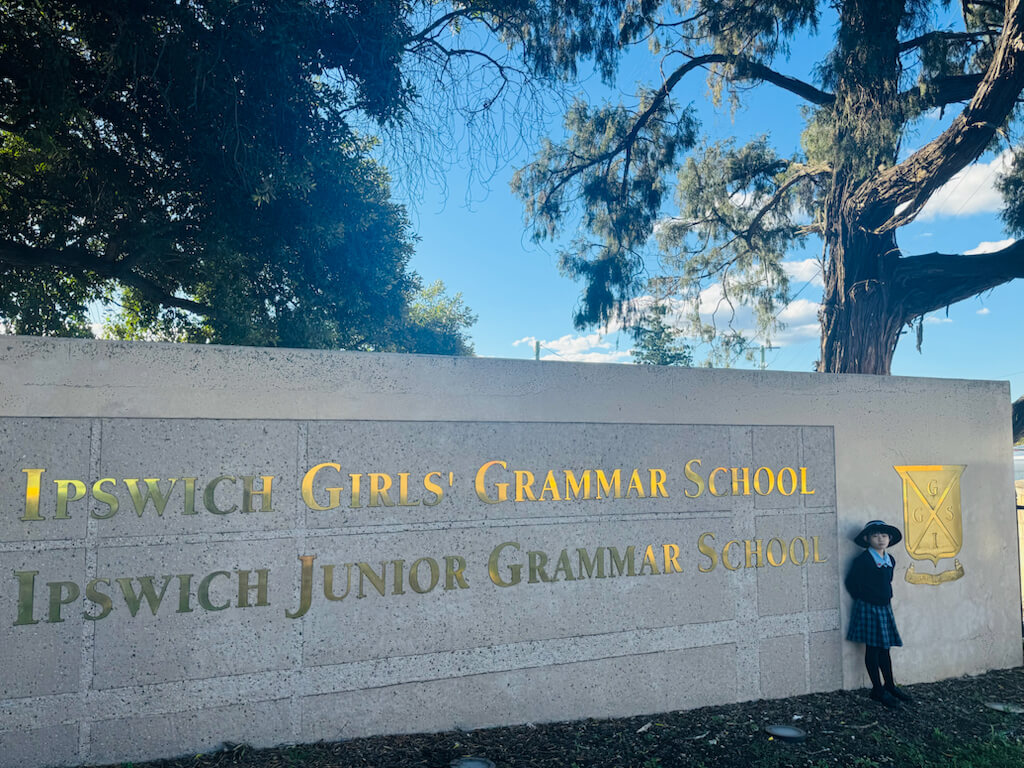
Ipswich Girls Grammar School (私立女子一貫校) CGK AS G2 Yusei
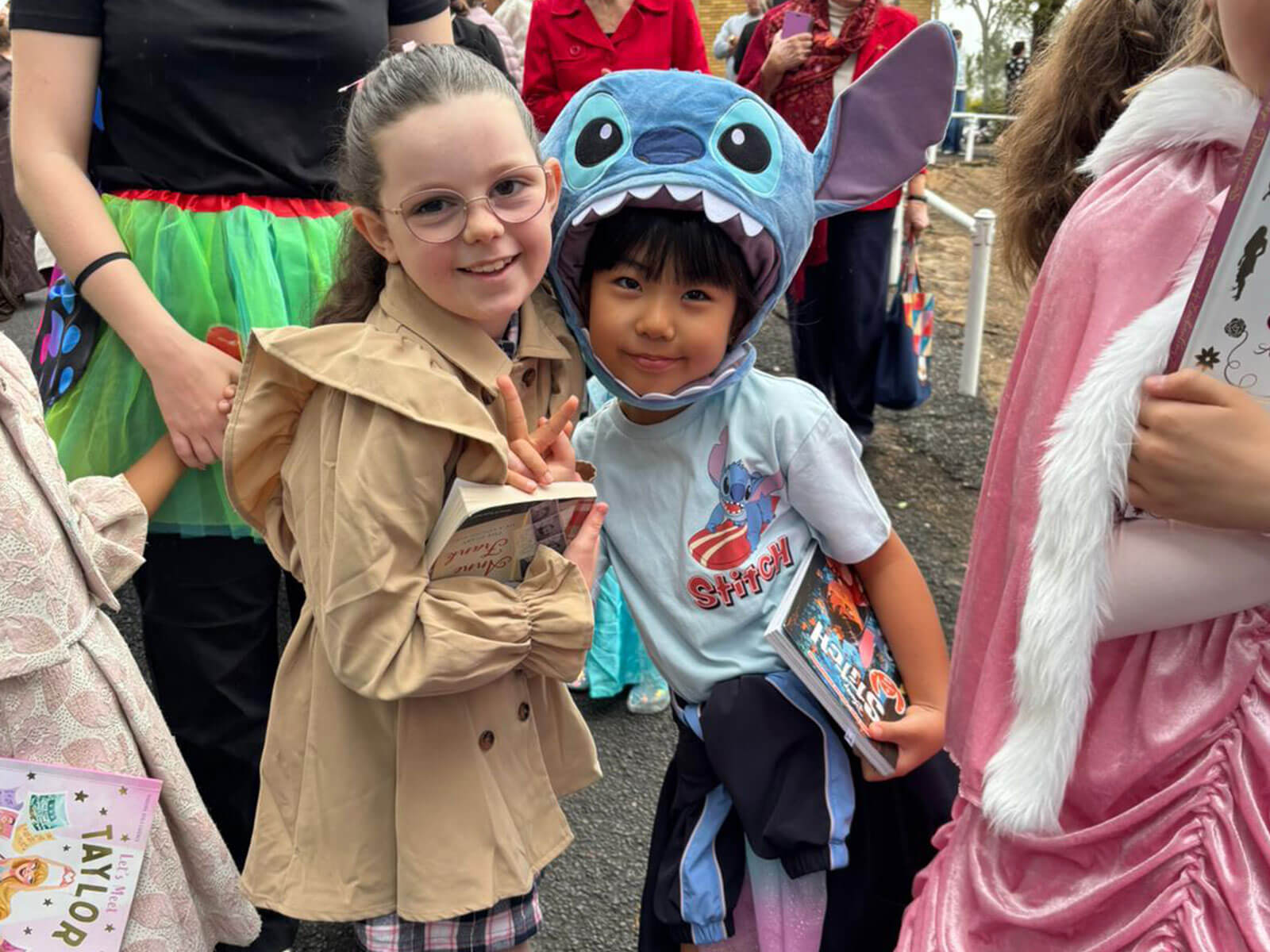
Ipswich Girls Grammar School (私立女子一貫校) CGK G3 Ako
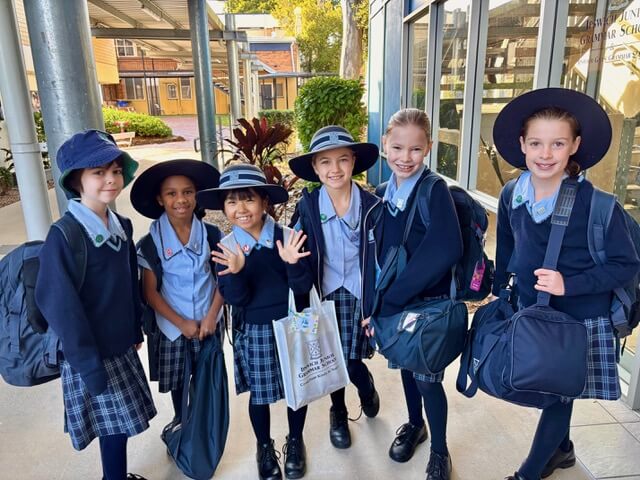
Ipswich Girls Grammar School (私立女子一貫校) CGK G3 Ako
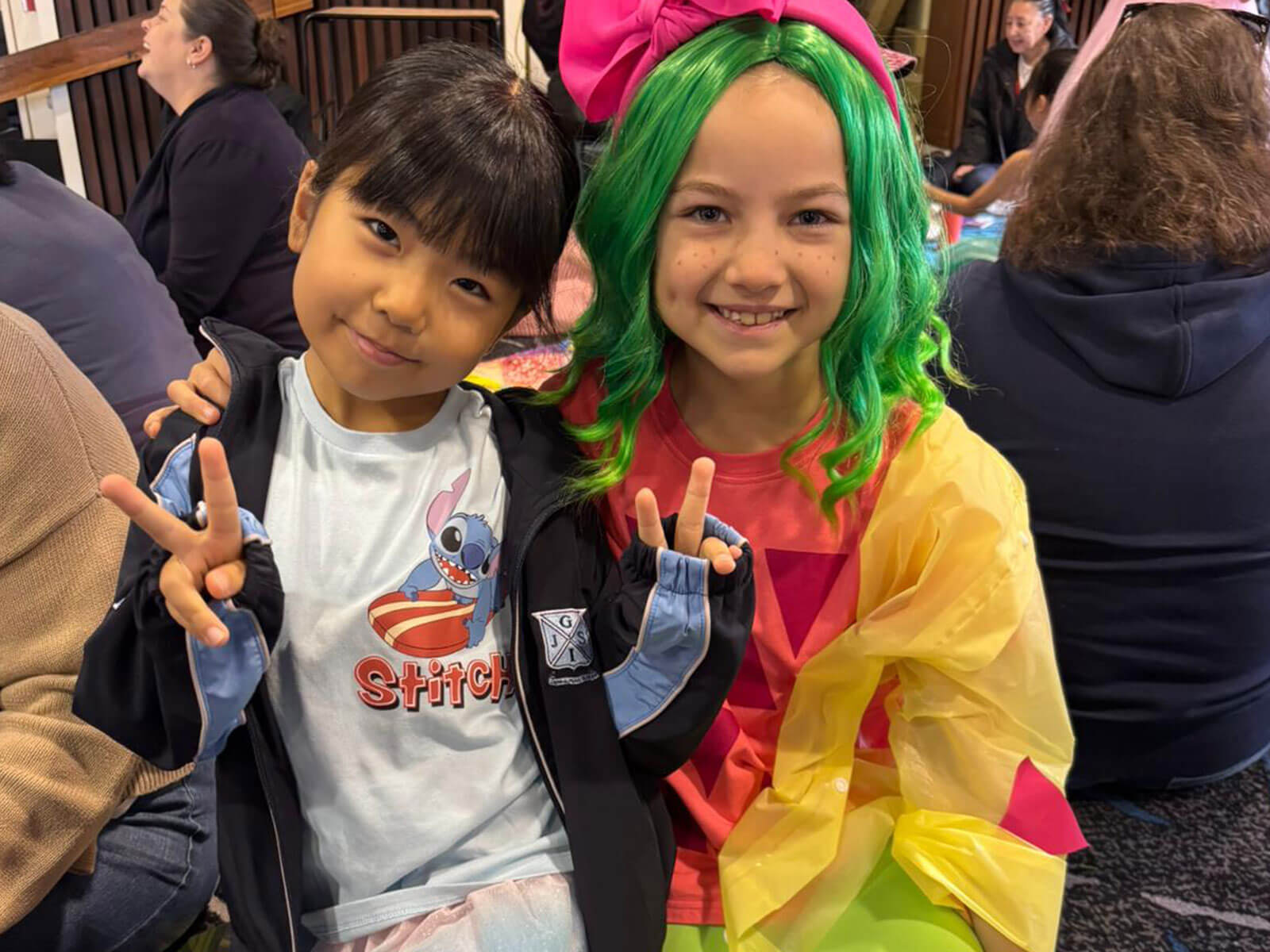
Ipswich Girls Grammar School (私立女子一貫校) CGK G3 Ako
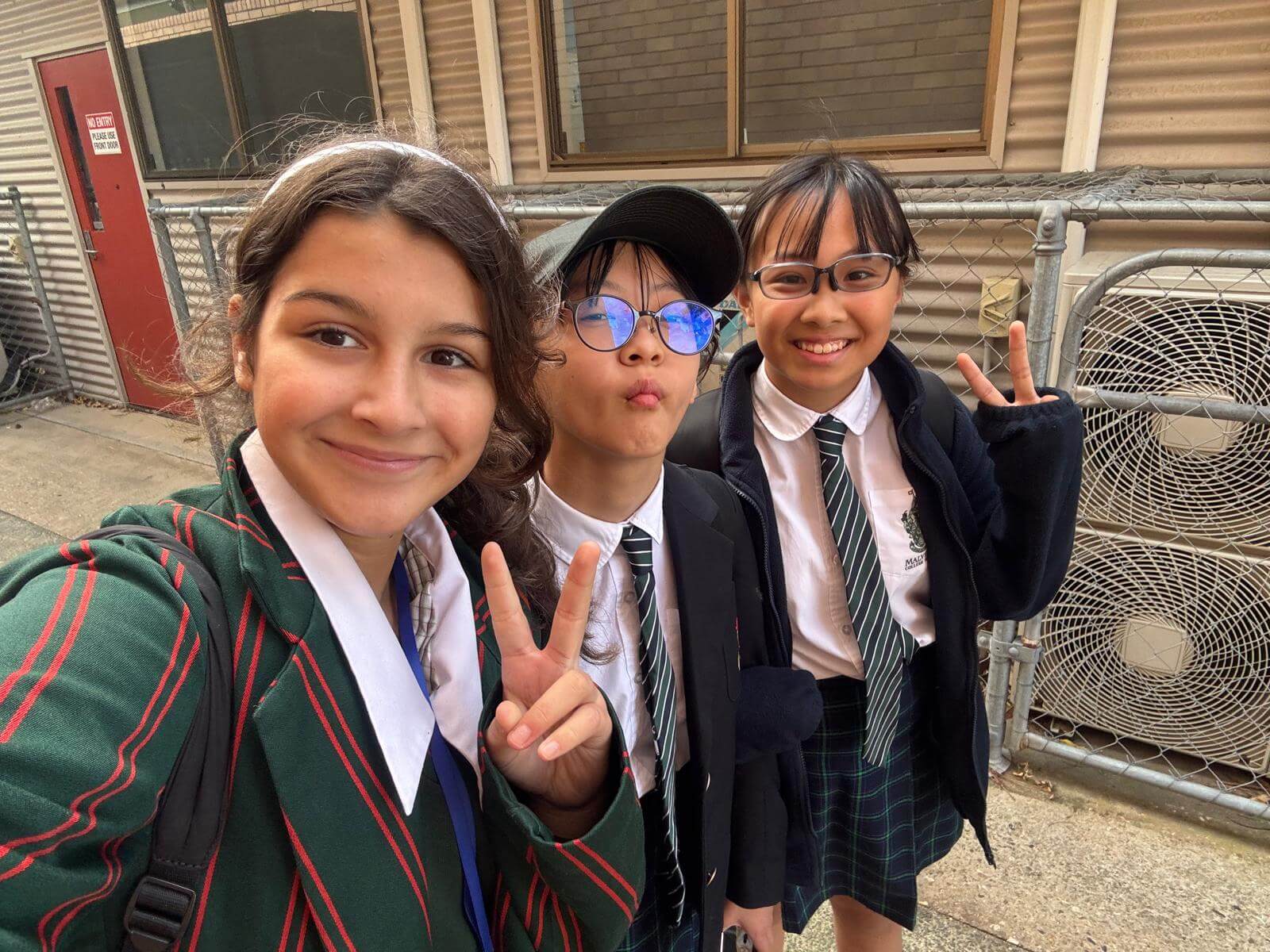
St.Pauls (私立一貫校) CGK G7 Alisa
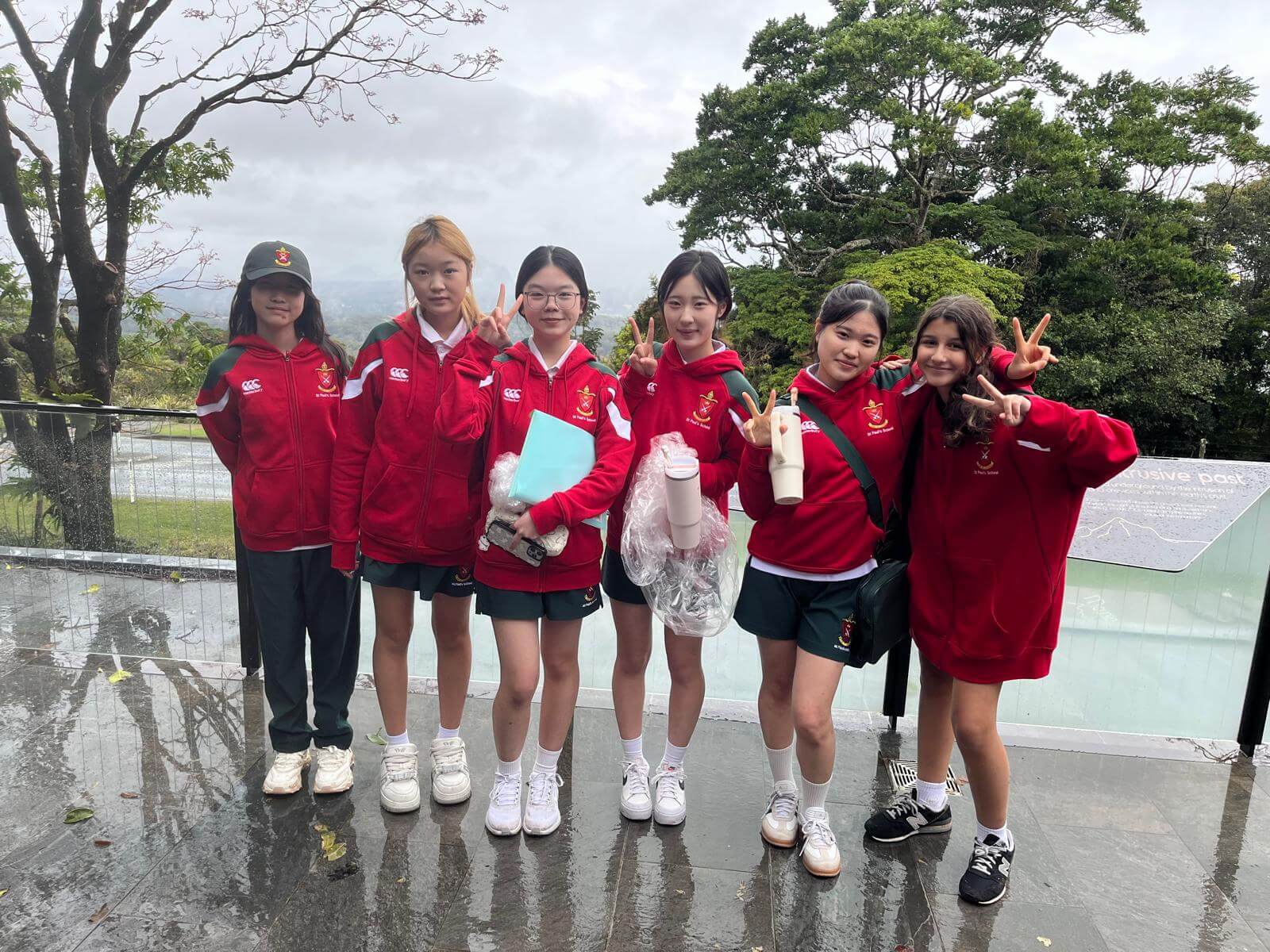
St.Pauls (私立一貫校) CGK G7 Alisa
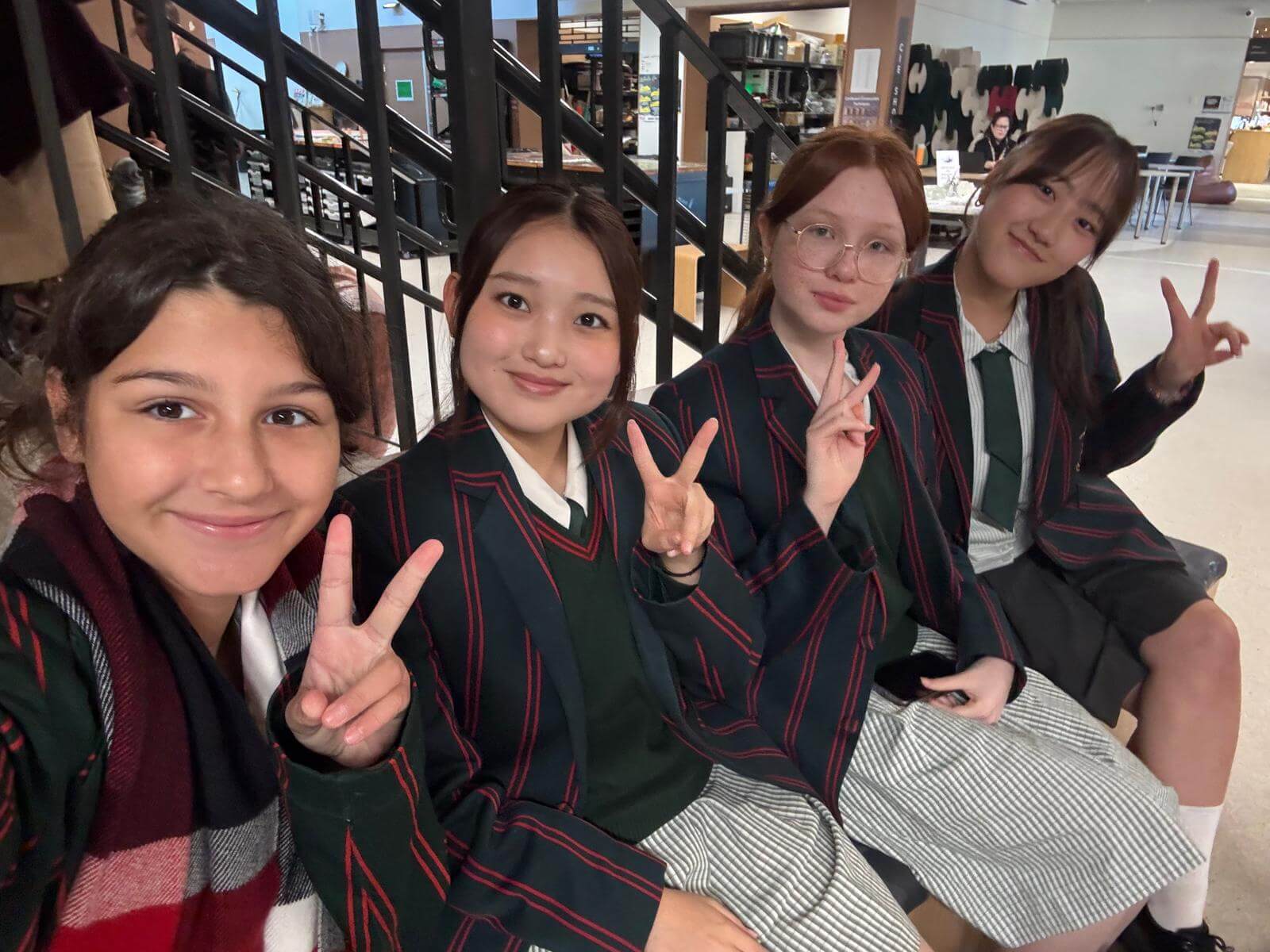
St.Pauls (私立一貫校) CGK G7 Alisa
Canada
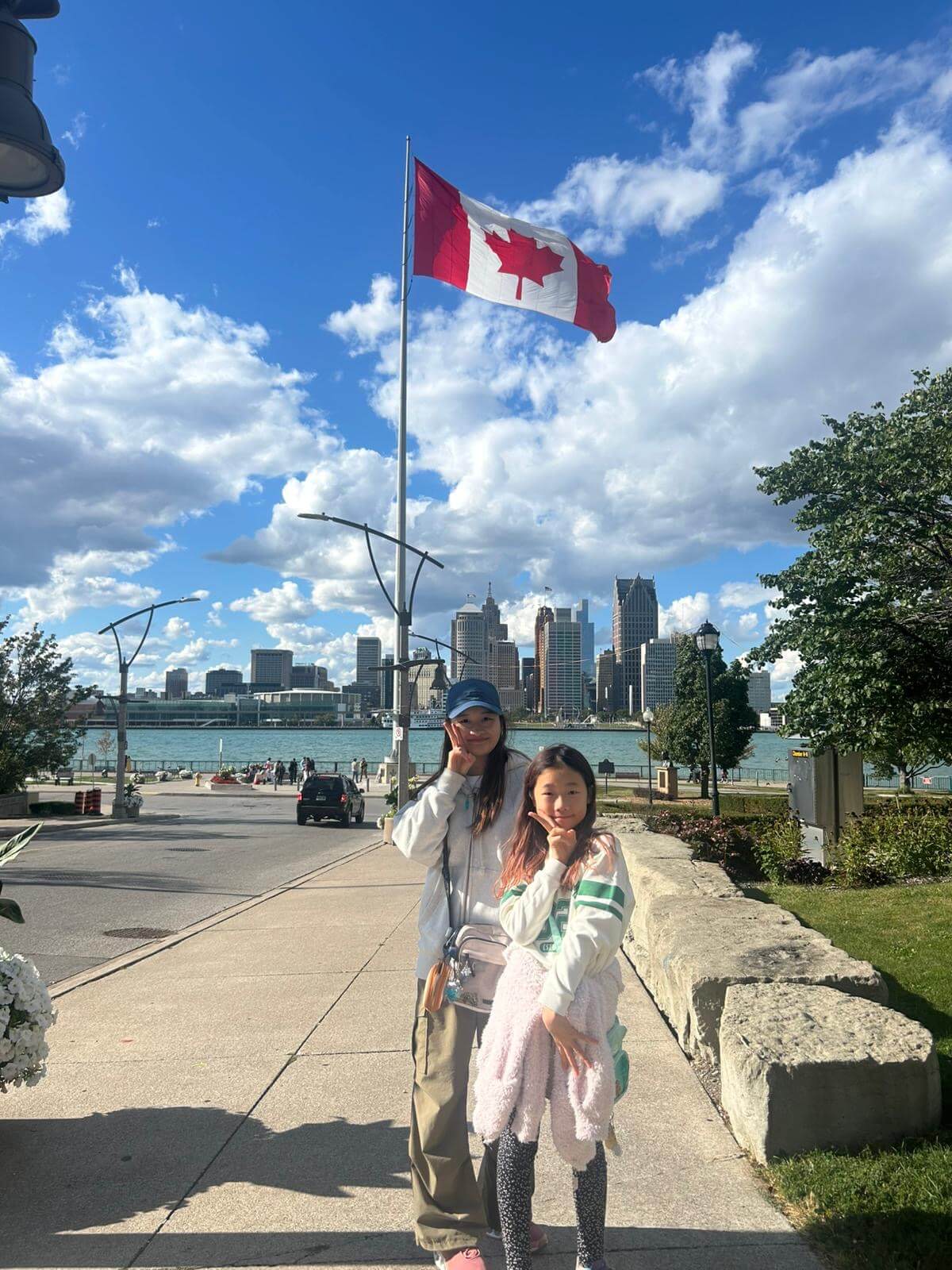
Assumption College Catholic Middle School (公立中学校) CGK G7 Sedona, St. James Elementary (公立小学校) CGK G4 Nasuka
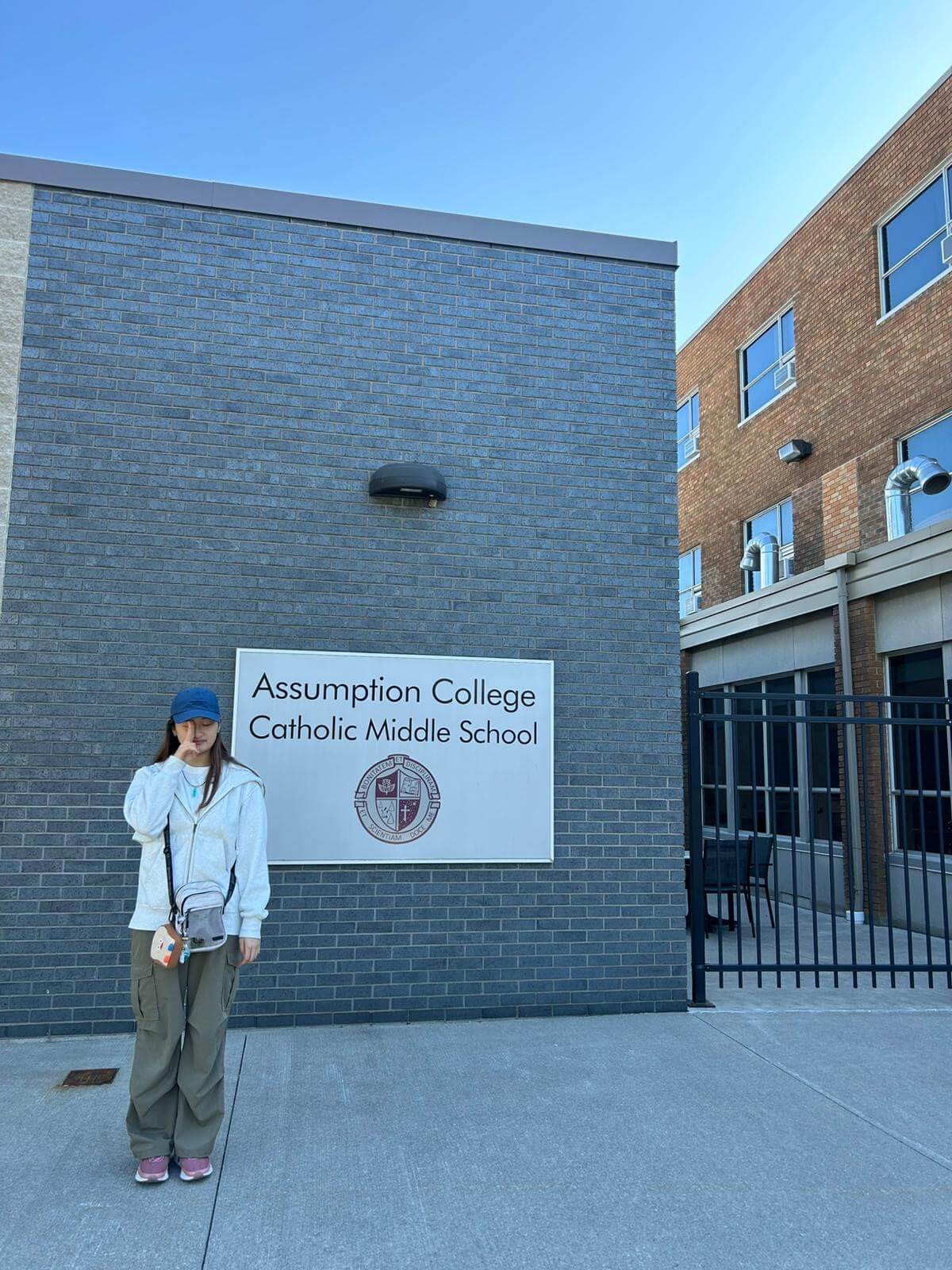
Assumption College Catholic Middle School (公立中学校) CGK G7 Sedona
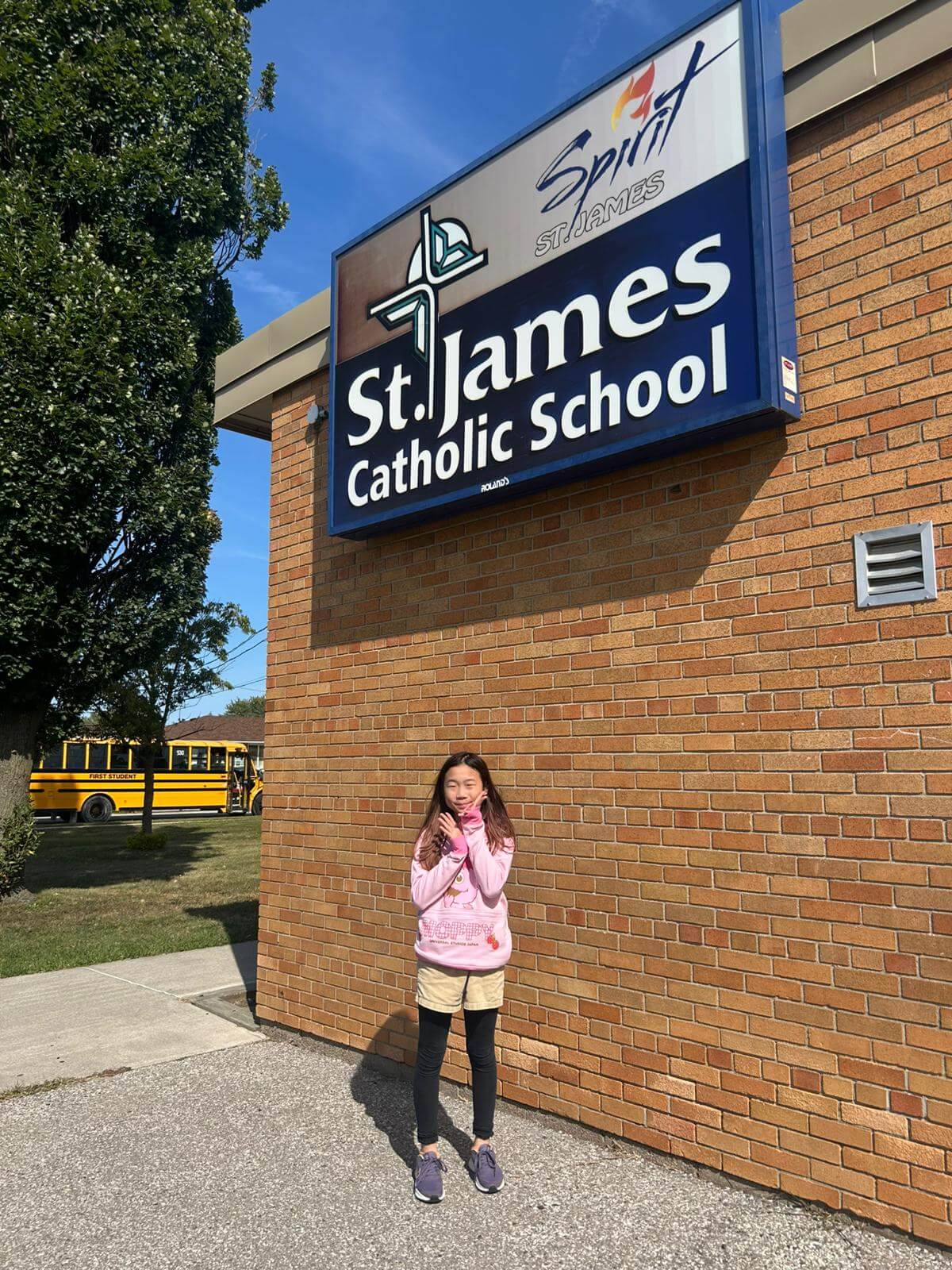
St. James Catholic Elementary School (公立小学校) CGK G4 Nasuka
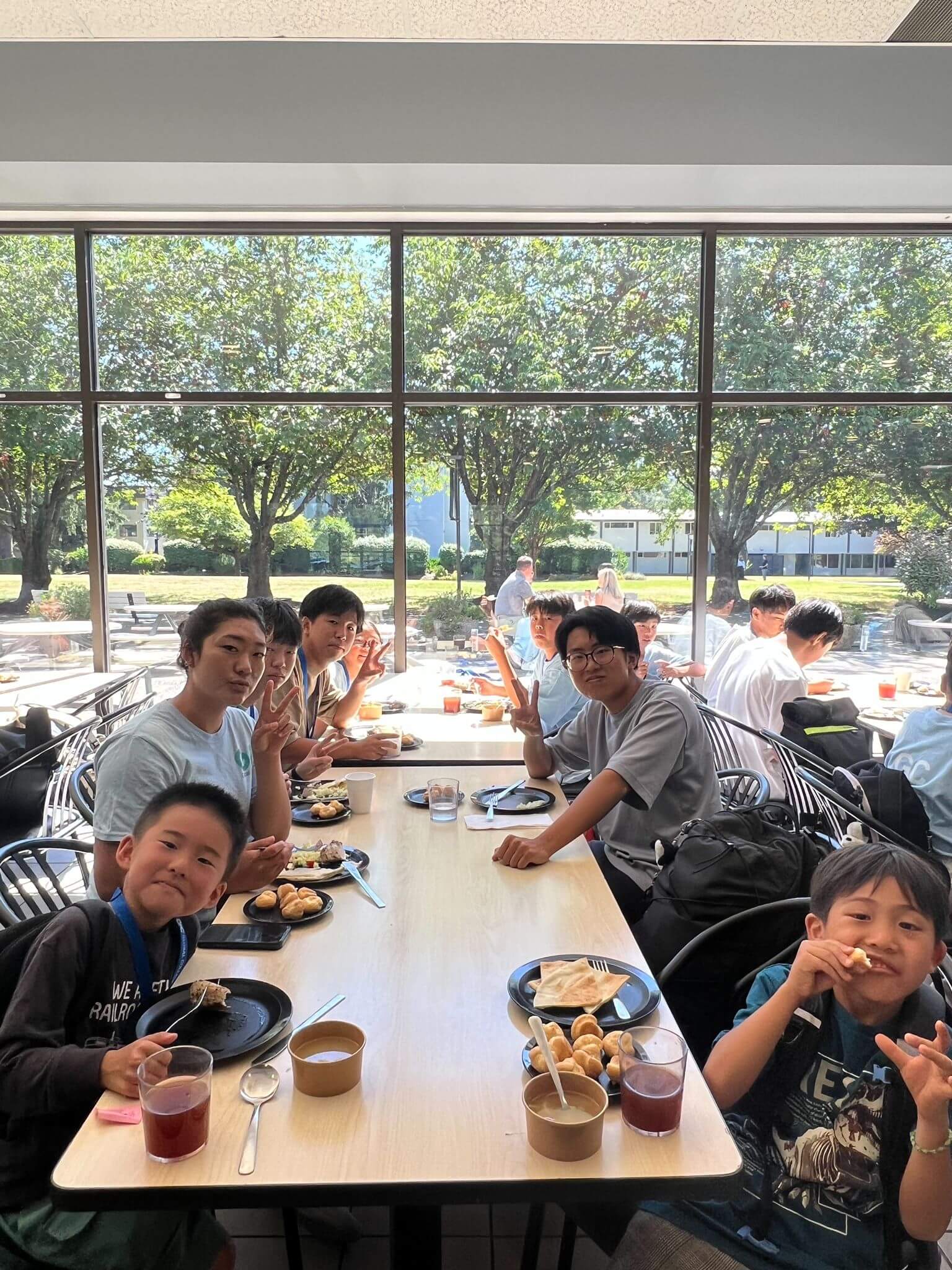
Global College Summer Camp, CGK AS G1 Aoba
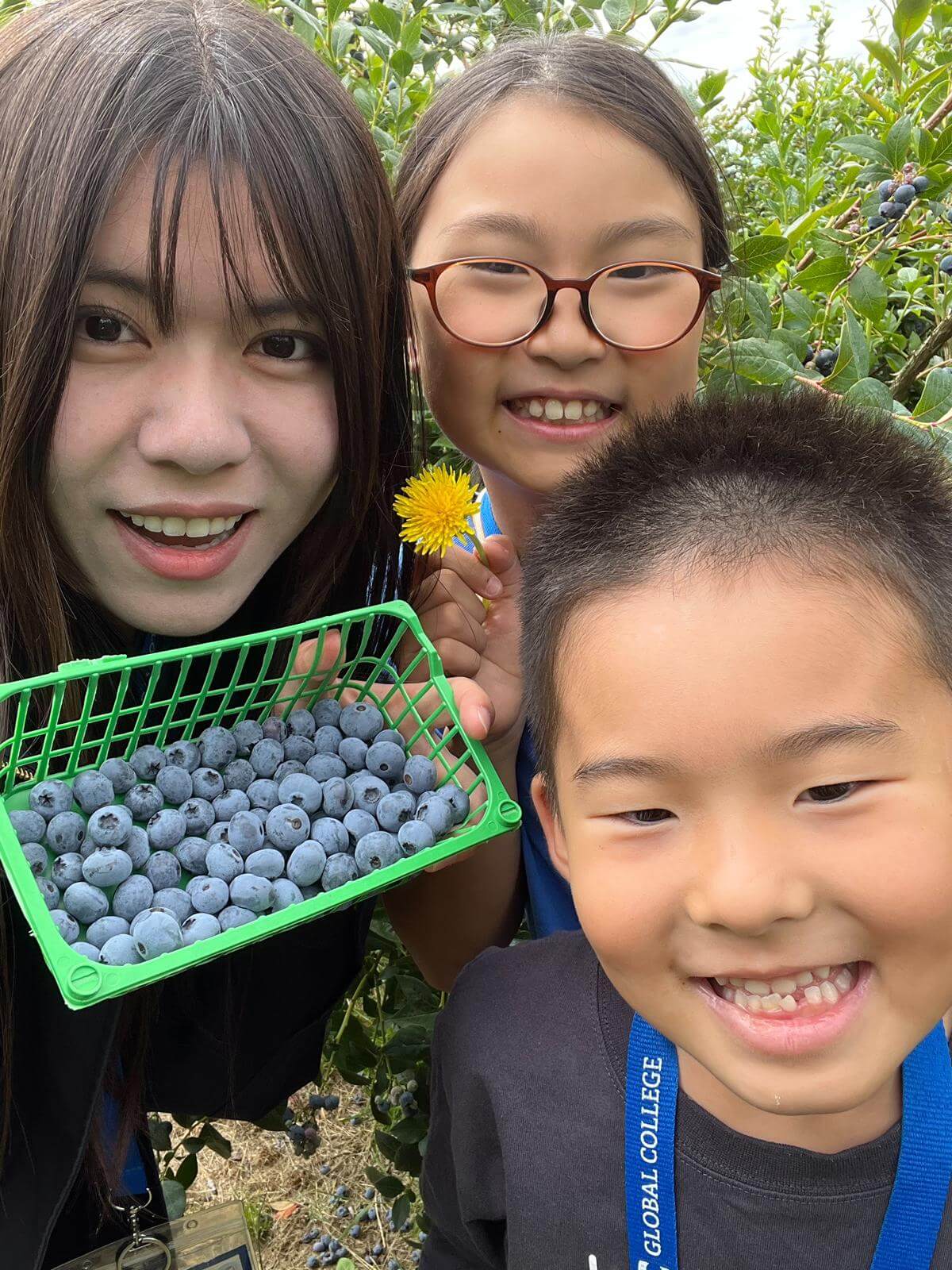
Global College Summer Camp, CGK AS G1 Aoba
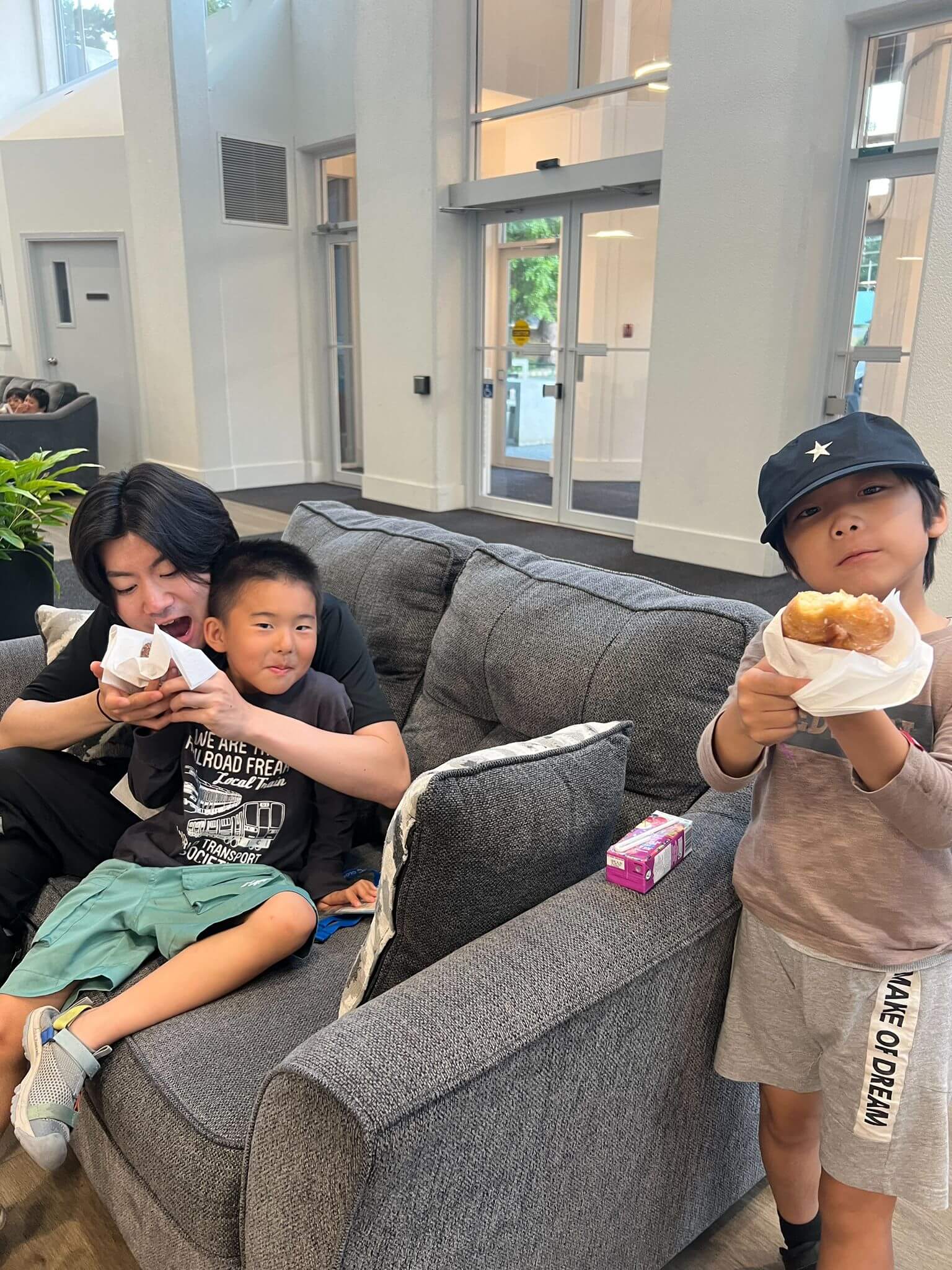
Global College Summer Camp, CGK AS G1 Aoba
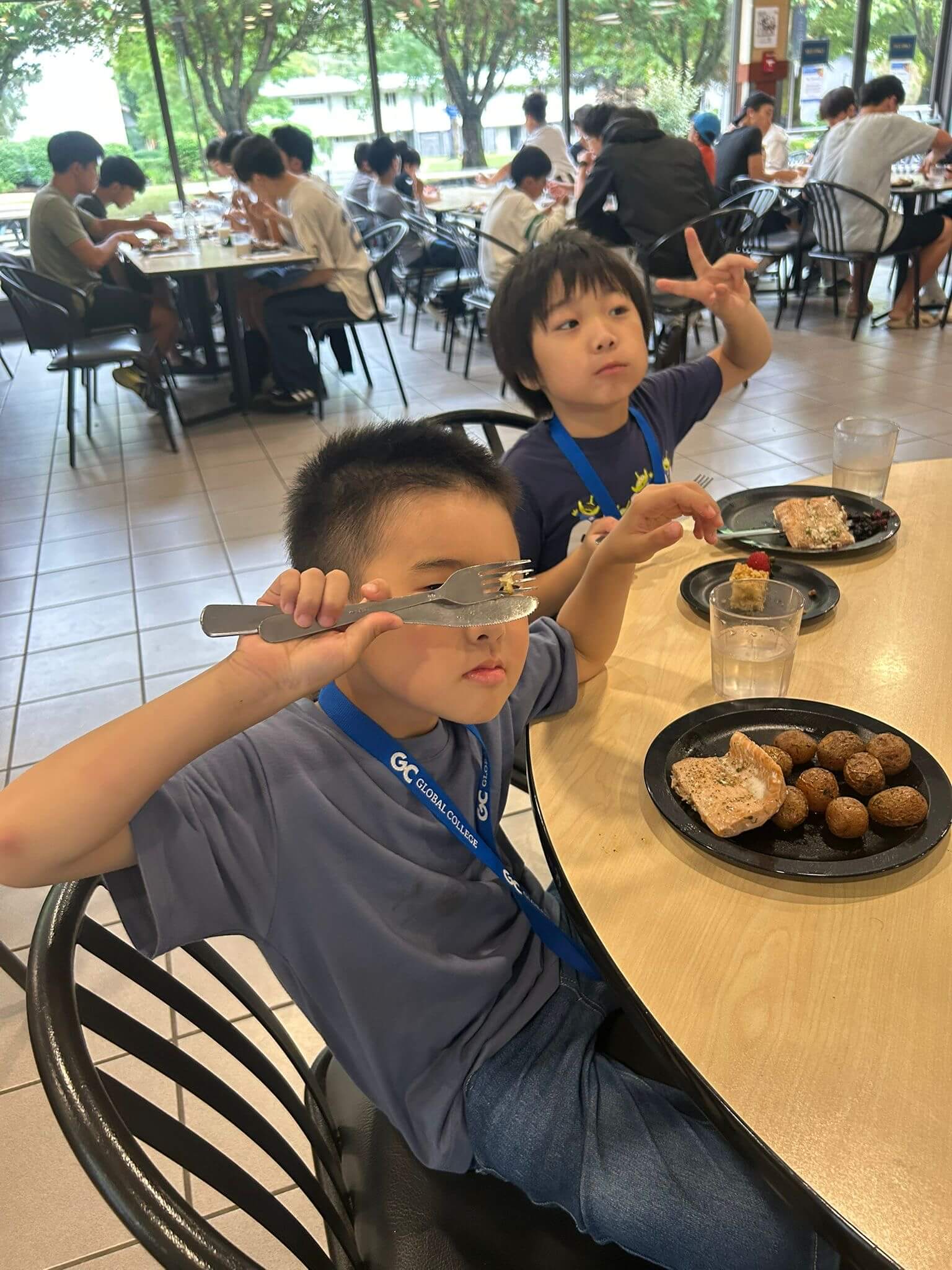
Global College Summer Camp, CGK AS G1 Aoba
New Zealand
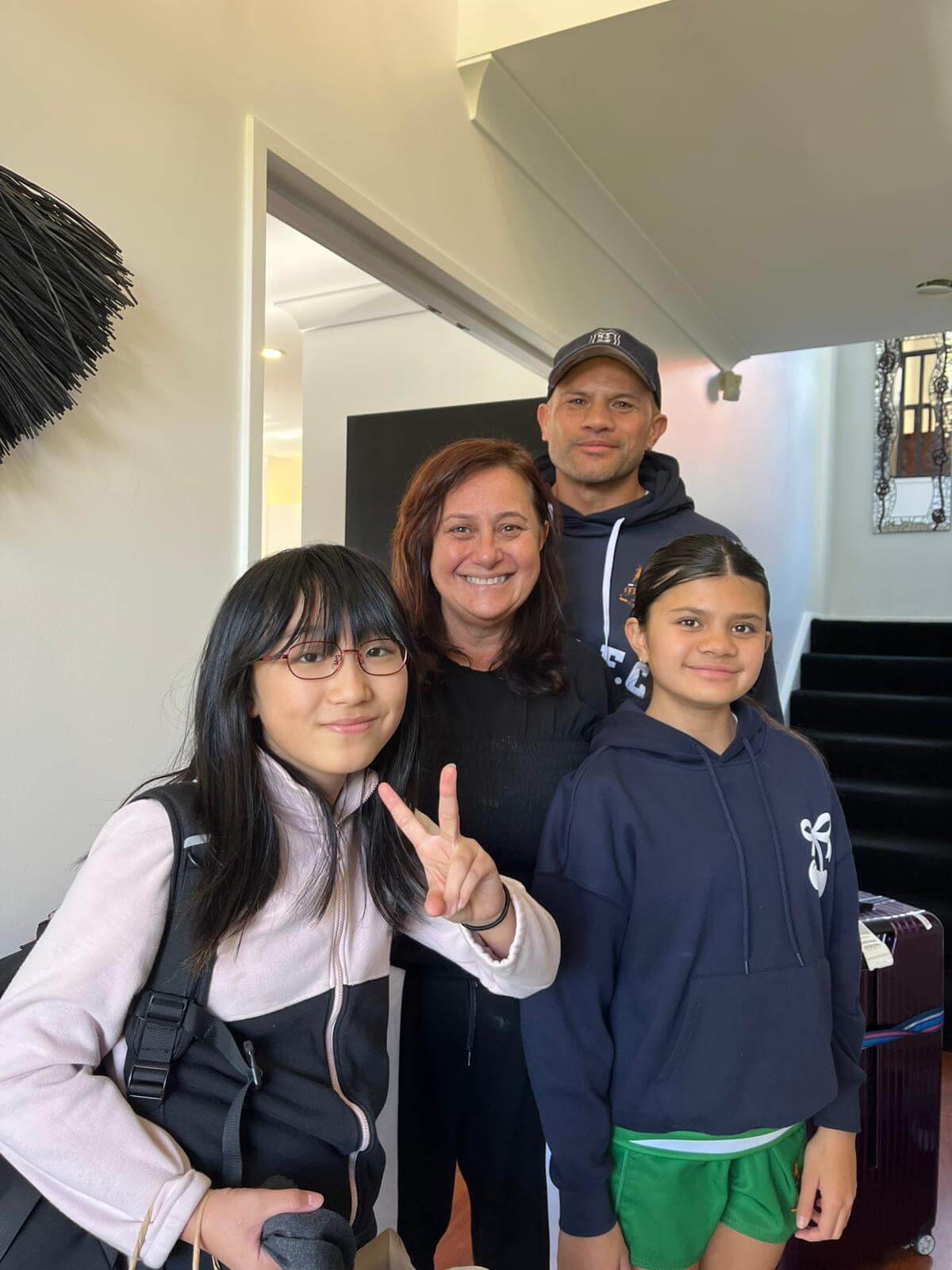
Belmont Intermediate School (公立中学校) CGK G6 Yuina
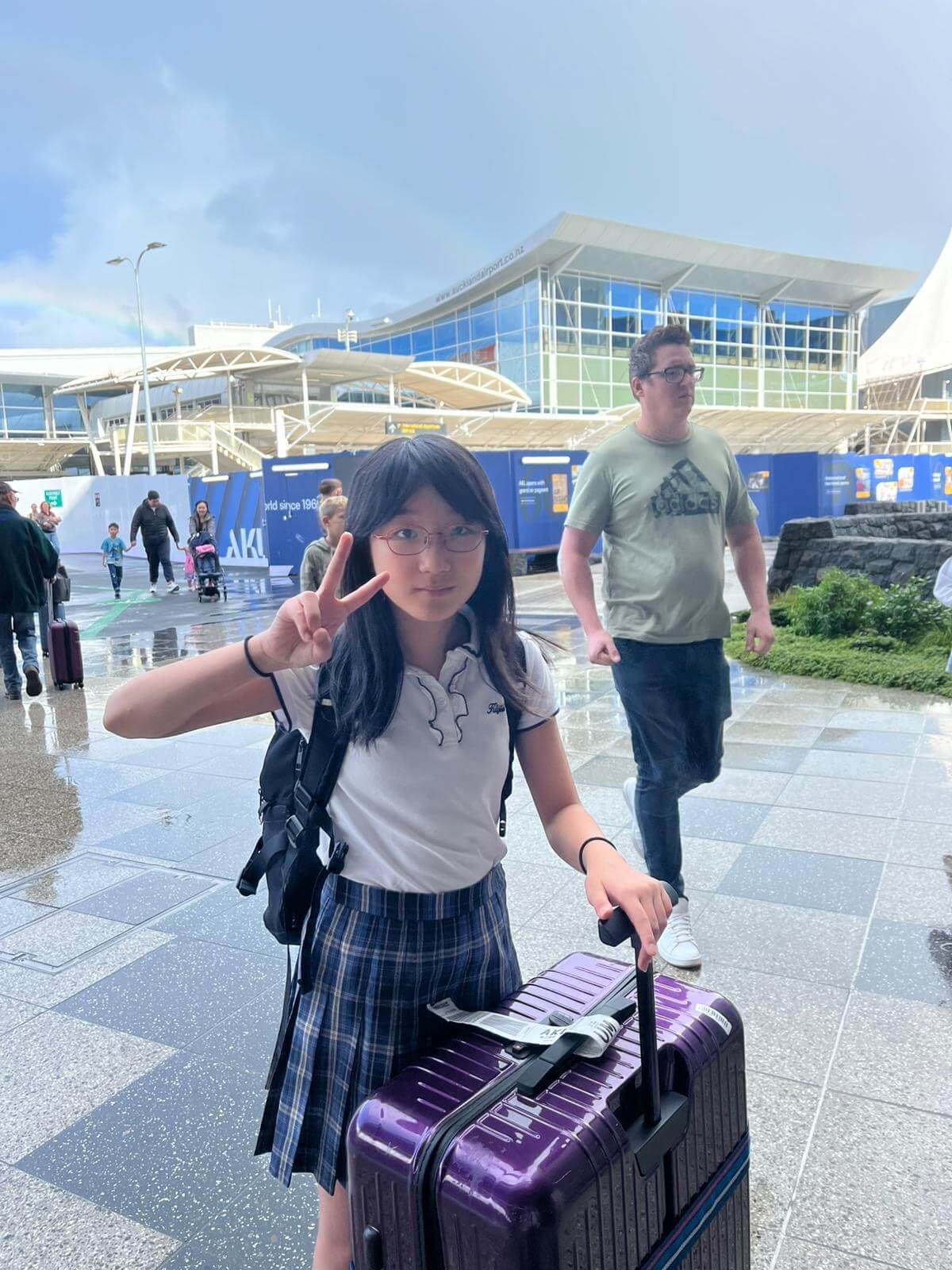
Belmont Intermediate School (公立中学校) CGK G6 Yuina
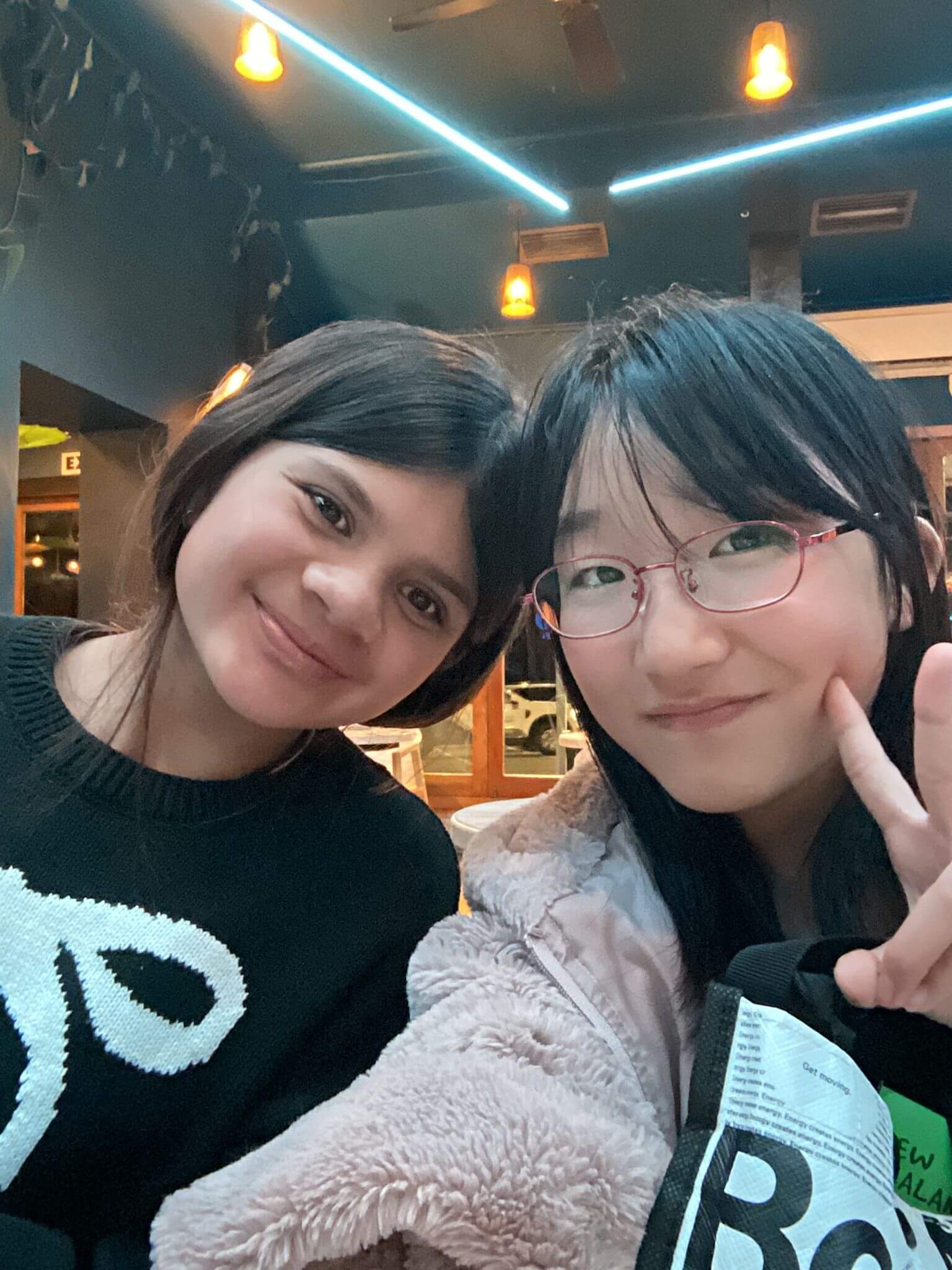
Belmont Intermediate School (公立中学校) CGK G6 Yuina
In 2025, a total of 24 CGK students have already participated in or are scheduled to join overseas study abroad programs.
This summer’s short-term study abroad programs were a great success, with solo and parent–child opportunities realized in Australia, New Zealand, and Canada.
✦Highlights of This Summer
- A CGK Preschool graduate and current After-School Grade 1 student achieved a solo study abroad in Canada!
- A CGK Elementary Grade 1 student became the first to study abroad at an IB PYP school in Australia!
- A Grade 7 student began their solo long term study abroad journey!
Through these challenges, each student broadened their horizons and returned with greater self-confidence.
Study Abroad Destinations:
- Australia
St. Paul’s School (Private all-through school)
Essendon North Primary School (Public primary school, IB PYP)
Ipswich Girls' Grammar School (Private all-through girls' school)
Browns English Language School (Language school)
Guardian Childcare & Education South Melbourne (Childcare centre) - New Zealand
Belmont Intermediate School (Public middle school) - Canada
Global College Camp
Assumption College Catholic Middle School (Public middle school)
St. James Catholic Elementary School (Public primary school)
At CGK, we will continue to value each child’s unique challenge, carefully supporting them with safe and suitable study abroad options tailored to their needs and duration.
On October 6, one of this summer’s destinations — Belmont Intermediate School in New Zealand — will be visiting CGK!
A special information session will be held by their local coordinator. Don’t miss this opportunity!
Deadline for Application – New Zealand Spring Study Abroad Program
The application deadline for the New Zealand Spring Study Abroad Program is Monday, December 8.
If you wish to participate, please send a message to Mayu via Toddle and include the following information.
Also, please attach a copy of the passport(s) for all participants.
- Name of school you wish to attend: Owairoa Primary School or Gulf Harbour School
- Study abroad type: Parent-Child Program or Independent Student Program
- Number of participants: e.g., 1 parent, 1 student
- Length of stay: Please specify your preferred duration (minimum of 2 weeks)
- Preferred dates: Please specify your preferred period starting from March 2026
Please note that schools in New Zealand close for the summer holidays from December 19 until February, so all applications for the spring program must be completed within this year.
If you are interested but cannot complete the application by the deadline, please contact Mayu for consultation.
Kindly note that Mayu will be away from December 1 (Mon) to December 10 (Wed), so replies to messages received during this period will be sent after Thursday, December 11.
We appreciate your understanding and cooperation.
Study Abroad Highlights (Video)
-
[Study Abroad in NZ] Owairoa Primary School
-
[ES Solo Study Abroad in NZ] Gulf Harbour School
-
[Study Abroad in NZ] Owairoa Primary School (5 year olds)
-
[ES Solo Study Abroad in Canada] Summer Camp in Vancouver
Currently recruiting participants for study abroad programs
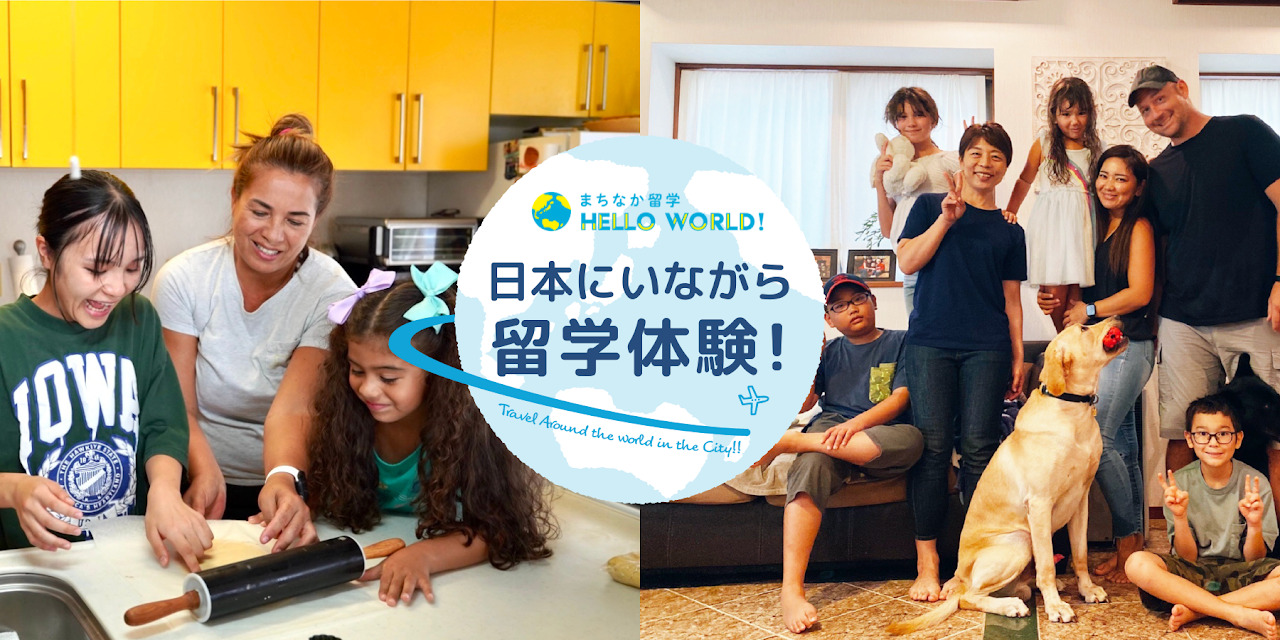


- Throughout the year (on weekends or during long breaks, either for day trips or overnight stays)
- You can experience a homestay with a foreign family residing in Japan.
- Deadline: Approximately one month prior to your desired dates
- For details/application, please contact Mayu at the Office.
Accepting short-term international students from overseas - Wanted host families
-

-
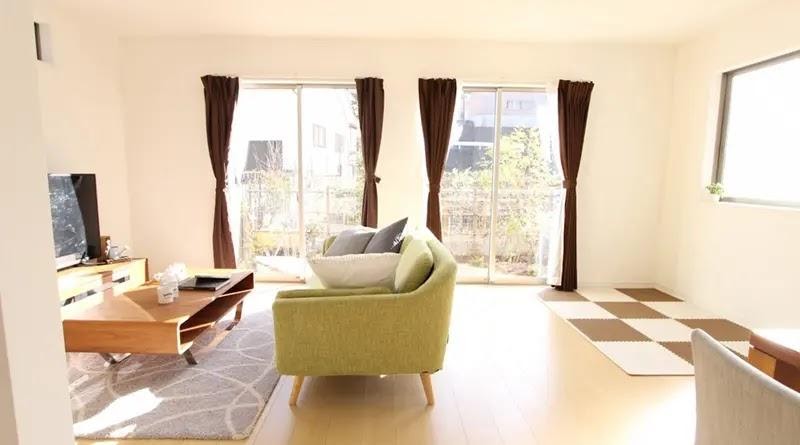
CGK has a positive stance on accepting international students from abroad with a view to encouraging multicultural cooperation. Students from different cultures and backgrounds can interact with and help each other at CGK, bringing rich diversity to the classroom. This environment of diversity provides each student with a valuable opportunity to learn different viewpoints and increase mutual understanding.
At CGK, we believe that diversity improves educational development. By learning and working together, students from different backgrounds will grow into leaders with global perspective. In addition, experiencing diverse opinions and values will help them develop tolerance and empathy.
In order to create an environment conducive to hosting short-term students, we are looking for host families; if you are a CGK family interested in registering as a host family, please contact Mayu at the Office (Toddle is OK).
-