











Early English Education: Six Benefits, Key Considerations and Supporting Both Languages
I am Minoru Kai, founder of CGK International School in Yokohama.
“Should my child start English early?” “What about their Japanese?” “Will attending a preschool make them bilingual?” Parents considering early English education often have questions alongside their hopes.
Starting early can offer opportunities, but age alone does not determine the outcome. Children also need a setting where they feel secure communicating with others, opportunities to keep learning, and support for Japanese and their other home languages. Starting at elementary-school age or later is not a reason to give up.
This article explores six potential benefits, practical considerations, support at home, and questions to ask when choosing a school. It distinguishes research findings from CGK’s educational approach.
Revised September 26, 2026; the original publication date is retained. This edition updates the scientific explanations and wording in the 2023 article. Older market figures and test rankings that do not directly establish educational benefits have been removed from the discussion.
Look beyond age.
Focus on the experience.
- Secure, meaningful interaction
- Enjoyable opportunities to keep using English
- Support for Japanese and home languages
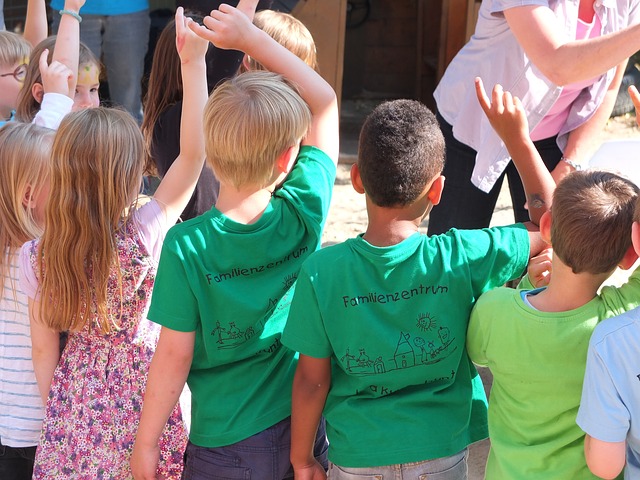
When Should Children Start English? Look Beyond Age Alone
Songs, picture books, play, and conversations with family, friends or teachers can all provide an introduction. A family does not need to begin with a demanding timetable or expensive materials. Consider the child’s interests and daily routine, alongside what the family can sustain.
“Knowing English” can mean different things: enjoying greetings, playing with friends, reading stories or studying school subjects. These goals require different experiences. Alongside when to start, ask why the child will use English, who they will use it with, and how those opportunities can continue.
Understanding Claims About an “English Ear” or a Critical Period
Kuhl and colleagues (2003) found learning of a particular Mandarin sound contrast after live exposure among infants from English-speaking homes at around nine to ten months. Comparable recorded exposure did not show the same benefit in that experiment. It tested specific speech-sound perception, not overall English proficiency or future bilingualism. [1]
Hartshorne and colleagues (2018) analysed relationships between English grammar performance, age and learning experience in a large sample. Its questions and methods differ from infant speech-perception studies. [2] Combining these findings into a single deadline after which learning English is impossible would be misleading.
This article does not explain language-learning difficulty through fixed frequency bands assigned to Japanese and English. Familiarity with speech sounds and rhythm should be considered alongside, but separately from, vocabulary, grammar, reading and writing.
Six Potential Benefits of Early English Education
The following are learning opportunities to cultivate in a supportive environment, not guaranteed effects for every child who starts early.
1. Becoming Familiar with English Sounds and Rhythm
Singing, enjoying repeated phrases in stories, and moving in response to a teacher can introduce the sounds and expressions of English. Rather than turning pronunciation into a test, choose activities that invite children to listen and join in.
Recognising a sound is not the same as understanding a conversation. Connect familiar words from songs or stories to meaningful exchanges during play and everyday routines.
2. Building Experience over Time
An early start can create more years in which to use English through school and play. However, years of enrolment or hours of recorded material are not, by themselves, measures of learning.
Look for opportunities to choose, ask, explain and respond—not only to listen. Thinking about reading, activities and relationships after preschool can also help families look beyond a short-term milestone.
3. Discovering the Enjoyment of Communication
Asking to borrow something, requesting another turn, or sharing an idea gives language a purpose. Successfully conveying a message can provide a reason to try another exchange. We value having someone to communicate with and something worth communicating, not simply giving a correct English answer.
English itself does not guarantee an outgoing personality. Some children speak readily; others initially prefer to watch or listen. Different ways of participating deserve support.
4. Learning through Play and Meaningful Topics
Building a bridge, observing insects or discussing a recipe allows children to use English as a tool for exploring something that interests them, rather than only as material to memorise.
An English-speaking setting is not enough if a child feels lost and cannot understand the activity. Objects, pictures, gestures and appropriate language support can help children understand and participate.
5. Meeting Different People and Perspectives
Encountering different languages and family traditions can help children discover that their own experience is not the only one. Food, celebrations and stories offer accessible starting points for learning about others.
Speaking English is not the same as being free from prejudice. Adults also need to model listening, asking questions without assumptions, and treating other people with respect.
6. Creating a Foundation for Future Choices
English may broaden the books children can read, the people they can communicate with, and the learning opportunities they can access. Its value can extend beyond overseas study and work to hobbies and everyday interests.
Early English education does not determine a child’s future. Japanese and other languages, inquiry and collaboration matter too. Rather than suggesting that children have no future without English, we see language learning as one way to increase their options.
Concerns and Practical Considerations
Avoid Putting Children under Excessive Pressure
Persistent tiredness, fear of mistakes or strong distress about activities are reasons to review the timetable, approach or environment. Protect rest, freely chosen play and secure relationships rather than focusing only on English outcomes.
Consider Family Commitments and Continuity
Compare travel, extended care, materials, event charges and expectations for support at home as well as tuition. Short activities, language classes and full-day preschool serve different purposes. Duration alone does not establish quality.
Instead of relying on promises of fluency within a fixed number of months, ask how a provider observes children’s understanding and participation, and how it shares that information with families.
Support Learning in Japanese and English
Using more than one language does not, by itself, cause confusion or language delay; mixing languages is not automatically a problem. [3] Children still need opportunities to converse, encounter books and explain their ideas in each language.
Everyday conversation, understanding and retelling a story, literacy and subject learning should be considered separately. Families and teachers can share what the child can do, in which language and in which setting, to identify useful support.
If concerns about understanding or communication persist, do not assume that English exposure is the cause. Speak with the school, a paediatrician or a speech-language professional. This article does not assess or diagnose an individual child’s development.
Maintain Connections with Family Languages and Cultures
Learning English can coexist with valuing Japanese and a family’s other languages and cultures. Community events, conversations with grandparents and meaningful stories can help children explore their connections. Families with several cultural backgrounds do not have to select just one.
When changing schools, find out about the languages, lessons and routines in the new setting. Support the transition based on the child’s experience rather than assuming that shared nationality means shared familiarity.
Practical Ways to Support Both Languages at Home
Home does not need to become a second classroom. Choose manageable activities and adjust them to your child’s responses.
| Activity | How to approach it |
|---|---|
| Enjoy books together | Allow time to look at pictures and discuss interesting moments, rather than treating finishing the book as the only goal. |
| Ask about experiences | Alongside “What did you do?”, try “What was interesting?” or “What would you like to try next?” |
| Use language in play | Pretend shopping or making something together can give conversation a clear purpose. |
| Value languages parents are comfortable using | Maintain rich communication rather than feeling obliged to switch every family conversation to English. |
| Enjoy English together | Parents do not need perfect English to share songs or books. Avoid turning every activity into a test or correcting every mistake. |
| Coordinate with the school | Explain the languages used at home and possible future school plans, then discuss support now and as needs change. |
A strict one-parent-one-language arrangement is not essential for every family. Look for an approach that supports meaningful exchanges and is natural and sustainable for your household.
For examples of support at home and school, explore supporting bilingual education at home and elementary Japanese lessons that combine language learning with IB inquiry.
Choosing a School: Look at Learning, Not Only English Hours
A timetable or a teacher’s nationality alone cannot show what everyday care and education are like. During a visit, ask:
| Focus | Questions to ask and things to observe |
|---|---|
| Secure participation | How do you help children who do not yet understand English feel secure and take part? |
| Children’s agency | Do children have time to talk, choose and think, rather than only listen to the teacher? |
| Home languages and cultures | How do you respect home languages, including Japanese, and different family cultures? |
| Expertise and safety | How do you ensure staff expertise, safety and support for daily routines? |
| Family partnership and transitions | How do you share learning and concerns with families and help children prepare for their next school? |
The name “preschool” alone does not define a provider’s curriculum or legal category. Check current information about ages, operating arrangements, accreditation, support and costs at each setting.
Connecting English, Japanese and Inquiry at CGK
CGK’s Preschool provides care and education in classes for ages two to five. As an IB PYP World School, we value English as a language children use to ask questions, interact and inquire, not only something to memorise. This describes our educational approach; it is not a guarantee that every child will reach the same English level at the same time.
Alongside the English-language environment, children have Japanese-language activities and learning opportunities. We aim to understand children with different linguistic backgrounds through both what we observe at school and what families share. Our Preschool curriculum provides further information.
For learning beyond preschool, explore our Elementary School. When comparing settings, consider what children learn and how they develop their thinking, as well as their language skills.
Families interested in CGK can visit our admissions and open-school information or use the Preschool contact form to discuss their circumstances and language environment.
Frequently Asked Questions
Is it too late if we did not start in infancy?
No. Infant speech-perception research does not establish an overall deadline for learning English. Choose an approach suited to your child’s current age and interests, with opportunities to continue.
Can we support English if parents do not speak it?
Yes. Maintain rich family conversation while enjoying songs and books together or finding opportunities to interact with English speakers. Parents do not have to teach everything in English themselves.
Will preschool guarantee bilingualism?
No uniform outcome can be guaranteed. Experiences, school support, home languages, continuity and goals differ. Consider conversation, literacy and subject learning separately when discussing progress.
Is mixing Japanese and English a problem?
Mixing alone is not a sign of a problem. [3] Respond to the message and offer wording when helpful, keeping communication open. Seek professional advice if concerns about understanding or communication persist.
Conclusion
For us, the value of early English education lies not simply in starting early, but in creating more opportunities to meet people and explore ideas through language. Respect children’s wellbeing and home languages while building a foundation for future learning.
English alone does not determine a child’s future. It can, however, be one tool for broadening the people they can communicate with and the worlds they can explore. We hope this article helps your family consider an environment that fits.
References and How to Read This Article
Research findings have limits determined by their participants, tasks and conditions. These sources do not establish the effectiveness of a particular preschool. The home activities and school-selection questions are practical suggestions informed by, but distinct from, those findings.
- Kuhl, P. K., Tsao, F.-M., & Liu, H.-M. (2003). Foreign-language experience in infancy: Effects of short-term exposure and social interaction on phonetic learning. PNAS, 100(15), 9096–9101. A study of specific speech-sound perception in infants.
- Hartshorne, J. K., Tenenbaum, J. B., & Pinker, S. (2018). A critical period for second language acquisition: Evidence from 2/3 million English speakers. Cognition, 177, 263–277. Research on age and English grammar learning.
- Communication Health Support Association / ASHA-linked family guidance: Learning More Than One Language. Guidance on multilingual development and family support, checked September 26, 2026.
Author Profile
-

-
Minoru Kai - School Founder, CGK International School Japan

Born in 1984, father to two children.
After residence and stay in Australia, Canada and America, worked at an advertising agency concurrently in overseas exhibition work and domestic advertising work.
He also founded CGK International School (Yokohama) from scratch and provides management consulting for international schools.