











Food Education: Learning Table Manners
Preschool
October 7, 2017
Our food education program, planned together with a French restaurant owner and launched that school year, was moving toward a parent-and-child French restaurant experience the following January.
The theme for August and September was table manners.
We began by asking what manners actually mean.
We explained manners as being considerate so that the people around us do not feel uncomfortable.
Although this lesson was part of food education, manners are not only for mealtimes. We also discussed everyday examples such as putting rubbish in a bin and looking at someone when listening to them.
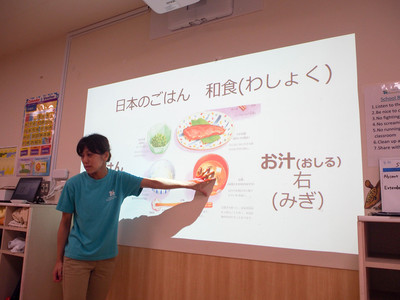
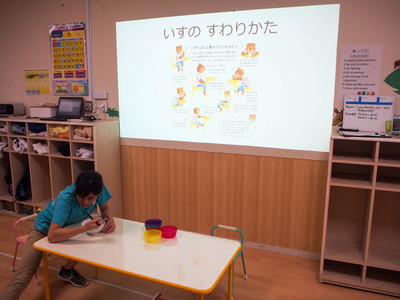
We then began with sitting on a chair and Japanese dining manners.
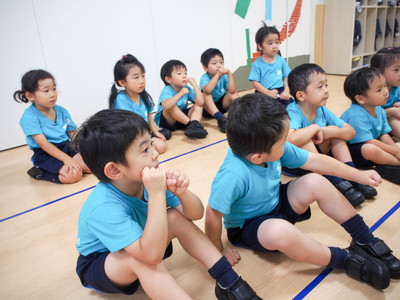
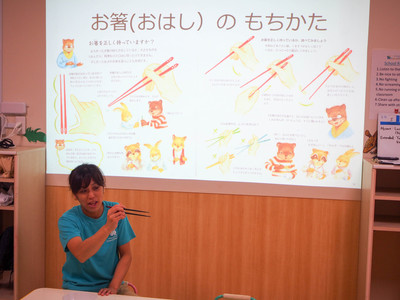
The children learned to sit properly back in their chairs, leave an appropriate distance from the table and avoid certain uses of chopsticks.
In September, we moved on to Western-style table manners and practiced using a knife and fork.
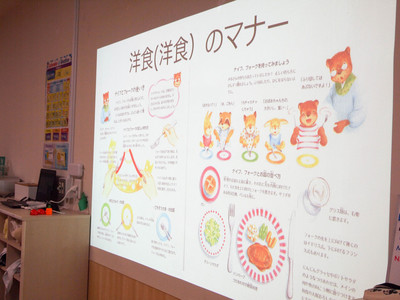
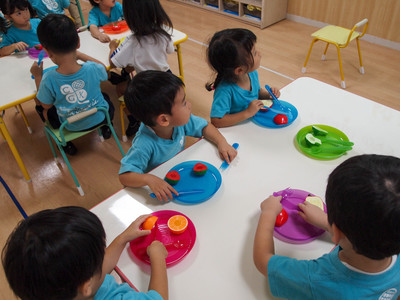
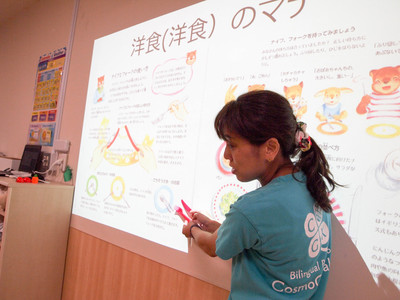
1. Hold the fork lightly in the left hand with the prongs facing down, extending the index finger along its back to support it.
2. Hold the knife lightly in the right hand, extending the index finger along its back to support it.
This was a new experience for the children, but they listened carefully and tried their best.
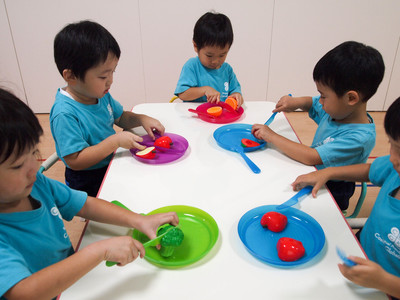
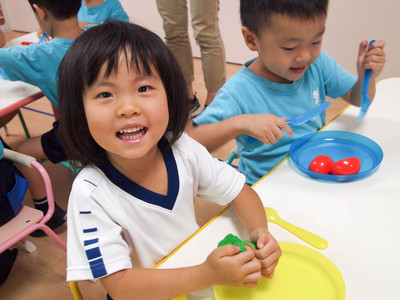
After learning how to hold the utensils, the children practiced where to put them when pausing a meal and when finished. They still sometimes forgot the directions or positions. We planned to keep practicing through October’s Job Training theme, Chef, with children taking turns as chefs, servers and customers in a pretend restaurant, as preparation for the French restaurant experience.
The theme for August and September was table manners.
We began by asking what manners actually mean.
We explained manners as being considerate so that the people around us do not feel uncomfortable.
Although this lesson was part of food education, manners are not only for mealtimes. We also discussed everyday examples such as putting rubbish in a bin and looking at someone when listening to them.
We then began with sitting on a chair and Japanese dining manners.
The children learned to sit properly back in their chairs, leave an appropriate distance from the table and avoid certain uses of chopsticks.
In September, we moved on to Western-style table manners and practiced using a knife and fork.
1. Hold the fork lightly in the left hand with the prongs facing down, extending the index finger along its back to support it.
2. Hold the knife lightly in the right hand, extending the index finger along its back to support it.
This was a new experience for the children, but they listened carefully and tried their best.
After learning how to hold the utensils, the children practiced where to put them when pausing a meal and when finished. They still sometimes forgot the directions or positions. We planned to keep practicing through October’s Job Training theme, Chef, with children taking turns as chefs, servers and customers in a pretend restaurant, as preparation for the French restaurant experience.
Author Profile
-

-
Reiko - Services and Community Coordinator Japan
Reiko joined CGK’s founding team in 2016, bringing seven years of experience in licensed nursery schools in Japan and six years across two international preschools. She has also volunteered at a daycare in Canada and has held preschool leadership roles at CGK, including Principal and Vice Principal.
A qualified nursery teacher and holder of a Class 2 kindergarten teaching license in Japan, Reiko values each child’s interests and strengths. Drawing on her experience in multicultural early childhood settings, she supports an environment where children can explore new interests through hands-on experiences and express themselves in their own way.