











The Power of Words
Preschool
October 17, 2017
Language develops rapidly in early childhood. Children learn new words through conversations with adults and friends, television and songs. Along the way, they also encounter harsh or unkind language, something that can be difficult to avoid entirely.
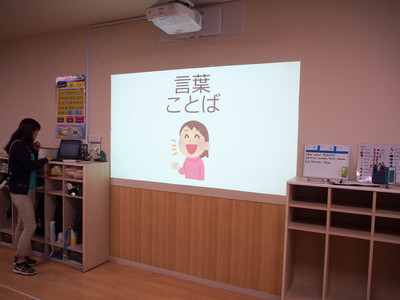
At school, we sometimes heard expressions such as rough forms of “you,” “stop it” or “go away.” Parents had also asked about this, so we introduced the topic during Japanese time.
First, we explained that words can make someone feel happy, angry or sad.
Using examples such as “I like you,” “You look lovely,” “I will not play with you anymore,” “Go away” and “It is your fault,” we invited the children to think about how each would feel.
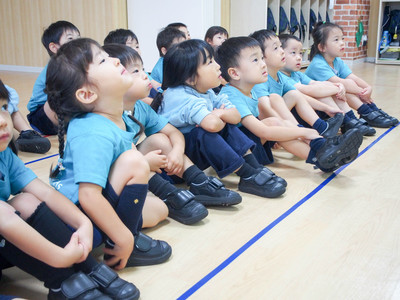
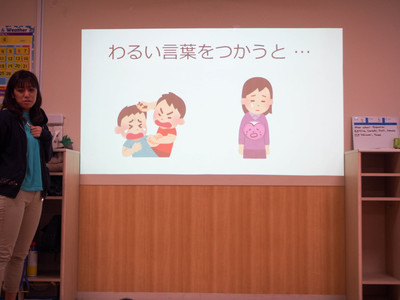
With illustrations, we explained that words may not hurt in the same physical way as hitting or pushing, but they can hurt someone’s feelings. Feelings are invisible and can be difficult to understand, yet recognizing them is important in friendships and community life.
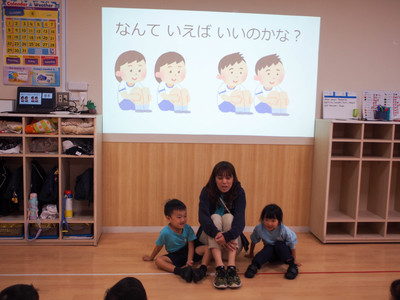
To make the idea concrete, we acted out a situation: what could you do if you wanted to sit between friends?
When a teacher pushed in or shouted, “Here!”, children immediately said it was not okay. We asked a boy to demonstrate a better approach. He calmly said, “I would like to sit there. Can I join you?”, and the seated child replied, “Yes.”
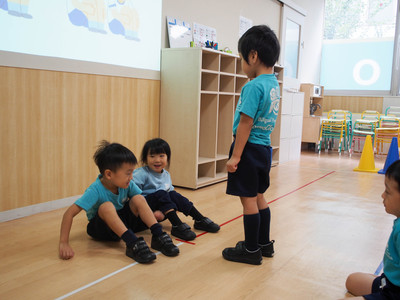
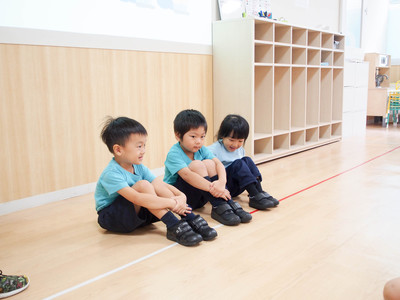
Then a teacher demonstrated an angry version: “I want to sit there! Let me in! Come on!” This time, the response was no. We asked children to compare the two examples. The point was that, when we want to join others, the way we ask can help them feel comfortable welcoming us.
Children may use rough language for many reasons: enjoying a new word, not yet knowing how to express themselves, or not realizing it can hurt. Rather than only saying, “Do not use bad words,” we need to understand what a child is trying to communicate and what lies behind it. From there, we can help them consider how they would feel hearing those words and how the other person might feel.
At school, we sometimes heard expressions such as rough forms of “you,” “stop it” or “go away.” Parents had also asked about this, so we introduced the topic during Japanese time.
First, we explained that words can make someone feel happy, angry or sad.
Using examples such as “I like you,” “You look lovely,” “I will not play with you anymore,” “Go away” and “It is your fault,” we invited the children to think about how each would feel.
With illustrations, we explained that words may not hurt in the same physical way as hitting or pushing, but they can hurt someone’s feelings. Feelings are invisible and can be difficult to understand, yet recognizing them is important in friendships and community life.
To make the idea concrete, we acted out a situation: what could you do if you wanted to sit between friends?
When a teacher pushed in or shouted, “Here!”, children immediately said it was not okay. We asked a boy to demonstrate a better approach. He calmly said, “I would like to sit there. Can I join you?”, and the seated child replied, “Yes.”
Then a teacher demonstrated an angry version: “I want to sit there! Let me in! Come on!” This time, the response was no. We asked children to compare the two examples. The point was that, when we want to join others, the way we ask can help them feel comfortable welcoming us.
Children may use rough language for many reasons: enjoying a new word, not yet knowing how to express themselves, or not realizing it can hurt. Rather than only saying, “Do not use bad words,” we need to understand what a child is trying to communicate and what lies behind it. From there, we can help them consider how they would feel hearing those words and how the other person might feel.
Author Profile
-

-
Reiko - Services and Community Coordinator Japan

Reiko joined CGK’s founding team in 2016, bringing seven years of experience in licensed nursery schools in Japan and six years across two international preschools. She has also volunteered at a daycare in Canada and has held preschool leadership roles at CGK, including Principal and Vice Principal.
A qualified nursery teacher and holder of a Class 2 kindergarten teaching license in Japan, Reiko values each child’s interests and strengths. Drawing on her experience in multicultural early childhood settings, she supports an environment where children can explore new interests through hands-on experiences and express themselves in their own way.