










Setsubun: Making Tofu and Exploring Beans
Preschool
February 6, 2019
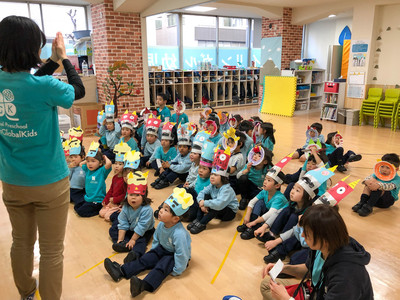
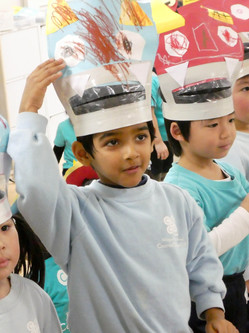
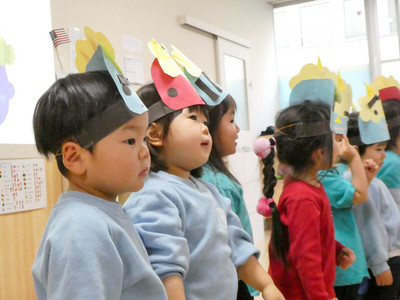
On February 1, the children wore the oni masks they had made, introduced each class’s creations and learned about Setsubun through a slideshow.
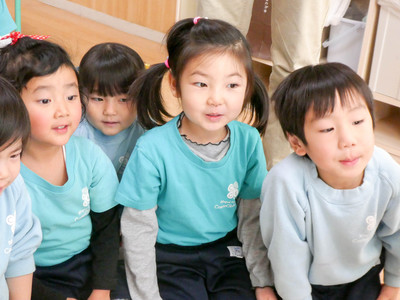
At CGK, we did more than introduce Setsubun as a seasonal event. We also planned lessons to deepen the children’s interest.
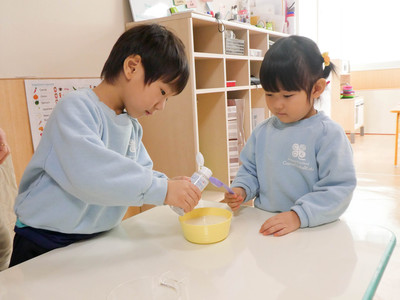
Jungle class (age 3) made tofu using soy milk and nigari, a coagulant.
Beforehand, we explained in Japanese what soy milk and nigari are made from and how to make tofu. On cooking day, we carried out the activity in English.
First, the children smelled roasted soybeans and soy milk and noticed the difference. When we held up the soy milk and asked, “What’s this?”, one child replied “To-nyu!” with an English-like pronunciation. It was lovely to see the effort to answer in English during English time, even without knowing the English word for soy milk.
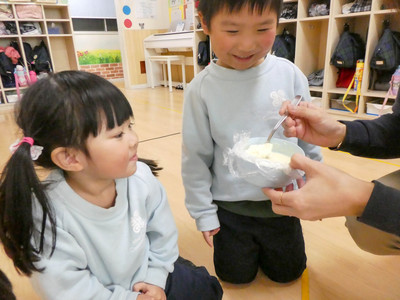
The children helped measure the soy milk and nigari with measuring cups and spoons. After heating the mixture in the microwave, the tofu was ready in no time. They happily smelled the rising steam. Using English they already knew, they described the change from a liquid—“Like a juice!”—to something solid after heating: “Like a yogurt!”
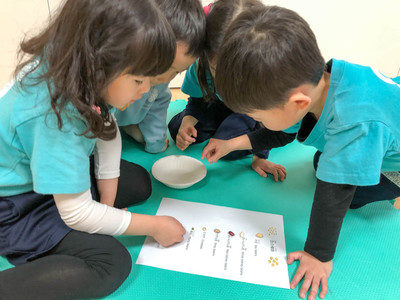
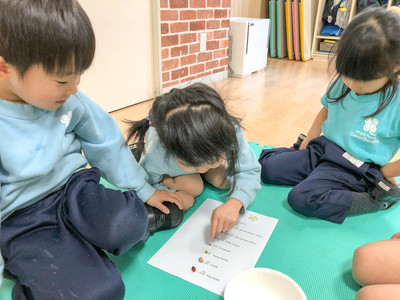
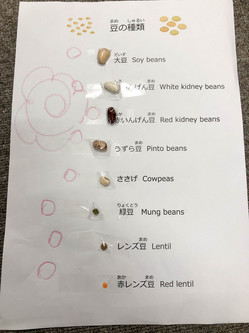
Mountain class (age 4) divided into teams for a bean quiz, matching eight beans with their names.
As discussions began, each team’s personality emerged. One group decided where to put the quiz sheet and where to sit so everyone could see. Another suggested taping the sheet down to keep it from moving.
Of course, discussing everything independently was still difficult at times. Some children kept the beans to themselves, and some teams struggled to move forward when everyone insisted on their own ideas. Teachers offered support where needed.
Only one of the five teams answered every question correctly. However, learning about the origins of the beans’ names and their characteristics introduced everyone to something new.
The explanation of “kidney beans” was especially interesting. After learning that the name comes from their resemblance to kidneys, children compared a picture of a kidney with a real bean and exclaimed, “They really do look alike!”
Ocean class (age 2) made individual masks by gluing on facial features. They interpreted the expressions created by different eyebrow angles and positions of the features, saying things such as, “This one looks sad,” and “I made a scary oni!”
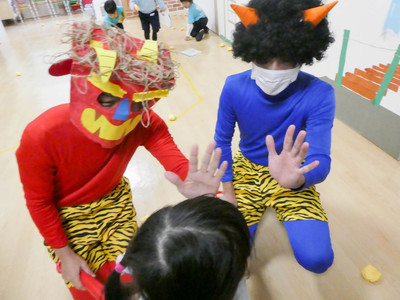
When the oni appeared, excited and frightened shrieks filled the room. The Ocean children bravely called, “Oni wa soto!” (“Oni, go out!”), using soybeans to drive the oni away.
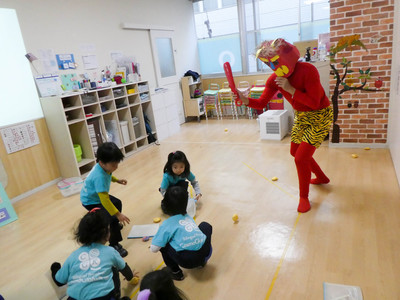
Afterward, we placed traditional yaikagashi decorations on the classroom doors to keep the oni from returning.
The cold weather was still severe, but we hoped the children would stay healthy and happy as spring approached.
At CGK, we did more than introduce Setsubun as a seasonal event. We also planned lessons to deepen the children’s interest.
Jungle class (age 3) made tofu using soy milk and nigari, a coagulant.
Beforehand, we explained in Japanese what soy milk and nigari are made from and how to make tofu. On cooking day, we carried out the activity in English.
First, the children smelled roasted soybeans and soy milk and noticed the difference. When we held up the soy milk and asked, “What’s this?”, one child replied “To-nyu!” with an English-like pronunciation. It was lovely to see the effort to answer in English during English time, even without knowing the English word for soy milk.
The children helped measure the soy milk and nigari with measuring cups and spoons. After heating the mixture in the microwave, the tofu was ready in no time. They happily smelled the rising steam. Using English they already knew, they described the change from a liquid—“Like a juice!”—to something solid after heating: “Like a yogurt!”
Mountain class (age 4) divided into teams for a bean quiz, matching eight beans with their names.
As discussions began, each team’s personality emerged. One group decided where to put the quiz sheet and where to sit so everyone could see. Another suggested taping the sheet down to keep it from moving.
Of course, discussing everything independently was still difficult at times. Some children kept the beans to themselves, and some teams struggled to move forward when everyone insisted on their own ideas. Teachers offered support where needed.
Only one of the five teams answered every question correctly. However, learning about the origins of the beans’ names and their characteristics introduced everyone to something new.
The explanation of “kidney beans” was especially interesting. After learning that the name comes from their resemblance to kidneys, children compared a picture of a kidney with a real bean and exclaimed, “They really do look alike!”
Ocean class (age 2) made individual masks by gluing on facial features. They interpreted the expressions created by different eyebrow angles and positions of the features, saying things such as, “This one looks sad,” and “I made a scary oni!”
When the oni appeared, excited and frightened shrieks filled the room. The Ocean children bravely called, “Oni wa soto!” (“Oni, go out!”), using soybeans to drive the oni away.
Afterward, we placed traditional yaikagashi decorations on the classroom doors to keep the oni from returning.
The cold weather was still severe, but we hoped the children would stay healthy and happy as spring approached.
Author Profile
-

-
Reiko - Services and Community Coordinator Japan
Reiko joined CGK’s founding team in 2016, bringing seven years of experience in licensed nursery schools in Japan and six years across two international preschools. She has also volunteered at a daycare in Canada and has held preschool leadership roles at CGK, including Principal and Vice Principal.
A qualified nursery teacher and holder of a Class 2 kindergarten teaching license in Japan, Reiko values each child’s interests and strengths. Drawing on her experience in multicultural early childhood settings, she supports an environment where children can explore new interests through hands-on experiences and express themselves in their own way.