











CGK Times
A global learning community for discovering
and pursuing your happiness
February 2026
Contents
Preschool
COL Is Coming to Town
First off, a belated new years greetings to those who celebrate the Lunar New Year! May it be a happy and healthy year of the horse to you and your family.
And something else to celebrate is our upcoming Celebration of Learning (COL)! If you haven't done so, please mark it on your calendars and diaries!
Wednesday March 11 09:30 - Kannai Hall
This year's COL is our biggest yet. It promises to be an exciting performance all-around and as the name suggests, a wonderful chance to celebrate the children's learning over the school year. As much as we look forward to the children's performance, we also are look forward to seeing you on the day.
CGK Awards
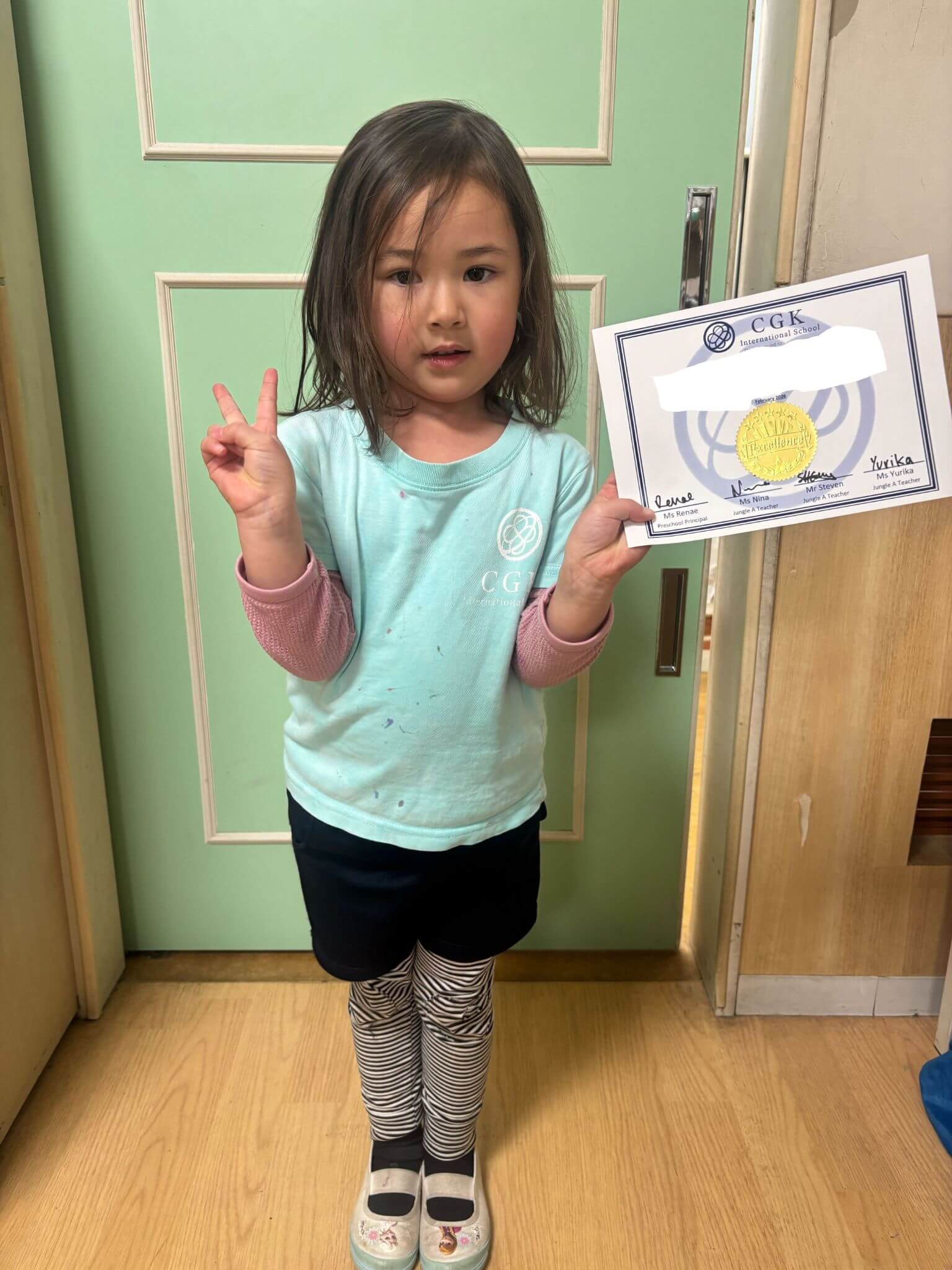
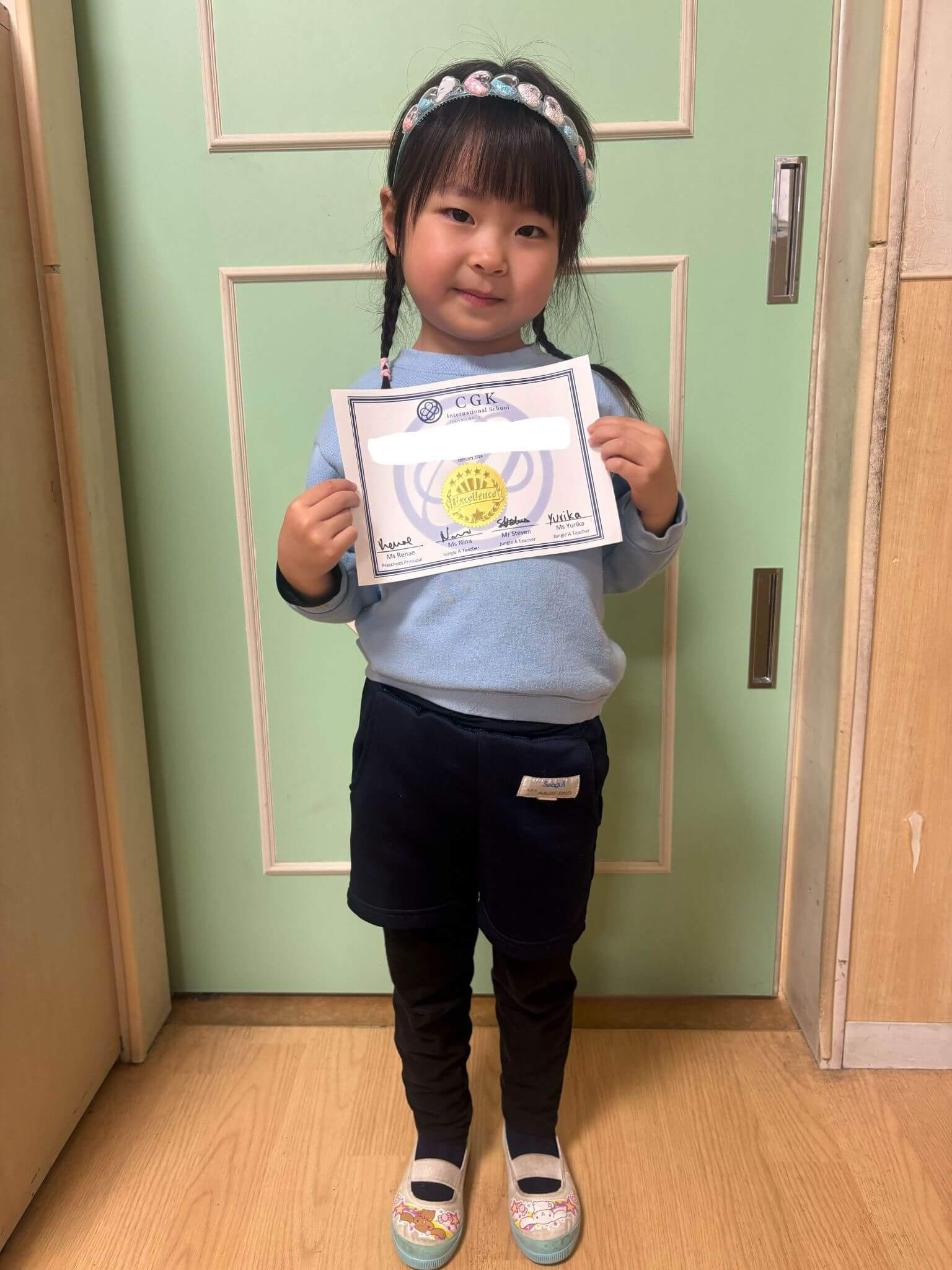
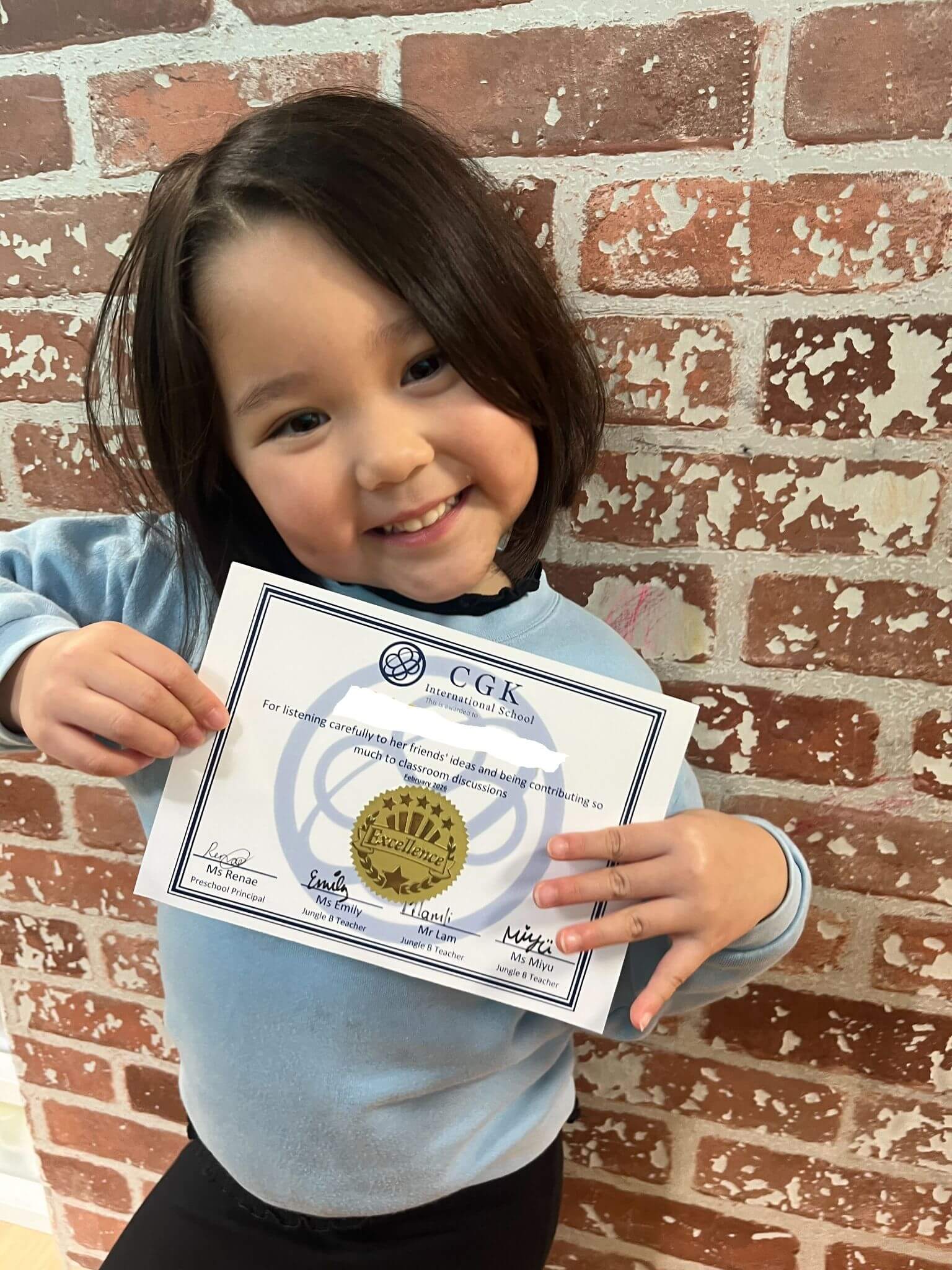
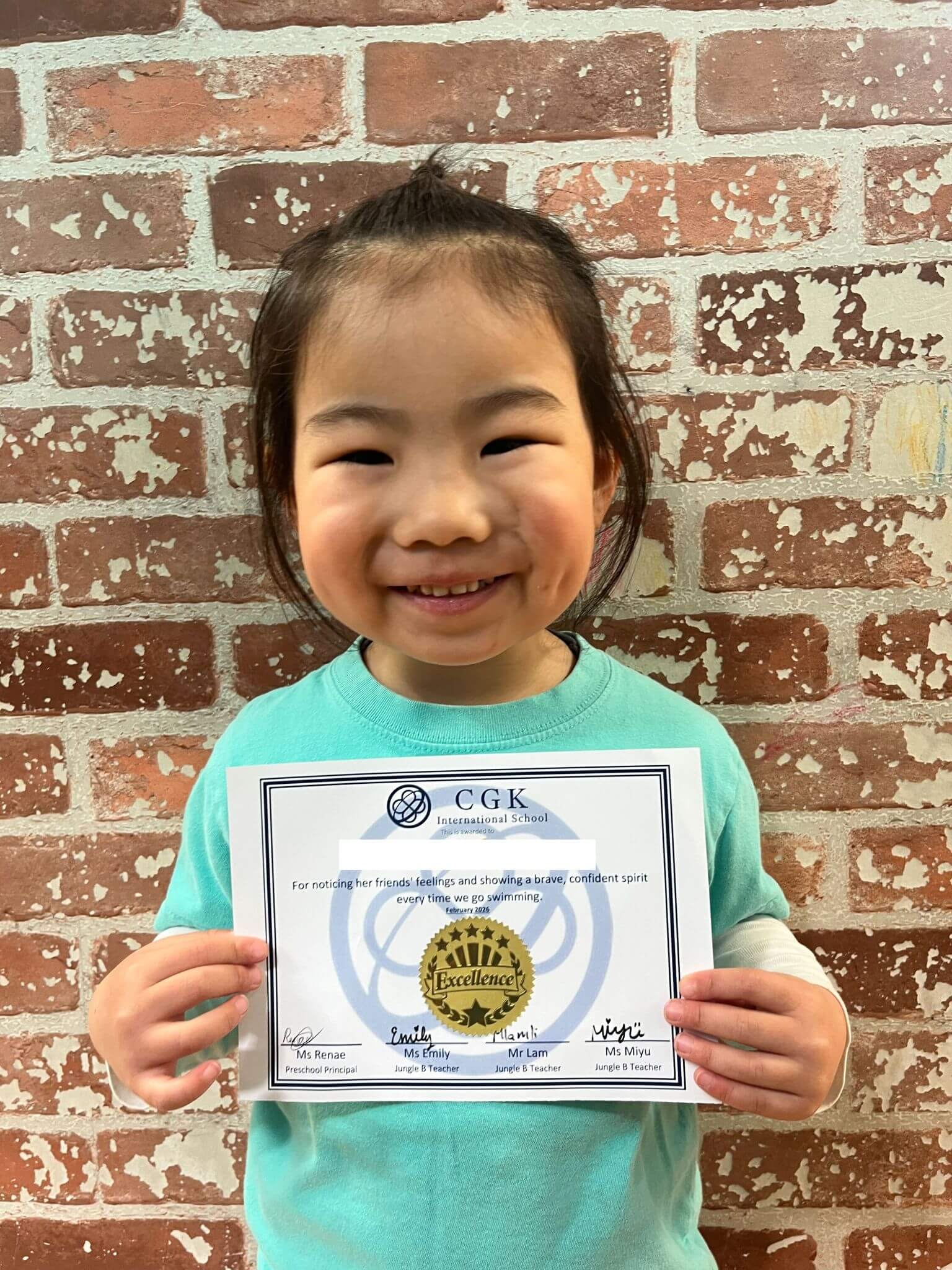
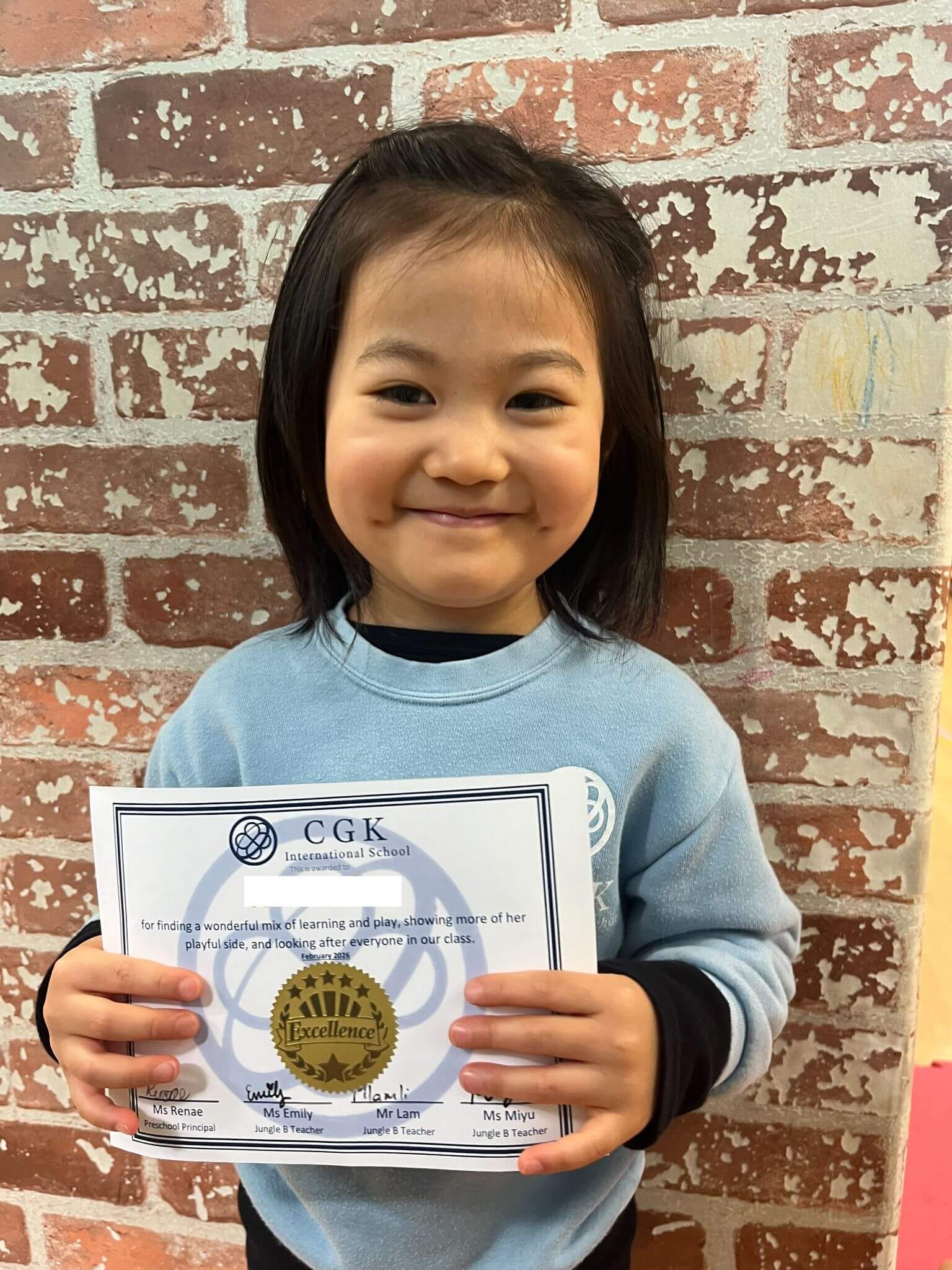
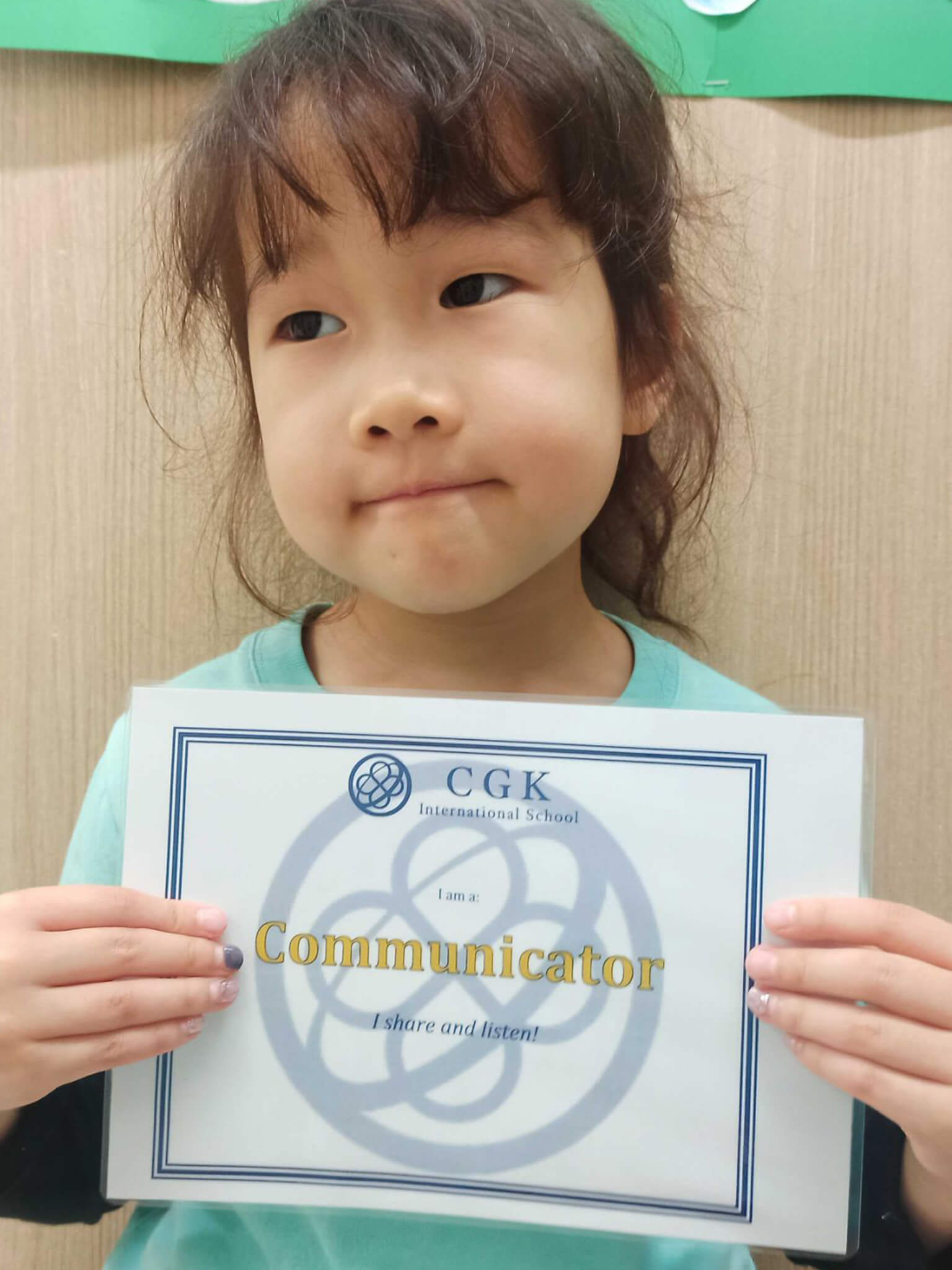
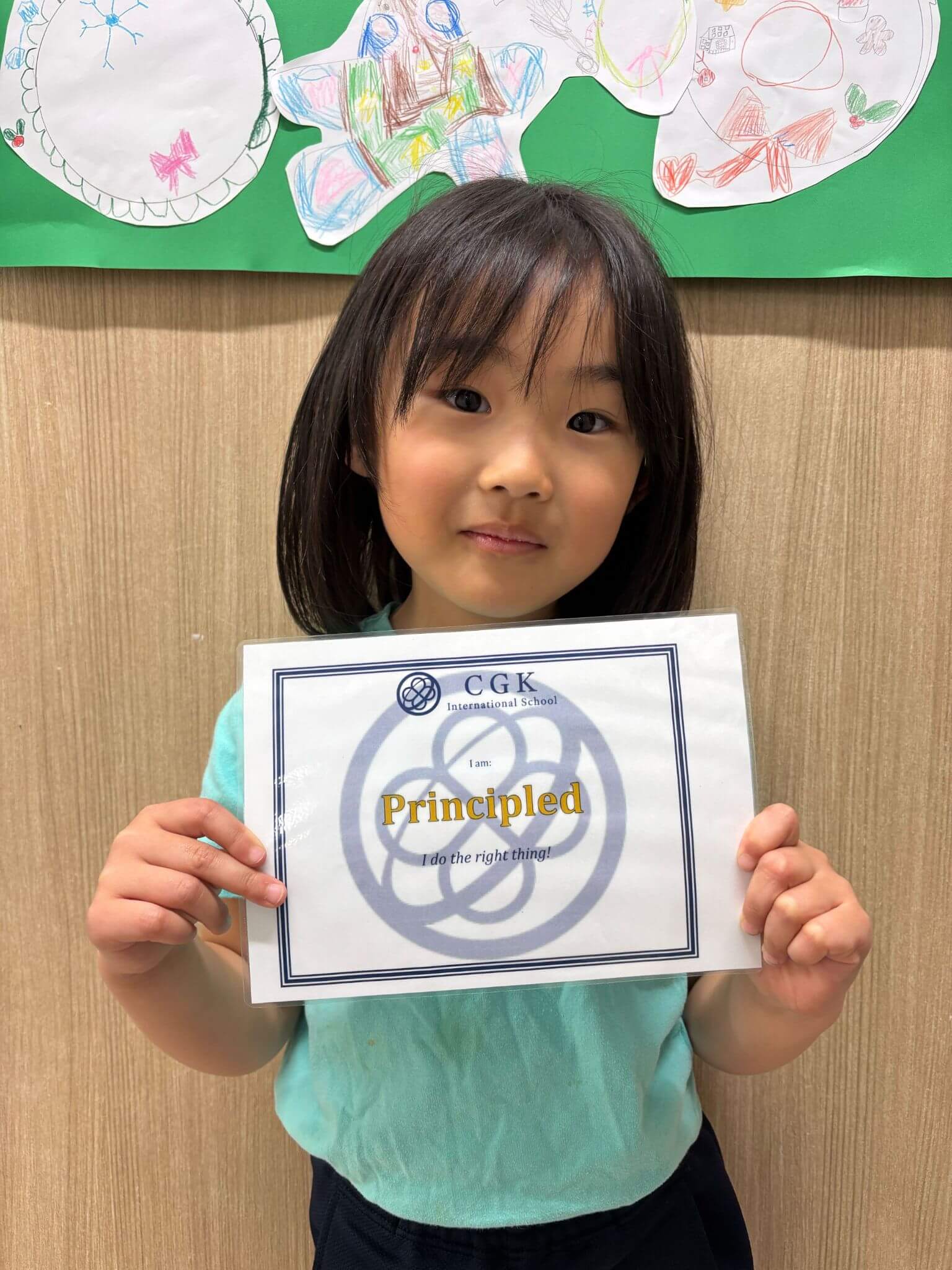
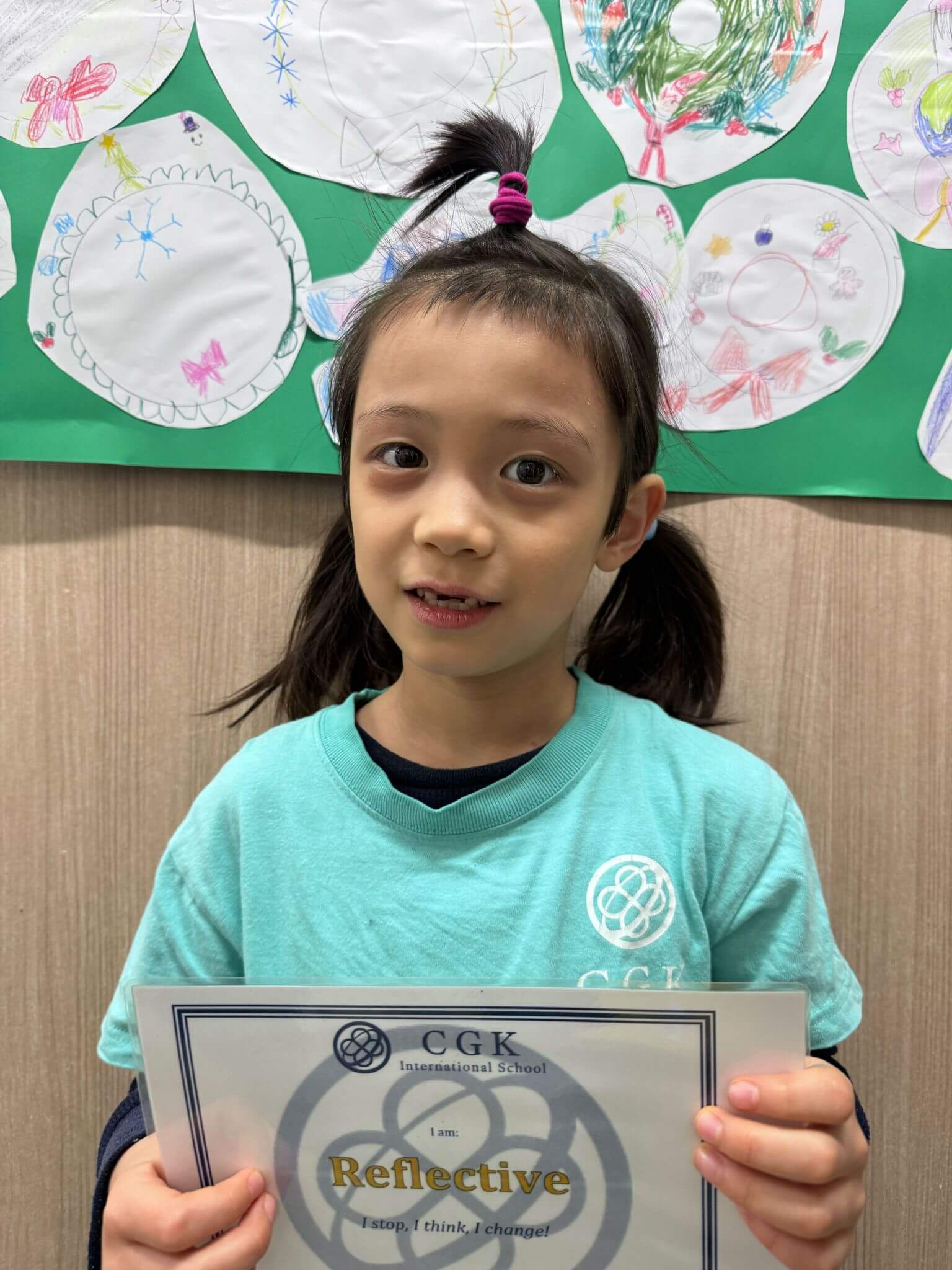
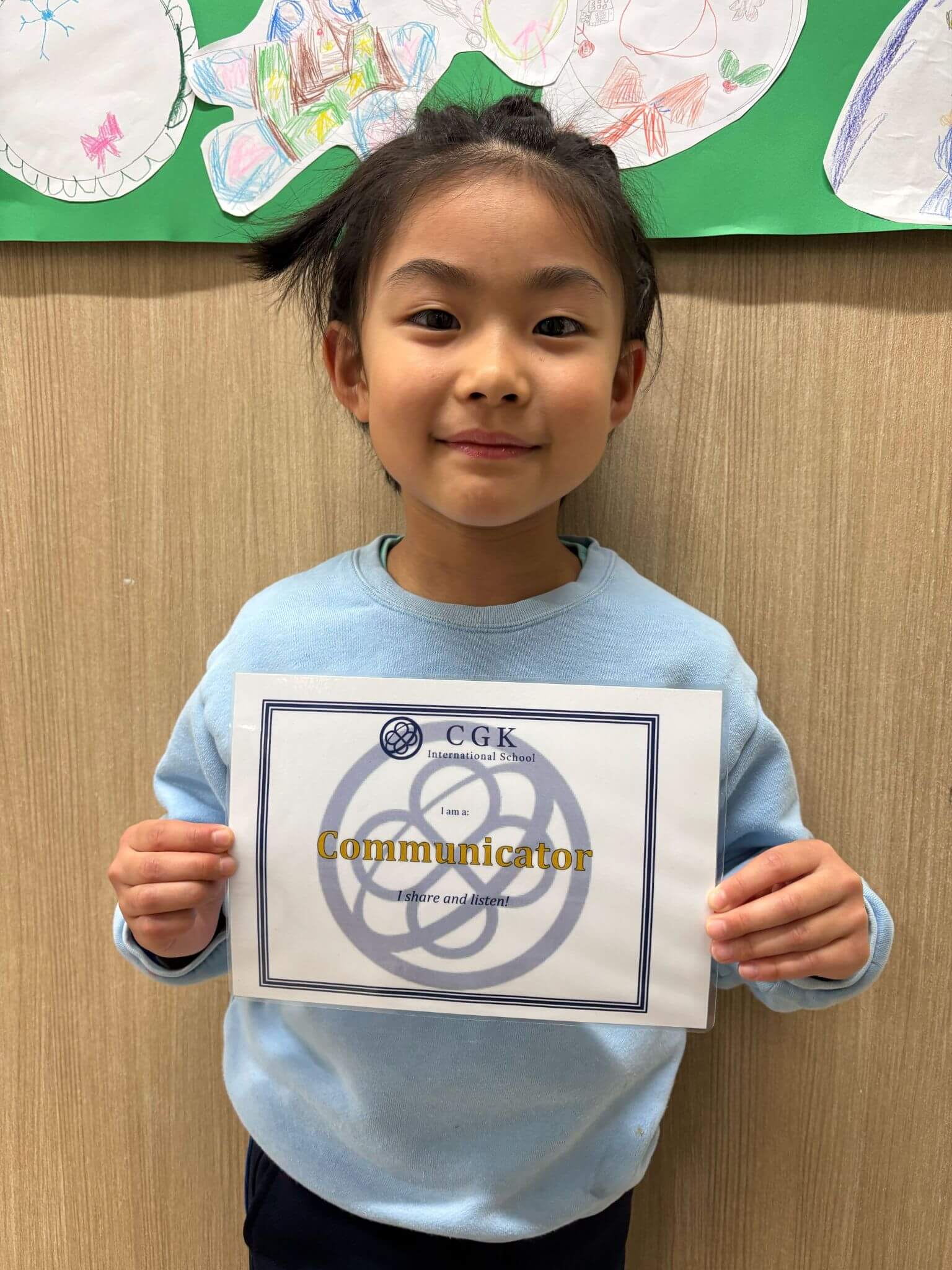
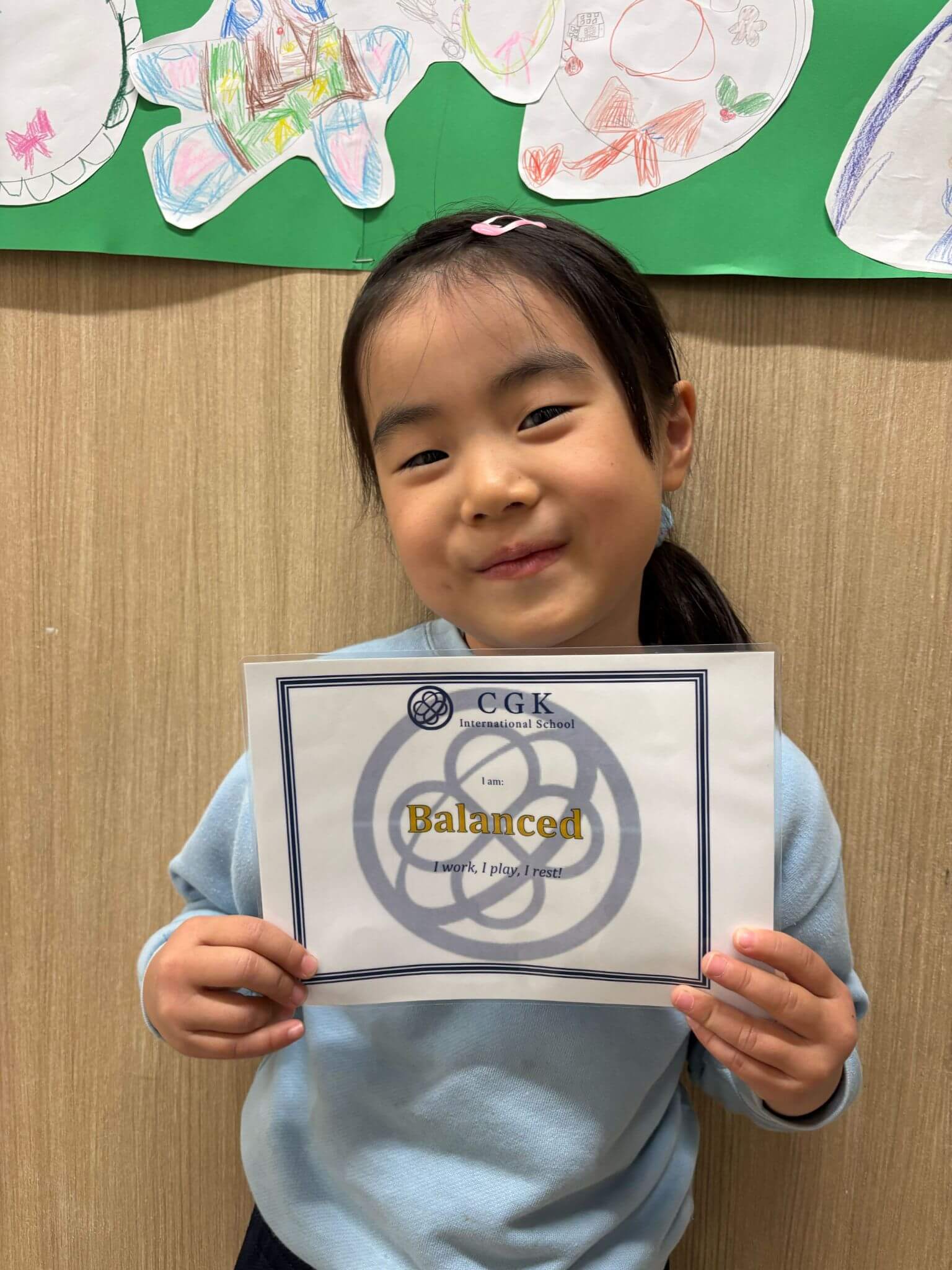
Welcome to the world renowned, highly respected, and much revered CGK Awards! Each month we would like to highlight the children from each class who have displayed qualities that are part of the IB Learner Profile. These are qualities that we want our children to have and to share with the world. With that, the recipients of this month's CGK Achievement Awards are:
Jungle A (3 year-olds)
A. - For being a positive communicator, using English when possible, and speaking with a clear voice.
N. - For being a strong communicator by using English more frequently and projecting her voice.
Jungle B (3 year-olds)
A. - For listening carefully to her friends' ideas and being contributing so much to classroom discussions
K. - For noticing her friends' feelings and showing a brave, confident spirit every time we go swimming.
M. - For finding a wonderful mix of learning and play, showing more of her playful side, and looking after everyone in our class.
Mountain (4 year-olds)
B. - For excelling in math and literacy.
E. - For her willingness to help, support, and look after her friends and the respect she always shows towards those around her.
R. - For always thinking deeply and having questions about everything and anything we talk about.
T. - For her improvement in expression in both English and Japanese, and her confidence in her language abilities.
Sky A (5 year-olds)
E. - For trying to be more responsible with her belongings and for being honest with her friends.
M. - For considering the results of her choices and reflecting on how choices impact herself and others.
Sky B (5 year-olds)
K. - For being a kind and supportive classmate while confidently participating in the Celebration of Learning.
K. - For making healthy food choices and independently finishing her lunch, demonstrating responsibility and self-management.
Sky A&B
(5-year-olds)
Learning and Exploring at Zoorasia
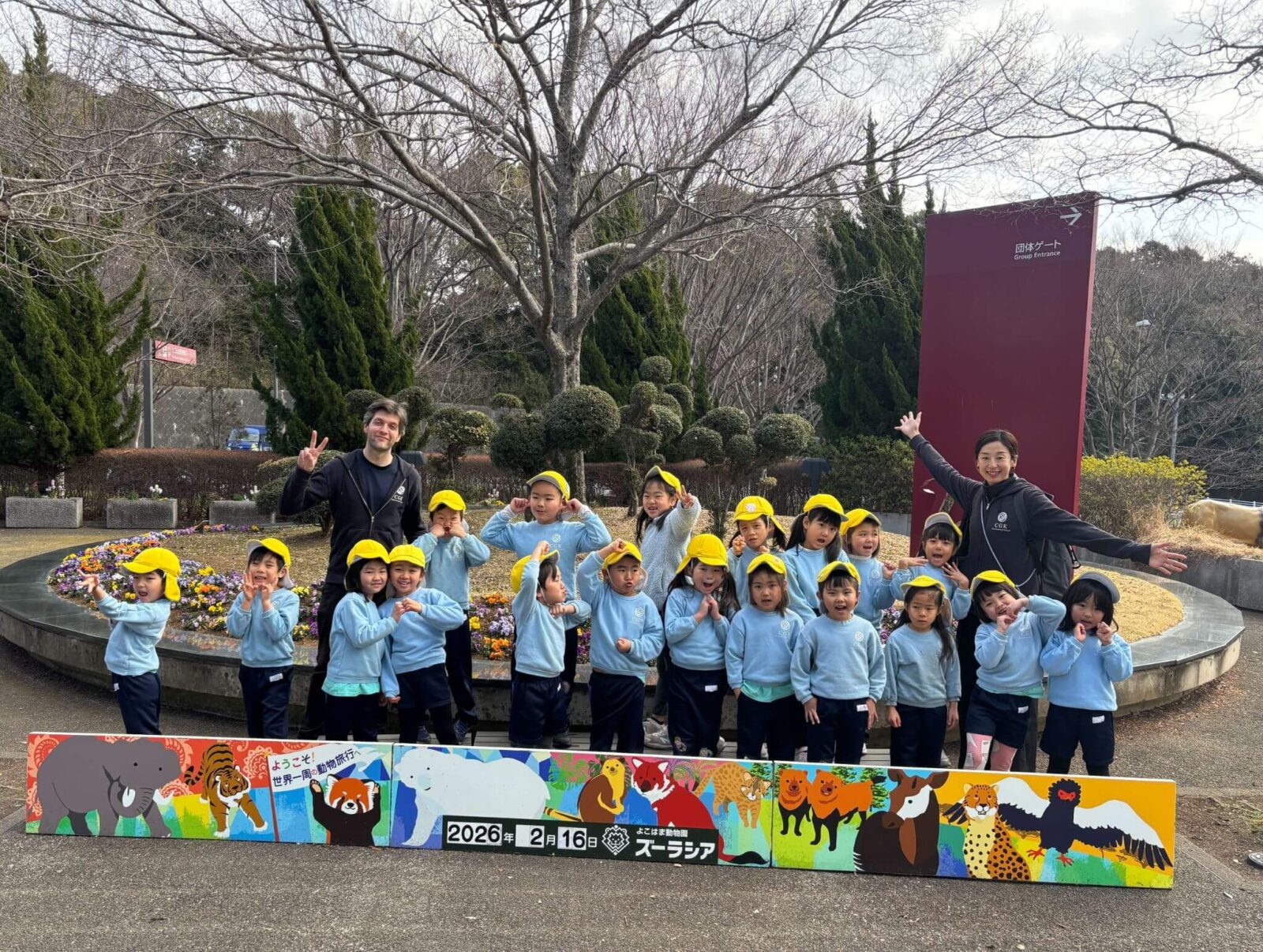
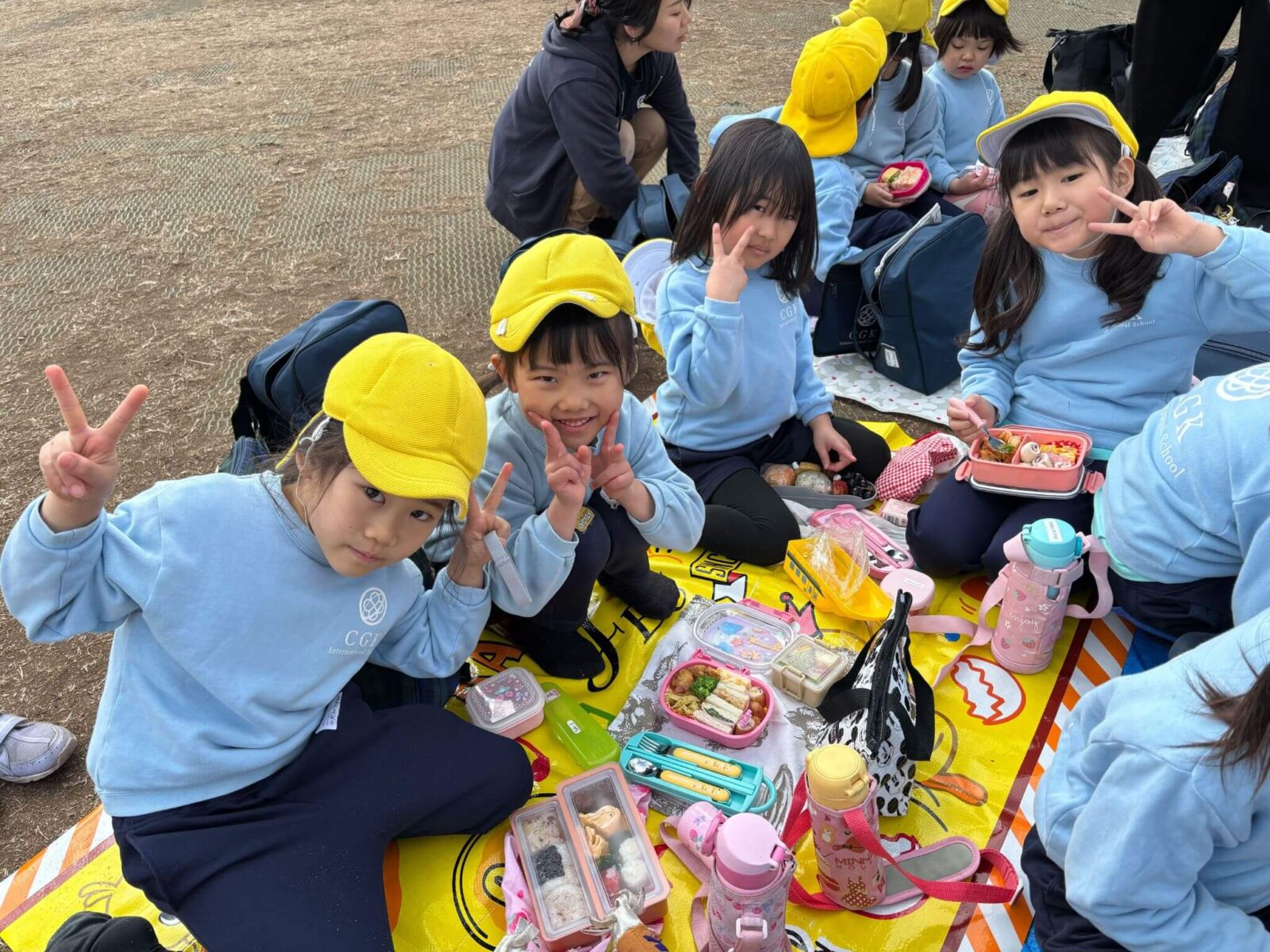
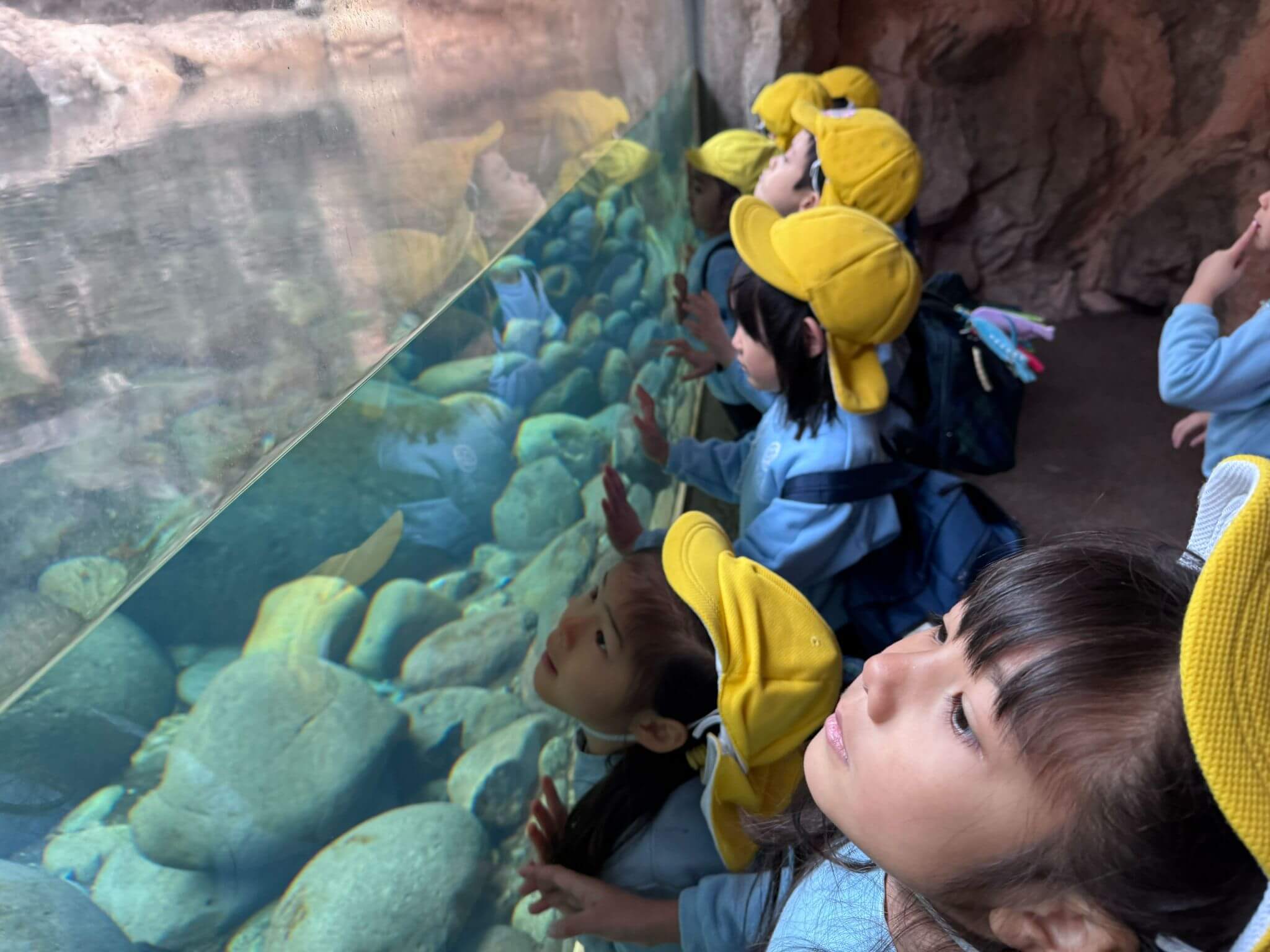
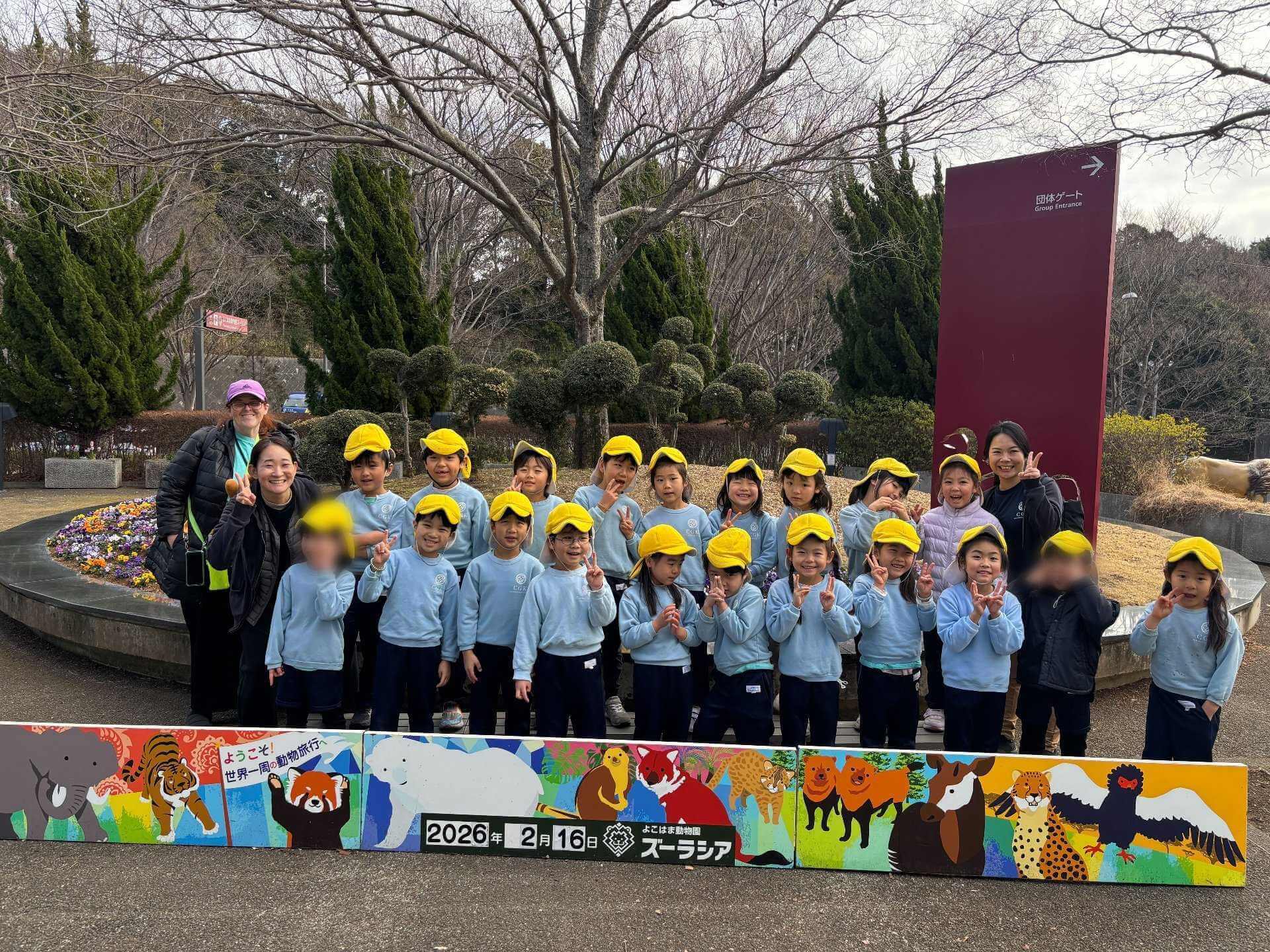
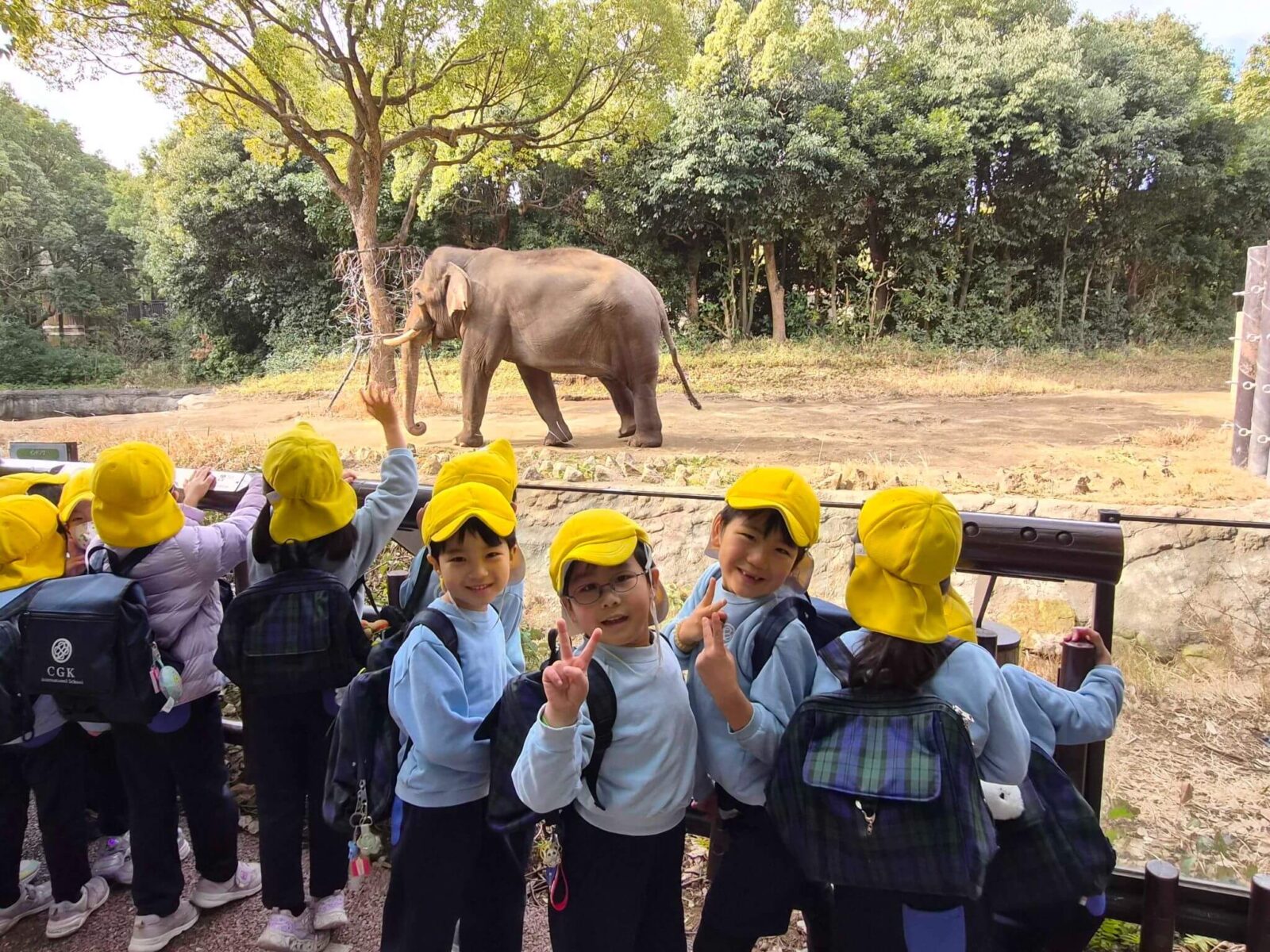
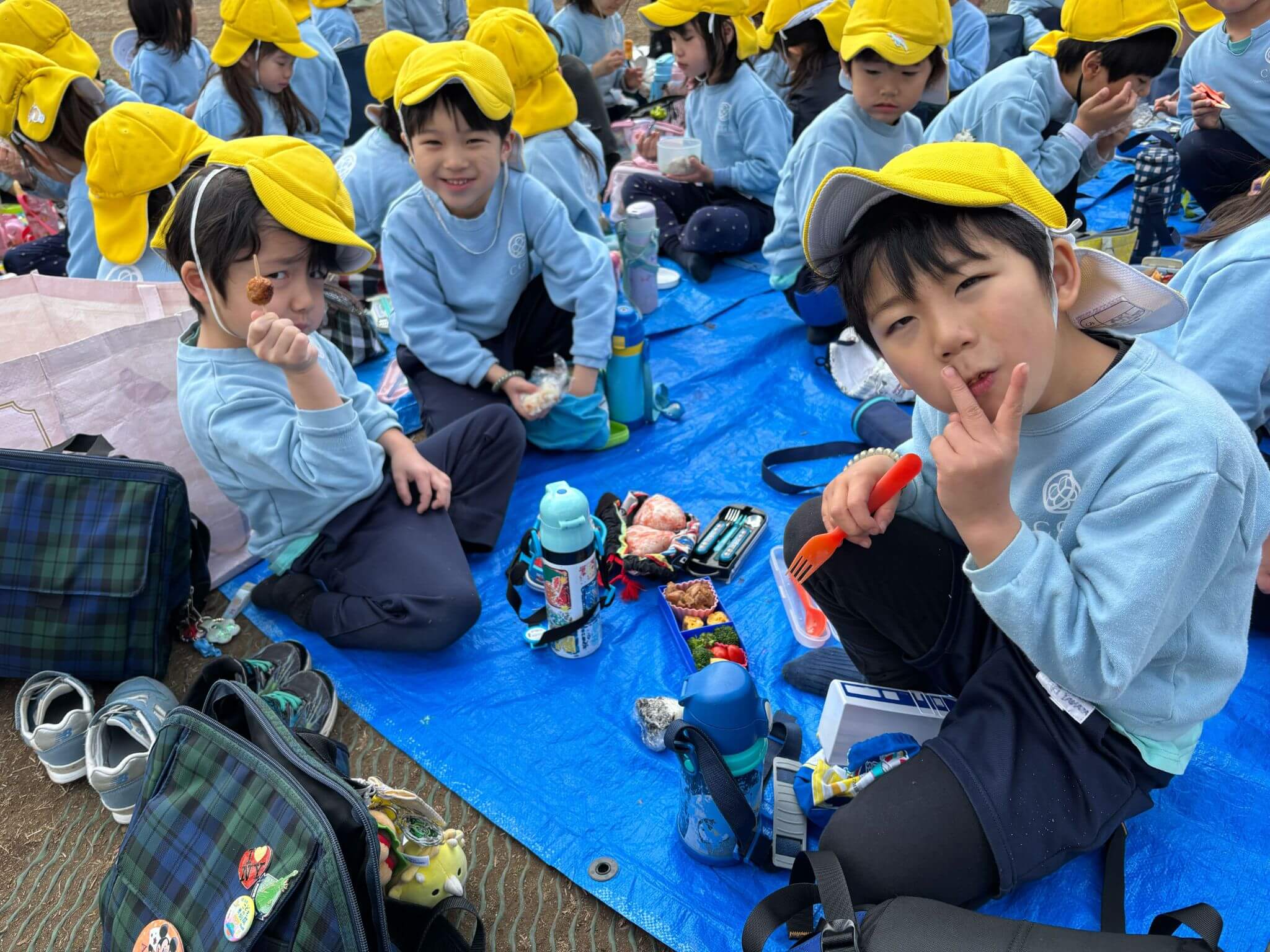
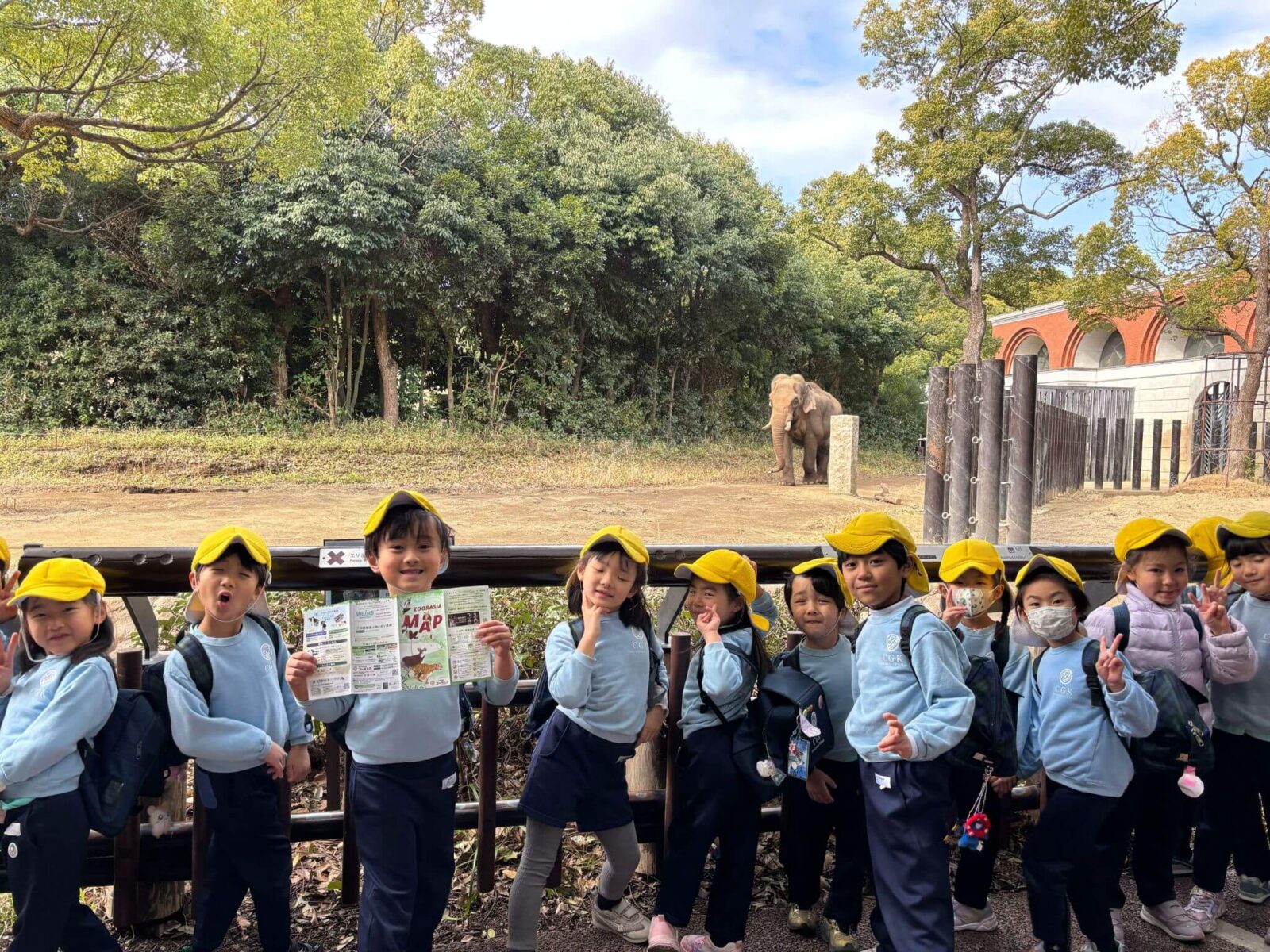
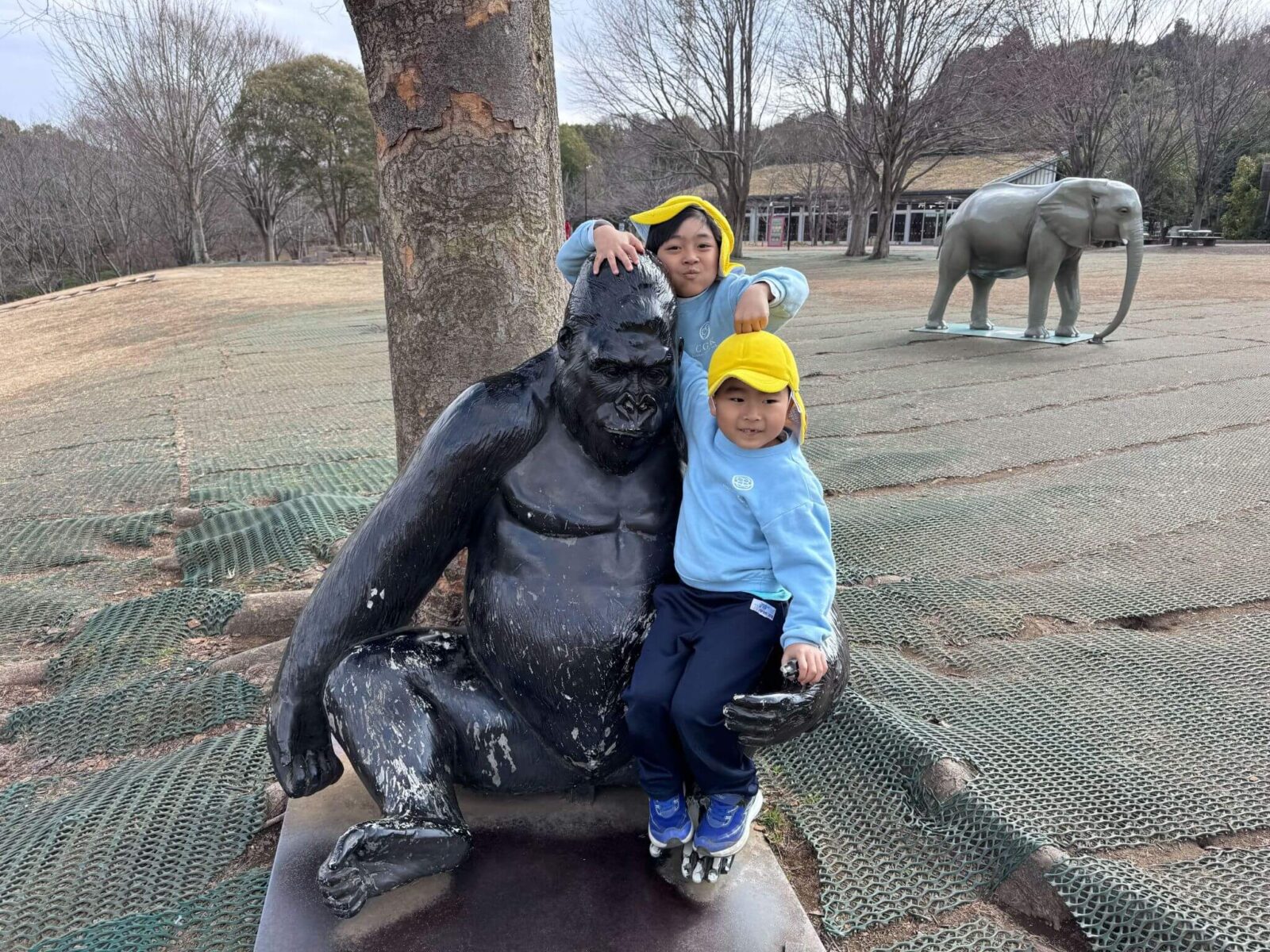
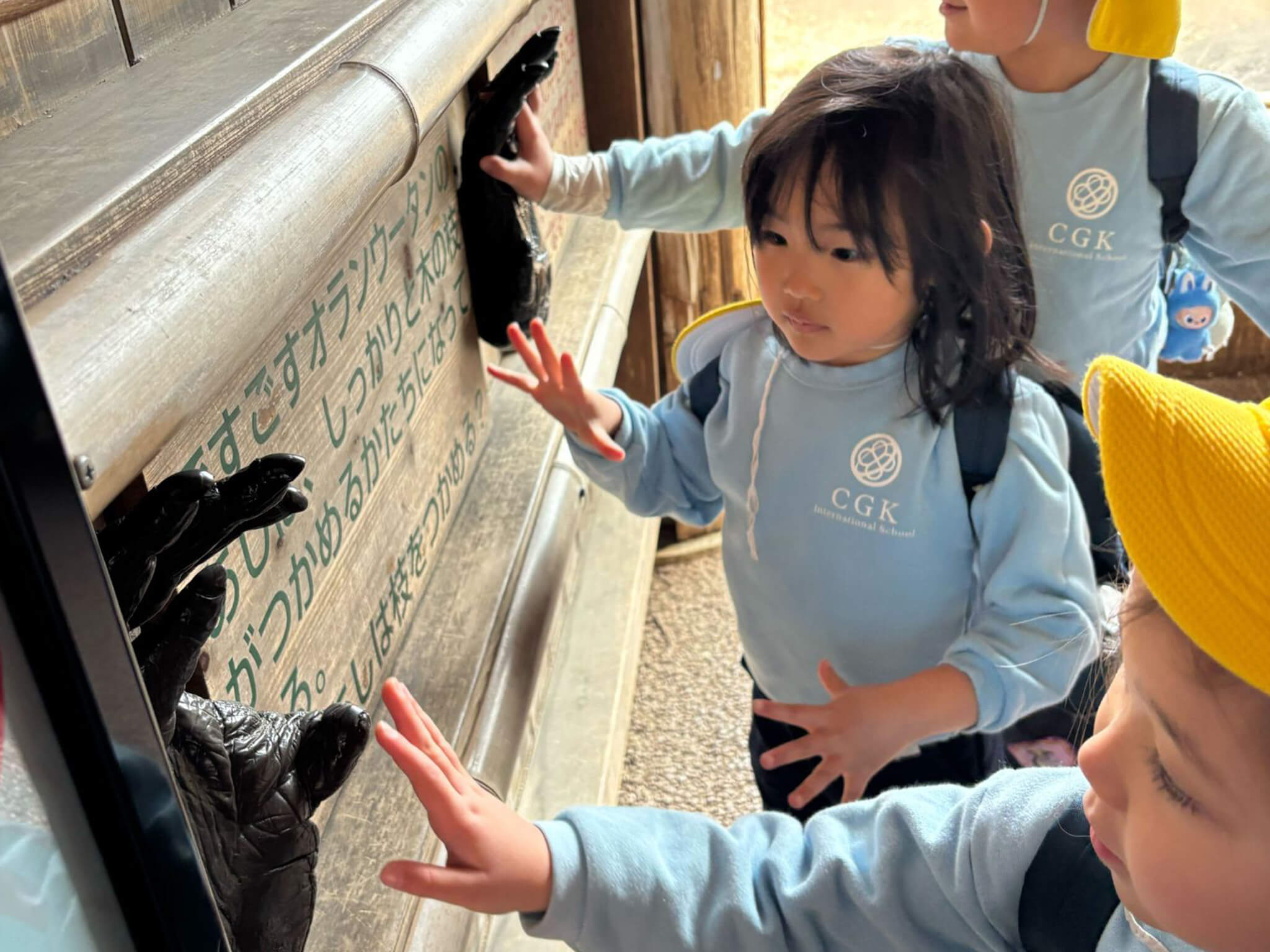
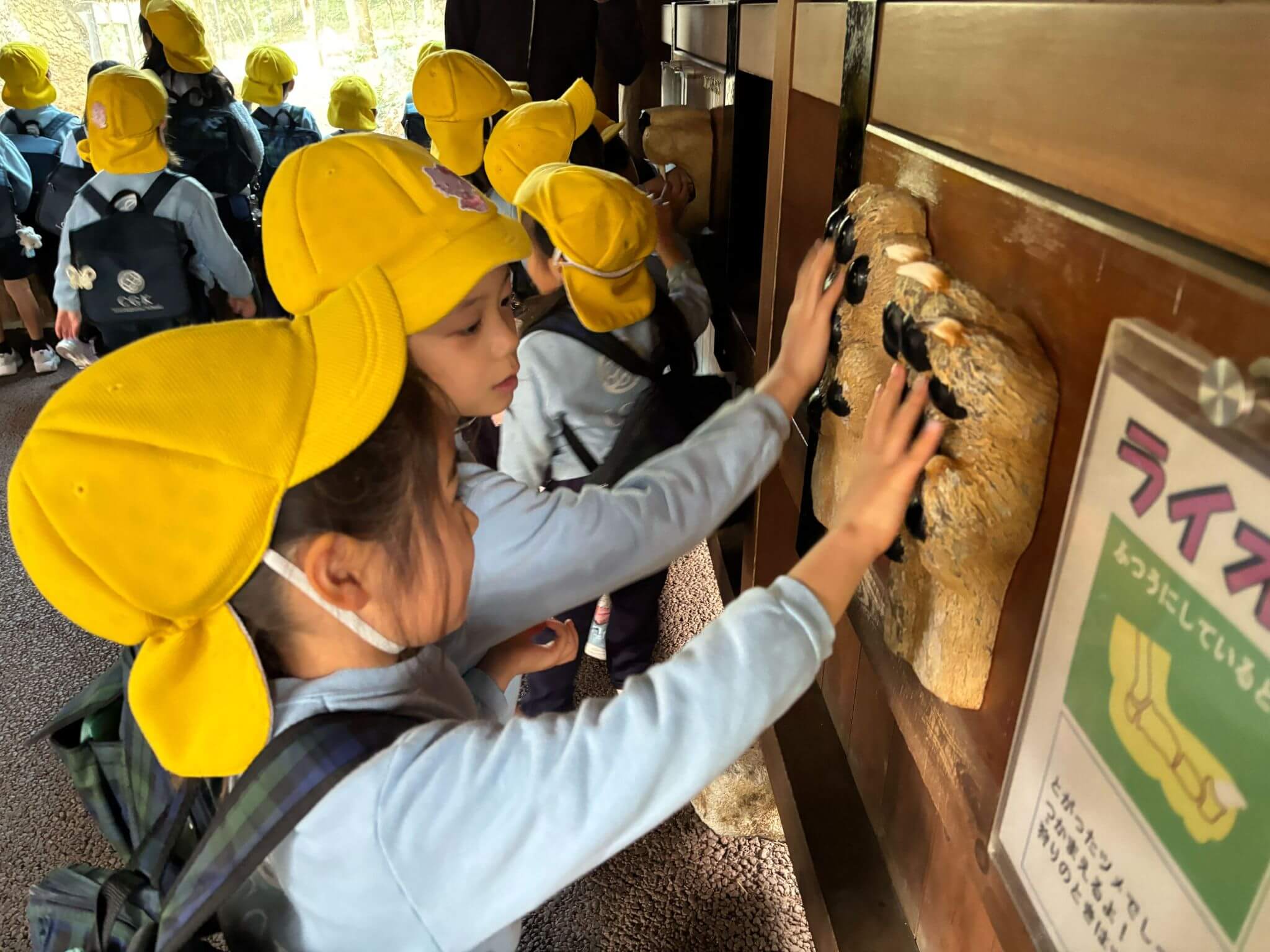
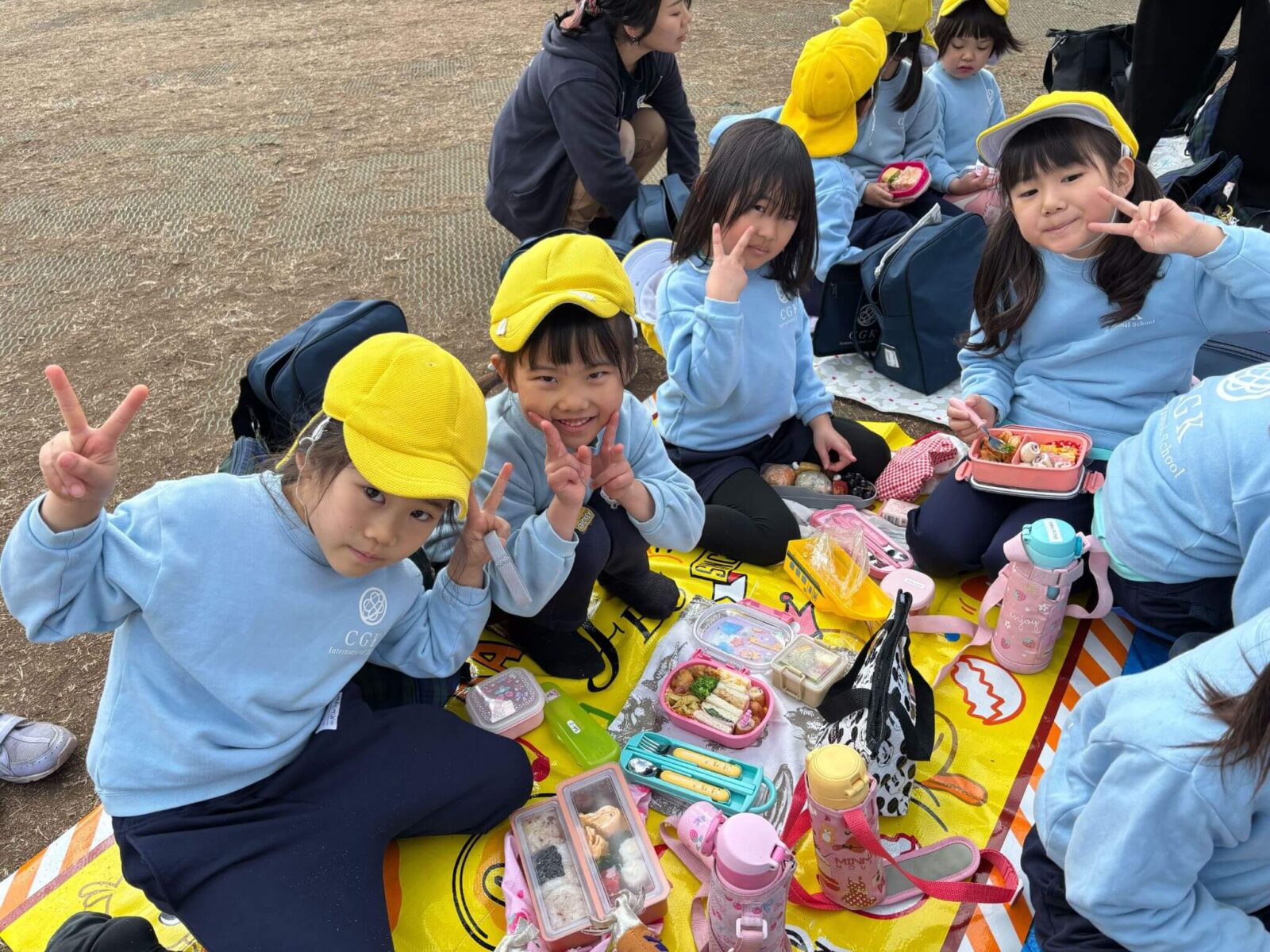
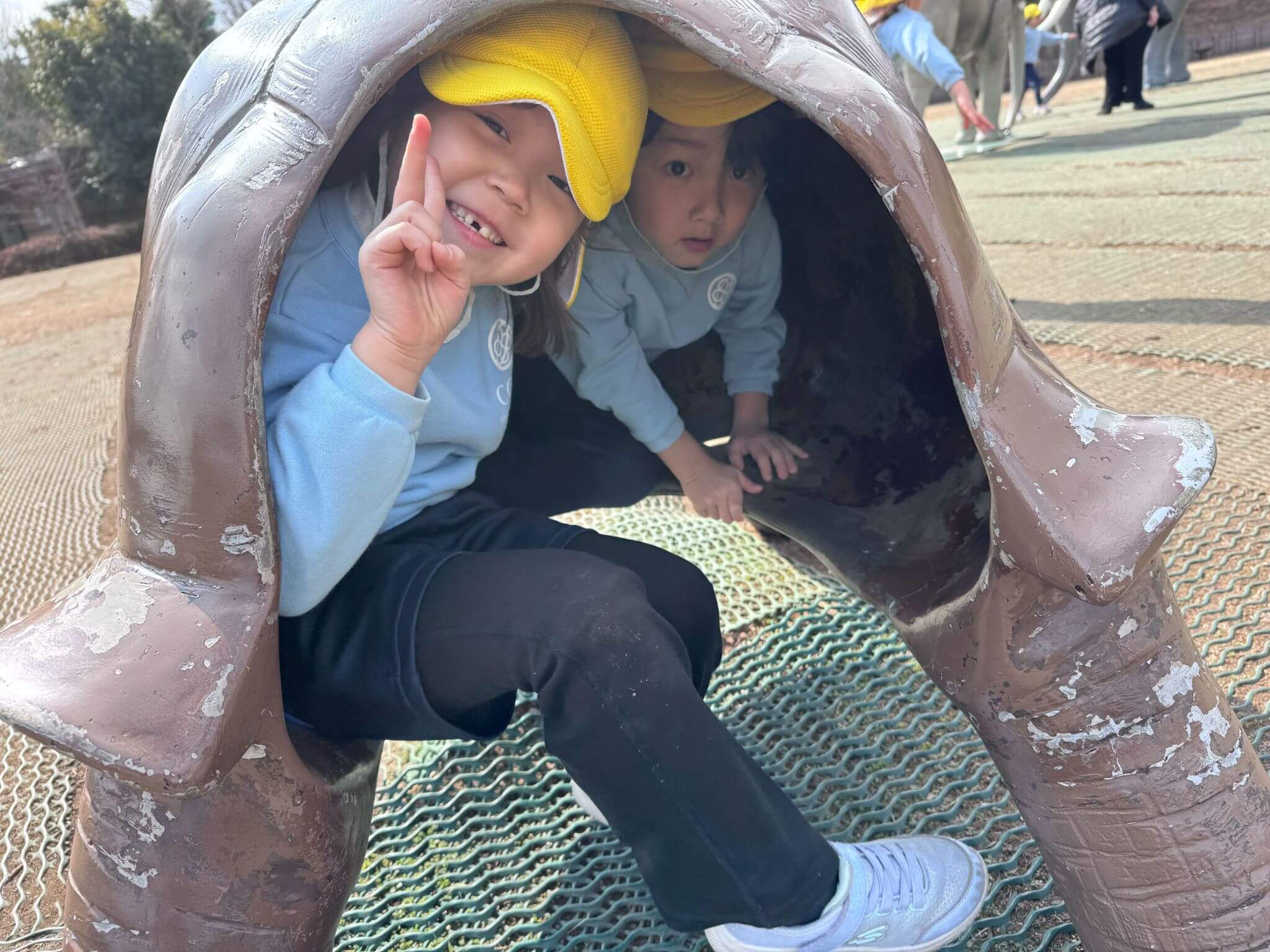
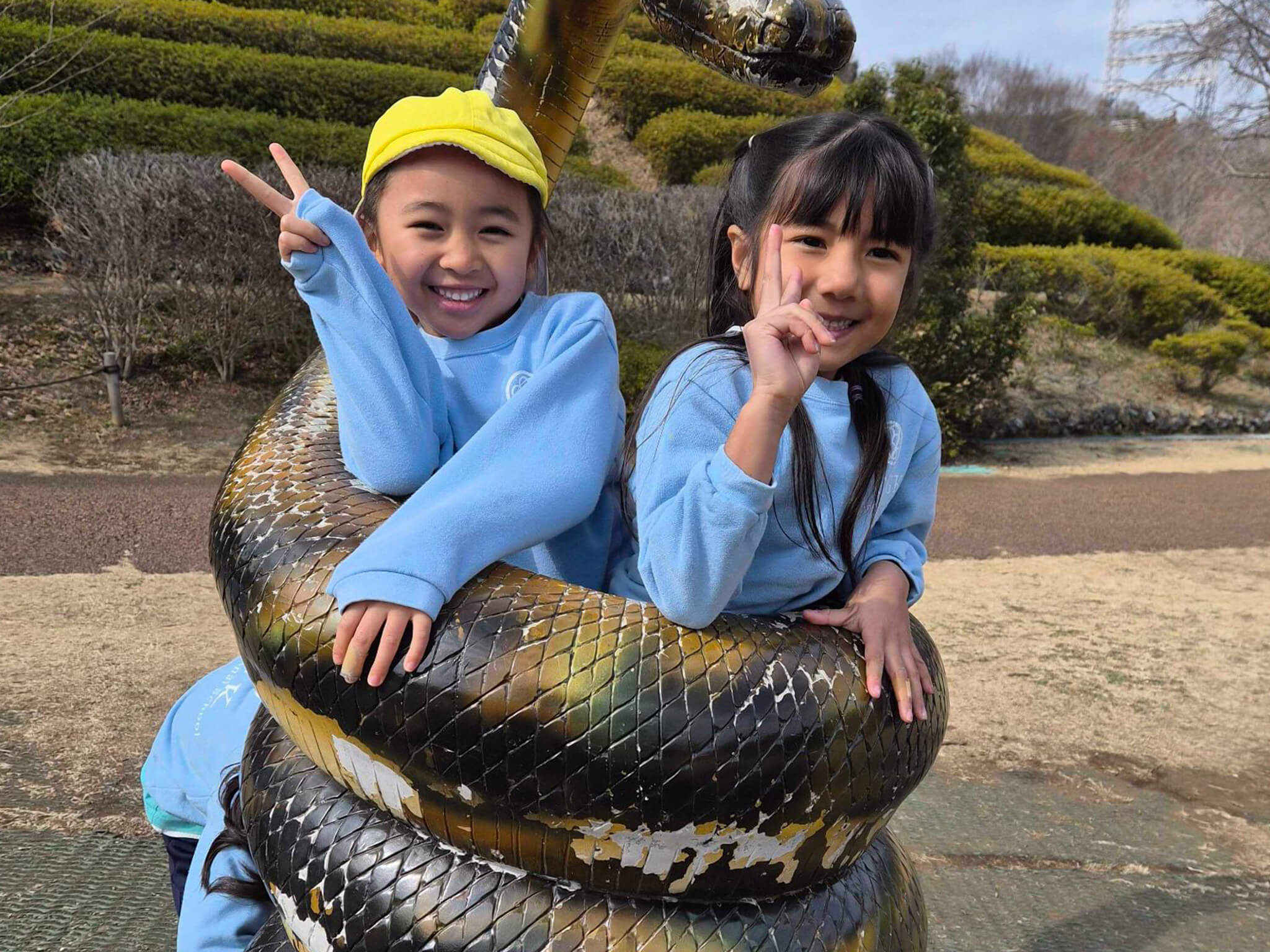
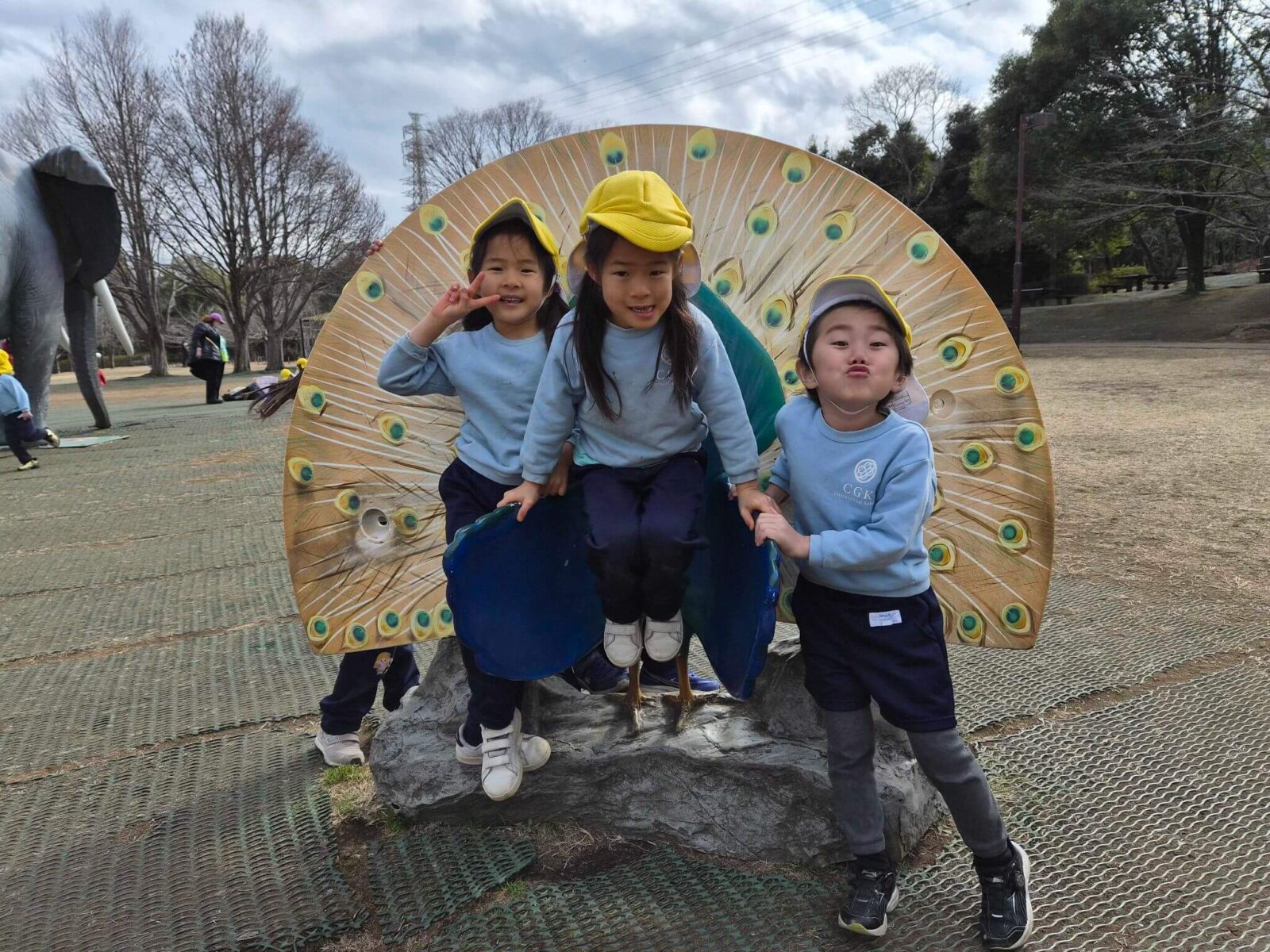
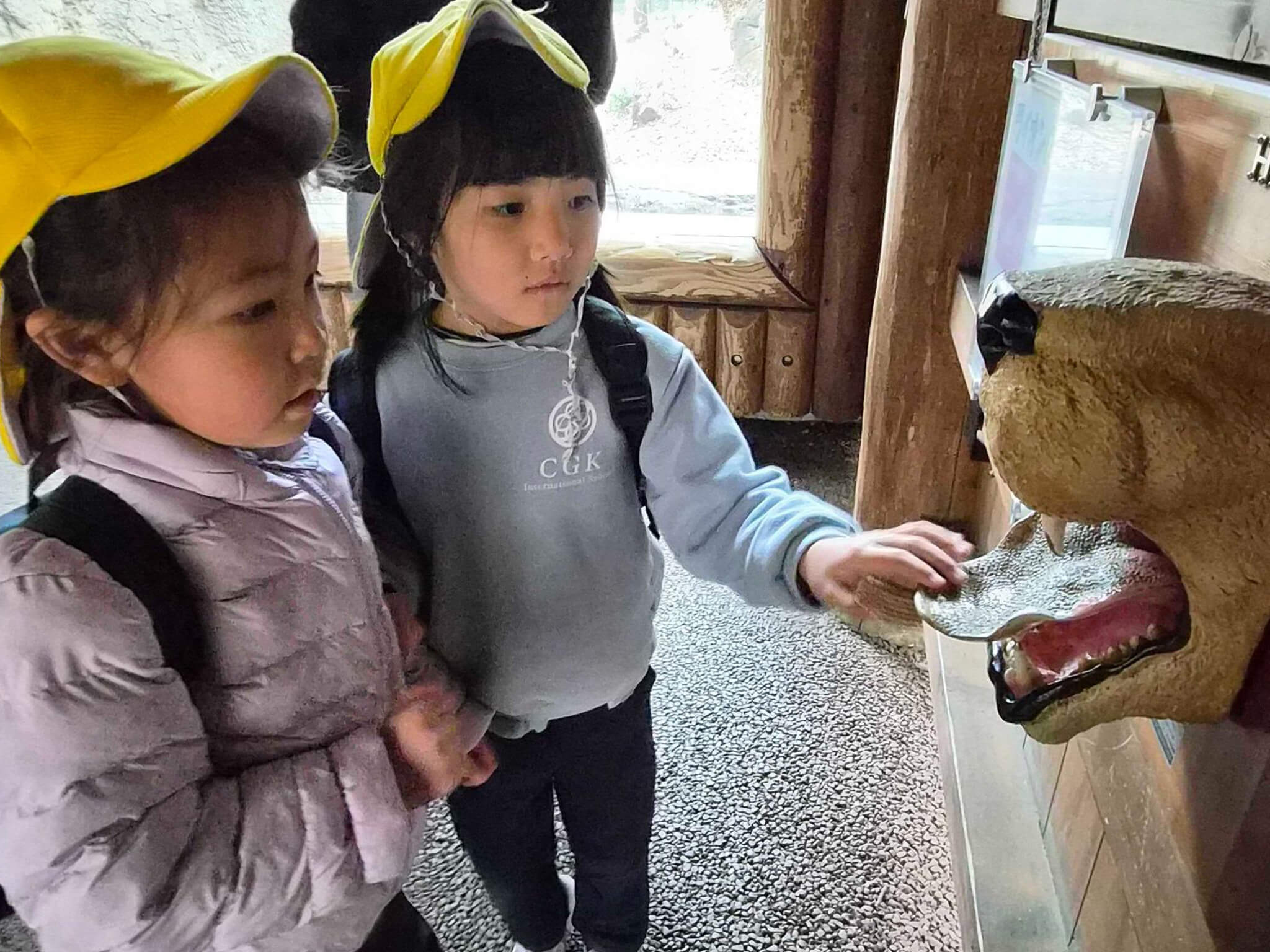
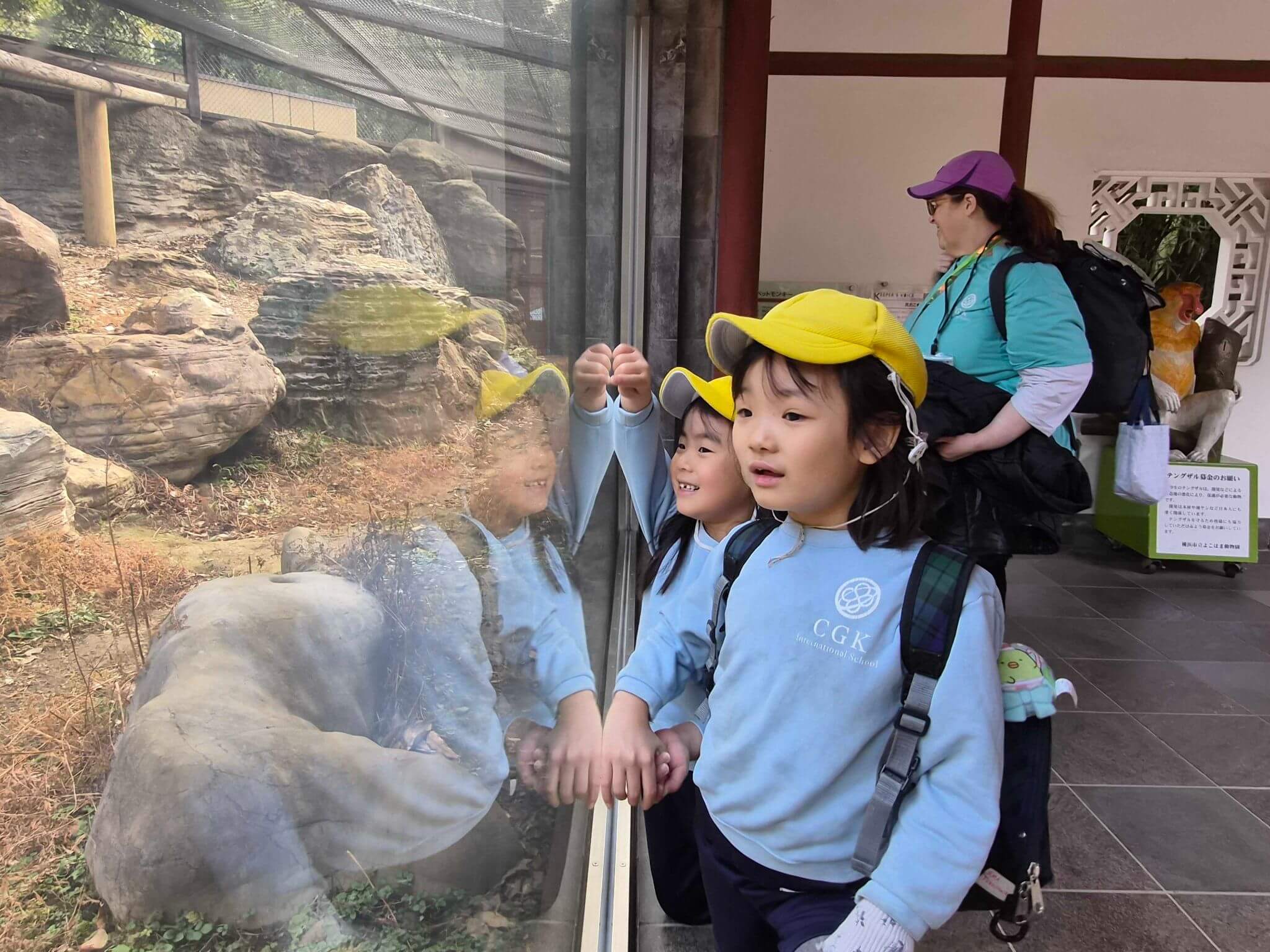
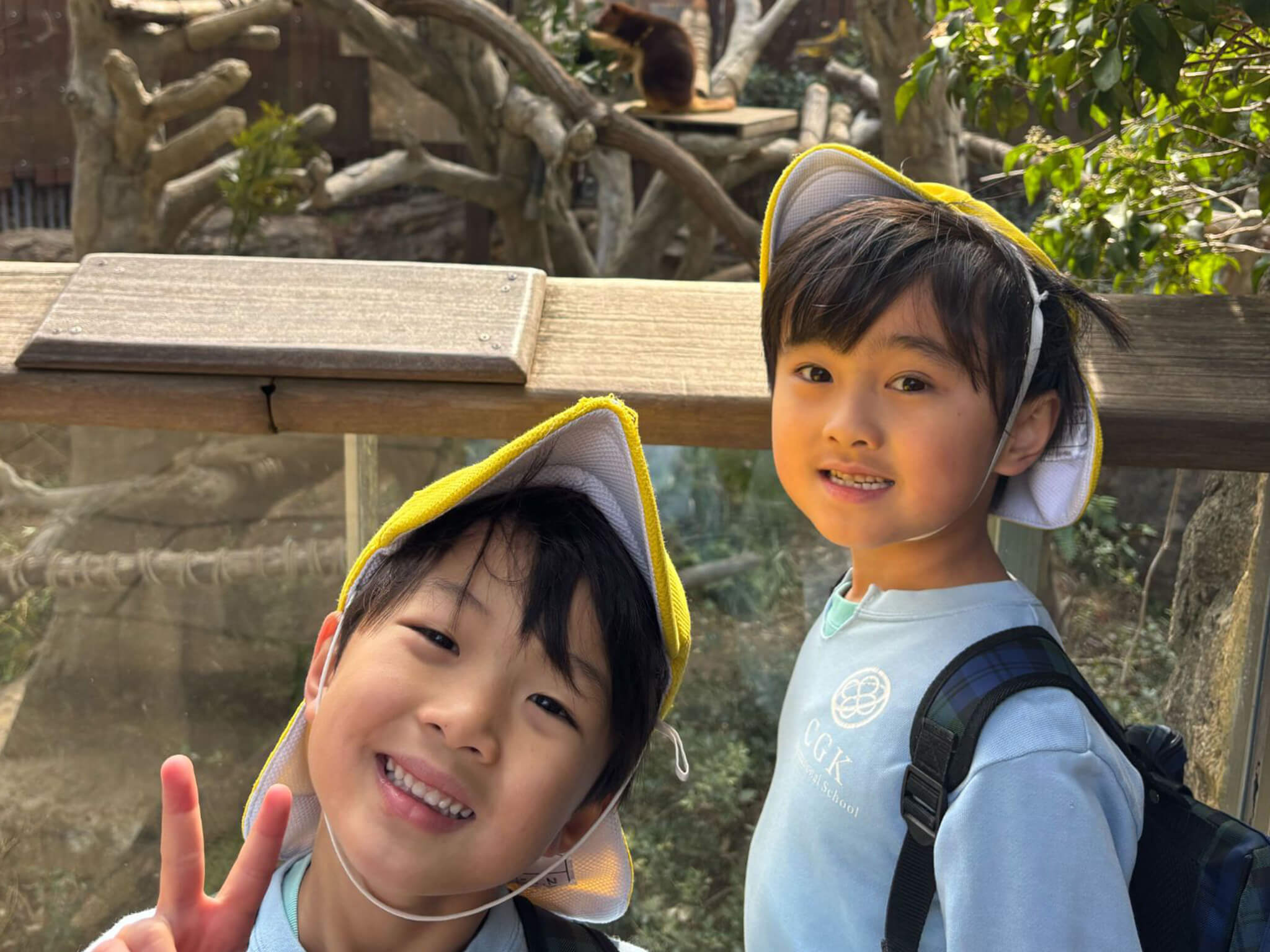
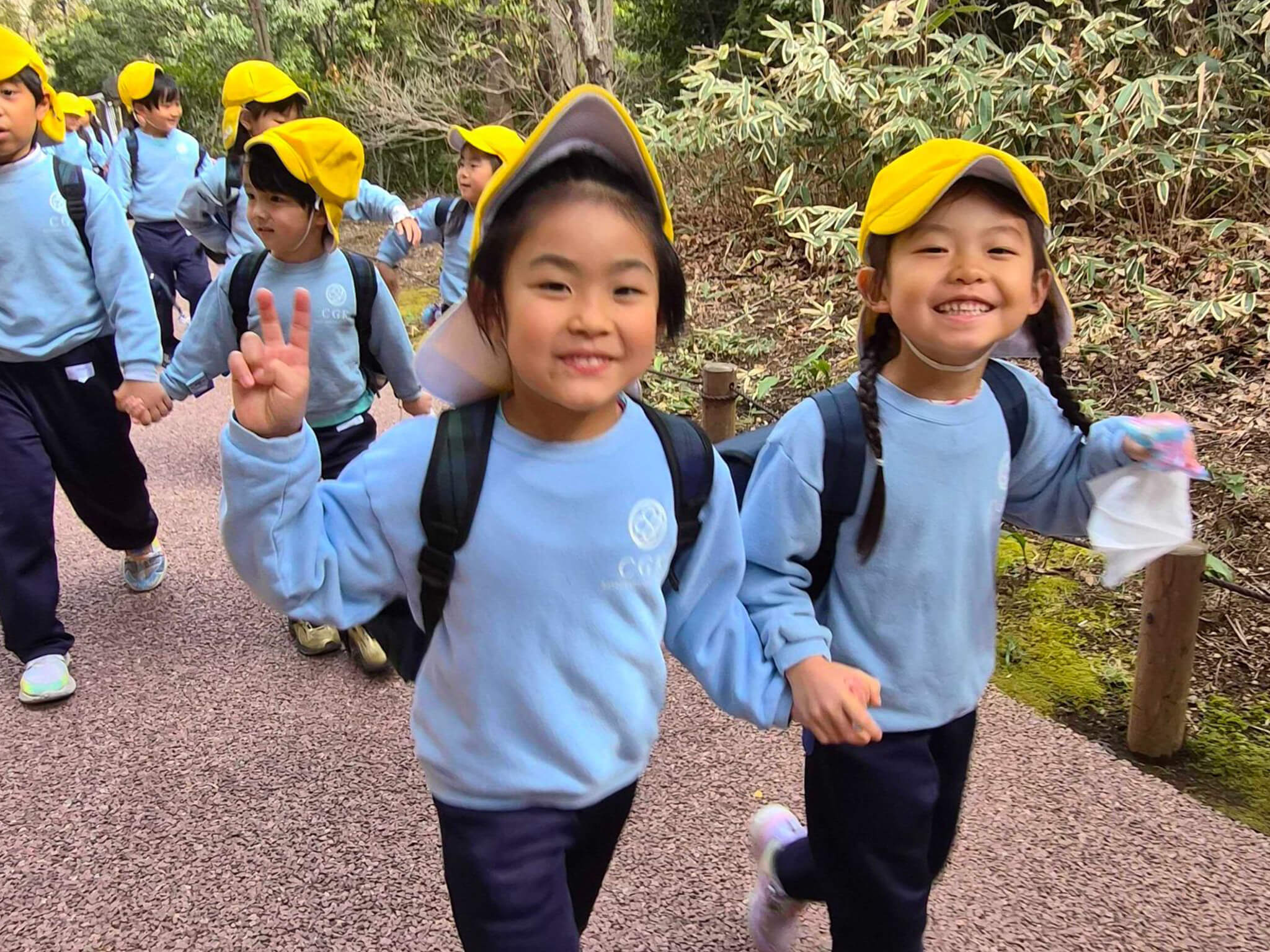
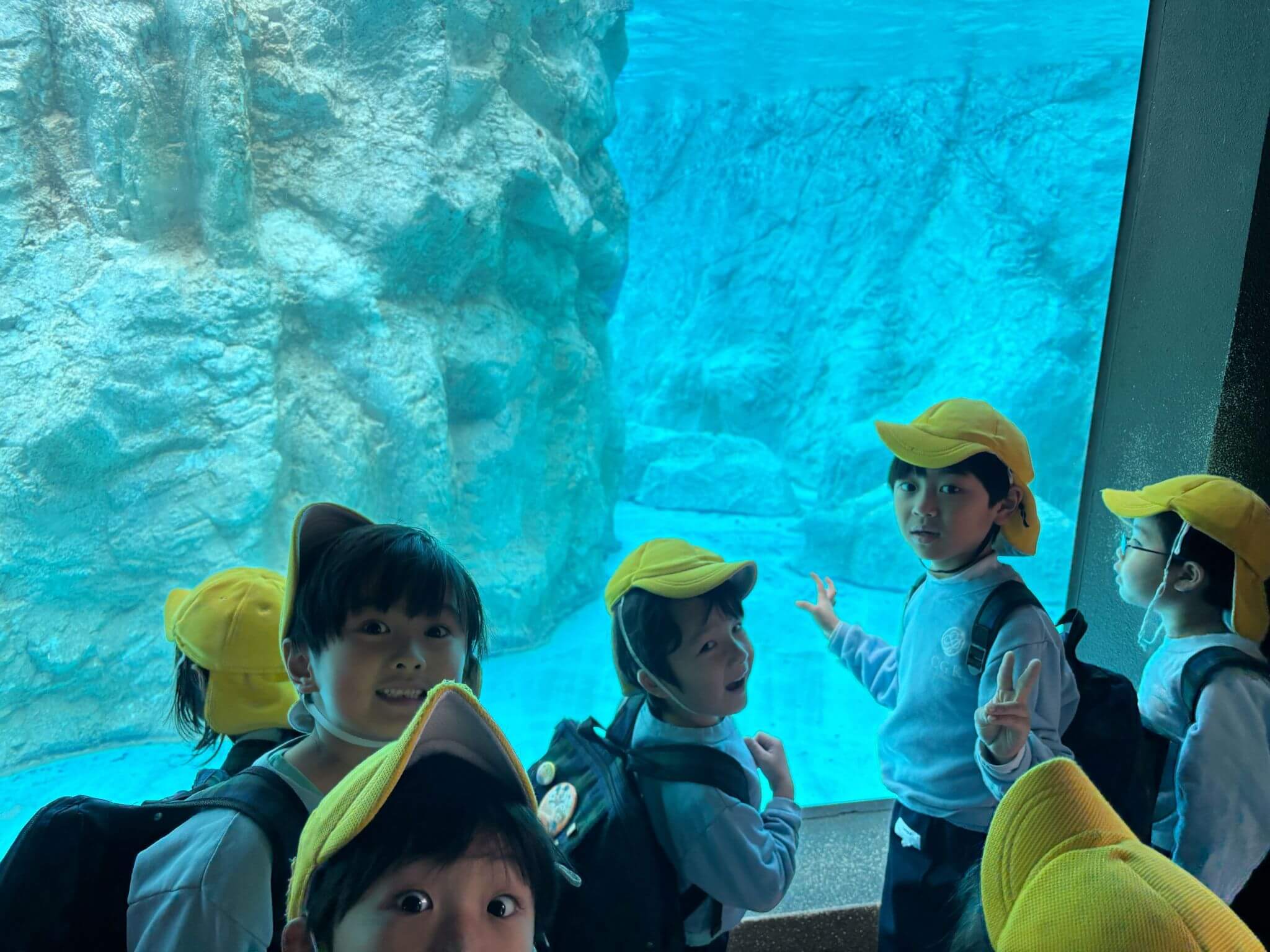
The end of the school year is fast approaching, and with it comes the end of our Sky students’ time at CGK. Although we will miss all of our Sky students, we are excited for them to take their next steps, transition to elementary school, and continue their growth and development!
To wrap up the year, we’re trying to squeeze in as many fun and memorable experiences as possible for the Sky students to share together as they reflect on their time and learning journey at CGK.
This month, we took the Sky A and Sky B students to Zoorasia! One of the most common shared interests among our students is animals, which is pretty typical for children of this age. The Sky students love creating their own animals and exploring the habitats they live in. One of our Sky classes has even been working on a COL performance all about saving animals of the future!
As part of our current Unit of Inquiry, Who We Are, we have also been exploring choices and their consequences. During this exploration, we spent some time discussing the environment, conservation, and endangered and extinct animals. Our Sky students have a strong moral compass when it comes to nature and the environment and were able to reflect on these ideas while exploring the different animal enclosures at the zoo.
Growing Hearts and Learning Through Cross-Age Connections
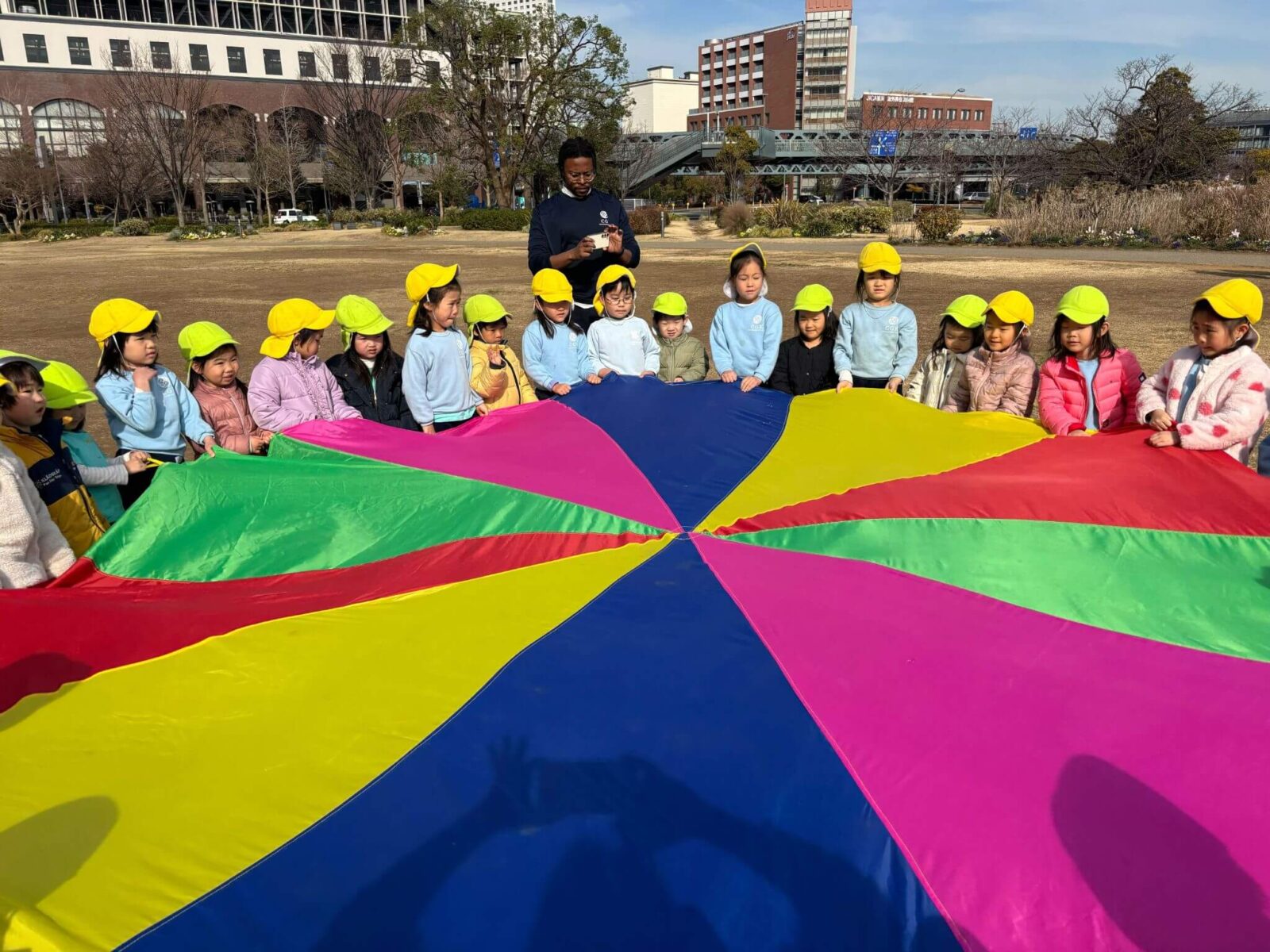
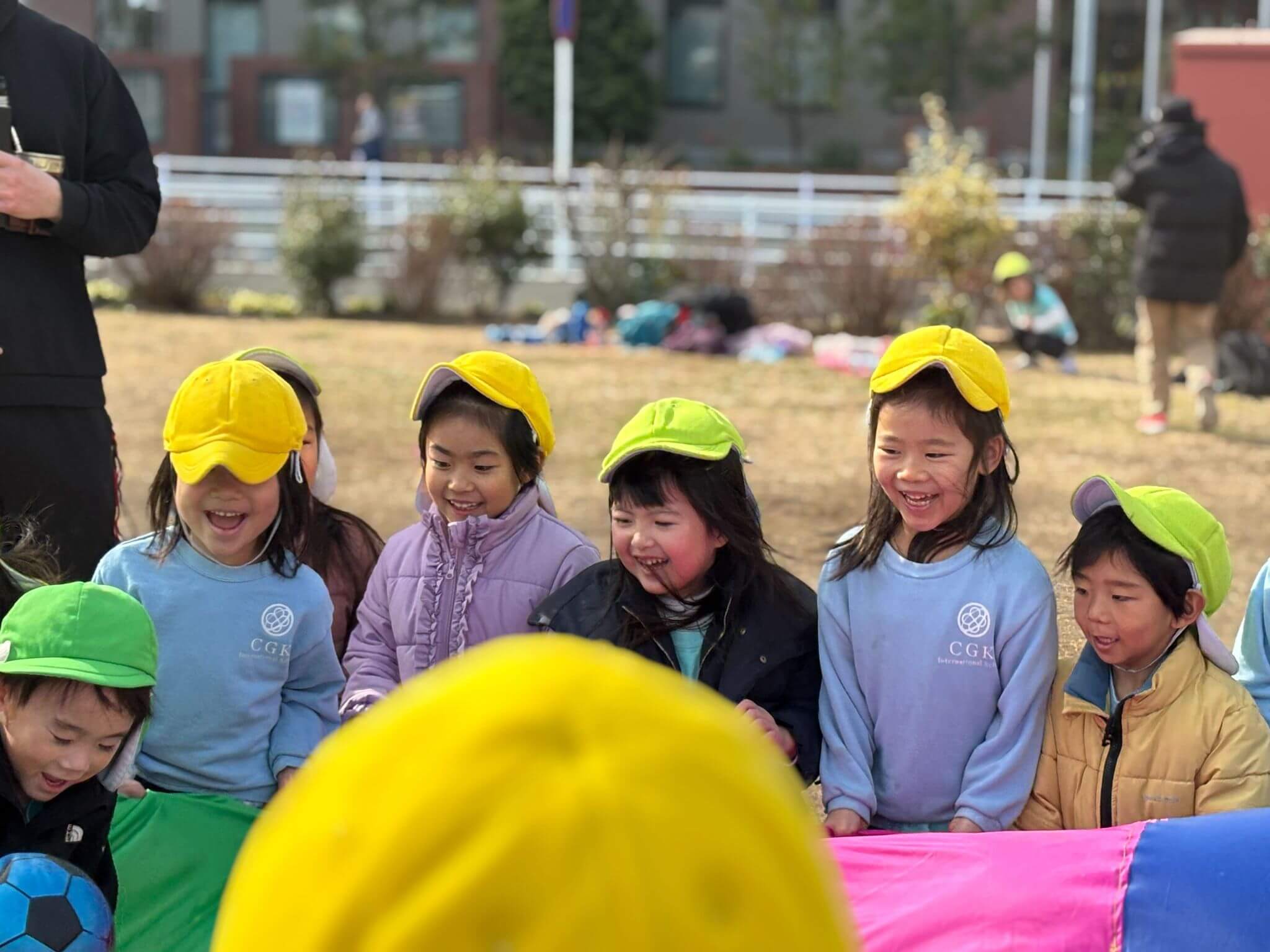


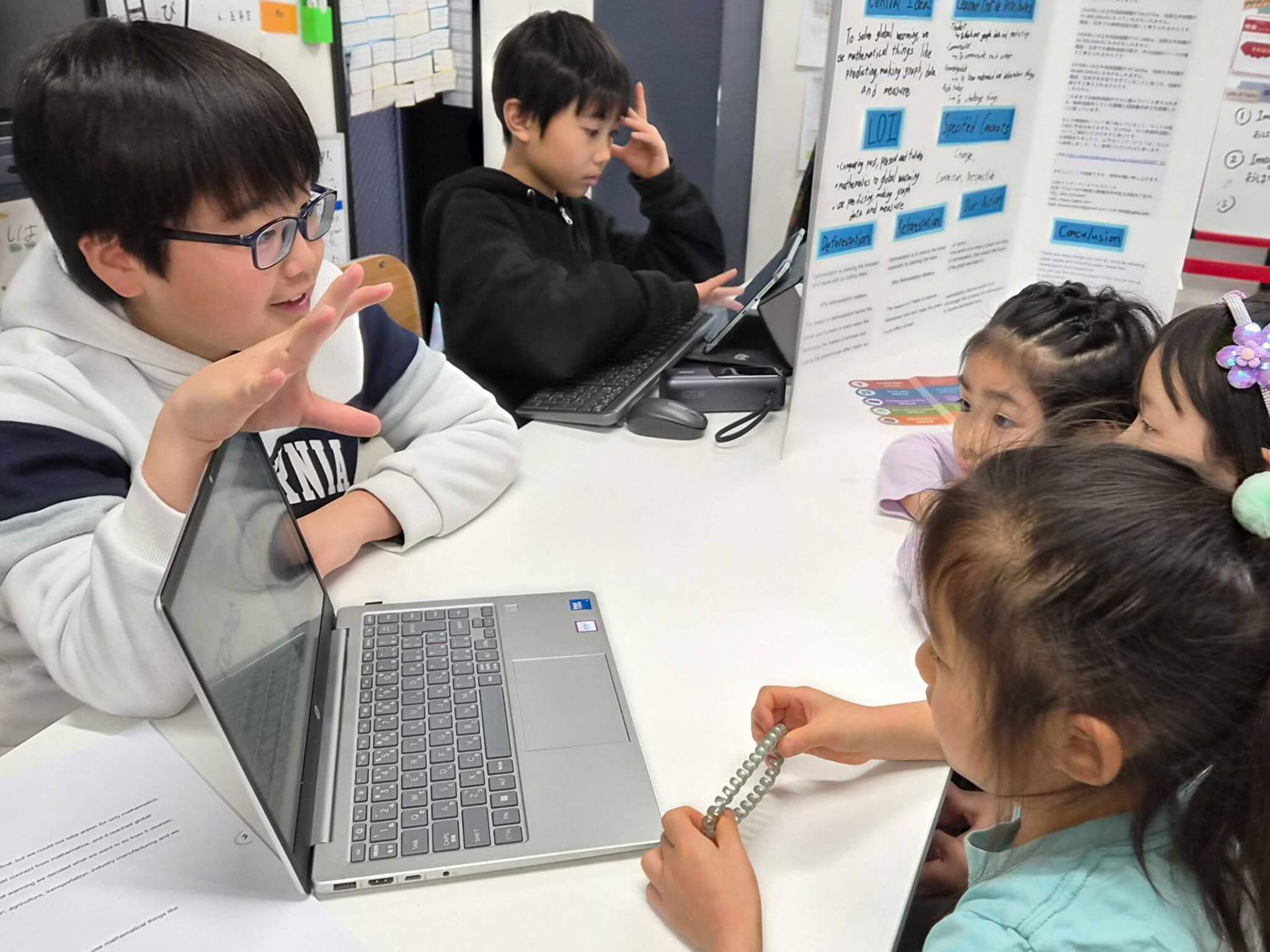
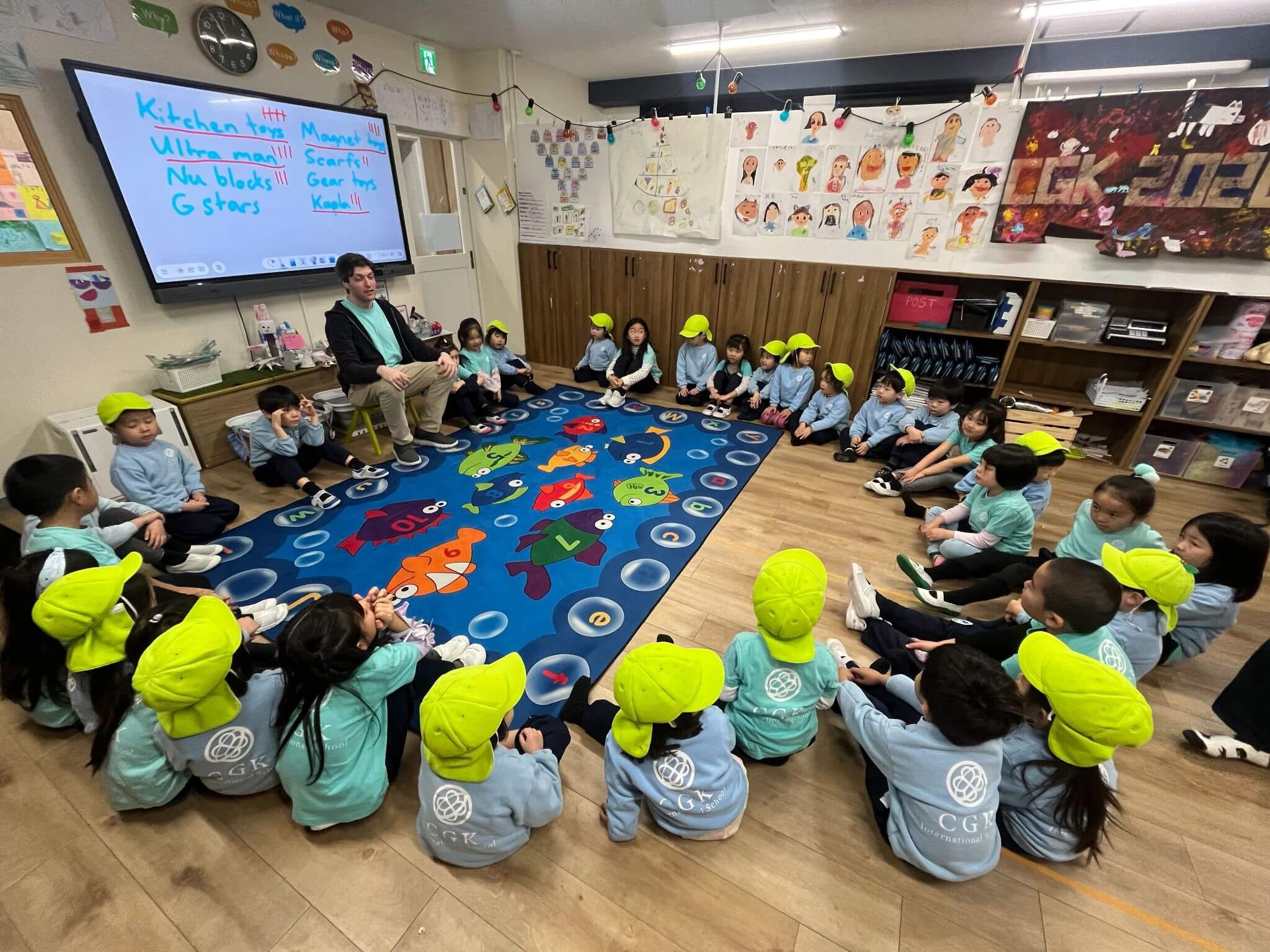
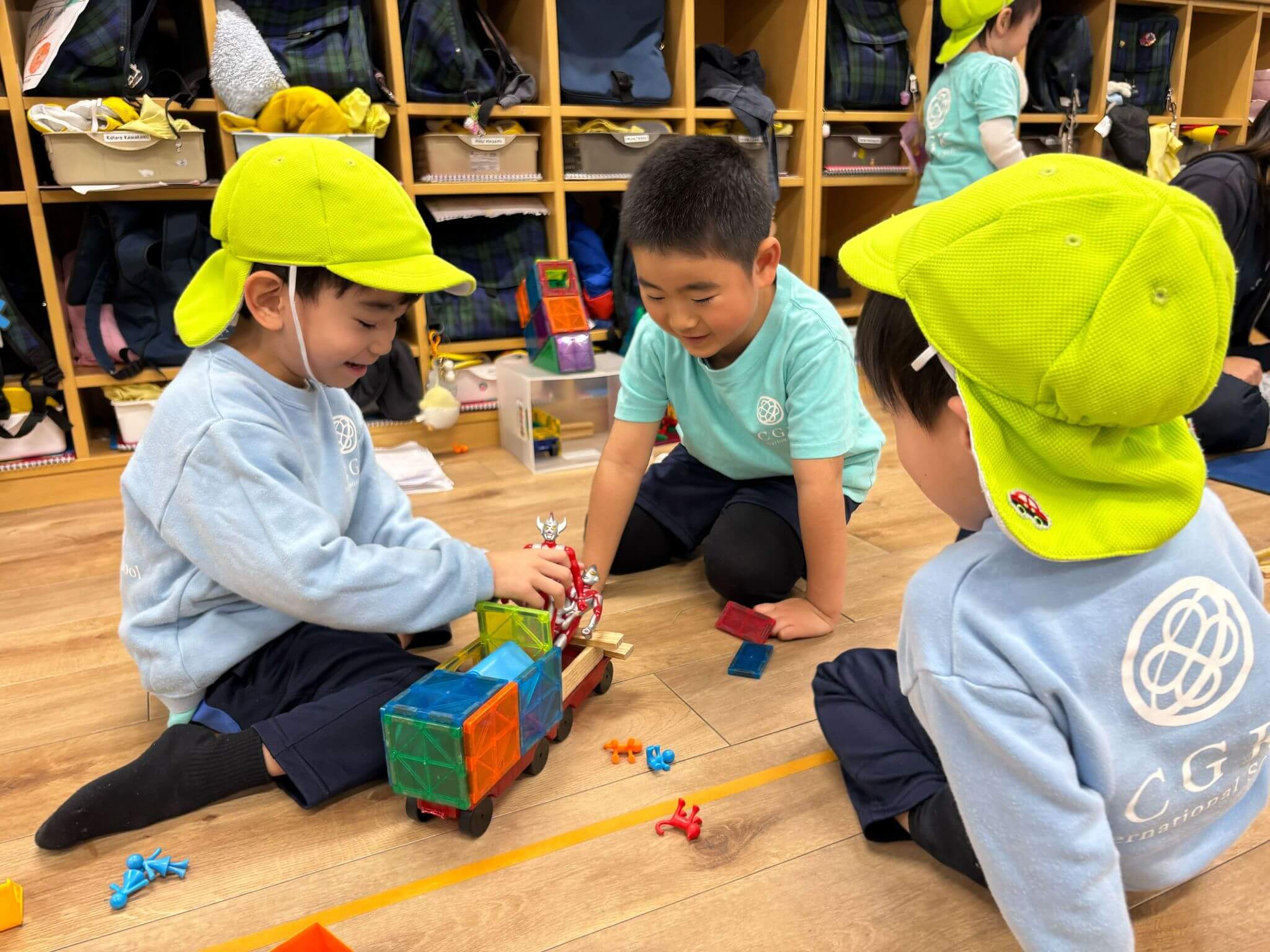
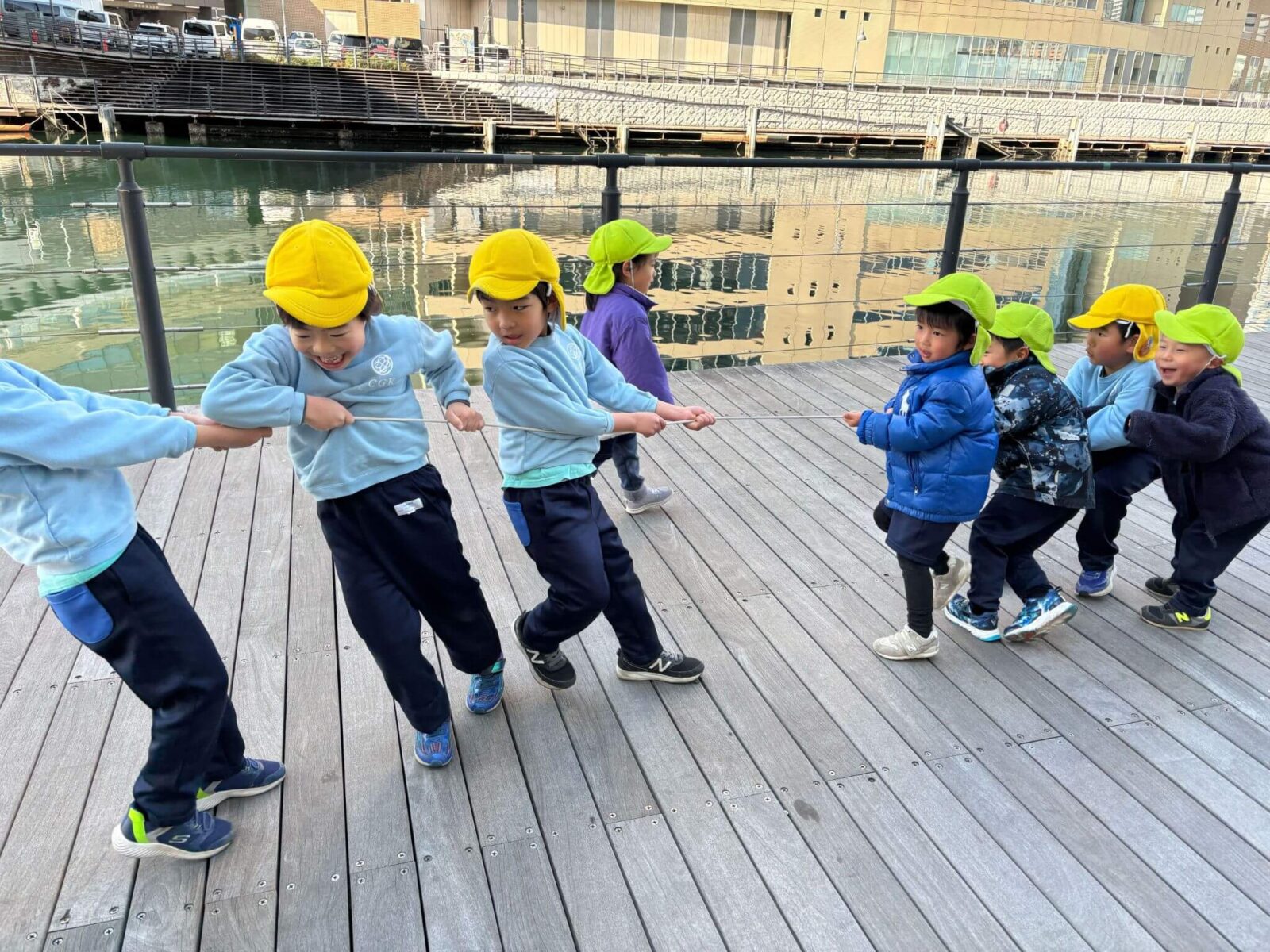
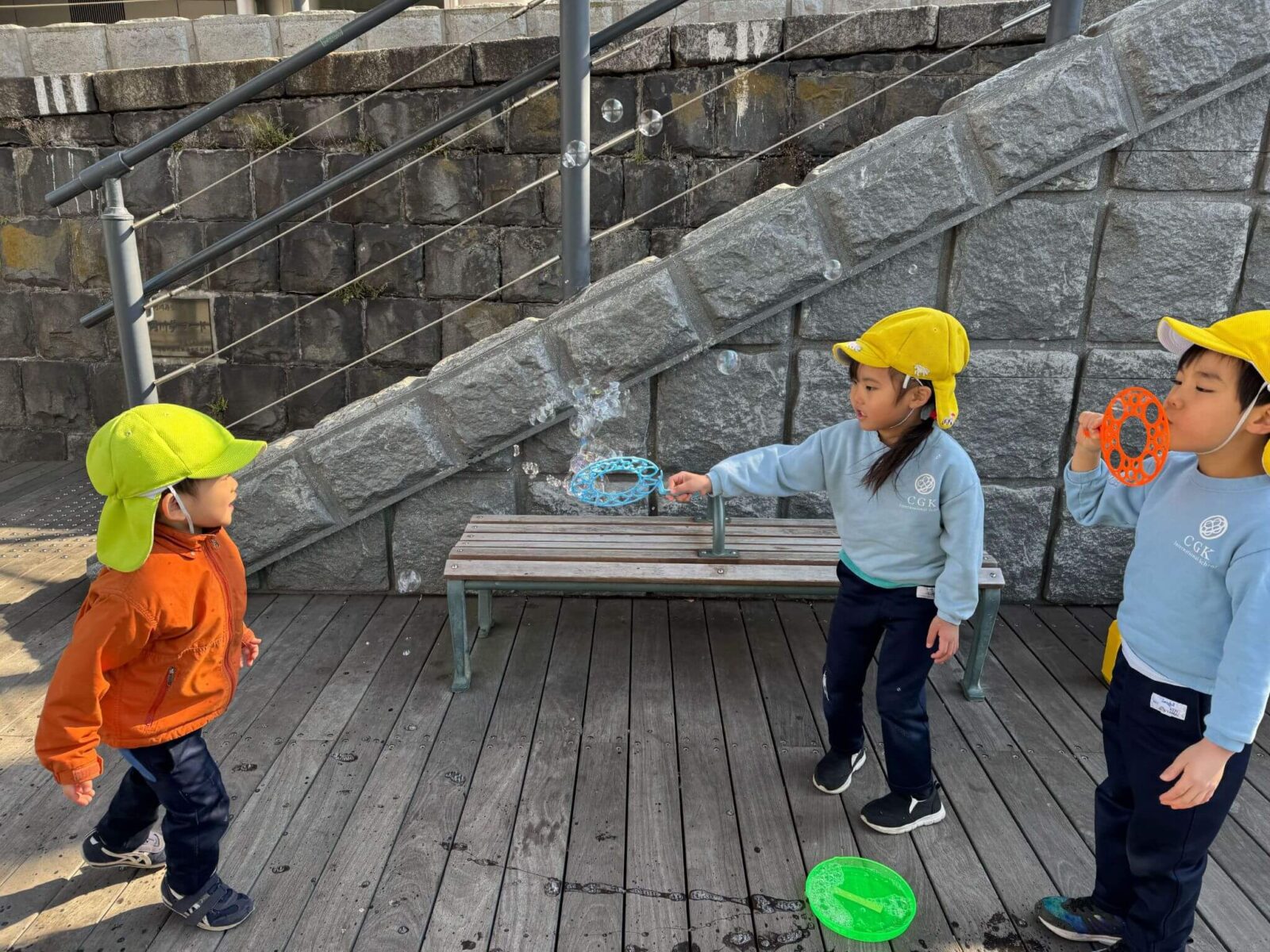
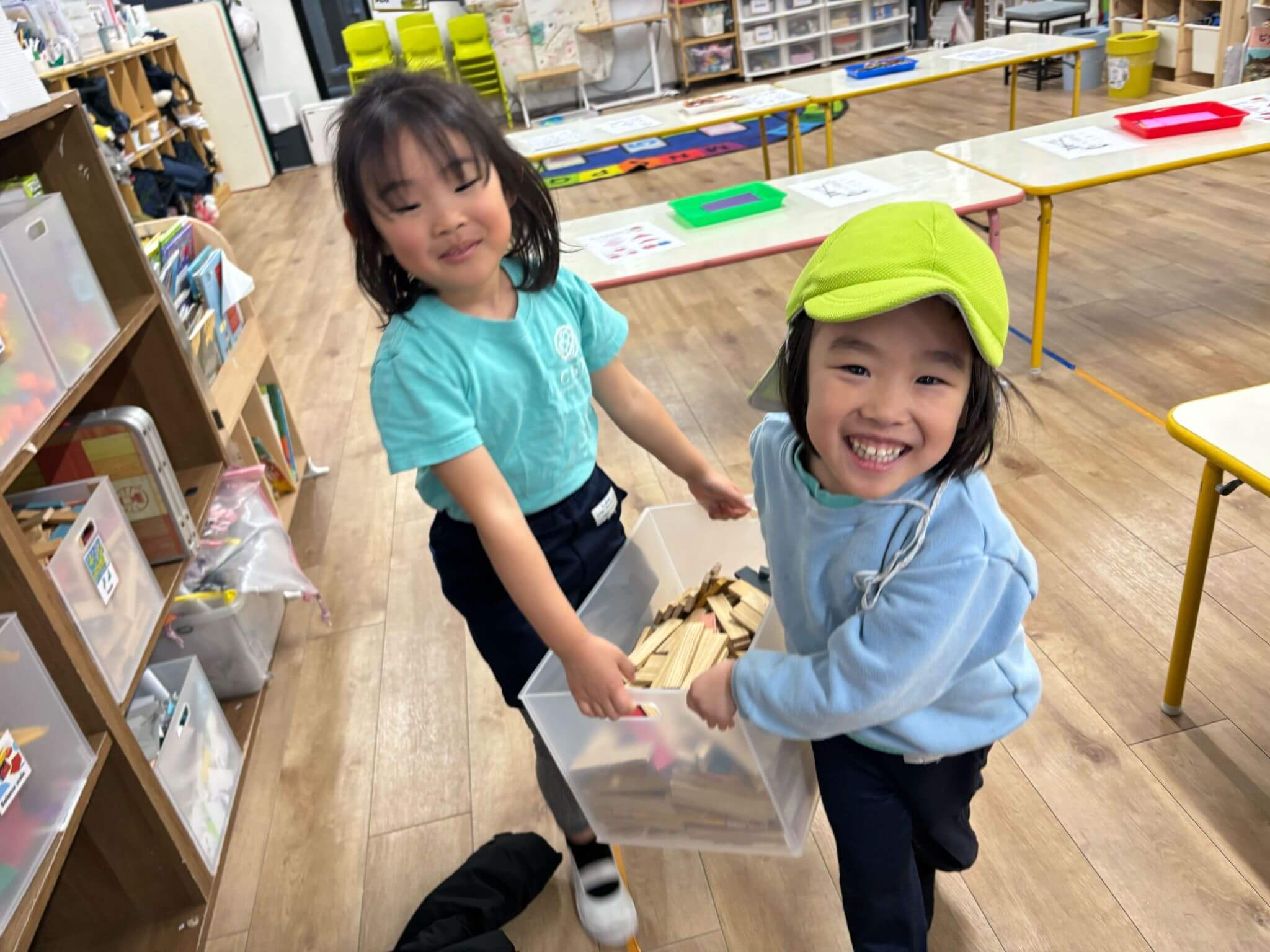
With graduation just around the corner, Sky students are spending their days filled with excitement for becoming elementary school students, along with a little nervousness about what lies ahead. As they prepare to take this next step, we can truly see how much they have grown, not only academically but emotionally as well. They are also enjoying preparing for the Sleepover and COL, taking on these special milestones with enthusiasm and responsibility.
This month, we had many opportunities to connect with our friends from Jungle and Ocean classes. Since we usually spend time on different campuses, there are not many chances to interact outside of special events. However, through free play and shared activities, we saw natural and meaningful relationships begin to form. On the day we walked to Bashamichi Campus to pick up the Jungle class, Sky students instinctively adjusted their walking pace, held hands gently, and carefully supported the younger children at crosswalks. Their actions truly embodied the IB Learner Profile attribute of Caring.
During playtime, we also noticed Sky students teaching new games, lending toys, and inviting younger friends to join them. While conflicts sometimes arise among classmates of the same age, these experiences have helped them develop empathy and perspective. Through these moments, we can see them growing as Communicators and Risk-takers, learning to consider others’ feelings and step forward with confidence.
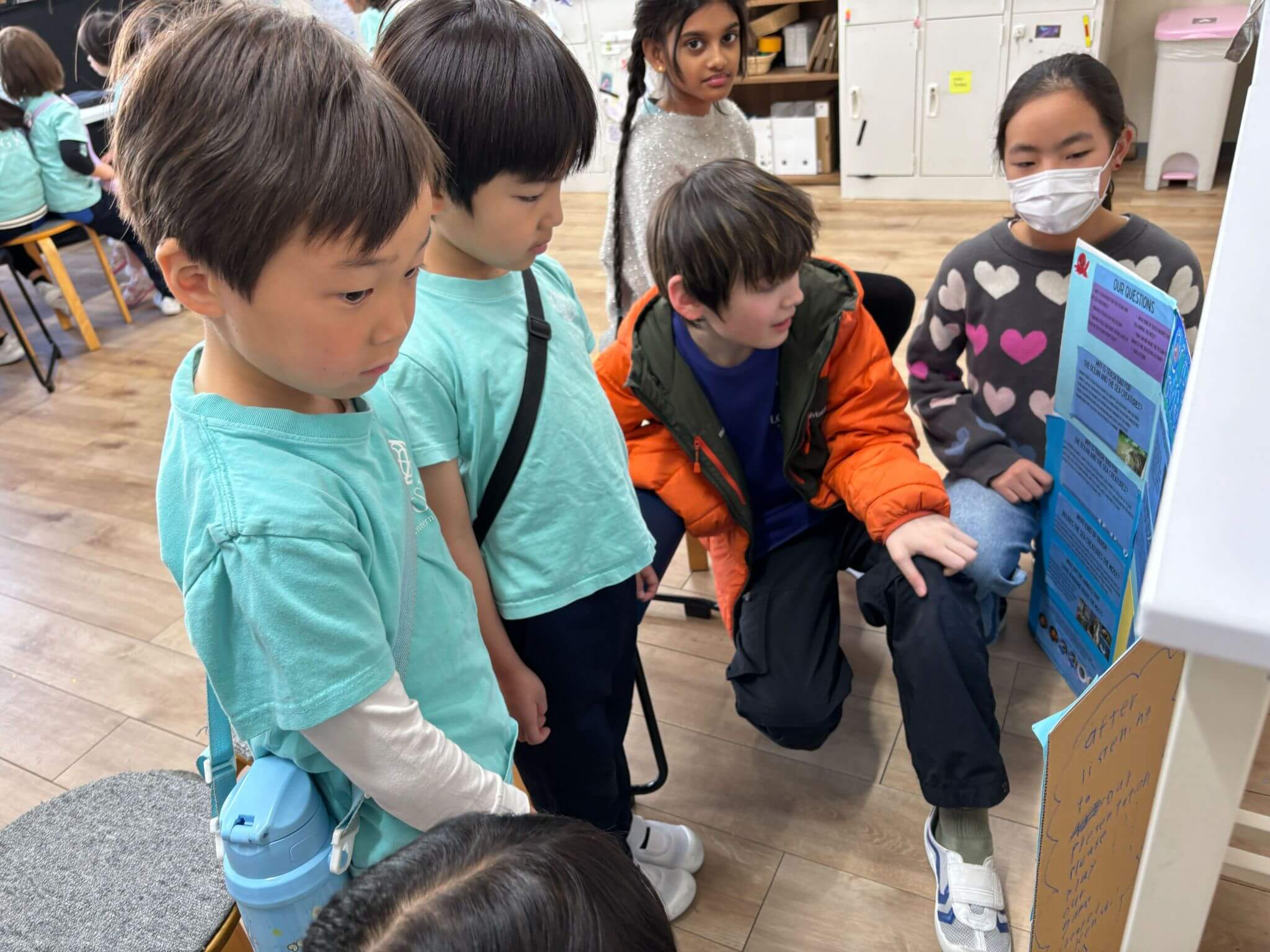
On February 4th, we also visited the CGK Elementary Grade 5 Exhibition. The Sky students listened attentively to the presentations of the older students and were clearly inspired by what they saw. Watching their serious expressions, it was evident that they were imagining their own future growth.
Cross-age interactions provide valuable learning experiences for everyone. By caring for younger friends and looking up to older role models, students learn about responsibility, leadership, and their role within a community through real-life experiences.
With only one month left until graduation, we are cherishing each day. Next month, we are looking forward to a graduation field trip with Mountain class. Through these continued cross-age experiences, we hope Sky students will confidently step into April as the “youngest” students in elementary school, ready to meet new older role models and embrace new challenges.
We will continue to warmly support each child so they can shine in their own unique way as they move on to the next stage of their journey.
Mountain
(4-year-olds)
The Epic Journey of the Bears: Bridging STEM and PYP
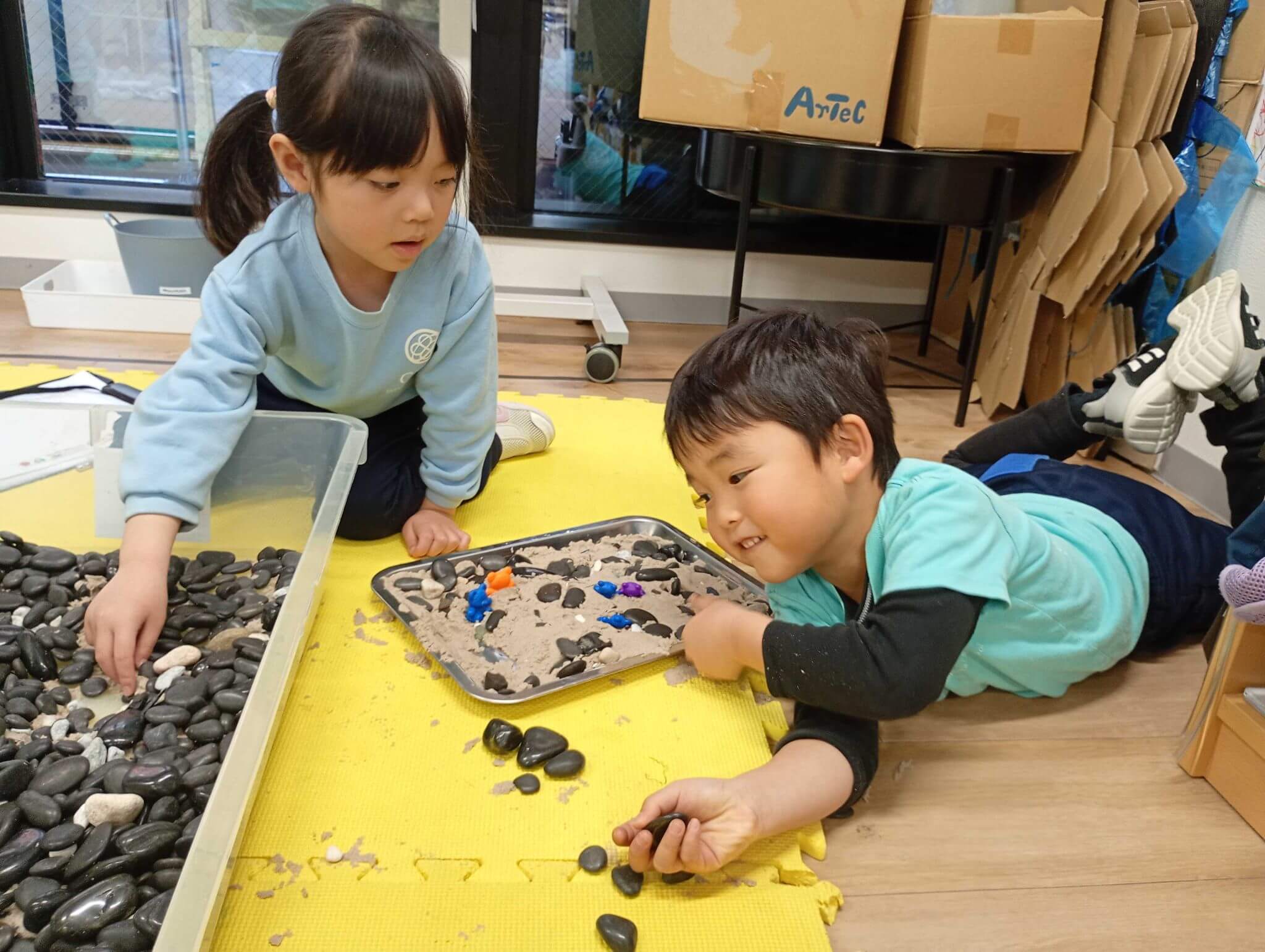
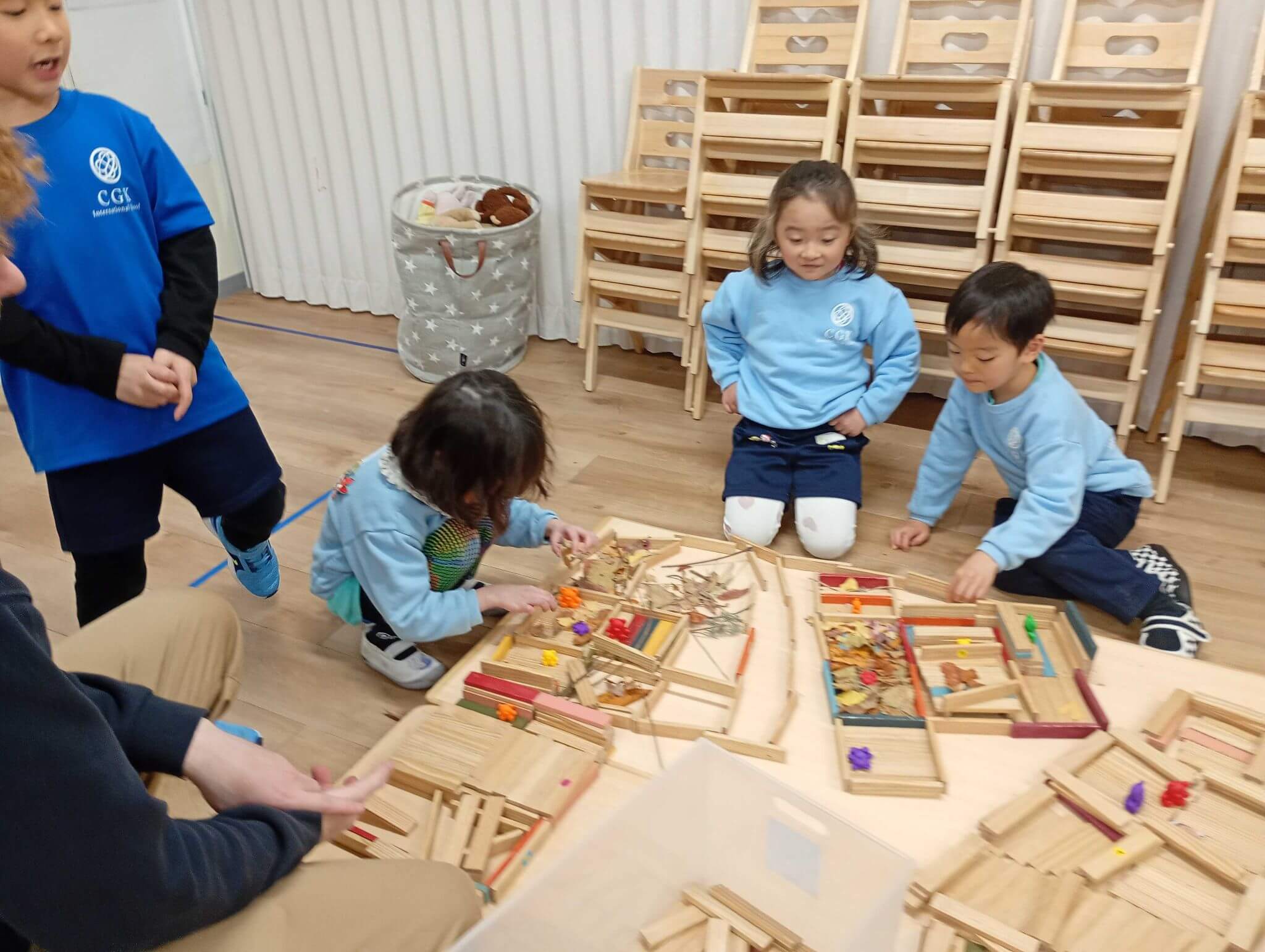
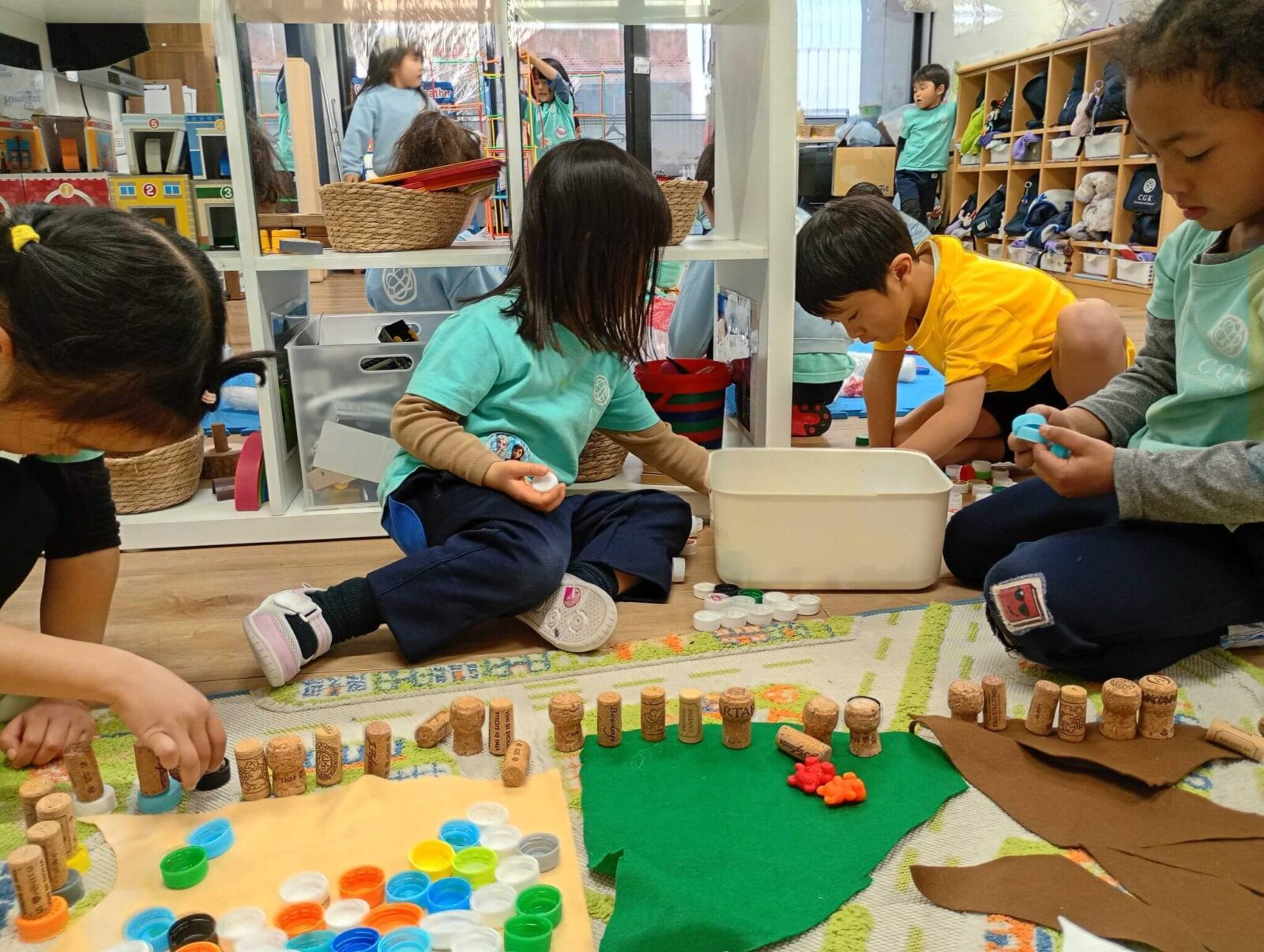
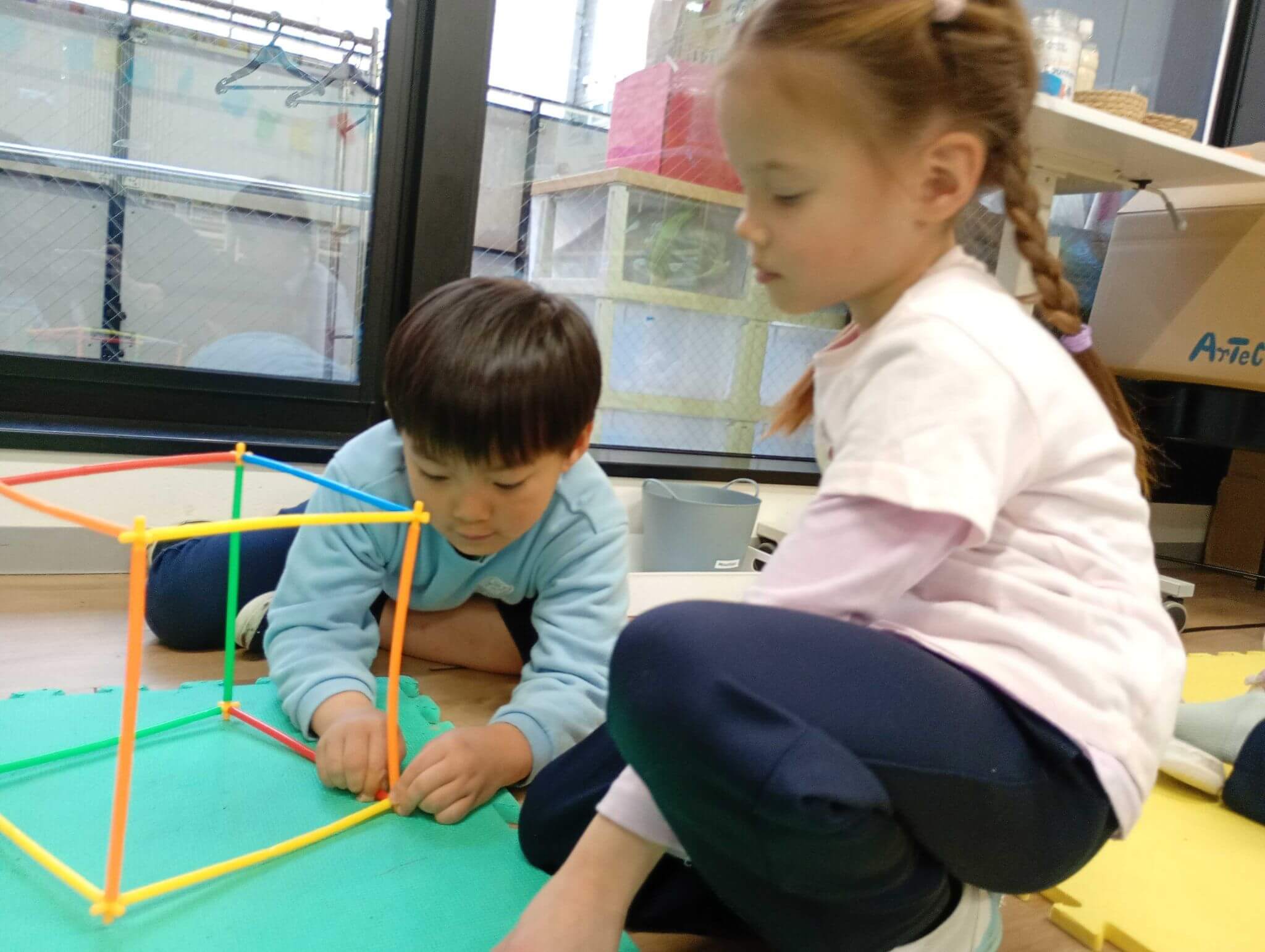
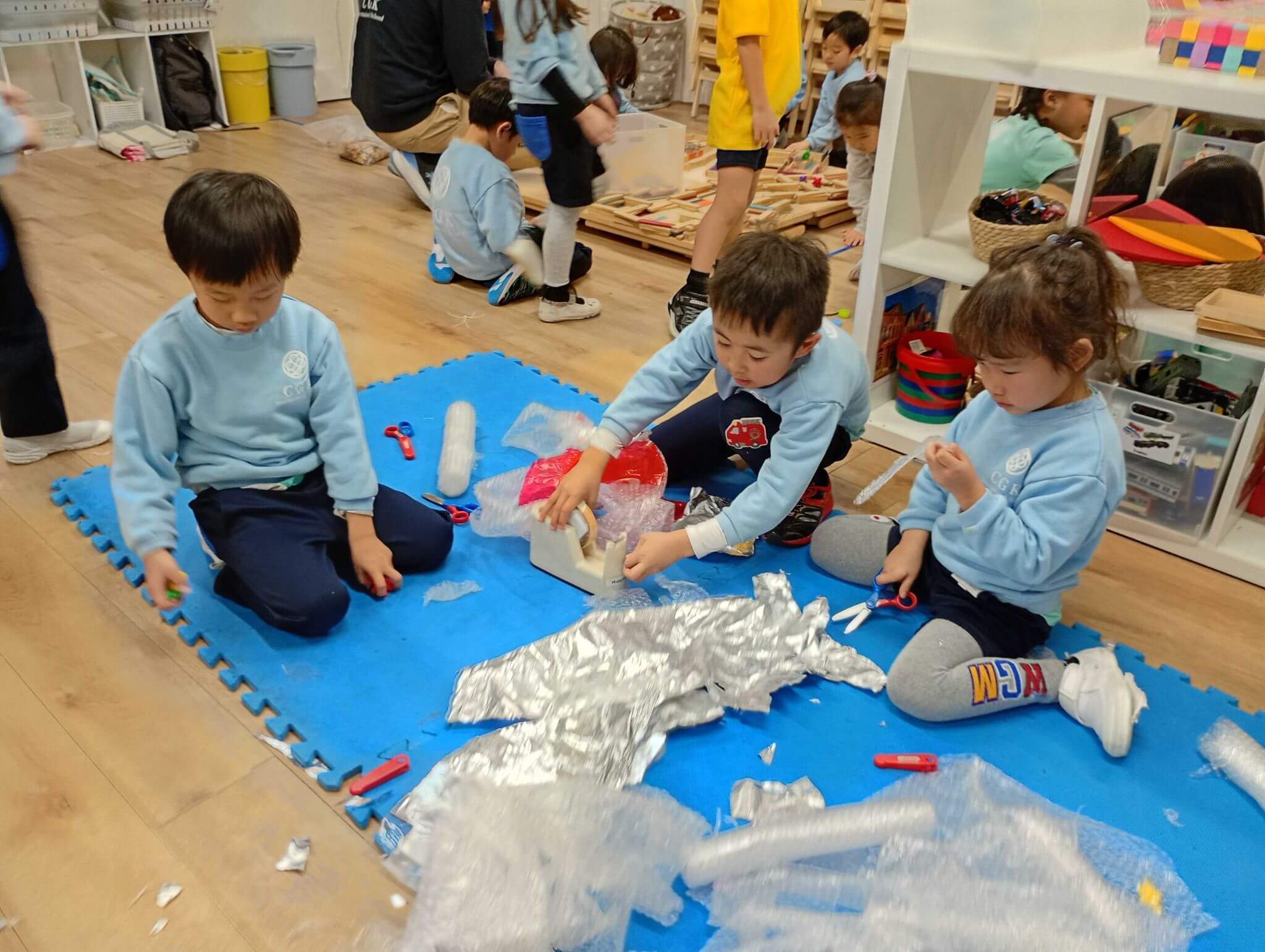
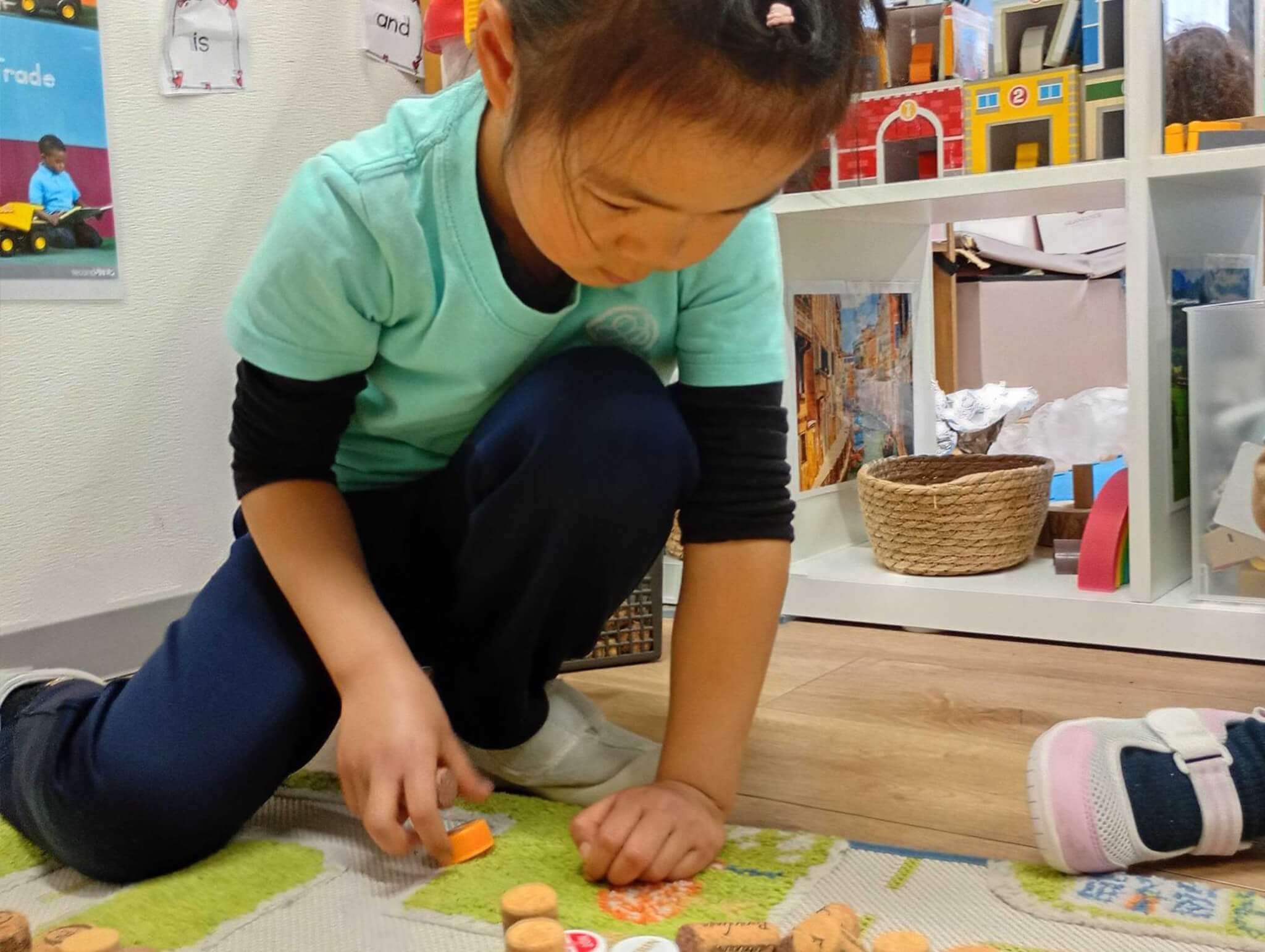
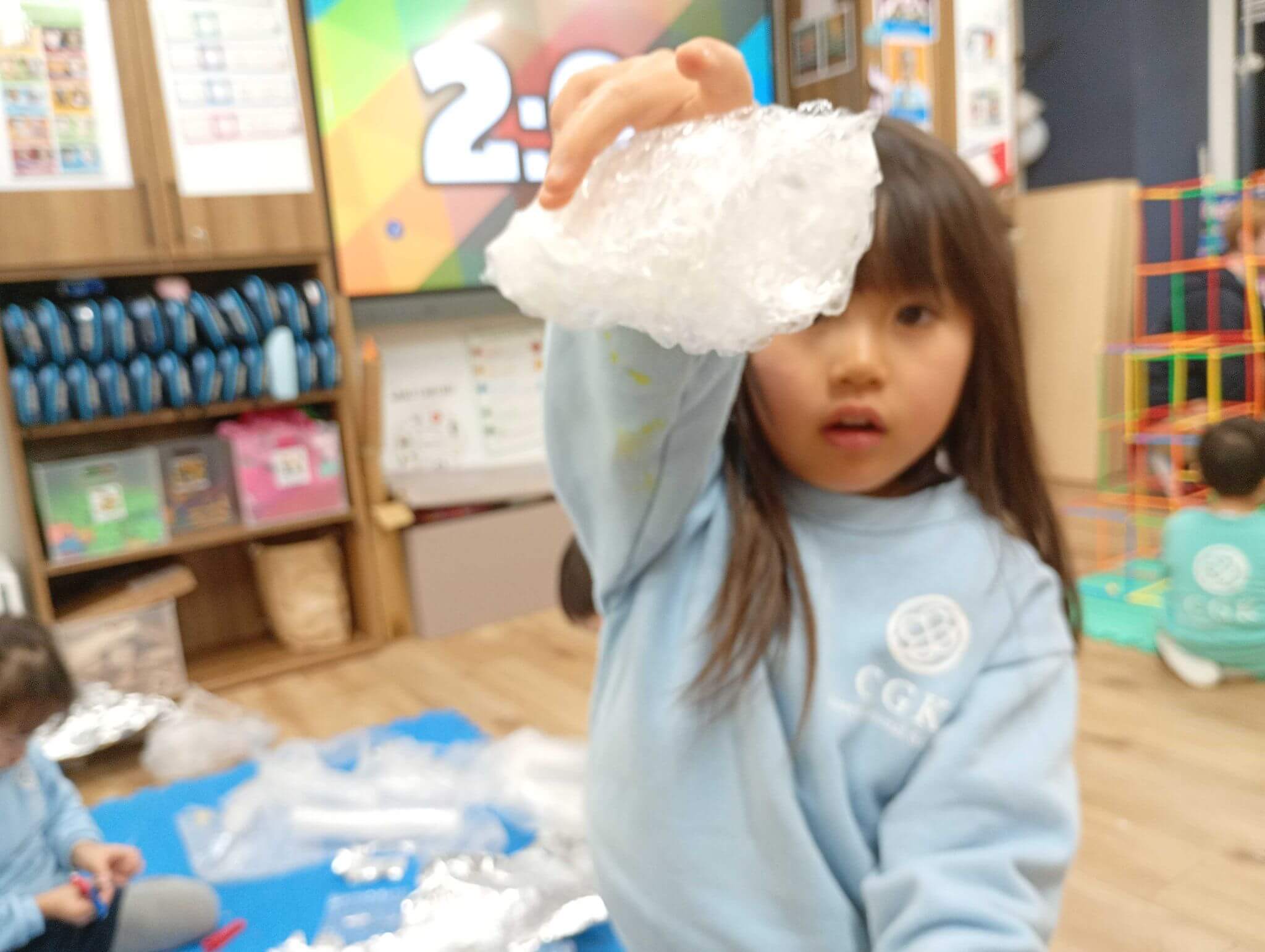
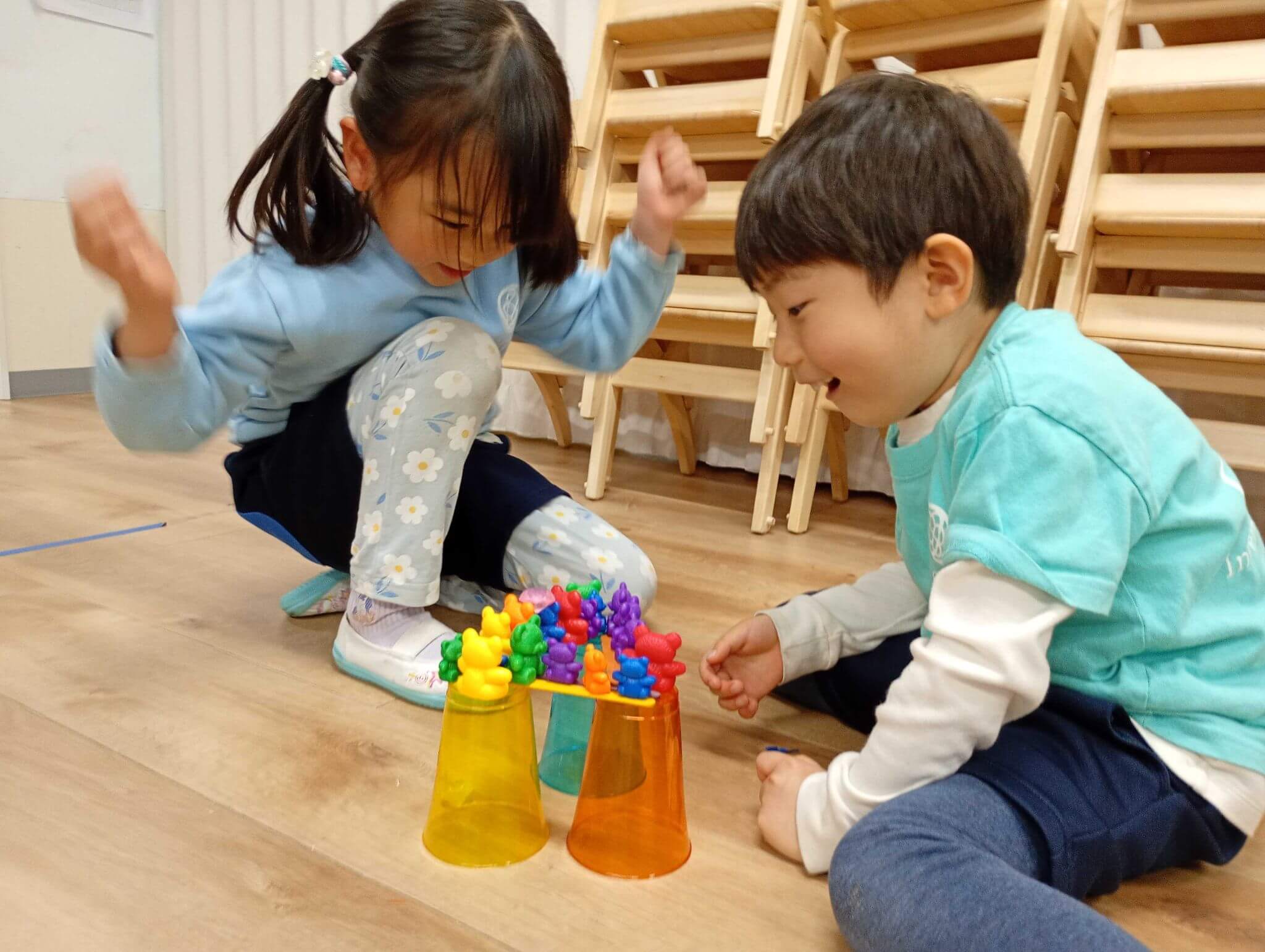
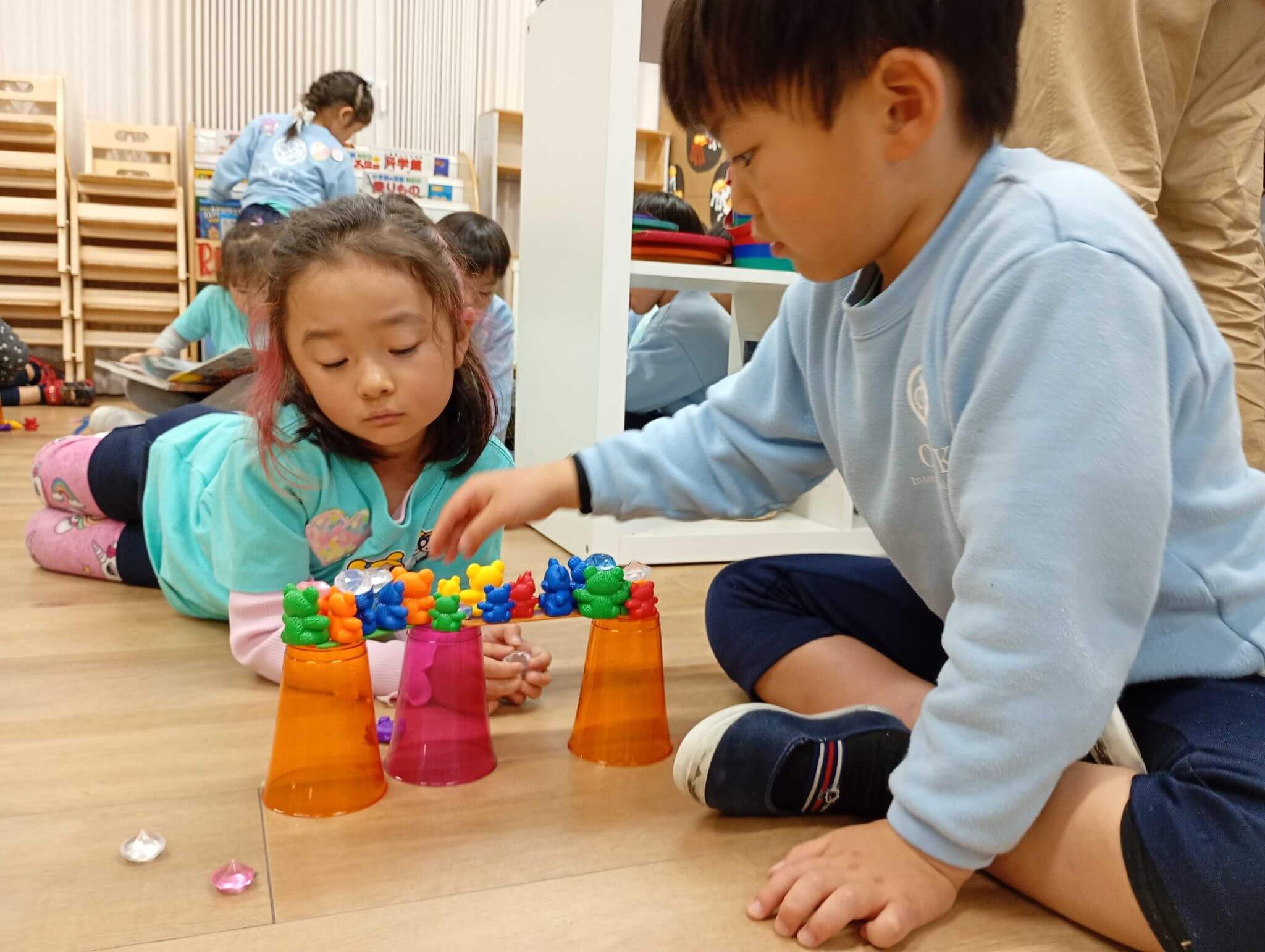
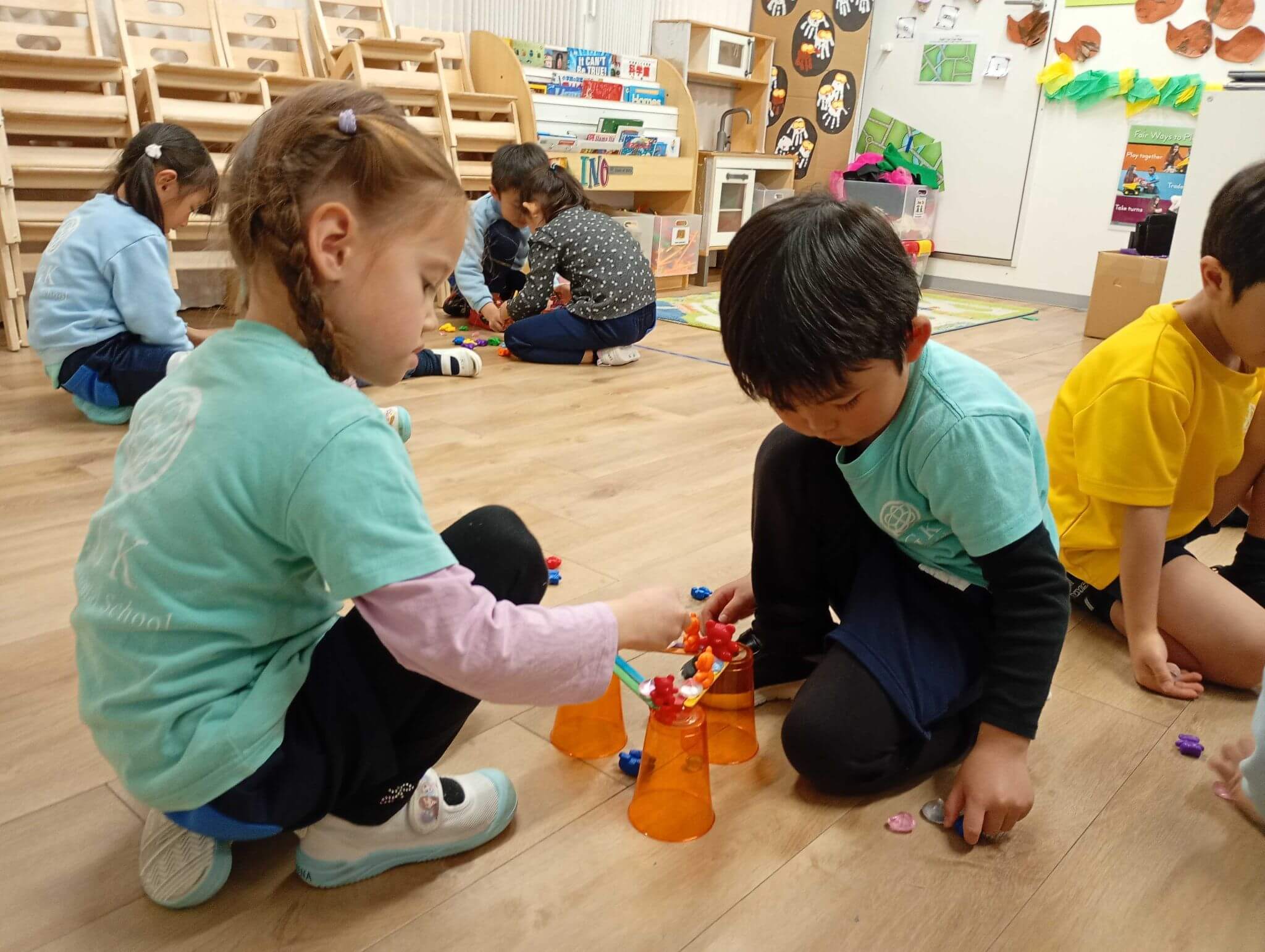
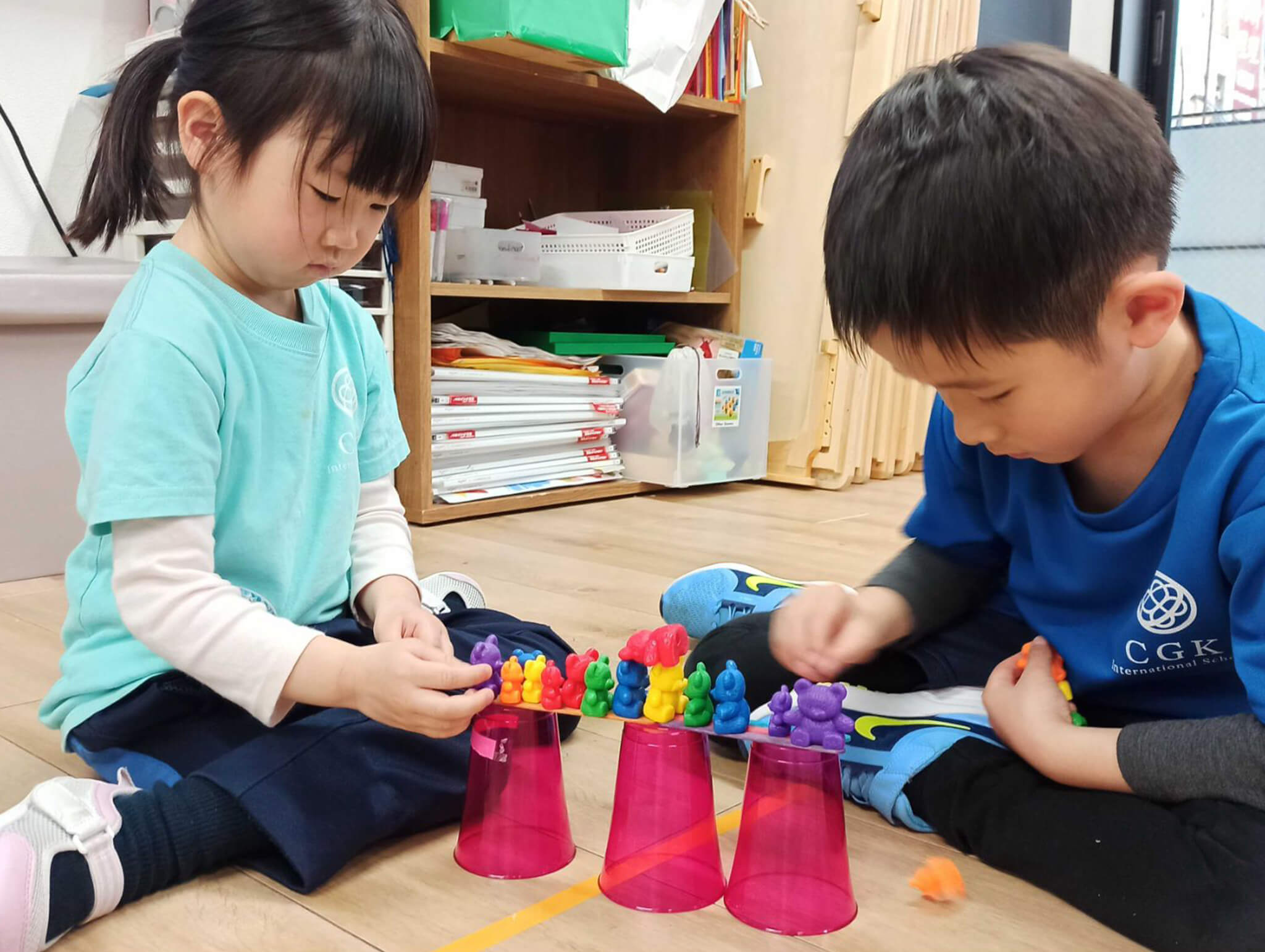
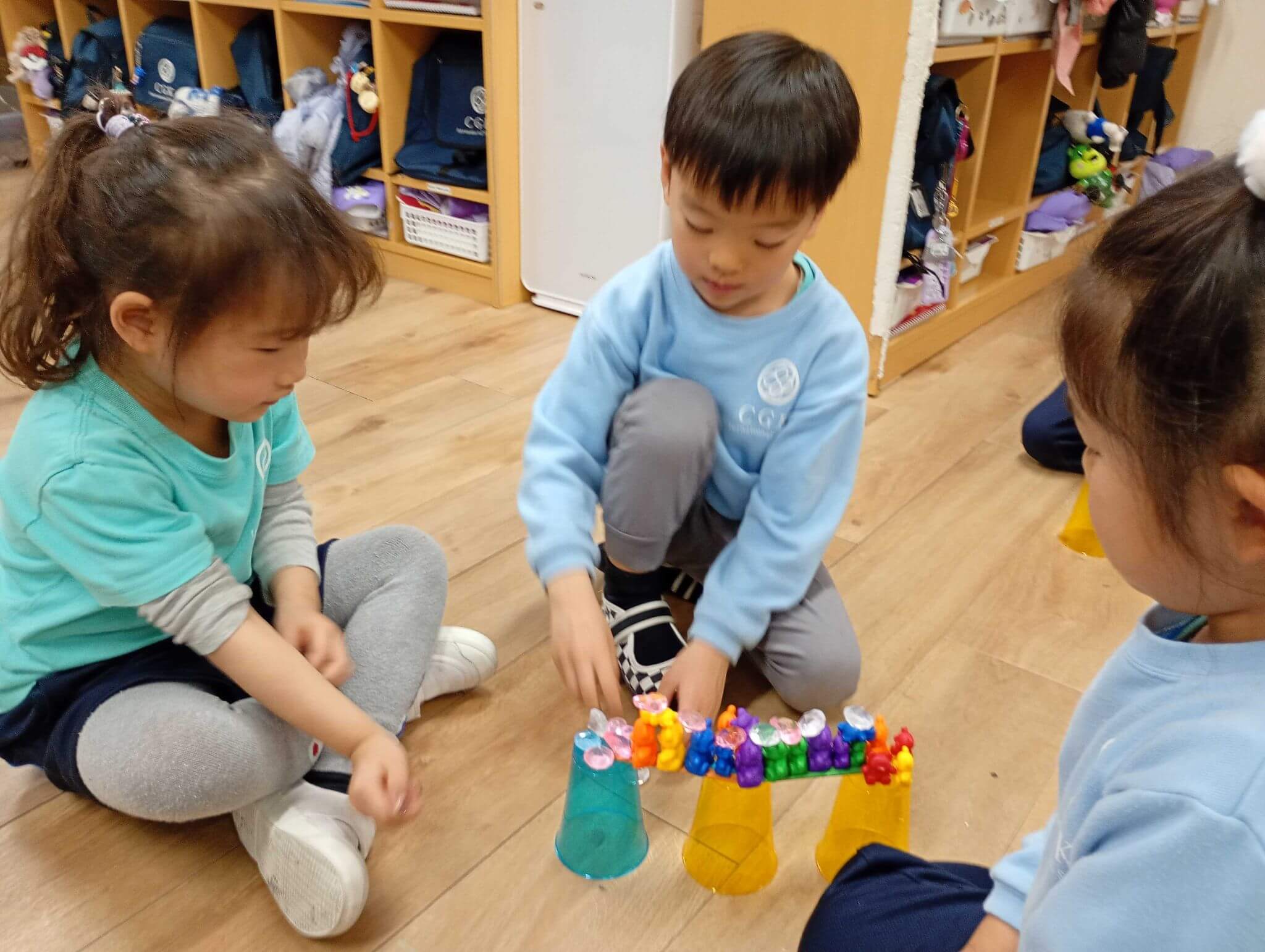
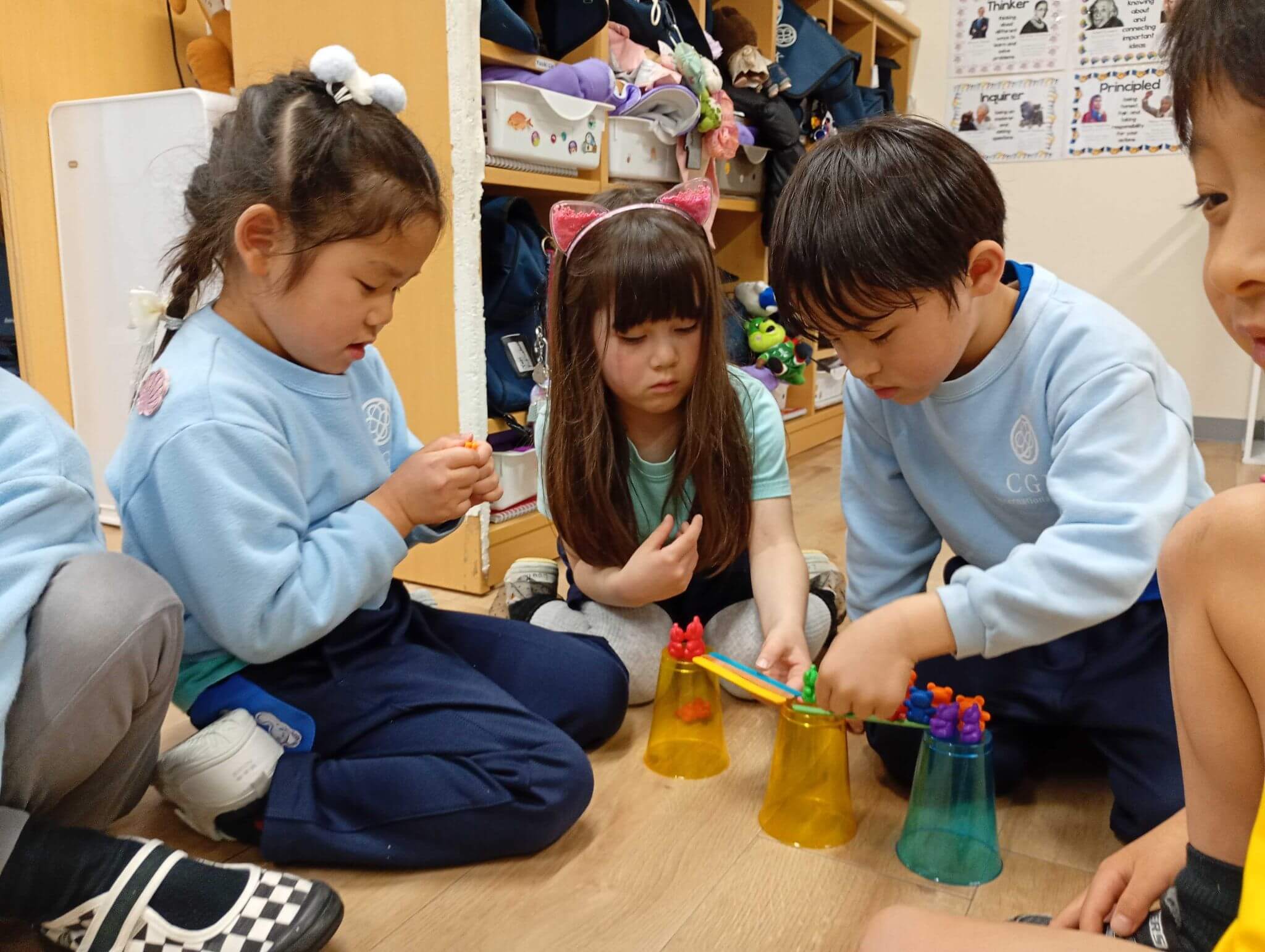
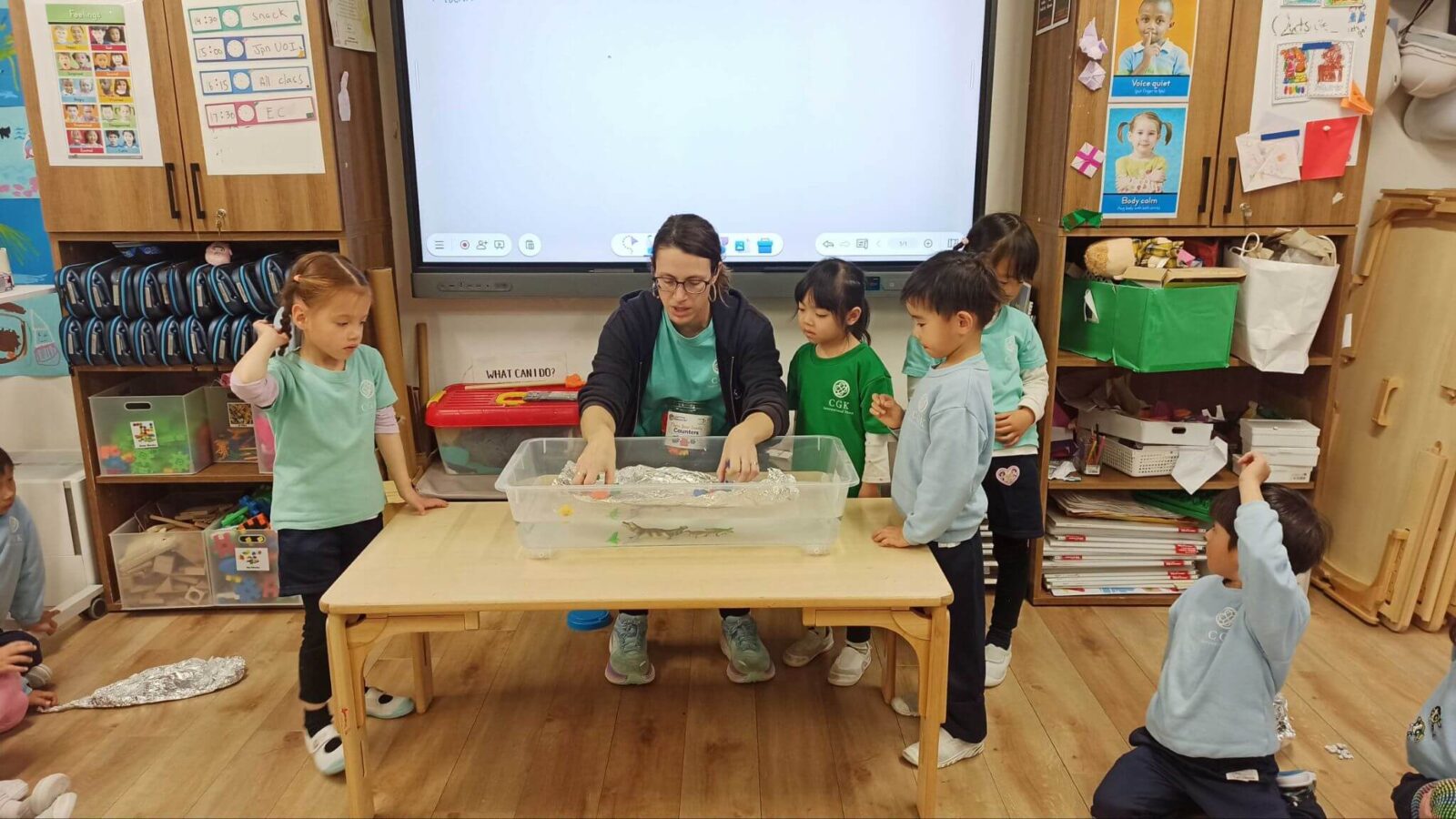
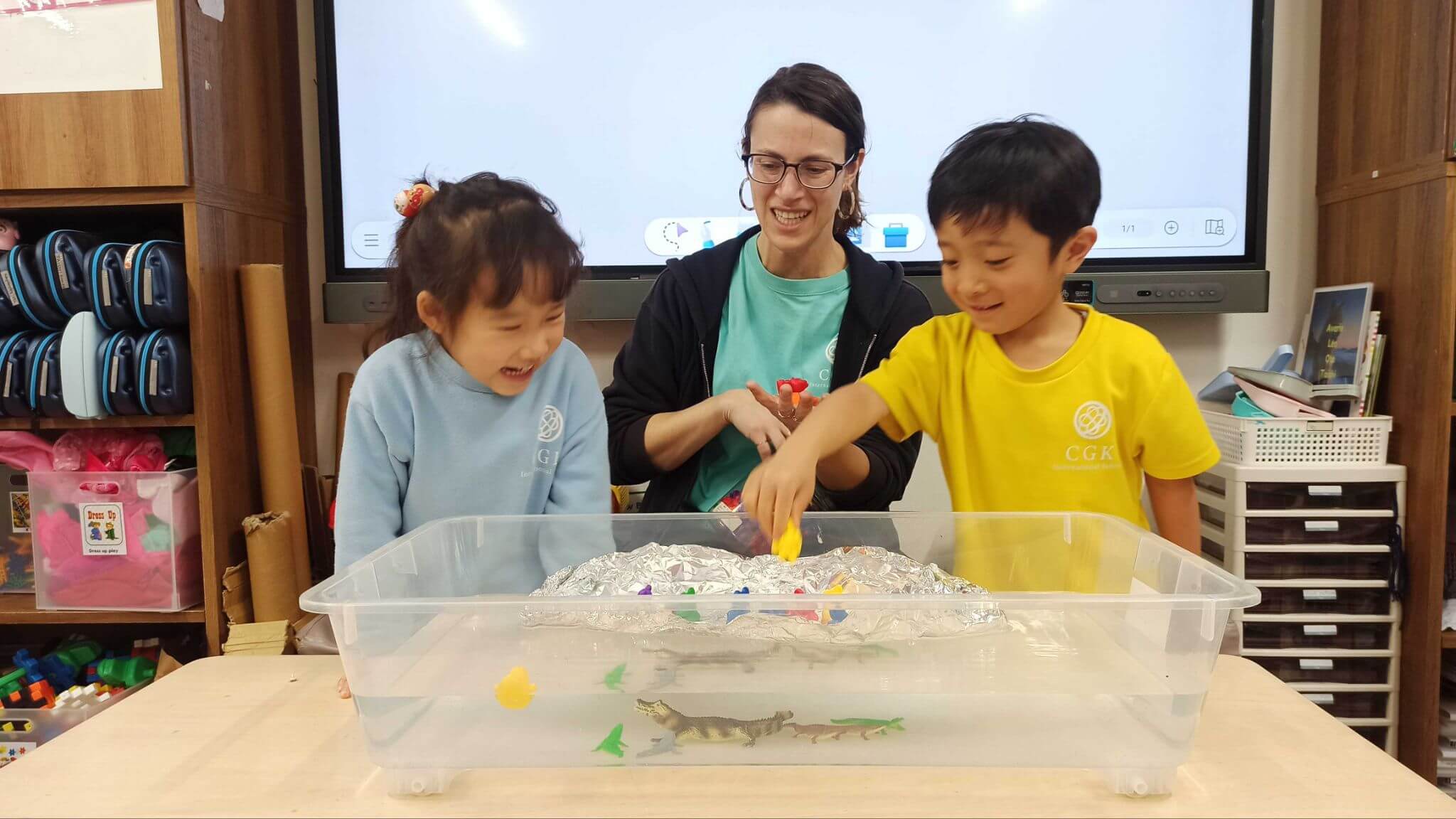
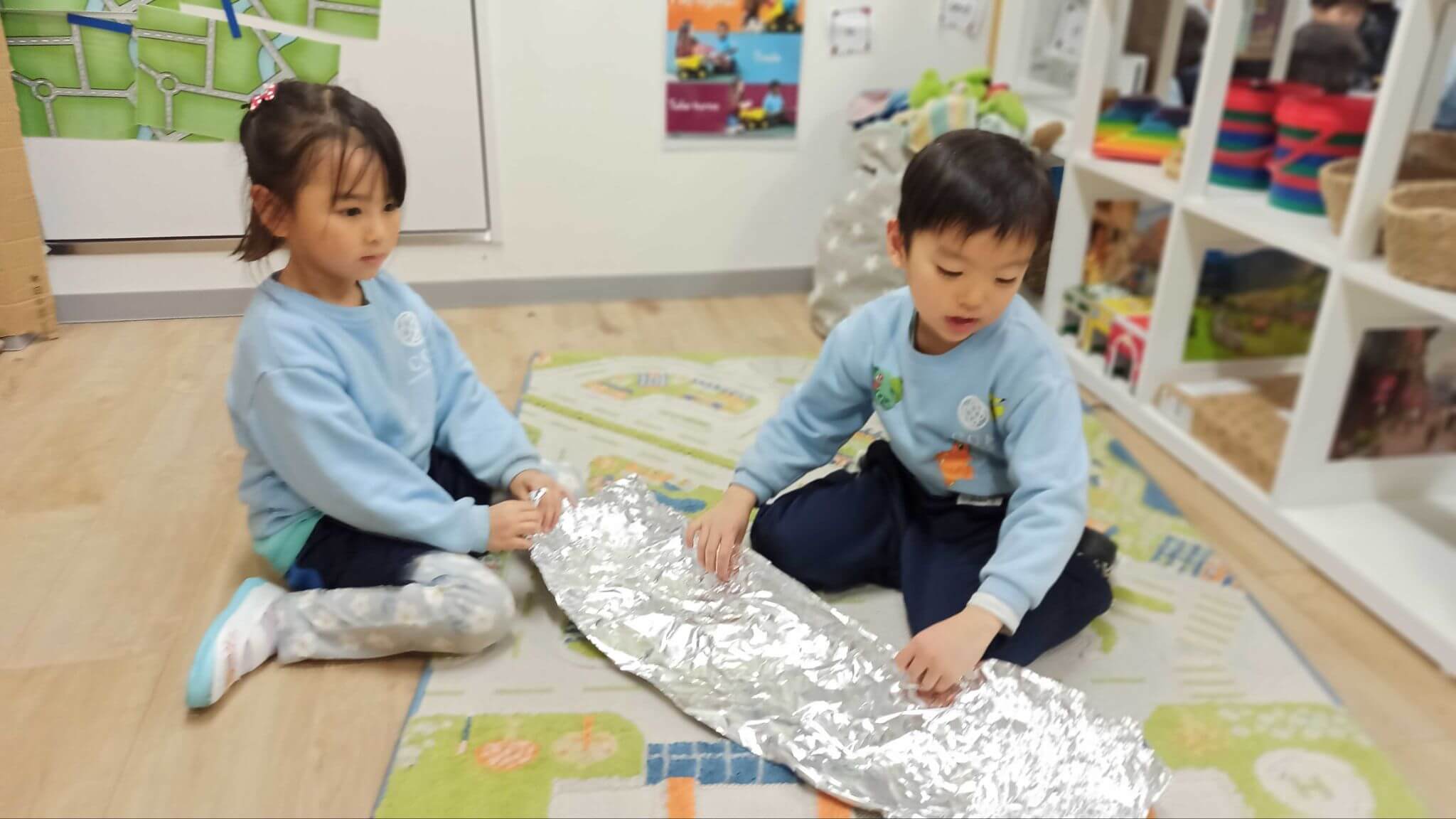
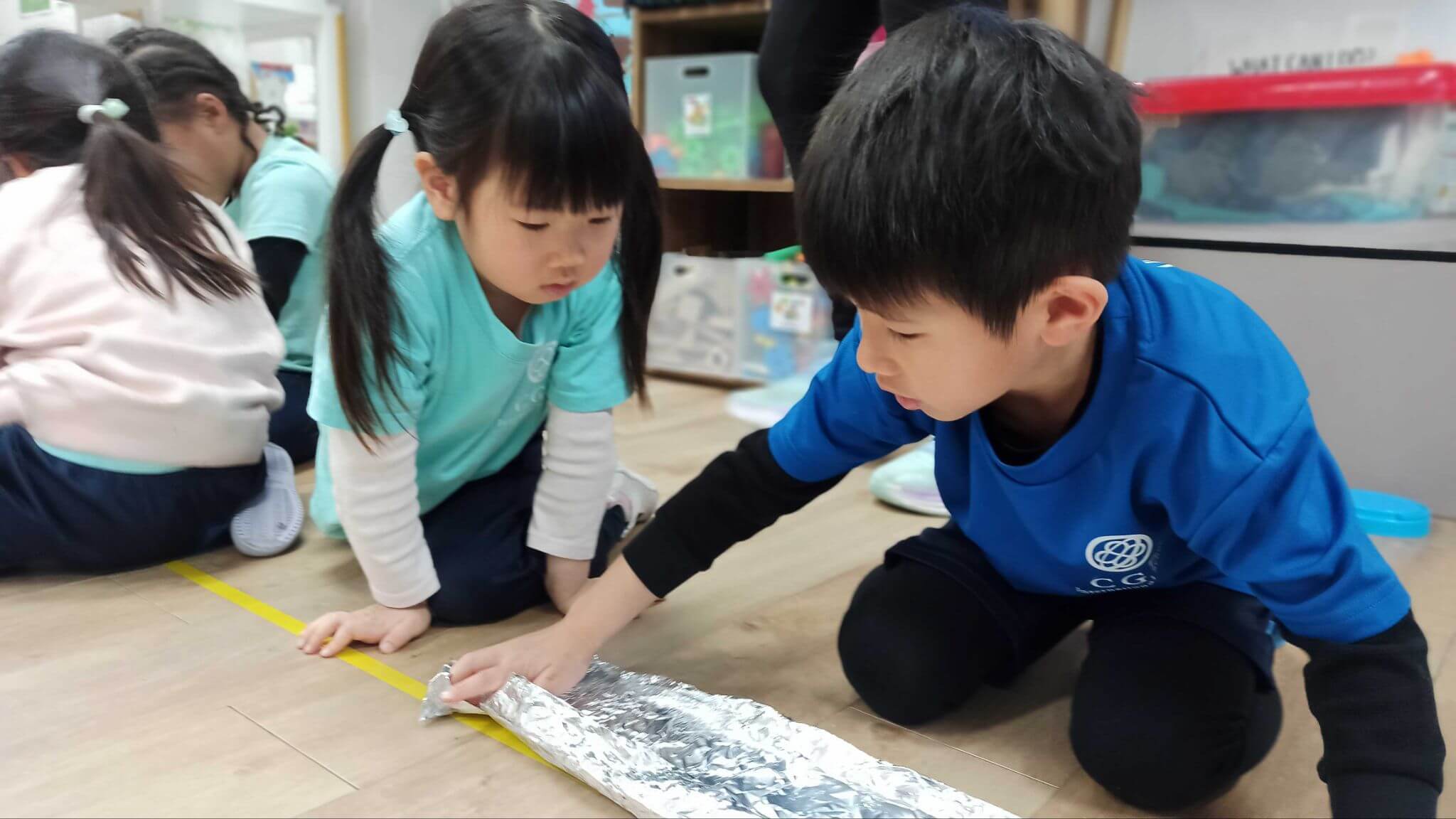
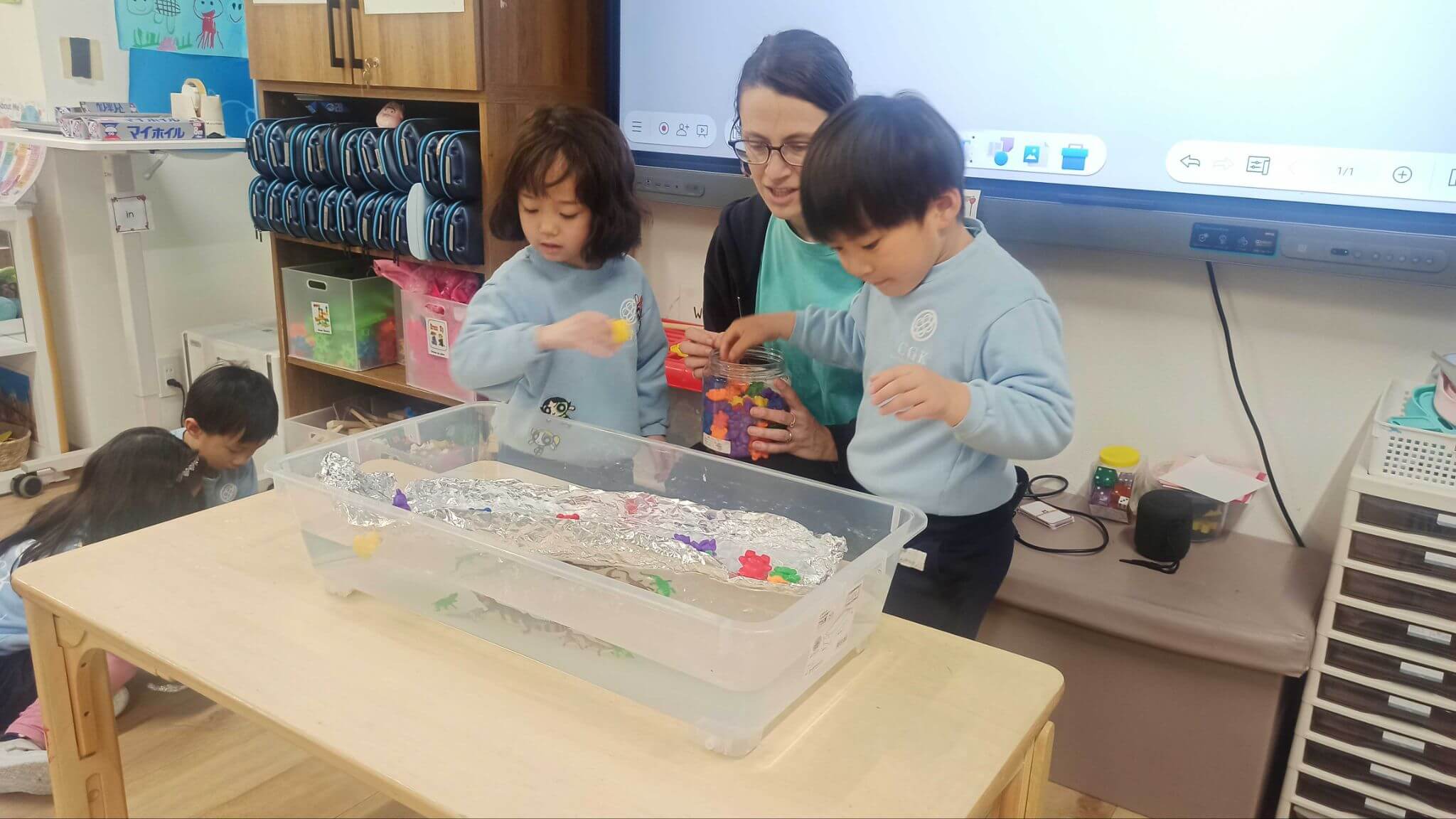
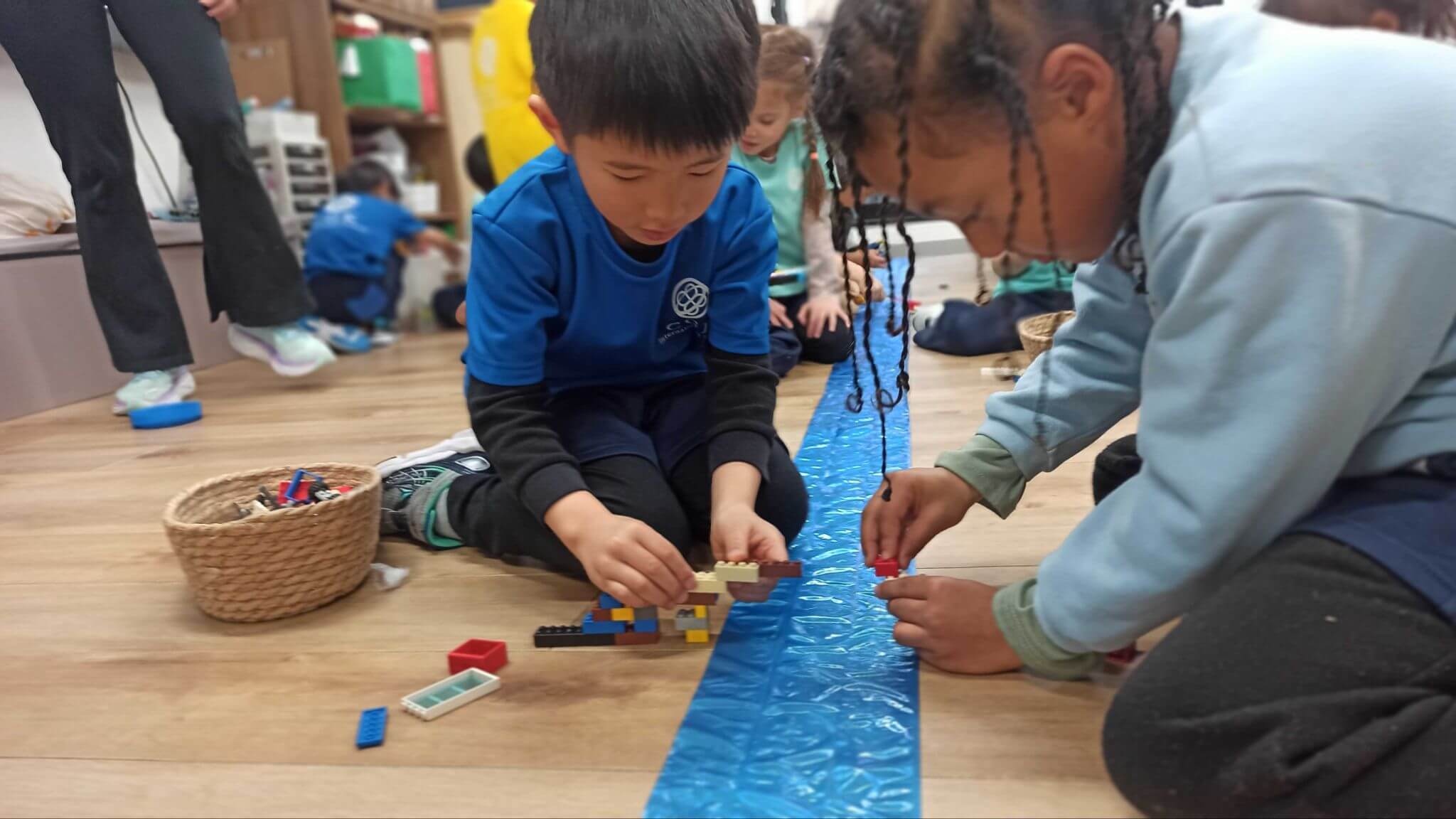
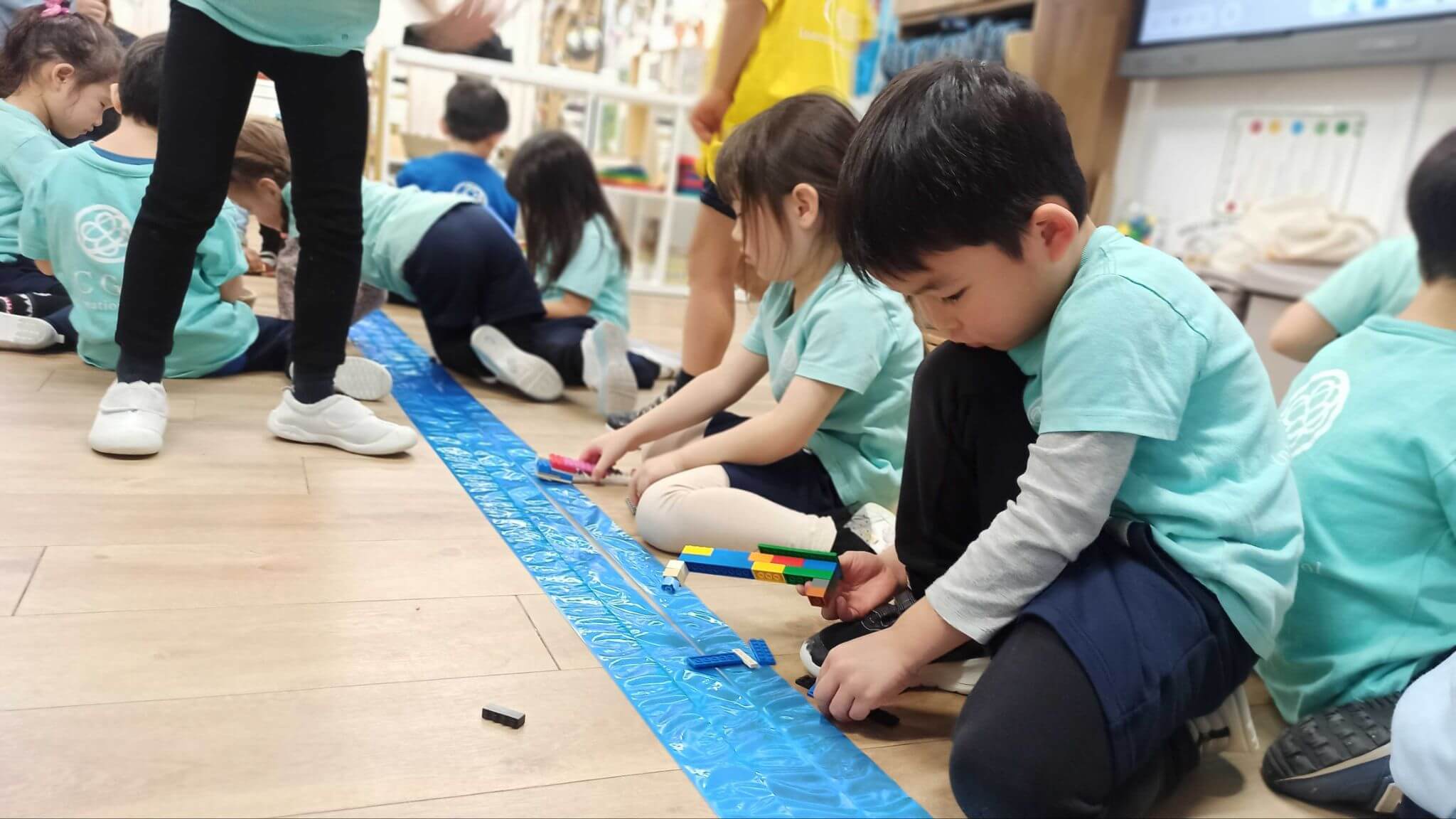
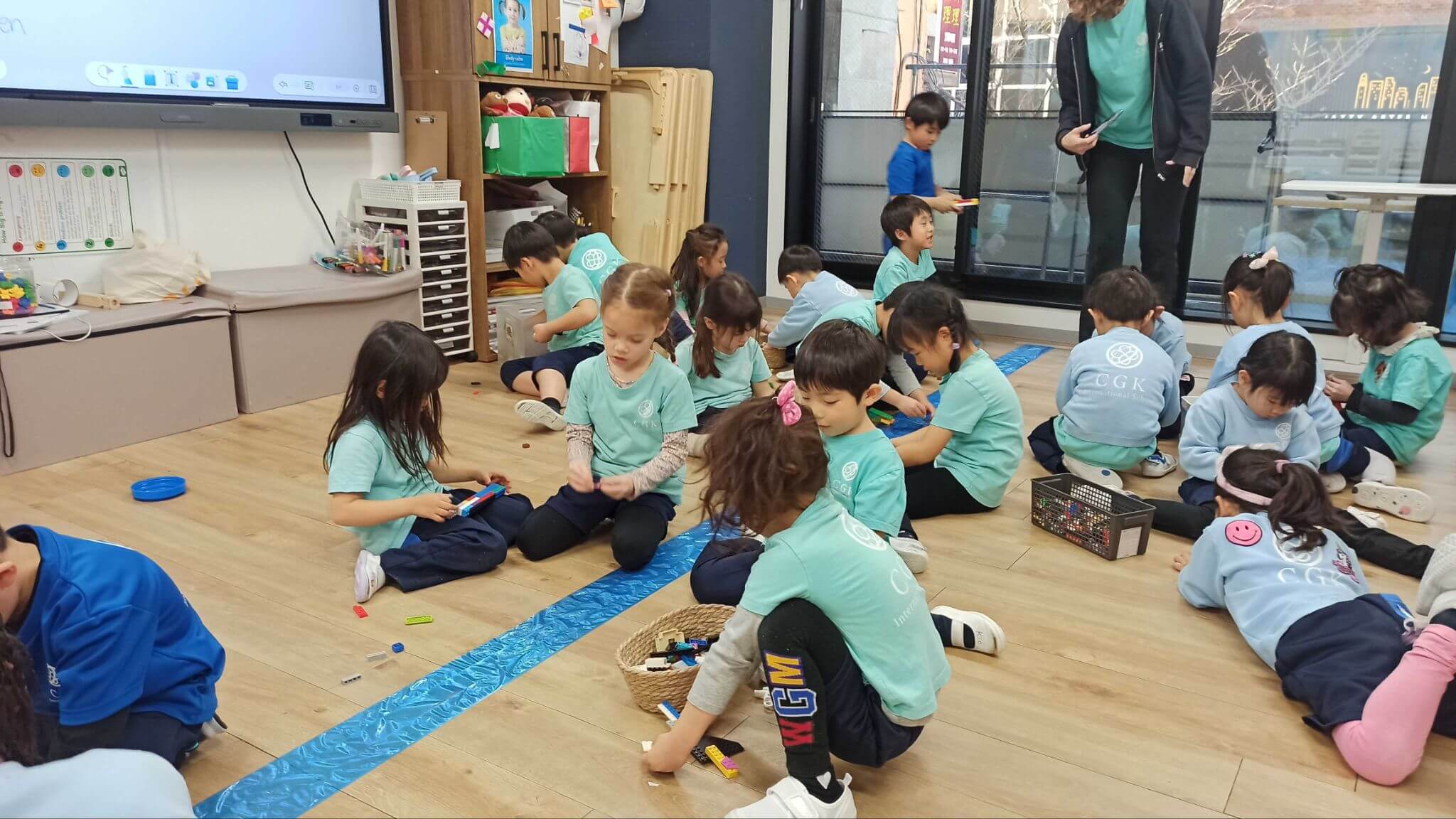
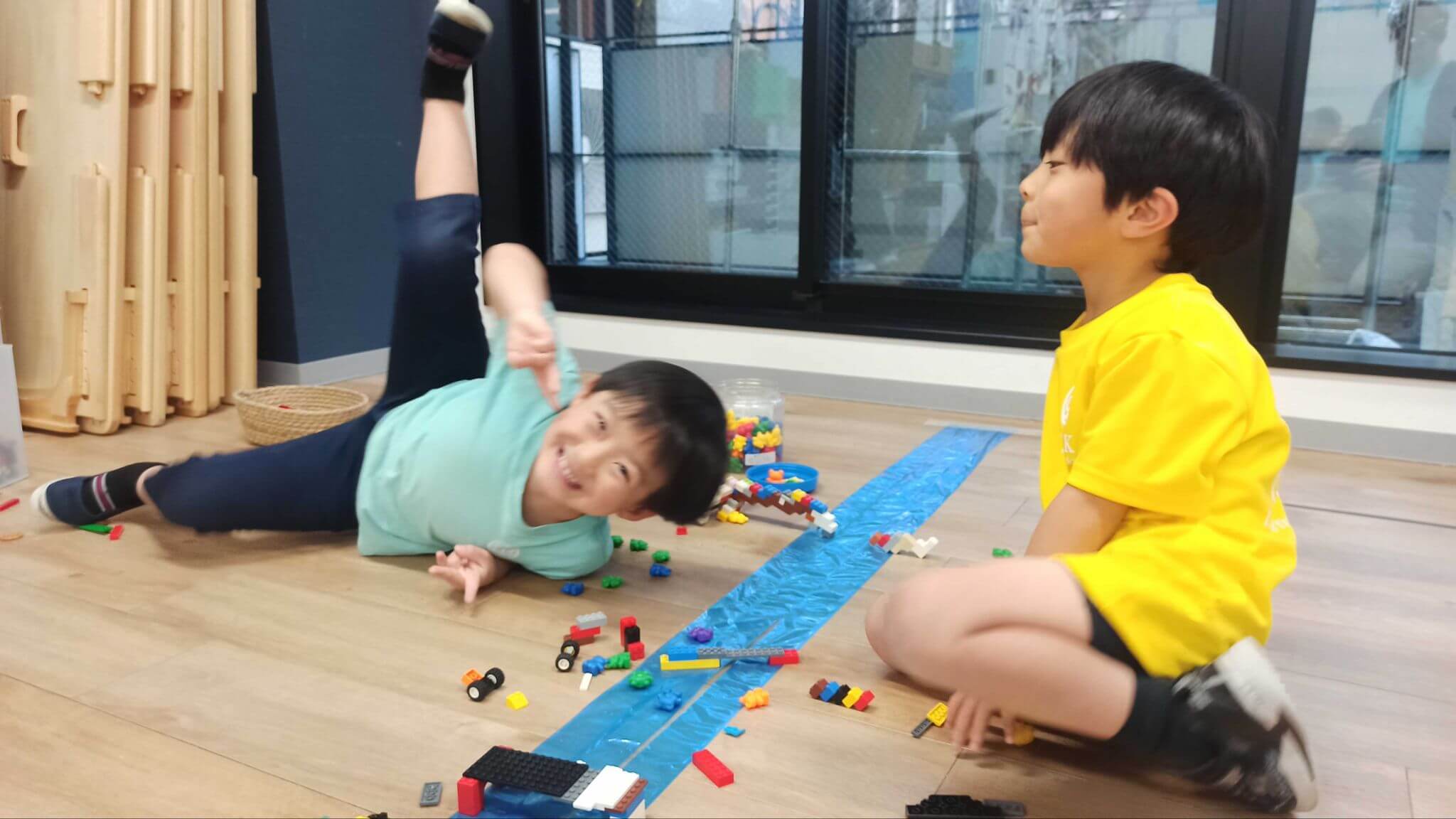
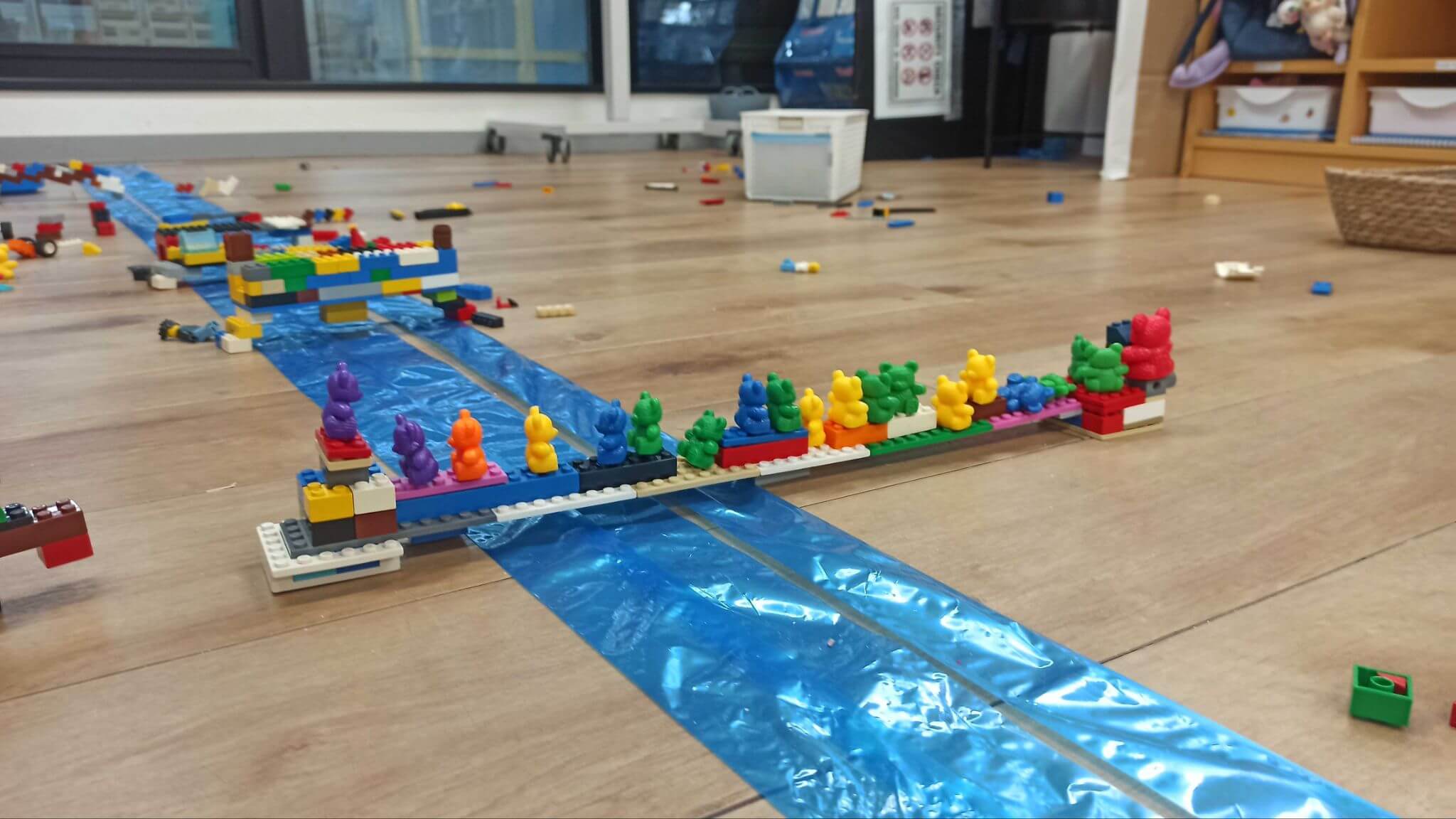
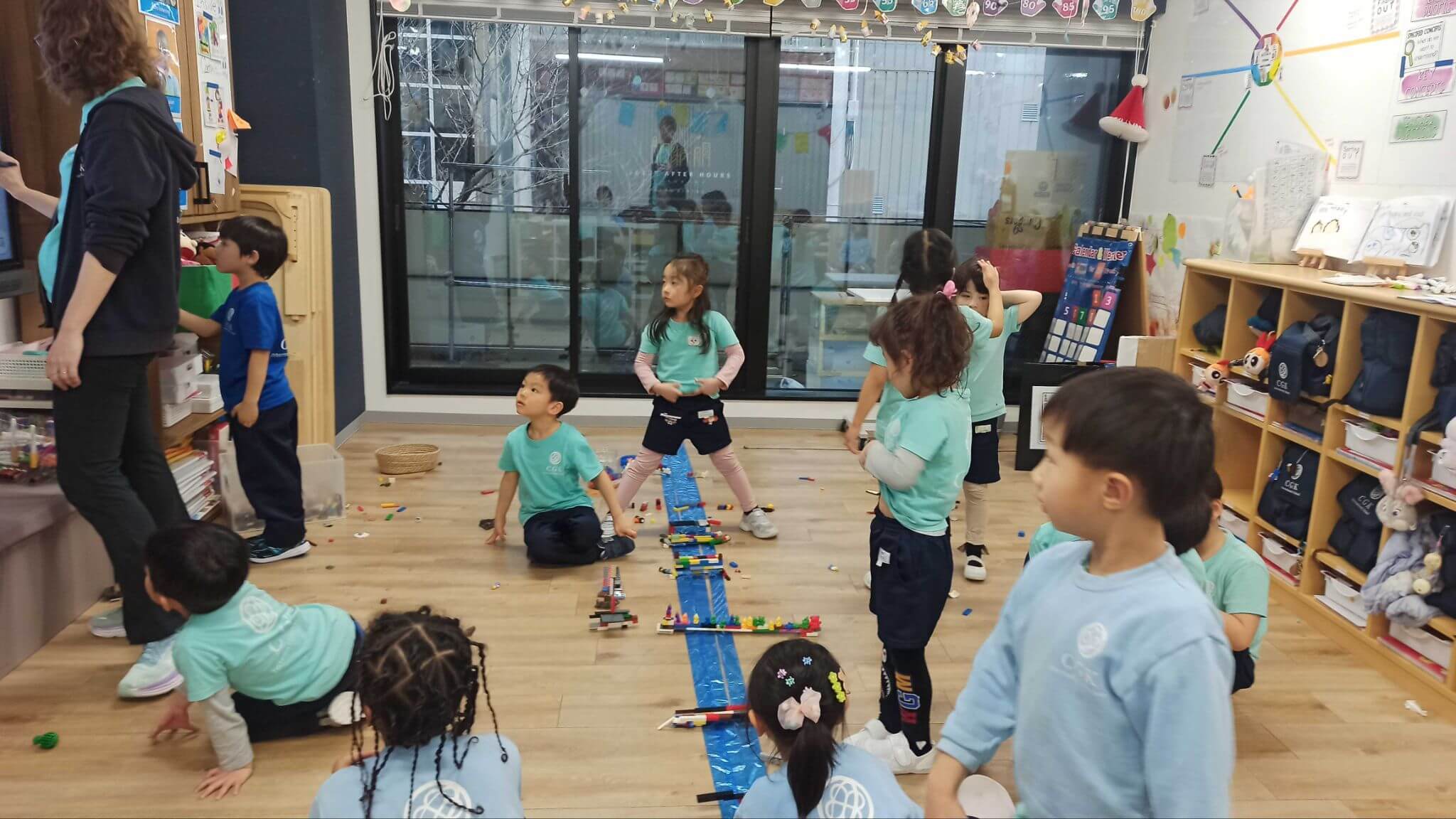
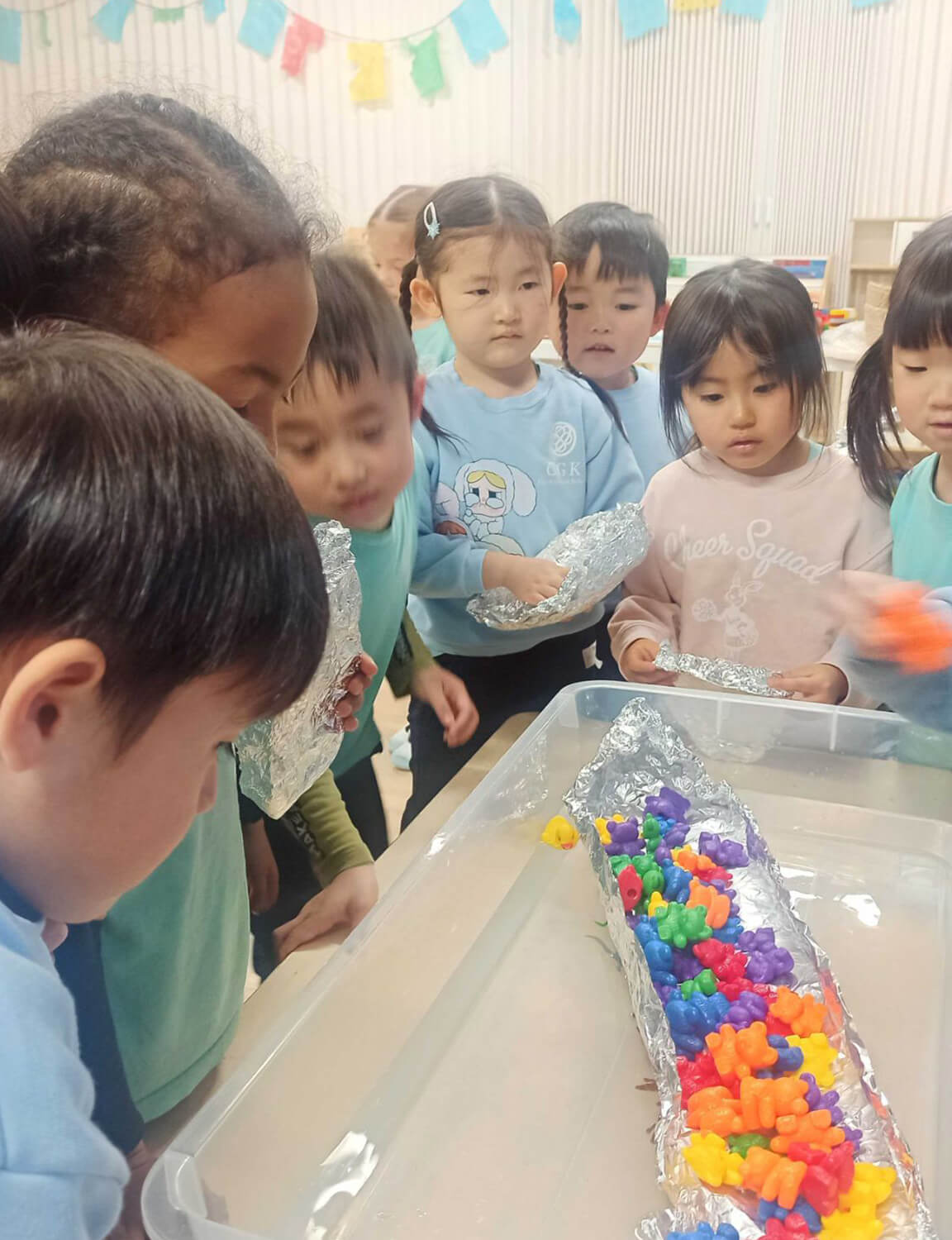
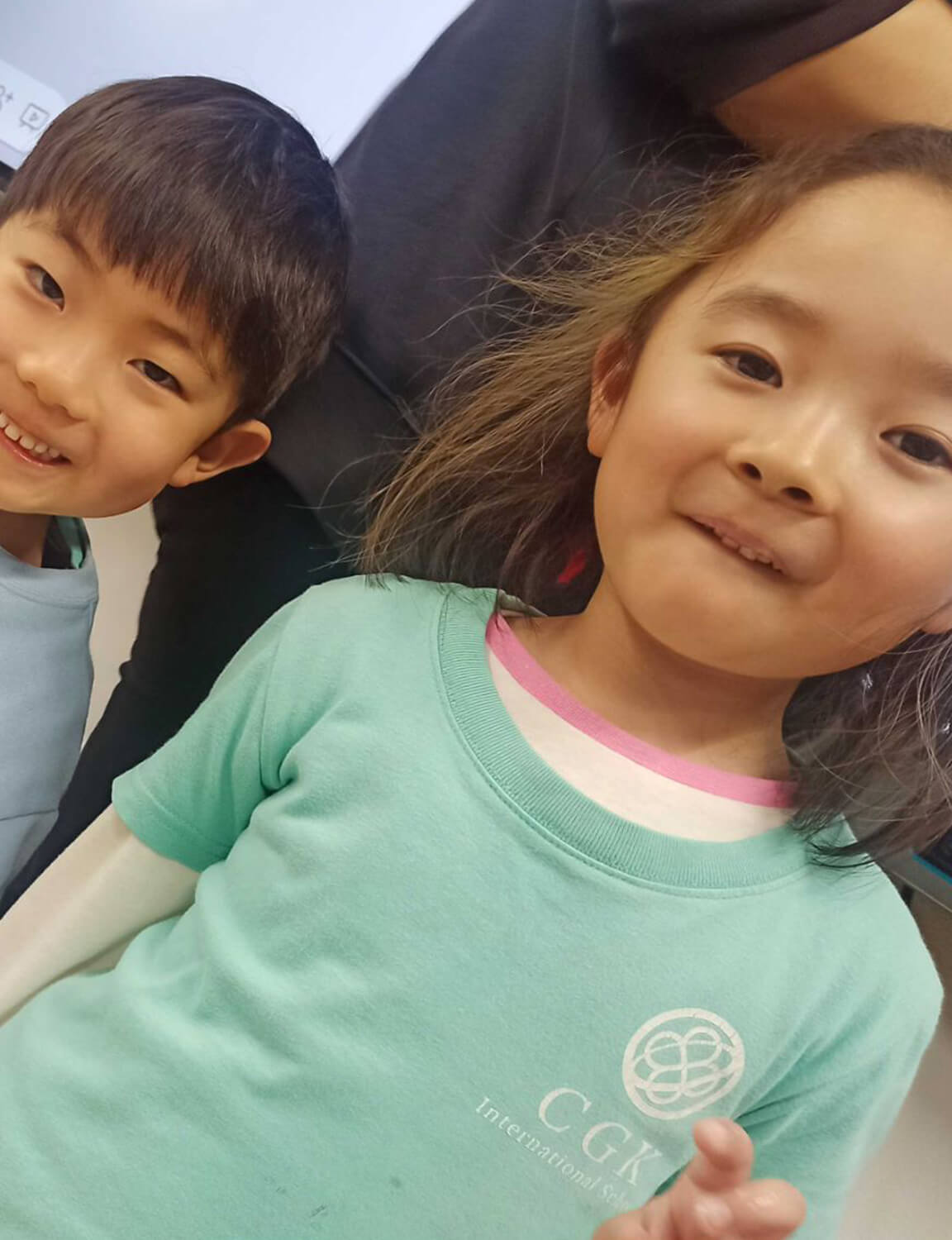
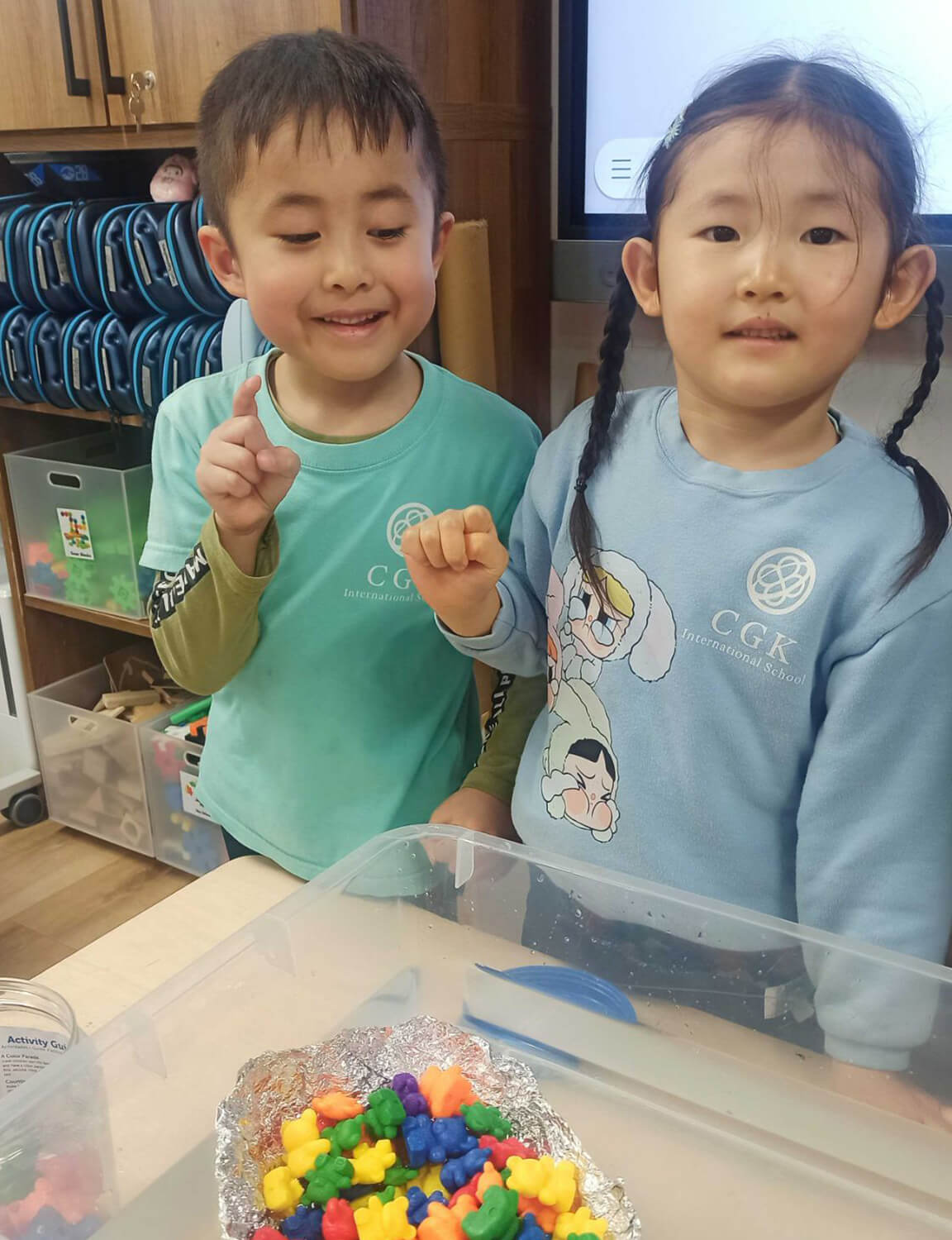
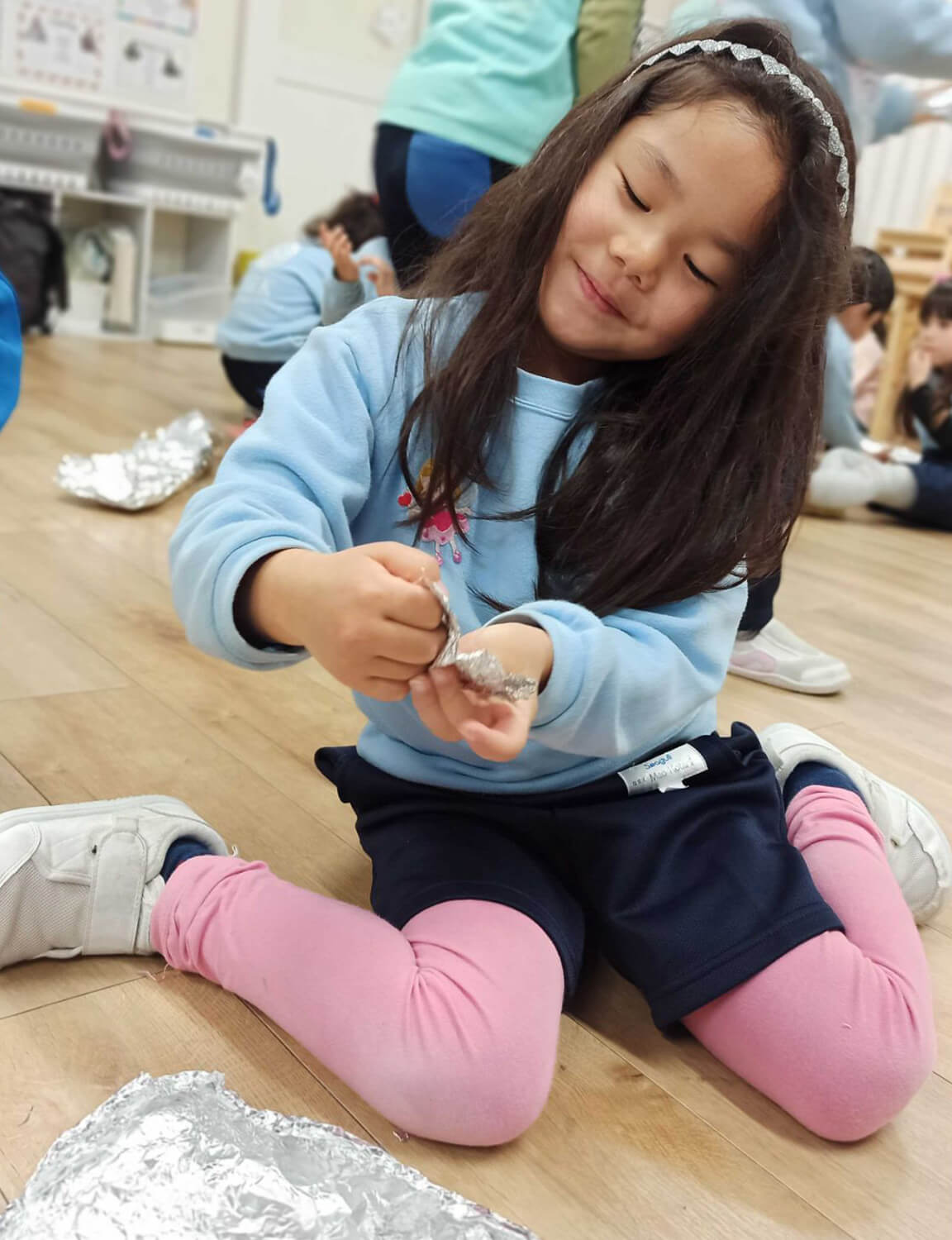
In our current Unit of Inquiry, “Where We Are in Place and Time,” Mountain class students are exploring the Central Idea that people make choices based on culture, location, and available resources. To bring this concept to life, we've introduced "Friday STEM Challenges". These lessons have followed an ongoing story about a village of bears who must migrate to a safer home. Along their journey, the bears encounter rivers filled with alligators, lakes with sharks, and harsh environments where they must build shelters for protection. Each week, students are presented with a new problem connected to migration and technology, and they must design creative solutions using limited materials, such as building a bridge using only LEGO, creating boats using only aluminum foil, or constructing shelters using resources found in specific habitats.
These challenges help students understand that migration is often driven by necessity and that both environment and resources influence the choices people make. As they experiment with different designs, students think critically about how technology, even simple tools and structures, can solve problems and support survival. They consider questions such as: What kinds of shelters can we make with materials are available in this location? How strong does the bridge need to be? How can we make our boat hold more bears? Through trial and error, they analyze information, test ideas, and reflect on how their designs might improve. This mirrors the real-world decision-making processes people use when adapting to new places.
Most importantly, these STEM experiences strengthen Mountain class students’ Approaches to Learning (ATLs). Working in teams, they practice sharing responsibility, listening to different perspectives, negotiating ideas, and making group decisions. Students learn that successful solutions depend not only on creativity and problem-solving, but also on collaboration and communication. By engaging in these hands-on challenges, they are developing essential skills: thinking critically, working cooperatively, and expressing their ideas clearly. These skills will support them far beyond our classroom!
COL Is Just Around the Corner!!
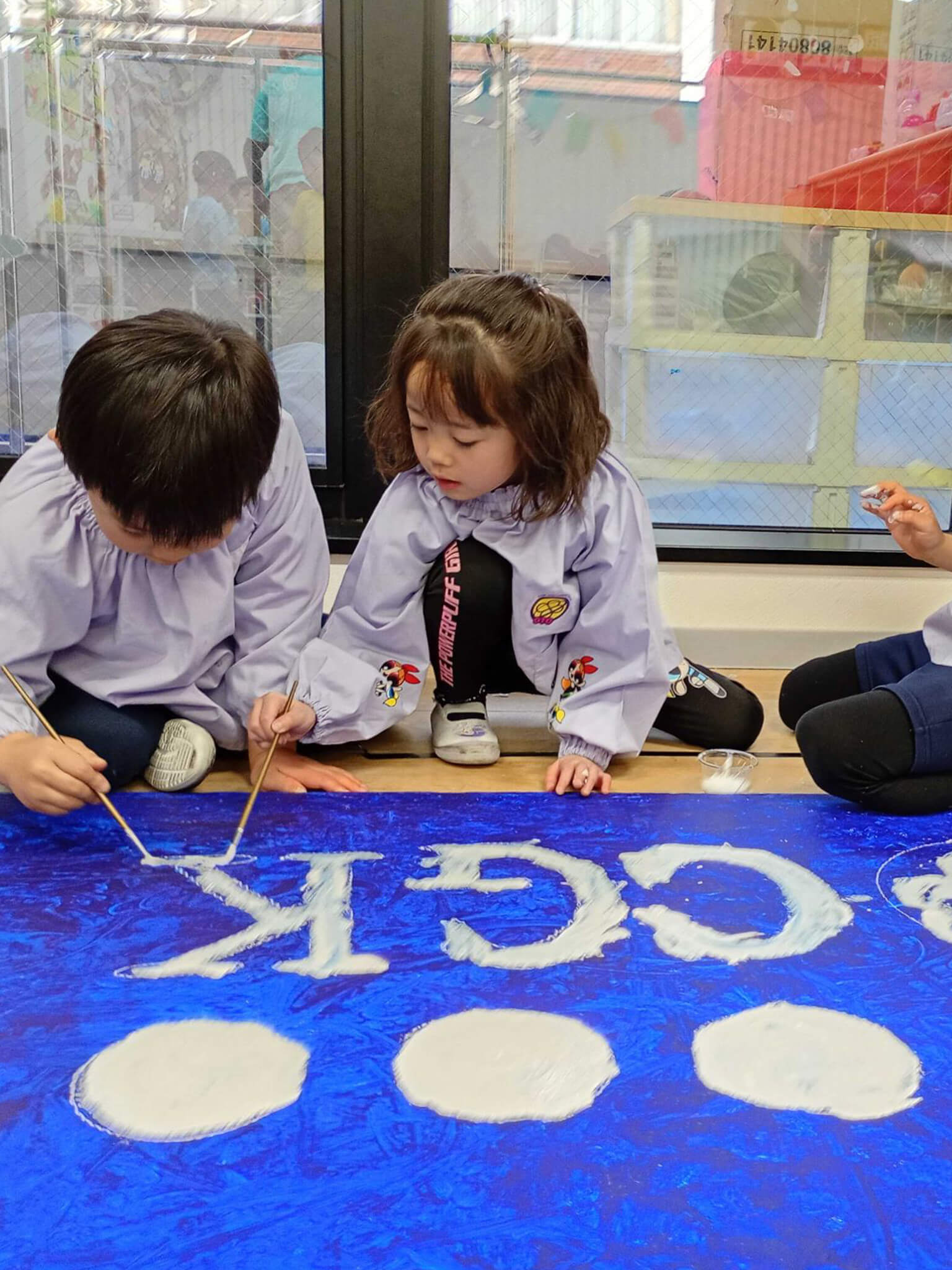
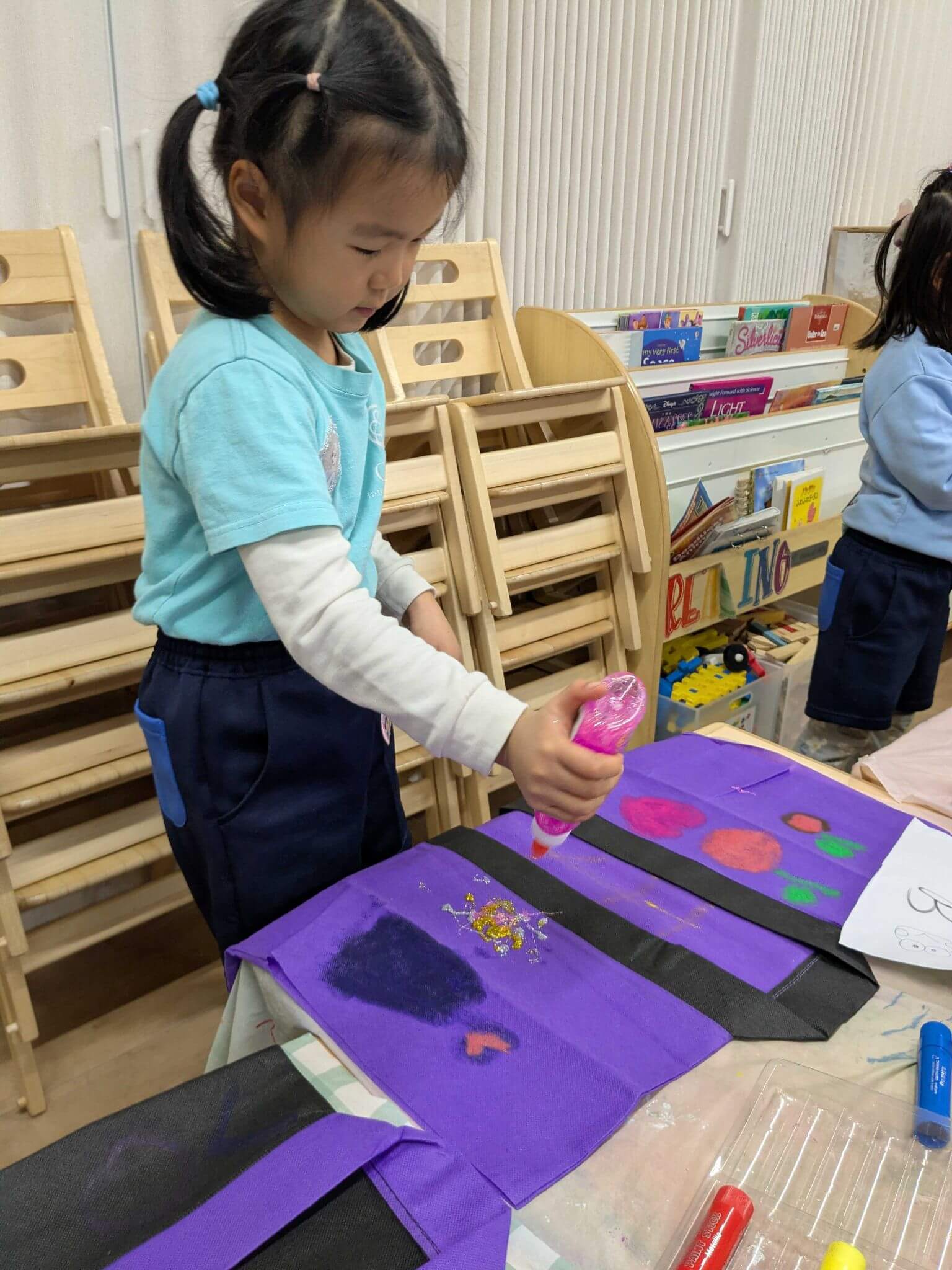
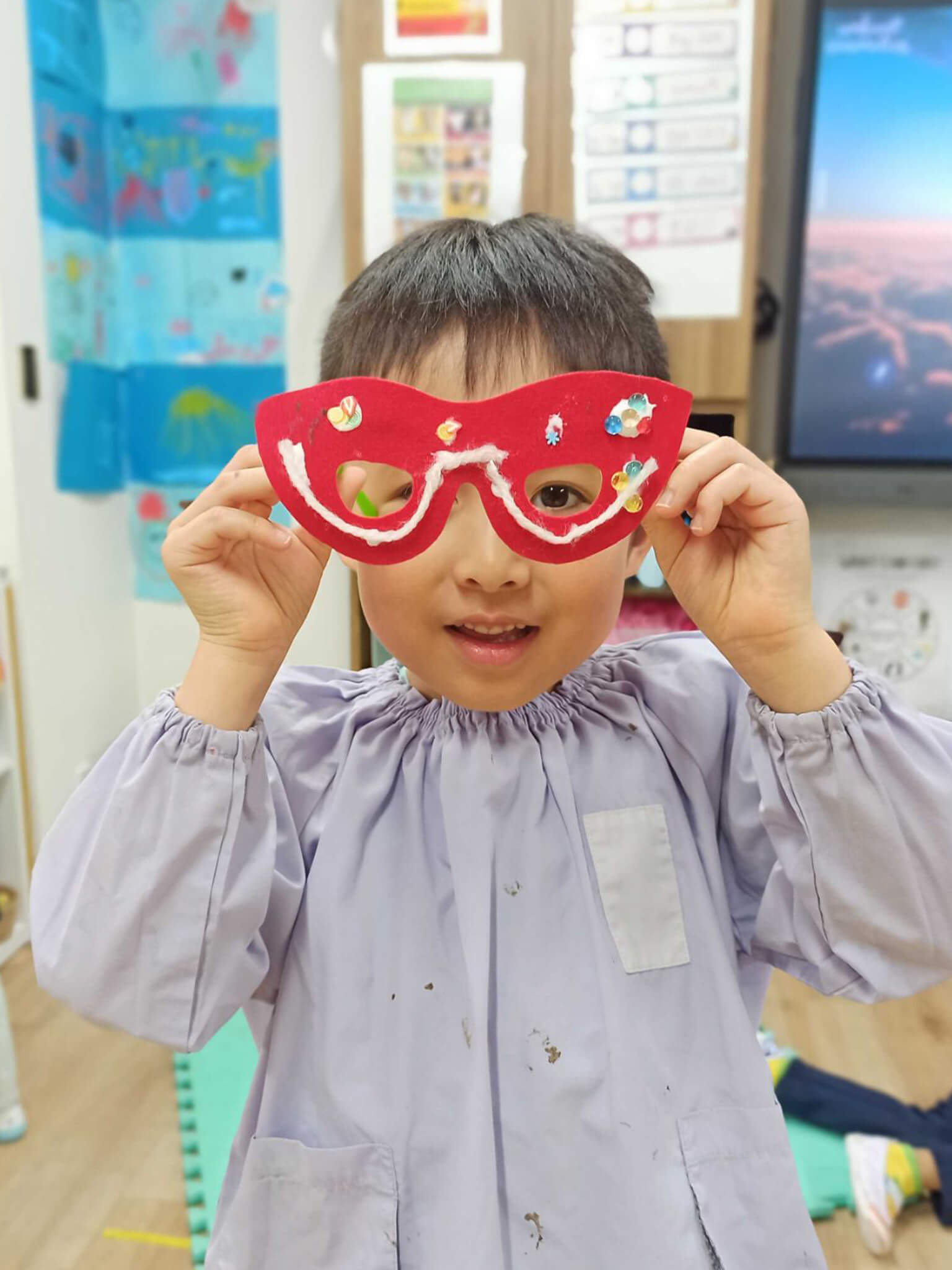
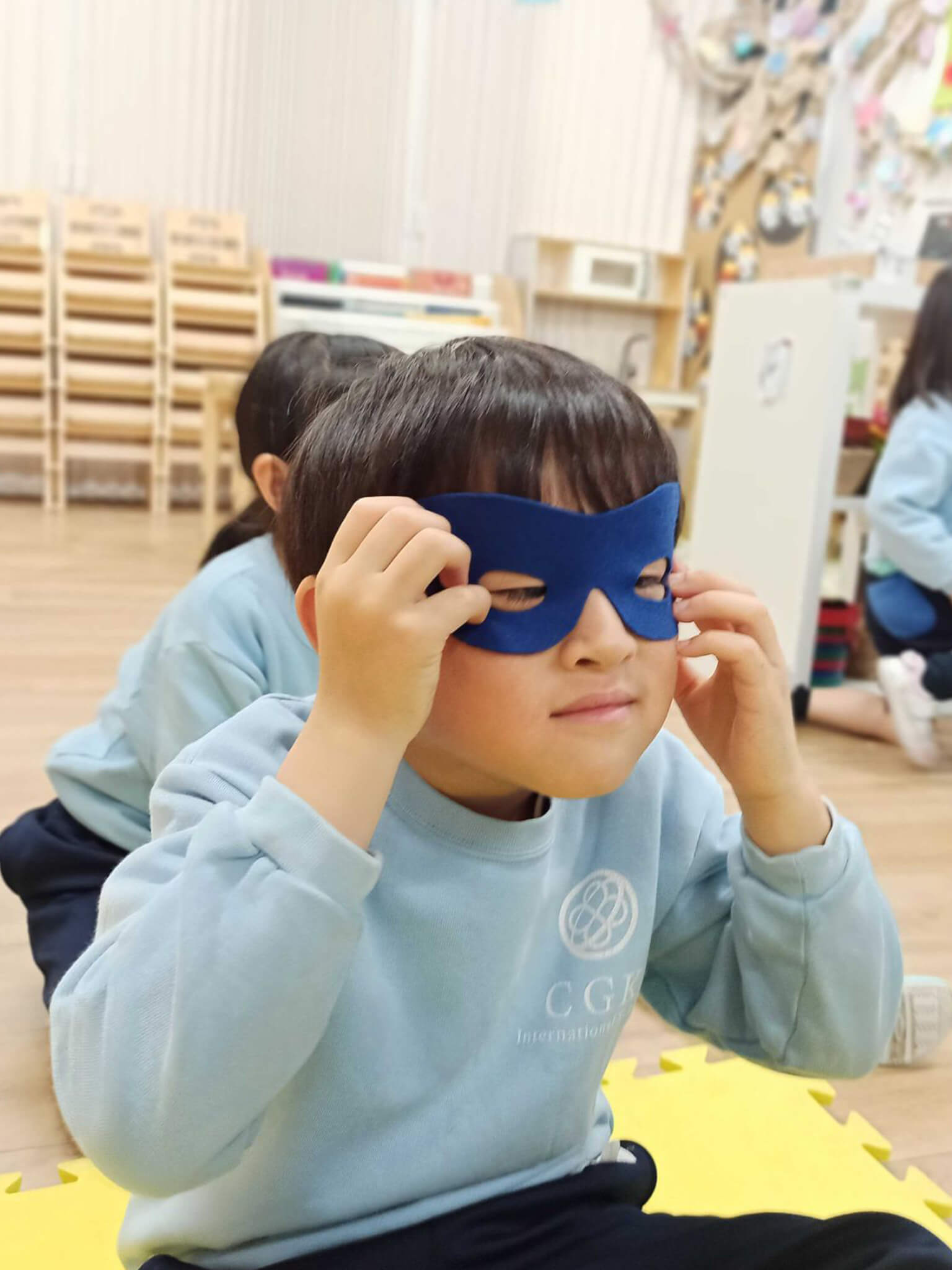
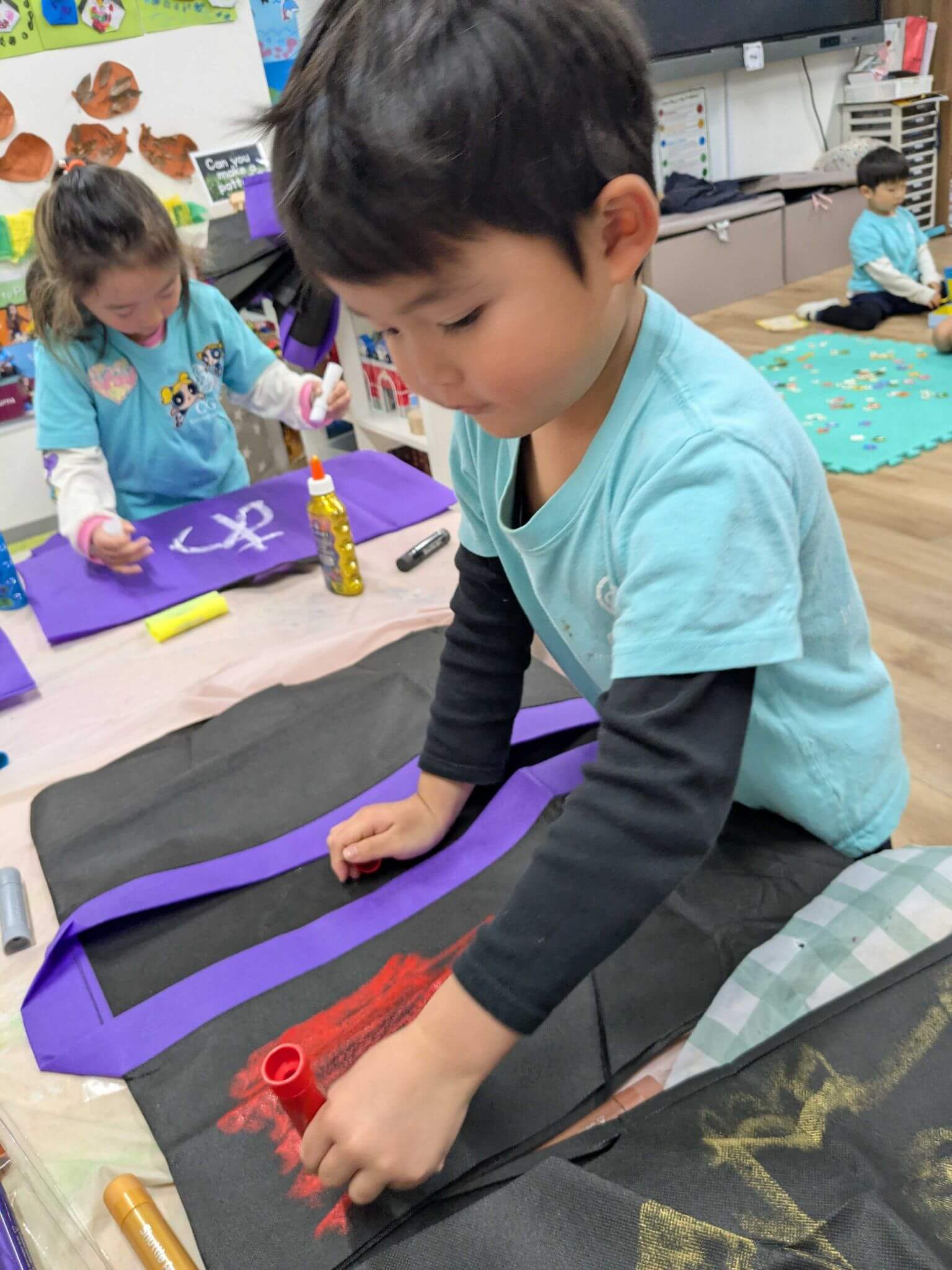
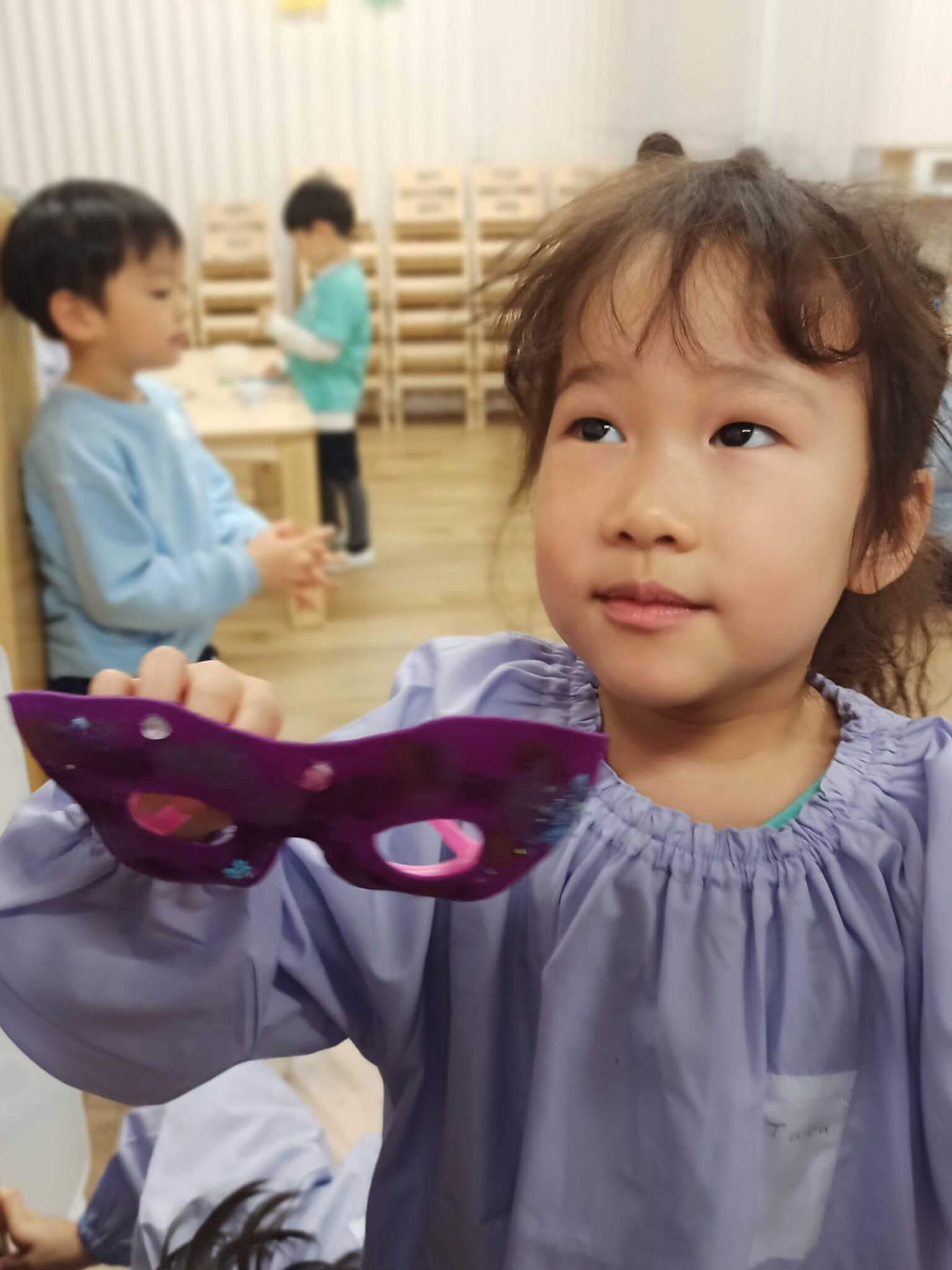
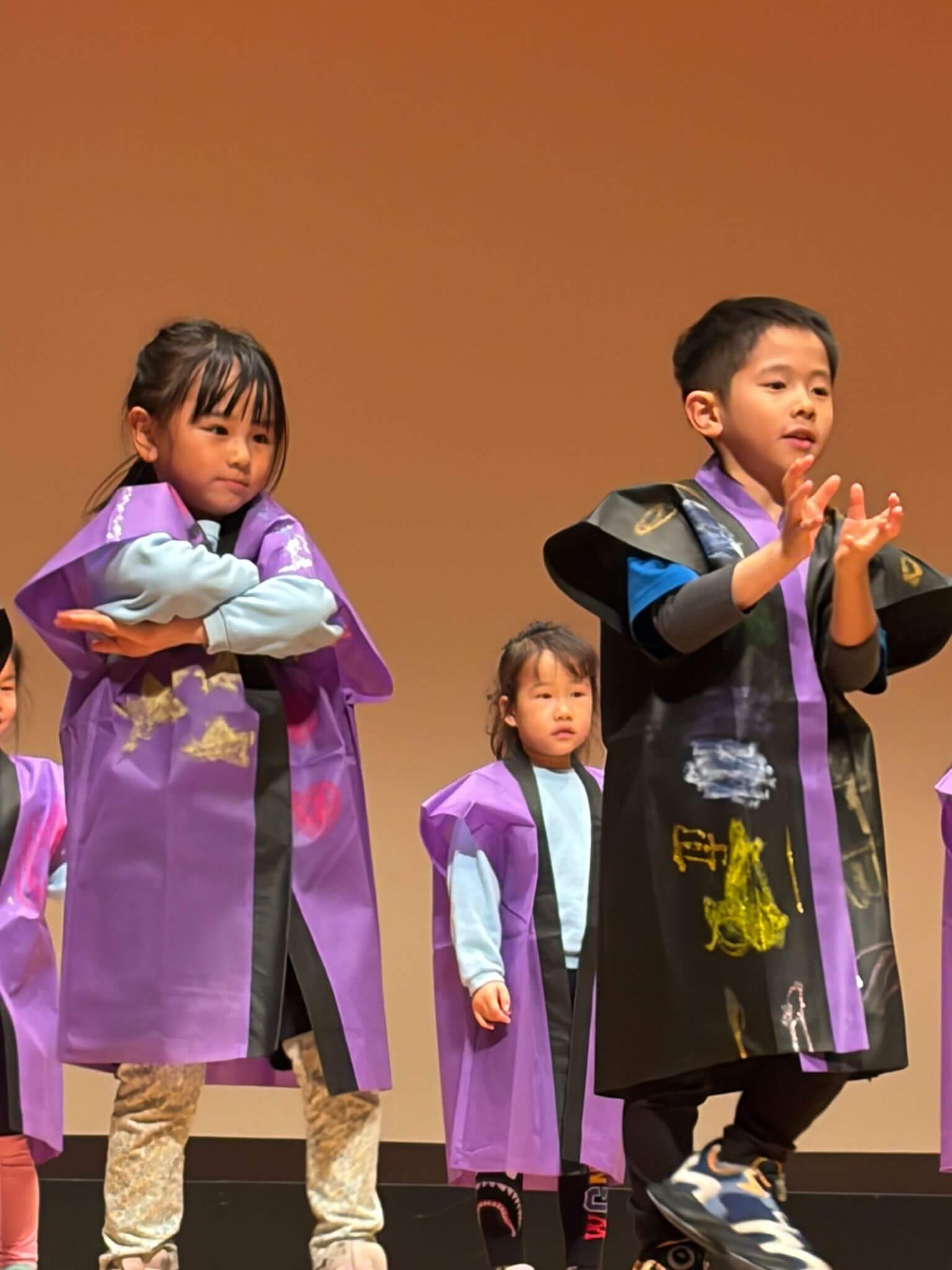
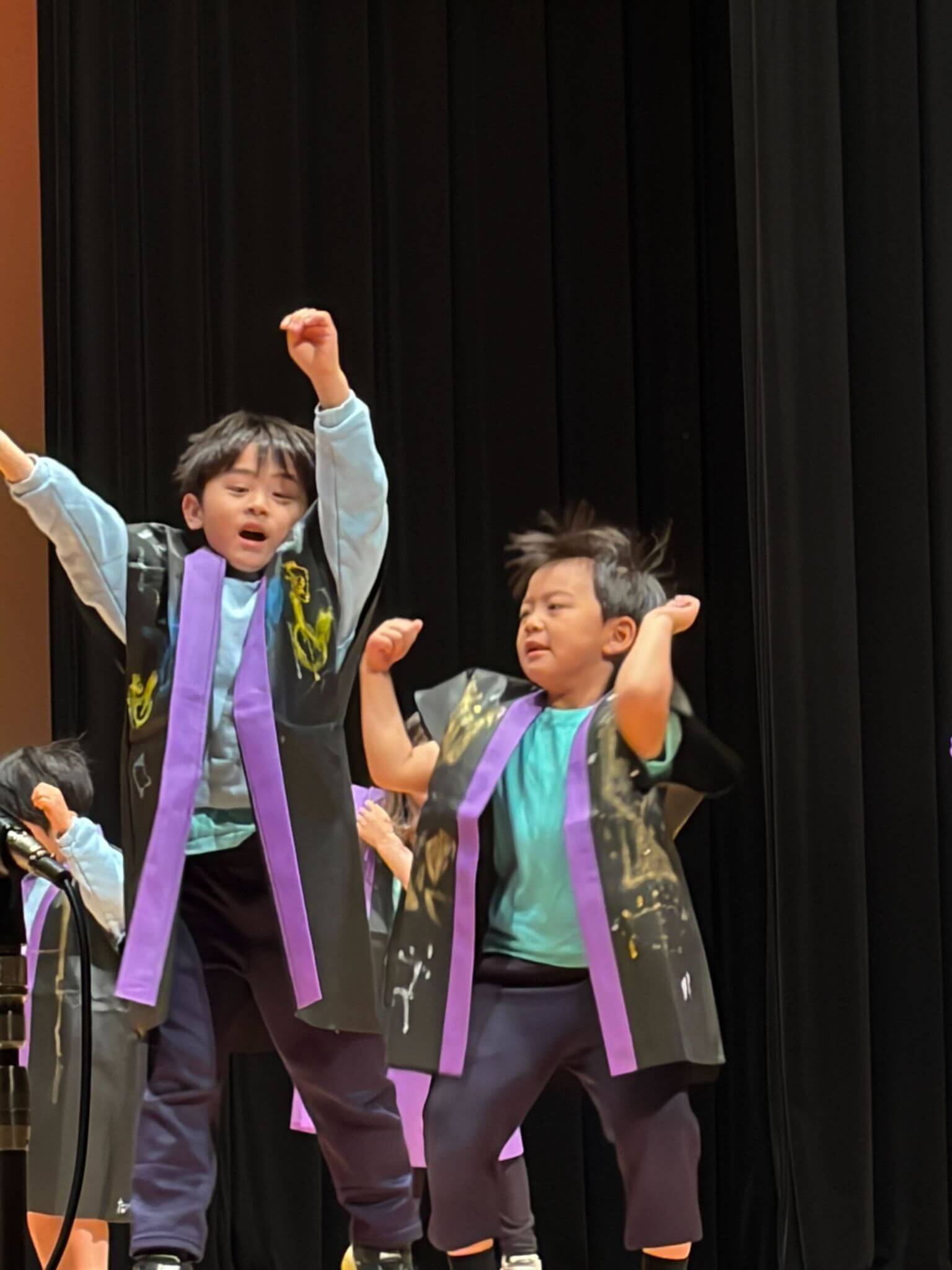
February has flown by, and our time together in Mountain class is quickly coming to an end. The children are now enthusiastically preparing for the upcoming Celebration of Learning (COL) in March. Each day, they are busy working on different aspects of the performance, including developing the story, creating costumes and props, and practicing their dances and lines.
The story for this year’s COL was created together with the children, based on what they have learned throughout their time in Mountain class. We asked, “What would you like to include in our story?” and the children eagerly shared their ideas. “I remember that!” “I want to do this!” they said, reflecting on their experiences and actively contributing to the development of the story. It has truly become a student-led creation.
Each child also chose their own costume colors and designs. “I like this color!” “I want to add something sparkly!” they said, imagining their final look with excitement. As the costumes and props gradually take shape, their anticipation continues to grow. We often hear, “I can’t wait to wear it!” and “I’m so excited for the performance!”
There is a lot to remember for the lines and dances, but the children approach practice with confidence and positivity. “I can do it!” “I already memorized it!” they say proudly. As they practice together, we see them supporting one another: “Isn’t it like this?” “Let’s do it together!” Through this process, they are experiencing what it means to collaborate and create something special as a whole class.
The children are very much looking forward to the day of COL. “I can’t wait for my family to see!” and “I want to show them soon!” are comments we hear often. We will continue to enjoy the remaining preparation time together, making sure this performance is filled with the many learning moments and growth the children have experienced this year.
Jungle A
(3-year-olds)
Gladiators, Ready?!
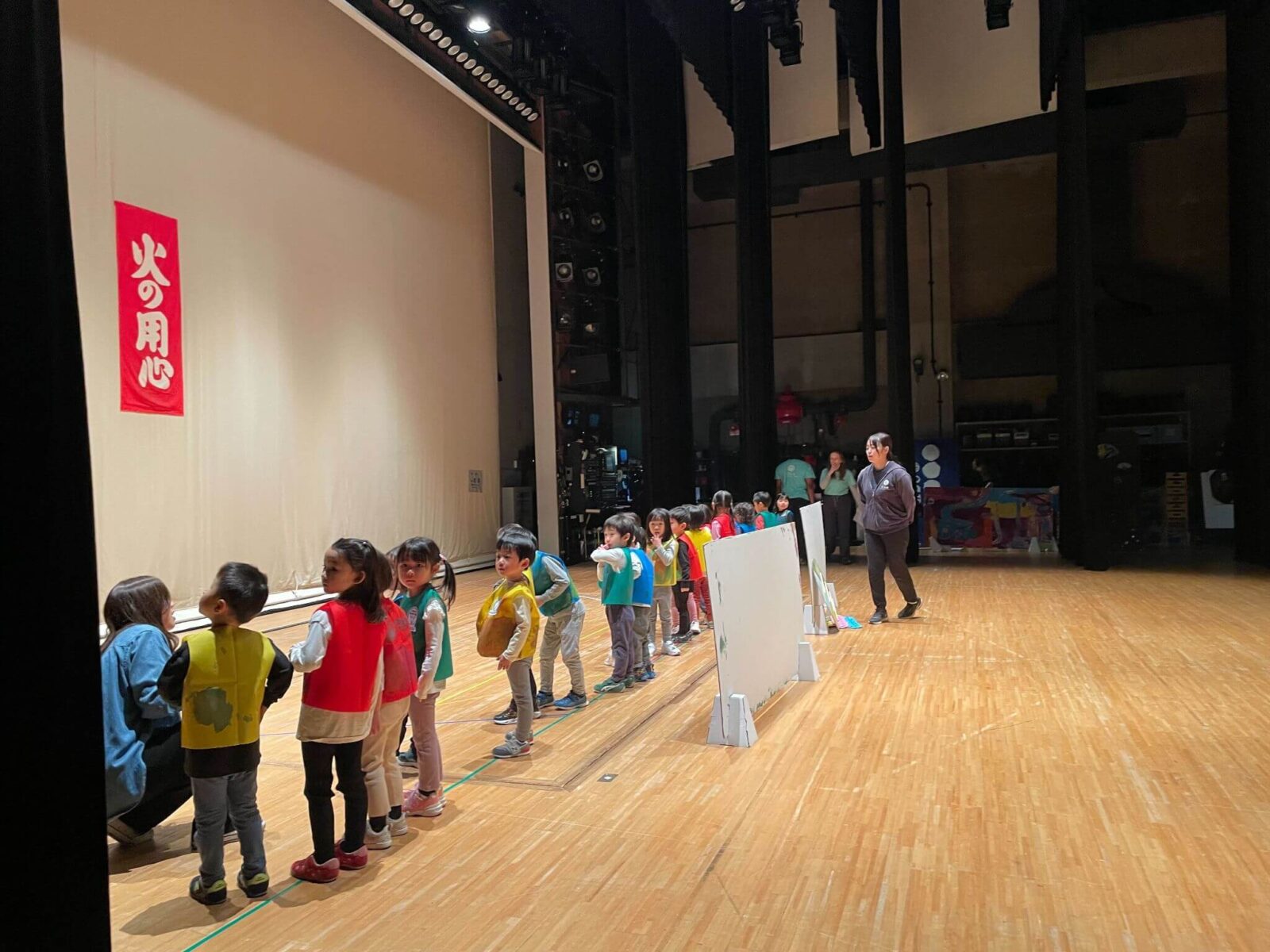
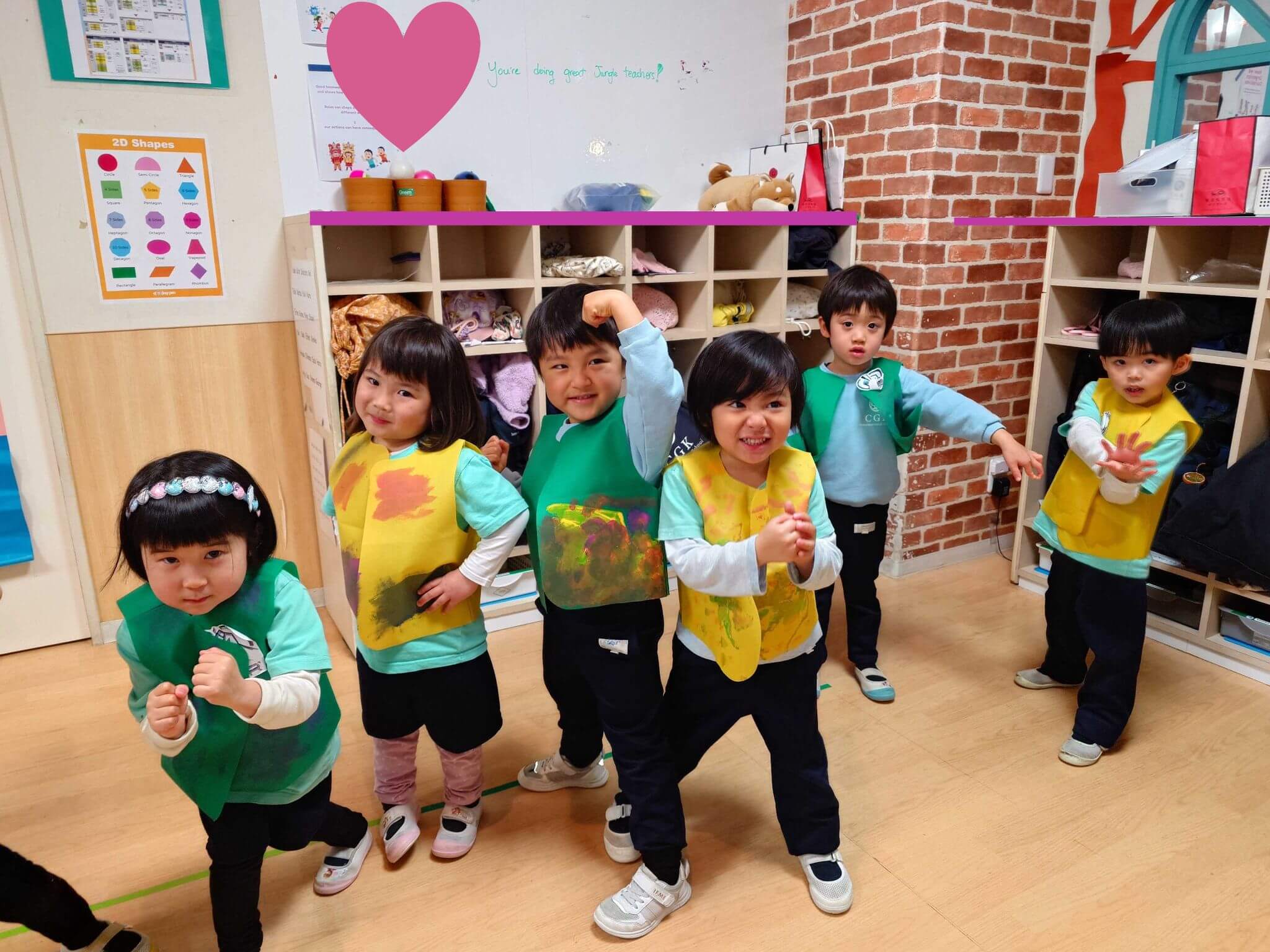
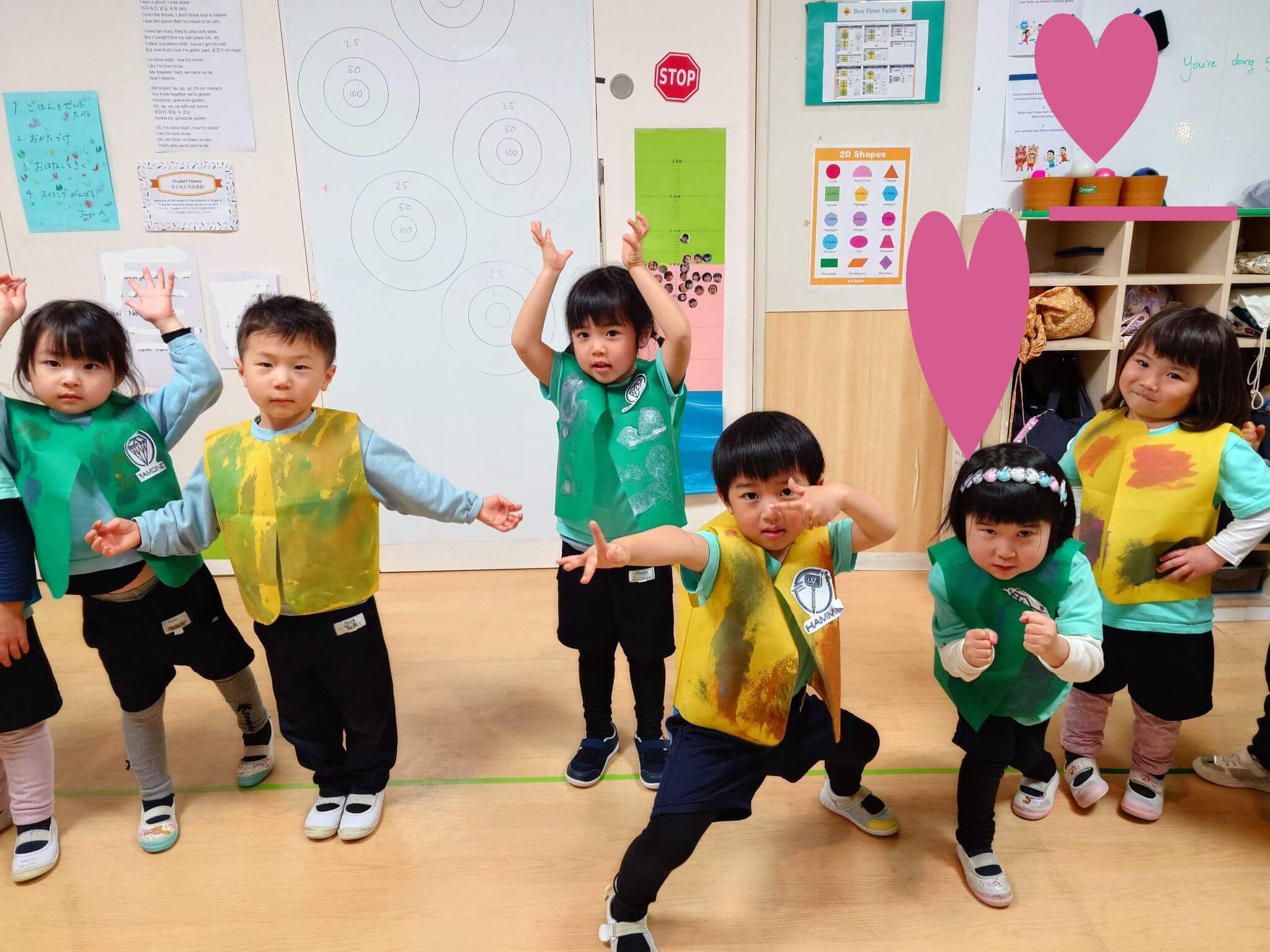
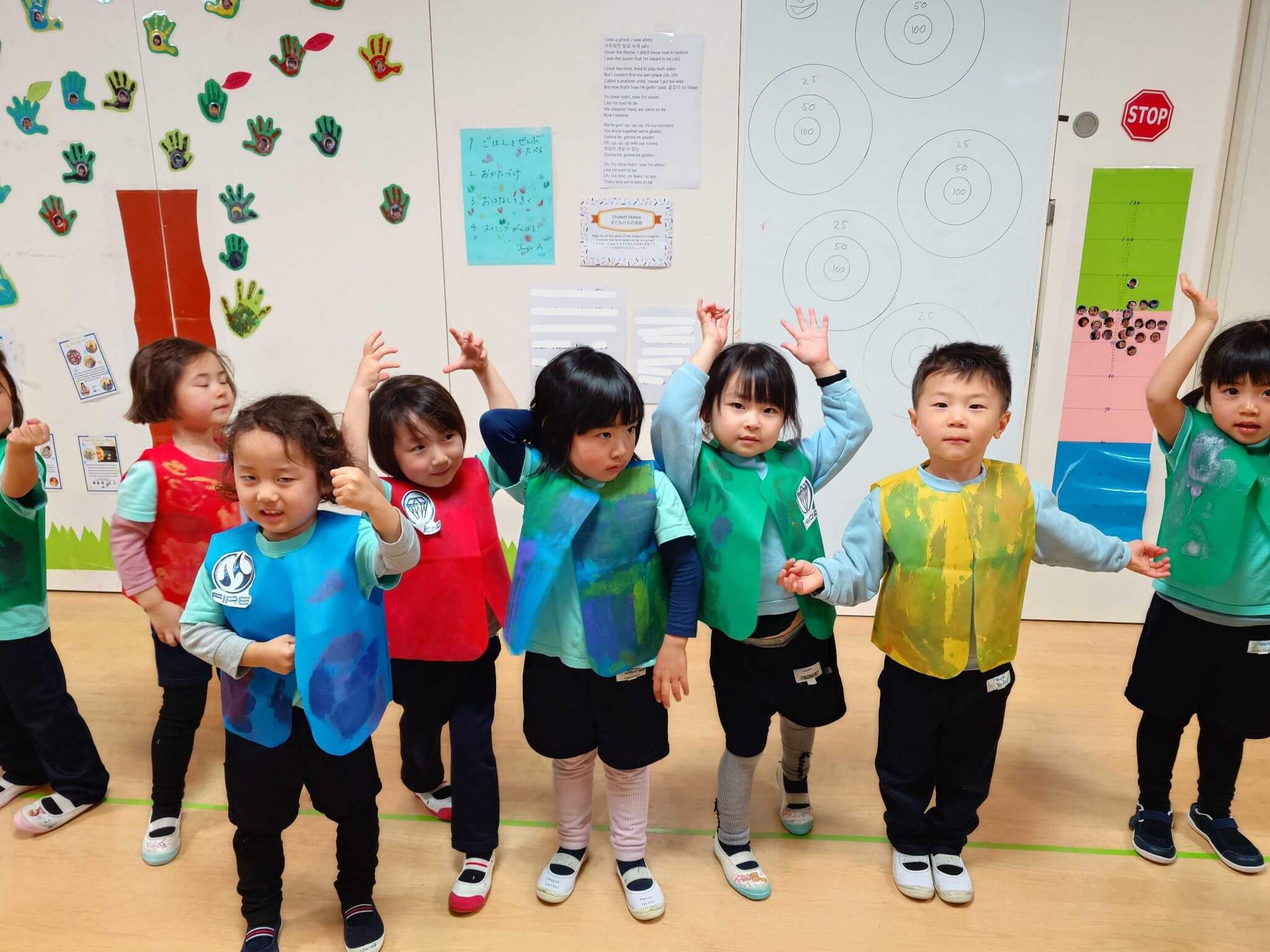
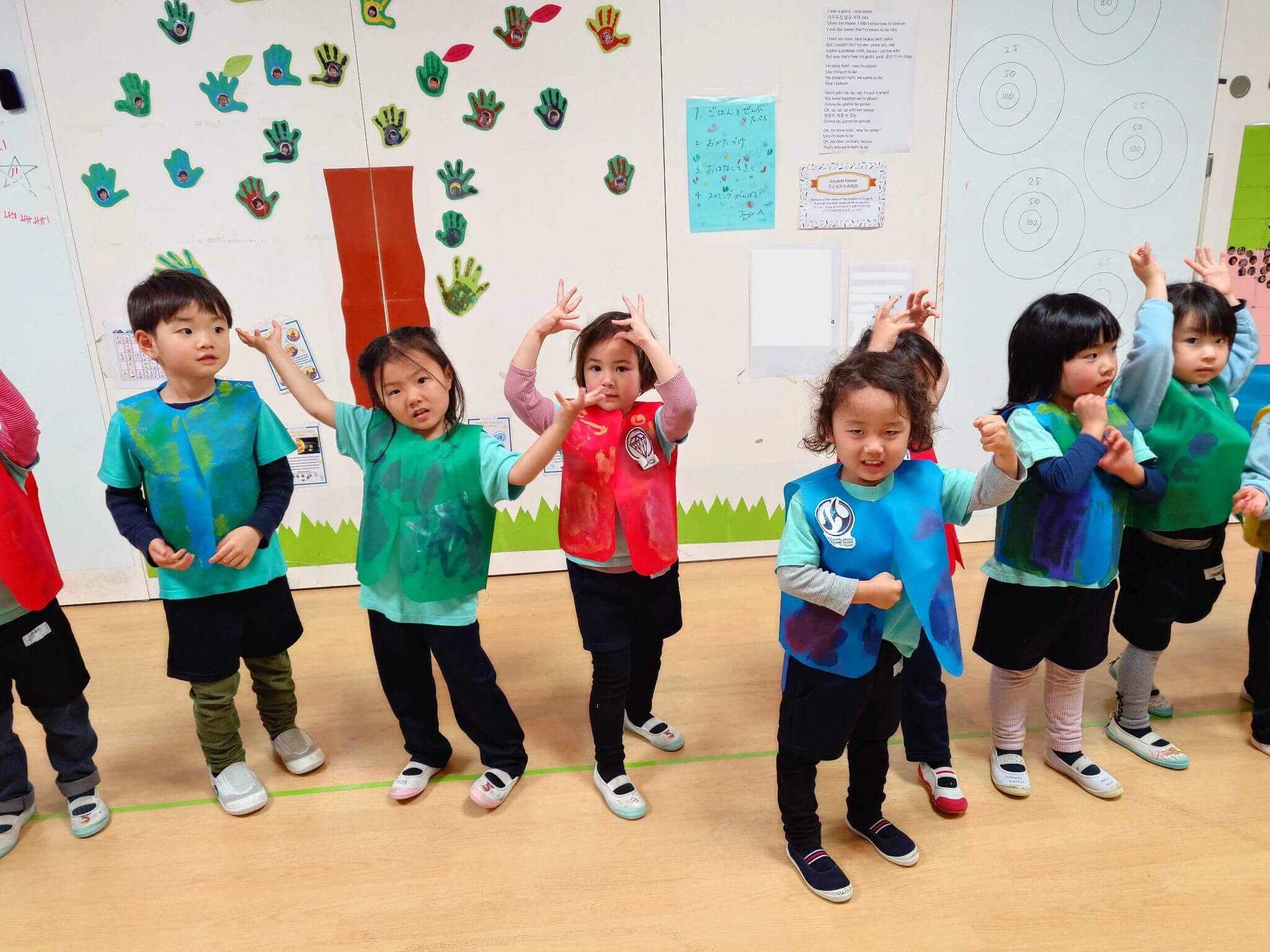
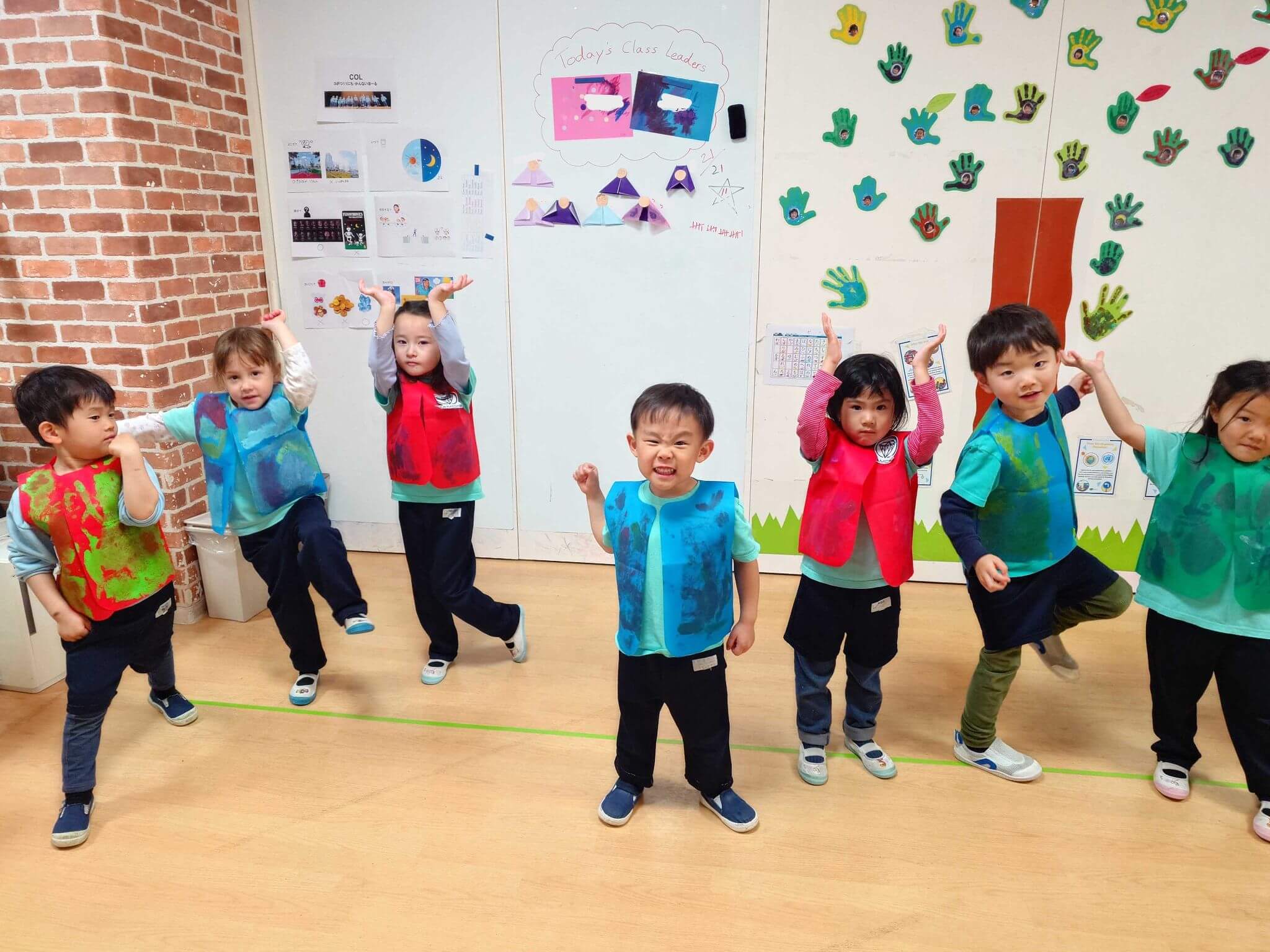
We're getting closer and closer to the actual day of our Celebration of Learning. We had another rehearsal at Kannai Hall and made some meaningful changes to the script, which ensures smoother transitions, and more stage time for the students. Of course, any changes made also included input from the children. For example, we reduced the games to two, and students helped decide which two games they wanted to keep.
Since the rehearsal, Jungle A Gladiators have been really happy and a lot more relaxed when it comes to practicing in class. We feel like this is going to translate well on the actual day and Jungle A are going to perform above and beyond what is anticipated.
Beyond COL, we've also been doing some team activities in the classroom, and during P.E lessons. Games like the caterpillar race, relay, and marble tube challenge, in which teams must use a series of long tubes to transport a marble from point A to point B, without dropping it. Learning to share, and work as a team, has been a great learning experience for the Jungle A class, and we are all so proud of the growth they are continuing to show.
We're looking forward to the upcoming event where everyone can show you why they are well and truly ready to be Mountain Gladiators!
From Play to Learning
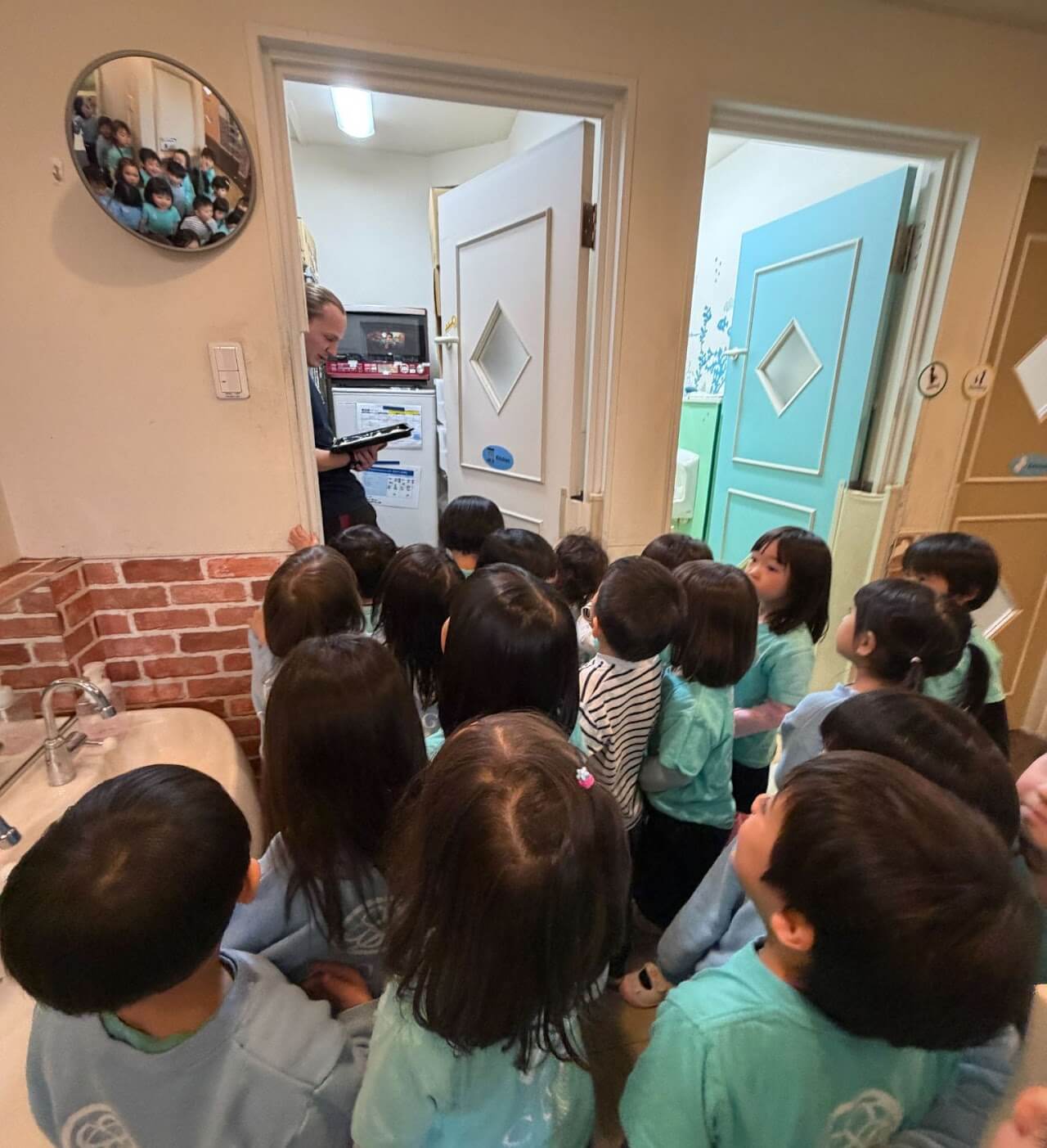
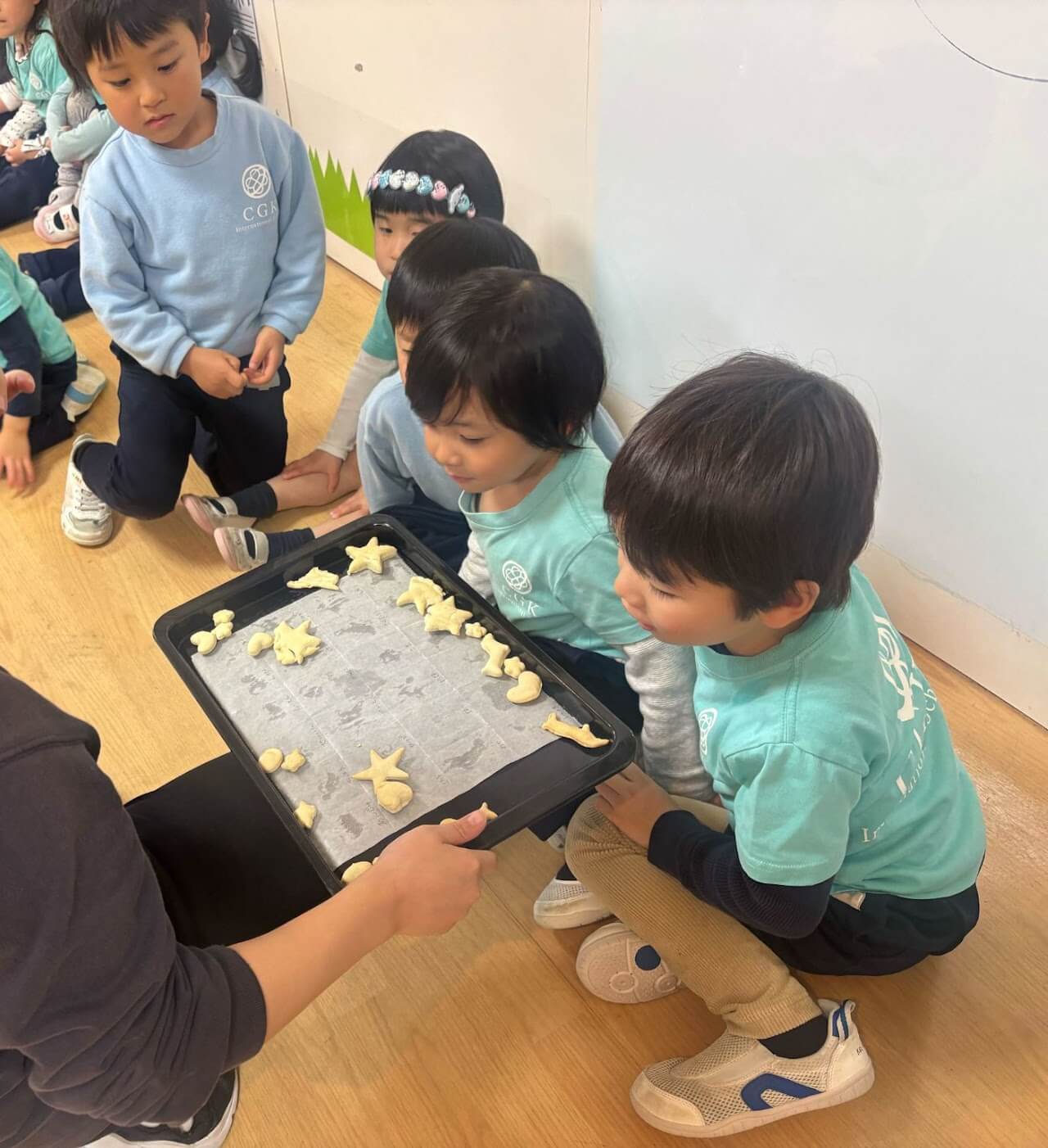
This month, the children have been very busy preparing and practicing for COL! During Japanese class, we continued focusing on activities that help nurture their ability to overcome upcoming challenges by “cooperating” with their friends.
Since February 14th was Valentine’s Day, Ms. Mai introduced the children to the meaning of Valentine’s Day, and together they created one large chocolate artwork. Working collaboratively on a single piece gave them a wonderful opportunity to share materials and exchange ideas. Learning how to “discuss” and make decisions together is a big step toward effective teamwork. We would like to continue valuing opportunities for children to talk with one another and make decisions together.
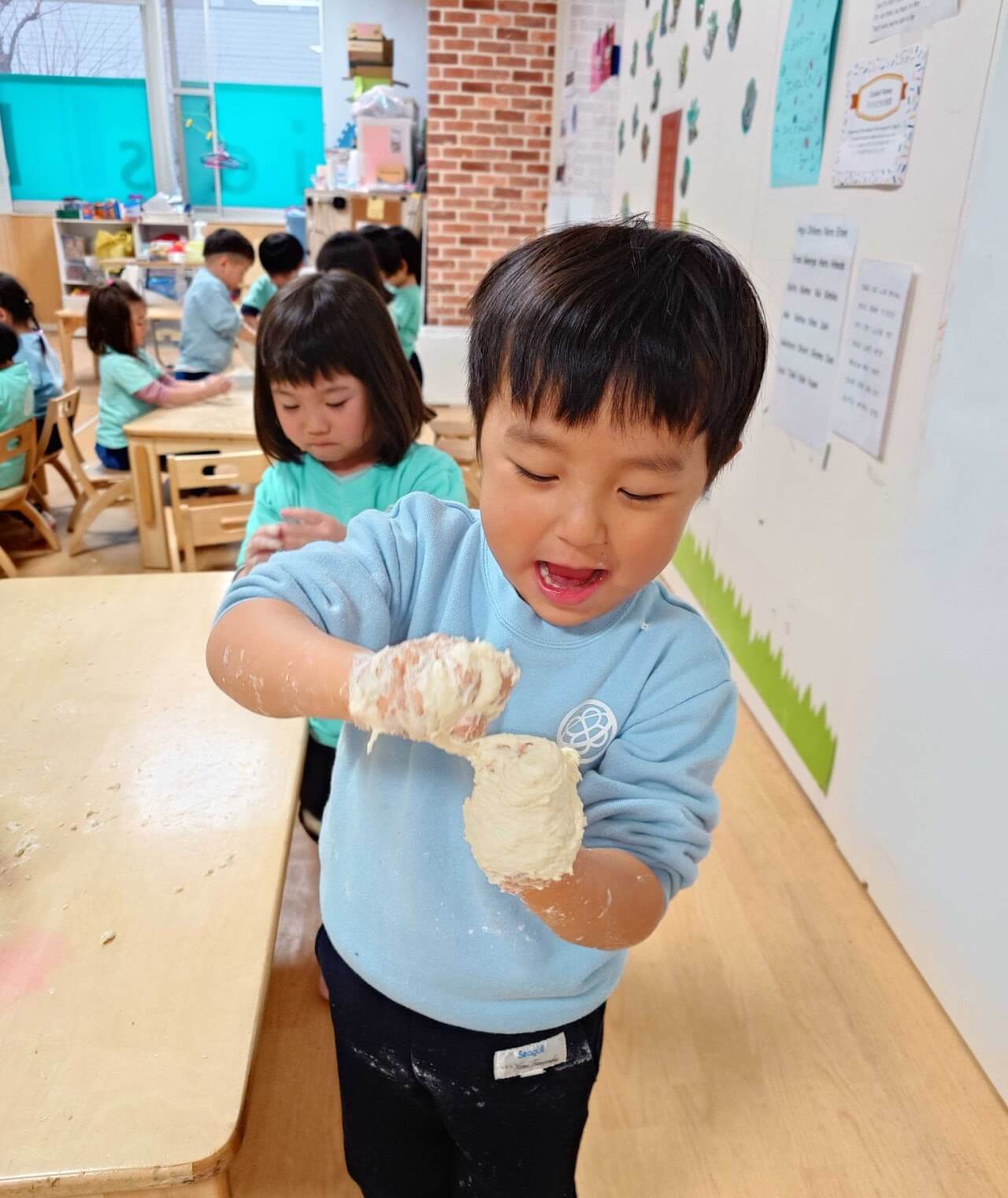
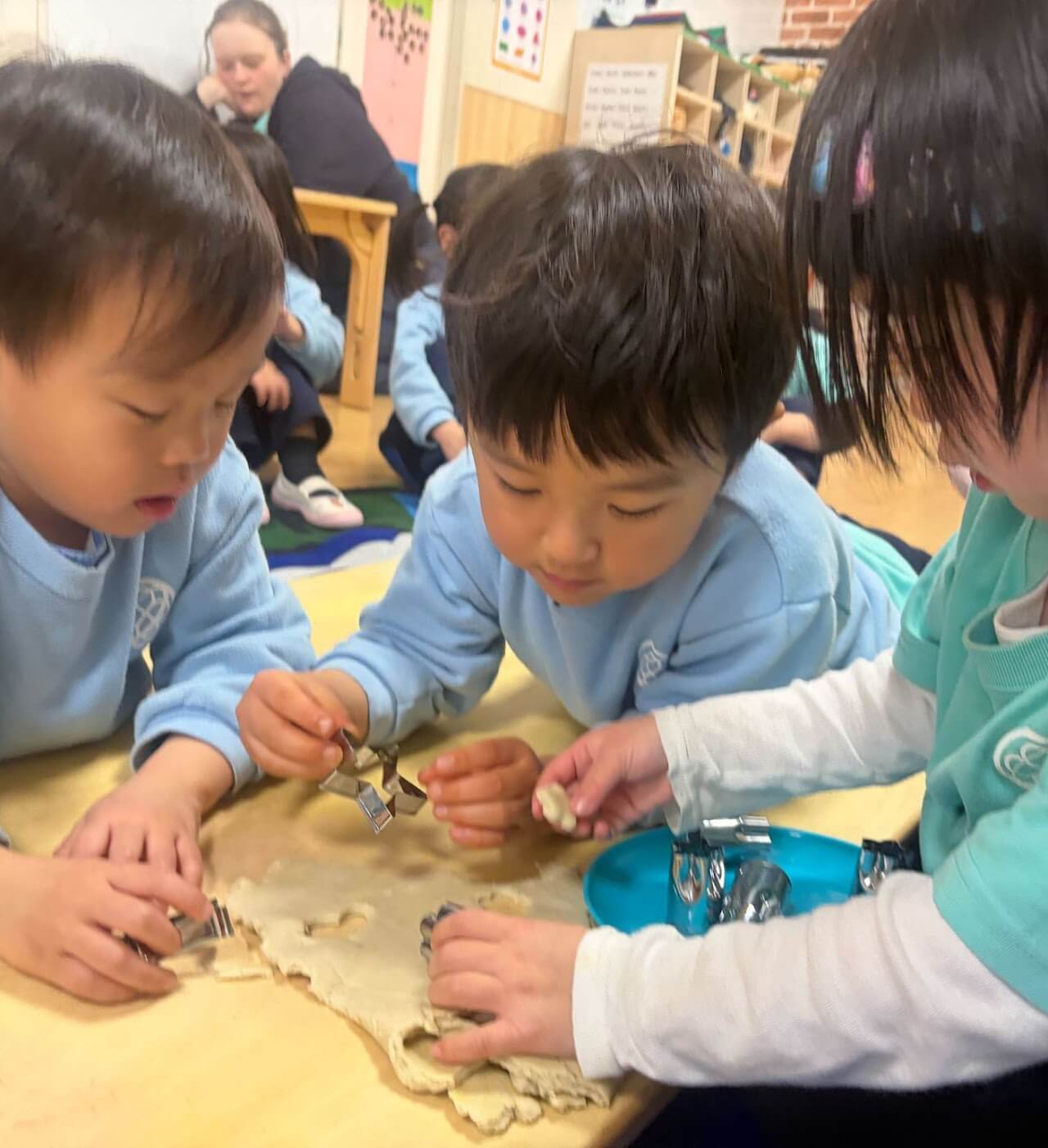
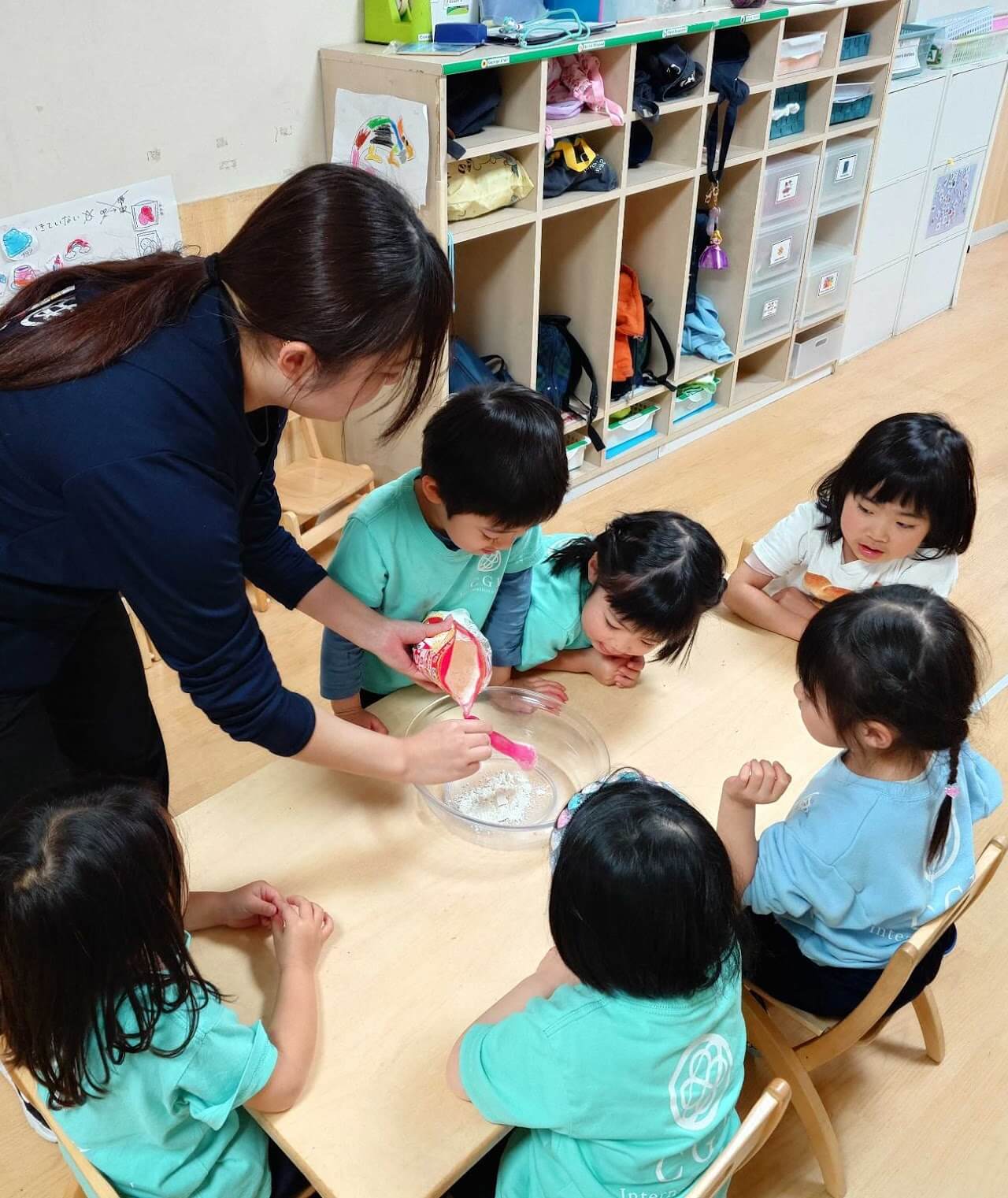
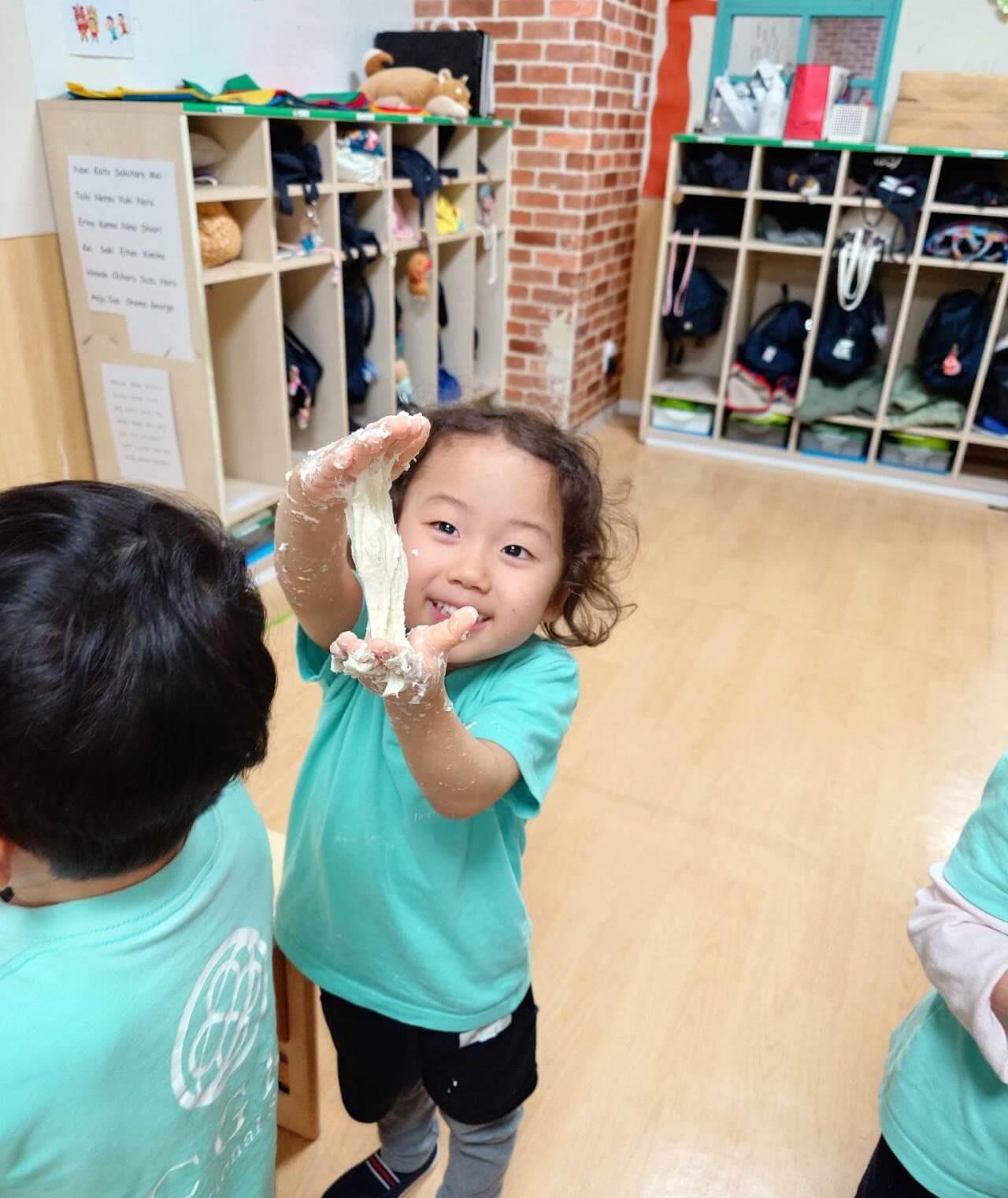
After Valentine’s Day, many children shared stories such as, “I celebrated Valentine’s at home!” and “I made sweets!” Inspired by this, we tried making flour dough as a pretend baking activity. The children discussed and decided the ratio of flour to water themselves, enjoying the changes in texture as the dough became sticky or crumbly. Over the following days, as they freely explored the flour dough, they began noticing changes such as, “Does it smell different?” and “Is it turning yellow?” Eventually, someone suggested, “I want to bake it like real food!” So we used cookie cutters and excitedly wondered, “Will it become cookies? Maybe bread? Or pizza?” We baked them in the oven—and what came out looked just like cookies! “It smells good!” “It looks delicious!”—we saw so many happy smiles.
Since some children said, “I want to take it home and observe it with my family,” and “I want to play with it together,” we sent their creations home. We hope that by sharing what they learned and experienced during the lesson, and reflecting together as a family, their learning can deepen even further. We will continue to create an environment that cherishes and nurtures the children’s spirit of inquiry.
Jungle B
(3-year-olds)
COL: Zookeeper Madness
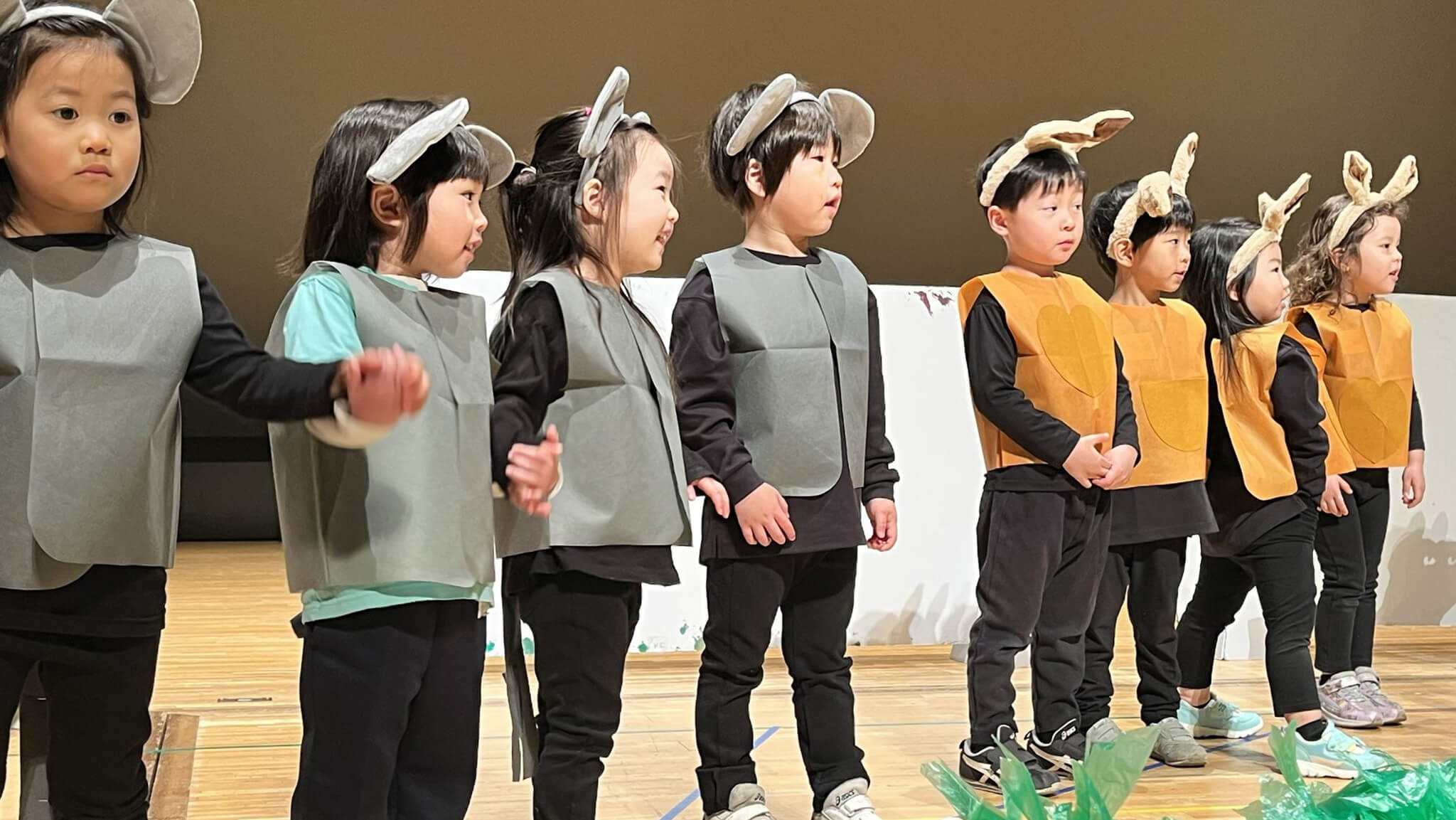
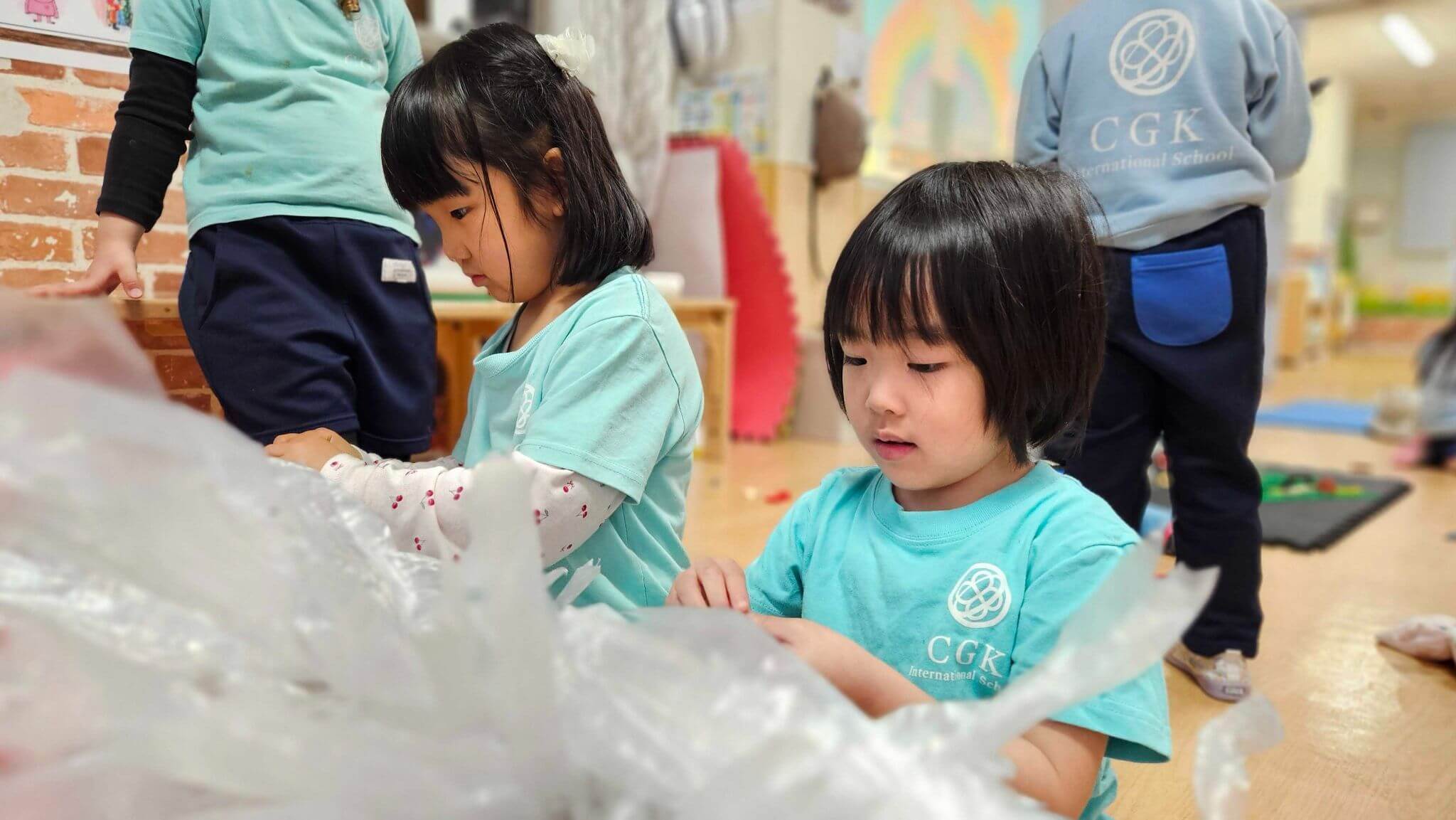
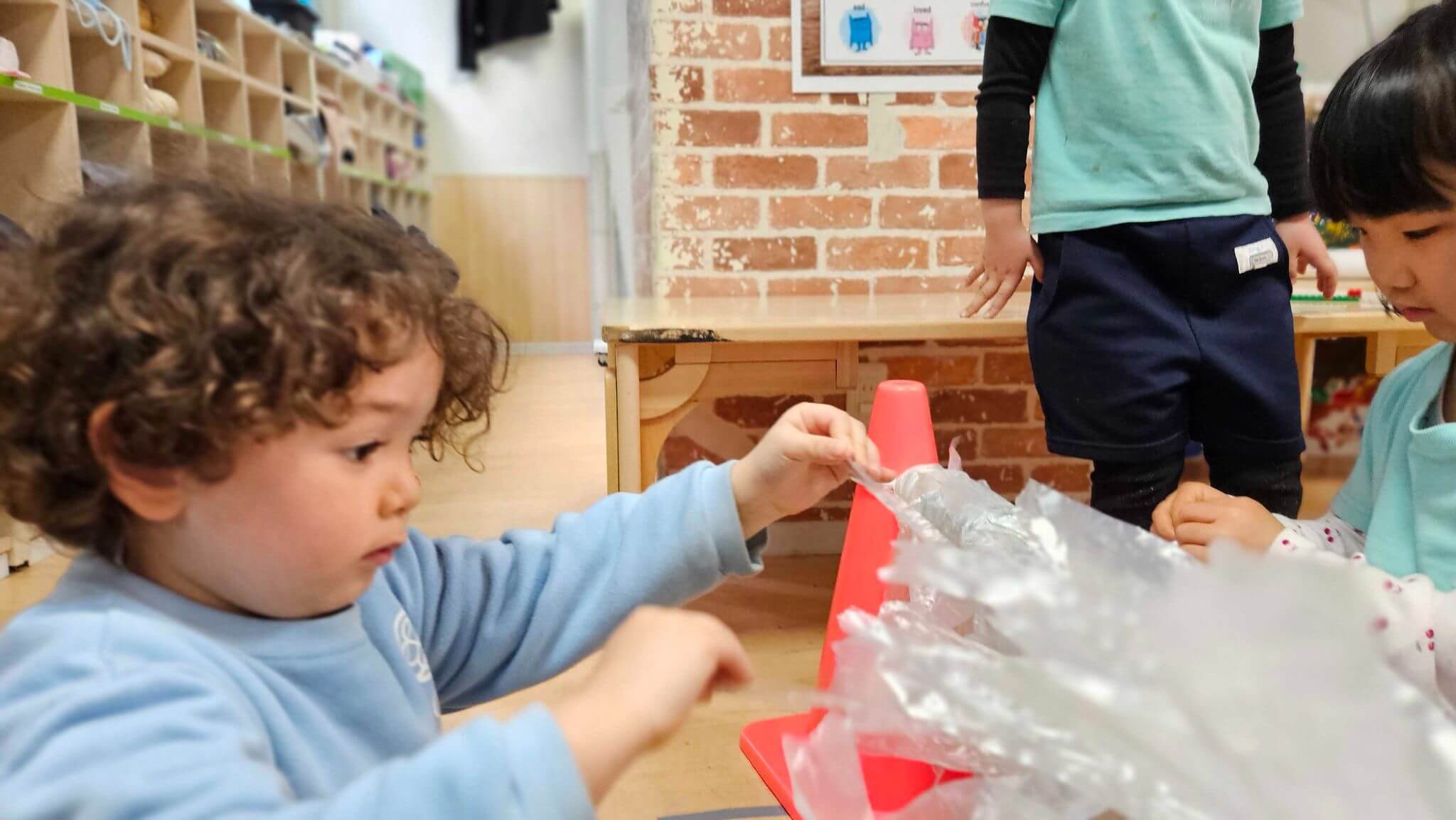
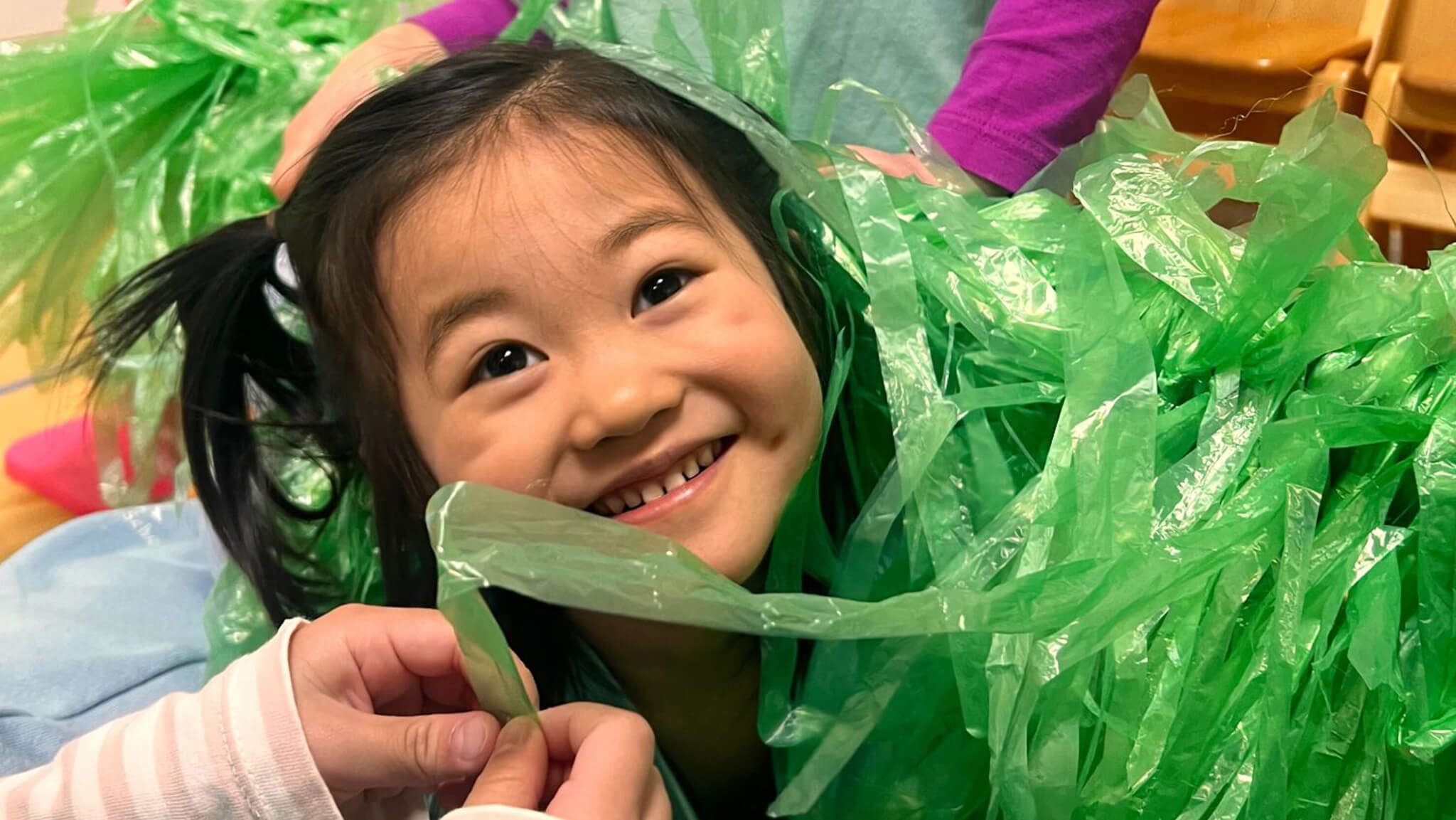
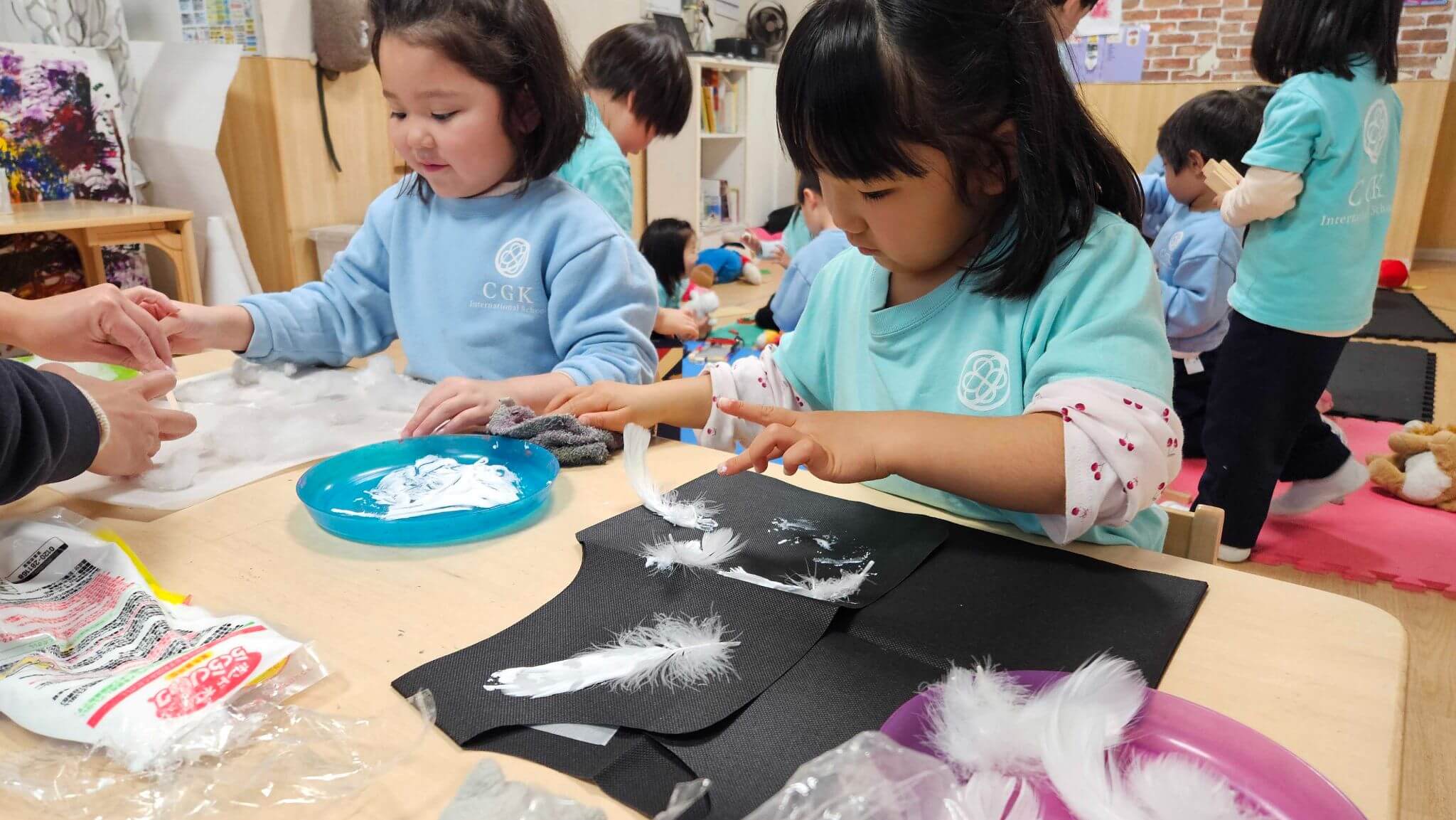
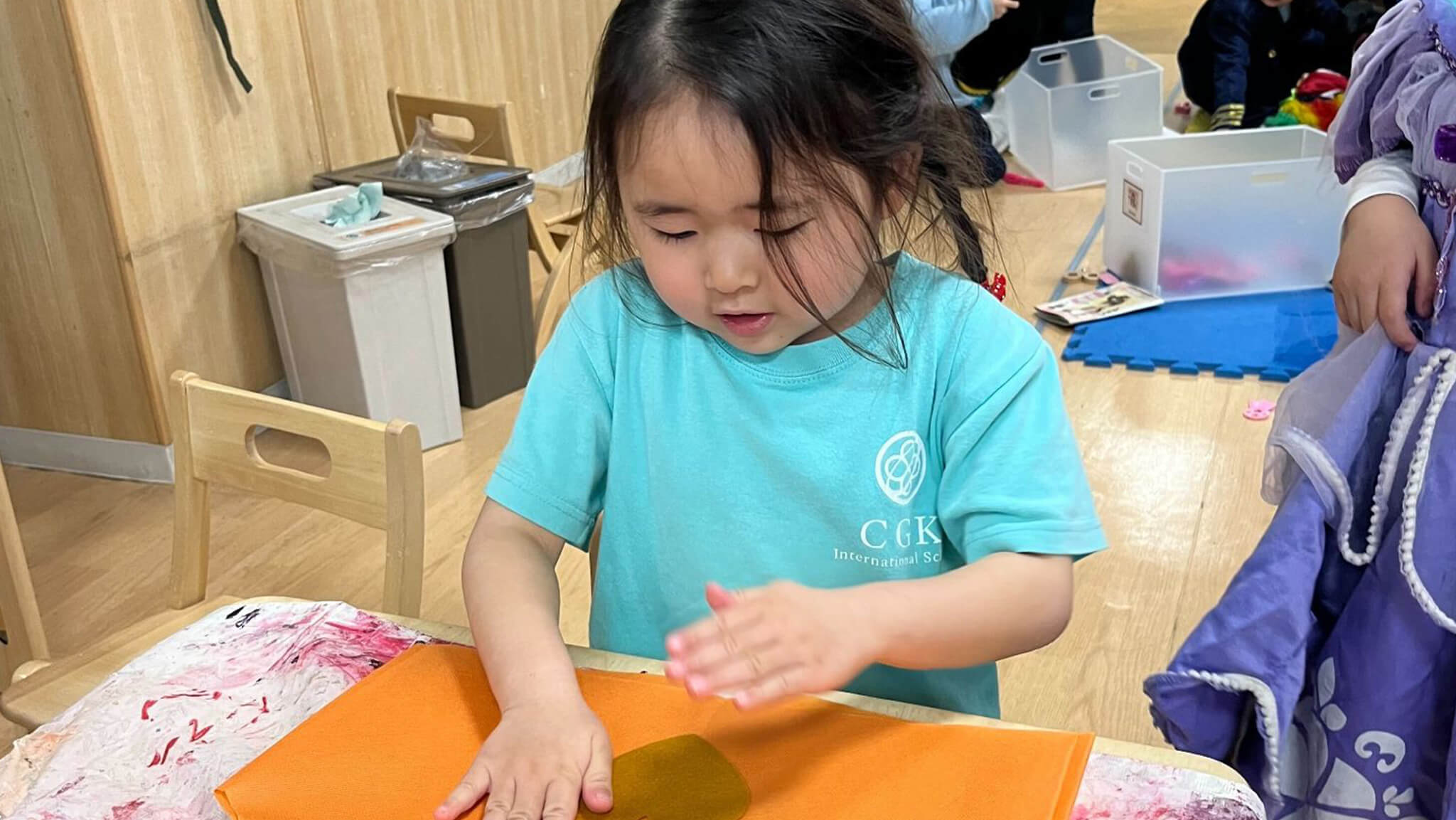
The excitement is building in Jungle B as our little learners prepare for their much-anticipated COL! Over the past few weeks, the classroom has been buzzing with energy as students rehearse their roles, practice their dances, and eagerly memorize their lines. This year, our Jungle B friends will transform into adorable zoo animals, joined by a caring zookeeper who looks after them. The children have been proudly decorating their own costumes and props, adding special creative touches that make each character unique.
Our performance beautifully brings together learning from our previous Unit of Inquiry about living things and habitats with our current unit, How We Organize Ourselves. Earlier this term, students explored what living things need to survive and discovered how different animals live in different habitats. Now, they are deepening their understanding by learning about important community roles, including doctors, farmers, and zookeepers. Through these connections, students are beginning to see how people work together to care for animals, grow food, and help others in their communities.
Most importantly, Jungle B is learning the value of teamwork. Preparing for COL has given students the opportunity to collaborate, listen to one another, and support their friends. Whether practicing a dance move, helping a classmate remember a line, or working together to prepare props, every child plays an important part. We are so proud of how our Jungle B friends at CGK are growing not only as performers, but also as caring, cooperative members of a team. We can’t wait to see them shine on stage!
Almost Mountain Class??
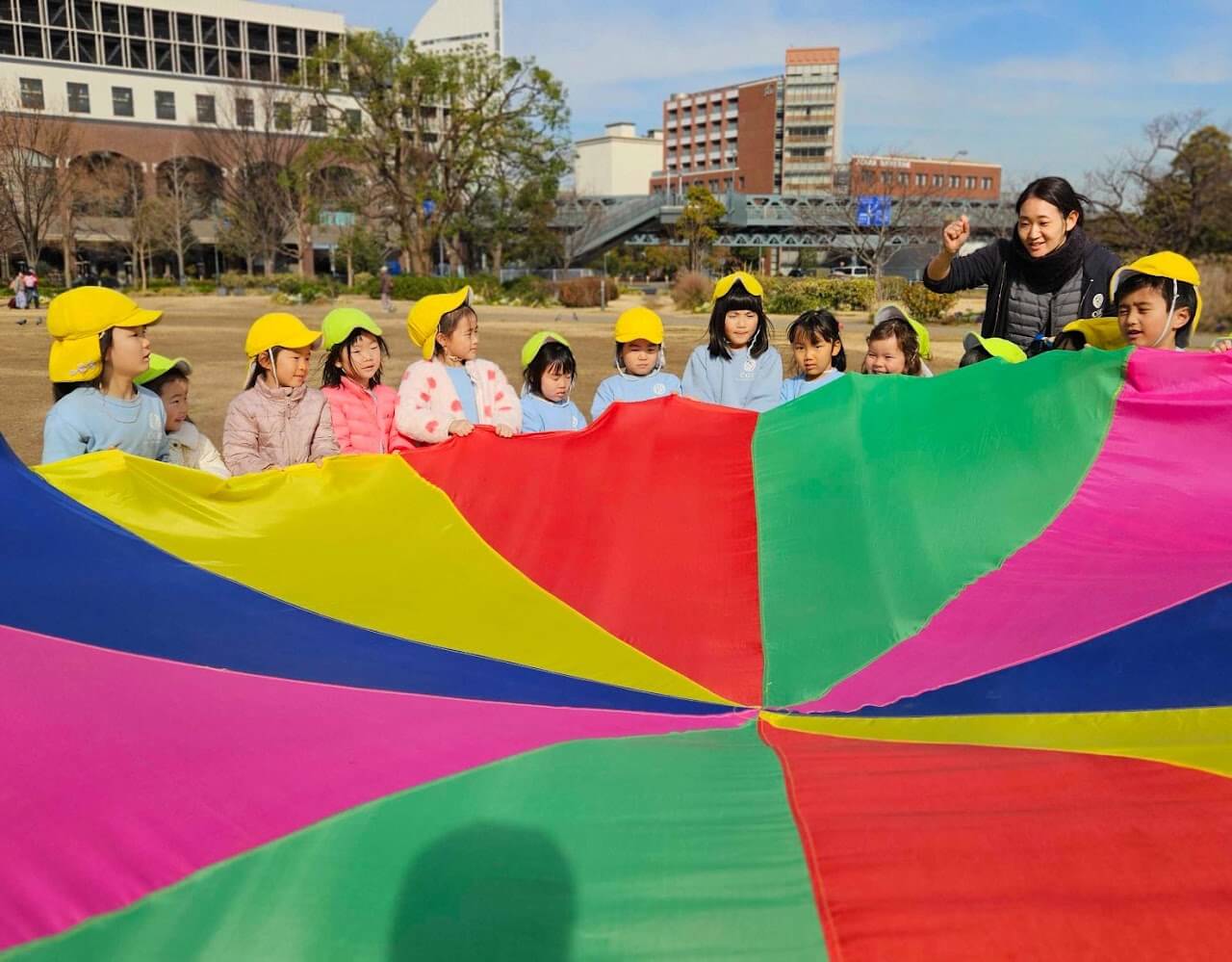
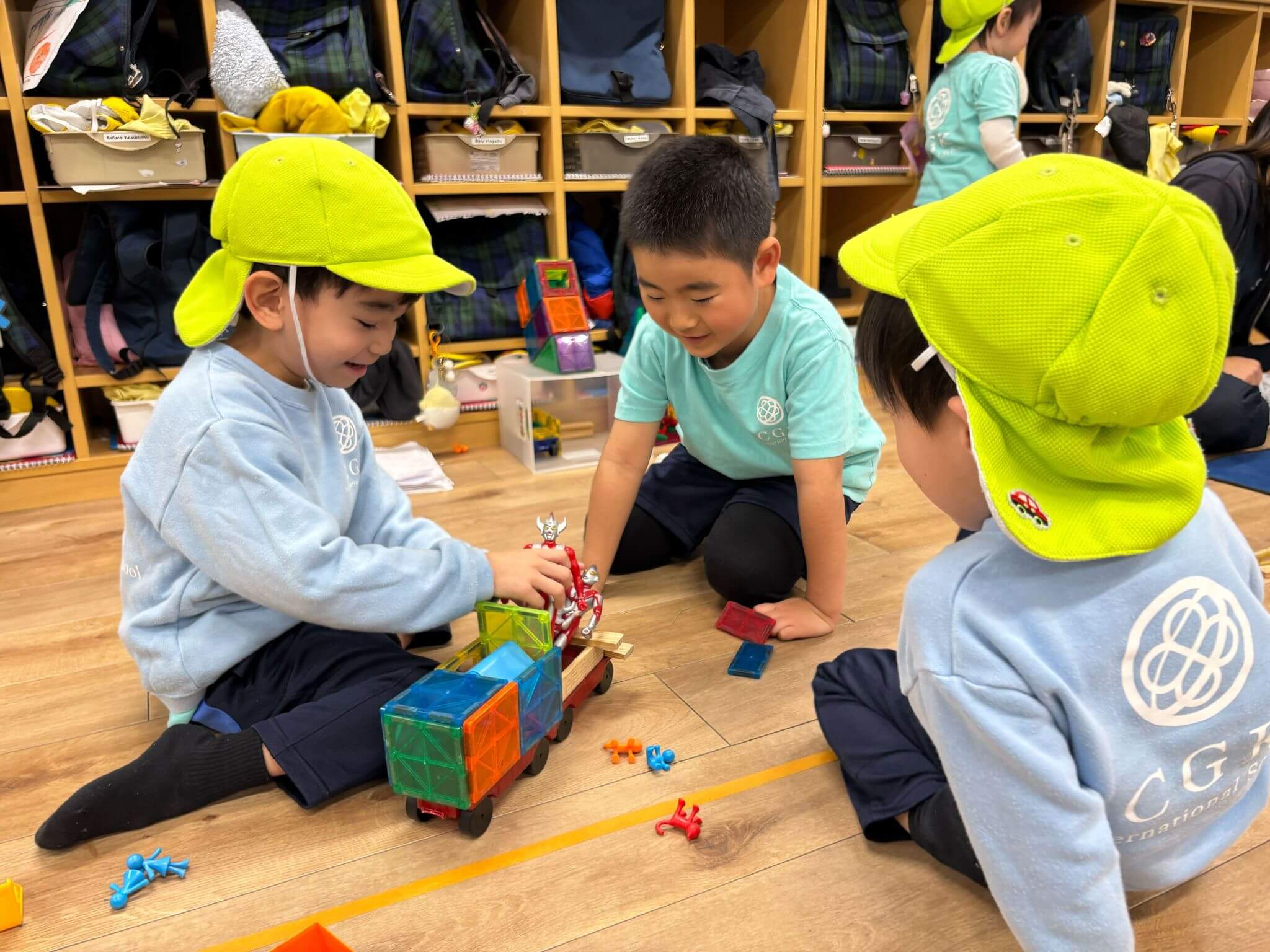
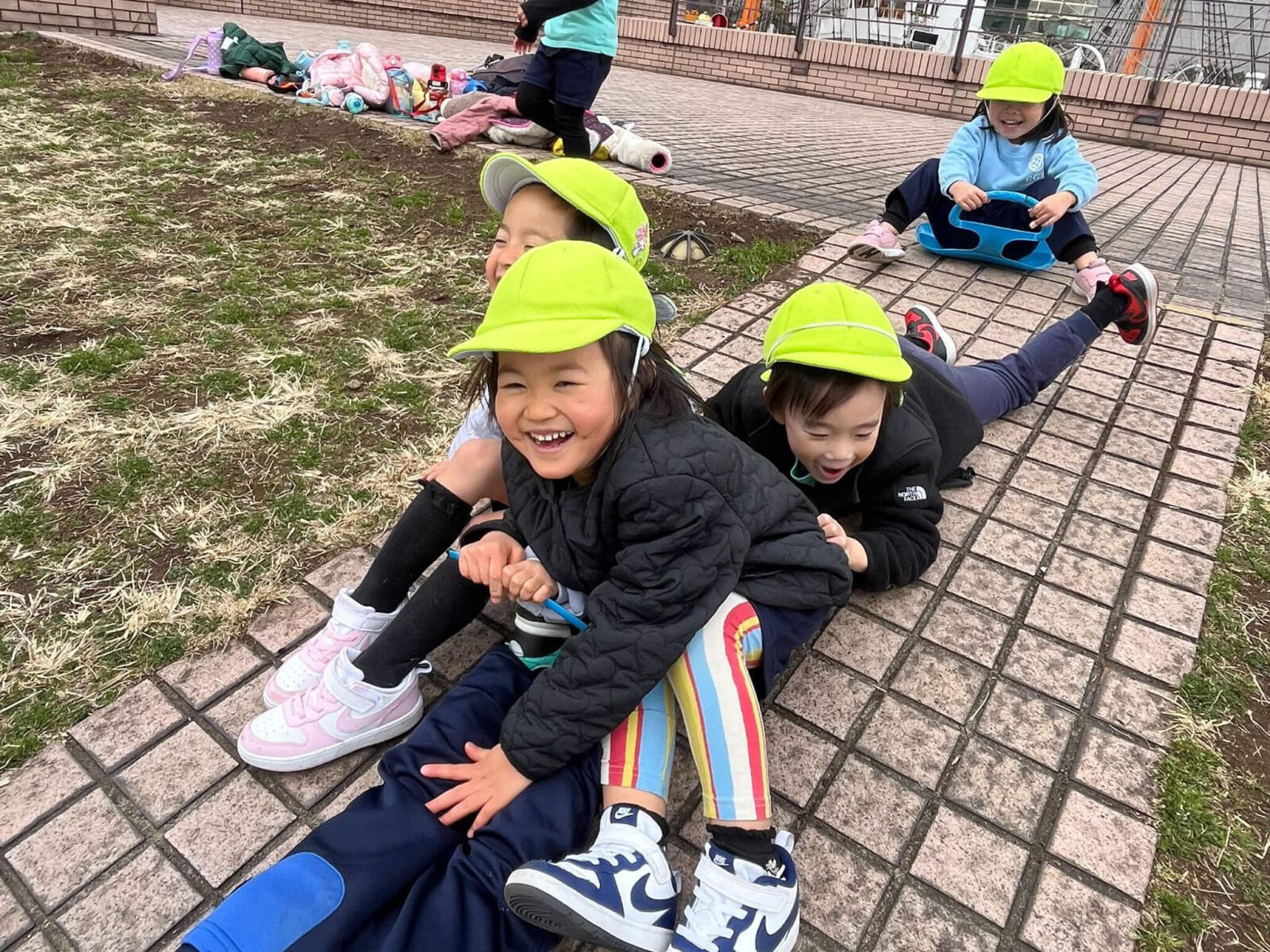
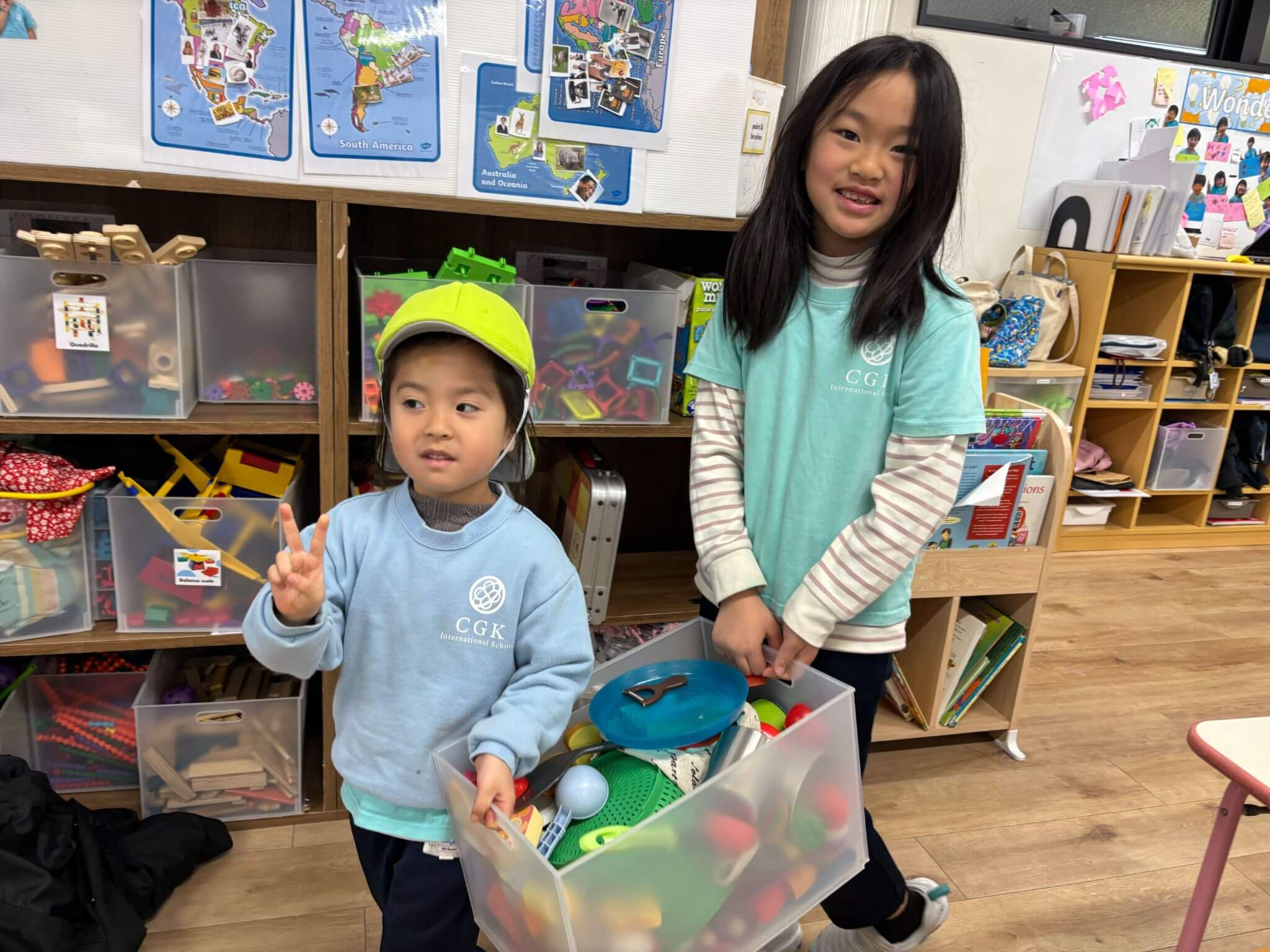
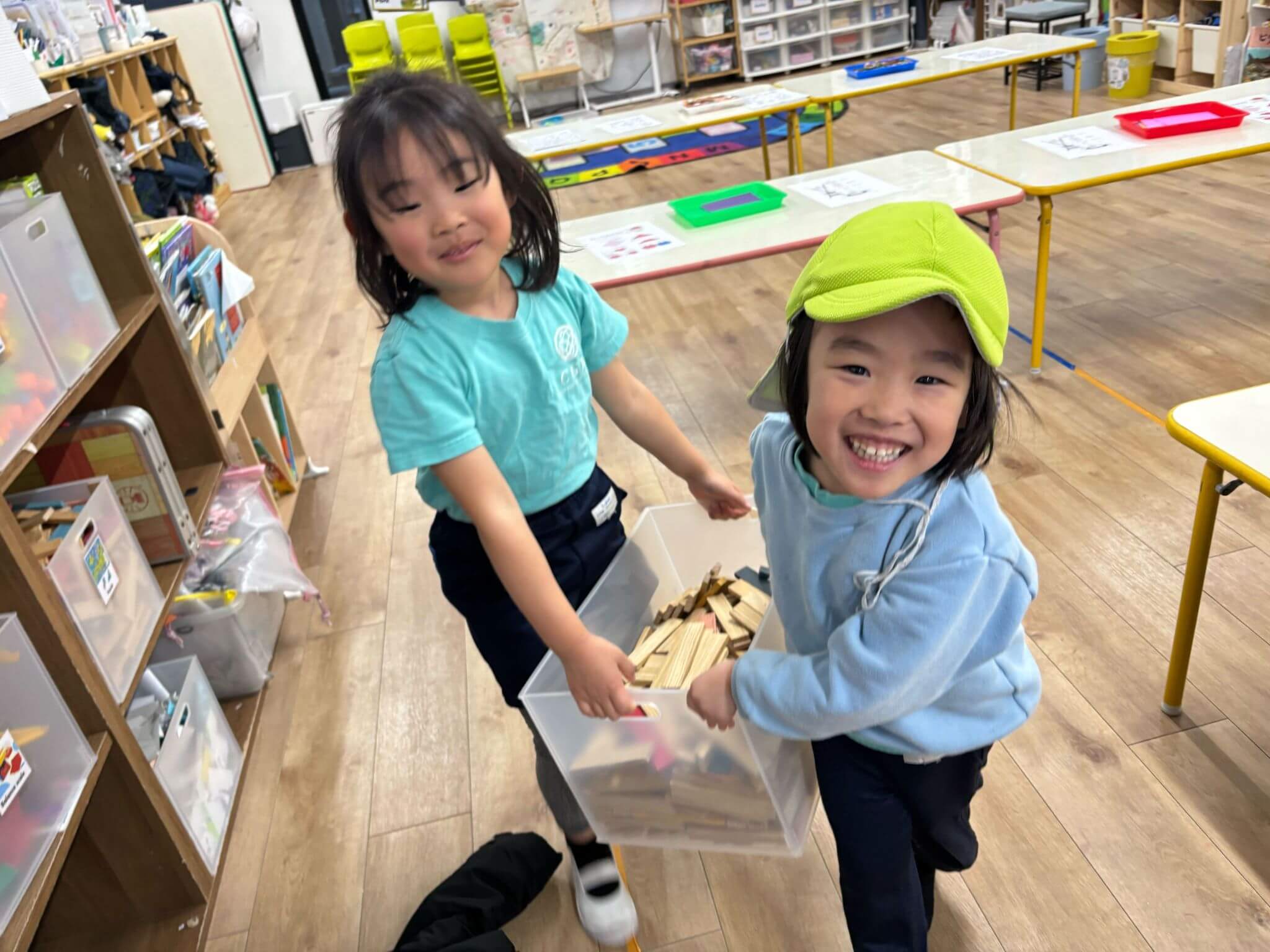
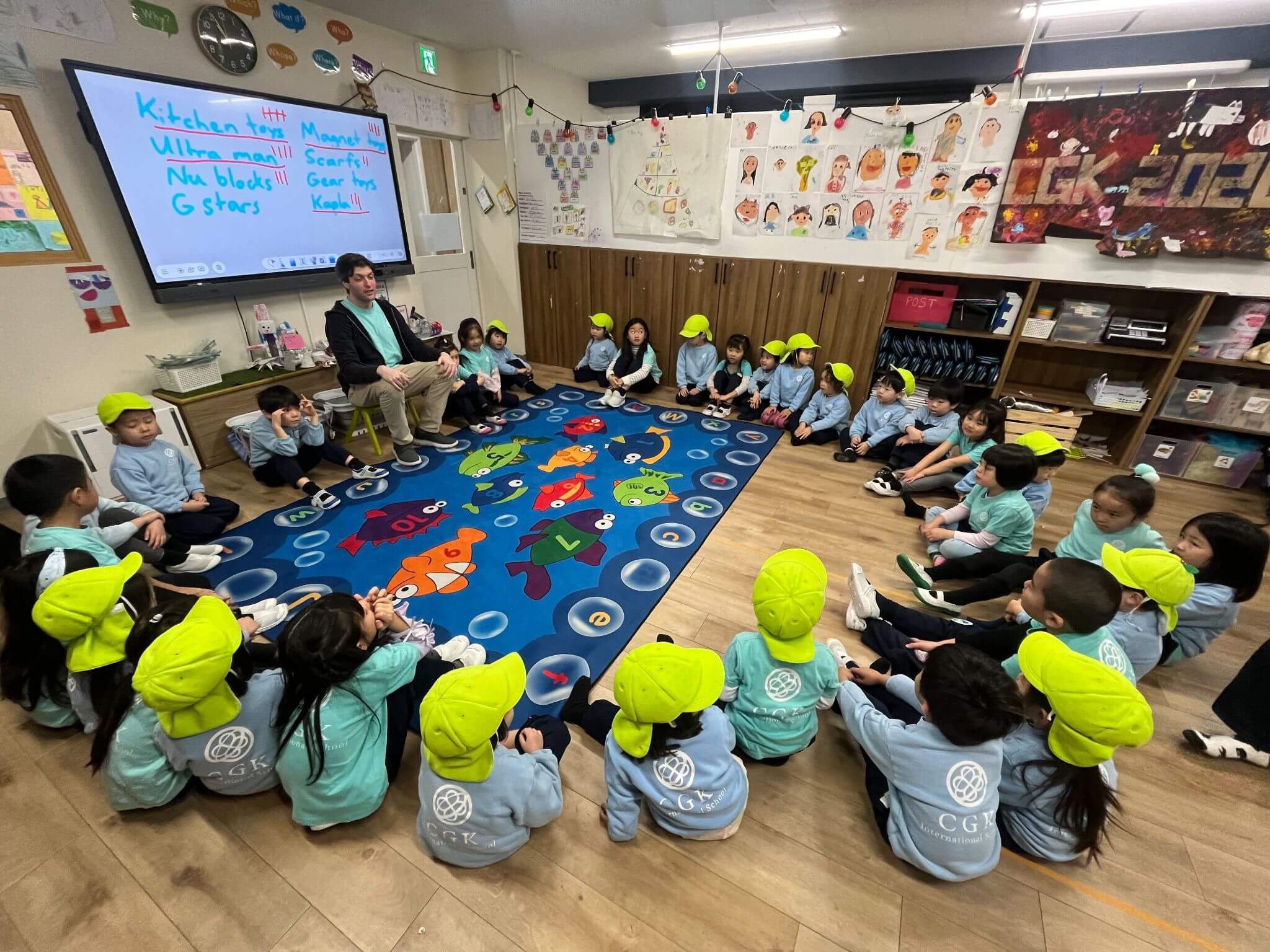
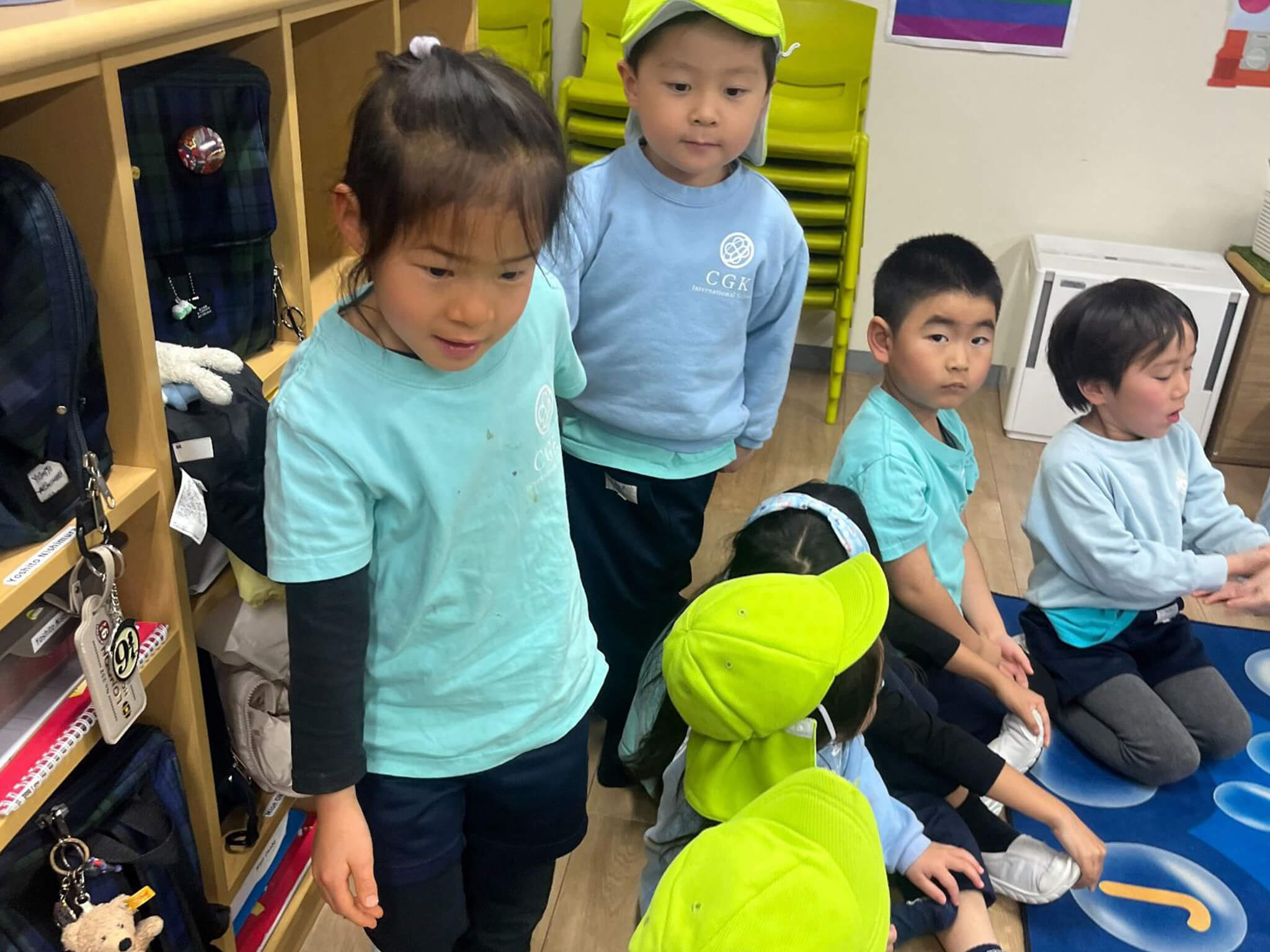
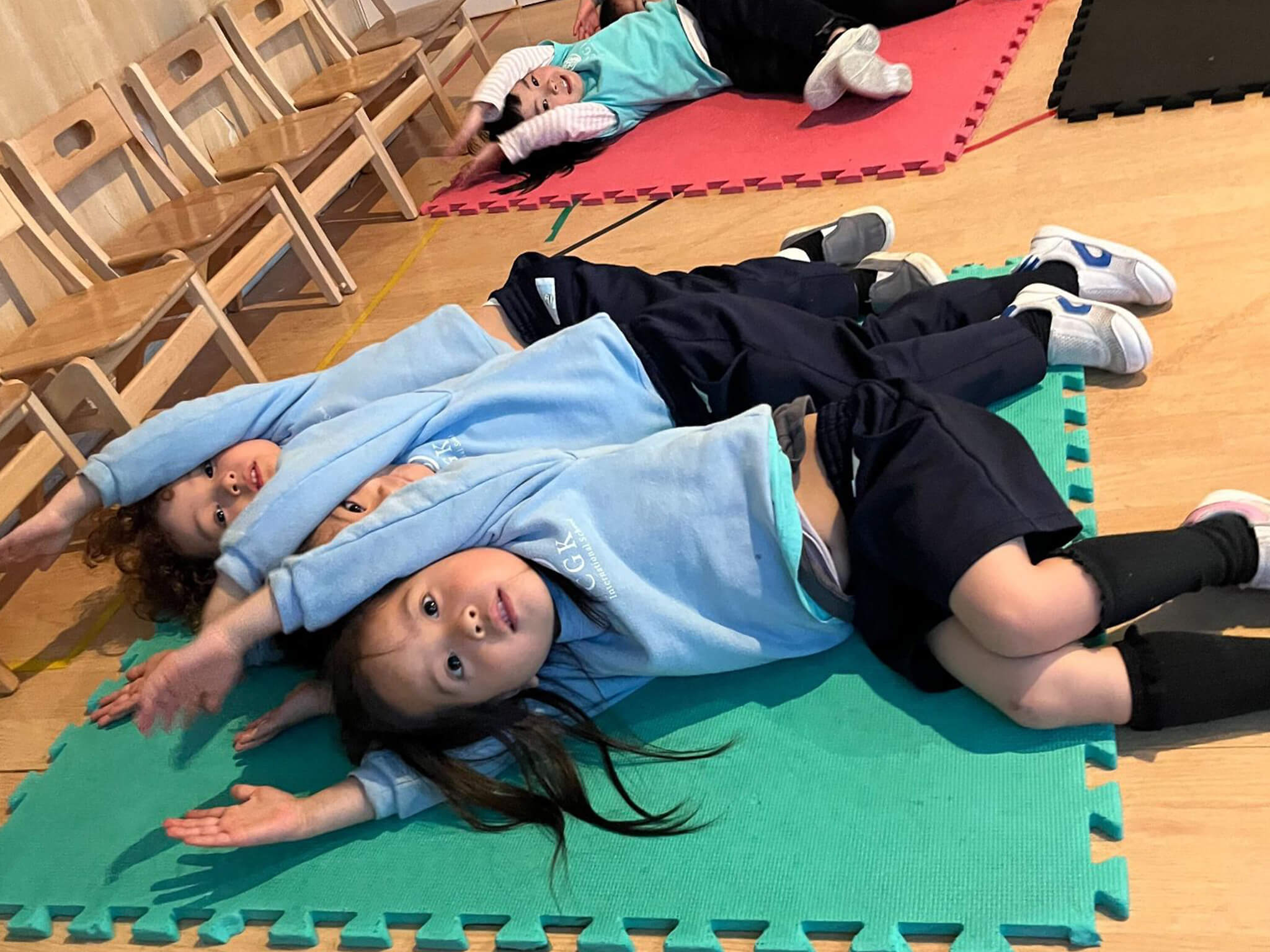
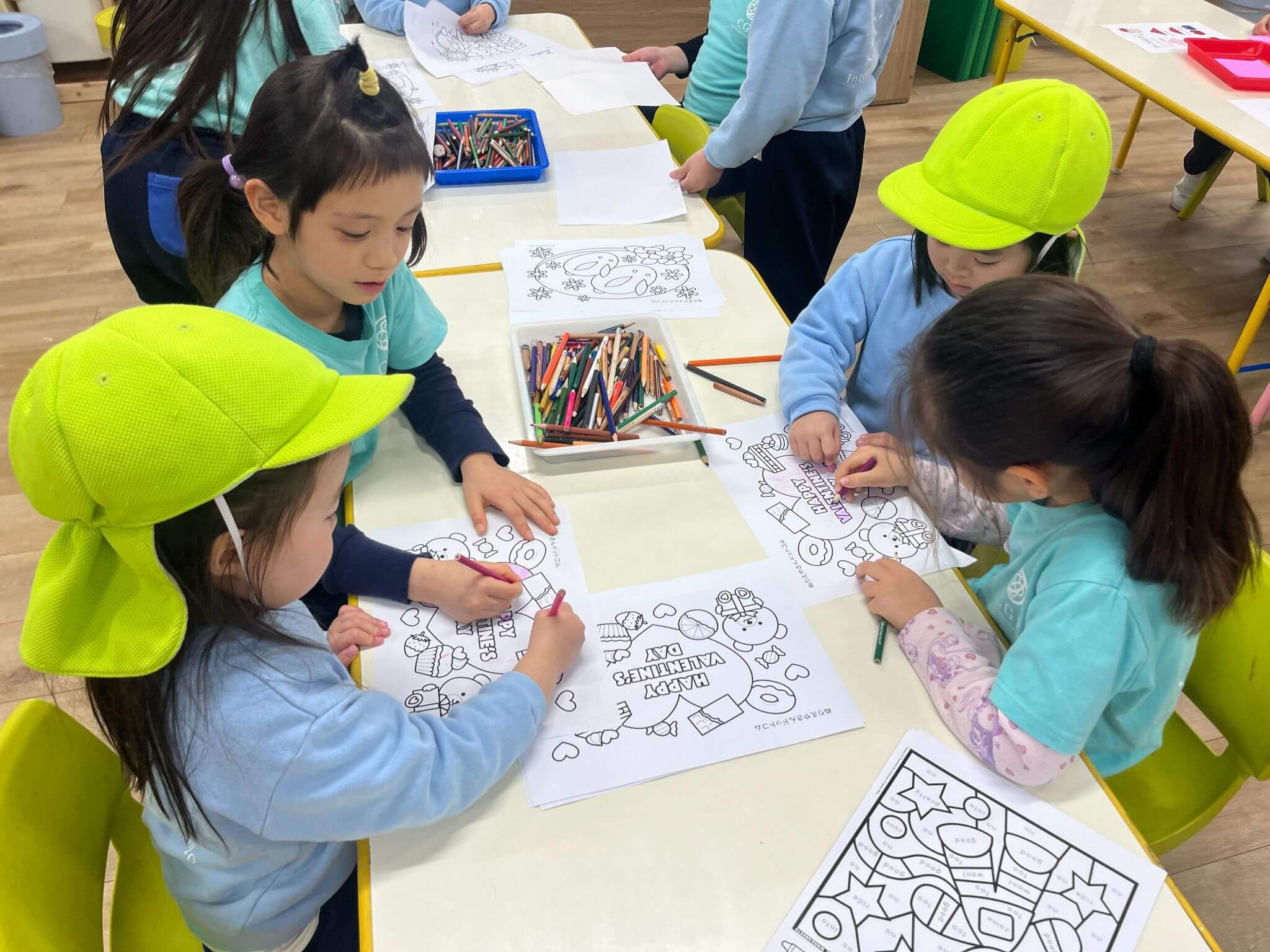
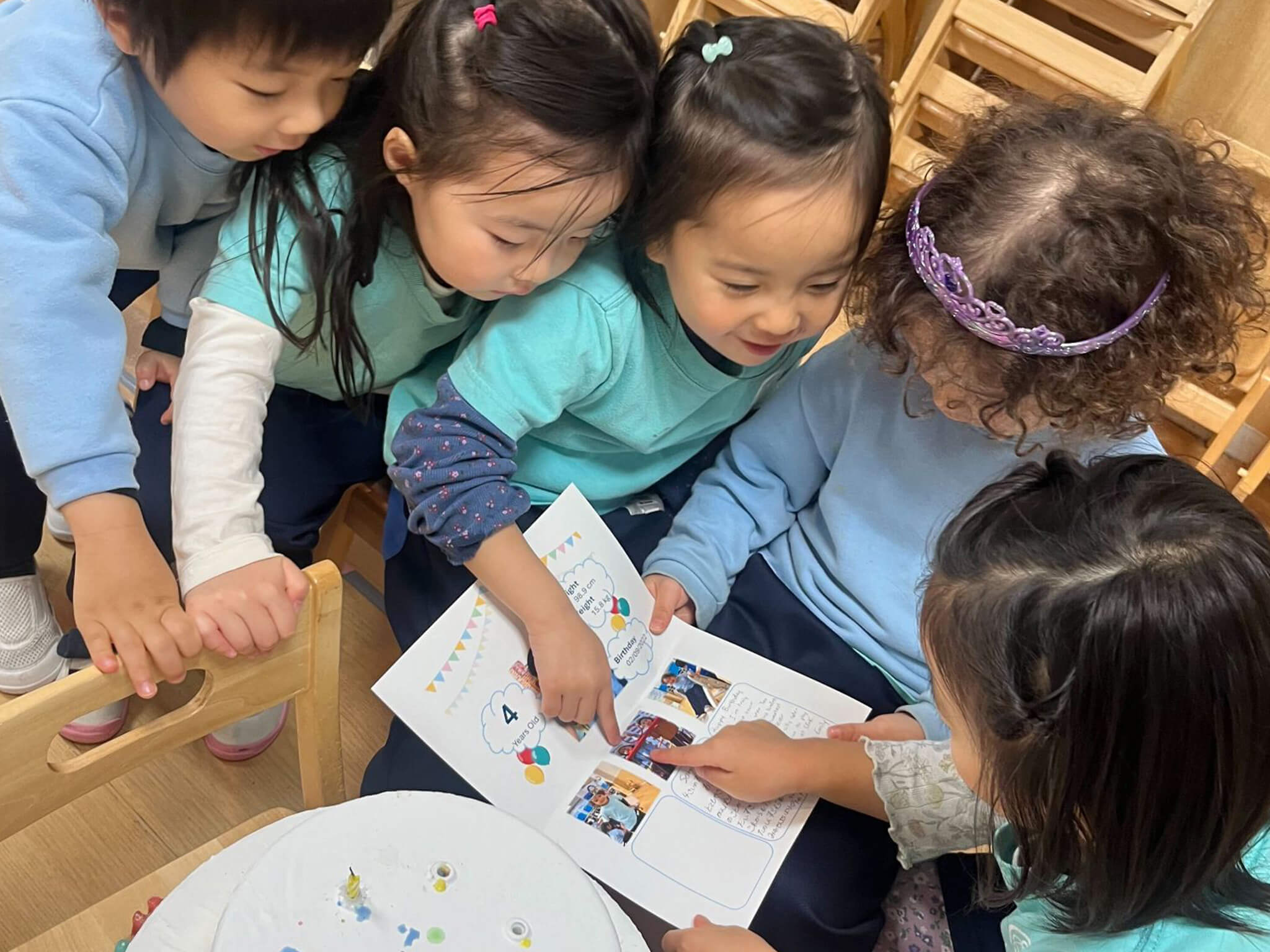
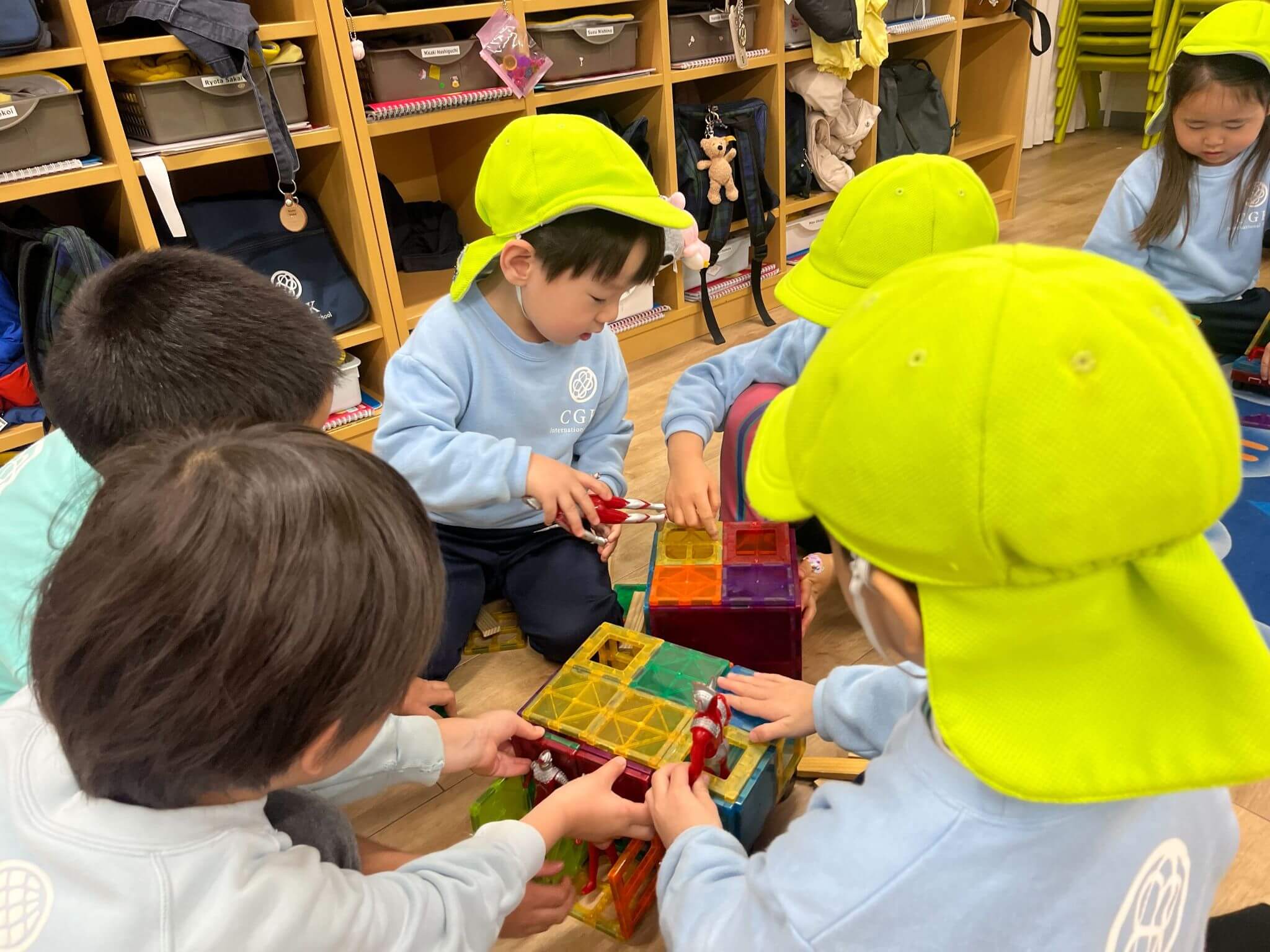
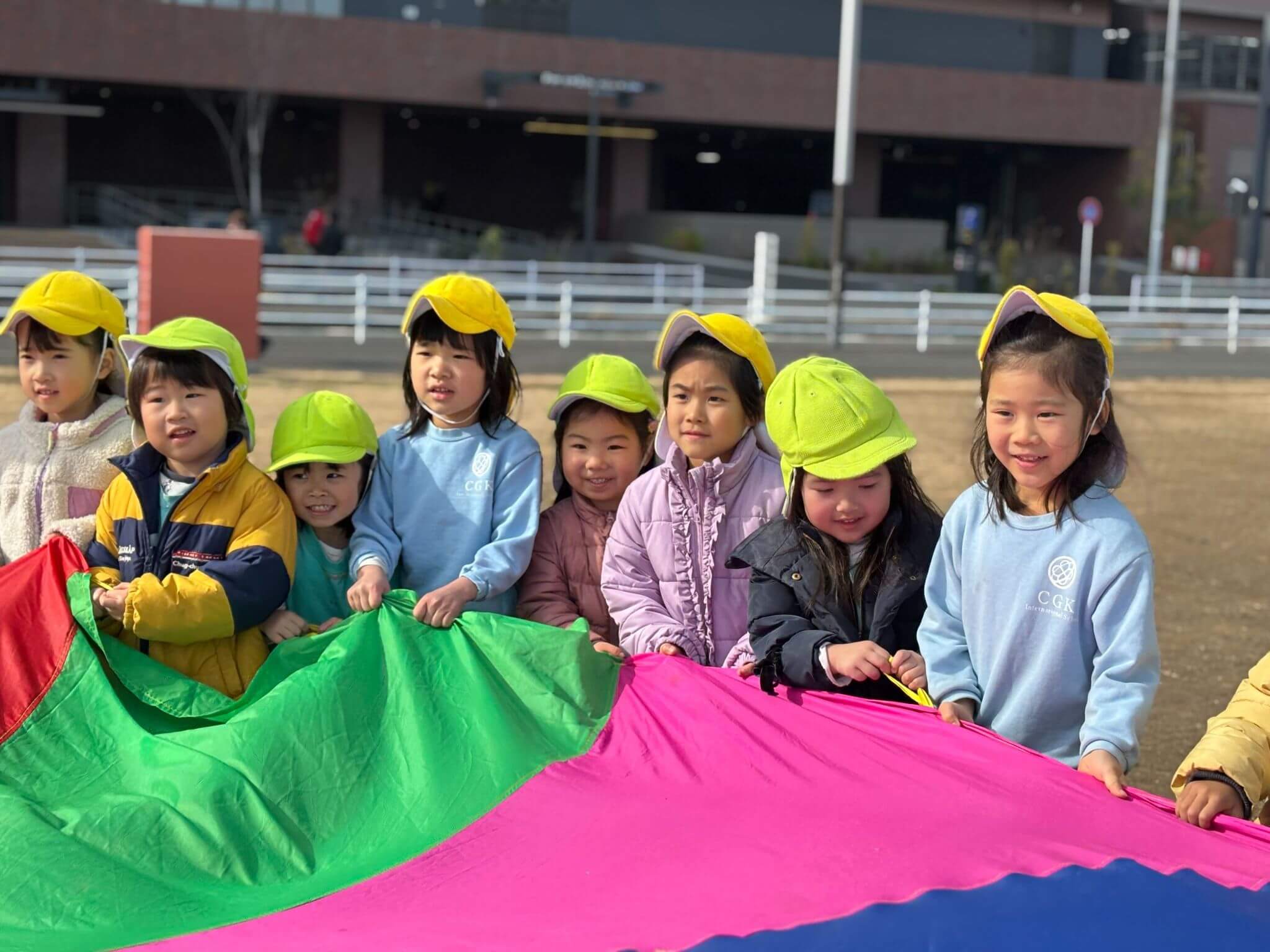
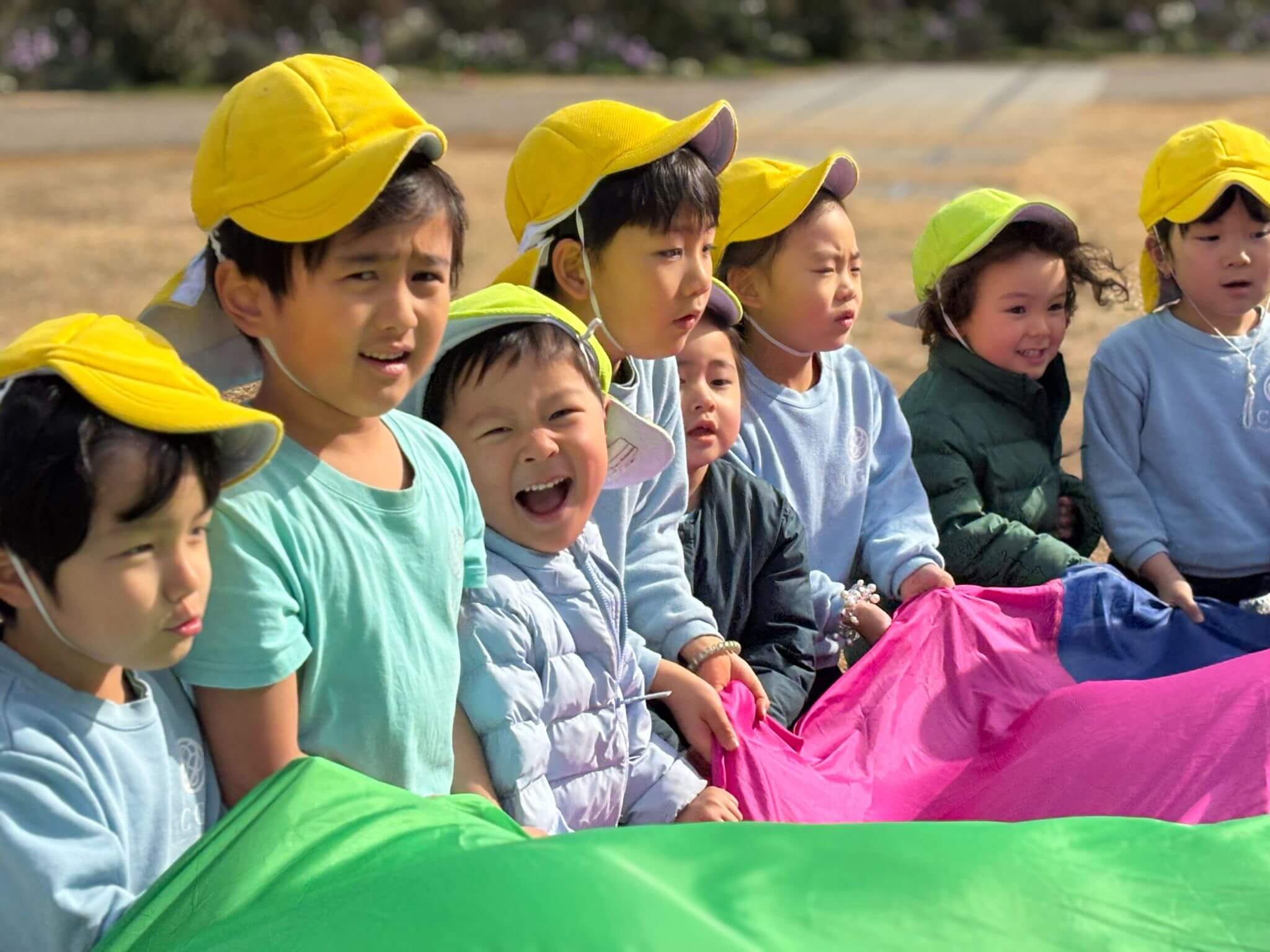
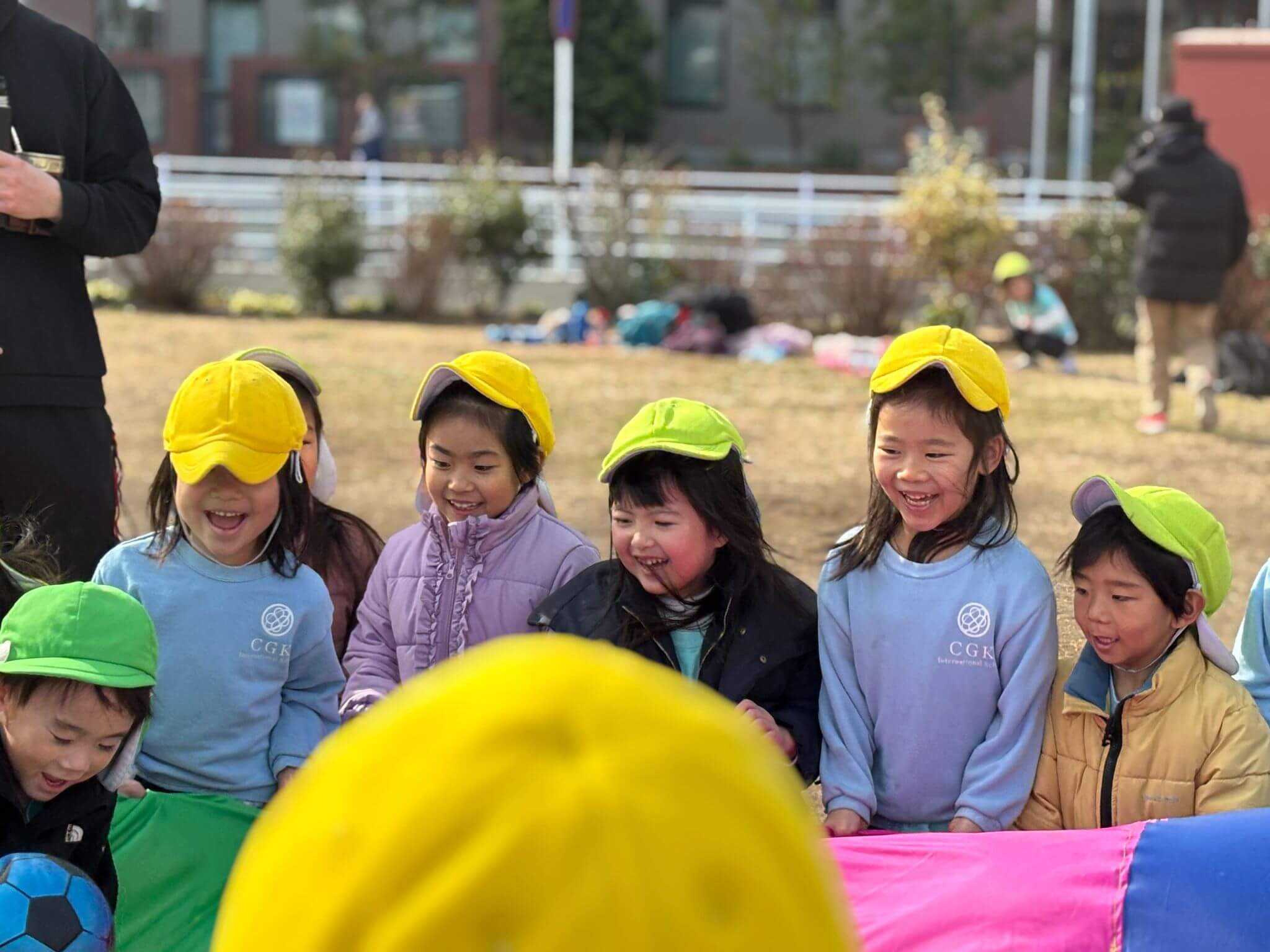
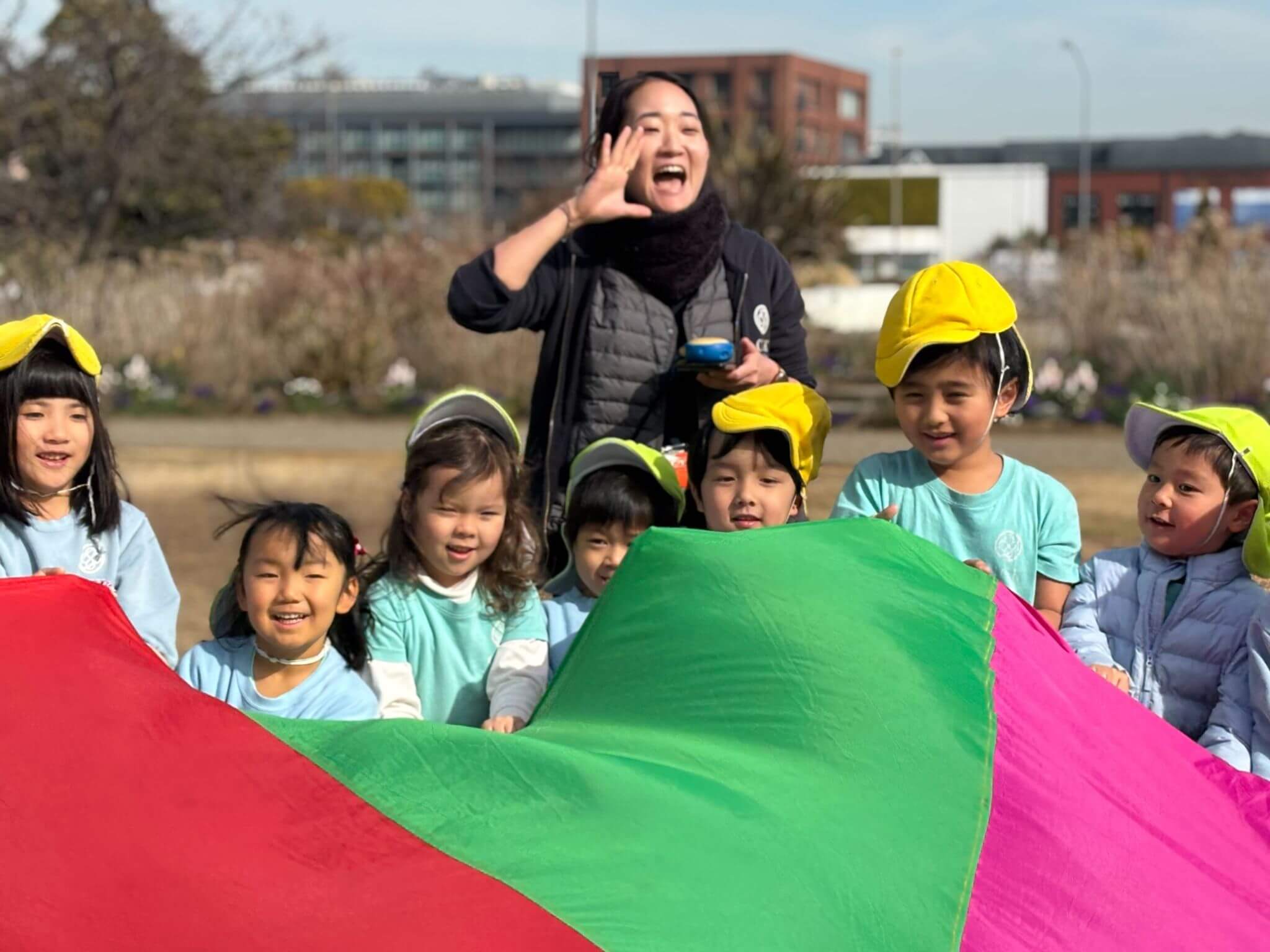
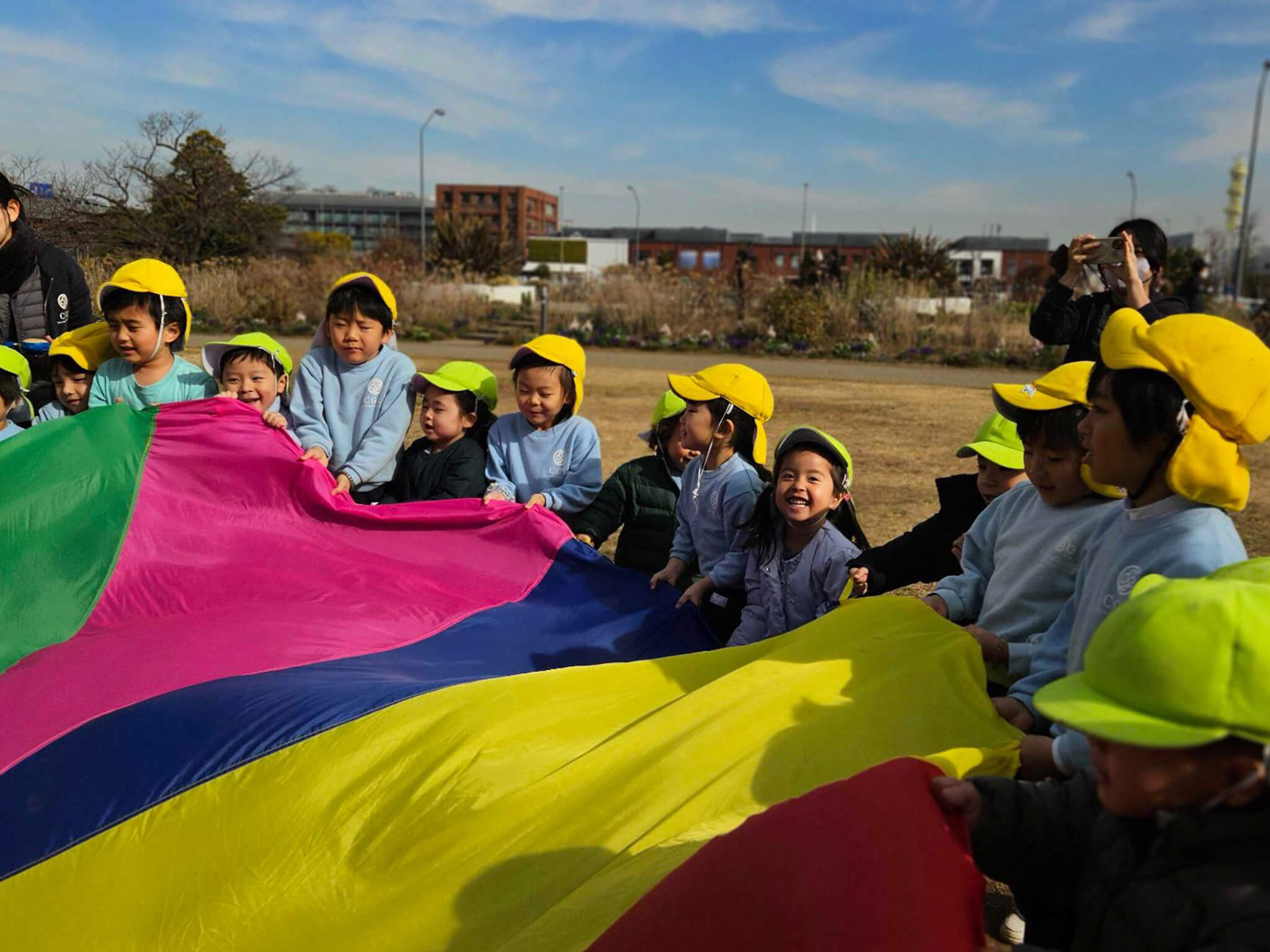
As our time in Jungle B grows shorter, we have started talking with the children about their upcoming transition to the Mountain class at the Kannai Campus in April. The children are gradually beginning to understand this change. While some excitedly say, “We’re big brothers and sisters now, so we can become Mountain friends!” others also share questions and small worries such as, “What do we do in Mountain?” or “Will it be difficult?”
Recently, we visited the Kannai Campus to play with the Sky class. At first, some children seemed a little nervous, but once they started playing, they quickly returned to their usual cheerful selves. We heard comments like, “There were new toys!” “It was so fun!” and “I want to go to Mountain soon!” On other occasions, when spending time with older classes, the children experienced being taught new things or kindly helped by older students. These moments inspired them, and we heard them say, “The big brothers and sisters were so kind!” and “We want to be kind like them too!”
This is a time filled with mixed emotions—excitement, nervousness, joy, and uncertainty. We carefully acknowledge each of these feelings and support the children in viewing this transition not as pressure, but as something to look forward to with confidence and positivity.
Since there will no longer be nap time in Mountain class, we have gradually begun shortening rest time. While many children are happy that this means more time to play, some still need naps, and we occasionally see them getting sleepy in the afternoon. Even as they rub their tired eyes and say, “I’m okay!” while continuing their activities, we can see both their growth and their sweetness. Because sleep needs vary from child to child, we continue to support them carefully and thoughtfully. As they are working hard at school, they may feel extra tired or emotionally sensitive at home. Please feel free to let us know if you notice anything concerning. We would also appreciate your support in maintaining a healthy sleep routine at home as much as possible.
Recently, we have seen a growing awareness of becoming “Mountain friends” in many aspects of daily life—getting dressed, eating lunch, and participating in activities. The children are becoming more independent and showing a true Risk-taker spirit by challenging themselves. We see them carefully folding their uniforms without teacher assistance and proudly showing us, or bravely trying foods they once found difficult. It is wonderful to see them growing stronger, encouraging one another, and striving together.
We will continue to nurture this positive mindset while supporting them in making the most of their remaining time in Jungle. We hope to help each child transition with confidence, carrying many joyful memories from their Jungle days. Let’s cherish each remaining day and continue to enjoy our time together!
Ocean
(2-year-olds)
Story Time
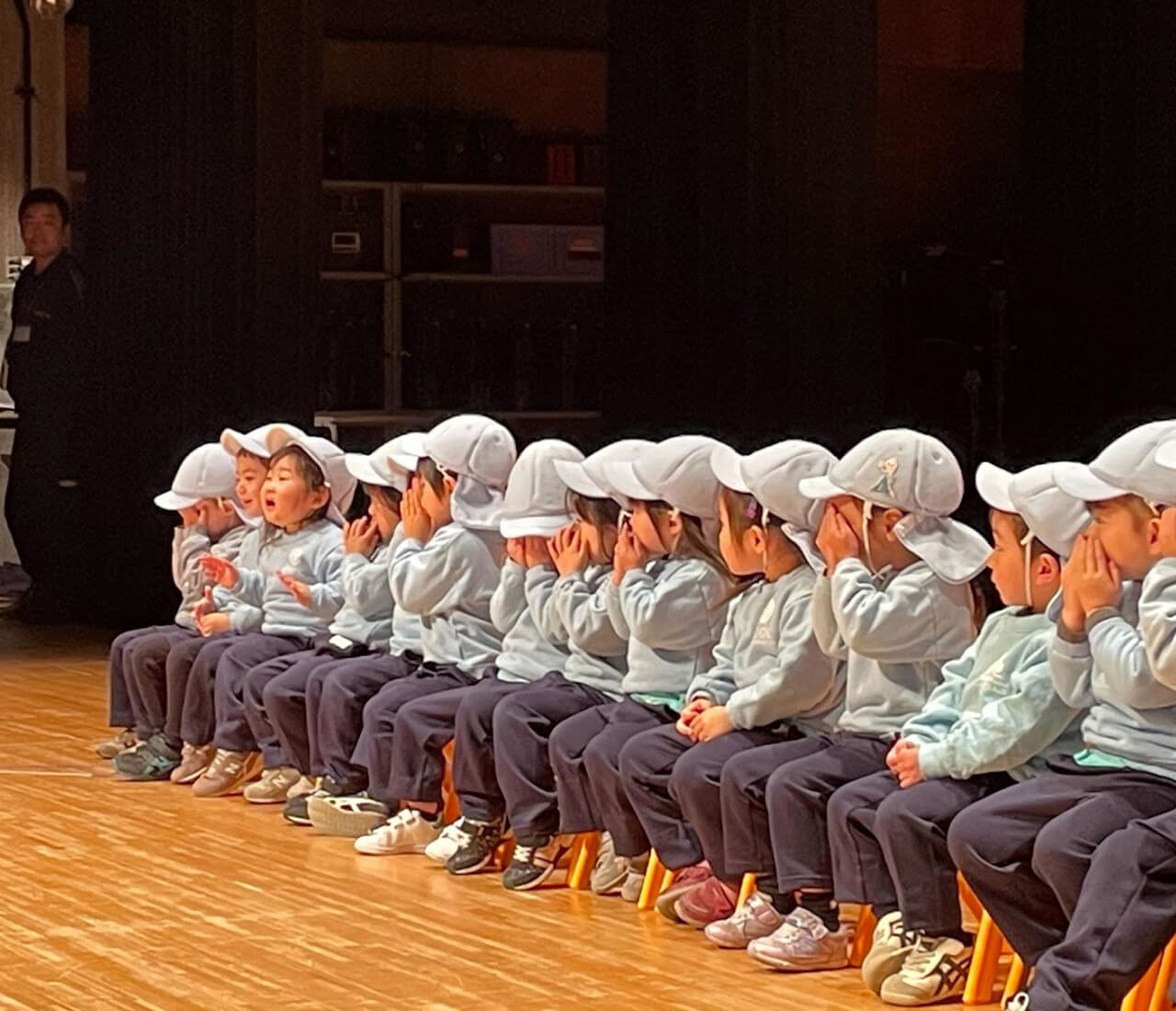
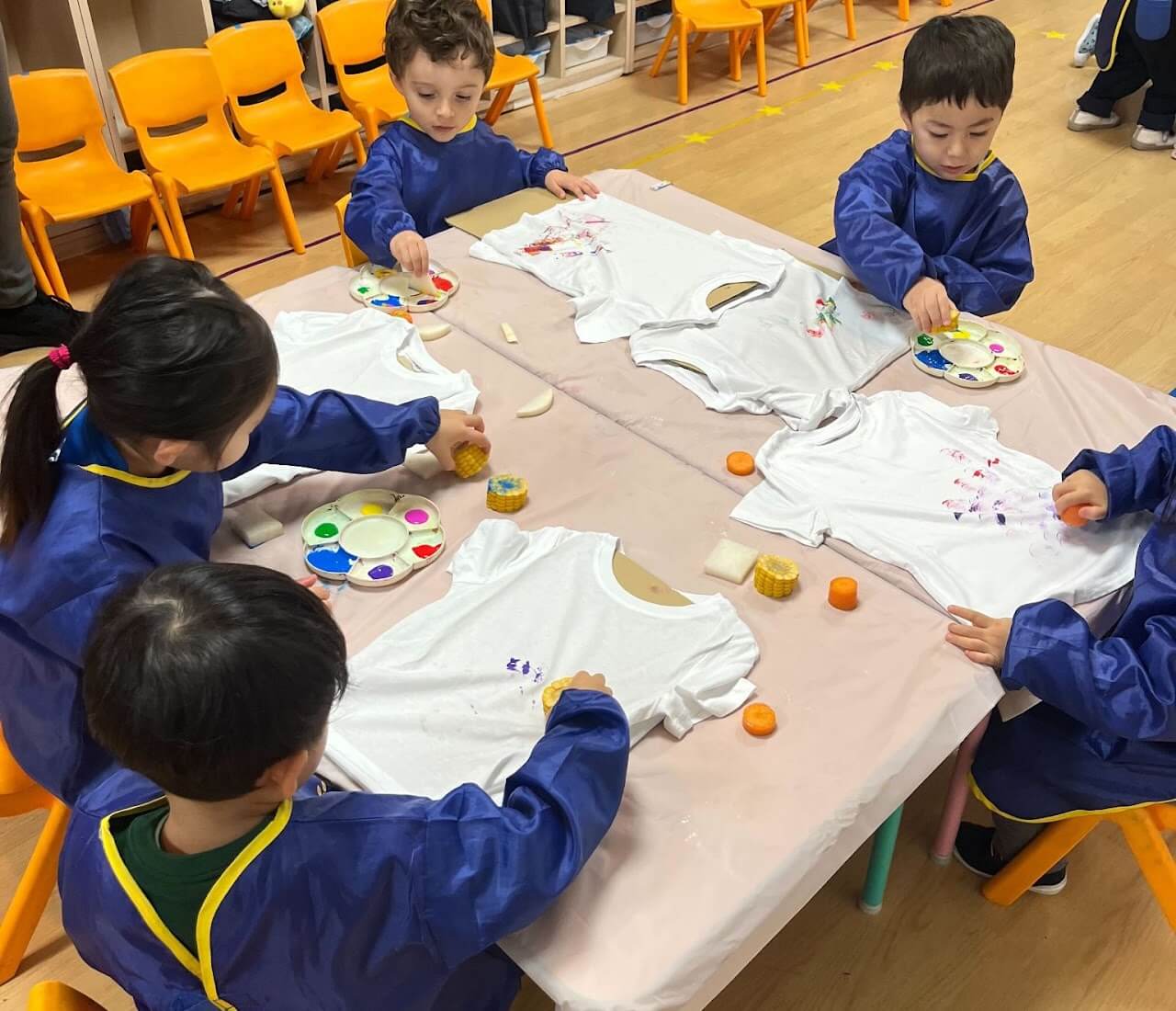
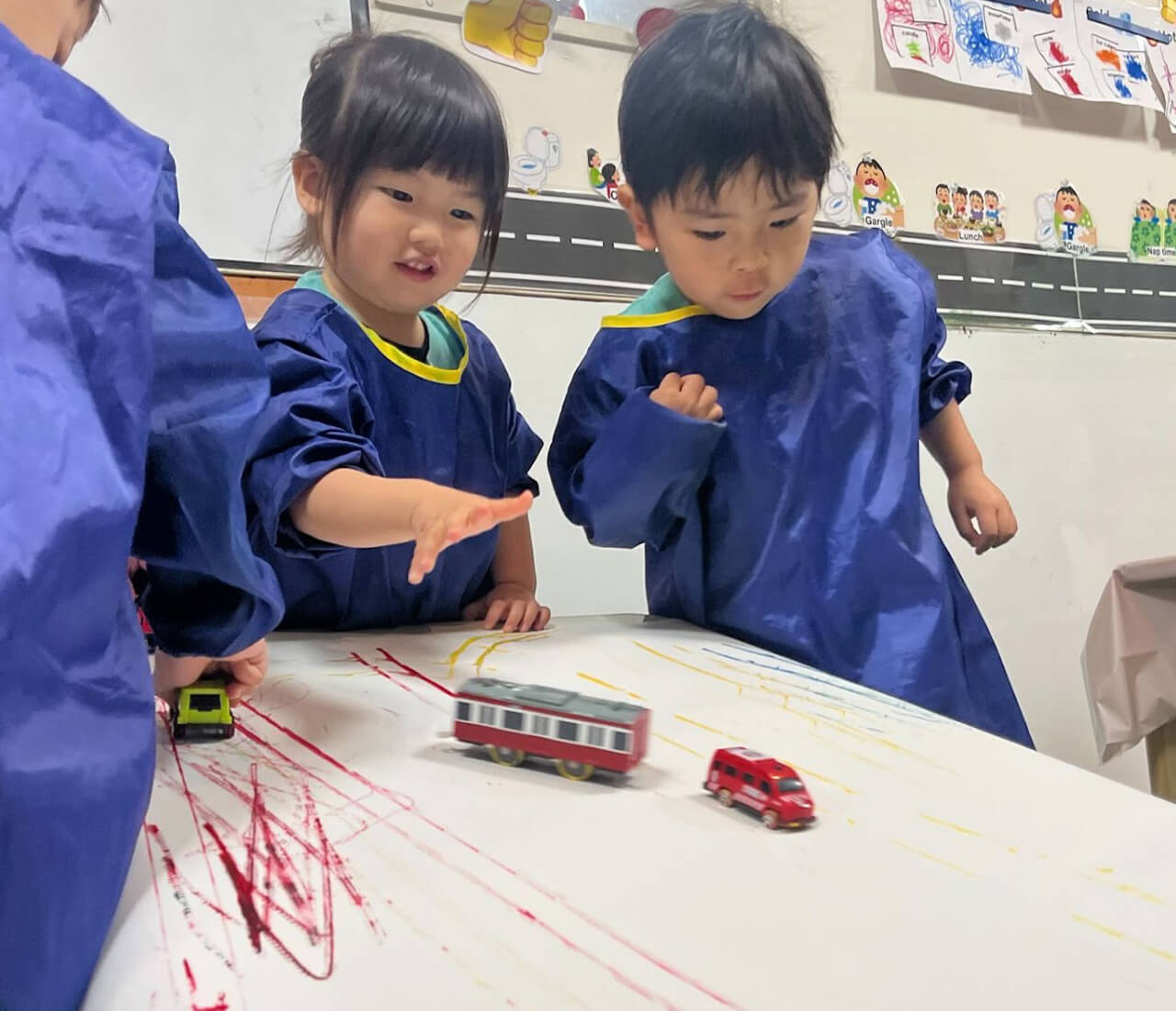
There has been a real buzz of excitement in Ocean Class this month as we prepare for the COL show. From rehearsals to costume design and prop making, the children have been fully immersed in the creative process.
To get everyone into the right mindset, we began with a mini rehearsal. The students absolutely love singing the songs and “dancing the shapes,” so practising together is always full of energy and joy. These rehearsals are helping the children build confidence as they learn to move together, follow cues, and enjoy performing as part of a group.
To inspire our costume ideas, we explored costumes from previous years’ COL performances and discussed how they connected to the stories being told. This helped the children understand how costumes can bring characters to life. Then came the most exciting part of designing our own! We incorporate the theme of recent lessons- fruits and vegetables, to make shape stamps. We then started stamping, rolling, and squishing paint onto our shirts to create unique designs.
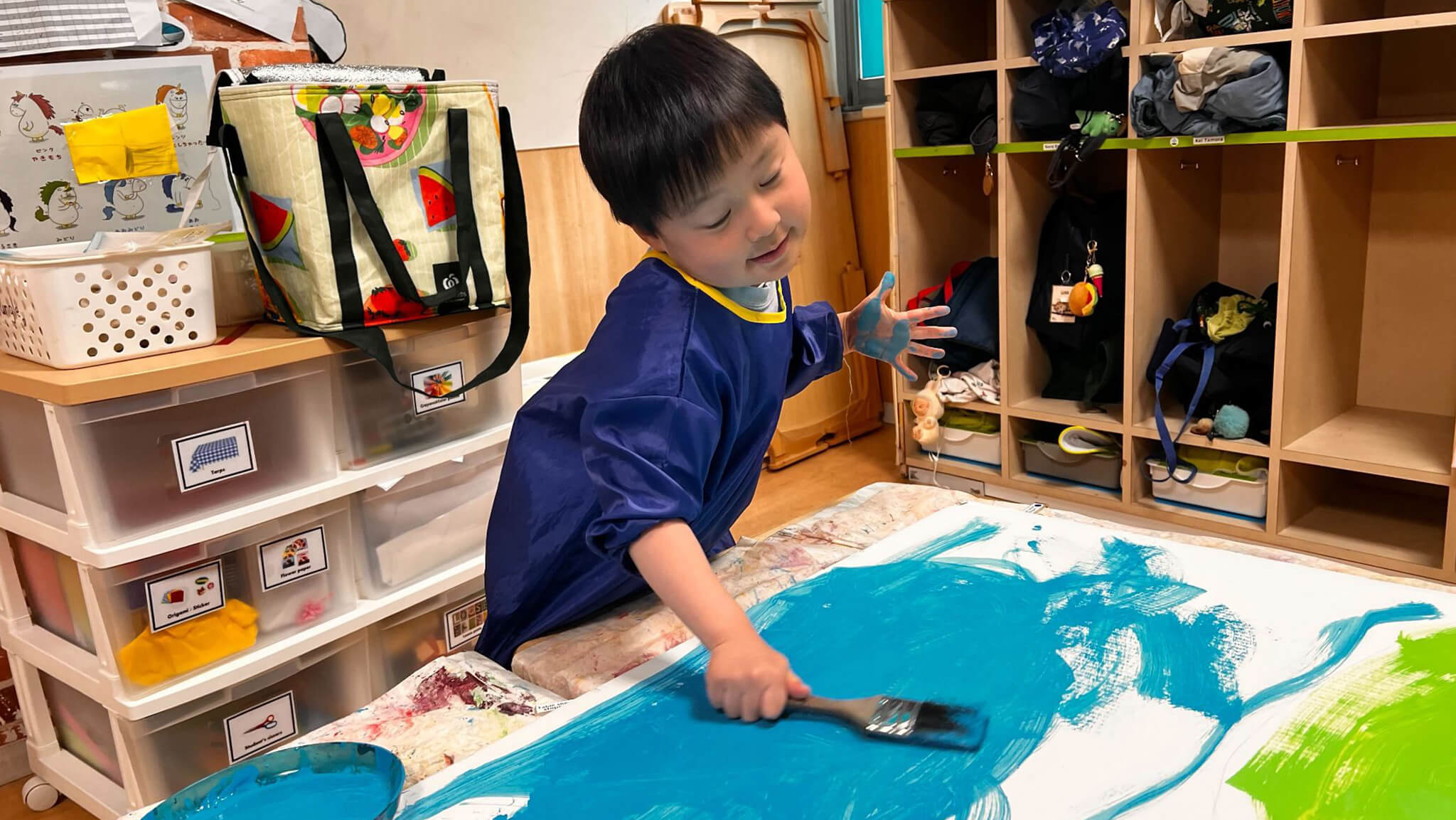
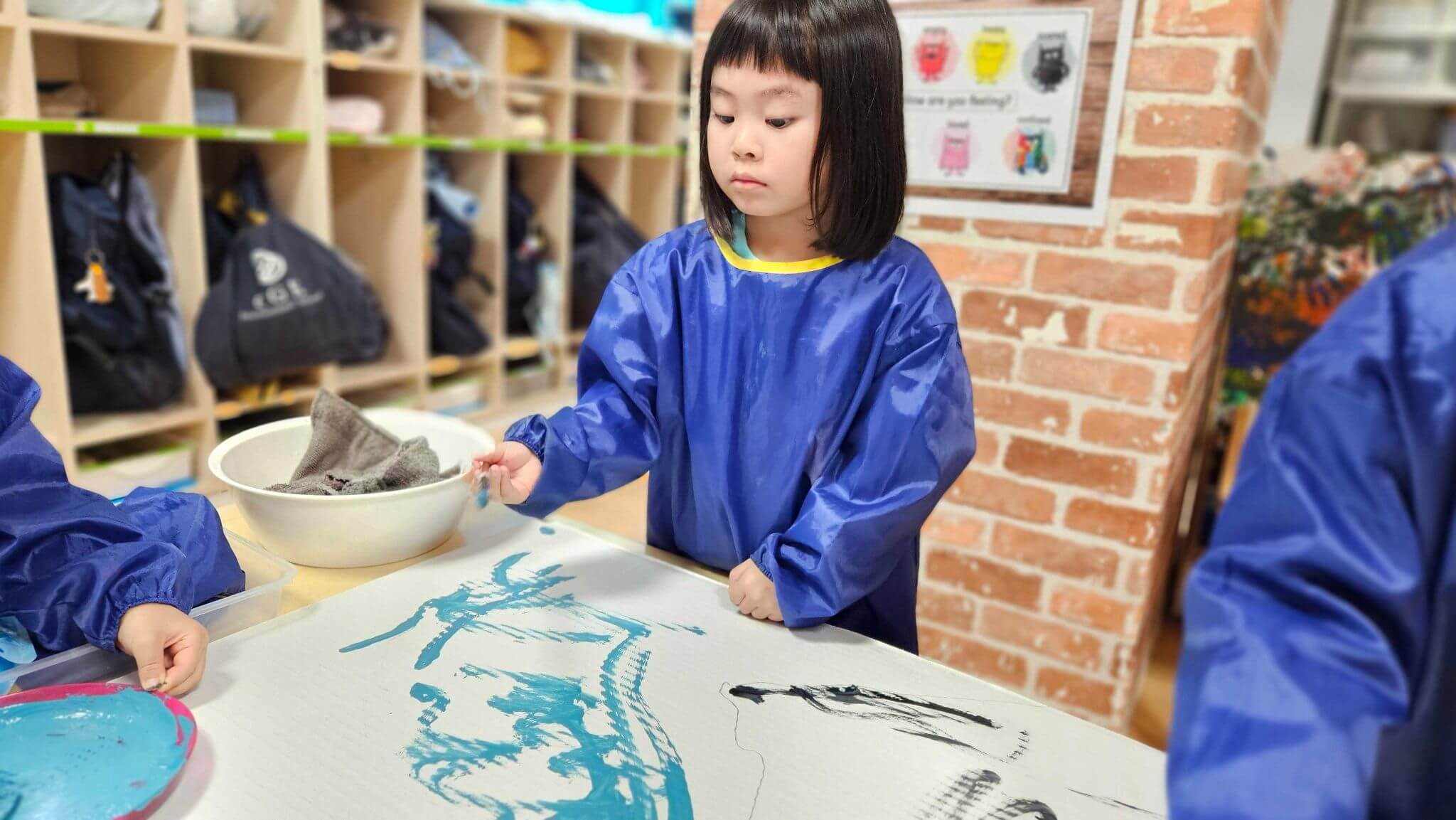
Ocean class also began another exciting project for the show: creating fridge props for a scene in which hungry little ghosts sneak quietly into a kitchen in search of a snack. To make the fridges extra special, we incorporated one of the class’s favourite themes from earlier in the year; vehicles. Using toy cars dipped in bright paint, the children raced them across large sheets of paper, creating bold tracks, swirls, and patterns. Each artwork was completely different, full of movement and colour. Once dry, these vibrant designs will be used to decorate our fridge props, making them eye-catching additions to the stage.
It has certainly been a busy (and sometimes messy!) few weeks in Ocean Class, but the children have shown such enthusiasm, creativity, and determination. We are incredibly proud of all their hard work and cannot wait to see them shine in their big performance at the end of the school year.

Growing Through Cause and Effect: Building the Courage to Try and the Confidence to Communicate!
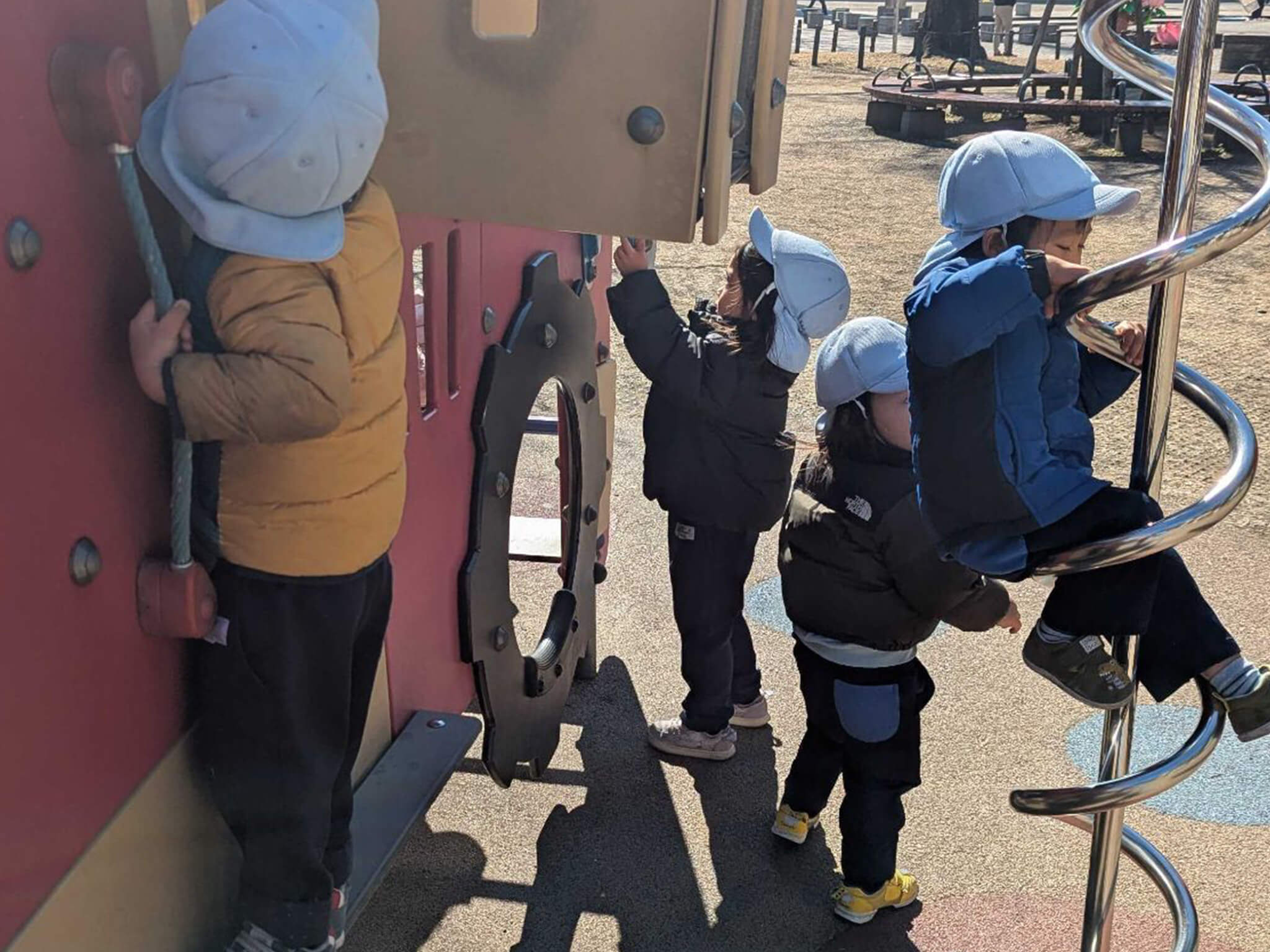
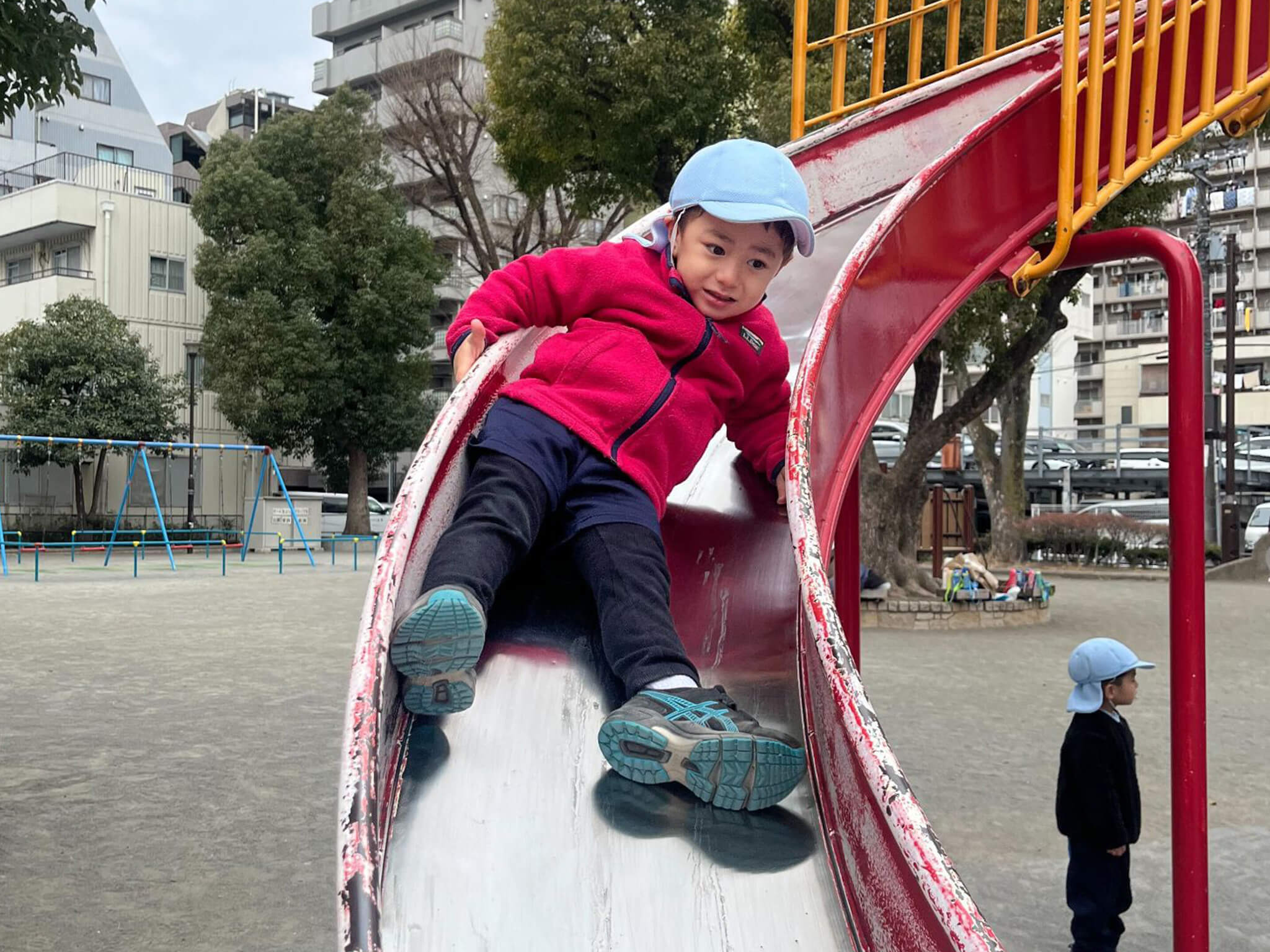
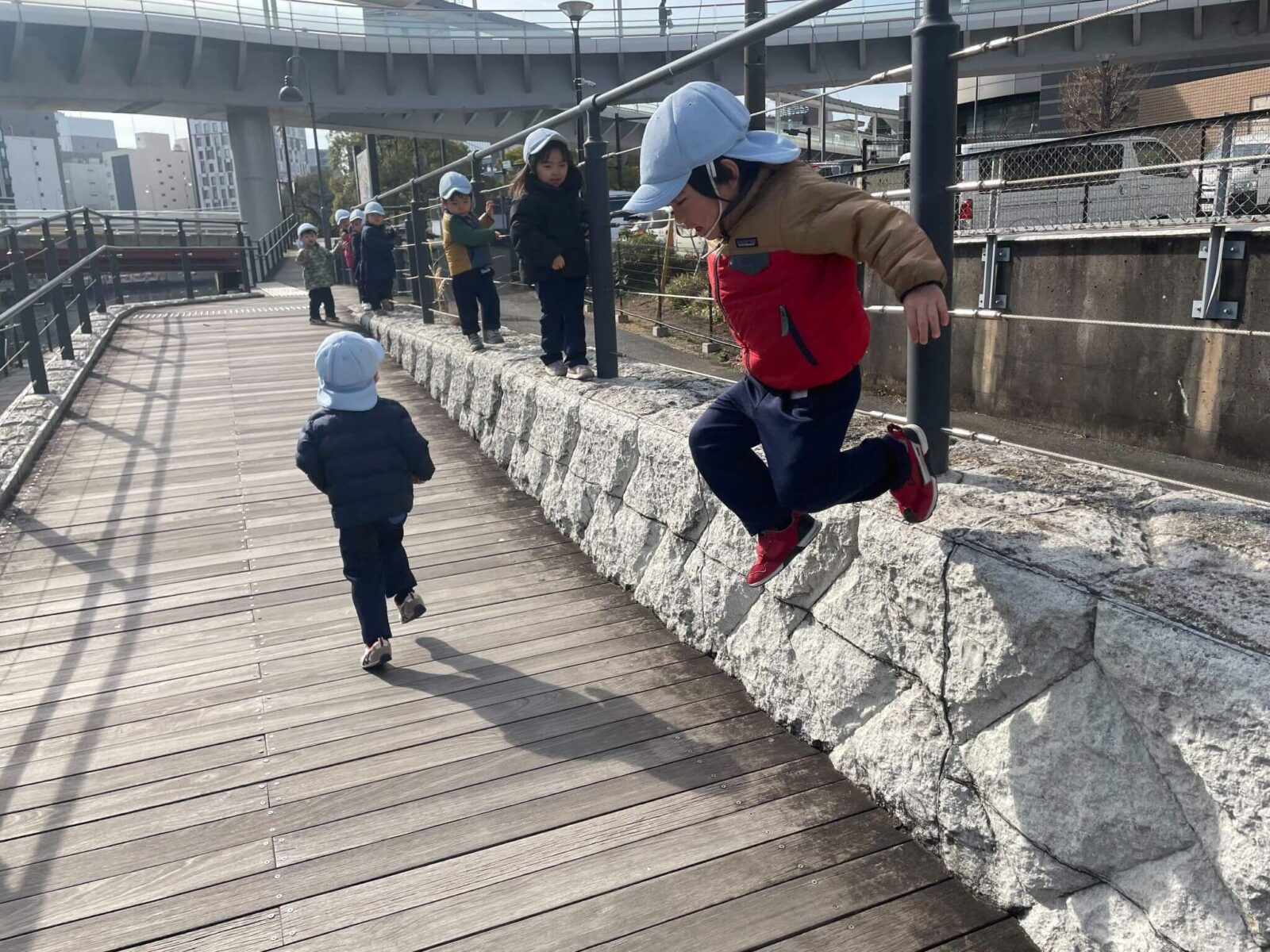
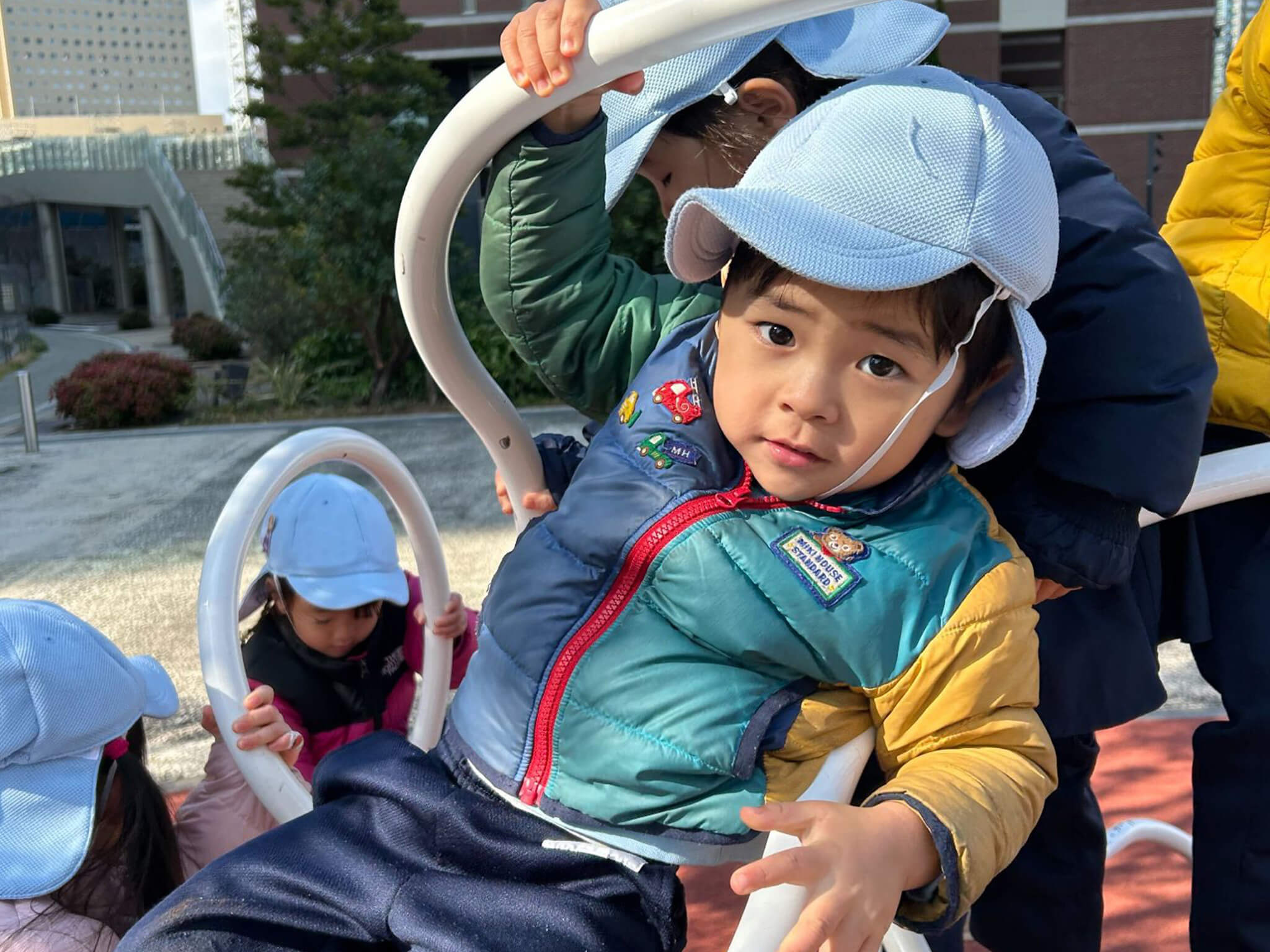
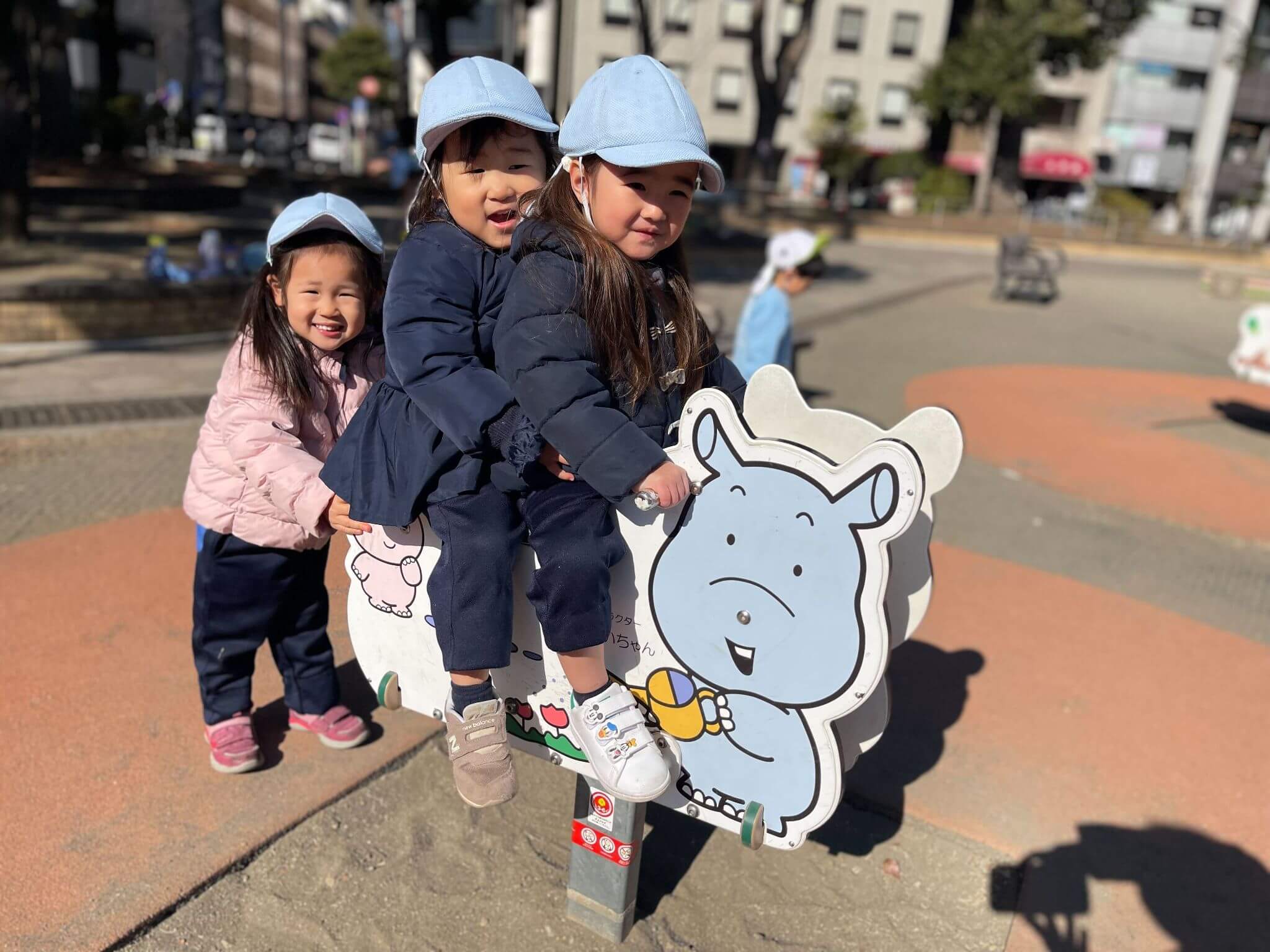
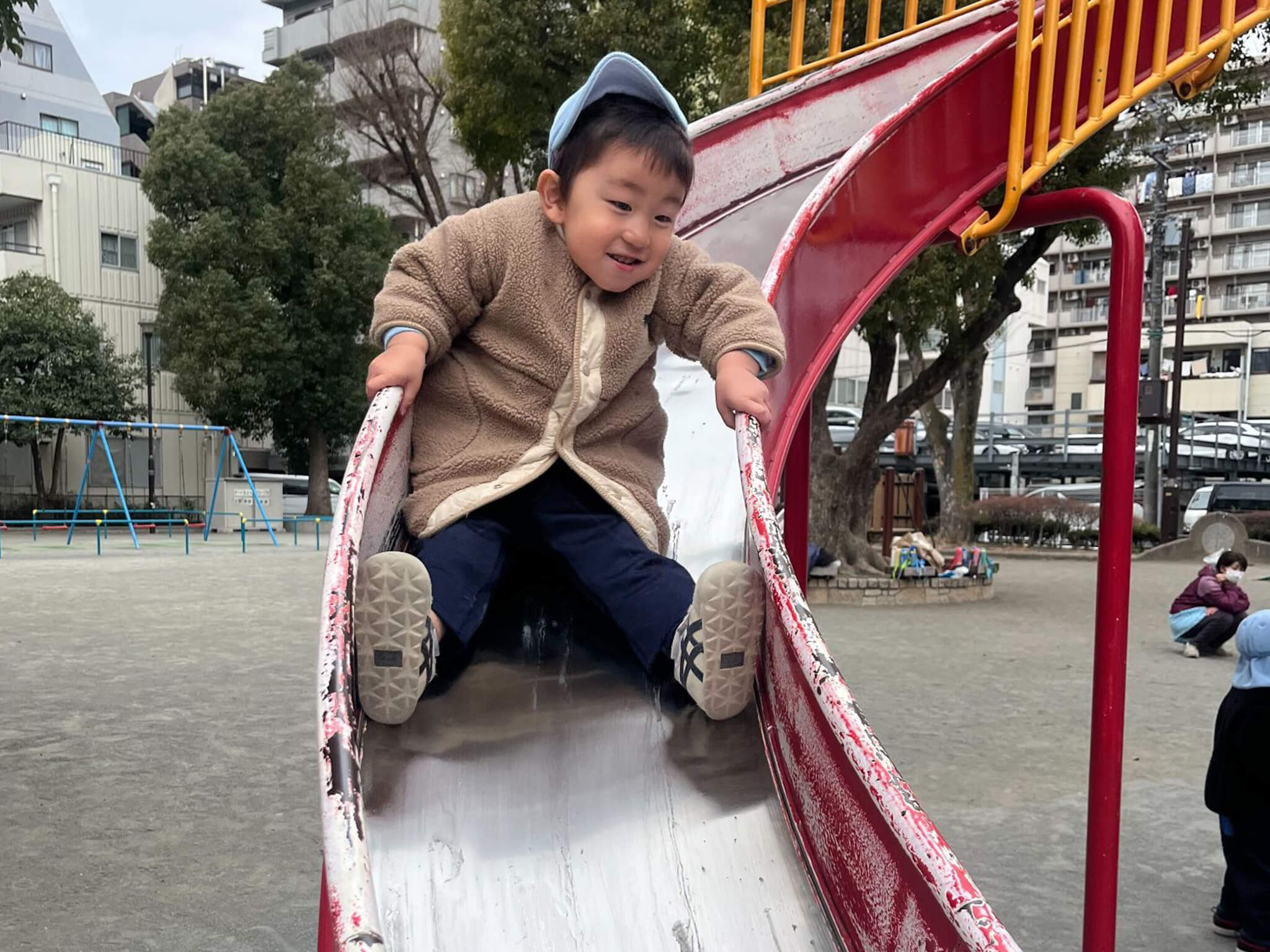
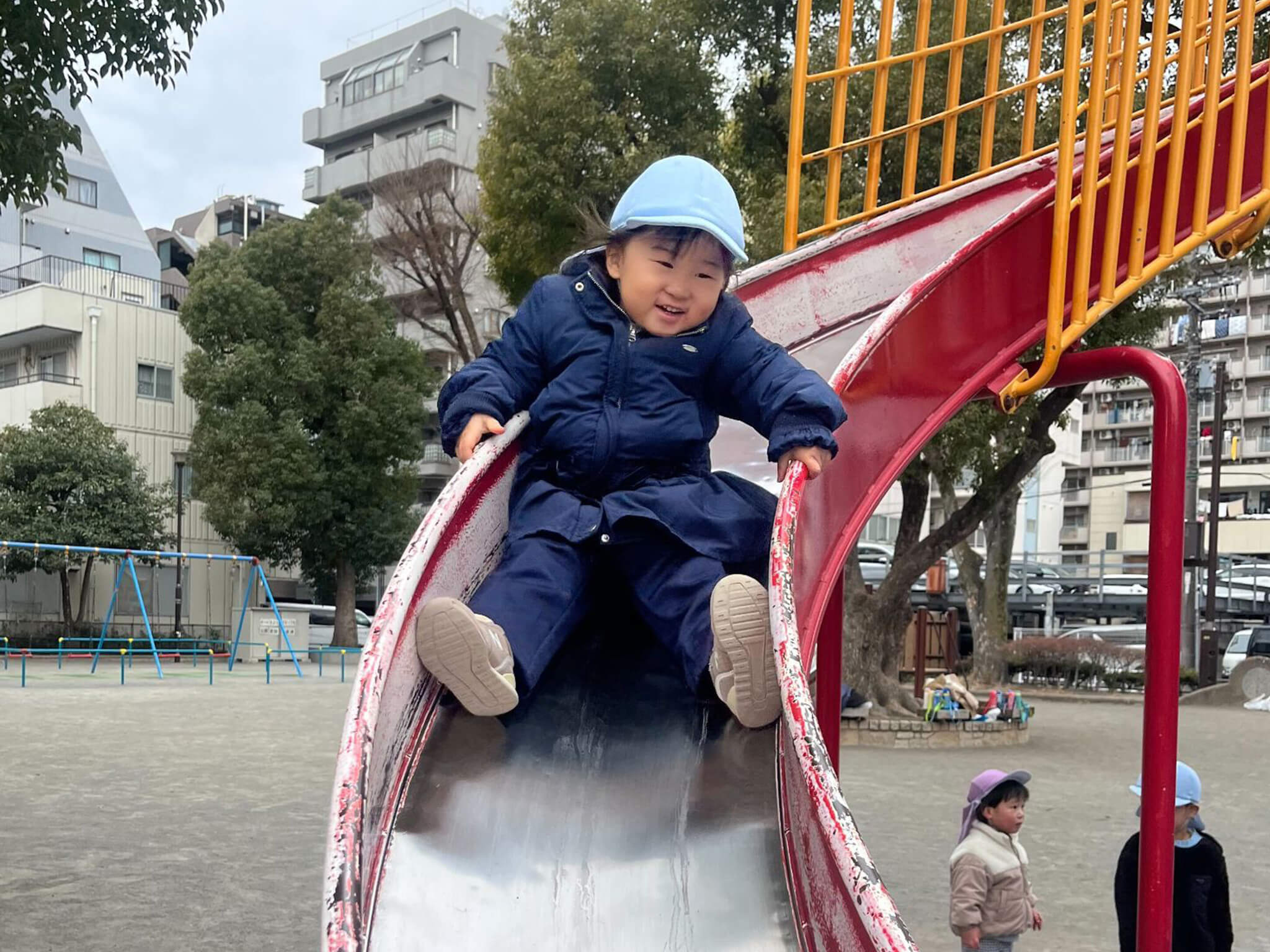
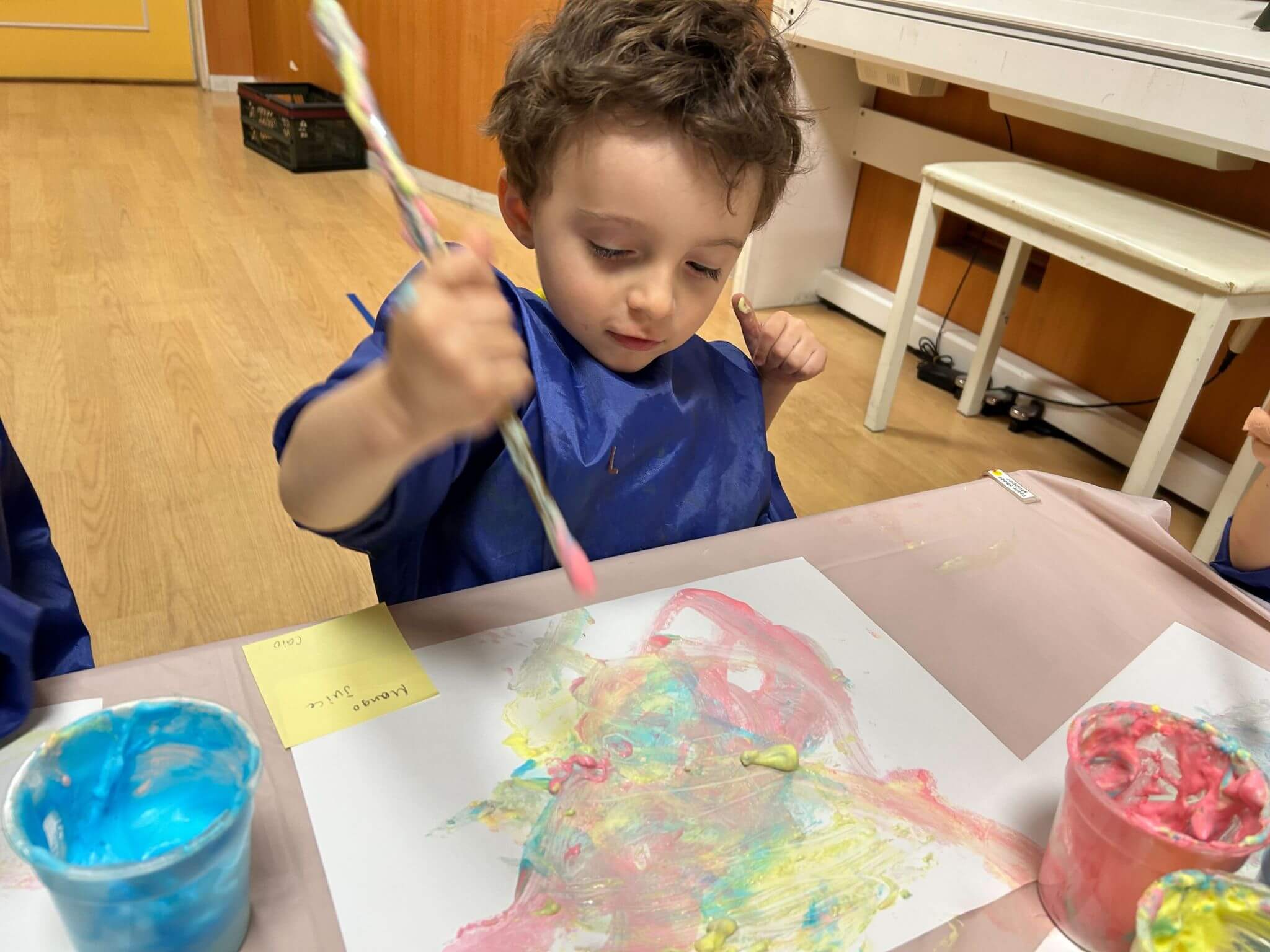
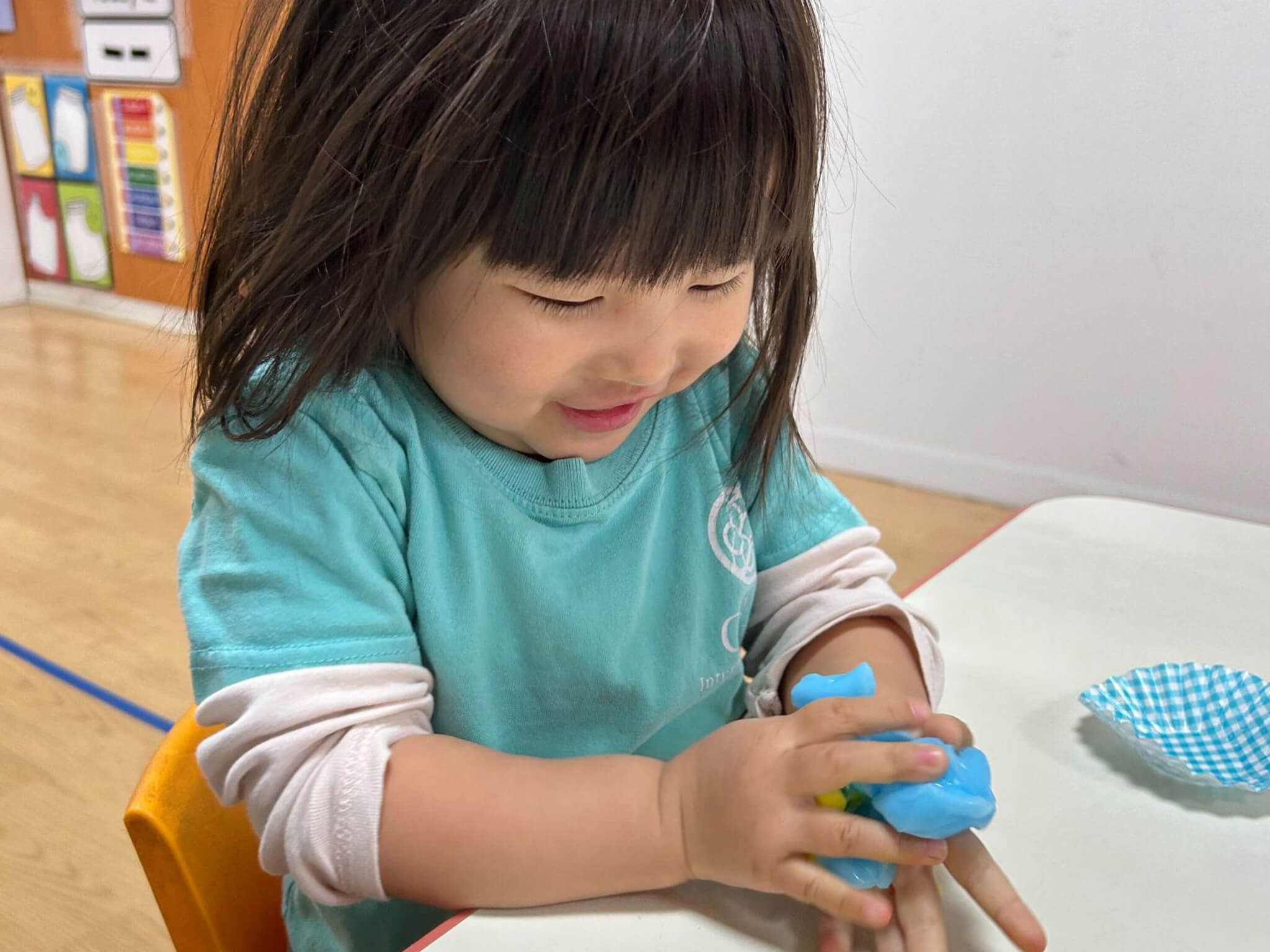
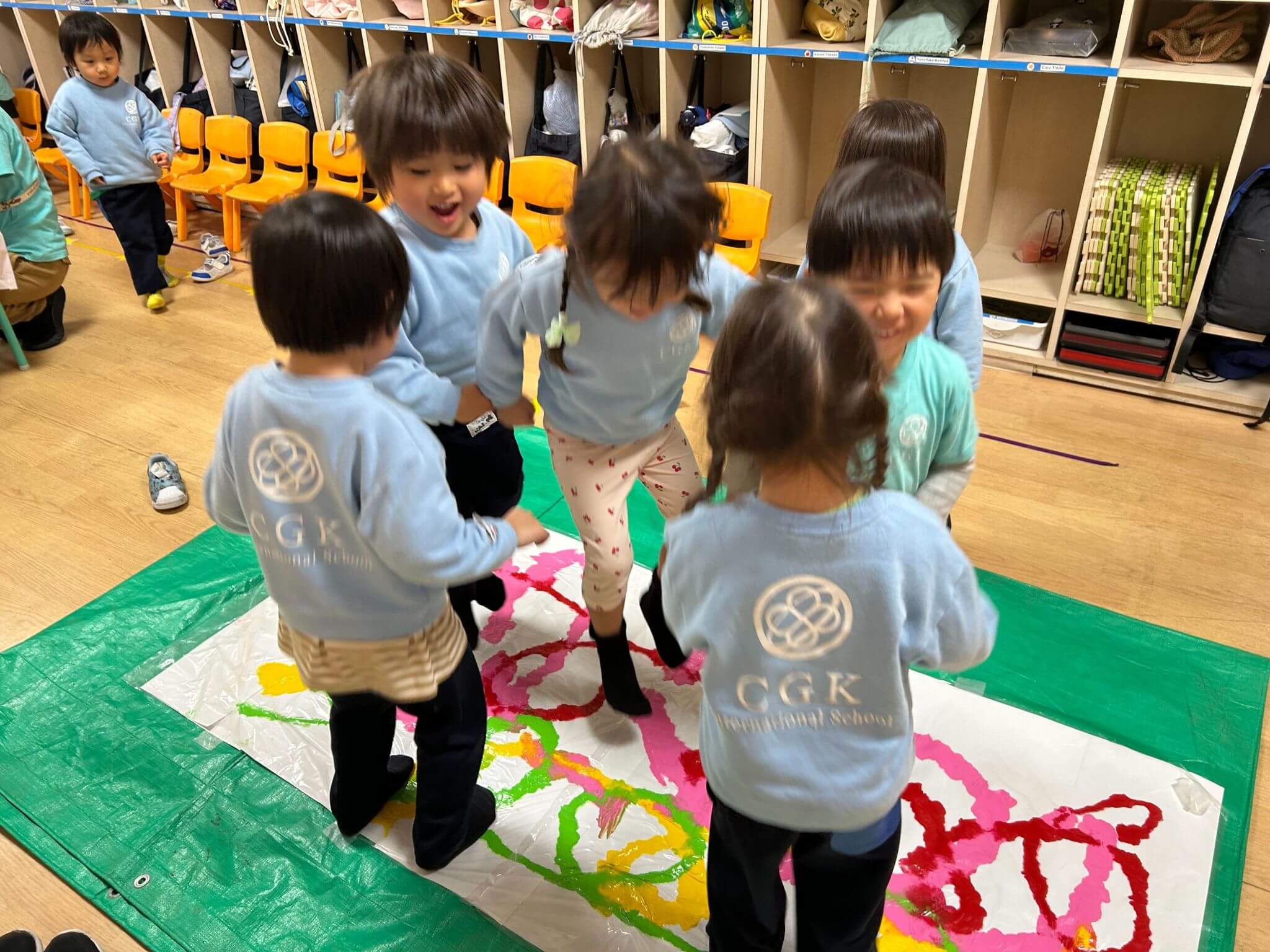
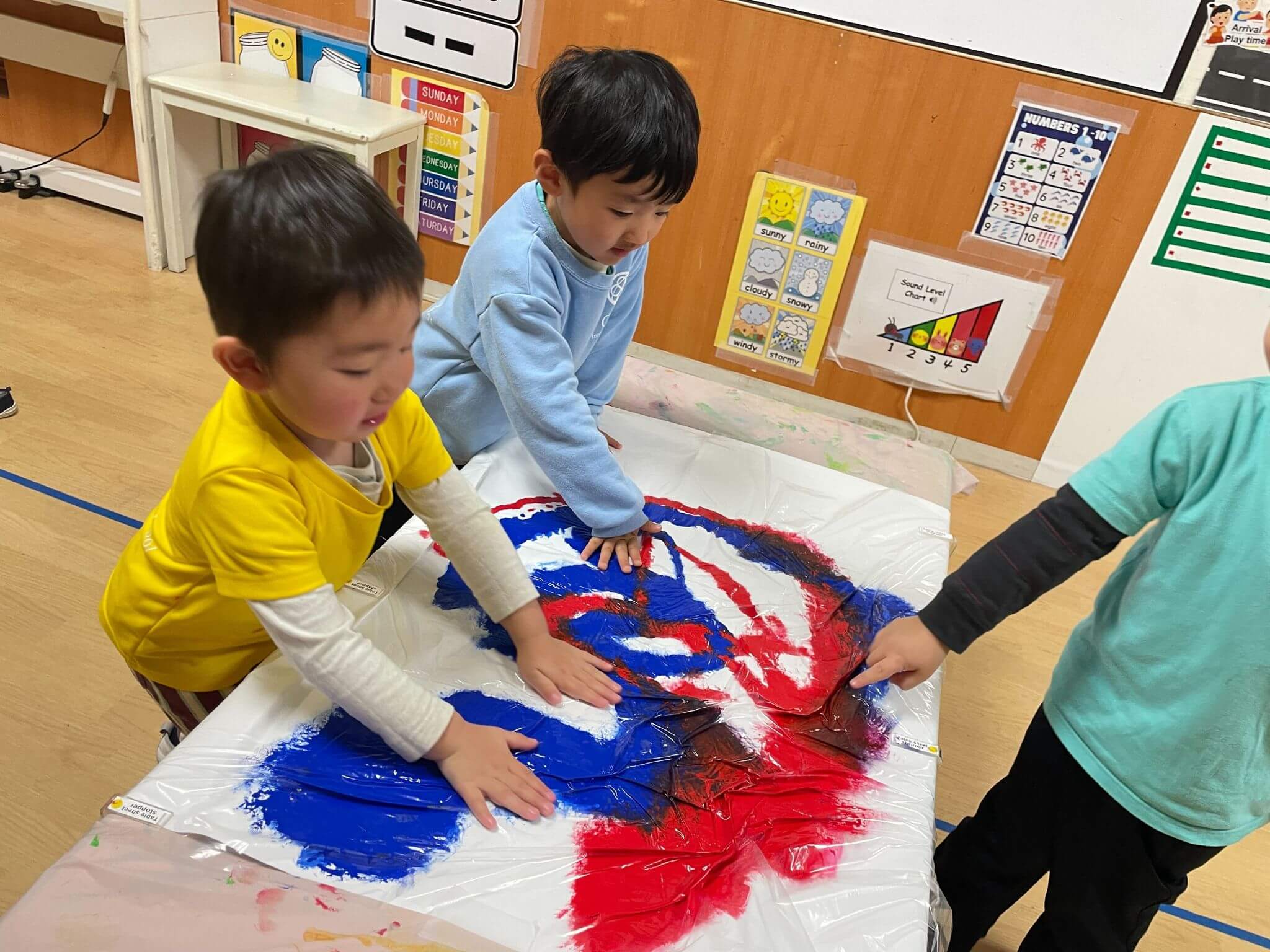
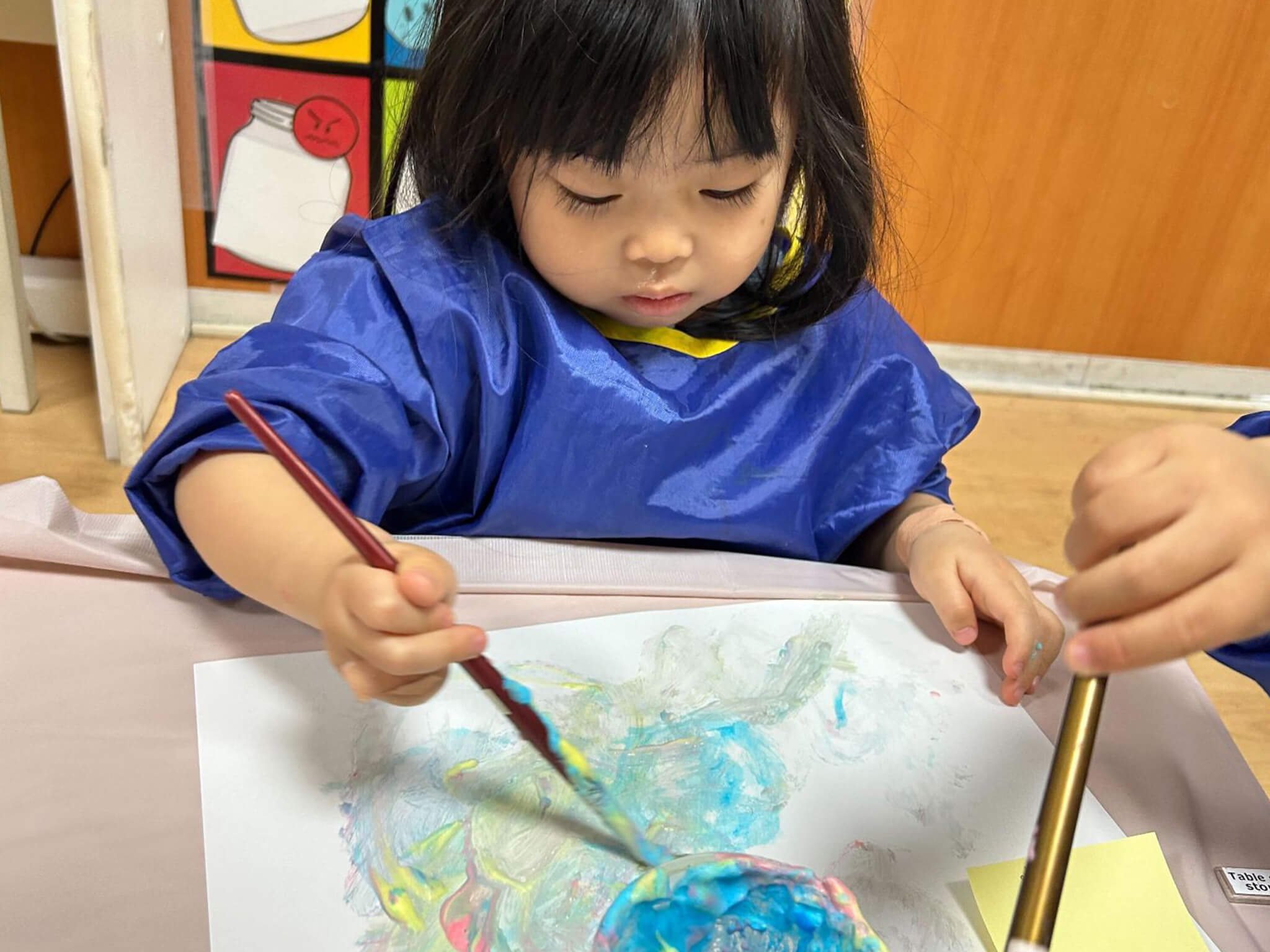
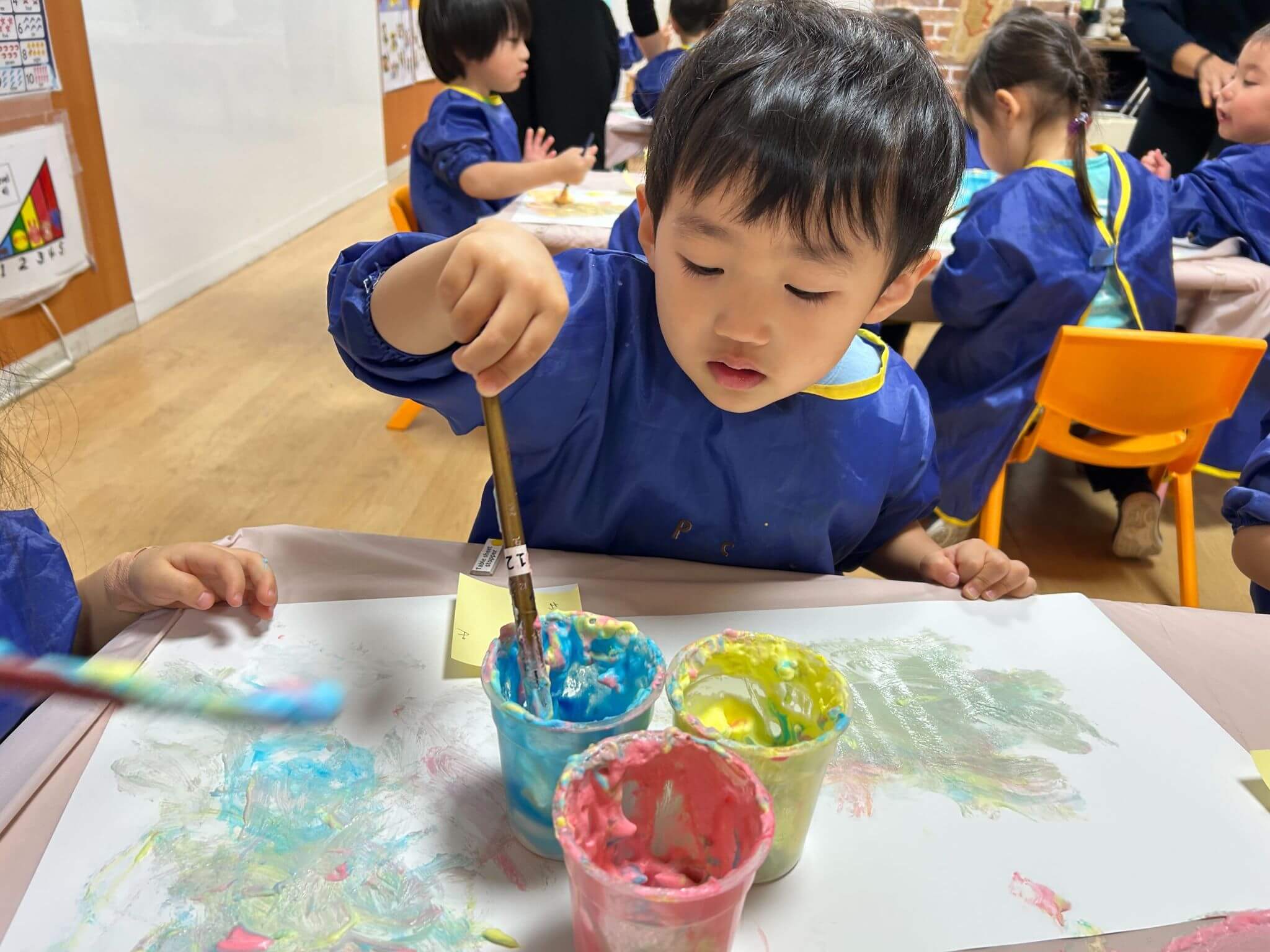
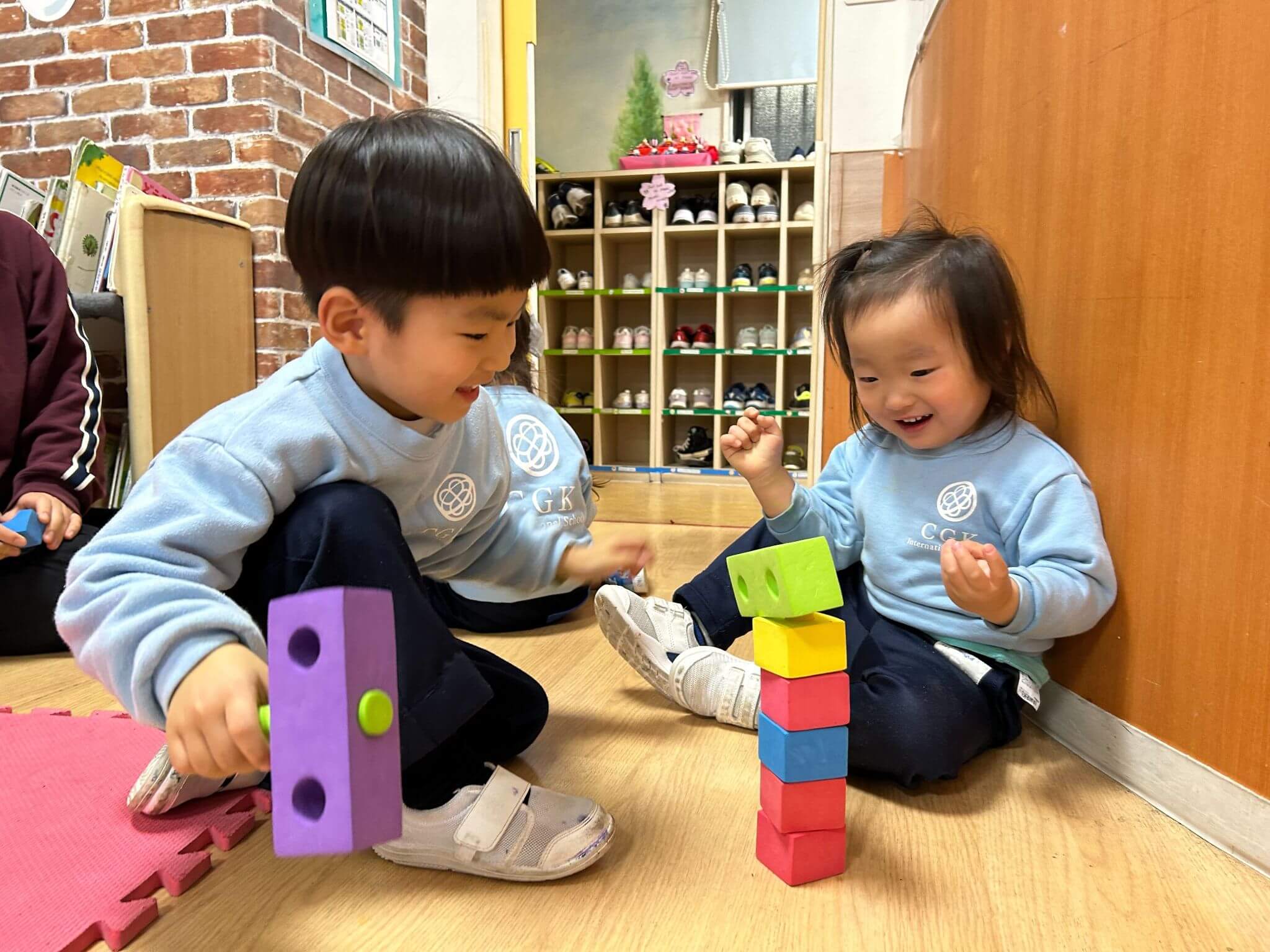
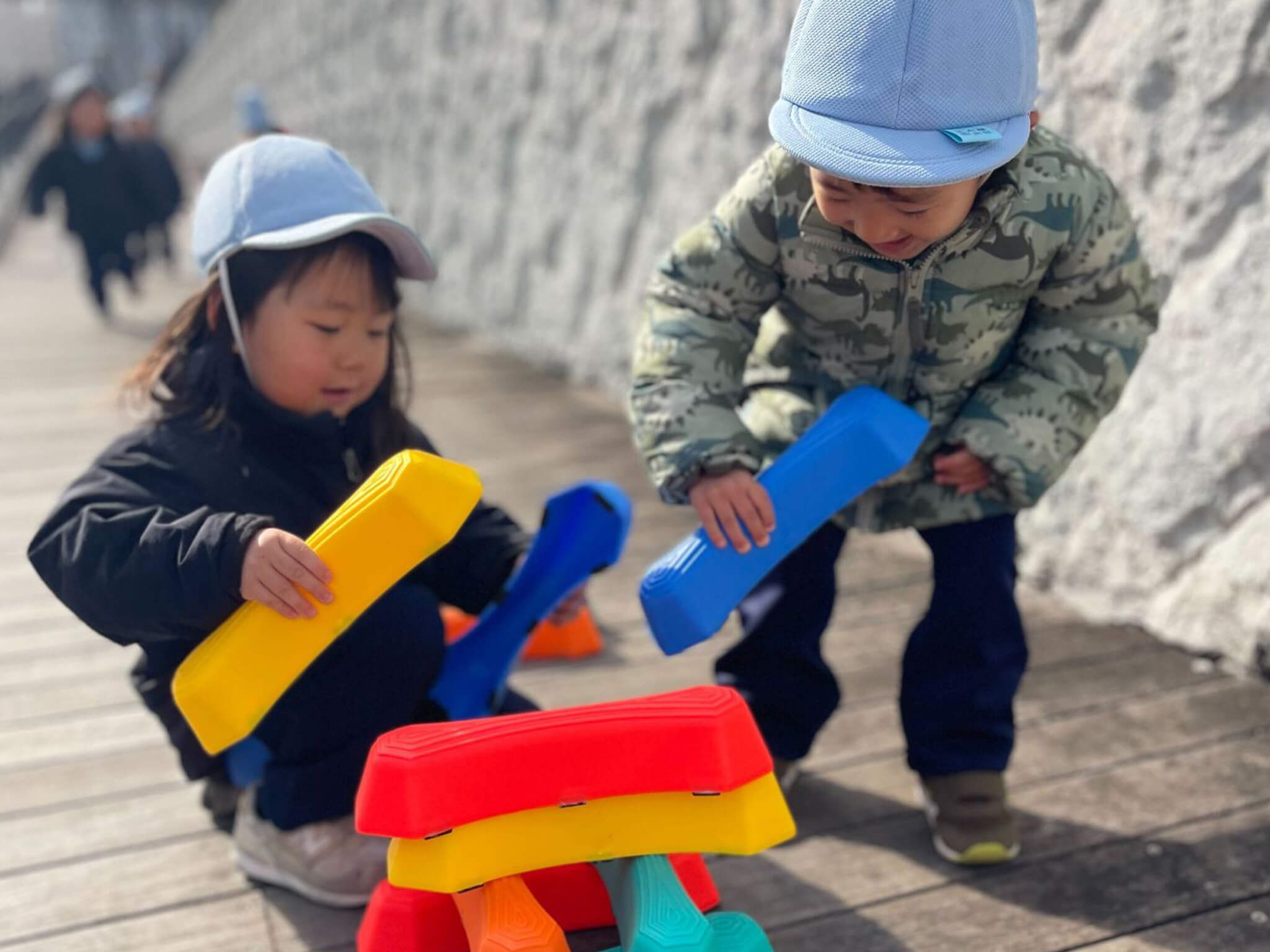
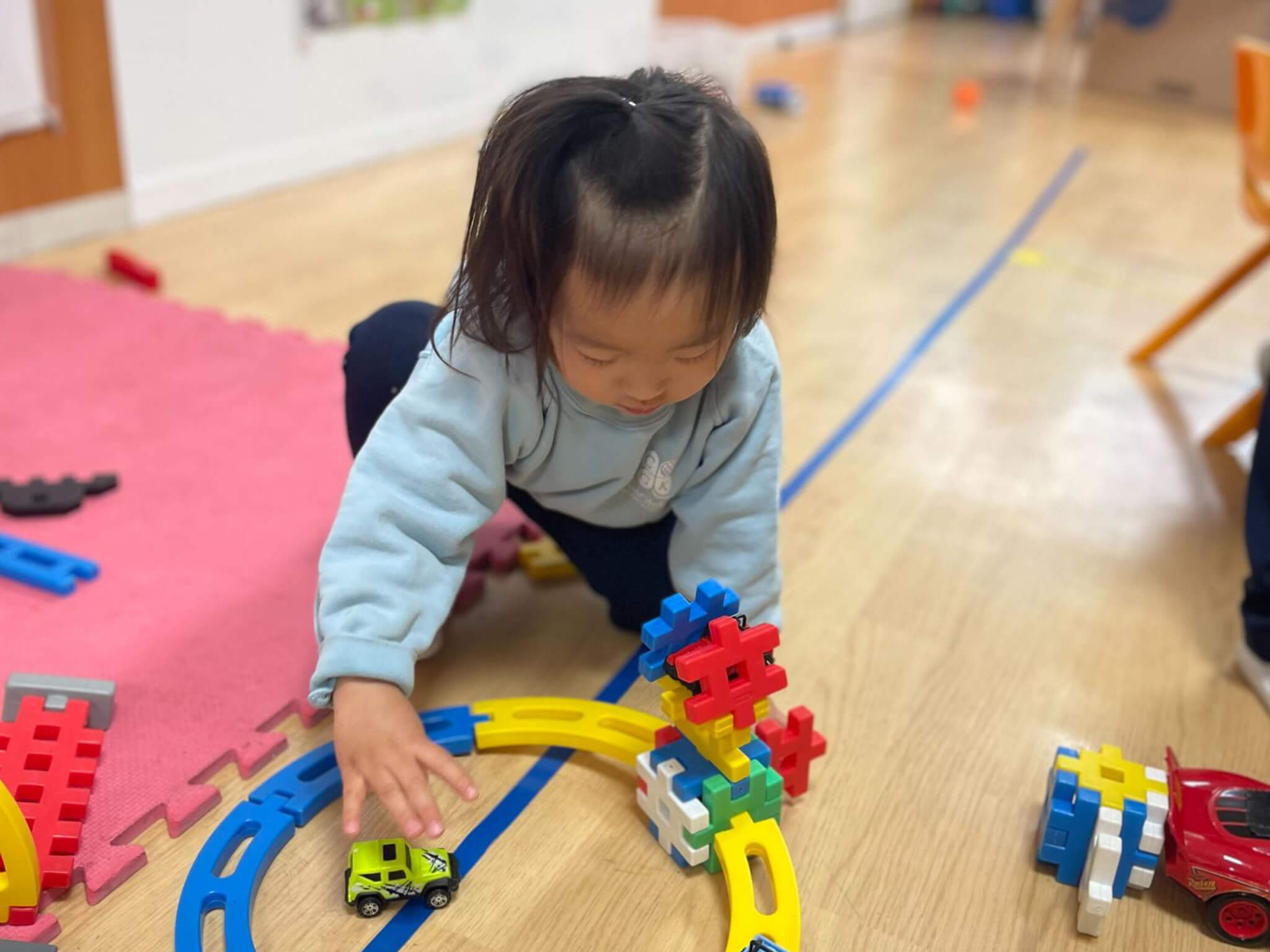
Our time in Ocean Class is quickly coming to an end. Under our current Unit of Inquiry, “How We Express Ourselves,” the children continue to deepen their learning through a variety of exploratory experiences.
Not only during lessons but also through outdoor play and station activities, the children are joyfully engaging in inquiry while developing important skills. In particular, their understanding of causation—why things happen and what makes something change—has grown significantly.
For example, when climbing playground equipment, they carefully consider, “Where should I place my foot to stay balanced?” or “In what order should I move my hands to climb up?” They try again and again, thinking through each attempt. On the slide, they discover through experience that “If I go fast, I slide quickly,” or “If I curl my body, I slow down.” Through these moments, they are physically experiencing the relationship between cause and effect.
During painting activities, children now intentionally mix colors to create the shade they imagine. As they observe changes, they ask, “What will happen if I add more of this color? How will it change?” Their experiments are becoming more purposeful, showing clear intention and curiosity.
In block play, children test which shapes connect to form train tracks, and they learn that towers fall if the base is too small. They begin placing larger blocks at the bottom or carefully aligning shapes for stability. Through repeated trial and error, they refine their understanding of structure and balance.
One key Learner Profile attribute developing through these experiences is Risk-taker. This is the courage to try, even when something feels a little scary. When facing taller playground equipment, children observe carefully but still take that brave first step. Some who initially felt unsure gradually gained confidence through repetition, eventually showing proud smiles of accomplishment.
In painting, they embrace the uncertainty of “It might not turn out the way I expect,” sometimes mixing colors cautiously and other times boldly. In block play, they challenge themselves to build “higher” or “longer,” rebuilding patiently when structures collapse. These experiences of trying without fear of failure are clearly helping their hearts and minds grow stronger.
Another skill that has flourished is being a Communicator. On the playground, children call out, “What should we do next?” or “Hold this for me.” During painting, they share discoveries: “This color is beautiful!” “Do you want to mix it?” In block play, they explain their ideas through words and gestures: “Support here,” or “This is the train track.” Not only are they expressing their own ideas, but they are also learning to listen to others.
Through daily play, the children are learning to think about cause and effect (Causation), bravely take on challenges (Risk-taker), and communicate with their friends (Communicator). We are excited to see how their curiosity and willingness to try new things will continue to deepen and expand their learning in the days ahead!
Elementary School / Middle School
Mindfulness in the classroom: How does it work?
Mindfulness has become a hot topic in recent years. It has garnered engagement across workout programs, book titles, social media posts and through the news. Often used as a buzzword to increase engagement, it begs the question:
What does it actually mean?
How do we implement mindfulness into our lives?
How exactly does mindfulness work in a classroom setting?
At its core, mindfulness brings nonjudgmental attention to the current state your body is experiencing in the present moment. It is giving yourself the permission to simply be.
The core concepts of mindfulness are nonjudgment, awareness of the present moment, and acceptance.
Grade 5 has implemented mindfulness techniques and philosophies in our classroom through multiple avenues. In response, we have seen a decrease in classroom conflict as well as an improved ability to manage academic pressures throughout the year.
1.Peace after high intensity situations
Strong emotions are not only common, but expected in classroom settings. This includes arguments, disappointments, and tough conversations surrounding behavior. Natural consequences and accountability for behavior are important and taken seriously in our learning community. However, the process of restoration and emotional recentering are often neglected.
One strategy Grade 5 has implemented is body scanning.
A body scan involves bringing gentle, nonjudgmental awareness to different parts of the body from head to toe. Grade 5 has participated in body scans led by their homeroom teacher and online meditation resources.
Through the use of body scans students have learned to identify where they hold tension in their body, such as their jaw, shoulders, or stomach.Through focused breathing and recognizing how stress is shown physically, we have successfully diffused tension within the room, helping create a space where students can reflect on their behaviors safely and effectively.
2.Bringing focus back after a break
Children’s attention spans depend on their stage of development and age. Many children can often focus between 20 to 45 minutes at a time. Even a short one-minute refocus has shown to be effective in bringing grade 5 back to a place where they can refocus on their work. A great practice has been belly breathing, filling their diaphragm with air slowly to counts of 2 or 3 through their nose, and exhaling through their mouths. Oftentimes we will also try to visualize the color of our tension and worries, replacing it with a color that represents peace and focus. Common colors of tension are: black, grey, and brown. Common colors of peace are: gold, green, and blue.
3.Moving our bodies with intention
Yoga is an ancient art that connects physical and spiritual practices together. Yoga has been proven to show children how they are in charge of their bodies through the breathing and transfer of energy. This practice directly connects to our learner profile attribute ‘’balanced’’. Through moving our bodies with intention we can learn to care for our physical and mental health through a new avenue.
Mindfulness practices take time to master, and they may feel funny at first. Partner breathing brought a symphony of giggles. When you practice mindfulness with yourself and with your child, it is important to begin the process with patience and curiosity.
I wish you luck on your journey!
To end our article, I’d like to share some G5 student voices on their experience of mindfulness in the classroom:
How do we use mindfulness in our classroom? How is it helpful?
“If our classroom is loud we can use mindfulness to calm the classroom. It helps keep us calm.”
“In class our temperatures can rise, and when our temper is high it helps to lower it. I use mindfulness when I sleep because it makes me calm.”
“Last year we had a mindfulness club and we made a mindfulness box. I still use it to help me.”
Do you do mindfulness practices at home?
“Yes. Mindfulness makes me calm. When I’m home it helps me concentrate when it’s time to study.”
“I do it randomly on the couch.”
What were the most helpful techniques we used this year?
“The sound bowl made our room cold (lowered the temperature).”
“The body scan helped us understand what’s going on in our body and we can know if we’re hungry, tired, or hangry.”
“Butterfly tapping helped calm us down.”
“Breathing because it is used in every type of mindfulness.”
Do you recommend adults use mindfulness?
“YES!” - everyone
“We recommend adults use mindfulness, like our parents because we stress them out.”
“We can do mindfulness with our parents. My mom does yoga and I can do it with her.”
Do you see adults using mindfulness techniques?
“I see my mom doing yoga.”
“My mom sometimes listens to music and she uses a smooth rock when she works.”
“My grandma does mindfulness like Nike yoga and training. My mom also did yoga for a bit.”
“We see you (teachers)!”
Resources for adults:
Mindfulness for Kids (Information)
マインドフルネスのやり方をやさしく解説:初心者でも今日からできる3ステップ
Recordings:
Singing bowls
Healing Frequencies of Tibetan Bowls
Guided Sleep Meditation (English)
【マインドフルネス瞑想】思いやりの心を育む 慈悲の瞑想
5 Minute Guided Morning Meditation in Japanese to Start Your Day(Beginner Japanese friendly)
Course:
Online Mindfulness-Based Stress Reduction (MBSR) course (English)
[Messages from Grade 5 Students] After the PYP Exhibition (PYPx)
As the culmination of the PYP learning journey, students take part in the PYP Exhibition. At CGK, this is undertaken by Grade 5, the final year of the PYP, and this year the Exhibition was held on February 4th and 5th.
During the Exhibition, students draw on the skills they have developed throughout the PYP, both Approaches to Learning (including thinking skills, research skills, and communication skills), as well as the Learner Profile attributes (such as being Thinkers, Inquirers, and Risk Takers) to select topics based on their own interests. Working collaboratively in groups or individually, they investigate, organize, and present their learning. An essential part of the process is not only learning and presenting, but also considering what actions can follow their learning.
As one such action, two groups this year chose to share their learning and concerns with a wider audience through CGK Times. Here, we introduce their messages and presentations.
Both groups focus on issues that are happening in our everyday lives, thoughtfully exploring why these issues matter, how they might be addressed, and what actions they themselves can take.
We invite you to read the students’ research and reflect on the ideas and questions behind their work. We hope their messages inspire you to consider your own next action as well.
Global Warming
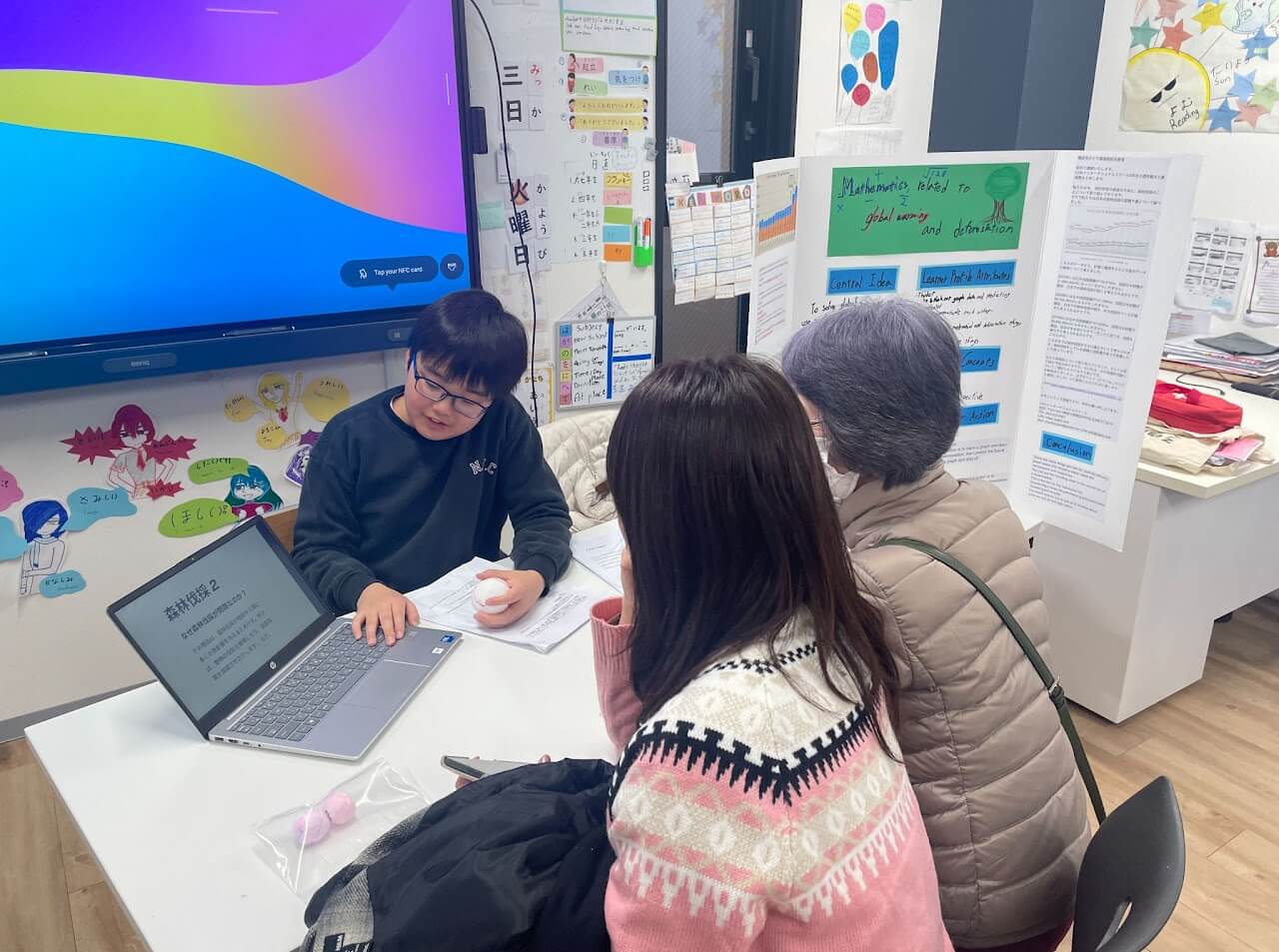
We finished the PYPx Exhibition held on February 4th and 5th. In this CGK Times, we wrote about what we have done and what we want to share with everyone.
We're interested in mathematics and global warming, so we discussed with our mentor, Mr. Mhar, how to understand global warming from a mathematical perspective. Through further research, we discovered that there are five causes of global warming: burning of fossil fuels, deforestation, agriculture, transportation, and industrial manufacturing. Among these, we chose to focus on deforestation, which has a significant impact on greenhouse gas emissions. We related it to mathematics.
Using mathematical data analysis and calculations, we used current deforestation data to predict the amount, area, and impact of future deforestation.
Below are our data and predictions.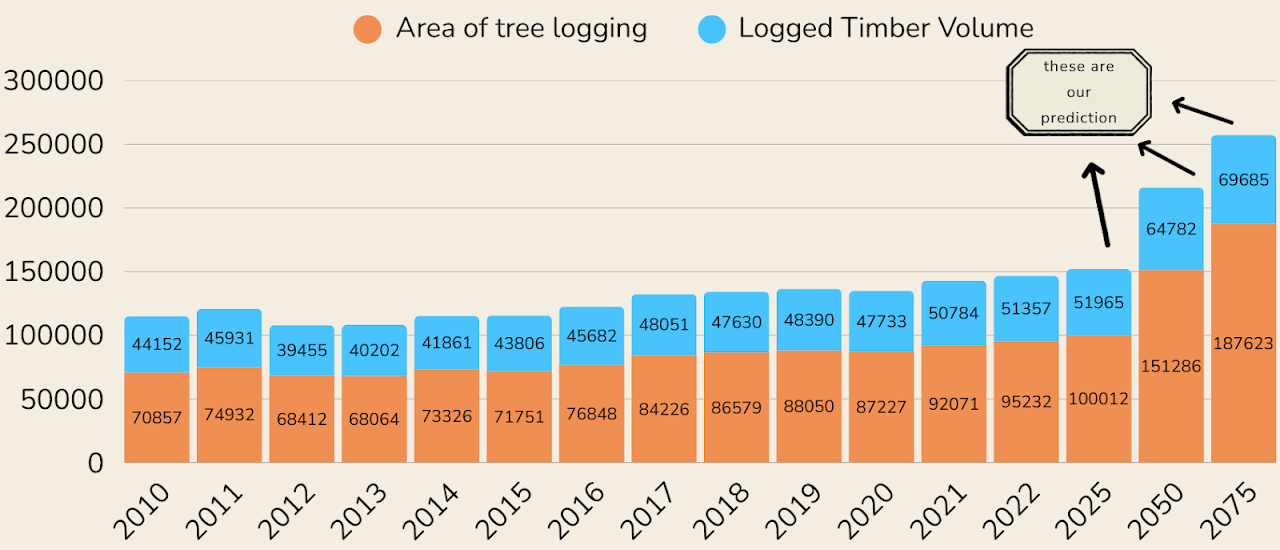
[Data and Predictions]
This graph shows Japan's deforested area and standing timber volume.
The orange line represents the deforested standing area (hectares).
The blue line represents the deforested standing volume (cubic meters).
The prediction from this graph is...
- By 2025, the deforested area could be 100,012ha, and the harvested standing timber volume could be 51,965,000 m³.
This is because deforestation is expected to continue in Japan.
- By 2050, the deforested area could be 151,286ha, and the harvested standing timber volume could be 64,782,000 m³.
This is because deforestation in Japan is expected to continue and accelerate.
- By 2075, the deforested area could be 187,623ha, and the deforested timber volume could be 69,685,000 m³.
This is because the pace of deforestation in Japan is expected to accelerate.
As we delved deeper, we realized that global warming will worsen in the future, destroying the environment. Therefore, we came up with two actions to help stop global warming, even if only a little.
The first was to ask Yokohama City to reforest the deforested land. While asking Yokohama City might make a big difference, we felt it would take time, so we came up with the second action.
That is to communicate our thoughts through CGK Times. As the saying goes, "little by little, it makes a mountain," and we believe that with everyone's cooperation, we can make a big impact.
We want everyone to know the amount of the deforestation and the area it covers. If deforestation continues at this rate, global warming will worsen and the Earth's environment will be destroyed.
There are many things you can do, such as reducing paper waste and recycling paper waste like newspapers and magazines. You can put the recycling paper in the recycle box at a supermarket.
This is the link for the Yokohama City recycle: Garbage, recycling: Yokohama City
We would love you to join us in thinking about what we can do and take action.
From Shunta and Isami
Internet Addiction
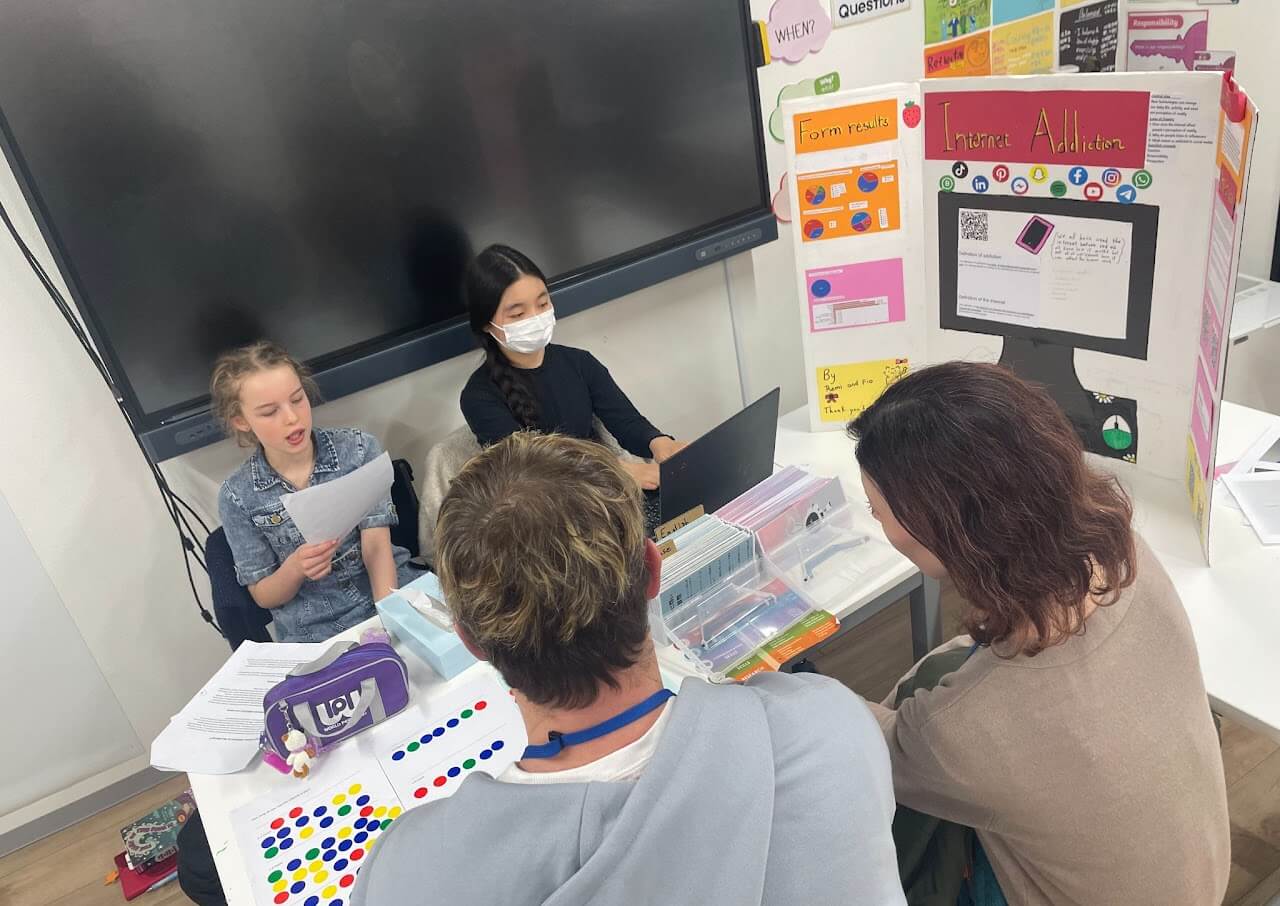
About the internet (background)
The internet has been around for 65 years. In the 1960s two government research labs used it as a communication device to share information. Eventually it became a global communication device available to the entire planet. The internet we know now is a global system connected to millions of computers. It is filled with information from across the world.
Main internet uses
The internet is used in so many ways. The top uses today are:
- Communication
- Online shopping
- Education
- Influencing
- News
- Entertainment
- Online dating
- Online banking
- And even online trading
These are all useful to human societies but is it really that healthy?
Not exactly, it may be useful and entertaining but the internet is also very addicting.
Definition of addiction
There are different perceptions of what addiction is but words connected to the word might be craving, habit and dependence. In other words addiction is a habit or attachment that you cannot stop or get away from.
What causes addiction to the internet?
It is way more common to get addicted to the internet today because it has become second nature to look at your phone at any available moment such as on the train, in the car, first thing in the morning or before going to bed and even whenever you have the chance. Because of this our brain releases a lot of dopamine. When dopamine releases our brains feel pleasure meaning if you do something that releases a lot of dopamine your brain will want to do it more often to feel this pleasure. After this, your brain will want more and more thinking it is not enough and will get obsessive, meaning you will get addicted.
Problems that internet addiction can cause
As people use the internet more often more people get addicted. It is also more likely to happen because the internet is still growing, creating more and more ways of using it. This will probably make some people get wrong information when being on their phone or device for too long. This will also likely change how they might think and/or educate themselves. Being addicted to the internet can also cause depression, anxiety , loneliness, etc., among a dull sense of the real world. It can also cause many difficulties in school and/or work in a person’s life. Excessive Internet use may create a heightened level of psychological arousal, resulting in little sleep.
Some recommended solutions
There are solutions to prevent this from happening and to decrease the chances of getting addicted to the internet. However if you are already addicted to the internet it may take a longer time to fix.
The most practical option for most people would probably to have a recommended 30-60 mins per day limit on social media such as instagram, facebook, whatsapp, youtube, tiktok ect. Social media that is used for communication and/or work can be used better if you take breaks after 20 mins or so. If you are unable to do so, stretching or looking away from the screen for a second will also make a big difference. This will give your eyes and brain a break keeping you healthy.
Conclusion
In conclusion there are so many different sections of the internet but the most healthy way to use them is to limit the time you use them.
There are also so many ways that addiction can hurt you so remember to stay healthy and to protect others if they start to get addicted.
*Sources omitted
From Fiona and Remi
Afterschool
Afterschool Class A - Student Choice
-
-
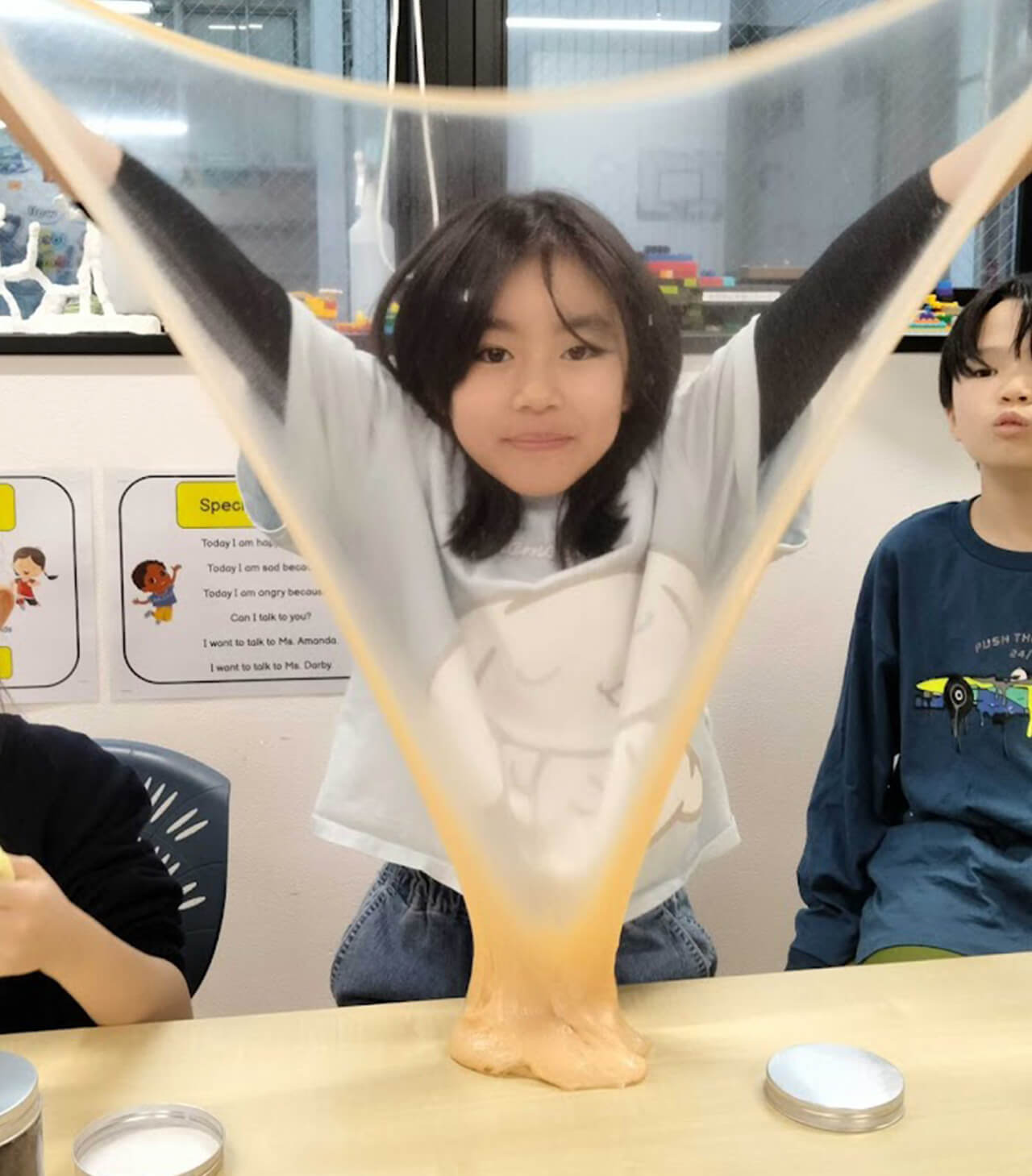
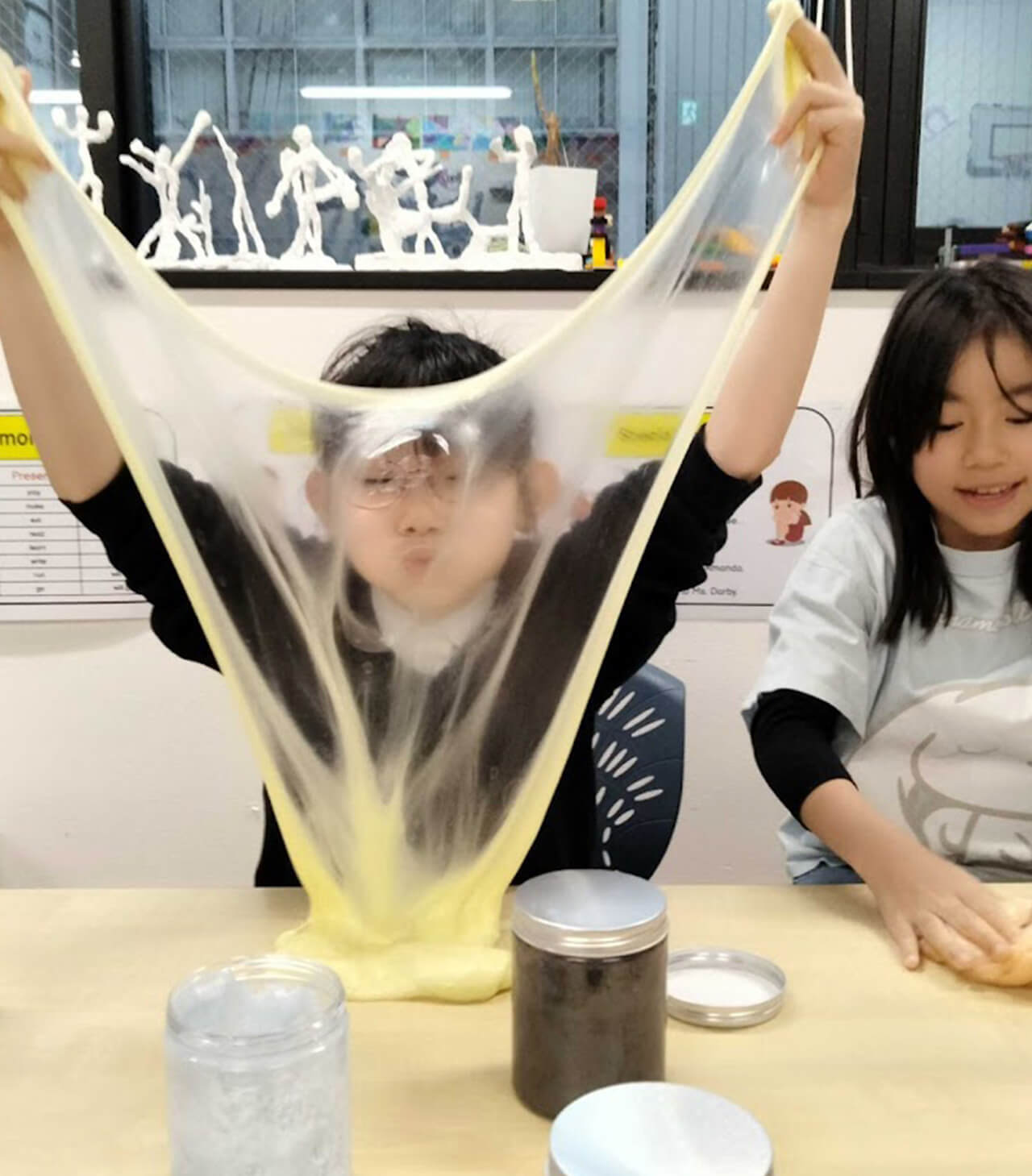
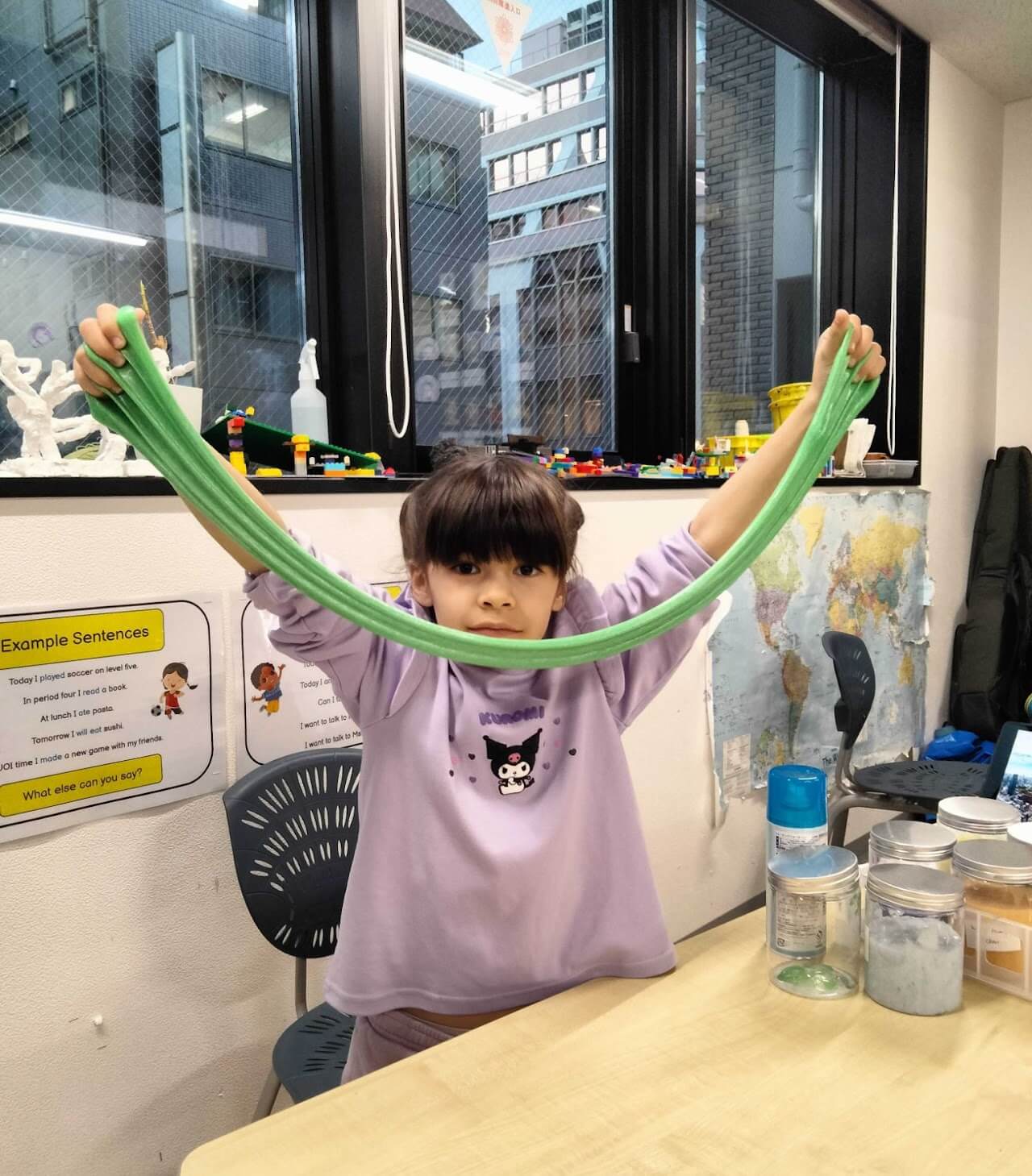
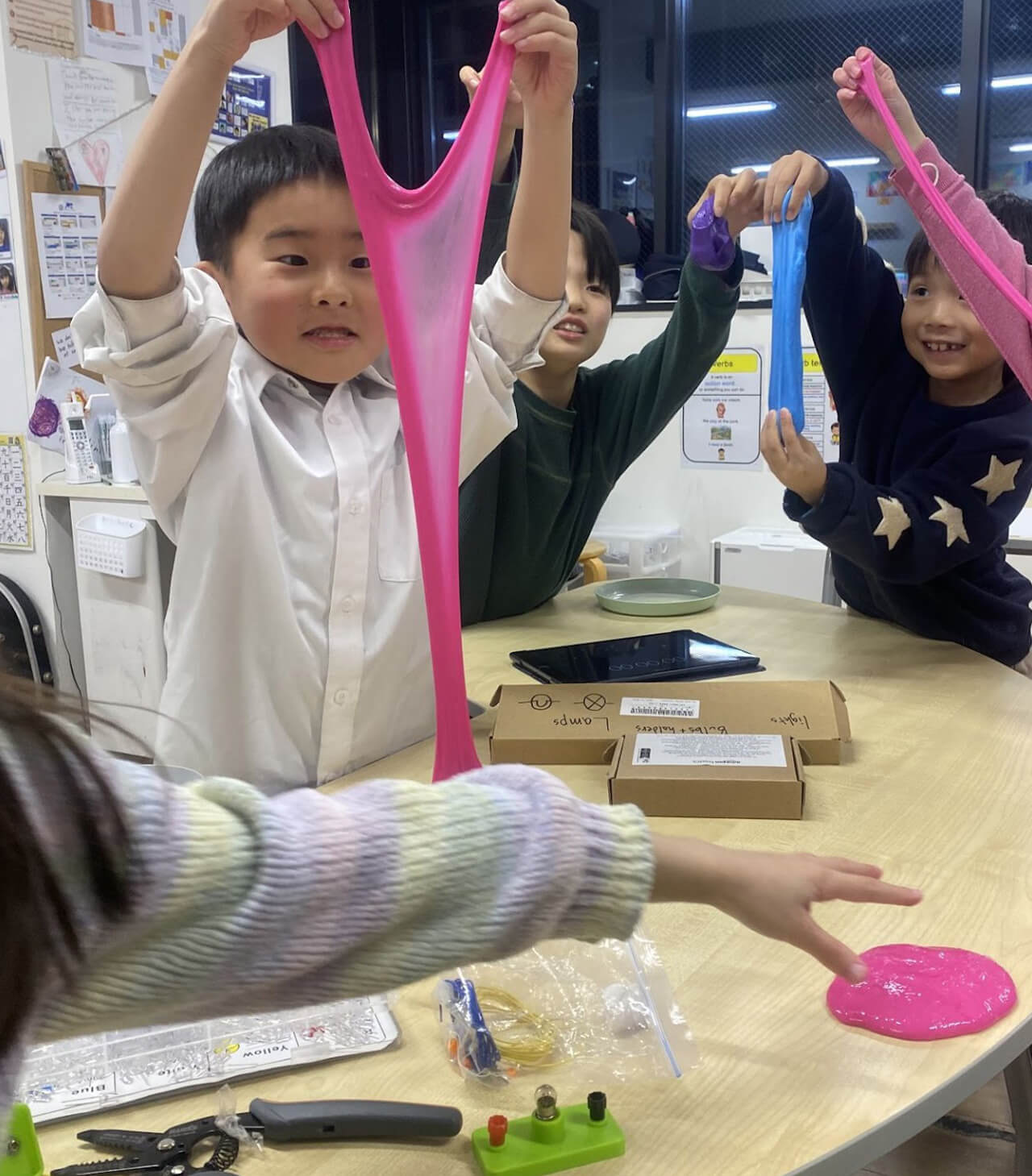
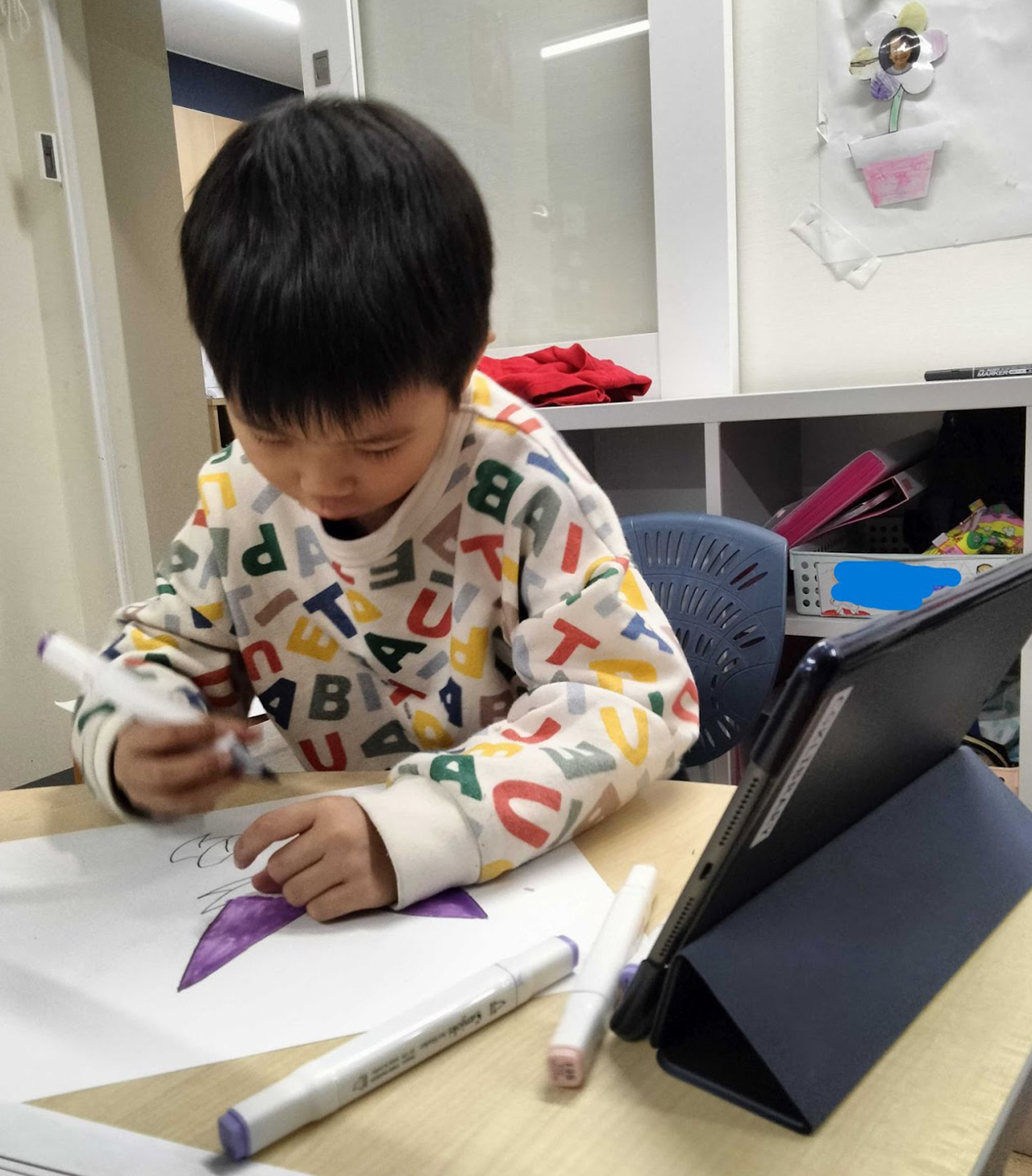
Hi everyone. For Class A’s Student Choice project on Thursday, the class split into two groups to pursue their interests. After brainstorming, students decided that they wanted to pursue art and slime!
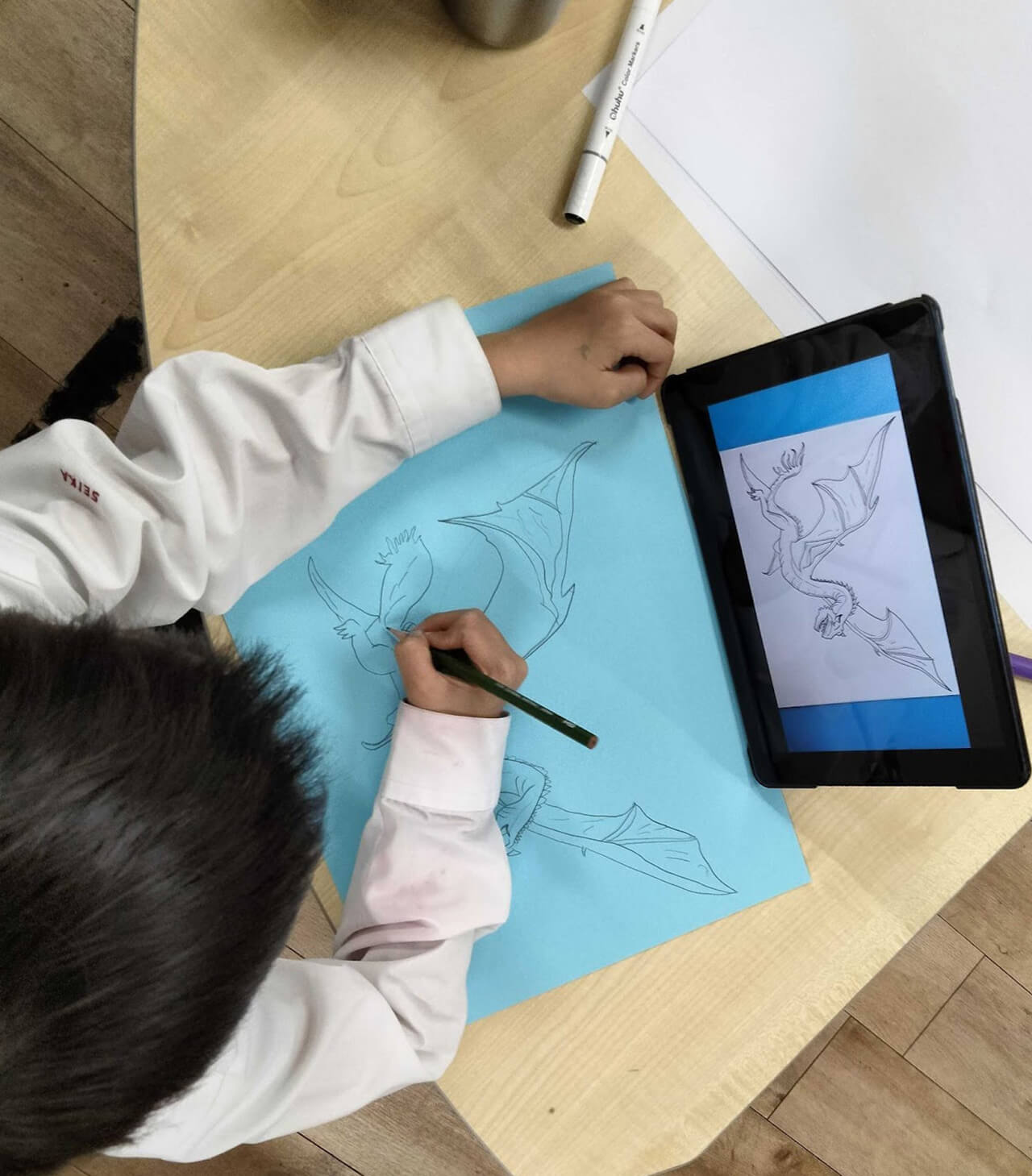
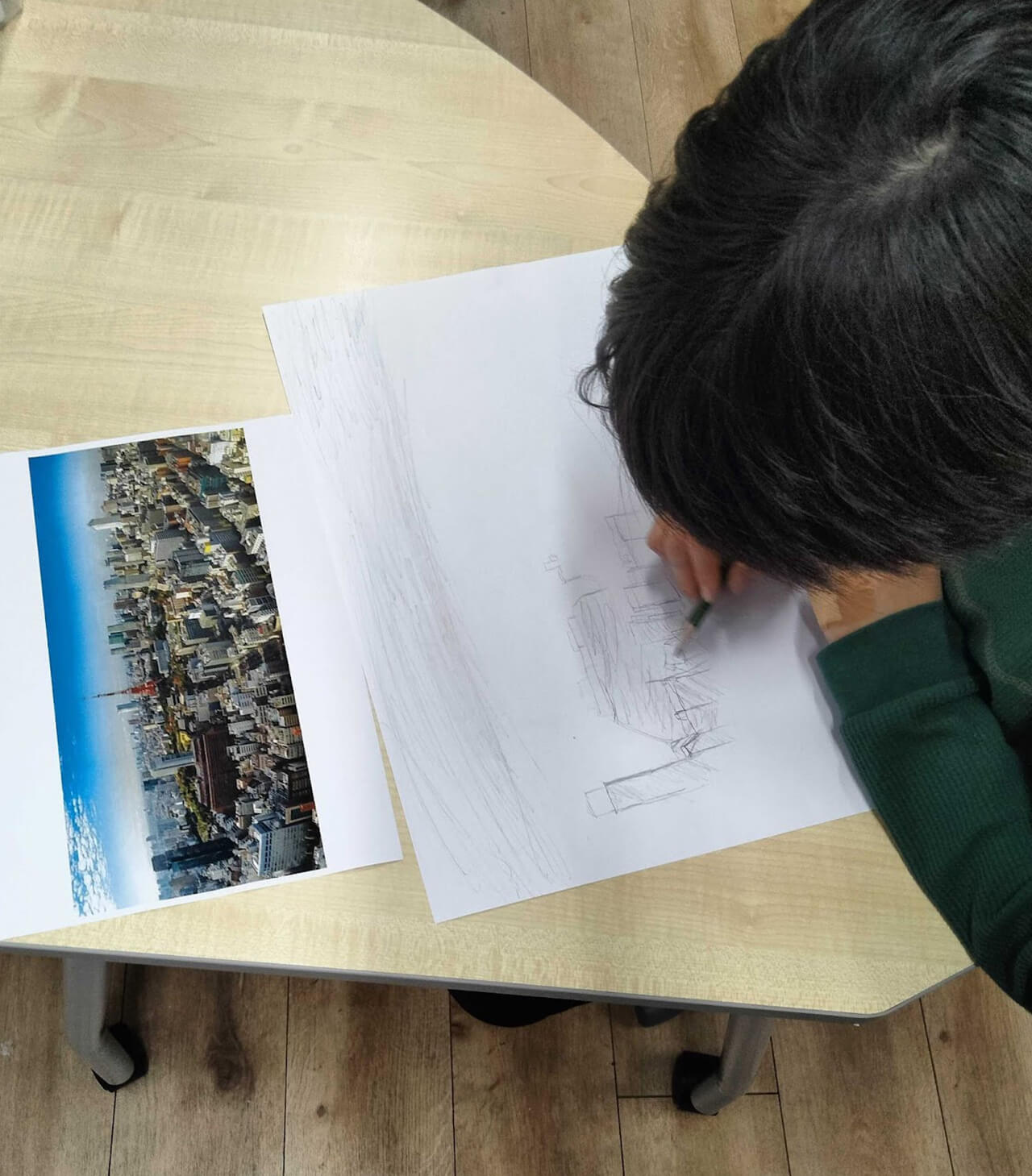
The boy’s group initially wanted to make a stop-motion video. After a couple of weeks, when they had completed their movie, they saw the girls making slime and decided that they wanted to pursue something more creative too. Therefore they moved onto recording themselves drawing and creating art. They demonstrated great abilities in taking turns at using the iPads for reference videos as well as helping each other set up for recording. The art that is being created looks fantastic as we have a large range of different themes that they have chosen.
As for the girl’s group they decided from the beginning that they wanted to create their own How to make fluffy slime videos like what they watch on YouTube. They planned their slimes on pieces of paper before looking for recipes together to present to me. This activity provides students with the opportunity to assume responsibility for the planning and preparation process, including determining the necessary materials, as I only purchased the materials they listed.
I have observed a noticeable growth in the students’ confidence and independence throughout this project. The boys, in particular, are demonstrating increased confidence in their artistic abilities, while the girls are taking greater initiative and ownership of their work. This student-choice project has provided a valuable opportunity for them to showcase how capable they are of leading their own learning. It has been very encouraging to see the level of responsibility and creativity they are able to demonstrate when given the space to do so.
We look forward to showing off our work during presentation week!
-
Study Abroad and Global Initiatives
2025 Summer CGK Study Abroad
Australia
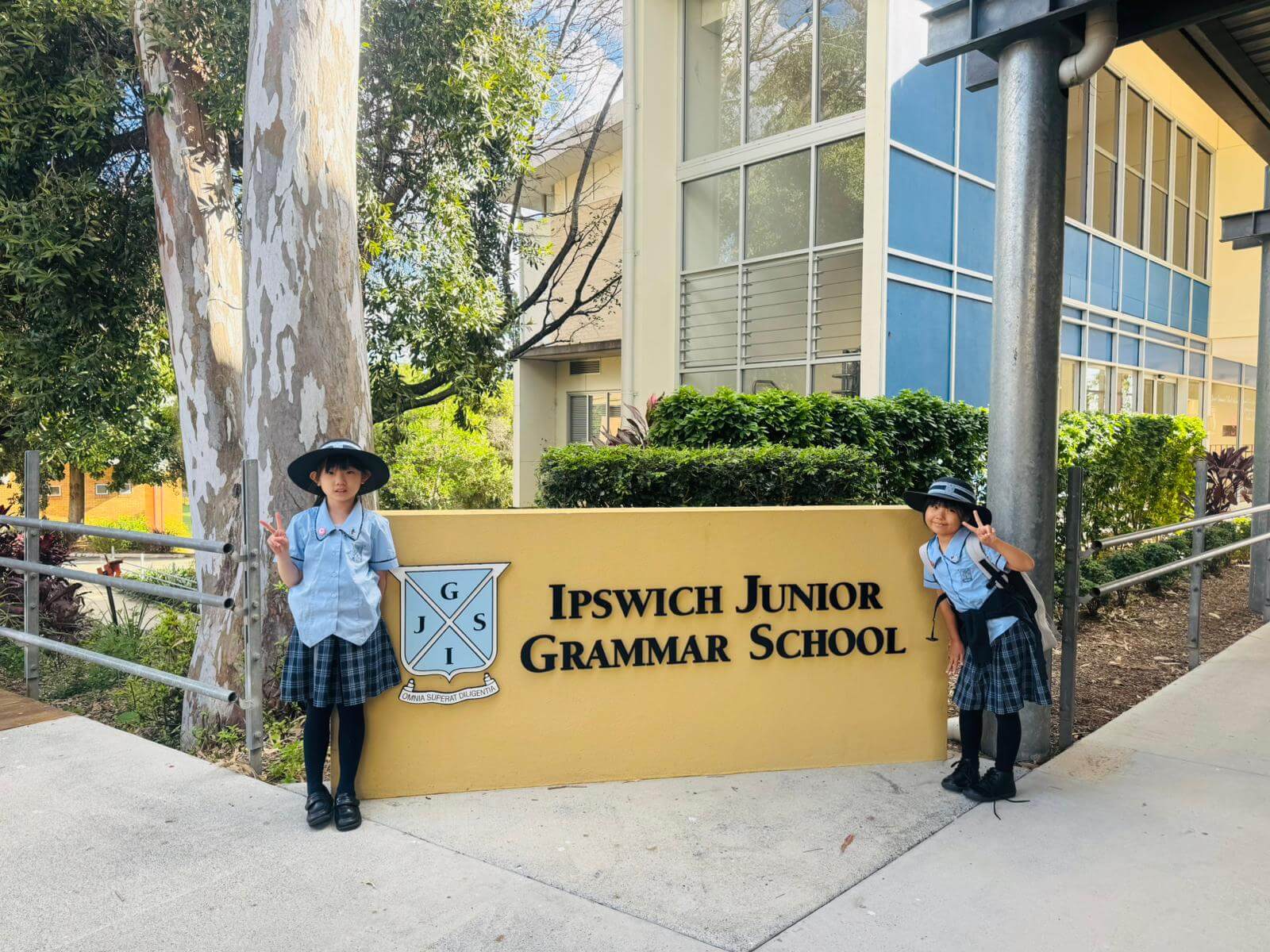
Ipswich Girls Grammar School (私立女子一貫校) CGK G3 Ako, AS G2 Yusei
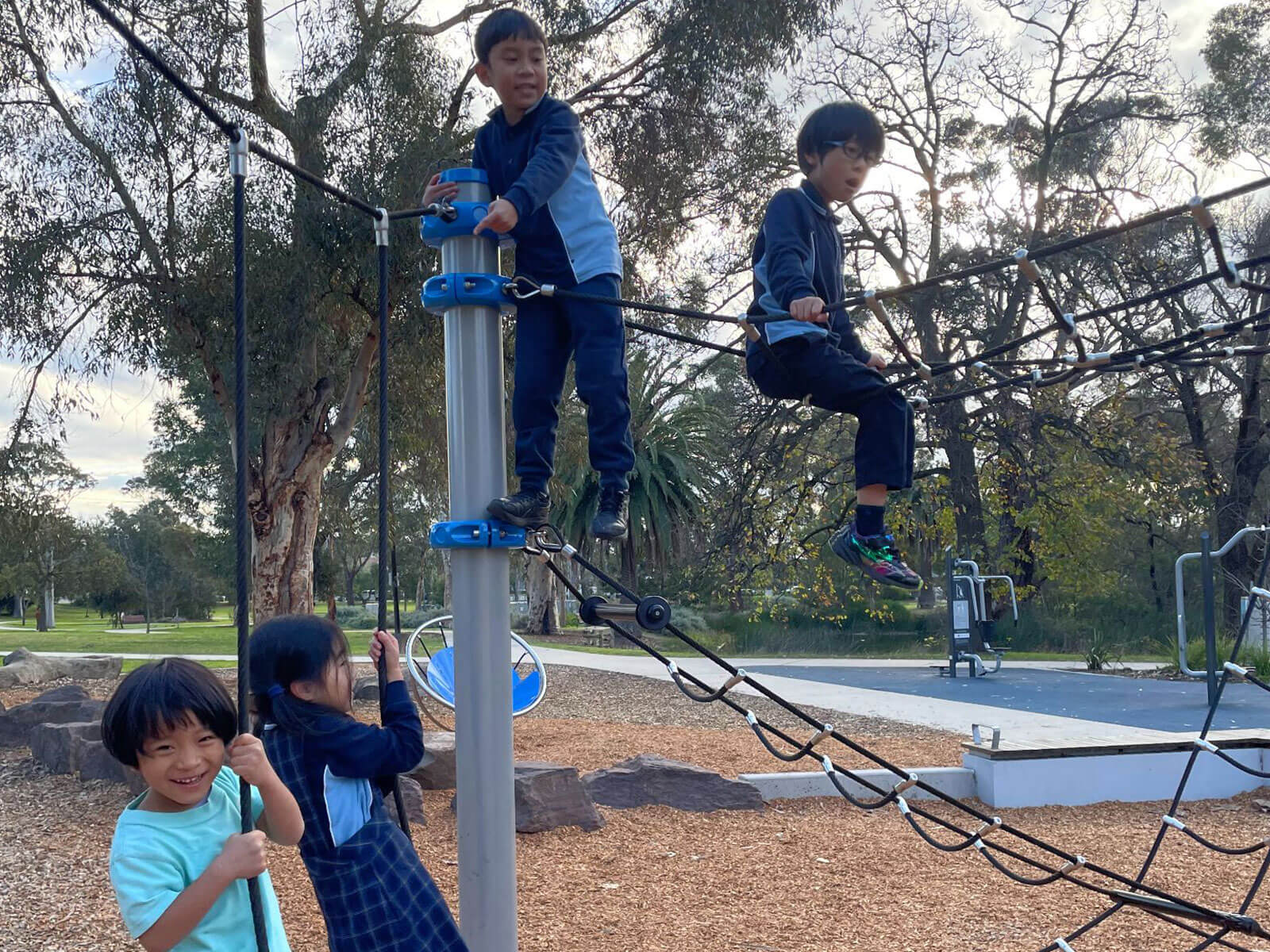
Essendon North Primary School(公立小学校・IB PYP校) CGK G1 Kokone, Mitsuki
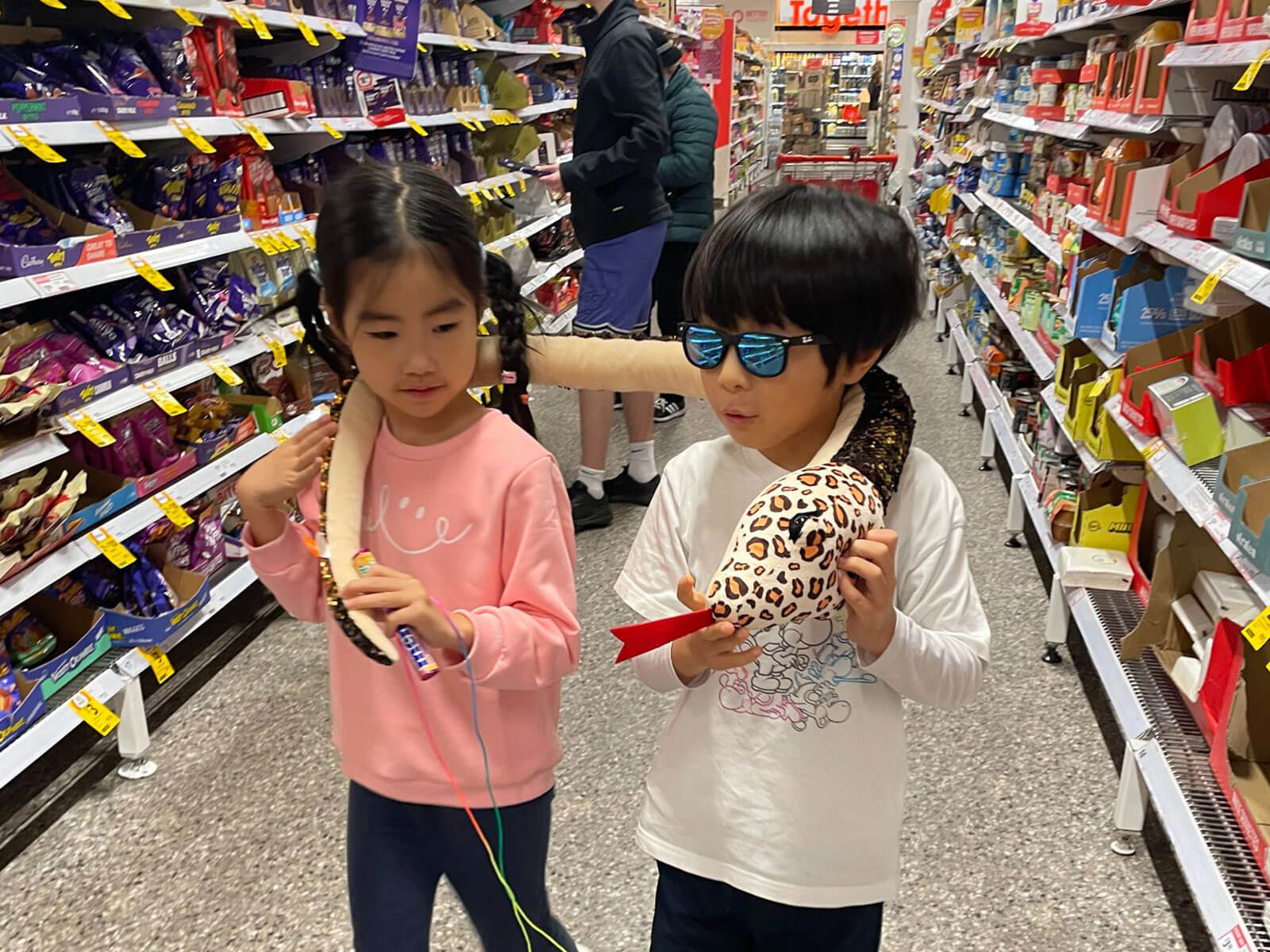
Essendon North Primary School(公立小学校・IB PYP校) CGK G1 Kokone, Mitsuki
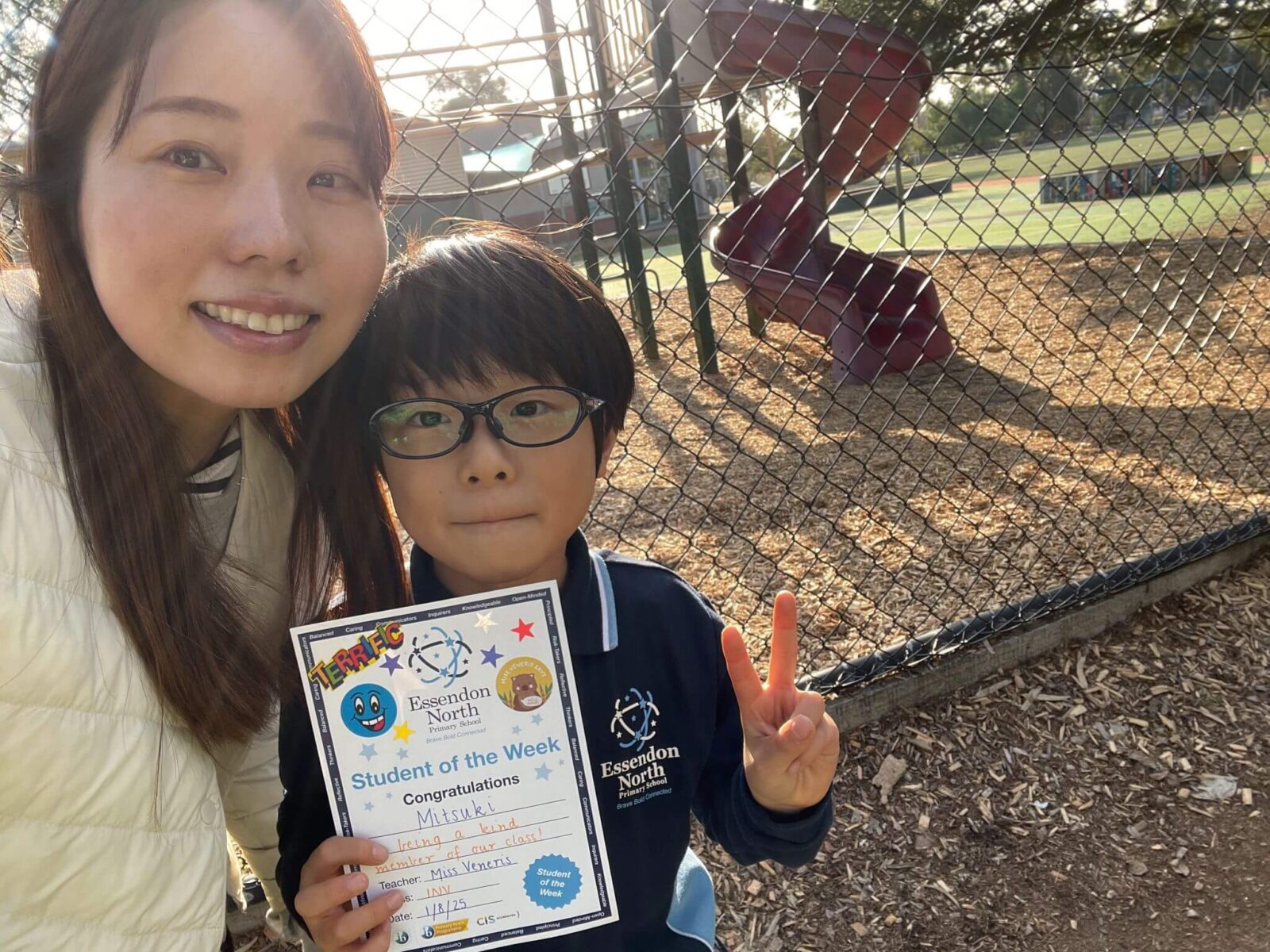 Essendon North Primary School(公立小学校・IB PYP校)CGK G1 Mitsuki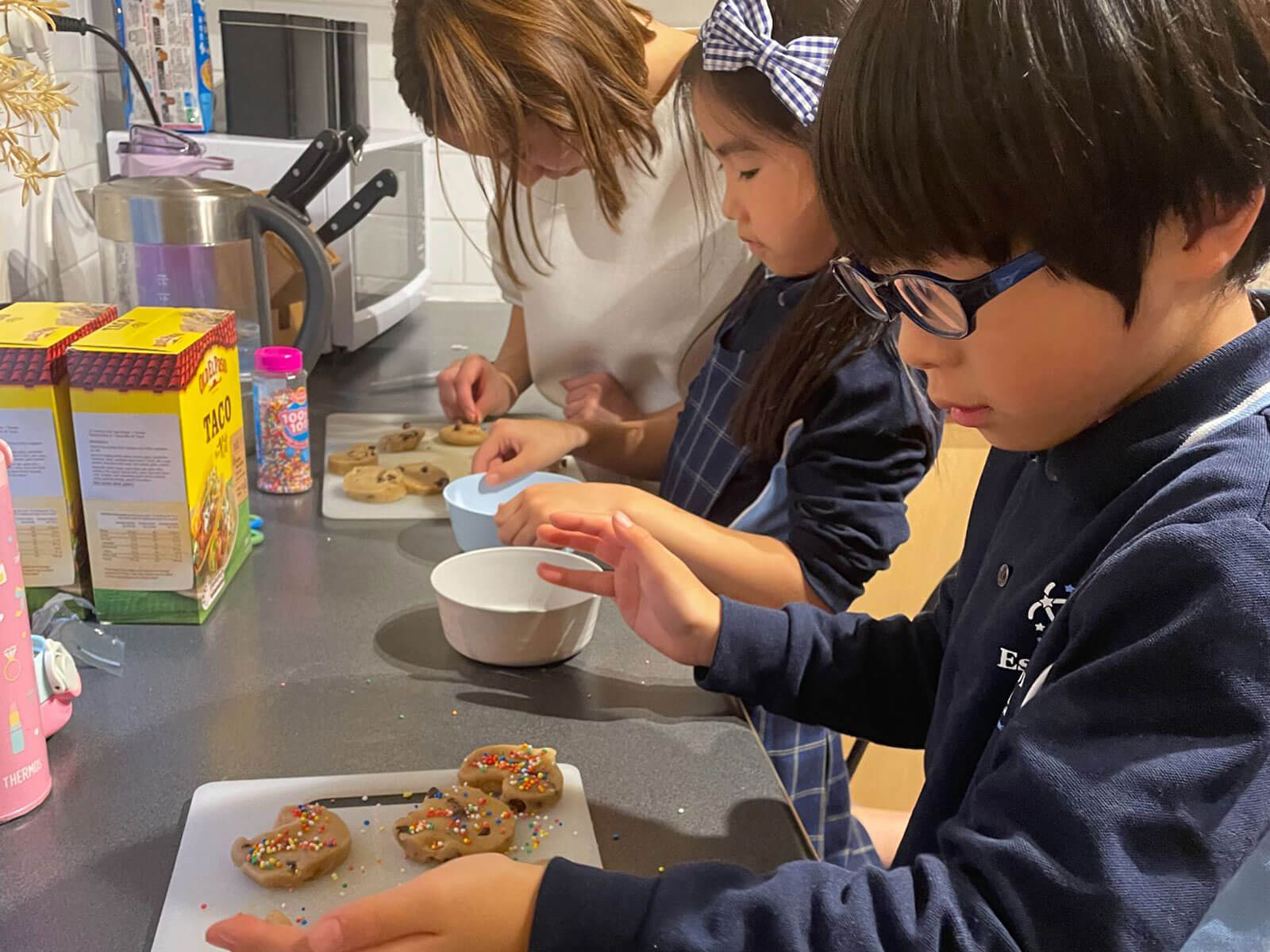
Essendon North Primary School(公立小学校・IB PYP校) CGK G1 Kokone, Mitsuki
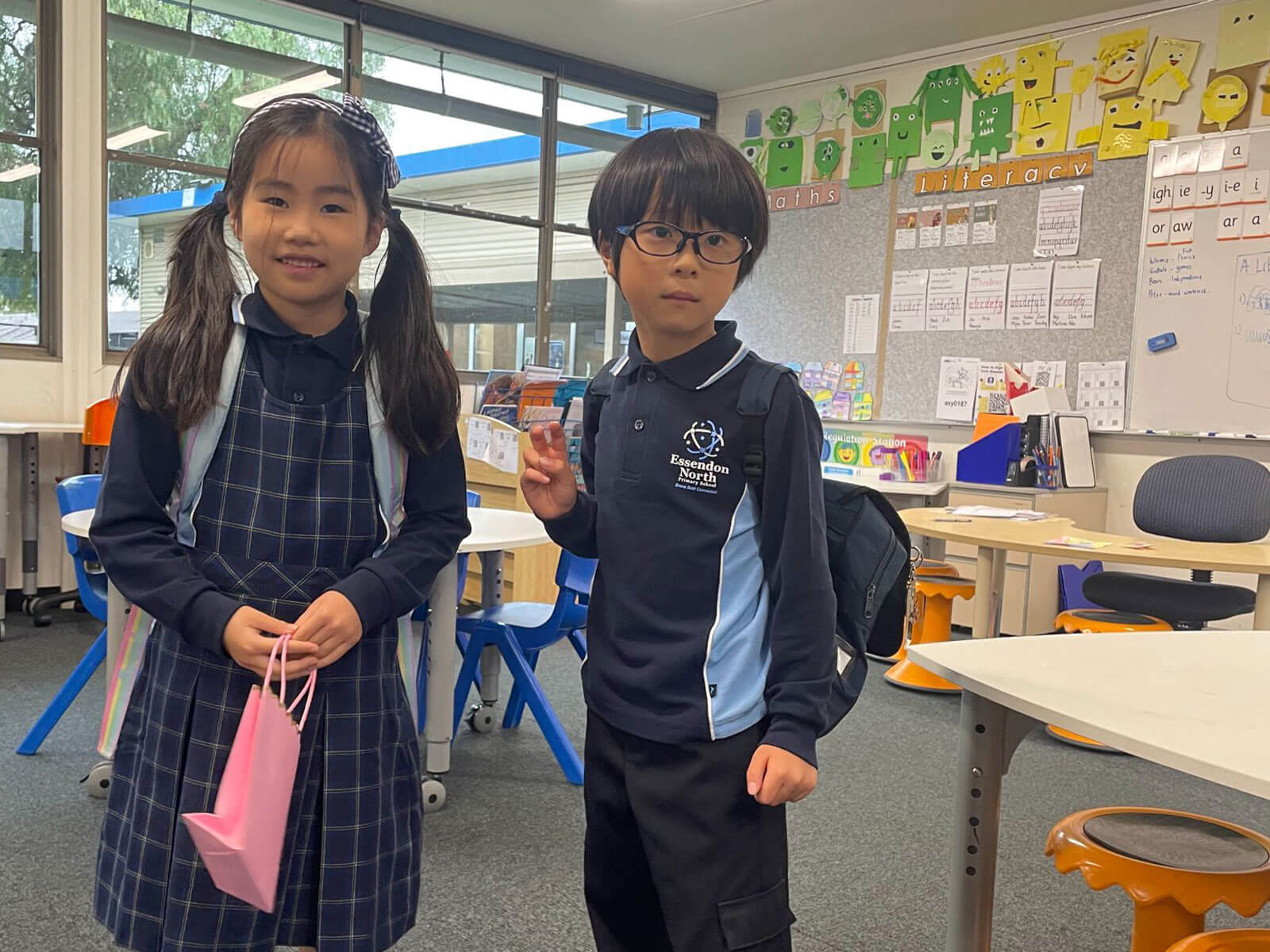
Essendon North Primary School(公立小学校・IB PYP校) CGK G1 Kokone, Mitsuki
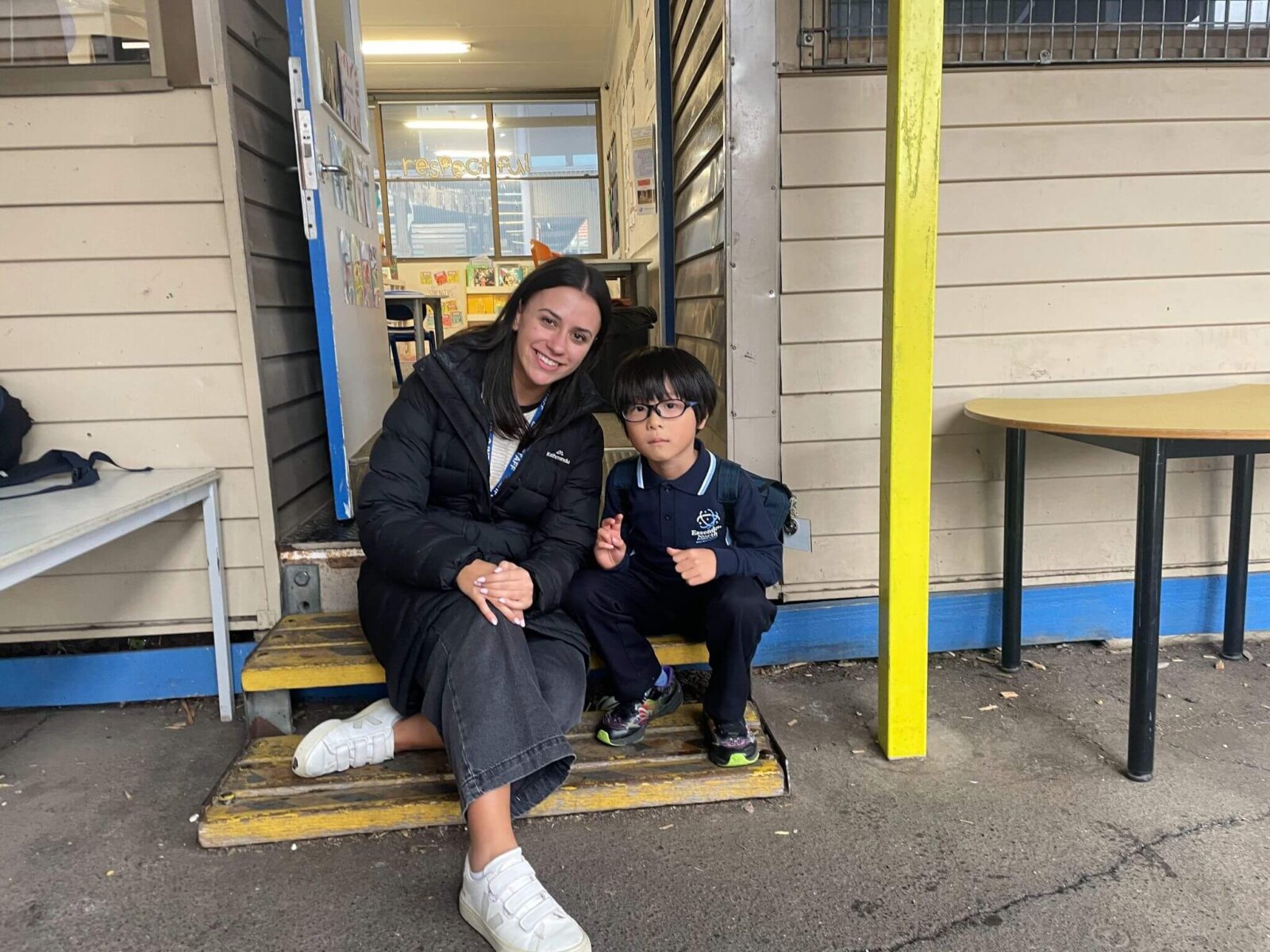
Essendon North Primary School(公立小学校・IB PYP校) CGK G1 Mitsuki
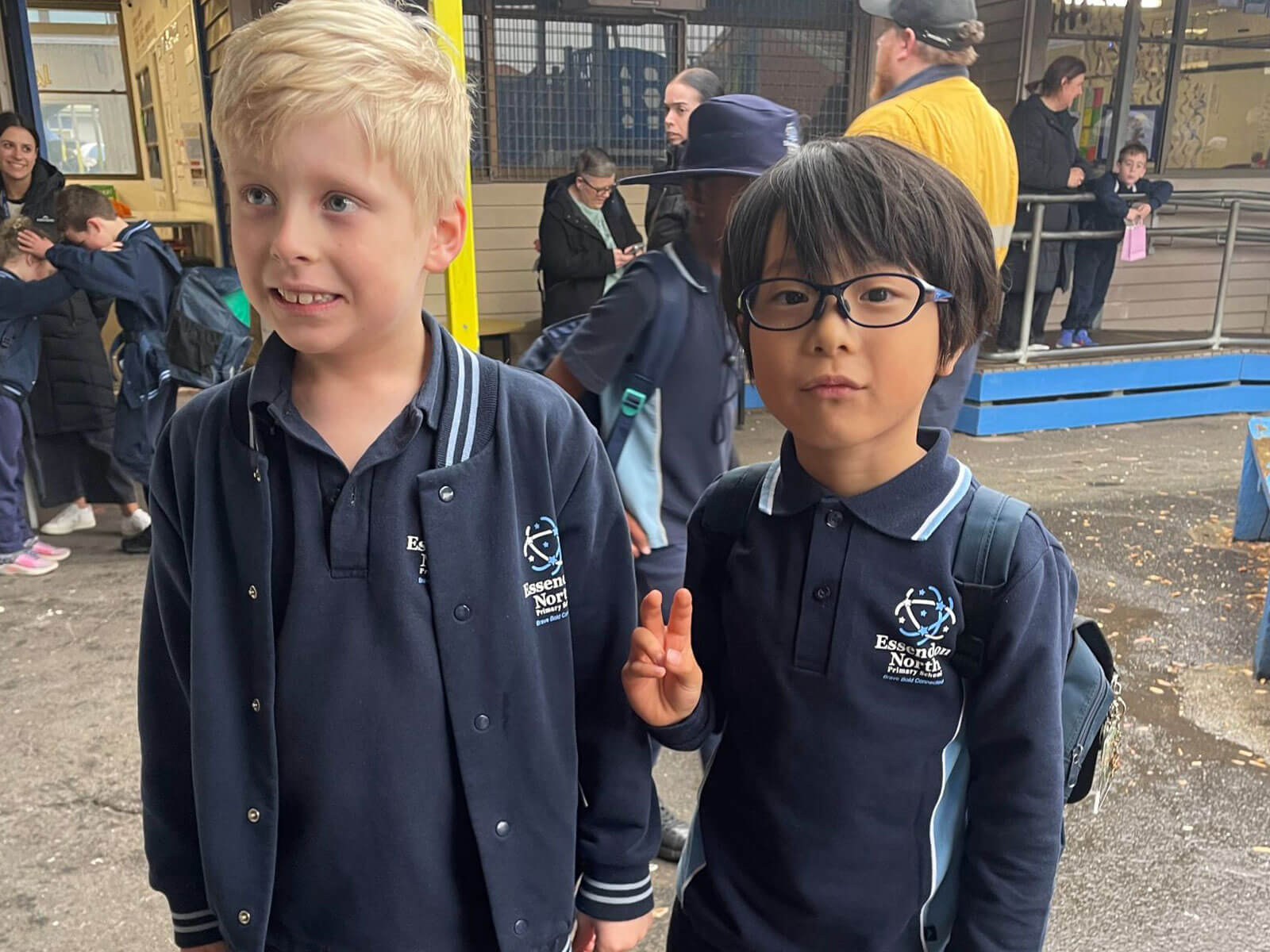
Essendon North Primary School(公立小学校・IB PYP校) CGK G1 Mitsuki
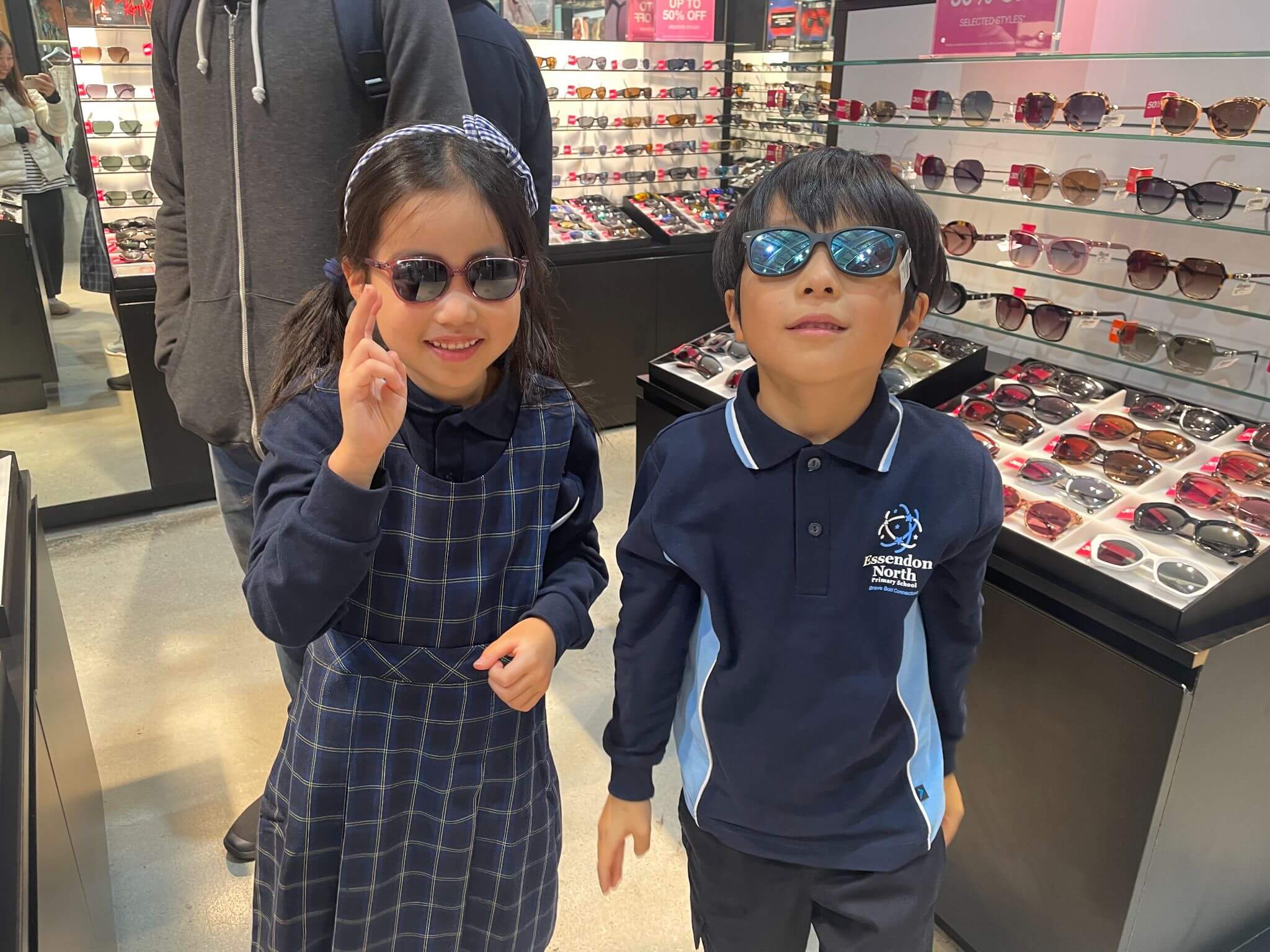
Essendon North Primary School(公立小学校・IB PYP校) CGK G1 Kokone, Mitsuki
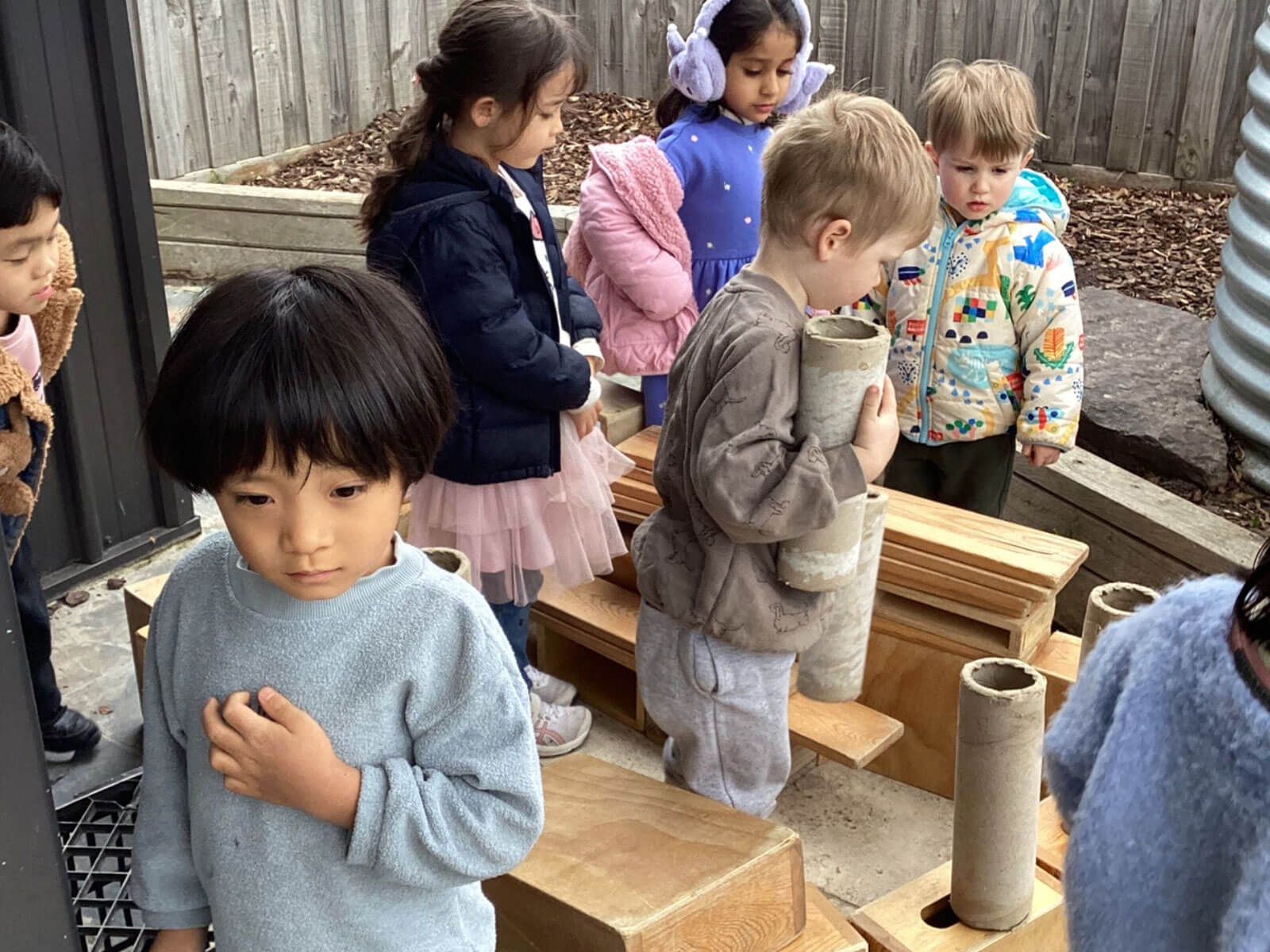
Guardian Childcare & Education South Melbourne (保育園) CGK Mountain Taiki
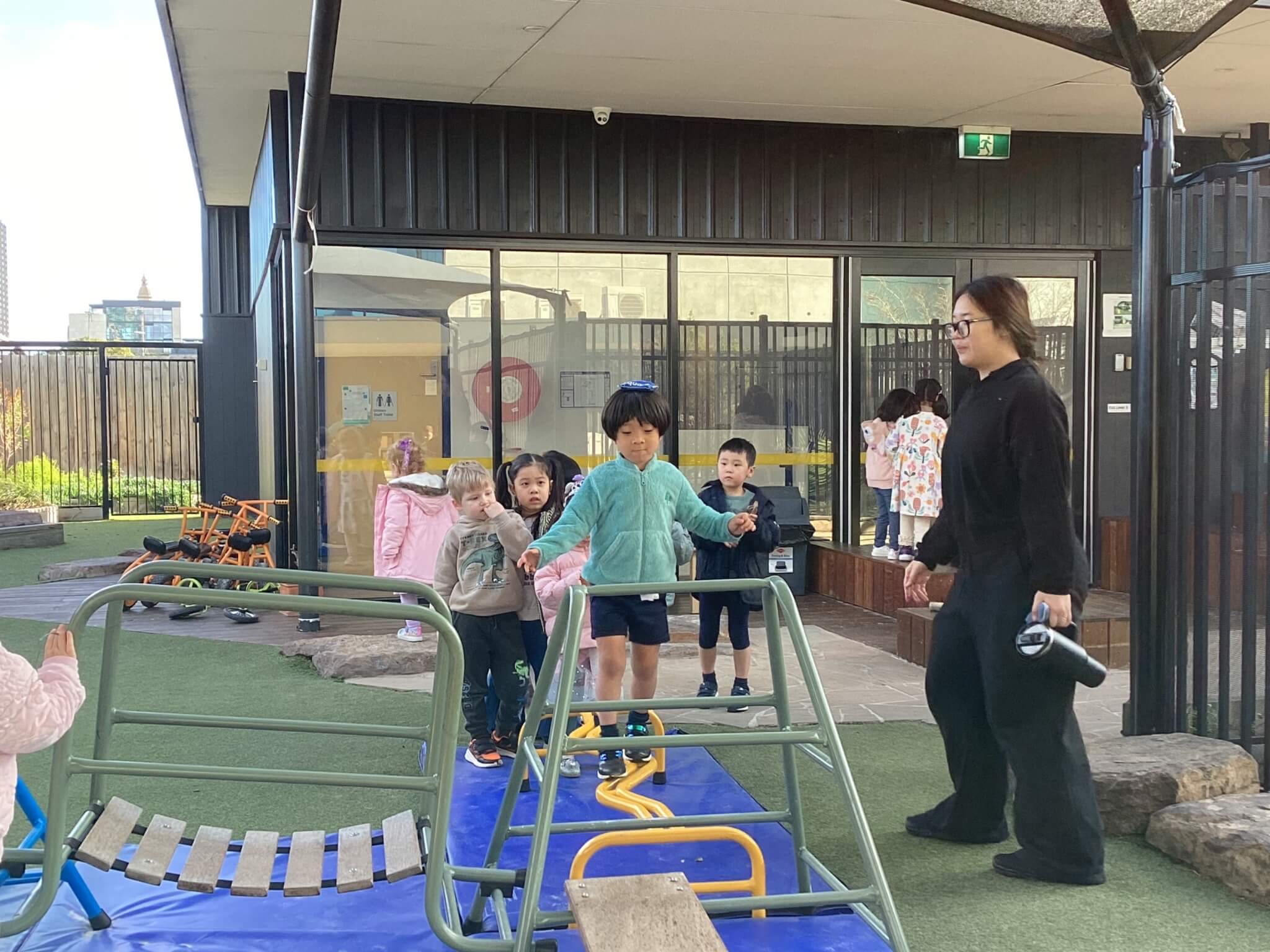
Guardian Childcare & Education South Melbourne (保育園) CGK Mountain Taiki
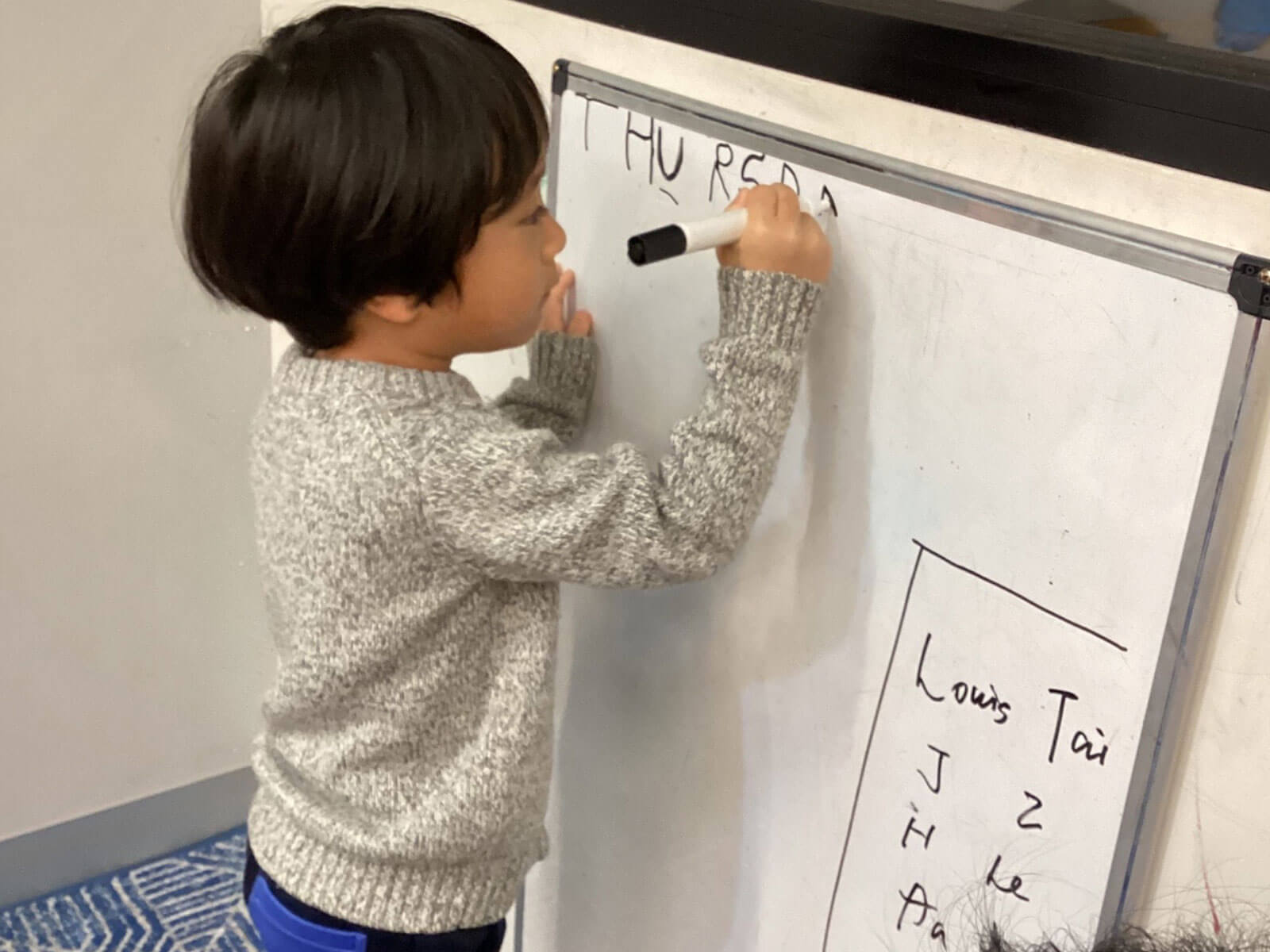
Guardian Childcare & Education South Melbourne (保育園) CGK Mountain Taiki
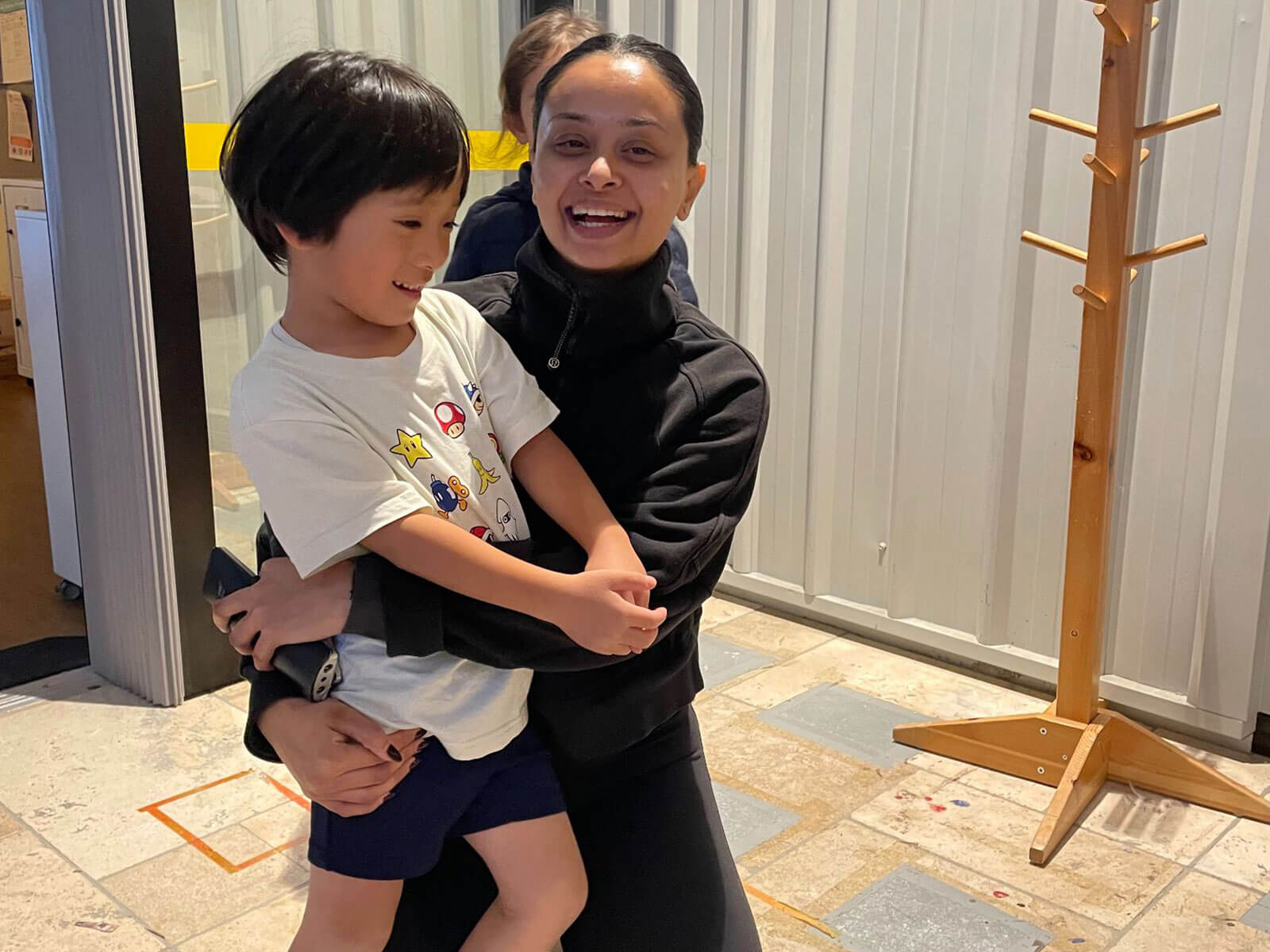
Guardian Childcare & Education South Melbourne (保育園) CGK Mountain Taiki
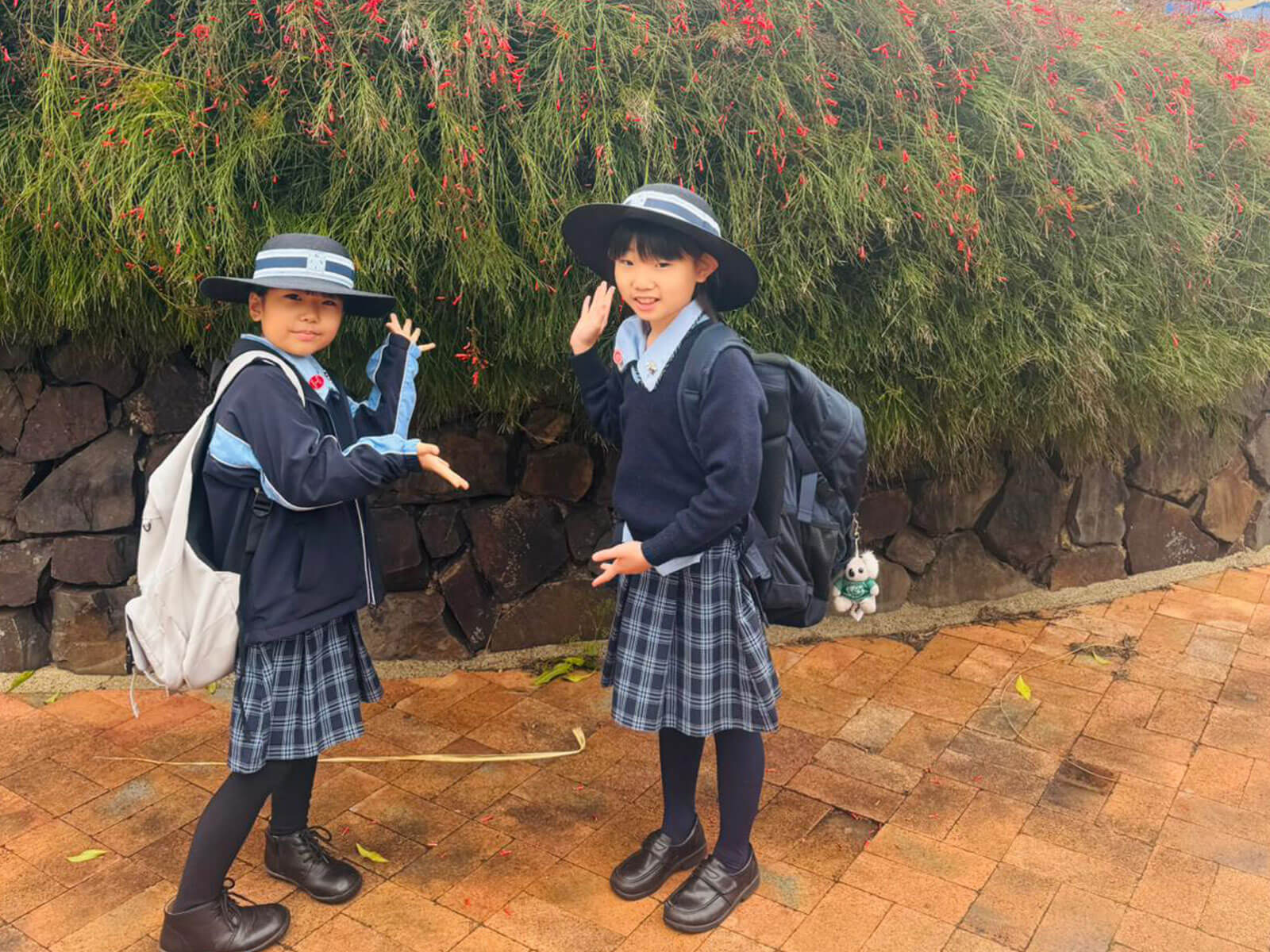
Ipswich Girls Grammar School (私立女子一貫校) CGK G3 Ako, AS G2 Yusei
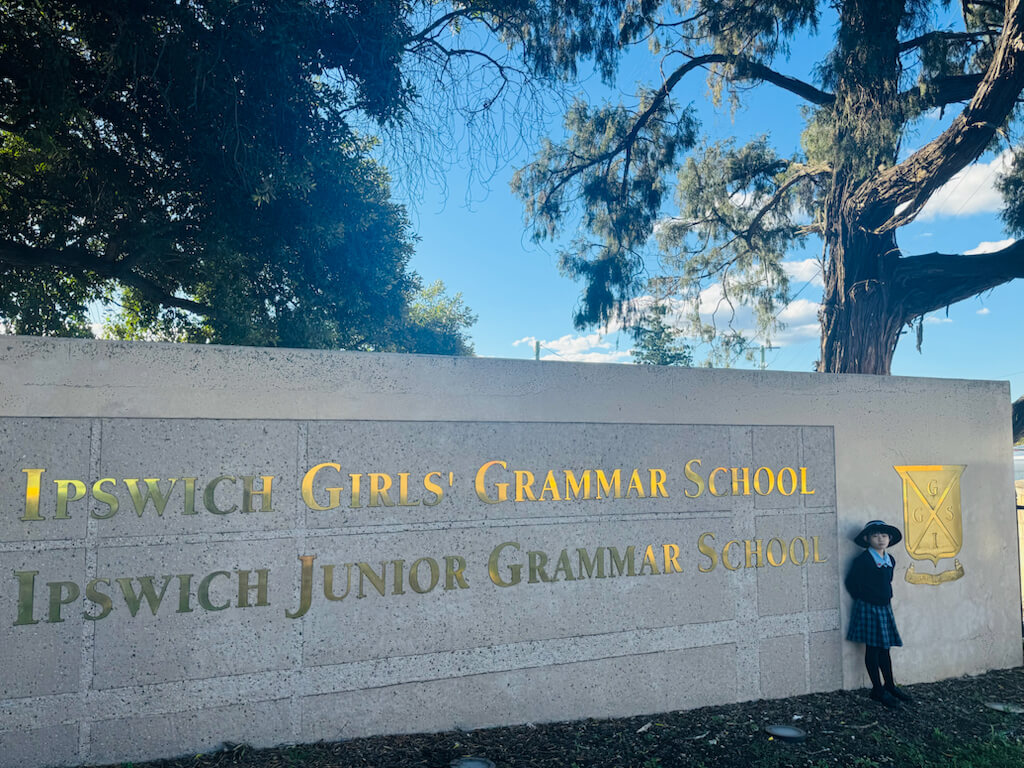
Ipswich Girls Grammar School (私立女子一貫校) CGK AS G2 Yusei
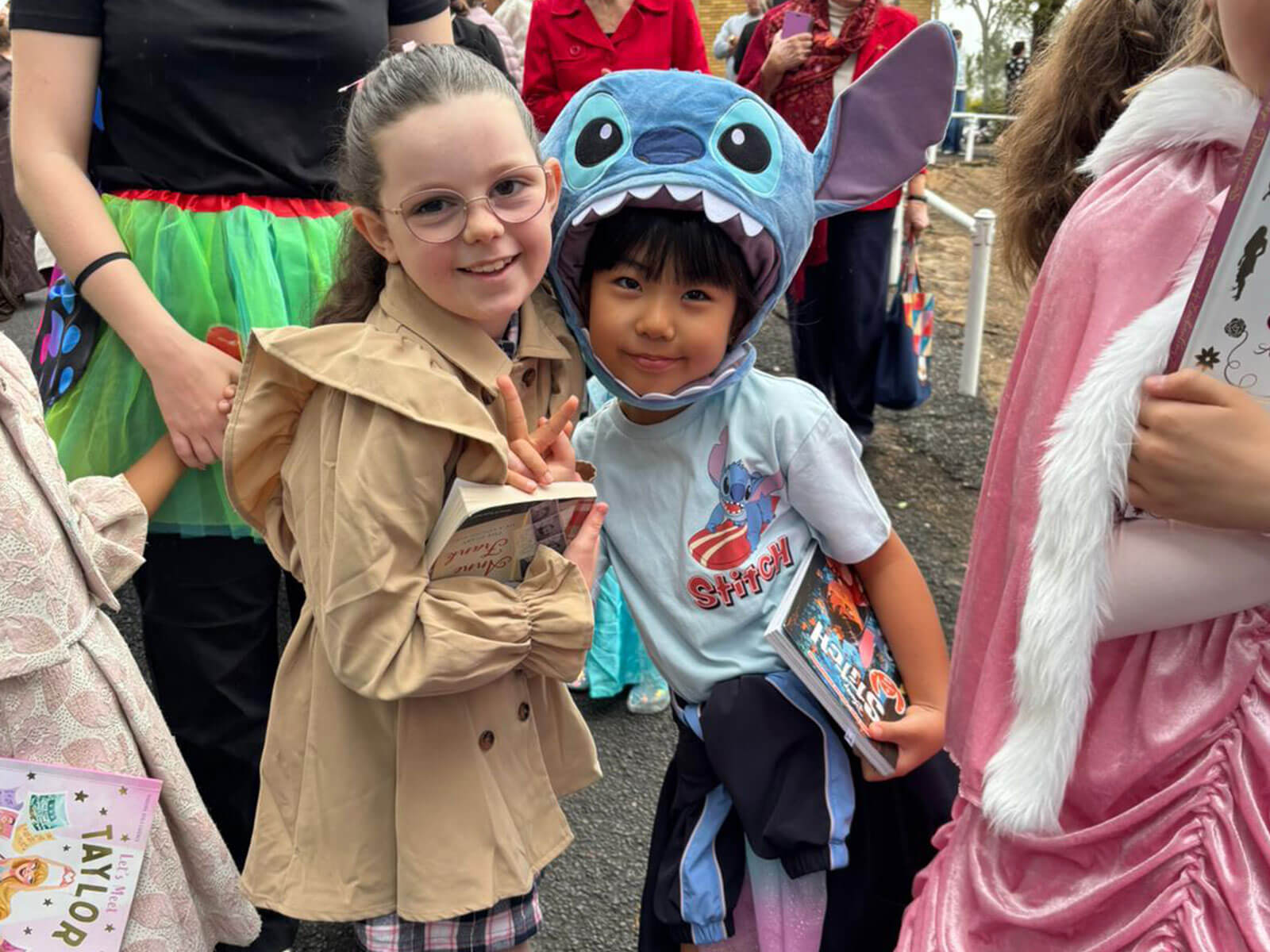
Ipswich Girls Grammar School (私立女子一貫校) CGK G3 Ako
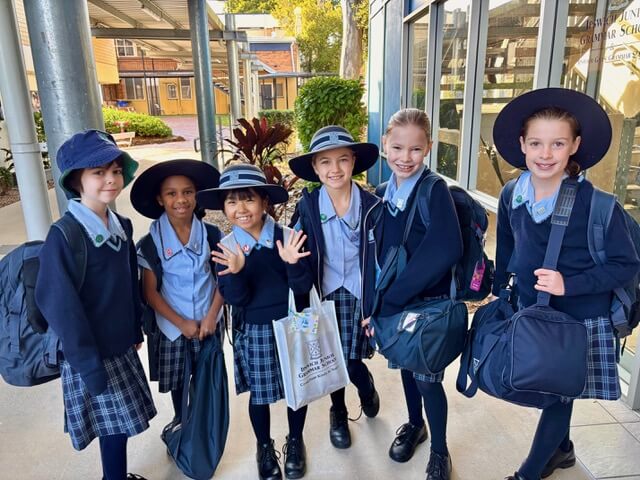
Ipswich Girls Grammar School (私立女子一貫校) CGK G3 Ako
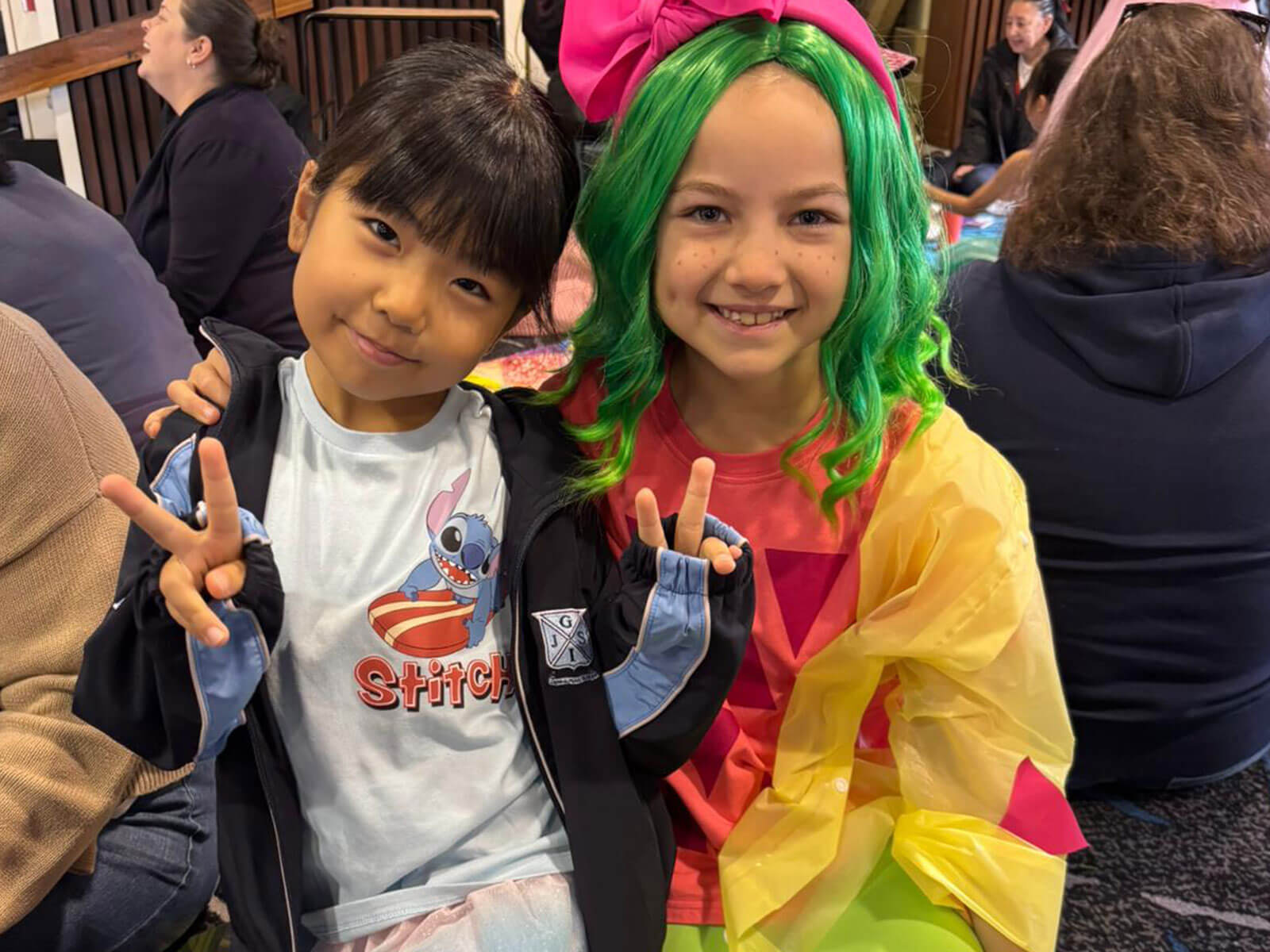
Ipswich Girls Grammar School (私立女子一貫校) CGK G3 Ako
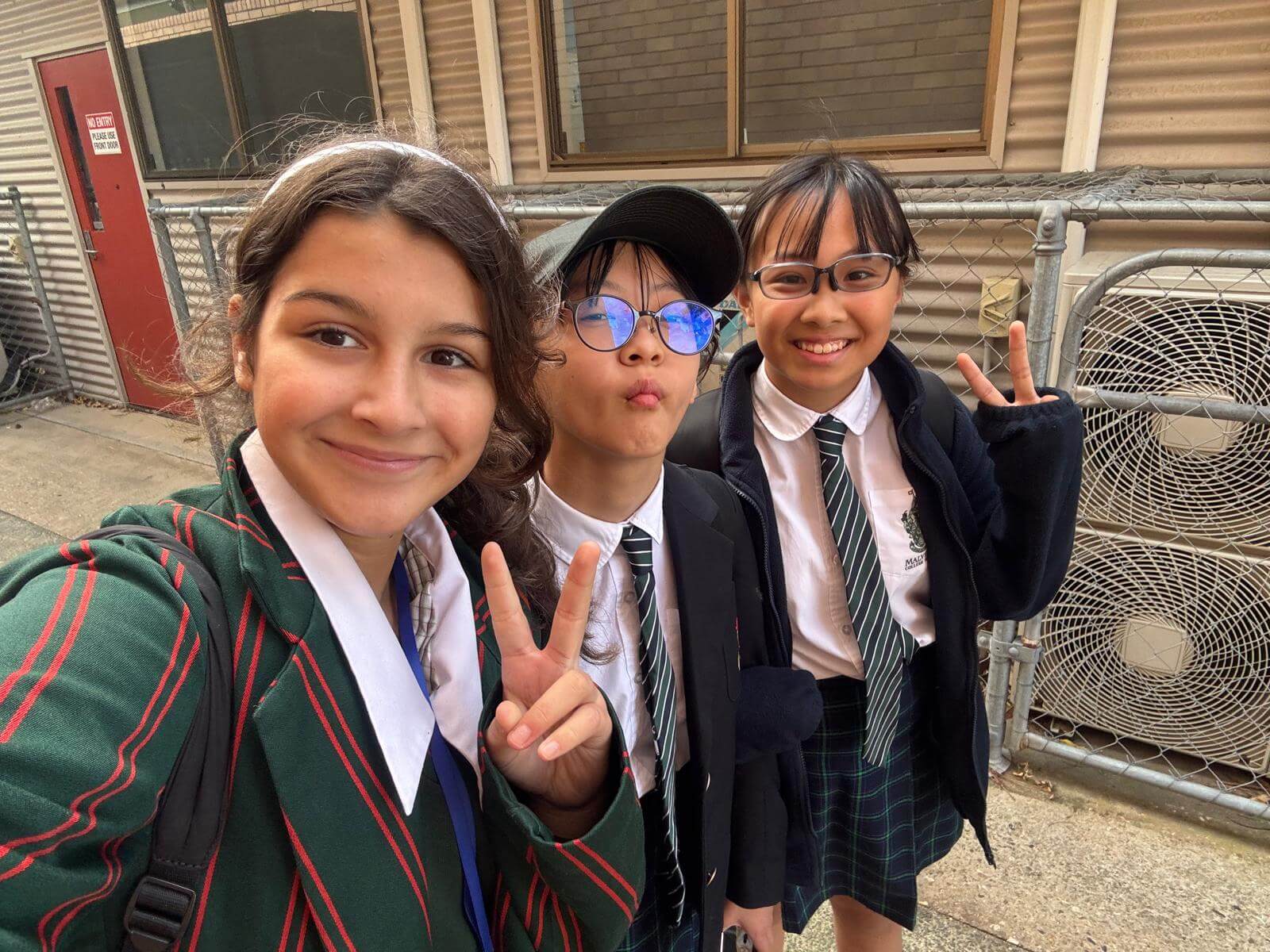
St.Pauls (私立一貫校) CGK G7 Alisa
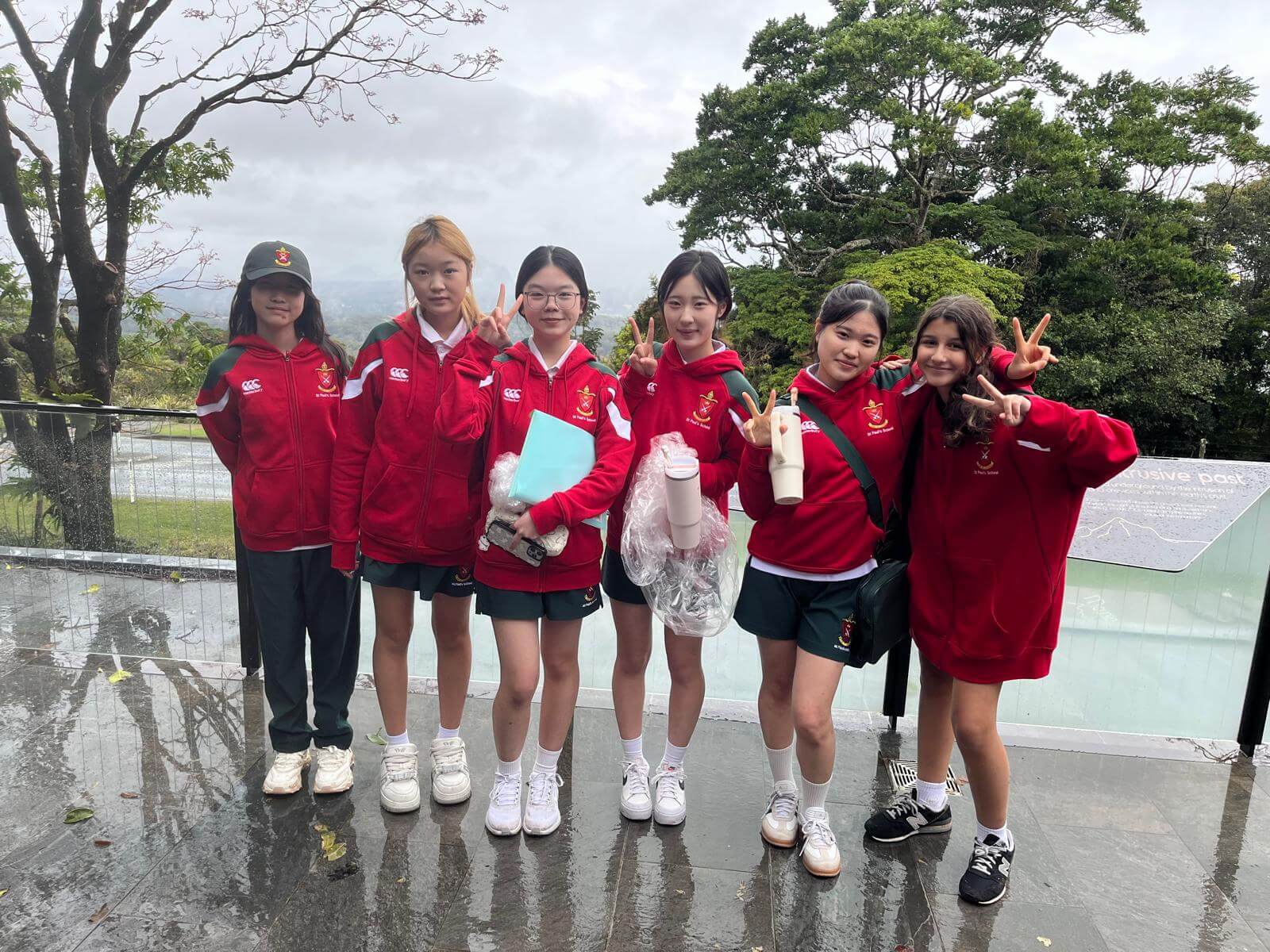
St.Pauls (私立一貫校) CGK G7 Alisa
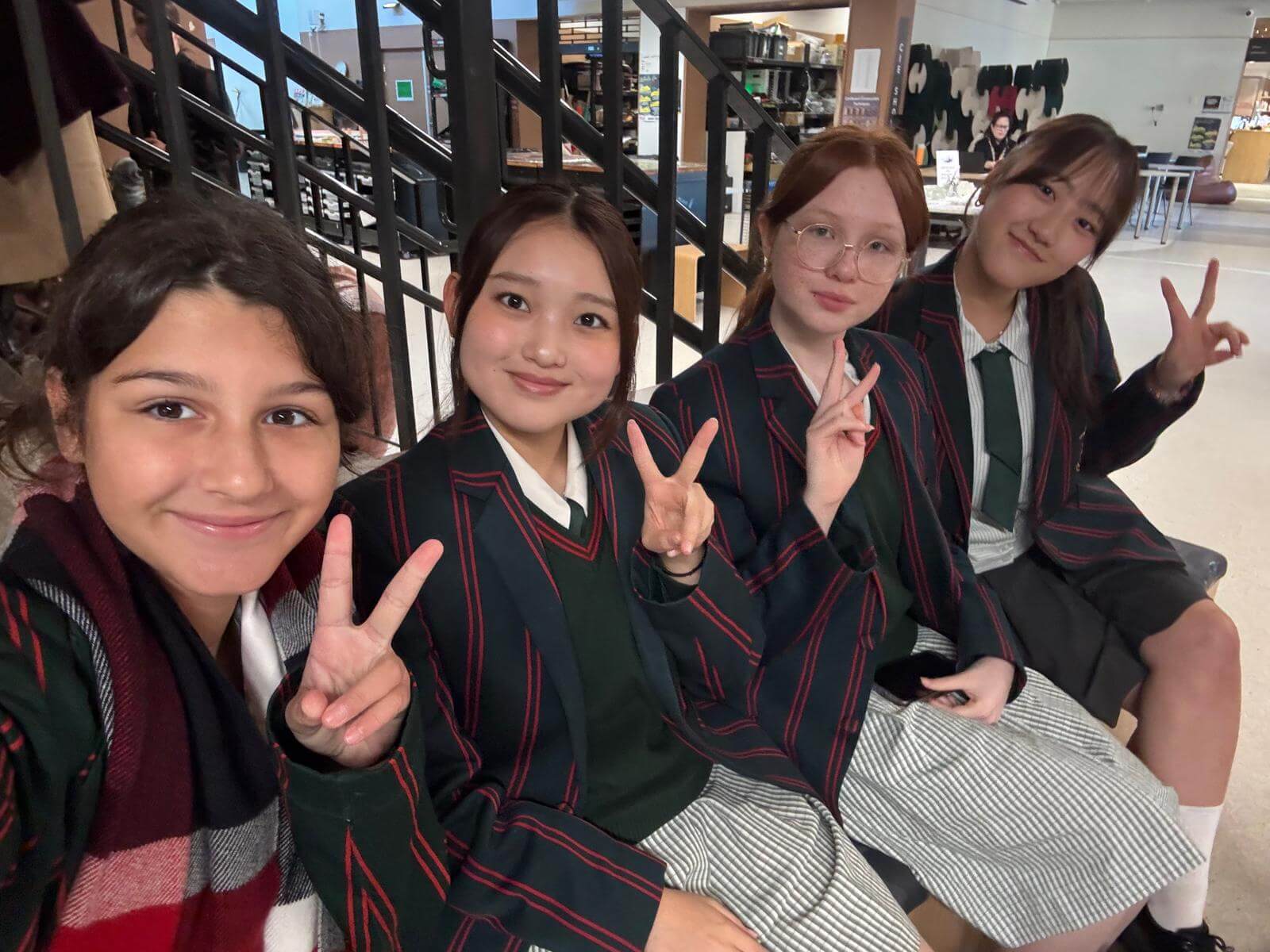
St.Pauls (私立一貫校) CGK G7 Alisa
Canada
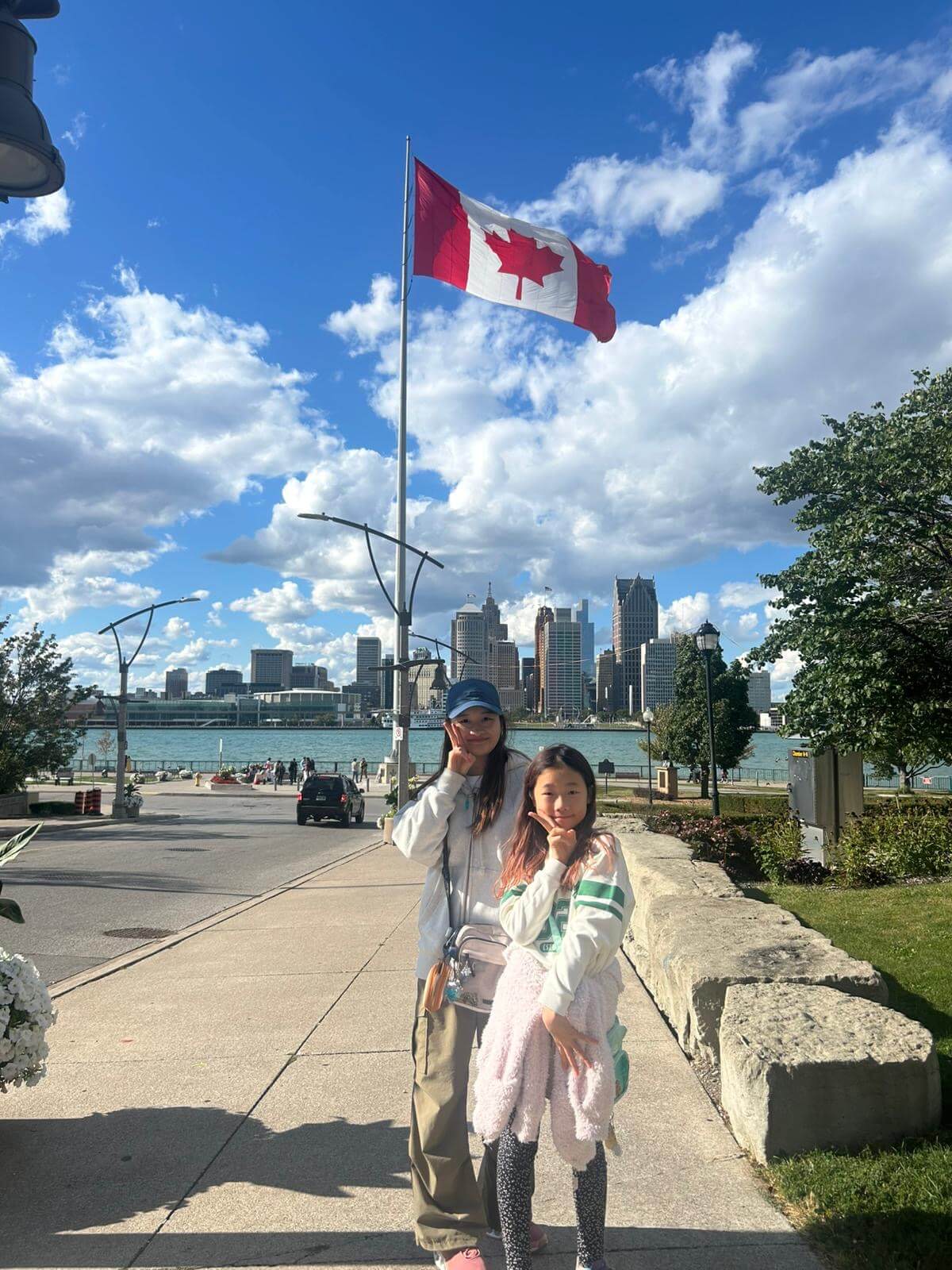
Assumption College Catholic Middle School (公立中学校) CGK G7 Sedona, St. James Elementary (公立小学校) CGK G4 Nasuka
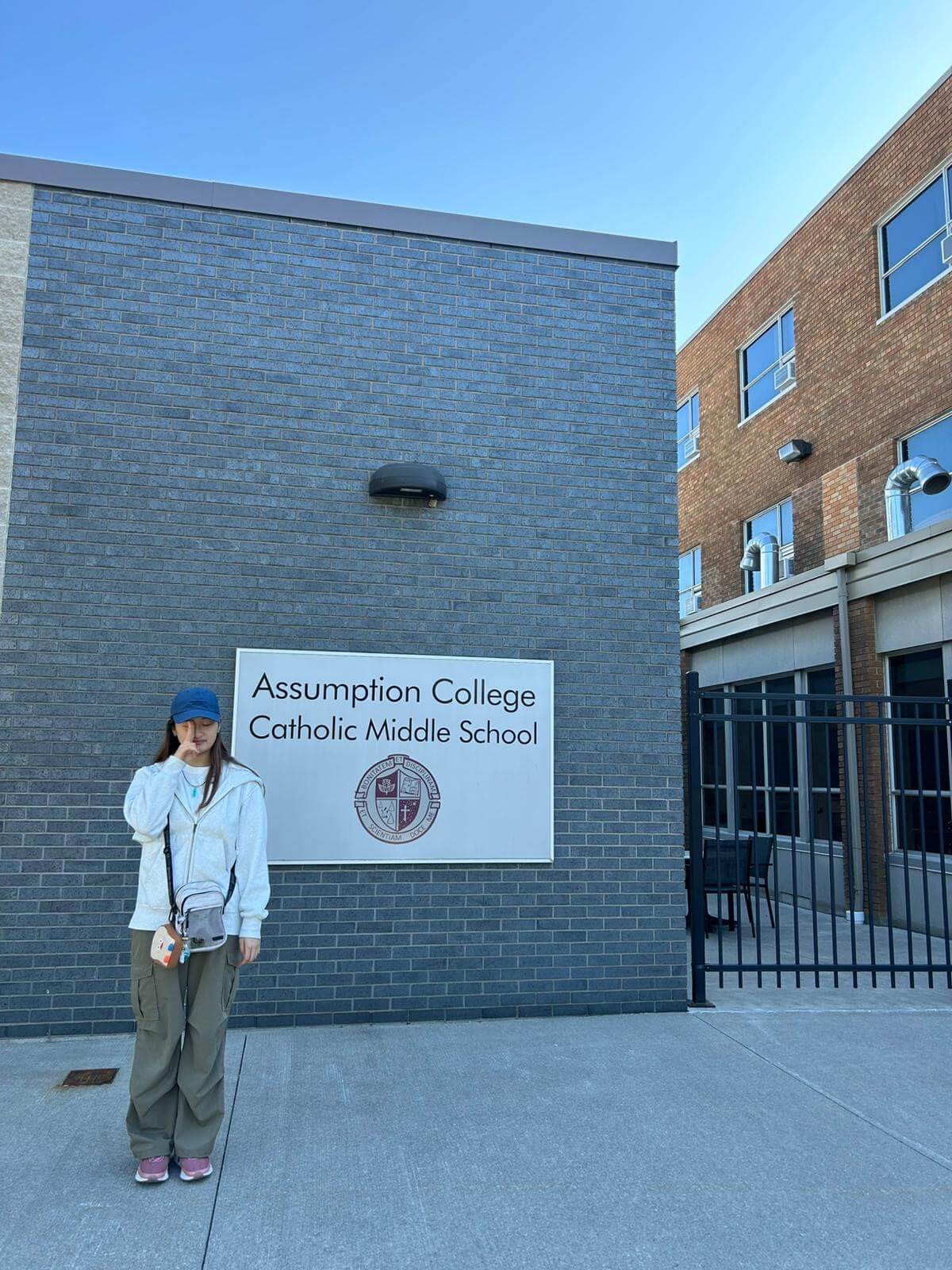
Assumption College Catholic Middle School (公立中学校) CGK G7 Sedona
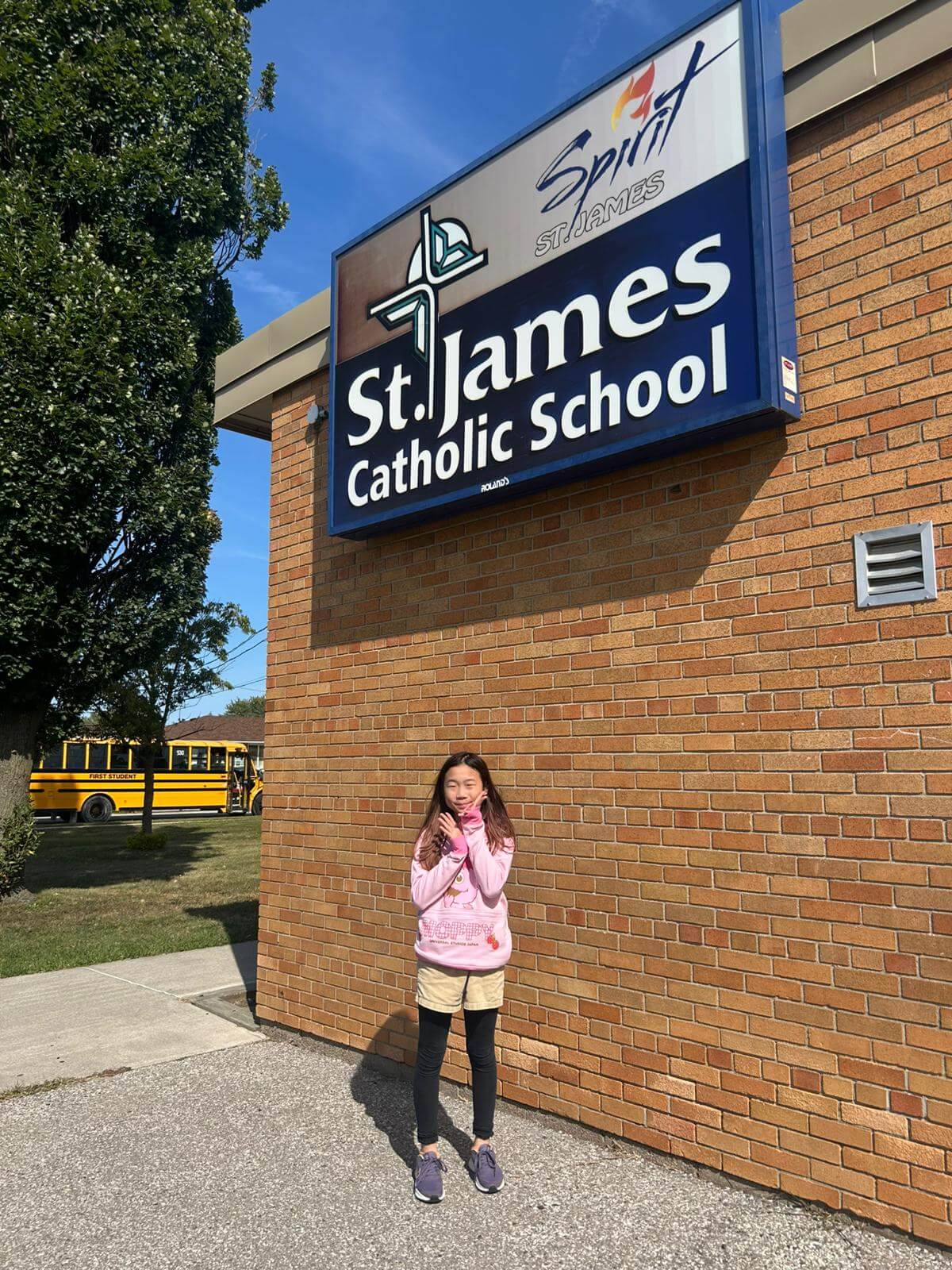
St. James Catholic Elementary School (公立小学校) CGK G4 Nasuka
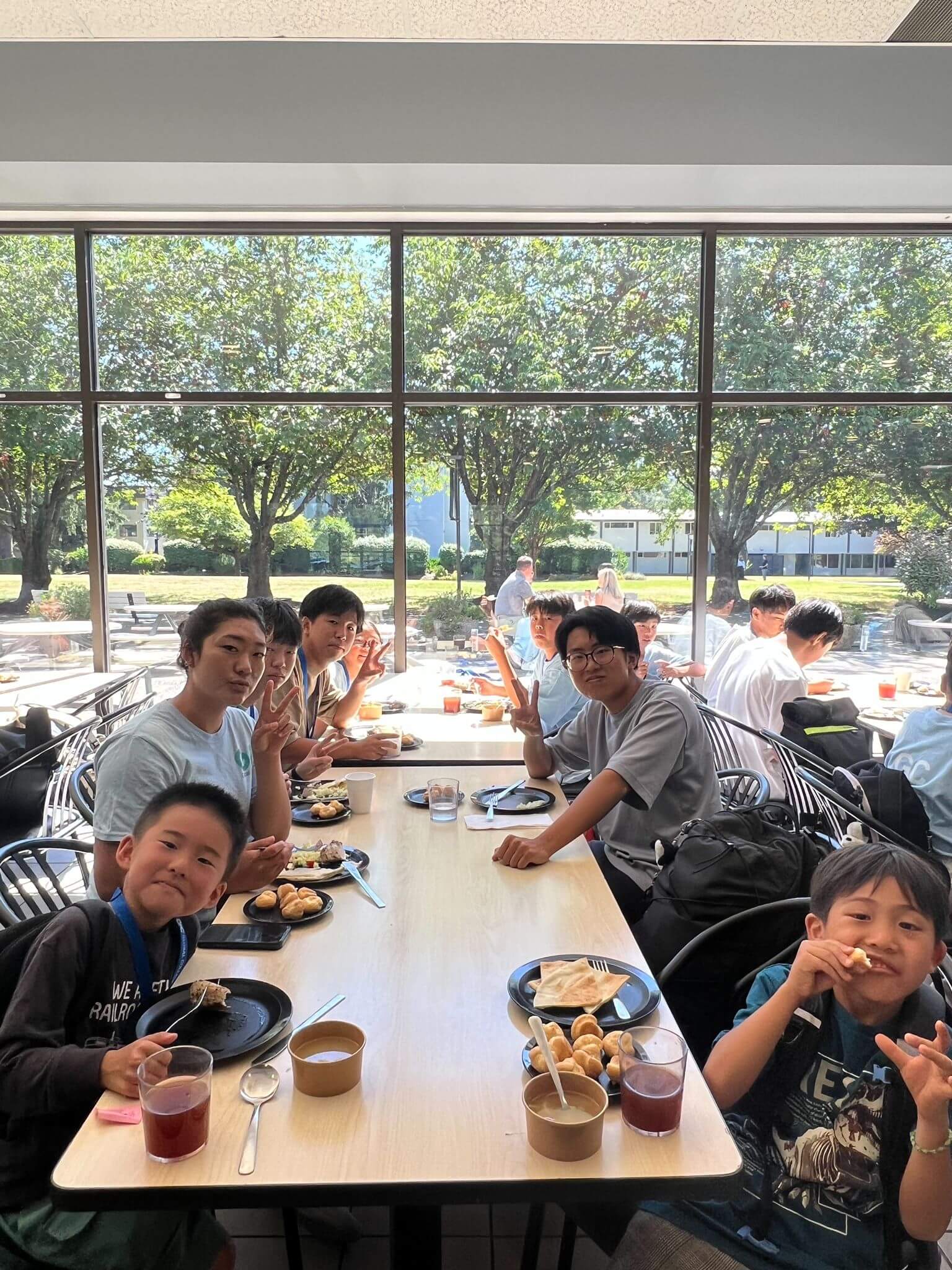
Global College Summer Camp, CGK AS G1 Aoba
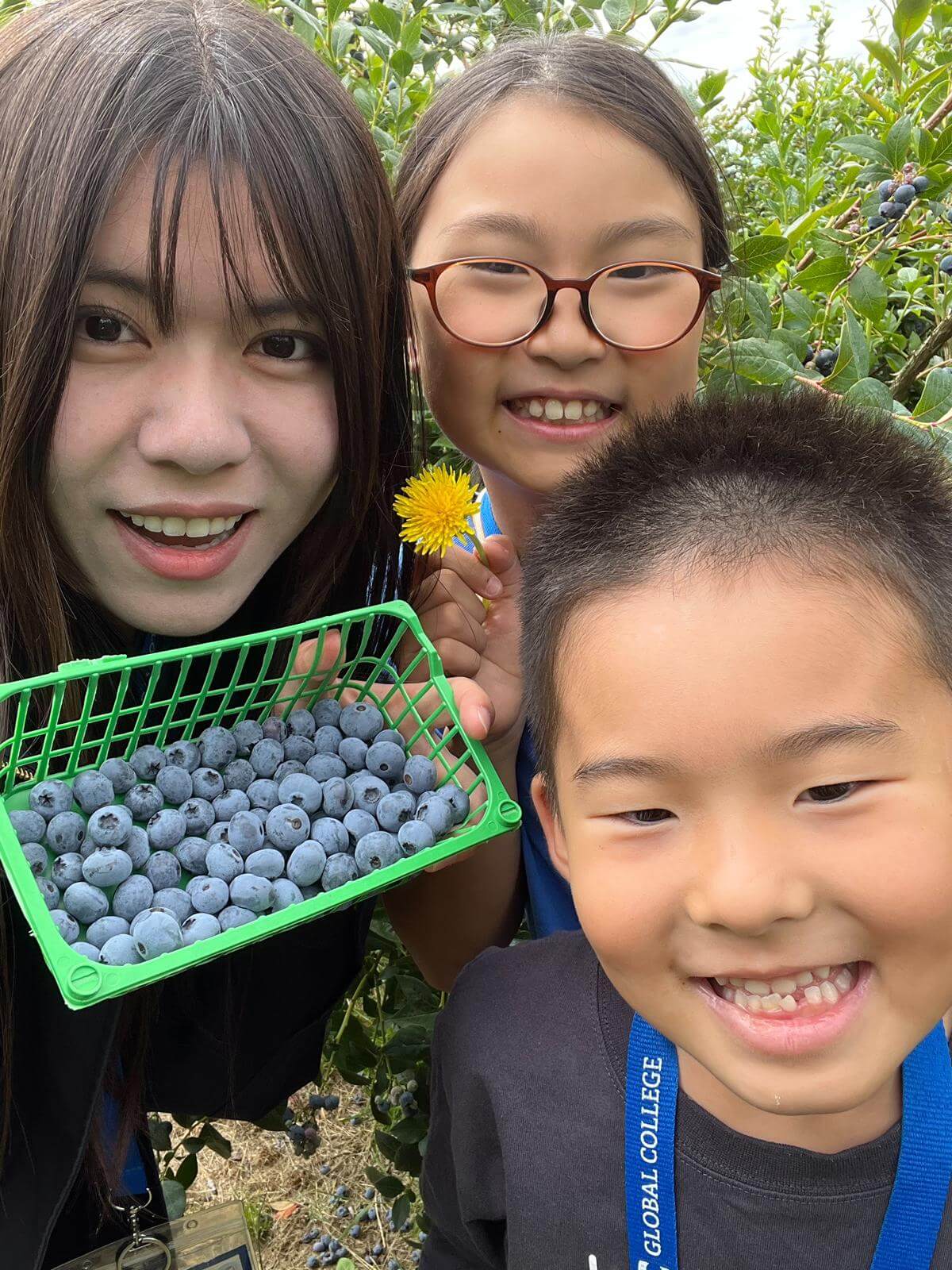
Global College Summer Camp, CGK AS G1 Aoba
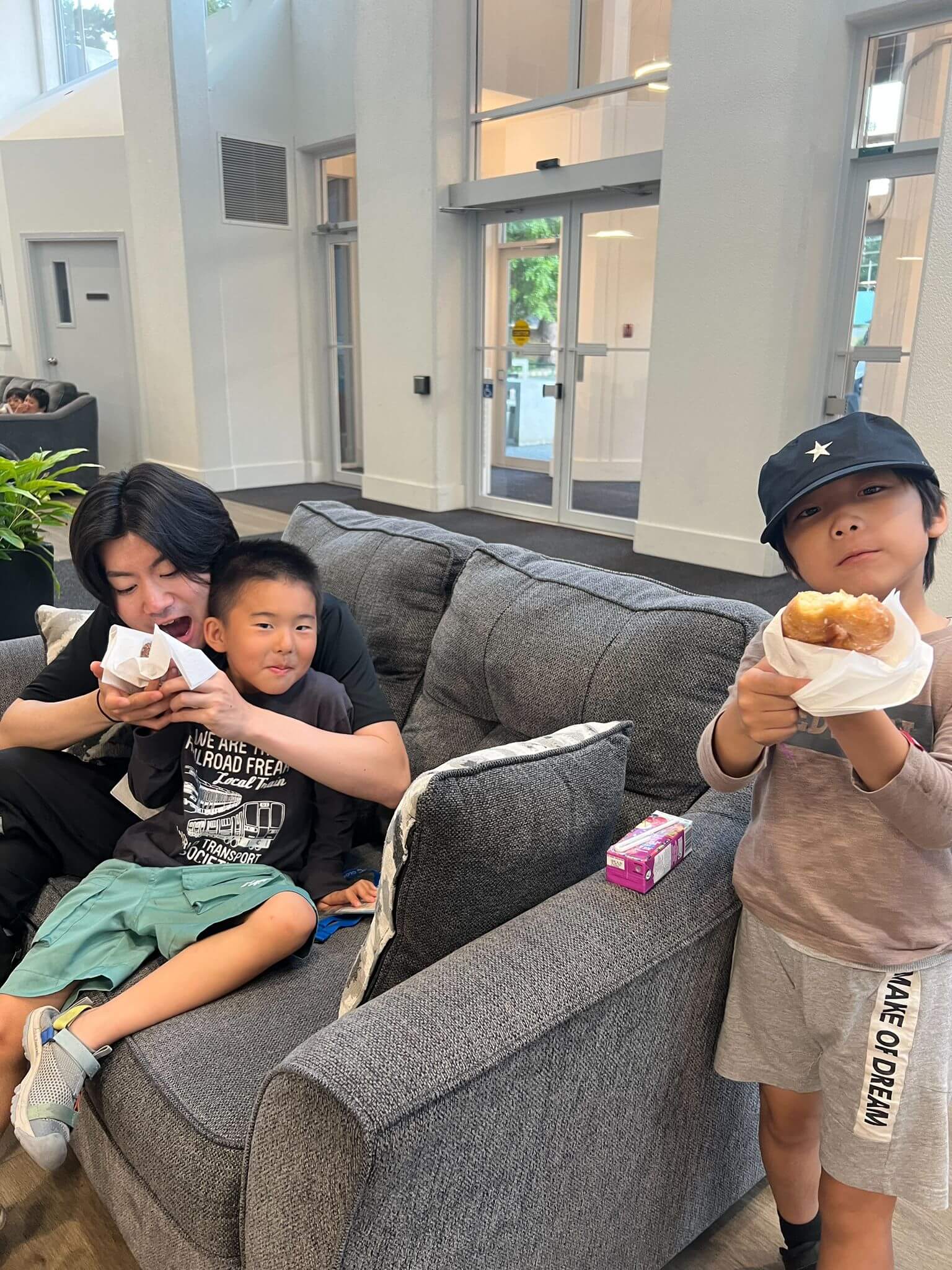
Global College Summer Camp, CGK AS G1 Aoba
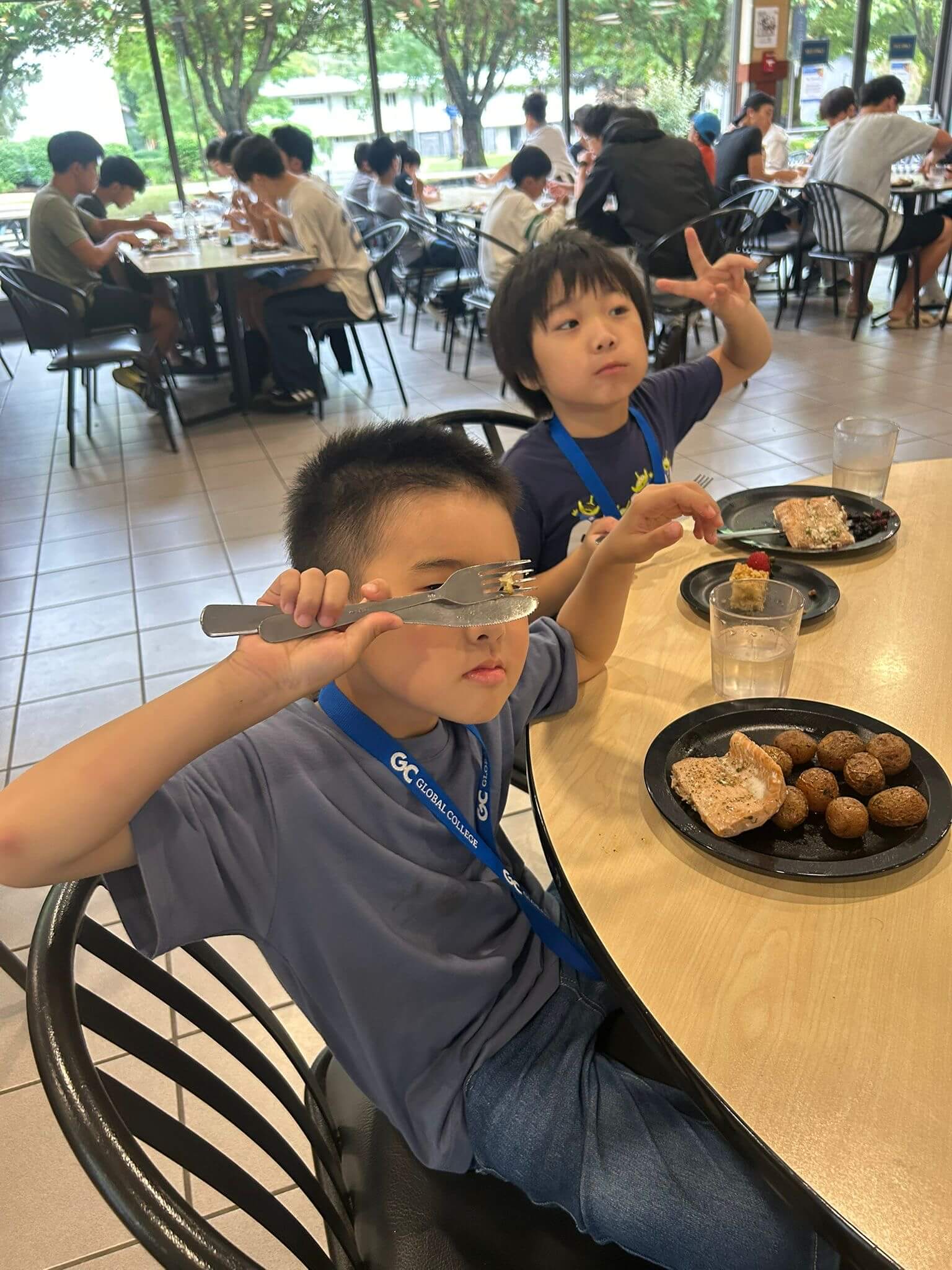
Global College Summer Camp, CGK AS G1 Aoba
New Zealand
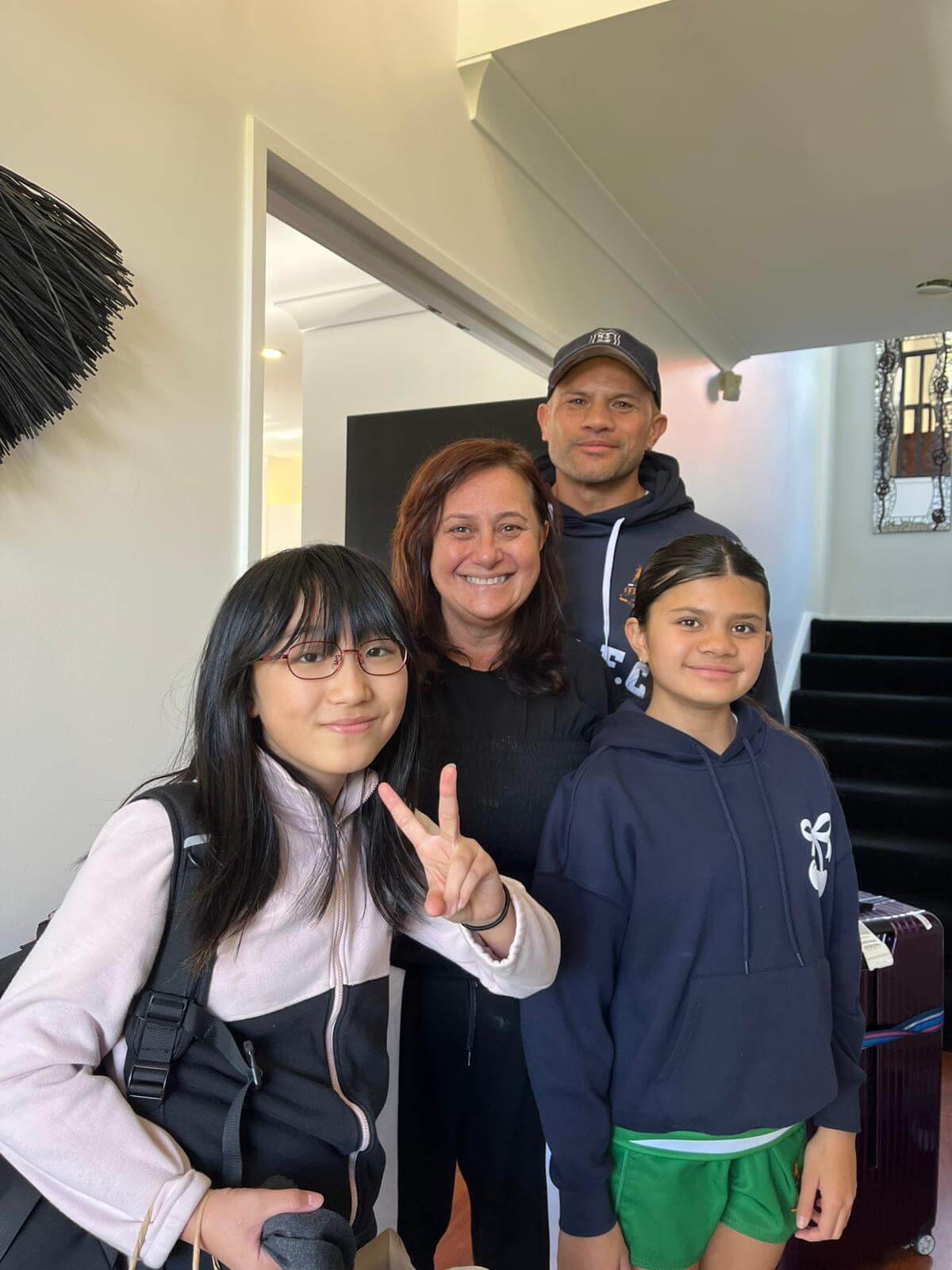
Belmont Intermediate School (公立中学校) CGK G6 Yuina
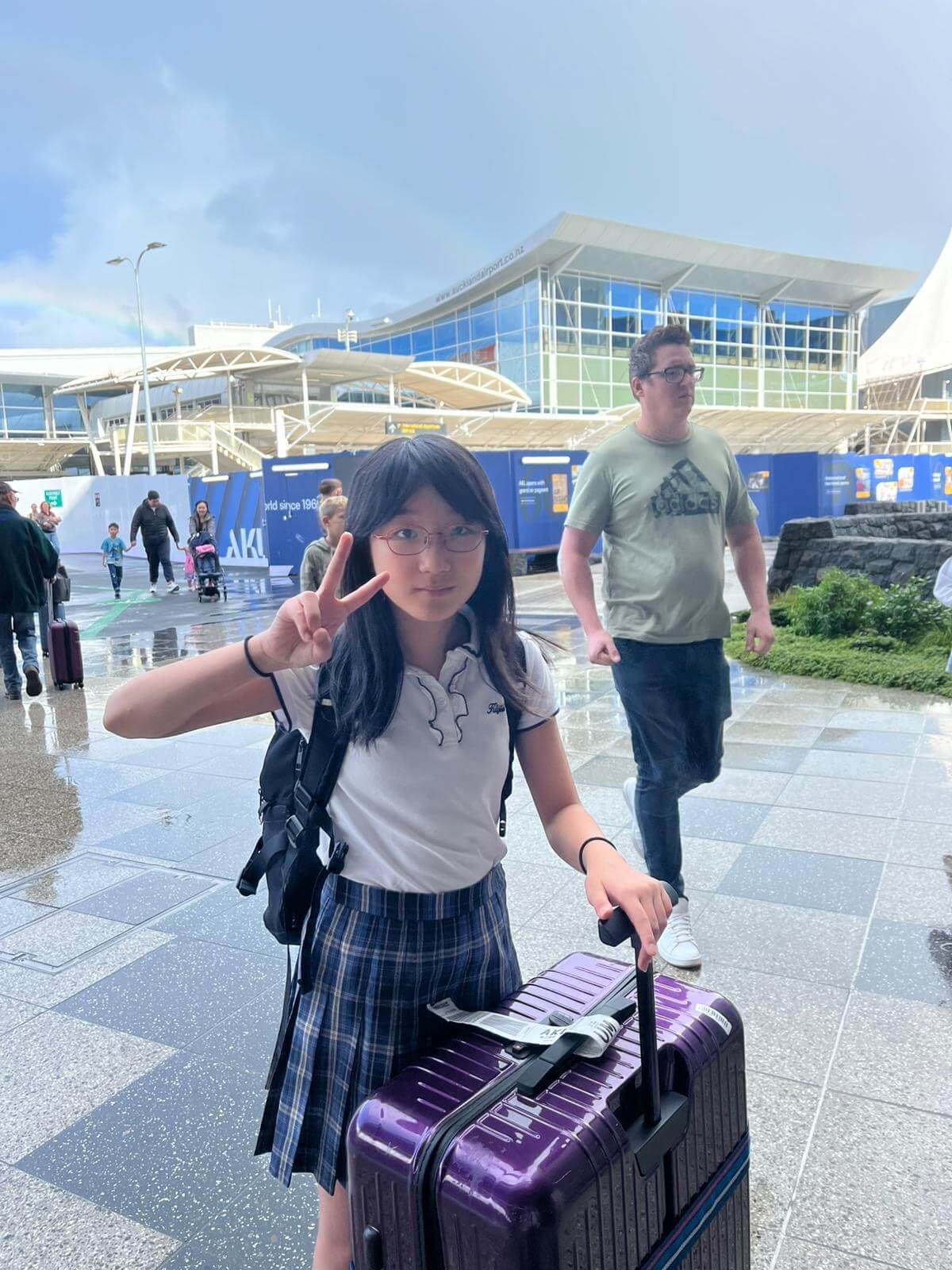
Belmont Intermediate School (公立中学校) CGK G6 Yuina
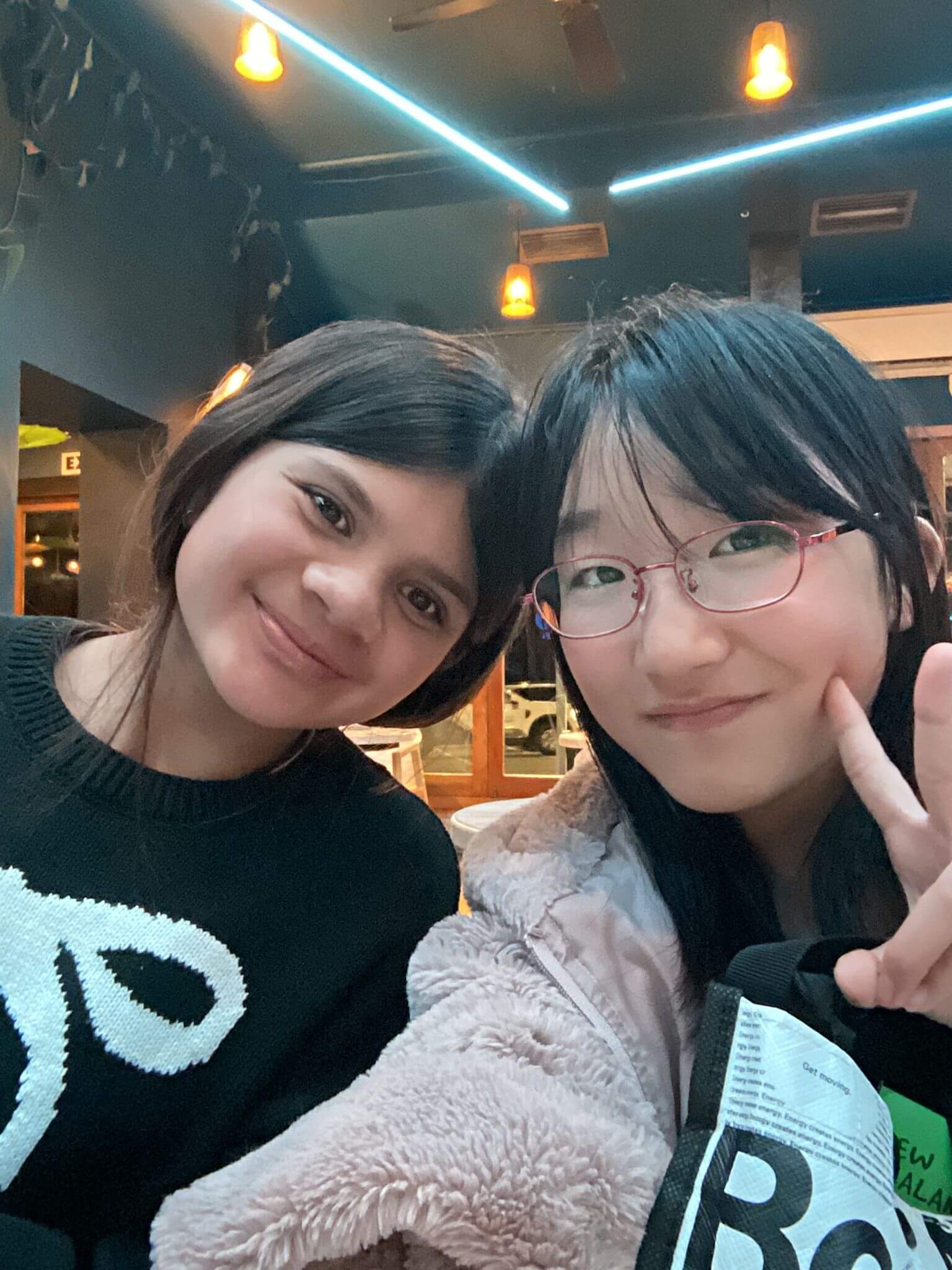
Belmont Intermediate School (公立中学校) CGK G6 Yuina
In 2025, a total of 24 CGK students have already participated in or are scheduled to join overseas study abroad programs.
This summer’s short-term study abroad programs were a great success, with solo and parent–child opportunities realized in Australia, New Zealand, and Canada.
✦Highlights of This Summer
- A CGK Preschool graduate and current After-School Grade 1 student achieved a solo study abroad in Canada!
- A CGK Elementary Grade 1 student became the first to study abroad at an IB PYP school in Australia!
- A Grade 7 student began their solo long term study abroad journey!
Through these challenges, each student broadened their horizons and returned with greater self-confidence.
Study Abroad Destinations:
- Australia
St. Paul’s School (Private all-through school)
Essendon North Primary School (Public primary school, IB PYP)
Ipswich Girls' Grammar School (Private all-through girls' school)
Browns English Language School (Language school)
Guardian Childcare & Education South Melbourne (Childcare centre) - New Zealand
Belmont Intermediate School (Public middle school) - Canada
Global College Camp
Assumption College Catholic Middle School (Public middle school)
St. James Catholic Elementary School (Public primary school)
At CGK, we will continue to value each child’s unique challenge, carefully supporting them with safe and suitable study abroad options tailored to their needs and duration.
On October 6, one of this summer’s destinations — Belmont Intermediate School in New Zealand — will be visiting CGK!
A special information session will be held by their local coordinator. Don’t miss this opportunity!
Study Abroad Highlights (Video)
-
[Study Abroad in NZ] Owairoa Primary School
-
[ES Solo Study Abroad in NZ] Gulf Harbour School
-
[Study Abroad in NZ] Owairoa Primary School (5 year olds)
-
[ES Solo Study Abroad in Canada] Summer Camp in Vancouver
Currently recruiting participants for study abroad programs
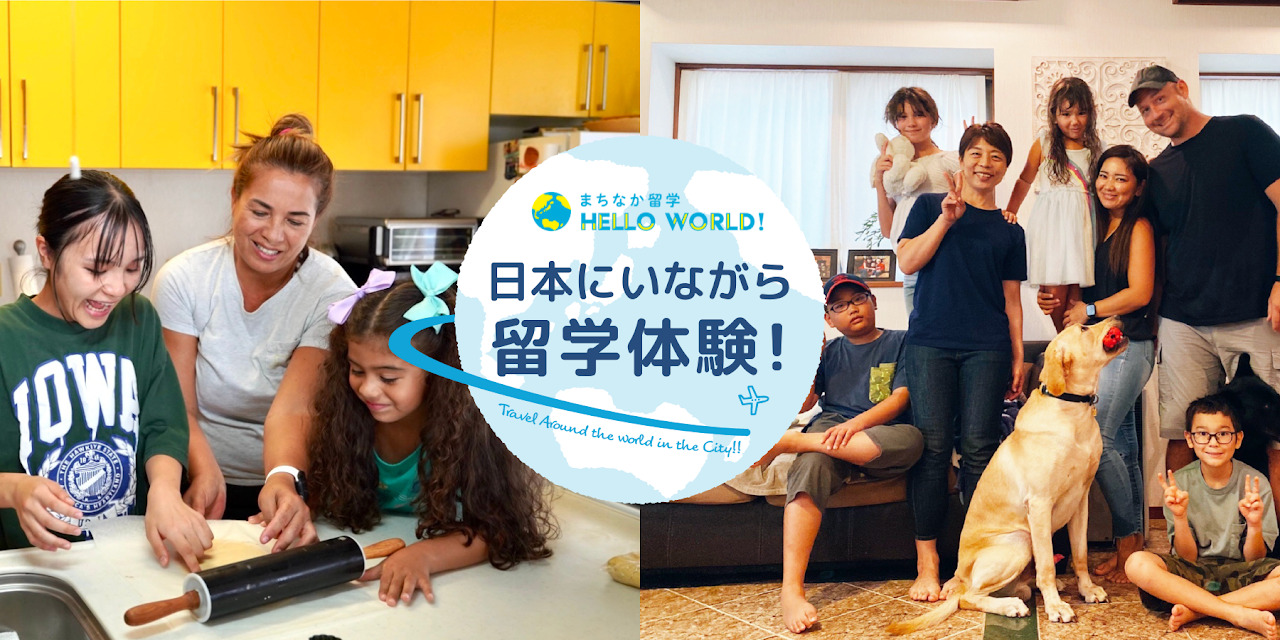


- Throughout the year (on weekends or during long breaks, either for day trips or overnight stays)
- You can experience a homestay with a foreign family residing in Japan.
- Deadline: Approximately one month prior to your desired dates
- For details/application, please contact Mayu at the Office.
Accepting short-term international students from overseas - Wanted host families
-

-
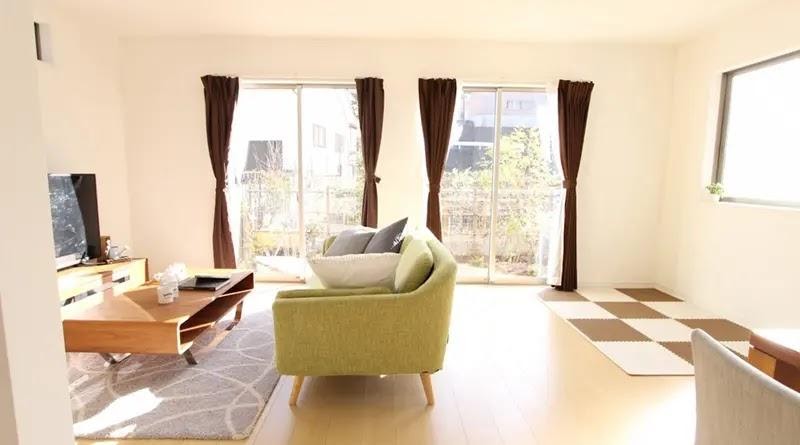
CGK has a positive stance on accepting international students from abroad with a view to encouraging multicultural cooperation. Students from different cultures and backgrounds can interact with and help each other at CGK, bringing rich diversity to the classroom. This environment of diversity provides each student with a valuable opportunity to learn different viewpoints and increase mutual understanding.
At CGK, we believe that diversity improves educational development. By learning and working together, students from different backgrounds will grow into leaders with global perspective. In addition, experiencing diverse opinions and values will help them develop tolerance and empathy.
In order to create an environment conducive to hosting short-term students, we are looking for host families; if you are a CGK family interested in registering as a host family, please contact Mayu at the Office (Toddle is OK).
-