











Job Training: Designing Board Games
Here is an introduction to lessons at CGK Afterschool.
CGK’s two-month-long project works will be based on the main “Driving Question”.
Here are the Driving Questions for this “Job Training” lesson.
“How can we make our own fun board games for everyone to enjoy?
The lesson theme was “Game Designer.”
We followed this theme and question with fun lessons each week that drew the student’s interest.
Here are the comments of Mr. Dan, the teacher who was in charge of the lessons.
Week 1
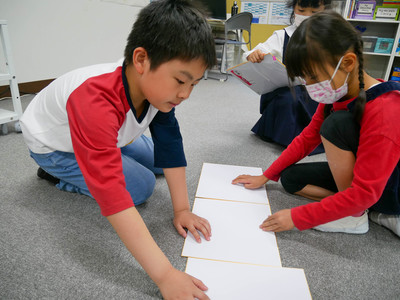
Students are introduced to the goal of the project being to create their own original game in groups that can be used by everyone at CGK Afterschool. Students discussed what things make a game good and what things make a game bad. They also discussed the importance of rules in games and decided that although rules are important they did not like really strict rules and preferred rules with a little interpretation for creativity. On the other hand, they firmly decided that games without any rules just do not work. Students were encouraged through a picture presentation to think outside the box when thinking up ways they could make a game. Just using a board and dice is ok; however, including elements like cards and accessories can really bring a game to life and make it interesting. As an example, I showed them the character card game I made and how the game only requires cards but there is so much you can do with it when you learn the rules and understand how it works. This demonstrated to the children that they would really need to think about the rules of their game in order for it to be a success. Some volunteers then picked their favorite game at CGK and told us the reasons why they liked it. Students then worked individually to draw and write about their favorite game and why they liked it for presentation.
Week 2
Students read a book as a class about games. We discussed again the importance of rules and did an activity against the clock where students has to write down a reason they thought strict rules, semi-strict rules, or no rules were a good thing and why and stick it to the whiteboard. After discussing game mechanics students were split into groups to work on an original game idea that we can make and use at CGK. Students worked through a planning pack thinking about what they would need for a game, how it works, and rules. For presentation students presented where they had got to and had the chance to listen to group feedback.
Week 3
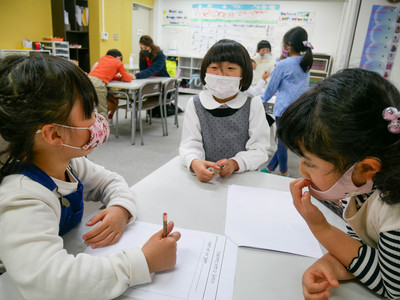
This week I discussed with students impractical areas of their games that they would maybe need to rethink and we brainstormed ideas around the feedback from their designs. Once students understood the feedback and had been shown design elements they could use a computer for students to break into groups to work on their final planning booklets. This week they needed to really work on their designs and planning and communicate with their peers and the teachers to work out exactly what they wanted to make. Students work in groups very well and communicated excellently throughout the project time. One group was approved to start making their game and although a few of the groups still need to think more about certain elements of their games every group made significant progress. During presentation, groups presented their work and other students had a lot of comments regarding aspects of design and rules. Overall everyone did a fantastic job.
Week 4
I explained to students at the start of project time why some people are starting to make their game this week and others are having to re-draft their ideas. Some students have not planned their game mechanics to a point where they can start making their game so two groups needed to focus on this. The other groups started to make their game using various materials and working with the computer as well on design elements such as game box sizes and printing and designing additional materials such as money. Groups that needed to make more progress in thinking about their game managed just to start making their game by the end of the lesson having been guided in areas they needed to improve.
Week 5
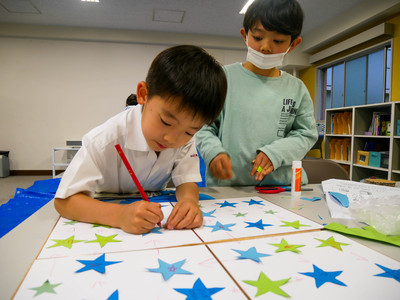
This week students were given a little guidance at the start of the lesson for ways they could improve their games and we were given the challenge to complete as much as they could focusing on their board. Students worked really well and made so much progress on their games. Students, in consultation with teachers, are starting the grasp the need for the reason behind some of their ideas. Students tend to jump into things like points with no real understanding of the game mechanics behind them or gravitate toward big numbers. With some guidance, students have made their game ideas more realistic and although there is still some work to do are on track to make realistic and playable games. For presentation students presented very well with no problems which was a big improvement.
Week 6
Students progressed with making their games. Some students started to make instructions for their games and boxes. Students worked very well and make lots of progress.
Week 7, 8
Students made a lot of progress finishing their games. Two teams have finished and the other teams are really close to finishing. Any remaining work they can finish in learning centers next week.
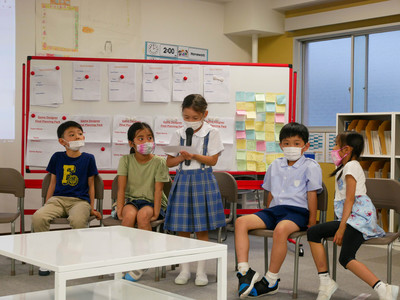
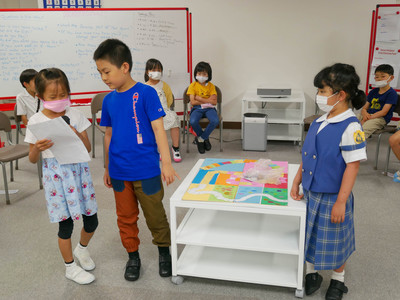
In the final presentation, after talking about their favorite games they had referenced in the lesson and reflecting on the rules, each group presented the game they had created.
They were able to carefully explain the rules, such as how to play and how to reach the goal, what was difficult during the production, and what they would like to improve if they had more time.
Some of the groups had thought about what they were going to present beforehand and wrote it down on paper, but they were better able to recall what they had done while making the game and present it in their own words, showing that their public speaking skills were improving.
Our next job training will be a "podcast" challenge.
I am very much looking forward to seeing what they will talk about and record to make it into a work of art.
Author Profile
-

-
Saeda Sueki-Au-Yeung - Head of Operations / Parent Support Coordinator Japan

Saeda studied education and disability sciences in Japan and experienced winning a US collegiate national championship while studying and playing football in America. She values each child's individuality and the opportunities that come from trying new things. Through school operations and parent support, she helps families and staff work as one team to support children's growth.